

Neural ensembles: role of intrinsic excitability and its plasticity
Open accessThe DOI matches its Crossref record; 65 of the 66 references it cites were found in a registry or an index.
Abstract
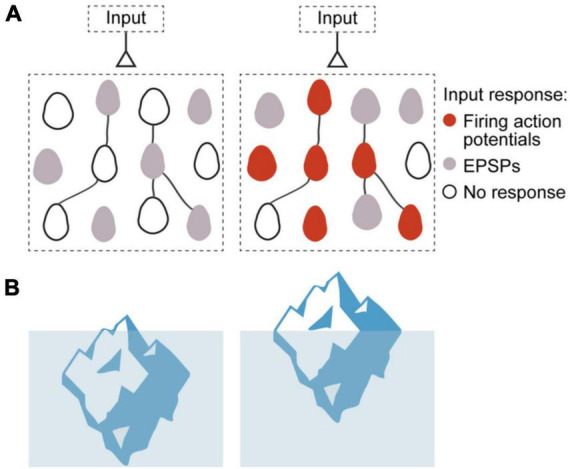
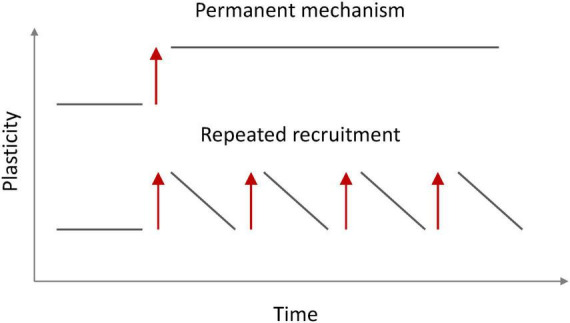
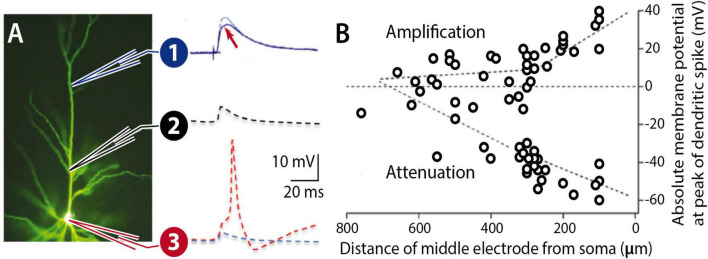
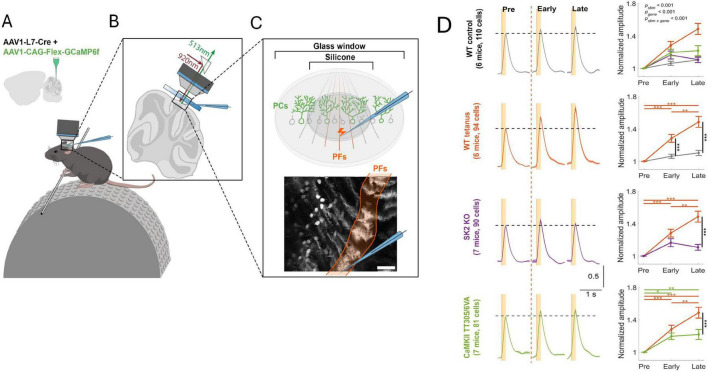
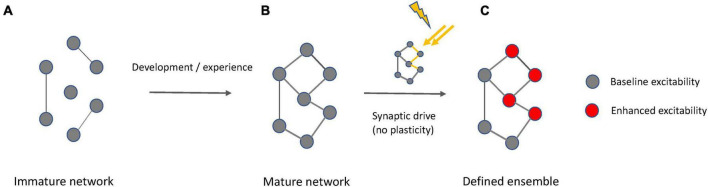
Synaptic connectivity defines groups of neurons that engage in correlated activity during specific functional tasks. These co-active groups of neurons form ensembles, the operational units involved in, for example, sensory perception, motor coordination and memory (then called an engram ). Traditionally, ensemble formation has been thought to occur via strengthening of synaptic connections via long-term potentiation (LTP) as a plasticity mechanism. This synaptic theory of memory arises from the learning rules formulated by Hebb and is consistent with many experimental observations. Here, we propose, as an alternative, that the intrinsic excitability of neurons and its plasticity constitute a second, non-synaptic mechanism that could be important for the initial formation of ensembles. Indeed, enhanced neural excitability is widely observed in multiple brain areas subsequent to behavioral learning. In cortical structures and the amygdala, excitability changes are often reported as transient, even though they can last tens of minutes to a few days. Perhaps it is for this reason that they have been traditionally considered as modulatory, merely supporting ensemble formation by facilitating LTP induction, without further involvement in memory function (memory allocation hypothesis). We here suggest−based on two lines of evidence—that beyond modulating LTP allocation, enhanced excitability plays a more fundamental role in learning. First, enhanced excitability constitutes a signature of active ensembles and, due to it, subthreshold synaptic connections become suprathreshold in the absence of synaptic plasticity ( iceberg model ). Second, enhanced excitability promotes the propagation of dendritic potentials toward the soma and allows for enhanced coupling of EPSP amplitude (LTP) to the spike output (and thus ensemble participation). This permissive gate model describes a need for permanently increased excitability, which seems at odds with its traditional consideration as a short-lived mechanism. We propose that longer modifications in excitability are made possible by a low threshold for intrinsic plasticity induction, suggesting that excitability might be on/off-modulated at short intervals. Consistent with this, in cerebellar Purkinje cells, excitability lasts days to weeks, which shows that in some circuits the duration of the phenomenon is not a limiting factor in the first place. In our model, synaptic plasticity defines the information content received by neurons through the connectivity network that they are embedded in. However, the plasticity of cell-autonomous excitability could dynamically regulate the ensemble participation of individual neurons as well as the overall activity state of an ensemble.
Overview
The claims and statistics of this paper haven’t been checked yet.
Free: it reads the open-access text and checks the first 5 claims that cite a source we can check. Create a free account to check every claim.
Integrity signals
Registry
Cites
Statistics
Figures
Verification
Claims the paper makes
The claims and statistics of this paper haven’t been checked yet.
Free: it reads the open-access text and checks the first 5 claims that cite a source we can check. Create a free account to check every claim.
Claims other papers make about this one
Each is checked against this paper’s own text: does it say what the citing paper says it does?
The source backs part of the claim, not all of it — or backs it for a different population, condition or comparison.
In the citing paper
“These changes can occur independently of synaptic remodeling yet powerfully influence circuit output and behavioral state [24,26].”
From Synaptic Plasticity—Intrinsic Excitability and Antidepressant Discovery (2026) · cites this paper as [26]
Experimental — accuracy not yet measuredThe cited source says what the claim attributes to it.
In the citing paper
“Unlike synaptic plasticity, which modifies the efficacy of connections between neurons, intrinsic excitability regulates neuronal gain and input–output transformations at the single cell level [24,25,26].”
From Synaptic Plasticity—Intrinsic Excitability and Antidepressant Discovery (2026) · cites this paper as [26]
The check wasn’t confident either way, so it gives no verdict — never disputed.
In the citing paper
“Chronic stress induces cell-type-specific shifts in intrinsic excitability within medial prefrontal and hippocampal neurons, biasing circuits toward vulnerability or resilience depending on channel composition and neuromodulatory state [25,26].”
From Synaptic Plasticity—Intrinsic Excitability and Antidepressant Discovery (2026) · cites this paper as [26]
Experimental — accuracy not yet measured
Self-check
Percentages, sums and reported differences re-computed from the paper’s own numbers.
The self-check needs the paper’s full text.
Citations
Cites
Bliss, T. V. P., & Gardner‐Medwin, A. R. (1973) · The Journal of Physiology · doi:10.1113/jphysiol.1973.sp010274 · Cited by 7,437
(2023) · doi:10.1126/science · Cited by 6,063
Journal of Biological Chemistry
(2021) · Journal of Biological Chemistry · doi:10.1074/jbc · Cited by 3,400
Experience-dependent structural synaptic plasticity in the mammalian brain
Holtmaat, A., & Svoboda, K. (2009) · Nature Reviews Neuroscience · doi:10.1038/nrn2699 · Cited by 1,934 · cited 1×
“LTP may also be accompanied by the emergence of new dendritic spines (Engert and Bonhoeffer, 1999; Yuste and Bonhoeffer, 2001) and spine growth (Holtmaat and Svoboda, 2009) making it the ideal plasticity mechanism to establish and update synaptic connectivity in an experience-dependent manner in…”
BackgroundDendritic spine changes associated with hippocampal long-term synaptic plasticity
Engert, F., & Bonhoeffer, T. (1999) · Nature · doi:10.1038/19978 · Cited by 1,412
CENTRAL CHOLINERGIC SYSTEMS AND COGNITION
Everitt, B. J., & Robbins, T. W. (1997) · Annual Review of Psychology · doi:10.1146/annurev.psych.48.1.649 · Cited by 1,348
Neural syntax: cell assemblies, synapsembles, and readers
Buzsáki, G. (2010) · Neuron · doi:10.1016/j.neuron.2010.09.023 · Cited by 1,289 · cited 2×
“As mentioned, neuronal ensembles (often referred to as assemblies) are coactive groups of neurons that have been shown to mediate perception and behavior (Buzsaki, 2010 ; Yuste et al., 2024).”
BackgroundMorphological Changes in Dendritic Spines Associated with Long-Term Synaptic Plasticity
Yuste, R., & Bonhoeffer, T. (2001) · Annual Review of Neuroscience · doi:10.1146/annurev.neuro.24.1.1071 · Cited by 1,269 · cited 2×
“As mentioned, neuronal ensembles (often referred to as assemblies) are coactive groups of neurons that have been shown to mediate perception and behavior (Buzsaki, 2010 ; Yuste et al., 2024).”
BackgroundSelf-citationMemory engrams: Recalling the past and imagining the future
Josselyn, S. A., & Tonegawa, S. (2020) · Science · doi:10.1126/science.aaw4325 · Cited by 1,087 · cited 1×
“…focus on cellular mechanisms of engram formation and recall, neurons are allocated to an engram that show high excitability at the time of learning, facilitating subsequent integration via LTP (Rogerson et al., 2014; Yiu et al., 2014; Josselyn and Frankland, 2018; Josselyn and Tonegawa, 2020).”
BackgroundEngineering a memory with LTD and LTP
Nabavi, S., Fox, R., Proulx, C. D., Lin, J. Y., Tsien, R. Y., & Malinow, R. (2014) · Nature · doi:10.1038/nature13294 · Cited by 980 · cited 1×
“…synaptic plasticity and memory was provided in 2014, when Malinow et al. optogenetically induced long-term depression (LTD) and LTP to inactivate and reactivate, respectively, a fear memory that was previously established using a fear-conditioning paradigm in the amygdala (Nabavi et al., 2014).”
Method
Research works printed but not linked: 1
- 29. Hebb, D. O. (1949). The organization of behaviour. Hoboken, NJ: Wiley.
Cited by
Zhai, S., Cui, Q., Wokosin, D. L., Sun, L., Tkatch, T., Crittenden, J. R., Graybiel, A. M., & Surmeier, D. J. (2025) · Science Advances · doi:10.1126/sciadv.adv8224 · Cited by 15
Designing Neural Dynamics: From Digital Twin Modeling to Regeneration
Tătaru, C. P., Dumitru, A. V., Dobrin, N., Rădoi, M. P., Ciurea, A. V., Munteanu, O., & Munteanu, L. V. (2025) · International Journal of Molecular Sciences · doi:10.3390/ijms27010122 · Cited by 9
“Changes in intrinsic excitability plasticity—through alterations in the expression or phosphorylation of ion channels—also modify the input/output characteristics of neurons, thereby modifying basin stability independent of changes in the wiring diagram [214].”
The precision principle: driving biological self-organization
Roy, R., Sidhu, K., Byczynski, G., D’Angiulli, A., & Dresp, B. (2025) · Frontiers in Network Physiology · doi:10.3389/fnetp.2025.1678473 · Cited by 7
Hadžibegović, S., Zhu, L., Ginger, M. R., Costa, M. G., Menéndez, P. R., Sa, R. D., Corf, K. L., Feuvre, Y. L., Nicole, O., Bontempi, B., et al. (2025) · Nature Communications · doi:10.1038/s41467-025-66975-3 · Cited by 10
“Neuron-wide IE plasticity would tune the responsiveness of that neuron to the majority of its synaptic inputs (i.e., synaptic penetrance 17 ) and might prime it to undergo further plasticity, such as in synaptic strength and connectivity 17 .”
Treur, J. (2026) · Studies in systems, decision and control · doi:10.1007/978-3-032-17029-3_4 · Cited by 10
Temporal dynamics of Purkinje cell-intrinsic excitability governs cerebellar systems consolidation
Seo, J., Kim, Y. G., Lee, Y., & Kim, S. J. (2025) · iScience · doi:10.1016/j.isci.2025.113760 · Cited by 6
“63 In the cerebellum, the transient reduction in PC-IE observed in our study may function as a gating mechanism, fine-tuning Purkinje cell output to optimize the downstream stabilization of motor memories.”
Perin, P., & Pizzala, R. (2024) · Brain Sciences · doi:10.3390/brainsci14121213 · Cited by 5
Orekhova, E. V., Plieva, A., Naumova, S. M., Obukhova, T. S., Prokofyev, A. O., Petrokovskaia, A. V., Artemenko, A. R., & Stroganova, T. A. (2025) · Brain Communications · doi:10.1093/braincomms/fcaf505 · Cited by 4
Hendrikse, S. C. F., & Treur, J. (2025) · Lecture notes in networks and systems · doi:10.1007/978-3-031-96759-7_39 · Cited by 6
Abian, A. I., Debnath, R. K., Rahman, M. A., Raiaan, M. A. K., Islam, M. R., Karim, A., Mohamed, R. E., & Azam, S. (2026) · IEEE Transactions on Radiation and Plasma Medical Sciences · doi:10.1109/trpms.2026.3654628 · Cited by 3
“The diagonal elements of C , which represent the self-correlation of each channel, are used to update the synaptic trace vector η ′ ∈ R C following the Hebbian update rule, as shown in Equation (6): where η is a trace vector; α is the plasticity learning rate that regulates the update process; and…”
Nolan, S. O., Melugin, P. R., Erickson, K. R., Adams, W. R., Farahbakhsh, Z. Z., McGonigle, C. E., Kwon, M. H., Costa, V. D., Hackett, T. A., Carlson, V. C. C., et al. (2025) · Current Biology · doi:10.1016/j.cub.2024.11.069 · Cited by 3
Hendrikse, S. C. F., & Treur, J. (2025) · Studies in systems, decision and control · doi:10.1007/978-3-031-99968-0_20 · Cited by 3
Faingold, C. L. (2025) · Progress in Neurobiology · doi:10.1016/j.pneurobio.2025.102770 · Cited by 2
Ammar, R., Maglio, L. E., Naffeti, M., Ballano, M. C. A., Callejo-Móstoles, M., Chtourou, Y., Fetoui, H., & de Sevilla, D. F. (2025) · Life Sciences · doi:10.1016/j.lfs.2025.123982 · Cited by 2
Dung, O.-Y., Başak, O., van den Eijnden, T., & Thompson, K. (2025) · Interdisciplinary Science Reviews · doi:10.1177/03080188251399254 · Cited by 2
“…neurons can change their receptiveness to signals or synaptic connectivity, a change in the functional output of the neuronal ensemble is what will cause a change in an individual ’ s behaviour (e.g. on whether to fi nd meat rewarding), leading to neural plasticity (Hansel and Yuste 2024).”
Soboleva, E. B., Amakhin, D. V., Sinyak, D. S., Nikitin, E. S., Borodinova, A. A., Ierusalimsky, V. N., Balaban, P. M., & Zaitsev, A. V. (2025) · Molecular Neurobiology · doi:10.1007/s12035-025-05601-1 · Cited by 2
Zhang, B., Zhang, Z. D., & Feng, W. (2026) · Journal of Marine Science and Engineering · doi:10.3390/jmse14111025 · Cited by 1
Treur, J. (2026) · Cognitive Systems Research · doi:10.1016/j.cogsys.2026.101505 · Cited by 2
Gupta, A., Neveu, C. L., Cropper, E. C., & Byrne, J. H. (2026) · iScience · doi:10.1016/j.isci.2026.117375 · Cited by 1
“The increased recruitment could be due to increases in intrinsic excitability, which has been shown to govern ensemble formation and maintenance 56 and earmark neurons for integration into engrams.”
Gao, L., Pym, E. C. G., Nurrish, S., & Kaplan, J. M. (2026) · bioRxiv (Cold Spring Harbor Laboratory) · doi:10.64898/2026.04.09.717484 · Cited by 1
“In parallel with synaptic plasticity, other studies suggest that cell intrinsic electrophysiological properties are altered during learning and memory (18-20).”
Synaptic Plasticity—Intrinsic Excitability and Antidepressant Discovery
Tanaka, M. (2026) · Biomedicines · doi:10.3390/biomedicines14061265
Engram and behavior: How memory is stored in the brain
Eom, K., Kim, D., & Hyun, J. H. (2025) · Neurobiology of Learning and Memory · doi:10.1016/j.nlm.2025.108047
Valbuena, S., Bhandari, K., Udhayachandran, A., Tripodi, M., & Caroni, P. (2025) · Cell Reports · doi:10.1016/j.celrep.2025.116144
“10,11 34 In parallel, forming memory ensembles are shaped and consolidated through offline oscillatory network activities in the theta and gamma range as well as through sharp-wave ripples.”
Hendrikse, S. C. F., Treur, J., & Koole, S. L. (2025) · Cognitive Systems Research · doi:10.1016/j.cogsys.2025.101399
Adaptive Spiking with Plasticity for Energy Aware Neuromorphic SystemsPreprint
Calle-Ortiz, E., Guan, H., Ganesan, D., & Nguyen, P. (2025) · arXiv (Cornell University) · doi:10.48550/arxiv.2508.11689
“Intrinsic plasticity plays an important role in biological systems by supporting homeostatic regulation and enabling neurons to adapt their excitability based on environmental [20, 33].”
Bobadilla, A. (2025) · The Conversation · doi:10.64628/aai.yufcmk3xv
Sheng, H., Piao, C., Escher, M., Toppe, D., Beuschel, C. B., Götz, T., Ramesh, N., Zhao, Z., Turrel, O., Walter, A. M., et al. (2025) · bioRxiv (Cold Spring Harbor Laboratory) · doi:10.64898/2025.12.26.696556
“Although intrinsic excitability regulation and synaptic plasticity have long been studied in parallel ( 26 ), how structural remodeling of presynaptic release sites interfaces with ion-channel–based excitability control has remained poorly understood.”
Hendrikse, S. C. F., Treur, J., & Koole, S. L. (2025) · Studies in systems, decision and control · doi:10.1007/978-3-031-99968-0_12
Modeling Coevolution of Dynamics, Adaptivity and Control of Adaptivity by Self-modeling Networks
Treur, J. (2025) · Studies in systems, decision and control · doi:10.1007/978-3-031-99968-0_2 · Cited by 16
Discussion and Concluding Remarks on Adaptivity in Social Interaction Science
Hendrikse, S. C. F., Treur, J., & Koole, S. L. (2025) · Studies in systems, decision and control · doi:10.1007/978-3-031-99968-0_21
Measurement of respiration in ex vivo mitochondria isolated from fresh human brain
McCarty, P. J., Werner, B. A., Scheck, A. C., Wang, E., Singh, I. N., Gaitanis, J. N., Adelson, P. D., & Frye, R. E. (2026) · Brain Research · doi:10.1016/j.brainres.2026.150156
Emergence of overlapping assemblies in a dynamic attractor model of associative memory
Boscaglia, M., Gastaldi, C., Gerstner, W., & Quiroga, R. Q. (2026) · Neuromorphic Computing and Engineering · doi:10.1088/2634-4386/ae6a18
“…excitability, such that neurons with low firing threshold (high excitability) and neurons with high firing threshold (low excitability) get the same level of spontaneous activity at rest, whereas experimental evidence suggests that the two are closely linked (Llinás 1988, Hansel and Yuste 2024).”
Ca2+-Independent Short-Term Depression in the Hippocampal CA1 Region
Novikova, M. A., Jappy, D., Fedorov, D. A., Климанова, Е. А., Nikolaev, G. M., Korneeva, I. A., Lopina, O. D., Averina, O. A., Rozov, A. V., & Латанов, А. В. (2026) · International Journal of Molecular Sciences · doi:10.3390/ijms27156908
“Thus, changes in membrane conductances can modify the relation between input and spike output without requiring a change in synaptic strength [16,17].”
Fractional-order spiking neural networks for robust control
Olivares, E., & Santamaría, F. (2026) · Neurocomputing · doi:10.1016/j.neucom.2026.134878 · Cited by 1
Tsotsokou, G., Sarantopoulou, V., & Papatheodoropoulos, C. (2026) · AIMS neuroscience · doi:10.3934/neuroscience.2026024
“Because SWRs depend on a finely tuned excitation–inhibition balance and coordinated pyramidal–interneuron interactions [49,50], even subtle changes in intrinsic conductances can influence the coordination of neuronal ensembles without necessarily altering the occurrence of network events [1,40,51].”
MODULATION OF SIGNAL-TO-NOISE RATIO IN CA1 PYRAMIDAL NEURONS
Morley, I. K. (2026) · Minds at UW (University of Wisconsin)
Hancock, J., & Becht-Buss, D. (2026) · Frontiers in Systems Neuroscience · doi:10.3389/fnsys.2026.1862960
“Intrinsic plasticity can therefore alter ensemble recruitment without requiring formation of new anatomical connections, consistent with models that distinguish connectivity from excitability-dependent recruitment (Hansel and Yuste, 2024).”
Claustrum Morphometry Reveals Spatially Heterogeneous Alterations in 22q11DSPreprint
Althauser, A. K., Delavari, F., Latrèche, C., Ville, D. V. D., & Eliez, S. (2026) · bioRxiv (Cold Spring Harbor Laboratory) · doi:10.64898/2026.10.27.762130
Brain state locks silent memories in a trained fly connectomePreprint
Wang, H., YEONG, J. P. S., Zhao, Y., Zhao, Y., Yu, Z., Liu, X., He, R., Chen, H., Liu, T., Tian, Y., et al. (2026) · bioRxiv (Cold Spring Harbor Laboratory) · doi:10.64898/2026.10.24.761586
Metadata
- Authors
- Hansel, C., & Yuste, R.
- Affiliations
- University of Chicago (US)
- Columbia University (US)
- Corresponding author
- Hansel, Christian
- Yuste, Rafael
- Venue
- Frontiers in Cellular Neuroscience
- Publisher
- Frontiers Media SA
- Published
- 2024-07-31
- Volume
- 18
- Pages
- 1440588-1440588
- ISSN
- 1662-5102 (ISSN-L)
- PMC
- PMC11322048
- OpenAlex
- W4401194868
- Cited by
- 33
- References
- 59
- Citations by year
- 2026: 9 · 2025: 22 · 2024: 2
- FWCI
- 2.07
- Type
- journal article
- Language
- en
- Open access
- gold
- doi.org
- Licence
- Locations
- Frontiers in Cellular Neuroscience (publishedVersion, cc-by)
- PubMed Central (publishedVersion, cc-by)
- PubMed (publishedVersion)
- Knowledge@UChicago (University of Chicago) (submittedVersion, cc-by-nc-nd)
- DOAJ (DOAJ: Directory of Open Access Journals) (submittedVersion, cc-by-sa)
- University of Chicago (cc-by)
- Funders
- National Institutes of Health (5r01mh115900-05)
- National Institute of Mental Health (R01-MH115900)
- National Eye Institute (R01EY035248)
- National Institute of Neurological Disorders and Stroke (R01NS062771, RM1NS132981)
- Topics
- Life Sciences › Neuroscience › Cellular and Molecular Neuroscience › Neuroscience and Neuropharmacology Research
- Life Sciences › Neuroscience › Cognitive Neuroscience › Memory and Neural Mechanisms
- Life Sciences › Neuroscience › Cognitive Neuroscience › Neural dynamics and brain function
- Keywords
- neuronal ensembles, intrinsic excitability, intrinsic plasticity, synaptic plasticity, long-term potentiation, iceberg model, engram, Hebbian learning, Purkinje cells, ensemble participation
About these checks
Registry, retraction, Cites and statistics results are computed, not judged, with one exception: a printed reference that no index lists is read once by a model before it counts as a citation error. Claims are extracted by a model and kept only when their quote appears verbatim in the text; each cited source is then checked, with a model’s help, for whether it says what the claim relies on. Those verdicts can be wrong — read the claim’s quote and the cited source before relying on one.
Statistics and arithmetic are recomputed, not judged.
Confidence bands are shown only for fields calibrated on our annotated test set. None is calibrated yet, so no band is shown.
What counts as a claim ›How we measure confidence ›How we check this ›
Are you an author, or do you see a problem with this page? Request a review
Data sources
Bibliographic data: Semantic Scholar, OpenAlex, Crossref.
Contains information from the Semantic Scholar Academic Graph Datasets, made available under the ODC Attribution License (ODC-BY 1.0).
Semantic Scholar’s data is described in: Kinney, R., et al. (2023). The Semantic Scholar Open Data Platform. arXiv:2301.10140.
