

The DOI matches its Crossref record; 258 of the 259 references it cites were found in a registry or an index.
Mesocorticolimbic Dopamine Pathways Across Adolescence: Diversity in Development
Open accessAbstract
Mesocorticolimbic dopamine circuity undergoes a protracted maturation during adolescent life. Stable adult levels of behavioral functioning in reward, motivational, and cognitive domains are established as these pathways are refined, however, their extended developmental window also leaves them vulnerable to perturbation by environmental factors. In this review, we highlight recent advances in understanding the mechanisms underlying dopamine pathway development in the adolescent brain, and how the environment influences these processes to establish or disrupt neurocircuit diversity. We further integrate these recent studies into the larger historical framework of anatomical and neurochemical changes occurring during adolescence in the mesocorticolimbic dopamine system. While dopamine neuron heterogeneity is increasingly appreciated at molecular, physiological, and anatomical levels, we suggest that a developmental facet may play a key role in establishing vulnerability or resilience to environmental stimuli and experience in distinct dopamine circuits, shifting the balance between healthy brain development and susceptibility to psychiatric disease.
Overview
The claims and statistics of this paper haven’t been checked yet.
Run the check — free, no account needed. It reads the open-access text and checks the sources it cites.
Integrity signals
Registry
Cites
Statistics
Figures
Verification
Claims the paper makes
The claims and statistics of this paper haven’t been checked yet.
Run the check — free, no account needed. It reads the open-access text and checks the sources it cites.
Claims other papers make about this one
Each is checked against this paper’s own text: does it say what the citing paper says it does?
The source backs part of the claim, not all of it — or backs it for a different population, condition or comparison.
In the citing paper
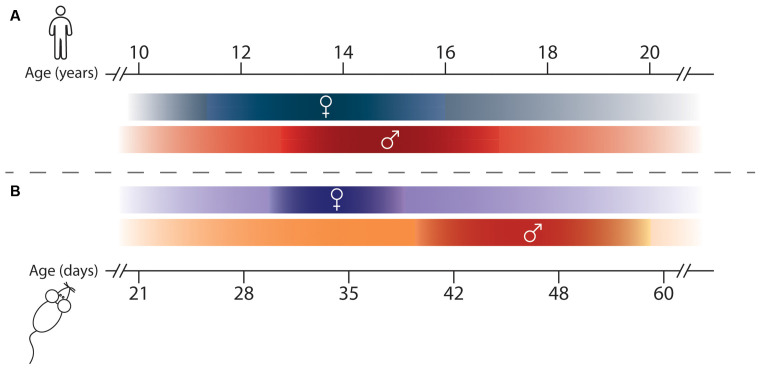
“The adolescent period can be further sub-divided into early (~PND 21–34), middle (~PND 35–45), and late (~PND 45–60) periods [39, 46]”
From Adolescent nicotine exposure and persistent neurocircuitry changes: unveiling lifelong psychiatric risks (2025) · cites this paper as [39]
Experimental — accuracy not yet measuredThe cited source says what the claim attributes to it.
In the citing paper
“adolescence in rodents is increasingly defined more in line with this larger age window in humans, by counting the period from weaning (~PND 21) where mice and rats gain begin to interact independently with their environments for the first time”
From Adolescent nicotine exposure and persistent neurocircuitry changes: unveiling lifelong psychiatric risks (2025) · cites this paper as [39]
The cited source says what the claim attributes to it.
In the citing paper
“it is increasingly recognized to be evolutionarily conserved, with animal species also showing distinct markers of an adolescent state [35–40].”
From Adolescent nicotine exposure and persistent neurocircuitry changes: unveiling lifelong psychiatric risks (2025) · cites this paper as [39]
The cited source says what the claim attributes to it.
In the citing paper
“As the dopamine system undergoes a period of profound and dynamic development in adolescence [39]”
From Adolescent nicotine exposure and persistent neurocircuitry changes: unveiling lifelong psychiatric risks (2025) · cites this paper as [39]
Self-check
Percentages, sums and reported differences re-computed from the paper’s own numbers.
The self-check needs the paper’s full text.
Citations
Cites
The adolescent brain and age-related behavioral manifestations
Spear, L. P. (2000) · Neuroscience & Biobehavioral Reviews · doi:10.1016/s0149-7634(00)00014-2 · Cited by 5,433
Synaptic Pruning by Microglia Is Necessary for Normal Brain Development
Paolicelli, R. C., Bolasco, G., Pagani, F., Maggi, L., Scianni, M., Panzanelli, P., Giustetto, M., Ferreira, T. A., Guiducci, E., Dumas, L., et al. (2011) · Science · doi:10.1126/science.1202529 · Cited by 4,244
Microglia Sculpt Postnatal Neural Circuits in an Activity and Complement-Dependent Manner
Schafer, D. P., Lehrman, E. K., Kautzman, A. G., Koyama, R., Mardinly, A. R., Yamasaki, R., Ransohoff, R. M., Greenberg, M. E., Barres, B. A., & Stevens, B. (2012) · Neuron · doi:10.1016/j.neuron.2012.03.026 · Cited by 4,089
Sawyer, S. M., Azzopardi, P. S., Wickremarathne, D., & Patton, G. C. (2018) · The Lancet Child & Adolescent Health · doi:10.1016/s2352-4642(18)30022-1 · Cited by 3,666
Dopamine, learning and motivation.
Wise, R. A. (2004) · Nature Reviews Neuroscience · doi:10.1038/nrn1406 · Cited by 3,379
Microglia promote learning-dependent synapse formation through brain-derived neurotrophic factor
Parkhurst, C. N., Yang, G., Ninan, I., Savas, J. N., Yates, J. R., Lafaille, J. J., Hempstead, B. L., Littman, D. R., & Gan, W.-B. (2013) · Cell · doi:10.1016/j.cell.2013.11.030 · Cited by 2,599
Dopamine in motivational control: rewarding, aversive, and alerting
Bromberg-Martin, E. S., Matsumoto, M., & Hikosaka, O. (2010) · Neuron · doi:10.1016/j.neuron.2010.11.022 · Cited by 2,396
Schizophrenia risk from complex variation of complement component 4
Sekar, A., Bialas, A. R., de Rivera, H., Davis, A., Hammond, T. R., Kamitaki, N., Tooley, K., Presumey, J., Baum, M., Van Doren, V., et al. (2016) · Nature · doi:10.1038/nature16549 · Cited by 2,394
Dopamine neuron systems in the brain: An update
Björklund, A., & Dunnett, S. B. (2007) · Trends in Neurosciences · doi:10.1016/j.tins.2007.03.006 · Cited by 1,777
Swanson, L. W. (1982) · Brain Research Bulletin · doi:10.1016/0361-9230(82)90145-9 · Cited by 1,718
Research works printed but not linked: 1
- Björklund, 1984, Dopamine-containing system in the CNS, 55
Cited by
Sorted by citations
Consequences of adolescent drug use
Steinfeld, M. R., & Torregrossa, M. M. (2023) · Translational Psychiatry · doi:10.1038/s41398-023-02590-4 · Cited by 237
“…from subcortical to cortical circuits for emotional control [7], elimination of excess neural connections [8], re fi nement of the GABAergic system in the neocortex [9, 10], increases in dopamine (DA) receptor expression [11, 12], and development of the mesocorticolimbic system [13], to name a few.”
BackgroundThe connecting brain in context: How adolescent plasticity supports learning and development
Baker, A. E., Galván, A., & Fuligni, A. J. (2024) · Developmental Cognitive Neuroscience · doi:10.1016/j.dcn.2024.101486 · Cited by 110
Endocannabinoid signaling in the central nervous system
Ramirez, C. E. M., Ruiz‐Pérez, G., Stollenwerk, T. M., Behlke, C., Doherty, A., & Hillard, C. J. (2022) · Glia · doi:10.1002/glia.24280 · Cited by 54
Peters, K. Z., & Naneix, F. (2022) · Frontiers in Neural Circuits · doi:10.3389/fncir.2022.939235 · Cited by 77
Mechanisms Underlying Circuit Dysfunction in Neurodevelopmental Disorders
Exposito-Alonso, D., & Rico, B. (2022) · Annual Review of Genetics · doi:10.1146/annurev-genet-072820-023642 · Cited by 49
The VTA dopaminergic system as diagnostic and therapeutical target for Alzheimer's disease
Krashia, P., Spoleti, E., & D’Amelio, M. (2022) · Frontiers in Psychiatry · doi:10.3389/fpsyt.2022.1039725 · Cited by 41
Amphetamine disrupts dopamine axon growth in adolescence by a sex-specific mechanism in mice
Reynolds, L. M., Hernandez, G., MacGowan, D., Popescu, C., Nouel, D., Cuesta, S., Burke, S., Savell, K. E., Zhao, J., Restrepo-Lozano, J. M., et al. (2023) · Nature Communications · doi:10.1038/s41467-023-39665-1 · Cited by 30
Self-citationParr, A. C., Calabro, F. J., Tervo‐Clemmens, B., Larsen, B., Foran, W., & Luna, B. (2022) · Developmental Cognitive Neuroscience · doi:10.1016/j.dcn.2022.101100 · Cited by 32
Gupta, T., Eckstrand, K., & Forbes, E. E. (2024) · Journal of Child Psychology and Psychiatry · doi:10.1111/jcpp.13955 · Cited by 29
Parr, A. C., Sydnor, V. J., Calabro, F. J., & Luna, B. (2024) · Current Opinion in Behavioral Sciences · doi:10.1016/j.cobeha.2024.101399 · Cited by 30
Reynolds, L. M., Faure, P., & Barik, J. (2025) · Molecular Psychiatry · doi:10.1038/s41380-025-03110-0 · Cited by 26
“Rodents show behavioral and neurobiological markers of development until neurobiological maturity is reached around two months of age (~PND 60) [36, 38, 39, 44 – 47].”
Self-citationGains and Losses: Resilience to Social Defeat Stress in Adolescent Female Mice
Pantoja-Urbán, A. H., Richer, S., Mittermaier, A., Giroux, M., Nouel, D., Hernández, G., & Flores, C. (2023) · Biological Psychiatry · doi:10.1016/j.biopsych.2023.06.014 · Cited by 29
Self-citationBiphasic patterns of age-related differences in dopamine D1 receptors across the adult lifespan
Johansson, J. J., Nordin, K., Pedersen, R., Karalija, N., Papenberg, G., Andersson, M., Korkki, S. M., Riklund, K., Guitart‐Masip, M., Rieckmann, A., et al. (2023) · Cell Reports · doi:10.1016/j.celrep.2023.113107 · Cited by 33
Parr, A. C., Perica, M. I., Calabro, F. J., Foran, W., Moon, C., Hetherington, H. P., & Luna, B. (2024) · Molecular Psychiatry · doi:10.1038/s41380-024-02860-7 · Cited by 23
Conspiracy theory beliefs in the adolescent population: A systematic review
Byrne, A., Martin, D., Jones, C., Galbraith, N. D., & Mercer, T. (2024) · Journal of Adolescence · doi:10.1002/jad.12316 · Cited by 20
Emerging role of microglia in the developing dopaminergic system: Perturbation by early life stress
She, K., Yuan, N., Huang, M., Zhu, W., Tang, M., Ma, Q., & Chen, J. (2024) · Neural Regeneration Research · doi:10.4103/nrr.nrr-d-24-00742 · Cited by 20
Learning and memory processes in behavioural addiction: A systematic review
Ngetich, R. K., Villalba-García, C., Soborun, Y., Vékony, T., Czakó, A., Demetrovics, Z., & Németh, D. (2024) · Neuroscience & Biobehavioral Reviews · doi:10.1016/j.neubiorev.2024.105747 · Cited by 22
Effects of prenatal opioid exposure on synaptic adaptations and behaviors across development
Simmons, S. C., Grecco, G. G., Atwood, B. K., & Nugent, F. S. (2022) · Neuropharmacology · doi:10.1016/j.neuropharm.2022.109312 · Cited by 18
Molecular Landscape of Tourette’s Disorder
Widomska, J., Witte, W. D., Buitelaar, J. K., Glennon, J. C., & Poelmans, G. (2023) · International Journal of Molecular Sciences · doi:10.3390/ijms24021428 · Cited by 15
Oxytocin, GABA, and dopamine interplay in autism
Havránek, T., Bačová, Z., & Bakoš, J. (2024) · Endocrine Regulations · doi:10.2478/enr-2024-0012 · Cited by 16
Lallai, V., Congiu, C., Craig, G., Manca, L., Chen, Y.-C., Dukes, A. J., Fowler, C. D., & Dazzi, L. (2024) · Neurobiology of Stress · doi:10.1016/j.ynstr.2024.100620 · Cited by 14
Allen, S. J., & Morishita, H. (2024) · Science Advances · doi:10.1126/sciadv.adh3920 · Cited by 13
Eckstrand, K., Lenniger, C. J., & Forbes, E. E. (2022) · Annual Review of Developmental Psychology · doi:10.1146/annurev-devpsych-120920-040820 · Cited by 13
Establishing functionally segregated dopaminergic circuits
Terauchi, A., Johnson‐Venkatesh, E., & Umemori, H. (2025) · Trends in Neurosciences · doi:10.1016/j.tins.2024.12.002 · Cited by 12
Reynolds, L. M., Gulmez, A., Fayad, S. L., Campos, R. C., Rigoni, D., Nguyen, C., Le Borgne, T., Topilko, T., Rajot, D., Franco, C., et al. (2024) · Nature Communications · doi:10.1038/s41467-024-53327-w · Cited by 10
“Assuch,theDAsystemisknowntobesensitiveto experience in adolescence, with signi fi cant effects of stress, social isolation, and drug use persisting until adulthood in many cases 10,11 .”
BackgroundInfluentialSelf-citationEvolutionary innovations in the primate dopaminergic system
Doll, H. M., Risgaard, R. D., Thurston, H., Chen, R. J., & Sousa, A. M. M. (2024) · Current Opinion in Genetics & Development · doi:10.1016/j.gde.2024.102236 · Cited by 10
The scheduling of adolescence with Netrin-1 and UNC5C
Hoops, D., Kyne, R., Salameh, S., MacGowan, D., Avramescu, R. G., Ewing, E., He, A. T., Orsini, T., Durand, A., Popescu, C., et al. (2024) · eLife · doi:10.7554/elife.88261 · Cited by 8
Self-citationLeonetti, A. M., Sheehan, A. C., Murray, S. H., Burke, F. F., Fletcher, B. C. J., & McCormick, C. M. (2025) · Behavioural Brain Research · doi:10.1016/j.bbr.2025.115702 · Cited by 11
Quantifying Dopaminergic Innervation in Rodents Using Unbiased Stereology
Reynolds, L. M., Pantoja-Urbán, A. H., MacGowan, D., Manitt, C., Nouel, D., & Flores, C. (2022) · Neuromethods · doi:10.1007/978-1-0716-2799-0_2 · Cited by 8
Self-citationNeurobiochemical Disturbances in Psychosis and their Implications for Therapeutic Intervention
Panov, G., & Panova, P. (2024) · Current Topics in Medicinal Chemistry · doi:10.2174/0115680266282773240116073618 · Cited by 8
Tian, S., Che, W., Liang, Z., Qiu, F., Yu, Y., & Wang, X. (2025) · Journal of Affective Disorders · doi:10.1016/j.jad.2025.120604 · Cited by 10
Cruz-Sanchez, A., LaDouceur, K. E., Abdusalom, A., Chasiotis, H., Gugustea, R., Inayat, M., Mumtaz, U., Hasantash, M., Anacker, C., & Arruda-Carvalho, M. (2026) · Cell Reports · doi:10.1016/j.celrep.2025.116812 · Cited by 11
Brimvandi, A., Nedaei, S. E., Pourmotabbed, A., Sahveisi, K., Abdoli, N., Ghazvini, H., & Khodamoradi, M. (2024) · Brain Research · doi:10.1016/j.brainres.2024.149096 · Cited by 7
Dynamic Insights into Dopamine Axon Growth in Adolescence and its Implications for Psychiatric Risk
Avramescu, R. G., Capolicchio, T., & Flores, C. (2024) · Current Opinion in Behavioral Sciences · doi:10.1016/j.cobeha.2024.101435 · Cited by 8
Self-citationMcLaurin, K. A., Ott, R. K., Mactutus, C. F., & Booze, R. M. (2024) · Neuropharmacology · doi:10.1016/j.neuropharm.2024.110064 · Cited by 6
Developmental exposure to cannabis compromises dopamine system function and behavior
Solinas, M., & Melis, M. (2024) · Current Opinion in Behavioral Sciences · doi:10.1016/j.cobeha.2024.101442 · Cited by 6
Masi, R. D., Orlando, S., Toni, V., & Costa, M. C. (2023) · International Journal of Molecular Sciences · doi:10.3390/ijms24032968 · Cited by 6
Unlocking the age-old secrets of reward and substance use
Liu, C., & Filbey, F. M. (2024) · Pharmacology Biochemistry and Behavior · doi:10.1016/j.pbb.2024.173766 · Cited by 7
Ketone ester–enriched diet ameliorates motor and dopamine release deficits in MitoPark mice
Mahajan, V. R., Nadel, J. A., King, M. T., Pawlosky, R. J., Davis, M. I., Veech, R. L., Lovinger, D. M., & Salinas, A. G. (2024) · European Journal of Neuroscience · doi:10.1111/ejn.16601 · Cited by 7
Synergistic pathways to psychosis: understanding developmental risk and resilience factors
O’Brien, K. J., Huque, Z. M., Pike, M. R., Smith, E. C., Davies, N. L., & Ellman, L. M. (2025) · Neuropsychopharmacology · doi:10.1038/s41386-025-02261-6 · Cited by 12
Ladouceur, C. D. (2026) · Annual Review of Clinical Psychology · doi:10.1146/annurev-clinpsy-081423-022321 · Cited by 6
Khan, A. Q., Thielen, L., Pen, G. L., Krebs, M., Kébir, O., Groh, A., Deest, M., Bleich, S., Frieling, H., & Jahn, K. (2022) · Schizophrenia · doi:10.1038/s41537-022-00319-8 · Cited by 6
Islam, K. U. S., & Blaess, S. (2024) · Frontiers in Neuroscience · doi:10.3389/fnins.2024.1403402 · Cited by 5
Pochkhidze, N., Zhvania, M. G., Japaridze, N. J., Tizabi, Y., Lobzhanidze, G., & Lordkipanidze, T. G. (2023) · Neuroscience Letters · doi:10.1016/j.neulet.2023.137238 · Cited by 5
Molecular heterogeneity and development of the ventral tegmental area
Peña, C. J., DeBerardine, M., & Sullivan, K. E. (2024) · Current Opinion in Behavioral Sciences · doi:10.1016/j.cobeha.2024.101478 · Cited by 7
Salazar, M. G., Nguyen, C. H., Oak, S., Jackson, J., & Rincón‐Cortés, M. (2025) · Frontiers in Behavioral Neuroscience · doi:10.3389/fnbeh.2025.1659339 · Cited by 6
Impact of dietary vitamin A on striatal function in adult rats
Marie, A., Kinet, R., Helbling, J., Darricau, M., Alfos, S., Miceli, M. D., Angelo, M., Foury, A., Richard, E., Trifilieff, P., et al. (2023) · The FASEB Journal · doi:10.1096/fj.202300133r · Cited by 5
Aberrant type 2 dopamine and mu-opioid receptor availability in autism spectrum disorder
Noppari, T., Tuisku, J., Lukkarinen, L., Tani, P., Lindberg, N., Saure, E., Lauerma, H., Tiihonen, J., Hirvonen, J., Helin, S., et al. (2025) · European Journal of Nuclear Medicine and Molecular Imaging · doi:10.1007/s00259-025-07620-5 · Cited by 7
Dazzi, L., Sanna, F., Talani, G., Bassareo, V., Biggio, F., Follesa, P., Pisu, M. G., Porcu, P., Puliga, R., Quartu, M., et al. (2023) · Neuropharmacology · doi:10.1016/j.neuropharm.2023.109786 · Cited by 7
Jameson, A. N., Siemann, J. K., Grueter, C. A., Grueter, B. A., & McMahon, D. G. (2024) · Neurobiology of Sleep and Circadian Rhythms · doi:10.1016/j.nbscr.2024.100103 · Cited by 4
Avramescu, R. G., & Flores, C. (2023) · Journal of Psychiatry and Neuroscience · doi:10.1503/jpn.230015 · Cited by 4
Self-citationThe link between early-life adversity and later alcohol use disorder: A role for microglia?
Lichtenstein, H. D., Sequeira, M. K., & Bolton, J. L. (2025) · Neurobiology of Stress · doi:10.1016/j.ynstr.2025.100714 · Cited by 3
Edwards, C. M., Xu, Z., & Winder, D. G. (2025) · Psychopharmacology · doi:10.1007/s00213-025-06925-5 · Cited by 3
Subcomponents of reward processing in adolescent anhedonia
Ma, X., Sahni, A., & McCabe, C. (2026) · Nature Reviews Psychology · doi:10.1038/s44159-026-00534-5 · Cited by 3
Dopamine ensembles regulating appetite, feeding, and energy homeostasis
Onimus, O., Peters, K. Z., Naneix, F., & Gangarossa, G. (2026) · Trends in Endocrinology and Metabolism · doi:10.1016/j.tem.2026.04.012 · Cited by 4
Zegers-Delgado, J., Aguilera-Soza, A., Calderon, F., Davidson, H., Verbel‐Vergara, D., Yarur, H. E., Novoa, J., Blanlot, C., Bastias, C. P., Andrés, M. E., et al. (2022) · International Journal of Molecular Sciences · doi:10.3390/ijms231810800 · Cited by 3
Hefelfinger, D., Kaufman, H., Gilman, A. C., & Gebhart, R. (2023) · Cureus · doi:10.7759/cureus.44164 · Cited by 3
Mousavi, S., Rezayof, A., Alijanpour, S., Delphi, L., & Sahafi, O. H. (2023) · Pharmacology, Biochemistry and Behavior · doi:10.1016/j.pbb.2023.173650 · Cited by 3
Carboni, E., Ibba, M., Carboni, E., & Carta, A. R. (2024) · Progress in Neuro-Psychopharmacology and Biological Psychiatry · doi:10.1016/j.pnpbp.2024.111055 · Cited by 3
Real-World Social Reward Processes are Linked to Momentary Positive Affect in Adolescent Girls
Sequeira, S. L., Griffith, J. M., Seah, T. H. S., James, K. M., Ladouceur, C. D., & Silk, J. S. (2024) · Research on Child and Adolescent Psychopathology · doi:10.1007/s10802-024-01276-9 · Cited by 5
Penna, D. B. D. S., Costa, S. G., Romão, J. S., Calaza, K. D. C., Oliveira, K. J., dos Santos‐Rodrigues, A., & Pandolfo, P. (2025) · Pharmacology Biochemistry and Behavior · doi:10.1016/j.pbb.2025.173969 · Cited by 3
Ahmed, S. F., Kelly, D. P., Waters, N. E., & Chaku, N. (2023) · Elsevier eBooks · doi:10.1016/b978-0-323-96023-6.00057-9 · Cited by 7
Capolicchio, T., Hernández, G., Shi, S. S. W., Dube, E., Estrada, K., Giroux, M., Nieman, B. J., Pausová, Z., & Flores, C. (2025) · Psychopharmacology · doi:10.1007/s00213-025-06791-1 · Cited by 2
Self-citationGil‐Rodríguez, S., Berdugo-Gómez, M., Claros, S., Romero‐Zerbo, S., Mañas‐Padilla, M. C., Gómez-Roldán, M. D. C., Blanco, E., Garcia‐Fernandez, M. I., & Santín, L. J. (2025) · Pharmacology Biochemistry and Behavior · doi:10.1016/j.pbb.2025.174095 · Cited by 2
Gupta, T., Lenniger, C. J., Seah, T. H. S., & Forbes, E. E. (2025) · Harvard Review of Psychiatry · doi:10.1097/hrp.0000000000000445 · Cited by 2
The role of dopamine in the life history of bivalves: a review
Nikishchenko, V. E., & Dyachuk, V. A. (2026) · Frontiers in Zoology · doi:10.1186/s12983-026-00607-4 · Cited by 2
Boroń, A., Śmiarowska, M., Grzywacz, A., Chmielowiec, K., Chmielowiec, J., Masiak, J., Pawłowski, T., Larysz, D., & Ciechanowicz, A. (2022) · International Journal of Environmental Research and Public Health · doi:10.3390/ijerph19169955 · Cited by 2
Darcq, E., Nouel, D., Hernández, G., Pokinko, M., Ash, P., Moquin, L., Gratton, A. P., Kieffer, B. L., & Flores, C. (2022) · Psychopharmacology · doi:10.1007/s00213-022-06288-1 · Cited by 2
Self-citationThe scheduling of adolescence with Netrin-1 and UNC5C
Hoops, D., Kyne, R. F., Salameh, S., MacGowan, D., Avramescu, R. G., Ewing, E., He, A. T., Orsini, T., Durand, A., Popescu, C., et al. (2024) · eLife · doi:10.7554/elife.88261.4 · Cited by 2
Self-citationOpioid reward and deep brain stimulation of the lateral hypothalamic area
Fattahi, M., Rahimpour, M., & Riahi, E. (2024) · Vitamins and hormones · doi:10.1016/bs.vh.2024.10.004 · Cited by 2
Costas‐Ferreira, C., Barreiro-Chapela, M., Durán, R., & Faro, L. R. F. (2024) · Biomedicines · doi:10.3390/biomedicines12112591 · Cited by 2
Cahua, J. C. H., Ojeda-Flores, E. C., ARCE, N. R. M., Kuong, L. E. V., & Ojeda-Flores, M. A. (2025) · Frontiers in Psychology · doi:10.3389/fpsyg.2025.1500800 · Cited by 2
Adolescent neurocognitive development
Ravindranath, O., Parr, A. C., Perica, M. I., Elliott, S., & Luna, B. (2022) · Elsevier eBooks · doi:10.1016/b978-0-12-818872-9.00105-9 · Cited by 4
The scheduling of adolescence with Netrin-1 and UNC5CPreprint
Hoops, D., Kyne, R. F., Salameh, S., MacGowan, D., Avramescu, R. G., Ewing, E., He, A. T., Orsini, T., Durand, A., Popescu, C., et al. (2023) · bioRxiv (Cold Spring Harbor Laboratory) · doi:10.1101/2023.01.19.521267 · Cited by 2
Self-citationCha, J., Park, J., Cho, M., Lee, E., Kim, B., Kim, G., & Joo, Y. Y. (2024) · Research Square · doi:10.21203/rs.3.rs-4618474/v1 · Cited by 2
Hadjighassem, M. (2024) · International Journal of Clinical Case Reports and Reviews · doi:10.31579/2690-4861/371 · Cited by 1
Hoops, D., Yee, Y., Hammill, C. F., Wong, S., Manitt, C., Bedell, B. J., Cahill, L. S., Lerch, J. P., Flores, C., & Sled, J. G. (2024) · Journal of Psychiatry and Neuroscience · doi:10.1503/jpn.230106 · Cited by 1
Self-citationNeuroglia in substance use disorders
Castro, E. M., Lotfipour, S., & Leslie, F. M. (2025) · Handbook of clinical neurology · doi:10.1016/b978-0-443-19102-2.00014-4 · Cited by 2
de Souza, T. P., Rodríguez-Vega, A., Dutra-Tavares, A. C., Semeão, K. A., Filgueiras, C. C., Ribeiro‐Carvalho, A., Manhães, A. C., & Abreu‐Villaça, Y. (2025) · Biomedicines · doi:10.3390/biomedicines13040901 · Cited by 1
Alterations in dopaminergic innervation and receptors in focal cortical dysplasia
Meli, N., Sheran, K., Pitsch, J., Krabbe, S., Borger, V., Baumgartner, T. R., Becker, A. J., & Blaess, S. (2025) · Brain · doi:10.1093/brain/awaf080 · Cited by 1
Donka, R. M., Loh, M. K., Schrank, S., Sevigny, J. P., Patel, S. M., McAndrew, D. A., Sparta, D. R., & Roitman, J. D. (2025) · Physiology & Behavior · doi:10.1016/j.physbeh.2025.114987 · Cited by 2
Adolescent obesity induces sex-specific alterations of action control
Mukherjee, D., Rougeux, S., West, R. T., Roumane, A., Peters, K. Z., & Naneix, F. (2026) · Neuropsychopharmacology · doi:10.1038/s41386-026-02419-w · Cited by 2
Metabolic Brain Disorders: Prodromes, Symptoms, and Syndromes
Błaszczyk, J. W. (2026) · International Journal of Molecular Sciences · doi:10.3390/ijms27125190 · Cited by 1
Parr, A. C., Ojha, A., Petrie, D. J., Calabro, F. J., Tervo‐Clemmens, B., Foran, W., Fitzgerald, D., Tapert, S. F., Nooner, K. B., Thompson, W., et al. (2026) · Nature Communications · doi:10.1038/s41467-026-73611-1 · Cited by 4
Herring, E. W., Hafenbreidel, M., Patel, E. D., Zeng, S., Syamala, T., Kupelian, P., Torregrossa, M. M., & Morrison, S. E. (2026) · eNeuro · doi:10.1523/eneuro.0173-26.2026 · Cited by 1
Mechanisms underlying the enduring addiction vulnerability conferred by nicotine in adolescence
Reynolds, L. M. (2026) · Addiction Neuroscience · doi:10.1016/j.addicn.2026.100272 · Cited by 1
Self-citationNaumova, A. A., Oleynik, E. A., Khramtsova, A., Nikolaeva, S. D., Chernigovskaya, E. V., & Glazova, M. V. (2023) · Developmental Neurobiology · doi:10.1002/dneu.22924 · Cited by 1
Park, J., Cho, M.-J., Lee, E., Kim, B., Kim, G., Joo, Y. Y., & Cha, J. (2023) · medRxiv · doi:10.1101/2023.04.30.23289335 · Cited by 1
Cha, J., Park, J., Cho, M., Lee, E., Kim, B., Kim, G., & Joo, Y. Y. (2024) · Research Square · doi:10.21203/rs.3.rs-3931461/v1 · Cited by 1
Parr, A. C., Ojha, A., Petrie, D. J., Calabro, F. J., Tervo‐Clemmens, B., Foran, W., FitzGerald, D., Tapert, S. F., Nooner, K. B., Thompson, W. K., et al. (2025) · bioRxiv (Cold Spring Harbor Laboratory) · doi:10.1101/2025.10.24.684358 · Cited by 1
Catecholaminergic Rat’s Forebrain Structures in Early Postnatal Development and Aging
Razenkova, V. A., & Korzhevsky, D. E. (2022) · Russian Journal of Developmental Biology · doi:10.1134/s1062360422030067
Naumova, A. A., Oleynik, E. A., Khramtsova, A., Nikolaeva, S. D., Chernigovskaya, E. V., & Glazova, M. V. (2023) · doi:10.22541/au.167592443.37827478/v1
The scheduling of adolescence with Netrin-1 and UNC5CPreprint
Hoops, D., Kyne, R. F., Salameh, S., Ewing, E., He, A. T., Orsini, T., Durand, A., Popescu, C., Zhao, J. M., Schatz, K. C., et al. (2023) · eLife · doi:10.7554/elife.88261.1
Self-citationReviewer #1 (Public Review): The scheduling of adolescence with Netrin-1 and UNC5C
Daniel, H., Kyne Robert, F., Samer, S., et al. (2023) · eLife · doi:10.7554/elife.88261.1.sa2
Reviewer #3 (Public Review): The scheduling of adolescence with Netrin-1 and UNC5C
Daniel, H., Kyne Robert, F., Samer, S., et al. (2023) · eLife · doi:10.7554/elife.88261.1.sa0
Reviewer #2 (Public Review): The scheduling of adolescence with Netrin-1 and UNC5C
Daniel, H., Kyne Robert, F., Samer, S., et al. (2023) · eLife · doi:10.7554/elife.88261.1.sa1
eLife Assessment: The scheduling of adolescence with Netrin-1 and UNC5C
Ding, J. (2023) · eLife · doi:10.7554/elife.88261.1.sa3
İpek, E. D. (2023) · doi:10.59287/sbocc.282
How social play experience shapes development of higher brain function
Bijlsma, A. (2023) · Utrecht University Repository (Utrecht University) · doi:10.33540/1927
Metadata
- Authors
- Reynolds, L. M., & Flores, C.
- Affiliations
- Centre National de la Recherche Scientifique (FR)
- Douglas Mental Health University Institute (CA)
- Corresponding author
- Reynolds, Lauren M.
- Flores, Cecilia
- Venue
- Frontiers in Neural Circuits
- Publisher
- Frontiers Media SA
- Published
- 2021-09-08
- Volume
- 15
- Pages
- 735625-735625
- ISSN
- 1662-5110 (ISSN-L)
- PMC
- PMC8456011
- OpenAlex
- W3198497866
- Cited by
- 137
- References
- 259
- Citations by year
- 2026: 29 · 2025: 25 · 2024: 40 · 2023: 28 · 2022: 14 · 2021: 1
- FWCI
- 3.13
- Type
- journal article
- Language
- en
- Open access
- gold
- doi.org
- Licence
- Locations
- Frontiers in Neural Circuits (publishedVersion, cc-by)
- Europe PMC (PubMed Central) (publishedVersion, other-oa)
- PubMed Central (publishedVersion, cc-by)
- PubMed (publishedVersion)
- HAL (submittedVersion, other-oa)
- DOAJ (DOAJ: Directory of Open Access Journals) (submittedVersion)
- Funders
- National Institute on Drug Abuse
- Canadian Institutes of Health Research
- Institut National de la Santé et de la Recherche Médicale
- Topics
- Life Sciences › Neuroscience › Cellular and Molecular Neuroscience › Neurotransmitter Receptor Influence on Behavior
- Life Sciences › Neuroscience › Cognitive Neuroscience › Neural and Behavioral Psychology Studies
- Life Sciences › Neuroscience › Cellular and Molecular Neuroscience › Neuroscience and Neuropharmacology Research
- Keywords
- mesocorticolimbic dopamine system, adolescent brain development, environmental influences on brain development, reward processing, motivation, cognitive function, psychiatric vulnerability, resilience
- MeSH terms
- Adolescent, Brain, Dopamine, Humans, Reward, Dopaminergic Neurons
About these checks
Registry, retraction, Cites and statistics results are computed, not judged, with one exception: a printed reference that no index lists is read once by a model before it counts as a citation error. Claims are extracted by a model and kept only when their quote appears verbatim in the text; each cited source is then checked, with a model’s help, for whether it says what the claim relies on. Those verdicts can be wrong — read the claim’s quote and the cited source before relying on one.
Statistics and arithmetic are recomputed, not judged.
Confidence bands are shown only for fields calibrated on our annotated test set. None is calibrated yet, so no band is shown.
What counts as a claim ›How we measure confidence ›How we check this ›
Are you an author, or do you see a problem with this page? Request a review
