

The DOI matches its Crossref record; 151 of the 157 references it cites were found in a registry or an index.
N400 ERPs for actions: building meaning in context
Open accessAbstract
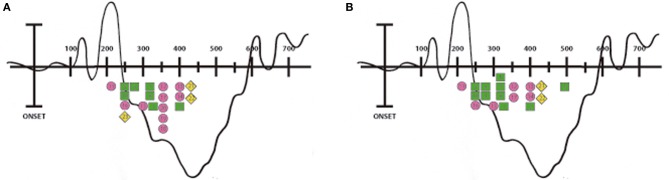
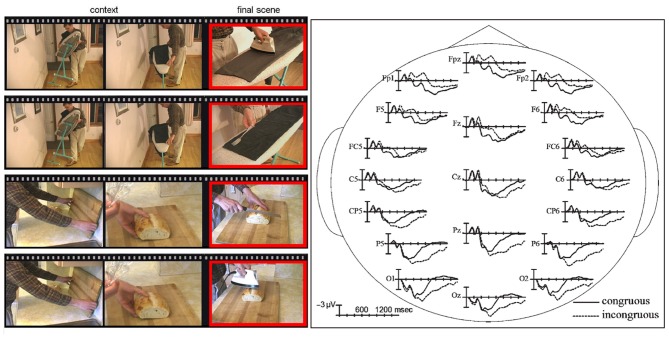
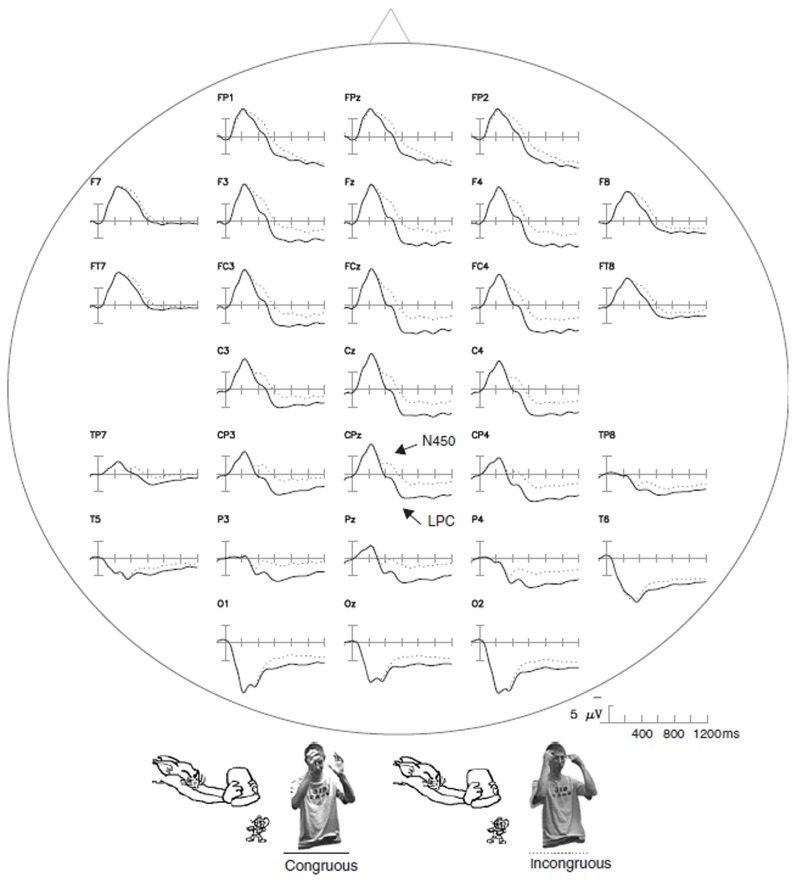
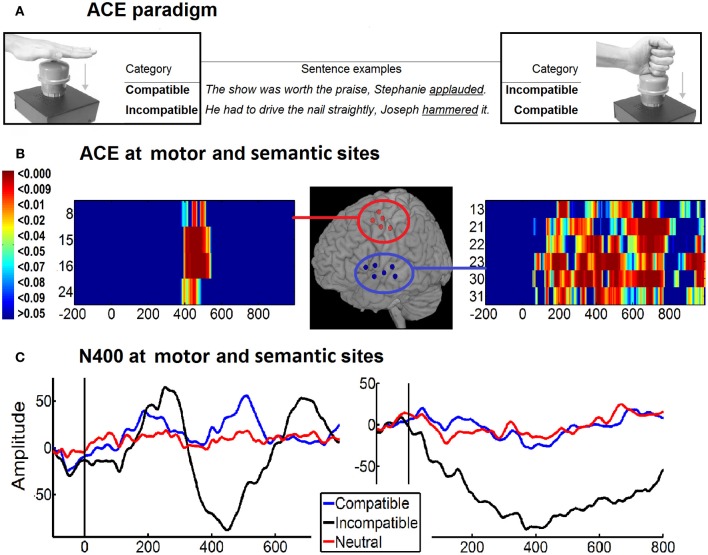
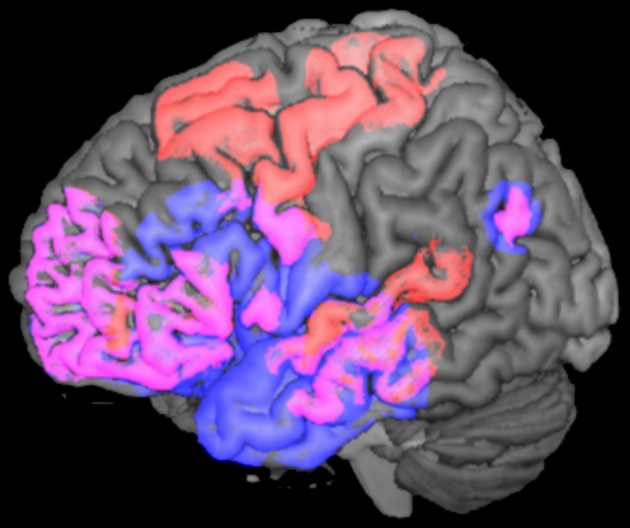
Converging neuroscientific evidence suggests the existence of close links between language and sensorimotor cognition. Accordingly, during the comprehension of meaningful actions, our brain would recruit semantic-related operations similar to those associated with the processing of language information. Consistent with this view, electrophysiological findings show that the N400 component, traditionally linked to the semantic processing of linguistic material, can also be elicited by action-related material. This review outlines recent data from N400 studies that examine the understanding of action events. We focus on three specific domains, including everyday action comprehension, co-speech gesture integration, and the semantics involved in motor planning and execution. Based on the reviewed findings, we suggest that both negativities (the N400 and the action-N400) reflect a common neurocognitive mechanism involved in the construction of meaning through the expectancies created by previous experiences and current contextual information. To shed light on how this process is instantiated in the brain, a testable contextual fronto-temporo-parietal model is proposed.
Overview
The claims and statistics of this paper haven’t been checked yet.
Run the check — free, no account needed. It reads the open-access text and checks the sources it cites.
Integrity signals
Registry
Cites
Statistics
Figures
Verification
Claims the paper makes
The claims and statistics of this paper haven’t been checked yet.
Run the check — free, no account needed. It reads the open-access text and checks the sources it cites.
Claims other papers make about this one
Each is checked against this paper’s own text: does it say what the citing paper says it does?
The source backs part of the claim, not all of it — or backs it for a different population, condition or comparison.
In the citing paper
“More negative N450 amplitudes were reported for incongruent set-ups and unexpected actions (Proverbio & Riva, 2009;Wu & Coulson, 2005; see also Amoruso et al., 2013).”
From Interplay of self-other distinction and cognitive control mechanisms in a social automatic imitation task: An ERP study (2021) · cites this paper as Amoruso et al., 2013
Experimental — accuracy not yet measured
Self-check
Percentages, sums and reported differences re-computed from the paper’s own numbers.
The self-check needs the paper’s full text.
Citations
Cites
Two new Later Stone Age sites from the Final Pleistocene in the Falémé Valley, eastern Senegal
Ndiaye, M., Lespez, L., Tribolo, C., Rassé, M., Hadjas, I., Davidoux, S., Huysecom, É., & Douze, K. (2024) · Monash University Research Portal (Monash University) · doi:10.3929/ethz-b-000667478 · Cited by 24,214
A spreading-activation theory of semantic processing.
Collins, A. M., & Loftus, E. F. (1975) · Psychological Review · doi:10.1037/0033-295x.82.6.407 · Cited by 8,141
Reading Senseless Sentences: Brain Potentials Reflect Semantic Incongruity
Marta Kutas, A., & Hillyard, S. A. (1980) · Science · doi:10.1126/science.7350657 · Cited by 5,029
Cummins, R., & Fodor, J. A. (1985) · The Philosophical Review · doi:10.2307/2184717 · Cited by 4,791
Kutas, M., & Federmeier, K. D. (2011) · Annual Review of Psychology · doi:10.1146/annurev.psych.093008.131123 · Cited by 4,377
Understanding motor events: a neurophysiological study
di Pellegrino, G., Fadiga, L., Fogassi, L., Gallese, V., & Rizzolatti, G. (1992) · Experimental Brain Research · doi:10.1007/bf00230027 · Cited by 3,539
The Brain's concepts: the role of the Sensory-motor system in conceptual knowledge
Gallese †, V., & Lakoff, G. (2005) · Cognitive Neuropsychology · doi:10.1080/02643290442000310 · Cited by 2,726
Where do you know what you know? The representation of semantic knowledge in the human brain
Patterson, K., Nestor, P. J., & Rogers, T. T. (2007) · Nature Reviews Neuroscience · doi:10.1038/nrn2277 · Cited by 2,706
Stereotaxic Display of Brain Lesions
Rorden, C., & Brett, M. (2000) · Behavioural Neurology · doi:10.1155/2000/421719 · Cited by 2,573
Glenberg, A. M., & Kaschak, M. P. (2002) · Psychonomic Bulletin & Review · doi:10.3758/bf03196313 · Cited by 2,361
Research works printed but not linked: 1
- Van Petten C. Kutas M. (1990). Interactions between sentence context and word frequency in event-related brain potentials. Mem. Cognit. 18, 380– 393 2381317
Cited by
Sorted by citations
Zacks, J. M. (2020) · Annual Review of Psychology · doi:10.1146/annurev-psych-010419-051101 · Cited by 397
Dolcos, F., Katsumi, Y., Moore, M., Berggren, N., de Gelder, B., Derakshan, N., Hamm, A. O., Koster, E. H. W., Ladouceur, C. D., Okon‐Singer, H., et al. (2019) · Neuroscience & Biobehavioral Reviews · doi:10.1016/j.neubiorev.2019.08.017 · Cited by 247
van Elk, M., van Schie, H. T., & Harold Bekkering, A. (2013) · Physics of Life Reviews · doi:10.1016/j.plrev.2013.11.005 · Cited by 195
A touch with words: Dynamic synergies between manual actions and language
García, A. M., & Ibáñez, A. M. (2016) · Neuroscience & Biobehavioral Reviews · doi:10.1016/j.neubiorev.2016.04.022 · Cited by 157
Pavone, E. F., Tieri, G., Rizza, G., Tidoni, E., Grisoni, L., & Aglioti, S. M. (2016) · Journal of Neuroscience · doi:10.1523/jneurosci.0494-15.2016 · Cited by 146
Your Brain on Comics: A Cognitive Model of Visual Narrative Comprehension
Cohn, N. (2019) · Topics in Cognitive Science · doi:10.1111/tops.12421 · Cited by 130
Tarhan, L., Watson, C. E., & Buxbaum, L. J. (2015) · Journal of Cognitive Neuroscience · doi:10.1162/jocn_a_00876 · Cited by 98
Time to Tango: Expertise and contextual anticipation during action observation
Amoruso, L., Sedeño, L., Huepe, D., Tomio, A., Kamienkowski, J. E., Hurtado, E., Cardona, J. F., González, M. Á. Á., Rieznik, A. A., Sigman, M., et al. (2014) · NeuroImage · doi:10.1016/j.neuroimage.2014.05.005 · Cited by 94
Self-citationCohn, N. (2014) · Frontiers in Psychology · doi:10.3389/fpsyg.2014.00680 · Cited by 77
Moseley, R. L., & Friedemann Pulvermüller, A. (2017) · Cortex · doi:10.1016/j.cortex.2017.11.019 · Cited by 81
Uncanny valley as a window into predictive processing in the social brain
Ürgen, B. A., Marta Kutas, A., & Saygın, A. P. (2018) · Neuropsychologia · doi:10.1016/j.neuropsychologia.2018.04.027 · Cited by 83
Cohn, N., & Marta Kutas, A. (2015) · Neuropsychologia · doi:10.1016/j.neuropsychologia.2015.08.026 · Cited by 69
The notion of the motion: The neurocognition of motion lines in visual narratives
Cohn, N., & Maher, S. M. (2015) · Brain Research · doi:10.1016/j.brainres.2015.01.018 · Cited by 71
Dance expertise modulates visual sensitivity to complex biological movements
Orlandi, A., Zani, A., & Proverbio, A. M. (2017) · Neuropsychologia · doi:10.1016/j.neuropsychologia.2017.08.019 · Cited by 55
Xue, J., Marmolejo‐Ramos, F., & Pei, X. (2015) · Brain Research · doi:10.1016/j.brainres.2015.03.050 · Cited by 43
Motor–Language Coupling in Huntington’s Disease Families
Kargieman, L., Herrera, E., Báez, S., García, A. M., Dottori, M., Gelormini‐Lezama, C., Manes, F. F., Gershanik, O. S., & Ibáñez, A. M. (2014) · Frontiers in Aging Neuroscience · doi:10.3389/fnagi.2014.00122 · Cited by 43
Self-citationProverbio, A. M., Calbi, M., Manfredi, M., & Zani, A. (2014) · Scientific Reports · doi:10.1038/srep05866 · Cited by 45
Wang, Y., Lu, Y., Deng, Y., Gu, N., Parviainen, T. M., & Zhou, C. (2019) · NeuroImage · doi:10.1016/j.neuroimage.2019.06.035 · Cited by 44
Manfredi, M., Cohn, N., de Pinho, P. S. M., Fernandez, E., & Boggio, P. S. (2020) · Journal of Autism and Developmental Disorders · doi:10.1007/s10803-020-04374-x · Cited by 39
In defense of a “grammar” in the visual language of comics
Cohn, N. (2018) · Journal of Pragmatics · doi:10.1016/j.pragma.2018.01.002 · Cited by 43
Misersky, J., Slivac, K., Peter Hagoort, A., & Flecken, M. (2021) · Cognition · doi:10.1016/j.cognition.2021.104744 · Cited by 36
Distinct brain signatures of content and structure violation during action observation
Maffongelli, L., Bartoli, E., Sammler, D., Koelsch, S., Campus, C., Olivier, E., Fadiga, L., & D’Ausilio, A. (2015) · Neuropsychologia · doi:10.1016/j.neuropsychologia.2015.05.020 · Cited by 35
Comprehending Body Language and Mimics: An ERP and Neuroimaging Study on Italian Actors and Viewers
Proverbio, A. M., Calbi, M., Manfredi, M., & Zani, A. (2014) · PLoS ONE · doi:10.1371/journal.pone.0091294 · Cited by 37
Cohn, N., & Marta Kutas, A. (2017) · Cognitive Research Principles and Implications · doi:10.1186/s41235-017-0064-5 · Cited by 32
Perceptual chunking and its effect on memory in speech processing: ERP and behavioral evidence
Gilbert, A. C., Boucher, V. J., & Jemel, B. (2014) · Frontiers in Psychology · doi:10.3389/fpsyg.2014.00220 · Cited by 31
Not so secret agents: Event-related potentials to semantic roles in visual event comprehension
Cohn, N., Paczynski, M., & Marta Kutas, A. (2017) · Brain and Cognition · doi:10.1016/j.bandc.2017.09.001 · Cited by 28
Markey, P. S., Jakesch, M., & Leder, H. (2019) · Brain and Cognition · doi:10.1016/j.bandc.2019.05.008 · Cited by 28
Casado, P., Martín‐Loeches, M., León, I., Hernández‐Gutiérrez, D., Espuny, J., Muñoz, F., Jiménez‐Ortega, L., Fondevila, S., & de Vega, M. (2017) · Cortex · doi:10.1016/j.cortex.2017.11.002 · Cited by 29
Wu, J., Du, X., Tong, M., Guo, Q., Shao, J., Chabebe, A., & Xue, C. (2022) · Human Factors and Ergonomics in Manufacturing & Service Industries · doi:10.1002/hfm.20979 · Cited by 25
Event Perception and MemoryPreprint
Zacks, J. M. (2019) · PsyArXiv (OSF Preprints) · doi:10.31234/osf.io/634dz · Cited by 30
Tomasino, B., & Rumiati, R. I. (2013) · Frontiers in Human Neuroscience · doi:10.3389/fnhum.2013.00498 · Cited by 22
Coderre, E. L., & Cohn, N. (2023) · Psychonomic Bulletin & Review · doi:10.3758/s13423-023-02334-x · Cited by 23
Mustile, M., Giocondo, F., Caligiore, D., Borghi, A. M., & Kourtis, D. (2021) · Journal of Cognitive Neuroscience · doi:10.1162/jocn_a_01690 · Cited by 19
The Fixation Distance to the Stimulus Influences ERP Quality: An EEG and Eye Tracking N400 Study
Domínguez‐Martínez, E., Parise, E., Strandvall, T., & Reid, V. M. (2015) · PLoS ONE · doi:10.1371/journal.pone.0134339 · Cited by 19
Özkan, D. G., Pezzetta, R., Moreau, Q., Abreu, A. M., & Aglioti, S. M. (2019) · Experimental Brain Research · doi:10.1007/s00221-019-05677-x · Cited by 19
ERP signs of categorical and supra-categorical processing of visual information
Zani, A., Marsili, G., Senerchia, A., Orlandi, A., CITRON, F. M. M., Rizzi, E., & Proverbio, A. M. (2014) · Biological Psychology · doi:10.1016/j.biopsycho.2014.11.012 · Cited by 18
The Ontogenesis of Action Syntax
Maffongelli, L., D’Ausilio, A., Fadiga, L., & Daum, M. M. (2019) · Collabra Psychology · doi:10.1525/collabra.215 · Cited by 18
Cervetto, S., Díaz-Rivera, M. N., Petroni, A., Birba, A., Caro, M. M., Sedeño, L., Ibáñez, A., & García, A. (2021) · Journal of Cognitive Neuroscience · doi:10.1162/jocn_a_01732 · Cited by 17
You Move, I Watch, It Matters: Aesthetic Communication in Dance
Orgs, G., Caspersen, D., & Haggard, P. (2016) · Shared Representations · doi:10.1017/cbo9781107279353.031 · Cited by 26
Zooming in on the cognitive neuroscience of visual narrative
Cohn, N., & Foulsham, T. (2020) · Brain and Cognition · doi:10.1016/j.bandc.2020.105634 · Cited by 17
Revealing the mechanisms of semantic satiation with deep learning models
Zhang, X., Lian, J., Yu, Z., Tang, H., Liang, D. S., Liu, J., & Liu, J. K. (2024) · Communications Biology · doi:10.1038/s42003-024-06162-0 · Cited by 17
Homuncular mirrors: misunderstanding causality in embodied cognition
Mikulan, E., Reynaldo, L., & Ibáñez, A. M. (2014) · Frontiers in Human Neuroscience · doi:10.3389/fnhum.2014.00299 · Cited by 19
Syntactical regularities of action sequences in the infant brain: when structure matters
Maffongelli, L., Antognini, K., & Daum, M. M. (2018) · Developmental Science · doi:10.1111/desc.12682 · Cited by 20
Electrophysiological indexes of ToM and non-ToM humor in healthy adults
Manfredi, M., Proverbio, A. M., de Pinho, P. S. M., Ribeiro, B. C. D. F., Comfort, W. E., Marques, L. M., & Boggio, P. S. (2020) · Experimental Brain Research · doi:10.1007/s00221-020-05753-7 · Cited by 18
Orgs, G., Caspersen, D., & Haggard, P. (2016) · Cambridge University Press eBooks · doi:10.1017/cbo9781107279353 · Cited by 15
Verb naming fluency in hypokinetic and hyperkinetic movement disorders
Bayram, E., & Akbostancı, M. C. (2017) · Cortex · doi:10.1016/j.cortex.2017.06.014 · Cited by 15
Santamaría‐García, H. A., Ibáñez, A. M., Montaño, S., García, A. M., Patiño-Sáenz, M., Idárraga-Cabrera, C., Pino, M., & Báez, S. (2019) · Frontiers in Behavioral Neuroscience · doi:10.3389/fnbeh.2019.00034 · Cited by 15
Verbal working memory and co-speech gesture processing
Momsen, J., Gordon, J., Wu, Y. C., & Seana Coulson, A. (2020) · Brain and Cognition · doi:10.1016/j.bandc.2020.105640 · Cited by 14
Huffer, V., Bader, R., & Mecklinger, A. (2022) · Neurobiology of Learning and Memory · doi:10.1016/j.nlm.2022.107655 · Cited by 14
The developmental cognitive neuroscience of action: semantics, motor resonance and social processing
Choisdealbha, Á. N., & Reid, V. M. (2014) · Experimental Brain Research · doi:10.1007/s00221-014-3924-y · Cited by 17
Plank, M., Snider, J., Kaestner, E. J., Halgren, E., & Howard Poizner, A. (2014) · Journal of Neurophysiology · doi:10.1152/jn.00114.2014 · Cited by 15
Event-related potentials discriminate familiar and unusual goal outcomes in 5-month-olds and adults.
Michel, C., Kaduk, K., Choisdealbha, Á. N., & Reid, V. M. (2017) · Developmental Psychology · doi:10.1037/dev0000376 · Cited by 13
Makowski, D., Sperduti, M., Pelletier, J., Blondé, P., Corte, V. L., Arcangeli, M., Zalla, T., Lemaire, S., Dokic, J., Nicolas, S., et al. (2019) · Cognitive Affective & Behavioral Neuroscience · doi:10.3758/s13415-018-00681-0 · Cited by 14
Neural Basis of the Time Window for Subjective Motor-Auditory Integration
Toida, K., Ueno, K., & Shimada, S. (2016) · Frontiers in Human Neuroscience · doi:10.3389/fnhum.2015.00688 · Cited by 13
Natraj, N., Alterman, B. L., Basunia, S., & Wheaton, L. A. (2018) · Neuroscience · doi:10.1016/j.neuroscience.2018.10.019 · Cited by 12
Fisher, V. J. (2021) · Frontiers in Psychology · doi:10.3389/fpsyg.2021.624689 · Cited by 11
Expertise influences congruency monitoring during action observation at the motor level
Zhao, Q., Wang, Y., Chen, Y., Wang, Y., Zhou, C., & Lu, Y. (2021) · Social Cognitive and Affective Neuroscience · doi:10.1093/scan/nsab078 · Cited by 12
What’s Behind the Graphic? The Impact of Pictogram-Semantic Mapping Structure on Icon Understanding
Hou, G., & Pan, Y. (2025) · International Journal of Human-Computer Interaction · doi:10.1080/10447318.2025.2466063 · Cited by 13
Pace, A. E., Levine, D., Golinkoff, R. M., Carver, L. J., & Hirsh‐Pasek, K. (2020) · Infant Behavior and Development · doi:10.1016/j.infbeh.2020.101425 · Cited by 10
Understanding approach and avoidance in verbal descriptions of everyday actions: An ERP study
Marrero, H., Urrutia, M., Beltrán, D., Gámez, E., & Gómez, J. M. D. (2017) · Cognitive Affective & Behavioral Neuroscience · doi:10.3758/s13415-017-0500-5 · Cited by 10
Cao, F., Zeng, K., Li, W., Liu, S., Zhang, L., Katembu, S., & Xu, Q. (2021) · Biological Psychology · doi:10.1016/j.biopsycho.2021.108247 · Cited by 11
Marrero, H., Yagual, S. N., Lemus, A., García‐Marco, E., Gómez, J. M. D., Gámez, E., Urrutia, M., & Beltrán, D. (2022) · Cerebral Cortex · doi:10.1093/cercor/bhac136 · Cited by 9
Conventionality determines the time course of indirect replies comprehension: An ERP study
Zhang, X., Pan, X., Yang, X. H., & Yang, Y. (2023) · Brain and Language · doi:10.1016/j.bandl.2023.105253 · Cited by 9
Embodiment Effect on the Comprehension of Mandarin Manual Action Language: An ERP Study
Wang, H., Li, J., Wang, X., Jiang, M., Cong, F., & de Vega, M. (2019) · Journal of Psycholinguistic Research · doi:10.1007/s10936-018-09627-6 · Cited by 9
Photographs of Actions: What Makes Them Special Cues to Social Perception
Kislinger, L. (2021) · Brain Sciences · doi:10.3390/brainsci11111382 · Cited by 8
Effects of Semantic Richness on Lexical Processing in Monolinguals and Bilinguals
Taler, V., Zunini, R. A. L., & Kousaie, S. (2016) · Frontiers in Human Neuroscience · doi:10.3389/fnhum.2016.00382 · Cited by 8
Decroix, J., Roger, C., & Kalénine, S. (2020) · Scientific Reports · doi:10.1038/s41598-020-61963-7 · Cited by 8
Rauchbauer, B., Lorenz, C., Lamm, C., & Pfabigan, D. M. (2021) · Cognitive, Affective, & Behavioral Neuroscience · doi:10.3758/s13415-021-00878-w · Cited by 8
Making sense of human interaction benefits from communicative cues
Kourtis, D., Jacob, P., Sebanz, N., Sperber, D., & Knoblich, G. (2020) · Scientific Reports · doi:10.1038/s41598-020-75283-3 · Cited by 7
Structural complexity in visual narratives : Theory, brains, and cross-cultural diversity
Cohn, N. (2019) · Data Archiving and Networked Services (DANS) · Cited by 7
Syrov, N., Bredikhin, D., Yakovlev, L., Miroshnikov, A., & Kaplan, A. (2022) · Frontiers in Human Neuroscience · doi:10.3389/fnhum.2022.973229 · Cited by 8
Patzwald, C., Matthes, D., & Elsner, B. (2020) · Infant Behavior and Development · doi:10.1016/j.infbeh.2019.101414 · Cited by 6
Al-Azary, H., Yu, T., & McRae, K. (2022) · Brain and Language · doi:10.1016/j.bandl.2022.105147 · Cited by 6
Ke, H., Vuong, Q. C., & Geangu, E. (2022) · Journal of Experimental Child Psychology · doi:10.1016/j.jecp.2022.105497 · Cited by 8
Electrophysiological Correlates of Racial In-group Bias in Observing Nonverbal Social Encounters
Katsumi, Y., Dolcos, F., Moore, M., Bartholow, B. D., Fabiani, M., & Dolcos, S. M. (2019) · Journal of Cognitive Neuroscience · doi:10.1162/jocn_a_01475 · Cited by 6
Altered event processing in persons with Parkinson’s disease
Wyrobnik, M., van der Meer, E. E., & Klostermann, F. (2022) · Psychophysiology · doi:10.1111/psyp.14021 · Cited by 6
Electrophysiological alterations during action semantic processing in Parkinson’s disease
Rivera, M. D., Amoruso, L., Bocanegra, Y., Suárez-Revelo, J. X., Moreno, L., Muñoz, É., Birba, A., & García, A. M. (2024) · Neurobiology of Aging · doi:10.1016/j.neurobiolaging.2024.01.001 · Cited by 5
Self-citationUnraveling the interplay of emotions in art and music: An event-related potential investigation
Benedetto, F. D., Ghiraldini, E., Capizzi, N., & Proverbio, A. M. (2024) · Psychology of Music · doi:10.1177/03057356241245997 · Cited by 5
Hung, J., Edmonds, L. A., & Reilly, J. J. (2016) · Language Cognition and Neuroscience · doi:10.1080/23273798.2016.1198818 · Cited by 5
Negation interacts with motivational direction in understanding action sentences
Marrero, H., Yagual, S. N., Gámez, E., Urrutia, M., Gómez, J. M. D., & Beltrán, D. (2020) · PLoS ONE · doi:10.1371/journal.pone.0234304 · Cited by 5
Gender-dependent variations in optical illusions: evidence from N400 waveforms
Papageorgiou, C., Stachtea, X., Papageorgiou, P. C., Alexandridis, A. T., Makris, G., Chrousos, G. P., & Kosteletos, G. (2020) · Physiological Measurement · doi:10.1088/1361-6579/abb2eb · Cited by 5
Left centro-parieto-temporal response to tool–gesture incongruity: an ERP study
Chang, Y.-T., Chen, H.-Y., Huang, Y.-C., Shih, W.-Y., Chan, H., Wu, P.-Y., Meng, L.-F., Chen, C.-C., & Wang, C.-I. (2018) · Behavioral and Brain Functions · doi:10.1186/s12993-018-0138-7 · Cited by 4
Sun, H., Verbeke, W. J. M. I., Belschak, F. D., Strien, J. W. V., & Wang, L. (2021) · Frontiers in Neuroscience · doi:10.3389/fnins.2021.649941 · Cited by 4
Object Ownership Processing in Peripersonal Space: An Electroencephalographic Study
Lenglart, L., Roger, C., Sampaio, A., & Coello, Y. (2025) · Journal of Cognitive Neuroscience · doi:10.1162/jocn_a_02337 · Cited by 3
Electrophysiology of Semantic Processing in ASD
Manfredi, M., & Coderre, E. L. (2023) · Springer eBooks · doi:10.1007/978-3-031-42383-3_19 · Cited by 3
AN ANALYSIS OF BRAND ASSOCIATION PERCEPTION USING N400 EVOKED POTENTIALPreprint
Nedelko, A., Lupova, O., Gorin, A., Kuznetsova, A., Klucharev, V., & Shestakova, A. (2017) · SSRN Electronic Journal · doi:10.2139/ssrn.3029154 · Cited by 4
Neural Representations of Grasp Congruence During the Emergence of Precision Grasping
Choisdealbha, Á. N., Westermann, G., & Reid, V. M. (2025) · Infancy · doi:10.1111/infa.70026 · Cited by 2
Jano, S., Chatburn, A., Cross, Z. R., Schlesewsky, M., & Bornkessel‐Schlesewsky, I. (2024) · Neurobiology of Learning and Memory · doi:10.1016/j.nlm.2024.108006 · Cited by 4
Song, J., Liang, J., Che, M., & Han, G. (2025) · Biological Psychology · doi:10.1016/j.biopsycho.2025.109072 · Cited by 2
Cheng, L. L., Wang, X., Mao, H., Liu, Y., Yuan, W., Wang, P., Hou, N., & Peng, Y. (2025) · Journal of Autism and Developmental Disorders · doi:10.1007/s10803-025-06915-8 · Cited by 2
Detección de información oculta mediante potenciales relacionados con eventos
Levy, O. T., Álvarez, M., Melgar, N., & Manzanero, A. L. (2014) · Anuario de Psicología Jurídica · doi:10.1016/j.apj.2014.06.004 · Cited by 2
Syntactic Language Processing among Women - An EEG/ERP Study of Visual Pictorial Stimuli
Zaidil, N. N., Begum, T., Rauf, R. A., Ying, J. H., Reza, F., & Al-Marri, F. (2018) · IEEE-EMBS Conference on Biomedical Engineering and Sciences · doi:10.1109/iecbes.2018.8626694 · Cited by 2
Time course of indirect reply processing in native and non-native Mandarin speakers: An ERP study
Zhang, X., Pan, X., Wang, Y., Xu, M., & Privitera, A. J. (2024) · Bilingualism Language and Cognition · doi:10.1017/s1366728924000695 · Cited by 1
The cognitive neuropsychology of action semantics: A review
Lebkuecher, A. L., Coslett, H. B., & Buxbaum, L. J. (2025) · Cortex · doi:10.1016/j.cortex.2025.11.008 · Cited by 2
Caldiroli, C. L., & Balconi, M. (2016) · Communications in computer and information science · doi:10.1007/978-3-319-32270-4_27 · Cited by 1
Cómo el diseño puede utilizar las neurociencias
Pérez, M. P., Martínez, S. L. P., & González, M. Á. Á. (2016) · Revista científica de Arquitectura y Urbanismo · Cited by 1
Kalénine, S., & Decroix, J. (2023) · Neuropsychologia · doi:10.1016/j.neuropsychologia.2023.108658 · Cited by 1
Event Segmentation in the Audio Description of Films
Holšánová, J., Blomberg, J., Blomberg, F., Gärdenfors, P., & Johansson, R. (2023) · Journal of Audiovisual Translation · doi:10.47476/jat.v6i1.2023.245 · Cited by 2
Detection of semantic inconsistencies of motor actions: From language to praxis
Agustín, R. T., González, Z. B., Rodríguez-Camacho, M. A., Almonte, S., Galindo, W. F. L., & Aguirre, F. A. R. (2024) · Cognitive Systems Research · doi:10.1016/j.cogsys.2024.101292 · Cited by 1
de Nooijer, J. A., Gootjes, L., van Gog, T., PAAS, F. G. W. C., & Zwaan, R. A. (2015) · Language Cognition and Neuroscience · doi:10.1080/23273798.2015.1062901 · Cited by 1
Metadata
- Authors
- Amoruso, L., Gelormini, C., Aboitiz, F., Alvarez González, M., Manes, F., Cardona, J. F., & Ibanez, A.
- Affiliations
- Consejo Nacional de Investigaciones Científicas y Técnicas (AR)
- Instituto de Neurología Cognitiva (AR)
- Venue
- Frontiers in Human Neuroscience
- Publisher
- Frontiers Media SA
- Published
- 2013
- Volume
- 7
- Pages
- 57-57
- ISSN
- 1662-5161 (ISSN-L)
- PMC
- PMC3586681
- OpenAlex
- W1970882908
- Cited by
- 125
- References
- 157
- Citations by year
- 2026: 8 · 2025: 8 · 2024: 9 · 2023: 7 · 2022: 9 · 2021: 12 · 2020: 14 · 2019: 12 · 2018: 7 · 2017: 9 · 2016: 9 · 2015: 7 · 2014: 12 · 2013: 2
- FWCI
- 15.01
- Type
- journal article
- Language
- en
- Open access
- gold
- doi.org
- Licence
- cc-by
- Locations
- Frontiers in Human Neuroscience (publishedVersion, cc-by)
- Europe PMC (PubMed Central) (publishedVersion, cc-by)
- PubMed Central (publishedVersion, cc-by)
- PubMed (publishedVersion)
- Americanae (AECID Library) (submittedVersion, other-oa)
- Americanae (AECID Library) (submittedVersion, cc-by)
- DOAJ (DOAJ: Directory of Open Access Journals) (submittedVersion, cc-by-sa)
- LA Referencia (Red Federada de Repositorios Institucionales de Publicaciones Científicas) (submittedVersion, other-oa)
- LA Referencia (Red Federada de Repositorios Institucionales de Publicaciones Científicas) (submittedVersion, cc-by)
- Funders
- U.S. Department of Veterans Affairs (HIR 10-001)
- Fundación INECO
- Consejo Nacional de Investigaciones Científicas y Técnicas (1130920)
- Topics
- Social Sciences › Psychology › Social Psychology › Action Observation and Synchronization
- Life Sciences › Neuroscience › Cognitive Neuroscience › Neurobiology of Language and Bilingualism
- Social Sciences › Arts and Humanities › Philosophy › Free Will and Agency
- Keywords
- N400, action understanding, event understanding, co-speech gestures, motor planning, semantic processing, contextual expectations, meaning-making
About these checks
Registry, retraction, Cites and statistics results are computed, not judged, with one exception: a printed reference that no index lists is read once by a model before it counts as a citation error. Claims are extracted by a model and kept only when their quote appears verbatim in the text; each cited source is then checked, with a model’s help, for whether it says what the claim relies on. Those verdicts can be wrong — read the claim’s quote and the cited source before relying on one.
Statistics and arithmetic are recomputed, not judged.
Confidence bands are shown only for fields calibrated on our annotated test set. None is calibrated yet, so no band is shown.
What counts as a claim ›How we measure confidence ›How we check this ›
Are you an author, or do you see a problem with this page? Request a review
