

The DOI matches its Crossref record; 151 of the 157 references it cites were found in a registry or an index.
N400 ERPs for actions: building meaning in context
Open accessAbstract
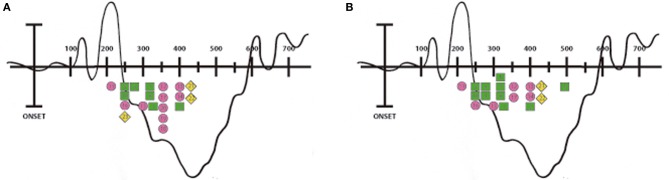
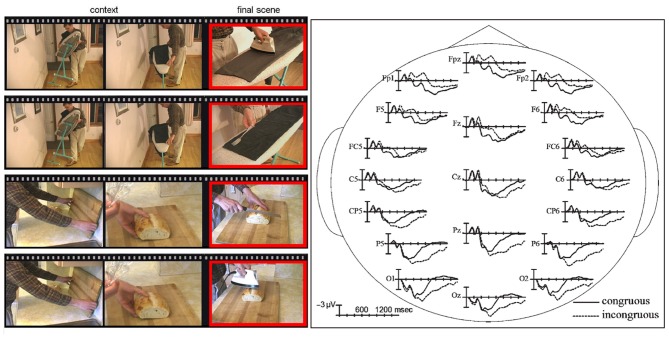
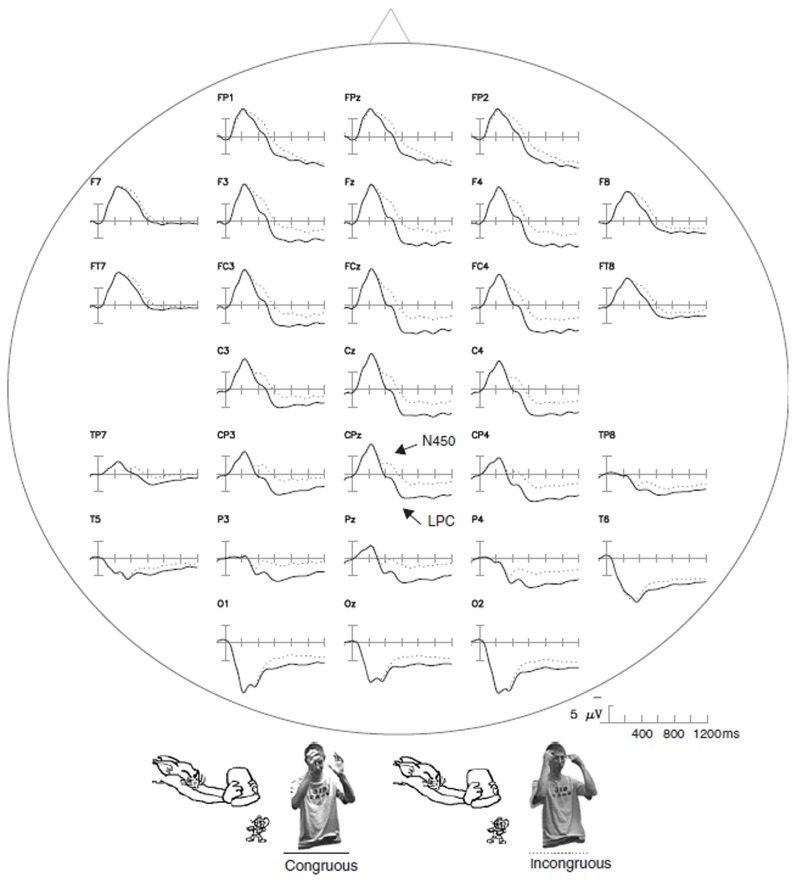
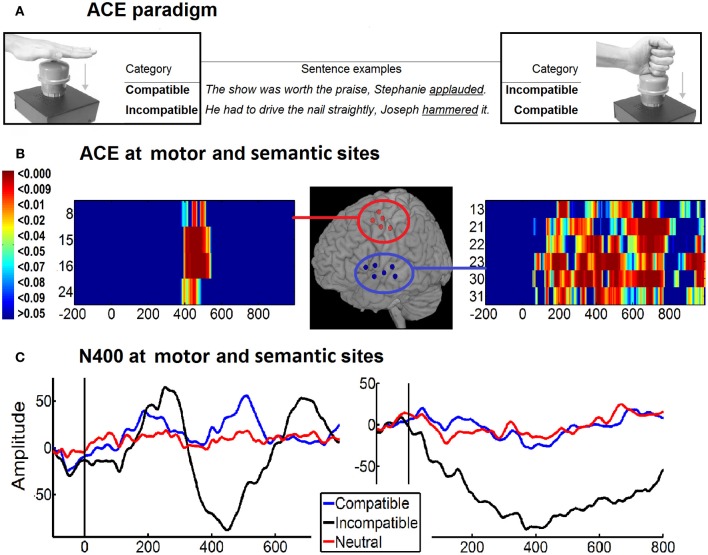
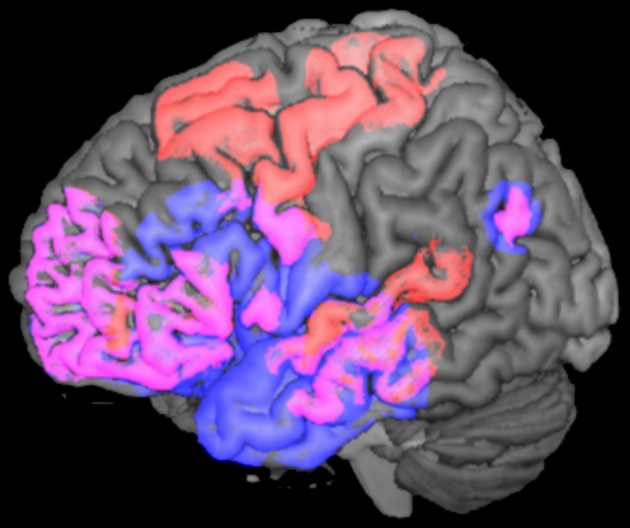
Converging neuroscientific evidence suggests the existence of close links between language and sensorimotor cognition. Accordingly, during the comprehension of meaningful actions, our brain would recruit semantic-related operations similar to those associated with the processing of language information. Consistent with this view, electrophysiological findings show that the N400 component, traditionally linked to the semantic processing of linguistic material, can also be elicited by action-related material. This review outlines recent data from N400 studies that examine the understanding of action events. We focus on three specific domains, including everyday action comprehension, co-speech gesture integration, and the semantics involved in motor planning and execution. Based on the reviewed findings, we suggest that both negativities (the N400 and the action-N400) reflect a common neurocognitive mechanism involved in the construction of meaning through the expectancies created by previous experiences and current contextual information. To shed light on how this process is instantiated in the brain, a testable contextual fronto-temporo-parietal model is proposed.
Overview
The claims and statistics of this paper haven’t been checked yet.
Run the check — free, no account needed. It reads the open-access text and checks the sources it cites.
Integrity signals
Registry
Cites
Statistics
Figures
Verification
Claims the paper makes
The claims and statistics of this paper haven’t been checked yet.
Run the check — free, no account needed. It reads the open-access text and checks the sources it cites.
Claims other papers make about this one
Each is checked against this paper’s own text: does it say what the citing paper says it does?
The source backs part of the claim, not all of it — or backs it for a different population, condition or comparison.
In the citing paper
“More negative N450 amplitudes were reported for incongruent set-ups and unexpected actions (Proverbio & Riva, 2009;Wu & Coulson, 2005; see also Amoruso et al., 2013).”
From Interplay of self-other distinction and cognitive control mechanisms in a social automatic imitation task: An ERP study (2021) · cites this paper as Amoruso et al., 2013
Experimental — accuracy not yet measured
Self-check
Percentages, sums and reported differences re-computed from the paper’s own numbers.
The self-check needs the paper’s full text.
Citations
Cites
Two new Later Stone Age sites from the Final Pleistocene in the Falémé Valley, eastern Senegal
Ndiaye, M., Lespez, L., Tribolo, C., Rassé, M., Hadjas, I., Davidoux, S., Huysecom, É., & Douze, K. (2024) · Monash University Research Portal (Monash University) · doi:10.3929/ethz-b-000667478 · Cited by 24,214
A spreading-activation theory of semantic processing.
Collins, A. M., & Loftus, E. F. (1975) · Psychological Review · doi:10.1037/0033-295x.82.6.407 · Cited by 8,141
Reading Senseless Sentences: Brain Potentials Reflect Semantic Incongruity
Marta Kutas, A., & Hillyard, S. A. (1980) · Science · doi:10.1126/science.7350657 · Cited by 5,029
Cummins, R., & Fodor, J. A. (1985) · The Philosophical Review · doi:10.2307/2184717 · Cited by 4,791
Kutas, M., & Federmeier, K. D. (2011) · Annual Review of Psychology · doi:10.1146/annurev.psych.093008.131123 · Cited by 4,377
Understanding motor events: a neurophysiological study
di Pellegrino, G., Fadiga, L., Fogassi, L., Gallese, V., & Rizzolatti, G. (1992) · Experimental Brain Research · doi:10.1007/bf00230027 · Cited by 3,539
The Brain's concepts: the role of the Sensory-motor system in conceptual knowledge
Gallese †, V., & Lakoff, G. (2005) · Cognitive Neuropsychology · doi:10.1080/02643290442000310 · Cited by 2,726
Where do you know what you know? The representation of semantic knowledge in the human brain
Patterson, K., Nestor, P. J., & Rogers, T. T. (2007) · Nature Reviews Neuroscience · doi:10.1038/nrn2277 · Cited by 2,706
Stereotaxic Display of Brain Lesions
Rorden, C., & Brett, M. (2000) · Behavioural Neurology · doi:10.1155/2000/421719 · Cited by 2,573
Glenberg, A. M., & Kaschak, M. P. (2002) · Psychonomic Bulletin & Review · doi:10.3758/bf03196313 · Cited by 2,361
Research works printed but not linked: 1
- Van Petten C. Kutas M. (1990). Interactions between sentence context and word frequency in event-related brain potentials. Mem. Cognit. 18, 380– 393 2381317
Cited by
Sorted by citations
Items 101–125 of 125
Starodubcev, A. S., & Allakhverdov, V. M. (2020) · Experimental Psychology (Russia) · doi:10.17759/exppsy.2020130102 · Cited by 1
Rocco, G., Rix, H., Lebrun, J., Guetat, S., Chanquoy, L., Meste, O., & Magnié-Mauro, M.-N. (2021) · Annual International Conference of the IEEE Engineering in Medicine and Biology Society (EMBC) · doi:10.1109/embc46164.2021.9630271 · Cited by 1
Disorders of social cognition in children
Chutko, L. S., Surushkina, S. Y., & Yakovenko, E. A. (2023) · S S Korsakov Journal of Neurology and Psychiatry · doi:10.17116/jnevro202312301134 · Cited by 1
Cohn, N., & Maher, S. M. (2014) · eScholarship (California Digital Library)
Peng, N., Ma, J., & Xue, C. (2018) · Advances in intelligent systems and computing · doi:10.1007/978-3-030-02053-8_28
Theoretical and genetic correlations between language and movement
Grassia, G., & Addeo, S. (2020) · Journal of Advanced Health Care · doi:10.36017/jahc2006-002
Ke, H., Vuong, Q. C., & Geangu, E. (2021) · doi:10.31234/osf.io/eyfqm
Rocco, G., Rix, H., Lebrun, J., Guetat, S., CHANQUOY, L., Meste, O., & Magnié-Mauro, M.-N. (2022) · doi:10.31219/osf.io/ceu7w
Rocco, G., Rix, H., Lebrun, J., Guetat, S., Chanquoy, L., Meste, O., & Magnié-Mauro, M.-N. (2022) · doi:10.31234/osf.io/sja8p
Tkacheva, L. O., Flaksman, M., Sedelkina, Y., Lavitskaya, Y., Nasledov, A., & Korotaevskaya, E. (2023) · Brain Sciences · doi:10.3390/brainsci13040681
Event boundary perception in audio described films by people without sight
Johansson, R., Rastegar, T., Åhlander, V. L., & Holšánová, J. (2024) · Applied Cognitive Psychology · doi:10.1002/acp.4228
Neural representations of grasp congruence during the emergence of precision graspingPreprint
Choisdealbha, Á. N., Westermann, G., & Reid, V. M. (2024) · doi:10.31234/osf.io/s52ch
Jano, S., Schlesewsky, M., Chatburn, A., Coussens, S. W., Cross, Z. R., & Bornkessel‐Schlesewsky, I. (2024) · bioRxiv (Cold Spring Harbor Laboratory) · doi:10.1101/2024.09.27.615404
Cross-codal bridging information processing by L1 Chinese speakers: An ERP study
Zhang, C., & Tsimpli, I. M. (2026) · Brain and Language · doi:10.1016/j.bandl.2026.105754
Chan, S. C. C., & Tsoi, T. C. W. (2025) · PLoS ONE · doi:10.1371/journal.pone.0327138
An ERP study on the pragmatic processing of Korean honorifics and politeness
Jeong, H., Lee, S., Kiaer, J., Jang, H., Brown, L., & Kim, J. (2025) · Korean Linguistics · doi:10.1075/kl.00012.jeo
Urrutia, M., Pino, E. J., Troncoso-Seguel, M. P., Bustos, C., Guevara, P., Torres-Ocampo, K., Mariángel, S., Fu, Y., & Marrero, H. (2026) · Frontiers in Psychology · doi:10.3389/fpsyg.2026.1692021
Toward a spatiotemporal neurocognitive framework of manipulable object processing
Baião, M., Amaral, L., Almeida, J., & Besson, G. (2026) · Neuroscience & Biobehavioral Reviews · doi:10.1016/j.neubiorev.2026.106787
Sütçübaşı, B., Sağır, G., Ergün, A. N., & Özdoğru, A. A. (2026) · Üniversite Araştırmaları Dergisi · doi:10.32329/uad.1740028
Ge, X., & Dong, Y. (2026) · Language Cognition and Neuroscience · doi:10.1080/23273798.2026.2687032
Harada, Y., Hino, S., & Yamashita, S. (2026) · Behavioural Brain Research · doi:10.1016/j.bbr.2026.116392
Beyond single-person paradigms: N400 alterations in a social context in schizophrenia
Fullajtár, M., Kakuszi, B., Bitter, I., & Czobor, P. (2026) · Frontiers in Psychiatry · doi:10.3389/fpsyt.2026.1922640
N400 sensitivity to inhibitory load during ambiguous word processing
Raviv, H., Ben-Atar, R., & Mashal, N. (2026) · Cerebral Cortex · doi:10.1093/cercor/bhag147
Metadata
- Authors
- Amoruso, L., Gelormini, C., Aboitiz, F., Alvarez González, M., Manes, F., Cardona, J. F., & Ibanez, A.
- Affiliations
- Consejo Nacional de Investigaciones Científicas y Técnicas (AR)
- Instituto de Neurología Cognitiva (AR)
- Venue
- Frontiers in Human Neuroscience
- Publisher
- Frontiers Media SA
- Published
- 2013
- Volume
- 7
- Pages
- 57-57
- ISSN
- 1662-5161 (ISSN-L)
- PMC
- PMC3586681
- OpenAlex
- W1970882908
- Cited by
- 125
- References
- 157
- Citations by year
- 2026: 8 · 2025: 8 · 2024: 9 · 2023: 7 · 2022: 9 · 2021: 12 · 2020: 14 · 2019: 12 · 2018: 7 · 2017: 9 · 2016: 9 · 2015: 7 · 2014: 12 · 2013: 2
- FWCI
- 15.01
- Type
- journal article
- Language
- en
- Open access
- gold
- doi.org
- Licence
- cc-by
- Locations
- Frontiers in Human Neuroscience (publishedVersion, cc-by)
- Europe PMC (PubMed Central) (publishedVersion, cc-by)
- PubMed Central (publishedVersion, cc-by)
- PubMed (publishedVersion)
- Americanae (AECID Library) (submittedVersion, other-oa)
- Americanae (AECID Library) (submittedVersion, cc-by)
- DOAJ (DOAJ: Directory of Open Access Journals) (submittedVersion, cc-by-sa)
- LA Referencia (Red Federada de Repositorios Institucionales de Publicaciones Científicas) (submittedVersion, other-oa)
- LA Referencia (Red Federada de Repositorios Institucionales de Publicaciones Científicas) (submittedVersion, cc-by)
- Funders
- U.S. Department of Veterans Affairs (HIR 10-001)
- Fundación INECO
- Consejo Nacional de Investigaciones Científicas y Técnicas (1130920)
- Topics
- Social Sciences › Psychology › Social Psychology › Action Observation and Synchronization
- Life Sciences › Neuroscience › Cognitive Neuroscience › Neurobiology of Language and Bilingualism
- Social Sciences › Arts and Humanities › Philosophy › Free Will and Agency
- Keywords
- N400, action understanding, event understanding, co-speech gestures, motor planning, semantic processing, contextual expectations, meaning-making
About these checks
Registry, retraction, Cites and statistics results are computed, not judged, with one exception: a printed reference that no index lists is read once by a model before it counts as a citation error. Claims are extracted by a model and kept only when their quote appears verbatim in the text; each cited source is then checked, with a model’s help, for whether it says what the claim relies on. Those verdicts can be wrong — read the claim’s quote and the cited source before relying on one.
Statistics and arithmetic are recomputed, not judged.
Confidence bands are shown only for fields calibrated on our annotated test set. None is calibrated yet, so no band is shown.
What counts as a claim ›How we measure confidence ›How we check this ›
Are you an author, or do you see a problem with this page? Request a review
