

The DOI matches its Crossref record; 236 of the 241 references it cites were found in a registry or an index.
What makes the dorsomedial frontal cortex active during reading the mental states of others?
Open accessAbstract
The dorsomedial frontal part of the cerebral cortex is consistently activated when people read the mental states of others, such as their beliefs, desires, and intentions, the ability known as having a theory of mind (ToM) or mentalizing. This ubiquitous finding has led many researchers to conclude that the dorsomedial frontal cortex (DMFC) constitutes a core component in mentalizing networks. Despite this, it remains unclear why the DMFC becomes active during ToM tasks. We argue that key psychological and behavioral aspects in mentalizing are closely associated with DMFC functions. These include executive inhibition, distinction between self and others, prediction under uncertainty, and perception of intentions, all of which are important for predicting others' intention and behavior. We review the literature supporting this claim, ranging in fields from developmental psychology to human neuroimaging and macaque electrophysiology. Because perceiving intentions in others' actions initiates mentalizing and forms the basis of virtually all types of social interaction, the fundamental issue in social neuroscience is to determine the aspects of physical entities that make an observer perceive that they are intentional beings and to clarify the neurobiological underpinnings of the perception of intentionality in others' actions.
Overview
The claims and statistics of this paper haven’t been checked yet.
Run the check — free, no account needed. It reads the open-access text and checks the sources it cites.
Integrity signals
Registry
Cites
Statistics
Figures
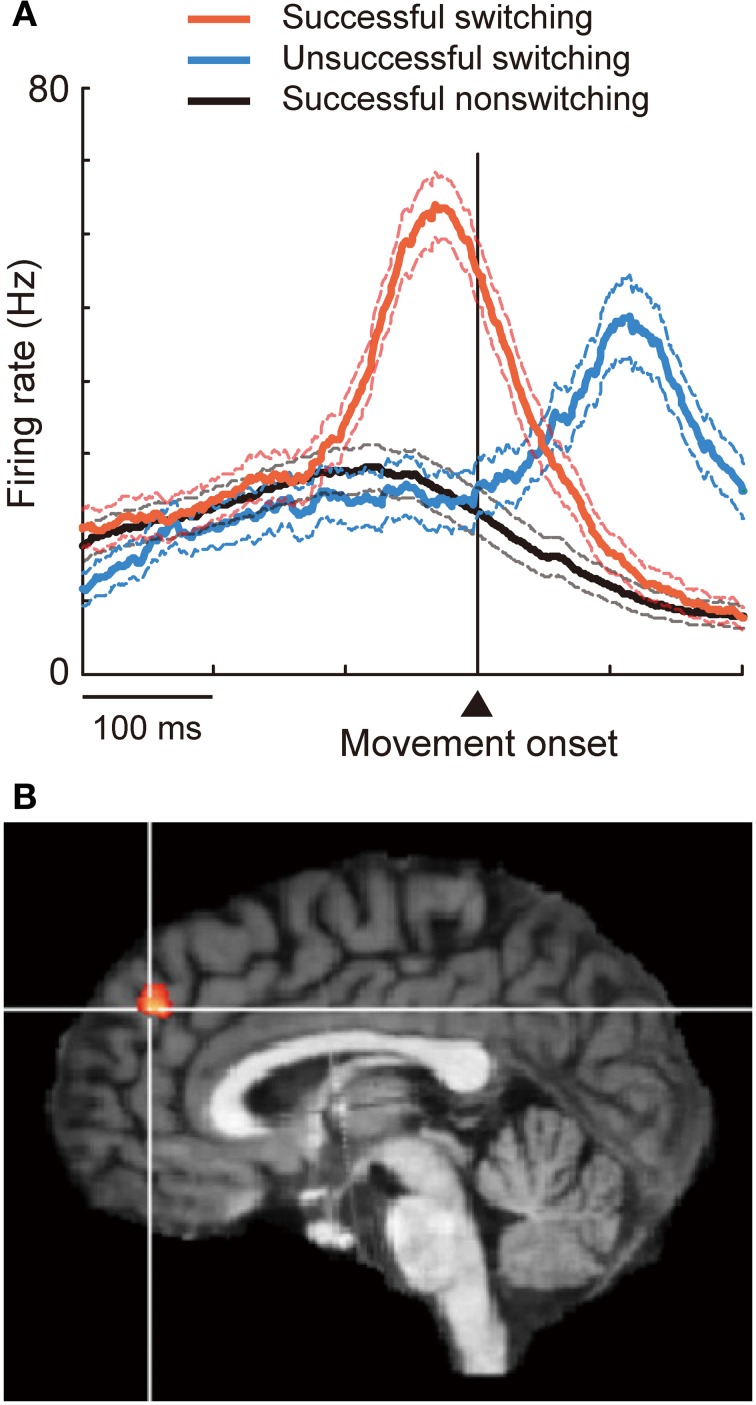
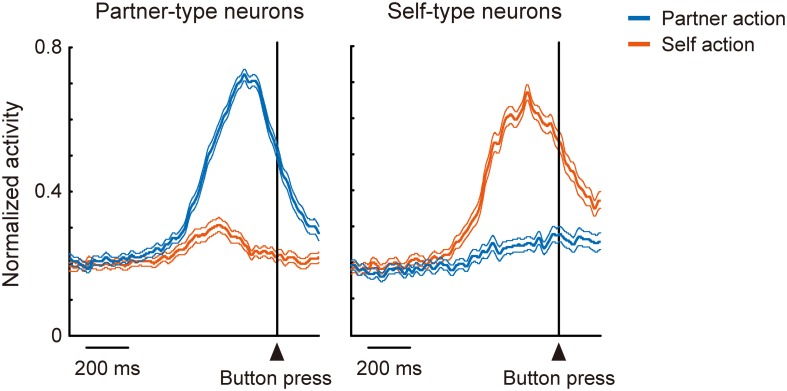
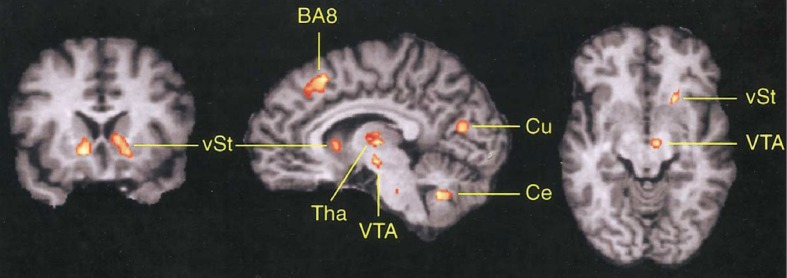
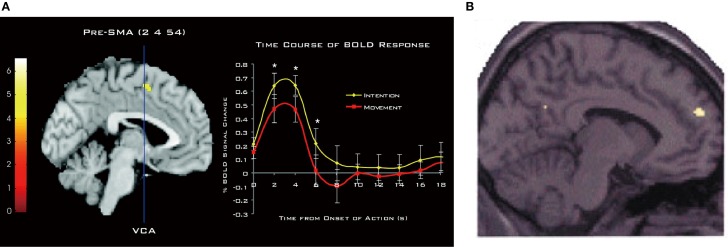
Verification
Claims the paper makes
The claims and statistics of this paper haven’t been checked yet.
Run the check — free, no account needed. It reads the open-access text and checks the sources it cites.
Claims other papers make about this one
Each is checked against this paper’s own text: does it say what the citing paper says it does?
The cited source says what the claim attributes to it.
In the citing paper
“The dorsomedial prefrontal cortex is functionally involved when an individual reflects on unobservable mental states of others, known as social person knowledge ( Dixon et al., 2017 ;Wagner et al., 2012 ), or predicts them under uncertainty (for a review see Isoda and Noritake, 2013 ).”
From Male brain processing of the body odor of ovulating women compared to that of pregnant women (2021) · cites this paper as Isoda and Noritake, 2013
The check wasn’t confident either way, so it gives no verdict — never disputed.
In the citing paper
“This evaluation is made particularly with regard to outcomes that can potentially affect one's well-being and either facilitate or hinder one's goals ( Isoda and Noritake, 2013 ).”
From Male brain processing of the body odor of ovulating women compared to that of pregnant women (2021) · cites this paper as Isoda and Noritake, 2013
Experimental — accuracy not yet measured
Self-check
Percentages, sums and reported differences re-computed from the paper’s own numbers.
The self-check needs the paper’s full text.
Citations
Cites
Miyake, A., Friedman, N. P., Emerson, M. J., Witzki, A. H., Howerter, A., & Wager, T. D. (2000) · Cognitive Psychology · doi:10.1006/cogp.1999.0734 · Cited by 15,798
Knight, F. H. (1921) · Cited by 9,967
Does the autistic child have a “theory of mind” ?
Baron-Cohen, S., Leslie, A. M., & Frith, U. (1985) · Cognition · doi:10.1016/0010-0277(85)90022-8 · Cited by 8,599 · cited 2×
“The ability to explain and predict others’ behavior in terms of their mental states is known as having a theory of mind (ToM) or mentalizing (Baron-Cohen et al., 1985, 1999; Frith and Frith, 1999).”
BackgroundAston-Jones, G., & Cohen, J. D. (2005) · Annual Review of Neuroscience · doi:10.1146/annurev.neuro.28.061604.135709 · Cited by 4,472
Colman (2022) · doi:10.1073/pnas · Cited by 4,370
Large-scale brain networks and psychopathology: a unifying triple network model
Menon, V. (2011) · Trends in Cognitive Sciences · doi:10.1016/j.tics.2011.08.003 · Cited by 4,168
From Neuropsychology to Mental Structure
Shallice, T. (1988) · doi:10.1017/cbo9780511526817 · Cited by 4,072
Empathy for Pain Involves the Affective but not Sensory Components of Pain
Singer, T., Seymour, B., O'Doherty, J., Kaube, H., Dolan, R. J., & Frith, C. D. (2004) · Science · doi:10.1126/science.1093535 · Cited by 3,929
Meeting of minds: the medial frontal cortex and social cognition
Amodio, D. M., & Frith, C. D. (2006) · Nature Reviews Neuroscience · doi:10.1038/nrn1884 · Cited by 3,782
Frith, C., & Frith, U. (2005) · Current Biology · doi:10.1016/j.cub.2005.08.041 · Cited by 3,561
Research works printed but not linked: 1
- Bates E. (1990). Language about me and you: pronominal reference and the emerging concept of self, in The Self in Transition: Infancy to Childhood, eds Cicchetti D. Beeghly M. (Chicago, IL: University of Chicago Press), 165– 182
Cited by
Sorted by citations
Feelings of shame, embarrassment and guilt and their neural correlates: A systematic review
Bastin, C., Harrison, B. J., Davey, C. G., Moll, J., & Whittle, S. (2016) · Neuroscience & Biobehavioral Reviews · doi:10.1016/j.neubiorev.2016.09.019 · Cited by 177
Gao, X., Yu, H., Sáez, I., Blue, P. R., Zhu, L., Hsu, M., & Zhou, X. (2018) · Proceedings of the National Academy of Sciences · doi:10.1073/pnas.1802523115 · Cited by 119
Social reward monitoring and valuation in the macaque brain
Noritake, A., Ninomiya, T., & Isoda, M. (2018) · Nature Neuroscience · doi:10.1038/s41593-018-0229-7 · Cited by 88
Self-citationSocial interaction recruits mentalizing and reward systems in middle childhood
Alkire, D., Levitas, D., Warnell, K. R., & Redcay, E. (2018) · Human Brain Mapping · doi:10.1002/hbm.24221 · Cited by 69
Empathy and emotion recognition in patients with idiopathic generalized epilepsy
Jiang, Y., Hu, Y., Wang, Y., Zhou, N., Li, Z., & Wang, K. (2014) · Epilepsy & Behavior · doi:10.1016/j.yebeh.2014.06.005 · Cited by 64
Keding, T. J., & Herringa, R. J. (2016) · Neuropsychopharmacology · doi:10.1038/npp.2016.104 · Cited by 60
Abnormal social reward responses in anorexia nervosa: an fMRI study
Via, E., Soriano-Mas, C., Sánchez, I., Forcano, L., Harrison, B. J., Davey, C. G., Pujol, J., Martínez-Zalacaín, I., Menchón, J. M., Fernández-Aranda, F., et al. (2015) · PLoS ONE · doi:10.1371/journal.pone.0133539 · Cited by 56
A causal role for frontal cortico-cortical coordination in social action monitoring
Ninomiya, T., Noritake, A., Kobayashi, K., & Isoda, M. (2020) · Nature Communications · doi:10.1038/s41467-020-19026-y · Cited by 57
Self-citationTaking two to tango: fMRI analysis of improvised joint action with physical contact
Chauvigné, L. A. S., Belyk, M., & Brown, S. (2018) · PLoS ONE · doi:10.1371/journal.pone.0191098 · Cited by 54
Agent-based representations of objects and actions in the monkey pre-supplementary motor area
Livi, A., Lanzilotto, M., Maranesi, M., Fogassi, L., Rizzolatti, G., & Bonini, L. (2019) · Proceedings of the National Academy of Sciences · doi:10.1073/pnas.1810890116 · Cited by 51
Biervoye, A., Dricot, L., Ivanoiu, A., & Samson, D. (2016) · Social Cognitive and Affective Neuroscience · doi:10.1093/scan/nsw076 · Cited by 48
Theory of mind can be impaired prior to motor onset in Huntington’s disease.
Eddy, C. M., & Rickards, H. E. (2015) · Neuropsychology · doi:10.1037/neu0000190 · Cited by 47
Williams, D. M., Nicholson, T., & Grainger, C. (2017) · Autism Research · doi:10.1002/aur.1891 · Cited by 51
Neurocognitive determinants of theory of mind across the adult lifespan
Laillier, R., Viard, A., Caillaud, M. L., Duclos, H., Bejanin, A., Sayette, V. D. L., Eustache, F., Desgranges, B., & Laisney, M. (2019) · Brain and Cognition · doi:10.1016/j.bandc.2019.103588 · Cited by 50
Interaction without intent: the shape of the social world in Huntington’s disease
Eddy, C. M., & Rickards, H. E. (2015) · Social Cognitive and Affective Neuroscience · doi:10.1093/scan/nsv012 · Cited by 43
Ninomiya, T., Noritake, A., Ullsperger, M., & Isoda, M. (2018) · Neuroscience Research · doi:10.1016/j.neures.2018.04.004 · Cited by 45
Self-citationOlsen, C., & Nöteberg, A. (2018) · Journal of Accounting Literature · doi:10.1016/j.acclit.2018.03.006 · Cited by 38
Zhai, T., Salmeron, B. J., Gu, H., Adinoff, B. H., Stein, E. A., & Yang, Y. (2021) · Brain Communications · doi:10.1093/braincomms/fcab120 · Cited by 31
Bono, M. G. D., Begliomini, C., Budisavljević, S., Sartori, L., Miotto, D., Motta, R., & Castiello, U. (2017) · PLoS ONE · doi:10.1371/journal.pone.0184008 · Cited by 25
Zhang, M., Jia, H., & Zheng, M. (2020) · Frontiers in Psychology · doi:10.3389/fpsyg.2020.542093 · Cited by 24
Jan, R. K., Rihs, T. A., Kojovic, N., Sperdin, H. F., Franchini, M., Custo, A., Tomescu, M. I., Michel, C. M., & Schaer, M. (2019) · Frontiers in Psychiatry · doi:10.3389/fpsyt.2019.00582 · Cited by 22
Development of social systems neuroscience using macaques
Isoda, M., Noritake, A., & Ninomiya, T. (2018) · Proceedings of the Japan Academy Series B · doi:10.2183/pjab.94.020 · Cited by 19
Self-citationLee, S. W., Cha, H., Chung, Y., Kim, E., Song, H., Chang, Y., & Lee, S. J. (2019) · Depression and Anxiety · doi:10.1002/da.22933 · Cited by 18
Gao, X., Yu, H., Lü, P., Gong, X., Xiang, Y., Jiang, C., & Zhou, X. (2021) · NeuroImage · doi:10.1016/j.neuroimage.2021.118631 · Cited by 17
Pluck, G. C., Crespo‐Andrade, C., Parreño, P., Haro, K. I., Martínez, M. A., & Pontón, S. C. (2020) · Psychology & Neuroscience · doi:10.1037/pne0000195 · Cited by 18
Social processing by the primate medial frontal cortex
Putnam, P. T., & Chang, S. W. C. (2021) · International review of neurobiology · doi:10.1016/bs.irn.2020.12.003 · Cited by 19
Cortical properties of adults with autism spectrum disorder and an IQ>100
Maier, S. J., van Elst, L. T., Perlov, E., Düppers, A. L., Nickel, K., Fangmeier, T., Endres, D., & Riedel, A. (2018) · Psychiatry Research Neuroimaging · doi:10.1016/j.pscychresns.2018.06.013 · Cited by 15
Spaans, J., Burke, S., Altikulaç, S., Braams, B. R., de Macks, Z. A. O., & Crone, E. A. (2018) · PLoS ONE · doi:10.1371/journal.pone.0198663 · Cited by 12
Constructing Others' Beliefs from One's Own Using Medial Frontal Cortex
Kolling, N., Braunsdorf, M., Vijayakumar, S., Harold Bekkering, A., Toni, I., & Mars, R. B. (2021) · Journal of Neuroscience · doi:10.1523/jneurosci.0011-21.2021 · Cited by 9
Functional connectivity of the medial prefrontal cortex related to mindreading abilities
Petit, M. L., Eustache, F., Perrier, J., Sayette, V. D. L., Desgranges, B., & Laisney, M. (2022) · Cerebral Cortex Communications · doi:10.1093/texcom/tgac032 · Cited by 11
Neurofunctional Prudence and Morality
Arvan, M. (2020) · Routledge eBooks · doi:10.4324/9780429277955 · Cited by 26
Calabrese, J. R., Goetschius, L. G., Murray, L., Kaplan, M. R., Lopez‐Duran, N. L., Mitchell, C. M., Hyde, L. W., & Monk, C. S. (2022) · Brain Research · doi:10.1016/j.brainres.2022.147803 · Cited by 8
Male brain processing of the body odor of ovulating women compared to that of pregnant women
Habel, U., Regenbogen, C., Kammann, C., Stickel, S., & Chechko, N. (2021) · NeuroImage · doi:10.1016/j.neuroimage.2021.117733 · Cited by 8
Toward a new conception of habit and self-control in adolescent maturation
Semper, J. V. O. (2014) · Frontiers in Human Neuroscience · doi:10.3389/fnhum.2014.00525 · Cited by 7
Morality as an Evolutionary Exaptation
Arvan, M. (2021) · Synthese Library/Synthese library · doi:10.1007/978-3-030-68802-8_5 · Cited by 6
Regional homogeneity of intrinsic brain activity related to the main alexithymia dimensions
Dai, H., Li, M., Mei, M., & Sun, X. (2018) · General Psychiatry · doi:10.1136/gpsych-2018-000003 · Cited by 5
Abubshait, A., Kompatsiari, K., Cardellicchio, P., Vescovo, E., Tommaso, D. D., Fadiga, L., D’Ausilio, A., & Wykowska, A. (2023) · Journal of Cognitive Neuroscience · doi:10.1162/jocn_a_02032 · Cited by 5
When group grievances become personal: The neural correlates of group and personal rejection
Vidal, L. M., Gil-Buitrago, H., Cisma, I., Hendricks, R. C., Atran, S., & Pretus, C. (2025) · Cognitive Affective & Behavioral Neuroscience · doi:10.3758/s13415-024-01257-x · Cited by 5
Evolutionary Origin of Empathy and Inequality Aversion
Watanabe, S., & Kosaki, Y. (2017) · Springer eBooks · doi:10.1007/978-4-431-56559-8_13 · Cited by 4
Theory of mind tested by implicit false belief: a simple and full‐fledged mental state attribution
Egawa, J., Kawasaki, K., Hayashi, T., Akikawa, R., Someya, T., & Hasegawa, I. (2021) · FEBS Journal · doi:10.1111/febs.16322 · Cited by 4
Functional brain MRI in the setting of drug correction of obesity
Игоревна, К. П., Romantsova, T. I., Logvinova, O., Tsvetkova, E. S., Kremneva, E. I., Troshina, E. A., & Tanashyan, M. M. (2021) · Obesity and metabolism · doi:10.14341/omet12810 · Cited by 4
Lappe, C., Bodeck, S., Lappe, M., & Pantev, C. (2017) · Frontiers in Neuroscience · doi:10.3389/fnins.2017.00165 · Cited by 4
Reconciliation of Two Cognitive Models in Obsessive-Compulsive Disorder: An fMRI Study
Kim, S., Lee, S. W., Cha, H., Kim, E., Chang, Y., & Lee, S. J. (2021) · Psychiatry Investigation · doi:10.30773/pi.2020.0347 · Cited by 3
Mri findings, looking behaviour and affect recognition in very preterm children: A pilot study
Kaul, Y. F., Karimi, A., Johansson, M., Montgomery, C., Hellström-Westas, L. K., Wikström, J., & Kochukhova, O. (2024) · Physiology & Behavior · doi:10.1016/j.physbeh.2024.114553 · Cited by 2
Distinct roles of the medial prefrontal cortex in advantageous and disadvantageous inequity aversion
Zhang, H., Dong, Z., Cai, S., & Wu, S. (2022) · Brain and Cognition · doi:10.1016/j.bandc.2022.105927 · Cited by 2
Toward a better understanding of social learning, social deciding, and other-regarding preferences
Chang, S. W. C., & Isoda, M. (2014) · Frontiers in Neuroscience · doi:10.3389/fnins.2014.00362 · Cited by 2
Self-citationAssociation of Chronic Stress with Agency, Theory of Mind Function and Abstract Construal in Women
Mascarenhas, D. D. (2016) · Psychology · doi:10.4236/psych.2016.712140 · Cited by 2
Isoda, M. (2017) · Springer eBooks · doi:10.1007/978-4-431-56508-6_8 · Cited by 2
Self-citationLo, Y.-C., Chen, C., & Cheng, Y. (2024) · Comprehensive Psychiatry · doi:10.1016/j.comppsych.2024.152567 · Cited by 2
Strandberg-Long, P. (2021) · Stanislavski Studies · doi:10.1080/20567790.2021.1969762 · Cited by 1
Unraveling the neurocognitive mechanisms of delayed punishment in second- and third-party contexts
Huang, J., He, Y., Chen, Z., Cai, Q., Yao, Y., Wang, Y., Qi, Y., & Wu, H. (2025) · NeuroImage · doi:10.1016/j.neuroimage.2025.121574 · Cited by 1
Modulatory effects of communicative gaze on attentional orienting are driven by dmPFC but not rTPJPreprint
Abubshait, A., Kompatsiari, K., Cardellicchio, P., Vescovo, E., Tommaso, D. D., Fadiga, L., D’Ausilio, A., & Wykowska, A. (2023) · doi:10.31219/osf.io/nxry7 · Cited by 1
The Role of Informational Medium on Decisions to Respond to a Message
Haghighi, S., & Ali, M. (2015) · KU ScholarWorks (The University of Kansas)
The Neuroimaging of Vicarious Pain
Terrighena, E. L., & Lee, T. M. C. (2017) · Springer eBooks · doi:10.1007/978-3-319-48046-6_16 · Cited by 1
Commentary: Deficient approaches to human neuroimaging
Bayati, A. (2017) · Frontiers in Human Neuroscience · doi:10.3389/fnhum.2017.00372
Dias, T. G. D. C. (2018) · Digital Library of Theses and Dissertations (Universidade de São Paulo) · doi:10.11606/t.5.2018.tde-14032018-123829
Il Default Mode Network: la scoperta, la struttura, le proposte teoriche
Mancuso, L. (2019) · RICERCHE DI PSICOLOGIA · doi:10.3280/rip2019-002001
Awan, M. A. H., Mushiake, H., & Matsuzaka, Y. (2023) · Frontiers in Systems Neuroscience · doi:10.3389/fnsys.2023.1049062
Guo, E. Y. T., Leblanc, É., Dégeilh, F., Beauchamp, M. H., & Bernier, A. (2023) · Social Neuroscience · doi:10.1080/17470919.2023.2257882
Influence of first-person and third-person perspectives on neural mechanisms of professional pride
Hong, Y.-J., Kim, H., Kyeong, S., Kim, E. J., & Kim, J.-J. (2024) · Social Neuroscience · doi:10.1080/17470919.2024.2315821
Narikuzhy, S., Harricharan, S., Rabellino, D., Densmore, M., Théberge, J., Lieberman, J. M., McKinnon, M. C., Nicholson, A. A., & Lanius, R. A. (2025) · NeuroImage Clinical · doi:10.1016/j.nicl.2025.103920 · Cited by 1
Laillier, R. (2019) · theses.fr (ABES) · doi:10.70675/f3f3322dz8127z47daz997fz61e5af74e307
Park, B., James, R., Telidevara, A. K., Boyd, R. L., & Hsieh, U.-L. (2026) · Biological Psychology · doi:10.1016/j.biopsycho.2026.109335
Metadata
- Authors
- Isoda, M., & Noritake, A.
- Affiliations
- Kansai Medical University (JP)
- Corresponding author
- Isoda, Masaki
- Venue
- Frontiers in Neuroscience
- Publisher
- Frontiers Media SA
- Published
- 2013
- Volume
- 7
- Pages
- 232-232
- ISSN
- 1662-453X (ISSN-L)
- PMC
- PMC3852025
- OpenAlex
- W1988828685
- Cited by
- 64
- References
- 241
- Citations by year
- 2026: 1 · 2025: 3 · 2024: 3 · 2023: 4 · 2022: 3 · 2021: 10 · 2020: 4 · 2019: 6 · 2018: 11 · 2017: 7 · 2016: 4 · 2015: 4 · 2014: 4
- FWCI
- 0.52
- Type
- journal article
- Language
- en
- Open access
- gold
- doi.org
- Licence
- cc-by
- Locations
- Frontiers in Neuroscience (publishedVersion, cc-by)
- Europe PMC (PubMed Central) (publishedVersion, cc-by)
- PubMed Central (publishedVersion, cc-by)
- PubMed (publishedVersion)
- DOAJ (DOAJ: Directory of Open Access Journals) (submittedVersion, cc-by-sa)
- Funders
- Japan Society for the Promotion of Science (24300125)
- Precursory Research for Embryonic Science and Technology
- Topics
- Social Sciences › Psychology › Social Psychology › Action Observation and Synchronization
- Social Sciences › Psychology › Developmental and Educational Psychology › Child and Animal Learning Development
- Social Sciences › Psychology › Social Psychology › Social Robot Interaction and HRI
- Keywords
- dorsomedial frontal cortex, theory of mind, mentalization, intention perception, self-other distinction, prediction under uncertainty, social cognition
About these checks
Registry, retraction, Cites and statistics results are computed, not judged, with one exception: a printed reference that no index lists is read once by a model before it counts as a citation error. Claims are extracted by a model and kept only when their quote appears verbatim in the text; each cited source is then checked, with a model’s help, for whether it says what the claim relies on. Those verdicts can be wrong — read the claim’s quote and the cited source before relying on one.
Statistics and arithmetic are recomputed, not judged.
Confidence bands are shown only for fields calibrated on our annotated test set. None is calibrated yet, so no band is shown.
What counts as a claim ›How we measure confidence ›How we check this ›
Are you an author, or do you see a problem with this page? Request a review
