

The DOI matches its Crossref record; 236 of the 241 references it cites were found in a registry or an index.
What makes the dorsomedial frontal cortex active during reading the mental states of others?
Open accessAbstract
The dorsomedial frontal part of the cerebral cortex is consistently activated when people read the mental states of others, such as their beliefs, desires, and intentions, the ability known as having a theory of mind (ToM) or mentalizing. This ubiquitous finding has led many researchers to conclude that the dorsomedial frontal cortex (DMFC) constitutes a core component in mentalizing networks. Despite this, it remains unclear why the DMFC becomes active during ToM tasks. We argue that key psychological and behavioral aspects in mentalizing are closely associated with DMFC functions. These include executive inhibition, distinction between self and others, prediction under uncertainty, and perception of intentions, all of which are important for predicting others' intention and behavior. We review the literature supporting this claim, ranging in fields from developmental psychology to human neuroimaging and macaque electrophysiology. Because perceiving intentions in others' actions initiates mentalizing and forms the basis of virtually all types of social interaction, the fundamental issue in social neuroscience is to determine the aspects of physical entities that make an observer perceive that they are intentional beings and to clarify the neurobiological underpinnings of the perception of intentionality in others' actions.
Overview
The claims and statistics of this paper haven’t been checked yet.
Run the check — free, no account needed. It reads the open-access text and checks the sources it cites.
Integrity signals
Registry
Cites
Statistics
Figures
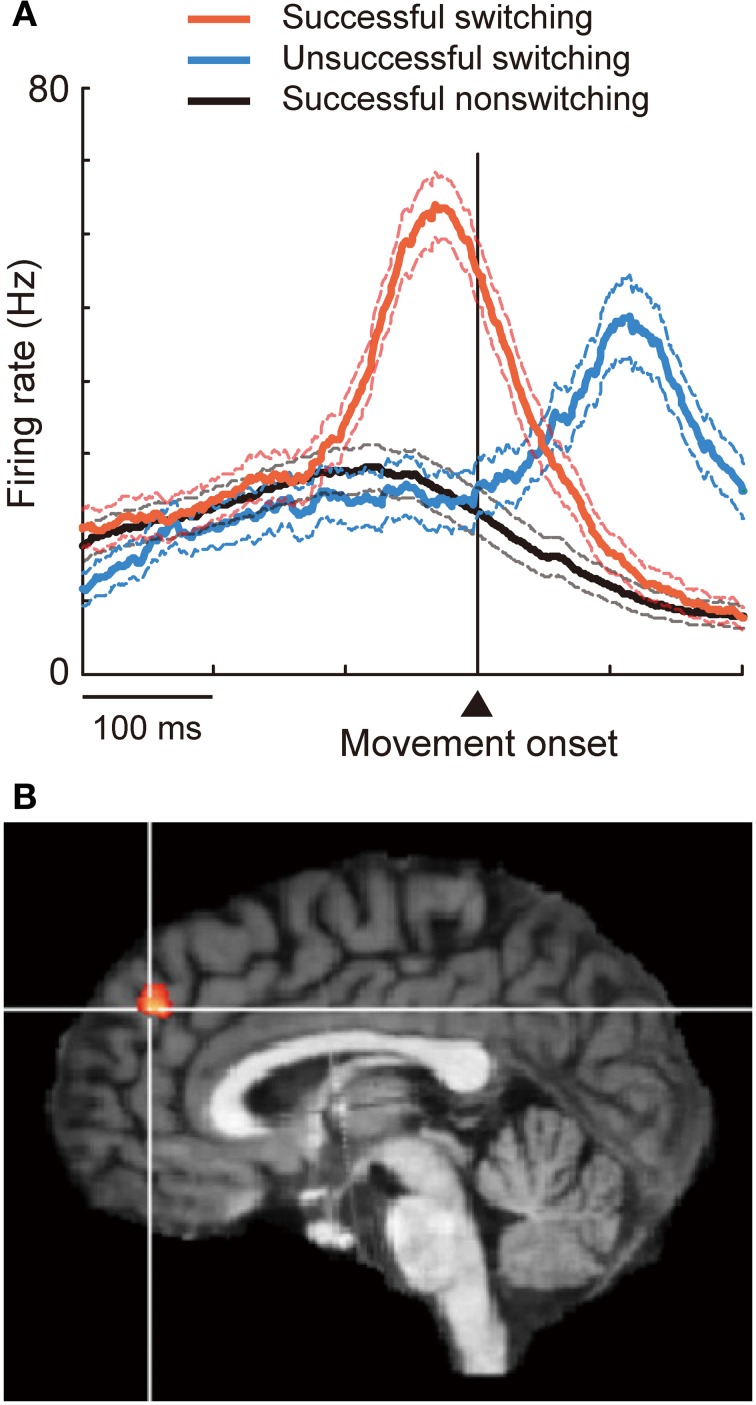
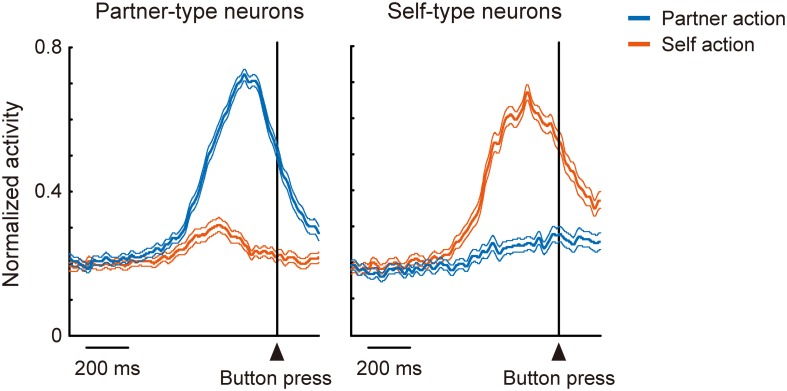
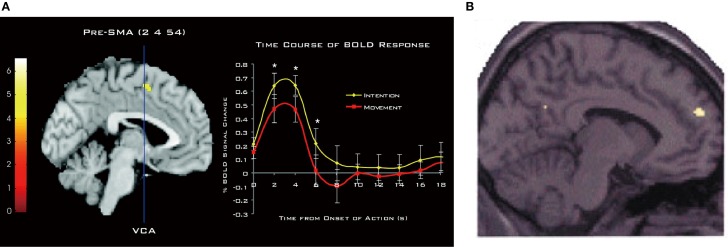
Verification
Claims the paper makes
The claims and statistics of this paper haven’t been checked yet.
Run the check — free, no account needed. It reads the open-access text and checks the sources it cites.
Claims other papers make about this one
Each is checked against this paper’s own text: does it say what the citing paper says it does?
The cited source says what the claim attributes to it.
In the citing paper
“The dorsomedial prefrontal cortex is functionally involved when an individual reflects on unobservable mental states of others, known as social person knowledge ( Dixon et al., 2017 ;Wagner et al., 2012 ), or predicts them under uncertainty (for a review see Isoda and Noritake, 2013 ).”
From Male brain processing of the body odor of ovulating women compared to that of pregnant women (2021) · cites this paper as Isoda and Noritake, 2013
The check wasn’t confident either way, so it gives no verdict — never disputed.
In the citing paper
“This evaluation is made particularly with regard to outcomes that can potentially affect one's well-being and either facilitate or hinder one's goals ( Isoda and Noritake, 2013 ).”
From Male brain processing of the body odor of ovulating women compared to that of pregnant women (2021) · cites this paper as Isoda and Noritake, 2013
Experimental — accuracy not yet measured
Self-check
Percentages, sums and reported differences re-computed from the paper’s own numbers.
The self-check needs the paper’s full text.
Citations
Cites
Miyake, A., Friedman, N. P., Emerson, M. J., Witzki, A. H., Howerter, A., & Wager, T. D. (2000) · Cognitive Psychology · doi:10.1006/cogp.1999.0734 · Cited by 15,798
Knight, F. H. (1921) · Cited by 9,967
Does the autistic child have a “theory of mind” ?
Baron-Cohen, S., Leslie, A. M., & Frith, U. (1985) · Cognition · doi:10.1016/0010-0277(85)90022-8 · Cited by 8,599 · cited 2×
“The ability to explain and predict others’ behavior in terms of their mental states is known as having a theory of mind (ToM) or mentalizing (Baron-Cohen et al., 1985, 1999; Frith and Frith, 1999).”
BackgroundAston-Jones, G., & Cohen, J. D. (2005) · Annual Review of Neuroscience · doi:10.1146/annurev.neuro.28.061604.135709 · Cited by 4,472
Colman (2022) · doi:10.1073/pnas · Cited by 4,370
Large-scale brain networks and psychopathology: a unifying triple network model
Menon, V. (2011) · Trends in Cognitive Sciences · doi:10.1016/j.tics.2011.08.003 · Cited by 4,168
From Neuropsychology to Mental Structure
Shallice, T. (1988) · doi:10.1017/cbo9780511526817 · Cited by 4,072
Empathy for Pain Involves the Affective but not Sensory Components of Pain
Singer, T., Seymour, B., O'Doherty, J., Kaube, H., Dolan, R. J., & Frith, C. D. (2004) · Science · doi:10.1126/science.1093535 · Cited by 3,929
Meeting of minds: the medial frontal cortex and social cognition
Amodio, D. M., & Frith, C. D. (2006) · Nature Reviews Neuroscience · doi:10.1038/nrn1884 · Cited by 3,782
Frith, C., & Frith, U. (2005) · Current Biology · doi:10.1016/j.cub.2005.08.041 · Cited by 3,561
Neurophysiological mechanisms underlying the understanding and imitation of action
Rizzolatti, G., Fogassi, L., & Gallese, V. (2001) · Nature Reviews Neuroscience · doi:10.1038/35090060 · Cited by 3,302
Inhibition and the right inferior frontal cortex
Aron, A. R., Robbins, T. W., & Poldrack, R. A. (2004) · Trends in Cognitive Sciences · doi:10.1016/j.tics.2004.02.010 · Cited by 3,197
Higher cortical functions in man
Lurii︠a︡, A. R., Teuber, H., Pribram, K. H., & Haigh, B. (1966) · Basic Books · Cited by 2,858
Functional-anatomic fractionation of the brain’s default network
Andrews-Hanna, J. R., Reidler, J. S., Sepulcre, J., Poulin, R., & Buckner, R. L. (2010) · Neuron · doi:10.1016/j.neuron.2010.02.005 · Cited by 2,767
LIBET, B., GLEASON, C. A., WRIGHT, E. W., & PEARL, D. K. (1983) · Brain · doi:10.1093/brain/106.3.623 · Cited by 2,498
On the relationship between emotion and cognition
Pessoa, L. (2008) · Nature Reviews Neuroscience · doi:10.1038/nrn2317 · Cited by 2,350
Development and neurophysiology of mentalizing
Frith, U., & Frith, C. D. (2003) · Philosophical Transactions of the Royal Society of London. Series B: Biological Sciences · doi:10.1098/rstb.2002.1218 · Cited by 2,306
Stuss, D. T., & Benson, D. F. (1986) · Raven Press eBooks · Cited by 2,102
Functional imaging of ‘theory of mind’
Gallagher, H. L., & Frith, C. D. (2003) · Trends in Cognitive Sciences · doi:10.1016/s1364-6613(02)00025-6 · Cited by 2,092
Understanding the intentions of others: Re-enactment of intended acts by 18-month-old children.
Meltzoff, A. N. (1995) · Developmental Psychology · doi:10.1037/0012-1649.31.5.838 · Cited by 2,087
Discrete coding of reward probability and uncertainty by dopamine neurons
Fiorillo, C. D., Tobler, P. N., & Schultz, W. (2003) · Science · doi:10.1126/science.1077349 · Cited by 2,085
Individual Differences in Inhibitory Control and Children's Theory of Mind
Carlson, S. M., & Moses, L. J. (2001) · Child Development · doi:10.1111/1467-8624.00333 · Cited by 2,072
Learning the value of information in an uncertain world
Behrens, T. E. J., Woolrich, M. W., Walton, M. E., & Rushworth, M. F. S. (2007) · Nature Neuroscience · doi:10.1038/nn1954 · Cited by 2,053
Uncertainty and anticipation in anxiety: an integrated neurobiological and psychological perspective
Grupe, D. W., & Nitschke, J. B. (2013) · Nature Reviews Neuroscience · doi:10.1038/nrn3524 · Cited by 2,007
Self-reference and the encoding of personal information.
Rogers, T. B., Kuiper, N. A., & Kirker, W. S. (1977) · Journal of Personality and Social Psychology · doi:10.1037//0022-3514.35.9.677 · Cited by 1,956
Nigg, J. T. (2000) · Psychological Bulletin · doi:10.1037/0033-2909.126.2.220 · Cited by 1,941 · cited 1×
“…disorders, ASDs), executive inhibition–i.e., deliberate suppression of immediate behavior in order to achieve a later, internally represented goal (Nigg, 2000)—has been most consistently reported to be a crucial factor enabling the development of social competence such as ToM (Carlson and Moses,…”
BackgroundClose relationships as including other in the self.
Aron, A. P., Aron, E. N., Tudor, M., & Nelson, G. (1991) · Journal of Personality and Social Psychology · doi:10.1037/0022-3514.60.2.241 · Cited by 1,938
Social cognition and the brain: A meta-analysis
Van Overwalle, F. (2009) · Human Brain Mapping · doi:10.1002/hbm.20547 · Cited by 1,792
Uncertainty, Neuromodulation, and Attention
Yu, A. J., & Dayan, P. (2005) · Neuron · doi:10.1016/j.neuron.2005.04.026 · Cited by 1,774
Executive function deficits in high-functioning autistic individuals: Relationship to theory of mind
Ozonoff, S., Pennington, B. F., & Rogers, S. J. (1991) · Journal of Child Psychology and Psychiatry · doi:10.1111/j.1469-7610.1991.tb00351.x · Cited by 1,766
Interacting Minds--A Biological Basis
Frith, C. D., & Frith, U. (1999) · Science · doi:10.1126/science.286.5445.1692 · Cited by 1,714
Decision making, the P3, and the locus coeruleus–norepinephrine system
Nieuwenhuis, S., Aston-Jones, G., & Cohen, J. D. (2005) · Psychological Bulletin · doi:10.1037/0033-2909.131.4.510 · Cited by 1,678
Bar, M. (2004) · Nature Reviews Neuroscience · doi:10.1038/nrn1476 · Cited by 1,613
Voluntary action and conscious awareness
Haggard, P., Clark, S., & Kalogeras, J. (2002) · Nature Neuroscience · doi:10.1038/nn827 · Cited by 1,546
Other minds in the brain: a functional imaging study of “theory of mind” in story comprehension.
Fletcher, P. (1995) · Cognition · doi:10.1016/0010-0277(95)00692-r · Cited by 1,522
Neural systems responding to degrees of uncertainty in human decision-making
Hsu, M., Bhatt, M., Adolphs, R., Tranel, D., & Camerer, C. F. (2005) · Science · doi:10.1126/science.1115327 · Cited by 1,411
Gallagher, H. L., Happé, F., Brunswick, N., Fletcher, P. C., Frith, U., & Frith, C. D. (2000) · Neuropsychologia · doi:10.1016/s0028-3932(99)00053-6 · Cited by 1,394
The intolerance of uncertainty scale: psychometric properties of the English version
Buhr, K., & Dugas, M. J. (2002) · Behaviour Research and Therapy · doi:10.1016/s0005-7967(01)00092-4 · Cited by 1,391
Higher Cortical Functions in Man
Luria, A. R. (1980) · Springer eBooks · doi:10.1007/978-1-4615-8579-4 · Cited by 1,333
Understanding others' actions and goals by mirror and mentalizing systems: a meta-analysis
Van Overwalle, F., & Baetens, K. (2009) · NeuroImage · doi:10.1016/j.neuroimage.2009.06.009 · Cited by 1,329
Social intelligence in the normal and autistic brain: An fMRI study
Baron‐Cohen, S., Ring, H. A., Wheelwright, S., Bullmore, E. T., Brammer, M. J., Simmons, A., & Williams, S. C. R. (1999) · European Journal of Neuroscience · doi:10.1046/j.1460-9568.1999.00621.x · Cited by 1,320
Effect of subjective perspective taking during simulation of action: a PET investigation of agency
Ruby, P., & Decety, J. (2001) · Nature Neuroscience · doi:10.1038/87510 · Cited by 1,182
Singer, T. (2006) · Neuroscience & Biobehavioral Reviews · doi:10.1016/j.neubiorev.2006.06.011 · Cited by 1,079
Social Intelligence in the Normal and Autistic Brain: An fMRI Study
Baron‐Cohen, S., RING, H. A., Wheelwright, S. J., Bullmore, E. T., Brammer, M. J., Simmons, A., & Williams, S. (2002) · The MIT Press eBooks · doi:10.7551/mitpress/3077.003.0028 · Cited by 1,044
Dissociable Medial Prefrontal Contributions to Judgments of Similar and Dissimilar Others
Mitchell, J. P., Macrae, C. N., & Banaji, M. R. (2006) · Neuron · doi:10.1016/j.neuron.2006.03.040 · Cited by 1,023
Shared representations between self and other: a social cognitive neuroscience view
Decety, J., & Sommerville, J. A. (2003) · Trends in Cognitive Sciences · doi:10.1016/j.tics.2003.10.004 · Cited by 996
Aron, A. R., Behrens, T. E., Smith, S., Frank, M. J., & Poldrack, R. A. (2007) · The Journal of Neuroscience · doi:10.1523/jneurosci.0519-07.2007 · Cited by 982
Abnormalities in the awareness of action.
Blakemore, S.-J., Wolpert, D. M., & Frith, C. D. (2002) · Trends in Cognitive Sciences · doi:10.1016/s1364-6613(02)01907-1 · Cited by 947
Visual cells in the temporal cortex sensitive to face view and gaze direction
Perrett, D. I., Smith, P., Potter, D. D., Mistlin, A. J., Head, A., Milner, A. D., & Jeeves, M. A. (1985) · Proceedings of the Royal Society B Biological Sciences · doi:10.1098/rspb.1985.0003 · Cited by 944
Associative learning of social value
Behrens, T. E. J., Hunt, L. T., Woolrich, M. W., & Rushworth, M. F. S. (2008) · Nature · doi:10.1038/nature07538 · Cited by 925
Higher Cortical Functions in Man
Luria, A. R. (1995) · Springer eBooks · doi:10.1007/978-1-4684-7741-2 · Cited by 901
Organization and functions of cells responsive to faces in the temporal cortex
Perrett, D. I., Hietanen, J. K., Oram, M. W., & Benson, P. J. (1992) · Philosophical Transactions of the Royal Society of London. Series B: Biological Sciences · doi:10.1098/rstb.1992.0003 · Cited by 882
The social brain in psychiatric and neurological disorders
Kennedy, D. P., & Adolphs, R. (2012) · Trends in Cognitive Sciences · doi:10.1016/j.tics.2012.09.006 · Cited by 846
How we know--and sometimes misjudge--what others know: Imputing one's own knowledge to others.
Nickerson, R. S. (1999) · Psychological Bulletin · doi:10.1037/0033-2909.125.6.737 · Cited by 841
Large-scale brain systems in ADHD: beyond the prefrontal–striatal model
Castellanos, F. X., & Proal, E. (2012) · Trends in Cognitive Sciences · doi:10.1016/j.tics.2011.11.007 · Cited by 831
Denny, B. T., Kober, H., Wager, T. D., & Ochsner, K. N. (2012) · Journal of Cognitive Neuroscience · doi:10.1162/jocn_a_00233 · Cited by 830
Dissociable prefrontal networks for cognitive and affective theory of mind: A lesion study
Shamay-Tsoory, S. G., & Aharon-Peretz, J. (2007) · Neuropsychologia · doi:10.1016/j.neuropsychologia.2007.05.021 · Cited by 816
Domain specificity in conceptual development: Neuropsychological evidence from autism
Leslie, A. M., & Thaiss, L. (1992) · Cognition · doi:10.1016/0010-0277(92)90013-8 · Cited by 813
Neural correlates, computation and behavioural impact of decision confidence
Kepecs, A., Uchida, N., Zariwala, H. A., & Mainen, Z. F. (2008) · Nature · doi:10.1038/nature07200 · Cited by 809
Corticocortical connections of area F3 (SMA‐proper) and area F6 (pre‐SMA) in the macaque monkey
Luppino, G., Matelli, M., Camarda, R., & Rizzolatti, G. (1993) · The Journal of Comparative Neurology · doi:10.1002/cne.903380109 · Cited by 795
Time of Conscious Intention to Act in Relation to Onset of Cerebral Activity (Readiness-Potential)
Libet, B., Gleason, C. A., Wright, E. W., & Pearl, D. K. (1993) · Birkhäuser Boston eBooks · doi:10.1007/978-1-4612-0355-1_15 · Cited by 792
Kahneman, D. J., & Tversky, A. (1982) · Cognition · doi:10.1016/0010-0277(82)90023-3 · Cited by 791
Functional organization of human supplementary motor cortex studied by electrical stimulation
Fried, I., Katz, A., McCarthy, G., Sass, K., Williamson, P., Spencer, S., & Spencer, D. (1991) · The Journal of Neuroscience · doi:10.1523/jneurosci.11-11-03656.1991 · Cited by 791
The power of simulation: Imagining one's own and other's behavior
Decety, J., & Grèzes, J. (2006) · Brain Research · doi:10.1016/j.brainres.2005.12.115 · Cited by 790
Human insula activation reflects risk prediction errors as well as risk
Preuschoff, K., Quartz, S. R., & Bossaerts, P. (2008) · The Journal of Neuroscience · doi:10.1523/jneurosci.4286-07.2008 · Cited by 784
On the relationship between the “default mode network” and the “social brain
Mars, R. B., Neubert, F.-X., Noonan, M. P., Sallet, J., Toni, I., & Rushworth, M. F. S. (2012) · Frontiers in Human Neuroscience · doi:10.3389/fnhum.2012.00189 · Cited by 766
Understanding Other Minds: Linking Developmental Psychology and Functional Neuroimaging
Saxe, R., Carey, S., & Kanwisher, N. (2004) · Annual Review of Psychology · doi:10.1146/annurev.psych.55.090902.142044 · Cited by 726
Rational regulation of learning dynamics by pupil-linked arousal systems
Nassar, M. R., Rumsey, K. M., Wilson, R. C., Parikh, K., Heasly, B., & Gold, J. I. (2012) · Nature Neuroscience · doi:10.1038/nn.3130 · Cited by 722
Changes in connectivity profiles define functionally distinct regions in human medial frontal cortex
Johansen‐Berg, H., Behrens, T. E. J., Robson, M. D., Drobnjak, I., Rushworth, M. F. S., Brady, J. M., Smith, S. M., Higham, D. J., & Matthews, P. M. (2004) · Proceedings of the National Academy of Sciences · doi:10.1073/pnas.0403743101 · Cited by 706
Ullsperger, M., & von Cramon, D. Y. (2001) · NeuroImage · doi:10.1006/nimg.2001.0935 · Cited by 702
Functional Specialization within Rostral Prefrontal Cortex (Area 10): A Meta-analysis
Gilbert, S. J., Spengler, S., Simons, J. S., Steele, J. D., Lawrie, S. M., Frith, C., & Burgess, P. W. (2006) · Journal of Cognitive Neuroscience · doi:10.1162/jocn.2006.18.6.932 · Cited by 701
Movement intention after parietal cortex stimulation in humans
Desmurget, M., Reilly, K. T., Richard, N., Szathmari, A., Mottolese, C., & Sirigu, A. (2009) · Science · doi:10.1126/science.1169896 · Cited by 695
Neural activity in the human brain relating to uncertainty and arousal during anticipation.
Critchley, H. D., Mathias, C. J., & Dolan, R. J. (2001) · Neuron · doi:10.1016/s0896-6273(01)00225-2 · Cited by 681
Adaptive gain and the role of the locus coeruleus–norepinephrine system in optimal performance
Aston‐Jones, G., & Cohen, J. D. (2005) · The Journal of Comparative Neurology · doi:10.1002/cne.20723 · Cited by 671
The frontal lobes are necessary for `theory of mind'
Stuss, D. T. (2001) · Brain · doi:10.1093/brain/124.2.279 · Cited by 660
Lhermitte, F., Pillon, B., & Serdaru, M. (1986) · Annals of Neurology · doi:10.1002/ana.410190404 · Cited by 658
Age-Related Impairment in Executive Functioning: Updating, Inhibition, Shifting, and Access
Fisk, J. E., & Sharp, C. A. (2004) · Journal of Clinical and Experimental Neuropsychology · doi:10.1080/13803390490510680 · Cited by 634
See it with feeling: affective predictions during object perception
Barrett, L. F., & Bar, M. (2009) · Philosophical Transactions of the Royal Society B: Biological Sciences · doi:10.1098/rstb.2008.0312 · Cited by 632
Carlson, S. M., Moses, L. J., & Claxton, L. J. (2004) · Journal of Experimental Child Psychology · doi:10.1016/j.jecp.2004.01.002 · Cited by 614
Development of the self-concept during adolescence
Sebastian, C. L., Heyes, S. B., & Blakemore, S. (2008) · Trends in Cognitive Sciences · doi:10.1016/j.tics.2008.07.008 · Cited by 585
The historical background of modern social psychology
Allport, G. W. (1968) · Medical Entomology and Zoology · Cited by 581
‘Theory of mind’ in the brain. Evidence from a PET scan study of Asperger syndrome
Happe, F. G. E., Ehlers, S., Fletcher, P. C., Uta Frith, A., Johansson, M., Gillberg, C., Dolan, R. J., Frackowiak, R. S. J., & Frith, C. (1996) · Neuroreport · doi:10.1097/00001756-199612200-00040 · Cited by 577
The role of anterior insular cortex in social emotions
Lamm, C., & Singer, T. (2010) · Brain Structure and Function · doi:10.1007/s00429-010-0251-3 · Cited by 566
Risky business: the neuroeconomics of decision making under uncertainty
Platt, M. L., & Huettel, S. A. (2008) · Nature Neuroscience · doi:10.1038/nn2062 · Cited by 556
Amygdala volume and social network size in humans
Bickart, K. C., Wright, C. I., Dautoff, R. J., Dickerson, B. C., & Barrett, L. F. (2011) · Nature Neuroscience · doi:10.1038/nn.2724 · Cited by 556
Cunnington, R., Windischberger, C., Deecke, L., & Moser, E. (2002) · NeuroImage · doi:10.1006/nimg.2001.0976 · Cited by 547
Executive “Brake Failure” following Deactivation of Human Frontal Lobe
Chambers, C. D., Bellgrove, M. A., Stokes, M. G., Henderson, T. R., Garavan, H., Robertson, I. H., Morris, A. P., & Mattingley, J. B. (2006) · Journal of Cognitive Neuroscience · doi:10.1162/jocn.2006.18.3.444 · Cited by 544
Lau, H. C., Rogers, R. D., Haggard, P., & Passingham, R. E. (2004) · Science · doi:10.1126/science.1090973 · Cited by 539
Pupil dilation signals surprise: evidence for noradrenaline’s role in decision making
Preuschoff, K. (2011) · Frontiers in Neuroscience · doi:10.3389/fnins.2011.00115 · Cited by 538
Distinct frontal systems for response inhibition, attentional capture, and error processing
Sharp, D. J., Bonnelle, V., De Boissezon, X., Beckmann, C. F., James, S. G., Patel, M. C., & Mehta, M. A. (2010) · Proceedings of the National Academy of Sciences · doi:10.1073/pnas.1000175107 · Cited by 535
Korolczuk, I., Burle, B., Coull, J. T., & Śmigasiewicz, K. (2021) · Journal of Cognitive Neuroscience · doi:10.1162/jocn_a_01795 · Cited by 528
Whose gaze will infants follow? The elicitation of gaze‐following in 12‐month‐olds
Johnson, S. C., Slaughter, V. P., & Carey, S. E. (1998) · Developmental Science · doi:10.1111/1467-7687.00036 · Cited by 525
Neural correlates of mentalizing-related computations during strategic interactions in humans
Hampton, A. N., Bossaerts, P. L., & O’Doherty, J. P. (2008) · Proceedings of the National Academy of Sciences · doi:10.1073/pnas.0711099105 · Cited by 522
Social Network Size Affects Neural Circuits in Macaques
Sallet, J., Mars, R. B., Noonan, M. P., Andersson, J. L., O’Reilly, J. X., Jbabdi, S., Croxson, P. L., Jenkinson, M., Miller, K. L., & Rushworth, M. F. S. (2011) · Science · doi:10.1126/science.1210027 · Cited by 514
Rhesus Monkeys Attribute Perceptions to Others
Flombaum, J., & Santos, L. R. (2005) · Current Biology · doi:10.1016/j.cub.2004.12.076 · Cited by 507
Duann, J., Ide, J. S., Luo, X., & Li, C. R. (2009) · Journal of Neuroscience · doi:10.1523/jneurosci.1300-09.2009 · Cited by 502
The proactive brain: memory for predictions
Bar, M. (2009) · Philosophical Transactions of the Royal Society B: Biological Sciences · doi:10.1098/rstb.2008.0310 · Cited by 498
Fried, I., Mukamel, R., & Kreiman, G. (2011) · Neuron · doi:10.1016/j.neuron.2010.11.045 · Cited by 496
Modulation of activity in medial frontal and motor cortices during error observation
van Schie, H. T., Mars, R. B., COLES, M. G. H., & Harold Bekkering, A. (2004) · Nature Neuroscience · doi:10.1038/nn1239 · Cited by 489
Goel, V., Grafman, J., Sadato, N., & Hallett, M. (1995) · NeuroReport · doi:10.1097/00001756-199509000-00009 · Cited by 487
Acquired `theory of mind' impairments following stroke
Happe, F. G. E., Brownell, H., & Winner, E. (1999) · Cognition · doi:10.1016/s0010-0277(99)00005-0 · Cited by 479
Widespread origin of the primate mesofrontal dopamine system
Williams, S. (1998) · Cerebral Cortex · doi:10.1093/cercor/8.4.321 · Cited by 479
Reward Value Coding Distinct From Risk Attitude-Related Uncertainty Coding in Human Reward Systems
Tobler, P. N., O'Doherty, J. P., Dolan, R. J., & Schultz, W. (2007) · Journal of Neurophysiology · doi:10.1152/jn.00745.2006 · Cited by 472
Executive functions in children with Autism Spectrum Disorders
Robinson, S., Goddard, L., Dritschel, B., Wisley, M., & Howlin, P. (2009) · Brain and Cognition · doi:10.1016/j.bandc.2009.06.007 · Cited by 450
Remembering information related to one's self
Bower, G. H., & Gilligan, S. G. (1979) · Journal of Research in Personality · doi:10.1016/0092-6566(79)90005-9 · Cited by 443
Switching from automatic to controlled action by monkey medial frontal cortex
Isoda, M., & Hikosaka, O. (2007) · Nature Neuroscience · doi:10.1038/nn1830 · Cited by 430
Self-citationEncoding of personal information: Self-other differences.
Kuiper, N. A., & Rogers, T. B. (1979) · Journal of Personality and Social Psychology · doi:10.1037/0022-3514.37.4.499 · Cited by 423
The organization of dorsal frontal cortex in humans and macaques
Sallet, J., Mars, R. B., Noonan, M. P., Neubert, F.-X., Jbabdi, S., O'Reilly, J. X., Filippini, N., Thomas, A. G., & Rushworth, M. F. (2013) · Journal of Neuroscience · doi:10.1523/jneurosci.5108-12.2013 · Cited by 416
Ruby, P., & Decety, J. (2003) · European Journal of Neuroscience · doi:10.1046/j.1460-9568.2003.02673.x · Cited by 414
Mohr, P. N. C., Biele, G., & Heekeren, H. R. (2010) · The Journal of Neuroscience · doi:10.1523/jneurosci.0003-10.2010 · Cited by 411
Rowe, A. D., Bullock, P. R., Polkey, C. E., & Morris, R. G. (2001) · Brain · doi:10.1093/brain/124.3.600 · Cited by 400
Atypical neural self-representation in autism
Lombardo, M. V., Chakrabarti, B., Bullmore, E. T., Sadek, S. A., Pasco, G., Wheelwright, S. J., Suckling, J., & Baron‐Cohen, S. (2009) · Brain · doi:10.1093/brain/awp306 · Cited by 393
Online social network size is reflected in human brain structure
Kanai, R., Bahrami, B., Roylance, R., & Rees, G. (2012) · Proceedings of the Royal Society B: Biological Sciences · doi:10.1098/rspb.2011.1959 · Cited by 391
Risk-sensitive neurons in macaque posterior cingulate cortex
McCoy, A. N., & Platt, M. L. (2005) · Nature Neuroscience · doi:10.1038/nn1523 · Cited by 388
The Angular Gyrus Computes Action Awareness Representations
Farrer, C., Frey, S. H., Horn, J. D. V., Tunik, E., Turk, D. J., Inati, S., & Grafton, S. T. (2007) · Cerebral Cortex · doi:10.1093/cercor/bhm050 · Cited by 386
Konishi, S., Nakajima, K., Uchida, I., Sekihara, K., & Miyashita, Y. (1998) · European Journal of Neuroscience · doi:10.1046/j.1460-9568.1998.00167.x · Cited by 386
Neural correlates of depth of strategic reasoning in medial prefrontal cortex
Coricelli, G., & Nagel, R. (2009) · Proceedings of the National Academy of Sciences of the United States of America · doi:10.1073/pnas.0807721106 · Cited by 385
Responses of Anterior Superior Temporal Polysensory (STPa) Neurons to “Biological Motion” Stimuli
Oram, M. W., & Perrett, D. I. (1994) · Journal of Cognitive Neuroscience · doi:10.1162/jocn.1994.6.2.99 · Cited by 383
The Cortical Connectivity of the Prefrontal Cortex in the Monkey Brain
Yeterian, E., Pandya, D., Tomaiuolo, F., & Petrides, M. (2011) · Cortex; a journal devoted to the study of the nervous system and behavior · doi:10.1016/j.cortex.2011.03.004 · Cited by 382
To Do or Not to Do: The Neural Signature of Self-Control
Braß, M., & Haggard, P. (2007) · Journal of Neuroscience · doi:10.1523/jneurosci.0924-07.2007 · Cited by 381
Shared Neural Circuits for Mentalizing about the Self and Others
Lombardo, M. V., Chakrabarti, B., Bullmore, E. T., Wheelwright, S. J., Sadek, S. A., Suckling, J., & Baron‐Cohen, S. (2009) · Journal of Cognitive Neuroscience · doi:10.1162/jocn.2009.21287 · Cited by 373
The impact of extensive medial frontal lobe damage on 'Theory of Mind' and cognition
Bird, C. M. (2004) · Brain · doi:10.1093/brain/awh108 · Cited by 373
Neural Systems for Error Monitoring: Recent Findings and Theoretical Perspectives
Taylor, S. F., Stern, E. R., & Gehring, W. J. (2007) · The Neuroscientist · doi:10.1177/1073858406298184 · Cited by 368
Ball, T., Schreiber, A., Feige, B., Wagner, M., Lücking, C. H., & Kristeva-Feige, R. (1999) · NeuroImage · doi:10.1006/nimg.1999.0507 · Cited by 362
Seeing it my way: a case of a selective deficit in inhibiting self-perspective
Samson, D., Apperly, I. A., Kathirgamanathan, U., & Humphreys, G. W. (2005) · Brain · doi:10.1093/brain/awh464 · Cited by 357
Frontal lobe connections of the superior temporal sulcus in the rhesus monkey
Seltzer, B., & Pandya, D. Ν. (1989) · The Journal of Comparative Neurology · doi:10.1002/cne.902810108 · Cited by 357
How we see ourselves and how we see others
Pronin, E. (2008) · Science · doi:10.1126/science.1154199 · Cited by 353 · cited 2×
“Instead, one’s experience of others’ phenomenology is primarily dominated by observing their external behaviors (Pronin, 2008).”
BackgroundInhibition of imitative behaviour and social cognition
Brass, M., Ruby, P., & Spengler, S. (2009) · Philosophical Transactions of the Royal Society B Biological Sciences · doi:10.1098/rstb.2009.0066 · Cited by 347
Jeannerod, M. (1999) · The Quarterly Journal of Experimental Psychology Section A · doi:10.1080/027249899391205 · Cited by 343
Contextual social cognition and the behavioral variant of frontotemporal dementia
Ibáñez, A. M., & Manes, F. F. (2012) · Neurology · doi:10.1212/wnl.0b013e3182518375 · Cited by 337
Neuronal reference frames for social decisions in primate frontal cortex
Chang, S. W. C., Gariépy, J.-F., & Platt, M. L. (2013) · Nature Neuroscience · doi:10.1038/nn.3287 · Cited by 336 · cited 2×
“Very recently, a coordinate transformation approach has been proposed to account for such operations (Chang, 2013; Chang et al., 2013).”
BackgroundVolition and Conflict in Human Medial Frontal Cortex
Nachev, P., Rees, G. E., Parton, A. D., Kennard, C., & Husain, M. (2005) · Current Biology · doi:10.1016/j.cub.2005.01.006 · Cited by 331
Switching from automatic to controlled behavior: cortico-basal ganglia mechanisms
Hikosaka, O., & Isoda, M. (2010) · Trends in Cognitive Sciences · doi:10.1016/j.tics.2010.01.006 · Cited by 325
Self-citationVentromedial prefrontal volume predicts understanding of others and social network size
Lewis, P. A., Rezaie, R., Brown, R., Roberts, N., & Dunbar, R. I. M. (2011) · NeuroImage · doi:10.1016/j.neuroimage.2011.05.030 · Cited by 321
Role for Subthalamic Nucleus Neurons in Switching from Automatic to Controlled Eye Movement
Isoda, M., & Hikosaka, O. (2008) · Journal of Neuroscience · doi:10.1523/jneurosci.0487-08.2008 · Cited by 320
Self-citationLim, S. H., Dinner, D. S., Pillay, P. K., Lüders, H. O., Morris, H. H., Klem, G. H., Wyllie, E., & Awad, I. A. (1994) · Electroencephalography and Clinical Neurophysiology · doi:10.1016/0013-4694(94)90068-x · Cited by 314
A midline dissociation between error-processing and response-conflict monitoring
Garavan, H., Ross, T. J., Kaufman, J. N., & Stein, E. A. (2003) · NeuroImage · doi:10.1016/s1053-8119(03)00334-3 · Cited by 304
Inhibitory control is slowed in patients with right superior medial frontal damage
Floden, D., & Stuss, D. T. (2006) · Journal of Cognitive Neuroscience · doi:10.1162/jocn.2006.18.11.1843 · Cited by 302
Sperduti, M., Delaveau, P., Fossati, P., & Nadel, J. (2011) · Brain Structure and Function · doi:10.1007/s00429-010-0298-1 · Cited by 287
Neural Representation for the Perception of the Intentionality of Actions
Jellema, T., Baker, C. I., Wicker, B., & Perrett, D. I. (2000) · Brain and Cognition · doi:10.1006/brcg.2000.1231 · Cited by 282
Wachsmuth, E., Oram, M. W., & Perrett, D. I. (1994) · Cerebral Cortex · doi:10.1093/cercor/4.5.509 · Cited by 278
The inhibition of imitative and overlearned responses: a functional double dissociation
Brass, M., Derrfuss, J., & von Cramon, D. Y. (2005) · Neuropsychologia · doi:10.1016/j.neuropsychologia.2004.06.018 · Cited by 274
Risk, unexpected uncertainty, and estimation uncertainty: Bayesian learning in unstable settings
Payzan-LeNestour, E., & Bossaerts, P. (2011) · PLoS Computational Biology · doi:10.1371/journal.pcbi.1001048 · Cited by 267
Modulating inhibitory control with direct current stimulation of the superior medial frontal cortex
Hsu, T., Tseng, L.-Y., Yu, J., Kuo, W., Hung, D. L., Tzeng, O. J. L., Walsh, V., Muggleton, N. G., & Juan, C.-H. (2011) · NeuroImage · doi:10.1016/j.neuroimage.2011.03.059 · Cited by 258
Neubert, F.-X., Mars, R. B., Buch, E. R., Olivier, E., & Rushworth, M. F. S. (2010) · Proceedings of the National Academy of Sciences · doi:10.1073/pnas.1000674107 · Cited by 253
Agent-Specific Responses in the Cingulate Cortex During Economic Exchanges
Tomlin, D., Kayali, M. A., King‐Casas, B., Anen, C., Camerer, C. F., Quartz, S. R., & Montague, P. R. (2006) · Science · doi:10.1126/science.1125596 · Cited by 252
A system in the human brain for predicting the actions of others
Ramnani, N., & Miall, R. C. (2003) · Nature Neuroscience · doi:10.1038/nn1168 · Cited by 250
“I know, you know”: epistemic egocentrism in children and adults
Royzman, E. B., Cassidy, K. W., & Baron, J. (2003) · Review of General Psychology · doi:10.1037/1089-2680.7.1.38 · Cited by 246
The role of person and object in eliciting early imitation
Legerstee, M. (1991) · Journal of Experimental Child Psychology · doi:10.1016/0022-0965(91)90086-8 · Cited by 241
Learning to Simulate Others' Decisions
Suzuki, S., Harasawa, N., Ueno, K., Gardner, J. L., Ichinohe, N., Haruno, M., Cheng, K., & Nakahara, H. (2012) · Neuron · doi:10.1016/j.neuron.2012.04.030 · Cited by 237
Neuroimaging of Performance Monitoring: Error Detection and Beyond
Ullsperger, M., & von Cramon, D. Y. (2004) · Cortex · doi:10.1016/s0010-9452(08)70155-2 · Cited by 229
Call, J., & Tomasello, M. (1998) · Journal of comparative psychology · doi:10.1037/0735-7036.112.2.192 · Cited by 226
Responses of pulvinar neurons reflect a subject's confidence in visual categorization
Komura, Y., Nikkuni, A., Hirashima, N., Uetake, T., & Miyamoto, A. (2013) · Nature Neuroscience · doi:10.1038/nn.3393 · Cited by 226
An Agent Independent Axis for Executed and Modeled Choice in Medial Prefrontal Cortex
Nicolle, A., Klein-Flügge, M. C., Hunt, L. T., Vlaev, I., Dolan, R. J., & Behrens, T. E. J. (2012) · Neuron · doi:10.1016/j.neuron.2012.07.023 · Cited by 217
General and specific contributions of the medial prefrontal cortex to knowledge about mental states
Mitchell, J. P., Banaji, M. R., & Macrae, C. N. (2005) · NeuroImage · doi:10.1016/j.neuroimage.2005.03.011 · Cited by 216
Predicting events of varying probability: uncertainty investigated by fMRI
Volz, K. G., Schubotz, R. I., & von Cramon, D. Y. (2003) · NeuroImage · doi:10.1016/s1053-8119(03)00122-8 · Cited by 214 · cited 4×
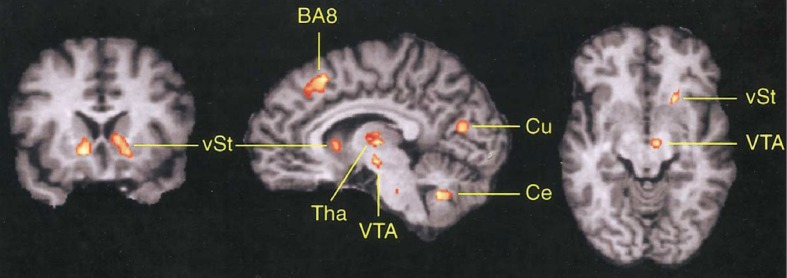
“As can be seen in Figure 3, the DMFC is preferentially activated when subjects predict events under varying levels of uncertainty based on natural sampling (Volz et al., 2003).”
BackgroundInfluentialNeural Mechanisms of Belief Inference during Cooperative Games
Yoshida, W., Seymour, B., Friston, K. J., & Dolan, R. J. (2010) · The Journal of Neuroscience · doi:10.1523/jneurosci.5895-09.2010 · Cited by 212
Chiu, P. H., Kayali, M. A., Kishida, K. T., Tomlin, D., Klinger, L. G., Klinger, M. R., & Montague, P. R. (2008) · Neuron · doi:10.1016/j.neuron.2007.12.020 · Cited by 209
A dissociation between social mentalizing and general reasoning
Overwalle, F. V. (2010) · NeuroImage · doi:10.1016/j.neuroimage.2010.09.043 · Cited by 208
Shamay‐Tsoory, S., Tibi-Elhanany, Y., & Aharon‐Peretz, J. (2006) · Social Neuroscience · doi:10.1080/17470910600985589 · Cited by 204
Control of prepotent responses by the superior medial frontal cortex
CHEN, C., Muggleton, N. G., Tzeng, O. J. L., Hung, D. L., & Juan, C.-H. (2008) · NeuroImage · doi:10.1016/j.neuroimage.2008.09.005 · Cited by 202
Resolution of Uncertainty in Prefrontal Cortex
Yoshida, W., & Ishii, S. (2006) · Neuron · doi:10.1016/j.neuron.2006.05.006 · Cited by 201
Representation of Others' Action by Neurons in Monkey Medial Frontal Cortex
Yoshida, K., Saito, N., Iriki, A., & Isoda, M. (2011) · Current Biology · doi:10.1016/j.cub.2011.01.004 · Cited by 200
Self-citationEmpathy, sex and fluid intelligence as predictors of theory of mind
Ibáñez, A. M., Huepe, D., Gempp, R., Gutiérrez, V. V., Rivera-Rei, Á. A., & Toledo, M. I. (2012) · Personality and Individual Differences · doi:10.1016/j.paid.2012.11.022 · Cited by 196
Infant attention to intentional action predicts preschool theory of mind.
Wellman, H. M., Lopez-Duran, S., LaBounty, J., & Hamilton, B. (2008) · Developmental Psychology · doi:10.1037/0012-1649.44.2.618 · Cited by 195
Cortical electrical stimulation in humans. The negative motor areas.
Lüders, H. O., Dinner, D. S., Morris, H. H., Wyllie, E., & Comair, Y. G. (1995) · PubMed · Cited by 193
The Folk Psychology of Free Will: Fits and Starts
Nichols, S. (2004) · Mind & Language · doi:10.1111/j.0268-1064.2004.00269.x · Cited by 189
van der Meer, L., Groenewold, N. A., Nolen, W. A., Pijnenborg, G. H. M., & Aleman, A. (2011) · NeuroImage · doi:10.1016/j.neuroimage.2011.03.053 · Cited by 187
Knowing When to Stop: The Brain Mechanisms of Chasing Losses
Campbell-Meiklejohn, D. K., Woolrich, M. W., Passingham, R. E., & Rogers, R. D. (2007) · Biological Psychiatry · doi:10.1016/j.biopsych.2007.05.014 · Cited by 186
Growing Less Empathic With Age: Disinhibition of the Self-Perspective
Bailey, P. E., & Henry, J. D. (2008) · The Journals of Gerontology Series B · doi:10.1093/geronb/63.4.p219 · Cited by 181
Uncertainty and Cognitive Control
Mushtaq, F., Bland, A. R., & Schaefer, A. (2011) · Frontiers in Psychology · doi:10.3389/fpsyg.2011.00249 · Cited by 174
The extrastriate cortex distinguishes between the consequences of one's own and others' behavior
David, N., Cohen, M. X., Newen, A., Bewernick, B. H., Shah, N. J., Fink, G. R., & Vogeley, K. T. (2007) · NeuroImage · doi:10.1016/j.neuroimage.2007.03.030 · Cited by 174
Efland, A. D. (2002) · Cited by 174
Moore, J. W., Ruge, D., Wenke, D., Rothwell, J. C., & Haggard, P. (2010) · Proceedings of the Royal Society B Biological Sciences · doi:10.1098/rspb.2010.0404 · Cited by 172
Elliott, R., & Dolan, R. J. (1998) · NeuroImage · doi:10.1006/nimg.1998.0344 · Cited by 170
Lövaas, O. I. (1977) · Cited by 167
Domain-specificity and theory of mind: evaluating neuropsychological evidence
Apperly, I. A., Samson, D., & Humphreys, G. W. (2005) · Trends in Cognitive Sciences · doi:10.1016/j.tics.2005.10.004 · Cited by 166
Mars, R. B., Sallet, J., Neubert, F.-X., & Rushworth, M. F. S. (2013) · Proceedings of the National Academy of Sciences · doi:10.1073/pnas.1302956110 · Cited by 165
Taylor, P. C. J., Nobre, A. C., & Rushworth, M. F. S. (2007) · Journal of Neuroscience · doi:10.1523/jneurosci.2877-07.2007 · Cited by 164
Theory of mind tasks and executive functions: A systematic review of group studies in neurology
Aboulafia-Brakha, T., Christe, B., Martory, M.-D., & Annoni, J. (2010) · Journal of Neuropsychology · doi:10.1348/174866410x533660 · Cited by 164
Mars, R. B., Klein-Flügge, M. C., Neubert, F.-X., Olivier, E., Buch, E. R., Boorman, E. D., & Rushworth, M. F. S. (2009) · Journal of Neuroscience · doi:10.1523/jneurosci.1396-09.2009 · Cited by 161
Yazawa, S., Ikeda, A., Kunieda, T., Ohara, S., Mima, T., Nagamine, T., Taki, W., Kimura, J., Hori, T., & Shibasaki, H. (2000) · Experimental Brain Research · doi:10.1007/s002219900311 · Cited by 154
The role of the self in mindblindness in autism
Lombardo, M. V., & Baron‐Cohen, S. (2010) · Consciousness and Cognition · doi:10.1016/j.concog.2010.09.006 · Cited by 153
Risk and risk prediction error signals in anterior insula
Bossaerts, P. L. (2010) · Brain Structure and Function · doi:10.1007/s00429-010-0253-1 · Cited by 152
Imagined rotations of self versus objects: an fMRI study
Wraga, M., Shephard, J. M., Church, J. A., Inati, S., & Kosslyn, S. M. (2005) · Neuropsychologia · doi:10.1016/j.neuropsychologia.2004.11.028 · Cited by 150
Social error monitoring in macaque frontal cortex
Yoshida, K., Saito, N., Iriki, A., & Isoda, M. (2012) · Nature Neuroscience · doi:10.1038/nn.3180 · Cited by 150
Self-citationEmpathy and contextual social cognition
Melloni, M., López, V., & Ibáñez, A. M. (2013) · Cognitive Affective & Behavioral Neuroscience · doi:10.3758/s13415-013-0205-3 · Cited by 147
Was it me or was it you? How the sense of agency originates from ideomotor learning revealed by fMRI
Spengler, S., von Cramon, D. Y., & Brass, M. (2009) · NeuroImage · doi:10.1016/j.neuroimage.2009.01.047 · Cited by 145
The supplementary motor area in the cerebral cortex of man
Penfield, W. G. (1950) · European Archives of Psychiatry and Clinical Neuroscience · doi:10.1007/bf00935517 · Cited by 143
Self and other in the human motor system.
Schütz-Bosbach, S., Mancini, B., Aglioti, S. M., & Haggard, P. (2006) · Current Biology · doi:10.1016/j.cub.2006.07.048 · Cited by 141
What's domain-specific about theory of mind?
Stone, V. E., & Gerrans, P. (2006) · Social Neuroscience · doi:10.1080/17470910601029221 · Cited by 138
Conflicting desire and the child's theory of mind
Moore, C. L., Jarrold, C., Russell, J. A., Lumb, A., Sapp, F., & MacCalIum, F. (1995) · Cognitive Development · doi:10.1016/0885-2014(95)90023-3 · Cited by 138
de Bruijn, E. R. A., de Lange, F. P., von Cramon, D. Y., & Ullsperger, M. (2009) · Journal of Neuroscience · doi:10.1523/jneurosci.1751-09.2009 · Cited by 137
Integrating intention and context: assessing social cognition in adults with Asperger syndrome
Báez, S., Rattazzi, A., González-Gadea, M. L., Torralva, T., Vigliecca, N. S., Decety, J., Manes, F. F., & Ibáñez, A. M. (2012) · Frontiers in Human Neuroscience · doi:10.3389/fnhum.2012.00302 · Cited by 135
Intentional inhibition: How the “veto‐area” exerts control
Kühn, S., Haggard, P., & Braß, M. (2008) · Human Brain Mapping · doi:10.1002/hbm.20711 · Cited by 127
Why am I unsure? Internal and external attributions of uncertainty dissociated by fMRI
Volz, K. G., Schubotz, R. I., & von Cramon, D. Y. (2004) · NeuroImage · doi:10.1016/j.neuroimage.2003.10.028 · Cited by 126
Making predictions in a changing world—inference, uncertainty, and learning
O’Reilly, J. X. (2013) · Frontiers in Neuroscience · doi:10.3389/fnins.2013.00105 · Cited by 124
Executive Inhibitory Control and Cooperative Behavior During Early School Years: A Follow-Up Study
Ciairano, S., Visu‐Petra, L., & Settanni, M. (2007) · Research on Child and Adolescent Psychopathology · doi:10.1007/s10802-006-9094-z · Cited by 124
Are there specialized circuits for social cognition and are they unique to humans?
Rushworth, M. F., Mars, R. B., & Sallet, J. (2013) · Current Opinion in Neurobiology · doi:10.1016/j.conb.2012.11.013 · Cited by 117
Experimental Philosophy and the Problem of Free Will
Nichols, S. (2011) · Science · doi:10.1126/science.1192931 · Cited by 114
Research works printed but not linked: 1
- Bates E. (1990). Language about me and you: pronominal reference and the emerging concept of self, in The Self in Transition: Infancy to Childhood, eds Cicchetti D. Beeghly M. (Chicago, IL: University of Chicago Press), 165– 182
Cited by
Sorted by citations
Feelings of shame, embarrassment and guilt and their neural correlates: A systematic review
Bastin, C., Harrison, B. J., Davey, C. G., Moll, J., & Whittle, S. (2016) · Neuroscience & Biobehavioral Reviews · doi:10.1016/j.neubiorev.2016.09.019 · Cited by 177
Gao, X., Yu, H., Sáez, I., Blue, P. R., Zhu, L., Hsu, M., & Zhou, X. (2018) · Proceedings of the National Academy of Sciences · doi:10.1073/pnas.1802523115 · Cited by 119
Social reward monitoring and valuation in the macaque brain
Noritake, A., Ninomiya, T., & Isoda, M. (2018) · Nature Neuroscience · doi:10.1038/s41593-018-0229-7 · Cited by 88
Self-citationSocial interaction recruits mentalizing and reward systems in middle childhood
Alkire, D., Levitas, D., Warnell, K. R., & Redcay, E. (2018) · Human Brain Mapping · doi:10.1002/hbm.24221 · Cited by 69
Empathy and emotion recognition in patients with idiopathic generalized epilepsy
Jiang, Y., Hu, Y., Wang, Y., Zhou, N., Li, Z., & Wang, K. (2014) · Epilepsy & Behavior · doi:10.1016/j.yebeh.2014.06.005 · Cited by 64
Metadata
- Authors
- Isoda, M., & Noritake, A.
- Affiliations
- Kansai Medical University (JP)
- Corresponding author
- Isoda, Masaki
- Venue
- Frontiers in Neuroscience
- Publisher
- Frontiers Media SA
- Published
- 2013
- Volume
- 7
- Pages
- 232-232
- ISSN
- 1662-453X (ISSN-L)
- PMC
- PMC3852025
- OpenAlex
- W1988828685
- Cited by
- 64
- References
- 241
- Citations by year
- 2026: 1 · 2025: 3 · 2024: 3 · 2023: 4 · 2022: 3 · 2021: 10 · 2020: 4 · 2019: 6 · 2018: 11 · 2017: 7 · 2016: 4 · 2015: 4 · 2014: 4
- FWCI
- 0.52
- Type
- journal article
- Language
- en
- Open access
- gold
- doi.org
- Licence
- cc-by
- Locations
- Frontiers in Neuroscience (publishedVersion, cc-by)
- Europe PMC (PubMed Central) (publishedVersion, cc-by)
- PubMed Central (publishedVersion, cc-by)
- PubMed (publishedVersion)
- DOAJ (DOAJ: Directory of Open Access Journals) (submittedVersion, cc-by-sa)
- Funders
- Japan Society for the Promotion of Science (24300125)
- Precursory Research for Embryonic Science and Technology
- Topics
- Social Sciences › Psychology › Social Psychology › Action Observation and Synchronization
- Social Sciences › Psychology › Developmental and Educational Psychology › Child and Animal Learning Development
- Social Sciences › Psychology › Social Psychology › Social Robot Interaction and HRI
- Keywords
- dorsomedial frontal cortex, theory of mind, mentalization, intention perception, self-other distinction, prediction under uncertainty, social cognition
About these checks
Registry, retraction, Cites and statistics results are computed, not judged, with one exception: a printed reference that no index lists is read once by a model before it counts as a citation error. Claims are extracted by a model and kept only when their quote appears verbatim in the text; each cited source is then checked, with a model’s help, for whether it says what the claim relies on. Those verdicts can be wrong — read the claim’s quote and the cited source before relying on one.
Statistics and arithmetic are recomputed, not judged.
Confidence bands are shown only for fields calibrated on our annotated test set. None is calibrated yet, so no band is shown.
What counts as a claim ›How we measure confidence ›How we check this ›
Are you an author, or do you see a problem with this page? Request a review
