

The DOI matches its Crossref record; 49 of the 49 references it cites were found in a registry or an index.
Extracellular Monomeric Tau Is Internalized by Astrocytes
Open accessAbstract
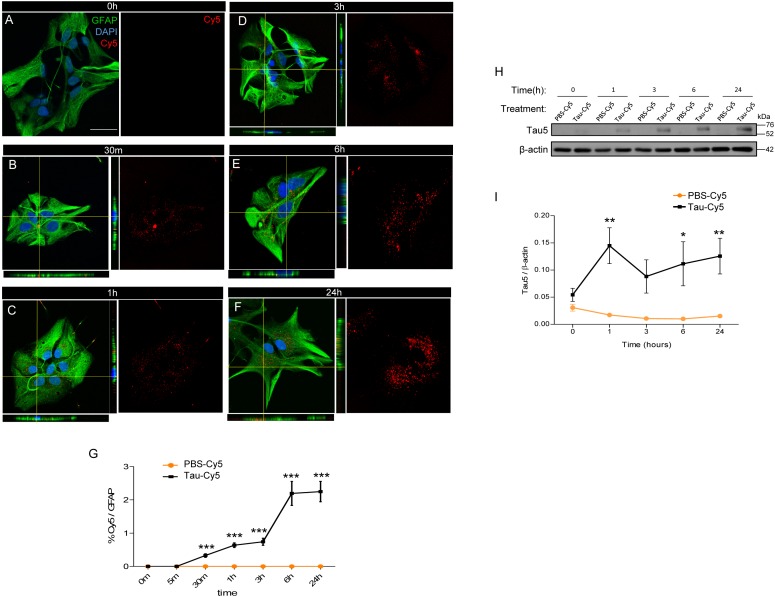
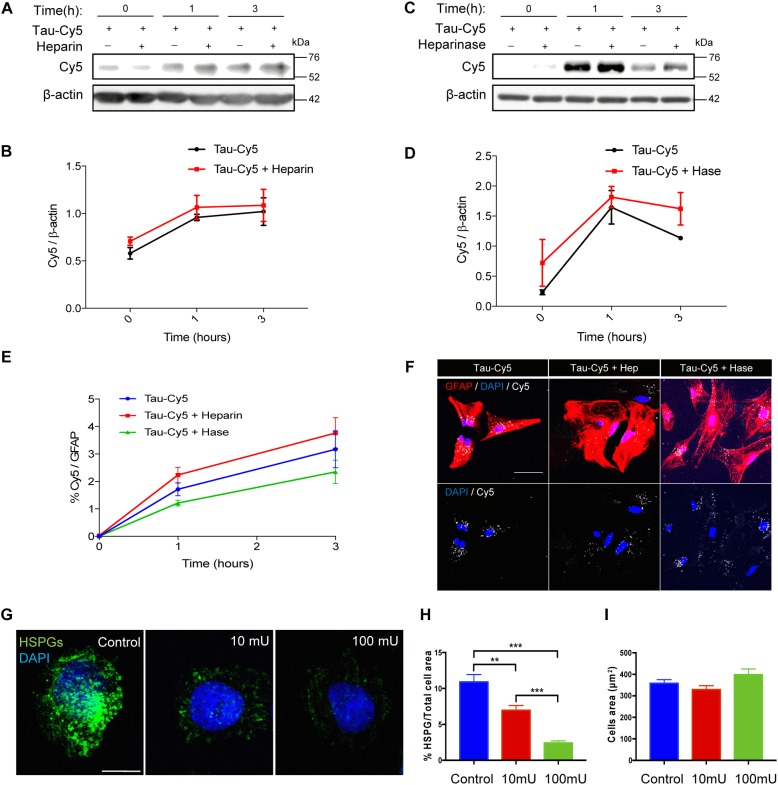
Tau is a microtubule-associated protein that is expressed in neurons. However, in a group of neurodegenerative diseases named tauopathies - characterized by an increase in aggregated and/or hyperphosphorylated Tau - the protein accumulates inside other cells, such as astrocytes and microglia. Given that these glial cells do not produce Tau, its presence can be explained by internalization from the extracellular medium and consequent formation of Tau aggregates. Among internalization mechanisms, heparan sulfate proteoglycans (HSPGs) have been proposed to be responsible for fibrillary Tau uptake in various cell types. Here we studied whether monomeric Tau, which has been observed to be internalized by glial cells such as microglia, was also taken up by astrocytes. Although this Tau form was internalized from the extracellular medium by these cells, the mechanism of uptake was found to be independent of HSPGs.
Overview
The claims and statistics of this paper haven’t been checked yet.
Run the check — free, no account needed. It reads the open-access text and checks the sources it cites.
Integrity signals
Registry
Cites
Statistics
Figures
Verification
Claims the paper makes
The claims and statistics of this paper haven’t been checked yet.
Run the check — free, no account needed. It reads the open-access text and checks the sources it cites.
Claims other papers make about this one
Each is checked against this paper’s own text: does it say what the citing paper says it does?
The cited source doesn’t support the claim as written.
In the citing paper
“astrocytes are increasingly recognized as active participants in tau clearance, a process critical for limiting the spread of pathological tau aggregates in AD and related tauopathies.”
From Protective mechanisms against Alzheimer's disease in APOE3‐Christchurch homozygous astrocytes (2025) · cites this paper as [13]
Checked by a reasoning model — may be wrong.
Experimental — accuracy not yet measuredThe cited source says what the claim attributes to it.
In the citing paper
“Previous studies have demonstrated that astrocytes can internalize both tau monomers and higher‐molecular‐weight tau species. 13 , 28”
From Protective mechanisms against Alzheimer's disease in APOE3‐Christchurch homozygous astrocytes (2025) · cites this paper as [13]
In the citing paper
“Astrocytes can internalize tau monomers or fibrils through mechanisms independent of HSPGs [202].”
From Tau and neuroinflammation in Alzheimer’s disease: interplay mechanisms and clinical translation (2023) · cites this paper as [202]
Self-check
Percentages, sums and reported differences re-computed from the paper’s own numbers.
The self-check needs the paper’s full text.
Citations
Cites
Neuropathological stageing of Alzheimer-related changes.
Braak, H., & Braak, E. (1991) · Acta Neuropathologica · doi:10.1007/bf00308809 · Cited by 16,123
A protein factor essential for microtubule assembly
Weingarten, M. D., Lockwood, A. H., Hwo, S. Y., & Kirschner, M. W. (1975) · Proceedings of the National Academy of Sciences · doi:10.1073/pnas.72.5.1858 · Cited by 3,089
Tau-mediated neurodegeneration in Alzheimer’s disease and related disorders
Ballatore, C., Lee, V. M.-Y., & Trojanowski, J. Q. (2007) · Nature Reviews Neuroscience · doi:10.1038/nrn2194 · Cited by 2,174
Heparan sulfate proteoglycans mediate internalization and propagation of specific proteopathic seeds
Holmes, B. B., DeVos, S. L., Kfoury, N., Li, M., Jacks, R., Yanamandra, K., Ouidja, M. O., Brodsky, F. M., Marasa, J., Bagchi, D. P., et al. (2013) · Proceedings of the National Academy of Sciences · doi:10.1073/pnas.1301440110 · Cited by 859
Tau protein function in living cells.
Drubin, D. G., & Kirschner, M. W. (1986) · The Journal of Cell Biology · doi:10.1083/jcb.103.6.2739 · Cited by 766
The release and trans-synaptic transmission of Tau via exosomes
Wang, Y., Balaji, V., Kaniyappan, S., Krüger, L., Irsen, S., Tepper, K., Chandupatla, R., Maetzler, W., Schneider, A., Mandelkow, E., et al. (2017) · Molecular Neurodegeneration · doi:10.1186/s13024-016-0143-y · Cited by 674
Physiological release of endogenous tau is stimulated by neuronal activity
Pooler, A. M., Phillips, E. C., Lau, D. H. W., Noble, W., & Hanger, D. P. (2013) · The EMBO Reports · doi:10.1038/embor.2013.15 · Cited by 642
Arendt, T., Stieler, J. T., & Holzer, M. (2016) · Brain Research Bulletin · doi:10.1016/j.brainresbull.2016.08.018 · Cited by 609
Maphis, N., Xu, G., Kokiko-Cochran, O. N., Jiang, S., Cardona, A., Ransohoff, R. M., Lamb, B. T., & Bhaskar, K. (2015) · Brain · doi:10.1093/brain/awv081 · Cited by 595
Aging-related tau astrogliopathy (ARTAG): Harmonized evaluation strategy
Kovacs, G. G., Ferrer, I., Grinberg, L. T., Alafuzoff, I., Attems, J., Budka, H., Cairns, N. J., Crary, J. F., Duyckaerts, C., Ghetti, B., et al. (2016) · Acta Neuropathologica · doi:10.1007/s00401-015-1509-x · Cited by 532 · cited 2×
“, 2015; Leyns and Holtzman, 2017) and astrocytes (Kovacs et al., 2016; Ferrer et al., 2018), despite their lack of Tau expression.”
Background
Cited by
Sorted by citations
Items 101–115 of 115
Misfolding protein pathology detected in a chronic mouse model of multiple sclerosis
MacKeigan, T. P., Morgan, M. L., Mitchell, S., & Stys, P. K. (2025) · Neuroscience · doi:10.1016/j.neuroscience.2025.12.063 · Cited by 1
Zaafar, D. K. (2023) · Springer eBooks · doi:10.1007/978-981-19-3949-5_43-1 · Cited by 1
Serrano, S. (2006) · Cuadernos hispanoamericanos
Astrocytic tau inclusions lead to microglial abnormalities, but leave neuronal networks intactPreprint
Vogels, T., Vargová, G., & Hromádka, T. (2024) · bioRxiv (Cold Spring Harbor Laboratory) · doi:10.1101/2024.01.28.577642
Reid, M. J., Leija‐Salazar, M., Troakes, C., Lynham, S., Srivastava, D. P., Perez‐Nievas, B. G., & Noble, W. J. (2024) · bioRxiv (Cold Spring Harbor Laboratory) · doi:10.1101/2024.09.04.610753
Zaafar, D. K. (2024) · Springer eBooks · doi:10.1007/978-981-99-7557-0_43
Berrocal, M., Alvarez, A. M., & Mata, A. M. (2025) · FEBS Open Bio · doi:10.1002/2211-5463.70046 · Cited by 1
Additional file 1 of Determinants of astrocytic pathology in stem cell models of primary tauopathies
Fiock, K. L., Hook, J. N., & Hefti, M. M. (2024) · Figshare · doi:10.6084/m9.figshare.26623750
Additional file 2 of Determinants of astrocytic pathology in stem cell models of primary tauopathies
Fiock, K. L., Hook, J. N., & Hefti, M. M. (2024) · Figshare · doi:10.6084/m9.figshare.26623753
Dhaliwal, I., Sandell, R., & Raj, A. (2026) · bioRxiv (Cold Spring Harbor Laboratory) · doi:10.64898/2026.01.07.698214
BAG3 modulates clathrin-mediated endocytosis and tau uptake in astrocytes
Rodwell‐Bullock, J., Blau, E., Ganguly, A., Deaton, C. A., & Johnson, G. V. W. (2026) · American Journal of Physiology-Cell Physiology · doi:10.1152/ajpcell.00947.2025
Study of the Neuron-Astrocyte Relationship in a Rodent Model of Tauopathy
de Gérando, A. M. (2019) · theses.fr (ABES) · doi:10.70675/04658671zaca3z4fefza24dz2f5a011bebfe
Astrocytes dysfunction in tauopathies
Augustin, E. (2023) · theses.fr (ABES) · doi:10.70675/a6b6a2f4zff42z4987z9ca0z62aca30c291c
The Function of Tau in Astrocytes: Advantage or Damage
Luis-Hernández, K. G., Beltrán‐Parrazal, L., Morgado‐Valle, C., López‐Meraz, M. L., García, L. I., & Chi-Castañeda, D. (2026) · Neuroglia · doi:10.3390/neuroglia7030030
Abd-Elraouf, K., Murphy, D. T., Cheong, L. Y. T., Zeng, J., & Lo, C. H. (2026) · Translational Neurodegeneration · doi:10.1186/s40035-026-00591-z
Metadata
- Authors
- Perea, J. R., López, E., Díez-Ballesteros, J. C., Ávila, J., Hernández, F., & Bolós, M.
- Affiliations
- Biomedical Research Networking Center on Neurodegenerative Diseases (ES)
- Centro de Biología Molecular Severo Ochoa (ES)
- Corresponding author
- Bolós, Marta
- Venue
- Frontiers in Neuroscience
- Publisher
- Frontiers Media SA
- Published
- 2019-05-01
- Volume
- 13
- Pages
- 442-442
- ISSN
- 1662-453X (ISSN-L)
- PMC
- PMC6504834
- OpenAlex
- W2943016427
- Cited by
- 114
- References
- 49
- Citations by year
- 2026: 7 · 2025: 14 · 2024: 20 · 2023: 13 · 2022: 10 · 2021: 28 · 2020: 15 · 2019: 6
- FWCI
- 10.11
- Type
- journal article
- Language
- en
- Open access
- gold
- doi.org
- Licence
- Locations
- Frontiers in Neuroscience (publishedVersion, cc-by)
- Europe PMC (PubMed Central) (publishedVersion, cc-by)
- PubMed Central (publishedVersion, cc-by)
- PubMed (publishedVersion)
- DIGITAL.CSIC (Spanish National Research Council (CSIC)) (submittedVersion, cc-by)
- DOAJ (DOAJ: Directory of Open Access Journals) (submittedVersion)
- Hispana (submittedVersion, cc-by)
- Biblos-e Archivo (Universidad Autónoma de Madrid) (submittedVersion, public-domain)
- Funders
- Centro de Biología Molecular Severo Ochoa
- Ministerio de Economía y Competitividad (SAF-2014-53040-P, BFU2016-77885-P)
- Centro de Investigación Biomédica en Red sobre Enfermedades Neurodegenerativas
- Topics
- Life Sciences › Neuroscience › Cellular and Molecular Neuroscience › Alzheimer's disease research and treatments
- Life Sciences › Neuroscience › Neurology › Neuroinflammation and Neurodegeneration Mechanisms
- Life Sciences › Biochemistry, Genetics and Molecular Biology › Cell Biology › Cellular transport and secretion
- Keywords
- tau protein, astrocytes, tauopathy, heparan sulfate proteoglycans, microglia, tau aggregation
About these checks
Registry, retraction, Cites and statistics results are computed, not judged, with one exception: a printed reference that no index lists is read once by a model before it counts as a citation error. Claims are extracted by a model and kept only when their quote appears verbatim in the text; each cited source is then checked, with a model’s help, for whether it says what the claim relies on. Those verdicts can be wrong — read the claim’s quote and the cited source before relying on one.
Statistics and arithmetic are recomputed, not judged.
Confidence bands are shown only for fields calibrated on our annotated test set. None is calibrated yet, so no band is shown.
What counts as a claim ›How we measure confidence ›How we check this ›
Are you an author, or do you see a problem with this page? Request a review
