

The DOI matches its Crossref record; 49 of the 49 references it cites were found in a registry or an index.
Extracellular Monomeric Tau Is Internalized by Astrocytes
Open accessAbstract
Tau is a microtubule-associated protein that is expressed in neurons. However, in a group of neurodegenerative diseases named tauopathies - characterized by an increase in aggregated and/or hyperphosphorylated Tau - the protein accumulates inside other cells, such as astrocytes and microglia. Given that these glial cells do not produce Tau, its presence can be explained by internalization from the extracellular medium and consequent formation of Tau aggregates. Among internalization mechanisms, heparan sulfate proteoglycans (HSPGs) have been proposed to be responsible for fibrillary Tau uptake in various cell types. Here we studied whether monomeric Tau, which has been observed to be internalized by glial cells such as microglia, was also taken up by astrocytes. Although this Tau form was internalized from the extracellular medium by these cells, the mechanism of uptake was found to be independent of HSPGs.
Overview
The claims and statistics of this paper haven’t been checked yet.
Run the check — free, no account needed. It reads the open-access text and checks the sources it cites.
Integrity signals
Registry
Cites
Statistics
Figures
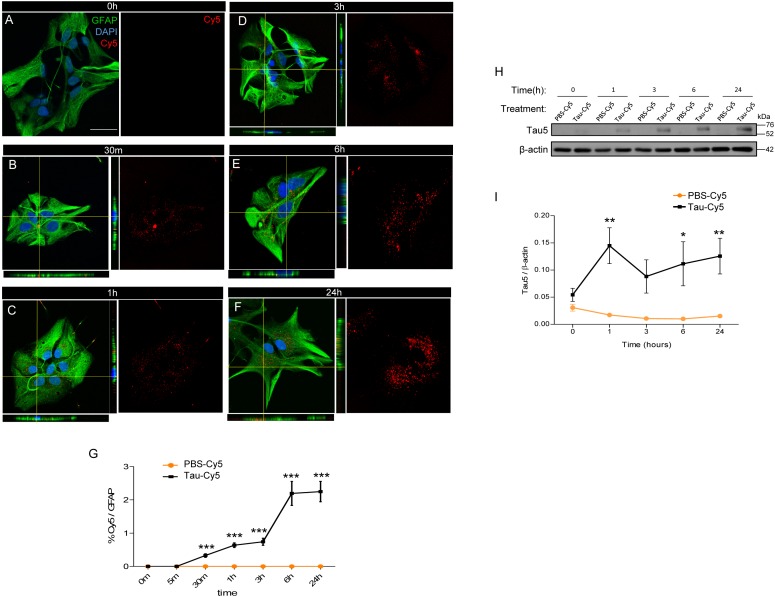
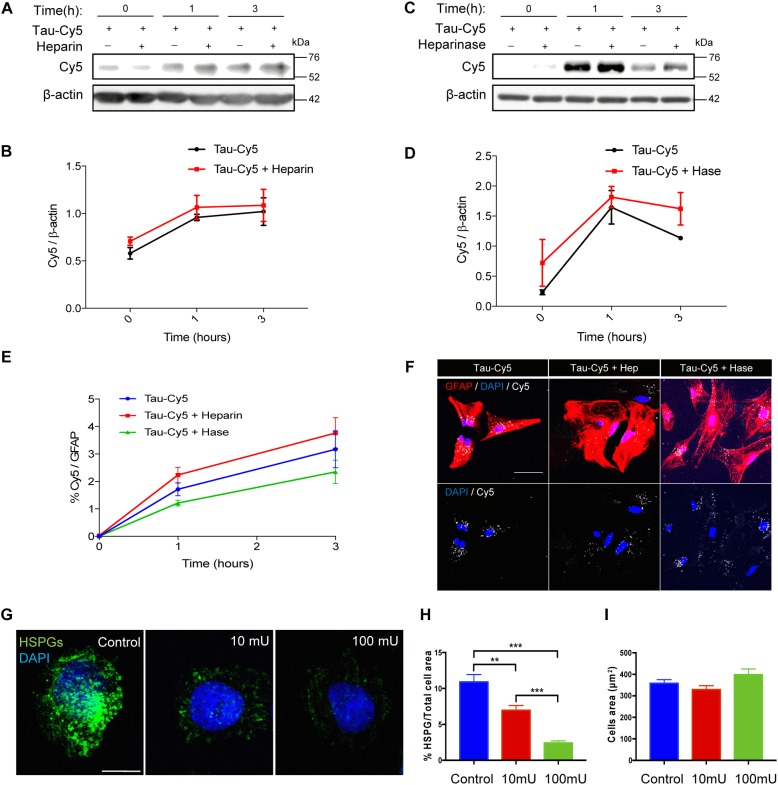
Verification
Claims the paper makes
The claims and statistics of this paper haven’t been checked yet.
Run the check — free, no account needed. It reads the open-access text and checks the sources it cites.
Claims other papers make about this one
Each is checked against this paper’s own text: does it say what the citing paper says it does?
The cited source doesn’t support the claim as written.
In the citing paper
“astrocytes are increasingly recognized as active participants in tau clearance, a process critical for limiting the spread of pathological tau aggregates in AD and related tauopathies.”
From Protective mechanisms against Alzheimer's disease in APOE3‐Christchurch homozygous astrocytes (2025) · cites this paper as [13]
Checked by a reasoning model — may be wrong.
Experimental — accuracy not yet measuredThe cited source says what the claim attributes to it.
In the citing paper
“Previous studies have demonstrated that astrocytes can internalize both tau monomers and higher‐molecular‐weight tau species. 13 , 28”
From Protective mechanisms against Alzheimer's disease in APOE3‐Christchurch homozygous astrocytes (2025) · cites this paper as [13]
In the citing paper
“Astrocytes can internalize tau monomers or fibrils through mechanisms independent of HSPGs [202].”
From Tau and neuroinflammation in Alzheimer’s disease: interplay mechanisms and clinical translation (2023) · cites this paper as [202]
Self-check
Percentages, sums and reported differences re-computed from the paper’s own numbers.
The self-check needs the paper’s full text.
Citations
Cites
Neuropathological stageing of Alzheimer-related changes.
Braak, H., & Braak, E. (1991) · Acta Neuropathologica · doi:10.1007/bf00308809 · Cited by 16,123
A protein factor essential for microtubule assembly
Weingarten, M. D., Lockwood, A. H., Hwo, S. Y., & Kirschner, M. W. (1975) · Proceedings of the National Academy of Sciences · doi:10.1073/pnas.72.5.1858 · Cited by 3,089
Tau-mediated neurodegeneration in Alzheimer’s disease and related disorders
Ballatore, C., Lee, V. M.-Y., & Trojanowski, J. Q. (2007) · Nature Reviews Neuroscience · doi:10.1038/nrn2194 · Cited by 2,174
Heparan sulfate proteoglycans mediate internalization and propagation of specific proteopathic seeds
Holmes, B. B., DeVos, S. L., Kfoury, N., Li, M., Jacks, R., Yanamandra, K., Ouidja, M. O., Brodsky, F. M., Marasa, J., Bagchi, D. P., et al. (2013) · Proceedings of the National Academy of Sciences · doi:10.1073/pnas.1301440110 · Cited by 859
Tau protein function in living cells.
Drubin, D. G., & Kirschner, M. W. (1986) · The Journal of Cell Biology · doi:10.1083/jcb.103.6.2739 · Cited by 766
The release and trans-synaptic transmission of Tau via exosomes
Wang, Y., Balaji, V., Kaniyappan, S., Krüger, L., Irsen, S., Tepper, K., Chandupatla, R., Maetzler, W., Schneider, A., Mandelkow, E., et al. (2017) · Molecular Neurodegeneration · doi:10.1186/s13024-016-0143-y · Cited by 674
Physiological release of endogenous tau is stimulated by neuronal activity
Pooler, A. M., Phillips, E. C., Lau, D. H. W., Noble, W., & Hanger, D. P. (2013) · The EMBO Reports · doi:10.1038/embor.2013.15 · Cited by 642
Arendt, T., Stieler, J. T., & Holzer, M. (2016) · Brain Research Bulletin · doi:10.1016/j.brainresbull.2016.08.018 · Cited by 609
Maphis, N., Xu, G., Kokiko-Cochran, O. N., Jiang, S., Cardona, A., Ransohoff, R. M., Lamb, B. T., & Bhaskar, K. (2015) · Brain · doi:10.1093/brain/awv081 · Cited by 595
Aging-related tau astrogliopathy (ARTAG): Harmonized evaluation strategy
Kovacs, G. G., Ferrer, I., Grinberg, L. T., Alafuzoff, I., Attems, J., Budka, H., Cairns, N. J., Crary, J. F., Duyckaerts, C., Ghetti, B., et al. (2016) · Acta Neuropathologica · doi:10.1007/s00401-015-1509-x · Cited by 532 · cited 2×
“, 2015; Leyns and Holtzman, 2017) and astrocytes (Kovacs et al., 2016; Ferrer et al., 2018), despite their lack of Tau expression.”
Background
Cited by
Sorted by citations
Tau and neuroinflammation in Alzheimer’s disease: interplay mechanisms and clinical translation
Chen, Y., & Yu, Y. (2023) · Journal of Neuroinflammation · doi:10.1186/s12974-023-02853-3 · Cited by 516
“Astrocytes can internalize tau monomers or fibrils through mechanisms independent of HSPGs [202].”
BackgroundInfluentialAstrocyte contribution to dysfunction, risk and progression in neurodegenerative disorders
Brandebura, A. N., Paumier, A., Onur, T. S., & Allen, N. J. (2023) · Nature Reviews Neuroscience · doi:10.1038/s41583-022-00641-1 · Cited by 427
Mechanisms of secretion and spreading of pathological tau protein
Brunello, C. A., Merezhko, M., Uronen, R.-L., & Huttunen, H. J. (2020) · Cellular and Molecular Life Sciences · doi:10.1007/s00018-019-03349-1 · Cited by 304
Cellular and pathological functions of tau
Bravo, C. P., Naguib, S. A., & Gan, L. (2024) · Nature Reviews Molecular Cell Biology · doi:10.1038/s41580-024-00753-9 · Cited by 271
Reducing acetylated tau is neuroprotective in brain injury
Shin, M.-K., Vázquez-Rosa, E., Koh, Y., Dhar, M., Chaubey, K., Cintrón-Pérez, C. J., Barker, S., Miller, E., Franke, K., Noterman, M. F., et al. (2021) · Cell · doi:10.1016/j.cell.2021.03.032 · Cited by 226
Cellular and pathological heterogeneity of primary tauopathies
Chung, D. C., Roemer, S. F., Petrucelli, L., & Dickson, D. W. (2021) · Molecular Neurodegeneration · doi:10.1186/s13024-021-00476-x · Cited by 232
Tau Protein Interaction Partners and Their Roles in Alzheimer’s Disease and Other Tauopathies
Sinsky, J., Pichlerova, K., & Hanes, J. (2021) · International Journal of Molecular Sciences · doi:10.3390/ijms22179207 · Cited by 220
Richetin, K., Steullet, P., Pachoud, M., Perbet, R., Parietti, E., Maheswaran, M., Eddarkaoui, S., Bégard, S., Pythoud, C., Rey, M. J., et al. (2020) · Nature Neuroscience · doi:10.1038/s41593-020-00728-x · Cited by 214
Updates in Alzheimer's disease: from basic research to diagnosis and therapies
Liu, E., Zhang, Y., & Wang, J. (2024) · Translational Neurodegeneration · doi:10.1186/s40035-024-00432-x · Cited by 241
Mechanisms of Pathogenic Tau and Aβ Protein Spreading in Alzheimer’s Disease
d’Errico, P., & Meyer‐Luehmann, M. (2020) · Frontiers in Aging Neuroscience · doi:10.3389/fnagi.2020.00265 · Cited by 191
Reactive astrogliosis: A friend or foe in the pathogenesis of Alzheimer’s disease
Kumar, A., Fontana, I. C., & Nordberg, A. (2023) · Journal of Neurochemistry · doi:10.1111/jnc.15565 · Cited by 150
Inflammatory aspects of Alzheimer’s disease
Lucena, P. B., & Heneka, M. T. (2024) · Acta Neuropathologica · doi:10.1007/s00401-024-02790-2 · Cited by 152
Transgenic Mouse Models of Alzheimer’s Disease: An Integrative Analysis
Sanchez-Varo, R. M., Mejias‐Ortega, M., Fernandez-Valenzuela, J. J., Nuñez‐Diaz, C., Cáceres-Palomo, L., Vegas‐Gomez, L., Sánchez‐Mejías, E., Trujillo‐Estrada, L., García‐León, J. A., Moreno‐González, I., et al. (2022) · International Journal of Molecular Sciences · doi:10.3390/ijms23105404 · Cited by 136
Microglia in Alzheimer’s Disease in the Context of Tau Pathology
Perea, J. R., Bolós, M., & Ávila, J. (2020) · Biomolecules · doi:10.3390/biom10101439 · Cited by 134
Self-citationContribution of astrocytes to neuropathology of neurodegenerative diseases
Acıoğlu, Ç., Li, L., & Elkabes, S. (2021) · Brain Research · doi:10.1016/j.brainres.2021.147291 · Cited by 119
Astroglia and Tau: New Perspectives
Kovacs, G. G. (2020) · Frontiers in Aging Neuroscience · doi:10.3389/fnagi.2020.00096 · Cited by 115
Jiang, S., & Bhaskar, K. (2020) · Frontiers in Molecular Neuroscience · doi:10.3389/fnmol.2020.586731 · Cited by 119
Puangmalai, N., Bhatt, N. N., Montalbano, M., Sengupta, U., Gaikwad, S., Ventura, F. L., McAllen, S., Ellsworth, A., García, S., & Kayed, R. (2020) · Cell Death and Disease · doi:10.1038/s41419-020-2503-3 · Cited by 113
Possible Mechanisms of Tau Spread and Toxicity in Alzheimer’s Disease
Zhang, H., Cao, Y., Ma, L., Wei, Y., & Li, H. (2021) · Frontiers in Cell and Developmental Biology · doi:10.3389/fcell.2021.707268 · Cited by 109
Reid, M. J., Beltran-Lobo, P., Johnson, L., Perez‐Nievas, B. G., & Noble, W. J. (2020) · Frontiers in Neurology · doi:10.3389/fneur.2020.572850 · Cited by 98
Estes, R., Lin, B. C., Khera, A., & Davis, M. Y. (2021) · Frontiers in Molecular Neuroscience · doi:10.3389/fnmol.2021.788695 · Cited by 99
Filamentous recombinant human Tau activates primary astrocytes via an integrin receptor complex
Wang, P., & Ye, Y. (2021) · Nature Communications · doi:10.1038/s41467-020-20322-w · Cited by 93
Tau fibrils induce nanoscale membrane damage and nucleate cytosolic tau at lysosomes
Rose, K. M., Jepson, T. A., Shukla, S., Maya-Romero, A., Kampmann, M., Xu, K., & Hurley, J. H. (2024) · Proceedings of the National Academy of Sciences · doi:10.1073/pnas.2315690121 · Cited by 81
Astrocytic propagation of Tau in the context of Alzheimer's disease
Fleeman, R. M., & Proctor, E. A. (2021) · Frontiers in Cellular Neuroscience · doi:10.3389/fncel.2021.645233 · Cited by 75
Astrocyte senescence and SASP in neurodegeneration: tau joins the loop
Ungerleider, K., Beck, J. A., Lissa, D., Turnquist, C., Horikawa, I., Harris, B. T., & Harris, C. C. (2021) · Cell Cycle · doi:10.1080/15384101.2021.1909260 · Cited by 72
Role of the Lipid Membrane and Membrane Proteins in Tau Pathology
Bok, E., Leem, E., Lee, B.-R., Lee, J. M., Yoo, C. J., Lee, E. M., & Kim, J. (2021) · Frontiers in Cell and Developmental Biology · doi:10.3389/fcell.2021.653815 · Cited by 61
González-Rodríguez, M., Villar‐Conde, S., Astillero‐Lopez, V., Villanueva‐Anguita, P., Úbeda‐Bañón, I., Flores‐Cuadrado, A., Martínez-Marcos, A., & Saiz‐Sánchez, D. (2021) · International Journal of Molecular Sciences · doi:10.3390/ijms23010165 · Cited by 58
Chidambaram, H., Das, R. R., & Chinnathambi, S. (2022) · European Journal of Cell Biology · doi:10.1016/j.ejcb.2022.151201 · Cited by 59
The Cell Biology of Tau Secretion
Merezhko, M., Uronen, R., & Huttunen, H. J. (2020) · Frontiers in Molecular Neuroscience · doi:10.3389/fnmol.2020.569818 · Cited by 65
Brain clearance of protein aggregates: a close-up on astrocytes
Giusti, V., Kaur, G., Giusto, E., & Civiero, L. (2024) · Molecular Neurodegeneration · doi:10.1186/s13024-024-00703-1 · Cited by 54
Sidoryk‐Wȩgrzynowicz, M., & Strużyńska, L. (2021) · International Journal of Molecular Sciences · doi:10.3390/ijms22168404 · Cited by 51
Neuronal tau species transfer to astrocytes and induce their loss according to tau aggregation state
de Gérando, A. M., d’Orange, M., Augustin, E., Joséphine, C., Aurégan, G., Gaudin, M., Guillermier, M., Hérard, A., Stimmer, L., Petit, F., et al. (2021) · Brain · doi:10.1093/brain/awab011 · Cited by 50
Astrocytic 4R tau expression drives astrocyte reactivity and dysfunction
Ezerskiy, L. A., Schoch, K. M., Sato, C., Beltcheva, M., Horie, K., Rigo, F., Martynowicz, R., Karch, C. M. M., Bateman, R. J., & Miller, T. M. (2021) · JCI Insight · doi:10.1172/jci.insight.152012 · Cited by 48
Tau internalization: A complex step in tau propagation
Zhao, J., Wu, H., & Tang, X. (2021) · Ageing Research Reviews · doi:10.1016/j.arr.2021.101272 · Cited by 47
Mah, D., Zhao, J., Liu, X., Zhang, F., Liu, J., Wang, L., Linhardt, R. J., & Wang, C. (2021) · Frontiers in Molecular Biosciences · doi:10.3389/fmolb.2021.671458 · Cited by 53
Astrocyte and oligodendrocyte pathology in Alzheimer's disease
Ziar, R., Tesar, P. J., & Clayton, B. L. L. (2025) · Neurotherapeutics · doi:10.1016/j.neurot.2025.e00540 · Cited by 47
Briel, N., Pratsch, K., Roeber, S., Arzberger, T., & Herms, J. W. (2020) · Brain Pathology · doi:10.1111/bpa.12914 · Cited by 41
Glial cells and adaptive immunity in frontotemporal dementia with tau pathology
Hartnell, I. J., Blum, D. L., Nicoll, J. A. R., Dorothée, G., & Boche, D. (2020) · Brain · doi:10.1093/brain/awaa457 · Cited by 41
Annadurai, N., Sanctis, J. B. D., Hajdúch, M., & Das, V. (2021) · Experimental Neurology · doi:10.1016/j.expneurol.2021.113756 · Cited by 41
Knockin’ on heaven’s door: Molecular mechanisms of neuronal tau uptake
La‐Rocque, S. D., Moretto, E., Butnaru, I., & Schiavo, G. (2020) · Journal of Neurochemistry · doi:10.1111/jnc.15144 · Cited by 46
Critical Molecular and Cellular Contributors to Tau Pathology
Song, L., Wells, E. A., & Robinson, A. S. (2021) · Biomedicines · doi:10.3390/biomedicines9020190 · Cited by 40
Lysosomal Functions in Glia Associated with Neurodegeneration
Kreher, C., Favret, J., Maulik, M., & Shin, D. (2021) · Biomolecules · doi:10.3390/biom11030400 · Cited by 38
Astrocytes: The Stars in Neurodegeneration?
Dittlau, K. S., & Freude, K. (2024) · Biomolecules · doi:10.3390/biom14030289 · Cited by 39
Amro, Z., Yool, A. J., & Collins‐Praino, L. E. (2021) · Brain Behavior & Immunity - Health · doi:10.1016/j.bbih.2021.100242 · Cited by 39
Donison, N. S., Palik, J., Volkening, K., & Strong, M. J. (2025) · Molecular Neurodegeneration · doi:10.1186/s13024-025-00842-z · Cited by 42
Endosomal-Lysosomal Processing of Neurodegeneration-Associated Proteins in Astrocytes
Wong, C.-O. (2020) · International Journal of Molecular Sciences · doi:10.3390/ijms21145149 · Cited by 31
Liu, X., Li, Y., Huang, L., Kuang, Y., Wu, X., Ma, X., Zhao, B., & Lan, J. (2024) · Frontiers in Pharmacology · doi:10.3389/fphar.2024.1450704 · Cited by 39
An Overview of Astrocyte Responses in Genetically Induced Alzheimer’s Disease Mouse Models
Spanos, F., & Liddelow, S. A. (2020) · Cells · doi:10.3390/cells9112415 · Cited by 32
Ariyannur, P. S., Xing, G., Barry, E. S., Benford, B., Grunberg, N. E., & Sharma, P. (2021) · Aging and Disease · doi:10.14336/ad.2020.1015 · Cited by 28
Astrocyte adaptation in Alzheimer’s disease: a focus on astrocytic P2X7R
Beltran-Lobo, P., Reid, M. J., Jiménez-Sánchez, M., Verkhratsky, A., Perez‐Nievas, B. G., & Noble, W. J. (2022) · Essays in Biochemistry · doi:10.1042/ebc20220079 · Cited by 30
Tau Transfer via Extracellular Vesicles Disturbs the Astrocytic Mitochondrial System
Perbet, R., Zufferey, V., Leroux, É., Parietti, E., Espourteille, J., Culebras, L., Perriot, S., Pasquier, R. D., Bégard, S., Deramecourt, V., et al. (2023) · Cells · doi:10.3390/cells12070985 · Cited by 31
Intercellular transmission of pathogenic proteins in ALS: Exploring the pathogenic wave
Arnold, F. J., Nguyen, A., Bedlack, R., Bennett, C. L., & Spada, A. R. L. (2023) · Neurobiology of Disease · doi:10.1016/j.nbd.2023.106218 · Cited by 29
Song, L., Oseid, D. E., Wells, E. A., Coaston, T. N., & Robinson, A. S. (2022) · Journal of Molecular Neuroscience · doi:10.1007/s12031-021-01943-2 · Cited by 28
Manipulation of the diet–microbiota–brain axis in Alzheimer’s disease
Lee, D. D., Lee, V. M. ‐., & Hur, S. K. (2022) · Frontiers in Neuroscience · doi:10.3389/fnins.2022.1042865 · Cited by 27
ApoE4 expression disrupts tau uptake, trafficking, and clearance in astrocytes
Eisenbaum, M., Pearson, A., Ortiz, C., Mullan, M., Crawford, F., Ojo, J., & Bachmeier, C. (2024) · Glia · doi:10.1002/glia.24469 · Cited by 25
Hassan-Abdi, R., Brenet, A., Bennis, M., Yanicostas, C., & Soussi‐Yanicostas, N. (2019) · Frontiers in Neuroscience · doi:10.3389/fnins.2019.01199 · Cited by 28
Astroglial contribution to tau-dependent neurodegeneration
Sidoryk‐Wȩgrzynowicz, M., & Strużyńska, L. (2019) · Biochemical Journal · doi:10.1042/bcj20190506 · Cited by 26
Chidambaram, H., & Chinnathambi, S. (2025) · Brain Network Disorders · doi:10.1016/j.bnd.2024.12.005 · Cited by 25
The role of astrocytes in prion-like mechanisms of neurodegeneration
Smethurst, P., Franklin, H., Clarke, B. E., Sidle, K. C. L., & Patani, R. (2021) · Brain · doi:10.1093/brain/awab366 · Cited by 25
p38 Inhibition Decreases Tau Toxicity in Microglia and Improves Their Phagocytic Function
Perea, J. R., Bolós, M., Cuadros, R., García, E., García‐Escudero, V., Hernández, F., McManus, R. M., Heneka, M. T., & Ávila, J. (2022) · Molecular Neurobiology · doi:10.1007/s12035-021-02715-0 · Cited by 24
Self-citationHeparan Sulfate Proteoglycans in Tauopathy
Zhu, Y., Gandy, L. A., Zhang, F., Liu, J., Wang, C., Blair, L. J., Linhardt, R. J., & Wang, L. (2022) · Biomolecules · doi:10.3390/biom12121792 · Cited by 27
Tau-Mediated Dysregulation of Neuroplasticity and Glial Plasticity
Koller, E. J., & Chakrabarty, P. (2020) · Frontiers in Molecular Neuroscience · doi:10.3389/fnmol.2020.00151 · Cited by 23
Apolipoprotein E Recognizes Alzheimer's Disease Associated 3‐O Sulfation of Heparan Sulfate
Mah, D., Zhu, Y., Su, G., Zhao, J., Canning, A., Gibson, J. M., Song, X., Stancanelli, E., Xu, Y., Zhang, F., et al. (2023) · Angewandte Chemie International Edition · doi:10.1002/anie.202212636 · Cited by 26
Continuous Monitoring of Tau-Induced Neurotoxicity in Patient-Derived iPSC-Neurons
Oakley, D. H., Klickstein, N., Commins, C., Chung, M., Dujardin, S., Bennett, R. E., Hyman, B. T., & Frosch, M. P. (2021) · The Journal of Neuroscience · doi:10.1523/jneurosci.2590-20.2021 · Cited by 18
Astrocytes in Neurodegenerative Diseases: A Perspective from Tauopathy and α-Synucleinopathy
Wang, P., & Ye, Y. (2021) · Life · doi:10.3390/life11090938 · Cited by 21
Dey, A., Ghosh, S., Rajendran, R. L., Bhuniya, T., Das, P., Bhattacharjee, B., Das, S., Mahajan, A. A., Samant, A., Anand, K., et al. (2024) · International Journal of Molecular Sciences · doi:10.3390/ijms25179690 · Cited by 20
Bowles, K. R., Pedicone, C., Pugh, D. A., Oja, L.-M., Sousa, F. H., Keavey, L. K., Fulton-Howard, B., Weitzman, S. A., Liu, Y., Chen, J. L., et al. (2024) · Cell Reports · doi:10.1016/j.celrep.2024.115013 · Cited by 20
Neurons and astrocytes have distinct organelle signatures and responses to stress
Rhoads, S. N., Dong, W., Hsu, C.-H., Mfulama, N. R., Yarlagadda, R., Ragusa, J. V., Ye, M. Y., Henrie, A., Zanellati, M. C., Diering, G. H., et al. (2025) · Cell Reports · doi:10.1016/j.celrep.2025.116280 · Cited by 22
Methylene Blue Blocks and Reverses the Inhibitory Effect of Tau on PMCA Function
Berrocal, M., Caballero-Bermejo, M., Gutierrez-Merino, C., & Mata, A. M. (2019) · International Journal of Molecular Sciences · doi:10.3390/ijms20143521 · Cited by 17
p38 activation occurs mainly in microglia in the P301S Tauopathy mouse model
Perea, J. R., García, E., Vallés‐Saiz, L., Cuadros, R., Hernández, F., Bolós, M., & Ávila, J. (2022) · Scientific Reports · doi:10.1038/s41598-022-05980-8 · Cited by 16
Self-citationFu, M., Huang, C., Wu, K. L. H., Chen, Y., Kung, Y., Lee, C., Liu, J., Lan, M., & Chang, Y. (2023) · Brain and Behavior · doi:10.1002/brb3.2884 · Cited by 16
Determinants of astrocytic pathology in stem cell models of primary tauopathies
Fiock, K. L., Hook, J. N., & Hefti, M. M. (2023) · Acta Neuropathologica Communications · doi:10.1186/s40478-023-01655-1 · Cited by 20
Berrocal, M., Saez, L., & Mata, A. M. (2021) · International Journal of Molecular Sciences · doi:10.3390/ijms22116055 · Cited by 16
Marvian, A. T., Strauß, T., Tang, Q., Tuck, B. J., Keeling, S., Rüdiger, D., Dizaji, N. M., Mohammad‐Beigi, H., Nuscher, B., Chakraborty, P., et al. (2024) · Molecular Neurodegeneration · doi:10.1186/s13024-024-00786-w · Cited by 16
Microglial Uptake of Extracellular Tau by Actin-Mediated Phagocytosis
Chidambaram, H., Desale, S. E., Qureshi, T., & Chinnathambi, S. (2024) · Methods in molecular biology · doi:10.1007/978-1-0716-3662-6_16 · Cited by 14
Internalization of extracellular Tau oligomers in Alzheimer’s disease
Chinnathambi, S., Rangappa, N., & Chandrashekar, M. (2025) · Advances in clinical chemistry · doi:10.1016/bs.acc.2025.01.005 · Cited by 14
Dysfunctional glia: contributors to neurodegenerative disorders
Sidoryk‐Wȩgrzynowicz, M., & Strużyńska, L. (2020) · Neural Regeneration Research · doi:10.4103/1673-5374.290877 · Cited by 14
ApoE-calypse tau: ApoE–tau synergy in Alzheimer’s disease
Lennol, M. P., Bordier, C., Kamelher, L., Ulrich, J. D., Holtzman, D. M., & Gratuze, M. (2025) · The Journal of Experimental Medicine · doi:10.1084/jem.20250965 · Cited by 14
Glial phagocytosis for synapse and toxic proteins in neurodegenerative diseases
Choi, Y., & Chung, W. (2025) · Molecular Neurodegeneration · doi:10.1186/s13024-025-00870-9 · Cited by 14
The Fate of Tau Aggregates Between Clearance and Transmission
Seitkazina, A., Kim, K. H., Fagan, E., Sung, Y., Kim, Y. K., & Lim, S. (2022) · Frontiers in Aging Neuroscience · doi:10.3389/fnagi.2022.932541 · Cited by 10
Abedin, M. J., & Kastanenka, K. V. (2026) · Journal of Alzheimer s Disease · doi:10.1177/13872877251411561 · Cited by 9
Diverse influences on tau aggregation and implications for disease progressionPreprint
Alstyne, M. V., Pratt, J., & Parker, R. (2025) · Genes & Development · doi:10.1101/gad.352551.124 · Cited by 11
The Adult Neurogenesis Theory of Alzheimer’s Disease
Abbate, C. (2023) · Journal of Alzheimer s Disease · doi:10.3233/jad-221279 · Cited by 11
Protective mechanisms against Alzheimer's disease in APOE3‐Christchurch homozygous astrocytes
Tian, X., Rivera, E. K., Hwang, I., Nikitina, A. A., Smith, J. A., Cho, Y. J., Sala‐Jarque, J., DuBose, A., Andriola, C., Gollan‐Myers, T., et al. (2025) · Alzheimer's & Dementia · doi:10.1002/alz.70589 · Cited by 7
Stable ubiquitin conjugation for biological interrogation of ubiquitinated tau repeat domain
Viola, G., Trivellato, D., Meulli, L., Tira, R., Lauriola, A., Munari, F., Montagnana, M., Buffelli, M., Assfalg, M., & D’Onofrio, M. (2024) · Bioorganic Chemistry · doi:10.1016/j.bioorg.2024.107549 · Cited by 6
Nguyen, N. L., Hoang, T. X., & Kim, J. Y. (2024) · Molecular Neurobiology · doi:10.1007/s12035-024-04295-1 · Cited by 6
Liu, R., Deng, Q., Gong, L., & Yang, L. (2026) · Neuroscience Bulletin · doi:10.1007/s12264-026-01598-2 · Cited by 5
Augustin, E., Vinasco‐Sandoval, T., Riquelme‐Perez, M., Plassard, D., Gaudin, M., Aurégan, G., Mitja, J., Bernier, S., Joséphine, C., Petit, F., et al. (2025) · Glia · doi:10.1002/glia.70019 · Cited by 4
Amyloid and Tau Induce Cell Death Independently of TSPO Polymerization and Density Changes
Tournier, B. B., Ceyzériat, K., Bouteldja, F., & Millet, P. (2021) · ACS Omega · doi:10.1021/acsomega.1c01678 · Cited by 3
Role of non-neuronal cells in neurorepair: a focus on proteinopathy and neurodegeneration
Rodríguez-Carreiro, S., Nogales, M. D. C., Jiménez-Galán, D., Carmona-Lorenzo, S., Caro-Martín, A., Navarro, E., & Esteras, N. (2024) · Regenerative medicine reports . · doi:10.4103/regenmed.regenmed-d-24-00005 · Cited by 2
Apolipoprotein E Recognizes Alzheimer's Disease Associated 3‐O Sulfation of Heparan Sulfate
Mah, D., Zhu, Y., Su, G., Zhao, J., Canning, A., Gibson, J. M., Song, X., Stancanelli, E., Xu, Y., Zhang, F., et al. (2023) · Angewandte Chemie · doi:10.1002/ange.202212636 · Cited by 3
Stavrovskaya, A. V., Воронков, Д. Н., Pavlova, A. K., Olshanskiy, A. S., Belugin, B. V., Mv, I., Zakharova, M. N., & Illarioshkin, S. N. (2024) · Acta Naturae · doi:10.32607/actanaturae.27499 · Cited by 3
Tau Pathology in Neurodegenerative Diseases
Vogels, T., & Hromádka, T. (2021) · Neuromethods · doi:10.1007/978-1-0716-1712-0_4 · Cited by 2
Bowles, K., Pugh, D., Pedicone, C., Oja, L., Weitzman, S., Liu, Y., Chen, J.-L., Disney, M., & Goate, A. (2023) · bioRxiv · doi:10.1101/2023.06.02.543224 · Cited by 4
Microglia undergoes chemokine receptor, CX3CR1-mediated internalization of extracellular TauPreprint
Chidambaram, H., Desale, S. E., Suri, K., Murugan, N. A., & Chinnathambi, S. (2024) · bioRxiv (Cold Spring Harbor Laboratory) · doi:10.1101/2024.12.03.626734 · Cited by 3
Reid, M. J., Leija‐Salazar, M., Troakes, C., Lynham, S., Srivastava, D. P., Perez‐Nievas, B. G., & Noble, W. J. (2025) · iScience · doi:10.1016/j.isci.2025.112793 · Cited by 2
Huang, R., Ye, X., Liu, J., Yang, C., Meng, X., Dou, T., Zhuang, X., Yang, J., Zheng, N., Zhao, Y., et al. (2026) · Pharmacological Research · doi:10.1016/j.phrs.2026.108265 · Cited by 2
Hassan-Abdi, R., Brenet, A., Bennis, M., Yanicostas, C., & Soussi‐Yanicostas, N. (2019) · bioRxiv (Cold Spring Harbor Laboratory) · doi:10.1101/731901 · Cited by 2
Accumulation of Tau in Extracellular Vesicles Disturbs the Astrocytic Mitochondrial SystemPreprint
Perbet, R., Zufferey, V., Leroux, É., Parietti, E., Espourteille, J., Culebras, L., Perriot, S., du Pasquier, R., Bégard, S., Deramecourt, V., et al. (2023) · bioRxiv · doi:10.1101/2023.02.15.527595
Pathological and Functional Brain Amyloids: A New Concept Explaining the Differences
Galkin, A. P., Mitkevich, V. A., Makarov, A. А., Valina, A. A., & Sysoev, E. I. (2025) · International Journal of Molecular Sciences · doi:10.3390/ijms262110459 · Cited by 1
Metadata
- Authors
- Perea, J. R., López, E., Díez-Ballesteros, J. C., Ávila, J., Hernández, F., & Bolós, M.
- Affiliations
- Biomedical Research Networking Center on Neurodegenerative Diseases (ES)
- Centro de Biología Molecular Severo Ochoa (ES)
- Corresponding author
- Bolós, Marta
- Venue
- Frontiers in Neuroscience
- Publisher
- Frontiers Media SA
- Published
- 2019-05-01
- Volume
- 13
- Pages
- 442-442
- ISSN
- 1662-453X (ISSN-L)
- PMC
- PMC6504834
- OpenAlex
- W2943016427
- Cited by
- 114
- References
- 49
- Citations by year
- 2026: 7 · 2025: 14 · 2024: 20 · 2023: 13 · 2022: 10 · 2021: 28 · 2020: 15 · 2019: 6
- FWCI
- 10.11
- Type
- journal article
- Language
- en
- Open access
- gold
- doi.org
- Licence
- Locations
- Frontiers in Neuroscience (publishedVersion, cc-by)
- Europe PMC (PubMed Central) (publishedVersion, cc-by)
- PubMed Central (publishedVersion, cc-by)
- PubMed (publishedVersion)
- DIGITAL.CSIC (Spanish National Research Council (CSIC)) (submittedVersion, cc-by)
- DOAJ (DOAJ: Directory of Open Access Journals) (submittedVersion)
- Hispana (submittedVersion, cc-by)
- Biblos-e Archivo (Universidad Autónoma de Madrid) (submittedVersion, public-domain)
- Funders
- Centro de Biología Molecular Severo Ochoa
- Ministerio de Economía y Competitividad (SAF-2014-53040-P, BFU2016-77885-P)
- Centro de Investigación Biomédica en Red sobre Enfermedades Neurodegenerativas
- Topics
- Life Sciences › Neuroscience › Cellular and Molecular Neuroscience › Alzheimer's disease research and treatments
- Life Sciences › Neuroscience › Neurology › Neuroinflammation and Neurodegeneration Mechanisms
- Life Sciences › Biochemistry, Genetics and Molecular Biology › Cell Biology › Cellular transport and secretion
- Keywords
- tau protein, astrocytes, tauopathy, heparan sulfate proteoglycans, microglia, tau aggregation
About these checks
Registry, retraction, Cites and statistics results are computed, not judged, with one exception: a printed reference that no index lists is read once by a model before it counts as a citation error. Claims are extracted by a model and kept only when their quote appears verbatim in the text; each cited source is then checked, with a model’s help, for whether it says what the claim relies on. Those verdicts can be wrong — read the claim’s quote and the cited source before relying on one.
Statistics and arithmetic are recomputed, not judged.
Confidence bands are shown only for fields calibrated on our annotated test set. None is calibrated yet, so no band is shown.
What counts as a claim ›How we measure confidence ›How we check this ›
Are you an author, or do you see a problem with this page? Request a review
