

The brain-body disconnect: A somatic sensory basis for trauma-related disorders
Open accessThe DOI matches its Crossref record; 460 of the 480 references it cites were found in a registry or an index, and 1 are not checked yet; 6 of the 290 sources its claims cite were checked for support.
Abstract
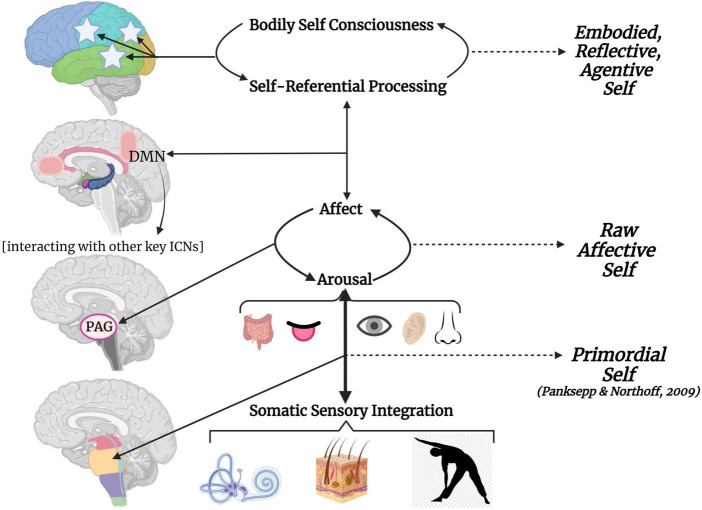
Although the manifestation of trauma in the body is a phenomenon well-endorsed by clinicians and traumatized individuals, the neurobiological underpinnings of this manifestation remain unclear. The notion of somatic sensory processing, which encompasses vestibular and somatosensory processing and relates to the sensory systems concerned with how the physical body exists in and relates to physical space, is introduced as a major contributor to overall regulatory, social-emotional, and self-referential functioning. From a phylogenetically and ontogenetically informed perspective, trauma-related symptomology is conceptualized to be grounded in brainstem-level somatic sensory processing dysfunction and its cascading influences on physiological arousal modulation, affect regulation, and higher-order capacities. Lastly, we introduce a novel hierarchical model bridging somatic sensory processes with limbic and neocortical mechanisms regulating an individual’s emotional experience and sense of a relational, agentive self. This model provides a working framework for the neurobiologically informed assessment and treatment of trauma-related conditions from a somatic sensory processing perspective.
Verified 2026-10-11 · 1 reference not checked yet
Overview
CoChat Summary
## TL;DR
This is a narrative review arguing that trauma-related disorders, especially PTSD and PTSD with dissociative subtype, can be understood through disrupted somatic sensory processing—especially vestibular and somatosensory pathways that shape arousal, defense, and embodiment. The authors propose that therapy should target these brain-body pathways with somatic and multisensory interventions alongside top-down approaches.
## Key findings
- PTSD + dissociative subtype (PTSD + DS) occurs in up to 44% of individuals with PTSD, and is characterized by derealization and depersonalization.
- The paper argues that PTSD is associated with sensory hyper-responsivity, while dissociative symptoms are associated with sensory hypo-sensitivity and altered thresholds for sensory registration.
- The authors cite findings that in PTSD + DS there is significantly decreased vestibular nuclei connectivity with the TPJ and cortical regions (Harricharan et al., 2017), and that PTSD + DS shows altered resting-state functional connectivity between the PPN and amygdala/vmPFC, with negative correlations between PPN-anterior thalamus connectivity and derealization/depersonalization symptoms (Thome et al., 2019).
- They also note that two randomized controlled trials of trauma-sensitive yoga in women with treatment-resistant PTSD showed reductions in PTSD symptoms and dissociation, with the 10-week study yielding decreases comparable to psychopharmaceutical and psychotherapeutic interventions, and the 20-week study producing even greater improvements.
## Methods
- This is a transdisciplinary narrative review; it synthesizes neuroscience, developmental, attachment, and trauma literature rather than presenting a new empirical sample.
- The review focuses on the vestibular system, somatosensory system, brainstem/midbrain circuitry (including the PAG and RAS), attachment development, and implications for PTSD/PTSD + DS.
- Main analysis is conceptual and integrative, building a neurobiological framework from cited studies, including reports of functional connectivity, symptom associations, and treatment findings.
## Limitations
- The authors explicitly note that the neural pathway for affective touch “remains speculative.”
- They state that discussion of pain-related trauma disorders is beyond the scope of the paper.
- Evident from the text: this is a review and hypothesis-building paper, so it does not provide new primary data or causal tests of the proposed brain-body model.
Model-written summary. Check it against the paper before relying on it.
Integrity signals
Registry
Cites
Statistics
Figures
Verification
Claims the paper makes
6 Valid · 0 Not valid · 135 Not checked · 47 Own results and interpretations
The cited sources support only part of this claim — read each source’s verdict below.
In the paper
“Alternatively, hypo-arousal and decreased muscle tone occur during emotional shut-down or feign death as a passive defensive response to inescapable or prolonged threat ( Hofer, 1970 ; Depaulis et al., 1994 ; Bracha, 2004 ).”
What the sources say
- Not checked yetcites Hofer, 1970
- Not checked yetcites Depaulis et al., 1994 matched to “Quiescence and hyporeactivity evoked by activation of cell bodies in the ventrolateral midbrain periaqueductal gray of the rat.” (1994) source
- Partly supportedcites Bracha, 2004 matched to “Freeze, Flight, Fight, Fright, Faint: Adaptationist Perspectives on the Acute Stress Response Spectrum” (2004) sourceExperimental — accuracy not yet measured
The Abstract (p. 2) describes ‘playing dead’ as a defensive response when escape or fighting is not possible, and the faintness proposal (p. 4) describes a flaccid collapse. But ‘Atypical Form of Fright’ (p. 4) distinguishes the two: playing dead (tonic immobility) involves tachycardia and hyperalertness, not hypo-arousal. The paper also does not identify emotional shut-down as the response described here. (LLM, conf=0.86)
plainstates a cause- Asserted: passes — The authors put it forward as true.
- Checkable: passes — It can be checked against evidence.
- Load-bearing: passes — The paper’s conclusions depend on it.
- Based: passes — The paper gives a reason why it holds.
The cited sources support only part of this claim — read each source’s verdict below.
In the paper
“These individuals may seek to engage the SN and thus gain access to the DMN through intense or primally threatening somatic sensory experiences, such as car racing, extreme sports, and promiscuous sex ( van der Kolk, 1989 , 2015 ; Lanius et al., 2020 ).”
What the sources say
- Not checked yetcites van der Kolk, 1989, 2015
- Partly supportedcites Lanius et al., 2020 matched to “The sense of self in the aftermath of trauma: lessons from the default mode network in posttraumatic stress disorder” (2020) sourceExperimental — accuracy not yet measured
In “The DMN under threat: how might DMN-related alterations present clinically?” (page not provided), the authors suggest that some people with PTSD may seek threat or terror to engage the DMN, and link sensory seeking and reckless behaviour to that possibility. The passage does not describe engaging the SN as a route to the DMN or give car racing, extreme sports, and promiscuous sex as examples. (LLM, conf=0.85)
hedgedstates a possible cause- Asserted: passes — The authors put it forward as true.
- Checkable: passes — It can be checked against evidence.
- Load-bearing: unclear — It is unclear whether the paper’s conclusions depend on it.
- Based: passes — The paper gives a reason why it holds.
The cited sources support only part of this claim — read each source’s verdict below.
In the paper
“Severe early life neurodevelopmental disruptions may also give rise to the experience of multiple fragmented, discontinuous, and disembodied selves, such as those experienced in dissociative identity disorder (DID), a condition highly co-existent with early and severe traumatization ( Reinders et al., 2003 ; Dorahy et al., 2014 ; Schlumpf et al., 2014 ; Reinders and Veltman, 2021 ).”
What the sources say
- Not checked yetcites Reinders et al., 2003
- Partly supportedcites Dorahy et al., 2014 matched to “Dissociative identity disorder: An empirical overview” (2014) sourceExperimental — accuracy not yet measured
Split into 2 atoms — 1 confirmed, 1 partially supported, 0 disputed, 0 misattributed, 0 unverifiable. Expand the claim to see per-atom verdicts.
- Not checked yetcites Schlumpf et al., 2014
hedgedstates a possible cause- Asserted: passes — The authors put it forward as true.
- Checkable: passes — It can be checked against evidence.
- Load-bearing: passes — The paper’s conclusions depend on it.
- Based: passes — The paper gives a reason why it holds.
None of the sources cited for this claim have been checked yet.
In the paper
“Alterations to multisensory processing have been shown to mediate higher-order cognition ( Alais et al., 2010 ; Wallace et al., 2020 ), emotion ( Klasen et al., 2012 ), social capacities ( Baranek et al., 2018 ; Stevenson et al., 2018 ; Thye et al., 2018 ), and sense of self ( Panksepp and Northoff, 2009 ;”
What the sources say
- Not checked yetcites Alais et al., 2010
- Not checked yetcites Wallace et al., 2020
- Not checked yetcites Klasen et al., 2012
boostedstates a cause- Asserted: passes — The authors put it forward as true.
- Checkable: passes — It can be checked against evidence.
- Load-bearing: passes — The paper’s conclusions depend on it.
- Based: passes — The paper gives a reason why it holds.
None of the sources cited for this claim have been checked yet.
In the paper
“Additionally, PTSD + DS occurs in up to 44% of individuals with PTSD and is characterized by additional symptoms of derealization and depersonalization ( Lanius et al., 2010b ; Steuwe et al., 2012 ; Wolf et al., 2012b ; Stein et al., 2013 ; Armour et al., 2014 ; Blevins et al., 2014 ; for a review, see Hansen et al., 2017 ; White et al., 2022 ).”
What the sources say
- Not checked yetcites Lanius et al., 2010b
- Not checked yetcites Steuwe et al., 2012
- Not checked yetcites Wolf et al., 2012b
plainstates an association- Asserted: passes — The authors put it forward as true.
- Checkable: passes — It can be checked against evidence.
- Load-bearing: unclear — It is unclear whether the paper’s conclusions depend on it.
- Based: passes — The paper gives a reason why it holds.
87 more claims
Create a free account to see all 188 claims and to verify the 282 references still open.
- It may state two separate claims as one. 77
- Probably not a substantial claim. 30
Claims other papers make about this one
Each is checked against this paper’s own text: does it say what the citing paper says it does?
The source backs part of the claim, not all of it — or backs it for a different population, condition or comparison.
In the citing paper
“PVT introduced the notion of somatic sensory processing, which encompasses vestibular and somatosensory processing and relates to the sensory systems concerned with how the physical body exists in and relates to physical space, as a major contributor to overall regulatory, social–emotional, and self-referential functioning (Kearney and Lanius, 2022).”
From A theoretical exploration of polyvagal theory in creative arts and psychomotor therapies for emotion regulation in stress and trauma (2024) · cites this paper as Kearney and Lanius, 2022
Experimental — accuracy not yet measuredThe cited source says what the claim attributes to it.
In the citing paper
“The non-verbal rhythmicity inherent in music therapy may provide vibratory stimulation and an external source of rhythm when internal rhythms and sensorimotor synchrony is disrupted due to somatic sensory disintegration (Kearney and Lanius, 2022).”
From A theoretical exploration of polyvagal theory in creative arts and psychomotor therapies for emotion regulation in stress and trauma (2024) · cites this paper as Kearney and Lanius, 2022
The cited source says what the claim attributes to it.
In the citing paper
“Healing from trauma is indicated by one’s ability to be in an optimal state of arousal while experiencing affective sensations/emotions in the body (Kearney and Lanius, 2022).”
From A theoretical exploration of polyvagal theory in creative arts and psychomotor therapies for emotion regulation in stress and trauma (2024) · cites this paper as Kearney and Lanius, 2022
The cited source says what the claim attributes to it.
In the citing paper
“b) previous life experiences, including lower intensity adversities, shape PTSD presentations;”
From Evolving Psychotherapeutic Approaches for PTSD: Beyond the Fear-Based Model (2025) · doi:10.5152/pcp.2025.241019 · cites this paper as [7]
In the citing paper
“d) exposure may overwhelm information processing capacities in some people, especially those with severe early trauma or attachment disruption.”
From Evolving Psychotherapeutic Approaches for PTSD: Beyond the Fear-Based Model (2025) · doi:10.5152/pcp.2025.241019 · cites this paper as [7]
Citations
Cites
(1978) · Medical Entomology and Zoology · Cited by 12,570
The expression of the emotions in man and animals.
Darwin, C. (1872) · J. Murray eBooks · doi:10.1037/10001-000 · Cited by 11,657
The origins of intelligence in children.
Piaget, J. (1952) · doi:10.1037/11494-000 · Cited by 10,687
How do you feel? Interoception: The sense of the physiological condition of the body
Craig, A. D. (2002) · Nature Reviews Neuroscience · doi:10.1038/nrn894 · Cited by 6,006 · cited 4×
“, 2019), a cortical region involved in awareness of the body’s physiological status (Craig, 2002; Olausson et al., 2010).”
BackgroundInfluentialSaliency, switching, attention and control: a network model of insula function
Menon, V., & Uddin, L. Q. (2010) · Brain Structure and Function · doi:10.1007/s00429-010-0262-0 · Cited by 5,592 · cited 1×
“The SN also plays a role in adaptive switching between the central executive network (CEN), involved in focused attentional states, and the default mode network (DMN), active during introspective self-referential thought and social emotional processes (Amodio and Frith, 2006; Sridharan et al., 2008; Menon and Uddin, 2…”
BackgroundThe Organization of Behavior; A Neuropsychological Theory.
Attneave, F., B., M., & Hebb, D. O. (1950) · The American Journal of Psychology · doi:10.2307/1418888 · Cited by 5,146
Aston-Jones, G., & Cohen, J. D. (2005) · Annual Review of Neuroscience · doi:10.1146/annurev.neuro.28.061604.135709 · Cited by 4,472 · cited 3×
“The RAS, comprised of numerous nuclei, generates raw arousal and “alarm” mainly within the locus coeruleus (LC) and pedunculopontine nuclei (PPN) (Berridge and Waterhouse, 2003; Aston-Jones and Cohen, 2005; Horn and Adamzyk, 2012; Pfaff et al., 2012) and has reciprocal interactions with the brainstem vestibular nuclei…”
BackgroundAffective Neuroscience: The Foundations of Human and Animal Emotions
Panksepp, J. (1998) · doi:10.1093/oso/9780195096736.001.0001 · Cited by 4,428
Meeting of minds: the medial frontal cortex and social cognition
Amodio, D. M., & Frith, C. D. (2006) · Nature Reviews Neuroscience · doi:10.1038/nrn1884 · Cited by 3,782 · cited 1×
“The SN also plays a role in adaptive switching between the central executive network (CEN), involved in focused attentional states, and the default mode network (DMN), active during introspective self-referential thought and social emotional processes (Amodio and Frith, 2006; Sridharan et al., 2008; Menon and Uddin, 2…”
BackgroundNeural systems supporting interoceptive awareness
Critchley, H. D., Wiens, S., Rotshtein, P., Öhman, A., & Dolan, R. J. (2004) · Nature Neuroscience · doi:10.1038/nn1176 · Cited by 3,406 · cited 2×
“Top-down projections to the PAG serve to modulate arousal after contextual appraisal and maintain homeostasis (Critchley et al., 2004; Wiens, 2005; Barrett and Simmons, 2015).”
Background
Research works printed but not linked: 14
- 2013, Diagnostic and statistical manual of mental disorders
- Blayney, 1997, Vestibular disorders, Scott-Brown’s Otolaryngology: Paediatric otolaryngology, 1
- Bowlby, 1973, Attachment and loss: Volume II: Separation, anxiety and anger.
- Fischer, 1999, Lehrbuch der psychotraumatologie (Textbook of psychotraumatology).
- Gene-Cos, 2016, Sensorimotor psychotherapy group therapy in the treatment of complex PTSD., Ann. Psychiatry Ment. Health, 4, 156
- Herman, 1992, Trauma and recovery.
- Janet, 1889, L’automatisme psychologique: Essay de psychologie experimentale sur les formes inferieures de l’activite humaine
- Kolb, 1990, The cerebral cortex of the rat.
- Lenggenhager, 2015, Vestibular contributions to the sense of body, self, and others, Open MIND, 1, 10.5167/uzh-139675 · DOI
- Llinás, 1970, Neuronal operations in cerebellar transactions, The neurosciences: Second study program, 409
- Lowenstein, 2018, Shutting down the trauma to prison pipeline: Early, appropriate care for child-welfare involved youth.
- Malchiodi, 2020, Trauma and expressive arts therapy: Brain, body, and imagination in the healing process.
- Siegel, 2001, Toward an interpersonal neurobiology of the developing mind: Attachment relationships, “mindsight,” and neural integration., Infant Ment. Health J., 22, 67, 10.1002/1097-0355(200101/04)22:1 · doi:10.1002/1097-0355(200101/04)22:1
- van der Kolk, 1987, Psychological trauma.
Cited by
Brewin, C. R., Atwoli, L., Bisson, J. I., Galea, S., Koenen, K. C., & Lewis‐Fernández, R. (2025) · World Psychiatry · doi:10.1002/wps.21269 · Cited by 142
Hall, K. J., Ooteghem, K. V., & McIlroy, W. E. (2023) · Frontiers in Neurology · doi:10.3389/fneur.2023.1188799 · Cited by 72
“Examples include Parkinson’s diseases (134), Alzheimer’s disease (135), post-traumatic stress (136) and traumatic brain injury (137).”
BackgroundSensory alterations in post-traumatic stress disorder
Fleming, L. L., Harnett, N. G., & Ressler, K. J. (2023) · Current Opinion in Neurobiology · doi:10.1016/j.conb.2023.102821 · Cited by 59
van de Kamp, M. M., Scheffers, M., Emck, C., Fokker, T. J., Hatzmann, J., Cuijpers, P. J., & Beek, P. J. (2023) · Journal of Traumatic Stress · doi:10.1002/jts.22968 · Cited by 52
Crosswell, A. D., Mayer, S. E., Whitehurst, L. N., Picard, M. A., Zebarjadian, S., & Epel, E. S. (2024) · Psychological Review · doi:10.1037/rev0000453 · Cited by 59
“This movement may activate speci fi c sensory receptors that respond to gentle and slow stroking touch (Eckstein et al., 2020; Kearney & Lanius, 2022).”
BackgroundWhy reliving is not remembering and the unique neurobiological representation of traumatic memory
Kearney, B. E., & Lanius, R. A. (2024) · Nature Mental Health · doi:10.1038/s44220-024-00324-z · Cited by 38
“Inherent in any traumatic event is an overwhelming threat to one’s life or integrity, implicating disruptions beginning at the level of these subcortical circuits 74 .”
Self-citationInteroception in Fear Learning and Posttraumatic Stress Disorder
Joshi, S. A., Aupperle, R. L., & Khalsa, S. S. (2023) · FOCUS The Journal of Lifelong Learning in Psychiatry · doi:10.1176/appi.focus.20230007 · Cited by 45
Affective Visual Circuit Dysfunction in Trauma and Stress-Related Disorders
Harnett, N. G., Fleming, L. L., Clancy, K. J., Ressler, K. J., & Rosso, I. M. (2024) · Biological Psychiatry · doi:10.1016/j.biopsych.2024.07.003 · Cited by 34
“However, recent theoretical research has highlighted that PTSD is also associated with disruption in sensorial processes that may in fl u-ence downstream threat processes (7,8).”
BackgroundHaeyen, S. (2024) · Frontiers in Psychology · doi:10.3389/fpsyg.2024.1382007 · Cited by 28
A conceptual framework for a neurophysiological basis of art therapy for PTSD
Malhotra, B., Jones, L. C., Spooner, H., Levy, C. E., Kaimal, G., & Williamson, J. B. (2024) · Frontiers in Human Neuroscience · doi:10.3389/fnhum.2024.1351757 · Cited by 50
“This engagement with somatic and cognitive processes is consistent with proposed understanding of brain networks underlying somatic distress in the context of PTSD (Kearney and Lanius, 2022).”
BackgroundFrom Genetics to Function: the Role of ABCA12 in Autism Neurobiology
Pal, A., Goel, F., & Garg, V. K. (2025) · Journal of Molecular Neuroscience · doi:10.1007/s12031-025-02357-0 · Cited by 28
Kearney, B. E., Corrigan, F. M., Frewen, P. A., Nevill, S., Harricharan, S., Andrews, K., Jetly, R., McKinnon, M. C., & Lanius, R. A. (2023) · European Journal of Psychotraumatology · doi:10.1080/20008066.2023.2240691 · Cited by 23
“…connectivity not only of cortical and subcortical regions but also across intrinsic connectivity networks (Akiki et al., 2017; Bao et al., 2021; Harricharan et al., 2017; Lanius et al., 2010; Sripada et al., 2012; Terpou et al., 2020; for reviews, see Kearney & Lanius, 2022; Lanius et al., 2018).”
BackgroundSelf-citationZoromba, M. A., Selim, A., Ibrahim, A. M., Elsehrawy, M. G., Alkubati, S. A., Abousoliman, A. D., & El‐Gazar, H. E. (2024) · Heliyon · doi:10.1016/j.heliyon.2024.e36257 · Cited by 60
“Sensorimotor approaches aim to address trauma through body-centered interventions, somatic awareness, and movement techniques to facilitate the release and integration of traumatic experiences [66 – 68].”
BackgroundGilgoff, R., Mengelkoch, S., Elbers, J. M., Kotz, K. J., Radin, A. S., Pasumarthi, I., Murthy, R., Sindher, S., Harris, N. B., & Slavich, G. M. (2024) · Stress · doi:10.1080/10253890.2024.2327333 · Cited by 24
“…balance, and gut-brain axis the sensorimotor system has a bidirectional role in stress that carries warning signals from the environment to initiate the stress response, but also provides analgesia and alterations in mood in order to respond to the threat (Kearney & lanius, 2022; levine, 2015).”
BackgroundInfluentialLieberman, J. M., Rabellino, D., Densmore, M., Frewen, P., Steyrl, D., Scharnowski, F., Théberge, J., Hosseini‐Kamkar, N., Neufeld, R. W. J., Jetly, R., et al. (2023) · Frontiers in Neuroscience · doi:10.3389/fnins.2023.1229729 · Cited by 21
Self-citationAmpollini, S., Ardizzi, M., Ferroni, F., & Cigala, A. (2024) · Neuroscience & Biobehavioral Reviews · doi:10.1016/j.neubiorev.2024.105711 · Cited by 14
“This hypothesis is supported by evidence of sensory system dysfunctions in individuals with histories of trauma (Harricharan et al., 2021; Kearney and Lanius, 2022; Rabellino et al., 2020; Stevens et al., 2024; Teicher et al., 2016).”
BackgroundBurback, L., Yap, S., Purdon, S. E., Abba‐Aji, A., O’Shea, K., Brémault‐Phillips, S., Greenshaw, A. J., & Winkler, O. (2024) · Frontiers in Psychiatry · doi:10.3389/fpsyt.2024.1361086 · Cited by 15
“Altered states of consciousness that accompany extreme stress, dissociation, drug intoxication or physical illness can set the conditions for altered information processing during and following a stressful event (26 – 28).”
BackgroundInfluentialBurback, L., Forner, C., Winkler, O., Al-Shamali, H., Ayoub, Y., Paquet, J., & Verghese, M. (2024) · Psychology Research and Behavior Management · doi:10.2147/prbm.s402456 · Cited by 14
“7,8,18,19 Such circumstances not only result in insecure attachment but also profoundly impact the way the brain develops, adapting by shutting down somatosensory integration between cortical and subcortical areas.”
InfluentialShabat, N., Bechor, U., Yavnai, N., Tatsa-Laur, L., & Shelef, L. (2024) · Military Medicine · doi:10.1093/milmed/usae118 · Cited by 11
Dissociative Symptoms and Interoceptive Integration
Woelk, S. P., & Garfinkel, S. N. (2024) · Current topics in behavioral neurosciences · doi:10.1007/7854_2024_480 · Cited by 12
Psychomotor therapy for posttraumatic stress disorder
van de Kamp, M. M., Emck, C., Scheffers, M., Hoven, M., Cuijpers, P. J., & Beek, P. J. (2024) · Body Movement and Dance in Psychotherapy · doi:10.1080/17432979.2024.2433487 · Cited by 13
“Neurobiological theoretical frameworks suggest that verbal and cognitive interventions may not adequately reach the subcortical brain regions essential for processing intense stress (Kearney & Lanius, 2022).”
InfluentialSelva-Sarzo, F., Romero, E. A. S., Cuenca‐Zaldívar, J. N., García-Haba, B., Akiyama, C., Sillevis, R., & Carnero, S. F. (2025) · Frontiers in Pain Research · doi:10.3389/fpain.2025.1525964 · Cited by 15
Childhood Maltreatment and Somatic Symptoms in Adulthood: Establishing a New Research Pathway
Lüönd, A. M., Ayas, G., Bachem, R., Carranza-Neira, J., Eberle, D. J., Fares‐Otero, N. E., Hashim, M., Iqbal, N., Jenkins, D., Kamari, S., et al. (2025) · Neuropsychobiology · doi:10.1159/000543438 · Cited by 12
FNDC5/Irisin protects neurons through Caspase3 and Bax pathways
Zhang, Q., Zhang, L., Zhao, N., Chang, S., & Yang, L. (2024) · Cell Biochemistry and Function · doi:10.1002/cbf.3912 · Cited by 10
Toward a definition of Attachment Trauma: integrating attachment and trauma studies
Zagaria, A., Baggio, T., Rodella, L., & Leto, K. (2024) · European Journal of Trauma & Dissociation · doi:10.1016/j.ejtd.2024.100416 · Cited by 26
Towards a suicide-responsive police culture: police experiences of working with suicide
O’Reilly, M. J., Thorne, B., Smith, P., & Kiyimba, N. (2024) · Policing & Society · doi:10.1080/10439463.2024.2372684 · Cited by 8
“When exposed to a traumatic catalyst, the information processing part of the limbic system in the brain becomes hyper aware of the sights, sounds and smells associated with that incident (Kearney and Lanius 2022).”
Bruti, G., & Foggetti, P. (2024) · Biomedicines · doi:10.3390/biomedicines12081744 · Cited by 9
“These findings were considered indirect evidence of the role of disruption of the CT system in the genesis of insecure attachment and in the pathophysiology of the oxytocinergic system, also in PTSD [153].”
BackgroundDolgilevica, K., Grunfeld, E. A., & Derakhshan, N. (2025) · Current Oncology · doi:10.3390/curroncol32030150 · Cited by 11
“Heart rate variability biofeedback training and improvement in baroreflex function (i.e., ln LF power) likely had an impact on the arousal mechanisms involved in emotion and somatosensory regulation, i.e., amygdala–hypothalamic–pituitary– adrenal axis communication [85,86].”
Modeling intentionality in the human brain
Giotakos, O. (2023) · Frontiers in Psychiatry · doi:10.3389/fpsyt.2023.1163421 · Cited by 20
“org profoundly impact vestibular stimulation, supporting a state of presence and tranquility (36).”
BackgroundArt therapy masks reflect emotional changes in military personnel with PTSS
Gonzalez, V. E., Meletaki, V., Walker, M. S., Sosa, J. P., Stamper, A., Srikanchana, R. A., King, J. L., Scott, K., Cardillo, E. R., Rhodes, C. S., et al. (2024) · Scientific Reports · doi:10.1038/s41598-024-57128-5 · Cited by 18
Gewirtz‐Meydan, A. (2025) · Sexual Health & Compulsivity · doi:10.1080/26929953.2025.2479548 · Cited by 10
“This fragmentation, where the body is viewed as “bad” or fundamentally unsafe, hinders the healing process and complicates efforts to engage in traditional Sensate Focus exercises, which typically involve non-judgmental physical exploration (Kearney & Lanius, 2022).”
Ide-Okochi, A., He, M., Tokieda, T., Nakamura, S., & Matsunaga, N. (2024) · Children · doi:10.3390/children11020216 · Cited by 10
“Therefore, it is necessary to support maltreated children’s mindset in school and community, in addition to previously recommended somatic sensory-based therapies and body–mind resetting methods [41].”
Backgroundvan de Kamp, M. M., Scheffers, M., Emck, C., Cuijpers, P. J., & Beek, P. J. (2025) · Journal of Clinical Psychology · doi:10.1002/jclp.23776 · Cited by 7
“This may lead to suppression or dissociation as coping mechanisms (Kearney and Lanius 2022).”
Reduced cerebello-thalamo-cortical functional connectivity during traumatic memory retrieval in PTSD
Kearney, B. E., Densmore, M., Théberge, J., Jetly, R., McKinnon, M. C., Shaw, S. B., & Lanius, R. A. (2025) · Nature Mental Health · doi:10.1038/s44220-025-00476-6 · Cited by 11
“Ultimately, these findings may relate to a more distinct breakdown in sensorimotor integration in dissociative states 7,92,93 , experientially manifesting as a disconnect from body and space.”
Self-citationResting-state neural signatures of moral injury: associations with rumination
Fulton, T. M., Guelfo, A., Elbasheir, A., McDermott, T. J., Lee, J., Ahluwalia, V., Ely, T. D., Lathan, E. C., & Fani, N. (2026) · Biological Psychiatry: Cognitive Neuroscience and Neuroimaging · doi:10.1016/j.bpsc.2025.08.001 · Cited by 5
Jinich‐Diamant, A., Albinni, B., Fishbein, J. N., Jacobson, E., Abraira, V. E., Hong, S., Korgan, A. C., Mazzieri, A. M., & Case, L. K. (2025) · Neuroscience & Biobehavioral Reviews · doi:10.1016/j.neubiorev.2025.106517 · Cited by 5
Affective Matter: designing human-material interactions to enhance health and wellbeing
Papadopoulou, A. (2024) · Design Science · doi:10.1017/dsj.2024.40 · Cited by 5
“Bodily awareness can be understood as the general representation and experience of one ’ s own physical body (De Vignemont 2020) and relies greatly on somatic sensory processing (Kearney & Lanius 2022).”
Flerlage, W. J., Simmons, S. C., Thomas, E. H., Gouty, S., Tsuda, M. C., Wu, T. J., Armstrong, R. C., Cox, B. M., & Nugent, F. S. (2024) · Journal of Neurotrauma · doi:10.1089/neu.2024.0184 · Cited by 5
Råman, L., van Busschbach, J. T., Hatzmann, J., van Berkel, K., & Scheffers, M. (2025) · Body Movement and Dance in Psychotherapy · doi:10.1080/17432979.2025.2502370 · Cited by 4
“During the MiT-intervention the participants train awareness and skills to learn to self-regulate the chronic dysregulation of the biological stress-proc-essing system caused by trauma (Kearney & Lanius, 2022).”
Postural Responses in Trauma-Experienced Individuals
Koncz, Á., Egri, D., Yildirim, M., Lobko, A., Mate, E. D., McVige, J. W., & Schwartz, K. (2024) · Biomedicines · doi:10.3390/biomedicines12122766 · Cited by 4
“Research has shown that individuals suffering from PTSD commonly experience a sense of bodily rigidity, which may serve as a protective mechanism from manipulations coming from the outside, such as those tested in experiments like the rubber hand illusion [20].”
Stirling, J., Wallace, Z., James, A., Shackel, R., & Elliott, J. M. (2025) · Australian and New Zealand Continence Journal · doi:10.1071/cj24042 · Cited by 6
Miccoli, M., & Poli, A. (2024) · Frontiers in Psychiatry · doi:10.3389/fpsyt.2024.1369216 · Cited by 7
White matter correlates of dissociation in a diverse sample of trauma-exposed women
Kondas, A., McDermott, T. J., Ahluwalia, V., Haller, O. C., Karkare, M. C., Guelfo, A., Daube, A., Bradley, B., Powers, A. D., Stevens, J. S., et al. (2024) · Psychiatry Research · doi:10.1016/j.psychres.2024.116231 · Cited by 5
Gerge, A., Rudstam, G., & Söndergaard, H. P. (2025) · Frontiers in Psychology · doi:10.3389/fpsyg.2025.1454483 · Cited by 8
“Traumatic experiences are hypothesized to have a widespread, cascading impact on the connectivity of the brain’s networks (Kearney and Lanius, 2022).”
InfluentialGysi, J., Nick, S., & Gast, U. (2025) · Trauma und Gewalt · doi:10.21706/tg-19-3-188 · Cited by 4
Dissociation: An overlooked concern in military training and an important factor in suicide
Campbell, K. A. (2023) · European Journal of Trauma & Dissociation · doi:10.1016/j.ejtd.2023.100351 · Cited by 8
Putica, A., Agathos, J. A., & Felmingham, K. L. (2025) · Nature Reviews Psychology · doi:10.1038/s44159-025-00479-1 · Cited by 8
“…and FND. Somatic symptoms such as pain and sensory symptoms (for example, numbness or vision changes) are prevalent in subtypes of both disorders 53,54 and often co-occur with dissociative symptoms, such as feelings of detachment from one’s body or surroundings (deperson-alization and…”
CATT haplotype of the FKBP5 gene and dissociative phenomenology
Moser, S., Knoblauch, H., Müller‐Myhsok, B., Katrinli, Ş., Mekawi, Y., Gillespie, C. F., Fani, N., Bradley, B., Michopoulos, V., Stevens, J. S., et al. (2025) · Scientific Reports · doi:10.1038/s41598-025-13865-9 · Cited by 4
“…the association found with genetic variants involved in stress systems is further evidence for the trauma model of dissociation and possibly a point of approximation of the complex relationships to disintegration models of trauma-induced dissociation between higher and lower mental functions 5,58 .”
Paraniak-Gieszczyk, B., & Ogłodek, E. A. (2025) · Current Issues in Molecular Biology · doi:10.3390/cimb47100868 · Cited by 7
Body and Movement-Oriented Interventions in adolescents’ trauma: a scoping review
Pelixo, P., Veiga, G., Pereira, A., & Santos, G. (2025) · European Journal of Psychotraumatology · doi:10.1080/20008066.2025.2524901 · Cited by 3
“Moreover, top-down approaches fail to address the mind–body disconnection and the psychophysiological dysregulation resulting from trauma (Kearney & Lanius, 2022; Van der Kolk, 2014).”
InfluentialThe future of psychiatry: clinical practice, diagnosis, and treatment
Turner, S., Yadav, P., Morrin, H., & Bhat, A. (2025) · International Review of Psychiatry · doi:10.1080/09540261.2025.2594523 · Cited by 23
Ben‐Zion, Z., Basol, E. Z., Simon, A. J., Abargil, M., Samonek, K., Paterson, M., Spiller, T. R., Duek, O. A., Just, S., Preller, K. H., et al. (2025) · Biological Psychiatry · doi:10.1016/j.biopsych.2025.11.016 · Cited by 6
Steele, N., Hussain, A. T., Sun, D., Russell, C. E., Huggins, A. A., Davenport, N. D., Disner, S. G., Sponheim, S. R., Straube, T., Hofmann, D., et al. (2025) · NeuroImage Clinical · doi:10.1016/j.nicl.2025.103927 · Cited by 7
Self-citationLaurin, A., Bottemanne, H., Bulteau, S., Haj, M. E., Sauvaget, A., & Deschamps, T. (2026) · Neuroscience & Biobehavioral Reviews · doi:10.1016/j.neubiorev.2026.106546 · Cited by 4
van de Kamp, M. M., & Machorrinho, J. (2026) · European Journal of Trauma & Dissociation · doi:10.1016/j.ejtd.2026.100638 · Cited by 6
He, J., & Zhang, Z. (2026) · Frontiers in Psychology · doi:10.3389/fpsyg.2025.1662772 · Cited by 10
Racial Discrimination–Related Interoceptive Network Disruptions: A Pathway to Disconnection
Elbasheir, A., Bond, R., Harnett, N. G., Guelfo, A., Karkare, M. C., Fulton, T. M., Ely, T. D., McDermott, T. J., Lanius, R. A., Ahluwalia, V., et al. (2024) · Biological Psychiatry Cognitive Neuroscience and Neuroimaging · doi:10.1016/j.bpsc.2024.12.011 · Cited by 6
Self-citationFrau, C., & Corrigan, F. M. (2024) · Journal of Child & Adolescent Trauma · doi:10.1007/s40653-024-00672-z · Cited by 4
“Indeed, trauma impacts the brainstem-level somatic sensory processing mechanisms, and neocortically targeted therapeutic approaches alone cannot reach the lowest brain levels when the traumatic sensory information is stuck and cannot be integrated (Kearney & Lanius, 2022).”
Childhood abuse and neglect and adult body attitude
Råman, L., Scheffers, M., Moeijes, J., & Jeronimus, B. F. (2025) · European Journal of Psychotraumatology · doi:10.1080/20008066.2024.2439652 · Cited by 4
“Experiences of abuse or neglect often lead to an altered state of psychological arousal and chronic stress, which can result in a distorted body attitude as a protective mechanism, such as chronic detachment or self-objectification (Kearney & Lanius, 2022; van der Kolk, 2014).”
Yonekura, S., Kanazawa, H., Tsuji, T., Narita, A., & Kuniyoshi, Y. (2025) · bioRxiv (Cold Spring Harbor Laboratory) · doi:10.1101/2025.03.05.641768 · Cited by 3
Short Videos: The Real Detrimental Inducer for Concealed Brain Damage
Goldon, D. (2024) · Science Insights · doi:10.15354/si.24.re931 · Cited by 4
Guépin, C., Duhem, S., Gaud, N., Warembourg, F., Vaïva, G., & Leroy, A. (2025) · European Journal of Psychotraumatology · doi:10.1080/20008066.2025.2480889 · Cited by 2
“Indeed, certain ascending pathways that originate in bodily sensations, categorised as bottom-up, have emerged as playing a significant role in the symptomatology of PTSD. Positive or negative reinforcements of these pathways have been associated with PTSD symptomatology (Kearney & Lanius, 2022).”
“My body is not mine”: A mixed methods study on trauma and the experience of embodiment
Josephson, B. L., Gattario, K. H., Kling, J., & Piran, N. (2025) · Body Image · doi:10.1016/j.bodyim.2025.101986 · Cited by 3
Taylor, P., Morton, L., & Cogan, N. A. (2026) · International Journal of Environmental Research and Public Health · doi:10.3390/ijerph23020148 · Cited by 6
Nicholson, A. A., Lieberman, J. M., Hosseini‐Kamkar, N., Eckstrand, K., Rabellino, D., Kearney, B. E., Steyrl, D., Narikuzhy, S., Densmore, M., Théberge, J., et al. (2024) · Progress in Neuro-Psychopharmacology and Biological Psychiatry · doi:10.1016/j.pnpbp.2024.111180 · Cited by 6
“…facilitates sensorimotor processing (Culham and Valyear, 2006; Iacoboni, 2006), the perturbation of which is recognized to play a critical role in PTSD pathophysiology (Fleming et al., 2024; Kearney et al., 2023; Kearney and Lanius, 2022; Tsur et al., 2018; Van Der Kolk, 1994; van der Kolk, 2014).”
Self-citationElnasieh, A. M., Alturki, A. T., Al-Hazm, A. N., et al. (2025) · Cureus · doi:10.7759/cureus.87976 · Cited by 2
“…symptoms (p=0.162), where only 10.1% of those who reported prolonged bed rest had BPPV symptoms, may be explained by the lack of vestibular stimulation during extended periods of inactivity, which could predispose individuals to vestibular dysfunction, as reported by Kearney and Lanius (2022) [29].”
InfluentialNester, M. S., Pugach, C. P., Heinlein, E., Lopez, A., & Wisco, B. E. (2025) · Journal of Trauma & Dissociation · doi:10.1080/15299732.2025.2546374 · Cited by 3
“In clinical contexts, biofeedback interventions may help people interpret their physical experiences more adaptively (Kearney & Lanius, 2022).”
InfluentialDodd, Z., & Woodruff, E. “. (2024) · Psychoanalysis Culture & Society · doi:10.1057/s41282-024-00441-9 · Cited by 2
“Recent neuroscience work (Kearney & Lanius, 2022) reveals that dissociation is an overactivation of the prefrontal cortex controlling the primitive limbic regions.”
Toward a definition of Attachment Trauma: integrating attachment and trauma studiesPreprint
Zagaria, A., Baggio, T., Rodella, L., et al. (2023) · doi:10.31234/osf.io/jkwq4 · Cited by 2
Evolving Psychotherapeutic Approaches for PTSD: Beyond the Fear-Based Model
Burback, L., Winkler, O., Jetly, R., Swainson, J., Zhang, Y., Bhat, V., & Vermetten, E. (2025) · Psychiatry and Clinical Psychopharmacology · doi:10.5152/pcp.2025.241019 · Cited by 1
“4,7 These treatments often involve “encouraging reconnection with felt bodily experiences of movement and touch within a positively valenced therapeutic alliance [to] contradict previous negatively valenced multi-sensory experiences and attachment disruptions, leading to upstream regulation of…”
Marcu, G. M., Müller, A., & Kropotov, J. D. (2025) · European Journal of Psychotraumatology · doi:10.1080/20008066.2025.2494363 · Cited by 2
“New models of PTSD propose that dysregulation of sensory (including visual) systems may influence fear learning in threat-related neurocircuitry and consequently symptom expression in PTSD (Harnett et al., 2025; Kearney & Lanius, 2022).”
Merkel cell stimulation in fear and sensory signaling
Korgan, A. C., Orso, R., Sibley, I. J., Prendergast, K., Jovanović, T., & Bale, T. L. (2025) · Neuropsychopharmacology · doi:10.1038/s41386-025-02144-w · Cited by 4
Rupert, A., & Gracia, L. (2025) · Perspectives of the ASHA Special Interest Groups · doi:10.1044/2025_persp-24-00319 · Cited by 1
Rethinking chronic pain: a dissociative framework for psychodynamic practice
Ho, T., Ryan, M., & Dong, S. (2025) · Frontiers in Psychology · doi:10.3389/fpsyg.2025.1690309 · Cited by 3
O'Sullivan, J. S., Fitzgibbon, C. E., Carrive, P., & Kozlowska, K. (2026) · Human Systems Therapy Culture and Attachments · doi:10.1177/26344041251411521 · Cited by 1
“…subset of individuals experience dissociative ‘ shutdown ’ symptoms – compromising consciousness, derealisation, depersonalisation, analgesia/ anaesthesia, and tonic immobility – a PTSD subtype referred to as dissociative PTSD (Kearney and Lanius, 2022; Lanius et al., 2010; Nicholson et al., 2017).”
Vancampfort, D., Gillis, V., & Damme, T. V. (2026) · European Journal of Physiotherapy · doi:10.1080/21679169.2026.2640295 · Cited by 2
“Outside this zone, in hyperarousal (protective muscle tension, vigilance to symptoms, or overwhelm) or hypoarousal (disen-gagement, low initiative, or emotional flatness), capacity for flexible behaviour and purposeful movement diminishes [7].”
Treatment of Youth with Trauma and Gender Incongruence: A Call for Clinical Integration
Feldman, H., Jankowski, M. K., Sternberg, K. F., Bausha, C. E., & Barnett, E. R. (2026) · Community Mental Health Journal · doi:10.1007/s10597-026-01611-y · Cited by 1
“The impacts of each often reside in the body and can disrupt youth’s ability to understand and respond to their body’s signals (Kearney & Lanius, 2022; Tsur & Talmon, 2021; van der Kolk, 2014).”
Ingram, K. M., Anderson, A. S., Luzincourt, D., Chun, S., Gorbounova, I., Pendse, S., Shapiro, J. M., Huang, J., & Nugent, N. R. (2026) · Neurogastroenterology & Motility · doi:10.1111/nmo.70326 · Cited by 1
“These challenges are is common following a trauma, as a result of chronic stress, and in DGBI patients [45].”
Albinni, B., Zimmerman, M. S., Alasha, V. J., Ross, J., Crankshaw, L., Jones, E., Lewis, J., Hu, S. R., Schuster, N. M., & Case, L. K. (2026) · The Journal of Physiology · doi:10.1113/jp290242 · Cited by 1
Living through medical traumatic stress: children's voices in a qualitative study
Sarıkahya, S. D., Kudubeş, A. A., Şahin, R. S., Boztepe, H., & Özbay, S. Ç. (2026) · Journal of Pediatric Nursing · doi:10.1016/j.pedn.2026.05.042 · Cited by 1
Novel Mechanisms and Interventions for PTSD
(2023) · FOCUS The Journal of Lifelong Learning in Psychiatry · doi:10.1176/appi.focus.23021010 · Cited by 1
How to design the biofeedback training for the rehabilitation of PTSD patients?
Bazanova, O. M., Zakharov, A. V., Larkova, I., Maryanovskaya, T., Melnikov, А. А., Александровна, Е. С., Nikolenko, E. D., & Shirolapov, I. V. (2023) · IEEE Ural-Siberian Conference on Computational Technologies in Cognitive Science, Genomics and Biomedicine (CSGB) · doi:10.1109/csgb60362.2023.10329818 · Cited by 1
“However, it is known, that at the basis of the pathogenetic mechanism of PTSD lies in sensorimotor disintegration and, as consequence, inability to self-regulate [4].”
BackgroundPierce, Z. P., & Black, J. M. (2024) · Journal of Affective Disorders Reports · doi:10.1016/j.jadr.2024.100770 · Cited by 1
RetractedKuhar, M., Bolko, I., & Zupančіč, R. (2024) · Treatises and Documents Journal of Ethnic Studies / Razprave in Gradivo Revija za narodnostna vprašanja · doi:10.2478/tdjes-2024-0008 · Cited by 3
Gerge, A. (2024) · European Journal of Trauma & Dissociation · doi:10.1016/j.ejtd.2024.100442 · Cited by 2
Gerge, A. (2025) · European Journal of Trauma & Dissociation · doi:10.1016/j.ejtd.2025.100579 · Cited by 2
van de Kamp, M. M., Scheffers, M., Emck, C., Cuijpers, P. J., & Beek, P. J. (2024) · doi:10.22541/au.172259135.57147132/v1 · Cited by 1
Kroumova, E. B. (2002) · Hispana
Streightiff, S. (2023) · Dominican Scholar (Dominican University of California) · doi:10.33015/dominican.edu/2023.at.04
New Horizons in the Assessment and Treatment of Posttraumatic Stress Disorder
Fani, N. (2023) · FOCUS The Journal of Lifelong Learning in Psychiatry · doi:10.1176/appi.focus.20230013
Verdonk, C., Giaume, L., & Trousselard, M. (2023) · BMJ Military Health · doi:10.1136/military-2023-002538
The Impact of Childhood Parenting Styles on Feelings of Embodiment in Adolescence
Droeger, A., & Miller, J. G. (2023) · Graduate Student Journal of Psychology · doi:10.52214/gsjp.v21i.11834
“The mind-body relationship is influential in shaping positive psychopathology (Kearney et al., 2022).”
BackgroundThe hierarchical predictive coding framework of post-traumatic stress disorder
Pierce, Z. P., & Black, J. M. (2024) · Medical Hypotheses · doi:10.1016/j.mehy.2024.111365 · Cited by 3
Stock, M., & Craig, C. (2024) · OBM Integrative and Complementary Medicine · doi:10.21926/obm.icm.2403051
Ghafoerkhan, R. S., Scholte, W. F., Bieleveldt, S., van der Aa, N., & Boelen, P. A. (2024) · Counselling Psychology Quarterly · doi:10.1080/09515070.2024.2424160 · Cited by 2
“In these cases, one might become disconnected from noticing bodily cues, needs, emotional states, boundaries, or intuition (Burback et al., 2023; Kearney & Lanius, 2022; Messman-Moore & Brown, 2006; Schimmenti & Caretti, 2016).”
Hästunderstödd Fysioterapi vid akut traumatisk stress
Håkanson, M. (2025) · Tidsskrift for psykisk helsearbeid · doi:10.18261/tph.22.1-2.8
Flerlage, W. J., Gouty, S., Thomas, E. H., Simmons, S. C., Tsuda, M. C., Rujan, O. L., Armstrong, R. C., Davis, C. M., Iyer, L., Petrus, E., et al. (2026) · Communications Biology · doi:10.1038/s42003-026-10490-8 · Cited by 2
Working with Students to Co-Create Their Own Self-Care Resource
Schmitt, K. (2025) · Springer eBooks · doi:10.1007/978-981-96-4349-3_10
Riga, V. D., Makhortykh, A. E., Galstyan, D. S., de Abreu, M. S., & Kalueff, A. V. (2025) · Behavioural Brain Research · doi:10.1016/j.bbr.2025.115677
Equine-Assisted EMDR, DBR Therapy, and the Introduction of Animal-Assisted Interweaves
Jenkins, S. M. (2025) · European Scientific Journal ESJ · doi:10.19044/esj.2025.v21n40p56
Metadata
- Authors
- Kearney, B. E., & Lanius, R. A.
- Affiliations
- Western University (CA)
- Corresponding author
- Kearney, Breanne E.
- Lanius, Ruth A.
- Venue
- Frontiers in Neuroscience
- Publisher
- Frontiers Media SA
- Published
- 2022-11-21
- Volume
- 16
- Pages
- 1015749-1015749
- ISSN
- 1662-453X (ISSN-L)
- PMC
- PMC9720153
- OpenAlex
- W4309788328
- Semantic Scholar
- 3d6cae50235bbdbe35c56004a0683edb2852d9bb
- Cited by
- 154
- References
- 480
- Citations by year
- 2026: 53 · 2025: 50 · 2024: 35 · 2023: 15
- FWCI
- 4.18
- Type
- journal article
- Language
- en
- Open access
- gold
- doi.org
- Licence
- Locations
- Frontiers in Neuroscience (publishedVersion, cc-by)
- PubMed Central (publishedVersion, cc-by)
- PubMed (publishedVersion)
- DOAJ (DOAJ: Directory of Open Access Journals) (submittedVersion, cc-by-sa)
- Funders
- Canadian Institutes of Health Research
- Topics
- Social Sciences › Psychology › Clinical Psychology › Posttraumatic Stress Disorder Research
- Health Sciences › Medicine › Psychiatry and Mental health › Psychosomatic Disorders and Their Treatments
- Social Sciences › Psychology › Clinical Psychology › Psychoanalysis and Psychopathology Research
- Keywords
- trauma-related disorders, vestibular processing, somatosensory processing, brainstem dysfunction, physiological arousal, emotion regulation, limbic system, neocortex, selfhood, body awareness
About these checks
Registry, retraction, Cites and statistics results are computed, not judged, with one exception: a printed reference that no index lists is read once by a model before it counts as a citation error. Claims are extracted by a model and kept only when their quote appears verbatim in the text; each cited source is then checked, with a model’s help, for whether it says what the claim relies on. Those verdicts can be wrong — read the claim’s quote and the cited source before relying on one.
The claim verdicts this report counts are experimental: their accuracy is not yet measured.
A language model drew the claims from the paper on 2026-10-11, under version 3 of the claim definition (model deepseek-v4.1-flash, prompt extract-v3).
A second model labelled each claim on 2026-10-11 (model jev-1.13-20260917, definition revision gold-guideline-v0.2).
Cited sources are checked with a language model’s help (gpt-6-sol).
Statistics and arithmetic are recomputed, not judged.
Confidence bands are shown only for fields calibrated on our annotated test set. None is calibrated yet, so no band is shown.
What counts as a claim ›How we measure confidence ›How we check this ›
Are you an author, or do you see a problem with this page? Request a review
Data sources
Bibliographic data: Semantic Scholar, OpenAlex, Crossref.
Contains information from the Semantic Scholar Academic Graph Datasets, made available under the ODC Attribution License (ODC-BY 1.0).
Semantic Scholar’s data is described in: Kinney, R., et al. (2023). The Semantic Scholar Open Data Platform. arXiv:2301.10140.
