

Generative AI for brain image computing and brain network computing: a review
Open accessThe DOI matches its Crossref record; 110 of the 112 references it cites were found in a registry or an index.
Abstract
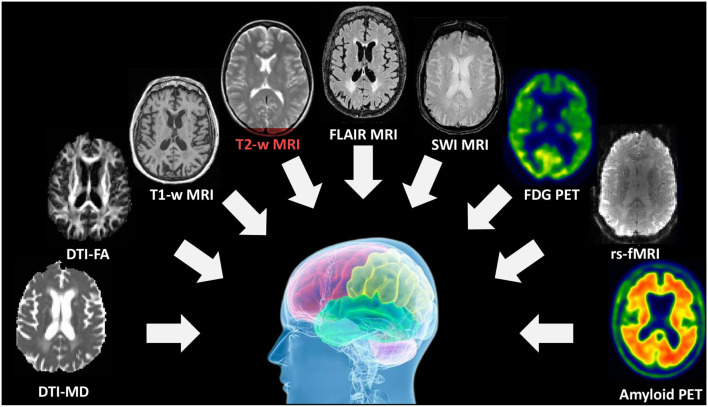
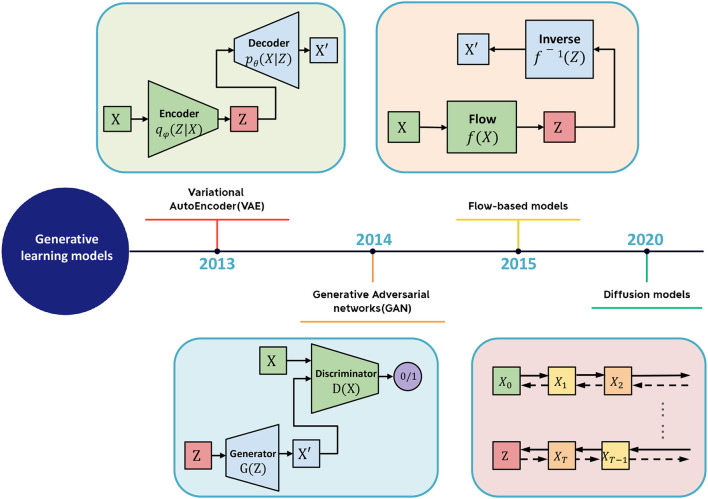
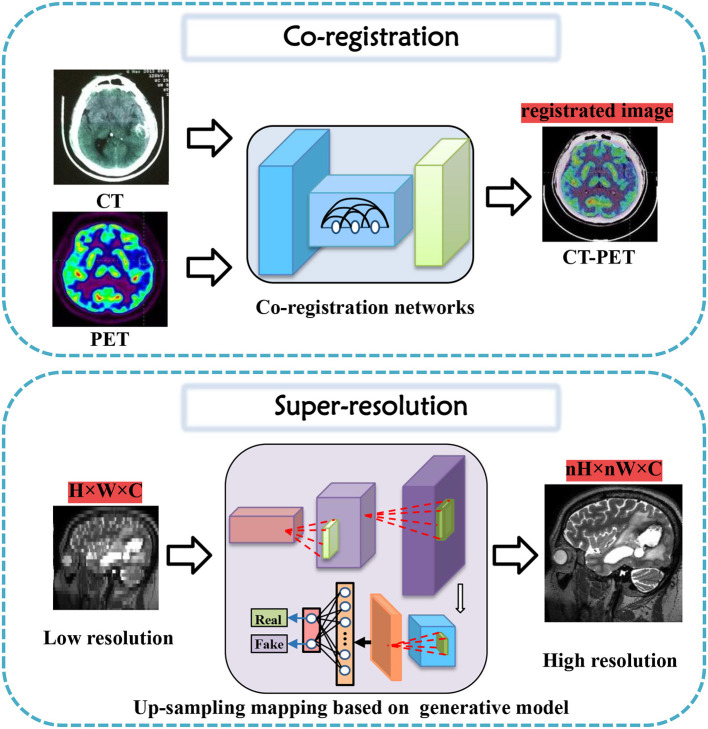
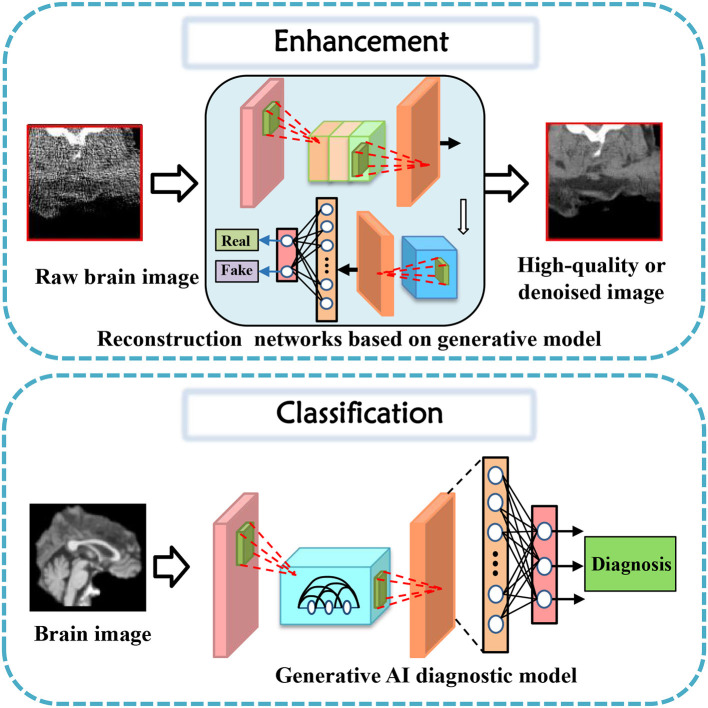
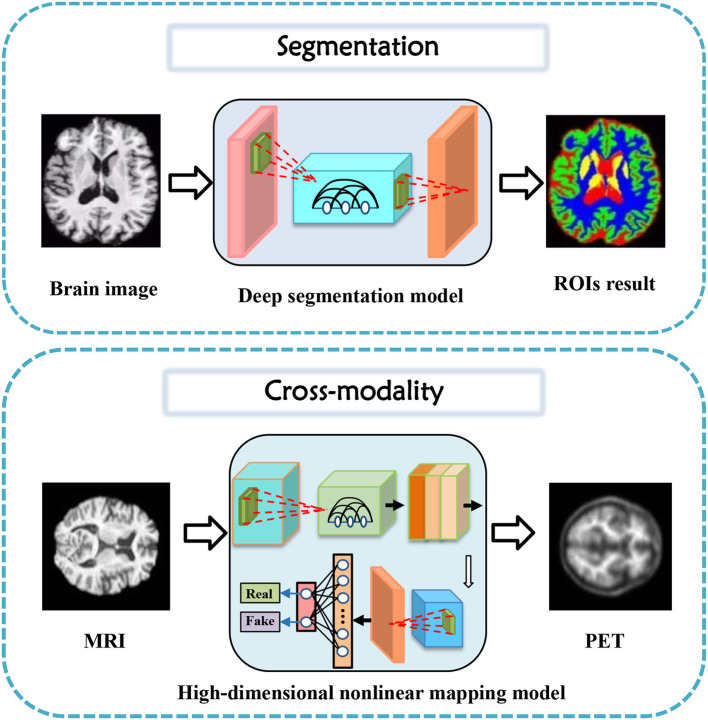
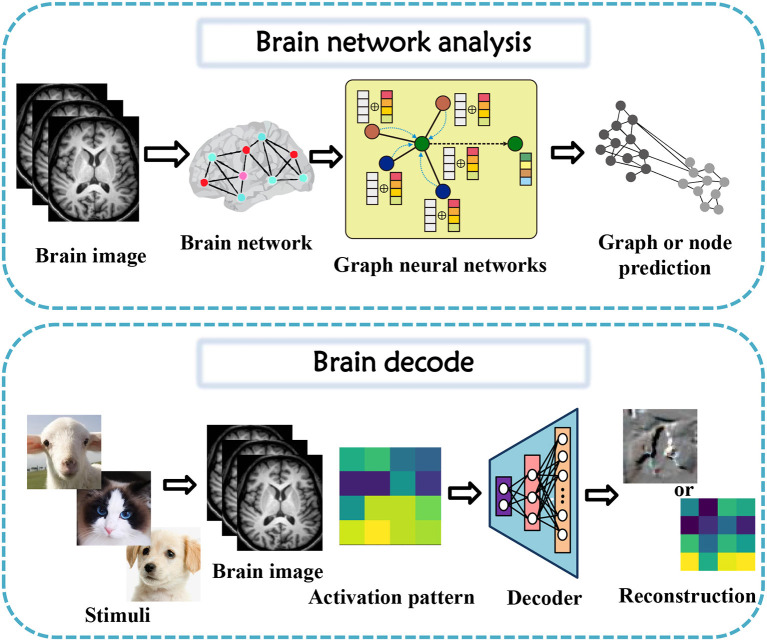
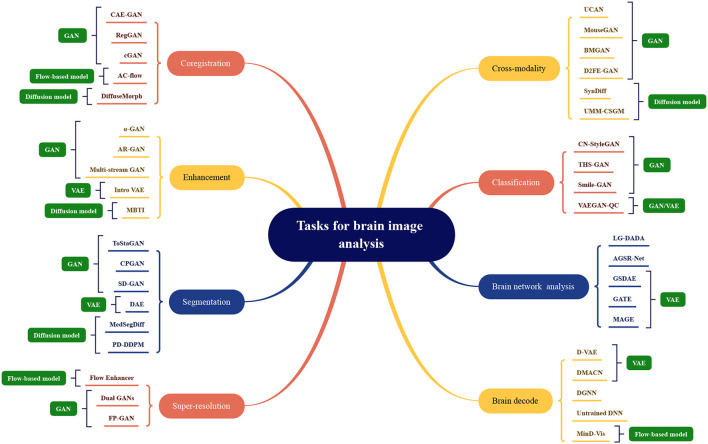
Recent years have witnessed a significant advancement in brain imaging techniques that offer a non-invasive approach to mapping the structure and function of the brain. Concurrently, generative artificial intelligence (AI) has experienced substantial growth, involving using existing data to create new content with a similar underlying pattern to real-world data. The integration of these two domains, generative AI in neuroimaging, presents a promising avenue for exploring various fields of brain imaging and brain network computing, particularly in the areas of extracting spatiotemporal brain features and reconstructing the topological connectivity of brain networks. Therefore, this study reviewed the advanced models, tasks, challenges, and prospects of brain imaging and brain network computing techniques and intends to provide a comprehensive picture of current generative AI techniques in brain imaging. This review is focused on novel methodological approaches and applications of related new methods. It discussed fundamental theories and algorithms of four classic generative models and provided a systematic survey and categorization of tasks, including co-registration, super-resolution, enhancement, classification, segmentation, cross-modality, brain network analysis, and brain decoding. This paper also highlighted the challenges and future directions of the latest work with the expectation that future research can be beneficial.
Overview
The claims and statistics of this paper haven’t been checked yet.
Free: it reads the open-access text and checks the first 5 claims that cite a source we can check. Create a free account to check every claim.
Integrity signals
Registry
Cites
Statistics
Figures
Verification
Claims the paper makes
The claims and statistics of this paper haven’t been checked yet.
Free: it reads the open-access text and checks the first 5 claims that cite a source we can check. Create a free account to check every claim.
Claims other papers make about this one
Each is checked against this paper’s own text: does it say what the citing paper says it does?
The cited source says what the claim attributes to it.
In the citing paper
“For instance, GANs have been used for image reconstruction, synthesis, segmentation, registration and classification [5, 9, 37, 39].”
From Generative AI in healthcare: an implementation science informed translational path on application, integration and governance (2024) · cites this paper as [39]
Self-check
Percentages, sums and reported differences re-computed from the paper’s own numbers.
The self-check needs the paper’s full text.
Citations
Cites
Unpaired image-to-image translation using cycle-consistent adversarial networks
Zhu, J.-Y., Park, T., Isola, P., & Efros, A. A. (2017) · 2017 IEEE International Conference on Computer Vision (ICCV) · doi:10.1109/iccv.2017.244 · Cited by 23,602
Auto-Encoding Variational Bayes
Kingma, D. P., & Welling, M. (2013) · arXiv · doi:10.48550/arxiv.1312.6114 · Cited by 20,067
Proceedings of IEEE International Conference on Computer Vision
(1995) · Proceedings of IEEE International Conference on Computer Vision · doi:10.1109/iccv.1995.466933 · Cited by 12,860
Denoising Diffusion Probabilistic Models
Ho, J., Jain, A., & Abbeel, P. (2020) · arXiv · doi:10.48550/arxiv.2006.11239 · Cited by 8,712
Improved training of Wasserstein GANs
Gulrajani, I., Ahmed, F., Arjovsky, M., Dumoulin, V., & Courville, A. (2017) · arXiv · doi:10.48550/arxiv.1704.00028 · Cited by 6,800 · cited 1×
“Its success has led to the development of several variants, such as Wasserstein GAN with Gradient Penalty (WGAN-GP; Gulrajani et al., 2017), which further improves the stability and efficiency of training.”
Background(2017) · International Conference on Machine Learning · Cited by 6,382
Tracking whole-brain connectivity dynamics in the resting state
Allen, E. A., Damaraju, E., Plis, S. M., Erhardt, E. B., Eichele, T., & Calhoun, V. D. (2014) · Cerebral Cortex · doi:10.1093/cercor/bhs352 · Cited by 2,992 · cited 1×
“For instance, functional brain imaging, such as functional magnetic resonance imaging (fMRI), has the potential to revolutionize researchers’ understanding of the physical basis of the brain and offers a powerful tool to understand how the brain adapts to various cognitive activities and tasks (Allen et al., 2014).”
BackgroundBassett, D. S., & Sporns, O. (2017) · Nature Neuroscience · doi:10.1038/nn.4502 · Cited by 2,398 · cited 2×
“Population-based multi-scale brain research is a prominent focus in neuroscience (Betzel and Bassett, 2017).”
BackgroundDualGAN: Unsupervised Dual Learning for Image-to-Image Translation
Yi, Z., Zhang, H., Tan, P., & Gong, M. (2017) · 2017 IEEE International Conference on Computer Vision (ICCV) · doi:10.1109/iccv.2017.310 · Cited by 2,134 · cited 2×
“CycleGAN has also inspired the development of several variants, such as DualGAN (Yi et al., 2017), DiscoGAN (Kim et al., 2017), and UNIT (Liu et al., 2017), which further improve the performance and versatility of the original CycleGAN.”
MethodAn overview of deep learning in medical imaging focusing on MRI
Lundervold, A. S., & Lundervold, A. (2019) · Zeitschrift für Medizinische Physik · doi:10.1016/j.zemedi.2018.11.002 · Cited by 2,058 · cited 1×
“Lundervold and Lundervold (2019) demonstrated that the introduction of automated computer analysis of magnetic resonance imaging has facilitated the in vivo study of whole-brain coordinated patterns in thousands of individuals (Hu et al., 2020b).”
Background
Research works printed but not linked: 4
- Goodfellow I. Pouget-Abadie J. Mirza M. Xu B. Warde-Farley D. Ozair S.. (2014). “Generative adversarial nets,” in Advances in Neural Information Processing Systems, eds Z. Ghahramani, M. Welling, C. Cortes, N. Lawrence, and K. Q. Weinberger (Montreal, QC: Curran Associates, Inc.), 2672– 2680.
- Kwon G. Han C. Kim D.-S. (2019). “Generation of 3D brain MRI using auto-encoding generative adversarial networks,” in International Conference on Medical Image Computing and Computer-Assisted Intervention (Shenzhen: Springer), 118– 126.
- Wolterink J. M. Dinkla A. M. Savenije M. Seevinck P. R. van den Berg C. Išgum I. (2017). “MR-to-CT synthesis using cycle-consistent generative adversarial networks,” in Proc. Neural Inf. Process. Syst (Long Beach, CA: NIPS).
- Zhou B. Wang R. Chen M.-K. Mecca A. P. O'Dell R. S. Dyck C. H. V.. (2021). “Synthesizing multi-tracer pet images for Alzheimer's disease patients using a 3D unified anatomy-aware cyclic adversarial network,” in International Conference on Medical Image Computing and Computer-Assisted Intervention (Strasbourg: Springer), 34– 43.
Cited by
Reddy, S. (2024) · Implementation Science · doi:10.1186/s13012-024-01357-9 · Cited by 554
“For instance, GANs have been used for image reconstruction, synthesis, segmentation, registration and classification [5, 9, 37, 39].”
MethodRelmasira, S. C., Lai, Y. C., & Donaldson, J. P. (2023) · Sustainability · doi:10.3390/su151813595 · Cited by 210
Iqbal, J., Hashmi, Z. F., Asghar, M. Z., & Abid, M. N. (2025) · Scientific Reports · doi:10.1038/s41598-025-01676-x · Cited by 82
“For example, researchers also highlighted that GenAITU enhances the collective regulation of thinking processes among student groups 51 .”
Zuo, Q., Wu, H., Chen, C. L. P., Lei, B., & Wang, S. (2024) · IEEE Transactions on Cybernetics · doi:10.1109/tcyb.2023.3344641 · Cited by 93
“Besides, in the area of brain disease analysis, the generative artificial intelligence [17] has achieved great success in computing brain images [18], [19] and brain networks [20].”
BackgroundSelf-citationSMAFormer: Synergistic Multi-Attention Transformer for Medical Image Segmentation
Zheng, F., Chen, X., Liu, W., Li, H., Lei, Y., He, J., Pun, C., & Zhou, S. (2024) · IEEE International Conference on Bioinformatics and Biomedicine (BIBM) · doi:10.1109/bibm62325.2024.10822736 · Cited by 90
“This is because the failure to diagnose tumors at an early stage often leads to the advancement of cancer [1] , rendering it incurable.”
Self-citation
Metadata
- Authors
- Gong, C., Jing, C., Chen, X., Pun, C. M., Huang, G., Saha, A., Nieuwoudt, M., Li, H.-X., Hu, Y., & Wang, S.
- Affiliations
- Chinese Academy of Sciences (CN)
- University of Macau (MO)
- McMaster University (CA)
- Stellenbosch University (ZA)
- City University of Hong Kong (HK)
- University of Hong Kong (HK)
- Corresponding author
- Hu, Yong
- Wang, Shuqiang
- ORCID
- Venue
- Frontiers in Neuroscience
- Publisher
- Frontiers Media SA
- Published
- 2023-06-13
- Volume
- 17
- Pages
- 1203104-1203104
- ISSN
- 1662-453X (ISSN-L)
- PMC
- PMC10293625
- OpenAlex
- W4380629073
- Semantic Scholar
- 667ee6cc2d47a88cbbf6c8ad2b5269c3f37367fc
- Cited by
- 111
- References
- 112
- Citations by year
- 2026: 17 · 2025: 38 · 2024: 46 · 2023: 10
- FWCI
- 4.17
- Type
- journal article
- Language
- en
- Open access
- gold
- doi.org
- Licence
- Locations
- Frontiers in Neuroscience (publishedVersion, cc-by)
- PubMed Central (publishedVersion, cc-by)
- PubMed (publishedVersion)
- CityU Scholars (submittedVersion, cc-by)
- DOAJ (DOAJ: Directory of Open Access Journals) (submittedVersion, cc-by-sa)
- Topics
- Life Sciences › Neuroscience › Cognitive Neuroscience › Functional Brain Connectivity Studies
- Health Sciences › Medicine › Health Informatics › Artificial Intelligence in Healthcare and Education
- Physical Sciences › Computer Science › Computer Vision and Pattern Recognition › Medical Image Segmentation Techniques
- Keywords
- generative AI, neuroimaging, brain network analysis, co-registration, super-resolution, image enhancement, brain classification, brain segmentation, brain decoding, generative models
About these checks
Registry, retraction, Cites and statistics results are computed, not judged, with one exception: a printed reference that no index lists is read once by a model before it counts as a citation error. Claims are extracted by a model and kept only when their quote appears verbatim in the text; each cited source is then checked, with a model’s help, for whether it says what the claim relies on. Those verdicts can be wrong — read the claim’s quote and the cited source before relying on one.
Statistics and arithmetic are recomputed, not judged.
Confidence bands are shown only for fields calibrated on our annotated test set. None is calibrated yet, so no band is shown.
What counts as a claim ›How we measure confidence ›How we check this ›
Are you an author, or do you see a problem with this page? Request a review
Data sources
Bibliographic data: Semantic Scholar, OpenAlex, Crossref.
Contains information from the Semantic Scholar Academic Graph Datasets, made available under the ODC Attribution License (ODC-BY 1.0).
Semantic Scholar’s data is described in: Kinney, R., et al. (2023). The Semantic Scholar Open Data Platform. arXiv:2301.10140.
