

The DOI matches its Crossref record; 111 of the 122 references it cites were found in a registry or an index, and 11 are not checked yet; none of the 103 sources its claims cite is checked for support yet.
Cigarette Smoking and Brain Regulation of Energy Homeostasis
Open accessAbstract
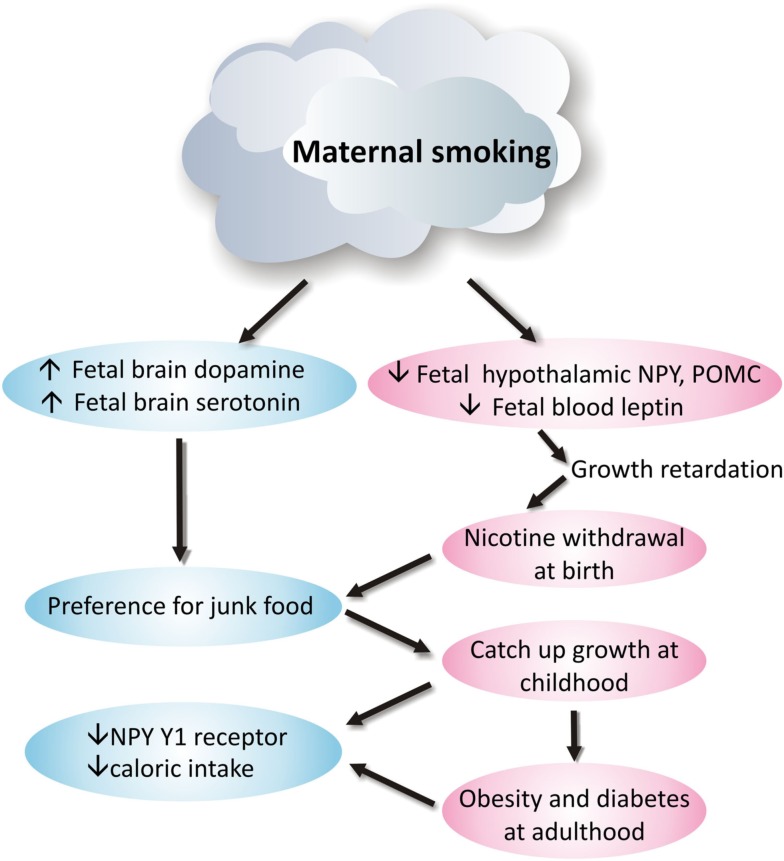
Cigarette smoking is an addictive behavior, and is the primary cause of cardiovascular and pulmonary disease, and cancer (among other diseases). Cigarette smoke contains thousands of components that may affect caloric intake and energy expenditure, although nicotine is the major addictive substance present, and has the best described actions. Nicotine exposure from cigarette smoke can change brain feeding regulation to reduce appetite via both energy homeostatic and reward mechanisms, causing a negative energy state which is characterized by reduced energy intake and increased energy expenditure that are linked to low body weight. These findings have led to the public perception that smoking is associated with weight loss. However, its effects at reducing abdominal fat mass (a predisposing factor for glucose intolerance and insulin resistance) are marginal, and its promotion of lean body mass loss in animal studies suggests a limited potential for treatment in obesity. Smoking during pregnancy puts pressure on the mother's metabolic system and is a significant contributor to adverse pregnancy outcomes. Smoking is a predictor of future risk for respiratory dysfunction, social behavioral problems, cardiovascular disease, obesity, and type-2 diabetes. Catch-up growth is normally observed in children exposed to intrauterine smoke, which has been linked to subsequent childhood obesity. Nicotine can have a profound impact on the developing fetal brain, via its ability to rapidly and fully pass the placenta. In animal studies this has been linked with abnormal hypothalamic gene expression of appetite regulators such as downregulation of NPY and POMC in the arcuate nucleus of the hypothalamus. Maternal smoking or nicotine replacement leads to unhealthy eating habits (such as junk food addiction) and other behavioral disorders in the offspring.
Checked 2026-11-13 · 11 references not checked yet
Overview
CoChat Summary
TL;DR
This narrative review argues that cigarette smoke/nicotine reduces appetite and body weight via hypothalamic energy-homeostatic and reward pathways, but has marginal effects on abdominal fat and may promote lean mass loss. It also reviews evidence that maternal smoking/nicotine exposure programs offspring for metabolic and behavioral disorders, while cautioning that nicotine’s fat-loss effects are unconfirmed in well-controlled human studies.
Key findings
- Smoking induces a negative energy state with reduced energy intake and body weight across species; >75% of former smokers gain weight after cessation, and globally there are >1 billion smokers with ∼6 million smoking-related deaths per year, projected to rise to ∼10 million per year in less than 40 years.
- In smoke-exposed mice, hypothalamic NPY was significantly suppressed compared with pair-fed animals, while UCP1 and UCP3 mRNA increased, suggesting increased energy expenditure despite reduced intake; nicotine-treated mice also showed increased CART and POMC-derived α-MSH with suppressed NPY and AgRP.
- Fat loss after smoke exposure occurred only with a low-fat balanced diet; with a high-fat cafeteria diet, smoke exposure failed to cause fat loss and lean body mass loss became prominent, with smoke-exposed mice consuming twice the recommended daily energy requirement.
- Maternal smoking is reported in ∼25–29% of pregnant women; fetal nicotine concentrations reach ∼115% of maternal levels, primate newborns from nicotine-treated mothers show ∼50% lower serum leptin, and intrauterine nicotine exposure downregulates NPY and POMC in the arcuate nucleus.
Methods
- Design: narrative review synthesizing animal and human studies on cigarette smoking/nicotine, brain regulation of energy homeostasis, and maternal smoking effects on offspring.
- Data/sample: cited literature including rodent, primate, and human observational/clinical studies; no new primary data are presented.
- Main analysis: qualitative synthesis of neurophysiological mechanisms and metabolic outcomes; no systematic review or meta-analysis is described.
Limitations
- Stated in the paper: the fat loss associated with nicotine has not been confirmed in human subjects under well-controlled experimental conditions; there is no direct data to support the hypothesis that NPY/POMC rebound causes later hyperphagia and obesity; and the impact of maternal smoking on offspring brain energy homeostatic pathways requires further study.
- Evident from the text: as a narrative review, it relies on selected cited studies rather than a systematic search, and several conclusions are explicitly speculative (“we speculate,” “can be suggested”).
- Evident from the text: many mechanistic conclusions derive from animal models, with limited well-controlled human intervention data.
Model-written summary. Check it against the paper before relying on it.
Integrity signals
Registry
Cites
Statistics
Figures
Verification
Claims the paper makes
0 Valid · 0 Not valid · 61 Not checked · 11 Own results and interpretations
A result the paper reports from its own data — it cites no other source for it, so there is none to check. The quote shows it is in the paper.
In the paper
“In a rodent model, we have shown that the reduction in fat mass after cigarette smoke exposure occurred only if the mice consumed a low-fat balanced diet.”
§ Cigarette Smoking and Brain Regulation of Energy Homeostasis > Cigarette Smoking and Adiposity
boostedstates a possible cause- Asserted: passes — The authors put it forward as true.
- Checkable: passes — It can be checked against evidence.
- Load-bearing: passes — The paper’s conclusions depend on it.
- Based: passes — The paper gives a reason why it holds.
None of the sources cited for this claim have been checked yet.
In the paper
“In addition, this weight loss was accompanied by lean body mass wasting, including that associated with some major organs such as liver, kidney, and skeletal muscle (Chen et al., 2005, 2006, 2008).”
§ Cigarette Smoking and Brain Regulation of Energy Homeostasis > Cigarette Smoking and Adiposity
What the sources say
plainstates an association- Asserted: passes — The authors put it forward as true.
- Checkable: passes — It can be checked against evidence.
- Load-bearing: passes — The paper’s conclusions depend on it.
- Based: passes — The paper gives a reason why it holds.
None of the sources cited for this claim have been checked yet.
In the paper
“Smoking induces a negative energy state, characterized by reduced energy intake and body weight, which has been well documented across species (Perkins, 1992; Strauss and Mir, 2001; Bellinger et al., 2003; Fulkerson and French, 2003; Chen et al., 2006, 2007, 2008).”
§ Cigarette Smoking and Brain Regulation of Energy Homeostasis > Cigarette Smoking and Weight Control
What the sources say
- Not matchedcites Perkins, 1992
Couldn’t be matched to a paper in Crossref, so it can’t be checked.
- Not checked yetcites Strauss and Mir, 2001 source
- Not matchedcites Bellinger et al., 2003
Couldn’t be matched to a paper in Crossref, so it can’t be checked.
boostedstates a cause- Asserted: passes — The authors put it forward as true.
- Checkable: passes — It can be checked against evidence.
- Load-bearing: passes — The paper’s conclusions depend on it.
- Based: passes — The paper gives a reason why it holds.
- Not matched
In the paper
“The lowered body weight has been shown to be independent of diet type, with a similar proportion of weight loss displayed in mice consuming a diet with either low or high-fat concentrations after 7 weeks of cigarette smoke exposure (Chen et al., 2007).”
§ Cigarette Smoking and Brain Regulation of Energy Homeostasis > Cigarette Smoking and Weight Control
What the sources say
- Not checked yetcites Chen et al., 2007 source
boosted- Asserted: passes — The authors put it forward as true.
- Checkable: passes — It can be checked against evidence.
- Load-bearing: unclear — It is unclear whether the paper’s conclusions depend on it.
- Based: passes — The paper gives a reason why it holds.
None of the sources cited for this claim have been checked yet.
In the paper
“with >75% of former smokers gaining weight after cessation (Williamson et al., 1991; Leischow et al., 1992).”
§ Cigarette Smoking and Brain Regulation of Energy Homeostasis > Cigarette Smoking and Weight Control
What the sources say
- Not checked yetcites Williamson et al., 1991 source
- Not matchedcites Leischow et al., 1992
Couldn’t be matched to a paper in Crossref, so it can’t be checked.
plainstates a cause- Asserted: passes — The authors put it forward as true.
- Checkable: passes — It can be checked against evidence.
- Load-bearing: unclear — It is unclear whether the paper’s conclusions depend on it.
- Based: passes — The paper gives a reason why it holds.
38 more claims
Create a free account to see all 72 claims and to verify the 83 references still open.
- It may state two separate claims as one. 26
- Probably not a substantial claim. 3
Citations
Cites
Positional cloning of the mouse obese gene and its human homologue
Zhang, Y., Proenca, R., Maffei, M., Barone, M., Leopold, L., & Friedman, J. M. (1994) · Nature · doi:10.1038/372425a0 · Cited by 13,419
Molecular Mechanisms of Depression: Perspectives on New Treatment Strategies
Lang, U. E., & Borgwardt, S. (2013) · Cellular Physiology and Biochemistry · doi:10.1159/000350094 · Cited by 8,528
Brown Adipose Tissue: Function and Physiological Significance
CANNON, B., & NEDERGAARD, J. (2004) · Physiological Reviews · doi:10.1152/physrev.00015.2003 · Cited by 6,433
Tatemoto, K., Carlquist, M., & Mutt, V. (1982) · Nature · doi:10.1038/296659a0 · Cited by 2,271
Benowitz, N. L. (2010) · New England Journal of Medicine · doi:10.1056/nejmra0809890 · Cited by 1,508
WHO Report on the Global Tobacco Epidemic, 2019
Alebshehy, R. (2019) · Cited by 1,331
NEUROPEPTIDE Y AND HUMAN PANCREATIC POLYPEPTIDE STIMULATE FEEDING BEHAVIOR IN RATS
Clark, J. T., Kalra, P. S., Crowley, W. R., & Kalra, S. P. (1984) · Endocrinology · doi:10.1210/endo-115-1-427 · Cited by 1,276
Trophic Action of Leptin on Hypothalamic Neurons That Regulate Feeding
Bouret, S. G., Draper, S. J., & Simerly, R. B. (2004) · Science · doi:10.1126/science.1095004 · Cited by 1,247
Coexpression of Agrp and NPY in fasting-activated hypothalamic neurons
Hahn, T. M., Breininger, J. F., Baskin, D. G., & Schwartz, M. W. (1998) · Nature Neuroscience · doi:10.1038/1082 · Cited by 1,164
Positional cloning of the mouse obese gene and its human homologue
Zhang, Y., Proenca, R., Maffei, M., Barone, M., Leopold, L., & Friedman, J. M. (1995) · Nature · doi:10.1038/374479a0 · Cited by 1,125
Research works printed but not linked: 2
- Argyropoulos G. Harper M. E. (2002). Uncoupling proteins and thermoregulation. J. Appl. Physiol. 92, 2187– 2198 11960973
- Contal M. Masson G. Boyer C. Cazevielle C. Mares P. (2005). Neonatal consequences of maternal smoking during pregnancy. J. Gynecol. Obstet. Biol. Reprod. 34 3S215– S222 15980791
Cited by
Chan, Y. L., Saad, S., Pollock, C. A., Oliver, B. G. G., Al‐Odat, I., Zaky, A. A., Jones, N. M., & Chen, H. (2016) · Scientific Reports · doi:10.1038/srep25881 · Cited by 94
Self-citationEarly life factors and type 2 diabetes mellitus
Jiang, X., Ma, H., Wang, Y., & Liu, Y. (2013) · Journal of Diabetes Research · doi:10.1155/2013/485082 · Cited by 92
“have indicated that nicotine may also downregulate gene expression of appetite regulators neuropeptide Y and proopiomelanocortin in the arcuate nucleus of the hypothalamus in fetal brain, which may consequently lead to unhealthy eating habits in the offspring and predispose high risk of obesity or diabetes [54].”
BackgroundChao, A. M., White, M. A., Grilo, C. M., & Sinha, R. (2016) · Eating Behaviors · doi:10.1016/j.eatbeh.2016.12.009 · Cited by 76
Li, G., Saad, S., Oliver, B. G. G., & Chen, H. (2018) · Toxics · doi:10.3390/toxics6030043 · Cited by 67
Self-citationWang, Y., Gao, X., Pedram, P., Shahidi, M., Jian-ling, D., Yi, Y., Gulliver, W. P. F., Zhang, H., & Sun, G. (2016) · Nutrients · doi:10.3390/nu8010024 · Cited by 65
Grün, F. (2014) · Vitamins and hormones · doi:10.1016/b978-0-12-800095-3.00011-0 · Cited by 60
Chen, H., Li, G., Chan, Y. L., Nguyen, T., van Reyk, D., Saad, S., & Oliver, B. G. (2018) · Neuroscience Letters · doi:10.1016/j.neulet.2018.07.001 · Cited by 56
Self-citationNatividad, L. A., Torres, O. V., Friedman, T. C., & O’Dell, L. E. (2013) · Behavioural Brain Research · doi:10.1016/j.bbr.2013.10.003 · Cited by 53
Impact of maternal e-cigarette vapor exposure on renal health in the offspring
Li, G., Chan, Y. L., Nguyen, L. T., Mak, C., Zaky, A., Anwer, A. G., Shi, Y., Nguyen, T., Pollock, C. A., Oliver, B. G., et al. (2019) · Annals of the New York Academy of Sciences · doi:10.1111/nyas.14174 · Cited by 50
Self-citationAl‐Odat, I., Chen, H., Chan, Y. L., Amgad, S., Wong, M. G., Gill, A. J., Pollock, C. A., & Saad, S. (2014) · PLoS ONE · doi:10.1371/journal.pone.0103443 · Cited by 49
Self-citationJésus, P., Guerchet, M., Pilleron, S., Fayemendy, P., Mouanga, A. M., Mbélesso, P., Preux, P., & Desport, J. (2017) · Clinical Nutrition ESPEN · doi:10.1016/j.clnesp.2017.05.007 · Cited by 39
Hu, T., Yang, Z., & Li, M. D. (2018) · Journal of Neuroimmune Pharmacology · doi:10.1007/s11481-018-9800-y · Cited by 34
Jamshed, L., Perono, G. A., Jamshed, S., & Holloway, A. C. (2020) · Toxicological Sciences · doi:10.1093/toxsci/kfaa127 · Cited by 29
Calarco, C. A., Li, Z., Taylor, S. R., Lee, S., Zhou, W., Friedman, J. M., Mineur, Y. S., Gotti, C., & Picciotto, M. R. (2018) · European Journal of Neuroscience · doi:10.1111/ejn.13966 · Cited by 24
Mehta, S., Srivastava, N., Bhatia, A., & Dhawan, V. (2020) · International Immunopharmacology · doi:10.1016/j.intimp.2020.106561 · Cited by 23
Impact of maternal cigarette smoke exposure on brain and kidney health outcomes in female offspring
Chan, Y. L., Saad, S., Al‐Odat, I., Zaky, A. A., Oliver, B. G. G., Pollock, C. A., Li, W., Jones, N. M., & Chen, H. (2016) · Clinical and Experimental Pharmacology and Physiology · doi:10.1111/1440-1681.12659 · Cited by 21
Self-citationChen, X., Gu, X., Li, T., Liu, Q., Xu, L., Peng, B., & Wu, N. (2021) · BMC Public Health · doi:10.1186/s12889-021-11366-8 · Cited by 21
Li, L., Gao, K., Zhao, J., Feng, T., Yin, L., Wang, J., Wang, C., Li, C., Wang, Y., Wang, Q., et al. (2013) · Gene · doi:10.1016/j.gene.2013.09.121 · Cited by 18
Lesch, O., Walter, H., Wetschka, C., Hesselbrock, M. N., HESSELBROCK, V. M., & Pombo›, S. (2020) · Springer eBooks · doi:10.1007/978-3-030-41941-7_4 · Cited by 18
Udo, T., White, M. A., Barnes, R. D., Ivezaj, V., MORGAN, P. T., Masheb, R. M., & Grilo, C. M. (2015) · Addictive Behaviors · doi:10.1016/j.addbeh.2015.09.018 · Cited by 18
Calarco, C. A., Lee, S., & Picciotto, M. R. (2017) · Neuropharmacology · doi:10.1016/j.neuropharm.2017.06.012 · Cited by 17
Zou, H., Wang, K., Gao, Y., Song, H., Xie, Q., Jin, M., Zhao, G., Xiao, H., & Yu, L. (2014) · BMC Neuroscience · doi:10.1186/1471-2202-15-61 · Cited by 14
What lessons have we learnt about the impact of maternal cigarette smoking from animal models?
Chan, Y. L., Oliver, B. G. G., & Chen, H. (2019) · Clinical and Experimental Pharmacology and Physiology · doi:10.1111/1440-1681.13182 · Cited by 13
Self-citationSuzuki, M., Wakayama, R., Yamagata, Z., & Suzuki, K. (2022) · Tobacco Induced Diseases · doi:10.18332/tid/143952 · Cited by 13
Fetal Programming of Renal Development?Influence of Maternal Smoking
Chen, H., Al‐Odat, I., Pollock, C. A., & Saad, S. (2013) · Journal of Diabetes & Metabolism · doi:10.4172/2155-6156.s9-003 · Cited by 13
Self-citationEffects of Prenatal Electronic Cigarette Exposure On Foetal Development: a Review of the Literature
Römer, P., Putzer, A. G., Kemmerich, R., & Mathes, B. (2021) · Geburtshilfe und Frauenheilkunde · doi:10.1055/a-1524-5155 · Cited by 12
Incognito, G. G., Grassi, L., & Palumbo, M. A. (2023) · Archives of Gynecology and Obstetrics · doi:10.1007/s00404-023-07101-w · Cited by 12
Li, H., Zhao, J., Liang, J., & Song, X. (2023) · PLoS ONE · doi:10.1371/journal.pone.0287027 · Cited by 12
Adeyemi, D. H., Oyeyipo, I. P., Akanbi, K. A., & Oluwole, D. T. (2018) · JBRA · doi:10.5935/1518-0557.20180014 · Cited by 12
Epigenetic alterations of the POMC promoter in tobacco dependence
Muschler, M. A. N., Rhein, M., Ritter, A., Hillemacher, T., Frieling, H., Bleich, S., & Glahn, A. (2018) · European Neuropsychopharmacology · doi:10.1016/j.euroneuro.2018.05.004 · Cited by 12
E-cigarette weight and appetite control beliefs and e-cigarette initiation in young adults.
Kechter, A., Wong, M. K., Mason, T. B., Tackett, A. P., Smith, C. E., Leventhal, A. M., Dunton, G. F., & Barrington‐Trimis, J. L. (2023) · Health Psychology · doi:10.1037/hea0001298 · Cited by 11
miR-153-3p via PIK3R1 Is Involved in Cigarette Smoke-Induced Neurotoxicity in the Brain
Sun, Q., Wang, H., Yang, M., Xia, H., Wu, Y., Liu, Q., & Tang, H. (2023) · Toxics · doi:10.3390/toxics11120969 · Cited by 10
Detrimental consequences of women life cycle on the oral cavity
Prasanna, J. S., Karunakar, P., Sravya, M. N., Madhavi, B., & Ambati, M. (2018) · Journal of Oral Research and Review · doi:10.4103/jorr.jorr_33_17 · Cited by 10
Cruz, B., Ortegon, S., Giner, P., Matos-Ocasio, F., Rodríguez-Crespo, A., Uribe, K. P., Galindo, K. I., Serafine, K. M., Nazarian, A., & O’Dell, L. E. (2021) · Neuropharmacology · doi:10.1016/j.neuropharm.2021.108787 · Cited by 10
Omotoso, G. O., Kadir, R. E., Sulaimon, F. A., Jaji‐Sulaimon, R., & Gbadamosi, I. (2018) · Malaysian Journal of Medical Sciences · doi:10.21315/mjms2018.25.5.4 · Cited by 8
Ari, L. L., Bachner‐Melman, R., Zohar, A. H., Ebstein, R. P., & Mankuta, D. (2019) · Early Human Development · doi:10.1016/j.earlhumdev.2019.104889 · Cited by 7
Shankar, K., Ramborger, J., Bonnet-Zahedi, S., Carrette, L. L. G., & George, O. (2023) · Hormones and Behavior · doi:10.1016/j.yhbeh.2023.105447 · Cited by 7
Neurohistochemical studies of adolescent rats' prefrontal cortex exposed to prenatal nicotine
Omotoso, G. O., Adekeye, M., Ariyo, A., Ibitolu, J., Oyeyemi, O., & Enaibe, B. U. (2014) · Ibnosina Journal of Medicine and Biomedical Sciences · doi:10.4103/1947-489x.210352 · Cited by 7
Uddin, M. A., Debnath, M., Roy, S., Adiba, S., & Talukder, M. M. A. (2023) · Advances in Civil Engineering · doi:10.1155/2023/7116057 · Cited by 5
Brain effects of nicotine and derived compounds
Echeverría, V. (2013) · Frontiers in Pharmacology · doi:10.3389/fphar.2013.00060 · Cited by 5
Omotoso, G. O., Ibitolu, J., Femi-Akinlosotu, O. M., Akinola, O., & Enaibe, B. U. (2013) · PubMed · Cited by 4
Sex and diet-dependent gene alterations in human and rat brains with a history of nicotine exposure
Vargas‐Medrano, J., Carcoba, L. M., Vidal-Martínez, G., Mulla, Z. D., Díaz, V., Ruiz-Velasco, A., Alvarez-Primo, F., Colina, G., Iñiguez, S. D., Thompson, P. M., et al. (2023) · Frontiers in Psychiatry · doi:10.3389/fpsyt.2023.1104563 · Cited by 4
Huang, T., Yang, M., Zeng, Y., Huang, X., Wang, N., Chen, Y., Li, P., Yuan, J., Chen, C., Oliver, B. G. G., et al. (2021) · Frontiers in Nutrition · doi:10.3389/fnut.2021.638576 · Cited by 4
Lifestyle Factors Affecting Abdominal Obesity in Children and Adolescents: Risks and Benefits
Suliga, E. (2014) · Elsevier eBooks · doi:10.1016/b978-0-12-407869-7.00004-0 · Cited by 3
Nunes, S. T., & Gallon, C. W. (2013) · Nutrire · doi:10.4322/nutrire.2013.016 · Cited by 3
Metabolic syndrome and substance use: A narrative review
Kuppili, P. P., Vengadavaradan, A., & Bharadwaj, B. (2019) · Asian Journal of Psychiatry · doi:10.1016/j.ajp.2019.05.022 · Cited by 3
Olszowy, K. M., Roome, A. B., Standard, E., Tarivonda, L., Taleo, G. K., & Dancause, K. N. (2022) · Asia Pacific Journal of Public Health · doi:10.1177/10105395221108593 · Cited by 3
Oyeyipo, I. P., Adeyemi, D. H., & Abe, T. R. (2018) · JBRA · doi:10.5935/1518-0557.20180031 · Cited by 3
Abadi, K. C., Iswanti, F. C., Jusman, S. W. A., Fadilah, F., & Prijanti, A. R. (2022) · Acta Biochimica Indonesiana · doi:10.32889/actabioina.64 · Cited by 2
Ortegon, S., Giner, P., Cruz, B., Carcoba, L. M., Clapp, B. L., Clegg, D. J., & O’Dell, L. E. (2024) · Advances in Drug and Alcohol Research · doi:10.3389/adar.2023.11812 · Cited by 2
Cadmium Increases the Sensitivity of Adolescent Female Mice to Nicotine-Related Behavioral Deficits
Adeniyi, P. A., Olatunji, B. P., Ishola, A. O., Ajonijebu, D. C., & Ogundele, O. M. (2014) · Behavioural Neurology · doi:10.1155/2014/360978 · Cited by 2
The impact of tobacco smoking on physical activity and metabolism in mice.
Wu, G., Li, Y., Zhang, L., Zhang, H., Su, J., Guo, L., Xiong, F., Yu, Q., Yang, P., Zhang, S., et al. (2019) · PubMed · Cited by 2
MRI-based structural development of the human newborn hypothalamus
Yen, E., Asis‐Cruz, J. D., & Rasmussen, J. M. (2026) · Developmental Cognitive Neuroscience · doi:10.1016/j.dcn.2026.101697 · Cited by 1
Drug Abuse Neurotoxicity: Alcohol and Nicotine as Developmental Stressors
Archer, T., Ricci, S., & Rapp‐Ricciardi, M. (2014) · Springer eBooks · doi:10.1007/978-1-4614-5836-4_121 · Cited by 1
Brain effects of Nicotine and derived compounds
(2013) · Frontiers research topics · doi:10.3389/978-2-88919-141-3 · Cited by 1
Saito, R., Yamamoto, Y., Fukano, R., Mori, M., Maruyama, T., & Ueta, Y. (2025) · Peptides · doi:10.1016/j.peptides.2025.171409 · Cited by 1
Tabagismo materno durante a gestação e reações faciais hedônicas ao gosto doce em recém-nascidos
Ayres, C. (2015) · Americanae (AECID Library)
Effects of Maternal Cigarette Smoke Exposure on Renal and Other Health Outcomes in Mice Offspring
Al‐Odat, I. (2016) · UTS ePRESS (University of Technology Sydney)
Avaluació de la dieta d'una mostra de pacients fumadors i no fumadors
Serra, V., & Neus, C. (2013) · UdL Open Repository (University of Lleida)
Experimental Studies of Subdiaphragmatic Vagotomy and Nicotine for Reducing Body Weight
Dezfuli, G. (2014) · DigitalGeorgetown (Georgetown University Library)
Tobacco Smoking, Food Intake, and Weight Control
Li, M. D. (2018) · Springer eBooks · doi:10.1007/978-981-10-7530-8_15
Silva, F. D. (2015) · KTH Publication Database DiVA (KTH Royal Institute of Technology)
Hubungan antara kebiasaan merokok, sarapan, dan uang saku dengan asupan energi mahasiswa
Kusuma, R., & Rahman, T. (2024) · Bravo’s Jurnal Program Studi Pendidikan Jasmani dan Kesehatan · doi:10.32682/bravos.v12i2/23
Physical, Mental and Social Wellbeing and Quality of Life among Current Smokers
Branstetter, S. A. (2024) · Health · doi:10.4236/health.2024.1611067
Yang, J., Qu, Y., Zhan, Y., Li, X., Man, D., Wu, H., Huang, P., Jiang, Y., & Ma, H. (2024) · Research Square · doi:10.21203/rs.3.rs-5428133/v1
THE LINKS BETWEEN CIRCADIAN CLOCK DISRUPTION AND LIFESTYLE TRAITS IN RHEUMATOID ARTHRITIS
Gheisary, Z. (2023) · HARVEST (University of Saskatchewan)
Wartono, M., Samara, T. D., Lestari, A. D., Kosasih, A., & Novendy, N. (2026) · Indonesian Journal of Biomedicine and Clinical Sciences · doi:10.22146/inajbcs.v58i1.23175
Kaushik, S., SUBA, A., Dharani, B., Abeetha, S., Mourali, C., & Sawardekar, P. N. (2026) · International Journal of Drug Delivery Technology · doi:10.25258/ijddt.16.50s.14
Metadata
- Authors
- Chen, H., Saad, S., Sandow, S. L., & Bertrand, P. P.
- Affiliations
- University of Technology Sydney (AU)
- The University of Sydney (AU)
- UNSW Sydney (AU)
- Corresponding author
- Chen, Hui
- Venue
- Frontiers in Pharmacology
- Publisher
- Frontiers Media SA
- Published
- 2012
- Volume
- 3
- Pages
- 147-147
- ISSN
- 1663-9812 (ISSN-L)
- PMC
- PMC3404499
- OpenAlex
- W1999975239
- Semantic Scholar
- 428c037acf4097ce1971475f44c25a65232c8dfd
- Cited by
- 69
- References
- 111
- Citations by year
- 2026: 4 · 2025: 1 · 2024: 4 · 2023: 8 · 2022: 3 · 2021: 4 · 2020: 3 · 2019: 5 · 2018: 10 · 2017: 2 · 2016: 5 · 2015: 3 · 2014: 8 · 2013: 9
- FWCI
- 2.43
- Type
- journal article
- Language
- en
- Open access
- gold
- doi.org
- Licence
- cc-by
- Locations
- Frontiers in Pharmacology (publishedVersion, cc-by)
- Europe PMC (PubMed Central) (publishedVersion)
- PubMed (publishedVersion)
- PubMed Central (publishedVersion)
- USC Research Bank (University of the Sunshine Coast) (submittedVersion, cc-by)
- RMIT Research Repository (RMIT University Library) (submittedVersion)
- DOAJ (DOAJ: Directory of Open Access Journals) (submittedVersion, cc-by-sa)
- Figshare (submittedVersion)
- UTS ePRESS (University of Technology Sydney) (submittedVersion)
- OPUS - Open Publications of UTS Scholars (University of Technology Sydney) (submittedVersion)
- Topics
- Life Sciences › Neuroscience › Endocrine and Autonomic Systems › Regulation of Appetite and Obesity
- Health Sciences › Medicine › Public Health, Environmental and Occupational Health › Smoking Behavior and Cessation
- Health Sciences › Medicine › Pediatrics, Perinatology and Child Health › Prenatal Substance Exposure Effects
- Keywords
- cigarette smoking, nicotine, energy homeostasis, appetite regulation, feeding behavior, energy expenditure, obesity, type 2 diabetes, insulin resistance, pregnancy, fetal brain development, placental transfer, hypothalamus, arcuate nucleus, neuropeptide Y, proopiomelanocortin, catch-up growth, childhood obesity, nicotine replacement therapy
About these checks
Registry, retraction, Cites and statistics results are computed, not judged, with one exception: a printed reference that no index lists is read once by a model before it counts as a citation error. Claims are extracted by a model and kept only when their quote appears verbatim in the text; each cited source is then checked, with a model’s help, for whether it says what the claim relies on. Those verdicts can be wrong — read the claim’s quote and the cited source before relying on one.
A language model drew the claims from the paper on 2026-11-13, under version 3 of the claim definition (model deepseek-v4.1-flash, prompt extract-v3).
A second model labelled each claim on 2026-11-13 (model jev-1.13-20260917, definition revision gold-guideline-v0.2).
Statistics and arithmetic are recomputed, not judged.
Confidence bands are shown only for fields calibrated on our annotated test set. None is calibrated yet, so no band is shown.
What counts as a claim ›How we measure confidence ›How we check this ›
Are you an author, or do you see a problem with this page? Request a review
Data sources
Bibliographic data: Semantic Scholar, OpenAlex, Crossref.
Contains information from the Semantic Scholar Academic Graph Datasets, made available under the ODC Attribution License (ODC-BY 1.0).
Semantic Scholar’s data is described in: Kinney, R., et al. (2023). The Semantic Scholar Open Data Platform. arXiv:2301.10140.
