

The DOI matches its Crossref record; 240 of the 243 references it cites were found in a registry or an index.
Resveratrol Brain Delivery for Neurological Disorders Prevention and Treatment
Open accessAbstract
Resveratrol (RES) is a natural polyphenolic non-flavonoid compound present in grapes, mulberries, peanuts, rhubarb and in several other plants. Numerous health effects have been related with its intake, such as anti-carcinogenic, anti-inflammatory and brain protective effects. The neuroprotective effects of RES in neurological diseases, such as Alzheimer's (AD) and Parkinson's (PD) diseases, are related to the protection of neurons against oxidative damage and toxicity, and to the prevention of apoptotic neuronal death. In brain cancer, RES induces cell apoptotic death and inhibits angiogenesis and tumor invasion. Despite its great potential as therapeutic agent for the treatment of several diseases, RES exhibits some limitations. It has poor water solubility and it is chemically instable, being degraded by isomerization once exposed to high temperatures, pH changes, UV light, or certain types of enzymes. Thus, RES has low bioavailability, limiting its biological and pharmacological benefits. To overcome these limitations, RES can be delivered by nanocarriers. This field of nanomedicine studies how the drug administration, pharmacokinetics, and pharmacodynamics are affected by the use of nanosized materials. The role of nanotechnology, in the prevention and treatment of neurological diseases, arises from the necessity to mask the physicochemical properties of therapeutic drugs to prolong the half-life and to be able to cross the blood-brain barrier (BBB). This can be achieved by encapsulating the drug in a nanoparticle (NP), which can be made of different kinds of materials. An increasing trend to encapsulate and direct RES to the brain has been observed. RES has been encapsulated in many different types of nanosystems, as liposomes, lipid and polymeric NPs. Furthermore, some of these nanocarriers have been modified with targeting molecules able to recognize the brain areas. Then, this article aims to overview the RES benefits and limitations in the treatment of neurological diseases, as the different nanotechnology strategies to overcome these limitations.
Overview
The claims and statistics of this paper haven’t been checked yet.
Run the check — free, no account needed. It reads the open-access text and checks the sources it cites.
Integrity signals
Registry
Cites
Statistics
Figures
Verification
Claims the paper makes
The claims and statistics of this paper haven’t been checked yet.
Run the check — free, no account needed. It reads the open-access text and checks the sources it cites.
Claims other papers make about this one
Each is checked against this paper’s own text: does it say what the citing paper says it does?
In the citing paper
“the nano-incapsulation in lipid carriers or liposomes as well as the insertion into polymeric particles could ameliorate both pharmacodynamics and pharmacokinetics of resveratrol (Andrade et al., 2018)”
From Exploring the Therapeutic Potential of Phytochemicals in Alzheimer’s Disease: Focus on Polyphenols and Monoterpenes (2022) · cites this paper as Andrade et al., 2018
Self-check
Percentages, sums and reported differences re-computed from the paper’s own numbers.
The self-check needs the paper’s full text.
Citations
Cites
1 retracted
RETRACTED: SIRT1 Suppresses β-Amyloid Production by Activating the α-Secretase Gene ADAM10
Dönmez, G., Wang, D., Cohen, D. E., & Guarente, L. (2010) · Cell · doi:10.1016/j.cell.2010.06.020 · Cited by 443
RetractedThe Amyloid Hypothesis of Alzheimer’s Disease: Progress and Problems on the Road to Therapeutics
Hardy, J., & Selkoe, D. J. (2002) · Science · doi:10.1126/science.1072994 · Cited by 13,864
Amyloid oligomers exacerbate tau pathology in a mouse model of tauopathy
Selenica, M.-L. B., Brownlow, M., Jimenez, J. P., Lee, D. C., Pena, G., Dickey, C. A., Gordon, M. N., & Morgan, D. (2013) · Neurodegenerative Diseases · doi:10.1159/000337230 · Cited by 10,359
Principles of nanoparticle design for overcoming biological barriers to drug delivery
Blanco, E., Shen, H., & Ferrari, M. (2015) · Nature Biotechnology · doi:10.1038/nbt.3330 · Cited by 7,002 · cited 1×
“In addition, biological barriers must be considered during the design and development of the chosen nanocarrier (Blanco et al., 2015).”
BackgroundAlzheimer's Disease: Genes, Proteins, and Therapy
Selkoe, D. J. (2001) · Physiological Reviews · doi:10.1152/physrev.2001.81.2.741 · Cited by 6,063 · cited 2×
“The Aβ aggregation induces the formation of insoluble fibrils, which accumulate in senile plaques (Clippingdale et al., 2001; Selkoe, 2001; Klafki et al., 2006; Rocha et al., 2012; Loureiro et al., 2013b).”
BackgroundCancer chemopreventive activity of resveratrol, a natural product derived from grapes
Jang, M., Cai, L., Udeani, G. O., Slowing, K. V., Thomas, C. F., Beecher, C. W. W., Fong, H. H. S., Farnsworth, N. R., Kinghorn, A. D., Mehta, R. G., et al. (1997) · Science · doi:10.1126/science.275.5297.218 · Cited by 4,935
Chronic systemic pesticide exposure reproduces features of Parkinson's disease
Betarbet, R. S., Sherer, T., MacKenzie, G. M., Garcia‐Osuna, M., Panov, A. V., & Greenamyre, J. T. (2000) · Nature Neuroscience · doi:10.1038/81834 · Cited by 3,770
Forecasting the global burden of Alzheimer's disease
Brookmeyer, R., Johnson, E., Ziegler‐Graham, K., & Arrighi, H. M. (2007) · Alzheimer's & Dementia · doi:10.1016/j.jalz.2007.04.381 · Cited by 3,370
Yang, Y., Li, S., Yang, Q., Shi, Y., Zheng, M., Liu, Y., Chen, F., Song, G., Xu, H., Wan, T., et al. (2014) · Cellular Physiology and Biochemistry · doi:10.1159/000358696 · Cited by 3,263
Neurofibrillary tangles but not senile plaques parallel duration and severity of Alzheimer's disease
Arriagada, P. V., Growdon, J. H., Hedley-Whyte, E. T., & Hyman, B. T. (1992) · Neurology · doi:10.1212/wnl.42.3.631 · Cited by 2,668
Research works printed but not linked: 1
- Al-Bishri, 2017, Resveratrol treatment attenuates amyloid beta, Tau protein and markers of oxidative stress, and inflammation in Alzheimer’s disease rat model., Int. J. Pharm. Res. Allied Sci., 6, 71
Cited by
Sorted by citations
Potential Adverse Effects of Resveratrol: A Literature Review
Shaito, A., Posadino, A. M., Younes, N., Hasan, H., Halabi, S., Alhababi, D., Al-Mohannadi, A., Abdel-Rahman, W. M., Eid, A. H., Nasrallah, G. K., et al. (2020) · International Journal of Molecular Sciences · doi:10.3390/ijms21062084 · Cited by 716
Impact of Natural Compounds on Neurodegenerative Disorders: From Preclinical to Pharmacotherapeutics
Sharifi‐Rad, M., Lankatillake, C., Dias, D. A., Docea, A. O., Mahomoodally, M. F., Lobine, D., Chazot, P. L., Kurt, B., Tumer, T. B., Moreira, A. C., et al. (2020) · Journal of Clinical Medicine · doi:10.3390/jcm9041061 · Cited by 261
“Therefore, it has the potential also of reducing the pathology of PD or HD, through similar mechanisms [90,91].”
BackgroundAndrade, S., Ramalho, M. J., Loureiro, J. A., & Pereira, M. D. C. (2019) · International Journal of Molecular Sciences · doi:10.3390/ijms20092313 · Cited by 240
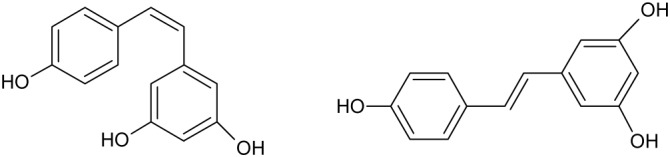
“(Vitaceae)) and red wine and its structural formula is presented in Figure 8 [120].”
BackgroundSelf-citationLi, Q., Li, Q.-Q., Jia, J.-N., Sun, Q., Zhou, H., Jin, W., & Mao, X. (2019) · Frontiers in Pharmacology · doi:10.3389/fphar.2019.00638 · Cited by 154
Kung, H., Lin, K.-J., Kung, C., & Lin, T. (2021) · Biomedicines · doi:10.3390/biomedicines9080918 · Cited by 165
“The chemical has a short biological half-life and is quickly metabolized upon entering the body, which may limit the resveratrol’s scavenging of ROS [209].”
Background
Metadata
- Authors
- Andrade, S., Ramalho, M. J., Pereira, M. D. C., & Loureiro, J. A.
- Affiliations
- Universidade do Porto (PT)
- Corresponding author
- Loureiro, Joana A.
- Venue
- Frontiers in Pharmacology
- Publisher
- Frontiers Media SA
- Published
- 2018-11-20
- Volume
- 9
- Pages
- 1261-1261
- ISSN
- 1663-9812 (ISSN-L)
- PMC
- PMC6262174
- OpenAlex
- W2901539124
- Cited by
- 173
- References
- 243
- Citations by year
- 2026: 19 · 2025: 23 · 2024: 28 · 2023: 16 · 2022: 24 · 2021: 21 · 2020: 26 · 2019: 16
- FWCI
- 1.04
- Type
- journal article
- Language
- en
- Open access
- gold
- doi.org
- Locations
- Frontiers in Pharmacology (publishedVersion, cc-by)
- Europe PMC (PubMed Central) (publishedVersion, cc-by)
- PubMed Central (publishedVersion, cc-by)
- PubMed (publishedVersion)
- DOAJ (DOAJ: Directory of Open Access Journals) (submittedVersion, cc-by-sa)
- Portuguese National Funding Agency for Science, Research and Technology (RCAAP Project by FCT) (submittedVersion, other-oa)
- Funders
- Fundação para a Ciência e a Tecnologia (PD/BD/105984/2014, SFRH/BD/129312/2017, NORTE-01-0145-FEDER-000005 – LEPABE-2 ECO-INNOVATION)
- European Regional Development Fund (POCI-01-0145-FEDER-006939, UID/EQU/00511/2013, NORTE-01-0145-FEDER-000005 – LEPABE-2 ECO-INNOVATION)
- Topics
- Physical Sciences › Materials Science › Biomaterials › Nanoparticle-Based Drug Delivery
- Life Sciences › Pharmacology, Toxicology and Pharmaceutics › Pharmaceutical Science › Advanced Drug Delivery Systems
- Life Sciences › Neuroscience › Neurology › Barrier Structure and Function Studies
- Keywords
- resveratrol, brain drug delivery, nanocarriers, blood-brain barrier, neuroprotection, Alzheimer's disease, Parkinson's disease, neurodegenerative diseases, brain cancer, liposomes, polymeric nanoparticles, lipid nanoparticles, drug bioavailability, oxidative stress, apoptosis, angiogenesis inhibition, nanomedicine
About these checks
Registry, retraction, Cites and statistics results are computed, not judged, with one exception: a printed reference that no index lists is read once by a model before it counts as a citation error. Claims are extracted by a model and kept only when their quote appears verbatim in the text; each cited source is then checked, with a model’s help, for whether it says what the claim relies on. Those verdicts can be wrong — read the claim’s quote and the cited source before relying on one.
Statistics and arithmetic are recomputed, not judged.
Confidence bands are shown only for fields calibrated on our annotated test set. None is calibrated yet, so no band is shown.
What counts as a claim ›How we measure confidence ›How we check this ›
Are you an author, or do you see a problem with this page? Request a review
