

The DOI matches its Crossref record; 307 of the 311 references it cites were found in a registry or an index.
Natural products as novel anti-obesity agents: insights into mechanisms of action and potential for therapeutic management
Open accessAbstract
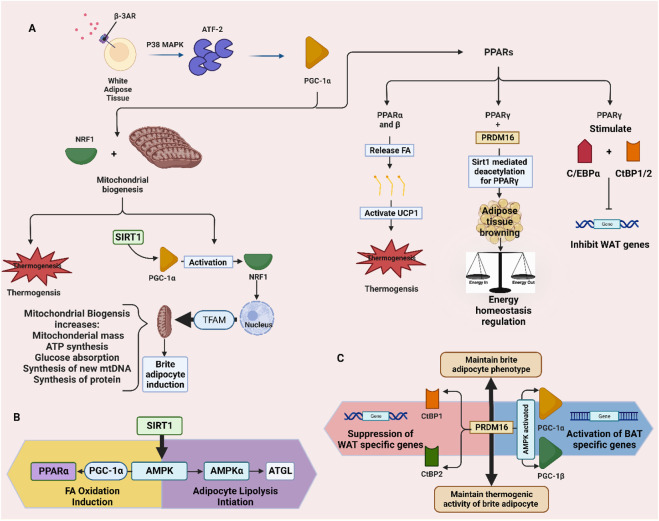
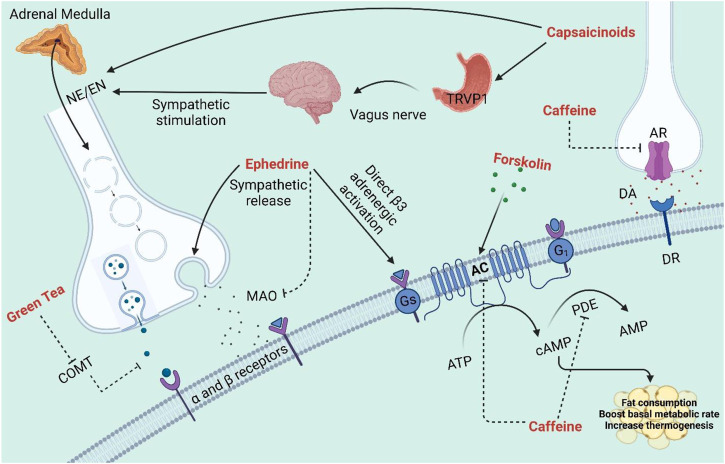
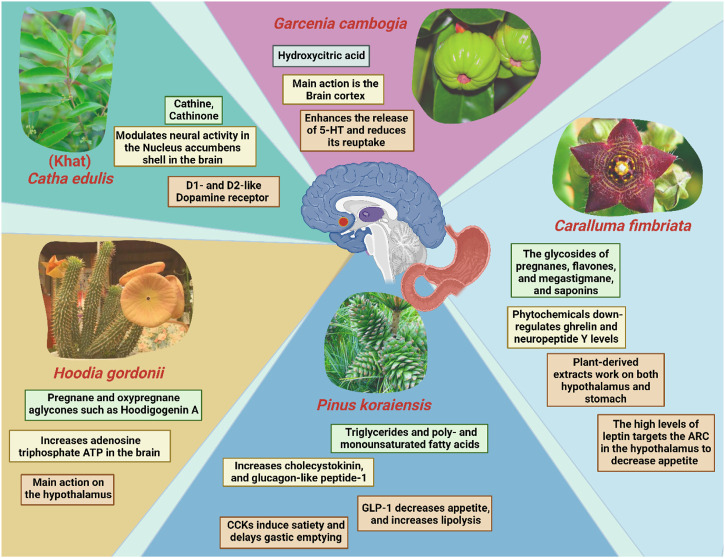
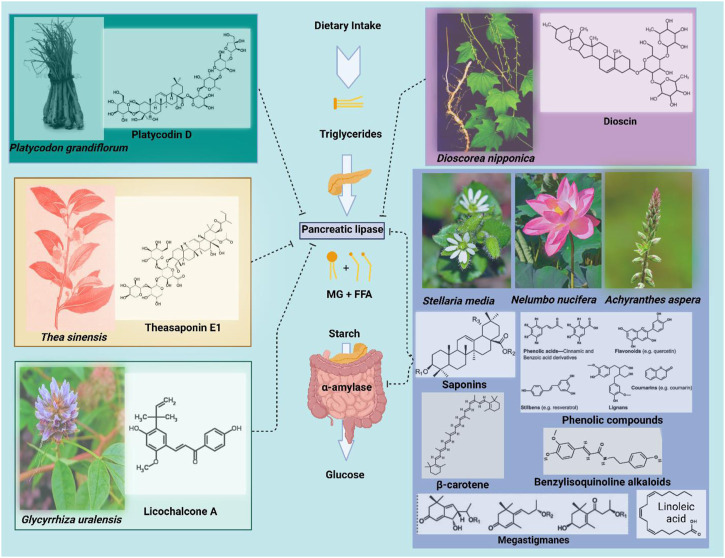
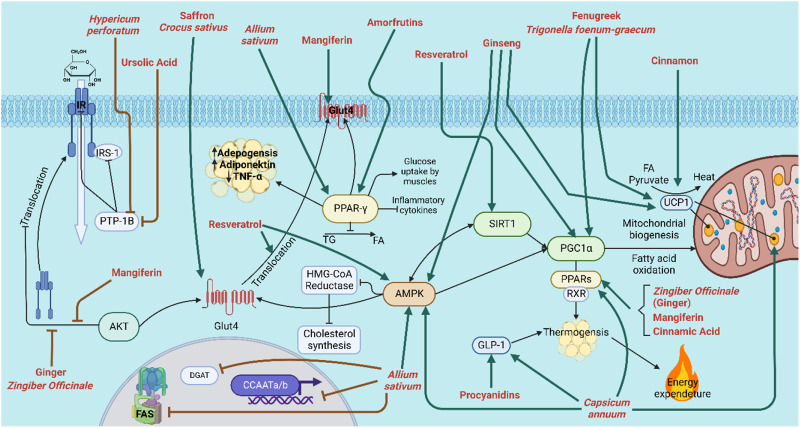
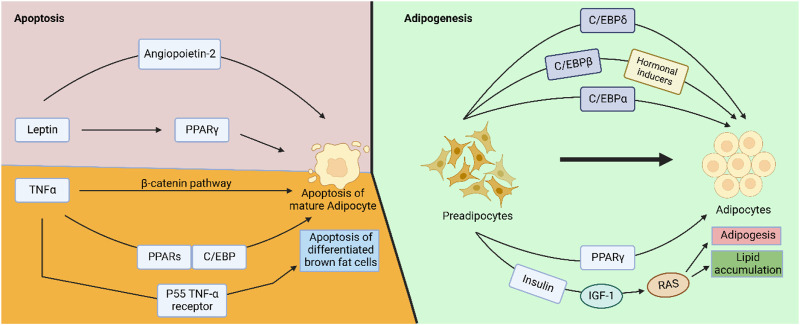
Obesity affects more than 10% of the adult population globally. Despite the introduction of diverse medications aimed at combating fat accumulation and obesity, a significant number of these pharmaceutical interventions are linked to substantial occurrences of severe adverse events, occasionally leading to their withdrawal from the market. Natural products serve as attractive sources for anti-obesity agents as many of them can alter the host metabolic processes and maintain glucose homeostasis via metabolic and thermogenic stimulation, appetite regulation, pancreatic lipase and amylase inhibition, insulin sensitivity enhancing, adipogenesis inhibition and adipocyte apoptosis induction. In this review, we shed light on the biological processes that control energy balance and thermogenesis as well as metabolic pathways in white adipose tissue browning, we also highlight the anti-obesity potential of natural products with their mechanism of action. Based on previous findings, the crucial proteins and molecular pathways involved in adipose tissue browning and lipolysis induction are uncoupling protein-1, PR domain containing 16, and peroxisome proliferator-activated receptor-γ in addition to Sirtuin-1 and AMP-activated protein kinase pathway. Given that some phytochemicals can also lower proinflammatory substances like TNF-α, IL-6, and IL-1 secreted from adipose tissue and change the production of adipokines like leptin and adiponectin, which are important regulators of body weight, natural products represent a treasure trove for anti-obesity agents. In conclusion, conducting comprehensive research on natural products holds the potential to accelerate the development of an improved obesity management strategy characterized by heightened efficacy and reduced incidence of side effects.
Overview
The claims and statistics of this paper haven’t been checked yet.
Run the check — free, no account needed. It reads the open-access text and checks the sources it cites.
Integrity signals
Registry
Cites
Statistics
Figures
Verification
Claims the paper makes
The claims and statistics of this paper haven’t been checked yet.
Run the check — free, no account needed. It reads the open-access text and checks the sources it cites.
Claims other papers make about this one
Each is checked against this paper’s own text: does it say what the citing paper says it does?
In the citing paper
“Natural and emerging compounds such as silibinin, Lipigo, Gymnema sylvestre, berberine, and vutiglabridin appear well tolerated in early studies, but their small sample sizes and short follow-up preclude strong conclusions [14,15,17,22].”
From Gastrointestinal Adverse Effects of Anti-Obesity Medications in Non-Diabetic Adults: A Systematic Review (2025) · cites this paper as [22]
In the citing paper
“Natural and investigational products such as Gymnema sylvestre and berberine likely act through local modulation of gut microbiota and bile acid metabolism, producing mild, transient discomfort [14,22].”
From Gastrointestinal Adverse Effects of Anti-Obesity Medications in Non-Diabetic Adults: A Systematic Review (2025) · cites this paper as [22]
In the citing paper
“Natural and emerging compounds such as silibinin, Lipigo, Gymnema sylvestre, berberine, and vutiglabridin appear well tolerated in early studies, but their small sample sizes and short follow-up preclude strong conclusions [14,15,17,22].”
From Gastrointestinal Adverse Effects of Anti-Obesity Medications in Non-Diabetic Adults: A Systematic Review (2025) · cites this paper as [22]
Self-check
Percentages, sums and reported differences re-computed from the paper’s own numbers.
The self-check needs the paper’s full text.
Citations
Cites
The metabolic phenotype in obesity: Fat mass, body fat distribution, and adipose tissue function
Goossens, G. H. (2017) · Obesity Facts · doi:10.1159/000471488 · Cited by 8,481
Xu, H., Barnes, G. T., Yang, Q., Tan, G., Yang, D., Chou, C. J., Sole, J., Nichols, A., Ross, J. S., Tartaglia, L. A., et al. (2003) · Journal of Clinical Investigation · doi:10.1172/jci200319451 · Cited by 6,760
Brown Adipose Tissue: Function and Physiological Significance
CANNON, B., & NEDERGAARD, J. (2004) · Physiological Reviews · doi:10.1152/physrev.00015.2003 · Cited by 6,433
Adipose Tissue as an Endocrine Organ
Kershaw, E. E., & Flier, J. S. (2004) · The Journal of Clinical Endocrinology & Metabolism · doi:10.1210/jc.2004-0395 · Cited by 5,522
Paradoxical Decrease of an Adipose-Specific Protein, Adiponectin, in Obesity
Arita, Y., Kihara, S., Ouchi, N., Takahashi, M., Maeda, K., Miyagawa, J.-I., Hotta, K., Shimomura, I., Nakamura, T., Miyaoka, K., et al. (1999) · Biochemical and Biophysical Research Communications · doi:10.1006/bbrc.1999.0255 · Cited by 4,856
A PGC1-α-dependent myokine that drives brown-fat-like development of white fat and thermogenesis
Boström, P., Wu, J., Jedrychowski, M. P., Korde, A., Ye, L., Lo, J. C., Rasbach, K. A., Boström, E. A., Choi, J. H., Long, J. Z., et al. (2012) · Nature · doi:10.1038/nature10777 · Cited by 4,810
Wu, Z., Puigserver, P., Andersson, U., Zhang, C., Adelmant, G., Mootha, V., Troy, A., Cinti, S., Lowell, B., Scarpulla, R. C., et al. (1999) · Cell · doi:10.1016/s0092-8674(00)80611-x · Cited by 4,139
Understanding Adipocyte Differentiation
Gregoire, F. M., Smas, C. M., & Sul, H. S. (1998) · Physiological Reviews · doi:10.1152/physrev.1998.78.3.783 · Cited by 2,406
Brown and beige fat: Development, function and therapeutic potential
Harms, M., & Seale, P. (2013) · Nature Medicine · doi:10.1038/nm.3361 · Cited by 2,328
Attele, A. S., Wu, J. A., & Yuan, C. (1999) · Biochemical Pharmacology · doi:10.1016/s0006-2952(99)00212-9 · Cited by 1,870
Research works printed but not linked: 11
- Diepvens, Obesity and thermogenesis related to the consumption of caffeine, ephedrine, capsaicin, and green tea, Am. J. Physiol. Regul. Integr. Comp. Physiol., 292, R77, 10.1152/ajpregu.00832.2005 · DOI
- Goyal, 2007, PHCOG rev. Plant review phyto-pharmacology of Achyranthes aspera: A review, Pharmacogn. Rev., 1
- Han, Saponins from platycodi radix ameliorate high fat diet-induced obesity in mice, J. Nutr., 132, 2241, 10.1093/jn/132.8.2241 · DOI
- Kwon, Anti-obesity effect of Dioscorea nipponica Makino with lipase-inhibitory activity in rodents, Biosci. Biotechnol. Biochem., 67, 1451, 10.1271/bbb.67.1451 · DOI
- Mobasseri, Effects of saffron supplementation on glycemia and inflammation in patients with type 2 diabetes mellitus: A randomized double-blind, placebo-controlled clinical trial study, Diabetes & Metabolic Syndrome Clin. Res. Rev., 14, 527, 10.1016/j.dsx.2020.04.031 · DOI
- Ono, Anti-obesity effect of Nelumbo nucifera leaves extract in mice and rats, J. Ethnopharmacol., 106, 238, 10.1016/j.jep.2005.12.036 · DOI
- Rao, The effect of an orally-dosed Caralluma Fimbriata extract on appetite control and body composition in overweight adults, Sci. Rep., 11, 6791, 10.1038/s41598-021-86108-2 · DOI
- Sayan, 2017, The potential role of phytochemicals in regulating human appetite: A novel approach towards diet management 1, Botanica, 67, 34
- Sharma, 2003, Medicinal plants of India: An encyclopaedia
- Westerterp-Plantenga, Green tea catechins, caffeine and body-weight regulation, Physiology Behav., 100, 42, 10.1016/j.physbeh.2010.02.005 · DOI
- 2022, WHO European regional obesity report 2022
Cited by
Sorted by citations
Subramaniyan, V., & Hanim, Y. U. (2025) · International Journal of Obesity · doi:10.1038/s41366-025-01729-1 · Cited by 98
Advancements and Challenges in Stem Cell Transplantation for Regenerative Medicine
Wei, L., Yan, W., Shah, W., Zhang, Z., Wang, M., Liu, B., Xue, Z., Cao, Y., Hou, X., Zhang, K., et al. (2024) · Heliyon · doi:10.1016/j.heliyon.2024.e35836 · Cited by 79
Chronic Use of Artificial Sweeteners: Pros and Cons
Kossiva, L., Kakleas, K., Christodouli, F., Soldatou, A., Karanasios, S., & Karavanaki, K. (2024) · Nutrients · doi:10.3390/nu16183162 · Cited by 58
Biswas, P., Kaium, M. A., Tareq, M. M. I., Tauhida, S. J., Hossain, M. R., Siam, L. S., Parvez, A., Bibi, S., Hasan, M. H., Rahman, M. M., et al. (2024) · Biomedicine & Pharmacotherapy · doi:10.1016/j.biopha.2024.116860 · Cited by 43
RetractedAlmeman, A. A. (2024) · Clinical Cosmetic and Investigational Dermatology · doi:10.2147/ccid.s453243 · Cited by 45
Metadata
- Authors
- Shaik Mohamed Sayed, U. F., Moshawih, S., Goh, H. P., Kifli, N., Gupta, G., Singh, S. K., Chellappan, D. K., Dua, K., Hermansyah, A., Ser, H. L., Ming, L. C., & Goh, B. H.
- Affiliations
- Universiti Brunei Darussalam (BN)
- Saveetha University (IN)
- Lovely Professional University (IN)
- IMU University (MY)
- University of Technology Sydney (AU)
- Universitas Airlangga (ID)
- Sunway University (MY)
- Monash University Malaysia (MY)
- Corresponding author
- Moshawih, Said
- Hermansyah, Andi
- Goh, Bey Hing
- ORCID
- Venue
- Frontiers in Pharmacology
- Publisher
- Frontiers Media SA
- Published
- 2023-06-20
- Volume
- 14
- Pages
- 1182937-1182937
- ISSN
- 1663-9812 (ISSN-L)
- PMC
- PMC10318930
- OpenAlex
- W4381429870
- Cited by
- 136
- References
- 311
- Citations by year
- 2026: 34 · 2025: 57 · 2024: 38 · 2023: 7
- FWCI
- 4.90
- Type
- journal article
- Language
- en
- Open access
- gold
- doi.org
- Licence
- Locations
- Frontiers in Pharmacology (publishedVersion, cc-by)
- PubMed Central (publishedVersion, cc-by)
- PubMed (publishedVersion)
- Monash University Research Portal (Monash University) (submittedVersion, cc-by)
- Sunway Institutional Repository (Sunway University) (submittedVersion)
- DOAJ (DOAJ: Directory of Open Access Journals) (submittedVersion, cc-by-sa)
- Greater South Information System
- Topics
- Health Sciences › Medicine › Pharmacology (medical) › Pharmacology and Obesity Treatment
- Health Sciences › Medicine › Physiology (medical) › Adipose Tissue and Metabolism
- Health Sciences › Medicine › Endocrinology, Diabetes and Metabolism › Adipokines, Inflammation, and Metabolic Diseases
- Keywords
- natural products, anti-obesity drugs, obesity, thermogenesis, adipose tissue browning, lipolysis, UCP1, PPARγ, SIRT1, AMPK signaling, appetite regulation, pancreatic lipase inhibition, insulin sensitivity, adipogenesis, adipocyte apoptosis, adipokines, leptin, adiponectin, inflammation, energy balance, phytochemicals
About these checks
Registry, retraction, Cites and statistics results are computed, not judged, with one exception: a printed reference that no index lists is read once by a model before it counts as a citation error. Claims are extracted by a model and kept only when their quote appears verbatim in the text; each cited source is then checked, with a model’s help, for whether it says what the claim relies on. Those verdicts can be wrong — read the claim’s quote and the cited source before relying on one.
Statistics and arithmetic are recomputed, not judged.
Confidence bands are shown only for fields calibrated on our annotated test set. None is calibrated yet, so no band is shown.
What counts as a claim ›How we measure confidence ›How we check this ›
Are you an author, or do you see a problem with this page? Request a review
