

The DOI matches its Crossref record; 1 of the 1 references it cites were found in a registry or an index.
Molecular Characterization Revealed the Role of Thaumatin-Like Proteins of Bread Wheat in Stress Response
Published version of a preprint
Abstract
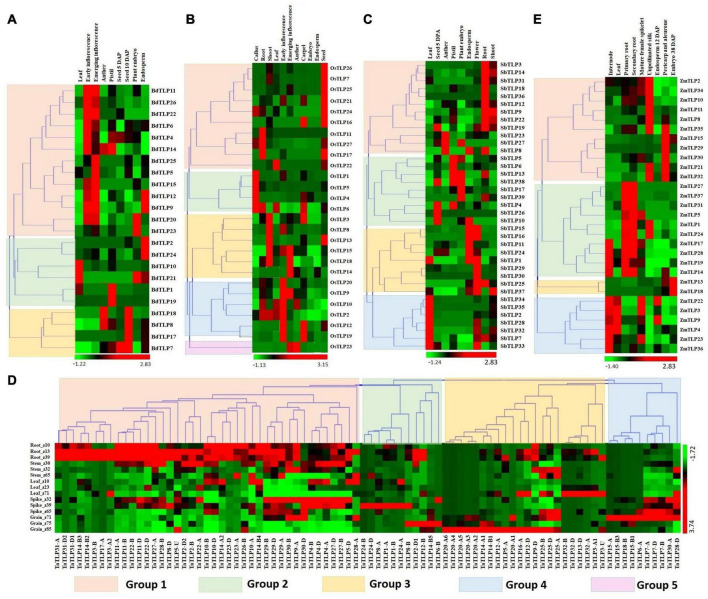
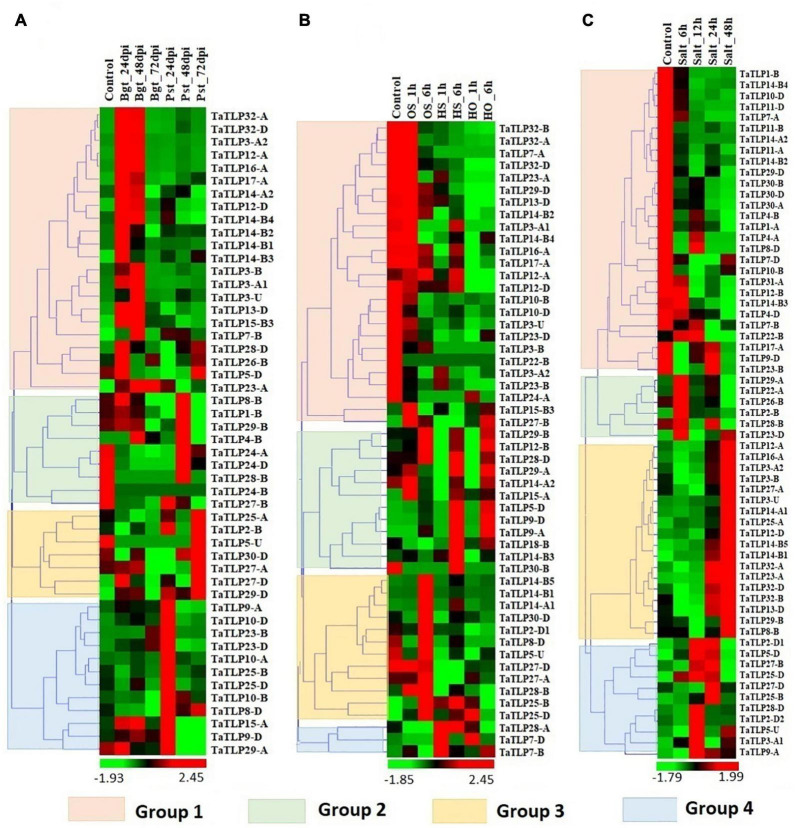
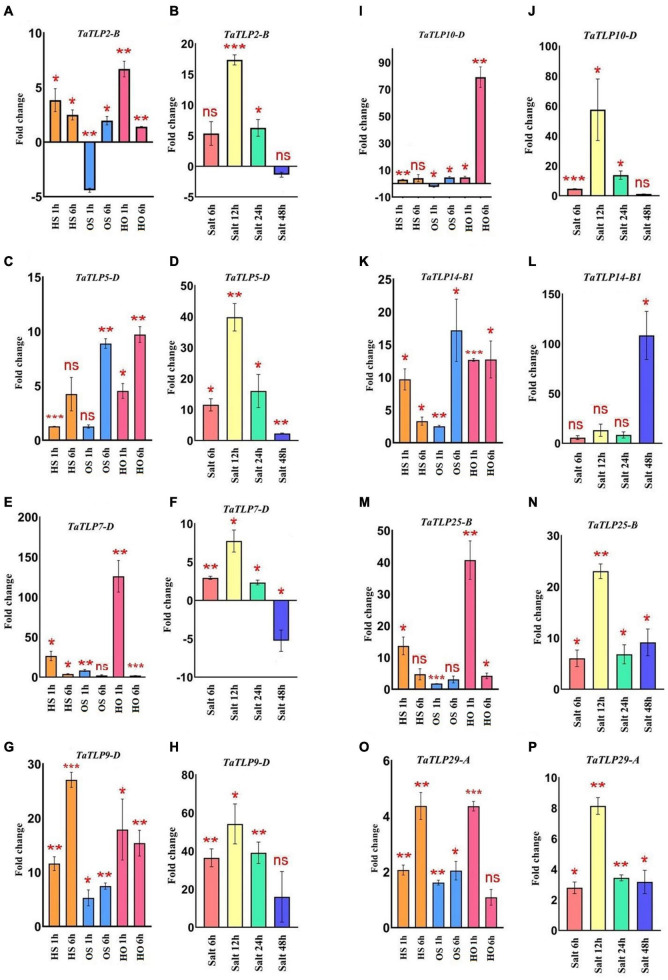
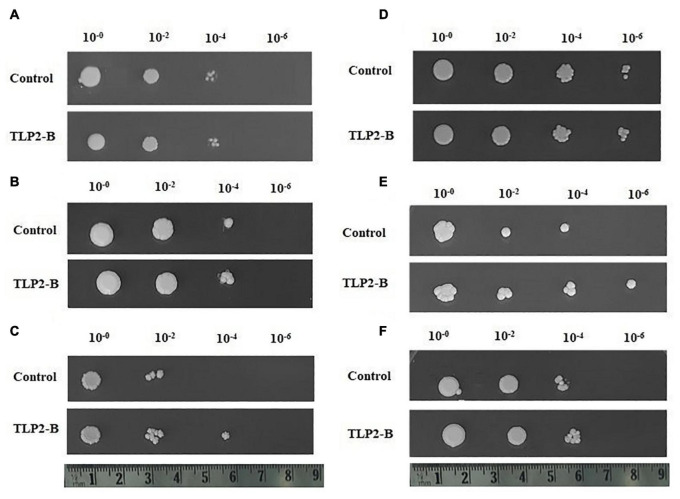
Thaumatin-like proteins (TLPs) are related to pathogenesis-related-5 (PR-5) family and involved in stress response. Herein, a total of 93 TLP genes were identified in the genome of Triticum aestivum. Further, we identified 26, 27, 39, and 37 TLP genes in the Brachypodium distachyon , Oryza sativa , Sorghum bicolor , and Zea mays genomes for comparative characterization, respectively. They could be grouped into small and long TLPs with conserved thaumatin signature motif. Tightly clustered genes exhibited conserved gene and protein structure. The physicochemical analyses suggested significant differences between small and long TLPs. Evolutionary analyses suggested the role of duplication events and purifying selection in the expansion of the TLP gene family. Expression analyses revealed the possible roles of TLPs in plant development and abiotic and fungal stress response. Recombinant expression of TaTLP2-B in Saccharomyces cerevisiae provided significant tolerance against cold, heat, osmotic, and salt stresses. The results depicted the importance of TLPs in cereal crops that would be highly useful in future crop improvement programs.
Overview
The claims and statistics of this paper haven’t been checked yet.
Run the check — free, no account needed. It reads the open-access text and checks the sources it cites.
Integrity signals
Registry
Cites
Statistics
Figures
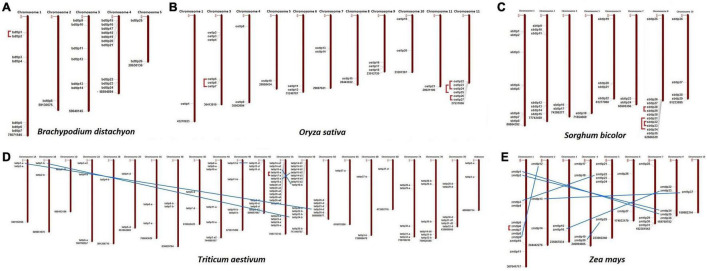
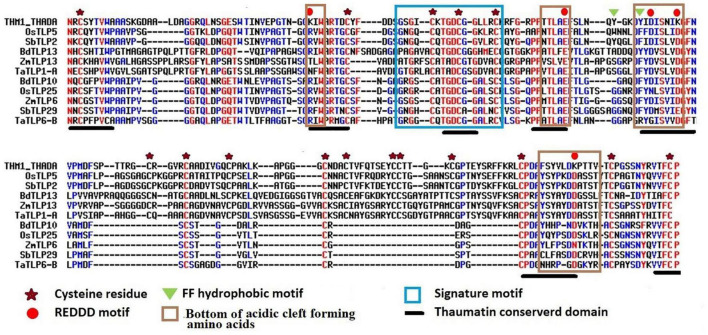
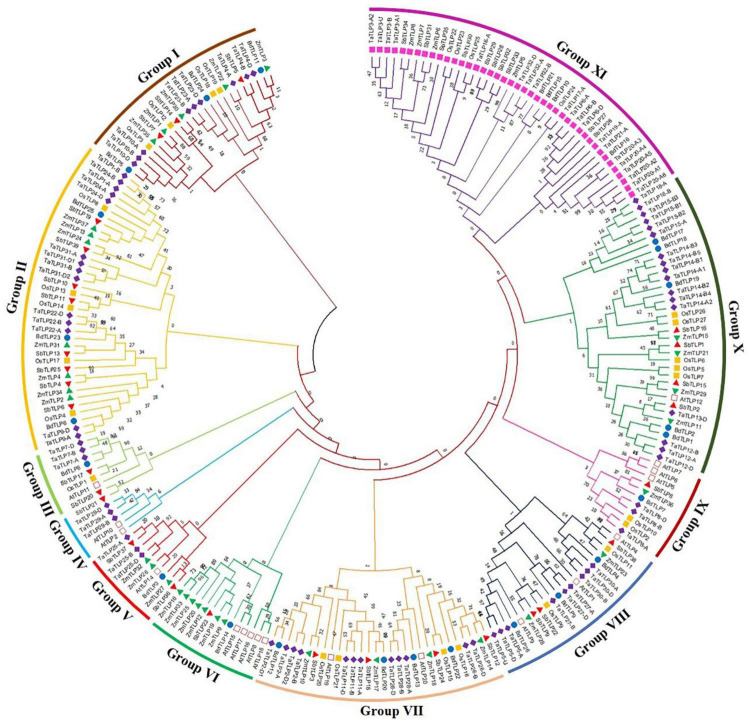
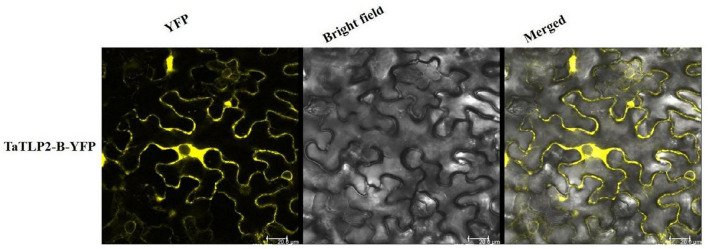
Verification
Claims the paper makes
The claims and statistics of this paper haven’t been checked yet.
Run the check — free, no account needed. It reads the open-access text and checks the sources it cites.
Claims other papers make about this one
Each is checked against this paper’s own text: does it say what the citing paper says it does?
In the citing paper
“TLPs are small proteins, typically ranging between 20 and 30 kDa, characterized by a conserved structure that includes 16 conserved cysteine residues forming eight disulfide bridges [166].”
From Pollen–Food Allergy Syndrome: Allergens, Clinical Insights, Diagnostic and Therapeutic Challenges (2024) · cites this paper as [166]
Self-check
Percentages, sums and reported differences re-computed from the paper’s own numbers.
The self-check needs the paper’s full text.
Citations
Cites
SignalP 4.0: discriminating signal peptides from transmembrane regions
Petersen, T. N., Brunak, S., von Heijne, G., & Nielsen, H. (2011) · Nature Methods · doi:10.1038/nmeth.1701 · Cited by 8,847
Research works printed but not linked: 84
- Abad, 1996, Antifungal activity of tobacco osmotin has specificity and involves plasma membrane permeabilization., Plant Sci., 118, 11, 10.1016/0168-9452(96)04420-2 · DOI
- Ahmed, 2013, Molecular characterization of thaumatin family genes related to stresses in Brassica rapa., Sci. Hortic., 152, 26, 10.1016/j.scienta.2013.01.007 · DOI
- Appels, 2018, Shifting the limits in wheat research and breeding using a fully annotated reference genome., Science, 361, 10.1126/science.aar7191 · DOI
- Bailey, 2009, MEME SUITE: tools for motif discovery and searching., Nucleic Acids Res., 37, W202, 10.1093/nar/gkp335 · DOI · Paper page
- Cao, 2016, Expansion and evolution of thaumatin-like protein (TLP) gene family in six plants., Plant Growth Regul., 79, 299, 10.1007/s10725-015-0134-y · DOI
- Choulet, 2014, Structural and functional partitioning of bread wheat chromosome 3B., Science, 345, 10.1126/science.1249721 · DOI
- Christensen, 2002, The molecular characterization of two barley proteins establishes the novel PR-17 family of pathogenesis-related proteins., Mol. Plant Pathol., 3, 135, 10.1046/j.1364-3703.2002.00105.x · DOI
- Corpet, 1988, Multiple sequence alignment with hierarchical clustering., Nucleic Acids Res., 16, 10881, 10.1093/nar/16.22.10881 · DOI
- Cserzo, 2004, TM or not TM: transmembrane protein prediction with low false positive rate using DAS-TMfilter., Bioinformatics, 20, 136, 10.1093/bioinformatics/btg394 · DOI
- Cui, 2021, Transgenic expression of TaTLP1, a thaumatin-like protein gene, reduces susceptibility to common root rot and leaf rust in wheat., Crop J., 9, 1214, 10.1016/J.CJ.2021.03.021 · DOI
- Datta, 1999, Over-expression of the cloned rice thaumatin-like protein (PR-5) gene in transgenic rice plants enhances environmental friendly resistance to Rhizoctonia solani causing sheath blight disease., Theor. Appl. Genet., 98, 1138, 10.1007/s001220051178 · DOI
- Edgar, 2004, MUSCLE: multiple sequence alignment with high accuracy and high throughput., Nucleic Acids Res., 32, 1792, 10.1093/nar/gkh340 · DOI · Paper page
- Ellegren, 2008, Comparative genomics and the study of evolution by natural selection., Mol. Ecol., 17, 4586, 10.1111/j.1365-294X.2008.03954.x · DOI
- Emanuelsson, 2000, Predicting subcellular localization of proteins based on their N-terminal amino acid sequence., J. Mol. Biol., 300, 1005, 10.1006/jmbi.2000.3903 · DOI
- Fierens, 2009, Biochemical and structural characterization of TLXI, the Triticum aestivum L. thaumatin-like xylanase inhibitor., J. Enzyme Inhib. Med. Chem., 24, 646, 10.1080/14756360802321831 · DOI
- Fils-Lycaon, 1996, A cherry protein and its gene, abundantly expressed in ripening fruit, have been identified as thaumatin-like., Plant Physiol., 111, 269, 10.1104/pp.111.1.269 · DOI
- Gasteiger, 2005, Protein identification and analysis tools on the ExPASy Server, The Proteomics Protocols Handbook, 10.1385/1-59259-890-0:571 · DOI
- Gaut, 2002, Evolutionary dynamics of grass genomes., New Phytol., 154, 15, 10.1046/j.1469-8137.2002.00352.x · DOI
- Gaut, 1996, Substitution rate comparisons between grasses and palms: synonymous rate differences at the nuclear gene Adh parallel rate differences at the plastid gene rbcL., Proc. Natl. Acad. Sci. U.S.A., 93, 10.1073/PNAS.93.19.10274 · DOI
- Gou, 2007, Gene expression and metabolite profiles of cotton fiber during cell elongation and secondary cell wall synthesis., Cell Res., 17, 422, 10.1038/sj.cr.7310150 · DOI
- Grenier, 1999, Some thaumatin-like proteins hydrolyse polymeric β-1,3-glucans., Plant J., 19, 473, 10.1046/J.1365-313X.1999.00551.X · DOI
- Haas, 2013, De novo transcript sequence reconstruction from RNA-seq using the Trinity platform for reference generation and analysis., Nat. Protoc., 8, 1494, 10.1038/nprot.2013.084 · DOI · Paper page
- He, 2021, Boltlp1, a thaumatin-like protein gene, confers tolerance to salt and drought stresses in broccoli (Brassica oleracea l. var. italica)., Int. J. Mol. Sci., 22, 10.3390/IJMS222011132/S1 · DOI
- He, 2017, Overexpression of a thaumatin-like protein gene from Vitis amurensis improves downy mildew resistance in Vitis vinifera grapevine., Protoplasma, 254, 1579, 10.1007/s00709-016-1047-y · DOI
- Higo, 1998, PLACE: a database of plant cis -acting regulatory DNA elements., Nucleic Acids Res., 26, 358, 10.1093/nar/26.1.358 · DOI
- Hiroyuki, 2008, Regulation of expression of rice thaumatin-like protein: inducibility by elicitor requires promoter W-box elements., Plant Cell Rep., 27, 1521, 10.1007/s00299-008-0536-7 · DOI
- Horton, 2007, WoLF PSORT: protein localization predictor., Nucleic Acids Res., 35, W585, 10.1093/nar/gkm259 · DOI
- Hu, 2015, GSDS 2.0: an upgraded gene feature visualization server., Bioinformatics, 31, 1296, 10.1093/bioinformatics/btu817 · DOI
- Huang, 2002, Genes encoding plastid acetyl-CoA carboxylase and 3-phosphoglycerate kinase of the Triticum/Aegilops complex and the evolutionary history of polyploid wheat., Proc. Natl. Acad. Sci. U.S.A., 99, 8133, 10.1073/pnas.072223799 · DOI
- Käll, 2004, A combined transmembrane topology and signal peptide prediction method., J. Mol. Biol., 338, 1027, 10.1016/j.jmb.2004.03.016 · DOI
- King, 2007, ngLOC: an n-gram-based Bayesian method for estimating the subcellular proteomes of eukaryotes., Genome Biol., 8, 10.1186/gb-2007-8-5-r68 · DOI
- Kombrink, 1997, Pathogenesis-related proteins and plant defense, Plant Relationships, 107, 10.1007/978-3-662-10370-8_7 · DOI
- Kumar, 2018, MEGA X: molecular evolutionary genetics analysis across computing platforms., Mol. Biol. Evol., 35, 1547, 10.1093/molbev/msy096 · DOI
- Kuwabara, 2002, Abscisic acid- and cold-induced thaumatin-like protein in winter wheat has an antifungal activity against snow mould, Microdochium nivale., Physiol. Plant., 115, 101, 10.1034/j.1399-3054.2002.1150112.x · DOI
- Lei, 2021, Genome-wide identification of PYL gene family in wheat: evolution, expression and 3D structure analysis., Genomics, 113, 854, 10.1016/j.ygeno.2020.12.017 · DOI
- Letunic, 2015, SMART: recent updates, new developments and status in 2015., Nucleic Acids Res., 43, D257, 10.1093/nar/gku949 · DOI
- Li, 2020, Thaumatin-like protein genes of Panax notoginseng confers resistance to Alternaria panax., Physiol. Mol. Plant Pathol., 112, 10.1016/J.PMPP.2020.101537 · DOI
- Li, 2020, Comprehensive genome-wide analysis of thaumatin-like gene family in four cotton species and functional identification of GhTLP19 involved in regulating tolerance to Verticillium dahlia and drought., Front. Plant Sci., 11, 10.3389/fpls.2020.575015 · DOI
- Liu, The superfamily of thaumatin-like proteins: its origin, evolution, and expression towards biological function., Plant Cell Rep., 29, 419, 10.1007/s00299-010-0826-8 · DOI
- Liu, Expression profiling of a complex thaumatin-like protein family in western white pine., Planta, 231, 637, 10.1007/s00425-009-1068-2 · DOI
- Liu, 2020, Genome-wide identification, characterization and expression analysis of the TLP gene family in melon (Cucumis melo L.)., Genomics, 112, 2499, 10.1016/j.ygeno.2020.02.001 · DOI
- Liu, 2015, Temporal transcriptome profiling reveals expression partitioning of homeologous genes contributing to heat and drought acclimation in wheat (Triticum aestivum L.)., BMC Plant Biol., 15, 10.1186/s12870-015-0511-8 · DOI
- Livak, 2001, Analysis of relative gene expression data using Real-Time quantitative PCR and the 2-ΔΔCT method., Methods, 25, 402, 10.1006/meth.2001.1262 · DOI · Paper page
- Mackintosh, 2007, Overexpression of defense response genes in transgenic wheat enhances resistance to Fusarium head blight., Plant Cell Rep., 26, 479, 10.1007/s00299-006-0265-8 · DOI
- Marcussen, 2014, Ancient hybridizations among the ancestral genomes of bread wheat., Science, 345, 10.1126/science.1250092 · DOI
- Misra, 2016, A thaumatin-like protein of Ocimum basilicum confers tolerance to fungal pathogen and abiotic stress in transgenic Arabidopsis., Sci. Rep., 6, 10.1038/srep25340 · DOI
- Munis, 2010, A thaumatin-like protein gene involved in cotton fiber secondary cell wall development enhances resistance against Verticillium dahliae and other stresses in transgenic tobacco., Biochem. Biophys. Res. Commun., 393, 38, 10.1016/j.bbrc.2010.01.069 · DOI
- Nagaraju, 2020, Genome-wide identification and transcriptional profiling of small heat shock protein gene family under diverse abiotic stress conditions in Sorghum bicolor (L.)., Int. J. Biol. Macromol., 142, 822, 10.1016/j.ijbiomac.2019.10.023 · DOI
- Naseri, 2012, In planta transformation of rice (Oryza sativa) using thaumatin-like protein gene for enhancing resistance to sheath blight., Afr. J. Biotechnol., 11, 7885, 10.5897/AJB11.3331 · DOI
- Neale, 1990, Chitinase, [beta]-1,3-glucanase, osmotin, and extensin Are expressed in tobacco explants during flower formation., Plant cell online, 2, 673, 10.1105/tpc.2.7.673 · DOI
- Nussbaumer, 2013, MIPS PlantsDB: a database framework for comparative plant genome research., Nucleic Acids Res., 41, D1144, 10.1093/nar/gks1153 · DOI
- Papatheodorou, 2018, Expression Atlas: gene and protein expression across multiple studies and organisms., Nucleic Acids Res., 46, D246, 10.1093/nar/gkx1158 · DOI
- Park, 2021, Thaumatin-like genes function in the control of both biotic stress signaling and ABA signaling pathways., Biochem. Biophys. Res. Commun., 567, 17, 10.1016/J.BBRC.2021.06.012 · DOI
- Paterson, 2004, Ancient polyploidization predating divergence of the cereals, and its consequences for comparative genomics., Proc. Natl. Acad. Sci. U.S.A., 101, 9903, 10.1073/pnas.0307901101 · DOI
- Petre, 2011, Genome-wide analysis of eukaryote thaumatin-like proteins (TLPs) with an emphasis on poplar., BMC Plant Biol., 11, 10.1186/1471-2229-11-33 · DOI
- Pingault, 2015, Deep transcriptome sequencing provides new insights into the structural and functional organization of the wheat genome., Genome Biol., 16, 10.1186/s13059-015-0601-9 · DOI
- Rajam, 2007, Thaumatin gene confers resistance to fungal pathogens as well as tolerance to abiotic stresses in transgenic tobacco plants., Biol. Plant., 51, 135, 10.1007/s10535-007-0026-8 · DOI
- Rushton, 2010, WRKY transcription factors., Trends Plant Sci., 15, 247, 10.1016/j.tplants.2010.02.006 · DOI
- Sakamoto, 2006, Lentinula edodes tlg1 encodes a thaumatin-like protein that is involved in lentinan degradation and fruiting body senescence., Plant Physiol., 141, 793, 10.1104/pp.106.076679 · DOI
- Salzman, 1998, Coordinate accumulation of antifungal proteins and hexoses constitutes a developmentally controlled defense response during fruit ripening in grape., Plant Physiol., 117, 465, 10.1104/pp.117.2.465 · DOI
- Seo, 2006, An interactive power analysis tool for microarray hypothesis testing and generation., Bioinformatics, 22, 808, 10.1093/bioinformatics/btk052 · DOI
- Seo, 2008, Molecular and functional profiling of Arabidopsis pathogenesis-related genes: insights into their roles in salt response of seed germination., Plant Cell Physiol., 49, 334, 10.1093/pcp/pcn011 · DOI
- Sharma, 2020, Thaumatin-like protein kinases: molecular characterization and transcriptional profiling in five cereal crops., Plant Sci., 290, 10.1016/j.plantsci.2019.110317 · DOI
- Sharma, 2020, Identification, characterization and expression profiling of cation-proton antiporter superfamily in Triticum aestivum L. and functional analysis of TaNHX4-B., Genomics, 112, 356, 10.1016/j.ygeno.2019.02.015 · DOI
- Sharma, 2014, Comprehensive expression analysis of rice armadillo gene family during abiotic stress and development., DNA Res., 21, 267, 10.1093/dnares/dst056 · DOI
- Shatters, 2006, Phylogenetic and structural relationships of the PR5 gene family reveal an ancient multigene family conserved in plants and select animal taxa., J. Mol. Evol., 63, 12, 10.1007/s00239-005-0053-z · DOI
- Shumayla, 2019, Genomic dissection and transcriptional profiling of cysteine-rich receptor-like kinases in five cereals and functional characterization of TaCRK68-A., Int. J. Biol. Macromol., 134, 316, 10.1016/j.ijbiomac.2019.05.016 · DOI
- Stothard, 2000, The sequence manipulation suite: JavaScript programs for analyzing and formatting protein and DNA sequences., Biotechniques, 28, 10.2144/00286ir01 · DOI
- Suyama, 2006, PAL2NAL: robust conversion of protein sequence alignments into the corresponding codon alignments., Nucleic Acids Res., 34, W609, 10.1093/nar/gkl315 · DOI
- Tajima, 1993, Simple methods for testing the molecular evolutionary clock hypothesis., Genetics, 135, 599, 10.1093/genetics/135.2.599 · DOI
- Tyagi, 2021, Molecular characterization revealed the role of catalases under abiotic and arsenic stress in bread wheat (Triticum aestivum L.)., J. Hazardous Mater., 403, 10.1016/j.jhazmat.2020.123585 · DOI
- van der Wel, 1972, Isolation and characterization of thaumatin I and II, the sweet-tasting proteins from Thaumatococcus daniellii Benth., Eur. J. Biochem., 31, 221, 10.1111/j.1432-1033.1972.tb02522.x · DOI
- van Loon, 2006, Significance of inducible defense-related proteins in infected plants., Annu. Rev. Phytopathol., 44, 135, 10.1146/annurev.phyto.44.070505.143425 · DOI
- Velazhahan, 1999, The PR-5 family: thaumatin-like proteins, Pathogenesis-Related Proteins in Plants, 107
- Wang, 2020, TaTLP1 interacts with TaPR1 to contribute to wheat defense responses to leaf rust fungus., PLoS Genet., 16, 10.1371/journal.pgen.1008713 · DOI
- Wang, 2010, Characterization of a pathogenesis-related thaumatin-like protein gene TaPR5 from wheat induced by stripe rust fungus., Physiol. Plant., 139, 27, 10.1111/j.1399-3054.2009.01338.x · DOI
- Yan, 2017, Analysis of the grape (Vitis vinifera L.) thaumatin-like protein (TLP) gene family and demonstration that TLP29 contributes to disease resistance., Sci. Rep., 7, 10.1038/s41598-017-04105-w · DOI
- Yang, 1999, Rates of nucleotide substitution in angiosperm mitochondrial DNA sequences and dates of divergence between Brassica and other angiosperm lineages., J. Mol. Evol., 48, 597, 10.1007/PL00006502 · DOI
- Yu, 2006, Prediction of protein subcellular localization., Proteins Struct. Funct. Bioinform., 64, 643, 10.1002/prot.21018 · DOI
- Zhang, 2014, Large-scale transcriptome comparison reveals distinct gene activations in wheat responding to stripe rust and powdery mildew., BMC Genomics, 15, 10.1186/1471-2164-15-898 · DOI
- Zhang, 2018, Functional analysis of a pathogenesis-related thaumatin-like protein gene TaLr35PR5 from wheat induced by leaf rust fungus., BMC Plant Biol., 18, 10.1186/s12870-018-1297-2 · DOI
- Zhang, 2005, A putative nucleoporin 96 is required for both basal defense and constitutive resistance responses mediated by suppressor of npr1-1, constitutive 1., Plant Cell, 17, 1306, 10.1105/tpc.104.029926 · DOI
- Zhang, 2016, Expression partitioning of homeologs and tandem duplications contribute to salt tolerance in wheat (Triticum aestivum L.)., Sci. Rep., 6, 10.1038/srep21476 · DOI
- Zhang, 2007, Isolation of an osmotin-like protein gene from strawberry and analysis of the response of this gene to abiotic stresses., J. Plant Physiol., 164, 68, 10.1016/j.jplph.2006.02.002 · DOI
Cited by
Sorted by citations
Pollen–Food Allergy Syndrome: Allergens, Clinical Insights, Diagnostic and Therapeutic Challenges
Haidar, L., Bănărescu, C. F., Uța, C., Moldovan, S. I., Zimbru, E.-L., Zimbru, R.-I., Ciurariu, E., Georgescu, M., & Panaitescu, C. (2024) · Applied Sciences · doi:10.3390/app15010066 · Cited by 21
Metadata
- Authors
- Sharma, A., Sharma, H., Rajput, R., Pandey, A., & Upadhyay, S. K.
- Venue
- Frontiers in Plant Science
- Publisher
- Frontiers Media SA
- Published
- 2022-01-11
- Volume
- 12
- ISSN
- 1664-462X
- PMC
- PMC8786798
- Cited by
- 59
- References
- 1
About these checks
Registry, retraction, Cites and statistics results are computed, not judged, with one exception: a printed reference that no index lists is read once by a model before it counts as a citation error. Claims are extracted by a model and kept only when their quote appears verbatim in the text; each cited source is then checked, with a model’s help, for whether it says what the claim relies on. Those verdicts can be wrong — read the claim’s quote and the cited source before relying on one.
Statistics and arithmetic are recomputed, not judged.
Confidence bands are shown only for fields calibrated on our annotated test set. None is calibrated yet, so no band is shown.
What counts as a claim ›How we measure confidence ›How we check this ›
Are you an author, or do you see a problem with this page? Request a review
