

The DOI matches its Crossref record; 3 of the 3 references it cites were found in a registry or an index.
All Impostors Aren’t Alike – Differentiating the Impostor Phenomenon
Overview
The claims and statistics of this paper haven’t been checked yet.
Run the check — free, no account needed. It reads the open-access text and checks the sources it cites.
Integrity signals
Registry
Cites
Statistics
Figures
Verification
Claims the paper makes
The claims and statistics of this paper haven’t been checked yet.
Run the check — free, no account needed. It reads the open-access text and checks the sources it cites.
Claims other papers make about this one
Each is checked against this paper’s own text: does it say what the citing paper says it does?
In the citing paper
“Despite this, empirical studies have considered IS to be its own independent phenomenon, which is different from other close concepts of the same type (Leonhardt et al., 2017).”
From Too stupid for PhD? Doctoral impostor syndrome among Finnish PhD students (2023) · cites this paper as Leonhardt et al., 2017
In the citing paper
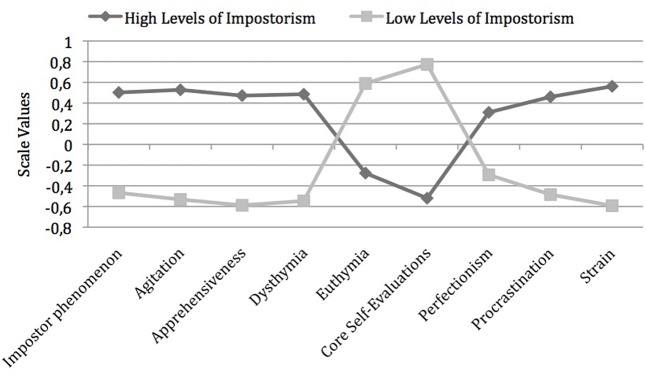
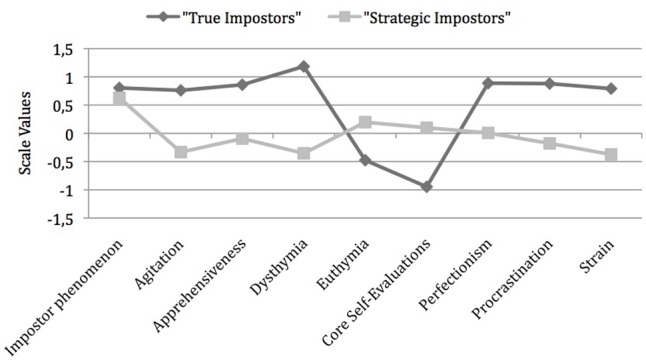
“Indeed, previous studies have suggested two types of IP: “True” impostors characterized by the negative self-views associated with the construct definition, and more “strategic” impostors who seem to be less encumbered by self-doubt.”
From The impostor phenomenon among doctoral students: a scoping review (2023) · cites this paper as Leonhardt et al., 2017
Self-check
Percentages, sums and reported differences re-computed from the paper’s own numbers.
The self-check needs the paper’s full text.
Citations
Cites
The dimensions of perfectionism
Frost, R. O., Marten, P., Lahart, C., & Rosenblate, R. (1990) · Cognitive Therapy and Research · doi:10.1007/bf01172967 · Cited by 4,279
The imposter phenomenon in high achieving women: Dynamics and therapeutic intervention.
Clance, P. R., & Imes, S. A. (1978) · Psychotherapy: Theory, Research & Practice · doi:10.1037/h0086006 · Cited by 2,212
The Development and Concurrent Validity of the Procrastination Scale
Tuckman, B. W. (1991) · Educational and Psychological Measurement · doi:10.1177/0013164491512022 · Cited by 718
Research works printed but not linked: 33
- Bacher, 2010, Clusteranalyse. Anwendungsorientierte Einführung in Klassifikationsverfahren, 10.1524/9783486710236 · DOI
- Baumeister, 1979, Inferior performance as a selective response to expectancy: taking a dive to make a point., J. Pers. Soc. Psychol., 37, 424, 10.1037/0022-3514.37.3.424 · DOI
- Bechtoldt, 2015, Wanted: self-doubting employees— Managers scoring positively on impostorism favor insecure employees in task delegation., Pers. Individ. Dif., 86, 482, 10.1016/j.paid.2015.07.002 · DOI
- Blickle, 2012, When modesty wins: impression management through modesty, political skill, and career success - a two-study investigation., Eur. J. Work Organ. Psychol., 21, 899, 10.1080/1359432X.2011.603900 · DOI
- Chrisman, 1995, Validation of the clance impostor phenomenon scale., J. Pers. Assess., 65, 456, 10.1207/s15327752jpa6503_6 · DOI · Paper page
- Clance, 1985, The Impostor Phenomenon: Overcoming the Fear that Haunts Your Success.
- Clance, 1988, Erfolgreiche Versager. Das Hochstapler-Phänomen.
- Clance, 1987, The impostor phenomenon: an internal barrier to empowerment and achievement., Women Ther., 6, 51, 10.1300/J015V06N03_05 · DOI · Paper page
- Cohen, 1988, Statistical Power Analysis for the Behavioral Sciences
- Cowman, 2002, “Am I for real?” Predicting impostor tendencies from self-handicapping and affective components., Soc. Behav. Pers. Int. J., 30, 119, 10.2224/sbp.2002.30.2.119 · DOI
- Cozzarelli, 1990, Exploring the validity of the impostor phenomenon., J. Soc. Clin. Psychol., 9, 401, 10.1521/jscp.1990.9.4.401 · DOI
- Ferrari, 2005, Impostor tendencies and academic dishonesty: do they cheat their way to success?, Soc. Behav. Pers. Int. J., 33, 10, 10.2224/sbp.2005.33.1.11 · DOI
- Ferrari, 2006, Impostor fears: links with self-presentational concerns and self-handicapping behaviors., Pers. Individ. Dif., 40, 341, 10.1016/j.paid.2005.07.012 · DOI
- Harvey, 1981, The Impostor Phenomenon: A Failure to Internalize Success.
- Heilmann, 2010, Validation of a German-language core self-evaluations scale., Soc. Behav. Pers., 30, 209, 10.2224/sbp.2010.38.2.209 · DOI
- Holmes, 1993, Measuring the impostor phenomenon: a comparison of Clance’s IP scale and Harvey’s IP scale., J. Pers. Assess., 60, 48, 10.1207/s15327752jpa6001_3 · DOI · Paper page
- Judge, 2003, The core self-evaluations scale: development of a measure., Pers. Psychol., 56, 303, 10.1111/j.1744-6570.2003.tb00152.x · DOI · Paper page
- Kolligian, 1991, Perceived fraudulence in young adults: is there an “impostor syndrome”?, J. Pers. Assess., 56, 308, 10.1207/s15327752jpa5602_10 · DOI
- Kowalski, 1990, Strategic self-presentation and the avoidance of aversive events: antecedents and consequences of self-enhancement and self-depreciation., J. Exp. Soc. Psychol., 26, 322, 10.1016/0022-1031(90)90042-k · DOI
- Langford, 1993, The impostor phenomenon: recent research findings regarding dynamics, personality and family patterns and their implications for treatment., Psychotherapy, 30, 495, 10.1037/0033-3204.30.3.495 · DOI · Paper page
- Laux, 2013, Das State-Trait-Angst-Depressionsinventar (STADI).
- Leary, 1995, Self-presentation: Impression Management and Interpersonal Behavior.
- Leary, 2000, The imposter phenomenon: self-perceptions, reflected appraisals, and interpersonal strategies., J. Pers., 68, 725, 10.1111/1467-6494.00114 · DOI · Paper page
- Mohr, 2001, Irritation – psychische erschöpfungszustände kennen keine grenzen (Irritation - there are no limits to states of mental exhaustion)., Paper Presented at the Conference, Differentielle Psychologie, Persönlichkeitspsychologie und Psychologische Diagnostik der Deutschen Gesellschaft für Psychologie
- Mohr, 2007, Irritations-Skala zur Erfassung Arbeitsbezogener Beanspruchungsfolgen.
- Moosbrugger, 1992, Clusteranalytische Methoden in der Persönlichkeitsforschung. Eine Anwendungsorientierte Einführung in Taxometrische Klassifikationsverfahren.
- Neureiter, An inner barrier to career development: preconditions of the impostor phenomenon and consequences for career development., Front. Psychol., 7, 10.3389/fpsyg.2016.00048 · DOI
- Neureiter, Inspecting the dangers of feeling like a fake: an empirical investigation of the impostor phenomenon in the world of work., Front. Psychol., 7, 10.3389/fpsyg.2016.01445 · DOI
- Rohrmann, 2016, Validation of the impostor phenomenon among managers., Front. Psychol., 7, 10.3389/fpsyg.2016.00821 · DOI
- Ross, 2001, The impostor phenomenon, achievement dispositions, and the five factor model., Pers. Individ. Dif., 31, 1347, 10.1016/s0191-8869(00)00228-2 · DOI
- Thompson, 1998, Attributional and affective responses of imposters to academic success and failure outcomes., Pers. Individ. Dif., 25, 381, 10.1016/s0191-8869(98)00065-8 · DOI · Paper page
- Thompson, 2000, Impostor fears and perfectionistic concern over mistakes., Pers. Individ. Dif., 29, 629, 10.1016/s0191-8869(99)00218-4 · DOI · Paper page
- Want, 2006, Imposter phenomenon and self-handicapping: links with parenting styles and self-confidence., Pers. Individ. Dif., 40, 961, 10.1016/j.paid.2005.10.005 · DOI
Cited by
Sorted by citations
Impostor Phenomenon Measurement Scales: A Systematic Review
Mak, K. K. L., Kleitman, S., & Abbott, M. J. (2019) · Frontiers in Psychology · doi:10.3389/fpsyg.2019.00671 · Cited by 235
Imposter syndrome among Russian students: The link between perfectionism and psychological distress
Wang, K. T., Sheveleva, M. S., & Permyakova, T. M. (2019) · Personality and Individual Differences · doi:10.1016/j.paid.2019.02.005 · Cited by 106
Too stupid for PhD? Doctoral impostor syndrome among Finnish PhD students
Nori, H., & Vanttaja, M. (2023) · Higher Education · doi:10.1007/s10734-022-00921-w · Cited by 73
The impostor phenomenon among doctoral students: a scoping review
Wang, Y., & Li, W. (2023) · Frontiers in Psychology · doi:10.3389/fpsyg.2023.1233434 · Cited by 50
Mindfulness predicts impostorism in trainee psychologists in professional programs.
Clark, O. K. T., Pickard, J. A., Gonsalvez, C. J., Deane, F. P., & Martin, J. (2025) · Clinical Psychologist · doi:10.1080/13284207.2024.2447426 · Cited by 8
Metadata
- Authors
- Leonhardt, M., Bechtoldt, M. N., & Rohrmann, S.
- Venue
- Frontiers in Psychology
- Publisher
- Frontiers Media SA
- Published
- 2017-09-07
- Volume
- 8
- ISSN
- 1664-1078
- PMC
- PMC5594221
- Cited by
- 75
- References
- 3
About these checks
Registry, retraction, Cites and statistics results are computed, not judged, with one exception: a printed reference that no index lists is read once by a model before it counts as a citation error. Claims are extracted by a model and kept only when their quote appears verbatim in the text; each cited source is then checked, with a model’s help, for whether it says what the claim relies on. Those verdicts can be wrong — read the claim’s quote and the cited source before relying on one.
Statistics and arithmetic are recomputed, not judged.
Confidence bands are shown only for fields calibrated on our annotated test set. None is calibrated yet, so no band is shown.
What counts as a claim ›How we measure confidence ›How we check this ›
Are you an author, or do you see a problem with this page? Request a review
How to cite
Cite CoChat for the checks on this page, and the paper for its own findings.
- This page
- CoChat. (2026). Citation check: All Impostors Aren’t Alike – Differentiating the Impostor Phenomenon. https://app.cochat.ai/papers/10.3389/fpsyg.2017.01505
- The paper
- Leonhardt, M., Bechtoldt, M. N., & Rohrmann, S. (2017). All Impostors Aren’t Alike – Differentiating the Impostor Phenomenon. Frontiers in Psychology. https://doi.org/10.3389/fpsyg.2017.01505
