

The DOI matches its Crossref record; 228 of the 229 references it cites were found in a registry or an index, and 1 are not checked yet.
Human Mental Workload: A Survey and a Novel Inclusive Definition
Open accessAbstract
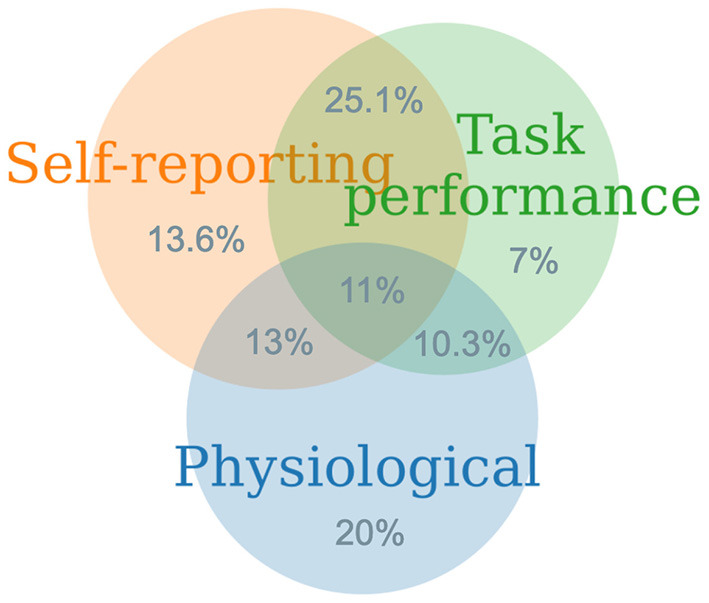
Human mental workload is arguably the most invoked multidimensional construct in Human Factors and Ergonomics, getting momentum also in Neuroscience and Neuroergonomics. Uncertainties exist in its characterization, motivating the design and development of computational models, thus recently and actively receiving support from the discipline of Computer Science. However, its role in human performance prediction is assured. This work is aimed at providing a synthesis of the current state of the art in human mental workload assessment through considerations, definitions, measurement techniques as well as applications, Findings suggest that, despite an increasing number of associated research works, a single, reliable and generally applicable framework for mental workload research does not yet appear fully established. One reason for this gap is the existence of a wide swath of operational definitions, built upon different theoretical assumptions which are rarely examined collectively. A second reason is that the three main classes of measures, which are self-report, task performance, and physiological indices, have been used in isolation or in pairs, but more rarely in conjunction all together. Multiple definitions complement each another and we propose a novel inclusive definition of mental workload to support the next generation of empirical-based research. Similarly, by comprehensively employing physiological, task-performance, and self-report measures, more robust assessments of mental workload can be achieved.
Overview
The claims and statistics of this paper haven’t been checked yet.
Run the check — free, no account needed. It reads the open-access text and checks the sources it cites.
Integrity signals
Registry
Cites
Statistics
Figures
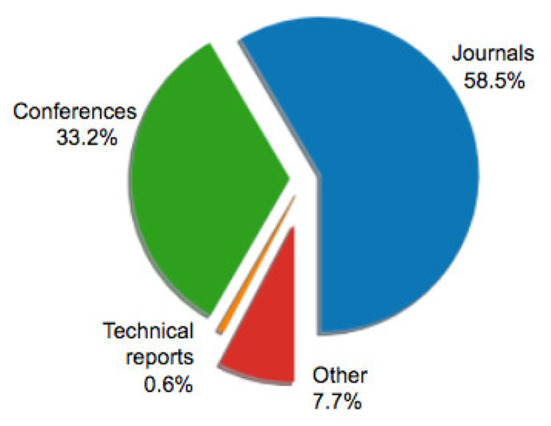
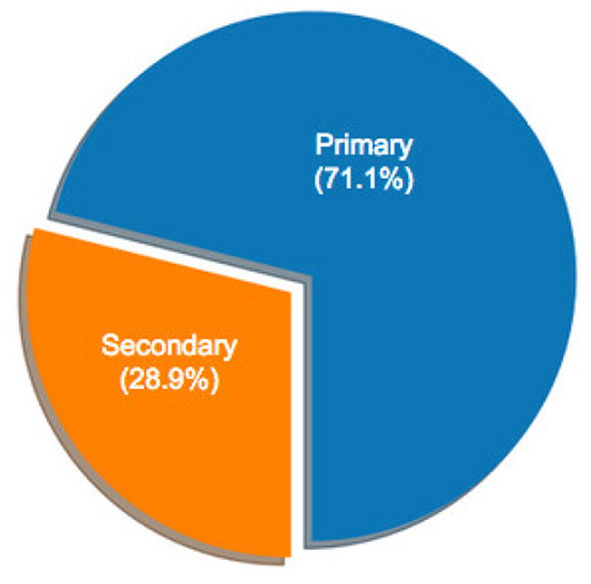
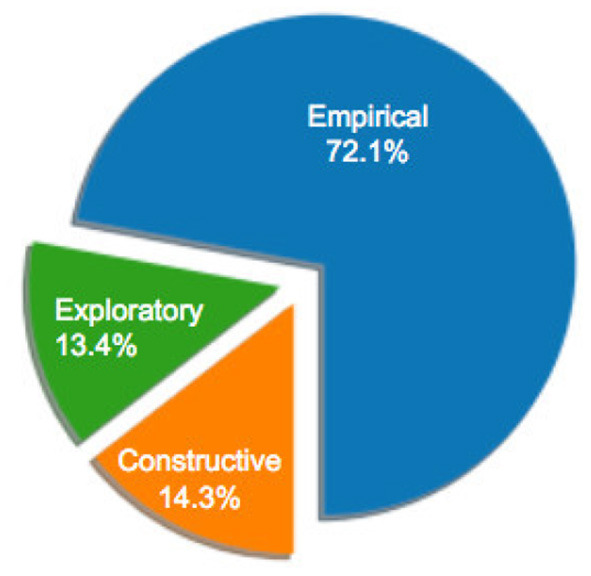
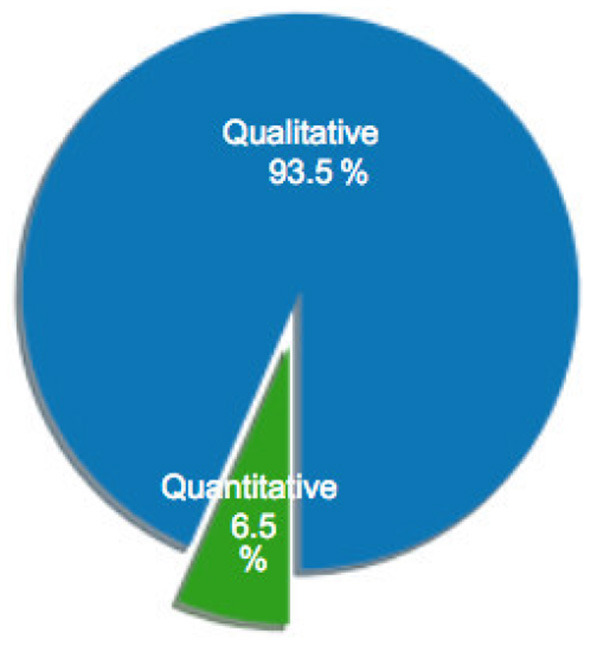
Verification
Claims the paper makes
The claims and statistics of this paper haven’t been checked yet.
Run the check — free, no account needed. It reads the open-access text and checks the sources it cites.
Claims other papers make about this one
Each is checked against this paper’s own text: does it say what the citing paper says it does?
The source backs part of the claim, not all of it — or backs it for a different population, condition or comparison.
In the citing paper
“Assessing mental workload as a multidimensional context-dependent construct is generally done by a combination of self-report, performance, and physiological indicators rather than by any single measure alone (Young et al., 2015; Longo et al., 2022; Hart and Staveland, 1988).”
From Enhancement of modern defense capabilities by convergence of cognitive neuroscience and artificial intelligence (2026) · cites this paper as Longo et al., 2022
Experimental — accuracy not yet measured
Self-check
Percentages, sums and reported differences re-computed from the paper’s own numbers.
The self-check needs the paper’s full text.
Citations
Cites
“Stress: appraisal and coping,”
Folkman, S. (2013) · Encyclopedia of Behavioral Medicine · doi:10.1007/978-1-4419-1005-9_215 · Cited by 27,833
Development of NASA-TLX (Task Load Index): Results of Empirical and Theoretical Research
(1988) · Advances in Psychology · doi:10.1016/s0166-4115(08)62386-9 · Cited by 15,003
Motivation through the design of work: test of a theory
Hackman, J. R., & Oldham, G. R. (1976) · Organizational Behavior and Human Performance · doi:10.1016/0030-5073(76)90016-7 · Cited by 8,962
Sweller, J., Ayres, P., & Kalyuga, S. (2011) · Elsevier eBooks · doi:10.1007/978-1-4419-1428-6_446 · Cited by 6,172
Csíkszentmihályi, M. (1975) · Cited by 5,690
Sweller, J. (2011) · Psychology of Learning and Motivation · doi:10.1016/b978-0-12-387691-1.00002-8 · Cited by 4,856
NASA-Task Load Index (NASA-TLX); 20 Years Later
Hart, S. G. (2006) · Proceedings of the Human Factors and Ergonomics Society Annual Meeting · doi:10.1177/154193120605000909 · Cited by 4,297 · cited 3×
“As indicated in Table 3 in Appendix , the NASA-TLX is the most used measure to assess mental workload, followed by the SWAT, the Rating Scale Mental Effort and the Workload Profile.”
BackgroundMultiple resources and performance prediction
Wickens, C. D. (2002) · Theoretical Issues in Ergonomics Science · doi:10.1080/14639220210123806 · Cited by 2,621 · cited 7×
“This theory explains the behavior of an operator as he or she concurrently performs multiple tasks that rely on the expenditure of multiple resources shared among these tasks (Wickens, 2002).”
BackgroundMethodInfluentialSelf-citationCognitive Load Measurement as a Means to Advance Cognitive Load Theory
Paas, F., Tuovinen, J. E., Tabbers, H., & Van Gerven, P. W. M. (2003) · Educational Psychologist · doi:10.1207/s15326985ep3801_8 · Cited by 2,527
Hollan, J., Hutchins, E., & Kirsh, D. (2000) · ACM Transactions on Computer-Human Interaction · doi:10.1145/353485.353487 · Cited by 2,300 · cited 1×
“Instead, they are distributed across social groups, the environment, and the time of interaction (Hollan et al., 2000).”
Background
Research works printed but not linked: 12
- Kahneman, 1973, Attention and Effort, Volume 1063
- Physiological metrics of mental workload: a review of recent progress KramerA. F. Multiple-Task Performance1991
- Mental workload of the vts operators by utilising heart rate KumS. FurushoM. DuruO. SatirT. TransNav, International Journal on Marine Navigation and Safety od Sea Transportation2007
- LazarusR. S. FolkmanS. 28833294Stress, Appraisal, and Coping. Springer Publishing Company1984
- Miller, 2001, Workload Measures
- Mizobuchi, 2005, Mobile text entry: relationship between walking speed and text input task difficulty, 122
- Moray, 2013, Mental Workload: Its Theory and Measurement, Vol. 8
- Smiley, 1989, Mental workload and information management, 435
- Stanton, 1995, Ecological ergonomics: understanding human action in context, Contemporary Ergon, 165, 62
- Woods, 2009, Rasmussen's srk 30 years later: Is human factors best in 3's?, 217
- Zajonc, 1984, The interaction of affect and cognition
- ZijlstraF. Efficiency in work behaviour: a design approach for modern tools (doctoral dissertation). Retrieved from Repository TU Delft (90-6275-918-1)1993
Cited by
Sorted by citations
Longo, L., Brcic, M., Cabitza, F., Choi, J., Confalonieri, R., Ser, J. D., Guidotti, R., Hayashi, Y., Herrera, F., Holzinger, A., et al. (2024) · Information Fusion · doi:10.1016/j.inffus.2024.102301 · Cited by 626
Self-citationHow and why humans trust: A meta-analysis and elaborated model
Hancock, P. A., Kessler, T. T., Kaplan, A. D., Stowers, K. L., Brill, J. C., Billings, D. R., Schaefer, K. E., & Szalma, J. L. (2023) · Frontiers in Psychology · doi:10.3389/fpsyg.2023.1081086 · Cited by 168
Self-citationMental Workload and Human-Robot Interaction in Collaborative Tasks: A Scoping Review
Carissoli, C., Negri, L., Bassi, M., Storm, F. A., & Fave, A. D. (2023) · International Journal of Human-Computer Interaction · doi:10.1080/10447318.2023.2254639 · Cited by 105
The Mathematical Meaninglessness of the NASA Task Load Index: A Level of Measurement Analysis
Bolton, M. L., Biltekoff, E., & Humphrey, L. R. (2023) · IEEE Transactions on Human-Machine Systems · doi:10.1109/thms.2023.3263482 · Cited by 78
A multidimensional taxonomy for human-robot interaction in construction
Rodrigues, P. B., Singh, R., Oytun, M., Adami, P., Woods, P. J., Becerik-Gerber, B., Soibelman, L., Copur‐Gencturk, Y., & Lucas, G. (2023) · Automation in Construction · doi:10.1016/j.autcon.2023.104845 · Cited by 54
Metadata
- Authors
- Longo, L., Wickens, C. D., Hancock, G., & Hancock, P. A.
- Affiliations
- Technological University Dublin (IE)
- Colorado State University (US)
- University of Central Florida (US)
- Corresponding author
- Longo, Luca
- Venue
- Frontiers in Psychology
- Publisher
- Frontiers Media SA
- Published
- 2022-06-02
- Volume
- 13
- Pages
- 883321-883321
- ISSN
- 1664-1078 (ISSN-L)
- PMC
- PMC9201728
- OpenAlex
- W4281746451
- Cited by
- 222
- References
- 222
- Citations by year
- 2026: 53 · 2025: 72 · 2024: 67 · 2023: 28 · 2022: 2
- FWCI
- 6.33
- Type
- journal article
- Language
- en
- Update notices
- corrigendum (2022-07-26)
- Open access
- gold
- doi.org
- Licence
- Locations
- Frontiers in Psychology (publishedVersion, cc-by)
- PubMed Central (publishedVersion, cc-by)
- PubMed (publishedVersion)
- Arrow - TU Dublin (Technological University Dublin) (submittedVersion, cc-by-nc-sa)
- DOAJ (DOAJ: Directory of Open Access Journals) (submittedVersion, cc-by-sa)
- Lenus, The Irish Health Repository (Dr Steevens Hospital Library) (submittedVersion)
- Topics
- Social Sciences › Human Factors and Ergonomics › Human-Automation Interaction and Safety
- Social Sciences › Human Factors and Ergonomics › Ergonomics and Human Factors
- Physical Sciences › Computer Science › Artificial Intelligence › Emotion and Mood Recognition
- Keywords
- mental workload, operational definitions, mental workload assessment, self-report measures, physiological indices, neuroergonomics, human performance prediction
About these checks
Registry, retraction, Cites and statistics results are computed, not judged, with one exception: a printed reference that no index lists is read once by a model before it counts as a citation error. Claims are extracted by a model and kept only when their quote appears verbatim in the text; each cited source is then checked, with a model’s help, for whether it says what the claim relies on. Those verdicts can be wrong — read the claim’s quote and the cited source before relying on one.
Statistics and arithmetic are recomputed, not judged.
Confidence bands are shown only for fields calibrated on our annotated test set. None is calibrated yet, so no band is shown.
What counts as a claim ›How we measure confidence ›How we check this ›
Are you an author, or do you see a problem with this page? Request a review
