

The DOI matches its Crossref record; 6 of the 6 references it cites were found in a registry or an index.
The nudging effect of AIGC labeling on users’ perceptions of automated news: evidence from EEG
Open accessAbstract
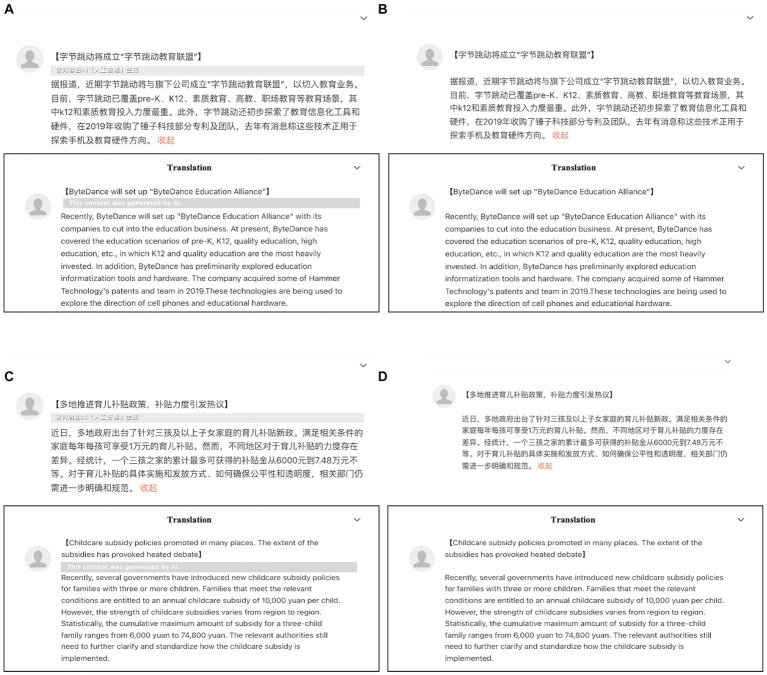
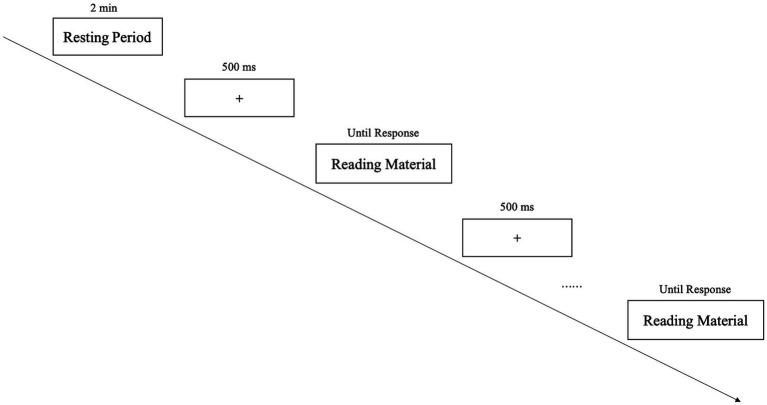
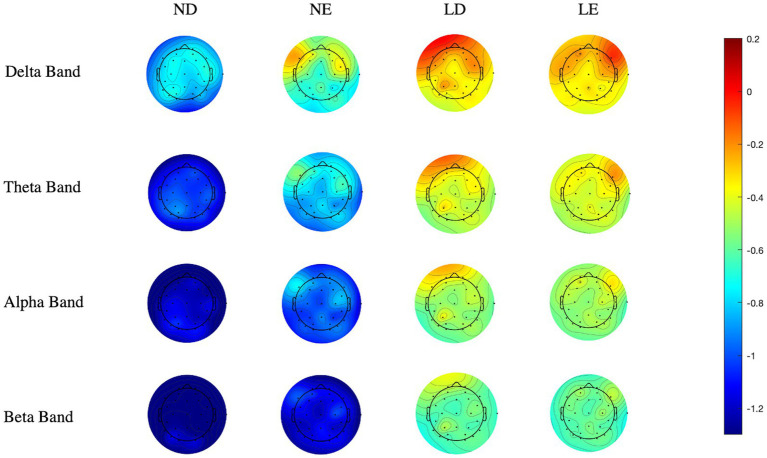
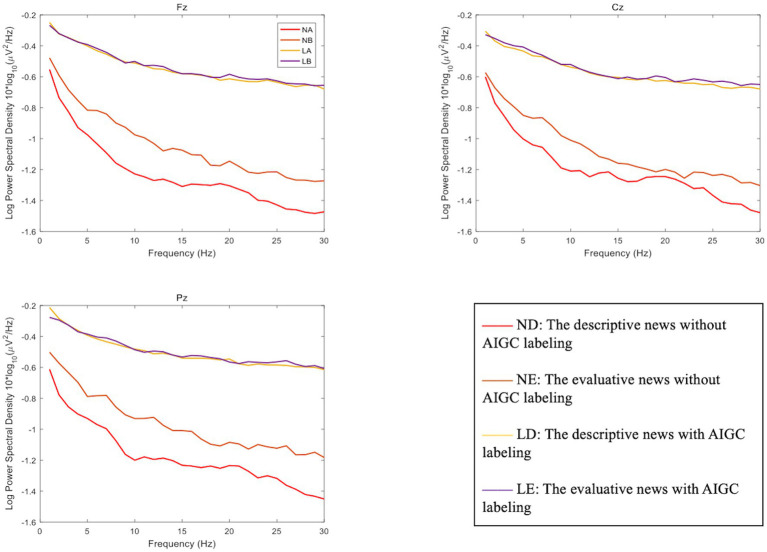
Introduction: In the context of generative AI intervention in news production, this study primarily focuses on the impact of AI-generated content (AIGC) labeling cues on users’ perceptions of automated news based on nudge theory. Methods: A 2 (authorship disclosure nudge cues: with vs. without AIGC label) × 2 (automated news type: descriptive vs. evaluative news) within-subject experiment was carried out. Thirty-two participants were recruited to read automated news, evaluate the perceived content trustworthiness, and record with an EEG device. Results: The results demonstrated that disclosure of AIGC labeling significantly reduced the trustworthiness perception of both fact-based descriptive and opinion-based evaluative news. In EEG, the delta PSD, theta PSD, alpha PSD, and beta PSD with disclosure of AIGC labeling were significantly higher than those without AIGC labeling. Meanwhile, in descriptive news conditions, TAR with AIGC labeling was higher than without AIGC labeling. Discussion: These results suggested that AIGC labeling significantly improves the degree of attention concentration in reading and deepens the degree of cognitive processing. Users are nudged by AIGC labeling to shift their limited attention and cognitive resources to re-evaluate the information quality to obtain more prudent judgment results. This helps to supplement the theoretical perspective on transparent disclosure nudging in the Internet content governance research field, and it can offer practical guidance to use content labeling to regulate the media industry landscape in the face of AI’s pervasive presence.
Overview
The claims and statistics of this paper haven’t been checked yet.
Run the check — free, no account needed. It reads the open-access text and checks the sources it cites.
Integrity signals
Registry
Cites
Statistics
Figures
Verification
Claims the paper makes
The claims and statistics of this paper haven’t been checked yet.
Run the check — free, no account needed. It reads the open-access text and checks the sources it cites.
Claims other papers make about this one
Each is checked against this paper’s own text: does it say what the citing paper says it does?
The source backs part of the claim, not all of it — or backs it for a different population, condition or comparison.
In the citing paper
“AI labels act as a negative heuristic, causing consumers to downgrade evaluations automatically (Liu et al., 2023).”
From AI-generated versus human-created advertising: Effects on consumer trust and purchase intent (2025) · cites this paper as Liu et al., 2023
Experimental — accuracy not yet measured
Self-check
Percentages, sums and reported differences re-computed from the paper’s own numbers.
The self-check needs the paper’s full text.
Citations
Cites
Dwivedi, Y. K., Kshetri, N., Hughes, L., Slade, E. L., Jeyaraj, A., Kar, A. K., Baabdullah, A. M., Koohang, A., Raghavan, V., Ahuja, M., et al. (2023) · International Journal of Information Management · doi:10.1016/j.ijinfomgt.2023.102642 · Cited by 4,584
Algorithm aversion: People erroneously avoid algorithms after seeing them err.
Dietvorst, B. J., Simmons, J. P., & Massey, C. (2015) · Journal of Experimental Psychology: General · doi:10.1037/xge0000033 · Cited by 3,232 · cited 2×
“…without AIGC labeling; NE, evaluative news without AIGC labeling; LD, descriptive news with AIGC labeling; LE, evaluative news with AIGC labeling. were mostly young people with backgrounds in humanities and social sciences, and their algorithm aversion was relatively high (Dietvorst et al., 2015).”
BackgroundPennycook, G., McPhetres, J., Zhang, Y., Lu, J. G., & Rand, D. G. (2020) · Psychological Science · doi:10.1177/0956797620939054 · Cited by 1,715
Artificial Intelligence in Utilitarian vs. Hedonic Contexts: The “Word-of-Machine” Effect
Longoni, C., & Cian, L. (2022) · Journal of Marketing · doi:10.1177/0022242920957347 · Cited by 831 · cited 3×
“In light of the possibility that the heuristic reasoning of users influenced by AIGC labeling may differ between descriptive and evaluative news (Longoni and Cian, 2020), the present study will also investigate the potential interactive effects of news type.”
BackgroundResultMachine Heuristic: When We Trust Computers More than Humans with Our Personal Information
Sundar, S. S., & Kim, J. (2019) · Proceedings of the 2019 CHI Conference on Human Factors in Computing Systems · doi:10.1145/3290605.3300768 · Cited by 347
How behavioural sciences can promote truth, autonomy and democratic discourse online
Lorenz-Spreen, P., Lewandowsky, S., Sunstein, C. R., & Hertwig, R. (2020) · Nature Human Behaviour · doi:10.1038/s41562-020-0889-7 · Cited by 223
Research works printed but not linked: 48
- Borghini, 2014, Measuring neurophysiological signals in aircraft pilots and car drivers for the assessment of mental workload, fatigue and drowsiness, Neurosci. Biobehav. Rev., 44, 58, 10.1016/j.neubiorev.2012.10.003 · DOI
- Carlson, 2017, Automating judgment? Algorithmic judgment, news knowledge, and journalistic professionalism, New Media Soc., 20, 1755, 10.1177/1461444817706684 · DOI
- Castelo, 2019, Task-dependent algorithm aversion, J. Mark. Res., 56, 809, 10.1177/0022243719851788 · DOI · Paper page
- Chadha, 2014, Newsrooms and transparency in the digital age, Journal. Pract., 9, 215, 10.1080/17512786.2014.924737 · DOI
- Chaiken, 1980, Heuristic versus systematic information processing and the use of source versus message cues in persuasion, J. Pers. Soc. Psychol., 39, 752, 10.1037/0022-3514.39.5.752 · DOI · Paper page
- Chen, 2023, Generative artificial intelligence and journalism: practical empowerment, conceptual challenge, and role reshaping, Press Circles, 6, 4, 10.15897/j.cnki.cn51-1046/g2.20230614.001 · DOI
- Choi, 2019, Determinant and consequence of online news authorship verification: blind news consumption creates press credibility, Int. J. Commun., 13, 75
- Clark, 2018, How advertisers can keep mobile users engaged and reduce video-ad blocking, J. Advert. Res., 58, 311, 10.2501/JAR-2018-036 · DOI
- Coan, 2004, Frontal EEG asymmetry as a moderator and mediator of emotion, Biol. Psychol., 67, 7, 10.1016/j.biopsycho.2004.03.002 · DOI · Paper page
- Curry, 2019, The effects of journalistic transparency on credibility assessments and engagement intentions, Journalism, 22, 901, 10.1177/1464884919850387 · DOI
- Das, 2013, Is there an author behind this text? A literary aesthetic driven approach to interactive media, New Media Soc., 16, 381, 10.1177/1461444813481296 · DOI
- Davies, 2011, An evolutionary step in intellectual property rights – artificial intelligence and intellectual property, Comput. Law Secur. Rev., 27, 601, 10.1016/j.clsr.2011.09.006 · DOI · Paper page
- Deuze, 2003, The web and its journalisms: considering the consequences of different types of newsmedia online, New Media Soc., 5, 203, 10.1177/1461444803005002004 · DOI
- Edwards, 2023, Why ChatGPT and Bing chat are so good at making things up
- Fernández, 1995, EEG activation patterns during the performance of tasks involving different components of mental calculation, Electroencephalogr. Clin. Neurophysiol., 94, 175, 10.1016/0013-4694(94)00262-J · DOI
- Flanagin, 2000, Perceptions of internet information credibility, Journal. Mass Communicat. Quart., 77, 515, 10.1177/107769900007700304 · DOI
- Graefe, 2016, Readers’ perception of computer-generated news: credibility, expertise, and readability, Journalism, 19, 595, 10.1177/1464884916641269 · DOI · Paper page
- Gruzelier, 2014, EEG-neurofeedback for optimising performance. I: a review of cognitive and affective outcome in healthy participants, Neurosci. Biobehav. Rev., 44, 124, 10.1016/j.neubiorev.2013.09.015 · DOI
- Han, 2020, The impact of media situation on people’s memory effect – an ERP study, Comput. Hum. Behav., 104, 106180, 10.1016/j.chb.2019.106180 · DOI
- Hertwig, 2017, Nudging and boosting: steering or empowering good decisions, Perspect. Psychol. Sci., 12, 973, 10.1177/1745691617702496 · DOI
- Kahneman, 1972, Subjective probability: a judgment of representativeness, Cogn. Psychol., 3, 430, 10.1016/0010-0285(72)90016-3 · DOI
- Krouwer, 2019, Moving towards transparency for native advertisements on news websites: a test of more detailed disclosures, Int. J. Advert., 39, 51, 10.1080/02650487.2019.1575107 · DOI
- Lal, 2001, Electroencephalography activity associated with driver fatigue: implications for a fatigue countermeasure device, J. Psychophysiol., 15, 183, 10.1027//0269-8803.15.3.183 · DOI
- Lee, 2015, The rise of online news aggregators: consumption and competition, Int. J. Media Manag., 17, 3, 10.1080/14241277.2014.997383 · DOI
- Liu, 2018, Machine authorship in situ, Digit. J., 7, 635, 10.1080/21670811.2018.1510740 · DOI
- Montal, 2016, I, robot. You, journalist. Who is the author?, Digit. J., 5, 829, 10.1080/21670811.2016.1209083 · DOI · Paper page
- Morrow, 2022, The emerging science of content labeling: contextualizing social media content moderation, J. Assoc. Inf. Sci. Technol., 73, 1365, 10.1002/asi.24637 · DOI
- Newman, 2017, Bias, bullshit and lies audience perspectives on low trust in the media, digital news project
- 2023, ChatGPT-4 produces more misinformation than predecessor - misinformation monitor: March 2023
- Otis, 2022, The effects of transparency cues on news source credibility online: an investigation of ‘opinion labels’, Journalism, 146488492211290, 10.1177/14648849221129001 · DOI
- Pennycook, 2022, Nudging social media toward accuracy, Ann. Am. Acad. Pol. Soc. Sci., 700, 152, 10.1177/00027162221092342 · DOI · Paper page
- Reich, 2014, Textual DNA, Journal. Pract., 8, 619, 10.1080/17512786.2014.883119 · DOI
- Rupar, 2006, How did you find that out? Transparency of the newsgathering process and the meaning of news, Journal. Stud., 7, 127, 10.1080/14616700500450426 · DOI
- Schulhofer-Wohl, 2012, Do newspapers matter? Short-run and long-run evidence from the closure of the cincinnati post, J. media Econ., 26, 60, 10.21034/sr.474 · DOI
- Shokri, 2021, Comparison of biofeedback and combined interventions on athlete’s performance, Appl. Psychophysiol. Biofeedback, 46, 227, 10.1007/s10484-020-09498-5 · DOI
- Simon, 1955, A behavioral model of rational choice, Q. J. Econ., 69, 99, 10.2307/1884852 · DOI · Paper page
- Sundar, 2015, Toward a theory of interactive media effects (TIME) four models for explaining how interface features affect user psychology, 47, 10.1002/9781118426456.ch3 · DOI
- Sunstein, 2021, The distributional effects of nudges, Nat. Hum. Behav., 6, 9, 10.1038/s41562-021-01236-z · DOI
- Tandoc, 2020, Man vs. machine? The impact of algorithm authorship on news credibility, Digit. Journal., 8, 548, 10.1080/21670811.2020.1762102 · DOI
- 2023, The new platform specification of Tiktok requires the identification of AIGC content, and industry compliance supervision begins to land
- Thaler, 2008, Nudge: improving decisions about health, wealth, and happiness
- 2022, ChatGPT broke one million users in five days, but was suddenly banned by stack overflow
- Weinreich, 2008, Not quite the average, ACM Trans. Web, 2, 1, 10.1145/1326561.1326566 · DOI
- Wölker, 2018, Algorithms in the newsroom? News readers’ perceived credibility and selection of automated journalism, Journalism, 22, 86, 10.1177/1464884918757072 · DOI
- Xiu, 2023, The impact of conversational interaction on users’ cognitive absorption in mobile news reading context: evidence from EEG, Behav. Inform. Technol., 1, 10.1080/0144929X.2022.2163919 · DOI
- Yu, 2018, Cognitive neurocommunication: paradigm innovation and research framework, J. Zhejiang Institute Med. Communicat., 1, 13 + 9-140, 10.13628/j.cnki.zjcmxb.2018.01.002 · DOI
- Yu, 2021, Measurement of the transmission effect of synthetic speech news: EEG evidence on the influence of speech speed, Chin. J. Journal. Communicat., 2, 6, 10.13495/j.cnki.cjjc.2021.02.001 · DOI
- Zhang, 2010, Frontal EEG lateralization: an indicator of emotional regulation, Adv. Psychol. Sci., 11, 1679
Cited by
Sorted by citations
Wortel, C., Vanwesenbeeck, I., & Tomas, F. (2024) · Emerging Media · doi:10.1177/27523543241292096 · Cited by 50
AI-generated versus human-created advertising: Effects on consumer trust and purchase intent
Israfilzade, K. (2025) · Equilibrium. Quarterly Journal of Economics and Economic Policy · doi:10.24136/eq.4038 · Cited by 21
Metadata
- Authors
- Liu, Y., Wang, S., & Yu, G.
- Affiliations
- Beijing Normal University (CN)
- Corresponding author
- Yu, Guoming
- Venue
- Frontiers in Psychology
- Publisher
- Frontiers Media SA
- Published
- 2023-12-22
- Volume
- 14
- Pages
- 1277829-1277829
- ISSN
- 1664-1078 (ISSN-L)
- PMC
- PMC10766850
- OpenAlex
- W4390111229
- Cited by
- 32
- References
- 6
- Citations by year
- 2026: 19 · 2025: 10 · 2024: 3
- FWCI
- 13.75
- Type
- journal article
- Language
- en
- Open access
- gold
- doi.org
- Licence
- Locations
- Frontiers in Psychology (publishedVersion, cc-by)
- PubMed Central (publishedVersion, cc-by)
- PubMed (publishedVersion)
- DOAJ (DOAJ: Directory of Open Access Journals) (submittedVersion, cc-by-sa)
- Topics
- Social Sciences › Sociology and Political Science › Misinformation and Its Impacts
- Social Sciences › Communication › News Media Framing and Political Communication
- Social Sciences › Communication › Journalism and Media Studies
- Keywords
- nudge theory, authorship disclosure, perceived trustworthiness, attentional resources, cognitive processes, AI in news production, content governance
About these checks
Registry, retraction, Cites and statistics results are computed, not judged, with one exception: a printed reference that no index lists is read once by a model before it counts as a citation error. Claims are extracted by a model and kept only when their quote appears verbatim in the text; each cited source is then checked, with a model’s help, for whether it says what the claim relies on. Those verdicts can be wrong — read the claim’s quote and the cited source before relying on one.
Statistics and arithmetic are recomputed, not judged.
Confidence bands are shown only for fields calibrated on our annotated test set. None is calibrated yet, so no band is shown.
What counts as a claim ›How we measure confidence ›How we check this ›
Are you an author, or do you see a problem with this page? Request a review
