

The DOI matches its Crossref record; 35 of the 35 references it cites were found in a registry or an index.
Time-course effects of exercise intervention on executive function in adolescents with obesity
Open accessAbstract
Objective: This study was to investigate the developmental characteristics of executive function (EF) in obese adolescents and the time-course effects of a 14-week exercise intervention combining aerobic exercise and resistance training on EF in this population. Methods: The experimental group of 28 obese junior high school students participated in the exercise intervention combining aerobic exercise and resistance training, while the control group of 24 healthy weight junior high school students engaged in the regular recess exercise. EF, including inhibition, working memory, and cognitive flexibility, was assessed 1 week prior to the exercise intervention and at 12 and 14 weeks post-intervention. Changes in EF sub-functions in both groups at different time points during the exercise intervention were analyzed. Results: The findings revealed that obese junior high school students exhibited lower levels of inhibition (p = 0.003, Cohen’s d = 0.848) and cognitive flexibility (p = 0.013, Cohen’s d = 0.706) compared to their healthy weight peers. The exercise intervention combining aerobic exercise and resistance training led to significant improvements in EF among obese junior high school students, with inhibition (p < 0.01, Cohen’s d = 0.713; p = 0.003, Cohen’s d = 0.683) and cognitive flexibility (p = 0.001, Cohen’s d = 0.797; p < 0.01, Cohen’s d = 0.890) showing significant improvement at 12 and 14 weeks post-intervention, and working memory demonstrating significant improvement at 14 weeks (p = 0.004, Cohen’s d = 0.710). No significant differences were observed in EF over time in healthy weight junior high school students. Conclusion: Obese adolescents had impaired EF, as evidenced by low levels of the inhibition and cognitive flexibility compared to healthy weight adolescents. The exercise intervention combining aerobic exercise and resistance training had a positive effect on EF of obese adolescents. The time-course effects of the intervention on improvements in inhibition, working memory, and cognitive flexibility varied with intervention duration in obese adolescents, with significant changes in inhibition and cognitive flexibility observed at 12 weeks and significant changes in working memory at 14 weeks.
Overview
The claims and statistics of this paper haven’t been checked yet.
Free: it reads the open-access text and checks the first 5 claims that cite a source we can check. Create a free account to check every claim.
Integrity signals
Registry
Cites
Statistics
Figures


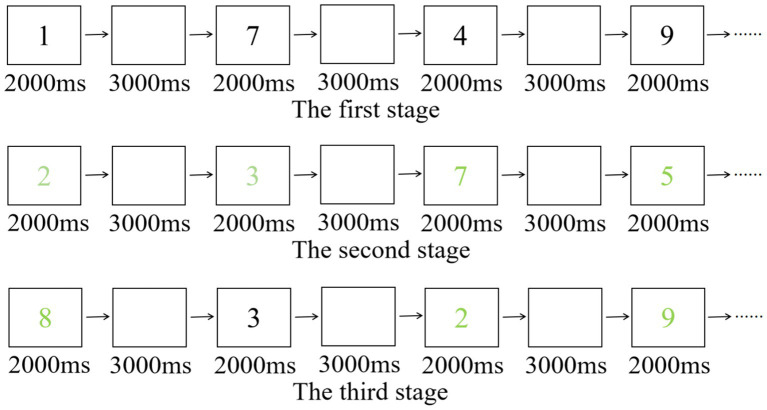

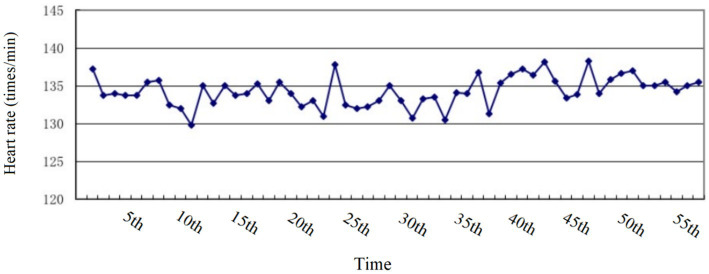
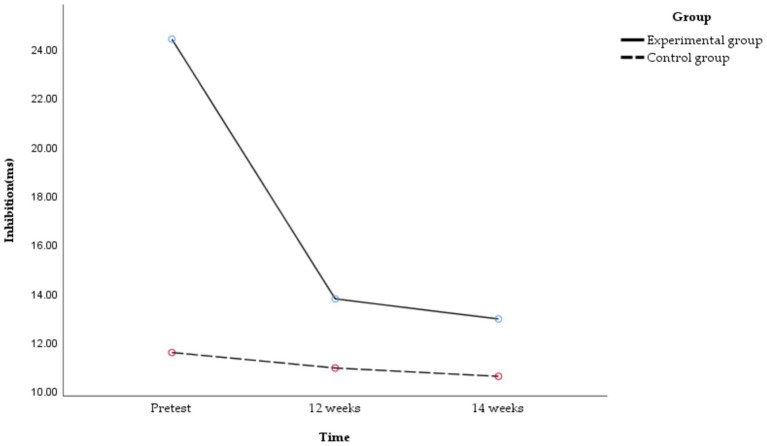
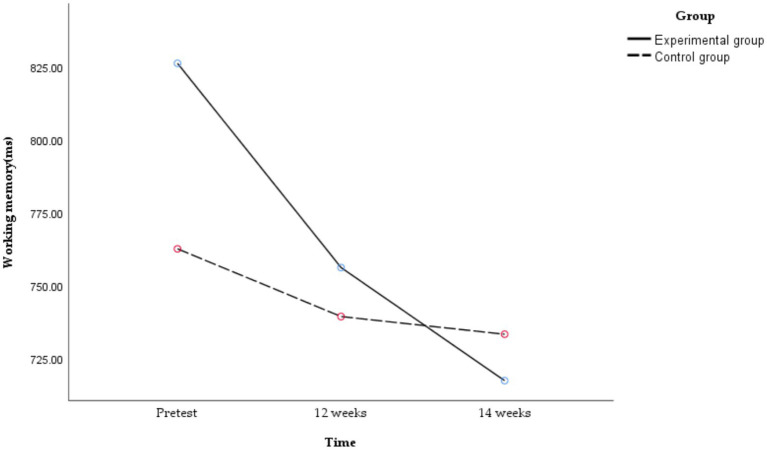


Verification
Claims the paper makes
The claims and statistics of this paper haven’t been checked yet.
Free: it reads the open-access text and checks the first 5 claims that cite a source we can check. Create a free account to check every claim.
Self-check
Percentages, sums and reported differences re-computed from the paper’s own numbers.
The self-check needs the paper’s full text.
Citations
Cites
Diamond, A. (2013) · Annual Review of Psychology · doi:10.1146/annurev-psych-113011-143750 · Cited by 13,268 · cited 1×
“EF comprises three sub-functions: inhibition, working memory and cognitive flexibility (Friedman et al., 2006; Diamond, 2012; Chen et al., 2019).”
BackgroundChildhood obesity: public-health crisis, common sense cure
Ebbeling, C. B., Pawlak, D. B., & Ludwig, D. S. (2002) · The Lancet · doi:10.1016/s0140-6736(02)09678-2 · Cited by 2,980
Sample size determination and power analysis using the G*Power software
Kang, H. (2021) · Journal of Educational Evaluation for Health Professions · doi:10.3352/jeehp.2021.18.17 · Cited by 2,572 · cited 5×
“Calculations of “Cohen’s effect size” and “post-hoc power analysis” using G*Power version 3.1.9.7 (Kang, 2021), considering α of 0.05, two groups, and three measurement points.”
MethodInfluentialNot All Executive Functions Are Related to Intelligence
Friedman, N. P., Miyake, A., Corley, R. P., Young, S. E., DeFries, J. C., & Hewitt, J. K. (2006) · Psychological Science · doi:10.1111/j.1467-9280.2006.01681.x · Cited by 1,293 · cited 1×
“EF comprises three sub-functions: inhibition, working memory and cognitive flexibility (Friedman et al., 2006; Diamond, 2012; Chen et al., 2019).”
BackgroundDavis, C. L., Tomporowski, P. D., McDowell, J. E., Austin, B. P., Miller, P. H., Yanasak, N. E., Allison, J. D., & Naglieri, J. A. (2011) · Health Psychology · doi:10.1037/a0021766 · Cited by 911
Smith, E., Hay, P., Campbell, L., & Trollor, J. N. (2011) · Obesity Reviews · doi:10.1111/j.1467-789x.2011.00920.x · Cited by 707
Relationships between Rodent White Adipose Fat Pads and Human White Adipose Fat Depots
Chusyd, D. E., Wang, D., Huffman, D. M., & Nagy, T. R. (2016) · Frontiers in Nutrition · doi:10.3389/fnut.2016.00010 · Cited by 357
Obesity diminishes synaptic markers, alters microglial morphology, and impairs cognitive function
Bocarsly, M. E., Fasolino, M., Kane, G. A., LaMarca, E. A., Kirschen, G. W., Karatsoreos, I. N., McEwen, B. S., & Gould, E. (2015) · Proceedings of the National Academy of Sciences · doi:10.1073/pnas.1511593112 · Cited by 250
(2020) · Handbook of Clinical Neurology · doi:10.1016/b978-0-444-64150-2.00020-4 · Cited by 223
Obesity Reduces Cognitive and Motor Functions across the Lifespan
Wang, C., Chan, J. S. Y., Ren, L., & Yan, J. H. (2016) · Neural Plasticity · doi:10.1155/2016/2473081 · Cited by 197 · cited 1×
“Additionally, obesity has been found to have a negative impact on the cognitive function of adolescents (Smith et al., 2011; Bocarsly et al., 2015; Wang et al., 2016; Meo et al., 2019).”
Background
Research works printed but not linked: 12
- Chen, Magnetic resonance imaging study on the improvement of executive function in children with short moderate-intensity aerobic exercise, China Sport Sci., 31, 35, 10.16469/j.css.2011.10.005 · doi:10.16469/j.css.2011.10.005
- Chen, Effect of different intensity short time aerobic exercise on executive function, Acta Psychol. Sin., 43, 1055, 10.3724/SP.J.1041.2011.01055 · doi:10.3724/sp.j.1041.2011.01055
- Chen, 2014, Effects of acute basketball dribbling training of different intensity on executive function of primary students, J. Tianjin Univ. Sport, 29, 352, 10.13297/j.cnki.issn1005-0000.2014.04.015 · doi:10.13297/j.cnki.issn1005-0000.2014.04.015
- Guo, 2015, The positive effect of the comprehensive intervention of aerobic exercise on the cognitive function of obese children: exploration of 1H-MRS and event-related potential studies, China Sport Sci. Technol., 51, 79, 10.16470/j.csst.201504011 · doi:10.16470/j.csst.201504011
- Guo, 2016, Study on attention cognition of children with moderate to severe obesity by comprehensive intervention of exercise and diet, Bull. Sci. Technol., 32, 80, 10.13774/j.cnki.kjtb.2016.04.017 · doi:10.13774/j.cnki.kjtb.2016.04.017
- He, 2022, Effects of 12 week Wuqinxi intervention on executive function in patients with Parkinson's disease
- Liu, 2017, “Dosage effect” of the relationship between aerobic exercise and college Students' executive function, J. Beijing Sport Univ., 40, 58, 10.19582/j.cnki.11-3785/g8.2017.01.010 · doi:10.19582/j.cnki.11-3785/g8.2017.01.010
- Meng, 2021, The effect of 12 weeks of moderate to vigorous intensity rope skipping on executive function in preschool children
- 2018, WS/T 586–2018 screening for overweight and obesity among school-age children and adolescents[S]
- Pan, 2016, An experimental study on the effect of exercise intervention on executive function of primary school students with mathematics learning difficulties, Chin. J. Spec. Educ., 191, 54
- 1995, Physical status: the use of and interpretation of anthropometry, report of a WHO expert committee, 1
- Yin, 2014, Follow-up study on the effects of two exercise intervention programs on executive function of primary school students. China sport, Science, 34, 24, 10.16469/j.css.2014.03.001 · doi:10.16469/j.css.2014.03.001
Cited by
Sleep, Physical Activity, and Executive Functions in Students: A Narrative Review
Belluardo, G., Meneo, D., Cerolini, S., Baglioni, C., & Bartolo, P. D. (2025) · Clocks & Sleep · doi:10.3390/clockssleep7030047 · Cited by 18
“Hu et al. (2024) investigated the effects of aerobic exercise combined with anaerobic resistance training on EFs in obese (OA) and normal-weight (NWA) adolescent students.”
Chen, J., Wang, X., Zhang, X., Xiao, W., Kabachkova, A. V., & Tan, Y. (2025) · Frontiers in Sports and Active Living · doi:10.3389/fspor.2025.1646327 · Cited by 4
“Exercise regimens extending over 12 weeks have yielded significant EF improvements, with corroborative findings emerging from analogous studies (48).”
Gutiérrez-Hervás, A., Nova, E., Izquierdo‐Gómez, R., Veiga, Ó. L., Moledo, C. P., Castro‐Piñero, J., Marcos, A., & Gómez‐Martínez, S. (2024) · Nutrients · doi:10.3390/nu16223884 · Cited by 4
“Fortunately, physical activity (PA), sedentary activities, like screen and sleep time, and dietary habits are key and modifiable behaviours in children and adolescents, and useful in tackling obesity and health issues associated with fat mass accumulation [12–15].”
Schaerz, S., Duffy, T., Fox, X., & Brown, D. (2025) · Kinesiology Review · doi:10.1123/kr.2025-0024 · Cited by 3
Liu, H., & Zhang, Z. (2025) · Research Square · doi:10.21203/rs.3.rs-6670044/v1
Metadata
- Authors
- Hu, L., Shen, Q., Yin, H., & Cui, L.
- Affiliations
- Beijing Normal University (CN)
- Corresponding author
- Yin, Hengchan
- Cui, Lei
- ORCID
- Hu, Lingling
- Venue
- Frontiers in Psychology
- Publisher
- Frontiers Media SA
- Published
- 2024-09-24
- Volume
- 15
- Pages
- 1346896-1346896
- ISSN
- 1664-1078 (ISSN-L)
- PMC
- PMC11458460
- OpenAlex
- W4402784422
- Cited by
- 7
- References
- 35
- Citations by year
- 2026: 1 · 2025: 5 · 2024: 1
- FWCI
- 1.98
- Type
- journal article
- Language
- en
- Open access
- gold
- doi.org
- Licence
- Locations
- Frontiers in Psychology (publishedVersion, cc-by)
- PubMed Central (publishedVersion, cc-by)
- PubMed (publishedVersion)
- DOAJ (DOAJ: Directory of Open Access Journals) (submittedVersion)
- Topics
- Health Sciences › Medicine › Public Health, Environmental and Occupational Health › Physical Activity and Health
- Health Sciences › Medicine › Public Health, Environmental and Occupational Health › Obesity, Physical Activity, Diet
- Life Sciences › Neuroscience › Cognitive Neuroscience › Neural and Behavioral Psychology Studies
- Keywords
- executive function, adolescent obesity, aerobic exercise, resistance training, inhibition, working memory, cognitive flexibility, exercise intervention, time-course effects, junior high school students
About these checks
Registry, retraction, Cites and statistics results are computed, not judged, with one exception: a printed reference that no index lists is read once by a model before it counts as a citation error. Claims are extracted by a model and kept only when their quote appears verbatim in the text; each cited source is then checked, with a model’s help, for whether it says what the claim relies on. Those verdicts can be wrong — read the claim’s quote and the cited source before relying on one.
Statistics and arithmetic are recomputed, not judged.
Confidence bands are shown only for fields calibrated on our annotated test set. None is calibrated yet, so no band is shown.
What counts as a claim ›How we measure confidence ›How we check this ›
Are you an author, or do you see a problem with this page? Request a review
How to cite
Cite CoChat for the checks on this page, and the paper for its own findings.
- This page
- CoChat. (2026). Citation check: Time-course effects of exercise intervention on executive function in adolescents with obesity. https://app.cochat.ai/papers/10.3389/fpsyg.2024.1346896
- The paper
- Hu, L., Shen, Q., Yin, H., & Cui, L. (2024). Time-course effects of exercise intervention on executive function in adolescents with obesity. Frontiers in Psychology. https://doi.org/10.3389/fpsyg.2024.1346896
Data sources
Bibliographic data: Semantic Scholar, OpenAlex, Crossref.
Contains information from the Semantic Scholar Academic Graph Datasets, made available under the ODC Attribution License (ODC-BY 1.0).
Semantic Scholar’s data is described in: Kinney, R., et al. (2023). The Semantic Scholar Open Data Platform. arXiv:2301.10140.
