

The DOI matches its Crossref record; 163 of the 166 references it cites were found in a registry or an index.
Transforming Experience: The Potential of Augmented Reality and Virtual Reality for Enhancing Personal and Clinical Change
Open accessAbstract
During life, many personal changes occur. These include changing house, school, work, and even friends and partners. However, the daily experience shows clearly that, in some situations, subjects are unable to change even if they want to. The recent advances in psychology and neuroscience are now providing a better view of personal change, the change affecting our assumptive world: (a) the focus of personal change is reducing the distance between self and reality (conflict); (b) this reduction is achieved through (1) an intense focus on the particular experience creating the conflict or (2) an internal or external reorganization of this experience; (c) personal change requires a progression through a series of different stages that however happen in discontinuous and non-linear ways; and (d) clinical psychology is often used to facilitate personal change when subjects are unable to move forward. Starting from these premises, the aim of this paper is to review the potential of virtuality for enhancing the processes of personal and clinical change. First, the paper focuses on the two leading virtual technologies - augmented reality (AR) and virtual reality (VR) - exploring their current uses in behavioral health and the outcomes of the 28 available systematic reviews and meta-analyses. Then the paper discusses the added value provided by VR and AR in transforming our external experience by focusing on the high level of personal efficacy and self-reflectiveness generated by their sense of presence and emotional engagement. Finally, it outlines the potential future use of virtuality for transforming our inner experience by structuring, altering, and/or replacing our bodily self-consciousness. The final outcome may be a new generation of transformative experiences that provide knowledge that is epistemically inaccessible to the individual until he or she has that experience, while at the same time transforming the individual's worldview.
Overview
The claims and statistics of this paper haven’t been checked yet.
Run the check — free, no account needed. It reads the open-access text and checks the sources it cites.
Integrity signals
Registry
Cites
Statistics
Figures
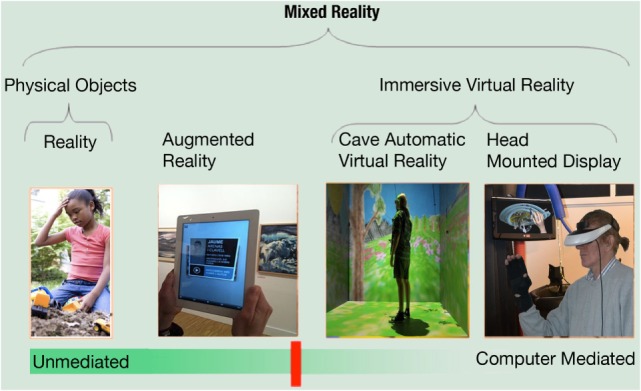
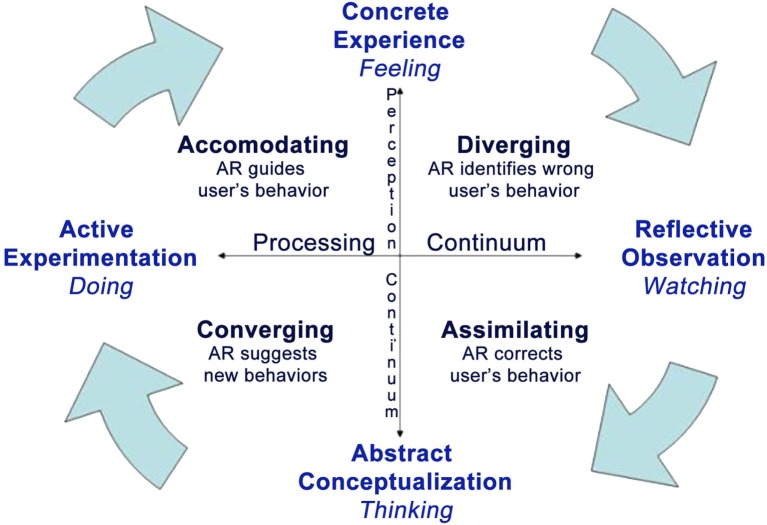
Verification
Claims the paper makes
The claims and statistics of this paper haven’t been checked yet.
Run the check — free, no account needed. It reads the open-access text and checks the sources it cites.
Claims other papers make about this one
Each is checked against this paper’s own text: does it say what the citing paper says it does?
The source backs part of the claim, not all of it — or backs it for a different population, condition or comparison.
In the citing paper
“Augmented reality and virtual reality (VR) have been found to be an effective tool for reducing pain sensations in patients with acute pain [56,57,124].”
From Best-evidence for the rehabilitation of chronic pain part 1: Pediatric pain (2019) · cites this paper as [124]
Experimental — accuracy not yet measuredIn the citing paper
“Fortunately, some recent work [84•] stresses the importance of using VR to enhance children's lives by creating compelling experiences [84•, 85].”
From Recent Progress in Virtual Reality Exposure Therapy for Phobias: A Systematic Review (2017) · cites this paper as [85]
Self-check
Percentages, sums and reported differences re-computed from the paper’s own numbers.
The self-check needs the paper’s full text.
Citations
Cites
Self-efficacy: Toward a unifying theory of behavioral change
Bandura, A. (1977) · Psychological Review · doi:10.1037/0033-295x.84.2.191 · Cited by 43,925
Social Cognitive Theory: An Agentic Perspective
Bandura, A. (2001) · Annual Review of Psychology · doi:10.1146/annurev.psych.52.1.1 · Cited by 15,510
Self-efficacy: Toward a unifying theory of behavioral change
Bandura, A. (1978) · Advances in Behaviour Research and Therapy · doi:10.1016/0146-6402(78)90002-4 · Cited by 10,586
Stages and processes of self-change of smoking: Toward an integrative model of change.
Prochaska, J. O., & DiClemente, C. C. (1983) · Journal of Consulting and Clinical Psychology · doi:10.1037/0022-006x.51.3.390 · Cited by 9,098
In search of how people change: Applications to addictive behaviors.
Prochaska, J. O., DiClemente, C. C., & Norcross, J. C. (1992) · American Psychologist · doi:10.1037/0003-066x.47.9.1102 · Cited by 8,596
Transformative Dimensions of Adult Learning
Mezirow, J. (1991) · Cited by 7,430
A Taxonomy of Mixed Reality Visual Displays
Milgram, P., & Kishino, F. (1994) · IEICE Transactions on Information and Systems · Cited by 4,905
Transtheoretical therapy: Toward a more integrative model of change.
Prochaska, J. O., & DiClemente, C. C. (1982) · Psychotherapy: Theory, Research & Practice · doi:10.1037/h0088437 · Cited by 3,922
Toward a Psychology of Human Agency
Bandura, A. (2006) · Perspectives on Psychological Science · doi:10.1111/j.1745-6916.2006.00011.x · Cited by 3,459
Gallagher, S. (2005) · doi:10.1093/0199271941.001.0001 · Cited by 3,311
Research works printed but not linked: 11
- Janoff-Bulman, 1991, Chapter 24. Toward a general model of personal change, 488
- Kottler, 2014, Change: What Really Leads to Lasting Personal Transformation
- Riva, 2014, Phenomenology of positive change: personal growth, 15
- Kolb, 1984, Experiential Learning as the Science of Learning and Development
- Riva, 2003, Presence and the self: a cognitive neuroscience approach, Presence Connect, 3
- 2015, Immersed in Media. Telepresence Theory, Measurement & Technology
- Regan, 1993, Some Side-Effects of Immersion Virtual Reality: The Effects of Increasing Head Movements, of Rapid Interaction, and of Seated Subjects
- Wilson, 2006, Covert imitation, 211
- 2014, Outside the boundaries of our bodies: the relationship between touch and the representation of the body in our mind, 102
- Mezirow, 2012, Learning to think like an adult: core concepts of transformation theory, 73
- Riva, 2016, Being different. The transfomative potential of virtual reality, Annu Rev Cybertherapy Telemed, 14, 1
Cited by
Sorted by citations
Recent advances in wearable tactile sensors: Materials, sensing mechanisms, and device performance
Yang, T., Xie, D., Li, Z., & Zhu, H. (2017) · Materials Science and Engineering R Reports · doi:10.1016/j.mser.2017.02.001 · Cited by 769
Hilken, T., de Ruyter, K., Chylinski, M., Mahr, D., & Keeling, D. I. (2017) · Journal of the Academy of Marketing Science · doi:10.1007/s11747-017-0541-x · Cited by 693
Neuroscience of virtual reality: from virtual exposure to embodied medicine
Riva, G., Wiederhold, B. K., & Mantovani, F. (2019) · Cyberpsychology, Behavior, and Social Networking · doi:10.1089/cyber.2017.29099.gri · Cited by 608
Self-citationSerious Games and Gamification for Mental Health: Current Status and Promising Directions
Fleming, T. M., Bavin, L., Stasiak, K., Hermansson-Webb, E., Merry, S. N., Cheek, C., Lucassen, M., Lau, H. M., Pollmuller, B., & Hetrick, S. (2017) · Frontiers in Psychiatry · doi:10.3389/fpsyt.2016.00215 · Cited by 582
Recent Progress in Virtual Reality Exposure Therapy for Phobias: A Systematic Review
Botella, C., Fernández-Álvarez, J., Guillén, V., García-Palacios, A., & Baños, R. (2017) · Current Psychiatry Reports · doi:10.1007/s11920-017-0788-4 · Cited by 460
Self-citationEffectiveness of Immersive Videos in Inducing Awe: An Experimental Study
Chirico, A., Cipresso, P., Yaden, D. B., Biassoni, F., Riva, G., & Gaggioli, A. (2017) · Scientific Reports · doi:10.1038/s41598-017-01242-0 · Cited by 343
Self-citationYung, R., Khoo-Lattimore, C. S. C., & Potter, L. E. (2020) · Current Issues in Tourism · doi:10.1080/13683500.2020.1820454 · Cited by 268
Consumer engagement via interactive artificial intelligence and mixed reality
Sung, E., Bae, S., Han, D. D., & Kwon, O. (2021) · International Journal of Information Management · doi:10.1016/j.ijinfomgt.2021.102382 · Cited by 274
Virtual reality in psychiatric disorders: A systematic review of reviews
Cieślik, B., Mazurek, J., Rutkowski, S., Kiper, P., Turolla, A., & Szczepańska-Gieracha, J. (2020) · Complementary Therapies in Medicine · doi:10.1016/j.ctim.2020.102480 · Cited by 240
Chen, Y.-C. (2019) · Journal of Educational Computing Research · doi:10.1177/0735633119854036 · Cited by 216
Carlo, F. D., Sociali, A., Picutti, E., Pettorruso, M., Vellante, F., Verrastro, V., Martinotti, G., & Giannantonio, M. D. (2020) · International Journal of Clinical Practice · doi:10.1111/ijcp.13716 · Cited by 225
Tuena, C., Pedroli, E., Trimarchi, P. D., Gallucci, A., Chiappini, M., Goulene, K., Gaggioli, A., Riva, G., Lattanzio, F., Giunco, F., et al. (2020) · Frontiers in Human Neuroscience · doi:10.3389/fnhum.2020.00093 · Cited by 215
Self-citationAugmented and Virtual Reality Evolution and Future Tendency
Muñoz-Saavedra, L., Miró-Amarante, L., & Domínguez-Morales, M. (2020) · Applied Sciences · doi:10.3390/app10010322 · Cited by 231
Virtual reality relaxation for the general population: a systematic review
Riches, S., Azevedo, L., Bird, L., Pisani, S., & Valmaggia, L. (2021) · Social Psychiatry and Psychiatric Epidemiology · doi:10.1007/s00127-021-02110-z · Cited by 222
Augmented reality (AR) app use in the beauty product industry and consumer purchase intention
Wang, Y., Ko, E., & Wang, H. (2021) · Asia Pacific Journal of Marketing and Logistics · doi:10.1108/apjml-11-2019-0684 · Cited by 191
Garcia‐Romeu, A., & Richards, W. A. (2018) · International Review of Psychiatry · doi:10.1080/09540261.2018.1486289 · Cited by 210
Virtual Reality as a Medium to Elicit Empathy: A Meta-Analysis
Ventura, S., Badenes‐Ribera, L., Herrero, R., Cebolla, A., Galiana, L., & Baños, R. (2020) · Cyberpsychology Behavior and Social Networking · doi:10.1089/cyber.2019.0681 · Cited by 188
Self-citationVR the world: Experimenting with emotion and presence for tourism marketing
Yung, R., Khoo-Lattimore, C. S. C., & Potter, L. E. (2020) · Journal of Hospitality and Tourism Management · doi:10.1016/j.jhtm.2020.11.009 · Cited by 176
The Potential of Virtual Reality for the Investigation of Awe
Chirico, A., Yaden, D. B., Riva, G., & Gaggioli, A. (2016) · Frontiers in Psychology · doi:10.3389/fpsyg.2016.01766 · Cited by 173
Self-citationWhat the Metaverse Is (Really) and Why We Need to Know About It
Riva, G., & Wiederhold, B. K. (2022) · Cyberpsychology Behavior and Social Networking · doi:10.1089/cyber.2022.0124 · Cited by 172
Self-citationEshuis, L. V., van Gelderen, M. J., van Zuiden, M., Nijdam, M. J., Vermetten, E. H. G. J. M., Olff, M., & Bakker, A. (2020) · Journal of Psychiatric Research · doi:10.1016/j.jpsychires.2020.11.030 · Cited by 199
Are You Awed Yet? How Virtual Reality Gives Us Awe and Goose Bumps
Quesnel, D. T., & Riecke, B. E. (2018) · Frontiers in Psychology · doi:10.3389/fpsyg.2018.02158 · Cited by 169
Telemedicine and Virtual Reality for Cognitive Rehabilitation: A Roadmap for the COVID-19 Pandemic
Mantovani, E., Zucchella, C., Bottiroli, S., Federico, A., Giugno, R., Sandrini, G., Chiamulera, C., & Tamburin, S. (2020) · Frontiers in Neurology · doi:10.3389/fneur.2020.00926 · Cited by 168
Embodiment in Virtual Reality Intensifies Emotional Responses to Virtual Stimuli
Gall, D., Roth, D., Stauffert, J.-P., Zarges, J., & Latoschik, M. E. (2021) · Frontiers in Psychology · doi:10.3389/fpsyg.2021.674179 · Cited by 185
Montana, J. I., Matamala-Gomez, M., Maisto, M., Mavrodiev, P. A., Cavalera, C. M., Diana, B., Mantovani, F., & Realdon, O. (2020) · Journal of Clinical Medicine · doi:10.3390/jcm9020500 · Cited by 156
Self-citationExperiences in Virtual Reality: a Window to Autobiographical Memory
Schöne, B., Wessels, M., & Gruber, T. (2017) · Current Psychology · doi:10.1007/s12144-017-9648-y · Cited by 153
Experience design and the dimensions of transformative festival experiences
Neuhofer, B., Celuch, K., & To, T. L. (2020) · International Journal of Contemporary Hospitality Management · doi:10.1108/ijchm-01-2020-0008 · Cited by 180
Best-evidence for the rehabilitation of chronic pain part 1: Pediatric pain
Harrison, L. E., Pate, J. W., Richardson, P. A., Ickmans, K., Wicksell, R. K., & Simons, L. E. (2019) · Journal of Clinical Medicine · doi:10.3390/jcm8091267 · Cited by 140
Being an Avatar “for Real”: A Survey on Virtual Embodiment in Augmented Reality
Genay, A., Lécuyer, A., & Hachet, M. (2021) · IEEE Transactions on Visualization and Computer Graphics · doi:10.1109/tvcg.2021.3099290 · Cited by 162
Causal interactive links between presence and fear in virtual reality height exposure
Gromer, D., Reinke, M., Christner, I., & Pauli, P. (2019) · Frontiers in Psychology · doi:10.3389/fpsyg.2019.00141 · Cited by 127
Immersive Interactive Technologies for Positive Change: A Scoping Review and Design Considerations
Kitson, A., Prpa, M., & Riecke, B. E. (2018) · Frontiers in Psychology · doi:10.3389/fpsyg.2018.01354 · Cited by 135
Better, Virtually: the Past, Present, and Future of Virtual Reality Cognitive Behavior Therapy
Lindner, P. (2021) · International Journal of Cognitive Therapy · doi:10.1007/s41811-020-00090-7 · Cited by 120
Virtual Reality in Pediatric Psychology
Parsons, T. D., Riva, G., Parsons, S., Mantovani, F., Newbutt, N. A., Lin, L., Venturini, E., & Hall, T. A. (2017) · PEDIATRICS · doi:10.1542/peds.2016-1758i · Cited by 120
Self-citationVirtual Reality in Clinical Psychology
Riva, G. (2020) · Elsevier eBooks · doi:10.1016/b978-0-12-818697-8.00006-6 · Cited by 145
Self-citationVirtual reality in the assessment, understanding, and treatment of mental health disorders
Riva, G., & Serino, S. (2020) · Journal of Clinical Medicine · doi:10.3390/jcm9113434 · Cited by 109
Self-citationVirtual reality in neurorehabilitation: a review of its effects on multiple cognitive domains
Riva, G., Mancuso, V., Cavedoni, S., & Stramba-Badiale, C. (2020) · Expert Review of Medical Devices · doi:10.1080/17434440.2020.1825939 · Cited by 115
Self-citationHoward, M. C., & Zandt, E. C. V. (2021) · Virtual Reality · doi:10.1007/s10055-021-00524-3 · Cited by 119
The Principles of Art Therapy in Virtual Reality
Hacmun, I., Regev, D., & Salomon, R. (2018) · Frontiers in Psychology · doi:10.3389/fpsyg.2018.02082 · Cited by 109
Pallavicini, F., & Pepe, A. (2020) · JMIR Serious Games · doi:10.2196/15635 · Cited by 114
Prpa, M., Tatar, K., Françoise, J., Riecke, B. E., Schiphorst, T., & Pasquier, P. (2018) · Designing Interactive Systems Conference · doi:10.1145/3196709.3196765 · Cited by 100
Virtual Body Ownership Illusions for Mental Health: A Narrative Review
Matamala-Gomez, M., Maselli, A., Malighetti, C., Realdon, O., Mantovani, F., & Riva, G. (2021) · Journal of Clinical Medicine · doi:10.3390/jcm10010139 · Cited by 107
Self-citationCapturing interactions, correlations, fits, and transactions: A Person-Environment Relations Model
Rauthmann, J. F. (2021) · Elsevier eBooks · doi:10.1016/b978-0-12-813995-0.00018-2 · Cited by 112
Suso‐Ribera, C., Fernández‐Álvarez, J., García‐Palacios, A., Hoffman, H. G., Bretón-López, J. M., Baños, R., Quero, S., & Botella, C. (2018) · Cyberpsychology Behavior and Social Networking · doi:10.1089/cyber.2017.0672 · Cited by 97
Self-citationde Carvalho, M., Dias, T., Duchesne, M., Nardi, A. E., & Appolinário, J. C. (2017) · Behavioral Sciences · doi:10.3390/bs7030043 · Cited by 103
Mitsea, E., Drigas, A. S., & Skianis, C. (2022) · Technium Social Sciences Journal · doi:10.47577/tssj.v29i1.6145 · Cited by 176
Beverly, E. A., Hommema, L., Coates, K., Duncan, G., Gable, B. D., Gutman, T., Love, M., Love, C., Pershing, M. L., & Stevens, N. J. (2022) · PLoS ONE · doi:10.1371/journal.pone.0262703 · Cited by 89
Virtual reality as a tool to promote wellbeing in the workplace
Adhyaru, J. S., & Kemp, C. (2022) · Digital Health · doi:10.1177/20552076221084473 · Cited by 82
Huang, C., Chiang, W.-C., Yeh, Y., Fan, S.-C., Yang, W., Kuo, H., & Li, P. (2022) · BMC Neurology · doi:10.1186/s12883-021-02547-4 · Cited by 95
Firth, J., Torous, J. B., López‐Gil, J. F., Linardon, J., Milton, A. C., Lambert, J. D., Smith, L., Jarić, I., Fabian, H., Vancampfort, D., et al. (2024) · World Psychiatry · doi:10.1002/wps.21188 · Cited by 109
Carroll, J., Hopper, L., Farrelly, A. M., Lombard-Vance, R., Bamidis, P. D., & Konstantinidis, E. I. (2021) · Frontiers in Virtual Reality · doi:10.3389/frvir.2021.655338 · Cited by 80
Neurorehabilitation of Spatial Memory Using Virtual Environments: A Systematic Review
Montana, J. I., Tuena, C., Serino, S., Cipresso, P., & Riva, G. (2019) · Journal of Clinical Medicine · doi:10.3390/jcm8101516 · Cited by 84
Self-citationNeuro-Linguistic Programming, Positive Psychology & VR in Special Education
Drigas, A. S., Mitsea, E., & Skianis, C. A. (2021) · Scientific Electronic Archives · doi:10.36560/15120221497 · Cited by 95
Garrido, L. E., Frías-Hiciano, M., Moreno-Jiménez, M., Cruz, G. N., García-Batista, Z. E., Guerra-Peña, K., & Medrano, L. A. (2022) · Virtual Reality · doi:10.1007/s10055-022-00636-4 · Cited by 96
Virtual Reality Therapy: Emerging Topics and Future Challenges
Wiederhold, B. K., & Riva, G. (2019) · Cyberpsychology Behavior and Social Networking · doi:10.1089/cyber.2018.29136.bkw · Cited by 78
Self-citationHealy, D., Flynn, A., Conlan, O., McSharry, J., & Walsh, J. (2022) · JMIR Serious Games · doi:10.2196/35802 · Cited by 77
Zając-Lamparska, L., Wiłkość-Dębczyńska, M., Wojciechowski, A., Podhorecka, M., Polak-Szabela, A., Warchoł, Ł., Kędziora–Kornatowska, K., Araszkiewicz, A. S., & Izdebski, P. K. (2019) · BMC Research Notes · doi:10.1186/s13104-019-4810-2 · Cited by 77
Designing experiences in the age of human transformation: An analysis of Burning Man
Neuhofer, B., Egger, R., Yu, J., & Celuch, K. (2021) · Annals of Tourism Research · doi:10.1016/j.annals.2021.103310 · Cited by 75
Riva, G., Bernardelli, L., Browning, M. H. E. M., Castelnuovo, G., Cavedoni, S., Chirico, A., Cipresso, P., de Paula, D. M. B., Di Lernia, D., Fernández-Álvarez, J., et al. (2020) · Frontiers in Psychiatry · doi:10.3389/fpsyt.2020.563319 · Cited by 72
Self-citationCan extended reality in the metaverse revolutionise health communication?
Plechatá, A., Makransky, G., & BOHM, R. M. (2022) · npj Digital Medicine · doi:10.1038/s41746-022-00682-x · Cited by 71
The impact of user perceptions of AR on purchase intention of location-based AR navigation systems
Jung, T. H., Bae, S., Moorhouse, N., & Kwon, O. (2021) · Journal of Retailing and Consumer Services · doi:10.1016/j.jretconser.2021.102575 · Cited by 80
Efficacy of digital technologies aimed at enhancing emotion regulation skills: Literature review
Jadhakhan, F., Blake, H., Hett, D., & Marwaha, S. (2022) · Frontiers in Psychiatry · doi:10.3389/fpsyt.2022.809332 · Cited by 77
Artistic creation in virtual reality for art therapy: A qualitative study with expert art therapists
Hacmun, I., Regev, D., & Salomon, R. (2020) · The Arts in Psychotherapy · doi:10.1016/j.aip.2020.101745 · Cited by 77
Defining Transformative Experiences: A Conceptual Analysis
Chirico, A., Pizzolante, M., Kitson, A., Gianotti, E., Riecke, B. E., & Gaggioli, A. (2022) · Frontiers in Psychology · doi:10.3389/fpsyg.2022.790300 · Cited by 75
Self-citationFarmer, H., & Maister, L. (2017) · Social Justice Research · doi:10.1007/s11211-017-0294-1 · Cited by 72
Wearable Augmented Reality Application for Shoulder Rehabilitation
Condino, S., Turini, G., Viglialoro, R. M., Gesi, M., & Ferrari, V. (2019) · Electronics · doi:10.3390/electronics8101178 · Cited by 63
Caponnetto, P., Triscari, S., Maglia, M. G., & Quattropani, M. C. A. (2021) · International Journal of Environmental Research and Public Health · doi:10.3390/ijerph182413209 · Cited by 61
Pavic, K., Chaby, L., Gricourt, T., & Vergilino‐Perez, D. (2023) · Cyberpsychology Behavior and Social Networking · doi:10.1089/cyber.2022.0245 · Cited by 80
Stepanova, E. R., Quesnel, D. T., & Riecke, B. E. (2019) · Frontiers in Digital Humanities · doi:10.3389/fdigh.2019.00009 · Cited by 67
Virtual Reality in the Assessment and Treatment of Weight-Related Disorders
Wiederhold, B. K., Riva, G., & Gutiérrez‐Maldonado, J. (2016) · Cyberpsychology Behavior and Social Networking · doi:10.1089/cyber.2016.0012 · Cited by 66
Self-citationReview of the Augmented Reality Systems for Shoulder Rehabilitation
Viglialoro, R. M., Condino, S., Turini, G., Carbone, M., Ferrari, V., & Gesi, M. (2019) · Information · doi:10.3390/info10050154 · Cited by 60
Making Art Therapy Virtual: Integrating Virtual Reality Into Art Therapy With Adolescents
Shamri-Zeevi, L. (2021) · Frontiers in Psychology · doi:10.3389/fpsyg.2021.584943 · Cited by 69
Awe in the metaverse: Designing and validating a novel online virtual-reality awe-inspiring training
Pizzolante, M., Borghesi, F., Sarcinella, E. D., Bartolotta, S., Salvi, C., Cipresso, P., Gaggioli, A., & Chirico, A. (2023) · Computers in Human Behavior · doi:10.1016/j.chb.2023.107876 · Cited by 68
Self-citationMatsangidou, M., Otkhmezuri, B., Ang, C. S., Avraamides, M. N., Riva, G., Gaggioli, A., Iosif, D., & Karekla, M. (2020) · Human-Computer Interaction · doi:10.1080/07370024.2020.1788945 · Cited by 66
Self-citationMarto, A., Melo, M., Gonçalves, A., & Bessa, M. (2020) · IEEE Access · doi:10.1109/access.2020.3032379 · Cited by 56
Frewen, P., Mistry, D., Zhu, J., Kielt, T., Wekerle, C., Lanius, R. A., & Jetly, R. (2020) · Frontiers in Psychology · doi:10.3389/fpsyg.2020.00858 · Cited by 57
Pallavicini, F., Ferrari, A., Pepe, A., Garcea, G., Zanacchi, A., & Mantovani, F. (2018) · Lecture notes in computer science · doi:10.1007/978-3-319-92052-8_8 · Cited by 57
Self-citationGroenveld, T. D., Smits, M., Knoop, J., Kallewaard, J. W., Staal, J. B., de Vries, M., & van Goor, H. (2023) · Clinical Journal of Pain · doi:10.1097/ajp.0000000000001110 · Cited by 60
Dijkerman, H. C., & Lenggenhager, B. (2018) · Cortex · doi:10.1016/j.cortex.2018.06.001 · Cited by 55
Virtual and Augmented Reality: New Frontiers for Clinical Psychology
Ventura, S., Baños, R., & Botella, C. (2018) · InTech eBooks · doi:10.5772/intechopen.74344 · Cited by 58
Self-citationPallavicini, F., Pepe, A., Ferrari, A., Garcea, G., Zanacchi, A., & Mantovani, F. (2018) · PRESENCE Virtual and Augmented Reality · doi:10.1162/pres_a_00325 · Cited by 56
Self-citationLan, L., Sikov, J., Lejeune, J., Ji, C., Brown, H. E., Bullock, K. D., & Spencer, A. E. (2023) · Current Treatment Options in Psychiatry · doi:10.1007/s40501-023-00287-5 · Cited by 62
Virtual reality applications for diagnosis, risk assessment and therapy of child abusers
Fromberger, P., Jordan, K., & Müller, J. L. (2018) · Behavioral Sciences & the Law · doi:10.1002/bsl.2332 · Cited by 50
Baragash, R. S., Al-Samarraie, H., Moody, L., & Zaqout, F. (2022) · Journal of Special Education Technology · doi:10.1177/0162643420910413 · Cited by 49
“AR applications can also provide suggestions and guidelines that could promote the development of everyday skills and knowledge in a more effective way (Riva et al., 2016).”
BackgroundEngaging the customer with augmented reality and employee services to enhance equity and loyalty
Butt, A. H., Ahmad, H., Ali, F., Muzaffar, A., & Shafique, M. N. (2023) · International Journal of Retail & Distribution Management · doi:10.1108/ijrdm-04-2021-0165 · Cited by 49
The clinical potential of augmented reality.
Vinci, C., Brandon, K. O., Kleinjan, M., & Brandon, T. H. (2020) · Clinical Psychology Science and Practice · doi:10.1111/cpsp.12357 · Cited by 51
Xia, Y., Deng, Y., Tao, X., Zhang, S., & Wang, C. (2024) · Humanities and Social Sciences Communications · doi:10.1057/s41599-024-02718-x · Cited by 69
Stepanova, E. R., Quesnel, D. T., & Riecke, B. E. (2019) · Frontiers in Digital Humanities · doi:10.3389/fdigh.2019.00007 · Cited by 48
Transforming treatments for schizophrenia: Virtual reality, brain stimulation and social cognition.
Gainsford, K., Fitzgibbon, B. M., Fitzgerald, P. B., & Hoy, K. E. (2020) · Psychiatry Research · doi:10.1016/j.psychres.2020.112974 · Cited by 50
Penco, L., Serravalle, F., Profumo, G., & Viassone, M. (2020) · Journal of Management & Governance · doi:10.1007/s10997-020-09526-w · Cited by 46
Ehioghae, M., Montoya, A., Keshav, R., Vippa, T. K., Hakobyan, H., Hasoon, J. J., Kaye, A. D., & Urits, I. (2023) · Current Pain and Headache Reports · doi:10.1007/s11916-023-01192-5 · Cited by 41
Wan, W. H., & Lam, A. H. Y. (2019) · Health · doi:10.4236/health.2019.116054 · Cited by 46
Kaimal, G., Carroll-Haskins, K., Topoglu, Y., Ramakrishnan, A., Arslanbek, A., & Ayaz, H. (2021) · Art Therapy · doi:10.1080/07421656.2021.1957341 · Cited by 40
Meta-Learning: A Nine-Layer Model Based on Metacognition and Smart Technologies
Drigas, A. S., Mitsea, E., & Skianis, C. A. (2023) · Sustainability · doi:10.3390/su15021668 · Cited by 55
Yoon, S., & Nam, Y. (2024) · Journal of Destination Marketing & Management · doi:10.1016/j.jdmm.2024.100865 · Cited by 48
Serino, S., Scarpina, F., Dakanalis, A., Keizer, A., Pedroli, E., Castelnuovo, G., Chirico, A., Catallo, V., Lernia, D. D., & Riva, G. (2018) · Cyberpsychology Behavior and Social Networking · doi:10.1089/cyber.2017.0674 · Cited by 42
Self-citationGuillén, V., Baños, R., & Botella, C. (2018) · Frontiers in Psychology · doi:10.3389/fpsyg.2018.01038 · Cited by 41
Self-citationThe Power of Visualization: Back to the Future for Pain Management in Fibromyalgia Syndrome
Molinari, G., García‐Palacios, A., Enrique, Á., Roca, P., Comella, N. F.-L., & Botella, C. (2017) · Pain Medicine · doi:10.1093/pm/pnx298 · Cited by 38
Self-citationVirtual Reality Laboratories: A Way Forward for Schools?
Lamb, R. L., Lin, J., & Firestone, J. B. (2020) · Eurasia Journal of Mathematics Science and Technology Education · doi:10.29333/ejmste/8206 · Cited by 37
Ambient intelligence for health environments
Bravo, J., Cook, D. J., & Riva, G. (2016) · Journal of Biomedical Informatics · doi:10.1016/j.jbi.2016.10.009 · Cited by 36
Self-citationStreuli, S. A., Ibrahim, N. B., Mohamed, A. I., Sharma, M., Esmailian, M., Sezan, I., Farrell, C., Sawyer, M., Meyer, D. M., El-Maleh, K., et al. (2021) · BMJ Open · doi:10.1136/bmjopen-2021-051184 · Cited by 35
Metadata
- Authors
- Riva, G., Baños, R. M., Botella, C., Mantovani, F., & Gaggioli, A.
- Affiliations
- Università Cattolica del Sacro Cuore (IT)
- Universitat de València (ES)
- Universitat Jaume I (ES)
- University of Milano-Bicocca (IT)
- Corresponding author
- Riva, Giuseppe
- Venue
- Frontiers in Psychiatry
- Publisher
- Frontiers Media SA
- Published
- 2016-09-30
- Volume
- 7
- Pages
- 164-164
- ISSN
- 1664-0640 (ISSN-L)
- PMC
- PMC5043228
- OpenAlex
- W2525627827
- Cited by
- 425
- References
- 166
- Citations by year
- 2026: 39 · 2025: 43 · 2024: 53 · 2023: 54 · 2022: 46 · 2021: 51 · 2020: 54 · 2019: 29 · 2018: 31 · 2017: 21 · 2016: 4
- FWCI
- 5.50
- Type
- journal article
- Language
- en
- Open access
- gold
- doi.org
- Licence
- cc-by
- Locations
- Frontiers in Psychiatry (publishedVersion, cc-by)
- Europe PMC (PubMed Central) (publishedVersion, cc-by)
- PubMed Central (publishedVersion, cc-by)
- PubMed (publishedVersion)
- LA Referencia (Red Federada de Repositorios Institucionales de Publicaciones Científicas) (publishedVersion, other-oa)
- BOA (University of Milano-Bicocca) (submittedVersion, other-oa)
- DOAJ (DOAJ: Directory of Open Access Journals) (submittedVersion, cc-by-sa)
- PubliCatt (Università Cattolica del Sacro Cuore) (submittedVersion, cc-by)
- Repositori UJI (Universitat Jaume I) (submittedVersion, cc-by-sa)
- Funders
- Università Cattolica del Sacro Cuore (D3.2 2014)
- Topics
- Physical Sciences › Computer Science › Human-Computer Interaction › Virtual Reality Applications and Impacts
- Physical Sciences › Computer Science › Computer Vision and Pattern Recognition › Augmented Reality Applications
- Social Sciences › Psychology › Applied Psychology › Digital Mental Health Interventions
- Keywords
- augmented reality, virtual reality, personal transformation, clinical change, behavioral health, presence, self-consciousness, self-reflection, transformative experience
About these checks
Registry, retraction, Cites and statistics results are computed, not judged, with one exception: a printed reference that no index lists is read once by a model before it counts as a citation error. Claims are extracted by a model and kept only when their quote appears verbatim in the text; each cited source is then checked, with a model’s help, for whether it says what the claim relies on. Those verdicts can be wrong — read the claim’s quote and the cited source before relying on one.
Statistics and arithmetic are recomputed, not judged.
Confidence bands are shown only for fields calibrated on our annotated test set. None is calibrated yet, so no band is shown.
What counts as a claim ›How we measure confidence ›How we check this ›
Are you an author, or do you see a problem with this page? Request a review
