

The DOI matches its Crossref record; 163 of the 166 references it cites were found in a registry or an index.
Transforming Experience: The Potential of Augmented Reality and Virtual Reality for Enhancing Personal and Clinical Change
Open accessAbstract
During life, many personal changes occur. These include changing house, school, work, and even friends and partners. However, the daily experience shows clearly that, in some situations, subjects are unable to change even if they want to. The recent advances in psychology and neuroscience are now providing a better view of personal change, the change affecting our assumptive world: (a) the focus of personal change is reducing the distance between self and reality (conflict); (b) this reduction is achieved through (1) an intense focus on the particular experience creating the conflict or (2) an internal or external reorganization of this experience; (c) personal change requires a progression through a series of different stages that however happen in discontinuous and non-linear ways; and (d) clinical psychology is often used to facilitate personal change when subjects are unable to move forward. Starting from these premises, the aim of this paper is to review the potential of virtuality for enhancing the processes of personal and clinical change. First, the paper focuses on the two leading virtual technologies - augmented reality (AR) and virtual reality (VR) - exploring their current uses in behavioral health and the outcomes of the 28 available systematic reviews and meta-analyses. Then the paper discusses the added value provided by VR and AR in transforming our external experience by focusing on the high level of personal efficacy and self-reflectiveness generated by their sense of presence and emotional engagement. Finally, it outlines the potential future use of virtuality for transforming our inner experience by structuring, altering, and/or replacing our bodily self-consciousness. The final outcome may be a new generation of transformative experiences that provide knowledge that is epistemically inaccessible to the individual until he or she has that experience, while at the same time transforming the individual's worldview.
Overview
The claims and statistics of this paper haven’t been checked yet.
Run the check — free, no account needed. It reads the open-access text and checks the sources it cites.
Integrity signals
Registry
Cites
Statistics
Figures
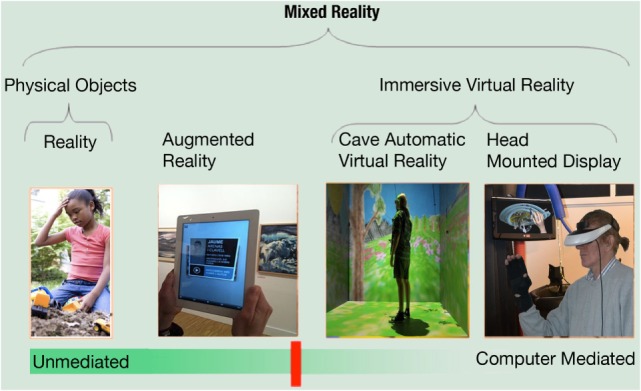
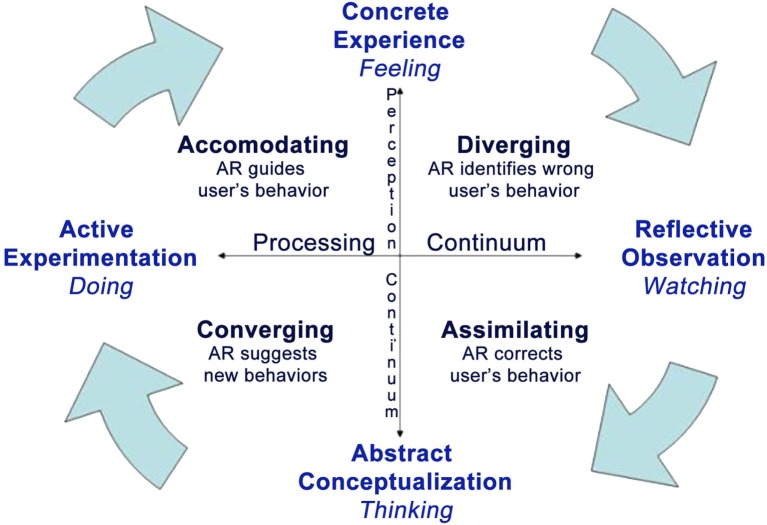
Verification
Claims the paper makes
The claims and statistics of this paper haven’t been checked yet.
Run the check — free, no account needed. It reads the open-access text and checks the sources it cites.
Claims other papers make about this one
Each is checked against this paper’s own text: does it say what the citing paper says it does?
The source backs part of the claim, not all of it — or backs it for a different population, condition or comparison.
In the citing paper
“Augmented reality and virtual reality (VR) have been found to be an effective tool for reducing pain sensations in patients with acute pain [56,57,124].”
From Best-evidence for the rehabilitation of chronic pain part 1: Pediatric pain (2019) · cites this paper as [124]
Experimental — accuracy not yet measuredIn the citing paper
“Fortunately, some recent work [84•] stresses the importance of using VR to enhance children's lives by creating compelling experiences [84•, 85].”
From Recent Progress in Virtual Reality Exposure Therapy for Phobias: A Systematic Review (2017) · cites this paper as [85]
Self-check
Percentages, sums and reported differences re-computed from the paper’s own numbers.
The self-check needs the paper’s full text.
Citations
Cites
Self-efficacy: Toward a unifying theory of behavioral change
Bandura, A. (1977) · Psychological Review · doi:10.1037/0033-295x.84.2.191 · Cited by 43,925
Social Cognitive Theory: An Agentic Perspective
Bandura, A. (2001) · Annual Review of Psychology · doi:10.1146/annurev.psych.52.1.1 · Cited by 15,510
Self-efficacy: Toward a unifying theory of behavioral change
Bandura, A. (1978) · Advances in Behaviour Research and Therapy · doi:10.1016/0146-6402(78)90002-4 · Cited by 10,586
Stages and processes of self-change of smoking: Toward an integrative model of change.
Prochaska, J. O., & DiClemente, C. C. (1983) · Journal of Consulting and Clinical Psychology · doi:10.1037/0022-006x.51.3.390 · Cited by 9,098
In search of how people change: Applications to addictive behaviors.
Prochaska, J. O., DiClemente, C. C., & Norcross, J. C. (1992) · American Psychologist · doi:10.1037/0003-066x.47.9.1102 · Cited by 8,596
Transformative Dimensions of Adult Learning
Mezirow, J. (1991) · Cited by 7,430
A Taxonomy of Mixed Reality Visual Displays
Milgram, P., & Kishino, F. (1994) · IEICE Transactions on Information and Systems · Cited by 4,905
Transtheoretical therapy: Toward a more integrative model of change.
Prochaska, J. O., & DiClemente, C. C. (1982) · Psychotherapy: Theory, Research & Practice · doi:10.1037/h0088437 · Cited by 3,922
Toward a Psychology of Human Agency
Bandura, A. (2006) · Perspectives on Psychological Science · doi:10.1111/j.1745-6916.2006.00011.x · Cited by 3,459
Gallagher, S. (2005) · doi:10.1093/0199271941.001.0001 · Cited by 3,311
Current status, opportunities and challenges of augmented reality in education
Wu, H.-K., Lee, S. W.-Y., Chang, H.-Y., & Liang, J.-C. (2013) · Computers & Education · doi:10.1016/j.compedu.2012.10.024 · Cited by 2,674
Shilling, C. (2003) · SAGE Publications Ltd eBooks · doi:10.4135/9781446215470 · Cited by 2,421
Maximizing exposure therapy: An inhibitory learning approach
Craske, M. G., Treanor, M., Conway, C. C., Zbozinek, T., & Vervliet, B. (2014) · Behaviour Research and Therapy · doi:10.1016/j.brat.2014.04.006 · Cited by 2,339 · cited 2×
“These studies are in agreement with the results obtained by Craske et al. (89) on the inhibitory learning approach presenting exposure optimization strategies such as (a) “deepened 3 studies “There is no clear good quality evidence for or against using virtual reality for treatment compliance among…”
ResultLearning as Transformation: Critical Perspectives on a Theory in Progress
(2001) · The Journal of Academic Librarianship · doi:10.1016/s0099-1333(01)00248-8 · Cited by 2,296
Learning as transformation: critical perspectives on a theory in progress
(2001) · Choice Reviews Online · doi:10.5860/choice.39-1707 · Cited by 2,084
The somatic marker hypothesis: A neural theory of economic decision
Bechara, A., & Damasio, A. R. (2005) · Games and Economic Behavior · doi:10.1016/j.geb.2004.06.010 · Cited by 1,986
A Survey of Augmented Reality Technologies, Applications and Limitations
van Krevelen, D. W. F., & Poelman, R. (2010) · International Journal of Virtual Reality · doi:10.20870/ijvr.2010.9.2.2767 · Cited by 1,662
Lee, K. M. (2004) · Communication Theory · doi:10.1111/j.1468-2885.2004.tb00302.x · Cited by 1,631
The psychology of self-defense: Self-affirmation theory
Sherman, D. K., & Cohen, G. L. (2006) · Advances in Experimental Social Psychology · doi:10.1016/s0065-2601(06)38004-5 · Cited by 1,614
The rubber hand illusion revisited: visuotactile integration and self-attribution
Tsakiris, M., & Haggard, P. (2005) · Journal of Experimental Psychology: Human Perception and Performance · doi:10.1037/0096-1523.31.1.80 · Cited by 1,328
The Psychology of Change: Self-Affirmation and Social Psychological Intervention
Cohen, G. L., & Sherman, D. K. (2014) · Annual Review of Psychology · doi:10.1146/annurev-psych-010213-115137 · Cited by 1,302 · cited 3×
“the self can be both a barrier and a catalyst to change: people are motivated to maintain self-integrity (7); 3.”
BackgroundInfluentialVideo ergo sum: manipulating bodily self-consciousness
Lenggenhager, B., Tadi, T., Metzinger, T., & Blanke, O. (2007) · Science · doi:10.1126/science.1143439 · Cited by 1,265
Impact of an augmented reality system on students' motivation for a visual art course
Di Serio, Á., Ibáñez, M. B., & Kloos, C. D. (2013) · Computers & Education · doi:10.1016/j.compedu.2012.03.002 · Cited by 1,210
Multisensory brain mechanisms of bodily self-consciousness.
Blanke, O. (2012) · Nature Reviews Neuroscience · doi:10.1038/nrn3292 · Cited by 1,147
The Handbook of Transformative Learning: Theory, Research, and Practice
Taylor, E. W., & Cranton, P. A. (2012) · Cited by 1,037
Parsons, T. D., & Rizzo, A. A. (2008) · Journal of Behavior Therapy and Experimental Psychiatry · doi:10.1016/j.jbtep.2007.07.007 · Cited by 994
The experimental induction of out-of-body experiences
Ehrsson, H. H. (2007) · Science · doi:10.1126/science.1142175 · Cited by 959
Diemer, J., Alpers, G. W., Peperkorn, H. M., Shiban, Y., & Mühlberger, A. (2015) · Frontiers in Psychology · doi:10.3389/fpsyg.2015.00026 · Cited by 959
If I were you: Perceptual illusion of body swapping
Petkova, V. I., & Ehrsson, H. H. (2008) · PLoS ONE · doi:10.1371/journal.pone.0003832 · Cited by 953
An Interoceptive Predictive Coding Model of Conscious Presence
Seth, A. K., Suzuki, K., & Critchley, H. D. (2012) · Frontiers in Psychology · doi:10.3389/fpsyg.2011.00395 · Cited by 950
Virtual reality exposure therapy for anxiety disorders: A meta-analysis
Powers, M. B., & Emmelkamp, P. M. G. (2008) · Journal of Anxiety Disorders · doi:10.1016/j.janxdis.2007.04.006 · Cited by 904
The application of virtual reality technology in rehabilitation.
Schultheis, M. T., & Rizzo, A. (2001) · Rehabilitation Psychology · doi:10.1037/0090-5550.46.3.296 · Cited by 744
Immersion and Emotion: Their Impact on the Sense of Presence
Baños, R., Botella, C., Alcañíz, M., Liaño, V., Guerrero, B., & Solaz, B. R. (2004) · CyberPsychology & Behavior · doi:10.1089/cpb.2004.7.734 · Cited by 661
Self-citationThe effectiveness of virtual reality distraction for pain reduction: A systematic review
Malloy, K. M., & Milling, L. S. (2010) · Clinical Psychology Review · doi:10.1016/j.cpr.2010.07.001 · Cited by 653 · cited 1×
“The four systematic reviews related to the use of VR in pain management support its use in the treatment of acute pain (109–112) and, in particular, in reducing the pain experienced by burn injury patients during wound dressing changes (109, 110).”
BackgroundVirtual reality exposure therapy in anxiety disorders: a quantitative meta-analysis
Opriş, D., Pintea, S., García-Palacios, A., Botella, C., Szamosközi, Ş., & David, D. (2012) · Depression and Anxiety · doi:10.1002/da.20910 · Cited by 636
Self-citationNeural correlates of the first-person-perspective
Vogeley, K., & Fink, G. R. (2003) · Trends in Cognitive Sciences · doi:10.1016/s1364-6613(02)00003-7 · Cited by 611
Inducing illusory ownership of a virtual body
Slater, M. (2009) · Frontiers in Neuroscience · doi:10.3389/neuro.01.029.2009 · Cited by 605
The Social Body: Habit, Identity and Desire
Crossley, N. (2001) · SAGE Publications Ltd eBooks · doi:10.4135/9781446219867 · Cited by 591
Hayes, A. M., Laurenceau, J., Feldman, G. C., Strauss, J. L., & Cardaciotto, L. (2007) · Clinical Psychology Review · doi:10.1016/j.cpr.2007.01.008 · Cited by 573
Handbook of social and clinical psychology—The health perspective
Lehman, D. R. (1992) · Behaviour Research and Therapy · doi:10.1016/0005-7967(92)90078-u · Cited by 565
(2003) · TU/e Research Portal · Cited by 491
Self-citationPositive Technology: Using Interactive Technologies to Promote Positive Functioning
Riva, G., Baños, R., Botella, C., Wiederhold, B. K., & Gaggioli, A. (2011) · Cyberpsychology Behavior and Social Networking · doi:10.1089/cyber.2011.0139 · Cited by 447
Self-citationPresence as Being-in-the-World
Zahorik, P., & Jenison, R. L. (1998) · PRESENCE Virtual and Augmented Reality · doi:10.1162/105474698565541 · Cited by 413
Garfinkel, S. N., & Critchley, H. D. (2013) · Social Cognitive and Affective Neuroscience · doi:10.1093/scan/nss140 · Cited by 386
Changing bodies changes minds: Owning another body affects social cognition
Maister, L., Slater, M., Sanchez-Vives, M. V., & Tsakiris, M. (2015) · Trends in Cognitive Sciences · doi:10.1016/j.tics.2014.11.001 · Cited by 384
Melzack, R. (2005) · Pain Practice · doi:10.1111/j.1533-2500.2005.05203.x · Cited by 371
Having a body versus moving your body: Neural signatures of agency and body-ownership
Tsakiris, M., Longo, M. R., & Haggard, P. (2010) · Neuropsychologia · doi:10.1016/j.neuropsychologia.2010.05.021 · Cited by 358
The Role of Immersion and Narrative in Mediated Presence: The Virtual Hospital Experience
Gorini, A., Capideville, C. S., Leo, G. D., Mantovani, F., & Riva, G. (2010) · Cyberpsychology Behavior and Social Networking · doi:10.1089/cyber.2010.0100 · Cited by 353
Self-citationHuman Body Perception From The Inside Out
(2005) · doi:10.1093/oso/9780195178371.001.0001 · Cited by 339
Bhattacharya, D., Aldus, C. F., Barton, G., Bond, C. M., Boonyaprapa, S., Charles, I. S., Fleetcroft, R., Holland, R., Jerosch‐Herold, C., Salter, C., et al. (2016) · Cited by 339
"Are all psychotherapies equivalent?".
Stiles, W. B., Shapiro, D. A., & Elliott, R. (1986) · American Psychologist · doi:10.1037/0003-066x.41.2.165 · Cited by 315
Meyerbröker, K., & Emmelkamp, P. M. G. (2010) · Depression and Anxiety · doi:10.1002/da.20734 · Cited by 290
Quantum change : when epiphanies and sudden insights transform ordinary lives
Miller, W. R., & Baca, J. C. (2001) · Guilford Press eBooks · Cited by 273
Efficacy of Virtual Reality Exposure Therapy in the Treatment of PTSD: A Systematic Review
Gonçalves, R., Pedrozo, A. L., Coutinho, E. S. F., Figueira, I. L. D. V., & Ventura, P. R. (2012) · PLoS ONE · doi:10.1371/journal.pone.0048469 · Cited by 263
Technologies as Support Tools for Persons with Autistic Spectrum Disorder: A Systematic Review
Bartolomé, N. A., & García-Zapirain, B. (2014) · International Journal of Environmental Research and Public Health · doi:10.3390/ijerph110807767 · Cited by 260
Baus, O., & Bouchard, S. (2014) · Frontiers in Human Neuroscience · doi:10.3389/fnhum.2014.00112 · Cited by 260
Chen, C., Lee, I.-J., & Lin, L. (2014) · Research in Developmental Disabilities · doi:10.1016/j.ridd.2014.10.015 · Cited by 255
Konak, A., Clark, T. K., & Nasereddin, M. (2013) · Computers & Education · doi:10.1016/j.compedu.2013.10.013 · Cited by 230
Botella, C., Serrano, B., baños, R., & García-Palacios, A. (2015) · Neuropsychiatric Disease and Treatment · doi:10.2147/ndt.s89542 · Cited by 223
Self-citationThe Effectiveness of Virtual Reality on Reducing Pain and Anxiety in Burn Injury Patients
Morris, L. D., Louw, Q. A., & Grimmer, K. A. (2009) · Clinical Journal of Pain · doi:10.1097/ajp.0b013e3181aaa909 · Cited by 222
Game-based digital interventions for depression therapy: a systematic review and meta-analysis
Li, J., Theng, Y.-L., & Foo, S. (2014) · Cyberpsychology, Behavior, and Social Networking · doi:10.1089/cyber.2013.0481 · Cited by 219 · cited 2×
“However, actual studies are not conclusive (105, 106).”
BackgroundLing, Y., Nefs, H. T., Morina, N., Heynderickx, I., & Brinkman, W.-P. (2014) · PLoS ONE · doi:10.1371/journal.pone.0096144 · Cited by 215 · cited 5×
“(53–66)], most researchers agree about what it is not (65).”
BackgroundResultInfluentialThe Oxford Handbook of Virtuality
(2013) · Oxford University Press eBooks · doi:10.1093/oxfordhb/9780199826162.001.0001 · Cited by 214
Presence and Emotions in Virtual Environments: The Influence of Stereoscopy
Baños, R., Botella, C., Rubió, I., Quero, S., García‐Palacios, A., & Alcañíz, M. (2008) · CyberPsychology & Behavior · doi:10.1089/cpb.2007.9936 · Cited by 211
Self-citationStiles, W. B., Barkham, M., Twigg, E., Mellor-Clark, J., & Cooper, M. (2006) · Psychological Medicine · doi:10.1017/s0033291706007136 · Cited by 211
Triberti, S., Repetto, C., & Riva, G. (2014) · Cyberpsychology Behavior and Social Networking · doi:10.1089/cyber.2014.0054 · Cited by 205
Self-citationOut-of-body-induced hippocampal amnesia
Bergouignan, L., Nyberg, L., & Ehrsson, H. H. (2014) · Proceedings of the National Academy of Sciences · doi:10.1073/pnas.1318801111 · Cited by 199
Virtual Reality Body Swapping: A Tool for Modifying the Allocentric Memory of the Body
Serino, S., Pedroli, E., Keizer, A., Triberti, S., Dakanalis, A., Pallavicini, F., Chirico, A., & Riva, G. (2015) · Cyberpsychology Behavior and Social Networking · doi:10.1089/cyber.2015.0229 · Cited by 198
Self-citationGarrett, B., Taverner, T., Masinde, W., Gromala, D., Shaw, C., & Negraeff, M. (2014) · Clinical Journal of Pain · doi:10.1097/ajp.0000000000000064 · Cited by 197
Assessing reactivity to virtual reality alcohol based cues
Bordnick, P. S., Traylor, A., Copp, H. L., Graap, K. M., Carter, B., Ferrer, M., & Walton, A. P. (2008) · Addictive Behaviors · doi:10.1016/j.addbeh.2007.12.010 · Cited by 193
Ferrer‐García, M., & Gutiérrez‐Maldonado, J. (2011) · Body Image · doi:10.1016/j.bodyim.2011.10.001 · Cited by 192
The use of virtual reality in craving assessment and cue-exposure therapy in substance use disorders
Hone-Blanchet, A., Wensing, T., & Fecteau, S. (2014) · Frontiers in Human Neuroscience · doi:10.3389/fnhum.2014.00844 · Cited by 188
Virtual reality in anxiety disorders: the past and the future
Gorini, A., & Riva, G. (2008) · Expert Review of Neurotherapeutics · doi:10.1586/14737175.8.2.215 · Cited by 184
Self-citationMaximizing exposure therapy An inhibitory learning approach
Pittig, A., Stevens, S., Vervliet, B., Treanor, M., Conway, C., Zbozinek, T. D., & Craske, M. G. (2015) · Kölner Universitäts PublikationsServer (Universität zu Köln) · Cited by 182
Are all psychotherapies equivalent
Stiles, W. B., Shapiro, D., & Elliott, R. (1986) · American Psychologist · doi:10.1037//0003-066x.41.2.165 · Cited by 178
Using Augmented Reality to Treat Phobias
Juan, M. ‐., Alcañíz, M., Monserrat, C., Botella, C., Baños, R., & Guerrero, B. (2005) · IEEE Computer Graphics and Applications · doi:10.1109/mcg.2005.143 · Cited by 177
Self-citationTreating Cockroach Phobia With Augmented Reality
Botella, C., Bretón-López, J., Quero, S., Baños, R., & García-Palacios, A. (2010) · Behavior Therapy · doi:10.1016/j.beth.2009.07.002 · Cited by 173 · cited 1×
“…necessitate more randomized controlled experiments for exploring the AR efficacy in the clinical treatments” A possible example of how AR can be used to support experiential learning in relation to clinical change is the treat-ment of a specific phobia, for example cockroach phobia (32, 42, 43).”
BackgroundSelf-citationQuantum Change: When Epiphanies and Sudden Insights Transform Ordinary Lives
Vaillant, G. E. (2002) · American Journal of Psychiatry · doi:10.1176/appi.ajp.159.9.1620 · Cited by 173
Gaggioli, A., Pallavicini, F., Morganti, L., Serino, S., Scaratti, C., Briguglio, M., Crifaci, G., Vetrano, N., Giulintano, A., Bernava, G., et al. (2014) · Journal of Medical Internet Research · doi:10.2196/jmir.3235 · Cited by 164
Self-citationEffect of multiple context exposure on renewal in spider phobia
Shiban, Y., Pauli, P., & Mühlberger, A. (2013) · Behaviour Research and Therapy · doi:10.1016/j.brat.2012.10.007 · Cited by 162 · cited 1×
“Recent studies show that VR exposure to multiple contexts reduces the recurrence of fear to a greater extent than exposure to only one scenario (87); in the same way, return of fear at posttreatment was significantly reduced by the use of multiple stimuli contexts during exposure (33, 88).”
BackgroundMott, J., Bucolo, S., Cuttle, L., Mill, J., Hilder, M., Miller, K., & Kimble, R. M. (2008) · Burns · doi:10.1016/j.burns.2007.10.010 · Cited by 155
Botella, C., Bretón-López, J., Quero, S., Baños, R., García-Palacios, A., Zaragozá, I., & Alcañíz, M. (2011) · Computers in Human Behavior · doi:10.1016/j.chb.2010.07.043 · Cited by 152
Self-citationAugmented Reality: A Brand New Challenge for the Assessment and Treatment of Psychological Disorders
Giglioli, I. A. C., Pallavicini, F., Pedroli, E., Serino, S., & Riva, G. (2015) · Computational and Mathematical Methods in Medicine · doi:10.1155/2015/862942 · Cited by 150
Self-citationVirtual reality exposure in anxiety disorders: Impact on psychophysiological reactivity
Diemer, J., Mühlberger, A., Pauli, P., & Zwanzger, P. (2014) · The World Journal of Biological Psychiatry · doi:10.3109/15622975.2014.892632 · Cited by 146
Shiban, Y., Schelhorn, I., Pauli, P., & Mühlberger, A. (2015) · Behaviour Research and Therapy · doi:10.1016/j.brat.2015.05.014 · Cited by 141 · cited 2×
“Recent studies show that VR exposure to multiple contexts reduces the recurrence of fear to a greater extent than exposure to only one scenario (87); in the same way, return of fear at posttreatment was significantly reduced by the use of multiple stimuli contexts during exposure (33, 88).”
BackgroundMaselli, A., & Slater, M. (2014) · Frontiers in Human Neuroscience · doi:10.3389/fnhum.2014.00693 · Cited by 141
Self-affirmation theory: An update and appraisal.
Aronson, J. M., Cohen, G. L., & Nail, P. R. (2004) · American Psychological Association eBooks · doi:10.1037/10318-006 · Cited by 138
Interacting with Presence: HCI and the Sense of Presence in Computer-mediated Environments
Riva, G., Waterworth, J. A., & Murray, D. M. (2014) · doi:10.2478/9783110409697 · Cited by 136
Self-citationNew Augmented Reality Taxonomy: Technologies and Features of Augmented Environment
Hugues, O., Fuchs, P., & Nannipieri, O. (2011) · Springer eBooks · doi:10.1007/978-1-4614-0064-6_2 · Cited by 136
McCann, R. A., Armstrong, C. M., Skopp, N. A., Edwards-Stewart, A., Smolenski, D. J., June, J. D., Metzger-Abamukong, M., & Reger, G. M. (2014) · Journal of Anxiety Disorders · doi:10.1016/j.janxdis.2014.05.010 · Cited by 134
Exposure therapy in eating disorders revisited
Koskina, A., Campbell, I. C., & Schmidt, U. (2013) · Neuroscience & Biobehavioral Reviews · doi:10.1016/j.neubiorev.2012.11.010 · Cited by 127
Virtual Reality for Health Care: The Status of Research
Riva, G. (2002) · CyberPsychology & Behavior · doi:10.1089/109493102760147213 · Cited by 127
Self-citationNeuroscience and eating disorders: The allocentric lock hypothesis
Riva, G. (2011) · Medical Hypotheses · doi:10.1016/j.mehy.2011.10.039 · Cited by 126
Self-citationVirtual Reality and Psychotherapy
Botella, C., Soledad, Q., Baños, R., Perpiñá, C., García‐Palacios, A., & Giuseppe, R. (2004) · Studies in health technology and informatics · doi:10.3233/978-1-60750-943-1-37 · Cited by 121
Self-citationPfeiffer, C., Lopez, C., Schmutz, V., Dueñas, J., Martuzzi, R., & Blanke, O. (2013) · PLoS ONE · doi:10.1371/journal.pone.0061751 · Cited by 116
Inducing a virtual hand ownership illusion through a brain–computer interface
Pérez-Marcos, D., Slater, M., & Sanchez-Vives, M. V. (2009) · Neuroreport · doi:10.1097/wnr.0b013e32832a0a2a · Cited by 115
From Imagination to Virtual Reality: The Future of Clinical Psychology
Vincelli, F. (1999) · CyberPsychology & Behavior · doi:10.1089/cpb.1999.2.241 · Cited by 115
Is presence a technology issue? Some insights from cognitive sciences
Riva, G. (2009) · Virtual Reality · doi:10.1007/s10055-009-0121-6 · Cited by 115
Self-citationGutiérrez‐Maldonado, J., Wiederhold, B. K., & Riva, G. (2015) · Cyberpsychology Behavior and Social Networking · doi:10.1089/cyber.2015.0412 · Cited by 115
Self-citationRiva, G., Mantovani, F., & Gaggioli, A. (2004) · Journal of NeuroEngineering and Rehabilitation · doi:10.1186/1743-0003-1-9 · Cited by 113
Self-citationOut of my real body: cognitive neuroscience meets eating disorders
Riva, G. (2014) · Frontiers in Human Neuroscience · doi:10.3389/fnhum.2014.00236 · Cited by 110
Self-citationVirtual Reality Based Treatments in Eating Disorders and Obesity: A Review
Ferrer‐García, M., Gutiérrez‐Maldonado, J., & Riva, G. (2013) · Journal of Contemporary Psychotherapy · doi:10.1007/s10879-013-9240-1 · Cited by 108
Self-citationden Brok, W. L. J. E., & Sterkenburg, P. S. (2014) · Disability and Rehabilitation Assistive Technology · doi:10.3109/17483107.2014.921248 · Cited by 108
Virtual Reality Cue Reactivity Assessment in Cigarette Smokers
Bordnick, P. S., Graap, K. M., Copp, H. L., Brooks, J. C., & Ferrer, M. (2005) · CyberPsychology & Behavior · doi:10.1089/cpb.2005.8.487 · Cited by 108
Virtual Reality Therapy: An Effective Treatment for Psychological Disorders
North, M. M., North, S. M., & Coble, J. R. (1997) · Studies in health technology and informatics · doi:10.3233/978-1-60750-888-5-59 · Cited by 106
Body awareness: differentiating between sensitivity to and monitoring of bodily signals
Ginzburg, K., Tsur, N., Barak-Nahum, A., & Defrin, R. (2013) · Journal of Behavioral Medicine · doi:10.1007/s10865-013-9514-9 · Cited by 105
Higginson, S., & Mansell, W. (2008) · Psychology and Psychotherapy: Theory, Research and Practice · doi:10.1348/147608308x320125 · Cited by 97
Extinction in multiple virtual reality contexts diminishes fear reinstatement in humans
Dunsmoor, J. E., Ahs, F., Zielinski, D. J., & LaBar, K. S. (2014) · Neurobiology of Learning and Memory · doi:10.1016/j.nlm.2014.02.010 · Cited by 93
Castelnuovo, G., Giusti, E. M., Manzoni, G. M., Saviola, D., Gatti, A., Gabrielli, S., Lacerenza, M., Pietrabissa, G., Cattivelli, R., Spatola, C. A. M., et al. (2016) · Frontiers in Psychology · doi:10.3389/fpsyg.2016.00115 · Cited by 91
Self-citationSix-Month Follow-Up of In-Patient Experiential Cognitive Therapy for Binge Eating Disorders
Riva, G., Bacchetta, M., Cesa, G., Conti, S., & Molinari, E. (2003) · CyberPsychology & Behavior · doi:10.1089/109493103322011533 · Cited by 90
Self-citationVirtual Reality in Telemedicine
Riva, G., & Gamberini, L. (2000) · Telemedicine Journal and e-Health · doi:10.1089/153056200750040183 · Cited by 89
Self-citationLin, C., & Chang, Y.-M. (2014) · Research in Developmental Disabilities · doi:10.1016/j.ridd.2014.10.016 · Cited by 84
An augmented reality home-training system based on the mirror training and imagery approach
Trojan, J., Diers, M., Fuchs, X., Bach, F., Bekrater‐Bodmann, R., Foell, J., Kamping, S., Rance, M., Maaß, H., & Flor, H. (2013) · Behavior Research Methods · doi:10.3758/s13428-013-0412-4 · Cited by 83
Feeling Present in the Physical World and in Computer-Mediated Environments
Waterworth, J. A., & Riva, G. (2014) · Palgrave Macmillan UK eBooks · doi:10.1057/9781137431677 · Cited by 81
Self-citationVirtual Reality ( VR ) and Psychotherapy: Opportunities and Challenges
Glantz, K., Durlach, N. I., BARNETT, R. C., & Aviles, W. A. (1997) · PRESENCE Virtual and Augmented Reality · doi:10.1162/pres.1997.6.1.87 · Cited by 81
Riva, G., Gaggioli, A., Villani, D., Preziosa, A., Morganti, F., Corsi, R., Faletti, G., & Vezzadini, L. (2007) · PubMed · Cited by 78
Self-citationMotraghi, T. E., Seim, R. W., Meyer, E. C., & Morissette, S. B. (2013) · Journal of Clinical Psychology · doi:10.1002/jclp.22051 · Cited by 75
Serino, S., Triberti, S., Villani, D., Cipresso, P., Gaggioli, A., & Riva, G. (2014) · Virtual Reality · doi:10.1007/s10055-013-0237-6 · Cited by 75
Self-citationHigginson, S., Mansell, W., & Wood, A. M. (2011) · Clinical Psychology Review · doi:10.1016/j.cpr.2010.01.005 · Cited by 75
Effects of Group Experiential Cognitive Therapy for the Treatment of Panic Disorder with Agoraphobia
Choi, Y.-H., Vincelli, F., Riva, G., Wiederhold, B. K., Lee, J.-H., & Park, K.-H. (2005) · CyberPsychology & Behavior · doi:10.1089/cpb.2005.8.387 · Cited by 74
Self-citationBordnick, P. S., Carter, B. L., & Traylor, A. C. (2011) · Journal of Diabetes Science and Technology · doi:10.1177/193229681100500210 · Cited by 74
From the body to the tools and back: A general framework for presence in mediated interactions
Riva, G., & Mantovani, F. (2012) · Interacting with Computers · doi:10.1016/j.intcom.2012.04.007 · Cited by 73
Self-citationFriedman, D. A., Pizarro, R., Or-Berkers, K., Neyret, S., Pan, X., & Slater, M. (2014) · Frontiers in Psychology · doi:10.3389/fpsyg.2014.00943 · Cited by 72
Valmaggia, L., Day, F., & Rus‐Calafell, M. (2016) · Social Psychiatry and Psychiatric Epidemiology · doi:10.1007/s00127-016-1245-0 · Cited by 70
Brave New Worlds--Review and Update on Virtual Reality Assessment and Treatment in Psychosis
Veling, W., Moritz, S., & van der Gaag, M. (2014) · Schizophrenia Bulletin · doi:10.1093/schbul/sbu125 · Cited by 69
Virtual Reality in the Assessment and Treatment of Weight-Related Disorders
Wiederhold, B. K., Riva, G., & Gutiérrez‐Maldonado, J. (2016) · Cyberpsychology Behavior and Social Networking · doi:10.1089/cyber.2016.0012 · Cited by 66
Self-citationThe Use of Virtual Reality in the Production of Cue-Specific Craving for Cigarettes: A Meta-Analysis
Pericot‐Valverde, I., Germeroth, L. J., & Tiffany, S. T. (2015) · Nicotine & Tobacco Research · doi:10.1093/ntr/ntv216 · Cited by 64
6. Transformative Experience Design
Gaggioli, A. (2015) · doi:10.1515/9783110471137-006 · Cited by 60
Self-citationDrift and ownership toward a distant virtual body
Pomés, A., & Slater, M. (2013) · Frontiers in Human Neuroscience · doi:10.3389/fnhum.2013.00908 · Cited by 59
Virtual environments in neuroscience
Riva, G. (1998) · IEEE Transactions on Information Technology in Biomedicine · doi:10.1109/4233.737583 · Cited by 58
Self-citationEnabling Positive Change: Flow and Complexity in Daily Experience
Inghilleri, P., Riva, G., & Riva, E. (2015) · doi:10.2478/9783110410242 · Cited by 57
Self-citationBody perception, awareness, and illusions
Costantini, M. (2014) · Wiley Interdisciplinary Reviews Cognitive Science · doi:10.1002/wcs.1309 · Cited by 57
Presence-Inducing Media for Mental Health Applications
Riva, G., Botella, C., Baños, R., Mantovani, F., García-Palacios, A., Quero, S., Serino, S., Triberti, S., Repetto, C., Dakanalis, A., et al. (2015) · Immersed in Media · doi:10.1007/978-3-319-10190-3_12 · Cited by 55
Self-citationAchieving Presence through Evoked Reality
Pillai, J. S., Schmidt, C., & Richir, S. (2013) · Frontiers in Psychology · doi:10.3389/fpsyg.2013.00086 · Cited by 55
The Third Pole of the Sense of Presence: Comparing Virtual and Imagery Spaces.
Baños, R., Botella, C., Guerrero, B., Liaño, V., Alcañíz, M., & Solaz, B. R. (2005) · Cited by 54
Self-citationDurlik, C., Cardini, F., & Tsakiris, M. (2014) · Consciousness and Cognition · doi:10.1016/j.concog.2014.01.010 · Cited by 54
Virtual Body Swap: A New Feasible Tool to Be Explored in Health and Education
de Oliveira, E. C., Bertrand, P., Lesur, M. R., Palomo, P., Demarzo, M., Cebolla, A., Baños, R., & Tori, R. (2016) · Symposium on Virtual and Augmented Reality (SVR) · doi:10.1109/svr.2016.23 · Cited by 54
Self-citationThe use of Biofeedback in Clinical Virtual Reality: The INTREPID Project
Repetto, C., Gorini, A., Vigna, C., Algeri, D., Pallavicini, F., & Riva, G. (2009) · Journal of Visualized Experiments · doi:10.3791/1554 · Cited by 53
Self-citationAn augmented reality system validation for the treatment of cockroach phobia
Bretón-López, J., Quero, S., Botella, C., García-Palacios, A., Baños, R. M., & Alcañiz, M. (2010) · Cyberpsychology Behavior and Social Networking · doi:10.1089/cyber.2009.0170 · Cited by 52
Self-citationAnalyzing Goal-Striving Processes and a Test of the Generalizability of Perceptual Control Theory
Vancouver, J. B., & Putka, D. J. (2000) · Organizational Behavior and Human Decision Processes · doi:10.1006/obhd.2000.2901 · Cited by 50
Virtual reality for treatment compliance for people with serious mental illness
Valimaki, M. A., Hätönen, H. M., Lahti, M., Kurki, M., Hottinen, A., Metsäranta, K., Riihimäki, T., & Adams, C. E. (2014) · Cochrane Database of Systematic Reviews · doi:10.1002/14651858.cd009928.pub2 · Cited by 49
Social Behaviors and Active Videogame Play in Children with Autism Spectrum Disorder
Chung, P. J., Vanderbilt, D. L., & Soares, N. S. (2015) · Games for Health Journal · doi:10.1089/g4h.2014.0125 · Cited by 48
A Novel Technique for Improving Bodily Experience in a Non-operable Super–Super Obesity Case
Serino, S., Scarpina, F., Keizer, A., Pedroli, E., Dakanalis, A., Castelnuovo, G., Chirico, A., Novelli, M., Gaudio, S., & Riva, G. (2016) · Frontiers in Psychology · doi:10.3389/fpsyg.2016.00837 · Cited by 47
Self-citationVincelli, F., Molinari, E., & Giuseppe, R. (2001) · Studies in health technology and informatics · doi:10.3233/978-1-60750-925-7-551 · Cited by 45
Riva, G., Waterworth, J. A., & Murray, D. M. (2014) · doi:10.2478/9783110409697.1 · Cited by 44
Self-citationRiva, G., & Mantovani, F. (2012) · InTech eBooks · doi:10.5772/46411 · Cited by 41
Self-citationThe New Dawn of Virtual Reality in Health Care: Medical Simulation and Experiential Interface
Riva, G., & Wiederhold, B. K. (2015) · Studies in health technology and informatics · doi:10.3233/978-1-61499-595-1-3 · Cited by 40
Self-citationAn interview study investigating experiences of psychological change without psychotherapy
Gianakis, M., & Carey, T. A. (2011) · Psychology and Psychotherapy: Theory, Research and Practice · doi:10.1111/j.2044-8341.2010.02002.x · Cited by 34
Combined Induction of Rubber-Hand Illusion and Out-of-Body Experiences
Olivé, I., & Berthoz, A. (2012) · Frontiers in Psychology · doi:10.3389/fpsyg.2012.00128 · Cited by 25
Early development of body representations
Christie, T., & Slaughter, V. P. (2007) · Behavioral and Brain Sciences · doi:10.1017/s0140525x07001422 · Cited by 21
External Eating as a Predictor of Cue-reactivity to Food-related Virtual Environments
Marta, F.-G., Gutiérrez‐Maldonado, J., Pla‐Sanjuanelo, J., Vilalta‐Abella, F., Andreu‐Gracia, A., Dakanalis, A., Fernández‐Aranda, F., Adela, F.-E., Joan, R.-S., Riva, G., et al. (2015) · Studies in health technology and informatics · doi:10.3233/978-1-61499-595-1-117 · Cited by 21
Self-citationSelf-affirmation theory: An update and appraisal.
Aronson, J., Cohen, G. L., & Nail, P. R. (2019) · American Psychological Association eBooks · doi:10.1037/0000135-008 · Cited by 21
The role of lived experience in self- and relational observation: A commentary on Horowitz (2002).
Wolfe, B. E. (2002) · Journal of Psychotherapy Integration · doi:10.1037/1053-0479.12.2.147 · Cited by 18
Leveraging Psychology of Virtual Body for Health and Wellness
Riva, G., Dakanalis, A., & Mantovani, F. (2015) · Wiley eBooks · doi:10.1002/9781118426456.ch24 · Cited by 17
Self-citationEvaluation of an Augmented Virtual Reality and Haptic Control Interface for Psychomotor Training
KABER, D. B., Tupler, L. A., Clamann, M. P., Gil, G.-H., Zhu, B., Neubert, M. S., Jeon, W., Zhang, Y., Qin, X., Ma, W., et al. (2013) · Assistive Technology · doi:10.1080/10400435.2013.800923 · Cited by 17
The Use of Biofeedback in Clinical Virtual Reality: The Intrepid Project
Riva, G. (2009) · Frontiers in Neuroengineering · doi:10.3389/conf.neuro.14.2009.06.085 · Cited by 14
Trait and State Craving as Indicators of Validity of VR-based Software for Binge Eating Treatment
Pla‐Sanjuanelo, J., Marta, F.-G., Gutiérrez‐Maldonado, J., Vilalta‐Abella, F., Andreu‐Gracia, A., Dakanalis, A., Fernández‐Aranda, F., Adela, F.-E., Joan, R.-S., Riva, G., et al. (2015) · Studies in health technology and informatics · doi:10.3233/978-1-61499-595-1-141 · Cited by 14
Self-citationThe use of Biofeedback in Clinical Virtual Reality: The INTREPID Project
Repetto, C., Gorini, A., Vigna, C., Algeri, D., Pallavicini, F., & Riva, G. (2009) · Journal of Visualized Experiments · doi:10.3791/1554-v · Cited by 12
Self-citation2 Altered, Expanded and Distributed Embodiment: the Three Stages of Interactive Presence
Riva, G., Waterworth, J. A., & Murray, D. (2014) · doi:10.2478/9783110409697.2 · Cited by 11
Self-citationMedical Clinical Uses of Virtual Worlds
Riva, G. (2013) · Oxford University Press eBooks · doi:10.1093/oxfordhb/9780199826162.013.014 · Cited by 8
Self-citationKoester, D. (2012) · Frontiers in Psychology · doi:10.3389/fpsyg.2012.00395 · Cited by 7
Jackson, R. L., II, & Hogg, M. A. (2010) · Encyclopedia of Identity · doi:10.4135/9781412979306.n213 · Cited by 6
The protective function of belief in personal change among genocide survivors in Rwanda
Blackie, L. E. R., Jayawickreme, E., Forgeard, M. J. C., & Jayawickreme, N. (2014) · Personality and Individual Differences · doi:10.1016/j.paid.2013.07.369 · Cited by 2
Research works printed but not linked: 11
- Janoff-Bulman, 1991, Chapter 24. Toward a general model of personal change, 488
- Kottler, 2014, Change: What Really Leads to Lasting Personal Transformation
- Riva, 2014, Phenomenology of positive change: personal growth, 15
- Kolb, 1984, Experiential Learning as the Science of Learning and Development
- Riva, 2003, Presence and the self: a cognitive neuroscience approach, Presence Connect, 3
- 2015, Immersed in Media. Telepresence Theory, Measurement & Technology
- Regan, 1993, Some Side-Effects of Immersion Virtual Reality: The Effects of Increasing Head Movements, of Rapid Interaction, and of Seated Subjects
- Wilson, 2006, Covert imitation, 211
- 2014, Outside the boundaries of our bodies: the relationship between touch and the representation of the body in our mind, 102
- Mezirow, 2012, Learning to think like an adult: core concepts of transformation theory, 73
- Riva, 2016, Being different. The transfomative potential of virtual reality, Annu Rev Cybertherapy Telemed, 14, 1
Cited by
Sorted by citations
Recent advances in wearable tactile sensors: Materials, sensing mechanisms, and device performance
Yang, T., Xie, D., Li, Z., & Zhu, H. (2017) · Materials Science and Engineering R Reports · doi:10.1016/j.mser.2017.02.001 · Cited by 769
Hilken, T., de Ruyter, K., Chylinski, M., Mahr, D., & Keeling, D. I. (2017) · Journal of the Academy of Marketing Science · doi:10.1007/s11747-017-0541-x · Cited by 693
Neuroscience of virtual reality: from virtual exposure to embodied medicine
Riva, G., Wiederhold, B. K., & Mantovani, F. (2019) · Cyberpsychology, Behavior, and Social Networking · doi:10.1089/cyber.2017.29099.gri · Cited by 608
Self-citationSerious Games and Gamification for Mental Health: Current Status and Promising Directions
Fleming, T. M., Bavin, L., Stasiak, K., Hermansson-Webb, E., Merry, S. N., Cheek, C., Lucassen, M., Lau, H. M., Pollmuller, B., & Hetrick, S. (2017) · Frontiers in Psychiatry · doi:10.3389/fpsyt.2016.00215 · Cited by 582
Recent Progress in Virtual Reality Exposure Therapy for Phobias: A Systematic Review
Botella, C., Fernández-Álvarez, J., Guillén, V., García-Palacios, A., & Baños, R. (2017) · Current Psychiatry Reports · doi:10.1007/s11920-017-0788-4 · Cited by 460
Self-citation
Metadata
- Authors
- Riva, G., Baños, R. M., Botella, C., Mantovani, F., & Gaggioli, A.
- Affiliations
- Università Cattolica del Sacro Cuore (IT)
- Universitat de València (ES)
- Universitat Jaume I (ES)
- University of Milano-Bicocca (IT)
- Corresponding author
- Riva, Giuseppe
- Venue
- Frontiers in Psychiatry
- Publisher
- Frontiers Media SA
- Published
- 2016-09-30
- Volume
- 7
- Pages
- 164-164
- ISSN
- 1664-0640 (ISSN-L)
- PMC
- PMC5043228
- OpenAlex
- W2525627827
- Cited by
- 425
- References
- 166
- Citations by year
- 2026: 39 · 2025: 43 · 2024: 53 · 2023: 54 · 2022: 46 · 2021: 51 · 2020: 54 · 2019: 29 · 2018: 31 · 2017: 21 · 2016: 4
- FWCI
- 5.50
- Type
- journal article
- Language
- en
- Open access
- gold
- doi.org
- Licence
- cc-by
- Locations
- Frontiers in Psychiatry (publishedVersion, cc-by)
- Europe PMC (PubMed Central) (publishedVersion, cc-by)
- PubMed Central (publishedVersion, cc-by)
- PubMed (publishedVersion)
- LA Referencia (Red Federada de Repositorios Institucionales de Publicaciones Científicas) (publishedVersion, other-oa)
- BOA (University of Milano-Bicocca) (submittedVersion, other-oa)
- DOAJ (DOAJ: Directory of Open Access Journals) (submittedVersion, cc-by-sa)
- PubliCatt (Università Cattolica del Sacro Cuore) (submittedVersion, cc-by)
- Repositori UJI (Universitat Jaume I) (submittedVersion, cc-by-sa)
- Funders
- Università Cattolica del Sacro Cuore (D3.2 2014)
- Topics
- Physical Sciences › Computer Science › Human-Computer Interaction › Virtual Reality Applications and Impacts
- Physical Sciences › Computer Science › Computer Vision and Pattern Recognition › Augmented Reality Applications
- Social Sciences › Psychology › Applied Psychology › Digital Mental Health Interventions
- Keywords
- augmented reality, virtual reality, personal transformation, clinical change, behavioral health, presence, self-consciousness, self-reflection, transformative experience
About these checks
Registry, retraction, Cites and statistics results are computed, not judged, with one exception: a printed reference that no index lists is read once by a model before it counts as a citation error. Claims are extracted by a model and kept only when their quote appears verbatim in the text; each cited source is then checked, with a model’s help, for whether it says what the claim relies on. Those verdicts can be wrong — read the claim’s quote and the cited source before relying on one.
Statistics and arithmetic are recomputed, not judged.
Confidence bands are shown only for fields calibrated on our annotated test set. None is calibrated yet, so no band is shown.
What counts as a claim ›How we measure confidence ›How we check this ›
Are you an author, or do you see a problem with this page? Request a review
