

Screen time and depression risk: A meta-analysis of cohort studies
Open accessThe DOI matches its Crossref record; 69 of the 69 references it cites were found in a registry or an index.
Abstract
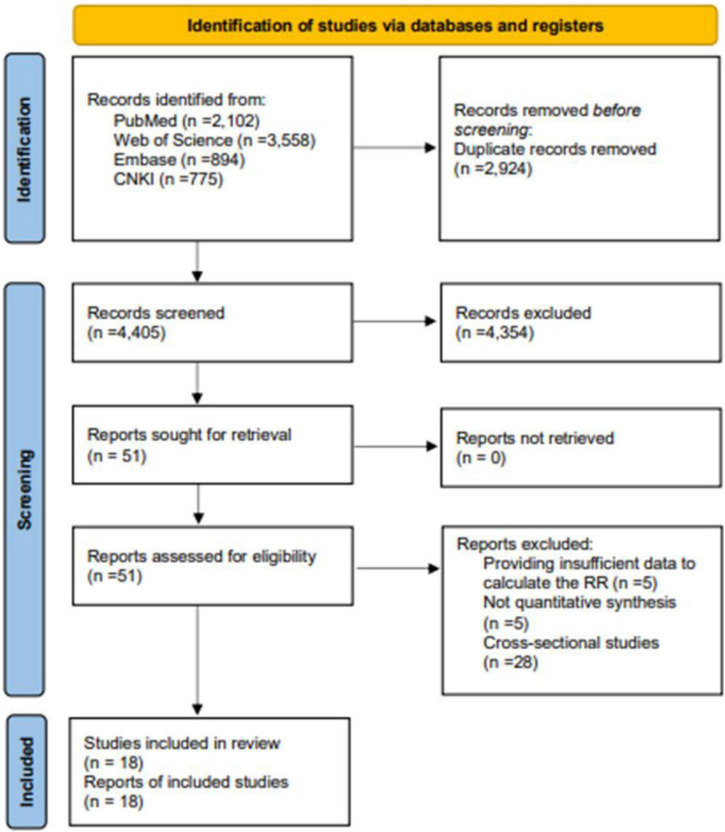
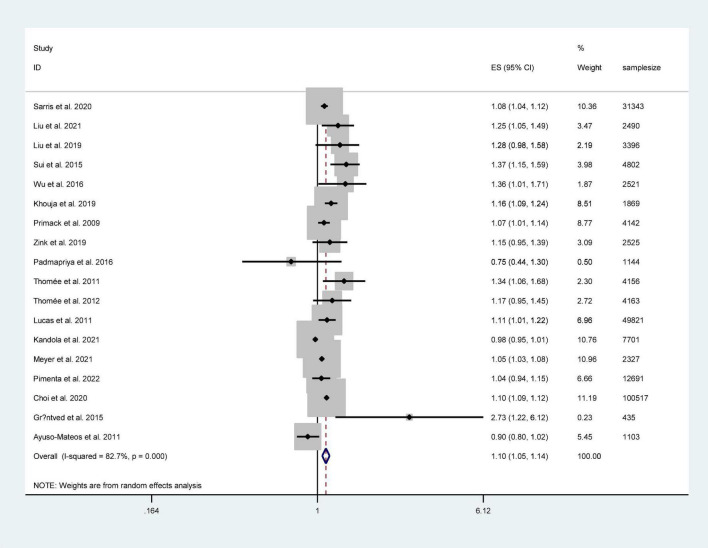
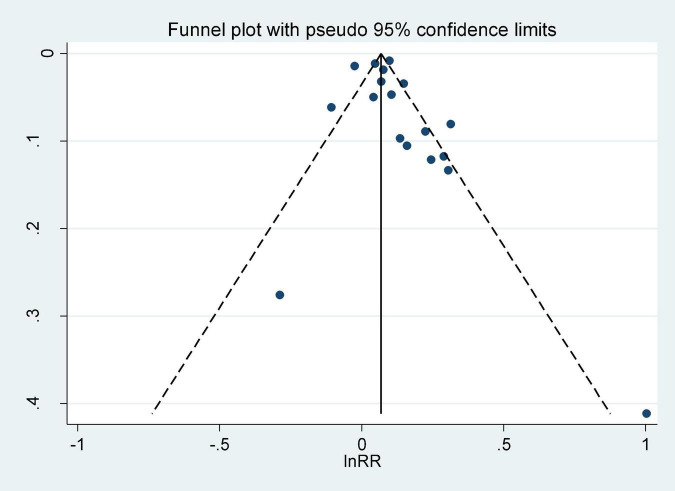
Background: The impact of screen time on mental health, including depression, has attracted increasing attention from not only children and adolescents but also the elderly. Thus, we conducted a meta-analysis of cohort studies to evaluate the association between screen time and depression risk. Methods: The PubMed, Embase, Web of Science, and China National Knowledge Infrastructure databases were searched for cohort studies up to May 2022, and the reference lists of the included studies were also retrieved. A random-effect model was used to estimate the combined effect size. Heterogeneity was assessed with the I2 statistic. Potential publication bias was evaluated using a funnel plot and Begg’s and Egger’s tests. Results: The final analysis included 18 cohort studies with a combined total of 241,398 participants. The pooled risk ratio (RR) was 1.10 (95% confidence interval: 1.05–1.14), with significant heterogeneity (I2 = 82.7%, P < 0.001). The results of subgroup analyses showed that the pooled RRs varied according to geographic locations, gender, age group, screen time in the control group, depression at the baseline, and whether the study was conducted during the COVID-19 pandemic. No obvious evidence of publication bias was found. Conclusion: This study indicates that screen time is a predictor of depressive symptoms. The effects of screen time on depression risk may vary based on the participant’s age, gender, location, and screen time duration. The findings could have important implications for the prevention of depression.
Overview
The claims and statistics of this paper haven’t been checked yet.
Free: it reads the open-access text and checks the first 5 claims that cite a source we can check. Create a free account to check every claim.
Integrity signals
Registry
Cites
Statistics
Figures
Verification
Claims the paper makes
The claims and statistics of this paper haven’t been checked yet.
Free: it reads the open-access text and checks the first 5 claims that cite a source we can check. Create a free account to check every claim.
Claims other papers make about this one
Each is checked against this paper’s own text: does it say what the citing paper says it does?
The source backs part of the claim, not all of it — or backs it for a different population, condition or comparison.
In the citing paper
“There are conflicting findings regarding the association between duration of digital media use and teen depressive symptoms, with some studies finding weak associations and others finding null associations,141-143 likely reflecting heterogeneity between different teens.”
From Digital Ecosystems, Children, and Adolescents: Technical Report (2026) · cites this paper as [143]
Experimental — accuracy not yet measured
Self-check
Percentages, sums and reported differences re-computed from the paper’s own numbers.
The self-check needs the paper’s full text.
Citations
Cites
1 retracted
Ayuso-Mateos, J. L., Morillo, D., Haro, J. M., Olaya, B., Lara, E., & Miret, M. (2021) · Epidemiology and Psychiatric Sciences · doi:10.1017/s2045796021000408 · Cited by 53
RetractedPreferred Reporting Items for Systematic Reviews and Meta-Analyses: the PRISMA statement
Moher, D., Liberati, A., Tetzlaff, J., Altman, D. G., & for the PRISMA Group (2009) · BMJ · doi:10.1136/bmj.b2535 · Cited by 83,823
Preferred Reporting Items for Systematic Reviews and Meta-Analyses: The PRISMA Statement
Moher, D., Liberati, A., Tetzlaff, J., Altman, D. G., & The PRISMA Group (2009) · PLoS Medicine · doi:10.1371/journal.pmed.1000097 · Cited by 64,042
Dermyshi, E., Wang, Y., Yan, C., Hong, W., Qiu, G., Gong, X., & Zhang, T. (2017) · Neonatology · doi:10.1159/000454668 · Cited by 24,451
Meta-analysis of Observational Studies in Epidemiology<SUBTITLE>A Proposal for Reporting</SUBTITLE>
Stroup, D. F. (2000) · JAMA · doi:10.1001/jama.283.15.2008 · Cited by 20,623
Wang, G., Ma, R., Qiao, G., Wada, K., Aizawa, Y., & Satoh, T. (2015) · Integrative Medicine International · doi:10.1159/000368408 · Cited by 18,657
(2014) · Medical Entomology and Zoology · Cited by 17,633
Zhang, Q., Wang, C., Zheng, M., Li, Y., Li, J., Zhang, L., Shang, X., & Yan, C. (2015) · Cerebrovascular Diseases · doi:10.1159/000369778 · Cited by 11,533
Self-citationProjections of Global Mortality and Burden of Disease from 2002 to 2030
Mathers, C. D., & Loncar, D. (2006) · PLoS Medicine · doi:10.1371/journal.pmed.0030442 · Cited by 11,386
Cited by
The association between screen time exposure and myopia in children and adolescents: a meta-analysis
Zong, Z., Zhang, Y., Qiao, J.-C., Tian, Y., & Xu, S. (2024) · BMC Public Health · doi:10.1186/s12889-024-19113-5 · Cited by 124
“However, there is sufficient evidence to demonstrate the relationship between excessive screen time and negative health outcomes in children and adolescents, such as hypertension [19], insulin resistance [20], overweight/obesity [21], sleep disorder [10] and depression [22].”
BackgroundScreen time in children and youth during the pandemic: A systematic review and meta-analysis
Choi, E. J., King, G. K. C., & Duerden, E. G. (2023) · Global Pediatrics · doi:10.1016/j.gpeds.2023.100080 · Cited by 106
Zhang, X., Li, Z., Zhang, M., Yin, M., Yang, Z., Gao, D., & Li, H. (2025) · Journal of Affective Disorders · doi:10.1016/j.jad.2025.03.141 · Cited by 56
From social media to artificial intelligence: improving research on digital harms in youth
Mansfield, K. L., Ghai, S., Hakman, T., Ballou, N., Vuorre, M., & Przybylski, A. K. (2025) · The Lancet Child & Adolescent Health · doi:10.1016/s2352-4642(24)00332-8 · Cited by 39
The Associations Between Screen Time and Mental Health in Adults: A Systematic Review
Santos, R. M. S., Ventura, S. D. A., Nogueira, Y. J. D. A., Mendes, C. G., de Paula, J. J., de Miranda, D. M., & Romano‐Silva, M. A. (2024) · Journal of Technology in Behavioral Science · doi:10.1007/s41347-024-00398-7 · Cited by 46
“…to other stages of the life cycle in relation to screen use and mental health (Pallavicini et al., 2018), the studies reviewed corroborate to previous data where the effect sizes of screen time on mental health outcomes mostly range from small to medium (Li et al., 2022; Maurya et al., 2022).”
Gao, J., & Gao, L. (2024) · Acta Psychologica · doi:10.1016/j.actpsy.2024.104530 · Cited by 32
Digital Media Use and Screen Time Exposure Among Youths: A Lifestyle-Based Public Health Concern
Khanani, M. I., Khan, M. R., Farooqi, M. F., Fazal, J., Aabideen, Z., & Kuwaiti, N. A. (2025) · Cureus · doi:10.7759/cureus.88373 · Cited by 39
“Depression and anxiety: Multiple studies across diverse countries have examined the relationship between different types of screen-based sedentary behavior and symptoms of anxiety and depression in adolescents [15,59].”
Al-Shoaibi, A. A. A., Shao, I. Y., Ganson, K. T., Lavender, J. M., Testa, A. M., Kiss, O., He, J., Glidden, D. V., Baker, F. C., & Nagata, J. M. (2024) · International Journal of Eating Disorders · doi:10.1002/eat.24169 · Cited by 23
Pengpid, S., & Peltzer, K. (2025) · BMC Public Health · doi:10.1186/s12889-025-22643-1 · Cited by 18
“For example, MVPA may reduce depressive symptoms [60] and improve PTSD symptoms and quality of life in adults with PTSD [61].”
Wang, X., Wu, H., Wang, D., Wang, W., Wang, W., Jin, W., Luo, J., Jiang, W., Tang, Y., Ren, Y., et al. (2023) · Frontiers in Psychiatry · doi:10.3389/fpsyt.2023.1224914 · Cited by 20
Prospective Predictors of Adolescent Screen Time and Problematic Screen Use
Grund, B. A., & Luciana, M. M. (2025) · JAACAP Open · doi:10.1016/j.jaacop.2025.06.007 · Cited by 15
“High levels of screen use have been prospectively associated with greater levels of internalizing 43 – 45 as well as comorbid internalizing/externalizing psychopathology in youth.”
Digital Ecosystems, Children, and Adolescents: Technical Report
Munzer, T., Milkovich, L. M., Madigan, S., Tomopoulos, S., Parga-Belinkie, J., Ajumobi, T., Cross, C., Gerwin, R., Council on Communications and Media, Radesky, J., et al. (2026) · Pediatrics · doi:10.1542/peds.2025-075321 · Cited by 14
Škripcová, L. N., & Viteková, L. (2025) · Studies in Media and Communication · doi:10.11114/smc.v13i4.7776 · Cited by 14
“The association between screen time and symptoms of mental health problems among young people is not a new phenomenon (e.g. Boers et al., 2019; Hu et al., 2021; Li et al., 2022; Francisquini et al., 2024; Čábyová & Krajčovič, 2024).”
Gender Differences in the Association Between Screen Time and Depression
Kleidermacher, L. E., & Olfson, M. (2023) · AJPM Focus · doi:10.1016/j.focus.2023.100176 · Cited by 12
Alfaridzi, G. R., Putri, E. M., & Sulistiasih, S. (2024) · Observasi Jurnal Publikasi Ilmu Psikologi · doi:10.61132/observasi.v2i3.491 · Cited by 18
Sleep Disturbances and Depression Levels among General Indonesian Population: A National Survey
Alfian, S. D., Thurfah, J. N., Griselda, M., & Puspitasari, I. M. (2024) · Clinical Practice and Epidemiology in Mental Health · doi:10.2174/0117450179326359240903045716 · Cited by 11
Álvarez-Mon, M. Á., Sánchez‐Villegas, A., Gutiérrez-Rojas, L., & Martínez‐González, M. Á. (2024) · Journal of Epidemiology & Community Health · doi:10.1136/jech-2023-220577 · Cited by 12
Meister, D. J., Kehler, D. S., B̀ouchard, D. R., Thomson, A. M., & Sénéchal, M. (2024) · Journal of Activity Sedentary and Sleep Behaviors · doi:10.1186/s44167-024-00056-6 · Cited by 7
“As recreation screen time is associated with less MVAP and increased weight, behavioural problems, anxiety, and psychological health problems, there may be an additive effect for that increases this risk of frailty [42–44].”
BackgroundCampbell, R., McGaw, V. E., & Reupert, A. (2026) · Journal of Environmental Psychology · doi:10.1016/j.jenvp.2026.102917 · Cited by 6
Meghji, K. A., Talpur, M., Khan, A., Fatima, H., Memon, U., & Monisha (2025) · Pakistan Journal of Health Sciences · doi:10.54393/pjhs.v6i3.2745 · Cited by 11
Fehring, D. J., Gaillard, A., Mazzoli, E., Rossell, S. L., Dempsey, P. C., Wheeler, M. J., Owen, N. G., Dunstan, D. W., & Hallgren, M. Å. (2025) · Scientific Reports · doi:10.1038/s41598-025-09360-w · Cited by 7
“Epidemiological studies of screen use have increased exponentially 24–26 , impacting public health recommendations globally 27 , including in Australia, where proposed legislation may ban social media for children and adolescents under 16 years of age 28 .”
Silva, D. A. S., Duncan, M. J., Kuzik, N., & Tremblay, M. S. (2024) · Applied Physiology, Nutrition, and Metabolism · doi:10.1139/apnm-2023-0230 · Cited by 6
Chen, J., Wei, X., Xiong, Y., & Ren, P. (2025) · Addictive Behaviors · doi:10.1016/j.addbeh.2025.108321 · Cited by 6
Alqifari, A., Albarrak, R. I., Alrubaish, Y. F., Alawaji, M. A., Alkhalifah, R., Alqifari, H. N., & Suleiman, M. (2024) · Middle East Current Psychiatry · doi:10.1186/s43045-024-00439-0 · Cited by 5
Parker, M. A., Harton, M. R., Mattey-Mora, P. P., & Streck, J. M. (2025) · BMC Public Health · doi:10.1186/s12889-025-25956-3 · Cited by 4
“Screen time can increase sedentary behavior, reducing mental health through physical activity’s interactive relationship with screen time [8, 9].”
Guo, H., Man, M., Hu, Z., Liu, Y., Chen, W., Wang, S., Tang, X., Geng, A., Ruan, W., Xu, W., et al. (2026) · Frontiers in Public Health · doi:10.3389/fpubh.2026.1782512 · Cited by 6
“…cannabinoid system, thereby reducing the risk of depression (50); insufficient sleep can disrupt emotional regulation, making it difficult for individuals to control negative emotions (51); and increased screen time can reduce physical activity, potentially increasing the risk of depression (52).”
Chen, Y., Lu, Y., Wen, X., Zhou, T., & Ke, X. (2024) · Frontiers in Public Health · doi:10.3389/fpubh.2024.1453517 · Cited by 5
Silva, D. A. S., Duncan, M. J., Kuzik, N., & Tremblay, M. S. (2023) · Journal of Pediatric Psychology · doi:10.1093/jpepsy/jsad085 · Cited by 3
Wei, W., Sun, Y., Yin, S., Lyu, W., & Liang, R. (2025) · Frontiers in Public Health · doi:10.3389/fpubh.2025.1671222 · Cited by 2
Lampe, E. W., Collins, A. C., Lee, A. R., Enbar-Salo, N., Griffin, T. Z., Pillai, A., Heinz, M. V., Lekkas, D., Nemesure, M. D., Mackin, D. M., et al. (2026) · Behaviour Research and Therapy · doi:10.1016/j.brat.2026.104986 · Cited by 3
Liu, W. (2026) · Frontiers in Public Health · doi:10.3389/fpubh.2026.1766808 · Cited by 2
“These reviews frequently report a dose–response pattern, indicating that psychological risks rise as screen use exceeds recommended thresholds (28).”
Carlander, A., Cassel, S., Höök, M. J., Lundgren, O., Bagge, A. L., & Löf, M. (2026) · Acta Paediatrica · doi:10.1111/apa.70524 · Cited by 2
“It has also been positively associated with aggression, attention deficit hyperactivity disorder, anxiety and depression [5, 6].”
Alhalaiqa, F., Khraim, F., Raddaha, A. H. A., Aldalaykeh, M., Sami, W., Al-Kuwari, N. S., & Ahmad, M. M. (2026) · Journal of Psychiatric and Mental Health Nursing · doi:10.1111/jpm.70159 · Cited by 2
Sukik, L., Hoque, B., Boutefnouchet, L., Elhadary, M. R., Bawadi, H. A., & Shraim, M. (2023) · Primary care diabetes · doi:10.1016/j.pcd.2023.09.006 · Cited by 2
Ghaderi, D. (2024) · Asian Journal of Sports Medicine · doi:10.5812/asjsm-147095 · Cited by 2
Mondéjar, A. G., Silva-Calpa, G. F. M., Raposo, A. B., & Mograbi, D. C. (2024) · SeGAH ... IEEE ... International Conference on Serious Games and Applications for Health/IEEE International Conference on Serious Games and Applications for Health · doi:10.1109/segah61285.2024.10639601 · Cited by 3
“• Screen time: excessive use of cellphones or screen time is associated with mood fluctuation in patients with BD [38].”
BackgroundJørgensen, M., Wold, B., Smith, O. R. F., & Haug, E. (2025) · BMC Psychiatry · doi:10.1186/s12888-025-06679-6 · Cited by 2
“Recent research has also shown that several newer health behaviors, such as screen time [103] and social media use [104], are linked to depressive symptoms and related mental health outcomes; therefore, future studies could benefit from including these factors.”
Wray, C. A., & Arora, V. (2024) · Elsevier eBooks · doi:10.1016/b978-0-443-13701-3.00387-x · Cited by 2
StandUPTV: a full-factorial optimization trial to reduce sedentary screen time among adults
Keadle, S. K., Hasanaj, K., Leonard, K. S., Fernandez, A., Freid, L., Weiss, S., Legato, M., Anand, H., Hagobian, T. A., Phillips, S. M., et al. (2025) · International Journal of Behavioral Nutrition and Physical Activity · doi:10.1186/s12966-025-01771-2 · Cited by 1
“Emerging evidence also suggests that non-TV forms of rSST (e.g., social media and video games) are also associated with poor sleep quality, mood, and less physical activity [18–20].”
Dinu, C. A., Chiscop, I., Arbune, M., Robles-Rivera, K., Pelin, A.-M., Serban, P. S., & Nicolcescu, P. (2025) · BRAIN BROAD RESEARCH IN ARTIFICIAL INTELLIGENCE AND NEUROSCIENCE · doi:10.70594/brain/16.3/35 · Cited by 1
Alves, G. E. F., Couto, P. G., & Zárate, L. E. (2025) · Simpósio Brasileiro de Bancos de Dados (SBBD) · doi:10.5753/sbbd_estendido.2025.248205 · Cited by 1
Cotter, D. S., Dooley, N., Staines, L., Power, E., McCay, S., Gallo, K., Gupta, A., Doyle, L., Cotter, D., & Cannon, M. (2025) · Irish Journal of Psychological Medicine · doi:10.1017/ipm.2025.10122 · Cited by 3
“Comparatively, while a systematic review found that passive screen-time can elevate the risk for depression, this was only in samples which did not consider sex, when this was examined, males did not show an increased risk for depression (Li et al. 2022).”
Škripcová, L. N. (2025) · Media Literacy and Academic Research · doi:10.34135/mlar-25-02-03 · Cited by 1
Wahyuni, A. S., Pratama, T., Siahaan, M. D., Salamah, N. F., Wongso, V., Dalimunthe, A. A., Irzi, M., Evelyn, nurkholilah, S., & Setiawan, R. (2025) · Sumatera Medical Journal · doi:10.32734/sumej.v9i1.22796 · Cited by 1
“Likewise, Andriani’s research also identified question number 1 as the most common positive response [13].”
van Rooij, A. J., van der Rijst, V. G., Date, M., Tuijnman, A., Oostenbach, K. P. J., Carras, M. C., & Thrul, J. (2026) · Royal Society Open Science · doi:10.1098/rsos.250969 · Cited by 1
Guan, D., Wang, J., Yang, Q., & Qiao, Z. (2026) · Mental health and physical activity · doi:10.1016/j.mhpa.2026.100766 · Cited by 1
Wu, G., Eades, C. E., & Hoyle, L. P. (2026) · Journal of Medical Internet Research · doi:10.2196/93848 · Cited by 1
Pandey, S., Gupta, P. K., & Kar, S. K. (2026) · World Journal of Psychiatry · doi:10.5498/wjp.v16.i3.112604 · Cited by 1
Ten years of screen time among medical students in Dresden, Germany: unveiling the trends
Liebig, L., Gräfe, W., Lynch, N. J., Gottschall, M., Birkás, B., Balogh, E., Faubl, N., Zelko, E., & Riemenschneider, H. (2026) · BMC Medical Education · doi:10.1186/s12909-026-09024-x · Cited by 1
“Screen time is often performed in a sedentary manner, which has been linked to cardiovascular diseases [20], depression [23, 51] and a higher all-cause mortality [39, 52].”
Pengpid, S., Peltzer, K., Gyasi, R. M., & Hajek, A. (2024) · Journal of Human Behavior in the Social Environment · doi:10.1080/10911359.2024.2431045 · Cited by 1
“Total sedentary behavior may increase the risk of depression in older adults (Jiang et al., 2024), screen time is a predictor of depressive symptoms (Li et al., 2022) and SB is associated with PTSD (Johnstad, 2024).”
Zhang, W., Yang, K., Zhai, Y.-C., Miao, Q.-S., & Cui, Y. (2025) · World Journal of Psychiatry · doi:10.5498/wjp.v15.i12.112122 · Cited by 1
Garcês, C. P., Soares, C. F. V., Sisconeto, T. M., Martins, G. C. B., Dias, M. A., Vivenzio, R. A., Moreira, T. F., Camargo, Y. D. S., Crispim, C. A., Balieiro, L. C. T., et al. (2024) · Work · doi:10.3233/wor-230518
Pengpid, S., & Peltzer, K. (2025) · Vulnerable Children and Youth Studies · doi:10.1080/17450128.2025.2452570
“The risk of depression may rise with mentally passive sedentary behaviours like watching television (Huang et al., 2020; Li et al., 2022).”
Da interatividade ao vício: explorando os efeitos do uso de telas na infância e na adolescência
Farias, K. C. D. L., & Valladares-Torres, A. C. A. (2025) · Contribuciones a las Ciencias Sociales · doi:10.55905/revconv.18n.2-022 · Cited by 1
Impact of Digital Engagement on Mental Health and Neuroplastic Changes in Adults
Das, I., Thomas, A., & Shrestha, P. L. (2025) · SXC JOURNAL. · doi:10.3126/sxcj.v2i1.81658
The associations between screen time and mental health in older adults: a systematic review
Santos, R. M. S., Ventura, S. D. A., Nogueira, Y. J. D. A., Mendes, C. G., de Miranda, D. M., & Romano‐Silva, M. A. (2025) · Behaviour and Information Technology · doi:10.1080/0144929x.2025.2564366 · Cited by 1
“Evidence from meta-analyzed studies indicates that, in older adults, the impact of the use of digital technologies on mental health varies according to the type of activity and the device used (Li et al. 2022b).”
InfluentialProtective and Risk Factors of Mental Health among High School Students in Xizang
宋, 清. (2025) · Advances in Psychology · doi:10.12677/ap.2025.1512628
Promoção da Saúde e Interdisciplinaridade: integração de saberes em diferentes cenários
D’avila, H. F., Pappen, M., Heringer, T. A., Reuter, C. P., & Franke, S. I. R. (2025) · doi:10.18226/9786558075165
(2025) · International Journal of Open-access Interdisciplinary and New Educational Discoveries of ETCOR Educational Research Center (iJOINED ETCOR) · doi:10.63498/etcor512
Zong, Z., Zhang, Y., Qiao, J., Tian, Y., & Xu, S. (2024) · Figshare · doi:10.6084/m9.figshare.26061411
Vapaa-ajalla toteutuvan ruutuajan yhteys nuorten masennusoireisiin
Rissanen, E. (2024) · Jyväskylä University Digital Archive (University of Jyväskylä)
Understanding drivers of recent trends in young people’s mental health
Pierce, M., Bai, Y., Taxiarchi, V. P., Hugh-Jones, S., Abel, K. M., Patalay, P., & Demkowicz, O. (2025) · Research Explorer (The University of Manchester) · Cited by 8
Cabezas, A. V. V., Escobar, J. N. P., Meza, D. C. V., & Guananga, L. C. S. (2026) · Esprint Investigación · doi:10.61347/ei.v5i1.240
A study of the association between static behavior and mental health among Chinese adolescents
Wang, J., Wu, J., Wu, H., Ma, Y., Deng, T., Wang, Y., & Li, A. (2026) · Psychology Health & Medicine · doi:10.1080/13548506.2026.2622635
The First Graders Emotional and Behavior Problems and Correlation between Lifestyle Aspects
Petrošienė, A. (2024) · Lithuanian University of Health Sciences
Meng, S., Yu, K., Huang, C. J., Wu, Y., Zhang, K., & Ming, Z. (2026) · Research Square · doi:10.21203/rs.3.rs-9186475/v1
Olivares-García, R. (2026) · Tesis Doctorals en Xarxa (Consorci de Serveis Universitaris de Catalunya)
Miao, Y., Li, D., Lv, C., Zhang, X., Zhang, J., Zhang, X., & Cui, Q. (2026) · Medicine · doi:10.1097/md.0000000000048587
“[15] Depression is a common and disabling mental illness worldwide.”
Schmidt‐Persson, J., Gejl, A. K., Philipsen, K. B., Johansen, M. S., Mathiesen, J., Taylor, R., Flensborg‐Madsen, T., Kristensen, P. L., & Grøntved, A. (2026) · BMC Psychology · doi:10.1186/s40359-026-04827-5
“Systematic reviews support the indication of a relationship between screen media use and adverse mental health outcomes such as depression and stress in young people [6, 7].”
Le, D. H., Pham, Q. D., Ha, L. T., Thi, K. A. N., & Xiao, N. (2026) · International Journal of Applied Positive Psychology · doi:10.1007/s41042-026-00278-w
“This imbalance may lead to excessive screen time and a reduction in engagement with offline life, which have been linked to increased symptoms of anxiety, depression, and diminished life satisfaction (Francisquini et al., 2024; Khan et al., 2023; Li et al., 2022; Muppalla et al., 2023).”
An Examination of TikTok Fitness Content and Its Motivational Impact on University Students
Brin, H. N., Smith, M., Montney, J. L., Streetman, A. E., & Mailey, E. L. (2026) · Journal of Health Communication · doi:10.1080/10810730.2026.2687797 · Cited by 1
“A recent meta-analysis describes a significant positive correlation between high screentime and increased risk of depression among adolescents (Li et al., 2022).”
The associations between screen time and mental health in children aged 0-12: A systematic review
Santos, R. M. S., Ventura, S. D. A., Gonçalves, M. E. O. D. A., Nogueira, Y. J. D. A., Mendes, C. G., de Miranda, D. M., & Romano‐Silva, M. A. (2026) · Journal of Child and Adolescent Mental Health · doi:10.2989/17280583.2026.2661687 · Cited by 1
“Additionally, other available reviews have not focused directly on mental health (Neophytou et al., 2021), but on specific symptoms (Eirich et al., 2022; Li et al., 2022b) or cognition (Santos et al., 2022).”
InfluentialSipahutar, I. E., Suardana, I. K., Hartati, N. N., Harini, I. G. A., Gama, I. K., Suardani, N. L. K., & Dewi, D. G. M. P. (2026) · Journal of Applied Nursing and Health · doi:10.55018/janh.v8i2.522
Fan, R., & Fan, K. (2026) · Frontiers in Psychology · doi:10.3389/fpsyg.2026.1855620
Screen Time, Sleep-Interrupted Behaviors, and Depression in a Diverse Sample of Emerging Adults
Huang, C., Tu, B., & Vallario, J. (2026) · Emerging Adulthood · doi:10.1177/21676968261468066
“Research indicates that prolonged exposure and problematic use such as nighttime device co-sleeping and sleep-interrupted device checking are linked to sleep disruption, impaired functioning, and emotional distress (Andersen et al., 2023; Li et al., 2022; Madhav et al., 2017; Shannon et al., 2022).”
Abdallah, N., Katmah, R., Khalaf, K. A., & Jelinek, H. F. (2026) · Computers in Human Behavior Reports · doi:10.1016/j.chbr.2026.101208
Liang, C., Zhang, D.-Y., Li, K.-X., Li, B., Lou, H., Zhu, S., Yu, S.-H., & Han, S. (2026) · medRxiv · doi:10.64898/2026.07.20.26358281
Bai, H., Lin, Y., Wang, T., Yang, Y., Chen, X. J., Wang, N., Li, H., Yu, Z., Zeng, Q., Wang, J., et al. (2026) · Research Square · doi:10.21203/rs.3.rs-10356111/v1
El Uso Inadecuado de las TIC y la Violencia Filio-parental: La Perspectiva de la Familia
González-Pérez, E., Martínez-Álvarez, I., & Hidalgo-Fuentes, S. (2026) · Anuario de Psicología Jurídica · doi:10.5093/apj2026a19
Držanič, I. L., Fišer, S. Ž., Horvat, L., Vošner, H. B., & Kokol, P. (2026) · Healthcare · doi:10.3390/healthcare14162645
“…platforms has been associated with youth mental health, with a growing body of research linking heavy or poorly regulated digital exposure to paediatric anxiety, depressive symptoms, and sleep disruption [1–3], although the strength and direction of these associations remain debated.”
Hu, J., Liu, L., & Zou, Y. (2026) · Frontiers in Public Health · doi:10.3389/fpubh.2026.1887437
“Among these, sleep deprivation is particularly critical (11).”
Lin, Y., Jian, J., Luo, Z., Wang, Q., Zou, F., Alias, H., Wong, L. P., & Hu, Z. (2026) · Frontiers in Psychology · doi:10.3389/fpsyg.2026.1686399
“Another meta-analysis highlighted that screen time is associated with depressive symptoms across various age groups, including children, adolescents, and the elderly (Li et al., 2022).”
Exercise for adolescent depression - Perspectives from a multicenter randomized controlled trial
Mortazavi, R. (2026) · Lund University Publications (Lund University)
Kumari, S., Hasan, N., & Jungari, S. B. (2026) · Social Psychiatry and Psychiatric Epidemiology · doi:10.1007/s00127-026-03212-2
Digital screen exposure is associated with depressive symptoms among adults
Chouhan, D. S., & Patel, S. (2026) · Evidence-Based Nursing · doi:10.1136/ebnurs-2026-104803
Rios, M. A., Lopes, I. G., Nascimento, C. L. S., Pereira, L. S. E., Zanetti, M. V. L., & Magno, L. A. V. (2026) · Mental Illness · doi:10.1155/mij/4792471
Al-Mutairi, M. S., Sheikh, S., Fawzy, R., & Ashour, K. (2026) · Frontiers in Psychology · doi:10.3389/fpsyg.2026.2006153
Trends in mental health and behavioural outcomes in UK 10–15 year olds from 2009 to 2024
Taxiarchi, V. P., Abel, K. M., Patalay, P., Neufeld, S. A. S., Demkowicz, O., Bai, Y., & Pierce, M. (2026) · European Journal of Epidemiology · doi:10.1007/s10654-026-01480-5
Screen use in children and adolescents: Developmental risks, benefits, and educational implications
David, H. (2026) · Journal of Child Development, Exceptionality and Education · doi:10.5281/zenodo.23879615
Metadata
- Authors
- Li, L., Zhang, Q., Zhu, L., Zeng, G., Huang, H., Zhuge, J., Kuang, X., Yang, S., Yang, D., Chen, Z., Gan, Y., Lu, Z., & Wu, C.
- Affiliations
- Jiangxi Science and Technology Normal University (CN)
- Jiangxi University of Science and Technology (CN)
- Second Affiliated Hospital of Nanchang University (CN)
- Gannan Medical University (CN)
- Huazhong University of Science and Technology (CN)
- Corresponding author
- Wu, Chunmei
- ORCID
- Venue
- Frontiers in Psychiatry
- Publisher
- Frontiers Media SA
- Published
- 2022-12-22
- Volume
- 13
- Pages
- 1058572-1058572
- ISSN
- 1664-0640 (ISSN-L)
- PMC
- PMC9815119
- OpenAlex
- W4312187442
- Cited by
- 71
- References
- 69
- Citations by year
- 2026: 32 · 2025: 19 · 2024: 15 · 2023: 5
- FWCI
- 1.64
- Type
- journal article
- Language
- en
- Open access
- gold
- doi.org
- Licence
- Locations
- Frontiers in Psychiatry (publishedVersion, cc-by)
- PubMed Central (publishedVersion, cc-by)
- PubMed (publishedVersion)
- DOAJ (DOAJ: Directory of Open Access Journals) (submittedVersion, cc-by-sa)
- Funders
- Education Department of Jiangxi Province (GJJ190814)
- Topics
- Social Sciences › Sociology and Political Science › Impact of Technology on Adolescents
- Social Sciences › Education › Child Development and Digital Technology
- Health Sciences › Medicine › Public Health, Environmental and Occupational Health › Physical Activity and Health
- Keywords
- screen time, depression risk, depressive symptoms, mental health, COVID-19 pandemic, age differences, gender differences, depression prevention
About these checks
Registry, retraction, Cites and statistics results are computed, not judged, with one exception: a printed reference that no index lists is read once by a model before it counts as a citation error. Claims are extracted by a model and kept only when their quote appears verbatim in the text; each cited source is then checked, with a model’s help, for whether it says what the claim relies on. Those verdicts can be wrong — read the claim’s quote and the cited source before relying on one.
Statistics and arithmetic are recomputed, not judged.
Confidence bands are shown only for fields calibrated on our annotated test set. None is calibrated yet, so no band is shown.
What counts as a claim ›How we measure confidence ›How we check this ›
Are you an author, or do you see a problem with this page? Request a review
Data sources
Bibliographic data: Semantic Scholar, OpenAlex, Crossref.
Contains information from the Semantic Scholar Academic Graph Datasets, made available under the ODC Attribution License (ODC-BY 1.0).
Semantic Scholar’s data is described in: Kinney, R., et al. (2023). The Semantic Scholar Open Data Platform. arXiv:2301.10140.
