

The DOI matches its Crossref record; 80 of the 80 references it cites were found in a registry or an index.
Global prevalence and characteristics of non-suicidal self-injury between 2010 and 2021 among a non-clinical sample of adolescents: A meta-analysis
Open accessAbstract
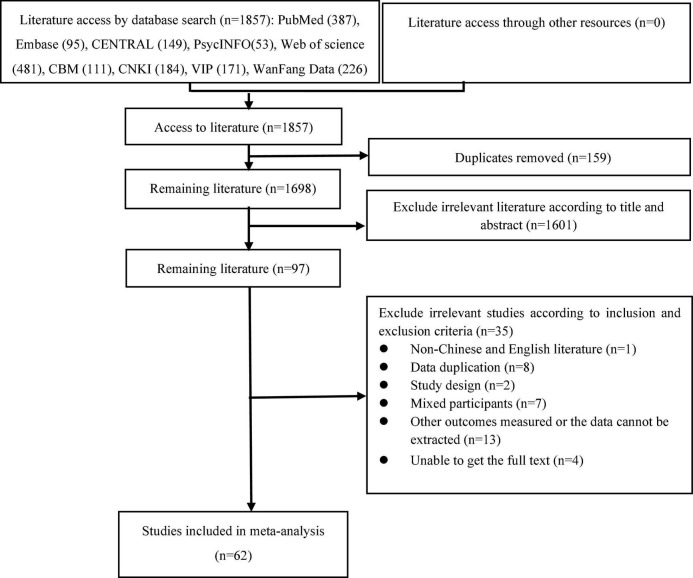
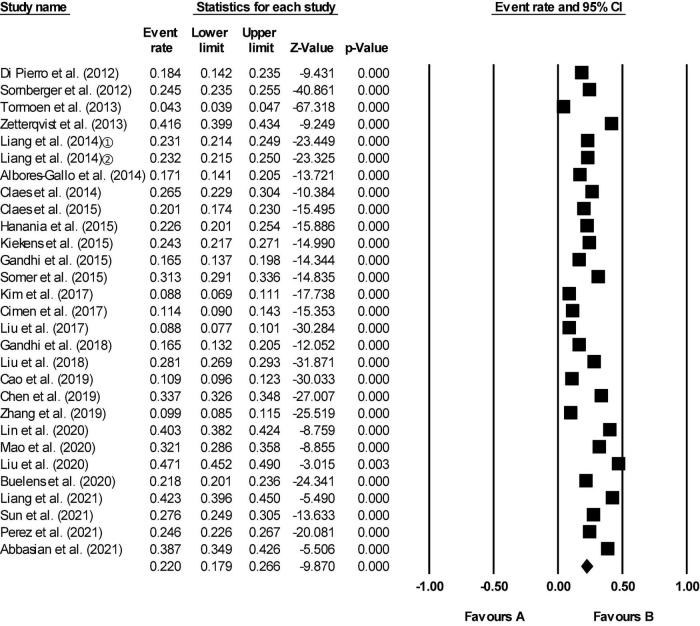
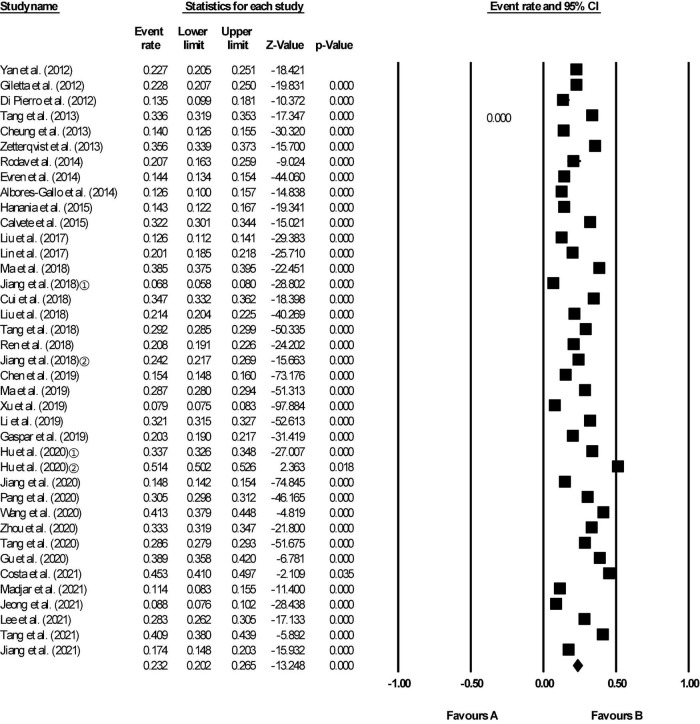
Background: Adolescents with immature mind and unstable emotional control are high-risk groups of non-suicidal self-injury (NSSI) behavior. We meta-analyzed the global prevalence of NSSI and prevalence of NSSI characteristics in a non-clinical sample of adolescents between 2010 and 2021. Methods: A systematic search for relevant articles published from January 1, 2010 to June 30, 2021 was performed within the scholarly database search engines of CBM, CNKI, VIP, Wanfang, PubMed, Web of Science, PsycINFO, and Embase. Eligibility criteria were as follows: provided cross-sectional data on the prevalence of NSSI; the subjects were non-clinical sample adolescents; and a clear definition of NSSI was reported. We used the following definiton of NSSI as our standard: the deliberate, self-inflicted destruction of body tissue, such as cutting, burning, and biting, without attempted suicide. The quality evaluation tool for cross-sectional studies recommended by the JBI was used. The global prevalence of NSSI was calculated based on the random-effects model by Comprehensive Meta-analysis version 3.0. Subgroup analyses were performed to compare the prevalence according to sex, living place, smoking or drinking history, and family structure. Results: Sixty-two studies involving 264,638 adolescents were included. The aggregate prevalence of NSSI among a non-clinical sample of adolescents was similar between over a lifetime (22.0%, 95% CI 17.9–26.6) and during a 12-month period (23.2%, 95% CI 20.2–26.5). Repetitive NSSI was more common than episodic NSSI (20.3% vs. 8.3%) but the frequency of mild injury (12.6%) was similar to that of moderate injury (11.6%). Multiple-method NSSI occurred slightly more often compared than one-method NSSI (16.0% vs. 11.1%). The top three types of NSSI in adolescents were banging/hitting (12.0%, 95% CI 8.9–15.9), pinching (10.0%, 95% CI 6.7–14.8), and pulling hair (9.8%, 95% CI 8.3–11.5), and the least common type was swallowing drugs/toxic substances/chemicals (1.0%, 95% CI 0.5–2.2). Subgroup analyses showed that being female, smoking, drinking, having siblings, and belonging to a single-parent family may be linked to higher prevalence of NSSI. Conclusion: This meta-analysis found a high prevalence of NSSI in non-clinical sample of adolescents, but there are some changes in severity, methods, and reasons. Based on the current evidence, adolescents in modern society are more inclined to implement NSSI behavior by a variety of ways, which usually are repetitive, and moderate and severe injuries are gradually increasing. It is also worth noting that adolescents with siblings or in single-parent families are relatively more likely to implement NSSI behavior due to maladjustment to the new family model. Future research needs to continue to elucidate the features and risk factors of NSSI so as to intervene in a targeted way. Limitation: The limitation of this study is that the heterogeneity among the included studies is not low, and it is mainly related to Chinese and English studies. The results of this study should be used with caution. Systematic review registration: [ www.crd.york.ac.uk/prospero/ ], identifier [CRD42022283217].
Overview
The claims and statistics of this paper haven’t been checked yet.
Run the check — free, no account needed. It reads the open-access text and checks the sources it cites.
Integrity signals
Registry
Cites
Statistics
Figures
Verification
Claims the paper makes
The claims and statistics of this paper haven’t been checked yet.
Run the check — free, no account needed. It reads the open-access text and checks the sources it cites.
Claims other papers make about this one
Each is checked against this paper’s own text: does it say what the citing paper says it does?
The cited source says what the claim attributes to it.
In the citing paper
“Self-harm (without suicide intent) in adolescence is also a widespread issue, with the prevalence rate of repetitive self-harm being around 20% (Xiao et al., 2022).”
From Risk and Protective Factors of Self-harm and Suicidality in Adolescents: An Umbrella Review with Meta-Analysis (2024) · cites this paper as Xiao et al., 2022
The cited source says what the claim attributes to it.
In the citing paper
“They found a higher prevalence of self-harm in adolescents with a smoking history (24.7%) versus non-smoking adolescents (10.1%), as well as a higher prevalence of self-harm in adolescents with a history of alcohol consumption (24.4%) versus non-drink adolescents (9.3%) (Table 3).”
From Risk and Protective Factors of Self-harm and Suicidality in Adolescents: An Umbrella Review with Meta-Analysis (2024) · cites this paper as Xiao et al. (2022)
The cited source says what the claim attributes to it.
In the citing paper
“The most reported risk factor for self-harm was gender; Gillies et al. (2018), Xiao et al. (2022), and Wang et al. (2022), all identified that the risk of self-harm was more prevalent in female youth compared to male youth.”
From Risk and Protective Factors of Self-harm and Suicidality in Adolescents: An Umbrella Review with Meta-Analysis (2024) · cites this paper as Xiao et al. (2022)
The cited source says what the claim attributes to it.
In the citing paper
“In a review of 43 studies with 107,285 male and 102,473 female participants, Xiao et al. (2022) found a 25.4% NSSI prevalence for female adolescents compared to a 22% prevalence for males.”
From Risk and Protective Factors of Self-harm and Suicidality in Adolescents: An Umbrella Review with Meta-Analysis (2024) · cites this paper as Xiao et al. (2022)
The cited source says what the claim attributes to it.
In the citing paper
“They found a higher prevalence of self-harm in adolescents with a smoking history (24.7%) versus non-smoking adolescents (10.1%), as well as a higher prevalence of self-harm in adolescents with a history of alcohol consumption (24.4%) versus non-drink adolescents (9.3%) (Table 3).”
From Risk and Protective Factors of Self-harm and Suicidality in Adolescents: An Umbrella Review with Meta-Analysis (2024) · cites this paper as Xiao et al. (2022)
The cited source says what the claim attributes to it.
In the citing paper
“They reported that self-harm was more prevalent in adolescents from families with multiple children (27%) than families with one child (25.8%), and self-harm was higher in adolescents from single-parent families (30%) than those from two-parent families.”
From Risk and Protective Factors of Self-harm and Suicidality in Adolescents: An Umbrella Review with Meta-Analysis (2024) · cites this paper as Xiao et al. (2022)
Self-check
Percentages, sums and reported differences re-computed from the paper’s own numbers.
The self-check needs the paper’s full text.
Citations
Cites
Preferred Reporting Items for Systematic Reviews and Meta-Analyses: the PRISMA statement
Moher, D., Liberati, A., Tetzlaff, J., Altman, D. G., & for the PRISMA Group (2009) · BMJ · doi:10.1136/bmj.b2535 · Cited by 83,823
Preferred reporting items for systematic reviews and meta-analyses: the PRISMA Statement.
(2009) · PubMed Central · Cited by 44,859
Munn, Z., Moola, S., Lisy, K., Riitano, D., & Tufanaru, C. (2015) · International Journal of Evidence-Based Healthcare · doi:10.1097/xeb.0000000000000054 · Cited by 3,131
Swannell, S. V., Martin, G. E., Page, A., Hasking, P., & St John, N. J. (2014) · Suicide and Life-Threatening Behavior · doi:10.1111/sltb.12070 · Cited by 1,624
International prevalence of adolescent non-suicidal self-injury and deliberate self-harm
Muehlenkamp, J. J., Claes, L., Havertape, L., & Plener, P. L. (2012) · Child and Adolescent Psychiatry and Mental Health · doi:10.1186/1753-2000-6-10 · Cited by 1,296
Lim, K.-S., Wong, C. H. J., McIntyre, R. S., Wang, J., Zhang, Z., Tran, B. X., Tan, W., Ho, C. S. H., & Ho, R. (2019) · International Journal of Environmental Research and Public Health · doi:10.3390/ijerph16224581 · Cited by 650
Upgrade of three municipal wastewater treatment lagoons using a high surface area media
Wang, J., Jin, P. K., Bishop, P. L., & Li, F. (2011) · Frontiers of Environmental Science & Engineering · doi:10.1007/s11783-011-0280-z · Cited by 621
Brunner, R. M., Kaess, M., Parzer, P., Fischer, G., Carli, V., Hoven, C. W., Wasserman, C., Sarchiapone, M., Resch, F., Apter, A. S., et al. (2013) · Journal of Child Psychology and Psychiatry · doi:10.1111/jcpp.12166 · Cited by 482
O’Brien (2019) · doi:10.1186/s12913-016-1423-5 · Cited by 463
Zetterqvist, M., Lundh, L., Dahlström, Ö., & Svedin, C. G. (2013) · Research on Child and Adolescent Psychopathology · doi:10.1007/s10802-013-9712-5 · Cited by 450
Research works printed but not linked: 16
- Jiang, 2018, Risk factors and cumulative effect of non-suicidal self injury behavior of rural senior high school students in Wuyuan., Chin J Sch Health., 39, 1876, 10.16835/j.cnki.1000-9817.2018.12.033 · DOI
- Cui, 2018, Status and influencing factors of non-suicidal self-injury behaviors of middle school students in Shenzhen., South China J Prev Med., 44, 416, 10.13217/j.scjpm.2018.0416 · DOI
- Cao, 2019, Study on the prevalence and risk factors of non-suicidal self-injury among middle school students in Shenzhen., Sichuan Mental Health., 32, 449, 10.11886/j.issn.1007-3256.2019.05.014 · DOI
- Chen, 2019, Relationships of bullying victimization and emotional behaviors to non-suicidal self-injury in middle school students., J Nanchang Univ., 59, 71
- Chen, 2019, Associations of neglect and physical abuse with non-suicidal self-injury behaviors among adolescents in rural China., Chin J Sch Health., 40, 984, 10.16835/j.cnki.1000-9817.2019.07.007 · DOI
- Ma, 2019, Association of non-suicidal self-injury with Internet addictive behavior among adolescents., Chin J Sch Health., 40, 972, 10.16835/j.cnki.1000-9817.2019.07.004 · DOI
- Xu, 2019, Associations of non-suicidal self-injury with suicidal ideation and suicide attempt among middle school students., Chin Mental Health J., 33, 774, 10.3969/j.issn.1000-6729.2019.10.010 · DOI
- Zhang, 2019, The impact of parental psychological control on non-suicidal self-injury: the role of campus bullying as a mediator., Chin J Dis Control Prev., 23, 459, 10.16462/j.cnki.zhjbkz.2019.04.018 · DOI
- Hu, 2020, The influence of negative coping and maternal-child attachment on non-suicidal self-injury and their interaction among middle school students., Modern Prevent Med., 47, 2351
- Hu, 2020, The status and influencing factors of non-suicidal self-injury among middle school students in Anhui Province., Chin J Dis Control Prev., 24, 923, 10.16462/j.cnki.zhjbkz.2020.08.012 · DOI
- Jiang, 2020, Associations between childhood abuse experience parent-child relationship and non-suicidal self-injury in middle school students., Chin J Sch Health., 41, 987, 10.16835/j.cnki.1000-9817.2020.07.008 · DOI
- Mao, 2020, Relationship between parenting styles and non-suicidal self-injury in senior students: the moderating role of gender., J Shandong Univ., 58, 100, 10.6040/j.issn.1671-7554.0.2019.1012 · DOI
- Pang, 2020, Status of non-suicidal self-injury among middle school students in Zhuang nationality and its association with internet addiction., Chin J Sch Health., 41, 732, 10.16835/j.cnki.1000-9817.2020.05.026 · DOI
- Wang, 2020, Associations of health literacy and screen time with non-suicidal self-injury behavior among middle school students in Shenyang., Chin J Sch Health., 41, 205, 10.16835/j.cnki.1000-9817.2020.02.012 · DOI
- Zhou, 2020, Mediating role of help-seeking behaviorin relationship between being bullied and non-suicidal self-injury in middle school student., J Nanchang Univ., 60, 60, 10.13764/j.cnki.ncdm.2020.06.014 · DOI
- Sun, 2021, Analysis of risk factors for non-suicidal self-injury among middle school students., J Clin Psychosom Dis., 27, 83, 10.3969/j.issn.1672-187X.2021.01.020 · DOI
Cited by
Sorted by citations
Items 301–316 of 316
Farkas, R., & Reinhardt, M. (2026) · International Journal of Sport and Exercise Psychology · doi:10.1080/1612197x.2026.2722359
Review on the Influence of Childhood Maltreatment on Adolescent Non-Suicidal Self-Injury
谭, 清. (2026) · Advances in Psychology · doi:10.12677/ap.2026.168412
孙, 媛. (2026) · Advances in Clinical Medicine · doi:10.12677/acm.2026.1693059
An, Y., Song, X., Ou, J., & Peng, M. (2026) · Frontiers in Psychiatry · doi:10.3389/fpsyt.2026.1751873
Self-citationКибитов, А. А., Nosova, A. R., Николаевна, Т. С., Mikhailova, V. A., Лежейко, Т. В., Голимбет, В. Е., & Ma, M. (2026) · V M BEKHTEREV REVIEW OF PSYCHIATRY AND MEDICAL PSYCHOLOGY · doi:10.31363/2313-7053-2026-4-1294
Meta-Analysis of the Prevalence of Non-Suicidal Self-Injury among Adolescents in China
马, 燕. (2026) · Advances in Psychology · doi:10.12677/ap.2026.169428
Wang, S., Wang, Y., Shao, J., Wu, Y., Yang, Q., & Zhou, Y. (2026) · Frontiers in Psychiatry · doi:10.3389/fpsyt.2026.1848287
Eldeeb, S. M., Antezana, L., Conner, C. M., Beck, K. B., Victor, S. E., Tsypes, A., Scott, L. N., & Mazefsky, C. A. (2026) · Autism Research · doi:10.1002/aur.70370
Nichtsuizidales selbstverletzendes Verhalten bei Kindern und Jugendlichen
von den Driesch, L., Fink, E., Reichl, C., & Kaess, M. (2026) · KJP up2date · doi:10.1055/a-2626-5804
Suárez-Soto, E., Arqueros, M., García-Ramos, A., Ayad‐Ahmed, W., Pedrola-Pons, A., Inés, D.-D. L. H., & de la Torre-Luque, A. (2026) · Child Abuse & Neglect · doi:10.1016/j.chiabu.2026.108366
Cai, Z.-M., Xi, J.-Y., Luo, J., & Hu, W. (2026) · Psychiatry Research · doi:10.1016/j.psychres.2026.117520
Ma, J., Chen, J., Zhang, Y., Liu, X., Zhang, X., & Wang, G. (2026) · Journal of School Health · doi:10.1111/josh.70268
Aspeqvist, E., Andersson, H., Dahlström, Ö., Korhonen, L., & Zetterqvist, M. (2026) · International Journal of Methods in Psychiatric Research · doi:10.1002/mpr.70115
Non-suicidal self-injury is linked to mind-body intuitions: an exploratory study
Berent, I., Boccagno, C., & Hooley, J. M. (2026) · Scientific Reports · doi:10.1038/s41598-026-73035-3
Démuth, A., Démuthová, S., & Démuthová, R. (2026) · Frontiers in Psychology · doi:10.3389/fpsyg.2026.1783881
Clinical and Psychosocial Correlates of Cigarette Smoking in Psychiatric Inpatients
Sarubbi, S., Migliorati, M., Rogante, E., Berardelli, I., Comparelli, A., Erbuto, D., Innamorati, M., & Pompili, M. (2026) · Substance Use Research and Treatment · doi:10.1177/29768357261456547
Metadata
- Authors
- Xiao, Q., Song, X., Huang, L., Hou, D., & Huang, X.
- Affiliations
- Sichuan University (CN)
- Corresponding author
- Huang, Xuehua
- Venue
- Frontiers in Psychiatry
- Publisher
- Frontiers Media SA
- Published
- 2022-08-10
- Volume
- 13
- Pages
- 912441-912441
- ISSN
- 1664-0640 (ISSN-L)
- PMC
- PMC9399519
- OpenAlex
- W4290989029
- Cited by
- 316
- References
- 80
- Citations by year
- 2026: 90 · 2025: 130 · 2024: 62 · 2023: 33 · 2022: 1
- FWCI
- 9.44
- Type
- journal article
- Language
- en
- Open access
- gold
- doi.org
- Licence
- Locations
- Frontiers in Psychiatry (publishedVersion, cc-by)
- PubMed Central (publishedVersion, cc-by)
- PubMed (publishedVersion)
- DOAJ (DOAJ: Directory of Open Access Journals) (submittedVersion, cc-by-sa)
- Funders
- Department of Science and Technology of Sichuan Province (2021YFS0151)
- Health Commission of Sichuan Province
- Topics
- Social Sciences › Psychology › Clinical Psychology › Suicide and Self-Harm Studies
- Social Sciences › Sociology and Political Science › Homicide, Infanticide, and Child Abuse
- Social Sciences › Psychology › Clinical Psychology › Personality Disorders and Psychopathology
- Keywords
- non-suicidal self-injury, adolescents, prevalence, non-clinical sample, injury severity, sex differences, family structure, living place, emotion regulation, impulsivity
About these checks
Registry, retraction, Cites and statistics results are computed, not judged, with one exception: a printed reference that no index lists is read once by a model before it counts as a citation error. Claims are extracted by a model and kept only when their quote appears verbatim in the text; each cited source is then checked, with a model’s help, for whether it says what the claim relies on. Those verdicts can be wrong — read the claim’s quote and the cited source before relying on one.
Statistics and arithmetic are recomputed, not judged.
Confidence bands are shown only for fields calibrated on our annotated test set. None is calibrated yet, so no band is shown.
What counts as a claim ›How we measure confidence ›How we check this ›
Are you an author, or do you see a problem with this page? Request a review
