

Heavy Metals in Crop Plants: Transport and Redistribution Processes on the Whole Plant Level
Open accessThe DOI matches its Crossref record; 118 of the 118 references it cites were found in a registry or an index.
Abstract
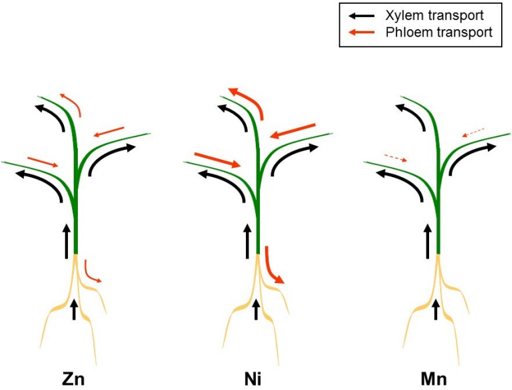
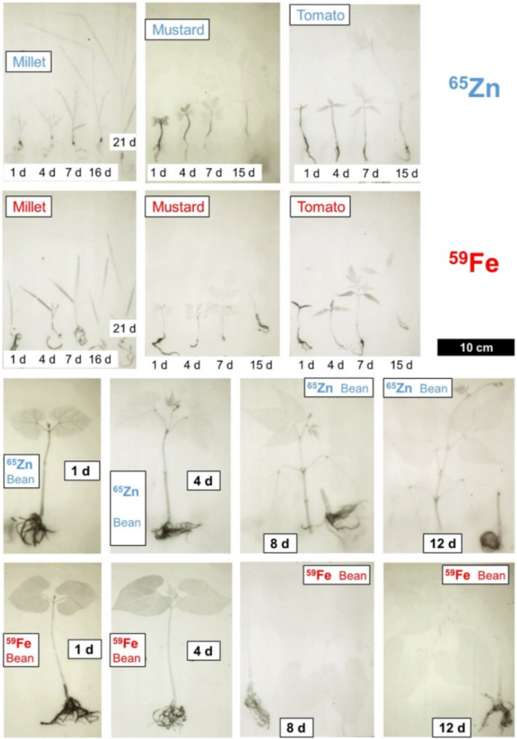
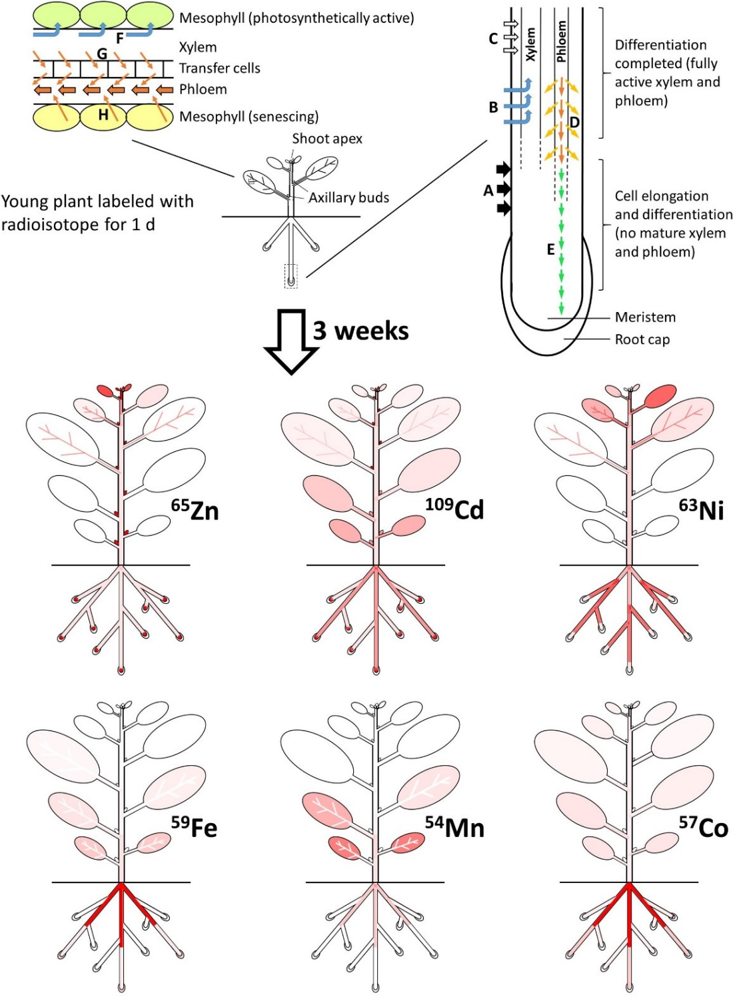
Copper, zinc, manganese, iron, nickel and molybdenum are essential micronutrients for plants. However, when present in excess they may damage the plant or decrease the quality of harvested plant products. Some other heavy metals such as cadmium, lead or mercury are not needed by plants and represent pollutants. The uptake into the roots, the loading into the xylem, the acropetal transport to the shoot with the transpiration stream and the further redistribution in the phloem are crucial for the distribution in aerial plant parts. This review is focused on long-distance transport of heavy metals via xylem and phloem and on interactions between the two transport systems. Phloem transport is the basis for the redistribution within the shoot and for the accumulation in fruits and seeds. Solutes may be transferred from the xylem to the phloem (e.g., in the small bundles in stems of cereals, in minor leaf veins). Nickel is highly phloem-mobile and directed to expanding plant parts. Zinc and to a lesser degree also cadmium are also mobile in the phloem and accumulate in meristems (root tips, shoot apex, axillary buds). Iron and manganese are characterized by poor phloem mobility and are retained in older leaves.
Overview
The claims and statistics of this paper haven’t been checked yet.
Free: it reads the open-access text and checks the first 5 claims that cite a source we can check. Create a free account to check every claim.
Integrity signals
Registry
Cites
Statistics
Figures
Verification
Claims the paper makes
The claims and statistics of this paper haven’t been checked yet.
Free: it reads the open-access text and checks the first 5 claims that cite a source we can check. Create a free account to check every claim.
Claims other papers make about this one
Each is checked against this paper’s own text: does it say what the citing paper says it does?
The source backs part of the claim, not all of it — or backs it for a different population, condition or comparison.
In the citing paper
“Enhancing the plant uptake and transport within plants of pollutants is key to improving the efficiency of phytoremediation; therefore, the redistribution mechanism of pollutants in plants needs to be fully understood (Hou 2023;Page & Feller, 2015;Verkleij et al. 2009).”
From Sustainable management of post-phytoremediation biomass (2025) · cites this paper as Page & Feller 2015
Experimental — accuracy not yet measured
Self-check
Percentages, sums and reported differences re-computed from the paper’s own numbers.
The self-check needs the paper’s full text.
Citations
Cites
Mineral Nutrition of Higher Plants
(1995) · Elsevier eBooks · doi:10.1016/b978-0-12-473542-2.x5000-7 · Cited by 19,181
Reactive oxygen species and antioxidant machinery in abiotic stress tolerance in crop plants
Gill, S. S., & Tuteja, N. (2010) · Plant Physiology and Biochemistry · doi:10.1016/j.plaphy.2010.08.016 · Cited by 11,663
Role of superoxide dismutases (SODs) in controlling oxidative stress in plants
Alscher, R. G. (2002) · Journal of Experimental Botany · doi:10.1093/jexbot/53.372.1331 · Cited by 2,771 · cited 1×
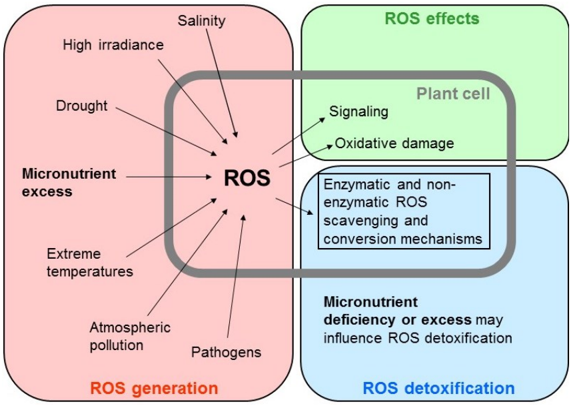
“Heavy metals present at elevated levels may cause an increased production of reactive oxygen species (ROS) in plant cells on one hand [42–51] and may be involved in the enzymatic detoxification of ROS on the other hand [2,3,42,52–54].”
BackgroundWhite, P. J., & Broadley, M. R. (2009) · New Phytologist · doi:10.1111/j.1469-8137.2008.02738.x · Cited by 2,178 · cited 2×
“, phytate, oxalate) must be considered when evaluating the bioavailability of essential heavy metals [90,91].”
BackgroundSalt, D. E., Smith, R. D., & Raskin, I. (1998) · Annual Review of Plant Physiology and Plant Molecular Biology · doi:10.1146/annurev.arplant.49.1.643 · Cited by 2,085
Toxic metal accumulation, responses to exposure and mechanisms of tolerance in plants
Clemens, S. (2006) · Biochimie · doi:10.1016/j.biochi.2006.07.003 · Cited by 2,021
Heavy metal hyperaccumulating plants: how and why do they do it? And what makes them so interesting
Rascio, N., & Navari-Izzo, F. (2011) · Plant Science · doi:10.1016/j.plantsci.2010.08.016 · Cited by 2,012
Dual action of the active oxygen species during plant stress responses
Dat, J., Vandenabeele, S., Vranov�, E., Van Montagu, M., Inz� *, D., & Van Breusegem, F. (2000) · Cellular and Molecular Life Sciences (CMLS) · doi:10.1007/s000180050041 · Cited by 1,904
Photooxidative stress in plants
Foyer, C. H., Lelandais, M., & Kunert, K. J. (1994) · Physiologia Plantarum · doi:10.1034/j.1399-3054.1994.920422.x · Cited by 1,799 · cited 1×
“Heavy metals present at elevated levels may cause an increased production of reactive oxygen species (ROS) in plant cells on one hand [42–51] and may be involved in the enzymatic detoxification of ROS on the other hand [2,3,42,52–54].”
BackgroundTrace elements in agroecosystems and impacts on the environment
He, Z. L., Yang, X. E., & Stoffella, P. J. (2005) · Journal of Trace Elements in Medicine and Biology · doi:10.1016/j.jtemb.2005.02.010 · Cited by 1,772
Research works printed but not linked: 2
- Fahn, A. Plant Anatomy, 3rd ed.; Pergamon Press: Oxford, UK, 1982; pp. 46-73.
- Jamil, M.; Zia, M.S.; Qasim, M. Contamination of agro-ecosystem and human health hazards from wastewater used for irrigation. J. Chem. Soc. Pak. 2010, 32, 370-378.
Cited by
Items 201–300 of 307
Khatlan, H. M. S., Al-Issawi, M., & Rihan, H. Z. (2024) · Diyala Agricultural Sciences Journal · doi:10.52951/dasj.24160106 · Cited by 4
“These give a clear image of how Cd is mobilized inside plants at physiological and genetic levels (Page and Feller, 2015). good plant nutrition reduces the toxicity of Cd and controls its accumulation in edible plant parts (Rizwan et al., 2017).”
Nijabat, A., Mubashir, M., Rehman, M. M. U., Siddiqui, M. H., Alamri, S. A., Nehal, J., Khan, R., Zaman, Q., Haider, S. Z., Akhlaq, M., et al. (2024) · BMC Plant Biology · doi:10.1186/s12870-024-05527-1 · Cited by 6
“It could be explained as toxic heavy metals are absorbed by roots and their translocation to arial parts is slow [103].”
BackgroundThummajitsakul, S., Sangdee, C., Thaisa, S., Ruengwiroon, P., & Silprasit, K. (2019) · Pertanika journal of tropical agricultural science · Cited by 3
Boni, T. S., de Azevedo, J. P., Rodriguez, A. O., & Maltoni, K. L. (2022) · Research Society and Development · doi:10.33448/rsd-v11i6.28582 · Cited by 3
Gramss, G., & Voigt, K.-D. (2018) · Agriculture · doi:10.3390/agriculture8110170 · Cited by 3
“The respective drainable carbohydrates, amino acids, organic acids, pectins, and phenolics may enter the soil matrix by leaching [51–53], b sipetal phloem transport [61], and the subsequent xudation by roots [48–50].”
BackgroundKamaral, C., Neate, S. M., Gunasinghe, N., Milham, P. J., Paterson, D., & Seneweera, S. P. (2020) · doi:10.22541/au.159112187.70335701 · Cited by 3
Biofilm biofertilizer modulates heavy metals in soil–plant systems to produce high-quality rice
Warnakulasooriya, D., Ekanayake, S., Premarathna, M., Seneviratne, G., & Xu, Z. (2025) · Academia Environmental Sciences and Sustainability · doi:10.20935/acadenvsci7532 · Cited by 4
Farnese, F. D. S., Jvfs, S., Vhc, A., Raf, G., Pizziolo, G. P., Silva, F. J., Reis, J., de Oliveira, J. A., de Freitas-Silva, L., & Menezes‐Silva, P. E. (2025) · Journal of Hazardous Materials · doi:10.1016/j.jhazmat.2025.139738 · Cited by 2
Batool, T. S., Jabbar, W., Imran, H., Hanif, A., Aslam, R., Amir, R., Munir, F., Bhatti, M. F., Williams, L. E., & Gul, A. (2025) · Journal of Plant Interactions · doi:10.1080/17429145.2025.2563867 · Cited by 2
“These nutrients are required for normal physiological, biochemical, and metabolic processes in plants, with some involved in oxidation/reduction processes (Page and Feller 2015; Khan et al. 2019).”
Cai, M., Xing, Z., Du, C., Ding, X., Zhang, M., & Zhou, C. (2025) · Journal of Agricultural and Food Chemistry · doi:10.1021/acs.jafc.5c09796 · Cited by 2
Anwar, M. R., Qayyum, M. F., Zubair, H. M., & Aon, M. (2025) · Plant Nano Biology · doi:10.1016/j.plana.2025.100241 · Cited by 4
Pérez, D. I. G., Mizser, S., Horváth, R., & Tőzsér, D. (2026) · Journal of Plant Growth Regulation · doi:10.1007/s00344-026-12095-1 · Cited by 5
“Therefore, with continued metal uptake, long-term accumulation tends to occur primarily in roots or leaves (Page and Feller 2015; Pasricha et al. 2021 ).”
Sumudumali, S., & Abeywickrema, S. (2026) · Bioresource Technology Reports · doi:10.1016/j.biteb.2026.102654 · Cited by 2
Litvinenko, Y. A., Sassykova, L. R., Sassykova, A. R., Konysbayev, A. T., Aitbayeva, R. R., Abildin, T. S., Kanapiyeva, F. M., Zhakirova, N. K., Zhussupova, A. K., Sendilvelan, S., et al. (2026) · Sci · doi:10.3390/sci8060123 · Cited by 2
“…mechanisms of selective movement and accumulation of heavy metals serve as the foundation for maintaining an optimal balance of substances and require mandatory consideration in the development of agronomic strategies, including breeding, genotyping, and the use of agrotechnical techniques [91–94].”
Plant sulfate transporters dealing with drought and salinity stress
Banerjee, S. (2021) · Elsevier eBooks · doi:10.1016/b978-0-12-817958-1.00006-2 · Cited by 2
Environmental aspects of the application of mineral fertilizers
Sukiasyan, A. R., Jhangiryan, T., Ledashcheva, T., Hunanyan, S., & Kirakosyan, A. (2024) · E3S Web of Conferences · doi:10.1051/e3sconf/202455503012 · Cited by 2
Nickel phytoremediation potential of Plantago major L.: Transcriptome analysis
Lyu, S., Fang, Y., Zhang, Y., Liu, Z., & Deng, S. (2024) · Environmental and Experimental Botany · doi:10.1016/j.envexpbot.2024.106020 · Cited by 5
Vazquez-Marquez, A. M., Correa‐Basurto, J., Varela-Guerrero, V., González-Pedroza, M. G., Zepeda-Gómez, C., Burrola-Aguilar, C., Nieto-Trujillo, A., & Estrada-Zúñiga, M. E. (2024) · Future Journal of Pharmaceutical Sciences · doi:10.1186/s43094-024-00742-x · Cited by 2
Ramírez-Estrada, C. A., Sánchez, E., Salcido-Martínez, A., Anchondo-Paez, J. C., Muñoz-Márquez, E., & PALACIO-MÁRQUEZ, A. (2024) · Plant Nano Biology · doi:10.1016/j.plana.2024.100129 · Cited by 4
Almulhim, B. F., Sherif, F. E., Younis, N. S., Safwat, Y., & Khattab, S. (2025) · Frontiers in Plant Science · doi:10.3389/fpls.2024.1421485 · Cited by 2
Cadmium transport characteristics in the phloem of sweet potato
Chen, Z., Zhao, X., Zhang, S., Li, J., Zhu, G., Shi, L., & Chen, Y. (2025) · Plant Physiology and Biochemistry · doi:10.1016/j.plaphy.2025.109932 · Cited by 2
Vidal, A., Nguyen, C., Brunel‐Muguet, S., Avice, J., Ameline, A.-F., & Cornu, J. (2025) · Environmental Science and Pollution Research · doi:10.1007/s11356-025-36364-w · Cited by 2
“In contrast, Zn is generally mobile in phloem (Page and Feller 2015) and is strongly required in growing tissues (Haslett 2001; Erenoglu et al. 2002; Firdous et al. 2020; Kaur et al. 2023), which may explain why the best model for the Q shoot:root of Zn has the shoot biomass as a predictor (Table…”
Tejeda-Sartorius, O., Trejo‐Téllez, L. I., Téllez-Velasco, M. A. A., & Gómez‐Merino, F. C. (2018) · The Horticulture Journal · doi:10.2503/hortj.okd-148 · Cited by 2
Liénard, A., & Colinet, G. (2018) · Cahiers Agricultures · doi:10.1051/cagri/2018008 · Cited by 2
Prado, R. D. M. (2021) · Springer eBooks · doi:10.1007/978-3-030-71262-4_17 · Cited by 2
The Potential Roles of Biochar in Restoring Heavy-Metal-Polluted Tropical Soils and Plant Growth
Salam, A. K. (2023) · IntechOpen eBooks · doi:10.5772/intechopen.105791 · Cited by 9
Szwalec, A., & Mundała, P. (2025) · Sustainability · doi:10.3390/su17104692 · Cited by 1
“The higher plants have developed a number of mechanisms for controlling the transfer of heavy metals within them [54–56].”
Kumawat, A. K., Vaish, S., & Pathak, B. (2025) · Soil and Sediment Contamination An International Journal · doi:10.1080/15320383.2025.2509741 · Cited by 1
“The uptake of heavy metals occurred predominantly through the root system, with subsequent translocation to the aerial tissues contingent upon metal concentrations (Page and Feller 2015).”
Banerjee, S., Jha, S., Ghosh, S., Mondal, G., Kumar, S., & Bhattacharyya, P. (2025) · Clean Technologies and Environmental Policy · doi:10.1007/s10098-025-03329-z · Cited by 1
“According to Page and Feller (2015), the retention of Pb, Cr, and Ni in roots is due to their sequestration in vacuoles or compartmentalization within cells, which restricts their movement through the xylem.”
Rivi, M., D’Eusanio, V., Marchetti, A., Bonfiglioli, E., & Tassi, L. (2025) · Molecules · doi:10.3390/molecules30234573 · Cited by 1
Manganese and iron toxicity in invasive tree tobacco (Nicotiana glauca Graham, Solanaceae)
Wala, M., Kołodziejek, J., Sieczyńska, K., Mazur, J., & Skwarek, M. (2025) · South African Journal of Botany · doi:10.1016/j.sajb.2025.09.024 · Cited by 1
Xu, X., Peng, C., Wei, J., Xie, W., & Zhang, W. (2026) · Environmental Pollution · doi:10.1016/j.envpol.2026.127673 · Cited by 1
Functional Green Nanomaterials for Plant-Mediated Heavy Metal Cleanup
Irfan, M., Zubair, I., & Rashid, A. (2026) · Comments on Inorganic Chemistry · doi:10.1080/02603594.2026.2640621 · Cited by 1
Borges, L. R. D. M., da Fonseca, A. C., Melo, E. S. D. P., Ferreira, R. D. S., Inada, A. C., Guimarães, R. D. C. A., Hiane, P. A., do Nascimento, V. A., & Freitas, K. D. C. (2026) · Sci · doi:10.3390/sci8040083 · Cited by 1
“At the same time, studies indicate that soils near landfills are leached, increasing the contamination of adjacent soils by potentially toxic agents [28,32].”
Khelil, M. N., & Ghrib, R. (2026) · Water · doi:10.3390/w18080981 · Cited by 2
Roguz, K., & Szaniawska, A. (2026) · Environmental and Experimental Botany · doi:10.1016/j.envexpbot.2026.106367 · Cited by 1
Peroni, P., Zegada‐Lizarazu, W., Mench, M. J., & Monti, A. (2026) · Plant and Soil · doi:10.1007/s11104-026-08568-7 · Cited by 1
“10 b; Page and Feller 2015).”
Advances in Wheat Breeding for Metal and Metalloid Stress Tolerance
Dadsena, A., Kumari, A., Bharati, A., Tilgam, J., Kumar, S., Prakash, N. R., Keisham, M., & Jaiswal, S. (2026) · Springer eBooks · doi:10.1007/978-981-92-0902-6_12 · Cited by 2
Saeed, M., & Yang, P. (2026) · Journal of Plant Growth Regulation · doi:10.1007/s00344-026-12297-7 · Cited by 1
“However, active transporters play a crucial role in Zn loading and unloading in the xylem (Page and Feller 2015).”
Fu, H., Yang, L. W., Wu, Y., Zeng, Y., Yang, Y., & Zhang, X. (2026) · Ecotoxicology and Environmental Safety · doi:10.1016/j.ecoenv.2026.120516 · Cited by 1
Moguee, S., Fallah, S., Pokhrel, L. R., Adavi, Z., & Berkuta, J. (2026) · Bioscience Nanotechnology · doi:10.1186/s44331-026-00032-8 · Cited by 1
“However, the effects of ZnONPs remain concentration-dependent, as excessive nanoparticle accumulation may induce oxidative damage and phy-totoxicity under certain conditions [50].”
Selenium Biofortification of Popcorn Maize Microgreens by Nutri-Priming and Foliar Application
Zoican, C., Iljkić, D., Varga, I., Jović, J., Stošić, M., Ravnjak, B., & Kojić, M. T. (2026) · Agriculture · doi:10.3390/agriculture16171904 · Cited by 1
Mycorrhizal contacts can get better adaptability for host plant under metal stress
Lokhandwala, A., Parihar, P., & Bora, M. (2017) · Journal of Pharmacognosy and Phytochemistry · Cited by 1
Alleviation of Zea mays L. Nickel Toxicity by Triacontanol Foliar Spray
Younis, A. A., & Ismail, H. (2022) · Egyptian Journal of Pure and Applied Science · doi:10.21608/ejaps.2022.109286.1015 · Cited by 2
Posttranslational modifications and metal stress tolerance in plants
Singh, A., Gupta, M., Kumar, S., Chawla, H., Mehra, M., Kumar, K., Jat, B. S., & Bhushan, B. (2023) · Elsevier eBooks · doi:10.1016/b978-0-323-99600-6.00001-3 · Cited by 2
Singh, S., Yadav, R., & Singh, A. N. (2023) · Springer eBooks · doi:10.1007/978-3-031-35775-6_8 · Cited by 2
Crop Responses to Metal Toxicity
Muhammad, S., Ashraf, S., Mukhtiar, M., Ul‐Allah, S., Hasan, Z., Azeem, A., Shah, J. M., Gull, R., & Javed, I. (2023) · Springer eBooks · doi:10.1007/978-3-031-37424-1_10 · Cited by 1
Cadmium Toxicity in Rice and Wheat Plants: An Apprehension of Translocation and Tolerance Mechanisms
Dey, A., Lama, U., Ghosh, S., Das, D., Majumder, S., & Roychowdhury, T. (2024) · Environmental science and engineering · doi:10.1007/978-3-031-73266-9_11 · Cited by 2
Mustăţea, G., Mocanu, A. L., Stroe, C. A., Berca, L., & Ungureanu, E. L. (2025) · Exploration of Foods and Foodomics · doi:10.37349/eff.2025.101094 · Cited by 1
Kocaman, A. (2021) · Research Square · doi:10.21203/rs.3.rs-1140970/v1 · Cited by 2
Heavy Metal Uptake of Corn Irrigated with Human Urine
Factura, H. S. (2017) · International Journal of Advances in Applied Sciences · doi:10.11591/ijaas.v6.i1.pp1-5
Genetic and agronomic biofortification of zinc in sweetcorn
Cheah, Z. X. (2020) · The University of Queensland · doi:10.14264/uql.2020.921
McGladdery, C. (2019) · UpSpace Institutional Repository (University of Pretoria)
Seasonal and Spatial Variations of Iron and Zinc Values in Meadows with a Semi-Arid Climate
Bashir, H., Khan, Z. I., & Ahmad, K. (2021) · Biological Sciences - PJSIR · doi:10.52763/pjsir.biol.sci.64.3.2021.231.243
(2021) · Biogeosciences · doi:10.5194/bg-2021-268-rc1
(2022) · Biogeosciences · doi:10.5194/bg-2021-268-rc2
(2022) · Biogeosciences · doi:10.5194/bg-2021-268-rc3
Montemagno, A. (2022) · Biogeosciences · doi:10.5194/bg-2021-268-ac2
Montemagno, A. (2022) · Biogeosciences · doi:10.5194/bg-2021-268-ac3
Aisien, E. T. (2022) · African Journal of Health Safety and Environment · doi:10.52417/ajhse.v3i1.196 · Cited by 1
“Heavy metals are primarily found in vegetable crops' growth media (soil, air and nutrients solutions), where they are absorbed by the roots or foliage (Page and Feller, 2015).”
BackgroundSenevirathne, G. I., Chathurika, J. A. S., Gunwardana, M., Siriwardhana, A., & purasinhala, K. (2022) · Research Square · doi:10.21203/rs.3.rs-1648139/v1
Lykas, C., Zografou, M. T., & Kazi, M. (2022) · International Journal of Agriculture & Environmental Science · doi:10.14445/23942568/ijaes-v9i2p101 · Cited by 3
Ogugua, U. V., Kanu, S. A., & Ntushelo, K. (2022) · SSRN Electronic Journal · doi:10.2139/ssrn.4156279
Cadmium (Cd) and nickel (Ni) accumulation in different organs of basil plants
Zografou, M., Kazi, M., & Lykas, C. (2022) · Acta Horticulturae · doi:10.17660/actahortic.2022.1345.45
Rasha, S. A.-H., Shimaa, R. H., Saleh, M. M. S., & Merwad, M. A. (2023) · International Journal of Research and Innovation in Applied Science · doi:10.51584/ijrias.2023.8422 · Cited by 3
JabAllah, H., Nahaisi, M., Elshtewi, A., & Ilowefah, M. A. (2022) · Journal of Pure & Applied Sciences · doi:10.51984/jopas.v21i2.1684
Estimation of substance distribution in the soil-plant system (on the example of crop species)
Belykh, L. I., & Семеновна, Т. С. (2023) · Proceedings of universities Applied chemistry and biotechnology · doi:10.21285/2227-2925-2023-13-2-272-282
PHOSPHORUS AND ZINC NUTRITION IN MAIZE (ZEA MAYS L.) UNDER DROUGHT STRESS
Afzal, T., Wakeel, A., Shehzad, T., Hussain, S., & Sanaullah, M. (2023) · The Journal of Animal and Plant Sciences · doi:10.36899/japs.2023.6.0669
COMPARATIVE STUDY OF SOME TRACE ELEMENTS IN IRAQI VEGETABLES AS A SCREEN FOR ENVIRONMENTAL POLLUTION
Al-Ani, A. W., & Fadel, S. S. (2023) · PLANT ARCHIVES · doi:10.51470/plantarchives.2023.v23.no2.006
Zinc and Zinc oxide nanoparticles in heavy metal/metalloids stress management in plants
Balyan, G., & Pandey, A. K. (2024) · Elsevier eBooks · doi:10.1016/b978-0-323-91314-0.00012-0
Plant Metabolism and Abiotic Stress in Crops
Taziun, T., Mir, B. A., Kumari, R., Akhtar, N., & Wani, A. K. (2024) · Wiley eBooks · doi:10.1002/9781394186457.ch3
Li, F., Yu, X., Yang, Y., Tao, W., Zhu, M., Zhang, D., Shi, S., Li, H.-Q., Tang, P., Tiraferri, A., et al. (2025) · Process Safety and Environmental Protection · doi:10.1016/j.psep.2025.106786
Li, Y., Kang, Y., Wang, Y., Li, N., & Chen, W. (2025) · Plant and Soil · doi:10.1007/s11104-025-07279-9
“Research has shown that Cd can be either transported from other tissues or enter phloem sap from xylem ducts (Page and Feller 2015).”
Mulenga, C., Nakazwe, B., Phiri, D., Lwali, C. A., & Siwale, W. (2025) · Discover Plants. · doi:10.1007/s44372-025-00212-5
AL‐Huqail, A. A., Kumar, P., Ahmed, M. T., & Eid, E. M. (2025) · Journal of soil science and plant nutrition · doi:10.1007/s42729-025-02484-y
“…Pb: 0.3, Mn: 500.0, Ni: 67.9, Fe: 425.5, Cu: 73.3, Zn: 60.0 as per FAO/WHO act as barriers or storage sites for less mobile or toxic metals like Co and Pb to prevent their translocation to sensitive shoot tissues and therefore reduce the overall toxicity for plant survival (Page and Feller 2015).”
InfluentialDoan, C. C., Minh, V. V., & Nguyen-Sy, T. (2025) · International Conference on Applying New Technology in Green Buildings (ATiGB) · doi:10.1109/atigb66719.2025.11142172
Huang, Z., Du, B., Sun, T., & Ji, D. (2025) · Frontiers in Environmental Science · doi:10.3389/fenvs.2025.1734892 · Cited by 1
Bianca, P. O. P., PLEȘA, A., Papina, C., GHEORGHIȚĂ, A., STOIAN, V. H., & Vidican, R. (2026) · Sustainability · doi:10.3390/su18031386
Nutrient allocation and growth responses of Oncidium baueri to different Bokashi application methods
Pedro, S., da Silva, V. F. A., Tejo, D. P., Pereira, J. P. C., Oliveira, H. C., & de Faria, R. T. (2026) · Ornamental Horticulture · doi:10.1590/2447-536x.v32.e322993
Ghosh, N., Hazra, T., & Debsarkar, A. (2026) · Journal of Material Cycles and Waste Management · doi:10.1007/s10163-026-02543-1 · Cited by 1
“Ni is highly mobile within the phloem and can be redistributed multiple times throughout their vegetative and reproductive phases of crop plants [ 73, 74 ].”
Peng, J., Dai, Y., Ye, L., Zhou, F., Jiang, J., Liu, F., & Zhu, F. (2026) · Computers and Electronics in Agriculture · doi:10.1016/j.compag.2026.111712
Plant Metal Hyperaccumulation in Mexico : Agromining Perspectives
Gutiérrez, D. M. N. (2020) · theses.fr (ABES) · doi:10.70675/50394679z8163z46cfzb6f8z07ed19fdc660
Ramadan, S. M., Rizwan, M., AL-Balawi, S. M., & Elshamy, M. M. (2026) · BMC Plant Biology · doi:10.1186/s12870-026-08832-z · Cited by 1
“Metal accumulation in plant tissues is controlled by soil metal availability, species, organ uptake, and translocation processes [77–79].”
Metal fractionation and mobility in medicinal plants near industrial emission sources
Манджиева, С. С., Chaplygin, V. A., Chernikova, N., Kravchenko, E., Litvinov, Y., Barakhov, A., Bogomaz, E., Siromlya, T. I., Nasarenko, O., & Minkina, T. (2026) · Chemosphere · doi:10.1016/j.chemosphere.2026.144969
Jabeen, Z., Zahra, S., Chaudhri, A., & Tahir, A. (2026) · International Journal of Phytoremediation · doi:10.1080/15226514.2026.2671327
“…2016), including disrupted plant metabolism, decreased biomass production, excessive ROS production, and hinders nutrient and water uptake, ultimately inhibiting photosynthesis and plant growth (Choppala et al. 2014; Page and Feller 2015; Farooq et al. 2016; Shafiq et al. 2019; Iwuala et al. 2024).”
Aytop, H., Birol, M., Dengiz, O., & Saygın, F. (2026) · International Journal of Environmental Health Research · doi:10.1080/09603123.2026.2682483
“Similarly, essential metals such as Zn and Mn are critical components of plant enzymes, but excessive concentrations can disrupt many vital physiological processes (Page and Feller 2015).”
Navigating heavy metal stress: emerging roles of TOR and SnRK signaling in plant tolerance
Naaz, S., & Laxmi, A. (2026) · Frontiers in Plant Science · doi:10.3389/fpls.2026.1774622
“Lead (Pb) and mercury (Hg) can reduce their mobility but cause localized toxicity by interacting with membrane transport mechanisms or binding fi rmly to components of cell walls (Viehweger, 2014; Page and Feller, 2015).”
Phukunkamkaew, S., Tisarum, R., Sotesaritkul, T., Samphumphuang, T., Maksup, S., Himanshu, S. K., Datta, A., & Cha–um, S. (2026) · Agricultural Research · doi:10.1007/s40003-026-00998-0
Pang, T., Jin, Z., Xiao, C., Chen, L., Liu, Y., Dong, Q., Shi, J., Liang, Y., Yin, Y., Cai, Y. Z., et al. (2026) · Environmental Chemistry and Ecotoxicology · doi:10.1016/j.enceco.2026.06.001
Qin, C., He, Z., Xi, W., Shi, C., Zhang, X., Li, Q., & Lian, H. (2026) · Journal of Agricultural and Food Chemistry · doi:10.1021/acs.jafc.6c04203
Recent Progress on Thallium Transport and Transformation Behaviors in Soil-Plant System
Guo, H., Chen, W., Lin, J., Yu, S., Deng, P., Hu, H., Lu, Y., Yin, M., Wang, J., & Liu, J. (2026) · EARTH AND ENVIRONMENT · doi:10.3724/ee.1672-9250.2026.54.073
Screening for potential metal hyperaccumulator plants in Angola: a herbarium-based approach
Morgenstern, T., Baumgärtel, C., Lautenschläger, T., Götzke, L., Neinhuis, C., & Weigand, J. J. (2026) · Environmental Monitoring and Assessment · doi:10.1007/s10661-026-15744-w
“Therefore, metals often accumulate more strongly in older leaves than in younger leaves or short-lived organs such as flowers and fruits (Page & Feller, 2015).”
Kairullova, M., Bakhtin, M., Ilbekova, K., & Ibrayeva, D. (2026) · Biology · doi:10.3390/biology15161382
“In chronically contaminated uranium mining regions, these adaptive responses may ultimately lead to the establishment of naturally tolerant plant populations capable of surviving and reproducing under persistent radionuclide and heavy metal stress [44,46,47].”
InfluentialRasool, G., Liu, H., Riaz, A., & Ullah, M. S. (2026) · Journal of Agricultural and Food Chemistry · doi:10.1021/acs.jafc.6c07783
Gacem, F., Reguieg, Y. H. A., Nouri, T., Derdour, A., Santos, M. B.-D. L., & Picazo, M. Á. P. (2026) · Euro-Mediterranean Journal for Environmental Integration · doi:10.1007/s41207-026-01263-0
“…1 indicates efficient root‑to‑shoot translocation, making leaves the primary sink—precisely the hyperaccumulation pattern reported for Oenanthe javanica and other Zn‑tolerant wetland species that detoxify via vacuolar sequestration in mesophyll cells (Wuana and Okieimen 2011; Page and Feller 2015).”
Ren, C., Xiao, W., Zhang, Y., Wu, H., Zhang, J., Liu, B., Li, J., Li, Q., & Wang, X. (2026) · Frontiers in Plant Science · doi:10.3389/fpls.2026.1849237
Каримов, Х., Uzakov, Z. Z., Панжиевич, Х. Ж., Маллаева, Д., & Abdurazzoqov, N. (2026) · Bulgarian Journal of Agricultural Science · doi:10.61308/4avd1h20
“Research on the processes involving the transport and redistribution of heavy metals (Page and Feller, 2015) in plants, as well as the input and output of heavy metals (Shi et al., 2018) to agricultural soils, smart sensing for monitoring heavy metals (Hejna et al., 2019) in agricultural soils, and…”
Metadata
- Authors
- Page, V., & Feller, U.
- Affiliations
- University of Bern (CH)
- Corresponding author
- Feller, Urs
- ORCID
- Feller, Urs
- Venue
- Agronomy
- Publisher
- MDPI AG
- Published
- 2015-09-09
- Volume
- 5
- Issue
- 3
- Pages
- 447-463
- ISSN
- 2073-4395 (ISSN-L)
- OpenAlex
- W1578363155
- Cited by
- 307
- References
- 117
- Citations by year
- 2026: 44 · 2025: 40 · 2024: 41 · 2023: 34 · 2022: 38 · 2021: 32 · 2020: 33 · 2019: 18 · 2018: 16 · 2017: 5 · 2016: 5 · 2015: 1
- FWCI
- 10.89
- Type
- journal article
- Language
- en
- Open access
- gold
- dx.doi.org
- Licence
- Locations
- Agronomy (publishedVersion, cc-by)
- Bern Open Repository and Information System (University of Bern) (submittedVersion, cc-by)
- DOAJ (DOAJ: Directory of Open Access Journals) (submittedVersion, cc-by-sa)
- Open Access CRIS of the University of Bern
- Funders
- University of Bern
- Topics
- Life Sciences › Agricultural and Biological Sciences › Plant Science › Plant Micronutrient Interactions and Effects
- Physical Sciences › Environmental Science › Pollution › Heavy metals in environment
- Physical Sciences › Chemistry › Analytical Chemistry › Heavy Metals in Plants
- Keywords
- heavy metals, micronutrients, phloem transport, xylem loading, long-distance transport, phloem mobility, cadmium, nickel, zinc, iron, manganese, molybdenum, copper, lead, mercury, root-to-shoot translocation
About these checks
Registry, retraction, Cites and statistics results are computed, not judged, with one exception: a printed reference that no index lists is read once by a model before it counts as a citation error. Claims are extracted by a model and kept only when their quote appears verbatim in the text; each cited source is then checked, with a model’s help, for whether it says what the claim relies on. Those verdicts can be wrong — read the claim’s quote and the cited source before relying on one.
Statistics and arithmetic are recomputed, not judged.
Confidence bands are shown only for fields calibrated on our annotated test set. None is calibrated yet, so no band is shown.
What counts as a claim ›How we measure confidence ›How we check this ›
Are you an author, or do you see a problem with this page? Request a review
Data sources
Bibliographic data: Semantic Scholar, OpenAlex, Crossref.
Contains information from the Semantic Scholar Academic Graph Datasets, made available under the ODC Attribution License (ODC-BY 1.0).
Semantic Scholar’s data is described in: Kinney, R., et al. (2023). The Semantic Scholar Open Data Platform. arXiv:2301.10140.
