

Staphylococcus aureus: A Review of the Pathogenesis and Virulence Mechanisms
Open accessThe DOI matches its Crossref record; 313 of the 313 references it cites were found in a registry or an index; 2 of the 278 sources its claims cite were checked for support.
Abstract
Staphylococcus aureus is a formidable human pathogen responsible for infections ranging from superficial skin lesions to life-threatening systemic diseases. This review synthesizes current knowledge on its pathogenesis, emphasizing colonization dynamics, virulence mechanisms, biofilm formation, and antibiotic resistance. By analyzing studies from PubMed, Scopus, and Web of Science, we highlight the pathogen’s adaptability, driven by surface adhesins (e.g., ClfB, SasG), secreted toxins (e.g., PVL, TSST-1), and metabolic flexibility in iron acquisition and amino acid utilization. Nasal, skin, and oropharyngeal colonization are reservoirs for invasive infections, with biofilm persistence and horizontal gene transfer exacerbating antimicrobial resistance, particularly in methicillin-resistant S. aureus (MRSA). The review underscores the clinical challenges of multidrug-resistant strains, including vancomycin resistance and decolonization strategies’ failure to target single anatomical sites. Key discussions address host–microbiome interactions, immune evasion tactics, and the limitations of current therapies. Future directions advocate for novel anti-virulence therapies, multi-epitope vaccines, and AI-driven diagnostics to combat evolving resistance. Strengthening global surveillance and interdisciplinary collaboration is critical to mitigating the public health burden of S. aureus.
Overview
CoChat Summary
TL;DR
This review synthesizes current knowledge on *Staphylococcus aureus* pathogenesis, colonization, virulence factors, biofilm formation, antibiotic resistance, and emerging therapeutic strategies. It emphasizes the pathogen’s adaptability through adhesins, secreted toxins, metabolic flexibility, and horizontal gene transfer, and argues for anti-virulence therapies, vaccines, phage/CRISPR/nanotechnology, and strengthened surveillance.
Key findings
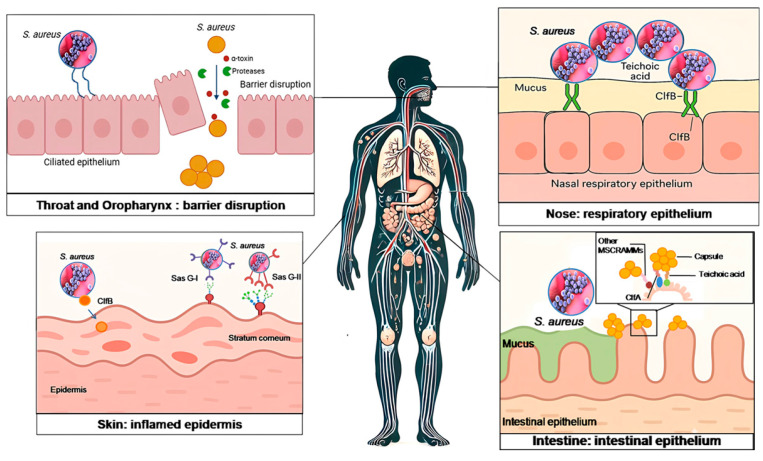
- Colonization is dynamic: approximately 30% of individuals are persistently colonized, 30% intermittently, and 40% are non-carriers; the anterior nares are the primary niche. Nasal MRSA/MSSA rates vary widely—community MSSA 12–30% and MRSA 1–3%, with examples such as 51.2% MSSA/1.2% MRSA among homeless individuals in Lisbon and 42.7% MSSA/14% MRSA in Sierra Leone. Throat carriage can exceed nasal carriage (40% vs 31%; exclusive throat carriage 30.2% in community participants vs 18.4% in hospitalized patients/healthcare workers), and biofilm-forming strains are 3–5 times more likely to persist in the throat. Nasal mupirocin reduced nasal MRSA by 50% but did not significantly impact throat carriage.
- Virulence is driven by surface adhesins (e.g., ClfB, SasG, MSCRAMMs) and secreted toxins (e.g., PVL, TSST-1, alpha-hemolysin). PVL genes are rare in nasal carriage isolates (0.6–2.1%) but prevalent in skin/soft tissue infections (38.9%) and necrotizing pneumonia (>90%); PVL-positive necrotizing pneumonia mortality is 56–75%, and recurrence rates are threefold higher than PVL-negative isolates. PVL targets C5aR/C5L2, with sublytic concentrations (~5 nM) inducing apoptosis and higher concentrations (~200 nM) causing necrosis.
- Resistance mechanisms include *mecA*/*mecC*-encoded PBP2a and SCC*mec* for MRSA, *vanA*/*vanB* for VRSA, and thickened cell walls/metabolic adaptations for VISA. Reported VRSA prevalence is 1.2% in Asia, 1.1% in Europe, 3.6% in America, and 2.5% in Africa, with country examples such as Saudi Arabia (18%) and Nigeria (29%).
- Emerging strategies include monoclonal antibodies, multivalent vaccines, CRISPR-Cas9 targeting *mecA*/*blaZ*/*icaA*, phage StAP1 lysing 46.3% of clinical MRSA isolates, endolysins reducing MRSA populations by 90%, dPNAG vaccines reducing bacteremia by 54–91% in murine models, and surface coatings reducing bacterial adhesion by 40–94%.
Methods
- Narrative review synthesizing studies identified from PubMed, Scopus, and Web of Science; no primary data are reported.
- Thematic synthesis covers colonization dynamics, virulence factors, regulation (*agr*/*sar*), antibiotic resistance mechanisms, MRSA/VRSA epidemiology, and emerging therapeutic strategies, including tables of colonization and VRSA prevalence.
Limitations
- Stated in the paper: PVL’s pathogenic role remains debated because murine models lack compatible C5aR isoforms and other toxins can replicate necrotizing effects; vaccine development is limited by incomplete understanding of protective immunity, antigenic redundancy, and immune skewing; decolonization protocols often fail to eliminate throat colonization.
- Evident from the text: as a narrative review, it reports no systematic search strategy, inclusion/exclusion criteria, risk-of-bias assessment, or meta-analysis, so conclusions rely on cited literature and may be subject to selection bias.
Model-written summary. Check it against the paper before relying on it.
Integrity signals
Registry
Cites
Statistics
Figures
Verification
Claims the paper makes
1 Valid · 0 Not valid · 222 Not checked · 28 Own results and interpretations
The cited sources support only part of this claim — read each source’s verdict below.
In the paper
“secreted toxins like α-hemolysin, Panton-Valentine leukocidin (PVL), and toxic shock syndrome toxin-1 (TSST-1) contribute to tissue destruction and systemic toxicity [5].”
§ Staphylococcus aureus: A Review of the Pathogenesis and Virulence Mechanisms > 1. Introduction
What the sources say
- Partly supportedcites [5] Linz M.S. Mattappallil A. Finkel D. Parker D. Clinical Impact of Staphylococcus aureus Skin and Soft Tissue Infections Antibiotics 2023 12 557 10.3390/antibiotics12030557 36978425 PMC10044708 sourceExperimental — accuracy not yet measured
Section 5 (Pathogenesis) of our copy supports the α-hemolysin and PVL parts: ɑ-hemolysin binds ADAM10 to initiate cell lysis and cleaves E-cadherin, with Δhla mutants showing smaller lesions and minimal dermonecrosis, and PVL-positive S. aureus inducing larger skin lesions in humanized NSG mice and lysing PMNs. However, TSST-1 is never named anywhere in our copy (searched: TSST-1, toxic shock syndrome toxin, superantigen, systemic toxicity); the paper only describes staphylococcal superantigens generically as activating T cells by crosslinking TCR with MHC II to 'disrupt the physiological immune response', and discusses exfoliative toxins ETA/ETB in SSSS, so the TSST-1 member of the triad and the 'systemic toxicity' attribution are not supported. The cited passage also hedges more than the claiming sentence: it states that 'the specific role of PVL in USA300 skin infections remains unclear, with inconsistent findings across studies' and that 'the role of Hla in human SSTI virulence has not been well characterized', whereas the quote asserts tissue destruction as established fact. (LLM, conf=0.75)
plainstates a cause- Asserted: passes — The authors put it forward as true.
- Checkable: passes — It can be checked against evidence.
- Load-bearing: unclear — It is unclear whether the paper’s conclusions depend on it.
- Based: passes — The paper gives a reason why it holds.
- Partly supported
None of the sources cited for this claim have been checked yet.
In the paper
“Conversely, clindamycin and linezolid suppress toxin synthesis, highlighting the therapeutic implications of antibiotic selection [109,117,124].”
§ Staphylococcus aureus: A Review of the Pathogenesis and Virulence Mechanisms > 2. Pathogenesis of S. aureus > 2.3. Staphylococcal PVL: Clinical Implications, Molecular Mechanisms, and Genetic Landscape
What the sources say
- Not checked yetcites [109] Shallcross L.J. Fragaszy E. Johnson A.M. Hayward A.C. The role of the Panton-Valentine leucocidin toxin in staphylococcal disease: A systematic review and meta-analysis Lancet Infect. Dis. 2013 13 43 54 10.1016/S1473-3099(12)70238-4 23103172 PMC3530297 source
- Not checked yetcites [117] Nawrotek P. Karakulska J. Fijałkowski K. Chapter 9—The Staphylococcal Panton-Valentine Leukocidin (PVL) Pet-To-Man Travelling Staphylococci Savini V. Academic Press Cambridge Cambridge, MA, USA 2018 117 125 978-0-12-813547-1 Available online: https://www.sciencedirect.com/science/article/pii/B9780128135471000091 (accessed on 1 April 2025)
- Could not verifycites [124] Arunachalam K. Pandurangan P. Shi C. Lagoa R. Regulation of Staphylococcus aureus Virulence and Application of Nanotherapeutics to Eradicate S. aureus Infection Pharmaceutics 2023 15 310 10.3390/pharmaceutics15020310 36839634 PMC9960757 sourceExperimental — accuracy not yet measured
Our copy mentions clindamycin only as a payload/comparator in nanotherapeutic studies (Section 3.3, Organic NPs: clindamycin-loaded PLGA and PLGA-polyethylenimine NPs against MRSA wound infection [233]; lecithin liposomes 'more efficient than clindamycin' [262]; Section 3.2 rhamnolipid-ZnONPs vs clindamycin-treated wounds [184,185]) and linezolid only as one antibiotic whose activity was enhanced by ultrasound-stimulated phase-change contrast agents (Section 3.3, [228]). No passage states that either drug suppresses PVL or other toxin synthesis; the paper's toxin discussion (Section 2.7) covers PVL as a pore-forming leukocidin regulated by the agr operon, not antibiotic-mediated suppression. Searched: 'clindamycin linezolid suppress toxin synthesis', 'Panton-Valentine leukocidin production inhibition', 'linezolid toxin production protein synthesis inhibitor', 'antibiotics reduce PVL alpha-toxin expression', plus exact-term searches for 'clindamycin' and 'linezolid'. Nothing contradicts the claim either, so it is unaddressed rather than disputed. (LLM, conf=0.70)
plainstates a cause- Asserted: passes — The authors put it forward as true.
- Checkable: passes — It can be checked against evidence.
- Load-bearing: unclear — It is unclear whether the paper’s conclusions depend on it.
- Based: passes — The paper gives a reason why it holds.
In the paper
“Despite colonizing the anterior nares, skin, and mucosal surfaces in approximately 30% of healthy individuals, S. aureus exploits breaches in host barriers or immune defenses to establish invasive infections, underscoring its adaptability and resilience [3].”
§ Staphylococcus aureus: A Review of the Pathogenesis and Virulence Mechanisms > 1. Introduction
What the sources say
- Not checked yetcites [3] Laux C. Peschel A. Krismer B. Staphylococcus aureus Colonization of the Human Nose and Interaction with Other Microbiome Members Microbiol. Spectr. 2019 7 10.1128/microbiolspec.GPP3-0029-2018 31004422 PMC11590430 source
plainstates a cause- Asserted: passes — The authors put it forward as true.
- Checkable: passes — It can be checked against evidence.
- Load-bearing: unclear — It is unclear whether the paper’s conclusions depend on it.
- Based: passes — The paper gives a reason why it holds.
In the paper
“An additional 30% undergo intermittent colonization, driven by factors such as bacterial strain adaptability, environmental exposures, and fluctuations in host immunity [11].”
§ Staphylococcus aureus: A Review of the Pathogenesis and Virulence Mechanisms > 2. Pathogenesis of S. aureus > 2.1. Colonization Dynamics
What the sources say
- Not checked yetcites [11] Howden B.P. Giulieri S.G. Wong Fok Lung T. Baines S.L. Sharkey L.K. Lee J.Y.H. Hachani A. Monk I.R. Stinear T.P. Staphylococcus aureus host interactions and adaptation Nat. Rev. Microbiol. 2023 21 380 395 10.1038/s41579-023-00852-y 36707725 PMC9882747 source
plainstates a cause- Asserted: passes — The authors put it forward as true.
- Checkable: passes — It can be checked against evidence.
- Load-bearing: unclear — It is unclear whether the paper’s conclusions depend on it.
- Based: passes — The paper gives a reason why it holds.
In the paper
“Specifically, S. aureus adheres to cytokeratin 10, a structural protein expressed in nasal epithelial cells, a key mechanism enabling persistent colonization [15].”
§ Staphylococcus aureus: A Review of the Pathogenesis and Virulence Mechanisms > 2. Pathogenesis of S. aureus > 2.1. Colonization Dynamics
What the sources say
- Not checked yetcites [15] Sakr A. Brégeon F. Mège J.-L. Rolain J.-M. Blin O. Staphylococcus aureus Nasal Colonization: An Update on Mechanisms, Epidemiology, Risk Factors, and Subsequent Infections Front. Microbiol. 2018 9 2419 10.3389/fmicb.2018.02419 30349525 PMC6186810 source
plainstates a cause- Asserted: passes — The authors put it forward as true.
- Checkable: passes — It can be checked against evidence.
- Load-bearing: unclear — It is unclear whether the paper’s conclusions depend on it.
- Based: passes — The paper gives a reason why it holds.
150 more claims
Create a free account to see all 251 claims and to verify the 276 references still open.
- It may state two separate claims as one. 90
- Probably not a substantial claim. 10
- The quote only partly states this claim. 1
Self-check
Percentages, sums and reported differences re-computed from the paper’s own numbers.
Each contradiction between two passages listed here was confirmed by an independent check.
Rated minor: it would not touch a result — a value no result rests on, a p-value that stays on the same side of the significance level, or a conflict that is clerical, resolved elsewhere in the paper, or outside its own findings.
In the paper
§ Staphylococcus aureus: A Review of the Pathogenesis and Virulence Mechanisms > 4. Antibiotic Resistance and Mechanisms in S. aureus > 4.2. Epidemiology and Clinical Impact of MRSA
“| Africa | 2.5% | Ethiopia, Egypt | Nigeria (29%), Egypt (Multiple reports) | [222,283] |”
§ Staphylococcus aureus: A Review of the Pathogenesis and Virulence Mechanisms > 4. Antibiotic Resistance and Mechanisms in S. aureus > 4.2. Epidemiology and Clinical Impact of MRSA
“Countries with Notable Data | Country-Specific Prevalence (%)”
Rated minor: it would not touch a result — a value no result rests on, a p-value that stays on the same side of the significance level, or a conflict that is clerical, resolved elsewhere in the paper, or outside its own findings.
In the paper
§ Staphylococcus aureus: A Review of the Pathogenesis and Virulence Mechanisms > 4. Antibiotic Resistance and Mechanisms in S. aureus > 4.1. Mechanisms of Antibiotic Resistance
“This growing concern culminated in a significant 1946 study by Kirby and colleagues, which documented the increasing prevalence of penicillin-resistant S. aureus in London hospitals.”
§ Staphylococcus aureus: A Review of the Pathogenesis and Virulence Mechanisms > References
“185. Kirby W.M. Extraction of a Highly Potent Penicillin Inactivator from Penicillin Resistant Staphylococci Science 1944 99 452 453 10.1126/science.99.2579.452 17798398”
Rated minor: it would not touch a result — a value no result rests on, a p-value that stays on the same side of the significance level, or a conflict that is clerical, resolved elsewhere in the paper, or outside its own findings.
In the paper
§ Staphylococcus aureus: A Review of the Pathogenesis and Virulence Mechanisms > 2. Pathogenesis of S. aureus > 2.1. Colonization Dynamics
“Similarly, Marshall and Spelman previously found that 69.2% of patients tested positive in nasal samples, compared to 71.4% in throat samples.”
§ Staphylococcus aureus: A Review of the Pathogenesis and Virulence Mechanisms > References
“62. Batra R. Eziefula A. Wyncoll D. Edgeworth J. Throat and rectal swabs may have an important role in MRSA screening of critically ill patients Intensive Care Med. 2008 34 1703 1706 10.1007/s00134-008-1153-1 18500421”
Rated minor: it would not touch a result — a value no result rests on, a p-value that stays on the same side of the significance level, or a conflict that is clerical, resolved elsewhere in the paper, or outside its own findings.
In the paper
§ Staphylococcus aureus: A Review of the Pathogenesis and Virulence Mechanisms > 2. Pathogenesis of S. aureus > 2.1. Colonization Dynamics
“The remaining 40% are classified as non-carriers, though transient colonization remains possible under conducive conditions, such as disrupted skin barriers or antibiotic-mediated microbiome shifts [12].”
§ Staphylococcus aureus: A Review of the Pathogenesis and Virulence Mechanisms > 2. Pathogenesis of S. aureus > 2.1. Colonization Dynamics
“Approximately 20% of the human population are persistent carriers of S. aureus, 60% exhibit intermittent carriage, and the remaining 20% show no detectable colonization.”
Rated minor: it would not touch a result — a value no result rests on, a p-value that stays on the same side of the significance level, or a conflict that is clerical, resolved elsewhere in the paper, or outside its own findings.
In the paper
§ Staphylococcus aureus: A Review of the Pathogenesis and Virulence Mechanisms > 4. Antibiotic Resistance and Mechanisms in S. aureus > 4.1. Mechanisms of Antibiotic Resistance
“The key breakthrough came in the late 1940s when Chain and Abraham demonstrated that resistant strains produced an enzyme capable of breaking down the antibiotic [188].”
§ Staphylococcus aureus: A Review of the Pathogenesis and Virulence Mechanisms > References
“188. Abraham E.P. Chain E. An enzyme from bacteria able to destroy penicillin. 1940 Rev. Infect. Dis. 1988 10 677 678 3055168”
Citations
Cites
Items 201–313 of 313
Tsang, S. J., McHugh, M. P., Guerendiain, D., Gwynne, P. J., Boyd, J., Simpson, H., Walsh, T. S., Laurenson, I. F., & Templeton, K. E. (2018) · Bone and Joint Research · doi:10.1302/2046-3758.71.bjr-2017-0175.r1 · Cited by 45 · cited 1×
“[34].”
Tigabu, A., & Getaneh, A. (2021) · Clinical Laboratory · doi:10.7754/clin.lab.2020.200930 · Cited by 44 · cited 1×
“Staphylococcus aureus is a versatile Gram-positive coccus, a facultative aero-anaerobic bacterium that is both a commensal organism and an opportunistic pathogen, capable of causing a broad spectrum of human diseases [1].”
Pietrocola, G., Pellegrini, A., Alfeo, M. J., Marchese, L., Foster, T. J., & Speziale, P. (2020) · Journal of Biological Chemistry · doi:10.1074/jbc.ra120.013510 · Cited by 43 · cited 1×
“This system consists of a series of surface receptors (IsdA, IsdB, IsdC) that extract heme from hemoglobin, transport it into the bacterial cytoplasm, and degrade it to release iron [134].”
Expanding the Staphylococcus aureus SarA Regulon to Small RNAs
Oriol, C., Cengher, L., Manna, A. C., Mauro, T., Pinel-Marie, M.-L., Felden, B., Cheung, A., & Rouillon, A. (2021) · mSystems · doi:10.1128/msystems.00713-21 · Cited by 43 · cited 1×
“Identifying multiple SarA homologs within S. aureus suggests a more complex regulatory landscape influencing staphylococcal pathogenesis [135,170].”
Methicillin-Resistant Staphylococcus aureus ST80 Clone: A Systematic Review
Mairi, A., Touati, A., & Lavigne, J.-P. (2020) · Toxins · doi:10.3390/toxins12020119 · Cited by 42 · cited 4×
“PVL synergizes with other virulence determinants, including exfoliative toxin D (etD) and epidermal differentiation inhibitor B (edinB), to enhance tissue invasion and dissemination in MRSA-ST80 [105].”
InfluentialSelf-citationAssociation between fluoroquinolone resistance and MRSA genotype in Alexandria, Egypt
Alseqely, M., Newton-Foot, M., Khalil, A., El-Nakeeb, M., Whitelaw, A., & Abouelfetouh, A. (2021) · Scientific Reports · doi:10.1038/s41598-021-83578-2 · Cited by 42 · cited 1×
“Notably, subinhibitory concentrations of fluoroquinolones have been found to accelerate resistance development, highlighting the importance of proper dosing in clinical practice [247,248].”
Wójcik-Bojek, U., Różalska, B., & Sadowska, B. (2022) · International Journal of Molecular Sciences · doi:10.3390/ijms23020948 · Cited by 42 · cited 1×
“MSCRAMM, such as Factor A (Clfa) and protein A, also play fundamental roles in adherence and immune evasion by binding to fibrinogen and host immunoglobulins [84].”
Fluoroquinolones and Biofilm: A Narrative Review
Geremia, N., Giovagnorio, F., Colpani, A., De Vito, A., Botan, A., Stroffolini, G., Toc, D.-A., Zerbato, V., Principe, L., Madeddu, G., et al. (2024) · Pharmaceuticals · doi:10.3390/ph17121673 · Cited by 42 · cited 1×
“Identifying resistance mechanisms has been crucial in understanding how S. aureus adapts to fluoroquinolone exposure [239–241].”
van Dijk, M. C., de Kruijff, R. M., & Hagedoorn, P.-L. (2022) · Frontiers in Cell and Developmental Biology · doi:10.3389/fcell.2022.857237 · Cited by 41 · cited 1×
“Iron is an essential nutrient for S. aureus and is critical in bacterial metabolism, replication, and virulence [130].”
Nelson, J. L., Rice, K. C., Slater, S. R., Fox, P. M., Archer, G. L., Bayles, K. W., Fey, P. D., Kreiswirth, B. N., & Somerville, G. A. (2007) · Antimicrobial Agents and Chemotherapy · doi:10.1128/aac.01057-06 · Cited by 41 · cited 1×
“In contrast to VRSA, VISA strains do not acquire van genes but develop resistance through alternative mechanisms, primarily involving thickened cell walls and metabolic adaptations [8,214].”
Congdon, S. T., Guaglione, J. A., Ricketts, O. M. A., Murphy, K. V., Anderson, M. G., Trowbridge, D. A., Al-Abduladheem, Y., Phillips, A. M., Beausoleil, A. M., Stanley, A. J., et al. (2023) · Frontiers in Cellular and Infection Microbiology · doi:10.3389/fcimb.2023.1195758 · Cited by 41 · cited 1×
“Within the general population, S. aureus nasal carriage is linked to skin and soft tissue infections, with studies reporting higher prevalence among individuals with recent antibiotic use [28].”
Zeden, M. S., Gallagher, L. A., Bueno, E., Nolan, A. C., Ahn, J., Shinde, D. D., Razvi, F., Sladek, M. F., Burke, Ó., O’Neill, E., et al. (2023) · PLoS Pathogens · doi:10.1371/journal.ppat.1011536 · Cited by 39
Belete, M. A., Gedefie, A., Alemayehu, E., Debash, H., Mohammed, O., Gebretsadik, D., Ebrahim, H., & Tilahun, M. (2023) · Antimicrobial Resistance and Infection Control · doi:10.1186/s13756-023-01291-3 · Cited by 38 · cited 1×
“Enhanced infection control measures, rapid diagnostic tools, and antimicrobial stewardship programs are essential to mitigate the spread of vancomycin resistance in clinical settings [222,223].”
Yadegar, A., Sattari, M., Mozafari, N. A., & Goudarzi, G. R. (2009) · Microbial Drug Resistance · doi:10.1089/mdr.2009.0897 · Cited by 37 · cited 1×
“SCC mec type V, while traditionally associated with CA-MRSA, has also been detected in hospital settings, indicating its potential role in the spread of resistance [227,228].”
Corynebacterium accolens inhibits Staphylococcus aureus induced mucosal barrier disruption
Huang, S., Hon, K., Bennett, C. A., Hu, H., Menberu, M. A., Wormald, P., Zhao, Y., Vreugde, S., & Liu, S. (2022) · Frontiers in Microbiology · doi:10.3389/fmicb.2022.984741 · Cited by 37 · cited 2×
“…Staphylococcus lugdunensis uniquely exploited SF-A and SF-B [17,18]. lugdunensis uniquely Notably, nearly all Corynebacterium isolates demonstrated enhanced growth in response to staphyloferrin activity, underscoring the pivotal role of S. aureus in modulating nasal microbial communities [19].”
Thompson, D., Xu, J., Ischia, J., & Bolton, D. (2024) · BJUI Compass · doi:10.1002/bco2.286 · Cited by 37 · cited 1×
“Identifying resistance mechanisms has been crucial in understanding how S. aureus adapts to fluoroquinolone exposure [239–241].”
Phage Therapy as an Alternative Treatment Modality for Resistant Staphylococcus aureus Infections
Atshan, S. S., Hamat, R. A., Aljaberi, M. A., Chen, J.-S., Huang, S.-W., Lin, C.-Y., Mullins, B. J., & Kicic, A. (2023) · Antibiotics · doi:10.3390/antibiotics12020286 · Cited by 36 · cited 1×
“Phage StAP1 lyses 46.3% of clinical MRSA isolates [293], while endolysins (LysK, Exebacase) hydrolyze peptidoglycan, synergizing with antibiotics (e.g., vancomycin) to reduce MRSA populations by 90% [294,295].”
InfluentialHot topics in necrotising skin and soft tissue infections
Saeed, K., Esposito, S., Gould, I., Ascione, T., Bassetti, M., Bonnet, E., Bouza, E., Chan, M., Davis, J. S., De Simone, G., et al. (2018) · International Journal of Antimicrobial Agents · doi:10.1016/j.ijantimicag.2018.02.012 · Cited by 35 · cited 3×
“Furthermore, other toxins (e.g., α -hemolysin, phenol-soluble modulins) can replicate PVL’s necrotizing effects, suggesting functional redundancy in S. aureus pathogenesis [109,113].”
Metabolism Shapes Immune Responses to Staphylococcus aureus
Arumugam, P., & Kielian, T. (2024) · Journal of Innate Immunity · doi:10.1159/000535482 · Cited by 35 · cited 1×
“Recent research has highlighted the importance of nutrient acquisition, particularly iron and zinc, in the virulence of S. aureus [129].”
Snowden, J. N., Beaver, M., Beenken, K., Smeltzer, M., Horswill, A. R., & Kielian, T. (2013) · PLoS ONE · doi:10.1371/journal.pone.0084089 · Cited by 34 · cited 1×
“Foundational studies have demonstrated that SarA is essential for biofilm formation, toxin production, and immune evasion, contributing to the persistence of S. aureus in chronic infections [147,160].”
Evolution of Staphylococcus aureus and MRSA during outbreaks
Lindsay, J. A. (2014) · Infection, Genetics and Evolution · doi:10.1016/j.meegid.2013.04.017 · Cited by 34 · cited 1×
“This genetic diversity results from horizontal gene transfer, selective pressure from host immunity and antibiotic exposure, and genomic recombination events, making it challenging to predict virulence based solely on genetic profiling [100].”
Mahfouz, A. A., Said, H. S., Elfeky, S. M., & Shaaban, M. I. (2023) · Antibiotics · doi:10.3390/antibiotics12030503 · Cited by 34
Antibiofilm Effects of Plant Extracts Against Staphylococcus aureus
Barbarossa, A., Rosato, A., Tardugno, R., Carrieri, A., Corbo, F., Limongelli, F., Fumarola, L., Fracchiolla, G., & Carocci, A. (2025) · Microorganisms · doi:10.3390/microorganisms13020454 · Cited by 34 · cited 1×
“Plant-derived flavonoids (punicalagin) and essential oils (cinnamaldehyde) disrupt EPS synthesis via oxidative stress, while probiotic-derived inhibitors enhance host–microbe competition [298,302,303].”
Guo, X., Wang, L., Zhang, J., Liu, Q., Wang, B., Liu, D., Gao, F., Lanzi, G., Zhao, Y., & Shi, Y. (2024) · npj Biofilms and Microbiomes · doi:10.1038/s41522-024-00485-w · Cited by 33 · cited 1×
“S. aureus counters immunity through SSL3/TirS disruption of TLR2 signaling [307–309].”
Staphylococcus aureus – antimicrobial resistance and the immunocompromised child
McNeil, J. C. (2014) · Infection and Drug Resistance · doi:10.2147/idr.s39639 · Cited by 31 · cited 1×
“In HIV-positive individuals, colonization rates are elevated, leading to a greater likelihood of invasive infections due to their compromised immune status [26,27].”
Prevalence and molecular characterization of Staphylococcus aureus from human stool samples
Kates, A., Thapaliya, D., Smith, T. C., & Chorazy, M. L. (2018) · Antimicrobial Resistance and Infection Control · doi:10.1186/s13756-018-0331-3 · Cited by 31 · cited 2×
“However, considering the prevalence of GI colonization, incorporating rectal swabs into screening protocols can improve detection rates, ensuring that colonized individuals are identified and managed appropriately [69,75].”
Brozyna, J. R., Sheldon, J. R., & Heinrichs, D. E. (2014) · MicrobiologyOpen · doi:10.1002/mbo3.162 · Cited by 30 · cited 2×
“, the site [3]. nasal by microbial interactions aureus ) which conditions, proliferation ) exploited SF-A and SF-B [17,18].”
Evasion of Immunological Memory by S. aureus Infection: Implications for Vaccine Design
Teymournejad, O., & Montgomery, C. P. (2021) · Frontiers in Immunology · doi:10.3389/fimmu.2021.633672 · Cited by 30 · cited 2×
“Recent strategies focus on multi-epitope vaccines targeting both adhesins (e.g., ClfB, SasG) and toxins (e.g., alpha-hemolysin) combined with adjuvants that enhance mucosal and cutaneous immunity [54].”
Nasal commensals reduce Staphylococcus aureus proliferation by restricting siderophore availability
Zhao, Y., Bitzer, A., Power, J. J., Belikova, D., Salazar, B. O. T., Adolf, L. A., Gerlach, D., Krismer, B., & Heilbronner, S. (2024) · The ISME Journal · doi:10.1093/ismejo/wrae123 · Cited by 30 · cited 2×
“, can support the growth of other nasal bacteria [16].”
Odunitan, T. T., Oyaronbi, A. O., Adebayo, F. A., Adekoyeni, P. A., Apanisile, B. T., Oladunni, T. D., & Saibu, O. A. (2024) · Pharmaceutical Science Advances · doi:10.1016/j.pscia.2023.100034 · Cited by 28 · cited 1×
“Some strains produce staphylokinase, an enzyme that degrades antimicrobial peptides, reducing host immune clearance [21,22].”
Coombs, G. W., Baines, S. L., Howden, B. P., Swenson, K. M., & O’Brien, F. G. (2020) · PLOS ONE · doi:10.1371/journal.pone.0228676 · Cited by 27 · cited 1×
“However, the non-canonical pairing of PVL subunits with other leukocidins (e.g., HlgCB, LukED) in vitro suggests functional versatility, complicating therapeutic strategies [126–128].”
Mohamad Farook, N. A., Argimón, S., Abdul Samat, M. N., Salleh, S. A., Sulaiman, S., Tan, T. L., Periyasamy, P., Lau, C. L., Ismail, Z., Muhammad Azami, N. A., et al. (2022) · Tropical Medicine and Infectious Disease · doi:10.3390/tropicalmed7120438 · Cited by 27
Sivori, F., Cavallo, I., Truglio, M., Maio, F. D., Sanguinetti, M., Fabrizio, G., Licursi, V., Francalancia, M., Fraticelli, F., Greca, I. L., et al. (2024) · Biofilm · doi:10.1016/j.bioflm.2024.100222 · Cited by 27
Staphylococcus aureus skin colonization is mediated by SasG lectin variation
Mills, K. B., Maciag, J. J., Wang, C., Crawford, J. A., Enroth, T. J., Keim, K. C., Dufrêne, Y. F., Robinson, D. A., Fey, P. D., Herr, A. B., et al. (2024) · Cell Reports · doi:10.1016/j.celrep.2024.114022 · Cited by 26
Kaushik, A., Kest, H., Sood, M., Thieman, C., Steussy, B. W., Padomek, M., & Gupta, S. (2024) · Antibiotics · doi:10.3390/antibiotics13121132 · Cited by 26 · cited 1×
“The incorporation of MSCRAMMs into the biofilm structure not only enhances bacterial persistence but also increases the pathogenicity of S. aureus strains, particularly in infections related to implants and bloodstream infections associated with catheters [78,87].”
Xia, Y.-Q., Hu, Z., Jin, Q., Chen, Q., Zhao, C., Qiang, R., Xie, Z., Li, L., & Zhang, H. (2025) · Computational and Structural Biotechnology Journal · doi:10.1016/j.csbj.2025.01.021 · Cited by 26 · cited 2×
“Metabolic modulators like JBD1 increase NADH/ROS, sensitizing persisters to antibiotics, while Cu-POM nanoclusters disrupt the TCA cycle, inducing lethal metabolic stress [299].”
Shokravi, Z., Mehrad, L., & Ramazani, A. (2017) · BioImpacts · doi:10.15171/bi.2015.15 · Cited by 25 · cited 1×
“SCC mec type V, while traditionally associated with CA-MRSA, has also been detected in hospital settings, indicating its potential role in the spread of resistance [227,228].”
Cervera-Alamar, M., Guzmán-Markevitch, K., Žiemytė, M., Ortí, L., Bernabé-Quispe, P., Pineda-Lucena, A., Pemán, J., & Tormo-Mas, M. Á. (2018) · Scientific Reports · doi:10.1038/s41598-018-34918-2 · Cited by 25 · cited 1×
“The phage-borne nature of these genes facilitates horizontal transfer via prophage induction or transduction by mobile genetic elements, including staphylococcal pathogenicity islands (SaPIs) [121,122].”
Nassar, R., Hachim, M., Nassar, M., Kaklamanos, E. G., Jamal, M., Williams, D., & Senok, A. (2021) · Frontiers in Microbiology · doi:10.3389/fmicb.2020.607002 · Cited by 25 · cited 1×
“These enzymes facilitate the utilization of amino acids like glutamine and glutamate, providing metabolic flexibility that supports biofilm maturation and persistence in nutrient-limited environments [145,146].”
Smith, M., & Herwaldt, L. (2023) · American Journal of Infection Control · doi:10.1016/j.ajic.2023.02.004 · Cited by 25 · cited 2×
“For instance, a meta-analysis found that nasal mupirocin reduced nasal MRSA by 50% but did not significantly impact throat carriage, highlighting the need for site-specific interventions [31].”
Williamson, D. A., Ritchie, S., Keren, B., Harrington, M., Thomas, M. G., Upton, A., Lennon, D., & Leversha, A. (2016) · Pediatric Infectious Disease Journal · doi:10.1097/inf.0000000000001173 · Cited by 24 · cited 1×
“S. aureus throat colonization persists longer than nasal carriage due to biofilm formation, AMR, and asymptomatic shedding [63].”
Pre-epidemic evolution of the MRSA USA300 clade and a molecular key for classification
Bianco, C. M., Moustafa, A. M., O’Brien, K., Martin, M. A., Read, T. D., Kreiswirth, B. N., & Planet, P. J. (2023) · Frontiers in Cellular and Infection Microbiology · doi:10.3389/fcimb.2023.1081070 · Cited by 23 · cited 1×
“The presence of ACME is notably associated with MRSA strains, particularly the epidemic USA300 clone [140].”
Haas, W., Singh, N., Lainhart, W., Mingle, L., Nazarian, E., Mitchell, K., Nattanmai, G., Kohlerschmidt, D., Dickinson, M. C., Kacica, M., et al. (2023) · Microbiology Spectrum · doi:10.1128/spectrum.04317-22 · Cited by 23 · cited 1×
“The first VRSA case was reported in 2002 in a patient with a catheter-related infection, where molecular analysis identified the presence of the vanA gene, a key determinant of vancomycin resistance [208,209].”
Key considerations in the treatment of complicated staphylococcal infections
Jones, R. N. (2008) · Clinical Microbiology and Infection · doi:10.1111/j.1469-0691.2008.01923.x · Cited by 22
Langhanki, L., Berger, P., Treffon, J., Catania, F., Kahl, B. C., & Mellmann, A. (2018) · BMC Microbiology · doi:10.1186/s12866-018-1308-3 · Cited by 22 · cited 1×
“This expansion enhances person-to-person transmission and infection rates [142,143].”
Deng, J. P., Wang, X., Zhang, B., Gao, P., Lin, Q., Kao, R. Y. T., Gustafsson, K. T., Yuen, K., & Huang, J. (2019) · mSphere · doi:10.1128/msphere.00362-19 · Cited by 22 · cited 2×
“…with adaptive immune activation to reduce antibiotic reliance against biofilm-associated infections. mAbs, such as TRL1068 and F598, neutralize adhesins (ClfA, FnBPs) and promote phagocytosis by resisting S. aureus proteases (e.g., GluV8) and evading Protein A (SpA) interference [284,285].”
GltS regulates biofilm formation in methicillin-resistant Staphylococcus aureus
Shibamura-Fujiogi, M., Wang, X., Maisat, W., Koutsogiannaki, S., Li, Y., Chen, Y., Lee, J. C., & Yuki, K. (2022) · Communications Biology · doi:10.1038/s42003-022-04239-2 · Cited by 22 · cited 1×
“These enzymes facilitate the utilization of amino acids like glutamine and glutamate, providing metabolic flexibility that supports biofilm maturation and persistence in nutrient-limited environments [145,146].”
Staphylococcus Infection: Relapsing Atopic Dermatitis and Microbial Restoration
Hulme, J. (2023) · Antibiotics · doi:10.3390/antibiotics12020222 · Cited by 22 · cited 1×
“These mechanisms underscore PVL’s dual role as a cytolytic toxin and immune modulator [110,119].”
New antibacterial targets: Regulation of quorum sensing and secretory systems in zoonotic bacteria
Shen, Y., Gao, S., Fan, Q., Zuo, J., Wang, Y., Yi, L., & Wang, Y. (2023) · Microbiological Research · doi:10.1016/j.micres.2023.127436 · Cited by 22
Staphylococcus aureusin the nose and throat of Iowan families
Hanson, B., Kates, A., O’Malley, S. M., Mills, E., Herwaldt, L. A., Torner, J. C., Dawson, J. D., Farina, S. A., Klostermann, C. A., Wu, J. Y., et al. (2018) · Epidemiology and Infection · doi:10.1017/s0950268818001644 · Cited by 21 · cited 1×
“[60].”
Abie, S., Tiruneh, M., & Abebe, W. (2020) · Annals of Clinical Microbiology and Antimicrobials · doi:10.1186/s12941-020-00391-x · Cited by 21 · cited 3×
“Ethiopian studies highlighted stark contrasts between populations: hospital janitors exhibited higher colonization rates (22.2% MSSA, 8.1% MRSA) compared to non-hospital jan-itors (14.4% MSSA, 1.4% MRSA) [32].”
InfluentialStaphylococcus aureus response and adaptation to vancomycin
Fait, A., Silva, S. F., Abrahamsson, J. Å. H., & Ingmer, H. (2024) · Advances in Microbial Physiology · doi:10.1016/bs.ampbs.2024.04.006 · Cited by 21 · cited 3×
“Additionally, VISA strains often harbor mutations in genes associated with cell wall biosynthesis and regulatory systems, such as walKR and rpoB [8,217,218].”
Badarau, A., Trstenjak, N., & Nagy, E. (2017) · Advances in Experimental Medicine and Biology · doi:10.1007/5584_2016_200 · Cited by 20 · cited 1×
“At sublytic concentrations (~5 nM), PVL induces caspase-dependent apoptosis, while higher concentrations (~200 nM) provoke necrotic cell death via over-whelming pore formation [114,117,118].”
de Oliveira, D. M., Borges, A. D. S., Molina, R., Negrín, Z. R., Distinto, S., Borges, F., & Simões, M. V. (2021) · International Journal of Molecular Sciences · doi:10.3390/ijms22020613 · Cited by 20 · cited 2×
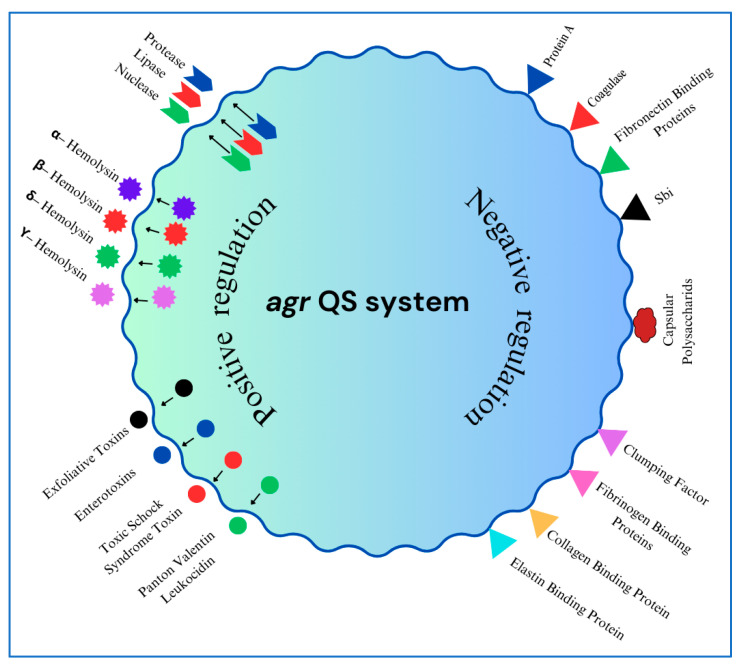
“Research on QS inhibitors has demonstrated their ability to enhance antibiotic e ffi cacy by disrupting agr -mediated signaling [157].”
Linking S. aureus Immune Evasion Mechanisms to Staphylococcal Vaccine Failures
Hajam, I. A., & Liu, G. Y. (2024) · Antibiotics · doi:10.3390/antibiotics13050410 · Cited by 20 · cited 1×
“The development of an effective S. aureus vaccine has been challenging due to a limited understanding of the immune mechanisms that confer protection against the pathogen [52].”
A Comparative Analysis of MRSA: Epidemiology and Antibiotic Resistance in Greece and Romania
Vittorakis, E., Vică, M. L., Zervaki, C. O., Vittorakis, E., Maraki, S., Mavromanolaki, V. E., Schürger, M. E., Neculicioiu, V. S., Papadomanolaki, E., & Junie, L. M. (2024) · International Journal of Molecular Sciences · doi:10.3390/ijms25147535 · Cited by 20 · cited 1×
“The co-selection of resistance traits among different antibiotic classes further limits treatment options, emphasizing the need for revised clinical guidelines [245,246].”
The application of CRISPR-Cas system in Staphylococcus aureus infection
Wang, J., Liu, F., Long, J., Jin, Y., Chen, S., Duan, G., & Yang, H. (2024) · Heliyon · doi:10.1016/j.heliyon.2024.e34383 · Cited by 19 · cited 2×
“Engineered phages synergize with lysostaphin, achieving ~4.7-log reductions in biofilm mass by targeting icaA and tarO [289].”
InfluentialWu, K., Conly, J., McClure, J.-A., Kurwa, H. A., & Zhang, K. (2020) · Microorganisms · doi:10.3390/microorganisms8020275 · Cited by 18 · cited 1×
“ACME is a mobile genetic element that enhances S. aureus ’s ability to colonize and persist on human skin by conferring resistance to polyamine compounds involved in the host’s immune defense mechanisms [139].”
Castellazzi, M. L., Bosis, S., Borzani, I., Tagliabue, C., Pinzani, R., Marchisio, P., & di Pietro, G. M. (2021) · Italian Journal of Pediatrics · doi:10.1186/s13052-021-01105-5 · Cited by 18 · cited 1×
“Pulmonary involvement in children predicts intensive care needs (OR 25.35), underscoring the toxin’s aggressive clinical trajectory [111,112].”
InfluentialSmith, C. A., Bhattacharya, M., Toth, M., Stewart, N. K., & Vakulenko, S. B. (2017) · Microbial Cell · doi:10.15698/mic2017.12.602 · Cited by 17 · cited 1×
“This discovery provides insight into the dual functions of AMEs, indicating that, beyond contributing to antibiotic resistance, they may also play a role in normal bacterial metabolism [230,231].”
Ke, S., Kil, H., Roggy, C., Shields, T., Quinn, Z., Quinn, A. P., Small, J. M., Towne, F. D., Brooks, A. E., & Brooks, B. D. (2024) · Antibiotics · doi:10.3390/antibiotics13111046 · Cited by 17 · cited 1×
“For example, peptide-based inhibitors have proven promising in interrupting the FNBP union with fibronectin, thereby reducing bacterial adhesion and in vitro biofilms [88].”
Strategies for Survival of Staphylococcus aureus in Host Cells
Xu, H., Wang, S., Liu, X., Li, M., Wang, X., Chen, H., Qu, C., Liu, Y., & Liu, J. (2025) · International Journal of Molecular Sciences · doi:10.3390/ijms26020720 · Cited by 17 · cited 1×
“Recent reports have expanded our understanding of the molecular mechanisms by which these toxins interact with host cells, revealing intricate signaling pathways and cellular targets [11,94,95].”
Beenken, K. E., Campbell, M. J., & Smeltzer, M. S. (2025) · Infection and Immunity · doi:10.1128/iai.00473-24 · Cited by 16 · cited 1×
“More-over, recent findings have underscored the role of SarA in modulating toxin production during osteomyelitis, highlighting its contribution to bone infections through regulating extracellular proteases and virulence factors [78,171].”
Regulatory dynamics of arginine metabolism in Staphylococcus aureus
Reslane, I., Watson, G. F., Handke, L. D., & Fey, P. D. (2024) · Biochemical Society Transactions · doi:10.1042/bst20240710 · Cited by 16 · cited 3×
“Recent studies have further elucidated the pivotal role of arginine metabolism in the virulence of S. aureus , mainly focusing on the arginine catabolic mobile element (ACME) [51].”
InfluentialAlexander, E. L., Gardete, S., Bar, H. Y., Wells, M. T., Tomasz, A., & Rhee, K. Y. (2014) · PLoS ONE · doi:10.1371/journal.pone.0097137 · Cited by 15 · cited 1×
“Furthermore, VISA strains may serve as precursors to the eventual emergence of fully resistant VRSA strains, emphasizing the need for continuous surveillance and novel treatment strategies [216,219–221].”
Substrate Inhibition of VanA by d-Alanine Reduces Vancomycin Resistance in a VanX-Dependent Manner
van der Aart, L. T., Lemmens, N., van Wamel, W. J., & van Wezel, G. P. (2016) · Antimicrobial Agents and Chemotherapy · doi:10.1128/aac.00276-16 · Cited by 15 · cited 1×
“However, resistant strains alter this site to D-Ala-D-Lac or D-Ala-D-Ser, drastically reducing vancomycin’s binding affinity [206,210,211].”
Risser, F., López-Morales, J., & Nash, M. A. (2022) · ACS Bio & Med Chem Au · doi:10.1021/acsbiomedchemau.2c00042 · Cited by 15 · cited 1×
“S. aureus is a versatile pathogen responsible for surface skin lesions to potentially mortal conditions, such as sepsis and pneumonia [81].”
Genetics of antibiotic resistance in methicillin-resistant Staphylococcus aureus (MRSA)
Marciniak, K., Tyczewska, A., & Grzywacz, K. (2024) · BioTechnologia · doi:10.5114/bta.2024.139756 · Cited by 15 · cited 2×
“…regulatory genes mecI and mecR1 ), recombinase genes ( ccrAB or ccrC ), and joining regions (J1–J3) that may harbor additional resistance determinants [199]. mecA is hypothesized to originate from Staphylococcus sciuri , with horizontal transfer facilitating its incorporation into S. aureus [200].”
Staphylococcus aureus nasal carriage among homeless population in Lisbon, Portugal
Conceição, T., Martins, H., Rodrigues, S., de LENCASTRE, H., & Aires-de-Sousa, M. (2019) · European Journal of Clinical Microbiology & Infectious Diseases · doi:10.1007/s10096-019-03638-4 · Cited by 14 · cited 2×
“Additionally, vulnerable populations, including people experiencing homeless-ness, may experience elevated colonization rates; a study in Lisbon, Portugal, found a 51.2% MSSA carriage rate and a 1.2% MRSA carriage rate among homeless individuals [33].”
InfluentialSkin infections due to Panton-Valentine leucocidin–producing S. aureus
Leistner, R., Hanitsch, L. G., Krüger, R., Lindner, A. K., Stegemann, M. S., & Nurjadi, D. (2022) · Deutsches Ärzteblatt international · doi:10.3238/arztebl.m2022.0308 · Cited by 14
González-García, S., Hamdan‐Partida, A., Valdez-Alarcón, J. J., Bustos-Hamdan, A., & Bustos‐Martínez, J. (2023) · Infectious diseases · doi:10.5772/intechopen.107974 · Cited by 14
Garbo, V., Venuti, L., Boncori, G., Albano, C., Condemi, A., Natoli, G., Polara, V. F., Billone, S., Canduscio, L. A., Cascio, A., et al. (2024) · Antibiotics · doi:10.3390/antibiotics13121192 · Cited by 14 · cited 1×
“Pulmonary involvement in children predicts intensive care needs (OR 25.35), underscoring the toxin’s aggressive clinical trajectory [111,112].”
InfluentialBouiller, K., Zeggay, A., Gbaguidi‐Haore, H., Hocquet, D., Chirouze, C., & Bertrand, X. (2022) · Frontiers in Microbiology · doi:10.3389/fmicb.2022.1068420 · Cited by 13 · cited 1×
“In Argentina, healthcare workers had a 23.7% MSSA and 6.3% MRSA prevalence [37], whereas France reported markedly lower MRSA rates among healthy blood donors (0.3% MRSA, 29.3% MSSA) and hospitalized patients (1.1% MRSA, 20.2% MSSA) [38].”
InfluentialStaph wars: the antibiotic pipeline strikes back
Douglas, E. J. A., & Laabei, M. (2023) · Microbiology · doi:10.1099/mic.0.001387 · Cited by 13 · cited 1×
“SCC mec mobility, driven by Ccr recombinases, enables rapid dissemination of resistance across MRSA lineages, underscoring the role of horizontal gene transfer in antibiotic resistance evolution [199,204].”
StAP1 phage: an effective tool for treating methicillin-resistant Staphylococcus aureus infections
Lu, Y., Lu, Y., Li, B., Liu, J., Wang, L., Zhang, L., Li, Y., & Zhong, Q. (2023) · Frontiers in Microbiology · doi:10.3389/fmicb.2023.1267786 · Cited by 13 · cited 1×
“Phage StAP1 lyses 46.3% of clinical MRSA isolates [293], while endolysins (LysK, Exebacase) hydrolyze peptidoglycan, synergizing with antibiotics (e.g., vancomycin) to reduce MRSA populations by 90% [294,295].”
InfluentialBelete, M. A., Tadesse, S., Tilahun, M., Alemayehu, E., & Saravanan, M. (2024) · Frontiers in Cellular and Infection Microbiology · doi:10.3389/fcimb.2024.1397935 · Cited by 13 · cited 2×
“Enzymatic degradation of biofilms involves recombinant endolysins (XZ.700, ClyRODI-H5) and DNase I-functionalized nanogels, which degrade eDNA and Extracellular Poly-meric Substances (EPSs) at ≤ 1 µ g/mL [294,300].”
InfluentialVirulence Factors and Pathogenicity of Staphylococcus aureus
Alkuraythi, D. M. (2024) · Infectious diseases · doi:10.5772/intechopen.1006633 · Cited by 13
Staphylococcus aureus metal acquisition in the mastitic mammary gland
Killpack, S., Erickson, D. L., & Wilson, E. (2020) · Microbial Pathogenesis · doi:10.1016/j.micpath.2020.104179 · Cited by 12 · cited 1×
“However, the host employs a defense mechanism known as nutritional immunity, which restricts free iron availability by sequestering it within proteins such as transferrin, lactoferrin, and hemoglobin [131].”
Immune System Evasion Mechanisms in Staphylococcus aureus: Current Understanding
Malak, H. A., Abulreesh, H. H., Organji, S. R., Elbanna, K., Shaaban, M. R., Samreen, Ahmad, I., Shami, A., Alshehri, W. A., Khalel, A., et al. (2020) · Journal of Pure and Applied Microbiology · doi:10.22207/jpam.14.4.01 · Cited by 12 · cited 1×
“…cytolysins (e.g., alpha-toxin, PVL, superantigens (e.g., TSST-1), and exfoliative toxins), contribute to tissue damage by cleaving desmosomal cadherins, leading to severe skin conditions such as staphylococcal scalded skin syndrome (SSSS), immune dysregulation, and systemic toxicity [91,92].”
Han, W., & Camesano, T. A. (2023) · Antibiotics · doi:10.3390/antibiotics12091398 · Cited by 12 · cited 1×
“Moreover, S. aureus modifies its surface charge through the MprF protein, enabling it to repel cationic antimicrobial peptides like LL-37, thereby enhancing its survival in the nasal cavity [23].”
Determinants of maturation of the Staphylococcus aureus autoinducing peptide
Fang, L., Cosgriff, C., & Alonzo, F. (2024) · Journal of Bacteriology · doi:10.1128/jb.00195-24 · Cited by 12 · cited 1×
“It comprises a two-component regulatory system activated by an autoinducing peptide (AIP) [153–155].”
Tsimbalyuk, S., Shornikov, A., Srivastava, P., Le, V. T. B., Warren, I., Khandokar, Y. B., Kuhn, M. L., & Forwood, J. K. (2023) · Cells · doi:10.3390/cells12141829 · Cited by 10 · cited 2×
“This mechanism highlights the significance of arginine metabolism and its associated genetic components in the adaptability and virulence of S. aureus [144].”
Naderi, M., Yousefi Nojookambari, N., Talebi, S., Mohammadi, M. R., & Yazdansetad, S. (2025) · Iranian Journal of Pathology · doi:10.30699/ijp.2024.2038509.3342 · Cited by 10 · cited 1×
“Ie/aph(2 ′′ ) , ant(4 ′ )-Ia , and aph(3 ′ )-IIIa , have been identified in MRSA isolates, playing a crucial role in conferring resistance to aminoglycoside antibiotics [226].”
Okolie, C. E., Cockayne, A., Penfold, C., & James, R. (2013) · BMC Biotechnology · doi:10.1186/1472-6750-13-103 · Cited by 9 · cited 1×
“These genes are located on the temperate bacteriophages of the Siphoviridae family, primarily φ Sa2, integrated into the S. aureus genome between the lysis module and the attP attachment site within lysogeny genes [120].”
Aminzadeh, Z., Yadegarynia, D., Fatemi, A., Tahmasebian Dehkordi, E., & Azad Armaki, S. (2014) · Jundishapur Journal of Microbiology · doi:10.5812/jjm.12831 · Cited by 9 · cited 1×
“Based on their minimum inhibitory concentration (MIC), S. aureus isolates are classified into three categories: vancomycin-sensitive (VSSA), vancomycin-intermediate (VISA), and vancomycin-resistant (VRSA) [207].”
Panton-Valentine Leukocidin-Producing Staphylococcus aureus Infection: A Case Series
Prista-Leão, B., Abreu, I., Duro, R., Silva-Pinto, A., Ceia, F., Andrade, P., Sobrinho-Simões, J., Tavares, M., Pereira, J. M., Santos, L., et al. (2020) · Infectious Disease Reports · doi:10.3390/idr12030014 · Cited by 9 · cited 3×
“PVL-SA pneumonia is characterized by rapid progression, hemoptysis, and multilobar infiltrates, necessitating intensive care [107,108].”
Reategui Schwarz, E., van de Guchte, A., Dupper, A. C., Caban, A. B., Nadkarni, D., Fox, L., Mills, A., Obla, A., Chacko, K. I., Oussenko, I., et al. (2022) · BMC Infectious Diseases · doi:10.1186/s12879-022-07371-w · Cited by 9 · cited 1×
“Common colonization sites, including the anterior nares, skin, and pharynx, serve as strategic footholds, highlighting the bacterium’s tropism for niches where host–pathogen interactions dictate infection trajectories [13,14].”
fathi, J., Hashemizadeh, Z., Dehkordi, R. S., Bazargani, A., Javadi, K., Hosseini-Nave, H., & Hadadi, M. (2022) · Heliyon · doi:10.1016/j.heliyon.2022.e10230 · Cited by 9 · cited 1×
“Research has progressively clarified the intricate mechanisms contributing to this resistance, mainly by identifying and analyzing AMEs and their genetic origins [224,225].”
Nasopharyngeal carriage of Staphylococcus aureus in a rural population, Sierra Leone
Kleine, L. M., Kanu, E. M., Grebe, T., Sesay, D. M., Loismann, H., Sesay, M., Theiler, T., Rudolf, V., Mellmann, A., Kalkman, L. C., et al. (2024) · International Journal of Medical Microbiology · doi:10.1016/j.ijmm.2024.151643 · Cited by 8 · cited 1×
“Community-based studies revealed extremes: Sierra Leone’s general population showed alarmingly high rates (42.7% MSSA, 14% MRSA) [39], while Lebanon reported 38.4% MSSA and a low 1.6% MRSA [40].”
InfluentialAhmann, M., Compton, J. T., Pottinger, J. M., Uhlenhopp, R., Ward, M., Haleem, A., Willey, M., Schweizer, M. L., & Herwaldt, L. A. (2025) · Infection Control and Hospital Epidemiology · doi:10.1017/ice.2024.233 · Cited by 8 · cited 1×
“Similarly, patients undergoing fracture fixation in the United States showed a 20.18% MSSA and 4.70% MRSA carriage rate [35].”
InfluentialExploring Staphylococcus aureus Virulence Factors; Special Emphasis on Staphyloxanthin
Yehia, F. A.-Z. A., Yousef, N., & Askoura, M. (2021) · Microbiology and Biotechnology Letters · doi:10.48022/mbl.2107.07008 · Cited by 7
Kobayashi, S. D., & DeLeo, F. R. (2018) · The Journal of Infectious Diseases · doi:10.1093/infdis/jiy667 · Cited by 6 · cited 1×
“S. aureus counters immunity through SSL3/TirS disruption of TLR2 signaling [307–309].”
Shokrollahi, P., Hasani, A., Aghazadeh, M., Memar, M. Y., Hasani, A., Zaree, M., Rezaee, M. A., & Sadeghi, J. (2022) · Canadian Journal of Infectious Diseases and Medical Microbiology · doi:10.1155/2022/9916255 · Cited by 6 · cited 1×
“This element is uncommon in MSSA strains, suggesting a link between ACME acquisition and increased virulence and antibiotic resistance [141].”
Toxicologic Pathology: An Introduction
Haschek, W. M., Rousseaux, C. G., Wallig, M. A., & Bolon, B. (2022) · Haschek and Rousseaux's Handbook of Toxicologic Pathology · doi:10.1016/b978-0-12-821044-4.00023-6 · Cited by 6
Hanratty, J., Changez, H., Smith, A. J., & Wales, C. (2014) · Journal of Oral and Maxillofacial Surgery · doi:10.1016/j.joms.2014.10.004 · Cited by 5 · cited 1×
“Early microbiological testing, decolonization protocols, and toxin-suppressive therapies (e.g., clindamycin) are critical to mitigating recurrence and systemic complications [108,116].”
The Oropharynx as a Distinct Colonization Site for staphylococcus aureus in the CommunityPreprint
Hanson, B., Kates, A., Mills, E., Herwaldt, L. A., Torner, J. C., Dawson, J. D., & Smith, T. C. (2017) · bioRxiv (Cold Spring Harbor Laboratory) · doi:10.1101/137901 · Cited by 4 · cited 1×
“%) in their 2017 study [59].”
A Review of Vancomycin-Resistant Staphylococcus aureus Prevalence in Egypt and Saudi Arabia
Taha, A. E. (2020) · Asian Journal of Biological and Life Sciences · doi:10.5530/ajbls.2019.8.14 · Cited by 4
Bwanga, F., Mukashyaka, C., Kateete, D. P., Tumuhamye, J., Okeng, A., Aboce, E., Namugga, O., Kwizera, R., Sommerfelt, H., & Nankabirwa, V. (2024) · BMC Microbiology · doi:10.1186/s12866-024-03460-9 · Cited by 4 · cited 2×
“The findings indicate a potential risk of neonatal transmission during childbirth, emphasizing the need for improved infection control measures in maternal healthcare settings [73].”
Zeden, M. S., Gallagher, L. A., Bueno, E., Nolan, A. C., Ahn, J., Shinde, D., Razvi, F., Sladek, M., Burke, Ó., O’Neill, E., et al. (2023) · doi:10.1101/2023.03.03.530734 · Cited by 4 · cited 2×
“However, in glucose-limited conditions, the bacterium shifts to alternative carbon sources such as lactate, which is transported into the cell via the lactate permease and converted into pyruvate for further processing in the tricarboxylic acid (TCA) cycle [137].”
Staphylococcus aureus skin colonization is mediated by SasG lectin variation
Mills, K. B., Maciag, J. J., Wang, C., Crawford, J. A., Enroth, T. J., Keim, K. C., Dufrêne, Y. F., Robinson, D. A., Fey, P. D., Herr, A. B., et al. (2023) · doi:10.1101/2023.11.20.567970 · Cited by 4
Garbo, V., Venuti, L., Boncori, G., Albano, C., Condemi, A., Natoli, G., Frasca Polara, V., Billone, S., Canduscio, L. A., Cascio, A., et al. (2024) · doi:10.20944/preprints202410.2210.v1 · Cited by 4
Alanzi, T. K., Alhazmi, O. A., Alanezi, K., Alammari, W. M., Alrwily, A. A., Alshammari, M. M., & Albuhairan, R. (2024) · Cureus · doi:10.7759/cureus.70230 · Cited by 3 · cited 1×
“The mecA gene, located on the staphylococcal chromosomal cassette mec (SCC mec ), produces PBP2a (also termed PBP2 ′ ), a 668-amino-acid protein that replaces the transpeptidase function of native PBPs inhibited by β -lactams [9,195,197].”
Zani, K., Hobeika, J., Sun, Y., Kohler, C. M., Cherian, A., Fields, T., Jia, Q., Tang, L., Hysmith, N. D., & Margolis, E. B. (2025) · PLoS ONE · doi:10.1371/journal.pone.0316460 · Cited by 3
Vancomycin and Methicillin Resistance in Staphylococcus aureus: What Is the Next?
Sebastian, A. S., Vaiyapuri, M., & Badireddy, M. R. (2023) · Springer eBooks · doi:10.1007/978-981-16-9723-4_17-1 · Cited by 3
Universal MRSA/Staphylococcal Decolonization for Hospitalized Patients
Septimus, E. J. (2017) · Springer eBooks · doi:10.1007/978-3-319-60980-5_9 · Cited by 2 · cited 1×
“Targeted and universal decolonization approaches have effectively decreased transmission within healthcare facilities [76].”
Techasupaboon, T., Vasikasin, V., Varothai, N., Raknaisil, N., & Nasomsong, W. (2022) · BMC Research Notes · doi:10.1186/s13104-022-06185-y · Cited by 2 · cited 1×
“Similarly, hemodialysis and peritoneal dialysis patients exhibit a higher nasal carriage rate, correlating with an increased risk of bloodstream infections [25].”
Identification of key determinants of Staphylococcus aureus vaginal colonization
Deng, L., Schilcher, K., Burcham, L. R., Kwiecinski, J. M., Johsnon, P. M., Head, S. R., Heinrichs, D. E., Horswill, A. R., & Doran, K. S. (2019) · doi:10.1101/761841 · Cited by 2
Vaccine‐Based Strategies for Prevention of Staphylococcus Aureus Infection
Schaffer, A. C., & Lee, J. C. (2009) · Staphylococci in Human Disease · doi:10.1002/9781444308464.ch32 · Cited by 1 · cited 2×
“In contrast, passive immunization (AltaStaph, anti-PBP2a IgG) lowers bacterial loads in preclinical models [287].”
Universal MRSA/Staphylococcal Decolonization for Hospitalized Patients
Septimus, E. J. (2022) · Springer eBooks · doi:10.1007/978-3-030-98427-4_9 · Cited by 1
Nasal commensals reduce Staphylococcus aureus proliferation by restricting siderophore availability
Zhao, Y., Bitzer, A., Power, J., Belikova, D., Torres-Salazar, B., Adolf, L., Gerlach, D., Krismer, B., & Heilbronner, S. (2024) · doi:10.1101/2024.02.20.581135 · Cited by 1
Trend of Use of Quinolone Antibiotics in Community-Acquired Pneumonia
AKGÜN, K. B., CEYLAN, E., KARADAĞ, M., & AYIK TÜRK, M. (2025) · Mediterranean Journal of Infection Microbes and Antimicrobials · doi:10.4274/mjima.galenos.2024.24291.1
(2009) · Europe PMC (PubMed Central)
Research works printed but not linked: 7
- Taylor T.A. Unakal C.G. Staphylococcus aureus Infection StatPearls StatPearls Publishing Treasure Island, FL, USA 2025 Available online: http://www.ncbi.nlm.nih.gov/books/NBK441868/ (accessed on 20 February 2025) 28722898
- Siddiqui A.H. Koirala J. Methicillin-Resistant Staphylococcus aureus StatPearls StatPearls Publishing Treasure Island, FL, USA 2023 Available online: http://www.ncbi.nlm.nih.gov/books/NBK482221/ (accessed on 9 July 2023) 29489200
- Khetsuriani S. Gastrointestinal Colonization by Staphylococcus aureus Strains as Risk Factor for Different Infections (Brief Review) Int. J. Multidiscip. Res. Publ. IJMRAP 2023 5
- Nawrotek P. Karakulska J. Fijałkowski K. Chapter 9—The Staphylococcal Panton-Valentine Leukocidin (PVL) Pet-To-Man Travelling Staphylococci Savini V. Academic Press Cambridge Cambridge, MA, USA 2018 117 125 978-0-12-813547-1 Available online: https://www.sciencedirect.com/science/article/pii/B9780128135471000091 (accessed on 1 April 2025)
- Kumar P. 33—Pharmacology of Specific Drug Groups: Antibiotic Therapy∗∗The author wishes to recognize Dr. Thomas J. Pallasch for his past contributions to this chapter Pharmacology and Therapeutics for Dentistry (Seventh Edition) Dowd F.J. Johnson B.S. Mariotti A.J. Mosby Maryland Heights, MI, USA 2017 457 487 978-0-323-39307-2 Available online: https://www.sciencedirect.com/science/article/pii/B9780323393072000333 (accessed on 30 March 2025)
- Shutter M.C. Akhondi H. Tetracycline StatPearls StatPearls Publishing Treasure Island, FL, USA 2025 Available online: http://www.ncbi.nlm.nih.gov/books/NBK549905/ (accessed on 30 March 2025) 31751095
- Patel P.H. Hashmi M.F. Macrolides StatPearls StatPearls Publishing Treasure Island, FL, USA 2025 31855339
Cited by
Papaneophytou, C. P. (2026) · Current Issues in Molecular Biology · doi:10.3390/cimb48020214 · Cited by 38
Vaccines as Potential Frontliners Against Antimicrobial Resistance (AMR): A Focused Review
Patil, S., Singh, I. P., Verma, I. K., Kumar, A., Sharma, J., Ratn, A., Dhakad, M. S., & Sharma, D. (2025) · Infection and Drug Resistance · doi:10.2147/idr.s544665 · Cited by 26
Vongmanee, N., Nampeng, J., Pintavirooj, C., & Visitsattapongse, S. (2025) · Polymers · doi:10.3390/polym17212826 · Cited by 11
Sim, M., Boya, B. R., Kim, Y., Lee, J., & Lee, J. (2025) · Microbial Biotechnology · doi:10.1111/1751-7915.70280 · Cited by 11
Zaidi, S., Srivastava, N., Goel, N., Sood, S., & Khare, S. K. (2025) · Process Biochemistry · doi:10.1016/j.procbio.2025.08.016 · Cited by 8
Metadata
- Authors
- Touaitia, R., Mairi, A., Ibrahim, N. A., Basher, N. S., Idres, T., & Touati, A.
- Affiliations
- Université Larbi Tébessi (DZ)
- University of Béjaïa (DZ)
- Imam Mohammad ibn Saud Islamic University (SA)
- Research Laboratory for Management of Local Animal Resources, Rabie Bouchama National Veterinary School of Algiers, Issad ABBAS Street, BP 161 Oued Semar, Algiers 16059, Algeria
- Corresponding author
- Ibrahim, Nasir Adam
- ORCID
- Venue
- Antibiotics
- Publisher
- MDPI AG
- Published
- 2025-05-06
- Volume
- 14
- Issue
- 5
- Pages
- 470
- ISSN
- 2079-6382 (ISSN-L)
- PMC
- PMC12108373
- OpenAlex
- W4410121808
- Semantic Scholar
- 8757827856862ba5145058005f895b8f0dfe4cef
- Cited by
- 273
- References
- 303
- Citations by year
- 2026: 207 · 2025: 66
- FWCI
- 33.52
- Type
- journal article
- Language
- en
- Open access
- gold
- doi.org
- Licence
- Locations
- Antibiotics (publishedVersion, cc-by)
- PubMed (publishedVersion)
- PubMed Central (publishedVersion, cc-by)
- DOAJ (DOAJ: Directory of Open Access Journals) (submittedVersion, cc-by-sa)
- Funders
- Deanship of Scientific Research at Imam Mohammad Ibn Saud Islamic University (IMSIU) (IMSIU-DDRSP2501)
- Topics
- Health Sciences › Medicine › Infectious Diseases › Antimicrobial Resistance in Staphylococcus
- Life Sciences › Biochemistry, Genetics and Molecular Biology › Molecular Biology › Bacterial biofilms and quorum sensing
- Health Sciences › Medicine › Infectious Diseases › Streptococcal Infections and Treatments
- Keywords
- Staphylococcus aureus, pathogenesis, virulence factors, biofilm formation, antibiotic resistance, methicillin-resistant Staphylococcus aureus, nasal carriage, skin colonization, oropharyngeal colonization, clfB, Panton-Valentine leukocidin, toxic shock syndrome toxin-1, iron acquisition, horizontal gene transfer, vancomycin resistance, decolonization, host-microbiome interactions, immune evasion, anti-virulence therapy, multi-epitope vaccine, AI-assisted diagnosis, antimicrobial resistance surveillance
About these checks
Registry, retraction, Cites and statistics results are computed, not judged, with one exception: a printed reference that no index lists is read once by a model before it counts as a citation error. Claims are extracted by a model and kept only when their quote appears verbatim in the text; each cited source is then checked, with a model’s help, for whether it says what the claim relies on. Those verdicts can be wrong — read the claim’s quote and the cited source before relying on one.
The claim verdicts this report counts are experimental: their accuracy is not yet measured.
A language model drew the claims from the paper on 2026-11-15, under version 3 of the claim definition (model deepseek-v4.1-flash, prompt extract-v3).
A second model labelled each claim on 2026-11-15 (model jev-1.13-20260917, definition revision gold-guideline-v0.2).
Cited sources are checked with a language model’s help (qwen3.8-omni-flash).
Statistics and arithmetic are recomputed, not judged.
Confidence bands are shown only for fields calibrated on our annotated test set. None is calibrated yet, so no band is shown.
What counts as a claim ›How we measure confidence ›How we check this ›
Are you an author, or do you see a problem with this page? Request a review
Data sources
Bibliographic data: Semantic Scholar, OpenAlex, Crossref.
Contains information from the Semantic Scholar Academic Graph Datasets, made available under the ODC Attribution License (ODC-BY 1.0).
Semantic Scholar’s data is described in: Kinney, R., et al. (2023). The Semantic Scholar Open Data Platform. arXiv:2301.10140.
