

Staphylococcus aureus: A Review of the Pathogenesis and Virulence Mechanisms
Open accessThe DOI matches its Crossref record; 313 of the 313 references it cites were found in a registry or an index; 2 of the 278 sources its claims cite were checked for support.
Abstract
Staphylococcus aureus is a formidable human pathogen responsible for infections ranging from superficial skin lesions to life-threatening systemic diseases. This review synthesizes current knowledge on its pathogenesis, emphasizing colonization dynamics, virulence mechanisms, biofilm formation, and antibiotic resistance. By analyzing studies from PubMed, Scopus, and Web of Science, we highlight the pathogen’s adaptability, driven by surface adhesins (e.g., ClfB, SasG), secreted toxins (e.g., PVL, TSST-1), and metabolic flexibility in iron acquisition and amino acid utilization. Nasal, skin, and oropharyngeal colonization are reservoirs for invasive infections, with biofilm persistence and horizontal gene transfer exacerbating antimicrobial resistance, particularly in methicillin-resistant S. aureus (MRSA). The review underscores the clinical challenges of multidrug-resistant strains, including vancomycin resistance and decolonization strategies’ failure to target single anatomical sites. Key discussions address host–microbiome interactions, immune evasion tactics, and the limitations of current therapies. Future directions advocate for novel anti-virulence therapies, multi-epitope vaccines, and AI-driven diagnostics to combat evolving resistance. Strengthening global surveillance and interdisciplinary collaboration is critical to mitigating the public health burden of S. aureus.
Overview
CoChat Summary
TL;DR
This review synthesizes current knowledge on *Staphylococcus aureus* pathogenesis, colonization, virulence factors, biofilm formation, antibiotic resistance, and emerging therapeutic strategies. It emphasizes the pathogen’s adaptability through adhesins, secreted toxins, metabolic flexibility, and horizontal gene transfer, and argues for anti-virulence therapies, vaccines, phage/CRISPR/nanotechnology, and strengthened surveillance.
Key findings
- Colonization is dynamic: approximately 30% of individuals are persistently colonized, 30% intermittently, and 40% are non-carriers; the anterior nares are the primary niche. Nasal MRSA/MSSA rates vary widely—community MSSA 12–30% and MRSA 1–3%, with examples such as 51.2% MSSA/1.2% MRSA among homeless individuals in Lisbon and 42.7% MSSA/14% MRSA in Sierra Leone. Throat carriage can exceed nasal carriage (40% vs 31%; exclusive throat carriage 30.2% in community participants vs 18.4% in hospitalized patients/healthcare workers), and biofilm-forming strains are 3–5 times more likely to persist in the throat. Nasal mupirocin reduced nasal MRSA by 50% but did not significantly impact throat carriage.
- Virulence is driven by surface adhesins (e.g., ClfB, SasG, MSCRAMMs) and secreted toxins (e.g., PVL, TSST-1, alpha-hemolysin). PVL genes are rare in nasal carriage isolates (0.6–2.1%) but prevalent in skin/soft tissue infections (38.9%) and necrotizing pneumonia (>90%); PVL-positive necrotizing pneumonia mortality is 56–75%, and recurrence rates are threefold higher than PVL-negative isolates. PVL targets C5aR/C5L2, with sublytic concentrations (~5 nM) inducing apoptosis and higher concentrations (~200 nM) causing necrosis.
- Resistance mechanisms include *mecA*/*mecC*-encoded PBP2a and SCC*mec* for MRSA, *vanA*/*vanB* for VRSA, and thickened cell walls/metabolic adaptations for VISA. Reported VRSA prevalence is 1.2% in Asia, 1.1% in Europe, 3.6% in America, and 2.5% in Africa, with country examples such as Saudi Arabia (18%) and Nigeria (29%).
- Emerging strategies include monoclonal antibodies, multivalent vaccines, CRISPR-Cas9 targeting *mecA*/*blaZ*/*icaA*, phage StAP1 lysing 46.3% of clinical MRSA isolates, endolysins reducing MRSA populations by 90%, dPNAG vaccines reducing bacteremia by 54–91% in murine models, and surface coatings reducing bacterial adhesion by 40–94%.
Methods
- Narrative review synthesizing studies identified from PubMed, Scopus, and Web of Science; no primary data are reported.
- Thematic synthesis covers colonization dynamics, virulence factors, regulation (*agr*/*sar*), antibiotic resistance mechanisms, MRSA/VRSA epidemiology, and emerging therapeutic strategies, including tables of colonization and VRSA prevalence.
Limitations
- Stated in the paper: PVL’s pathogenic role remains debated because murine models lack compatible C5aR isoforms and other toxins can replicate necrotizing effects; vaccine development is limited by incomplete understanding of protective immunity, antigenic redundancy, and immune skewing; decolonization protocols often fail to eliminate throat colonization.
- Evident from the text: as a narrative review, it reports no systematic search strategy, inclusion/exclusion criteria, risk-of-bias assessment, or meta-analysis, so conclusions rely on cited literature and may be subject to selection bias.
Model-written summary. Check it against the paper before relying on it.
Integrity signals
Registry
Cites
Statistics
Figures
Verification
Claims the paper makes
1 Valid · 0 Not valid · 222 Not checked · 28 Own results and interpretations
The cited sources support only part of this claim — read each source’s verdict below.
In the paper
“secreted toxins like α-hemolysin, Panton-Valentine leukocidin (PVL), and toxic shock syndrome toxin-1 (TSST-1) contribute to tissue destruction and systemic toxicity [5].”
§ Staphylococcus aureus: A Review of the Pathogenesis and Virulence Mechanisms > 1. Introduction
What the sources say
- Partly supportedcites [5] Linz M.S. Mattappallil A. Finkel D. Parker D. Clinical Impact of Staphylococcus aureus Skin and Soft Tissue Infections Antibiotics 2023 12 557 10.3390/antibiotics12030557 36978425 PMC10044708 sourceExperimental — accuracy not yet measured
Section 5 (Pathogenesis) of our copy supports the α-hemolysin and PVL parts: ɑ-hemolysin binds ADAM10 to initiate cell lysis and cleaves E-cadherin, with Δhla mutants showing smaller lesions and minimal dermonecrosis, and PVL-positive S. aureus inducing larger skin lesions in humanized NSG mice and lysing PMNs. However, TSST-1 is never named anywhere in our copy (searched: TSST-1, toxic shock syndrome toxin, superantigen, systemic toxicity); the paper only describes staphylococcal superantigens generically as activating T cells by crosslinking TCR with MHC II to 'disrupt the physiological immune response', and discusses exfoliative toxins ETA/ETB in SSSS, so the TSST-1 member of the triad and the 'systemic toxicity' attribution are not supported. The cited passage also hedges more than the claiming sentence: it states that 'the specific role of PVL in USA300 skin infections remains unclear, with inconsistent findings across studies' and that 'the role of Hla in human SSTI virulence has not been well characterized', whereas the quote asserts tissue destruction as established fact. (LLM, conf=0.75)
plainstates a cause- Asserted: passes — The authors put it forward as true.
- Checkable: passes — It can be checked against evidence.
- Load-bearing: unclear — It is unclear whether the paper’s conclusions depend on it.
- Based: passes — The paper gives a reason why it holds.
- Partly supported
None of the sources cited for this claim have been checked yet.
In the paper
“Conversely, clindamycin and linezolid suppress toxin synthesis, highlighting the therapeutic implications of antibiotic selection [109,117,124].”
§ Staphylococcus aureus: A Review of the Pathogenesis and Virulence Mechanisms > 2. Pathogenesis of S. aureus > 2.3. Staphylococcal PVL: Clinical Implications, Molecular Mechanisms, and Genetic Landscape
What the sources say
- Not checked yetcites [109] Shallcross L.J. Fragaszy E. Johnson A.M. Hayward A.C. The role of the Panton-Valentine leucocidin toxin in staphylococcal disease: A systematic review and meta-analysis Lancet Infect. Dis. 2013 13 43 54 10.1016/S1473-3099(12)70238-4 23103172 PMC3530297 source
- Not checked yetcites [117] Nawrotek P. Karakulska J. Fijałkowski K. Chapter 9—The Staphylococcal Panton-Valentine Leukocidin (PVL) Pet-To-Man Travelling Staphylococci Savini V. Academic Press Cambridge Cambridge, MA, USA 2018 117 125 978-0-12-813547-1 Available online: https://www.sciencedirect.com/science/article/pii/B9780128135471000091 (accessed on 1 April 2025)
- Could not verifycites [124] Arunachalam K. Pandurangan P. Shi C. Lagoa R. Regulation of Staphylococcus aureus Virulence and Application of Nanotherapeutics to Eradicate S. aureus Infection Pharmaceutics 2023 15 310 10.3390/pharmaceutics15020310 36839634 PMC9960757 sourceExperimental — accuracy not yet measured
Our copy mentions clindamycin only as a payload/comparator in nanotherapeutic studies (Section 3.3, Organic NPs: clindamycin-loaded PLGA and PLGA-polyethylenimine NPs against MRSA wound infection [233]; lecithin liposomes 'more efficient than clindamycin' [262]; Section 3.2 rhamnolipid-ZnONPs vs clindamycin-treated wounds [184,185]) and linezolid only as one antibiotic whose activity was enhanced by ultrasound-stimulated phase-change contrast agents (Section 3.3, [228]). No passage states that either drug suppresses PVL or other toxin synthesis; the paper's toxin discussion (Section 2.7) covers PVL as a pore-forming leukocidin regulated by the agr operon, not antibiotic-mediated suppression. Searched: 'clindamycin linezolid suppress toxin synthesis', 'Panton-Valentine leukocidin production inhibition', 'linezolid toxin production protein synthesis inhibitor', 'antibiotics reduce PVL alpha-toxin expression', plus exact-term searches for 'clindamycin' and 'linezolid'. Nothing contradicts the claim either, so it is unaddressed rather than disputed. (LLM, conf=0.70)
plainstates a cause- Asserted: passes — The authors put it forward as true.
- Checkable: passes — It can be checked against evidence.
- Load-bearing: unclear — It is unclear whether the paper’s conclusions depend on it.
- Based: passes — The paper gives a reason why it holds.
In the paper
“Despite colonizing the anterior nares, skin, and mucosal surfaces in approximately 30% of healthy individuals, S. aureus exploits breaches in host barriers or immune defenses to establish invasive infections, underscoring its adaptability and resilience [3].”
§ Staphylococcus aureus: A Review of the Pathogenesis and Virulence Mechanisms > 1. Introduction
What the sources say
- Not checked yetcites [3] Laux C. Peschel A. Krismer B. Staphylococcus aureus Colonization of the Human Nose and Interaction with Other Microbiome Members Microbiol. Spectr. 2019 7 10.1128/microbiolspec.GPP3-0029-2018 31004422 PMC11590430 source
plainstates a cause- Asserted: passes — The authors put it forward as true.
- Checkable: passes — It can be checked against evidence.
- Load-bearing: unclear — It is unclear whether the paper’s conclusions depend on it.
- Based: passes — The paper gives a reason why it holds.
In the paper
“An additional 30% undergo intermittent colonization, driven by factors such as bacterial strain adaptability, environmental exposures, and fluctuations in host immunity [11].”
§ Staphylococcus aureus: A Review of the Pathogenesis and Virulence Mechanisms > 2. Pathogenesis of S. aureus > 2.1. Colonization Dynamics
What the sources say
- Not checked yetcites [11] Howden B.P. Giulieri S.G. Wong Fok Lung T. Baines S.L. Sharkey L.K. Lee J.Y.H. Hachani A. Monk I.R. Stinear T.P. Staphylococcus aureus host interactions and adaptation Nat. Rev. Microbiol. 2023 21 380 395 10.1038/s41579-023-00852-y 36707725 PMC9882747 source
plainstates a cause- Asserted: passes — The authors put it forward as true.
- Checkable: passes — It can be checked against evidence.
- Load-bearing: unclear — It is unclear whether the paper’s conclusions depend on it.
- Based: passes — The paper gives a reason why it holds.
In the paper
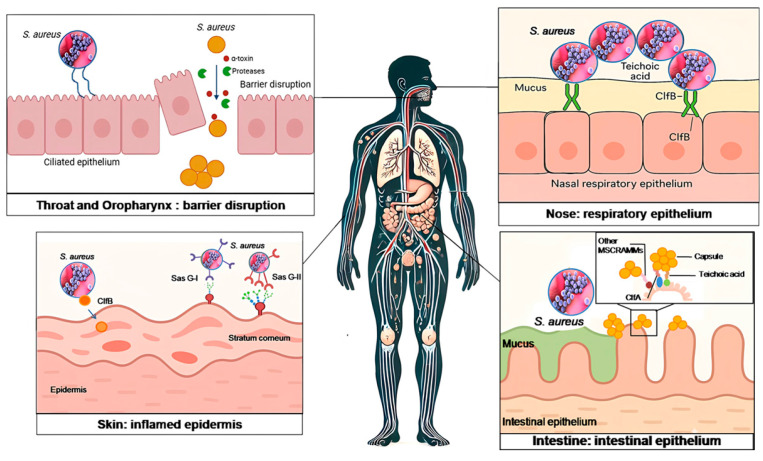
“Specifically, S. aureus adheres to cytokeratin 10, a structural protein expressed in nasal epithelial cells, a key mechanism enabling persistent colonization [15].”
§ Staphylococcus aureus: A Review of the Pathogenesis and Virulence Mechanisms > 2. Pathogenesis of S. aureus > 2.1. Colonization Dynamics
What the sources say
- Not checked yetcites [15] Sakr A. Brégeon F. Mège J.-L. Rolain J.-M. Blin O. Staphylococcus aureus Nasal Colonization: An Update on Mechanisms, Epidemiology, Risk Factors, and Subsequent Infections Front. Microbiol. 2018 9 2419 10.3389/fmicb.2018.02419 30349525 PMC6186810 source
plainstates a cause- Asserted: passes — The authors put it forward as true.
- Checkable: passes — It can be checked against evidence.
- Load-bearing: unclear — It is unclear whether the paper’s conclusions depend on it.
- Based: passes — The paper gives a reason why it holds.
150 more claims
Create a free account to see all 251 claims and to verify the 276 references still open.
- It may state two separate claims as one. 90
- Probably not a substantial claim. 10
- The quote only partly states this claim. 1
Self-check
Percentages, sums and reported differences re-computed from the paper’s own numbers.
Each contradiction between two passages listed here was confirmed by an independent check.
Rated minor: it would not touch a result — a value no result rests on, a p-value that stays on the same side of the significance level, or a conflict that is clerical, resolved elsewhere in the paper, or outside its own findings.
In the paper
§ Staphylococcus aureus: A Review of the Pathogenesis and Virulence Mechanisms > 4. Antibiotic Resistance and Mechanisms in S. aureus > 4.2. Epidemiology and Clinical Impact of MRSA
“| Africa | 2.5% | Ethiopia, Egypt | Nigeria (29%), Egypt (Multiple reports) | [222,283] |”
§ Staphylococcus aureus: A Review of the Pathogenesis and Virulence Mechanisms > 4. Antibiotic Resistance and Mechanisms in S. aureus > 4.2. Epidemiology and Clinical Impact of MRSA
“Countries with Notable Data | Country-Specific Prevalence (%)”
Rated minor: it would not touch a result — a value no result rests on, a p-value that stays on the same side of the significance level, or a conflict that is clerical, resolved elsewhere in the paper, or outside its own findings.
In the paper
§ Staphylococcus aureus: A Review of the Pathogenesis and Virulence Mechanisms > 4. Antibiotic Resistance and Mechanisms in S. aureus > 4.1. Mechanisms of Antibiotic Resistance
“This growing concern culminated in a significant 1946 study by Kirby and colleagues, which documented the increasing prevalence of penicillin-resistant S. aureus in London hospitals.”
§ Staphylococcus aureus: A Review of the Pathogenesis and Virulence Mechanisms > References
“185. Kirby W.M. Extraction of a Highly Potent Penicillin Inactivator from Penicillin Resistant Staphylococci Science 1944 99 452 453 10.1126/science.99.2579.452 17798398”
Rated minor: it would not touch a result — a value no result rests on, a p-value that stays on the same side of the significance level, or a conflict that is clerical, resolved elsewhere in the paper, or outside its own findings.
In the paper
§ Staphylococcus aureus: A Review of the Pathogenesis and Virulence Mechanisms > 2. Pathogenesis of S. aureus > 2.1. Colonization Dynamics
“Similarly, Marshall and Spelman previously found that 69.2% of patients tested positive in nasal samples, compared to 71.4% in throat samples.”
§ Staphylococcus aureus: A Review of the Pathogenesis and Virulence Mechanisms > References
“62. Batra R. Eziefula A. Wyncoll D. Edgeworth J. Throat and rectal swabs may have an important role in MRSA screening of critically ill patients Intensive Care Med. 2008 34 1703 1706 10.1007/s00134-008-1153-1 18500421”
Rated minor: it would not touch a result — a value no result rests on, a p-value that stays on the same side of the significance level, or a conflict that is clerical, resolved elsewhere in the paper, or outside its own findings.
In the paper
§ Staphylococcus aureus: A Review of the Pathogenesis and Virulence Mechanisms > 2. Pathogenesis of S. aureus > 2.1. Colonization Dynamics
“The remaining 40% are classified as non-carriers, though transient colonization remains possible under conducive conditions, such as disrupted skin barriers or antibiotic-mediated microbiome shifts [12].”
§ Staphylococcus aureus: A Review of the Pathogenesis and Virulence Mechanisms > 2. Pathogenesis of S. aureus > 2.1. Colonization Dynamics
“Approximately 20% of the human population are persistent carriers of S. aureus, 60% exhibit intermittent carriage, and the remaining 20% show no detectable colonization.”
Rated minor: it would not touch a result — a value no result rests on, a p-value that stays on the same side of the significance level, or a conflict that is clerical, resolved elsewhere in the paper, or outside its own findings.
In the paper
§ Staphylococcus aureus: A Review of the Pathogenesis and Virulence Mechanisms > 4. Antibiotic Resistance and Mechanisms in S. aureus > 4.1. Mechanisms of Antibiotic Resistance
“The key breakthrough came in the late 1940s when Chain and Abraham demonstrated that resistant strains produced an enzyme capable of breaking down the antibiotic [188].”
§ Staphylococcus aureus: A Review of the Pathogenesis and Virulence Mechanisms > References
“188. Abraham E.P. Chain E. An enzyme from bacteria able to destroy penicillin. 1940 Rev. Infect. Dis. 1988 10 677 678 3055168”
Citations
Cites
Waves of resistance: Staphylococcus aureus in the antibiotic era
Chambers, H. F., & DeLeo, F. R. (2009) · Nature Reviews Microbiology · doi:10.1038/nrmicro2200 · Cited by 2,718 · cited 3×
“The mechanisms underlying this resistance are diverse and multifaceted [175,176].”
Antimicrobial Resistance: A Growing Serious Threat for Global Public Health
Salam, M. A., Al-Amin, M. Y., Salam, M. T., Pawar, J., Akhter, N., Rabaan, A. A., & Alqumber, M. A. A. (2023) · doi:10.20944/preprints202305.0555.v1 · Cited by 2,411
Antibiotics: past, present and future
Hutchings, M. I., Truman, A. W., & Wilkinson, B. (2019) · Current Opinion in Microbiology · doi:10.1016/j.mib.2019.10.008 · Cited by 2,370
Antimicrobial Resistance: A Growing Serious Threat for Global Public Health
Salam, M. A., Al-Amin, M. Y., Salam, M. T., Pawar, J. S., Akhter, N., Rabaan, A. A., & Alqumber, M. A. A. (2023) · Healthcare · doi:10.3390/healthcare11131946 · Cited by 2,338 · cited 1×
“The realization that bacteria could rapidly adapt led to the development of new antibiotics designed to withstand enzymatic degradation [192–194].”
Methicillin-resistant Staphylococcus aureus: an overview of basic and clinical research
Turner, N. A., Sharma-Kuinkel, B. K., Maskarinec, S. A., Eichenberger, E. M., Shah, P. P., Carugati, M., Holland, T. L., & Fowler, V. G. (2019) · Nature Reviews Microbiology · doi:10.1038/s41579-018-0147-4 · Cited by 2,051 · cited 3×
“The complexity of this resistance is driven by multiple factors, as demonstrated by nearly two decades of research into its underlying mechanisms [65,200,238].”
David, M. Z., & Daum, R. S. (2010) · Clinical Microbiology Reviews · doi:10.1128/cmr.00081-09 · Cited by 1,972
Multidrug Resistance in Bacteria
Nikaido, H. (2009) · Annual Review of Biochemistry · doi:10.1146/annurev.biochem.78.082907.145923 · Cited by 1,682 · cited 1×
“These include aminoglycosides, fluoroquinolones, macrolides, and tetracyclines, which significantly limit therapeutic options and complicate treatment strategies [271].”
Adhesion, invasion and evasion: the many functions of the surface proteins of Staphylococcus aureus
Foster, T. J., Geoghegan, J. A., Ganesh, V. K., & Höök, M. (2014) · Nature Reviews Microbiology · doi:10.1038/nrmicro3161 · Cited by 1,533 · cited 2×
“This dual function—adhesion and immune evasion—explains why ClfB-knockout strains trigger stronger neutrophil recruitment [49].”
Aminoglycoside modifying enzymes
Ramirez, M. S., & Tolmasky, M. E. (2010) · Drug Resistance Updates · doi:10.1016/j.drup.2010.08.003 · Cited by 1,464
Antimicrobial resistance: the example of Staphylococcus aureus
Lowy, F. D. (2003) · Journal of Clinical Investigation · doi:10.1172/jci18535 · Cited by 1,445
Pathogenicity and virulence of Staphylococcus aureus
Cheung, G. Y. C., Bae, J. S., & Otto, M. (2021) · Virulence · doi:10.1080/21505594.2021.1878688 · Cited by 1,380 · cited 2×
“The pathogenic success of S. aureus is primarily attributed to its extensive virulence factors, enabling it to adhere to host tissues, evade immune responses, and damage host cells [4].”
An Enzyme from Bacteria able to Destroy Penicillin
ABRAHAM, E. P., & CHAIN, E. (1940) · Nature · doi:10.1038/146837a0 · Cited by 1,333 · cited 1×
“The key breakthrough came in the late 1940s when Chain and Abraham demonstrated that resistant strains produced an enzyme capable of breaking down the antibiotic [188].”
Muteeb, G., Rehman, M. T., Shahwan, M., & Aatif, M. (2023) · Pharmaceuticals · doi:10.3390/ph16111615 · Cited by 1,215 · cited 1×
“Hospitals, where antibiotics were heavily used, became hotspots for resistant S. aureus strains, as the selective pressure created an environment that favored bacterial survival and resistance [176,190].”
Jarraud, S., Mougel, C., Thioulouse, J., Lina, G., Meugnier, H., Forey, F., Nesme, X., Etienne, J., & Vandenesch, F. (2002) · Infection and Immunity · doi:10.1128/iai.70.2.631-641.2002 · Cited by 1,151 · cited 1×
“Similarly, TSST-1, encoded by the tst gene, is typically located on SaPI1 and can trigger life-threatening toxic shock syndrome due to its superantigenic properties [98].”
Krause, K. M., Serio, A. W., Kane, T. R., & Connolly, L. E. (2016) · Cold Spring Harbor Perspectives in Medicine · doi:10.1101/cshperspect.a027029 · Cited by 1,149
Leclercq, R. (2002) · Clinical Infectious Diseases · doi:10.1086/324626 · Cited by 1,102
Antimicrobial Resistance (AMR)
Tang, K. W. K., Millar, B. C., & Moore, J. E. (2023) · British Journal of Biomedical Science · doi:10.3389/bjbs.2023.11387 · Cited by 1,009
Howden, B. P., Davies, J. K., Johnson, P. D. R., Stinear, T. P., & Grayson, M. L. (2010) · Clinical Microbiology Reviews · doi:10.1128/cmr.00042-09 · Cited by 962 · cited 2×
“These strains exhibit excessive peptidoglycan synthesis, leading to increased cell wall density, which sequesters vancomycin molecules before they can reach their targets [215,216].”
Otto, M. (2008) · Current Topics in Microbiology and Immunology · doi:10.1007/978-3-540-75418-3_10 · Cited by 865
Antibiotic resistance in Staphylococcus aureus. Current status and future prospects
Foster, T. J. (2017) · FEMS Microbiology Reviews · doi:10.1093/femsre/fux007 · Cited by 845 · cited 1×
“Their findings revealed that many bacterial isolates no longer responded to penicillin treatment, signaling a significant shift in the fight against bacterial infections [184–186].”
Tetracycline Antibiotics and Resistance
Grossman, T. H. (2016) · Cold Spring Harbor Perspectives in Medicine · doi:10.1101/cshperspect.a025387 · Cited by 725 · cited 2×
“The most common efflux pump genes, tet(K) and tet(L), encode membrane-associated proteins that actively transport tetracycline out of the bacterial cell, reducing intracellular drug concentration and thereby limiting its efficacy [249,254,255].”
Staphylococcus aureus host interactions and adaptation
Howden, B. P., Giulieri, S. G., Wong Fok Lung, T., Baines, S. L., Sharkey, L. K., Lee, J. Y. H., Hachani, A., Monk, I. R., & Stinear, T. P. (2023) · Nature Reviews Microbiology · doi:10.1038/s41579-023-00852-y · Cited by 689 · cited 5×
“Recent reports have expanded our understanding of the molecular mechanisms by which these toxins interact with host cells, revealing intricate signaling pathways and cellular targets [11,94,95].”
InfluentialIL-17 is essential for host defense against cutaneous Staphylococcus aureus infection in mice
Cho, J. S., Pietras, E. M., Garcia, N. C., Ramos, R. I., Farzam, D. M., Monroe, H. R., Magorien, J. E., Blauvelt, A., Kolls, J. K., Cheung, A. L., et al. (2010) · Journal of Clinical Investigation · doi:10.1172/jci40891 · Cited by 658 · cited 1×
“While Th17 cells and interleukin-17 (IL-17) are critical for protective immunity, S. aureus counteracts these defenses by modulating Toll-like receptor (TLR) signaling and producing superantigens [53,54].”
Penicillin's Discovery and Antibiotic Resistance: Lessons for the Future?
Lobanovska, M., & Pilla, G. (2017) · PubMed Central · Cited by 655
The Discovery of Penicillin—New Insights After More Than 75 Years of Clinical Use
Gaynes, R. (2017) · Emerging Infectious Diseases · doi:10.3201/eid2305.161556 · Cited by 597 · cited 1×
“When penicillin was first introduced in the early 1940s, it was celebrated as a revolutionary medical breakthrough, demonstrating remarkable efficacy against bacterial infections, including those caused by S. aureus [179–181].”
Mechanisms of resistance to aminoglycoside antibiotics: overview and perspectives
Garneau-Tsodikova, S., & Labby, K. J. (2016) · MedChemComm · doi:10.1039/c5md00344j · Cited by 576 · cited 1×
“These resistance mechanisms highlight the intricate relationship between genetic determinants and the clinical challenges MRSA infections pose [229].”
Mechanisms of vancomycin resistance in Staphylococcus aureus
Gardete, S., & Tomasz, A. (2014) · Journal of Clinical Investigation · doi:10.1172/jci68834 · Cited by 565 · cited 2×
“Vancomycin, traditionally considered the ultimate treatment option for MRSA infections, has become less effective due to the evolution of resistance mechanisms [205,206].”
Voyich, J. M., Otto, M., Mathema, B., Braughton, K. R., Whitney, A. R., Welty, D., Long, R. D., Dorward, D. W., Gardner, D. J., Lina, G., et al. (2006) · The Journal of Infectious Diseases · doi:10.1086/509506 · Cited by 565 · cited 1×
“In parallel, the coordinated expression of genes responsible for producing cytolytic toxins, including alpha-hemolysin and phenol-soluble modulins, contributes to tissue destruction and subversion of the host immune response [103].”
Staphylococcus aureus biofilm: a complex developmental organism
Moormeier, D. E., & Bayles, K. W. (2017) · Molecular Microbiology · doi:10.1111/mmi.13634 · Cited by 556 · cited 1×
“In addition, infections associated with biofilm are notoriously difficult to eradicate, under-lining the need for a deeper understanding of MSCRAMMs in the biology of S. aureus [86].”
Sakr, A., Brégeon, F., Mège, J.-L., Rolain, J.-M., & Blin, O. (2018) · Frontiers in Microbiology · doi:10.3389/fmicb.2018.02419 · Cited by 555 · cited 2×
“…adheres to cytokeratin 10, a structural protein expressed in Speci fi cally, S. aureus adheres to cytokeratin 10, a structural protein expressed in nasal epithelial cells, a key mechanism enabling persistent colonization [15]. epithelial cells, a key mechanism enabling persistent colonization [15].”
Topoisomerase Inhibitors: Fluoroquinolone Mechanisms of Action and Resistance
Hooper, D. C., & Jacoby, G. A. (2016) · Cold Spring Harbor Perspectives in Medicine · doi:10.1101/cshperspect.a025320 · Cited by 553 · cited 1×
“One major contributor to fluoroquinolone resistance is the emergence of mutations in the grlA and gyrA genes, which encode subunits of topoisomerase IV and DNA gyrase, the primary targets of fluoroquinolones [242].”
Regulation of Staphylococcus aureus Virulence
Jenul, C., & Horswill, A. R. (2019) · Microbiology Spectrum · doi:10.1128/microbiolspec.gpp3-0031-2018 · Cited by 549 · cited 1×
“These factors, encompassing surface proteins, secreted toxins, and metabolic adaptations, enable S. aureus to colonize host tissues, evade immune defenses, and inflict cellular damage [79].”
An enzyme from bacteria able to destroy penicillin. 1940.
Abraham, E. P., & Chain, E. B. (1988) · PubMed · Cited by 531
Tetracycline antibiotics and resistance mechanisms
Nguyen, F., Starosta, A. L., Arenz, S., Sohmen, D., Dönhöfer, A., & Wilson, D. N. (2014) · Biological Chemistry · doi:10.1515/hsz-2013-0292 · Cited by 528 · cited 1×
“The most common efflux pump genes, tet(K) and tet(L), encode membrane-associated proteins that actively transport tetracycline out of the bacterial cell, reducing intracellular drug concentration and thereby limiting its efficacy [249,254,255].”
Cong, Y., Yang, S., & Rao, X. (2020) · Journal of Advanced Research · doi:10.1016/j.jare.2019.10.005 · Cited by 527 · cited 3×
“Since the first reported case in 2002, VRSA infections have been sporadically identified worldwide (Table 2), with most cases emerging in patients with chronic comorbidities, prior vancomycin exposure, and concurrent infections with VRE [208,277].”
Extraction of a Highly Potent Penicillin Inactivator from Penicillin Resistant Staphylococci
Kirby, W. M. M. (1944) · Science · doi:10.1126/science.99.2579.452 · Cited by 502
Cell Wall Thickening Is a Common Feature of Vancomycin Resistance in Staphylococcus aureus
Cui, L., Ma, X., Sato, K., Okuma, K., Tenover, F. C., Mamizuka, E. M., Gemmell, C. G., Kim, M.-N., Ploy, M.-C., El Solh, N., et al. (2003) · Journal of Clinical Microbiology · doi:10.1128/jcm.41.1.5-14.2003 · Cited by 492 · cited 1×
“These strains exhibit excessive peptidoglycan synthesis, leading to increased cell wall density, which sequesters vancomycin molecules before they can reach their targets [215,216].”
Antibiotic Resistance and the MRSA Problem
Vestergaard, M., Frees, D., & Ingmer, H. (2019) · Microbiology Spectrum · doi:10.1128/microbiolspec.gpp3-0057-2018 · Cited by 490 · cited 1×
“The complexity of this resistance is driven by multiple factors, as demonstrated by nearly two decades of research into its underlying mechanisms [65,200,238].”
Staphylococcus aureus Toxins and Their Molecular Activity in Infectious Diseases
Oliveira, D., Borges, A., & Simões, M. (2018) · Toxins · doi:10.3390/toxins10060252 · Cited by 485
Methicillin resistance and the biofilm phenotype in Staphylococcus aureus
McCarthy, H., Rudkin, J. K., Black, N. S., Gallagher, L., O'Neill, E., & O'Gara, J. P. (2015) · Frontiers in Cellular and Infection Microbiology · doi:10.3389/fcimb.2015.00001 · Cited by 484 · cited 1×
“Over the span of decades, research has demonstrated its involvement in modulating adhesion, biofilm formation, and virulence, particularly in MRSA strains [151,152].”
Mechanism of action of and resistance to quinolones
Fàbrega, A., Madurga, S., Giralt, E., & Vila, J. (2009) · Microbial Biotechnology · doi:10.1111/j.1751-7915.2008.00063.x · Cited by 482 · cited 1×
“These efflux systems contribute to multidrug resistance in MRSA, complicating treatment strategies and reducing therapeutic options [243,244].”
The macrolide antibiotic renaissance
Dinos, G. P. (2017) · British Journal of Pharmacology · doi:10.1111/bph.13936 · Cited by 471 · cited 1×
“Macrolides, such as erythromycin, azithromycin, and clarithromycin, inhibit bacterial protein synthesis by binding to the 50S ribosomal subunit and preventing peptide elongation [260,261].”
Shallcross, L. J., Fragaszy, E., Johnson, A. M., & Hayward, A. C. (2013) · The Lancet Infectious Diseases · doi:10.1016/s1473-3099(12)70238-4 · Cited by 463 · cited 3×
“However, meta-analyses indicate that PVL is less prevalent in invasive infections (e.g., bacteremia, musculoskeletal infections) than SSTIs, challenging its role as a sole marker of invasive disease severity [109].”
Staphylococcus aureus Secreted Toxins and Extracellular Enzymes
Tam, K., & Torres, V. J. (2019) · Microbiology Spectrum · doi:10.1128/microbiolspec.gpp3-0039-2018 · Cited by 452 · cited 1×
“The pathogen also produces membrane-damaging factors such as hemolysins and cytolytic peptides, which disrupt host cell membranes and facilitate immune evasion [93].”
A Review of Biofilm Formation of Staphylococcus aureus and Its Regulation Mechanism
Peng, Q., Tang, X., Dong, W., Sun, N., & Yuan, W. (2022) · Antibiotics · doi:10.3390/antibiotics12010012 · Cited by 440 · cited 3×
“Biofilm-forming strains are 3–5 times more likely to persist in the throat, complicating eradication efforts [6].”
Holden, M. T. G., Hsu, L.-Y., Kurt, K., Weinert, L. A., Mather, A. E., Harris, S. R., Strommenger, B., Layer, F., Witte, W., de Lencastre, H., et al. (2013) · Genome Research · doi:10.1101/gr.147710.112 · Cited by 440 · cited 1×
“Notably, subinhibitory concentrations of fluoroquinolones have been found to accelerate resistance development, highlighting the importance of proper dosing in clinical practice [247,248].”
Antibiotic resistance genes in bacteria: Occurrence, spread, and control
Jian, Z., Zeng, L., Xu, T., Sun, S., Yan, S., Yang, L., Huang, Y., Jia, J., & Dou, T. (2021) · Journal of Basic Microbiology · doi:10.1002/jobm.202100201 · Cited by 416 · cited 1×
“The realization that bacteria could rapidly adapt led to the development of new antibiotics designed to withstand enzymatic degradation [192–194].”
Molecular Mechanisms of Drug Resistance in Staphylococcus aureus
Mlynarczyk-Bonikowska, B., Kowalewski, C., Krolak-Ulinska, A., & Marusza, W. (2022) · International Journal of Molecular Sciences · doi:10.3390/ijms23158088 · Cited by 412 · cited 6×
“The mecA gene, located on the staphylococcal chromosomal cassette mec (SCC mec ), produces PBP2a (also termed PBP2 ′ ), a 668-amino-acid protein that replaces the transpeptidase function of native PBPs inhibited by β -lactams [9,195,197].”
InfluentialVandenesch, F., Lina, G., & Henry, T. (2012) · Frontiers in Cellular and Infection Microbiology · doi:10.3389/fcimb.2012.00012 · Cited by 405 · cited 2×
“Enterotoxins, including sea , seb , and sec , responsible for staphylococcal food poisoning, are commonly found on S. aureus pathogenicity islands (SaPIs), facilitating their dissemination among strains [97].”
Staphylococcus aureus Toxins: An Update on Their Pathogenic Properties and Potential Treatments
Ahmad-Mansour, N., Loubet, P., Pouget, C., Dunyach-Remy, C., Sotto, A., Lavigne, J.-P., & Molle, V. (2021) · Toxins · doi:10.3390/toxins13100677 · Cited by 386 · cited 2×
“…cytolysins (e.g., alpha-toxin, PVL, superantigens (e.g., TSST-1), and exfoliative toxins), contribute to tissue damage by cleaving desmosomal cadherins, leading to severe skin conditions such as staphylococcal scalded skin syndrome (SSSS), immune dysregulation, and systemic toxicity [91,92].”
Resistance of Gram-Positive Bacteria to Current Antibacterial Agents and Overcoming Approaches
Jubeh, B., Breijyeh, Z., & Karaman, R. (2020) · Molecules · doi:10.3390/molecules25122888 · Cited by 383 · cited 1×
“Resistance extends to all β -lactams except ceftobiprole and ceftaroline, which retain activity against PBP2a [9,203].”
Molecular Mechanisms of Staphylococcus aureus Iron Acquisition
Hammer, N. D., & Skaar, E. P. (2011) · Annual Review of Microbiology · doi:10.1146/annurev-micro-090110-102851 · Cited by 379 · cited 2×
“, the site [3]. nasal by microbial interactions aureus ) which conditions, proliferation ) exploited SF-A and SF-B [17,18].”
The emergence of vancomycin-intermediate and vancomycin-resistant Staphylococcus aureus
Appelbaum, P. C. (2006) · Clinical Microbiology and Infection · doi:10.1111/j.1469-0691.2006.01344.x · Cited by 376 · cited 1×
“Vancomycin, traditionally considered the ultimate treatment option for MRSA infections, has become less effective due to the evolution of resistance mechanisms [205,206].”
Antibiotic Resistance and the Biology of History
Landecker, H. (2016) · Body & Society · doi:10.1177/1357034x14561341 · Cited by 375 · cited 1×
“In 1944, more concrete laboratory evidence confirmed that certain strains could survive exposure to the antibiotic [183].”
Antimicrobial resistance: the example of Staphylococcus aureus
Lowy, F. D. (2003) · Journal of Clinical Investigation · doi:10.1172/jci200318535 · Cited by 369
Global Fluoroquinolone Resistance Epidemiology and Implictions for Clinical Use
Dalhoff, A. (2012) · Interdisciplinary Perspectives on Infectious Diseases · doi:10.1155/2012/976273 · Cited by 354 · cited 1×
“The co-selection of resistance traits among different antibiotic classes further limits treatment options, emphasizing the need for revised clinical guidelines [245,246].”
Gaurav, A., Bakht, P., Saini, M., Pandey, S., & Pathania, R. (2023) · Microbiology · doi:10.1099/mic.0.001333 · Cited by 351 · cited 1×
“Active efflux pumps, such as those encoded by msr(A) , expel macrolide molecules from the bacterial cytoplasm, reducing their intracellular concentration and efficacy [249,267].”
Shariati, A., Arshadi, M., Khosrojerdi, M. A., Abedinzadeh, M., Ganjalishahi, M., Maleki, A., Heidary, M., & Khoshnood, S. (2022) · Frontiers in Public Health · doi:10.3389/fpubh.2022.1025633 · Cited by 337 · cited 1×
“…to regulatory pathways that influence antibiotic susceptibility and metabolic adaptations that enhance bacterial survival in fluoroquinolones [249,250 Tetracyclines, such as tetracycline and doxycycline, function by binding to the bacterial 30S ribosomal subunit, preventing the attachment of…”
Shariati, A., Dadashi, M., Moghadam, M. T., van Belkum, A., Yaslianifard, S., & Darban-Sarokhalil, D. (2020) · Scientific Reports · doi:10.1038/s41598-020-69058-z · Cited by 329
Targeting Staphylococcus aureus Toxins: A Potential form of Anti-Virulence Therapy
Kong, C., Neoh, H.-M., & Nathan, S. (2016) · Toxins · doi:10.3390/toxins8030072 · Cited by 317 · cited 1×
“Research has illuminated the intricate interplay between these virulence determinants, revealing a dynamic and context-dependent expression profile contributing to the pathogen’s versatility [80].”
The importance of the development of antibiotic resistance in Staphylococcus aureus
Schito, G. C. (2006) · Clinical Microbiology and Infection · doi:10.1111/j.1469-0691.2006.01343.x · Cited by 302 · cited 1×
“The emergence of resistance to β -lactam antibiotics in S. aureus is a crucial chapter in the history of AMR [176–178].”
The Staphylococcal Toxin Panton-Valentine Leukocidin Targets Human C5a Receptors
Spaan, A. N., Henry, T., van Rooijen, W. J. M., Perret, M., Badiou, C., Aerts, P. C., Kemmink, J., de Haas, C. J. C., van Kessel, K. P. M., Vandenesch, F., et al. (2013) · Cell Host & Microbe · doi:10.1016/j.chom.2013.04.006 · Cited by 301 · cited 2×
“This selective cytotoxicity facilitates immune evasion, enabling bacterial persistence and tissue invasion [104].”
Clinical Impact of Staphylococcus aureus Skin and Soft Tissue Infections
Linz, M. S., Mattappallil, A., Finkel, D., & Parker, D. (2023) · Antibiotics · doi:10.3390/antibiotics12030557 · Cited by 293 · cited 2×
“This genetic element is smaller and more mobile than in HA-MRSA, enhancing its ability to disseminate among individuals in environments like schools, sports teams, and correctional facilities [5].”
An Overview of the Recent Advances in Antimicrobial Resistance
Oliveira, M., Antunes, W., Mota, S., Madureira-Carvalho, Á., Dinis-Oliveira, R. J., & Dias da Silva, D. (2024) · Microorganisms · doi:10.3390/microorganisms12091920 · Cited by 285 · cited 1×
“The discovery of β -lactamase provided a crucial understanding of how bacteria could render antibiotics ineffective, prompting researchers to develop new strategies to counteract resistance [191].”
Schulze, A., Mitterer, F., Pombo, J. P., & Schild, S. (2021) · Microbial Cell · doi:10.15698/mic2021.02.741 · Cited by 275 · cited 1×
“Regarding pathogenesis, the attachment of S. aureus to the tissues of the host through MSCRAMMs facilitates the formation of biofilms, a critical factor in chronic infections [6,85].”
Elshobary, M. E., Badawy, N. K., Ashraf, Y., Zatioun, A. A., Masriya, H. H., Ammar, M. M., Mohamed, N. A., Mourad, S., & Assy, A. M. (2025) · Pharmaceuticals · doi:10.3390/ph18030402 · Cited by 268 · cited 1×
“Reduced drug uptake, methylation of the 16S rRNA by methyltransferases, modifications to the 30S ribosomal subunit, and the activation of efflux pumps collectively contribute to bacterial survival in antibiotic-rich environments [232,233].”
Decolonization in Prevention of Health Care-Associated Infections
Septimus, E. J., & Schweizer, M. L. (2016) · Clinical Microbiology Reviews · doi:10.1128/cmr.00049-15 · Cited by 259 · cited 1×
“Given the risks, targeted screening and decolonization protocols are critical for mitigating infections and curbing transmission in high-risk groups [30].”
Chien, Y.-T., Manna, A. C., Projan, S. J., & Cheung, A. L. (1999) · Journal of Biological Chemistry · doi:10.1074/jbc.274.52.37169 · Cited by 254
Chan, P. F., & Foster, S. J. (1998) · Journal of Bacteriology · doi:10.1128/.180.23.6232-6241.1998 · Cited by 253
Exfoliative Toxins of Staphylococcus aureus
Bukowski, M., Wladyka, B., & Dubin, G. (2010) · Toxins · doi:10.3390/toxins2051148 · Cited by 248 · cited 1×
“Exfoliative toxins, eta and etb , which cause SSSS, exhibit different genetic locations, with eta being chromosomally encoded while etb is often carried on a plasmid [99].”
Resistance to Macrolide Antibiotics in Public Health Pathogens
Fyfe, C., Grossman, T. H., Kerstein, K., & Sutcliffe, J. (2016) · Cold Spring Harbor Perspectives in Medicine · doi:10.1101/cshperspect.a025395 · Cited by 246 · cited 1×
“The most common resistance mechanism involves methylation of the 23S rRNA component of the 50S ribosome, encoded by the erm(A) and erm(C) genes, which confer resistance to macrolides, lincosamides, and streptogramin B (MLS_B resistance) by preventing macrolide binding [262–266].”
Staphylococcus aureus pathogenesis in diverse host environments
Balasubramanian, D., Harper, L., Shopsin, B., & Torres, V. J. (2017) · Pathogens and Disease · doi:10.1093/femspd/ftx005 · Cited by 240 · cited 2×
“The metabolic flexibility of S. aureus is a key factor in its ability to thrive in diverse host environments [135].”
Miller, L. S., Fowler, V. G., Shukla, S. K., Rose, W. E., & Proctor, R. A. (2020) · FEMS Microbiology Reviews · doi:10.1093/femsre/fuz030 · Cited by 240 · cited 1×
“Additionally, antigenic redundancy (e.g., compensatory adhesins replacing ClfB/SasG) and the pathogen’s ability to skew immune responses toward non-protective antibody subtypes contribute to vaccine failures [55].”
Howden, B. P., Johnson, P. D. R., Ward, P. B., Stinear, T. P., & Davies, J. K. (2006) · Antimicrobial Agents and Chemotherapy · doi:10.1128/aac.00422-06 · Cited by 224 · cited 1×
“Additionally, VISA strains often harbor mutations in genes associated with cell wall biosynthesis and regulatory systems, such as walKR and rpoB [8,217,218].”
Zouine, N., Ghachtouli, N. E., Elabed, S., & Koraichi, S. I. (2024) · Scientific African · doi:10.1016/j.sciaf.2024.e02395 · Cited by 221
Abebe, A., & Birhanu, A. (2023) · Infection and Drug Resistance · doi:10.2147/idr.s428103 · Cited by 220 · cited 6×
“…regulatory genes mecI and mecR1 ), recombinase genes ( ccrAB or ccrC ), and joining regions (J1–J3) that may harbor additional resistance determinants [199]. mecA is hypothesized to originate from Staphylococcus sciuri , with horizontal transfer facilitating its incorporation into S. aureus [200].”
InfluentialMicek, S. T. (2007) · Clinical Infectious Diseases · doi:10.1086/519471 · Cited by 202 · cited 1×
“Alternatives such as linezolid, daptomycin, and ceftaroline are available, but their efficacy varies depending on the infection site and resistance profile [278–280].”
Staphylococcus aureus Throat Colonization Is More Frequent than Colonization in the Anterior Nares
Nilsson, P., & Ripa, T. (2006) · Journal of Clinical Microbiology · doi:10.1128/jcm.00880-06 · Cited by 200 · cited 1×
“A notable study by Nilsson and Ripa) demonstrated that the rate of throat carriage among patients significantly exceeded that of nasal carriage, showing figures of 40% versus 31% [56].”
Kaushik, A., Kest, H., Sood, M., Steussy, B., Thieman, C., & Gupta, S. (2024) · Pathogens · doi:10.3390/pathogens13010076 · Cited by 199 · cited 1×
“Over the span of decades, research has demonstrated its involvement in modulating adhesion, biofilm formation, and virulence, particularly in MRSA strains [151,152].”
Evolution of community- and healthcare-associated methicillin-resistant Staphylococcus aureus
Uhlemann, A.-C., Otto, M., Lowy, F. D., & DeLeo, F. R. (2014) · Infection, Genetics and Evolution · doi:10.1016/j.meegid.2013.04.030 · Cited by 194 · cited 1×
“The severity of HA-MRSA infections is further compounded by their ability to evade host immune responses and persist in hospital environments, leading to recurrent outbreaks and increased morbidity and mortality rates [274].”
Muteeb, G., Rehman, M. T., Shahwan, M., & Aatif, M. (2023) · doi:10.20944/preprints202306.1921.v1 · Cited by 186
Staphylococcus aureus colonisation and strategies for decolonisation
Piewngam, P., & Otto, M. (2024) · The Lancet Microbe · doi:10.1016/s2666-5247(24)00040-5 · Cited by 184 · cited 3×
“Longitudinal studies reveal that throat colonization can persist for over a year in 10–20% of individuals, even in the absence of nasal carriage [12].”
InfluentialStaphylococcus aureus Manipulates Innate Immunity through Own and Host-Expressed Proteases
Pietrocola, G., Nobile, G., Rindi, S., & Speziale, P. (2017) · Frontiers in Cellular and Infection Microbiology · doi:10.3389/fcimb.2017.00166 · Cited by 179 · cited 1×
“Understanding these enzymatic mechanisms is essential for developing strategies to counteract immune evasion [101].”
β-Defensins: Farming the Microbiome for Homeostasis and Health
Meade, K. G., & O'Farrelly, C. (2019) · Frontiers in Immunology · doi:10.3389/fimmu.2018.03072 · Cited by 172 · cited 1×
“Interindividual variation in host immune responses, particularly in β -defensin production, has been associated with differences in S. aureus colonization patterns [24].”
Lade, H., & Kim, J.-S. (2023) · Antibiotics · doi:10.3390/antibiotics12091362 · Cited by 171 · cited 1×
“This protein alters cell wall synthesis, rendering β -lactam antibiotics ineffective [275].”
Zhāng, T., Nickerson, R., Zhang, W., Peng, X., Shang, Y., Zhou, Y., Luo, Q., Wen, G., & Cheng, Z. (2024) · One Health · doi:10.1016/j.onehlt.2024.100748 · Cited by 171 · cited 1×
“Addressing these concerns requires a One Health approach, integrating human, animal, and environmental health strategies to monitor and mitigate the spread of resistance in diverse ecological settings [234–237].”
Gajić, I., Tomić, N., Luković, B., Jovićević, M., Kekić, D., Petrovic, M., Janković, M., Trudić, A., Mitić-Ćulafić, D., Milenković, M., et al. (2025) · Antibiotics · doi:10.3390/antibiotics14030221 · Cited by 171 · cited 1×
“Enhanced infection control measures, rapid diagnostic tools, and antimicrobial stewardship programs are essential to mitigate the spread of vancomycin resistance in clinical settings [222,223].”
Therapeutic strategies against bacterial biofilms
Bi, Y., Xia, G., Shi, C., Wan, J., Liu, L., Chen, Y., Wu, Y., Zhang, W., Zhou, M., He, H., et al. (2021) · Fundamental Research · doi:10.1016/j.fmre.2021.02.003 · Cited by 170 · cited 4×
“Physical methods, including photothermal therapy and cryogenic freezing, destabilize matrix integrity, enhancing antibiotic penetration [297,301].”
InfluentialPlant-Derived Antimicrobials and Their Crucial Role in Combating Antimicrobial Resistance
Angelini, P. (2024) · Antibiotics · doi:10.3390/antibiotics13080746 · Cited by 170 · cited 1×
“Small molecules (naftifine, NP16) repress α -toxin via ClpP protease targeting, achieving 90% biofilm eradication in combination therapies [304–306] 5.8.”
InfluentialAzimian, A., Havaei, S. A., Fazeli, H., Naderi, M., Ghazvini, K., Samiee, S. M., Soleimani, M., & Peerayeh, S. N. (2012) · Journal of Clinical Microbiology · doi:10.1128/jcm.01727-12 · Cited by 168 · cited 1×
“The acquisition of these genetic elements presents a serious challenge in clinical settings, as VRSA strains exhibit high levels of resistance to vancomycin, rendering standard treatment regimens ineffective [208,212,213].”
Treatment of Methicillin-Resistant Staphylococcus aureus Bacteremia
Choo, E. J., & Chambers, H. F. (2016) · Infection & Chemotherapy · doi:10.3947/ic.2016.48.4.267 · Cited by 168 · cited 1×
“Alternatives such as linezolid, daptomycin, and ceftaroline are available, but their efficacy varies depending on the infection site and resistance profile [278–280].”
Zoonosis: An Emerging Link to Antibiotic Resistance Under “One Health Approach”
Dafale, N. A., Srivastava, S., & Purohit, H. J. (2020) · Indian Journal of Microbiology · doi:10.1007/s12088-020-00860-z · Cited by 166 · cited 1×
“Addressing these concerns requires a One Health approach, integrating human, animal, and environmental health strategies to monitor and mitigate the spread of resistance in diverse ecological settings [234–237].”
Shoaib, M., Aqib, A. I., Muzammil, I., Majeed, N., Bhutta, Z. A., Kulyar, M. F.-E.-A., Fatima, M., Zaheer, C.-N. F., Muneer, A., Murtaza, M., et al. (2023) · Frontiers in Microbiology · doi:10.3389/fmicb.2022.1067284 · Cited by 166 · cited 1×
“HA-MRSA HA-MRSA is primarily found in hospitals, nursing homes, and long-term care facilities, where it predominantly affects patients with weakened immune systems, chronic illnesses, or those with invasive medical devices, such as catheters, ventilators, or surgical implants [7,270].”
Virulence gene regulation by peptides in staphylococci and other Gram-positive bacteria
Novick, R. P., & Muir, T. W. (1999) · Current Opinion in Microbiology · doi:10.1016/s1369-5274(99)80007-1 · Cited by 163
Antimicrobial resistance in West Africa: a systematic review and meta-analysis
Bernabé, K. J., Langendorf, C., Ford, N., Ronat, J.-B., & Murphy, R. A. (2017) · International Journal of Antimicrobial Agents · doi:10.1016/j.ijantimicag.2017.07.002 · Cited by 158 · cited 1×
“Furthermore, PVL-positive MSSA strains are increasingly reported, highlighting that PVL’s pathogenicity extends beyond MRSA [115].”
Speziale, P., & Pietrocola, G. (2020) · Frontiers in Microbiology · doi:10.3389/fmicb.2020.02054 · Cited by 155 · cited 1×
“For example, fibronectin-binding proteins (FNBP) are among the very well-characterized MSCRMS, promoting the union of S. aureus to host and biomaterial cells through fibronectin, a key component in the healing and regeneration of tissues [83].”
Microbial transmission in the social microbiome and host health and disease
Sarkar, A., McInroy, C. J. A., Harty, S., Raulo, A., Ibata, N. G. O., Valles‐Colomer, M., Johnson, K. V. ‐., Brito, I., Henrich, J., Archie, E. A., et al. (2024) · Cell · doi:10.1016/j.cell.2023.12.014 · Cited by 152 · cited 1×
“Social interactions also play a key role in transmission dynamics, as close contact with carriers increases colonization risk [29].”
Smith, T. L., & Jarvis, W. R. (1999) · Microbes and Infection · doi:10.1016/s1286-4579(99)80082-3 · Cited by 151 · cited 1×
“As scientists investigated the cause of this resistance, they discovered that S. aureus had developed a mechanism to neutralize penicillin [186,187].”
Bhalla, A., Aron, D. C., & Donskey, C. J. (2007) · BMC Infectious Diseases · doi:10.1186/1471-2334-7-105 · Cited by 150 · cited 1×
“For instance, research indicates intestinal colonization among these patients increases the risk of subsequent infections and may contribute to nosocomial transmission [68–70].”
Mechanism of tetracycline resistance by ribosomal protection protein Tet(O)
Li, W., Atkinson, G. C., Thakor, N. S., Allas, Ü., Lu, C.-C., Chan, K.-Y., Tenson, T., Schulten, K., Wilson, K. S., Hauryliuk, V., et al. (2013) · Nature Communications · doi:10.1038/ncomms2470 · Cited by 147
The application of the CRISPR-Cas system in antibiotic resistance
Tao, S., Chen, H., Li, N., & Liang, W. (2022) · Infection and Drug Resistance · doi:10.2147/idr.s370869 · Cited by 147 · cited 1×
“Multiplex CRISPR systems eradicate MRSA in vivo by cleaving resistance plasmids and chromosomal loci, preserving microbiota integrity [292].”
Look and Outlook on Enzyme-Mediated Macrolide Resistance
Golkar, T., Zieliński, M., & Berghuis, A. M. (2018) · Frontiers in Microbiology · doi:10.3389/fmicb.2018.01942 · Cited by 143 · cited 1×
“Additionally, enzymatic inactivation of macrolides through esterases or phosphotransferases, although less common, has been reported in some S. aureus isolates [268,269].”
Antimicrobial resistance in methicillin-resistant staphylococcus aureus
Ali Alghamdi, B., Al-Johani, I., Al-Shamrani, J. M., Musamed Alshamrani, H., Al-Otaibi, B. G., Almazmomi, K., & Yusnoraini Yusof, N. (2023) · Saudi Journal of Biological Sciences · doi:10.1016/j.sjbs.2023.103604 · Cited by 143 · cited 2×
“The mecA gene, located on the staphylococcal chromosomal cassette mec (SCC mec ), produces PBP2a (also termed PBP2 ′ ), a 668-amino-acid protein that replaces the transpeptidase function of native PBPs inhibited by β -lactams [9,195,197].”
Pietrocola, G., Campoccia, D., Motta, C., Montanaro, L., Arciola, C. R., & Speziale, P. (2022) · International Journal of Molecular Sciences · doi:10.3390/ijms23115958 · Cited by 141 · cited 2×
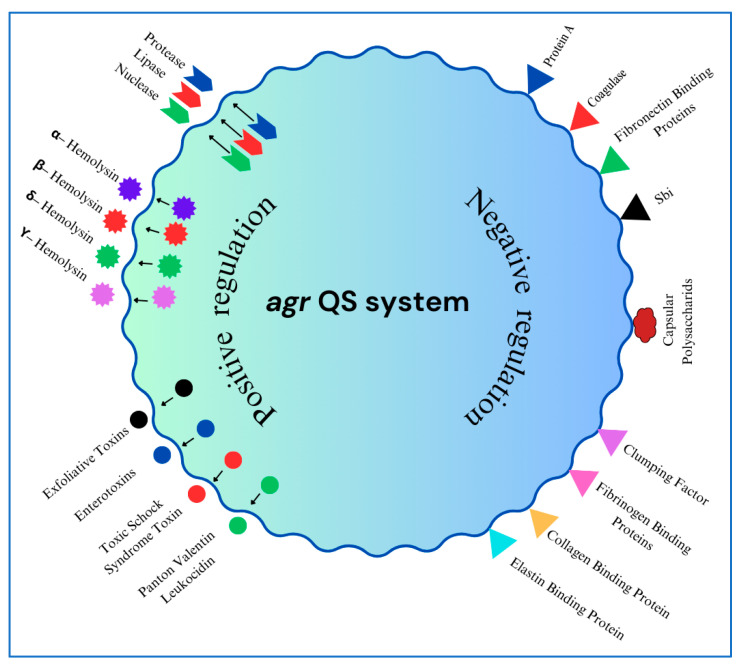
“…colonization and invasion, making it a promising target for novel 15 Additionally, the agr system plays a crucial role in bio fi lm formation on medical devices, with RNAIII regulating the expression of virulence factors and surface protein production [158]. to combat bio fi lm-related infections.”
Antimicrobial Resistance: The Impact from and on Society According to One Health Approach
Ferraz, M. P. (2024) · Societies · doi:10.3390/soc14090187 · Cited by 140 · cited 1×
“The rise of resistant strains made previously treatable infections significantly more difficult to manage, leading to prolonged hospital stays and increased mortality rates [189].”
Staphylococcus aureus biofilms: Structures, antibiotic resistance, inhibition, and vaccines
Parastan, R., Kargar, M., Solhjoo, K., & Kafilzadeh, F. (2020) · Gene Reports · doi:10.1016/j.genrep.2020.100739 · Cited by 139 · cited 2×
“Enzymatic degradation of biofilms involves recombinant endolysins (XZ.700, ClyRODI-H5) and DNase I-functionalized nanogels, which degrade eDNA and Extracellular Poly-meric Substances (EPSs) at ≤ 1 µ g/mL [294,300].”
Wang, M., Buist, G., & van Dijl, J. M. (2022) · FEMS Microbiology Reviews · doi:10.1093/femsre/fuac025 · Cited by 139 · cited 1×
“Beyond its direct influence on virulence genes, SarA integrates metabolic signals into its regulatory framework, linking pathogenesis to bacterial metabolism [166].”
Staphylococcus aureus Colonization of the Human Nose and Interaction with Other Microbiome Members
Laux, C., Peschel, A., & Krismer, B. (2019) · Microbiology Spectrum · doi:10.1128/microbiolspec.gpp3-0029-2018 · Cited by 136 · cited 3×
“, the site [3]. nasal by microbial interactions aureus ) which conditions, proliferation ) exploited SF-A and SF-B [17,18].”
Mechanism of staphylococcal resistance to clinically relevant antibiotics
Brdová, D., Ruml, T., & Viktorová, J. (2024) · Drug Resistance Updates · doi:10.1016/j.drup.2024.101147 · Cited by 135 · cited 5×
“Further studies suggested that this resistance mechanism was genetically inherited, and researchers later identified the blaZ gene, often located on plasmids, as responsible for encoding β -lactamase [175].”
InfluentialBacterial Targets of Antibiotics in Methicillin-Resistant Staphylococcus aureus
Lade, H., & Kim, J.-S. (2021) · Antibiotics · doi:10.3390/antibiotics10040398 · Cited by 134 · cited 2×
“Another mechanism reduces drug permeability, limiting intra-cellular antibiotic accumulation [173].”
Hu, Q., Peng, H., & Rao, X. (2016) · Frontiers in Microbiology · doi:10.3389/fmicb.2016.01601 · Cited by 132 · cited 1×
“Additionally, VISA strains often harbor mutations in genes associated with cell wall biosynthesis and regulatory systems, such as walKR and rpoB [8,217,218].”
Morell, E. A., & Balkin, D. M. (2010) · PubMed Central · Cited by 130
Surface-attached molecules control Staphylococcus aureus quorum sensing and biofilm development
Kim, M. K., Zhao, A., Wang, A., Brown, Z. Z., Muir, T. W., Stone, H. A., & Bassler, B. L. (2017) · Nature Microbiology · doi:10.1038/nmicrobiol.2017.80 · Cited by 130 · cited 1×
“This switch enables S. aureus to transition from an adherent to an invasive lifestyle in response to environmental cues [156].”
Tong, S. Y. C., Chen, L. F., & Fowler, V. G. (2011) · Seminars in Immunopathology · doi:10.1007/s00281-011-0300-x · Cited by 129 · cited 1×
“This colonization has significant clinical implications [67].”
Gray, B., Hall, P., & Gresham, H. (2013) · Sensors · doi:10.3390/s130405130 · Cited by 128 · cited 3×
“The agr quorum-sensing (QS) system in S. aureus is pivotal in regulating bacterial behavior during colonization and infection (Figure 2) [147–150].”
The evolution of vancomycin intermediate Staphylococcus aureus (VISA) and heterogenous-VISA
Howden, B. P., Peleg, A. Y., & Stinear, T. P. (2014) · Infection, Genetics and Evolution · doi:10.1016/j.meegid.2013.03.047 · Cited by 128 · cited 1×
“Furthermore, VISA strains may serve as precursors to the eventual emergence of fully resistant VRSA strains, emphasizing the need for continuous surveillance and novel treatment strategies [216,219–221].”
Staphylococcal trafficking and infection—from ‘nose to gut’ and back
Raineri, E. J. M., Altulea, D., & van Dijl, J. M. (2021) · FEMS Microbiology Reviews · doi:10.1093/femsre/fuab041 · Cited by 127 · cited 1×
“For instance, research indicates intestinal colonization among these patients increases the risk of subsequent infections and may contribute to nosocomial transmission [68–70].”
Manna, A. C., Ingavale, S. S., Maloney, M., van Wamel, W., & Cheung, A. L. (2004) · Journal of Bacteriology · doi:10.1128/jb.186.16.5267-5280.2004 · Cited by 125 · cited 1×
“The discovery of sarV as a transcriptional regulator repressed by SarA further illustrated the complexity of its regulatory network [161].”
Exclusive Staphylococcus aureus Throat Carriage: At-Risk Populations
Mertz, D., Frei, R., Periat, N., Zimmerli, M., Battegay, M., Flückiger, U., & Widmer, A. F. (2009) · Archives of Internal Medicine · doi:10.1001/archinternmed.2008.536 · Cited by 124 · cited 1×
“Mertz et al. found that 30.2% of community participants had exclusive throat carriage of S. aureus , compared to 18.4% among hospitalized patients and healthcare workers [57].”
InfluentialAntibody-Based Biologics and Their Promise to Combat Staphylococcus aureus Infections
Sause, W. E., Buckley, P. T., Strohl, W. R., Lynch, A. S., & Torres, V. J. (2015) · Trends in Pharmacological Sciences · doi:10.1016/j.tips.2015.11.008 · Cited by 123 · cited 1×
“Multivalent vaccines (4C-Staph, Sta-V5) target surface antigens (IsdB, ClfA, CP5/CP8), inducing robust Th1/Th17 and γδ T-cell responses [284,286].”
Mechanisms of Resistance to Macrolide Antibiotics among Staphylococcus aureus
Miklasińska-Majdanik, M. (2021) · Antibiotics · doi:10.3390/antibiotics10111406 · Cited by 122
Zhu, W., Clark, N. C., McDougal, L. K., Hageman, J., McDonald, L. C., & Patel, J. B. (2008) · Antimicrobial Agents and Chemotherapy · doi:10.1128/aac.00908-07 · Cited by 117 · cited 1×
“The acquisition of these genetic elements presents a serious challenge in clinical settings, as VRSA strains exhibit high levels of resistance to vancomycin, rendering standard treatment regimens ineffective [208,212,213].”
Evaluation of Antibiotic Resistance Mechanisms in Gram-Positive Bacteria
Rajput, P., Nahar, K. S., & Rahman, K. M. (2024) · Antibiotics · doi:10.3390/antibiotics13121197 · Cited by 117 · cited 1×
“Understanding the genetic and molecular mechanisms driving antibiotic resistance and the evolutionary dynamics of resistant strains is essential for developing novel therapeutic approaches and public health strategies [9,10].”
Gardete, S., Kim, C., Hartmann, B. M., Mwangi, M., Roux, C. M., Dunman, P. M., Chambers, H. F., & Tomasz, A. (2012) · PLoS Pathogens · doi:10.1371/journal.ppat.1002505 · Cited by 116
Dashtbani-Roozbehani, A., & Brown, M. H. (2021) · Antibiotics · doi:10.3390/antibiotics10121502 · Cited by 115 · cited 3×
“Active efflux pumps, such as those encoded by msr(A) , expel macrolide molecules from the bacterial cytoplasm, reducing their intracellular concentration and efficacy [249,267].”
Halablab, M. A., Hijazi, S. M., Fawzi, M. A., & Araj, G. F. (2009) · Epidemiology and Infection · doi:10.1017/s0950268809991233 · Cited by 112 · cited 1×
“Community-based studies revealed extremes: Sierra Leone’s general population showed alarmingly high rates (42.7% MSSA, 14% MRSA) [39], while Lebanon reported 38.4% MSSA and a low 1.6% MRSA [40].”
InfluentialHumphrey, S., Fillol-Salom, A., Quiles-Puchalt, N., Ibarra-Chávez, R., Haag, A. F., Chen, J., & Penadés, J. R. (2021) · Nature Communications · doi:10.1038/s41467-021-26004-5 · Cited by 109 · cited 1×
“The phage-borne nature of these genes facilitates horizontal transfer via prophage induction or transduction by mobile genetic elements, including staphylococcal pathogenicity islands (SaPIs) [121,122].”
Fighting Staphylococcus aureus Biofilms with Monoclonal Antibodies
Raafat, D., Otto, M., Reppschläger, K., Iqbal, J., & Holtfreter, S. (2019) · Trends in Microbiology · doi:10.1016/j.tim.2018.12.009 · Cited by 107 · cited 1×
“…with adaptive immune activation to reduce antibiotic reliance against biofilm-associated infections. mAbs, such as TRL1068 and F598, neutralize adhesins (ClfA, FnBPs) and promote phagocytosis by resisting S. aureus proteases (e.g., GluV8) and evading Protein A (SpA) interference [284,285].”
The Intestinal Microbiota: Impacts of Antibiotics Therapy, Colonization Resistance, and Diseases
Shah, T., Baloch, Z., Shah, Z., Cui, X., & Xia, X. (2021) · International Journal of Molecular Sciences · doi:10.3390/ijms22126597 · Cited by 106 · cited 1×
“This disruption reduces microbial competition, allowing S. aureus , including MRSA, to establish itself in the GI tract [71].”
McCarthy, A. J., Witney, A. A., & Lindsay, J. A. (2012) · Frontiers in Cellular and Infection Microbiology · doi:10.3389/fcimb.2012.00006 · Cited by 103
Clumping Factor B Promotes Adherence of Staphylococcus aureus to Corneocytes in Atopic Dermatitis
Fleury, O. M., McAleer, M. A., Feuillie, C., Formosa-Dague, C., Sansevere, E., Bennett, D. E., Towell, A. M., McLean, W. H. I., Kezic, S., Robinson, D. A., et al. (2017) · Infection and Immunity · doi:10.1128/iai.00994-16 · Cited by 100 · cited 1×
“Studies have shown that ClfB-deficient strains exhibit reduced binding to human corneocytes, highlighting its importance in colonization [47].”
The Role of Staphylococcus Aureus Quorum Sensing in Cutaneous and Systemic Infections
Yamazaki, Y., Ito, T., Tamai, M., Nakagawa, S., & Nakamura, Y. (2024) · Inflammation and Regeneration · doi:10.1186/s41232-024-00323-8 · Cited by 99 · cited 2×
“…the significance of the agr system in balancing colonization and invasion, making it a promising target for novel antimicrobial strategies [159]. the signi fi cance of the agr system in balancing colonization and invasion, making it a promising target for novel 15 Additionally, the agr…”
Pérez‐Flores, J. G., García‐Curiel, L., Pérez-Escalante, E., Contreras‐López, E., Aguilar-Lira, G. Y., Angel‐Jijón, C., González-Olivares, L. G., Santillán, E. S. B., Ocampo, I. O. S., Guerrero-Solano, J. A., et al. (2025) · Applied Sciences · doi:10.3390/app15073516 · Cited by 99 · cited 2×
“Plant-derived flavonoids (punicalagin) and essential oils (cinnamaldehyde) disrupt EPS synthesis via oxidative stress, while probiotic-derived inhibitors enhance host–microbe competition [298,302,303].”
Ogawa, T., Terao, Y., Okuni, H., Ninomiya, K., Sakata, H., Ikebe, K., Maeda, Y., & Kawabata, S. (2011) · Microbial Pathogenesis · doi:10.1016/j.micpath.2011.03.009 · Cited by 98 · cited 1×
“Components like polysaccharide intercellular adhesin (PIA) and surface proteins aid in adhesion and immune evasion [64].”
Hamdan-Partida, A., Sainz-Espuñes, T., & Bustos-Martínez, J. (2010) · Journal of Clinical Microbiology · doi:10.1128/jcm.01929-09 · Cited by 98 · cited 2×
“%) than from nasal samples (37.1%), and among the colonized individuals, as many as 38% of the people were exclusive throat carriers [58].”
InfluentialSenn, L., Basset, P., Nahimana, I., Zanetti, G. M. R., & Blanc, D. (2011) · Clinical Microbiology and Infection · doi:10.1111/j.1469-0691.2011.03724.x · Cited by 97 · cited 1×
“%) compared to nasal swabs (12% positive for MRSA) [61].”
Marchetti, M., De Bei, O., Bettati, S., Campanini, B., Kovachka, S., Gianquinto, E., Spyrakis, F., & Ronda, L. (2020) · International Journal of Molecular Sciences · doi:10.3390/ijms21062145 · Cited by 97 · cited 2×
“These siderophores bind iron tightly and are then recognized by specific membrane receptors, allowing the bacterium to internalize the iron-bound complexes [133].”
Stubbendieck, R. M., May, D. S., Chevrette, M. G., Temkin, M. I., Wendt-Pienkowski, E., Cagnazzo, J., Carlson, C. M., Gern, J. E., & Currie, C. R. (2019) · Applied and Environmental Microbiology · doi:10.1128/aem.02406-18 · Cited by 93 · cited 2×
“…, 60% exhibit intermi tt ent carriage, and the remaining 20% show no detectable colonization. exhibit intermittent carriage, and the remaining 20% show no detectable colonization The anterior nares constitute the primary ecological niche for this bacterium The anterior nares constitute the…”
SarA Positively Controls Bap-Dependent Biofilm Formation in Staphylococcus aureus
Trotonda, M. P., Manna, A. C., Cheung, A. L., Lasa, I., & Penadés, J. R. (2005) · Journal of Bacteriology · doi:10.1128/jb.187.16.5790-5798.2005 · Cited by 92 · cited 1×
“Additionally, SarA has been shown to enhance biofilm stability via the Bap - dependent pathway, reinforcing its importance in the bacterium’s ability to persist in harsh environments [162].”
Selvarajan, R., Obieze, C. C., Sibanda, T., Abia, A. L. K., & Long, H. C. D. (2022) · Antibiotics · doi:10.3390/antibiotics12010028 · Cited by 92 · cited 1×
“By 1942, isolated cases suggested that some S. aureus strains had become less susceptible to penicillin [175,182].”
Virulence attributes of successful methicillin-resistant Staphylococcus aureus lineages
Jiang, J.-H., Cameron, D. R., Nethercott, C., Aires-de-Sousa, M., & Peleg, A. Y. (2023) · Clinical Microbiology Reviews · doi:10.1128/cmr.00148-22 · Cited by 92 · cited 2×
“These strains exhibit heightened transmissibility and are responsible for recurrent SSTIs, with recurrence rates threefold higher than PVL-negative isolates [105,106].”
Mobile macrolide resistance genes in staphylococci
Feßler, A. T., Wang, Y., Wu, C., & Schwarz, Š. (2018) · Plasmid · doi:10.1016/j.plasmid.2018.05.001 · Cited by 90 · cited 1×
“Additionally, enzymatic inactivation of macrolides through esterases or phosphotransferases, although less common, has been reported in some S. aureus isolates [268,269].”
Throat and rectal swabs may have an important role in MRSA screening of critically ill patients
Batra, R., Eziefula, C., Wyncoll, D. L. A., & Edgeworth, J. D. (2008) · Intensive Care Medicine · doi:10.1007/s00134-008-1153-1 · Cited by 89 · cited 1×
“The study found that throat samples demonstrated greater sensitivity than pooled keratinized skin samples, with rates of 76% versus 60% [62].”
Bashabsheh, R. H. F., AL-Fawares, O., Natsheh, I., Bdeir, R., Al-Khreshieh, R. O., & Bashabsheh, H. H. F. (2024) · Pathogens and Global Health · doi:10.1080/20477724.2023.2285187 · Cited by 88 · cited 1×
“One of its most concerning traits is its ability to develop resistance to multiple antibiotics, making treatment increasingly challenging [2,172].”
Boakes, E., Kearns, A. M., Ganner, M., Perry, C., Hill, R. L., & Ellington, M. J. (2011) · Journal of Clinical Microbiology · doi:10.1128/jcm.01917-10 · Cited by 85 · cited 1×
“At least eight distinct PVL-encoding phages have been identified and classified into three groups based on replication and morphogenesis modules, underscoring their genetic diversity and adaptability [106,123].”
New frontiers in CRISPR: Addressing antimicrobial resistance with Cas9, Cas12, Cas13, and Cas14
Agha, A. S. A. A., Al-Samydai, A. M., & Aburjai, T. A. (2025) · Heliyon · doi:10.1016/j.heliyon.2025.e42013 · Cited by 84 · cited 1×
“Phage-delivered systems target mecA and blaZ , resensitizing MRSA to β -lactams, while CRISPR interference (CRISPRi) silences icaA (essential for polysaccharide intercellular adhesin synthesis) without affecting bacterial viability [289–291].”
Feuillie, C., Vitry, P., McAleer, M. A., Kezic, S., Irvine, A. D., Geoghegan, J. A., & Dufrêne, Y. F. (2018) · mBio · doi:10.1128/mbio.01184-18 · Cited by 83 · cited 2×
“This interaction enhances S. aureus adherence to the skin, promoting colonization [44].”
The role of human extracellular matrix proteins in defining Staphylococcus aureus biofilm infections
Bhattacharya, M., & Horswill, A. R. (2024) · FEMS Microbiology Reviews · doi:10.1093/femsre/fuae002 · Cited by 83 · cited 1×
“The MSCRAMMs are specialized adhesins that bind to several elements of the extracellular matrix (ECM), including fibrinogen, fibronectin, and collagen, thus playing a central role in infection’s initial stages and biofilm formation [82].”
Suppression of Staphylococcus aureus virulence by a small-molecule compound
Gao, P., Ho, P., Yan, B., Sze, K. H., DAVIES, J. E., & Kao, R. Y. T. (2018) · Proceedings of the National Academy of Sciences · doi:10.1073/pnas.1720520115 · Cited by 82 · cited 1×
“Small molecules (naftifine, NP16) repress α -toxin via ClpP protease targeting, achieving 90% biofilm eradication in combination therapies [304–306] 5.8.”
InfluentialSpahn, C. M. T., Blaha, G., Agrawal, R. K., Penczek, P., Grassucci, R. A., Trieber, C. A., Connell, S. R., Taylor, D. E., Nierhaus, K. H., & Frank, J. (2001) · Molecular Cell · doi:10.1016/s1097-2765(01)00238-6 · Cited by 81 · cited 1×
“Additionally, ribosomal protection proteins, such as those encoded by tet(M) and tet(O) , allow bacteria to continue translating proteins despite the presence of tetracyclines by preventing the drug from binding effectively to the ribosome [256–258].”
Staphylococcus aureus Pneumonia in the Community
He, H., & Wunderink, R. G. (2020) · Seminars in Respiratory and Critical Care Medicine · doi:10.1055/s-0040-1709992 · Cited by 81 · cited 2×
“PVL-negative ST80 variants retain φ Sa2 prophage remnants, suggesting ancestral PVL-positive origins [105,107,125].”
Blake, K. S., Xue, Y.-P., Gillespie, V. J., Fishbein, S. R. S., Tolia, N. H., Wencewicz, T. A., & Dantas, G. (2025) · Nature Communications · doi:10.1038/s41467-025-56425-5 · Cited by 80 · cited 1×
“Additionally, ribosomal protection proteins, such as those encoded by tet(M) and tet(O) , allow bacteria to continue translating proteins despite the presence of tetracyclines by preventing the drug from binding effectively to the ribosome [256–258].”
Identification of Key Determinants of Staphylococcus aureus Vaginal Colonization
Deng, L., Schilcher, K., Burcham, L. R., Kwiecinski, J. M., Johsnon, P. M., Head, S. R., Heinrichs, D. E., Horswill, A. R., & Doran, K. S. (2019) · mBio · doi:10.1128/mbio.02321-19 · Cited by 79 · cited 3×
“Deng et al. studied S. aureus colonization in the vaginal tract, which can cause postpartum infections [74].”
InfluentialTamber, S., & Cheung, A. L. (2009) · Infection and Immunity · doi:10.1128/iai.00859-08 · Cited by 77 · cited 1×
“The interplay between SarA and agr is further influenced by SarZ, which modulates both regulatory systems to fine-tune virulence expression [165].”
Xu, T., Wang, X.-Y., Cui, P., Zhang, Y.-M., Zhang, W.-H., & Zhang, Y. (2017) · Frontiers in Microbiology · doi:10.3389/fmicb.2017.02189 · Cited by 76 · cited 1×
“The agr quorum-sensing (QS) system in S. aureus is pivotal in regulating bacterial behavior during colonization and infection (Figure 2) [147–150].”
Bacteria and Host Interplay in Staphylococcus aureus Septic Arthritis and Sepsis
Jin, T., Mohammad, M., Pullerits, R., & Ali, A. (2021) · Pathogens · doi:10.3390/pathogens10020158 · Cited by 76
Methicillin-resistant Staphylococcus aureus in HIV-infected patients
Hidrón, A., Moanna, A., Kempker, R. R., & Rimland, D. (2010) · Infection and Drug Resistance · doi:10.2147/idr.s7641 · Cited by 74 · cited 1×
“In HIV-positive individuals, colonization rates are elevated, leading to a greater likelihood of invasive infections due to their compromised immune status [26,27].”
Potter, A. D., Butrico, C. E., Ford, C. A., Curry, J. M., Trenary, I. A., Tummarakota, S. S., Hendrix, A. S., Young, J. D., & Cassat, J. E. (2020) · Proceedings of the National Academy of Sciences · doi:10.1073/pnas.1922211117 · Cited by 73 · cited 2×
“Additionally, S. aureus can utilize amino acids as carbon and nitrogen sources through deamination and incorporation into central metabolic pathways [136].”
Balamurugan, P., Praveen Krishna, V., Bharath, D., Lavanya, R., Vairaprakash, P., & Adline Princy, S. (2017) · Frontiers in Microbiology · doi:10.3389/fmicb.2017.01290 · Cited by 72 · cited 1×
“Mechanistic studies revealed that SarA autoregulates its expression, demonstrating the intricate feedback loops governing its regulatory functions [163,164].”
Staphylococcus aureus Infections and Human Intestinal Microbiota
Liu, A., Garrett, S., Hong, W., & Zhang, J. (2024) · Pathogens · doi:10.3390/pathogens13040276 · Cited by 72 · cited 2×
“Unlike symptomatic infections (e.g., pharyngitis), oropharyngeal colonization is typically asymptomatic, allowing carriers to unknowingly sustain and spread S. aureus [66].”
Lacey, K. A., Mulcahy, M. E., Towell, A. M., Geoghegan, J. A., & McLoughlin, R. M. (2019) · PLOS Pathogens · doi:10.1371/journal.ppat.1007713 · Cited by 71 · cited 1×
“Vaccines targeting ClfB have demonstrated protective effects in preclinical studies, reducing bacterial burden and skin pathology [48].”
The prevalence and distribution of aminoglycoside resistance genes
Zhang, Y., Zhang, N., Wang, M., Luo, M., Peng, Y., Li, Z., Xu, J., Ou, M., Kan, B., Li, X., et al. (2023) · Biosafety and Health · doi:10.1016/j.bsheal.2023.01.001 · Cited by 71 · cited 2×
“Their presence in MRSA strains complicates treatment options, particularly in hospital settings, where multidrug-resistant (MDR) infections pose significant therapeutic challenges [225].”
Vivekanandan, K., Kumar, P. V., Jaysree, R. C., & Rajeshwari, T. (2025) · Global Medical Genetics · doi:10.1016/j.gmg.2025.100042 · Cited by 71
Fournier, B., & Hooper, D. C. (1998) · Antimicrobial Agents and Chemotherapy · doi:10.1128/aac.42.1.121 · Cited by 70 · cited 1×
“These efflux systems contribute to multidrug resistance in MRSA, complicating treatment strategies and reducing therapeutic options [243,244].”
Tetracyclines, the old and the new: A narrative review
Pearson, J. C., Gillett, E., Gadri, N. D., & Dionne, B. (2025) · CMI Communications · doi:10.1016/j.cmicom.2025.105059 · Cited by 70
Marrero (2004) · doi:10.1074/jbc.m313123200 · Cited by 69 · cited 1×
“Additionally, the anti-repressor MecR2 enhances mecA expression by disrupting MecI-DNA binding under stress [198,201].”
Artificial intelligence applications in the diagnosis and treatment of bacterial infections
Zhang, X., Zhang, D., Zhang, X., & Zhang, X. (2024) · Frontiers in Microbiology · doi:10.3389/fmicb.2024.1449844 · Cited by 69
Kumar, S., Mahato, R. P., Ch, S., & Kumbham, S. (2025) · The Microbe · doi:10.1016/j.microb.2025.100281 · Cited by 68 · cited 3×
“Advances in molecular microbiology, genomics, and artificial intelligence-driven approaches have significantly expanded our understanding of its pathogenic mechanisms, paving the way for novel diagnostic, therapeutic, and preventive strategies [272,310].”
Metabolic Adaptations During Staphylococcus aureus and Candida albicans Co-Infection
Eichelberger, K. R., & Cassat, J. E. (2021) · Frontiers in Immunology · doi:10.3389/fimmu.2021.797550 · Cited by 67 · cited 1×
“Furthermore, the ability to modulate carbon metabolism influences virulence, as metabolic byproducts can affect host immune responses and bacterial persistence [138].”
Novel antimicrobial strategies to treat multi‐drug resistant Staphylococcus aureus infections
Douglas, E. J. A., Wulandari, S. W., Lovell, S. D., & Laabei, M. (2023) · Microbial Biotechnology · doi:10.1111/1751-7915.14268 · Cited by 67
Hou, Z., Liu, L., Wei, J., & Xu, B. (2023) · Infection and Drug Resistance · doi:10.2147/idr.s412308 · Cited by 67 · cited 3×
“In MRSA, PBP2a maintains transpeptidase activity even under β -lactam exposure, enabling cross-linking of pentaglycan bridges between peptidoglycan chains [9,198].”
Ghssein, G., & Ezzeddine, Z. (2022) · Biology · doi:10.3390/biology11101525 · Cited by 66 · cited 1×
“S. aureus has developed sophisticated iron acquisition strategies to overcome this limitation, primarily by producing siderophores and heme uptake systems [132].”
Bacteriophage therapy for drug-resistant Staphylococcus aureus infections
Liu, K., Wang, C., Zhou, X., Guo, X., Yang, Y., Liu, W., Zhao, R., & Song, H. (2024) · Frontiers in Cellular and Infection Microbiology · doi:10.3389/fcimb.2024.1336821 · Cited by 66 · cited 1×
“Encapsulated phages in liposomes (e.g., Staphefekt SA.100) enhance stability, and phage-lysin-antibiotic combinations (e.g., Sb-1 + daptomycin) achieve 2 log10 CFU/mL reductions [296].”
Staphylococcus aureus vaccine strategy: Promise and challenges
Chand, U., Priyambada, P., & Kushawaha, P. K. (2023) · Microbiological Research · doi:10.1016/j.micres.2023.127362 · Cited by 65 · cited 1×
“Extracellular vesicle (EV)-based vaccines presenting Hla and MntC antigens stimulate IFN-γ -dependent immunity, and conjugate vaccines, such as SA4Ag, disrupt biofilm formation by blocking Agr QS [288].”
Third-Generation Tetracyclines: Current Knowledge and Therapeutic Potential
Kounatidis, D., Dalamaga, M., Grivakou, E., Karampela, I., Koufopoulos, P., Dalopoulos, V., Adamidis, N., Mylona, E., Kaziani, A., & Vallianou, N. G. (2024) · Biomolecules · doi:10.3390/biom14070783 · Cited by 64 · cited 1×
“…and metabolic adaptations that enhance bacterial survival in fluoroquinolones [249,250 Tetracyclines, such as tetracycline and doxycycline, function by binding to the bacterial 30S ribosomal subunit, preventing the attachment of aminoacyl-tRNA and inhibiting protein synthesis [251–253].”
Understanding the evolution of macrolides resistance: A mini review
Nor Amdan, N. A., Shahrulzamri, N. A., Hashim, R., & Mohamad Jamil, N. (2024) · Journal of Global Antimicrobial Resistance · doi:10.1016/j.jgar.2024.07.016 · Cited by 64 · cited 1×
“The most common resistance mechanism involves methylation of the 23S rRNA component of the 50S ribosome, encoded by the erm(A) and erm(C) genes, which confer resistance to macrolides, lincosamides, and streptogramin B (MLS_B resistance) by preventing macrolide binding [262–266].”
Current strategies for monitoring and controlling bacterial biofilm formation on medical surfaces
Wang, X., Chen, C., Hu, J., Liu, C., Ning, Y., & Lu, F. (2024) · Ecotoxicology and Environmental Safety · doi:10.1016/j.ecoenv.2024.116709 · Cited by 62 · cited 1×
“Physical methods, including photothermal therapy and cryogenic freezing, destabilize matrix integrity, enhancing antibiotic penetration [297,301].”
Alhumaidan, O. S., El-Kersh, T. A., & Alakeel, R. A. (2015) · Saudi Medical Journal · doi:10.15537/smj.2015.9.12460 · Cited by 60
A review on antimicrobial strategies in mitigating biofilm-associated infections on medical implants
Kadirvelu, L., Sivaramalingam, S. S., Jothivel, D., Chithiraiselvan, D. D., Karaiyagowder Govindarajan, D., & Kandaswamy, K. (2024) · Current Research in Microbial Sciences · doi:10.1016/j.crmicr.2024.100231 · Cited by 60 · cited 4×
“Plant-derived flavonoids (punicalagin) and essential oils (cinnamaldehyde) disrupt EPS synthesis via oxidative stress, while probiotic-derived inhibitors enhance host–microbe competition [298,302,303].”
Influentialaccessory regulators: expression within biofilms and effect on adhesion
Pratten, J., Foster, S. J., Chan, P. F., Wilson, M., & Nair, S. P. (2001) · Microbes and Infection · doi:10.1016/s1286-4579(01)01418-6 · Cited by 59 · cited 1×
“Protein interaction studies have revealed how SarA collaborates with other regulatory proteins to control agr expression and other virulence determinants, adapting to environmental cues [167–169].”
Panton-Valentine Leukocidin Genes in Staphylococcus aureus
Melles, D. C., van Leeuwen, W. B., Boelens, H. A. M., Peeters, J. K., Verbrugh, H. A., & van Belkum, A. (2006) · Emerging Infectious Diseases · doi:10.3201/eid1207.050865 · Cited by 59 · cited 1×
“PVL-negative ST80 variants retain φ Sa2 prophage remnants, suggesting ancestral PVL-positive origins [105,107,125].”
Friães, A., Resina, C., MANUEL, V., LITO, L., Ramirez, M., & Melo‐Cristino, J. (2014) · Epidemiology and Infection · doi:10.1017/s0950268814001423 · Cited by 58
Staphylococcus aureus Adaptation to the Skin in Health and Persistent/Recurrent Infections
Gehrke, A.-K. E., Giai, C., & Gómez, M. I. (2023) · Antibiotics · doi:10.3390/antibiotics12101520 · Cited by 58 · cited 2×
“S. aureus preferentially colonizes moist areas of the skin rich in sebaceous glands, such as the axilla, groin, and perineum [14].”
Nurjadi, D., Eichel, V. M., Tabatabai, P., Klein, S., Last, K., Mutters, N. T., Pöschl, J. M. B., Zanger, P., Heeg, K. M., & Boutin, S. (2021) · JAMA Network Open · doi:10.1001/jamanetworkopen.2021.24938 · Cited by 57 · cited 1×
“However, considering the prevalence of GI colonization, incorporating rectal swabs into screening protocols can improve detection rates, ensuring that colonized individuals are identified and managed appropriately [69,75].”
Giulieri, S. G., Guérillot, R., Duchêne, S., Hachani, A., Daniel, D. S., Seemann, T., Davis, J. S., Tong, S. Y. C., Young, B., Wilson, D. J., et al. (2022) · eLife · doi:10.7554/elife.77195 · Cited by 57
Wang, D., Wang, L., Liu, Q., & Zhao, Y. (2025) · Animals and Zoonoses · doi:10.1016/j.azn.2024.11.003 · Cited by 57 · cited 3×
“Its remarkable adaptability and pathogenic success are primarily attributed to a sophisticated arsenal of virulence factors [78].”
Agabou, A., Ouchenane, Z., Essebe, C. N., Khemissi, S., Chehboub, M., Chehboub, I., Sotto, A., Dunyach‐Remy, C., & Lavigne, J. (2017) · Toxins · doi:10.3390/toxins9100303 · Cited by 56 · cited 1×
“High-risk groups stood out: Saudi Arabian healthcare workers had 40% MSSA and 18% MRSA rates [42], and Algerian livestock workers showed 50% MSSA in humans and 7.6% in livestock [43].”
InfluentialThe immune evasion roles of Staphylococcus aureus protein A and impact on vaccine development
Bear, A., Locke, T. E., Rowland‐Jones, S., Pecetta, S., Bagnoli, F., & Darton, T. C. (2023) · Frontiers in Cellular and Infection Microbiology · doi:10.3389/fcimb.2023.1242702 · Cited by 56
Chen, B., Dai, X., He, B., Pan, K., Li, H., Liu, X., Bao, Y., Lao, W., Wu, X., Yao, Y., et al. (2015) · BMC Infectious Diseases · doi:10.1186/s12879-015-1032-7 · Cited by 55 · cited 1×
“In China, medical students displayed moderate colonization (15.4–23.1% MSSA, 3.0–9.4% MRSA) [41].”
InfluentialPROPERTIES OF A PENICILLIN INACTIVATOR EXTRACTED FROM PENICILLIN-RESISTANT STAPHYLOCOCCI 1
Kirby, W. M. M. (1945) · Journal of Clinical Investigation · doi:10.1172/jci101594 · Cited by 55 · cited 2×
“As scientists investigated the cause of this resistance, they discovered that S. aureus had developed a mechanism to neutralize penicillin [186,187].”
Vasquez, J. K., & Blackwell, H. E. (2019) · ACS Infectious Diseases · doi:10.1021/acsinfecdis.9b00002 · Cited by 55 · cited 1×
“It comprises a two-component regulatory system activated by an autoinducing peptide (AIP) [153–155].”
Fujimoto, D. F., Higginbotham, R. H., Sterba, K. M., Maleki, S. J., Segall, A. M., Smeltzer, M. S., & Hurlburt, B. K. (2009) · Molecular Microbiology · doi:10.1111/j.1365-2958.2009.06942.x · Cited by 53 · cited 1×
“Mechanistic studies revealed that SarA autoregulates its expression, demonstrating the intricate feedback loops governing its regulatory functions [163,164].”
Quorum-sensing, intra- and inter-species competition in the staphylococci
Williams, P., Hill, P., Bonev, B., & Chan, W. C. (2023) · Microbiology · doi:10.1099/mic.0.001381 · Cited by 53 · cited 2×
“Studies on interspecies competition have highlighted the role of AIP signaling in shaping bacterial interactions and pathogenicity [149].”
Petinaki, E. (2001) · Journal of Antimicrobial Chemotherapy · doi:10.1093/jac/47.3.297 · Cited by 52 · cited 1×
“Constitutive expression occurs in strains with ∆ mecR1-mecA deletions [9,202].”
Boncompain, C. A., Suárez, C. A., & Morbidoni, H. R. (2017) · Revista Argentina de Microbiología · doi:10.1016/j.ram.2016.12.007 · Cited by 52 · cited 1×
“In Argentina, healthcare workers had a 23.7% MSSA and 6.3% MRSA prevalence [37], whereas France reported markedly lower MRSA rates among healthy blood donors (0.3% MRSA, 29.3% MSSA) and hospitalized patients (1.1% MRSA, 20.2% MSSA) [38].”
InfluentialMaeda, T., & Furusawa, C. (2024) · Antibiotics · doi:10.3390/antibiotics13010094 · Cited by 52
Studying Staphylococcal Leukocidins: A Challenging Endeavor
Tromp, A. T., & van Strijp, J. A. G. (2020) · Frontiers in Microbiology · doi:10.3389/fmicb.2020.00611 · Cited by 51 · cited 2×
“At sublytic concentrations (~5 nM), PVL induces caspase-dependent apoptosis, while higher concentrations (~200 nM) provoke necrotic cell death via over-whelming pore formation [114,117,118].”
Bukowski, M., Piwowarczyk, R., Mądry, A., Zagorski-Przybylo, R., Hydzik, M., & Władyka, B. (2019) · Frontiers in Microbiology · doi:10.3389/fmicb.2019.00805 · Cited by 49 · cited 1×
“These resistance determinants are frequently found on plasmids and transposons, facilitating their horizontal transfer among S. aureus strains, including MRSA isolates [65,254,259].”
Arunachalam, K., Pandurangan, P., Shi, C., & Lagoa, R. (2023) · Pharmaceutics · doi:10.3390/pharmaceutics15020310 · Cited by 48 · cited 1×
“Conversely, clindamycin and linezolid suppress toxin synthesis, highlighting the therapeutic implications of antibiotic selection [109,117,124].”
Complexity of antibiotic resistance and its impact on gut microbiota dynamics
Shayista, H., Prasad, M. N. N., Raj, S. N., Prasad, A., Lakshmi, S., Ranjini, H. K., Manju, K., Ravikumara, Chouhan, R. S., Khohlova, O. Y., et al. (2025) · Engineering Microbiology · doi:10.1016/j.engmic.2024.100187 · Cited by 47 · cited 1×
“Reduced drug uptake, methylation of the 16S rRNA by methyltransferases, modifications to the 30S ribosomal subunit, and the activation of efflux pumps collectively contribute to bacterial survival in antibiotic-rich environments [232,233].”
Research works printed but not linked: 7
- Taylor T.A. Unakal C.G. Staphylococcus aureus Infection StatPearls StatPearls Publishing Treasure Island, FL, USA 2025 Available online: http://www.ncbi.nlm.nih.gov/books/NBK441868/ (accessed on 20 February 2025) 28722898
- Siddiqui A.H. Koirala J. Methicillin-Resistant Staphylococcus aureus StatPearls StatPearls Publishing Treasure Island, FL, USA 2023 Available online: http://www.ncbi.nlm.nih.gov/books/NBK482221/ (accessed on 9 July 2023) 29489200
- Khetsuriani S. Gastrointestinal Colonization by Staphylococcus aureus Strains as Risk Factor for Different Infections (Brief Review) Int. J. Multidiscip. Res. Publ. IJMRAP 2023 5
- Nawrotek P. Karakulska J. Fijałkowski K. Chapter 9—The Staphylococcal Panton-Valentine Leukocidin (PVL) Pet-To-Man Travelling Staphylococci Savini V. Academic Press Cambridge Cambridge, MA, USA 2018 117 125 978-0-12-813547-1 Available online: https://www.sciencedirect.com/science/article/pii/B9780128135471000091 (accessed on 1 April 2025)
- Kumar P. 33—Pharmacology of Specific Drug Groups: Antibiotic Therapy∗∗The author wishes to recognize Dr. Thomas J. Pallasch for his past contributions to this chapter Pharmacology and Therapeutics for Dentistry (Seventh Edition) Dowd F.J. Johnson B.S. Mariotti A.J. Mosby Maryland Heights, MI, USA 2017 457 487 978-0-323-39307-2 Available online: https://www.sciencedirect.com/science/article/pii/B9780323393072000333 (accessed on 30 March 2025)
- Shutter M.C. Akhondi H. Tetracycline StatPearls StatPearls Publishing Treasure Island, FL, USA 2025 Available online: http://www.ncbi.nlm.nih.gov/books/NBK549905/ (accessed on 30 March 2025) 31751095
- Patel P.H. Hashmi M.F. Macrolides StatPearls StatPearls Publishing Treasure Island, FL, USA 2025 31855339
Cited by
Papaneophytou, C. P. (2026) · Current Issues in Molecular Biology · doi:10.3390/cimb48020214 · Cited by 38
Vaccines as Potential Frontliners Against Antimicrobial Resistance (AMR): A Focused Review
Patil, S., Singh, I. P., Verma, I. K., Kumar, A., Sharma, J., Ratn, A., Dhakad, M. S., & Sharma, D. (2025) · Infection and Drug Resistance · doi:10.2147/idr.s544665 · Cited by 26
Vongmanee, N., Nampeng, J., Pintavirooj, C., & Visitsattapongse, S. (2025) · Polymers · doi:10.3390/polym17212826 · Cited by 11
Sim, M., Boya, B. R., Kim, Y., Lee, J., & Lee, J. (2025) · Microbial Biotechnology · doi:10.1111/1751-7915.70280 · Cited by 11
Zaidi, S., Srivastava, N., Goel, N., Sood, S., & Khare, S. K. (2025) · Process Biochemistry · doi:10.1016/j.procbio.2025.08.016 · Cited by 8
Metadata
- Authors
- Touaitia, R., Mairi, A., Ibrahim, N. A., Basher, N. S., Idres, T., & Touati, A.
- Affiliations
- Université Larbi Tébessi (DZ)
- University of Béjaïa (DZ)
- Imam Mohammad ibn Saud Islamic University (SA)
- Research Laboratory for Management of Local Animal Resources, Rabie Bouchama National Veterinary School of Algiers, Issad ABBAS Street, BP 161 Oued Semar, Algiers 16059, Algeria
- Corresponding author
- Ibrahim, Nasir Adam
- ORCID
- Venue
- Antibiotics
- Publisher
- MDPI AG
- Published
- 2025-05-06
- Volume
- 14
- Issue
- 5
- Pages
- 470
- ISSN
- 2079-6382 (ISSN-L)
- PMC
- PMC12108373
- OpenAlex
- W4410121808
- Semantic Scholar
- 8757827856862ba5145058005f895b8f0dfe4cef
- Cited by
- 273
- References
- 303
- Citations by year
- 2026: 207 · 2025: 66
- FWCI
- 33.52
- Type
- journal article
- Language
- en
- Open access
- gold
- doi.org
- Licence
- Locations
- Antibiotics (publishedVersion, cc-by)
- PubMed (publishedVersion)
- PubMed Central (publishedVersion, cc-by)
- DOAJ (DOAJ: Directory of Open Access Journals) (submittedVersion, cc-by-sa)
- Funders
- Deanship of Scientific Research at Imam Mohammad Ibn Saud Islamic University (IMSIU) (IMSIU-DDRSP2501)
- Topics
- Health Sciences › Medicine › Infectious Diseases › Antimicrobial Resistance in Staphylococcus
- Life Sciences › Biochemistry, Genetics and Molecular Biology › Molecular Biology › Bacterial biofilms and quorum sensing
- Health Sciences › Medicine › Infectious Diseases › Streptococcal Infections and Treatments
- Keywords
- Staphylococcus aureus, pathogenesis, virulence factors, biofilm formation, antibiotic resistance, methicillin-resistant Staphylococcus aureus, nasal carriage, skin colonization, oropharyngeal colonization, clfB, Panton-Valentine leukocidin, toxic shock syndrome toxin-1, iron acquisition, horizontal gene transfer, vancomycin resistance, decolonization, host-microbiome interactions, immune evasion, anti-virulence therapy, multi-epitope vaccine, AI-assisted diagnosis, antimicrobial resistance surveillance
About these checks
Registry, retraction, Cites and statistics results are computed, not judged, with one exception: a printed reference that no index lists is read once by a model before it counts as a citation error. Claims are extracted by a model and kept only when their quote appears verbatim in the text; each cited source is then checked, with a model’s help, for whether it says what the claim relies on. Those verdicts can be wrong — read the claim’s quote and the cited source before relying on one.
The claim verdicts this report counts are experimental: their accuracy is not yet measured.
A language model drew the claims from the paper on 2026-11-15, under version 3 of the claim definition (model deepseek-v4.1-flash, prompt extract-v3).
A second model labelled each claim on 2026-11-15 (model jev-1.13-20260917, definition revision gold-guideline-v0.2).
Cited sources are checked with a language model’s help (qwen3.8-omni-flash).
Statistics and arithmetic are recomputed, not judged.
Confidence bands are shown only for fields calibrated on our annotated test set. None is calibrated yet, so no band is shown.
What counts as a claim ›How we measure confidence ›How we check this ›
Are you an author, or do you see a problem with this page? Request a review
Data sources
Bibliographic data: Semantic Scholar, OpenAlex, Crossref.
Contains information from the Semantic Scholar Academic Graph Datasets, made available under the ODC Attribution License (ODC-BY 1.0).
Semantic Scholar’s data is described in: Kinney, R., et al. (2023). The Semantic Scholar Open Data Platform. arXiv:2301.10140.
