

Staphylococcus aureus: A Review of the Pathogenesis and Virulence Mechanisms
Open accessThe DOI matches its Crossref record; 313 of the 313 references it cites were found in a registry or an index; 2 of the 278 sources its claims cite were checked for support.
Abstract
Staphylococcus aureus is a formidable human pathogen responsible for infections ranging from superficial skin lesions to life-threatening systemic diseases. This review synthesizes current knowledge on its pathogenesis, emphasizing colonization dynamics, virulence mechanisms, biofilm formation, and antibiotic resistance. By analyzing studies from PubMed, Scopus, and Web of Science, we highlight the pathogen’s adaptability, driven by surface adhesins (e.g., ClfB, SasG), secreted toxins (e.g., PVL, TSST-1), and metabolic flexibility in iron acquisition and amino acid utilization. Nasal, skin, and oropharyngeal colonization are reservoirs for invasive infections, with biofilm persistence and horizontal gene transfer exacerbating antimicrobial resistance, particularly in methicillin-resistant S. aureus (MRSA). The review underscores the clinical challenges of multidrug-resistant strains, including vancomycin resistance and decolonization strategies’ failure to target single anatomical sites. Key discussions address host–microbiome interactions, immune evasion tactics, and the limitations of current therapies. Future directions advocate for novel anti-virulence therapies, multi-epitope vaccines, and AI-driven diagnostics to combat evolving resistance. Strengthening global surveillance and interdisciplinary collaboration is critical to mitigating the public health burden of S. aureus.
Overview
CoChat Summary
TL;DR
This review synthesizes current knowledge on *Staphylococcus aureus* pathogenesis, colonization, virulence factors, biofilm formation, antibiotic resistance, and emerging therapeutic strategies. It emphasizes the pathogen’s adaptability through adhesins, secreted toxins, metabolic flexibility, and horizontal gene transfer, and argues for anti-virulence therapies, vaccines, phage/CRISPR/nanotechnology, and strengthened surveillance.
Key findings
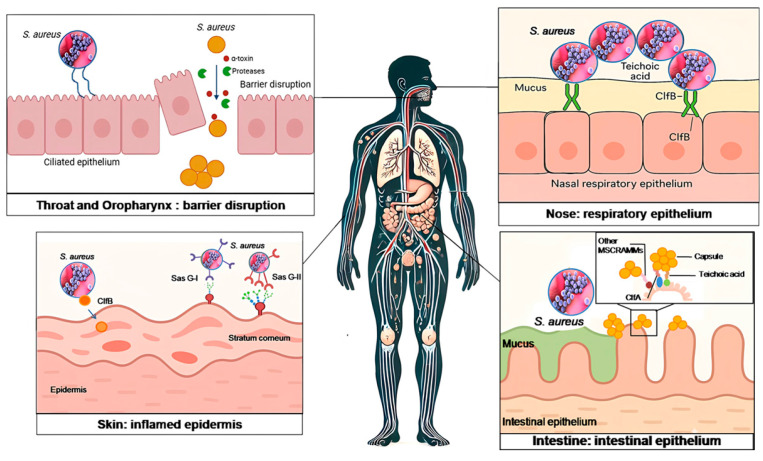
- Colonization is dynamic: approximately 30% of individuals are persistently colonized, 30% intermittently, and 40% are non-carriers; the anterior nares are the primary niche. Nasal MRSA/MSSA rates vary widely—community MSSA 12–30% and MRSA 1–3%, with examples such as 51.2% MSSA/1.2% MRSA among homeless individuals in Lisbon and 42.7% MSSA/14% MRSA in Sierra Leone. Throat carriage can exceed nasal carriage (40% vs 31%; exclusive throat carriage 30.2% in community participants vs 18.4% in hospitalized patients/healthcare workers), and biofilm-forming strains are 3–5 times more likely to persist in the throat. Nasal mupirocin reduced nasal MRSA by 50% but did not significantly impact throat carriage.
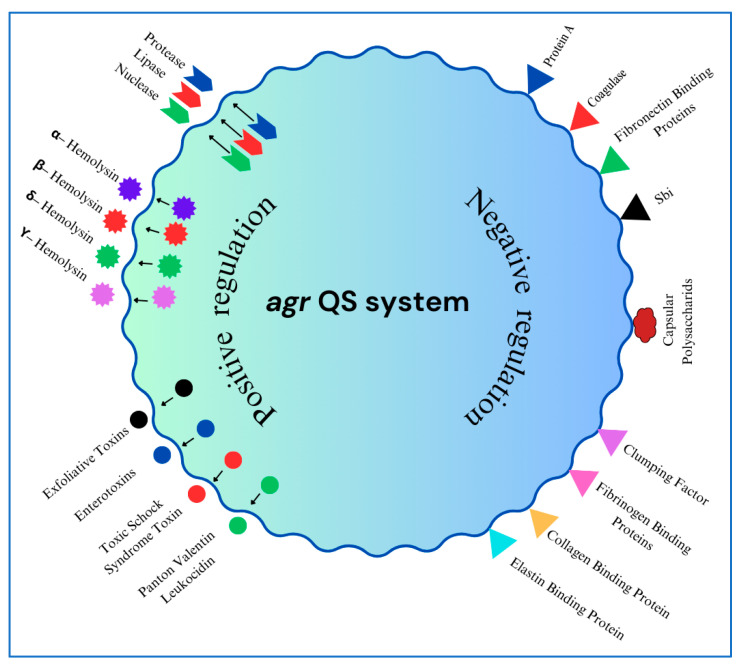
- Virulence is driven by surface adhesins (e.g., ClfB, SasG, MSCRAMMs) and secreted toxins (e.g., PVL, TSST-1, alpha-hemolysin). PVL genes are rare in nasal carriage isolates (0.6–2.1%) but prevalent in skin/soft tissue infections (38.9%) and necrotizing pneumonia (>90%); PVL-positive necrotizing pneumonia mortality is 56–75%, and recurrence rates are threefold higher than PVL-negative isolates. PVL targets C5aR/C5L2, with sublytic concentrations (~5 nM) inducing apoptosis and higher concentrations (~200 nM) causing necrosis.
- Resistance mechanisms include *mecA*/*mecC*-encoded PBP2a and SCC*mec* for MRSA, *vanA*/*vanB* for VRSA, and thickened cell walls/metabolic adaptations for VISA. Reported VRSA prevalence is 1.2% in Asia, 1.1% in Europe, 3.6% in America, and 2.5% in Africa, with country examples such as Saudi Arabia (18%) and Nigeria (29%).
- Emerging strategies include monoclonal antibodies, multivalent vaccines, CRISPR-Cas9 targeting *mecA*/*blaZ*/*icaA*, phage StAP1 lysing 46.3% of clinical MRSA isolates, endolysins reducing MRSA populations by 90%, dPNAG vaccines reducing bacteremia by 54–91% in murine models, and surface coatings reducing bacterial adhesion by 40–94%.
Methods
- Narrative review synthesizing studies identified from PubMed, Scopus, and Web of Science; no primary data are reported.
- Thematic synthesis covers colonization dynamics, virulence factors, regulation (*agr*/*sar*), antibiotic resistance mechanisms, MRSA/VRSA epidemiology, and emerging therapeutic strategies, including tables of colonization and VRSA prevalence.
Limitations
- Stated in the paper: PVL’s pathogenic role remains debated because murine models lack compatible C5aR isoforms and other toxins can replicate necrotizing effects; vaccine development is limited by incomplete understanding of protective immunity, antigenic redundancy, and immune skewing; decolonization protocols often fail to eliminate throat colonization.
- Evident from the text: as a narrative review, it reports no systematic search strategy, inclusion/exclusion criteria, risk-of-bias assessment, or meta-analysis, so conclusions rely on cited literature and may be subject to selection bias.
Model-written summary. Check it against the paper before relying on it.
Integrity signals
Registry
Cites
Statistics
Figures
Verification
Claims the paper makes
1 Valid · 0 Not valid · 222 Not checked · 28 Own results and interpretations
The cited sources support only part of this claim — read each source’s verdict below.
In the paper
“secreted toxins like α-hemolysin, Panton-Valentine leukocidin (PVL), and toxic shock syndrome toxin-1 (TSST-1) contribute to tissue destruction and systemic toxicity [5].”
§ Staphylococcus aureus: A Review of the Pathogenesis and Virulence Mechanisms > 1. Introduction
What the sources say
- Partly supportedcites [5] Linz M.S. Mattappallil A. Finkel D. Parker D. Clinical Impact of Staphylococcus aureus Skin and Soft Tissue Infections Antibiotics 2023 12 557 10.3390/antibiotics12030557 36978425 PMC10044708 sourceExperimental — accuracy not yet measured
Section 5 (Pathogenesis) of our copy supports the α-hemolysin and PVL parts: ɑ-hemolysin binds ADAM10 to initiate cell lysis and cleaves E-cadherin, with Δhla mutants showing smaller lesions and minimal dermonecrosis, and PVL-positive S. aureus inducing larger skin lesions in humanized NSG mice and lysing PMNs. However, TSST-1 is never named anywhere in our copy (searched: TSST-1, toxic shock syndrome toxin, superantigen, systemic toxicity); the paper only describes staphylococcal superantigens generically as activating T cells by crosslinking TCR with MHC II to 'disrupt the physiological immune response', and discusses exfoliative toxins ETA/ETB in SSSS, so the TSST-1 member of the triad and the 'systemic toxicity' attribution are not supported. The cited passage also hedges more than the claiming sentence: it states that 'the specific role of PVL in USA300 skin infections remains unclear, with inconsistent findings across studies' and that 'the role of Hla in human SSTI virulence has not been well characterized', whereas the quote asserts tissue destruction as established fact. (LLM, conf=0.75)
plainstates a cause- Asserted: passes — The authors put it forward as true.
- Checkable: passes — It can be checked against evidence.
- Load-bearing: unclear — It is unclear whether the paper’s conclusions depend on it.
- Based: passes — The paper gives a reason why it holds.
- Partly supported
None of the sources cited for this claim have been checked yet.
In the paper
“Conversely, clindamycin and linezolid suppress toxin synthesis, highlighting the therapeutic implications of antibiotic selection [109,117,124].”
§ Staphylococcus aureus: A Review of the Pathogenesis and Virulence Mechanisms > 2. Pathogenesis of S. aureus > 2.3. Staphylococcal PVL: Clinical Implications, Molecular Mechanisms, and Genetic Landscape
What the sources say
- Not checked yetcites [109] Shallcross L.J. Fragaszy E. Johnson A.M. Hayward A.C. The role of the Panton-Valentine leucocidin toxin in staphylococcal disease: A systematic review and meta-analysis Lancet Infect. Dis. 2013 13 43 54 10.1016/S1473-3099(12)70238-4 23103172 PMC3530297 source
Checked before — its earlier verdict is held back until a new check runs.
- Not checked yetcites [117] Nawrotek P. Karakulska J. Fijałkowski K. Chapter 9—The Staphylococcal Panton-Valentine Leukocidin (PVL) Pet-To-Man Travelling Staphylococci Savini V. Academic Press Cambridge Cambridge, MA, USA 2018 117 125 978-0-12-813547-1 Available online: https://www.sciencedirect.com/science/article/pii/B9780128135471000091 (accessed on 1 April 2025)
- Could not verifycites [124] Arunachalam K. Pandurangan P. Shi C. Lagoa R. Regulation of Staphylococcus aureus Virulence and Application of Nanotherapeutics to Eradicate S. aureus Infection Pharmaceutics 2023 15 310 10.3390/pharmaceutics15020310 36839634 PMC9960757 sourceExperimental — accuracy not yet measured
Our copy mentions clindamycin only as a payload/comparator in nanotherapeutic studies (Section 3.3, Organic NPs: clindamycin-loaded PLGA and PLGA-polyethylenimine NPs against MRSA wound infection [233]; lecithin liposomes 'more efficient than clindamycin' [262]; Section 3.2 rhamnolipid-ZnONPs vs clindamycin-treated wounds [184,185]) and linezolid only as one antibiotic whose activity was enhanced by ultrasound-stimulated phase-change contrast agents (Section 3.3, [228]). No passage states that either drug suppresses PVL or other toxin synthesis; the paper's toxin discussion (Section 2.7) covers PVL as a pore-forming leukocidin regulated by the agr operon, not antibiotic-mediated suppression. Searched: 'clindamycin linezolid suppress toxin synthesis', 'Panton-Valentine leukocidin production inhibition', 'linezolid toxin production protein synthesis inhibitor', 'antibiotics reduce PVL alpha-toxin expression', plus exact-term searches for 'clindamycin' and 'linezolid'. Nothing contradicts the claim either, so it is unaddressed rather than disputed. (LLM, conf=0.70)
plainstates a cause- Asserted: passes — The authors put it forward as true.
- Checkable: passes — It can be checked against evidence.
- Load-bearing: unclear — It is unclear whether the paper’s conclusions depend on it.
- Based: passes — The paper gives a reason why it holds.
- Not checked yet
None of the sources cited for this claim have been checked yet.
In the paper
“Despite colonizing the anterior nares, skin, and mucosal surfaces in approximately 30% of healthy individuals, S. aureus exploits breaches in host barriers or immune defenses to establish invasive infections, underscoring its adaptability and resilience [3].”
§ Staphylococcus aureus: A Review of the Pathogenesis and Virulence Mechanisms > 1. Introduction
What the sources say
- Not checked yetcites [3] Laux C. Peschel A. Krismer B. Staphylococcus aureus Colonization of the Human Nose and Interaction with Other Microbiome Members Microbiol. Spectr. 2019 7 10.1128/microbiolspec.GPP3-0029-2018 31004422 PMC11590430 source
Checked before — its earlier verdict is held back until a new check runs.
plainstates a cause- Asserted: passes — The authors put it forward as true.
- Checkable: passes — It can be checked against evidence.
- Load-bearing: unclear — It is unclear whether the paper’s conclusions depend on it.
- Based: passes — The paper gives a reason why it holds.
- Not checked yet
None of the sources cited for this claim have been checked yet.
In the paper
“An additional 30% undergo intermittent colonization, driven by factors such as bacterial strain adaptability, environmental exposures, and fluctuations in host immunity [11].”
§ Staphylococcus aureus: A Review of the Pathogenesis and Virulence Mechanisms > 2. Pathogenesis of S. aureus > 2.1. Colonization Dynamics
What the sources say
- Not checked yetcites [11] Howden B.P. Giulieri S.G. Wong Fok Lung T. Baines S.L. Sharkey L.K. Lee J.Y.H. Hachani A. Monk I.R. Stinear T.P. Staphylococcus aureus host interactions and adaptation Nat. Rev. Microbiol. 2023 21 380 395 10.1038/s41579-023-00852-y 36707725 PMC9882747 source
Checked before — its earlier verdict is held back until a new check runs.
plainstates a cause- Asserted: passes — The authors put it forward as true.
- Checkable: passes — It can be checked against evidence.
- Load-bearing: unclear — It is unclear whether the paper’s conclusions depend on it.
- Based: passes — The paper gives a reason why it holds.
- Not checked yet
None of the sources cited for this claim have been checked yet.
In the paper
“Specifically, S. aureus adheres to cytokeratin 10, a structural protein expressed in nasal epithelial cells, a key mechanism enabling persistent colonization [15].”
§ Staphylococcus aureus: A Review of the Pathogenesis and Virulence Mechanisms > 2. Pathogenesis of S. aureus > 2.1. Colonization Dynamics
What the sources say
- Not checked yetcites [15] Sakr A. Brégeon F. Mège J.-L. Rolain J.-M. Blin O. Staphylococcus aureus Nasal Colonization: An Update on Mechanisms, Epidemiology, Risk Factors, and Subsequent Infections Front. Microbiol. 2018 9 2419 10.3389/fmicb.2018.02419 30349525 PMC6186810 source
Checked before — its earlier verdict is held back until a new check runs.
plainstates a cause- Asserted: passes — The authors put it forward as true.
- Checkable: passes — It can be checked against evidence.
- Load-bearing: unclear — It is unclear whether the paper’s conclusions depend on it.
- Based: passes — The paper gives a reason why it holds.
- Not checked yet
150 more claims
Create a free account to see all 251 claims and to verify the 276 references still open.
- It may state two separate claims as one. 90
- Probably not a substantial claim. 10
- The quote only partly states this claim. 1
Self-check
Percentages, sums and reported differences re-computed from the paper’s own numbers.
Each contradiction between two passages listed here was confirmed by an independent check.
Rated minor: it would not touch a result — a value no result rests on, a p-value that stays on the same side of the significance level, or a conflict that is clerical, resolved elsewhere in the paper, or outside its own findings.
In the paper
§ Staphylococcus aureus: A Review of the Pathogenesis and Virulence Mechanisms > 4. Antibiotic Resistance and Mechanisms in S. aureus > 4.2. Epidemiology and Clinical Impact of MRSA
“| Africa | 2.5% | Ethiopia, Egypt | Nigeria (29%), Egypt (Multiple reports) | [222,283] |”
§ Staphylococcus aureus: A Review of the Pathogenesis and Virulence Mechanisms > 4. Antibiotic Resistance and Mechanisms in S. aureus > 4.2. Epidemiology and Clinical Impact of MRSA
“Countries with Notable Data | Country-Specific Prevalence (%)”
Rated minor: it would not touch a result — a value no result rests on, a p-value that stays on the same side of the significance level, or a conflict that is clerical, resolved elsewhere in the paper, or outside its own findings.
In the paper
§ Staphylococcus aureus: A Review of the Pathogenesis and Virulence Mechanisms > 4. Antibiotic Resistance and Mechanisms in S. aureus > 4.1. Mechanisms of Antibiotic Resistance
“This growing concern culminated in a significant 1946 study by Kirby and colleagues, which documented the increasing prevalence of penicillin-resistant S. aureus in London hospitals.”
§ Staphylococcus aureus: A Review of the Pathogenesis and Virulence Mechanisms > References
“185. Kirby W.M. Extraction of a Highly Potent Penicillin Inactivator from Penicillin Resistant Staphylococci Science 1944 99 452 453 10.1126/science.99.2579.452 17798398”
Rated minor: it would not touch a result — a value no result rests on, a p-value that stays on the same side of the significance level, or a conflict that is clerical, resolved elsewhere in the paper, or outside its own findings.
In the paper
§ Staphylococcus aureus: A Review of the Pathogenesis and Virulence Mechanisms > 2. Pathogenesis of S. aureus > 2.1. Colonization Dynamics
“Similarly, Marshall and Spelman previously found that 69.2% of patients tested positive in nasal samples, compared to 71.4% in throat samples.”
§ Staphylococcus aureus: A Review of the Pathogenesis and Virulence Mechanisms > References
“62. Batra R. Eziefula A. Wyncoll D. Edgeworth J. Throat and rectal swabs may have an important role in MRSA screening of critically ill patients Intensive Care Med. 2008 34 1703 1706 10.1007/s00134-008-1153-1 18500421”
Rated minor: it would not touch a result — a value no result rests on, a p-value that stays on the same side of the significance level, or a conflict that is clerical, resolved elsewhere in the paper, or outside its own findings.
In the paper
§ Staphylococcus aureus: A Review of the Pathogenesis and Virulence Mechanisms > 2. Pathogenesis of S. aureus > 2.1. Colonization Dynamics
“The remaining 40% are classified as non-carriers, though transient colonization remains possible under conducive conditions, such as disrupted skin barriers or antibiotic-mediated microbiome shifts [12].”
§ Staphylococcus aureus: A Review of the Pathogenesis and Virulence Mechanisms > 2. Pathogenesis of S. aureus > 2.1. Colonization Dynamics
“Approximately 20% of the human population are persistent carriers of S. aureus, 60% exhibit intermittent carriage, and the remaining 20% show no detectable colonization.”
Rated minor: it would not touch a result — a value no result rests on, a p-value that stays on the same side of the significance level, or a conflict that is clerical, resolved elsewhere in the paper, or outside its own findings.
In the paper
§ Staphylococcus aureus: A Review of the Pathogenesis and Virulence Mechanisms > 4. Antibiotic Resistance and Mechanisms in S. aureus > 4.1. Mechanisms of Antibiotic Resistance
“The key breakthrough came in the late 1940s when Chain and Abraham demonstrated that resistant strains produced an enzyme capable of breaking down the antibiotic [188].”
§ Staphylococcus aureus: A Review of the Pathogenesis and Virulence Mechanisms > References
“188. Abraham E.P. Chain E. An enzyme from bacteria able to destroy penicillin. 1940 Rev. Infect. Dis. 1988 10 677 678 3055168”
Citations
Cites
Waves of resistance: Staphylococcus aureus in the antibiotic era
Chambers, H. F., & DeLeo, F. R. (2009) · Nature Reviews Microbiology · doi:10.1038/nrmicro2200 · Cited by 2,718 · cited 3×
“The mechanisms underlying this resistance are diverse and multifaceted [175,176].”
Antimicrobial Resistance: A Growing Serious Threat for Global Public Health
Salam, M. A., Al-Amin, M. Y., Salam, M. T., Pawar, J., Akhter, N., Rabaan, A. A., & Alqumber, M. A. A. (2023) · doi:10.20944/preprints202305.0555.v1 · Cited by 2,411
Antibiotics: past, present and future
Hutchings, M. I., Truman, A. W., & Wilkinson, B. (2019) · Current Opinion in Microbiology · doi:10.1016/j.mib.2019.10.008 · Cited by 2,370
Antimicrobial Resistance: A Growing Serious Threat for Global Public Health
Salam, M. A., Al-Amin, M. Y., Salam, M. T., Pawar, J. S., Akhter, N., Rabaan, A. A., & Alqumber, M. A. A. (2023) · Healthcare · doi:10.3390/healthcare11131946 · Cited by 2,338 · cited 1×
“The realization that bacteria could rapidly adapt led to the development of new antibiotics designed to withstand enzymatic degradation [192–194].”
Methicillin-resistant Staphylococcus aureus: an overview of basic and clinical research
Turner, N. A., Sharma-Kuinkel, B. K., Maskarinec, S. A., Eichenberger, E. M., Shah, P. P., Carugati, M., Holland, T. L., & Fowler, V. G. (2019) · Nature Reviews Microbiology · doi:10.1038/s41579-018-0147-4 · Cited by 2,051 · cited 3×
“The complexity of this resistance is driven by multiple factors, as demonstrated by nearly two decades of research into its underlying mechanisms [65,200,238].”
David, M. Z., & Daum, R. S. (2010) · Clinical Microbiology Reviews · doi:10.1128/cmr.00081-09 · Cited by 1,972
Multidrug Resistance in Bacteria
Nikaido, H. (2009) · Annual Review of Biochemistry · doi:10.1146/annurev.biochem.78.082907.145923 · Cited by 1,682 · cited 1×
“These include aminoglycosides, fluoroquinolones, macrolides, and tetracyclines, which significantly limit therapeutic options and complicate treatment strategies [271].”
Adhesion, invasion and evasion: the many functions of the surface proteins of Staphylococcus aureus
Foster, T. J., Geoghegan, J. A., Ganesh, V. K., & Höök, M. (2014) · Nature Reviews Microbiology · doi:10.1038/nrmicro3161 · Cited by 1,533 · cited 2×
“This dual function—adhesion and immune evasion—explains why ClfB-knockout strains trigger stronger neutrophil recruitment [49].”
Aminoglycoside modifying enzymes
Ramirez, M. S., & Tolmasky, M. E. (2010) · Drug Resistance Updates · doi:10.1016/j.drup.2010.08.003 · Cited by 1,464
Antimicrobial resistance: the example of Staphylococcus aureus
Lowy, F. D. (2003) · Journal of Clinical Investigation · doi:10.1172/jci18535 · Cited by 1,445
Research works printed but not linked: 7
- Taylor T.A. Unakal C.G. Staphylococcus aureus Infection StatPearls StatPearls Publishing Treasure Island, FL, USA 2025 Available online: http://www.ncbi.nlm.nih.gov/books/NBK441868/ (accessed on 20 February 2025) 28722898
- Siddiqui A.H. Koirala J. Methicillin-Resistant Staphylococcus aureus StatPearls StatPearls Publishing Treasure Island, FL, USA 2023 Available online: http://www.ncbi.nlm.nih.gov/books/NBK482221/ (accessed on 9 July 2023) 29489200
- Khetsuriani S. Gastrointestinal Colonization by Staphylococcus aureus Strains as Risk Factor for Different Infections (Brief Review) Int. J. Multidiscip. Res. Publ. IJMRAP 2023 5
- Nawrotek P. Karakulska J. Fijałkowski K. Chapter 9—The Staphylococcal Panton-Valentine Leukocidin (PVL) Pet-To-Man Travelling Staphylococci Savini V. Academic Press Cambridge Cambridge, MA, USA 2018 117 125 978-0-12-813547-1 Available online: https://www.sciencedirect.com/science/article/pii/B9780128135471000091 (accessed on 1 April 2025)
- Kumar P. 33—Pharmacology of Specific Drug Groups: Antibiotic Therapy∗∗The author wishes to recognize Dr. Thomas J. Pallasch for his past contributions to this chapter Pharmacology and Therapeutics for Dentistry (Seventh Edition) Dowd F.J. Johnson B.S. Mariotti A.J. Mosby Maryland Heights, MI, USA 2017 457 487 978-0-323-39307-2 Available online: https://www.sciencedirect.com/science/article/pii/B9780323393072000333 (accessed on 30 March 2025)
- Shutter M.C. Akhondi H. Tetracycline StatPearls StatPearls Publishing Treasure Island, FL, USA 2025 Available online: http://www.ncbi.nlm.nih.gov/books/NBK549905/ (accessed on 30 March 2025) 31751095
- Patel P.H. Hashmi M.F. Macrolides StatPearls StatPearls Publishing Treasure Island, FL, USA 2025 31855339
Cited by
Papaneophytou, C. P. (2026) · Current Issues in Molecular Biology · doi:10.3390/cimb48020214 · Cited by 38
Vaccines as Potential Frontliners Against Antimicrobial Resistance (AMR): A Focused Review
Patil, S., Singh, I. P., Verma, I. K., Kumar, A., Sharma, J., Ratn, A., Dhakad, M. S., & Sharma, D. (2025) · Infection and Drug Resistance · doi:10.2147/idr.s544665 · Cited by 26
Vongmanee, N., Nampeng, J., Pintavirooj, C., & Visitsattapongse, S. (2025) · Polymers · doi:10.3390/polym17212826 · Cited by 11
Sim, M., Boya, B. R., Kim, Y., Lee, J., & Lee, J. (2025) · Microbial Biotechnology · doi:10.1111/1751-7915.70280 · Cited by 11
Zaidi, S., Srivastava, N., Goel, N., Sood, S., & Khare, S. K. (2025) · Process Biochemistry · doi:10.1016/j.procbio.2025.08.016 · Cited by 8
Al-Sharqi, A. A., Eissa, M. E., Alyousfi, D., Alharbi, A. E., Ibrahim, I. M., Abdelkhalig, S. M., Albaqami, F. M. K., Eldesoky, A. M., Sherbini, A. A., Yousef, T. A., et al. (2026) · RSC Advances · doi:10.1039/d5ra08848h · Cited by 8
Roque‐Borda, C. A., Zhang, Q., de la Torre, B. G., Alberício, F., Perdigão, J., & Pavan, F. R. (2026) · Clinical Microbiology Reviews · doi:10.1128/cmr.00174-25 · Cited by 9
Okafor, U. C., Okorie-Kanu, O. J., Ogugua, A. J., Ikeogu, C. F., Okafor, S. C., Anyanwu, M. U., Nwobi, O. C., Anyaoha, C. O., Mgbeahuruike, A. C., Majesty-Alukagberie, L. O., et al. (2025) · Microorganisms · doi:10.3390/microorganisms13092059 · Cited by 8
Daher, R., Pouget, C., Lavigne, J., François, P., & Dunyach‐Remy, C. (2025) · Critical Reviews in Microbiology · doi:10.1080/1040841x.2025.2572800 · Cited by 8
Occurrence of Staphylococcus aureus TSST-1 in Foods: A Review
Govari, M., & Pexara, A. (2025) · Toxins · doi:10.3390/toxins17120606 · Cited by 6
Pérez-Rodríguez, M., Serrano‐Pertierra, E., & Blanco‐López, M. C. (2026) · Frontiers in Cellular and Infection Microbiology · doi:10.3389/fcimb.2025.1741845 · Cited by 8
Sathiyavimal, S., Bharathi, D., & Sathiyamoorthi, E. (2026) · Pharmaceuticals · doi:10.3390/ph19020333 · Cited by 7
Tackling Biofilm-Forming Pathogens: A Challenge to Overcome in the Fight Against Infectious Diseases
Sole, E., Motta, G., Marcoli, F., Midiri, A., Sindona, C., Imbesi, L., Mancuso, G., Zemzem, M., & Biondo, C. (2026) · Pathogens · doi:10.3390/pathogens15050493 · Cited by 7
Aguayo-Reyes, A., Morales-León, F., Quezada-Aguiluz, M., Opazo-Capurro, A., Bello‐Toledo, H., Mella, S., Herrera-Chávez, N., Matus-Köhler, M., Hormazábal, J. C., & González-Rocha, G. E. (2025) · Microbiology Spectrum · doi:10.1128/spectrum.01031-25 · Cited by 5
Rose, E. D., D’Aquila, P., Sena, G., Perrotta, A., Passarino, G., & Bellizzi, D. (2025) · Frontiers in Cellular and Infection Microbiology · doi:10.3389/fcimb.2025.1684624 · Cited by 5
One transcript, two functions: the emerging roles of dual-function RNAs
Luke, L. M., & Papenfort, K. (2025) · microLife · doi:10.1093/femsml/uqaf034 · Cited by 6
Guo, W., Zhao, Y., Yang, Y., Li, W., Wang, K., Zhou, F., Li, J., Li, X., Zhang, Y., Hu, B., et al. (2025) · BMC Microbiology · doi:10.1186/s12866-025-04475-6 · Cited by 5
Gentamicin-loaded exosomes from IMMUNEPOTENT CRP enhance healing of infected diabetic wound in mice
Coronado, P. L. G., Martínez, B. A. G., Moreno-Amador, K. A., Hernández, D. R., Zárate-Triviño, D. G., Hernández, D. E. C., Benavides, P. Z., Luna‐Bárcenas, G., Rodríguez-Padilla, C., & Molina, M. A. F. (2025) · Frontiers in Pharmacology · doi:10.3389/fphar.2025.1682468 · Cited by 5
Attenuation of Staphylococcus aureus Biofilms and Virulence by 3-Fluorocatechol
Kim, T., Tabassum, N., Javaid, A., & Khan, F. (2025) · Antibiotics · doi:10.3390/antibiotics14121240 · Cited by 6
Chen, H., Fan, Y., Hu, R., Yu, Q., Yu, J., Zhang, X., Zhou, H., Zhang, K., Cui, W., Zhang, S., et al. (2026) · Frontiers in Cellular and Infection Microbiology · doi:10.3389/fcimb.2026.1756348 · Cited by 4
Ihuţ, A., Răducu, C., Ranta, M., Andrecan, A. F., & Uiuiu, P. (2026) · Microorganisms · doi:10.3390/microorganisms14020447 · Cited by 4
Omar, M. A., Temirak, A., Abdelraof, M., El‐Bayaa, M. N., Alanzy, A. L., Saleh, A., & Srour, A. M. (2026) · Bioorganic Chemistry · doi:10.1016/j.bioorg.2026.109736 · Cited by 4
Jiang, W., & You, C. (2026) · Microbial Pathogenesis · doi:10.1016/j.micpath.2026.108467 · Cited by 4
Shuvo, M. N., Arian, T. A., Fuad, F., Noman, M. H., Alam, M. N., Himel, M. K., & Shil, A. (2026) · PLoS ONE · doi:10.1371/journal.pone.0346271 · Cited by 4
Synthesis, in vitro antimicrobial activity, and in silico studies of 1-aminoalkyl-2-naphthols
Beyene, F., Mazumder, A., Tadesse, S., Asres, K., & Bisrat, D. (2025) · Scientific Reports · doi:10.1038/s41598-025-23064-1 · Cited by 4
Epidemiology, Virulence Factors, and Antimicrobial Resistance in Staphylococcus aureus
da Cunha, M. D. L. R. D. S. (2025) · Antibiotics · doi:10.3390/antibiotics14080792 · Cited by 4
A Paradigm Shift in SSTI Management: The Multifunctional Role of Extracellular Vesicles
Barathan, M., & Hanafiah, A. (2025) · International Journal of Molecular Sciences · doi:10.3390/ijms26136481 · Cited by 3
Sharma, H. K., Singh, I., Karna, A., Gupta, P., Singh, T., Kumar, A., Pandita, D., Mukherjee, M., Parmar, V. S., Agarwal, P., et al. (2025) · Scientific Reports · doi:10.1038/s41598-025-11721-4 · Cited by 4
Ingravalle, F., Maurici, M., Vinci, A., Carlo, S. D., D’Agostini, C., Pica, F., & Ciotti, M. (2025) · Antibiotics · doi:10.3390/antibiotics14090932 · Cited by 3
Wcisłek, A., Jursa-Kulesza, J., Masiuk, H., Grygorcewicz, B., Hukowska-Szematowicz, B., Prowans, P., Ziętek, P., & Kosik-Bogacka, D. I. (2025) · Pathogens · doi:10.3390/pathogens14090923 · Cited by 4
Facciolà, A., Laganà, A., Gioffrè, M. E., Morabito, A., Chiera, D., Ferlazzo, M., & Laganà, P. (2025) · Pathogens · doi:10.3390/pathogens14121289 · Cited by 3
El-Gendy, H. F., Masoud, S. R., Sheraiba, N. I., Elnahriry, S. S., Madkour, D. A., Korany, R. M. S., Khalifa, H. O., & Elnagar, H. Y. (2025) · Frontiers in Pharmacology · doi:10.3389/fphar.2025.1679854 · Cited by 3
Guo, D., Tao, Y., Sun, L., Liu, X., Gao, Y., Jiang, P., Gao, H., Wang, B., & Wang, L. (2025) · Microbial Biotechnology · doi:10.1111/1751-7915.70293 · Cited by 4
Ilieva, L., Baev, V., Marhova, M., Yahubyan, G. T., Apostolova, E., Gozmanova, M., Gochev, V., Paunova-Krasteva, T. S., Damyanova, T., Kostadinova, S., et al. (2026) · International Journal of Molecular Sciences · doi:10.3390/ijms27020760 · Cited by 3
Al‐Awadhi, F. H., Mohamed, A. S., Habib, O. M. A., & Al‐Awadi, N. A. (2026) · ACS Omega · doi:10.1021/acsomega.5c11199 · Cited by 3
Dzul-Beh, Á. D. J., Dzib‐Baak, H. E., Palacios‐Can, F. J., Déciga‐Campos, M., González-Sánchez, A. A., Uc‐Cachón, A. H., & Molina‐Salinas, G. M. (2026) · Journal of Ethnopharmacology · doi:10.1016/j.jep.2026.121265 · Cited by 3
Muneeb, M., Khan, A. Y., Shaukat, A., & Qu, Y. (2026) · Microbial Pathogenesis · doi:10.1016/j.micpath.2026.108774 · Cited by 3
Mechanisms underlying pyogenic bacterial infections of the skin
Huang, C., Yan, X., Xu, X., Yang, Y., Zhou, Y., Zhao, J., Yang, Y., Zhou, C., Gao, Y., Zhang, X. J., et al. (2026) · Archives of Microbiology · doi:10.1007/s00203-026-04987-3 · Cited by 3
Mohanty, S., Pattnaik, S., Mishra, S., Rath, B. P., & Mohanty, C. (2025) · Journal of the Indian Chemical Society · doi:10.1016/j.jics.2025.102030 · Cited by 2
Okafor, U. C., Eze, C. D., Iloduba, U. S., & Nwachineke, C. E. (2025) · Industrial and Domestic Waste Management · doi:10.53623/idwm.v5i2.727 · Cited by 2
Biosafe Control of Staphylococcal Enterotoxins Production in Shelf-Stable Bacon
Guerra, C. A., Júnior, E. P. B., Alves, L. G. D. O., & Guerra, A. F. (2025) · Fermentation · doi:10.3390/fermentation11100566 · Cited by 2
Wang, Y., Wu, Q., Mao, G., Rao, L., Liang, M., & Sun, H. (2025) · Frontiers in Microbiology · doi:10.3389/fmicb.2025.1676135 · Cited by 2
Prakash, R., Saravanan, P., Kumar, P., Omer, S. N., Rajeshkannan, R., & Kumar, S. (2025) · Sustainable Chemistry One World · doi:10.1016/j.scowo.2025.100144 · Cited by 2
Mazandarani, A., Jabbari, M., Goudarzi, S., & Khodashenas, M. (2025) · Journal of Family & Reproductive Health · doi:10.18502/jfrh.v19i3.20054 · Cited by 2
Li-Dong, X., Feng, S., De-Liang, Y., Li-Qian, D., & Ya-Ni, W. (2025) · European Journal of Translational Myology · doi:10.4081/ejtm.2025.14261 · Cited by 2
Maldonado-Pérez, H., Pinzón, J. P., Molina‐Salinas, G. M., González-Sánchez, A. A., Dzib‐Baak, H. E., Dzul-Beh, Á. D. J., Quintal-Novelo, C. J., & Uc‐Cachón, A. H. (2025) · Microbiology Research · doi:10.3390/microbiolres16120263 · Cited by 2
Demyashkin, G., Алексеевич, П. М., Tokov, A., Sataieva, T., Kubyshkin, A. V., Shchekin, V. I., Popov, S. V., Kuzminov, B., Zabroda, N. N., Volodkin, A. V., et al. (2025) · Antibiotics · doi:10.3390/antibiotics15010020 · Cited by 3
Maronde, D. N., Rodríguez-Borges, J. E., Almeida, A., & Lourenço, L. M. O. (2025) · Journal of Photochemistry and Photobiology A Chemistry · doi:10.1016/j.jphotochem.2025.117007 · Cited by 2
Shouqair, D., Alghafri, R., Naji, M., Albastaki, A., Nassar, R., Mohamed, L., Aloba, B. K., Awad, B., Dhaheri, F. A. A., Everett, D., et al. (2025) · Veterinary Sciences · doi:10.3390/vetsci13010014 · Cited by 2
González-García, S., Bustos-Hamdan, A., Hamdan‐Partida, A., & Bustos‐Martínez, J. (2025) · Future Microbiology · doi:10.1080/17460913.2025.2605944 · Cited by 2
Li, B., Luo, Q., Luo, K., Lu, W., Zeng, S., Yang, M., & Liu, T. (2025) · Bioorganic Chemistry · doi:10.1016/j.bioorg.2025.109434 · Cited by 2
Benício, J. R. W., Sulzbach, A., Berté, A. L. W., dos Santos, C. F., Mariano, C. J. C., Heidrich, D., Maciel, M. J., Johann, L., & da Silva, G. L. (2026) · Poultry · doi:10.3390/poultry5020018 · Cited by 2
Mazzantini, D., Amato, B., Zineddu, S., de Azevedo-França, J. A., Maisetta, G., Ghelardi, E., Esin, S., Messori, L., & Batoni, G. (2026) · Frontiers in Cellular and Infection Microbiology · doi:10.3389/fcimb.2026.1794590 · Cited by 2
Structural integration and antibacterial performance of advanced Zn-MOF@MXene nanocomposites
Dubey, S., Sharma, A., & Kaur, K. (2026) · The European Physical Journal Special Topics · doi:10.1140/epjs/s11734-026-02298-8 · Cited by 2
Elbehiry, A., Abalkhail, A., Elmanssury, A. E., & Marzouk, E. (2026) · International Journal of Molecular Sciences · doi:10.3390/ijms27093814 · Cited by 2
Martens, A., Schauer, M., Motevalli, M. S., & König, B. (2026) · Microorganisms · doi:10.3390/microorganisms14051053 · Cited by 2
Bedir, B., Ünver, H., Çimentepe, M., Çimentepe, Ö. Ö., Yiğin, A., & Yildirim, M. (2026) · Antibiotics · doi:10.3390/antibiotics15060567 · Cited by 2
Kumar, A., Jamwal, V., Kaur, P., Tyagi, V., & Singh, K. (2026) · Naunyn-Schmiedeberg s Archives of Pharmacology · doi:10.1007/s00210-026-05670-6 · Cited by 2
Guevara‐Ramírez, P., Paz‐Cruz, E., Ruiz‐Pozo, V. A., Cadena-Ullauri, S., Tamayo‐Trujillo, R., Paredes, A. S. C., Jaramillo, N. H., Melo, L. H., & Zambrano, A. K. (2026) · Microorganisms · doi:10.3390/microorganisms14071565 · Cited by 2
Bagnasco, D., Bondi, B., Losacco, G., Montagnino, C., Froio, F., Tedesco, E., D’Alessandro, G., Baglivo, I., Bruno, L., Chiappori, S., et al. (2026) · Toxins · doi:10.3390/toxins18080319 · Cited by 2
Ткаченко, Г. М. (2025) · Agrobiodiversity for Improving Nutrition Health and Life Quality · doi:10.15414/ainhlq.2025.0009 · Cited by 1
Physical–Chemical Assessment and Antimicrobial Activity of Chlortetracycline-Loaded Collagen Sponges
Tihan, G. T., Ungureanu, C., Rau, I. B., Zgârian, R. G., Barbaresso, R. C., Kaya, M. G. A., Dinu‐Pîrvu, C., & Ghica, M. V. (2025) · Materials · doi:10.3390/ma18174029 · Cited by 1
EREN, E. E., Karagöz, N., Saatçi, E., Çelik, İ., & Alp, E. (2025) · Infectious Disease Reports · doi:10.3390/idr17060136 · Cited by 1
Dančová, N., Király, J., Hajdučková, V., Hudecová, P., Hisirová, S., Nagyová, M., Fedáková, Z., Pilipcinec, E., & Gregová, G. (2025) · Microorganisms · doi:10.3390/microorganisms13112449 · Cited by 2
Liao, J., Cheng, J., Liu, B., Shao, Y., & Meng, C. (2025) · PLoS ONE · doi:10.1371/journal.pone.0337292 · Cited by 1
Motta, C., Turley, M. B., Barbieri, G., Famà, A., Coppolino, F., Menegussi, E. B., Geoghegan, J. A., Beninati, C., Pellegrini, A., & Pietrocola, G. (2025) · PLoS Pathogens · doi:10.1371/journal.ppat.1013743 · Cited by 1
Ahmed, A. R., Nawaz, F., Noureen, S., Raheel, A., Taj, M. B., Sirajuddin, M., & Yousaf, S. (2026) · Journal of Molecular Structure · doi:10.1016/j.molstruc.2026.145247 · Cited by 1
Xhetani, M., Parllaku, B., Bakiri, F., Lugaj, A., Hamzaraj, E., Lika, M., Metaliaj, A., Beca, V., & Bennewitz, B. (2026) · Aerobiology · doi:10.3390/aerobiology4010004 · Cited by 1
Fuentes, G., Echarte, S. M., Parise, A. R., Ramírez, C. L., & Orallo, D. E. (2026) · Phytomedicine Plus · doi:10.1016/j.phyplu.2026.100965 · Cited by 2
Molecular detection of techoplanin associated genes in Staphylococcus aureus
Hameed, M. A., & Aburesha, R. A. (2026) · Ibn AL- Haitham Journal For Pure and Applied Science · doi:10.30526/39.1.4207 · Cited by 1
Goldsworthy, A. K., Olsen, M., Shiratuddin, M. F., McKirdy, S., Alghafri, R., Senok, A. C., Alfalasi, H. A., Wong, K. W., & Tajouri, L. (2026) · MicrobiologyOpen · doi:10.1002/mbo3.70255 · Cited by 1
Zhao, L., Jia, C., Zhao, Y., Li, H., Li, X., Yang, D., Chen, T., Zhongwei, Y., Zhou, S., Wang, C., et al. (2026) · Advanced Healthcare Materials · doi:10.1002/adhm.202505184 · Cited by 1
Han, D.-G., Kim, D.-H., Yoo, J. S., & Jeon, S. (2026) · Journal of Infection and Public Health · doi:10.1016/j.jiph.2026.103215 · Cited by 1
Tao, Z., Ke, K., & Zhu, L. (2026) · Future Microbiology · doi:10.1080/17460913.2026.2661505 · Cited by 1
Olayinka, A. A. (2026) · BMC Infectious Diseases · doi:10.1186/s12879-026-13444-x · Cited by 1
Plant-Derived Natural Products for Treating Staphylococcus aureus Skin Infections: An Update
Nahar, L. (2026) · eMicrobe · doi:10.53941/emicrobe.2026.100009 · Cited by 1
Simgamsetty, S., Shaik, N., Jothinathan, M. K. D., Yarlagadda, P., & Penmetcha, U. (2026) · Journal of Pure and Applied Microbiology · doi:10.22207/jpam.20.2.29 · Cited by 1
El-otmani, N., Blank, T., Teufel, R., & Potterat, O. (2026) · Journal of Ethnopharmacology · doi:10.1016/j.jep.2026.121938 · Cited by 1
Muturi, C., Wu, A., McShea, K., & Redding, L. E. (2026) · Journal of Antimicrobial Chemotherapy · doi:10.1093/jac/dkag195 · Cited by 1
Preparation and in vitro evaluation of photodynamic-responsive nanoliposome loaded PL-5
Lin, W., Shi, Q., Liao, X.-R., Zeng, Y., Xie, X., Ji, G.-J., & Li, Y.-K. (2026) · PLoS ONE · doi:10.1371/journal.pone.0351679 · Cited by 1
Kim, S.-H., Lee, J., Bae, J., Park, S., Jin, H., Lee, M.-S., Kim, Y.-K., Park, H., & 김성현 (2026) · Discovery Medicine · doi:10.24976/discov.med.202638209.137 · Cited by 1
Rezaverdinejad, M., Tukmechi, A., & Hadian, M. (2026) · Scientific Reports · doi:10.1038/s41598-026-60405-0 · Cited by 1
Wang, L., Wang, T., & Zhao, Y. (2026) · Animals and zoonoses. · doi:10.1016/j.azn.2026.07.003 · Cited by 1
Sundarrajan, T., Babu, N. D., N., A. K., Sadik, S., Balasubramaniam, A., & Thapa, S. (2026) · RSC Advances · doi:10.1039/d6ra04726b · Cited by 1
Kim, Y., O’driscoll, M., Horgan, C., Boya, B. R., Sim, M., Lee, J.-H., Lee, J., & O’Sullivan, T. P. (2026) · Journal of Medicinal Chemistry · doi:10.1021/acs.jmedchem.6c01485 · Cited by 1
Shoorgashti, R., Ghanatkaman, F. D., Baghizadeh, S., Ehsani, S., Lesan, S., & Ebrahimi, H. (2026) · BioMed Research International · doi:10.1155/bmri/4047432 · Cited by 1
Bioactive Compounds from Mangrove-Associated Fungi as Leads Against ESKAPE Pathogens
Agrawal, S., Dufossé, L., Deshmukh, S. K., & Verekar, S. A. (2026) · Life · doi:10.3390/life16081272 · Cited by 1
Konwar, B., Kashyap, S., Oh, S., & Kim, K.-S. (2026) · Microbiological Research · doi:10.1016/j.micres.2026.128658 · Cited by 1
Abadi, B. G. S., Behbahani, B. A., Jooyandeh, H., Hojjati, M., Vasiee, A., & Taki, M. (2026) · BMC Microbiology · doi:10.1186/s12866-026-05497-4 · Cited by 2
RNase-mediated defence and its association with SCCmec in Staphylococcus aureus
Kondo, K., Azam, A. H., Hisatsune, J., Ojima, S., Chihara, K., Nakamura, T., Tamura, A., Yamashita, W., Nakano, S., Kutsuno, S., et al. (2026) · Nature Communications · doi:10.1038/s41467-026-75971-0 · Cited by 1
Refaye, M. S. E., Challan, S. B., Ramadan, H. E., & Khater, S. I. (2026) · Discover Nano · doi:10.1186/s11671-026-04930-x · Cited by 1
González-García, S., Bustos-Hamdan, A., Hamdan‐Partida, A., & Bustos‐Martínez, J. (2025) · Microorganisms · doi:10.3390/microorganisms13091978 · Cited by 1
de Oliveira, L. M. F., Peringathara, S., Darisipudi, M. N., Seegert, S. L. L., Bludau, E., Weiß, S., Vogelgesang, A., Schoon, J., Groß, S., Corleis, B., et al. (2025) · bioRxiv (Cold Spring Harbor Laboratory) · doi:10.1101/2025.09.05.674392 · Cited by 1
Gwak, Y.-S., Suh, H.-Y., Yoon, H.-R., Kim, S., Bae, C.-I., & Kim, M.-J. (2026) · Journal of Microbiology and Biotechnology · doi:10.4014/jmb.2606.06012
Youane, K. S. N., Tamnou, E. B. M., Yogne, Y. P., Nana, P. A., Bricheux, G., Sime‐Ngando, T., & Nola, M. (2025) · GSC Biological and Pharmaceutical Sciences · doi:10.30574/gscbps.2025.32.1.0291
Synthesis and preliminary biological evaluation of novel steroidal compounds as antibacterial agents
Esposito, A., Stabile, M. R., Migliaccio, A., Gregorio, E. D., D’Errico, S., & Guaragna, A. (2025) · Steroids · doi:10.1016/j.steroids.2025.109686
Liu, H., Xing, H., Yu, X. L., Wang, Y., Liu, H., & Chang, Z. (2025) · Medicine · doi:10.1097/md.0000000000044651
Zhang, J., Liu, C., Tian, H., & Ren, Y. (2025) · Annals of Medicine and Surgery · doi:10.1097/ms9.0000000000004161
Wu, J., Zhu, Q., Bai, Y., Yuan, L., Liu, P., & Zhao, R. (2025) · Archives of Microbiology · doi:10.1007/s00203-025-04547-1
Edamana, A., Jose, J., & Vadakkan, K. (2025) · Clinical Phytoscience · doi:10.1186/s40816-025-00405-1
Metadata
- Authors
- Touaitia, R., Mairi, A., Ibrahim, N. A., Basher, N. S., Idres, T., & Touati, A.
- Affiliations
- Université Larbi Tébessi (DZ)
- University of Béjaïa (DZ)
- Imam Mohammad ibn Saud Islamic University (SA)
- Research Laboratory for Management of Local Animal Resources, Rabie Bouchama National Veterinary School of Algiers, Issad ABBAS Street, BP 161 Oued Semar, Algiers 16059, Algeria
- Corresponding author
- Ibrahim, Nasir Adam
- ORCID
- Venue
- Antibiotics
- Publisher
- MDPI AG
- Published
- 2025-05-06
- Volume
- 14
- Issue
- 5
- Pages
- 470
- ISSN
- 2079-6382 (ISSN-L)
- PMC
- PMC12108373
- OpenAlex
- W4410121808
- Semantic Scholar
- 8757827856862ba5145058005f895b8f0dfe4cef
- Cited by
- 273
- References
- 303
- Citations by year
- 2026: 207 · 2025: 66
- FWCI
- 33.52
- Type
- journal article
- Language
- en
- Open access
- gold
- doi.org
- Licence
- Locations
- Antibiotics (publishedVersion, cc-by)
- PubMed (publishedVersion)
- PubMed Central (publishedVersion, cc-by)
- DOAJ (DOAJ: Directory of Open Access Journals) (submittedVersion, cc-by-sa)
- Funders
- Deanship of Scientific Research at Imam Mohammad Ibn Saud Islamic University (IMSIU) (IMSIU-DDRSP2501)
- Topics
- Health Sciences › Medicine › Infectious Diseases › Antimicrobial Resistance in Staphylococcus
- Life Sciences › Biochemistry, Genetics and Molecular Biology › Molecular Biology › Bacterial biofilms and quorum sensing
- Health Sciences › Medicine › Infectious Diseases › Streptococcal Infections and Treatments
- Keywords
- Staphylococcus aureus, pathogenesis, virulence factors, biofilm formation, antibiotic resistance, methicillin-resistant Staphylococcus aureus, nasal carriage, skin colonization, oropharyngeal colonization, clfB, Panton-Valentine leukocidin, toxic shock syndrome toxin-1, iron acquisition, horizontal gene transfer, vancomycin resistance, decolonization, host-microbiome interactions, immune evasion, anti-virulence therapy, multi-epitope vaccine, AI-assisted diagnosis, antimicrobial resistance surveillance
About these checks
Registry, retraction, Cites and statistics results are computed, not judged, with one exception: a printed reference that no index lists is read once by a model before it counts as a citation error. Claims are extracted by a model and kept only when their quote appears verbatim in the text; each cited source is then checked, with a model’s help, for whether it says what the claim relies on. Those verdicts can be wrong — read the claim’s quote and the cited source before relying on one.
The claim verdicts this report counts are experimental: their accuracy is not yet measured.
A language model drew the claims from the paper on 2026-11-15, under version 3 of the claim definition (model deepseek-v4.1-flash, prompt extract-v3).
A second model labelled each claim on 2026-11-15 (model jev-1.13-20260917, definition revision gold-guideline-v0.2).
Cited sources are checked with a language model’s help (qwen3.8-omni-flash).
Statistics and arithmetic are recomputed, not judged.
Confidence bands are shown only for fields calibrated on our annotated test set. None is calibrated yet, so no band is shown.
What counts as a claim ›How we measure confidence ›How we check this ›
Are you an author, or do you see a problem with this page? Request a review
Data sources
Bibliographic data: Semantic Scholar, OpenAlex, Crossref.
Contains information from the Semantic Scholar Academic Graph Datasets, made available under the ODC Attribution License (ODC-BY 1.0).
Semantic Scholar’s data is described in: Kinney, R., et al. (2023). The Semantic Scholar Open Data Platform. arXiv:2301.10140.
