

Phenotypic Resistance to Antibiotics
Open accessThe DOI matches its Crossref record; 143 of the 143 references it cites were found in a registry or an index.
Abstract
The development of antibiotic resistance is usually associated with genetic changes, either to the acquisition of resistance genes, or to mutations in elements relevant for the activity of the antibiotic. However, in some situations resistance can be achieved without any genetic alteration; this is called phenotypic resistance. Non-inherited resistance is associated to specific processes such as growth in biofilms, a stationary growth phase or persistence. These situations might occur during infection but they are not usually considered in classical susceptibility tests at the clinical microbiology laboratories. Recent work has also shown that the susceptibility to antibiotics is highly dependent on the bacterial metabolism and that global metabolic regulators can modulate this phenotype. This modulation includes situations in which bacteria can be more resistant or more susceptible to antibiotics. Understanding these processes will thus help in establishing novel therapeutic approaches based on the actual susceptibility shown by bacteria during infection, which might differ from that determined in the laboratory. In this review, we discuss different examples of phenotypic resistance and the mechanisms that regulate the crosstalk between bacterial metabolism and the susceptibility to antibiotics. Finally, information on strategies currently under development for diminishing the phenotypic resistance to antibiotics of bacterial pathogens is presented.
Overview
The claims and statistics of this paper haven’t been checked yet.
Free: it reads the open-access text and checks the first 5 claims that cite a source we can check. Create a free account to check every claim.
Integrity signals
Registry
Cites
Statistics
Figures
Verification
Claims the paper makes
The claims and statistics of this paper haven’t been checked yet.
Free: it reads the open-access text and checks the first 5 claims that cite a source we can check. Create a free account to check every claim.
Claims other papers make about this one
Each is checked against this paper’s own text: does it say what the citing paper says it does?
The cited source says what the claim attributes to it.
In the citing paper
“By contrast, antifungal tolerance involves the earlier appearance of a subpopulation of cells that continue to grow in the presence of drug and, unlike “phenotypic resistance” described for bacteria 75 , is not dependent upon growth phase or cell density.”
From Antifungal tolerance is a subpopulation effect distinct from resistance and is associated with persistent candidemia (2018) · cites this paper as [75]
Self-check
Percentages, sums and reported differences re-computed from the paper’s own numbers.
The self-check needs the paper’s full text.
Citations
Cites
Bacterial Biofilms: A Common Cause of Persistent Infections
Costerton, J. W., Stewart, P. S., & Greenberg, E. P. (1999) · Science · doi:10.1126/science.284.5418.1318 · Cited by 12,167 · cited 1×
“Although most studies on bacterial susceptibility to antibiotics are performed using bacteria growing planktonically, microorganisms can grow forming biofilms when they are attached to a surface [32–35].”
BackgroundBacterial biofilms: from the Natural environment to infectious diseases
Hall-Stoodley, L., Costerton, J. W., & Stoodley, P. (2004) · Nature Reviews Microbiology · doi:10.1038/nrmicro821 · Cited by 7,143 · cited 1×
“Although most studies on bacterial susceptibility to antibiotics are performed using bacteria growing planktonically, microorganisms can grow forming biofilms when they are attached to a surface [32–35].”
BackgroundAntibiotic resistance of bacteria in biofilms
Stewart, P. S., & William Costerton, J. (2001) · The Lancet · doi:10.1016/s0140-6736(01)05321-1 · Cited by 4,585
Antimicrobial and host-defense peptides as new anti-infective therapeutic strategies
Hancock, R. E. W., & Sahl, H.-G. (2006) · Nature Biotechnology · doi:10.1038/nbt1267 · Cited by 4,208 · cited 1×
“that are being developed to be used in the frame of novel anti-infective therapeutic strategies [71].”
BackgroundAntibiotic resistance of bacterial biofilms
Høiby, N., Bjarnsholt, T., Givskov, M., Molin, S., & Ciofu, O. (2010) · International Journal of Antimicrobial Agents · doi:10.1016/j.ijantimicag.2009.12.011 · Cited by 3,225 · cited 1×
“It has been then suggested that the use of DNase, which can break the biofilm matrix, may increase biofilm susceptibility to antibiotics [57].”
BackgroundBacterial Persistence as a Phenotypic Switch
Balaban, N. Q., Merrin, J., Chait, R., Kowalik, L., & Leibler, S. (2004) · Science · doi:10.1126/science.1099390 · Cited by 2,952 · cited 1×
“emerges as the consequence of the inherent bistability of growing cells, from normal to persisters [121].”
BackgroundUnderstanding biofilm resistance to antibacterial agents
Davies, D. (2003) · Nature Reviews Drug Discovery · doi:10.1038/nrd1008 · Cited by 2,781 · cited 1×
“Different works have shown that bacteria forming biofilms are less susceptible to antibiotics than those growing planktonically [36–43].”
BackgroundLewis, K. (2010) · Annual Review of Microbiology · doi:10.1146/annurev.micro.112408.134306 · Cited by 1,858 · cited 1×
“However, the situation is more complex [125], with a number of global regulators and metabolic enzymes involved in the process [126,127].”
BackgroundSurvival strategies of infectious biofilms
Fux, C. A., Costerton, J. W., Stewart, P. S., & Stoodley, P. (2005) · Trends in Microbiology · doi:10.1016/j.tim.2004.11.010 · Cited by 1,812 · cited 1×
“Different works have shown that bacteria forming biofilms are less susceptible to antibiotics than those growing planktonically [36–43].”
BackgroundThree Decades of β-Lactamase Inhibitors
Drawz, S. M., & Bonomo, R. A. (2010) · Clinical Microbiology Reviews · doi:10.1128/cmr.00037-09 · Cited by 1,709
Cited by
Items 101–200 of 211
Antibacterial activity of some plant-derived essential oils against plant pathogenic bacteria
Jamshidi, N., Darvishnia, M., Bazgir, E., Najafgholi, H. M., Parizipour, M. H. G., & Aeini, M. (2023) · Journal of Plant Diseases and Protection · doi:10.1007/s41348-023-00765-1 · Cited by 11
“The extensive applications of antibiotics such as streptomycin and erythromycin are relatively expensive and antibiotic-resistant strains would probably emerge within PPB populations (Corona and Martinez 2013; Sandoval‐Motta and Aldana 2016).”
BackgroundEbrahim‐Saraie, H. S., Motamedifar, M., & Mansury, D. (2014) · Galen Medical Journal · doi:10.31661/gmj.v3i4.204 · Cited by 11
Demkina, E. V., Лойко, Н. Г., Mulyukin, A. L., Смирнова, Т. А., Михайлович, Г. А., Писарев, В. М., Tutelyan, A. V., Nikolaev, Y. A., & El-Registan, G. I. (2015) · Microbiology · doi:10.1134/s0026261715060028 · Cited by 11
“…the decelerating or stationary growth phase (24 h) are considerably more resistant to the Cpf dose used than the cells of exponentially growing cultures, and probably by a developing metabolic adaptation, which was previously described as a form of antibiotic tolerance (Corona and Martinez, 2013).”
BackgroundNuţă, I., Badea, M., Chifiriuc, M. C., Bleoţu, C., Popa, M., Daniliuc, C. G., & Olar, R. (2020) · Applied Organometallic Chemistry · doi:10.1002/aoc.5807 · Cited by 11
Kaviar, V. H., Khoshnood, S., Asadollahi, P., Kalani, B. S., Maleki, A., Yarahmadi, S., & Pakzad, I. (2021) · Molecular Biology Reports · doi:10.1007/s11033-021-06915-8 · Cited by 14
Hinthong, W., Thaotumpitak, V., Sripradite, J., Indrawattana, N., Srisook, T., Kong-Ngoen, T., Atwill, E. R., & Jeamsripong, S. (2024) · PLoS ONE · doi:10.1371/journal.pone.0296857 · Cited by 14
Kupke, J., Brombach, J., Fang, Y., Wolf, S. A., Thrukonda, L., Ghazisaeedi, F., Kuropka, B., Hanke, D., Semmler, T., Nordholt, N., et al. (2025) · npj Antimicrobials and Resistance · doi:10.1038/s44259-025-00082-7 · Cited by 12
“However, antibiotic resistance can also be conferredby subpopulations that express different phenotypic traits 10 .”
Hasson, S. O., Al-Hamadani, A. H., & Al-Azawi, I. H. (2018) · Nano Biomedicine and Engineering · doi:10.5101/nbe.v10i3.p295-304 · Cited by 11
“In this study, the biofilm forming bacteria displayed significantly high antibiotic resistance, which was correspondent to other studies [47, 48].”
BackgroundResultPires, Á. S., Rigueiras, P. O., Dohms, S. M., Porto, W. F., & Franco, O. L. (2019) · Chemical Biology & Drug Design · doi:10.1111/cbdd.13498 · Cited by 12
Khan, A. (2020) · Pakistan Veterinary Journal · doi:10.29261/pakvetj/2020.065 · Cited by 10
“526 induction mechanisms (Corona and Martinez, 2013).”
Muñoz‐Cazalla, A., Martínez, J. L., & Laborda, P. (2023) · Microbial Biotechnology · doi:10.1111/1751-7915.14252 · Cited by 10
“Since efflux pumps are involved in different critical aspects of the bacterial physiology, their expression is under a tight regulatory control by growth conditions and by specific effectors (Corona & Martinez, 2013; Hernando- Amado et al., 2016; Sun et al., 2014).”
BackgroundNazar, E., Baghishani, H., Doosti, H., Ghavami, V., Aryan, E., Nasehi, M., Sharafi, S., Esmaily, H., & Charati, J. Y. (2020) · International Journal of Environmental Research and Public Health · doi:10.3390/ijerph18010054 · Cited by 10
“On the other hand, it has been proven that growing and actively proliferating bacteria are more sensitive to antibiotics than those with slow growth and metabolism [48,62].”
BackgroundThe Biology of Persister Cells in Escherichia coli
Harms, A. (2019) · Springer eBooks · doi:10.1007/978-3-030-25241-0_3 · Cited by 9
Prevalence of integrons in Enterobacteriaceae obtained from clinical samples
Ndidiamaka, B. J., Ezeamagu, C. O., Munachimso, E. N., & Akindele, S. T. (2021) · Journal of Microbiology and Antimicrobials · doi:10.5897/jma2020.433 · Cited by 9
“Many factors affecting microbial resistance phenotype have been highlighted elsewhere (Corona and Martinez, 2013).”
BackgroundTale of Twin Bifunctional Second Messenger (p)ppGpp Synthetases and Their Function in Mycobacteria
Sinha, S. K., Neethu, R. S., Devarakonda, Y., Rathi, A., Regatti, P. R., Batra, S., & Syal, K. (2023) · ACS Omega · doi:10.1021/acsomega.3c03557 · Cited by 10
A comparative approach to confirm antibiotic-resistant microbes in the cryosphere
Gattinger, D., Pichler, K., Weil, T., & Sattler, B. I. (2023) · Frontiers in Microbiology · doi:10.3389/fmicb.2023.1212378 · Cited by 7
“Even though molecular biology addresses part of this problem by looking for antibiotic resistance on a genetic level, culturebased methods still have the advantage of being fast, simple, and at a reasonable price while also detecting unknown phenotypic resistances that are achieved without genetic variations (Corona a…”
BackgroundDančová, N., Gregová, G., & Szabóová, T. (2024) · Animals · doi:10.3390/ani14213095 · Cited by 7
Manu, P., Nketia, P. B., Osei‐Poku, P., & Kwarteng, A. (2025) · Discover Chemistry. · doi:10.1007/s44371-025-00182-3 · Cited by 9
“Studies have shown that individuals with polymicrobial infections are four times more likely to experience fatal complications compared to those with isolated bacterial infections [5].”
Kashkouri, N., Tabarsi, P., Toutkaboni, M. P., Dizaji, M. K., Bahrami, N., Narimani, A., Mohamadnia, A., & Askari, E. (2022) · Iranian Journal of Medical Microbiology · doi:10.30699/ijmm.16.6.573 · Cited by 7
Al-Azawi, I. H., Al-Hamadani, A. H., & Hasson, S. O. (2018) · Nano Biomedicine and Engineering · doi:10.5101/nbe.v10i2.p97-103 · Cited by 10
Nisansala, T., Gunasekara, Y. D., & Piyarathne, N. S. (2025) · Tropical Medicine & International Health · doi:10.1111/tmi.14084 · Cited by 7
“However, there are instances where resistance can emerge without any genetic changes, a phenomenon known as phenotypic resistance [60].”
Rahman, N., McCullough, T. M., Flores-Orozco, D., Walkowiak, S., Farzan, A., Shekarriz, S., Surette, M. G., Çiçek, N., & Derakhshani, H. (2025) · Animal Microbiome · doi:10.1186/s42523-025-00432-w · Cited by 9
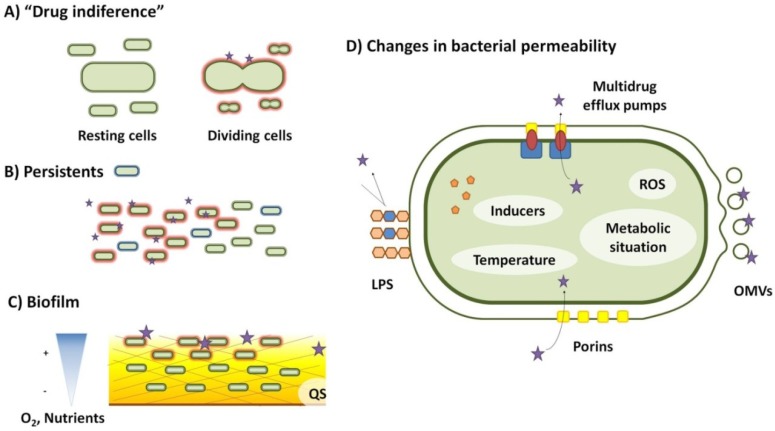
“This could be attributed to different factors, such as the presence of unchar-acterized ARGs, overexpression of efflux pumps, intrinsic resistance mechanisms, drug indifference, or the growth in biofilms [78].”
Antimicrobial Resistance of Cattle Mastitis-Causing Bacteria: How to Treat?
Maksimović, Z., Čengić, B., Ćutuk, A., & Maksımovıć, A. (2023) · Veterinary medicine and science · doi:10.5772/intechopen.112977 · Cited by 7
Rengifo-Lema, M. J., Proaño‐Bolaños, C., Cuesta, S. A., & Meneses, L. (2024) · Scientific Reports · doi:10.1038/s41598-024-55171-w · Cited by 6
“The design of antimicrobials that are not prone to the different resistance mechanisms that exist towards antibiotics is quite complicated, since bacteria present different types of antimicrobial resistance 5 .”
BackgroundKaul, A., Souque, C., Holland, M., & Baym, M. (2025) · Microbial Genomics · doi:10.1099/mgen.0.001474 · Cited by 10
Advanced Phenotypic Antimicrobial Susceptibility Testing Methods
Stratton, C. W. (2018) · Springer eBooks · doi:10.1007/978-3-319-33900-9_4 · Cited by 6
Fierce poison to others: the phenomenon of bacterial dependence on antibiotics
Paredes-Amaya, C. C., Ulloa, M. T., & García-Angulo, V. A. (2023) · Journal of Biomedical Science · doi:10.1186/s12929-023-00963-x · Cited by 6
Huang, Y.-H., & Jiang, S. C. (2025) · ACS ES&T Engineering · doi:10.1021/acsestengg.5c00107 · Cited by 5
López‐Pérez, M., Garrido, J. F. A., Herrera-Zúñiga, L. D., & Fernández, F. J. (2023) · Biosystems · doi:10.1016/j.biosystems.2023.105060 · Cited by 7
Host and microbial characteristics associated with recurrent prosthetic joint infections
Hampton, J. P., Zhou, J. Y., Kameni, F. Z. N., Espiritu, J. R., Manasherob, R., Cheung, E. V., Miller, M. D., Huddleston, J. I., Maloney, W. J., Goodman, S. B., et al. (2023) · Journal of Orthopaedic Research® · doi:10.1002/jor.25768 · Cited by 6
“20 In the absence of genetic mutations, persistent infections in healthy hosts despite aggressive multistage treatment may be explained by tolerance to subtherapeutic antibiotic exposure within the biofilm, 18,19,21 susceptibility) via slowed growth kinetics and altered gene expression.”
BackgroundCatabolism of aromatic β-glucosides by bacteria can lead to antibiotics resistance
Vashishtha, K., & Mahadevan, S. (2020) · Archives of Microbiology · doi:10.1007/s00203-020-01836-9 · Cited by 5
Zuo, P., Yu, P., & Alvarez, P. J. J. (2020) · Environmental Science & Technology Letters · doi:10.1021/acs.estlett.0c00318 · Cited by 6
Gado, D. A., Abdalla, M. A., Erhabor, J. O., Ehlers, M. M., & McGaw, L. J. (2023) · South African Journal of Botany · doi:10.1016/j.sajb.2023.02.037 · Cited by 5
Salehi, M., al arabi, M., Khalili, H., Panahi, Y., Rajabi, E., Mohammadnejad, E., Yaryari, A., Seifi, A., Barati, M., & Farhadi, K. (2025) · Journal of Pharmaceutical Health Care and Sciences · doi:10.1186/s40780-025-00451-4 · Cited by 4
“Antimicrobial are unique pharmaceutical agents whose effectiveness alters over time, and resistance to them can transfer to other bacteria through genetic modifications or phenotypic resistance [3, 4].”
Bessalah, S., Khorchani, T., Hammadi, M., Faraz, A., & Mustafa, A. B. (2023) · Open Veterinary Journal · doi:10.5455/ovj.2023.v13.i9.3 · Cited by 4
“On the other hand, therapy becomes more difficult due to the organism’s ability to organize the host into biofilms (Lewis, 2001; Corona and Martinez, 2013).”
BackgroundFurlan, J. P. R., Bueno, G. C., Carmo, R. R. D. S., Silva, R. L. O., Barbosa, M. R. F., Sato, M. I. Z., Lincopán, N., & Schenkman, S. (2025) · Current Microbiology · doi:10.1007/s00284-025-04394-9 · Cited by 4
“These genetic divergences among strains from different geographical locations can result in functional differences, affecting phenotypic traits such as AMR [35, 36].”
Masoumeh, A. M., Nejad, H. R., Saeedi, P., & Ali, K. N. R. (2022) · International Journal of Peptide Research and Therapeutics · doi:10.1007/s10989-022-10377-2 · Cited by 4
“International Journal of Peptide Research and Therapeutics (2022) 28:84 1 3 Page 7 of 8 84 (Corona and Martinez 2013).”
BackgroundChemical composition of hyssop cv. 'Domaći ljubičasti' essential oil and its antimicrobial activity
Aćimović, M., Varga, A. O., Cvetković, M., Pezo, L. L., Lončar, B. L., Ignjatov, M., & Zeremski, T. (2021) · Ratarstvo i povrtarstvo · doi:10.5937/ratpov58-31751 · Cited by 6
Prakash, O. (2022) · Environmental Microbiology Reports · doi:10.1111/1758-2229.13058 · Cited by 4
Farooq, A., Lee, M., Han, S., Jung, G.-Y., Kim, S., & Jung, M. (2023) · Microbiology Spectrum · doi:10.1128/spectrum.05048-22 · Cited by 4
“These factors include mutations or genetic variations within the gene or its regulatory elements, absence of specific inducers or repressors, and genetic regulatory mechanisms (42–44).”
BackgroundAntibacterial Activity of Moringa oleifera Root Bark Extract against Some Pathogenic Organisms
Amanze, E. K., Nwankpa, U. D., Udekwu, C. E., Ogbonna, H. N., Nwokafor, C. V., & Udensi, C. G. (2020) · HAL · Cited by 3
Kim, D. G., Kim, M., & Oh, M. (2022) · Talanta · doi:10.1016/j.talanta.2022.123626 · Cited by 3
The Pseudomonas aeruginosa Resistome: Permanent and Transient Antibiotic Resistance, an Overview
Sanz‐García, F., Laborda, P., Ochoa-Sánchez, L. E., Martínez, J. L., & Hernando‐Amado, S. (2023) · Methods in molecular biology · doi:10.1007/978-1-0716-3473-8_7 · Cited by 3
Bamigbade, G. B., Sanusi, J. O. F., Oluwaseun, O. I., Daniel, O. M., Alimi, B. O., Ampofo, K. A., Liu, S., Shah, N. P., & Ayyash, M. M. (2023) · Food Biotechnology · doi:10.1080/08905436.2023.2276923 · Cited by 5
“Bacteria produce membrane vesicles and modify lipopolysaccharide to resist this action, reducing the inhibitory effect (Corona and Martinez 2013; Olatunde et al. 2018).”
Mass Spectrometry Investigation of Some ATP-Binding Cassette (ABC) Proteins
Agostini, M., Traldi, P., & Hamdan, M. H. (2024) · Medicina · doi:10.3390/medicina60020200 · Cited by 3
“Such information is not easily obtained using common susceptibility methods [9].”
Miyamoto, N., Nishigami, A., Hosoda, N., Hayashi, K., Yamada, N., & Tsuge, K. (2024) · ACS Omega · doi:10.1021/acsomega.3c08240 · Cited by 3
“In a previous report, the L Orn selective module in GrsB possessed substrate specificity to L Lys as well; 21 thus, L Lys-substituted GS molecules ([Lys-4]-GS and [Lys-4, 9]-GS) were detected as byproducts in the GS fraction of native producers.”
BackgroundMethodInfluentialYap, P.-C., Chai, L. C., Hassandarvish, P., & Lee, H. Y. (2024) · LWT · doi:10.1016/j.lwt.2024.116154 · Cited by 3
Bacterial defiance as a form of prodrug failurePreprint
Holt, B. A., & Kwong, G. A. (2019) · bioRxiv (Cold Spring Harbor Laboratory) · doi:10.1101/556951 · Cited by 4
Stahlhofer, S. R., Peripolli, V., Lopes, P. D., Balbinot, A. C., Zuffo, J. P., Pires, P. G. D., & Millezi, A. F. (2026) · British Poultry Science · doi:10.1080/00071668.2025.2588244 · Cited by 2
Nano-mechanical in-process monitoring of antimicrobial poration in model phospholipid bilayers
Valsesia, A., Iavicoli, P., Lewis, H., Desmet, C., Méhn, D., Calzolai, L., Colpo, P., Rossi, F., & Ryadnov, M. G. (2017) · RSC Advances · doi:10.1039/c7ra01274h · Cited by 3
Pokludová, L., & Prátová, H. (2020) · Springer eBooks · doi:10.1007/978-3-030-46721-0_9 · Cited by 3
Alwan, A. H., & Abbas, S. M. (2016) · Al Mustansiriyah Journal of Pharmaceutical Sciences · doi:10.32947/ajps.v16i1.89 · Cited by 3
Effects of Ceftazidime Exposure on Phenotypic Characteristics of Pseudomonas Aeruginosa ATCC 9027
Ngo, H. L., Huynh, T. Q., Nguyen, N. H. B., Tran, N. B. V., & Nguyen, T. T. H. (2023) · World Congress on Medical Physics and Biomedical Engineering, September 7 - 12, 2009, Munich, Germany · doi:10.1007/978-3-031-44630-6_87 · Cited by 2
van Leuven, N., Lucassen, R. W., Dicks, A., Braß, P., Lipski, A., & Bockmühl, D. P. (2024) · Antibiotics · doi:10.3390/antibiotics13121148 · Cited by 4
ESKAPE – bacteria that alert the world
Abram, M., Škrobonja, I., Ambrožić, D., Antić, D. R., & Bubonja‐Šonje, M. (2018) · Medicina Fluminensis · doi:10.21860/medflum2018_203547 · Cited by 5
Hospital acquired infections: Biofilm assembly and increased antibiotic resistance of microorganisms
Bandeira, M. M. F. (2014) · Portuguese National Funding Agency for Science, Research and Technology (RCAAP Project by FCT) · Cited by 2
Kaben, S. E., Arif, M. A. A., Ma’ruf, A., Effendi, M. H., Kurniawan, S. C., Riwu, K. H. P., Afnani, D. A., Silaen, O. S. M., Millannia, S. K., Ramadhani, S., et al. (2024) · Brazilian Journal of Veterinary Research and Animal Science · doi:10.11606/issn.1678-4456.bjvras.2024.209027 · Cited by 5
Liu, X., Xu, Y., Zhang, L., Yang, Y., Cui, J., Yu, Z., Liang, Z., Zhou, L., & Yan, B. (2025) · ACS Sustainable Chemistry & Engineering · doi:10.1021/acssuschemeng.5c07634 · Cited by 1
Darnell, R. L., Knottenbelt, M. K., Rose, O. E., Cleary, C. S. B., Rose, F. O. T., Hodgkinson, H., Wu, Y., Hussein, M. H., Velkov, T., Gebhard, S., et al. (2025) · Antimicrobial Agents and Chemotherapy · doi:10.1128/aac.00629-25 · Cited by 1
Moran, M., Turner, H., Yanchar, J., Preece, J., Ahlborn, G. J., & Robison, R. A. (2025) · MicrobiologyOpen · doi:10.1002/mbo3.70179 · Cited by 1
Yaikhan, T., Wongsurawat, T., Jenjaroenpan, P., Thaipisuttikul, I., Chayakulkeeree, M., Tribhuddarat, C., Nitayanon, P., Peizner, M. T., Tansirichaiya, S., Kamolvit, W., et al. (2026) · Scientific Reports · doi:10.1038/s41598-026-41247-2 · Cited by 1
“Conversely, a limited number of phenotypic resistances were not explained by major resistance genes, plausibly due to gene expression variability 21 , regulatory mutations and other phenotypic resistance mechanisms 22 , or limitations related to fragmented metagenomic assemblies 23 .”
Chen, B., Li, M., Jia, S., Yang, Y., Chen, Z., Wang, L., Guo, P., Wu, H., Yan, Y., Wang, D., et al. (2026) · Frontiers in Veterinary Science · doi:10.3389/fvets.2026.1871413 · Cited by 1
“Overall, the key point is that the presence of resistance genes is merely a necessary condition, not a sufficient one (45), for the development of resistance phenotypes, whose final expression is finely tuned by complex regulatory networks (46).”
A model of band-pass phenotypic resistance in a modified Beverton–Holt framework
Nemzer, L. R. (2014) · Mathematical Biosciences · doi:10.1016/j.mbs.2014.03.003 · Cited by 1
“In bacteria, the existence of an Allee regime may give rise to an inoculum effect, [17] a kind of phenotypic [18] resistance, in which colonies with large initial densities are able to survive conditions that would have eradicated a sparser colony of the same bacteria.”
BackgroundAntimicrobial Screening: Foundations and Interpretation
Bueno, J. (2020) · Nanotechnology in the life sciences · doi:10.1007/978-3-030-43855-5_1 · Cited by 2
Singla, M., Chaudhary, V., & Ghosh, A. (2022) · Springer eBooks · doi:10.1007/978-981-16-3120-7_2 · Cited by 2
Saytekin, A. M., Dörtbudak, M. Y., Dinç, H., Demırci, M., Yiğin, A., & Saytekin, E. A. (2024) · Revista Científica de la Facultad de Ciencias Veterinarias · doi:10.52973/rcfcv-e34445 · Cited by 1
Zhang, R., Wu, R. A., Yang, T., Li, Z., Ding, T., & Feng, J. (2025) · Journal of Future Foods · doi:10.1016/j.jfutfo.2024.11.027 · Cited by 1
Li, H., Yang, J. J., Kuang, S.-F., & Peng, B. (2024) · eLife · doi:10.7554/elife.100427.1 · Cited by 1
Salgado, J., Rayner, J., & Ojkic, N. (2024) · Preprints.org · doi:10.20944/preprints202408.2249.v1 · Cited by 1
Billet, L. (2021) · theses.fr (ABES) · doi:10.70675/ea3d7d20z74e3z4254z9c47z51088b8ad013 · Cited by 2
Filioussis, G., Tzivara, A. H., Petridou, E., Giadinis, N. D., Burriel, A. R., & Kritas, S. K. (2013) · Diagnostic Microbiology and Infectious Disease · doi:10.1016/j.diagmicrobio.2013.03.024 · Cited by 1
Phenotypic changes in pseudomonas aeruginosa induced by sub-inhibitory exposure to chlorohexidine
Aka, S. T. H., & Haji, S. H. (2014) · Zanco Journal of Medical Sciences · doi:10.15218/zjms.2014.0044
Ranketse, M. (2016) · ResearchSpace (University of KwaZulu-Natal)
Imaging Antimicrobial Peptides in Action by Atomic Force Microscopy
Alkassem, H. (2018) · UCL Discovery (University College London)
Inducible and acquired antibiotic resistance in stenotrophomonas maltophilia
Torres, P. B. (2019) · LA Referencia (Red Federada de Repositorios Institucionales de Publicaciones Científicas)
Wasa, A. (2021) · University of Canterbury Research Repository (University of Canterbury) · doi:10.26021/10747 · Cited by 1
Effect of Aligned Nanoscale Surface Structures on Microbial Adhesion
Wang, Y. (2020) · VTechWorks (Virginia Tech) · Cited by 1
Resistance Phenotypes and Surveillance
Khan, S., & Joshi, J. (2021) · Advances in medical diagnosis, treatment, and care (AMDTC) book series · doi:10.4018/978-1-7998-0307-2.ch001
Guevara (1894) · Institutional Repository of the University of Granada (University of Granada)
Kaviar, V. H., Khoshnood, S., Kouhsari, E., Yarahmadi, S., Maleki, A., & Pakzad, I. (2021) · Research Square · doi:10.21203/rs.3.rs-678565/v1
Understanding the Genetics and Evolution of Antimicrobial Resistance in Escherichia Coli
Bhatnagar, K. (2019) · Carleton University's Institutional Repository (MacOdrum Library, Carleton University) · doi:10.22215/etd/2019-13711
Overview on the Phenotypic Drug Resistance in Mycobacterium Tuberculosis
(2020) · International Journal of Research Studies in Microbiology and Biotechnology · doi:10.20431/2454-9428.0602002
“Recent studies also showed MTB develops biofilm [1, 5, 7]; however detail mechanism in which TB-biofilm contribute to phenotypic drug resistance in MTB is not fully disclosed.”
BackgroundBoosting succinylation-dependent LPS biosynthesis to overcome colistin resistancePreprint
Wu, J., Chen, X.-W., Liu, Y., Cao, Y.-C., Li, D.-L., Chen, Z., Zheng, J., & Peng, B. (2023) · Research Square · doi:10.21203/rs.3.rs-1965601/v1
Baaity, Z. (2022) · SZTE Repository of Dissertations (University of Szeged) · doi:10.14232/phd.11316
Biosensors for Inducers of Transient Antibiotic Resistance
Laborda, P., Alcalde‐Rico, M., Gil‐Gil, T., Martínez, J. L., & Blanco, P. (2023) · Methods in molecular biology · doi:10.1007/978-1-0716-3473-8_8
Virulence and Resistance Pattern of Streptococcus agalactiae Obtained from Caprine Mastitic Milk
Gazal, S., Kaur, P., Bedi, J. S., Singh, J., Arora, A., & Rai, T. S. (2025) · Journal of Pure and Applied Microbiology · doi:10.22207/jpam.19.2.54
Aglomasa, B. C., Adu-Asiamah, C. K. A., Asiedu, S. O., Kini, P., Amewu, E. K. A., Boahen, K. G., Wireko, S., Amponsah, K. I., Boakye, Y. D., Boamah, V. E., et al. (2022) · Research Square · doi:10.21203/rs.3.rs-1465890/v1
Li, J., Phulpoto, I. A., Zhang, G., & Yu, Z. (2021) · Figshare · doi:10.6084/m9.figshare.13546538
New insights into Staphylococcus aureus cell cycle and cell wall stress response
Fernandes, P. B. (2022) · Portuguese National Funding Agency for Science, Research and Technology (RCAAP Project by FCT)
Maydaniuk, D. T. (2023) · Mspace (University of Manitoba)
Rodríguez-López, P., & de Microbiologia, U. A. D. B. D. D. G. I. (2017) · LA Referencia (Red Federada de Repositorios Institucionales de Publicaciones Científicas) · Cited by 1
Microencapsulated essential oils as antibiotic alternatives in broiler chickens
Yang, C. (2021) · Mspace (University of Manitoba)
Evaluation of Antibiotic Resistance in Streptococcus Species from Farm Animals and Handlers
Gazal, S., Kaur, P., Bedi, J., Arora, A. K., & Singh, J. (2025) · Toxicology International · doi:10.18311/ti/2025/v32i4/48280
Somah, F. O., Taweh, F. M., Tokpa, S., Gilayeneh, J. S. M., Kollie, D., Tarwoe, H., Sarmie, M., Tiawroh, E., Koon, R. J., Wuo, A., et al. (2026) · Research Square · doi:10.21203/rs.3.rs-8542744/v1
Assunção, R. G., Nova, B. G. V., Alves, L. G. S., da Silva, L. C. T., Sá, G. C., Silva, L. D. S., Silva, M. A., de Santana, A. V. S., Zafred, I. F., Soares, S. R. S., et al. (2026) · Brazilian Journal of Microbiology · doi:10.1007/s42770-025-01830-7
Molecular mechanisms of antimicrobial resistance
Mukherjee, D., Ghosh, P., Sen, D., & Chakravortty, D. (2026) · Elsevier eBooks · doi:10.1016/b978-0-443-36518-8.00004-7 · Cited by 1
Chareyre, S. (2018) · theses.fr (ABES) · doi:10.70675/ee30137fz5867z4cfbzb8e0zf2064adef35a · Cited by 1
Metadata
- Authors
- Corona, F., & Martinez, J.
- Affiliations
- Consejo Superior de Investigaciones Científicas (ES)
- Centro Nacional de Biotecnología, CSIC, Darwin 3, 28049-Madrid, Spain
- ORCID
- Martinez, Jose
- Venue
- Antibiotics
- Publisher
- MDPI AG
- Published
- 2013-04-18
- Volume
- 2
- Issue
- 2
- Pages
- 237-255
- ISSN
- 2079-6382 (ISSN-L)
- PMC
- PMC4790337
- OpenAlex
- W2086293991
- Cited by
- 205
- References
- 143
- Citations by year
- 2026: 12 · 2025: 21 · 2024: 24 · 2023: 30 · 2022: 27 · 2021: 20 · 2020: 17 · 2019: 17 · 2018: 12 · 2017: 5 · 2016: 7 · 2015: 6 · 2014: 5 · 2013: 1
- FWCI
- 0.78
- Type
- journal article
- Language
- en
- Open access
- gold
- doi.org
- Licence
- Locations
- Antibiotics (publishedVersion, cc-by)
- PubMed Central (publishedVersion, cc-by)
- PubMed (publishedVersion)
- DIGITAL.CSIC (Spanish National Research Council (CSIC)) (submittedVersion, cc-by)
- DOAJ (DOAJ: Directory of Open Access Journals) (submittedVersion, cc-by-sa)
- Funders
- European Commission (241476, 282004)
- Ministerio de Ciencia e Innovación (BIO2011-25255)
- Instituto de Salud Carlos III
- Topics
- Life Sciences › Biochemistry, Genetics and Molecular Biology › Genetics › Bacterial Genetics and Biotechnology
- Health Sciences › Medicine › Microbiology (medical) › Antibiotic Resistance in Bacteria
- Health Sciences › Medicine › Infectious Diseases › Antimicrobial Resistance in Staphylococcus
- Keywords
- phenotypic antibiotic resistance, biofilm, bacterial persistence, stationary phase, bacterial metabolism, antimicrobial susceptibility testing, pathogenic bacteria
About these checks
Registry, retraction, Cites and statistics results are computed, not judged, with one exception: a printed reference that no index lists is read once by a model before it counts as a citation error. Claims are extracted by a model and kept only when their quote appears verbatim in the text; each cited source is then checked, with a model’s help, for whether it says what the claim relies on. Those verdicts can be wrong — read the claim’s quote and the cited source before relying on one.
Statistics and arithmetic are recomputed, not judged.
Confidence bands are shown only for fields calibrated on our annotated test set. None is calibrated yet, so no band is shown.
What counts as a claim ›How we measure confidence ›How we check this ›
Are you an author, or do you see a problem with this page? Request a review
Data sources
Bibliographic data: Semantic Scholar, OpenAlex, Crossref.
Contains information from the Semantic Scholar Academic Graph Datasets, made available under the ODC Attribution License (ODC-BY 1.0).
Semantic Scholar’s data is described in: Kinney, R., et al. (2023). The Semantic Scholar Open Data Platform. arXiv:2301.10140.
