

Phenotypic Resistance to Antibiotics
Open accessThe DOI matches its Crossref record; 143 of the 143 references it cites were found in a registry or an index.
Abstract
The development of antibiotic resistance is usually associated with genetic changes, either to the acquisition of resistance genes, or to mutations in elements relevant for the activity of the antibiotic. However, in some situations resistance can be achieved without any genetic alteration; this is called phenotypic resistance. Non-inherited resistance is associated to specific processes such as growth in biofilms, a stationary growth phase or persistence. These situations might occur during infection but they are not usually considered in classical susceptibility tests at the clinical microbiology laboratories. Recent work has also shown that the susceptibility to antibiotics is highly dependent on the bacterial metabolism and that global metabolic regulators can modulate this phenotype. This modulation includes situations in which bacteria can be more resistant or more susceptible to antibiotics. Understanding these processes will thus help in establishing novel therapeutic approaches based on the actual susceptibility shown by bacteria during infection, which might differ from that determined in the laboratory. In this review, we discuss different examples of phenotypic resistance and the mechanisms that regulate the crosstalk between bacterial metabolism and the susceptibility to antibiotics. Finally, information on strategies currently under development for diminishing the phenotypic resistance to antibiotics of bacterial pathogens is presented.
Overview
The claims and statistics of this paper haven’t been checked yet.
Free: it reads the open-access text and checks the first 5 claims that cite a source we can check. Create a free account to check every claim.
Integrity signals
Registry
Cites
Statistics
Figures
Verification
Claims the paper makes
The claims and statistics of this paper haven’t been checked yet.
Free: it reads the open-access text and checks the first 5 claims that cite a source we can check. Create a free account to check every claim.
Claims other papers make about this one
Each is checked against this paper’s own text: does it say what the citing paper says it does?
The cited source says what the claim attributes to it.
In the citing paper
“By contrast, antifungal tolerance involves the earlier appearance of a subpopulation of cells that continue to grow in the presence of drug and, unlike “phenotypic resistance” described for bacteria 75 , is not dependent upon growth phase or cell density.”
From Antifungal tolerance is a subpopulation effect distinct from resistance and is associated with persistent candidemia (2018) · cites this paper as [75]
Self-check
Percentages, sums and reported differences re-computed from the paper’s own numbers.
The self-check needs the paper’s full text.
Citations
Cites
Bacterial Biofilms: A Common Cause of Persistent Infections
Costerton, J. W., Stewart, P. S., & Greenberg, E. P. (1999) · Science · doi:10.1126/science.284.5418.1318 · Cited by 12,167 · cited 1×
“Although most studies on bacterial susceptibility to antibiotics are performed using bacteria growing planktonically, microorganisms can grow forming biofilms when they are attached to a surface [32–35].”
BackgroundBacterial biofilms: from the Natural environment to infectious diseases
Hall-Stoodley, L., Costerton, J. W., & Stoodley, P. (2004) · Nature Reviews Microbiology · doi:10.1038/nrmicro821 · Cited by 7,143 · cited 1×
“Although most studies on bacterial susceptibility to antibiotics are performed using bacteria growing planktonically, microorganisms can grow forming biofilms when they are attached to a surface [32–35].”
BackgroundAntibiotic resistance of bacteria in biofilms
Stewart, P. S., & William Costerton, J. (2001) · The Lancet · doi:10.1016/s0140-6736(01)05321-1 · Cited by 4,585
Antimicrobial and host-defense peptides as new anti-infective therapeutic strategies
Hancock, R. E. W., & Sahl, H.-G. (2006) · Nature Biotechnology · doi:10.1038/nbt1267 · Cited by 4,208 · cited 1×
“that are being developed to be used in the frame of novel anti-infective therapeutic strategies [71].”
BackgroundAntibiotic resistance of bacterial biofilms
Høiby, N., Bjarnsholt, T., Givskov, M., Molin, S., & Ciofu, O. (2010) · International Journal of Antimicrobial Agents · doi:10.1016/j.ijantimicag.2009.12.011 · Cited by 3,225 · cited 1×
“It has been then suggested that the use of DNase, which can break the biofilm matrix, may increase biofilm susceptibility to antibiotics [57].”
BackgroundBacterial Persistence as a Phenotypic Switch
Balaban, N. Q., Merrin, J., Chait, R., Kowalik, L., & Leibler, S. (2004) · Science · doi:10.1126/science.1099390 · Cited by 2,952 · cited 1×
“emerges as the consequence of the inherent bistability of growing cells, from normal to persisters [121].”
BackgroundUnderstanding biofilm resistance to antibacterial agents
Davies, D. (2003) · Nature Reviews Drug Discovery · doi:10.1038/nrd1008 · Cited by 2,781 · cited 1×
“Different works have shown that bacteria forming biofilms are less susceptible to antibiotics than those growing planktonically [36–43].”
BackgroundLewis, K. (2010) · Annual Review of Microbiology · doi:10.1146/annurev.micro.112408.134306 · Cited by 1,858 · cited 1×
“However, the situation is more complex [125], with a number of global regulators and metabolic enzymes involved in the process [126,127].”
BackgroundSurvival strategies of infectious biofilms
Fux, C. A., Costerton, J. W., Stewart, P. S., & Stoodley, P. (2005) · Trends in Microbiology · doi:10.1016/j.tim.2004.11.010 · Cited by 1,812 · cited 1×
“Different works have shown that bacteria forming biofilms are less susceptible to antibiotics than those growing planktonically [36–43].”
BackgroundThree Decades of β-Lactamase Inhibitors
Drawz, S. M., & Bonomo, R. A. (2010) · Clinical Microbiology Reviews · doi:10.1128/cmr.00037-09 · Cited by 1,709
Cited by
Role of bacterial efflux pumps in biofilm formation
Alav, I., Sutton, J. M., & Rahman, K. M. (2018) · Journal of Antimicrobial Chemotherapy · doi:10.1093/jac/dky042 · Cited by 504
Exogenous Alanine and/or Glucose plus Kanamycin Kills Antibiotic-Resistant Bacteria
Peng, B., Su, Y.-B., Li, H., Han, Y., Guo, C., Tian, Y.-M., & Peng, X.-X. (2015) · Cell Metabolism · doi:10.1016/j.cmet.2015.01.008 · Cited by 481
“Treating Clinically Relevant Bacterial Biofilms and Persisters Infection with bacterial biofilms and persisters are a significant concern in the clinical environment (Cohen et al., 2013; Corona and Martinez, 2013; Drenkard and Ausubel, 2002); therefore, it would be clinically useful if biofilms and persisters were sus…”
BackgroundWang, X., Biswas, S., Paudyal, N., Pan, H., Li, X., Fang, W., & Yue, M. (2019) · Frontiers in Microbiology · doi:10.3389/fmicb.2019.00985 · Cited by 277
“AR can also be achieved by biofilm production which can cause increased risk of food safety (Steenackers et al., 2012; Corona and Martinez, 2013).”
BackgroundRosenberg, A., Ene, I. V., Bibi, M., Zakin, S., Segal, E. S., Ziv, N., Dahan, A. M., Colombo, A. L., Bennett, R. J., & Berman, J. (2018) · Nature Communications · doi:10.1038/s41467-018-04926-x · Cited by 270
Kurenbach, B., Marjoshi, D., Amábile-Cuevas, C. F., Ferguson, G. C., Godsoe, W., Gibson, P., & Heinemann, J. A. (2015) · mBio · doi:10.1128/mbio.00009-15 · Cited by 206
“This form of adaptive resistance is usually a species-uniform response that occurs only in environments that induce relevant changes in gene expression (12).”
Heteroresistance: A cause of unexplained antibiotic treatment failure?
Band, V. I., & Weiss, D. S. (2019) · PLOS Pathogens · doi:10.1371/journal.ppat.1007726 · Cited by 212
Sub-lethal concentrations of heavy metals induce antibiotic resistance via mutagenesis
Li, X., Gu, A. Z., Zhang, Y., Xie, B., Li, D., & Chen, J. (2019) · Journal of Hazardous Materials · doi:10.1016/j.jhazmat.2019.02.006 · Cited by 165
“For bacteria exposed to antibiotics, an increased or decreased resistance level can be achieved by the combination of phenotypic changes (phenotypic resistance, not-inheritable resistance) and genetic changes (inheritable resistance) [32].”
BackgroundA Review of Carbapenem Resistance in Enterobacterales and Its Detection Techniques
Caliskan-Aydogan, O., & Alocilja, E. C. (2023) · Microorganisms · doi:10.3390/microorganisms11061491 · Cited by 176
Foodborne Pathogenic Vibrios: Antimicrobial Resistance
Dutta, D., Kaushik, A., Kumar, D., & Bag, S. (2021) · Frontiers in Microbiology · doi:10.3389/fmicb.2021.638331 · Cited by 144
“Bacteria can also respond to antibiotics through phenotypic variation, metabolic fluxes, programmed responses to the environment, or a systems-level effect of the bacterial community (Corona and Martinez, 2013).”
BackgroundGambushe, S. M., Zishiri, O. T., & Zowalaty, M. E. E. (2022) · Infection and Drug Resistance · doi:10.2147/idr.s365269 · Cited by 152
“The resistance mechanism involved in persistent cells depends on the toxin-antitoxin element.(145,146)”
BackgroundCombination of Whole Genome Sequencing and Metagenomics for Microbiological Diagnostics
Purushothaman, S., Meola, M., & Egli, A. (2022) · International Journal of Molecular Sciences · doi:10.3390/ijms23179834 · Cited by 129
“, type of agar plates, age of colonies, and environmental factors such as temperature and pH [6].”
Background(p)ppGpp and the Stringent Response: An Emerging Threat to Antibiotic Therapy
Hobbs, J. K., & Boraston, A. B. (2019) · ACS Infectious Diseases · doi:10.1021/acsinfecdis.9b00204 · Cited by 114
Early-life gut microbiome modulation reduces the abundance of antibiotic-resistant bacteria
Casaburi, G., Duar, R. M., Vance, D. P., Mitchell, R., Contreras, L., Frese, S. A., Smilowitz, J. T., & Underwood, M. A. (2019) · Antimicrobial Resistance & Infection Control · doi:10.1186/s13756-019-0583-6 · Cited by 101
Nicoloff, H., & Andersson, D. I. (2015) · Journal of Antimicrobial Chemotherapy · doi:10.1093/jac/dkv312 · Cited by 102
Antimicrobial peptide capsids of de novo design
De Santis, E., Alkassem, H., Lamarre, B., Faruqui, N., Bella, A., Noble, J. E., Micale, N., Ray, S., Burns, J. R., Yon, A. R., et al. (2017) · Nature Communications · doi:10.1038/s41467-017-02475-3 · Cited by 87
Zhang, Y., Chang, K., Ogunlade, B., Herndon, L., Tadesse, L. F., Kirane, A. R., & Dionne, J. A. (2024) · ACS Nano · doi:10.1021/acsnano.4c04282 · Cited by 83
Antimicrobial resistance in enteric bacteria: current state and next-generation solutions
Wallace, M. J., Fishbein, S. R. S., & Dantas, G. A. (2020) · Gut Microbes · doi:10.1080/19490976.2020.1799654 · Cited by 96
“At the very end of the spectrum, bacteria are primed to respond to antibiotics through phenotypic variation, fluxes in bacterial metabolic state, programmed responses to the antibiotic/environment, or a systems-level effect of the bacterial community in the environment (Figure 2c).(83) While these phenotypic states ma…”
BackgroundChandran, P., Suresh, S., Balasubramain, B., Gangwar, J., Raj, A. S., Aarathy, U. L., Meyyazhagan, A., Pappuswamy, M., & Joseph, K. S. (2023) · Journal of Umm Al-Qura University for Applied Sciences · doi:10.1007/s43994-023-00071-4 · Cited by 100
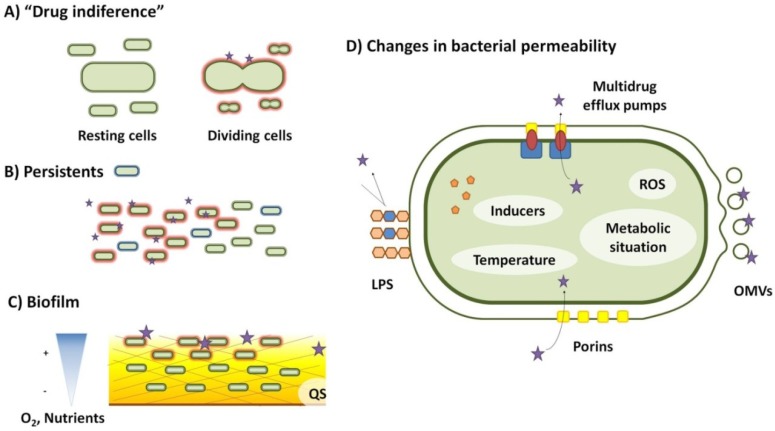
“It is distinguished by drug indifference, persistence, biofilm formation, decreased antibiotic permeability, or increased efflux [69].”
Sanz‐García, F., Gil‐Gil, T., Laborda, P., Ochoa-Sánchez, L. E., Martínez, J. L., & Hernando‐Amado, S. (2021) · International Journal of Molecular Sciences · doi:10.3390/ijms22158080 · Cited by 87
Farrukh, M., Munawar, A., Nawaz, Z., Hussain, N., Hafeez, A. B., & Szweda, P. (2025) · Food Science and Biotechnology · doi:10.1007/s10068-024-01767-x · Cited by 85
“Comprehending these pathways of phenotypic resistance is essential for creating innovative therapeutic strategies that take into account the true susceptibility of bacteria, which may vary from conventional laboratory assessments (Corona and Martinez, 2013).”
Safety profiles of beneficial lactic acid bacteria isolated from dairy systems
Colombo, M., Nero, L. A., & Todorov, S. D. (2020) · Brazilian Journal of Microbiology · doi:10.1007/s42770-020-00227-y · Cited by 86
Amer, M. H., Mekky, H. M., Amer, A. M., & Fedawy, H. S. (2018) · Veterinary World · doi:10.14202/vetworld.2018.1082-1088 · Cited by 82
Dusane, D. H., Hosseinidoust, Z., Asadishad, B., & Tufenkji, N. (2014) · PLoS ONE · doi:10.1371/journal.pone.0112093 · Cited by 70
“Bacteria growing in biofilms are generally very persistent, requiring high doses of antibiotics for treatment [19], [20].”
Deng, W., Fu, T., Zhang, Z., Jiang, X. Y., Xie, J., Sun, H., Hu, P., Ren, H., Zhou, P., Liu, Q., et al. (2020) · Emerging Microbes & Infections · doi:10.1080/22221751.2020.1740611 · Cited by 68
Arastehfar, A., Daneshnia, F., Cabrera, N., Penalva-Lopez, S., Sarathy, J., Zimmerman, M., Shor, E., & Perlin, D. S. (2023) · Nature Communications · doi:10.1038/s41467-023-36882-6 · Cited by 58
Arsène, M. M. J., Viktorovna, P. I., Goriainov, S. V., Hajjar, F., Vyacheslavovna, Y. N., Vladimirovna, Z. A., Aleksandrovna, V. E., Nikolayevich, S. A., & Павловна, С. Н. (2022) · Fermentation · doi:10.3390/fermentation8110626 · Cited by 55
Antibiotic Resistance in Pseudomonas
Laborda, P., Hernando‐Amado, S., Martínez, J. L., & Sanz‐García, F. (2022) · Advances in experimental medicine and biology · doi:10.1007/978-3-031-08491-1_5 · Cited by 59
Tackling antibiotic resistance by inducing transient and robust collateral sensitivity
Hernando‐Amado, S., Laborda, P., & Martínez, J. L. (2023) · Nature Communications · doi:10.1038/s41467-023-37357-4 · Cited by 58
Güntzel, P., Nagel, C., Weigelt, J., Betts, J. W., Pattrick, C. A., Southam, H. M., Ragione, R. M. L., Poole, R. K., & Schatzschneider, U. (2019) · Metallomics · doi:10.1039/c9mt00224c · Cited by 44
Sun, J., Wang, X., Gao, Y., Li, S., Hu, Z., Huang, Y., Fan, B., Wang, X., Liu, M., Qiao, C., et al. (2024) · Nature Communications · doi:10.1038/s41467-024-53764-7 · Cited by 49
“20, 21, most of the tested compounds showed H 2 S-depletion activity in S. aureus with varying potency.”
BackgroundMechler, L., Bonetti, E.-J., Reichert, S., Floetenmeyer, M., Schrenzel, J., Bertram, R., François, P., & Götz, F. (2016) · Antimicrobial Agents and Chemotherapy · doi:10.1128/aac.03022-15 · Cited by 41
“Drug indifference is another example of phenotypic tolerance which is distributed, however, over the entire population and is caused by the inhibition of proliferation due to nutrient starvation (9, 10).”
BackgroundChueca, B., Berdejo, D., Neto, N. J. G., Pagán, R., & García‐Gonzalo, D. (2016) · Frontiers in Microbiology · doi:10.3389/fmicb.2016.00273 · Cited by 46
“The development of resistance to antibiotics is usually associated with an inheritable resistance that requires a genetic modification, or its acquisition by horizontal gene transfer (Corona and Martínez, 2013).”
BackgroundShi, H., Hu, X., Li, W., Zhang, J., Hu, B., & Lou, L. (2023) · Antibiotics · doi:10.3390/antibiotics12020333 · Cited by 43
Current Understanding on Adhesion and Biofilm Development in Actinobacteria
Othmany, R. E., Zahir, H., Ellouali, M., & Latrache, H. (2021) · International Journal of Microbiology · doi:10.1155/2021/6637438 · Cited by 39
“Biofilms are intrinsically resistant to conventional antibiotics [94,95].”
BackgroundA small RNA controls bacterial sensitivity to gentamicin during iron starvation
Chareyre, S., Barras, F., & Mandin, P. (2019) · PLoS Genetics · doi:10.1371/journal.pgen.1008078 · Cited by 40
Li, J., Phulpoto, I. A., Zhang, G., & Yu, Z. (2021) · AMB Express · doi:10.1186/s13568-020-01173-6 · Cited by 43
Antibiotic tolerance among clinical isolates: mechanisms, detection, prevalence, and significance
Deventer, A. T., Stevens, C. E., Stewart, A., & Hobbs, J. K. (2024) · Clinical Microbiology Reviews · doi:10.1128/cmr.00106-24 · Cited by 40
“While tolerance was once described as “phenotypic” or “non-inherited” resistance (42, 43), we now know that tolerance can be genotypic and/or phenotypic.”
Engineering monolayer poration for rapid exfoliation of microbial membranes
Pyne, A. L. B., Pfeil, M.-P., Bennett, I., Ravi, J., Iavicoli, P., Lamarre, B., Roethke, A., Ray, S., Jiang, H., Bella, A., et al. (2017) · Chemical Science · doi:10.1039/c6sc02925f · Cited by 38
Blanco, P., Corona, F., & Martínez, J. L. (2018) · Antimicrobial Agents and Chemotherapy · doi:10.1128/aac.01263-18 · Cited by 37
Self-citationYu, S., Wang, Y., Shen, F., Fang, H., & Yu, Y. (2022) · The Science of The Total Environment · doi:10.1016/j.scitotenv.2021.152885 · Cited by 37
Li, W., Li, Y., Liu, Y., Shi, X., Jiang, M., Lin, Y., Qiu, Y., Zhang, Q., Chen, Q., Zhou, L., et al. (2017) · Frontiers in Microbiology · doi:10.3389/fmicb.2017.02090 · Cited by 35
Pursuit of next-generation glycopeptides: a journey with vancomycin
Acharya, Y., Dhanda, G., Sarkar, P., & Haldar, J. (2022) · Chemical Communications · doi:10.1039/d1cc06635h · Cited by 36
Bryson, D., Hettle, A. G., Boraston, A. B., & Hobbs, J. K. (2019) · Antimicrobial Agents and Chemotherapy · doi:10.1128/aac.02103-19 · Cited by 35
Yuan, Y., Seif, Y., Rychel, K., Yoo, R., Chauhan, S., Poudel, S., Bulushi, T. A., Palsson, B. Ø., & Sastry, A. V. (2022) · mSystems · doi:10.1128/msystems.00467-22 · Cited by 34
Potential Bio-Control Agent from Rhodomyrtus tomentosa against Listeria monocytogenes
Odedina, G. F., Vongkamjan, K., & Voravuthikunchai, S. P. (2015) · Nutrients · doi:10.3390/nu7095346 · Cited by 33
“Microbial cells in the stationary phase of growth are generally less sensitive to injury from antibiotics than those in the exponential phase of growth [31].”
BackgroundOlatunde, O. O., Obadina, A. O., Omemu, A. M., Oyewole, O. B., Olugbile, A. O., & Olukomaiya, O. O. (2018) · Annals of Microbiology · doi:10.1007/s13213-018-1348-9 · Cited by 31
“The ability of active compounds in penetrating bacteria cell was a major factor in determining antimicrobial properties (Corona and Martinez 2013).”
BackgroundLaborda, P., Alcalde‐Rico, M., Blanco, P., Martínez, J. L., & Hernando‐Amado, S. (2019) · Antimicrobial Agents and Chemotherapy · doi:10.1128/aac.01095-19 · Cited by 32
Bacterial cross-resistance to anti-infective compounds. Is it a real problem?
Cândido, E. D. S., de Barros, E., Cardoso, M. H. E. S., & Franco, O. L. (2019) · Current Opinion in Pharmacology · doi:10.1016/j.coph.2019.05.004 · Cited by 29
Mishra, S. K., Akter, T., Urmi, U. L., Enninful, G. N., Sara, M., Shen, J., Suresh, D., Zheng, L., Mekonen, E. S., Rayamajhee, B., et al. (2025) · Antibiotics · doi:10.3390/antibiotics14010057 · Cited by 32
“Similarly, outer membrane vesicle formation around Gram-negative bacterial cells can sequester cationic AMPs and antibiotics, thereby inhibiting their activity against the bacterial cell and leading to transient resistance [18].”
Transcriptional regulation and drug resistance in Mycobacterium tuberculosis
Miotto, P., Sorrentino, R., Giorgi, S. D., Provvedi, R., Cirillo, D. M., & Manganelli, R. (2022) · Frontiers in Cellular and Infection Microbiology · doi:10.3389/fcimb.2022.990312 · Cited by 30
“To be noted that whereas DR is usually associated with genetic mutations (usually also referred as genetic resistance), in some cases DR can be developed without chromosomal abnormalities (defined as phenotypic resistance) (Corona and Martinez, 2013).”
BackgroundNatural detoxification of antibiotics in the environment: A one health perspective
Baquero, F., Coque, T. M., & Martínez, J. L. (2022) · Frontiers in Microbiology · doi:10.3389/fmicb.2022.1062399 · Cited by 28
“Envelopes of dead bacteria (such as lipopolysaccharide) and probably proteins (as in the case of “inoculum effect”) might bind to antibiotics (Peterson et al., 1985; Corona and Martínez, 2013).”
BackgroundBag, M. A. S., Arif, M., Riaz, S., Khan, M. S. R., Islam, M. S., Punom, S. A., Ali, M. W., Begum, F., Islam, M. S., Rahman, M. T., et al. (2022) · BioMed Research International · doi:10.1155/2022/8101866 · Cited by 31
“Antibiotic resistance is conferred by a diverse mechanism including the presence of respective genes or bacterial metabolism [42, 43].”
Insights into coumarin-mediated inhibition of biofilm formation in Salmonella Typhimurium
Thakur, S., Ray, S., Jhunjhunwala, S., & Nandi, D. (2020) · Biofouling · doi:10.1080/08927014.2020.1773447 · Cited by 30
“Since biofilm formation may also lead to the development of antibiotic resistance (Corona and Martinez 2013), hampering QS can lead to abrogation of biofilm formation, thus impeding the development of antibiotic resistance.”
BackgroundBillet, L., Pesce, S., Rouard, N., Spor, A., Paris, L., Leremboure, M., Mounier, A., Besse, P. B.-H. B.-H. P. P., Martin-Laurent, F. A., & Devers‐Lamrani, M. (2021) · Frontiers in Microbiology · doi:10.3389/fmicb.2021.643087 · Cited by 30
Sultan, A. R., Tavakol, M., Toom, N. A. L.-D., Croughs, P. D., Verkaik, N. J., Verbon, A., & van Wamel, W. J. B. (2022) · PLoS ONE · doi:10.1371/journal.pone.0260272 · Cited by 30
Slavchev, G. S., Michailova, L., & Markova, N. (2016) · International Journal of Mycobacteriology · doi:10.1016/j.ijmyco.2016.06.011 · Cited by 27
“Noninherited resistance is usually related to specific processes, such as growth in biofilms, a stationary growth phase, or persistence [4].”
BackgroundVitamin K 3 Induces the Expression of the Stenotrophomonas maltophilia SmeVWX Multidrug Efflux Pump
Blanco, P., Corona, F., Sánchez, M. B., & Martínez, J. L. (2017) · Antimicrobial Agents and Chemotherapy · doi:10.1128/aac.02453-16 · Cited by 28
Self-citationSilvester, R., Pires, J., Boeckel, T. P. V., Madhavan, A., Meenakshikutti, A. B., & Hatha, A. A. M. (2019) · Microbial Drug Resistance · doi:10.1089/mdr.2019.0031 · Cited by 33
Singh, S. R., Teo, A. K. J., Prem, K., Ong, R. T., Ashley, E. A., van Doorn, H. R., Limmathurotsakul, D., Turner, P., & Hsu, L. Y. (2021) · Frontiers in Microbiology · doi:10.3389/fmicb.2021.695027 · Cited by 29
Tradeoffs in bacterial physiology determine the efficiency of antibiotic killing
Bren, A., Glass, D. S., Kohanim, Y. K., Mayo, A., & Alon, U. (2023) · Proceedings of the National Academy of Sciences · doi:10.1073/pnas.2312651120 · Cited by 31
Surveillance of Resistance to New Antibiotics in an Era of Limited Treatment Options
Morel, C. M., de Kraker, M. E. A., Harbarth, S., & The Enhanced Surveillance Expert Consensus Group (CANSORT-SCI) (2021) · Frontiers in Medicine · doi:10.3389/fmed.2021.652638 · Cited by 28
The role of bacteriophages in shaping bacterial composition and diversity in the human gut
Alkhalil, S. S. (2023) · Frontiers in Microbiology · doi:10.3389/fmicb.2023.1232413 · Cited by 28
“Reports have been made that the environment in the intestinal tract may be suitable to harbor some susceptible bacterial species in the absence of other resistance means, including phenotypic resistance (Corona and Martinez, 2013; Larsson and Flach, 2022).”
BackgroundAdvancements of paper-based sensors for antibiotic-resistant bacterial species identification
Laliwala, A., Pant, A., Svechkarev, D. A., Sadykov, M. R., & Mohs, A. M. (2024) · npj Biosensing · doi:10.1038/s44328-024-00016-9 · Cited by 27
Li, H., Yang, J. J., Kuang, S.-F., Fu, H.-Z., Li, H., & Peng, B. (2025) · eLife · doi:10.7554/elife.100427.3 · Cited by 23
Jun, H., Kurenbach, B., Aitken, J., Wasa, A., Remus‐Emsermann, M. N. P., Godsoe, W., & Heinemann, J. A. (2019) · F1000Research · doi:10.12688/f1000research.17652.1 · Cited by 22
Sabença, C., de Sousa, T., Oliveira, S., Viala, D., Théron, L., Chambon, C., Hébraud, M., Beyrouthy, R., Bonnet, R., Caniça, M., et al. (2020) · Biology · doi:10.3390/biology9050089 · Cited by 22
“Sometimes, the susceptibility to antibiotics is highly dependent on the bacterial metabolism, and the global metabolic regulators that modulate this phenotype or resistance genes may not be expressed [64].”
BackgroundChai, M., Sukiman, M. Z., Baharin, A. H. K., Ramlan, I., Lai, L. Z., Liew, Y. W., Malayandy, P., Mohamad, N. M., Choong, S. S., Ariffin, S. M. Z., et al. (2022) · Antibiotics · doi:10.3390/antibiotics11010103 · Cited by 27
“It is possible that the phenotypic resistance of these isolates may be mediated by resistance genes or mechanisms that are not included in study [37,38].”
BackgroundPhotodynamic inactivation and its effects on the heterogeneity of bacterial resistance
Soares, J. M., Yakovlev, V. V., Blanco, K. C., & Bagnato, V. S. (2024) · Scientific Reports · doi:10.1038/s41598-024-79743-y · Cited by 31
“…especially where bacteria eradication is hampered by phenotypic differences or levels of gene expression of the subpopulations that form them 13,36,37 . he hypothesis that populations with weak responses to antibiotics exhibit greater subpopulation heterogeneity, due to the presence of resistant…”
Detection of methicillin resistant and toxin-associated genes in Staphylococcus aureus
Ezeamagu, C. O., Imanatue, I., Dosunmu, M., Odeseye, A. O., Baysah, G., Aina, D. A., Odutayo, F., & Mensah–Agyei, G. O. (2017) · Beni-Suef University Journal of Basic and Applied Sciences · doi:10.1016/j.bjbas.2017.07.010 · Cited by 38
“Moreover, (Corona and Martinez, 2013) highlighted best examples as the growth in biofilms, phenomenon of persistence, and drug indifference.”
BackgroundAre all antibiotic persisters created equal?
Shultis, M. W., Mulholland, C. V., & Berney, M. (2022) · Frontiers in Cellular and Infection Microbiology · doi:10.3389/fcimb.2022.933458 · Cited by 19
“, 2014), and is reviewed in greater depth elsewhere (Corona and Martinez, 2013).”
BackgroundSantos, A., Burgos, F., Martínez-Urtaza, J., & Barrientos, L. (2022) · Microorganisms · doi:10.3390/microorganisms10071432 · Cited by 23
Nanotechnology Involved in Treating Urinary Tract Infections: An Overview
Crintea, A., Carpa, R., Mitre, A. O., Petho, R. I., Chelaru, V.-F., Nădășan, S.-M., Neamți, L., & Duţu, A. (2023) · Nanomaterials · doi:10.3390/nano13030555 · Cited by 19
Mapping single‐cell responses to population‐level dynamics during antibiotic treatment
Kim, K., Wang, T., Ma, H. R., Şimşek, E., Li, B., Andreani, V., & You, L. (2023) · Molecular Systems Biology · doi:10.15252/msb.202211475 · Cited by 22
Chatterjee, P., Chauhan, N., & Jain, U. (2023) · Microbial Pathogenesis · doi:10.1016/j.micpath.2023.106499 · Cited by 20
Chromatin Structure and Drug Resistance in Candida spp.
O’Kane, C. J., Weild, R., & M. Hyland, E. (2020) · Journal of Fungi · doi:10.3390/jof6030121 · Cited by 18
“For the purpose of this review, phenotypic resistance will broadly refer to non-genetic based mechanisms that facilitate survival of a fungal pathogen in the presence of anti-fungals at concentrations above the MIC, analogous to a similar phenomenon described for the bacterial response to antibiotics [84].”
BackgroundBhardwaj, D. K., Taneja, N. K., Taneja, P., & Patel, P. (2022) · Microbial Pathogenesis · doi:10.1016/j.micpath.2022.105830 · Cited by 19
Preserving the efficacy of antibiotics to tackle antibiotic resistance
Laborda, P., Gil‐Gil, T., Martínez, J. L., & Hernando‐Amado, S. (2024) · Microbial Biotechnology · doi:10.1111/1751-7915.14528 · Cited by 21
“Identifying these inducers of transient antibiotic resistance can avoid potential infection treatment failures (Blanco et al., 2017; Corona & Martinez, 2013; Kubicek-Sutherland et al., 2015; Laborda et al., 2019; Sanz-García et al., 2024).”
BackgroundAkiyama, T., & Kim, M. (2021) · Current Opinion in Microbiology · doi:10.1016/j.mib.2021.07.002 · Cited by 18
Aglomasa, B. C., Adu-Asiamah, C. K., Asiedu, S. O., Kini, P., Amewu, E. K. A., Boahen, K. G., Wireko, S., Amponsah, I. K., Boakye, Y. D., Boamah, V. E., et al. (2022) · BMC Microbiology · doi:10.1186/s12866-022-02624-9 · Cited by 18
Brindangnanam, P., Sawant, A. R., Prashanth, K., & Coumar, M. S. (2021) · Tissue Barriers · doi:10.1080/21688370.2021.2013695 · Cited by 18
“biofilm formation, development of persistence, swarming and cell-cell communication under certain environmental conditions (temperature, pH, pressure).(39)”
BackgroundTowards a Harmonized Terminology: A Glossary for Biocide Susceptibility Testing
Neuhaus, S., Feßler, A. T., Dieckmann, R., Thieme, L., Pletz, M. W., Schwarz, Š., & Dahouk, S. A. (2022) · Pathogens · doi:10.3390/pathogens11121455 · Cited by 19
“This effect is described as biofilm-mediated tolerance or phenotypic resistance, in contrast to inherited resistance mechanisms on a single cell level due to genetic alterations [150].”
BackgroundTemporal and spatial dynamics of Plasmodium falciparum clonal lineages in Guyana
Vanhove, M., Schwabl, P., Clementson, C., Early, A. M., Laws, M., Anthony, F., Florimond, C., Mathieu, L., James, K., Knox, C., et al. (2024) · PLoS Pathogens · doi:10.1371/journal.ppat.1012013 · Cited by 17
Molecular Mechanisms of Antimicrobial Resistance in Staphylococcus aureus Biofilms
SILVA, V. Y. N. E. D., Capelo, J. L., Igrejas, G., & Poeta, P. A. C. Q. D. (2022) · Springer eBooks · doi:10.1007/978-3-030-84126-3_12 · Cited by 26
Chai, M. H., Sukiman, M. Z., Liew, Y. W., Shapawi, M. S., Roslan, F. S., Hashim, S. N., Mohamad, N. M., Ariffin, S. M. Z., & Ghazali, M. F. (2021) · PubMed Central · doi:10.22099/ijvr.2021.39586.5752 · Cited by 20
What are the missing pieces needed to stop antibiotic resistance?
Martínez, J. L., & Baquero, F. (2023) · Microbial Biotechnology · doi:10.1111/1751-7915.14310 · Cited by 16
Thitirungreangchai, T., Roytrakul, S., & Aunpad, R. (2024) · ACS Infectious Diseases · doi:10.1021/acsinfecdis.4c00160 · Cited by 16
“28 The current study revealed that A11 peptide retained its bactericidal potency against the antibiotic-resistant clinical isolates of A. baumannii and was not susceptible to the impact of phenotypic resistance.”
Wu, H., Yu, Y., Su, Q., Zhang, T. C., Du, D., & Du, Y. (2024) · Bioresource Technology · doi:10.1016/j.biortech.2024.131579 · Cited by 15
Rapid Discrimination of Bacterial Drug Resistivity by Array‐Based Cross‐Validation Using 2D MoS2
Behera, P. K., Singh, K. K., Saini, D. K., & De, M. (2022) · Chemistry - A European Journal · doi:10.1002/chem.202201386 · Cited by 15
Krzyżek, P., Migdał, P., Tusiewicz, K., Zawadzki, M., & Szpot, P. (2024) · Frontiers in Pharmacology · doi:10.3389/fphar.2024.1477317 · Cited by 16
Use of adjuvants to improve antibiotic efficacy and reduce the burden of antimicrobial resistance
Gil‐Gil, T., Laborda, P., Martínez, J. L., & Hernando‐Amado, S. (2024) · Expert Review of Anti-infective Therapy · doi:10.1080/14787210.2024.2441891 · Cited by 17
“This reprogramming can inadvertently affect the production of certain antibiotic resistance determinants or alter stress response networks and then enhance resistance [114–116].”
Dhanda, G., Singh, H., Gupta, A., Mohid, S. A., Biswas, K., Mukherjee, R., Mukherjee, S., Bhunia, A., Nair, N. N., & Haldar, J. (2025) · ACS Central Science · doi:10.1021/acscentsci.4c02060 · Cited by 14
Salgado, J., Rayner, J., & Ojkic, N. (2025) · Frontiers in Microbiology · doi:10.3389/fmicb.2025.1536131 · Cited by 18
“2 Antibiotic mechanism of action and antibiotic targets AMR arises from either genetic alterations or phenotypic changes in pathogens (Corona and Martinez, 2013; Davies and Davies, 2010; Jago et al., 2025).”
de Farias, B. O., Bianco, K., Nascimento, A. P. A., Gonçalves-Brito, A. S., Moreira, T. C., & Clementino, M. M. (2022) · Microbial Drug Resistance · doi:10.1089/mdr.2021.0254 · Cited by 14
“36 It is worth noting that five of these eight isolates were recovered from treated effluents, which is worrisome, since they are discarded in aquatic environments.”
Understanding Antimicrobial Resistance Using Genome-Scale Metabolic Modeling
Alonso-Vásquez, T., Fondi, M., & Perrin, E. (2023) · Antibiotics · doi:10.3390/antibiotics12050896 · Cited by 15
“Moreover, all the regulatory genes involved in the control of metabolism, global regulators [48], signal transduction pathways controlled by two-component systems [49], and regulatory RNA [50] can influence bacterial susceptibility to antimicrobials.”
BackgroundChen, K., Zhan, Z., Li, L., Li, J., Zhou, Z., Wang, N., Sun, D., Xu, C., Chen, P., Qu, X., et al. (2023) · Microbiological Research · doi:10.1016/j.micres.2023.127423 · Cited by 14
Modelling mechanical and chemical treatment of biofilms with two phenotypic resistance mechanisms
Szomolay, B., & Cogan, N. G. (2015) · Environmental Microbiology · doi:10.1111/1462-2920.12710 · Cited by 16
“In fact, reversion from resistance to susceptibility is not a frequent event (Corona and Martinez, 2013), which we took into account when choosing the parameters kl, kr. Studies (Balaban et al., 2004; Kim et al., 2011) indicate that reversion of persisters to susceptible cells is a very slow…”
BackgroundInfluentialChemical mixtures and autochthonous microbial community in an urbanized stretch of the River Danube
Caracciolo, A. B., Patrolecco, L., Grenni, P., Lenola, M. D., Ademollo, N., Rauseo, J., Rolando, L., Spataro, F., Plutzer, J., Monostory, K., et al. (2019) · Microchemical Journal · doi:10.1016/j.microc.2019.04.021 · Cited by 14
Weakest-Link Dynamics Predict Apparent Antibiotic Interactions in a Model Cross-Feeding Community
Adamowicz, E. M., & Harcombe, W. R. (2020) · Antimicrobial Agents and Chemotherapy · doi:10.1128/aac.00465-20 · Cited by 13
New Auranofin Analogs with Antibacterial Properties against Burkholderia Clinical Isolates
Maydaniuk, D. T., Wu, B., Truong, D., Liyanage, S. H., Hogan, A. M., Yap, Z. L., Yan, M., & Cardona, S. T. (2021) · Antibiotics · doi:10.3390/antibiotics10121443 · Cited by 13
The Role of the Hfq Protein in Bacterial Resistance to Antibiotics: A Narrative Review
Bloch, S., Węgrzyn, G., & Arluison, V. (2025) · Microorganisms · doi:10.3390/microorganisms13020364 · Cited by 12
“…of a resistant bacterium [35,36]; (vi) antibiotic resistance phenotypic profiling, which tests bacterial isolates against a panel of antibiotics [37,38]; and (vii) in vivo antibiotic accumulation or susceptibility, which evaluates bacterial resistance within a biological system, such as in…”
Metadata
- Authors
- Corona, F., & Martinez, J.
- Affiliations
- Consejo Superior de Investigaciones Científicas (ES)
- Centro Nacional de Biotecnología, CSIC, Darwin 3, 28049-Madrid, Spain
- ORCID
- Martinez, Jose
- Venue
- Antibiotics
- Publisher
- MDPI AG
- Published
- 2013-04-18
- Volume
- 2
- Issue
- 2
- Pages
- 237-255
- ISSN
- 2079-6382 (ISSN-L)
- PMC
- PMC4790337
- OpenAlex
- W2086293991
- Cited by
- 205
- References
- 143
- Citations by year
- 2026: 12 · 2025: 21 · 2024: 24 · 2023: 30 · 2022: 27 · 2021: 20 · 2020: 17 · 2019: 17 · 2018: 12 · 2017: 5 · 2016: 7 · 2015: 6 · 2014: 5 · 2013: 1
- FWCI
- 0.78
- Type
- journal article
- Language
- en
- Open access
- gold
- doi.org
- Licence
- Locations
- Antibiotics (publishedVersion, cc-by)
- PubMed Central (publishedVersion, cc-by)
- PubMed (publishedVersion)
- DIGITAL.CSIC (Spanish National Research Council (CSIC)) (submittedVersion, cc-by)
- DOAJ (DOAJ: Directory of Open Access Journals) (submittedVersion, cc-by-sa)
- Funders
- European Commission (241476, 282004)
- Ministerio de Ciencia e Innovación (BIO2011-25255)
- Instituto de Salud Carlos III
- Topics
- Life Sciences › Biochemistry, Genetics and Molecular Biology › Genetics › Bacterial Genetics and Biotechnology
- Health Sciences › Medicine › Microbiology (medical) › Antibiotic Resistance in Bacteria
- Health Sciences › Medicine › Infectious Diseases › Antimicrobial Resistance in Staphylococcus
- Keywords
- phenotypic antibiotic resistance, biofilm, bacterial persistence, stationary phase, bacterial metabolism, antimicrobial susceptibility testing, pathogenic bacteria
About these checks
Registry, retraction, Cites and statistics results are computed, not judged, with one exception: a printed reference that no index lists is read once by a model before it counts as a citation error. Claims are extracted by a model and kept only when their quote appears verbatim in the text; each cited source is then checked, with a model’s help, for whether it says what the claim relies on. Those verdicts can be wrong — read the claim’s quote and the cited source before relying on one.
Statistics and arithmetic are recomputed, not judged.
Confidence bands are shown only for fields calibrated on our annotated test set. None is calibrated yet, so no band is shown.
What counts as a claim ›How we measure confidence ›How we check this ›
Are you an author, or do you see a problem with this page? Request a review
Data sources
Bibliographic data: Semantic Scholar, OpenAlex, Crossref.
Contains information from the Semantic Scholar Academic Graph Datasets, made available under the ODC Attribution License (ODC-BY 1.0).
Semantic Scholar’s data is described in: Kinney, R., et al. (2023). The Semantic Scholar Open Data Platform. arXiv:2301.10140.
