

The DOI matches its Crossref record; 27 of the 29 references it cites were found in a registry or an index, and 1 are not checked yet.
Probiotics for the Prevention of Antibiotic-Associated Diarrhea in Outpatients—A Systematic Review and Meta-Analysis
Open accessAbstract
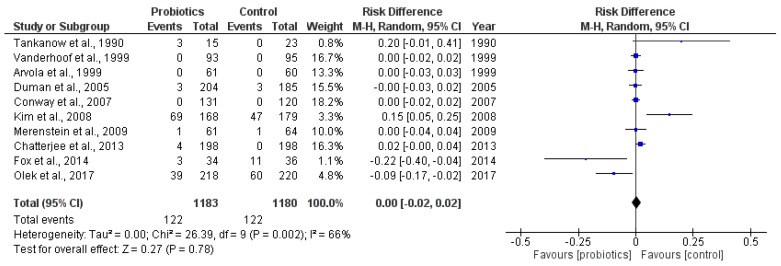
A common adverse effect of antibiotic use is diarrhea. Probiotics are living microorganisms, which, upon oral ingestion, may prevent antibiotic-associated diarrhea (AAD) by the normalization of an unbalanced gastrointestinal flora. The objective of this systematic review was to assess the benefits and harms of probiotics used for the prevention of AAD in an outpatient setting. A search of the PubMed database was conducted and yielded a total of 17 RCTs with 3631 participants to be included in the review. A meta-analysis was conducted for the primary outcome: the incidence of AAD. The pooled results found that AAD was present in 8.0% of the probiotic group compared to 17.7% in the control group (RR 0.49, 95% CI 0.36 to 0.66; I2 = 58%), and the species-specific results were similar regarding the probiotic strains L. rhamnosus GG and S. boulardii. However, the overall quality of the included studies was moderate. A meta-analysis of the ten trials reporting adverse events demonstrated no statistically significant differences in the incidence of adverse events between the intervention and control group (RD 0.00, 95% CI −0.02 to 0.02, 2.363 participants). The results suggests that probiotic use may be beneficial in the prevention of AAD among outpatients. Furthermore, the use of probiotics appears safe.
Overview
The claims and statistics of this paper haven’t been checked yet.
Run the check — free, no account needed. It reads the open-access text and checks the sources it cites.
Integrity signals
Registry
Cites
Statistics
Figures
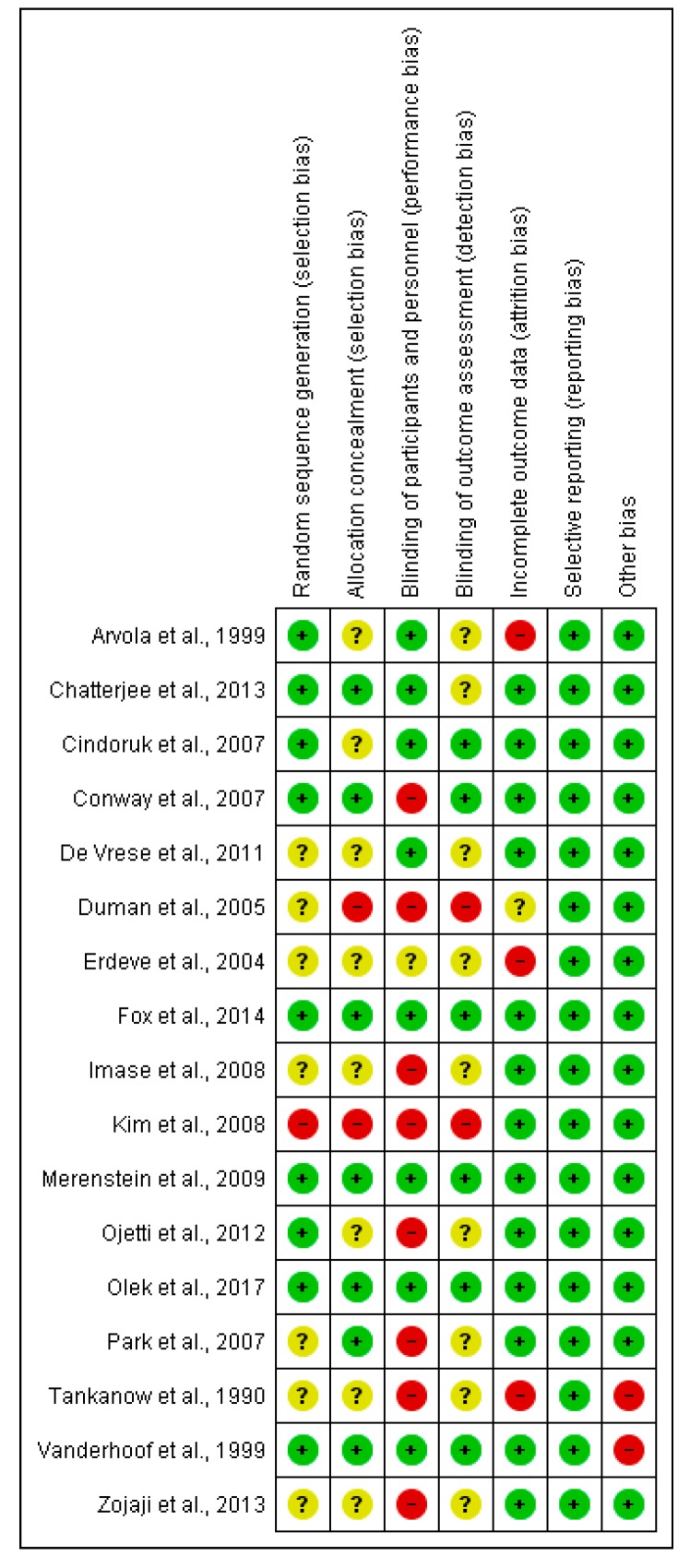
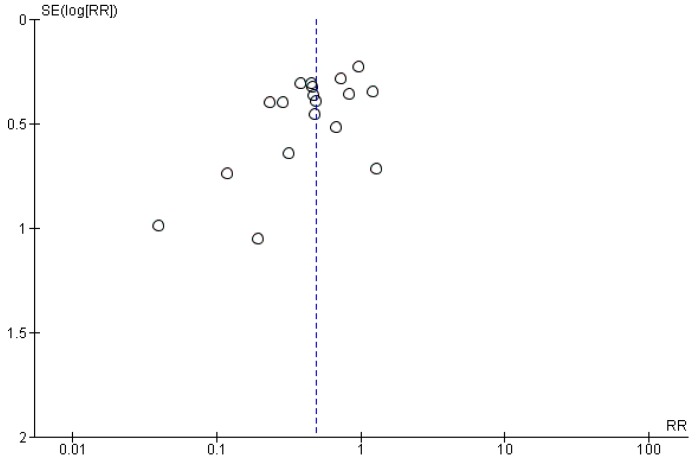
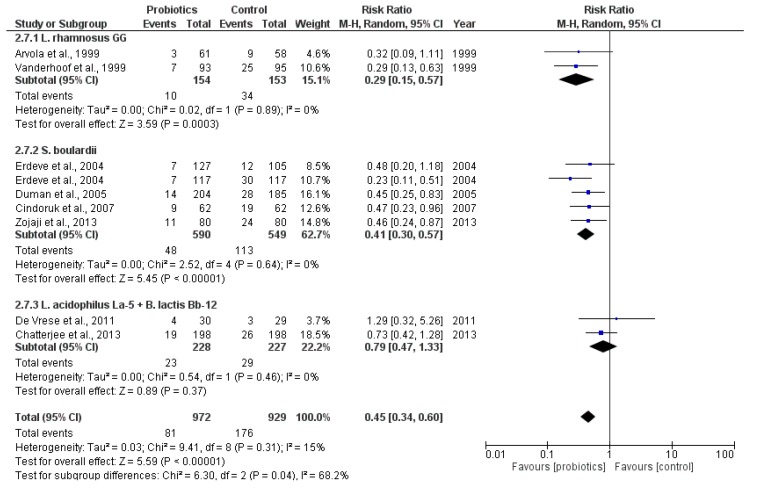
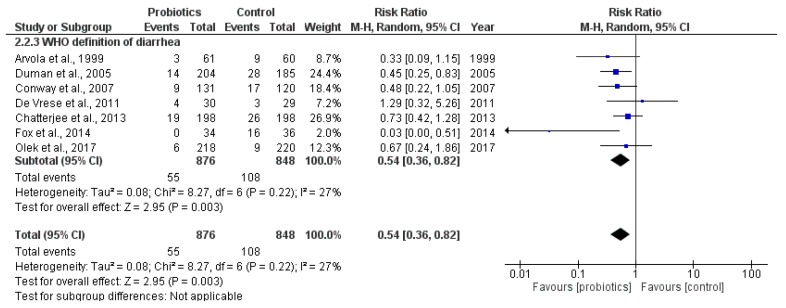
Verification
Claims the paper makes
The claims and statistics of this paper haven’t been checked yet.
Run the check — free, no account needed. It reads the open-access text and checks the sources it cites.
Claims other papers make about this one
Each is checked against this paper’s own text: does it say what the citing paper says it does?
The source backs part of the claim, not all of it — or backs it for a different population, condition or comparison.
In the citing paper
“In addition to modulating the immune system, the positive health effects of taking probiotics include: the improvement of lactose tolerance and digestion [199,205], the prevention and treatment of gastrointestinal infections [206], the prevention of colorectal cancer [203,207], reduction in blood cholesterol levels [208,209,210], and the improvement of mental health via the gut-brain axis [211].”
From Lactic Acid Bacteria in Raw-Milk Cheeses: From Starter Cultures to Probiotic Functions (2022) · cites this paper as [206]
Experimental — accuracy not yet measured
Self-check
Percentages, sums and reported differences re-computed from the paper’s own numbers.
The self-check needs the paper’s full text.
Citations
Cites
Assessing Risk of Bias in Included Studies
Higgins, J. P., & Altman, D. G. (2008) · Cochrane Handbook for Systematic Reviews of Interventions · doi:10.1002/9780470712184.ch8 · Cited by 3,396
Outpatient antibiotic use in Europe and association with resistance: a cross-national database study
Goossens, H., Ferech, M., Vander Stichele, R., & Elseviers, M. (2005) · The Lancet · doi:10.1016/s0140-6736(05)17907-0 · Cited by 3,359 · cited 1×
“The primary care sector is responsible for the bulk of antibiotic consumption in humans [3].”
BackgroundThe Role of Probiotic Cultures in the Control of Gastrointestinal Health
Rolfe, R. D. (2000) · Journal of Nutrition · doi:10.1093/jn/130.2.396s · Cited by 925 · cited 1×
“intestinal health, including the stimulation of immunity, competition for nutrients, the inhibition of the epithelial and mucosal adherence of pathogens, the inhibition of epithelial invasion, and the production of antimicrobial substances [5].”
BackgroundNewberry, S. J. (2012) · JAMA · doi:10.1001/jama.2012.3507 · Cited by 870 · cited 1×
“as a review, including hospitalized patients [26], on the prevention and treatment of AAD regardless of age (RR 0.”
BackgroundProbiotics for the prevention of pediatric antibiotic-associated diarrhea
Goldenberg, J. Z., Lytvyn, L., Steurich, J., Parkin, P. C., Mahant, S., & Johnston, B. C. (2015) · Cochrane Database of Systematic Reviews · doi:10.1002/14651858.cd004827.pub4 · Cited by 635
Lactobacillus GG in the prevention of antibiotic-associated diarrhea in children
Vanderhoof, J. A., Whitney, D. B., Antonson, D. L., Hanner, T. L., Lupo, J. V., & Young, R. J. (1999) · The Journal of Pediatrics · doi:10.1016/s0022-3476(99)70053-3 · Cited by 536 · cited 1×
“, 1999 [8] Lactobacillus rhamnosus GG Children < 12 kg: 1 × 10¹⁰ CFU, once daily Children > 12 kg: 2 × 10¹⁰, once daily 10 days”
Wiström, J. (2001) · Journal of Antimicrobial Chemotherapy · doi:10.1093/jac/47.1.43 · Cited by 455 · cited 1×
“In particular, aminopenicillins, cephalosporins, and clindamycin that act on anaerobes are associated with a high risk of AAD [2].”
BackgroundArvola, T., Laiho, K., Torkkeli, S., Mykkänen, H. M., Salminen, S., Maunula, L., & Isolauri, E. (1999) · PEDIATRICS · doi:10.1542/peds.104.5.e64 · Cited by 426 · cited 1×
“, 1999 [9] Lactobacillus rhamnosus GG 2 × 10¹⁰ CFU, twice daily Seven to 10 days”
Epidemiology, Risk Factors and Treatments for Antibiotic-Associated Diarrhea
McFarland, L. V. (1998) · Digestive Diseases · doi:10.1159/000016879 · Cited by 310 · cited 1×
“Antibiotic-associated diarrhea (AAD) occurs in 5% to 39% of patients, from the beginning and up to two months after the end of treatment [1].”
BackgroundSafety of probiotics used to reduce risk and prevent or treat disease.
(2011) · PubMed Central · Cited by 242
Research works printed but not linked: 2
- WHO (2009). Appendix 1, Definitions of health-care settings and other related terms. Guidelines on Hand Hygiene in Health Care: First Global Patient Safety Challenge Clean Care Is Safer Care, World Health Organization. Available online: https://www.ncbi.nlm.nih.gov/books/NBK144006/.
- (2014). Review Manager (RevMan) [Computer program]. Version 5.3, The Cochrane Collaboration.
Cited by
Sorted by citations
Items 101–200 of 207
Stetsiouk, О. U., & Andreeva, I. V. (2019) · Clinical Microbiology and Antimicrobial Chemotherapy · doi:10.36488/cmac.2019.2.100-118 · Cited by 8
Islam, M. I., Seo, H., Asma, R., Kim, S. K., Lee, S., Siddiquee, M., & Song, H. (2021) · Journal of Microbiology and Biotechnology · doi:10.4014/jmb.2107.07057 · Cited by 9
“Probiotics have already shown protective effects on CDI and have been included in many trials to recover the imbalance in the gut microbiota resulting from antibiotics [35, 51, 52].”
BackgroundProbiotics: controversial issues
Andreev, V. А., Stetsiouk, О. U., & Andreeva, I. V. (2022) · Clinical Microbiology and Antimicrobial Chemotherapy · doi:10.36488/cmac.2022.4.345-360 · Cited by 8
Probiotics: current regulatory aspects of probiotics for use in different disease conditions
Pogačar, M. Š., Mičetić‐Turk, D., & Fijan, S. (2021) · Elsevier eBooks · doi:10.1016/b978-0-12-823733-5.00021-0 · Cited by 9
Probiotics in milk and dairy foods
da Motta, A. D. S., Nespolo, C. R., & Breyer, G. M. (2022) · Elsevier eBooks · doi:10.1016/b978-0-323-85170-1.00004-x · Cited by 8
The Role of Probiotics and Their Postbiotic Metabolites in Post-COVID-19 Syndrome
Jach, M. E., Sajnaga, E., Bumbul, M., Serefko, A., Borowicz, K. K., Golczyk, H., Kieliszek, M., & Wiater, A. (2025) · Molecules · doi:10.3390/molecules30204130 · Cited by 8
“A systematic review and meta-analysis [171] found a 51% reduction in the risk of AAD induced by probiotics, with no apparent increase in the risk of side effects.”
D’Accolti, M., Soffritti, I., Bini, F., Mazziga, E., & Caselli, E. (2024) · Microbial Biotechnology · doi:10.1111/1751-7915.14529 · Cited by 7
“…skin infections, gastrointestinal diseases, urogenital infections, gingivitis and allergic disorders (Alkaya et al., 2017; Amara & Shibl, 2015; Blaabjerg et al., 2017; Bodke & Jogdand, 2022; Butel, 2014; Kerry et al., 2018; Kim et al., 2019; Kumar et al., 2022; Nithya et al., 2023; Roudsari…”
BackgroundTang, J., Ma, X., Song, X., & Chen, W. (2024) · International Journal of Biological Macromolecules · doi:10.1016/j.ijbiomac.2024.136792 · Cited by 7
Zakharenko, S. M., Andreeva, I. V., & Stetsiouk, О. U. (2019) · Clinical Microbiology and Antimicrobial Chemotherapy · doi:10.36488/cmac.2019.3.196-206 · Cited by 7
Disorders of intestinal microbiocenosis: expanding the application of probiotics
Трухан, Д. И. (2022) · Meditsinskiy sovet = Medical Council · doi:10.21518/2079-701x-2022-16-7-132-143 · Cited by 7
Shah, N. (2021) · Advances in Clinical Toxicology · doi:10.23880/act-16000205 · Cited by 7
“Oral consumption of probiotics has also been suggested to prevent antibiotic-associated diarrhoea owing to the normalization of unbalanced gastrointestinal flora [27].”
BackgroundDoar, N. W., & Samuthiram, S. D. (2023) · Cureus · doi:10.7759/cureus.40261 · Cited by 7
Microbiota awareness levels of medical students: the case of Trakya university
Davarcı, İ., & Davarcı, P. Z. (2025) · BMC Medical Education · doi:10.1186/s12909-025-06662-5 · Cited by 8
“Many studies have demonstrated that adding probiotics alongside antibiotic therapy can reduce the side effects of antibiotics [28, 29].”
A Model for Probiotic Fermented Food Production
Sardaro, M. L. S., Zaini, S., & Amato, K. R. (2023) · Applied Sciences · doi:10.3390/app132011123 · Cited by 6
Role of probiotics and prebiotics in digestion, metabolism, and immunity
Kurian, S. J., Baral, T., Miraj, S. S., & Rao, M. (2022) · Elsevier eBooks · doi:10.1016/b978-0-12-821232-5.00026-4 · Cited by 7
Shapiro, D. B., Kapourchali, F. R., Santilli, A. D., Han, Y., & Cresci, G. (2022) · Microorganisms · doi:10.3390/microorganisms10061178 · Cited by 6
Lian, X.-J., Dai, Y.-N., Xue, J., Zeng, L., Wang, L., Xue, L., Chen, J., Tan, N., He, P., Liu, Y.-H., et al. (2021) · Atherosclerosis · doi:10.1016/j.atherosclerosis.2021.06.924 · Cited by 6
Do NSAIDs and Other Pain Relief Drugs Can Inhibit the Growth of Lactobacillaceae ?
Kruszewska, H., Zawistowska-Rojek, A., & Tyski, S. S. (2023) · Polish Journal of Microbiology · doi:10.33073/pjm-2023-038 · Cited by 5
“People often supplement antibiotic therapies with some probiotics or use them for digestive system ailments (Blaabjerg et al. 2017; Zawistowska-Rojek and Tyski 2022).”
BackgroundByrne, D. F., Geraghty, A. A., Yelverton, C. A., Murphy, E. F., van Sinderen, D., Cotter, P. D., & McAuliffe, F. M. (2020) · Food & Function · doi:10.1039/d0fo01727b · Cited by 5
Singh, S. T., & Rawat, P. S. (2020) · Advances in medical diagnosis, treatment, and care (AMDTC) book series · doi:10.4018/978-1-7998-4808-0.ch012 · Cited by 5
Parents’ perspective on probiotics in preschool children: A cross-sectional survey
Bezek, K., Fajković, E., & Stubelj, M. (2022) · Slovenian Journal of Public Health · doi:10.2478/sjph-2023-0002 · Cited by 5
“Exposure to probiotics during pregnancy and early infancy could reduce the risk of developing various health problems, such as atopic dermatitis (28), necrotising enterocolitis (29) antibiotic-associated diarrhoea (30) and paediatric acute infectious diarrhoea (31, 32).”
BackgroundLactobacillus rhamnosus GG: experience in pediatric gastroenterology
Zakharova, I. N., Borzova, E. Y., & Simakova, M. A. (2020) · Rossiyskiy Vestnik Perinatologii i Pediatrii (Russian Bulletin of Perinatology and Pediatrics) · doi:10.21508/1027-4065-2019-64-6-20-29 · Cited by 5
“rhamnosus GG для профилактики антибиотик-ассоциированной диареи был подтвержден в ряде последующих метаанализов, объединяющих РКИ детской популяции [36, 37].”
Fecal Recovery of Probiotics Administered as a Multi-Strain Formulation during Antibiotic Treatment
Forssten, S. D., Yeung, N., & Ouwehand, A. C. (2020) · Biomedicines · doi:10.3390/biomedicines8040083 · Cited by 4
Zawistowska-Rojek, A., Kociszewska, A., Zaręba, T., & Tyski, S. S. (2022) · Polish Journal of Microbiology · doi:10.33073/pjm-2022-035 · Cited by 5
“Probiotics which are part of medicines, dietary supplements and fermented foods, are often used during antibiotic therapy to prevent diarrhoea associated with the consumption of antibiotics by normalising intestinal microbiota (Blaabjerg et al. 2017; ZawistowskaRojek and Tyski 2022).”
BackgroundImproving Antimicrobial Stewardship in Human Health Using Probiotics and Their Derivatives
Nyathi, N., Ndhlovu, D., Rabvukwa, E., & Ndudzo, A. (2024) · Pharmaceutical science. · doi:10.5772/intechopen.112497 · Cited by 4
Park, C. Y., Park, O.-J., Kwon, Y., Lee, J., Yun, C., & Han, S. H. (2024) · Probiotics and Antimicrobial Proteins · doi:10.1007/s12602-024-10441-x · Cited by 4
“Probiotics are widely recognized for their health benefits, including the prevention of antibiotic-associated diarrhea, treatment of periodontal disease, and alleviation of ulcerative colitis [54].”
Ashman, S., & Krishnamurthy, H. K. (2019) · Elsevier eBooks · doi:10.1016/b978-0-12-816665-9.00004-4 · Cited by 4
Gut Microbiota in Kawasaki Disease
Huang, C., & Yeh, Y. (2022) · Springer eBooks · doi:10.1007/978-981-19-2944-1_19 · Cited by 4
Muliana, D., Mulia, V. D., Suardi, H. N., Puspita, N. A., & Suryawati, S. (2024) · Malacca Pharmaceutics · doi:10.60084/mp.v2i1.143 · Cited by 5
Sun, J., Yanshu, Z., Liu, Y., Qindong, S., Wang, X., Lei, Z., He, Y., & Guo, L. (2019) · Journal of International Medical Research · doi:10.1177/0300060519836305 · Cited by 4
Lalitsuradej, E., Sivamaruthi, B. S., Sirilun, S., Sittiprapaporn, P., Peerajan, S., & Chaiyasut, C. (2020) · Asian Journal of Medical Sciences · doi:10.3126/ajms.v11i1.26500 · Cited by 4
Saccharomyces boulardii CNCM I-745 probiotic does not alter the pharmacokinetics of amoxicillin
Selig, D. J., DeLuca, J. P., Li, Q., Lin, H., Nguyen, K., Scott, S. M., Sousa, J. C., Vuong, C. T., Xie, L. H., & Livezey, J. (2020) · Drug Metabolism and Personalized Therapy · doi:10.1515/dmpt-2019-0032 · Cited by 4
Shaikh, S. S., Patel, S. S., Verma, S., Malik, A., & Malek, F. (2025) · Probiotics and Antimicrobial Proteins · doi:10.1007/s12602-025-10670-8 · Cited by 3
Role of lactic acid bacteria in maintaining animal intestinal health
Han, X., Yuan, X., Jun, F. A. N. G., Jiang, H., & Liu, G. (2022) · Scientia Sinica Vitae · doi:10.1360/ssv-2022-0032 · Cited by 3
Gao, L., Wang, S., Zhang, L., Yuan, W., Jin, X.-Y., Fan, Y.-H., & Wang, B. (2023) · Journal of Herbal Medicine · doi:10.1016/j.hermed.2023.100676 · Cited by 3
Al-Fawares, O., Rayyan, W. A., Fararjeh, A., & Seder, N. (2023) · Journal of Applied Pharmaceutical Science · doi:10.7324/japs.2023.143603 · Cited by 3
“However, a variety of novel potential probiotic taxa are expected in the future (Blaabjerg et al ., 2017; Gorreja and Walker, 2022; Ren et al ., 2022).”
(2020) · Biointerface Research in Applied Chemistry · doi:10.33263/briac102.068075 · Cited by 3
Prebiotics and Probiotics Food
Sankarganesh, P., Adeyeye, S. A. O., Chakka, A. K., & Babu, A. S. (2024) · Wiley eBooks · doi:10.1002/9781394237623.ch16 · Cited by 4
Advances in Probiotics for Health and Nutrition
Zambare, V., Din, M. F. M., Gupta, P., & Prajapati, B. G. (2023) · IntechOpen eBooks · doi:10.5772/intechopen.104299 · Cited by 2
Probiotics in current medical practice: From myths to scientific evidence
Plotnikova, E. Y., & Zakharova, Y. V. (2025) · Meditsinskiy sovet = Medical Council · doi:10.21518/ms2025-278 · Cited by 2
Dodoo, C. C., Simpson, S. V., Mensah, G. I., & Fredua‐Agyeman, M. (2025) · BMC Microbiology · doi:10.1186/s12866-025-04508-0 · Cited by 2
“Probiotics have garnered attention as a promising non-antibiotic intervention for maintaining gut health and combating enteric infections [18, 19].”
Валерьевна, К. Е., Gorelov, A. V., Maksimov, M. L., Kanner, I. D., & Lapkin, N. M. (2021) · Meditsinskiy sovet = Medical Council · doi:10.21518/2079-701x-2021-1-149-156 · Cited by 2
Al-Amedy, O. S., & Saido, G. M. (2021) · Polytechnic Journal · doi:10.25156/ptj.v11n1y2021.pp52-57 · Cited by 2
“It often lasts for a few days and can result in dehydration due to excessive fluid loss with appear signs R E S E A R C H A R T I C L E A B S T R A C T Polytechnic Journal ● Vol 11 ● No 1 ● 2021 | 53 per day (or more frequent passage than is normal rate for the individual) (Blaabjerg et al., 2017).”
BackgroundChen, B., Li, X.-M., Cai, T., & Wang, F. (2022) · Frontiers in Cellular and Infection Microbiology · doi:10.3389/fcimb.2022.913384 · Cited by 3
The authenticity of probiotic foods and dietary supplements: facts and reflections from a court case
Simone, C. D. (2022) · CyTA - Journal of Food · doi:10.1080/19476337.2022.2141344 · Cited by 2
“Probiotics provide general health benefits in various conditions, including digestive disorders, antibiotic-related diarrhea, allergies, liver disease, autism, to mention a few topics (Ahmed et al., 2019; Blaabjerg et al., 2017; Chidambaram et al., 2020; Furrie, 2005; Pace et al., 2015).”
BackgroundAragon‐Martínez, O. H., Martínez-Morales, F., Bologna‐Molina, R. E., & Aranda‐Romo, S. (2018) · International Dental Journal · doi:10.1111/idj.12459 · Cited by 2
Goli, M., Pourmoghaddas, Z., Emadoleslami, M. S., & Rahimi, H. (2019) · Archives of Pediatric Infectious Diseases · doi:10.5812/pedinfect.89707 · Cited by 2
Adverse Drug Effects Involving the Gastrointestinal System (Pharmacist Perspective)
Goriacko, P., & Veltri, K. T. (2019) · Springer eBooks · doi:10.1007/978-3-319-90761-1_10-1 · Cited by 2
Chebotareva, T. A. (2021) · Meditsinskiy sovet = Medical Council · doi:10.21518/2079-701x-2021-11-156-164 · Cited by 4
Probiotics and intestinal health
Guslandi, M. (2022) · Elsevier eBooks · doi:10.1016/b978-0-323-85170-1.00013-0 · Cited by 2
Antibiotic-associated diarrhea in clinical practice: preventive and therapeutic approaches
Livzan, M. A., & Fedorin, M. M. (2022) · Russian Medical Inquiry · doi:10.32364/2587-6821-2022-6-5-259-265 · Cited by 2
Influence of Probiotics on Antibiotic Therapy
Nandakishor, K. P., & Ephrem, A. (2022) · International Journal of Research and Review · doi:10.52403/ijrr.20221226 · Cited by 2
Translation of Immunomodulatory Effects of Probiotics into Clinical Practice
Ryan, J. C., Narasimha, S. V., Pattison, R., Zackria, R., Ghobrial, Y., Basit, S. A., Ammar, T. A. R. A., Jayaraman, V., Stone, C. D., & Shih, D. Q. (2023) · IntechOpen eBooks · doi:10.5772/intechopen.109864 · Cited by 2
Probiotics: beneficial microbes for health and the food industry
Pal, A. D., & Pal, A. (2024) · Elsevier eBooks · doi:10.1016/b978-0-443-13932-1.00026-x · Cited by 2
Probiotic: An Uprising Human Health Concept
Bhatt, A. R., Kothari, D. R., Kothari, C., & Kothari, R. K. (2021) · IntechOpen eBooks · doi:10.5772/intechopen.98828 · Cited by 2
The use of probiotics in pediatric practice
Леонидовна, П. Н., & Tat'yanina, O. F. (2020) · Meditsinskiy sovet = Medical Council · doi:10.21518/2079-701x-2020-10-55-63 · Cited by 1
Jha, V. (2022) · Journal of Food Technology & Nutrition Sciences · doi:10.47363/jftns/2022(4)153 · Cited by 1
Choudhury, J., Makkar, A., Sharma, V., Karamath, S. P., Parmar, V., Paras Kumar, J., Veligandla, K. C., Pinto, C. S., Mane, A., Rathod, R., et al. (2023) · Cureus · doi:10.7759/cureus.36269 · Cited by 1
“A systematic review and meta-analysis by Blaabjerg et al. (2017) also highlighted the beneficial use of probiotics in preventing AAD among outpatients [16].”
Antibiotic-associated dysbiosis: modern strategy for microbiota restoration. A review
Dzottsoeva, E. S., Gorelov, A. V., & Khabibulina, L. R. (2024) · Pediatrics Consilium Medicum · doi:10.26442/26586630.2024.4.203021 · Cited by 1
Development of reference-based model for improved analysis of bacterial community
Park, C., Park, J., Chang, D., & Kim, S. (2025) · Food Research International · doi:10.1016/j.foodres.2025.116380 · Cited by 1
Makavana, A., & Chotaliya, M. (2026) · EPJ Web of Conferences · doi:10.1051/epjconf/202634801012 · Cited by 1
“Therefore, further well-designed trials focusing on personalized probiotic therapy, based on individual gut microbiome profiling, are warranted to optimize probiotic-based interventions[4].”
Husain, A., Khanam, A., Khan, H., Rafi, Z., Shahab, U., Rab, S. O., Puri, P., & Ahmad, S. (2026) · Journal of Food Science · doi:10.1111/1750-3841.70817 · Cited by 2
Novacescu, D., Cut, T. G., Băloi, A., Herlo, A., Luput-Andrica, I.-M., Saizu, A.-E., Uzum, A., Mot, M. D., Zară, F., Săndesc, D., et al. (2026) · Diseases · doi:10.3390/diseases14020077 · Cited by 1
“Instead, a consortium of different, complementary, beneficial microbial lineages might be better equipped to more effectively restore biodiversity, by providing additional synergistic effects—enhanced colonization resistance, mucosal repair support, and inflammation suppression [27,32,35,36].”
Kim, Y., Khan, R., Vally, M., & Orchard, A. (2026) · SA pharmaceutical journal. · doi:10.36303/sapj.3129 · Cited by 1
Safety and Effectiveness of Probiotic Preparations: A Contemporary Review
Shorabaev, E., Sadanov, A. K., Baimakhanova, B. B., Ратникова, И. А., Xetayeva, G., Akhelova, S., & Turgumbayeva, A. (2026) · Diseases · doi:10.3390/diseases14090316 · Cited by 1
Chaiyasut, C., Sivamaruthi, B. S., Sirilun, S., Tirawat, Y., & Sittiprapaporn, P. (2020) · Asian Journal of Medical Sciences · doi:10.3126/ajms.v11i1.26498 · Cited by 1
Features of intestinal damage in COVID-19
Sarsenbaeva, A. S., & Lazebnik, L. B. (2020) · Экспериментальная и клиническая гастроэнтерология · doi:10.31146/1682-8658-ecg-184-12-16-22 · Cited by 1
Pomorska‐Mól, M., Turlewicz‐Podbielska, H., & Wojciechowski, J. (2021) · Polish Journal of Veterinary Sciences · doi:10.24425/pjvs.2021.137670 · Cited by 1
“The use of probiotics is associated with a lower risk of side effects and overdosing (Blaabjerg et al. 2017).”
Backgroundde Carvalho, T. D. L. L., Bonamin, F., & Costa, C. A. R. D. A. (2024) · Rev. Salusvita (Online) · doi:10.47296/salusvita.v42i01.444 · Cited by 1
Microbiomes in Medicine and Agriculture
ROSENBERG, E. B. (2021) · The microbiomes of humans, animals, plants, and the environment · doi:10.1007/978-3-030-65317-0_10 · Cited by 1
Impact of Concurrent Use of Probiotics on Risk of Antibiotic Associated Diarrhoea in Adults
Al-Ghamdi, H., Alaofi, M., Dughman, A. A., Aldawsari, K., Alghamdi, T., Althagafi, O., Alghanem, M., Ladnah, A. B., Almajed, K., Alrashed, H., et al. (2022) · Journal of Healthcare Sciences · doi:10.52533/johs.2022.2902 · Cited by 1
“These findings were supported by investigations of two particular strains, Lactobacillus rhamnosus GG and Saccharomyces boulardii (11).”
BackgroundProbióticos no pré e pós-operatório de câncer colorretal
Senga, D. M. Y., Liu, Â. S. L. W., & Frangella, V. S. (2023) · Saúde e Desenvolvimento Humano · doi:10.18316/sdh.v11i2.9755 · Cited by 1
Improving the functional properties of Lactobacillus reuteri
Pallin, A. (2018) · Epsilon Open Archive (Sveriges lantbruksuniversitet biblioteket (Swedish University of Agricultural Sciences)) · Cited by 1
The Florajen Digestion Balance Patient Experience Study
Kessler, C. A. (2020) · Health · doi:10.4236/health.2020.1211107
“Systemic review and meta-analyses suggest that the use of several species and strains of probiotics can have an overall positive effect in preventing AAD, by as much as 51% in some populations [6] [24] [25] [26] [27].”
BackgroundАнтибіотикоасоційована діарея: роль пробіотиків у лікуванні та профілактиці
Українська медична стоматологічна академія, П., Скрипник, І. М., Приходько, Н. П., & Українська медична стоматологічна академія, П. (2021) · Український медичний часопис · doi:10.32471/umj.1680-3051.142.203410 · Cited by 2
“Інша група дослідників провела аналіз 17 досліджень з бази PubMed, що включали 3631 особу [43].”
Gut microbiota in COVID-19 treatment
Sadighpour, T., & Tolouian, A. (2021) · Immunopathologia Persa · doi:10.34172/ipp.2021.30
Kvit, A. D., Tutka, M. M., Laba, O. V., & Kunovskyi, V. V. (2021) · Wiadomości Lekarskie · doi:10.36740/wlek202107118
Hawrelak, J. A. (2020) · Elsevier eBooks · doi:10.1016/b978-0-323-43044-9.00105-9
Ajmal, D. S. (2022) · SSRN Electronic Journal · doi:10.2139/ssrn.4064164
Enhancement of Probiotic Yogurts’ Characteristics using a 24-hour fermentation process
Ayoub, S., Alnaimi, N., Ibrahim, S., Manyama, J., Al-Marri, M., Naimi, A. J. A., Altamimi, A., Ansari, A. A., Esteban, C., Gaskell, C., et al. (2023) · Journal of Student Research · doi:10.47611/jsr.v11i3.1746
A Case of Recessive Dystrophic Epidermolysis Bullosa Associated Colitis
McCann, K. J., Wiss, K., Covington, J. D., Laffert, V., & Gosselin, K. B. (2023) · JPGN Reports · doi:10.1097/pg9.0000000000000313
Hiroshima University Affiliated Hospital Probiotics Usage Guidelines
Hiyama, T., Kunihiro, M., Asayama, N., Urabe, Y., Okanobu, H., Onogawa, S., Kunihiro, K., Kuwai, T., Kodama, M., Sanomura, Y., et al. (2023) · Nihon Daicho Komonbyo Gakkai Zasshi · doi:10.3862/jcoloproctology.76.467
van der Geest, A. M. (2023) · doi:10.5463/thesis.365
Gıda İşleme ve Üretiminde Yenilikçi Teknolojiler
Aydın, E., Karacabey, E., Küçüköner, E., Özkan, G., Buzrul, S., Baltacıoğlu, H., Coruk, K. S., Doğanay, G., Yetişen, M., Yavuzer, E., et al. (2024) · Akademisyen Kitabevi eBooks · doi:10.37609/akya.2922
Kalra, S., Joshi, A. S., TIWASKAR, M. H., Agrawal, N. K., Shaikh, S. S., Bhatia, B. S., Jhingan, A. K., Rawal, P., Das, A. K., Nishad, S. K., et al. (2023) · Journal of the Association of Physicians of India · doi:10.59556/japi.71.0409
Disboyizisin Önlenmesi ve Sağlıklı Mikrobiyota Gelişimi için Probiyotikler
Çakır, A., Arslan, M., Sadioglu, O. D., Akdemir, T., Az, A., Güven, Ş., Ümit, T. B., Helvaci, M. S., Çalık, M., Coşkun, A., et al. (2024) · Akademisyen Kitabevi eBooks · doi:10.37609/akya.3110
Probiotics and its Application in Humans: An Overview
Arunavarsini, K., Yuvansasi, V. , Sekar, M., Durga Devi., L., & Mahenthiran, R. (2024) · Journal of Pharmaceutical Research International · doi:10.9734/jpri/2024/v36i77552
Nikolaeva, I. V., Shaikhieva, G. S., & GAYNATULLINA, L. R. (2024) · Rossiyskiy Vestnik Perinatologii i Pediatrii (Russian Bulletin of Perinatology and Pediatrics) · doi:10.21508/1027-4065-2024-69-5-45-51
吕, 文. (2024) · Advances in Clinical Medicine · doi:10.12677/acm.2024.14113016
Efficacy of Bacillus clausii UBBC-07 in the prevention of antibiotic-associated diarrhea in children
Бекетова, Г. В., Koiro, O., Bohdanova, S. S., Bulhakova, M. S., Heorhitsa, K. M., Il’kiv, O. B., Kavka, О. R., Kmit’, О. Z., Kukhar, О. V., Liubetska, V. І., et al. (2024) · CHILD`S HEALTH · doi:10.22141/2224-0551.19.7.2024.1758
Willemse, T. W. J., & Schmitz, S. S. (2024) · Vlaams Diergeneeskundig Tijdschrift · doi:10.21825/vdt.93194
The role of Bifidobacterium animalis QC08 in antibiotic-associated diarrhea in mice
Ren, L., Tan, F., Kim, H., Ma, X., & Kong, C. (2025) · Food Science and Biotechnology · doi:10.1007/s10068-025-01881-4
“This increases the risk of enterogenic infections, ultimately contributing to AAD pathogenesis (Blaabjerg et al., 2017).”
REAÇÕES ADVERSAS E INTERAÇÕES MEDICAMENTOSAS DOS ANTICONCEPCIONAIS HORMONAIS: PERCEPÇÃO DE MULHERES
de Oliveira, M., da Silva, S. C., Pereira, A. D., da Silveira, A., Marques, K. A., Silveira, J. O., Nunes, J. B., & Soccol, K. L. S. (2025) · Revista Enfermagem Atual In Derme · doi:10.31011/reaid-2025-v.99-n.3-art.2550
Function of Gut Microbiota in Longevity as a Futuristic Approach of Personalised Nutrition
Malik, S., Bharali, R., Barbhuyan, H. S. A., Bora, J., Lata, S., & Madan, A. (2026) · IGI Global eBooks · doi:10.4018/979-8-3373-4382-2.ch010 · Cited by 1
91Chapter 4 Probiotics and Gut Microbiota: A Comprehensive Study of Their Interactions and Benefits
Priti, Verma, K., Goyal, S., Praveen, K., Charulata, Gupta, B., & Bansal, P. (2025) · De Gruyter eBooks · doi:10.1515/9783112205150-004
Salahi‐Niri, A., Sadeghı, A., Mokhtare, M., Avanaki, F. A., Taher, M., Mirshahvelayati, A., Zali, M. R., Sadeghi, A., & Yadegar, A. (2026) · Helicobacter · doi:10.1111/hel.70137
“However, the elderly population is not at a higher risk of encountering side effects [131].”
Probiotics in the Prevention and Management of Antibiotic-Resistant Infections
Marzi, M., & Tunç, A. K. (2026) · Fenerbahçe Üniversitesi Sağlık Bilimleri Dergisi · doi:10.56061/fbujohs.1817657
Metadata
- Authors
- Blaabjerg, S., Artzi, D., & Aabenhus, R.
- Affiliations
- University of Copenhagen (DK)
- Corresponding author
- Blaabjerg, Sara
- Artzi, Daniel
- Aabenhus, Rune
- ORCID
- Aabenhus, Rune
- Venue
- Antibiotics
- Publisher
- MDPI AG
- Published
- 2017-10-12
- Volume
- 6
- Issue
- 4
- Pages
- 21
- ISSN
- 2079-6382 (ISSN-L)
- PMC
- PMC5745464
- OpenAlex
- W2762238784
- Cited by
- 208
- References
- 29
- Citations by year
- 2026: 17 · 2025: 18 · 2024: 27 · 2023: 24 · 2022: 31 · 2021: 27 · 2020: 32 · 2019: 25 · 2018: 7
- FWCI
- 1.90
- Type
- journal article
- Language
- en
- Open access
- gold
- doi.org
- Licence
- Locations
- Antibiotics (publishedVersion, cc-by)
- PubMed Central (publishedVersion, cc-by)
- PubMed (publishedVersion)
- Research at the University of Copenhagen (University of Copenhagen) (publishedVersion, cc-by)
- DOAJ (DOAJ: Directory of Open Access Journals) (submittedVersion, cc-by-sa)
- Topics
- Life Sciences › Agricultural and Biological Sciences › Food Science › Probiotics and Fermented Foods
- Life Sciences › Biochemistry, Genetics and Molecular Biology › Molecular Biology › Gut microbiota and health
- Health Sciences › Medicine › Gastroenterology › Gastrointestinal motility and disorders
- Keywords
- probiotics, antibiotic-associated diarrhea, diarrhea prevention, outpatients, Lactobacillus rhamnosus GG, Saccharomyces boulardii, adverse events, gut microbiota, antibiotic adverse effects
About these checks
Registry, retraction, Cites and statistics results are computed, not judged, with one exception: a printed reference that no index lists is read once by a model before it counts as a citation error. Claims are extracted by a model and kept only when their quote appears verbatim in the text; each cited source is then checked, with a model’s help, for whether it says what the claim relies on. Those verdicts can be wrong — read the claim’s quote and the cited source before relying on one.
Statistics and arithmetic are recomputed, not judged.
Confidence bands are shown only for fields calibrated on our annotated test set. None is calibrated yet, so no band is shown.
What counts as a claim ›How we measure confidence ›How we check this ›
Are you an author, or do you see a problem with this page? Request a review
