

The DOI matches its Crossref record; 27 of the 29 references it cites were found in a registry or an index, and 1 are not checked yet.
Probiotics for the Prevention of Antibiotic-Associated Diarrhea in Outpatients—A Systematic Review and Meta-Analysis
Open accessAbstract
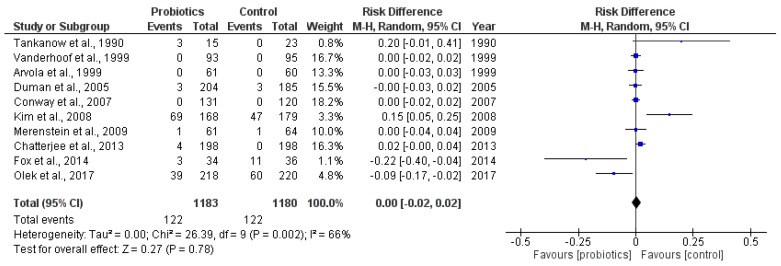
A common adverse effect of antibiotic use is diarrhea. Probiotics are living microorganisms, which, upon oral ingestion, may prevent antibiotic-associated diarrhea (AAD) by the normalization of an unbalanced gastrointestinal flora. The objective of this systematic review was to assess the benefits and harms of probiotics used for the prevention of AAD in an outpatient setting. A search of the PubMed database was conducted and yielded a total of 17 RCTs with 3631 participants to be included in the review. A meta-analysis was conducted for the primary outcome: the incidence of AAD. The pooled results found that AAD was present in 8.0% of the probiotic group compared to 17.7% in the control group (RR 0.49, 95% CI 0.36 to 0.66; I2 = 58%), and the species-specific results were similar regarding the probiotic strains L. rhamnosus GG and S. boulardii. However, the overall quality of the included studies was moderate. A meta-analysis of the ten trials reporting adverse events demonstrated no statistically significant differences in the incidence of adverse events between the intervention and control group (RD 0.00, 95% CI −0.02 to 0.02, 2.363 participants). The results suggests that probiotic use may be beneficial in the prevention of AAD among outpatients. Furthermore, the use of probiotics appears safe.
Overview
The claims and statistics of this paper haven’t been checked yet.
Run the check — free, no account needed. It reads the open-access text and checks the sources it cites.
Integrity signals
Registry
Cites
Statistics
Figures
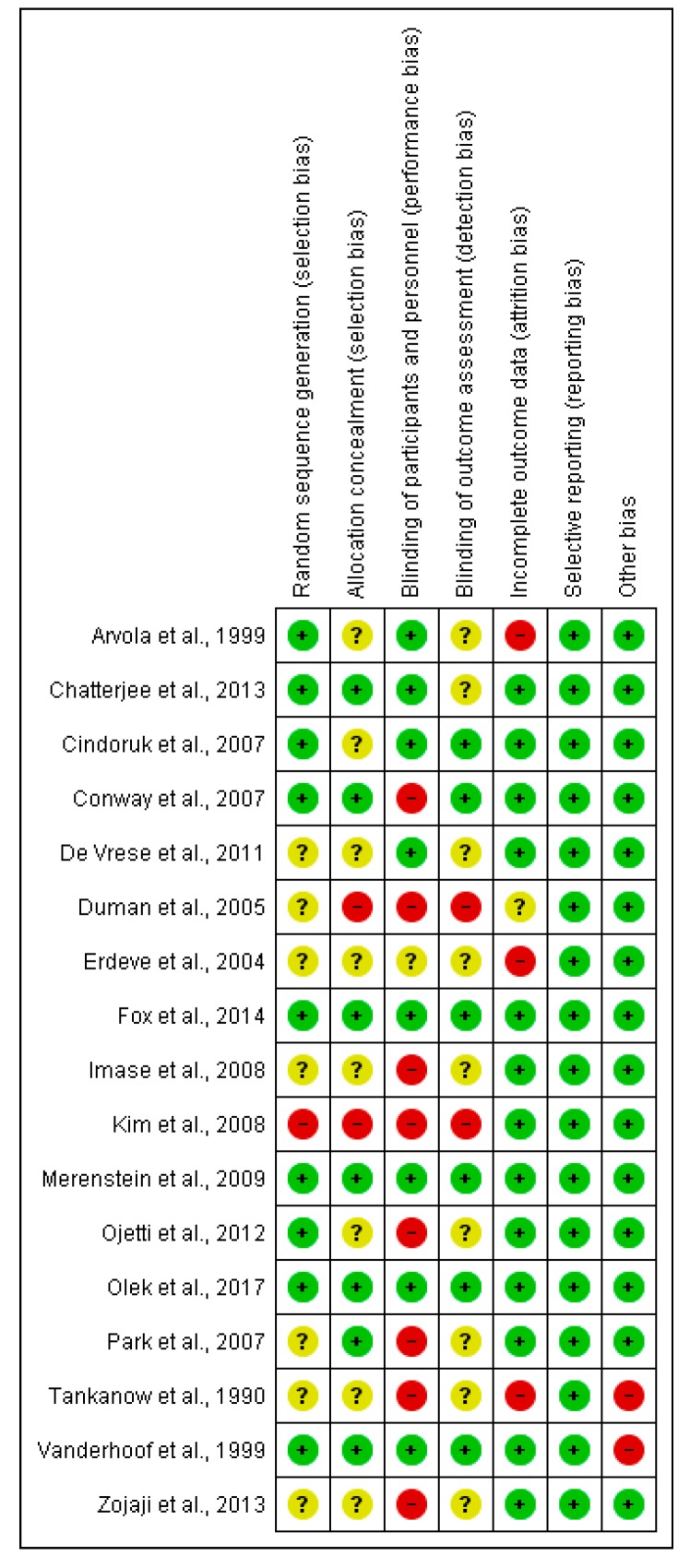
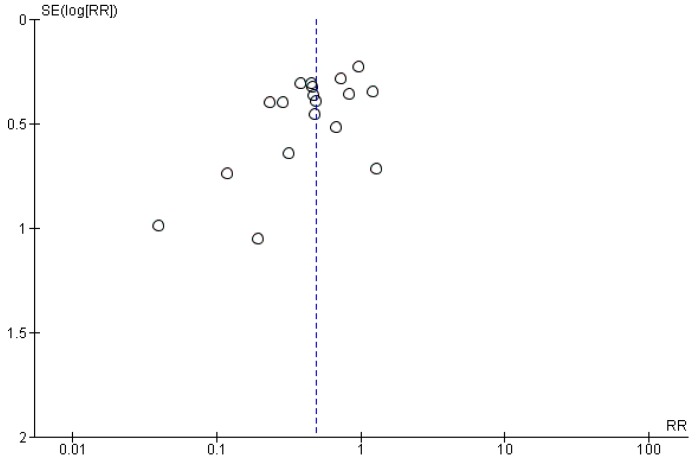
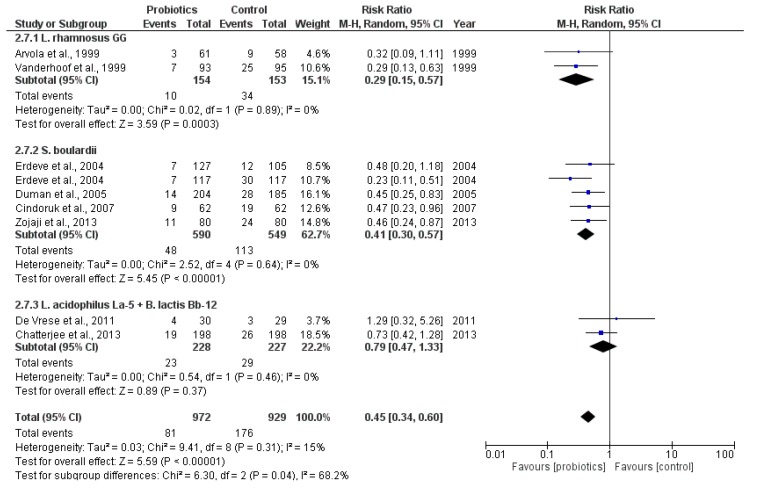
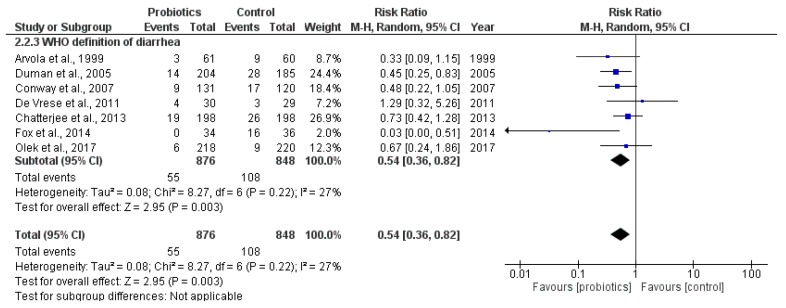
Verification
Claims the paper makes
The claims and statistics of this paper haven’t been checked yet.
Run the check — free, no account needed. It reads the open-access text and checks the sources it cites.
Claims other papers make about this one
Each is checked against this paper’s own text: does it say what the citing paper says it does?
The source backs part of the claim, not all of it — or backs it for a different population, condition or comparison.
In the citing paper
“In addition to modulating the immune system, the positive health effects of taking probiotics include: the improvement of lactose tolerance and digestion [199,205], the prevention and treatment of gastrointestinal infections [206], the prevention of colorectal cancer [203,207], reduction in blood cholesterol levels [208,209,210], and the improvement of mental health via the gut-brain axis [211].”
From Lactic Acid Bacteria in Raw-Milk Cheeses: From Starter Cultures to Probiotic Functions (2022) · cites this paper as [206]
Experimental — accuracy not yet measured
Self-check
Percentages, sums and reported differences re-computed from the paper’s own numbers.
The self-check needs the paper’s full text.
Citations
Cites
Assessing Risk of Bias in Included Studies
Higgins, J. P., & Altman, D. G. (2008) · Cochrane Handbook for Systematic Reviews of Interventions · doi:10.1002/9780470712184.ch8 · Cited by 3,396
Outpatient antibiotic use in Europe and association with resistance: a cross-national database study
Goossens, H., Ferech, M., Vander Stichele, R., & Elseviers, M. (2005) · The Lancet · doi:10.1016/s0140-6736(05)17907-0 · Cited by 3,359 · cited 1×
“The primary care sector is responsible for the bulk of antibiotic consumption in humans [3].”
BackgroundThe Role of Probiotic Cultures in the Control of Gastrointestinal Health
Rolfe, R. D. (2000) · Journal of Nutrition · doi:10.1093/jn/130.2.396s · Cited by 925 · cited 1×
“intestinal health, including the stimulation of immunity, competition for nutrients, the inhibition of the epithelial and mucosal adherence of pathogens, the inhibition of epithelial invasion, and the production of antimicrobial substances [5].”
BackgroundNewberry, S. J. (2012) · JAMA · doi:10.1001/jama.2012.3507 · Cited by 870 · cited 1×
“as a review, including hospitalized patients [26], on the prevention and treatment of AAD regardless of age (RR 0.”
BackgroundProbiotics for the prevention of pediatric antibiotic-associated diarrhea
Goldenberg, J. Z., Lytvyn, L., Steurich, J., Parkin, P. C., Mahant, S., & Johnston, B. C. (2015) · Cochrane Database of Systematic Reviews · doi:10.1002/14651858.cd004827.pub4 · Cited by 635
Lactobacillus GG in the prevention of antibiotic-associated diarrhea in children
Vanderhoof, J. A., Whitney, D. B., Antonson, D. L., Hanner, T. L., Lupo, J. V., & Young, R. J. (1999) · The Journal of Pediatrics · doi:10.1016/s0022-3476(99)70053-3 · Cited by 536 · cited 1×
“, 1999 [8] Lactobacillus rhamnosus GG Children < 12 kg: 1 × 10¹⁰ CFU, once daily Children > 12 kg: 2 × 10¹⁰, once daily 10 days”
Wiström, J. (2001) · Journal of Antimicrobial Chemotherapy · doi:10.1093/jac/47.1.43 · Cited by 455 · cited 1×
“In particular, aminopenicillins, cephalosporins, and clindamycin that act on anaerobes are associated with a high risk of AAD [2].”
BackgroundArvola, T., Laiho, K., Torkkeli, S., Mykkänen, H. M., Salminen, S., Maunula, L., & Isolauri, E. (1999) · PEDIATRICS · doi:10.1542/peds.104.5.e64 · Cited by 426 · cited 1×
“, 1999 [9] Lactobacillus rhamnosus GG 2 × 10¹⁰ CFU, twice daily Seven to 10 days”
Epidemiology, Risk Factors and Treatments for Antibiotic-Associated Diarrhea
McFarland, L. V. (1998) · Digestive Diseases · doi:10.1159/000016879 · Cited by 310 · cited 1×
“Antibiotic-associated diarrhea (AAD) occurs in 5% to 39% of patients, from the beginning and up to two months after the end of treatment [1].”
BackgroundSafety of probiotics used to reduce risk and prevent or treat disease.
(2011) · PubMed Central · Cited by 242
Research works printed but not linked: 2
- WHO (2009). Appendix 1, Definitions of health-care settings and other related terms. Guidelines on Hand Hygiene in Health Care: First Global Patient Safety Challenge Clean Care Is Safer Care, World Health Organization. Available online: https://www.ncbi.nlm.nih.gov/books/NBK144006/.
- (2014). Review Manager (RevMan) [Computer program]. Version 5.3, The Cochrane Collaboration.
Cited by
Sorted by citations
Role of Probiotics in Human Gut Microbiome-Associated Diseases
Kim, S.-K., Guevarra, R. B., Kim, Y.-T., Kwon, J., Kim, H., Cho, J. H., Kim, H. B., & Lee, J.-H. (2019) · Journal of Microbiology and Biotechnology · doi:10.4014/jmb.1906.06064 · Cited by 519
Thirty Years of Lactobacillus rhamnosus GG
Capurso, L. (2019) · Journal of Clinical Gastroenterology · doi:10.1097/mcg.0000000000001170 · Cited by 400
Lactic Acid Bacteria in Raw-Milk Cheeses: From Starter Cultures to Probiotic Functions
Coelho, M. C., Malcata, F. X., & Silva, C. C. G. (2022) · Foods · doi:10.3390/foods11152276 · Cited by 276
“…probiotics include: the improvement of lactose tolerance and digestion [199,205], the prevention and treatment of gastrointestinal infections [206], the prevention of colorectal cancer [203,207], reduction in blood cholesterol levels [208 – 210], and the improvement of mental health via the…”
Shah, A. B., Baiseitova, A., Zahoor, M., Ahmad, I., Ikram, M., Bakhsh, A., Shah, M. A., Ali, I., Idress, M., Ullah, R., et al. (2024) · Gut Microbes · doi:10.1080/19490976.2024.2431643 · Cited by 220
Critical Appraisal of Oral Pre- and Probiotics for Caries Prevention and Care
Zaura, E., & Twetman, S. (2019) · Caries Research · doi:10.1159/000499037 · Cited by 137
“…probiotic bacteria exert a mix of local and systemic events [Reid, 2016] with good and reliable evidence from systematic reviews for relieving diarrhea, atopic diseases and respiratory infections [Zuccotti et al., 2015; Blaabjerg et al., 2017; Goldenberg et al., 2017; Laursen and Hojsak, 2018].”
BackgroundVitetta, L., Vitetta, G., & Hall, S. (2018) · Frontiers in Immunology · doi:10.3389/fimmu.2018.02240 · Cited by 137
“boulardii was reported efficacious in preventing antibiotic associated diarrhea (110).”
BackgroundRole of Probiotics in Human Health
Bodke, H., & Jogdand, S. (2022) · Cureus · doi:10.7759/cureus.31313 · Cited by 116
“Previous reviews and meta-analyses have shown that probiotics when used in conjunction with other treatments, can help avoid AAD in patients of any age group [46].”
ResultEffects of anti-aging interventions on intestinal microbiota
Du, Y., Gao, Y., Zeng, B., Fan, X., Yang, D., & Yang, M. (2021) · Gut Microbes · doi:10.1080/19490976.2021.1994835 · Cited by 118
Bacteria and bacterial derivatives as delivery carriers for immunotherapy
Kang, S., Nguyen, D.-H., Yoo, S. W., & Min, J. (2021) · Advanced Drug Delivery Reviews · doi:10.1016/j.addr.2021.114085 · Cited by 100
Members of the Lactobacillus Genus Complex (LGC) as Opportunistic Pathogens: A Review
Rossi, F., Amadoro, C., & Colavita, G. (2019) · Microorganisms · doi:10.3390/microorganisms7050126 · Cited by 97
Therapeutic, Prophylactic, and Functional Use of Probiotics: A Current Perspective
Aponte, M., Murru, N., & Shoukat, M. (2020) · Frontiers in Microbiology · doi:10.3389/fmicb.2020.562048 · Cited by 98
Probiotics for the Prevention of Antibiotic-Associated Diarrhea
Kopacz, K., & Phadtare, S. (2022) · Healthcare · doi:10.3390/healthcare10081450 · Cited by 89
Baron, R., Taye, M., der Vaart, I. B.-V., Ujčič-Voortman, J. K., Szajewska, H., Seidell, J. C., & Verhoeff, A. P. (2020) · BMC Pediatrics · doi:10.1186/s12887-020-02042-8 · Cited by 71
Yang, S., Qiao, J., Zhang, M., Kwok, L., Matijašić, B. B., Zhang, H., & Zhang, W. (2024) · Journal of Advanced Research · doi:10.1016/j.jare.2024.06.006 · Cited by 73
“Alarmingly, these symptoms can persist for up to two months after treatment completion [51].”
Probiotics, Photobiomodulation, and Disease Management: Controversies and Challenges
Ailioaie, L. M., & Litscher, G. (2021) · International Journal of Molecular Sciences · doi:10.3390/ijms22094942 · Cited by 70
Limosilactobacillus reuteri - a probiotic gut commensal with contextual impact on immunity
Lee, A. H., Rodriguez Jimenez, D. M., & Meisel, M. (2025) · Gut Microbes · doi:10.1080/19490976.2025.2451088 · Cited by 66
The Role of Probiotics and Their Metabolites in the Treatment of Depression
Jach, M. E., Serefko, A., Szopa, A., Sajnaga, E., Golczyk, H., Santos, L. S., Borowicz, K. K., & Sieniawska, E. (2023) · Molecules · doi:10.3390/molecules28073213 · Cited by 75
Han, X., Liu, Q., Li, Y., Zhang, M., Liu, K., Kwok, L.-Y., Zhang, H., & Zhang, W. (2025) · Trends in Food Science & Technology · doi:10.1016/j.tifs.2025.104938 · Cited by 64
Xu, B., Liang, S., Zhao, J., Li, X., Guo, J., Xin, B., Li, B., Huo, G., & Ma, W. (2022) · Food & Function · doi:10.1039/d1fo04305f · Cited by 67
Rana, S., Bhawal, S., Kumari, A., Kapila, S., & Kapila, R. (2020) · Microbial Pathogenesis · doi:10.1016/j.micpath.2020.104105 · Cited by 56
Targeting Gut Microbial Biofilms—A Key to Hinder Colon Carcinogenesis?
Chew, S.-S., Tan, L. T., Law, J. W., Pusparajah, P., Goh, B. H., Mutalib, N. A., & Lee, L. (2020) · Cancers · doi:10.3390/cancers12082272 · Cited by 61
Batista, K. S., de Albuquerque, J. G., de Vasconcelos, M. H. A., Bezerra, M. L. R., Barbalho, M. B. D. S., Pinheiro, R. O., & Aquino, J. D. S. (2021) · Nutrition Research Reviews · doi:10.1017/s0954422421000317 · Cited by 56
Ye, Q., Shao, X., Shen, R., Chen, D., & Shen, J. (2020) · Helicobacter · doi:10.1111/hel.12713 · Cited by 55
Clinical Trials of Probiotic Strains in Selected Disease Entities
Dudek-Wicher, R. K., Junka, A., Paleczny, J., & Bartoszewicz, M. (2020) · International Journal of Microbiology · doi:10.1155/2020/8854119 · Cited by 53
The role of probiotics in personalized therapeutics: Advances in gut microbe-driven interventions
Manan, M. A. (2025) · The Microbe · doi:10.1016/j.microb.2025.100497 · Cited by 64
The oral microbiome, nitric oxide and exercise performance
Bryan, N. S., Burleigh, M. C., & Easton, C. (2022) · Nitric Oxide · doi:10.1016/j.niox.2022.05.004 · Cited by 46
Zhang, L., Zeng, X., Guo, D., Zou, Y., Gan, H., & Huang, X. (2022) · BMC Geriatrics · doi:10.1186/s12877-022-03257-3 · Cited by 45
Kakiuchi, T., Mizoe, A., Yamamoto, K., Imamura, I., Hashiguchi, K., Kawakubo, H., Yamaguchi, D., Fujioka, Y., Nakayama, A., Okuda, M., et al. (2020) · Helicobacter · doi:10.1111/hel.12690 · Cited by 45
COVID-19 and Gut Microbiota: A Potential Connection
Rajput, S., Paliwal, D., Naithani, M., Kothari, A., Meena, K., & Rana, S. V. (2021) · Indian Journal of Clinical Biochemistry · doi:10.1007/s12291-020-00948-9 · Cited by 47
Feei, Z., Fu, C., & Lee, Y. Y. (2025) · Foods · doi:10.3390/foods14050821 · Cited by 53
“Probiotics are particularly effective in the management of various types of diarrhoea, including antibiotic-associated diarrhoea in adults [68].”
Stadlbauer, V., Horvath, A., Komarova, I., Schmerboeck, B., Feldbacher, N., Klymiuk, I., Durdević, M., Rainer, F., Blesl, A., Stiegler, P., et al. (2019) · Beneficial Microbes · doi:10.3920/bm2018.0067 · Cited by 41
Domínguez, A. M. C., Salazar, D. D. J. R., stefanolo, J. P., Serrano, M. C. C., Quiroga, I. C. C., & Peña, J. R. Z. (2024) · Probiotics and Antimicrobial Proteins · doi:10.1007/s12602-024-10353-w · Cited by 49
Miao, Z., Cheng, R., Zhang, Y., Liang, H., Jiang, F., Shen, X. P., Chen, G., Zhang, Q., He, F., & Li, M. (2019) · Bioscience Biotechnology and Biochemistry · doi:10.1080/09168451.2019.1676696 · Cited by 36
Effect of Probiotics Supplementations on Health Status of Athletes
Sivamaruthi, B. S., Kesika, P., & Chaiyasut, C. (2019) · International Journal of Environmental Research and Public Health · doi:10.3390/ijerph16224469 · Cited by 38
A Mini-Review of Human Studies on Cholesterol-Lowering Properties of Probiotics
Sivamaruthi, B. S., Kesika, P., & Chaiyasut, C. (2019) · Scientia Pharmaceutica · doi:10.3390/scipharm87040026 · Cited by 37
“Probiotics and probiotic-based fermented foods are associated with the improvement of the health status of people who suffered from metabolic disorders [12,13], inflammatory bowel diseases [11], antibiotic-associated diarrhea [14], menopausal symptoms [15], and skin diseases [16].”
BackgroundHorvath, A., Leber, B., Feldbacher, N., Steinwender, M., Komarova, I., Rainer, F., Blesl, A., & Stadlbauer, V. (2020) · Scientific Reports · doi:10.1038/s41598-020-59550-x · Cited by 37
Wong, G. C., Montgomery, J. M., & Taylor, M. W. (2021) · Exon Publications eBooks · doi:10.36255/exonpublications.autismspectrumdisorders.2021 · Cited by 41
Role of Probiotics against Human Cancers, Inflammatory Diseases, and Other Complex Malignancies
Naeem, H., Hassan, H. U., Shahbaz, M., Imran, M., Memon, A. G., Hasnain, A., Murtaza, S., Alsagaby, S. A., Abdulmonem, W. A., Hussain, M., et al. (2024) · Journal of Food Biochemistry · doi:10.1155/2024/6632209 · Cited by 34
Potential Implications of Gut Microbiota in Drug Pharmacokinetics and Bioavailability
Flowers, S. A., Bhat, S., & Lee, J. C. (2020) · Pharmacotherapy The Journal of Human Pharmacology and Drug Therapy · doi:10.1002/phar.2428 · Cited by 35
Streptococcus thermophiles DMST-H2 Promotes Recovery in Mice with Antibiotic-Associated Diarrhea
Hu, J., Huang, Y., Kuang, J., Yu, J., Zhou, Q.-Y., & Liu, D. (2020) · Microorganisms · doi:10.3390/microorganisms8111650 · Cited by 33
Saettone, V., Biasato, I., Radice, E., Schiavone, A., Bergero, D., & Meineri, G. (2020) · Animals · doi:10.3390/ani10122199 · Cited by 35
Kasti, A. N., Synodinou, K. D., Pyrousis, I., Nikolaki, M. D., & Τriantafyllou, Κ. (2021) · Microorganisms · doi:10.3390/microorganisms9112376 · Cited by 36
Global Internet Data on the Interest in Antibiotics and Probiotics Generated by Google Trends
Kamiński, M., Łoniewski, I., & Marlicz, W. M. (2019) · Antibiotics · doi:10.3390/antibiotics8030147 · Cited by 32
van Wietmarschen, H., Busch, M., van Oostveen, A., Pot, G. K., & Jong, M. C. (2020) · BMC Gastroenterology · doi:10.1186/s12876-020-01297-w · Cited by 33
Impact of Infection on the Risk of Recurrent Stroke Among Patients With Acute Ischemic Stroke
Xu, J., Yalkun, G., Wang, M., Wang, A., Wangqin, R., Zhang, X., Chen, Z., Mo, J., Meng, X., Li, H., et al. (2020) · Stroke · doi:10.1161/strokeaha.120.029898 · Cited by 31
The prophylactic effects of BIFICO on the antibiotic-induced gut dysbiosis and gut microbiota
Wu, J., Gan, T., Zhang, Y., Xia, G., Deng, S., Lv, X., Zhang, B., & Lv, B. (2020) · Gut Pathogens · doi:10.1186/s13099-020-00379-0 · Cited by 31
Synbiotics in Animal Health and Production
Malik, J. K., Prakash, A., Srivastava, A. K., & Gupta, R. C. (2019) · Springer eBooks · doi:10.1007/978-3-030-04624-8_20 · Cited by 29
Fernández-Alonso, M., Camorlinga, A. A., Messiah, S. E., & Marroquin, E. (2022) · Journal of Medical Microbiology · doi:10.1099/jmm.0.001625 · Cited by 30
Morita, A., Ichihara, E., Inoue, K., Fujiwara, K., Yokoyama, T., Harada, D., Ando, C., Kano, H., Oda, N., Tamura, T., et al. (2024) · International Journal of Cancer · doi:10.1002/ijc.34842 · Cited by 29
Ma, H., Zhang, L., Zhang, Y., Liu, Y., He, Y., & Guo, L. (2019) · Infection and Drug Resistance · doi:10.2147/idr.s194715 · Cited by 27
Key Technologies for Progressing Discovery of Microbiome-Based Medicines
Young, R. B., Marcelino, V. R., Chonwerawong, M., Gulliver, E. L., & Forster, S. C. (2021) · Frontiers in Microbiology · doi:10.3389/fmicb.2021.685935 · Cited by 30
“However, epithelial cell lines vary in gene expression compared to the normal intestinal epithelium within the human body (Bourgine et al., 2012) and, being comprised of a single cell type, are absent of endothelial and immune cell populations, which limits the ability to biologically represent…”
BackgroundRisk Factors for Antibiotic-Associated Diarrhea in Critically Ill Patients
Litao, G., Sun, J., Liu, Y., Lei, Z., He, X., & Zhijing, Z. (2018) · Medical Science Monitor · doi:10.12659/msm.911308 · Cited by 27
Abu-Humaidan, A. H. A., Alrawabdeh, J. A., Theeb, L. S., Hamadneh, Y. I., & Omari, M. B. (2021) · International Journal of Environmental Research and Public Health · doi:10.3390/ijerph182413324 · Cited by 30
Velasco, M., Requena, T., Delgado-Iribarren, A., Peláez, C., & Guijarro, C. (2019) · Journal of Clinical Gastroenterology · doi:10.1097/mcg.0000000000001131 · Cited by 25
Washburn, R. L., Sandberg, D., & Gazdik, M. A. (2022) · Human Nutrition & Metabolism · doi:10.1016/j.hnm.2022.200148 · Cited by 26
Tesfaye, W., Suárez-Lepe, J. A., Loira, I., Palomero, F., & Morata, A. (2019) · Elsevier eBooks · doi:10.1016/b978-0-12-815504-2.00014-1 · Cited by 28
Tutorial on Diarrhea and Enteral Nutrition: A Comprehensive Step‐By‐Step Approach
Pitta, M. R., Campos, F. M., Monteiro, A. G., Cunha, A. G. F., Porto, J. D., & Gomes, R. R. (2019) · Journal of Parenteral and Enteral Nutrition · doi:10.1002/jpen.1674 · Cited by 24
Unique Properties of Yeast Probiotic Saccharomyces boulardii CNCM I-745: A Narrative Review
Gopalan, S., Ganapathy, S., Mitra, M., ., N., Joshi, D. K., Veligandla, K. C., Rathod, R., & Kotak, B. P. (2023) · Cureus · doi:10.7759/cureus.46314 · Cited by 31
Probio-Ichnos: A Database of Microorganisms with In Vitro Probiotic Properties
Tsifintaris, M., Kiousi, D. E., Repanas, P., Kamarinou, C. S., Kavakiotis, I., & Galanis, Α. (2024) · Microorganisms · doi:10.3390/microorganisms12101955 · Cited by 24
“…of intestinal and systemic diseases, including lactose intolerance [4], Crohn’s disease and ulcerative colitis [5], antibiotic-associated diarrhea [6], osteoporosis and other bone-related diseases [7], as well as neurodegenerative [8], autoimmune [9], mood and behavioral disorders [10,11].”
BackgroundKarim, M. R., Iqbal, S., Mohammad, S., Lee, J. H., Jung, D.-H., Mathiyalagan, R., Yang, D., Yang, D. U., & Yang, D. U. (2023) · Microbiological Research · doi:10.1016/j.micres.2023.127346 · Cited by 27
Lactobacillus fermentum HFY06 reduced CCl 4 -induced hepatic damage in Kunming mice
Li, F., Lu, D.-Y., Zhong, Q., Tan, F., Li, W., Liao, W., & Zhao, X. (2019) · RSC Advances · doi:10.1039/c9ra08789c · Cited by 23
Chait, Y. A., Mottawea, W., Tompkins, T. A., & Hammami, R. (2020) · Progress in Neuro-Psychopharmacology and Biological Psychiatry · doi:10.1016/j.pnpbp.2020.110182 · Cited by 22
van der Geest, A. M., Schukking, I., Brummer, R. J., van de Burgwal, L., & Larsen, O. F. A. (2022) · Beneficial Microbes · doi:10.3920/bm2021.0123 · Cited by 21
Helicobacter pylori eradication for primary prevention of gastric cancer: progresses and challenges
Liu, Z., Xu, H., You, W., Pan, K., & Li, W. (2024) · Journal of the National Cancer Center · doi:10.1016/j.jncc.2024.06.006 · Cited by 23
Malnutrition and Its Influence on Gut sIgA–Microbiota Dynamics
Profir, M., Enache, R. M., Roşu, O. A., Pavelescu, L. A., Creţoiu, S. M., & Gașpar, B. S. (2025) · Biomedicines · doi:10.3390/biomedicines13010179 · Cited by 22
“Dysbiosis is associated with gastrointestinal conditions like IBS, celiac disease, and antibiotic-associated diarrhea (AAD) [119–121, Probiotics have proven effective in treating AAD by mitigating the effects of Clostrid-ioides difficile , a major contributor to this condition [120,121].”
The Gut-Microbiota-Brain Axis in Autism Spectrum Disorder
Wong, G. C., Montgomery, J. M., & Taylor, M. W. (2021) · Exon Publications eBooks · doi:10.36255/exonpublications.autismspectrumdisorders.2021.gutmicrobiota · Cited by 22
Gastrointestinal Microbiome and Multiple Health Outcomes: Umbrella Review
Chang, C., Yuan, X., Zhang, X., Chen, X., & Li, K. (2022) · Nutrients · doi:10.3390/nu14183726 · Cited by 22
The Power of Probiotics to Combat Urinary Tract Infections: A Comprehensive Review
Qasemi, A., Lagzian, M., Rahimi, F., Majd, F. K., & Bayat, Z. (2023) · Research in Biotechnology and Environmental Science · doi:10.58803/rbes.2023.2.1.01 · Cited by 19
Immunomodulatory Benefits of Probiotic Bacteria: A Review of Evidence
Adejumo, S. A., Oli, A. N., Rowaiye, A. B., Igbokwe, N. H., Ezejiegu, C. K., & Yahaya, Z. S. (2023) · OBM Genetics · doi:10.21926/obm.genet.2304206 · Cited by 22
Lin, S., Zhao, S., Liu, J., Zhang, J., Zhang, C., Hao, H., Sun, Y., Cai, J., Yang, Y., Ma, Y., et al. (2019) · Food & Function · doi:10.1039/c9fo01583c · Cited by 21
Moghadam, S. S., Momeni, M., Atabaki, S. M., Shabestari, T. M., Boustanshenas, M., Afshar, M., & Roham, M. (2022) · Iranian journal of pathology · doi:10.30699/ijp.2022.551202.2863 · Cited by 18
Cheng, R., Xu, T. C., Zhang, Y., Wang, F., Zhao, L., Jiang, Y., & He, F. (2019) · Probiotics and Antimicrobial Proteins · doi:10.1007/s12602-019-09571-4 · Cited by 18
Enzyme Inhibitor Antibiotics and Antibiotic-Associated Diarrhea in Critically Ill Patients
Zhang, Y., Sun, J., Zhang, J., Liu, Y., & Guo, L. (2018) · Medical Science Monitor · doi:10.12659/msm.913739 · Cited by 18
“difficile is the most common pathogen causing AAD [3,5,6].”
Zhou, H., Xu, Q., Liu, Y., & Guo, L.-T. (2020) · World Journal of Clinical Cases · doi:10.12998/wjcc.v8.i10.1908 · Cited by 17
Jačan, A., Kashofer, K., Zenz, G., Fröhlich, E. E., Reichmann, F., Hassan, A. M., & Holzer, P. D. (2019) · European Journal of Nutrition · doi:10.1007/s00394-019-02035-z · Cited by 16
SELEKSI ISOLAT BAKTERI ASAM LAKTAT ASAL TEMPE DAN TAPE SEBAGAI KANDIDAT PROBIOTIK
Program Studi Ilmu Pangan, S. P., Panjaitan, R., Nuraida, L., 1) Departemen Ilmu dan Teknologi Pangan, F. T. P., Dewanti‐Hariyadi, R., & 1) Departemen Ilmu dan Teknologi Pangan, F. T. P. (2018) · Jurnal Teknologi dan Industri Pangan · doi:10.6066/jtip.2018.29.2.175 · Cited by 18
Roohvand, F., Ehsani, P., Abdollahpour‐Alitappeh, M., Shokri, M., & Kossari, N. (2020) · Expert Opinion on Therapeutic Patents · doi:10.1080/13543776.2020.1781816 · Cited by 15
Prevention of Clostridium difficile Infection and Associated Diarrhea: An Unsolved Problem
Principi, N., Gnocchi, M., Gagliardi, M., Argentiero, A., Neglia, C., & Esposito, S. (2020) · Microorganisms · doi:10.3390/microorganisms8111640 · Cited by 16
Gupta, A., Gupta, A., Meena, J. P., Khan, M. A., Agarwala, A., & Seth, R. K. (2022) · Nutrition and Cancer · doi:10.1080/01635581.2022.2044060 · Cited by 15
“69 antibiotic duration (days) (median, range) 27 (14-82) 28 (8-70) 0.”
BackgroundPharmacology of emerging drugs for the treatment of multi-drug resistant tuberculosis
Johnson, T. M., Rivera, C. G., Lee, G., & Zeuli, J. D. (2024) · Journal of Clinical Tuberculosis and Other Mycobacterial Diseases · doi:10.1016/j.jctube.2024.100470 · Cited by 17
“Probiotic supplements or foods containing live bacterial cultures (yogurt, kefir) may be helpful for the management of antibiotic-associated diarrhea [151].”
BackgroundNovel prebiotics and next-generation probiotics: opportunities and challenges
Hussein, L. (2021) · Elsevier eBooks · doi:10.1016/b978-0-12-819815-5.00055-0 · Cited by 14
El‐Saadony, M. T., Saad, A. M., Sitohy, M. Z., Alkafaas, S. S., Dladla, M., Ghosh, S., Mohammed, D. M., Ibrahim, E. H., Fahmy, M. A., Elkelish, A., et al. (2026) · Frontiers in Immunology · doi:10.3389/fimmu.2025.1713426 · Cited by 16
Adverse Drug Effects Involving the Gastrointestinal System (Pharmacist Perspective)
Goriacko, P., & Veltri, K. T. (2021) · Springer eBooks · doi:10.1007/978-3-030-30192-7_10 · Cited by 14
Bacteria producing antimicrobials against Clostridium difficile isolated from human stool
Khattab, R. A., Ahmed, N., Ragab, Y. M., & Rasmy, S. A. (2020) · Anaerobe · doi:10.1016/j.anaerobe.2020.102206 · Cited by 12
Khedr, M., Youssef, F. S., El-Kattan, N., Abozahra, M. S., Selim, M. N., Yousef, A., Khalil, K. M., & Mekky, A. E. (2023) · Journal of Genetic Engineering and Biotechnology · doi:10.1186/s43141-023-00603-9 · Cited by 11
“Specific probiotic strains have positive effects on atopic eczema [7], irritable bowel syndrome [8], diarrhea [9], and antibiotic-related diarrhea [10, 11].”
BackgroundSağlam, H., & Karahan, A. G. (2020) · Archives of Microbiology · doi:10.1007/s00203-020-02017-4 · Cited by 11
MAMI: a comprehensive database of mother–infant microbiome and probiotic resources
Tian, Z., Xiao, L., Zuo, Z., & Zhao, F. (2023) · Nucleic Acids Research · doi:10.1093/nar/gkad813 · Cited by 17
“For example, L. rhamnosus GG (LGG) has shown benefits in preventing antibiotic-associated diarrhea (AAD) ( 30 ) and eczema ( 31 ).”
BackgroundClinical guidelines “Chronic diarrhea in adults”
Lazebnik, L. B., Sarsenbaeva, A. S., Avalueva, E. B., Oreshko, L. S., Sitkin, S. I., Голованова, Е. В., Туркина, С. В., Khlynova, O. V., Sagalova, O., & Мирончев, О. В. (2021) · Экспериментальная и клиническая гастроэнтерология · doi:10.31146/1682-8658-ecg-188-4-7-67 · Cited by 12
Protective Effects of Bacillus subtilis HH2 against Oral Enterotoxigenic Escherichia coli in Beagles
Yang, J., Zhang, X., Zhou, Z., Li, C., Luo, R., Liu, H., Fu, H., Zhong, Z., Shen, L., Cao, S., et al. (2023) · Veterinary Sciences · doi:10.3390/vetsci10070432 · Cited by 10
Uttarwar, R. G., Mekonnen, S. A., Beeck, W. V., Wang, A., Finnegan, P., Roberts, R., Merenstein, D. J., Slupsky, C. M., & Marco, M. L. (2024) · Microbiological Research · doi:10.1016/j.micres.2024.127794 · Cited by 10
Jauvain, M., Lepied, G., Bénéjat, L., Roudier, N., Dussert, C., Lehours, P., Varon, C., & Bessède, E. (2024) · Helicobacter · doi:10.1111/hel.13108 · Cited by 10
Andrei, C., Zanfirescu, A., Ormeneanu, V.-P., & Negreș, S. (2025) · Antibiotics · doi:10.3390/antibiotics14020138 · Cited by 11
Blaser, M. J., & Domínguez-Bello, M. G. (2025) · Annual Review of Microbiology · doi:10.1146/annurev-micro-051024-092416 · Cited by 11
C. difficile biomarkers, pathogenicity and detection
Chamgordani, S. Z., Yadegar, A., & Ghourchian, H. (2024) · Clinica Chimica Acta · doi:10.1016/j.cca.2024.119674 · Cited by 10
Aswal, M., Singhal, N., & Kumar, M. (2023) · Frontiers in Nutrition · doi:10.3389/fnut.2023.1082566 · Cited by 9
Ashaolu, T. J., & Suttikhana, I. (2026) · International Immunopharmacology · doi:10.1016/j.intimp.2026.116412 · Cited by 9
Shu, G., Li, B., Dai, C., Chen, L., Yang, X. M., Lei, Z., Zhang, M., & Guo, Y. (2022) · Preparative Biochemistry & Biotechnology · doi:10.1080/10826068.2022.2028638 · Cited by 9
“Some yeasts different from lactic acid bacteria may also used as probiotics, such as Saccharomyces boulardii.([8]) Saccharomyces boulardii was used to prevent and treat antibiotic-related diarrhea since the 1950s and is one of the most common prescriptions,([9]) the double-blind study also confirmed the probiotic acti…”
BackgroundThe Use of Probiotics, Prebiotics, and Synbiotics as an Alternative to Antibiotics
Ranjan, A. (2022) · Springer eBooks · doi:10.1007/978-981-19-1854-4_18 · Cited by 9
Yaikhan, T., Wonglapsuwan, M., Pahumunto, N., Nokchan, N., Teanpaisan, R., & Surachat, K. (2025) · Heliyon · doi:10.1016/j.heliyon.2025.e42451 · Cited by 8
Mafe, A. N., Obumneme, O. S., Edo, G. I., Akpoghelie, P. O., Gaaz, T. S., Yousif, E., Isoje, E. F., Igbuku, U. A., Ismael, S. A., Essaghah, A. E. A., et al. (2025) · Probiotics and Antimicrobial Proteins · doi:10.1007/s12602-025-10756-3 · Cited by 9
Metadata
- Authors
- Blaabjerg, S., Artzi, D., & Aabenhus, R.
- Affiliations
- University of Copenhagen (DK)
- Corresponding author
- Blaabjerg, Sara
- Artzi, Daniel
- Aabenhus, Rune
- ORCID
- Aabenhus, Rune
- Venue
- Antibiotics
- Publisher
- MDPI AG
- Published
- 2017-10-12
- Volume
- 6
- Issue
- 4
- Pages
- 21
- ISSN
- 2079-6382 (ISSN-L)
- PMC
- PMC5745464
- OpenAlex
- W2762238784
- Cited by
- 208
- References
- 29
- Citations by year
- 2026: 17 · 2025: 18 · 2024: 27 · 2023: 24 · 2022: 31 · 2021: 27 · 2020: 32 · 2019: 25 · 2018: 7
- FWCI
- 1.90
- Type
- journal article
- Language
- en
- Open access
- gold
- doi.org
- Licence
- Locations
- Antibiotics (publishedVersion, cc-by)
- PubMed Central (publishedVersion, cc-by)
- PubMed (publishedVersion)
- Research at the University of Copenhagen (University of Copenhagen) (publishedVersion, cc-by)
- DOAJ (DOAJ: Directory of Open Access Journals) (submittedVersion, cc-by-sa)
- Topics
- Life Sciences › Agricultural and Biological Sciences › Food Science › Probiotics and Fermented Foods
- Life Sciences › Biochemistry, Genetics and Molecular Biology › Molecular Biology › Gut microbiota and health
- Health Sciences › Medicine › Gastroenterology › Gastrointestinal motility and disorders
- Keywords
- probiotics, antibiotic-associated diarrhea, diarrhea prevention, outpatients, Lactobacillus rhamnosus GG, Saccharomyces boulardii, adverse events, gut microbiota, antibiotic adverse effects
About these checks
Registry, retraction, Cites and statistics results are computed, not judged, with one exception: a printed reference that no index lists is read once by a model before it counts as a citation error. Claims are extracted by a model and kept only when their quote appears verbatim in the text; each cited source is then checked, with a model’s help, for whether it says what the claim relies on. Those verdicts can be wrong — read the claim’s quote and the cited source before relying on one.
Statistics and arithmetic are recomputed, not judged.
Confidence bands are shown only for fields calibrated on our annotated test set. None is calibrated yet, so no band is shown.
What counts as a claim ›How we measure confidence ›How we check this ›
Are you an author, or do you see a problem with this page? Request a review
