

The DOI matches its Crossref record; 27 of the 29 references it cites were found in a registry or an index, and 1 are not checked yet.
Probiotics for the Prevention of Antibiotic-Associated Diarrhea in Outpatients—A Systematic Review and Meta-Analysis
Open accessAbstract
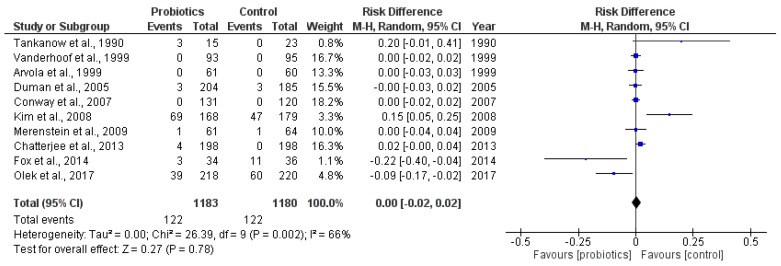
A common adverse effect of antibiotic use is diarrhea. Probiotics are living microorganisms, which, upon oral ingestion, may prevent antibiotic-associated diarrhea (AAD) by the normalization of an unbalanced gastrointestinal flora. The objective of this systematic review was to assess the benefits and harms of probiotics used for the prevention of AAD in an outpatient setting. A search of the PubMed database was conducted and yielded a total of 17 RCTs with 3631 participants to be included in the review. A meta-analysis was conducted for the primary outcome: the incidence of AAD. The pooled results found that AAD was present in 8.0% of the probiotic group compared to 17.7% in the control group (RR 0.49, 95% CI 0.36 to 0.66; I2 = 58%), and the species-specific results were similar regarding the probiotic strains L. rhamnosus GG and S. boulardii. However, the overall quality of the included studies was moderate. A meta-analysis of the ten trials reporting adverse events demonstrated no statistically significant differences in the incidence of adverse events between the intervention and control group (RD 0.00, 95% CI −0.02 to 0.02, 2.363 participants). The results suggests that probiotic use may be beneficial in the prevention of AAD among outpatients. Furthermore, the use of probiotics appears safe.
Overview
The claims and statistics of this paper haven’t been checked yet.
Run the check — free, no account needed. It reads the open-access text and checks the sources it cites.
Integrity signals
Registry
Cites
Statistics
Figures
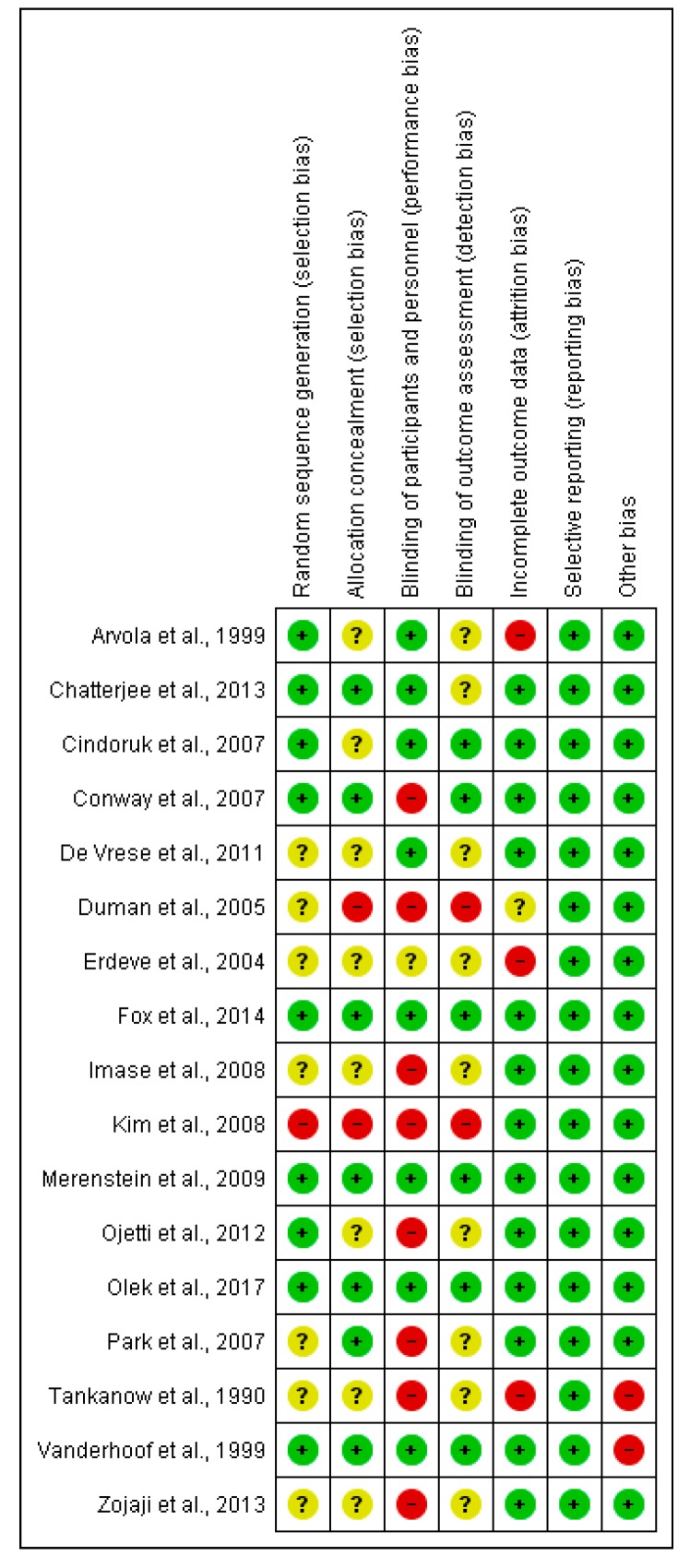
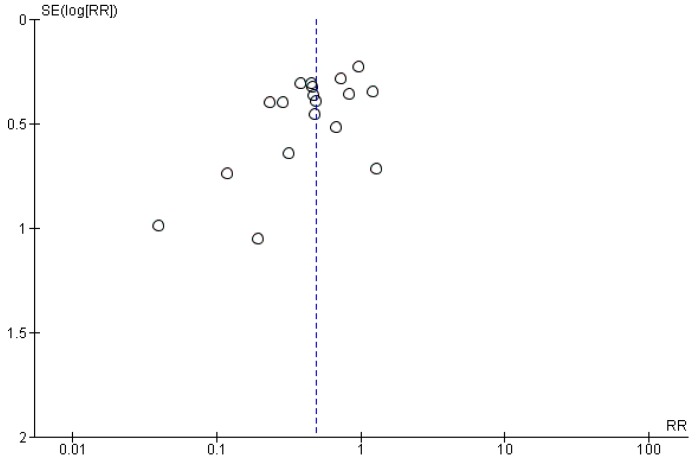
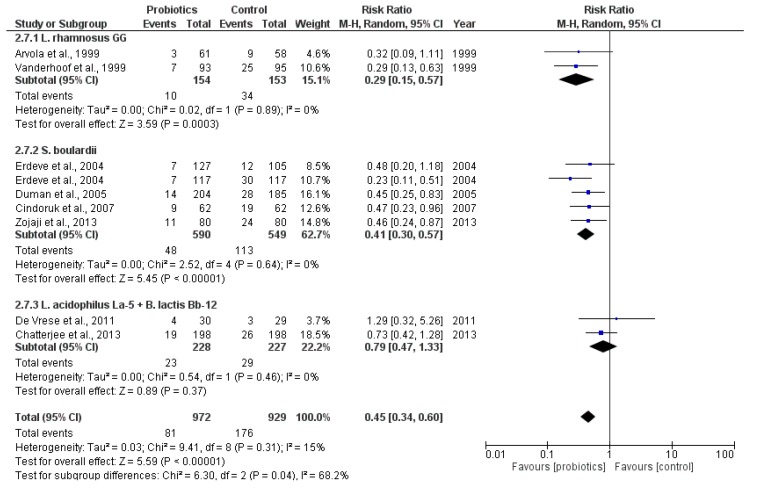
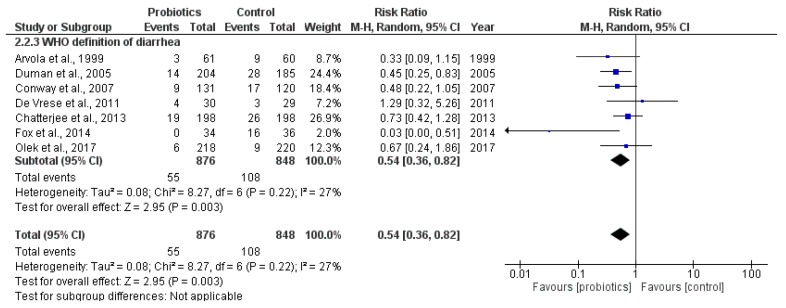
Verification
Claims the paper makes
The claims and statistics of this paper haven’t been checked yet.
Run the check — free, no account needed. It reads the open-access text and checks the sources it cites.
Claims other papers make about this one
Each is checked against this paper’s own text: does it say what the citing paper says it does?
The source backs part of the claim, not all of it — or backs it for a different population, condition or comparison.
In the citing paper
“In addition to modulating the immune system, the positive health effects of taking probiotics include: the improvement of lactose tolerance and digestion [199,205], the prevention and treatment of gastrointestinal infections [206], the prevention of colorectal cancer [203,207], reduction in blood cholesterol levels [208,209,210], and the improvement of mental health via the gut-brain axis [211].”
From Lactic Acid Bacteria in Raw-Milk Cheeses: From Starter Cultures to Probiotic Functions (2022) · cites this paper as [206]
Experimental — accuracy not yet measured
Self-check
Percentages, sums and reported differences re-computed from the paper’s own numbers.
The self-check needs the paper’s full text.
Citations
Cites
Assessing Risk of Bias in Included Studies
Higgins, J. P., & Altman, D. G. (2008) · Cochrane Handbook for Systematic Reviews of Interventions · doi:10.1002/9780470712184.ch8 · Cited by 3,396
Outpatient antibiotic use in Europe and association with resistance: a cross-national database study
Goossens, H., Ferech, M., Vander Stichele, R., & Elseviers, M. (2005) · The Lancet · doi:10.1016/s0140-6736(05)17907-0 · Cited by 3,359 · cited 1×
“The primary care sector is responsible for the bulk of antibiotic consumption in humans [3].”
BackgroundThe Role of Probiotic Cultures in the Control of Gastrointestinal Health
Rolfe, R. D. (2000) · Journal of Nutrition · doi:10.1093/jn/130.2.396s · Cited by 925 · cited 1×
“intestinal health, including the stimulation of immunity, competition for nutrients, the inhibition of the epithelial and mucosal adherence of pathogens, the inhibition of epithelial invasion, and the production of antimicrobial substances [5].”
BackgroundNewberry, S. J. (2012) · JAMA · doi:10.1001/jama.2012.3507 · Cited by 870 · cited 1×
“as a review, including hospitalized patients [26], on the prevention and treatment of AAD regardless of age (RR 0.”
BackgroundProbiotics for the prevention of pediatric antibiotic-associated diarrhea
Goldenberg, J. Z., Lytvyn, L., Steurich, J., Parkin, P. C., Mahant, S., & Johnston, B. C. (2015) · Cochrane Database of Systematic Reviews · doi:10.1002/14651858.cd004827.pub4 · Cited by 635
Lactobacillus GG in the prevention of antibiotic-associated diarrhea in children
Vanderhoof, J. A., Whitney, D. B., Antonson, D. L., Hanner, T. L., Lupo, J. V., & Young, R. J. (1999) · The Journal of Pediatrics · doi:10.1016/s0022-3476(99)70053-3 · Cited by 536 · cited 1×
“, 1999 [8] Lactobacillus rhamnosus GG Children < 12 kg: 1 × 10¹⁰ CFU, once daily Children > 12 kg: 2 × 10¹⁰, once daily 10 days”
Wiström, J. (2001) · Journal of Antimicrobial Chemotherapy · doi:10.1093/jac/47.1.43 · Cited by 455 · cited 1×
“In particular, aminopenicillins, cephalosporins, and clindamycin that act on anaerobes are associated with a high risk of AAD [2].”
BackgroundArvola, T., Laiho, K., Torkkeli, S., Mykkänen, H. M., Salminen, S., Maunula, L., & Isolauri, E. (1999) · PEDIATRICS · doi:10.1542/peds.104.5.e64 · Cited by 426 · cited 1×
“, 1999 [9] Lactobacillus rhamnosus GG 2 × 10¹⁰ CFU, twice daily Seven to 10 days”
Epidemiology, Risk Factors and Treatments for Antibiotic-Associated Diarrhea
McFarland, L. V. (1998) · Digestive Diseases · doi:10.1159/000016879 · Cited by 310 · cited 1×
“Antibiotic-associated diarrhea (AAD) occurs in 5% to 39% of patients, from the beginning and up to two months after the end of treatment [1].”
BackgroundSafety of probiotics used to reduce risk and prevent or treat disease.
(2011) · PubMed Central · Cited by 242
Research works printed but not linked: 2
- WHO (2009). Appendix 1, Definitions of health-care settings and other related terms. Guidelines on Hand Hygiene in Health Care: First Global Patient Safety Challenge Clean Care Is Safer Care, World Health Organization. Available online: https://www.ncbi.nlm.nih.gov/books/NBK144006/.
- (2014). Review Manager (RevMan) [Computer program]. Version 5.3, The Cochrane Collaboration.
Cited by
Sorted by citations
Items 201–207 of 207
Antibiotic course frequency and recovery strategies alter gut microbial composition and metabolism
Abaakil, K., Liu, Z., Wang, M., Kuznecova, E., Sung, M. S. C., Marchesi, J. R., Mausz, M. A., & Li, J. V. (2026) · ISME Communications · doi:10.1093/ismeco/ycag145
Dargenio, V. N., Ricciardi, S., Begucci, M., Grasta, G. L., Maggi, N., Dargenio, C., Castellaneta, S. P., Cristofori, F., & Francavilla, R. (2026) · World Journal of Clinical Pediatrics · doi:10.5409/wjcp.118791
Billateh, A., Cheirsilp, B., & Suyotha, W. (2026) · Food and Bioprocess Technology · doi:10.1007/s11947-026-04470-3
Balboa, M. J., Álvarez, M. N., Porta, M., Ricote, M., Recio, N., Bodas, A., Valenti, M., & Guarner, F. (2026) · Medicina de Familia SEMERGEN · doi:10.1016/j.semerg.2026.102800
Oral antibiotics prescribing patterns and associated diarrhea risk: Public health implications
Naumovska, Z., Atanasovska, E., Djurdjic, B., Mladenovska, K., Ivanovska, T. P., Geškovski, N., Netkovska, К. A., Goračinova, K., Raichki, R. S., Shalabalija, D., et al. (2026) · Journal of Public Health Research · doi:10.1177/22799036261480287
“30 Another meta-analysis of 36 RCTs ( > 9,000 adults) found a 38% reduction in AAD when probiotics were started early during antibiotic therapy, 31 confirmed for older adults when administered within two days of treatment.”
Guo, H., Zhang, C., Wang, R., Yang, Y., Wang, G., Cui, S., Lu, W., Yang, B., Lyu, X., Tian, P., et al. (2026) · Gut Microbes · doi:10.1080/19490976.2026.2728330
“135,136 Several mechanisms have been proposed, including enhancing colonization resistance, 137 attenuating C. difficile virulence, 138 and reducing the ecological space of pathogens following antibiotic-associated dysbiosis.”
Xi, F.-L., Xu, C.-H., Li, P., Zhou, S.-H., Liu, J.-L., Zhou, S.-R., Wang, Y.-J., & Yu, J.-X. (2026) · Frontiers in Nutrition · doi:10.3389/fnut.2026.1994645
Metadata
- Authors
- Blaabjerg, S., Artzi, D., & Aabenhus, R.
- Affiliations
- University of Copenhagen (DK)
- Corresponding author
- Blaabjerg, Sara
- Artzi, Daniel
- Aabenhus, Rune
- ORCID
- Aabenhus, Rune
- Venue
- Antibiotics
- Publisher
- MDPI AG
- Published
- 2017-10-12
- Volume
- 6
- Issue
- 4
- Pages
- 21
- ISSN
- 2079-6382 (ISSN-L)
- PMC
- PMC5745464
- OpenAlex
- W2762238784
- Cited by
- 208
- References
- 29
- Citations by year
- 2026: 17 · 2025: 18 · 2024: 27 · 2023: 24 · 2022: 31 · 2021: 27 · 2020: 32 · 2019: 25 · 2018: 7
- FWCI
- 1.90
- Type
- journal article
- Language
- en
- Open access
- gold
- doi.org
- Licence
- Locations
- Antibiotics (publishedVersion, cc-by)
- PubMed Central (publishedVersion, cc-by)
- PubMed (publishedVersion)
- Research at the University of Copenhagen (University of Copenhagen) (publishedVersion, cc-by)
- DOAJ (DOAJ: Directory of Open Access Journals) (submittedVersion, cc-by-sa)
- Topics
- Life Sciences › Agricultural and Biological Sciences › Food Science › Probiotics and Fermented Foods
- Life Sciences › Biochemistry, Genetics and Molecular Biology › Molecular Biology › Gut microbiota and health
- Health Sciences › Medicine › Gastroenterology › Gastrointestinal motility and disorders
- Keywords
- probiotics, antibiotic-associated diarrhea, diarrhea prevention, outpatients, Lactobacillus rhamnosus GG, Saccharomyces boulardii, adverse events, gut microbiota, antibiotic adverse effects
About these checks
Registry, retraction, Cites and statistics results are computed, not judged, with one exception: a printed reference that no index lists is read once by a model before it counts as a citation error. Claims are extracted by a model and kept only when their quote appears verbatim in the text; each cited source is then checked, with a model’s help, for whether it says what the claim relies on. Those verdicts can be wrong — read the claim’s quote and the cited source before relying on one.
Statistics and arithmetic are recomputed, not judged.
Confidence bands are shown only for fields calibrated on our annotated test set. None is calibrated yet, so no band is shown.
What counts as a claim ›How we measure confidence ›How we check this ›
Are you an author, or do you see a problem with this page? Request a review
