

Automatic Metallic Surface Defect Detection and Recognition with Convolutional Neural Networks
Open accessThe DOI matches its Crossref record; 43 of the 43 references it cites were found in a registry or an index.
Abstract
Automatic metallic surface defect inspection has received increased attention in relation to the quality control of industrial products. Metallic defect detection is usually performed against complex industrial scenarios, presenting an interesting but challenging problem. Traditional methods are based on image processing or shallow machine learning techniques, but these can only detect defects under specific detection conditions, such as obvious defect contours with strong contrast and low noise, at certain scales, or under specific illumination conditions. This paper discusses the automatic detection of metallic defects with a twofold procedure that accurately localizes and classifies defects appearing in input images captured from real industrial environments. A novel cascaded autoencoder (CASAE) architecture is designed for segmenting and localizing defects. The cascading network transforms the input defect image into a pixel-wise prediction mask based on semantic segmentation. The defect regions of segmented results are classified into their specific classes via a compact convolutional neural network (CNN). Metallic defects under various conditions can be successfully detected using an industrial dataset. The experimental results demonstrate that this method meets the robustness and accuracy requirements for metallic defect detection. Meanwhile, it can also be extended to other detection applications.
Overview
The claims and statistics of this paper haven’t been checked yet.
Free: it reads the open-access text and checks the first 5 claims that cite a source we can check. Create a free account to check every claim.
Integrity signals
Registry
Cites
Statistics
Figures
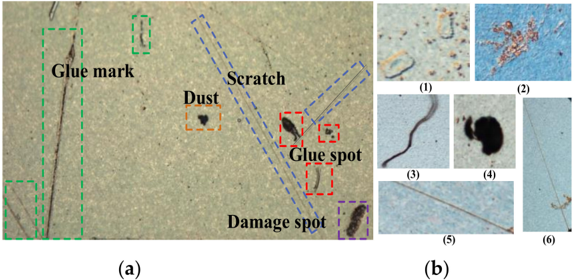
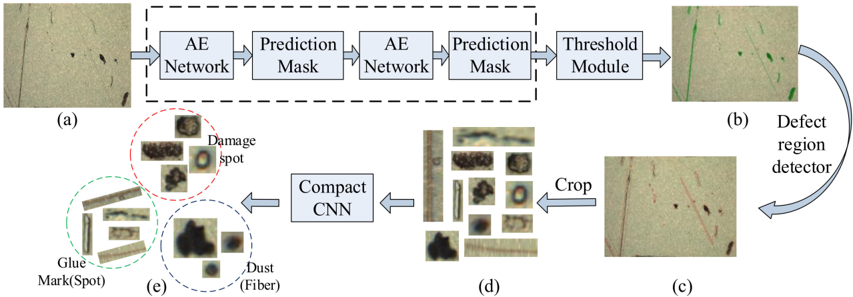
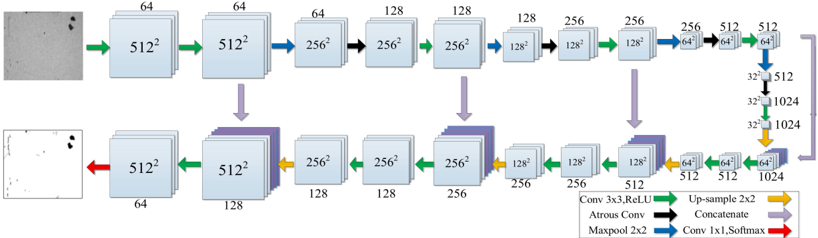
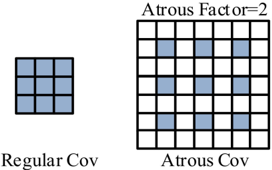

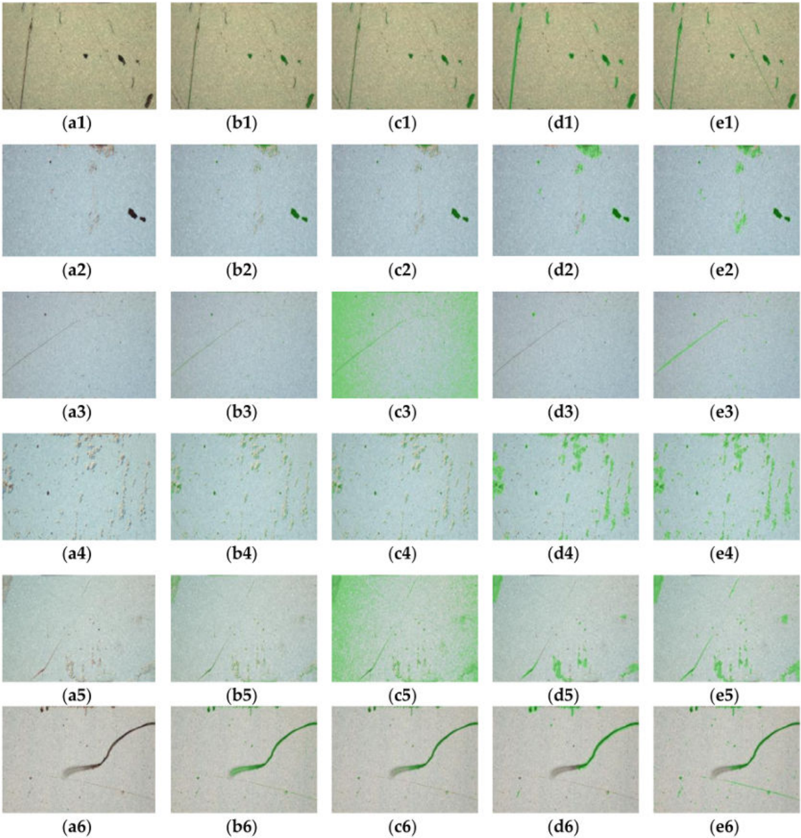
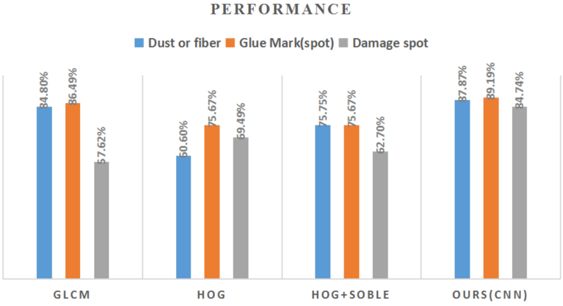
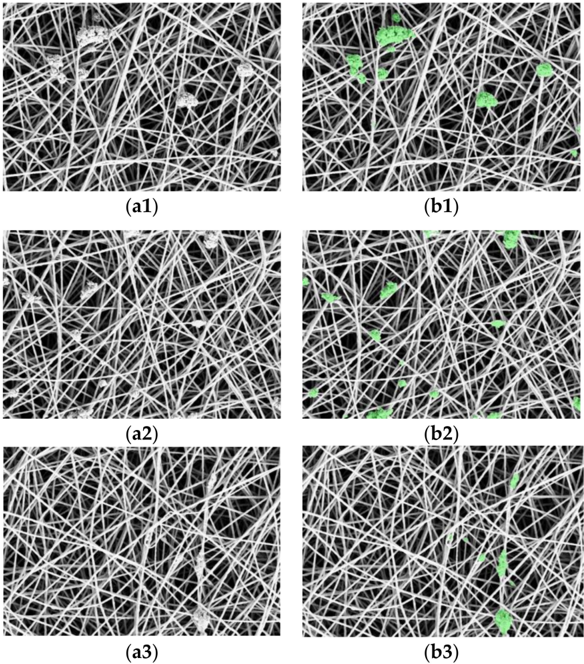
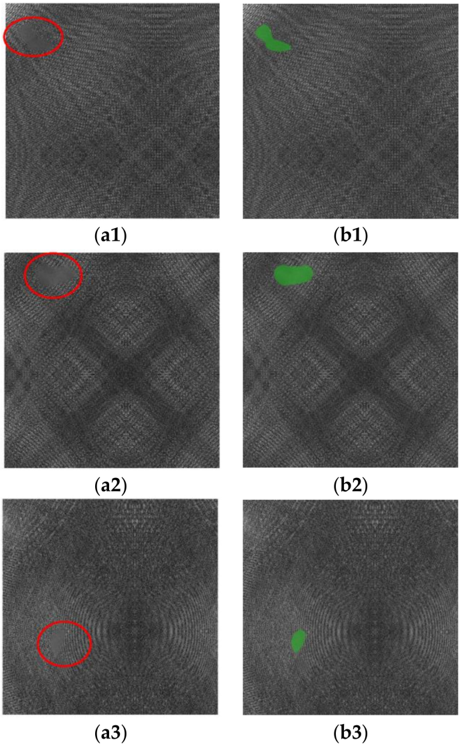
Verification
Claims the paper makes
The claims and statistics of this paper haven’t been checked yet.
Free: it reads the open-access text and checks the first 5 claims that cite a source we can check. Create a free account to check every claim.
Claims other papers make about this one
Each is checked against this paper’s own text: does it say what the citing paper says it does?
The check wasn’t confident either way, so it gives no verdict — never disputed.
In the citing paper
“Be of rotation and gray invariance, fast calculation speed.”
From Automated Visual Defect Classification for Flat Steel Surface: A Survey (2020) · cites this paper as [85]
Experimental — accuracy not yet measuredThe check wasn’t confident either way, so it gives no verdict — never disputed.
In the citing paper
“Sensitive to scale variation and noise interference.”
From Automated Visual Defect Classification for Flat Steel Surface: A Survey (2020) · cites this paper as [85]
Experimental — accuracy not yet measured
Self-check
Percentages, sums and reported differences re-computed from the paper’s own numbers.
The self-check needs the paper’s full text.
Citations
Cites
Deep Residual Learning for Image Recognition
He, K., Zhang, X., Ren, S., & Sun, J. (2016) · 2016 IEEE Conference on Computer Vision and Pattern Recognition (CVPR) · doi:10.1109/cvpr.2016.90 · Cited by 235,474 · cited 1×
“Our proposed CNN is a compact network that is smaller than the classic classification networks such as GoogleNet [41] and ResNet [42].”
MethodVery Deep Convolutional Networks for Large-Scale Image Recognition
Simonyan, K., & Zisserman, A. (2014) · arXiv · doi:10.48550/arxiv.1409.1556 · Cited by 114,148 · cited 1×
“We double the number of features after each max pooling layer in order to reduce the loss of semantic information [38,39].”
Going deeper with convolutions
Szegedy, C., Liu, W., Jia, Y., Sermanet, P., Reed, S., Anguelov, D., Erhan, D., Vanhoucke, V., & Rabinovich, A. (2015) · 2015 IEEE Conference on Computer Vision and Pattern Recognition (CVPR) · doi:10.1109/cvpr.2015.7298594 · Cited by 48,562
TensorFlow: A system for large-scale machine learning
Abadi, M., Barham, P., Chen, J., Chen, Z., Davis, A., Dean, J., Devin, M., Ghemawat, S., Irving, G., Isard, M., et al. (2016) · arXiv (Cornell University) · doi:10.48550/arxiv.1605.08695 · Cited by 11,822
Rethinking Atrous Convolution for Semantic Image Segmentation
Chen, L.-C., Papandreou, G., Schroff, F., & Adam, H. (2017) · arXiv · doi:10.48550/arxiv.1706.05587 · Cited by 7,517 · cited 1×
“In this paper, atrous convolution [40] is unitized to increase the receptive fields of the network for detecting large defects.”
MethodA survey of deep neural network architectures and their applications
Liu, W., Wang, Z., Liu, X., Zeng, N., Liu, Y., & Alsaadi, F. E. (2017) · Neurocomputing · doi:10.1016/j.neucom.2016.12.038 · Cited by 3,239 · cited 1×
“AE networks are widely used for information coding and reconstruction [37].”
BackgroundSelf-citationCha, Y., Choi, W., Suh, G., Mahmoudkhani, S., & Büyüköztürk, O. (2018) · Computer-Aided Civil and Infrastructure Engineering · doi:10.1111/mice.12334 · Cited by 1,558 · cited 1×
“[33] developed a structural damage detection method based on Faster R-CNN to detect five types of surface damages: concrete cracks, steel corrosion (medium and high levels), bolt corrosion, and steel delamination.”
MethodSong, K., & Yan, Y. (2013) · Applied Surface Science · doi:10.1016/j.apsusc.2013.09.002 · Cited by 1,026 · cited 2×
“These machine vision-based inspection systems occur in many industrial applications, such as steel strip inspection [2,3], liquid crystal display (LCD) inspection [4], fabric inspection [5,6], aluminum profiles [7], railway track inspection [8], food inspection [9], and optical components inspection [10].”
BackgroundImage deformation using moving least squares
Schaefer, S., McPhail, T., & Warren, J. (2006) · ACM Transactions on Graphics · doi:10.1145/1141911.1141920 · Cited by 674
Jia, F., Lei, Y., Lu, N., & Xing, S. (2018) · Mechanical Systems and Signal Processing · doi:10.1016/j.ymssp.2018.03.025 · Cited by 587
Research works printed but not linked: 2
- 13. Tastimur, C.; Yetis, H.; Karaköse, M.; Akin, E. Rail defect detection and classification with real time image processing technique. Int. J. Comput. Sci. Softw. Eng. 2016 , 5 , 283.
- 19. Kalaiselvi, T.; Nagaraja, P. A rapid automatic brain tumor detection method for MRI images using modified minimum error thresholding technique. Int. J. Imaging Syst. Technol. 2015 , 1 , 77-85.
Cited by
Items 201–300 of 487
Detection and Classification of Fabric Defects Using Deep Learning Algorithms
Recep Ali, G. E. Z. E., & Akbaş, A. (2024) · Journal of Polytechnic · doi:10.2339/politeknik.1386458 · Cited by 11
Spatially Variant Convolutional Autoencoder Based on Patch Division for Pill Defect Detection
Kim, S., Jo, Y., Cho, J., Song, J., Lee, Y., & Lee, M. (2020) · IEEE Access · doi:10.1109/access.2020.3041790 · Cited by 11
“Recently, some deep learning-based methods have been proposed in various products, such as the detecting defects on fabric, metallic surfaces [19], [34], images and videos [4], [12], [23], [24], [30], [31], [37].”
BackgroundFine-Tuning Convolutional Neural Network Based Railway Damage Detection
Aydın, A., Salur, M. U., & Aydın, İ. (2021) · IEEE EUROCON - International Conference on Computer as a Tool (EUROCON) · doi:10.1109/eurocon52738.2021.9535585 · Cited by 13
Stain Defect Classification by Gabor Filter and Dual-Stream Convolutional Neural Network
Ha, M.-H., Kim, Y.-G., & Park, T.-H. (2023) · Applied Sciences · doi:10.3390/app13074540 · Cited by 11
A Survey of Industrial Surface Defect Detection Based on Deep Learning
Haobo, Y. (2024) · International Conference on Cyber-Physical Social Intelligence (ICCSI) · doi:10.1109/iccsi62669.2024.10799405 · Cited by 10
“Tao et al. [39] designed a cascaded Autoencoder (CASAE) architecture that segments and locates defects, then applying a compact convolutional neural network (CNN) classification on the segmented defect regions.”
Few-shot Steel Surface Defect Detection Based on Meta Learning
Liu, Z., Guo, Z., Li, C., Gao, C., & Huang, N. (2021) · International Conference on Computing and Pattern Recognition (ICCPR) · doi:10.1145/3497623.3497641 · Cited by 10
Toward TR-PCB Bubble Detection via an Efficient Attention Segmentation Network and Dynamic Threshold
Zhou, J., Zhu, Q. X., Wang, Y., Zhou, X., Feng, M., Liu, X., & Mo, Y. (2023) · IEEE Transactions on Instrumentation and Measurement · doi:10.1109/tim.2023.3244806 · Cited by 10
“Tao et al. [16] designed a novel cascaded autoencoder (CASAE) architecture for segmenting and localizing defects.”
BackgroundSelf-citationPrinted circuit board solder joint quality inspection based on lightweight classification network
Zhang, Z., Zhang, W., Zhu, D., Xu, Y., & Zhou, C. (2023) · IET Cyber-Systems and Robotics · doi:10.1049/csy2.12101 · Cited by 12
Metal surface defect detection based on Latitude-Longitude light sources
Li, S., Yan, Z., Li, P., Duan, R., & Xin, T. (2024) · Measurement · doi:10.1016/j.measurement.2024.114315 · Cited by 10
ECM-YOLO: a real-time detection method of steel surface defects based on multiscale convolution
Yan, C., & Xu, E. (2024) · Journal of the Optical Society of America A · doi:10.1364/josaa.533407 · Cited by 10
Detection of Defects on Metal Surfaces Based on Deep Learning
Han, O. C., & Kutbay, U. (2025) · Applied Sciences · doi:10.3390/app15031406 · Cited by 11
Defect Detection of Grinded and Polished Workpieces Using Faster R-CNN
Liu, M., Lin, Y., Lo, Y.-C., Shih, C.-H., & Lin, P. (2021) · IEEE/ASME International Conference on Advanced Intelligent Mechatronics · doi:10.1109/aim46487.2021.9517664 · Cited by 10
“Tao et al. [11] conducted a pixel-wise prediction mask with the auto-encoder architecture, transforming the defect inspection into a semantic segmentation problem.”
MethodSemwal, A., Elara, M. R., Melvin, L. M. J., Palanisamy, P. A., Baskar, C., Yi, L., Pookkuttath, S., & Ramalingam, B. (2021) · Sensors · doi:10.3390/s22010262 · Cited by 10
“(in [19]) presented automatic metallic surface defect detection and recognition using a CNN.”
MethodPei, Y., Hou, M., Han, Q., Weng, T., Tian, Y., Chen, G., Liu, J., & Chen Xi, W. U. (2022) · Computational Intelligence and Neuroscience · doi:10.1155/2022/7539857 · Cited by 10
Assessment of milling condition by image processing of the produced surfaces
Carbone, N., Bernini, L., Albertelli, P., & Monno, M. (2022) · The International Journal of Advanced Manufacturing Technology · doi:10.1007/s00170-022-10516-5 · Cited by 11
“GLCM was introduced by Haralick et al. [6] and was widely used in many image classification and analysis problems, while being selected as a benchmark for deep learning algorithms for performance evaluation [9, 12, 13].”
MethodWibowo, A., Setiawan, J. D., Afrisal, H., Mahachandra, M., Santosa, S. P., Wisnu, K. B., Mardiyoto, A., Nurrakhman, H., Kartiwa, B., & Caesarendra, W. (2023) · Applied System Innovation · doi:10.3390/asi6010025 · Cited by 10
Kofler, C., Muhr, R., & Spöck, G. (2019) · Sensors · doi:10.3390/s19092056 · Cited by 12
Research on Classification of Surface Defects of Hot-rolled Steel Strip Based on Deep Learning
Chao, W. A. N. G., Liu, Y., Yang, Y., Xu, X., & Zhang, T. (2019) · DEStech Transactions on Computer Science and Engineering · doi:10.12783/dtcse/ica2019/30756 · Cited by 10
“The deep learning model used in the experiment is Convolutional Neural Networks(CNN) model [8].”
MethodMonsone, C. R., & Csapó, Á. (2019) · IEEE International Conference on Cognitive Infocommunications · doi:10.1109/coginfocom47531.2019.9089932 · Cited by 12
Luo, Y., Mei, Z., Qiao, Y., & Chen, Y. (2025) · Applied Intelligence · doi:10.1007/s10489-024-06122-5 · Cited by 9
Automatic Unsupervised Fabric Defect Detection Based on Self-Feature Comparison
Peng, Z., Gong, X., Wei, B., Xu, X., & Meng, S. (2021) · Electronics · doi:10.3390/electronics10212652 · Cited by 11
Le, M., Le, D. V., Le, T. D., & Lee, J. (2023) · Science Progress · doi:10.1177/00368504231177551 · Cited by 9
Investigating Shift Equivalence of Convolutional Neural Networks in Industrial Defect Segmentation
Qu, Z., Tao, X., Shen, F., Zhang, Z.-T., & Li, T. (2023) · IEEE Transactions on Instrumentation and Measurement · doi:10.1109/tim.2023.3325514 · Cited by 13
“V ISUAL inspection methods based on convolutional neural networks (CNNs) have attracted considerable interest in recent years for industrial quality control of diverse scenes, such as steel surfaces [1], printed circuit boards [2], rail surfaces [3], textured fabrics [4], and many others.”
MethodSelf-citationBai, X., Wang, H., Xu, B., Shao, F., & Ma, J. (2024) · Measurement · doi:10.1016/j.measurement.2024.116450 · Cited by 9
Moshayedi, A. J., Khan, A. S., Khan, Z. H., & Zhang, X. (2025) · Springer eBooks · doi:10.1007/978-3-031-78038-7_3 · Cited by 11
Label recognition on metal surfaces in semiconductor industry by YOLO object detection model
Yeh, W., Liao, S.-Y., & Huang, C. (2025) · The International Journal of Advanced Manufacturing Technology · doi:10.1007/s00170-025-15489-9 · Cited by 9
“Previous research has proposed the use of convolutional neural networks to automatically detect and identify defects on metal surfaces [6].”
Unsupervised defect inspection algorithm based on cascaded GAN with edge repair feature fusion
He, L., Shi, N., Malik, K., & Li, F. (2021) · Applied Intelligence · doi:10.1007/s10489-021-02556-3 · Cited by 11
A Semi-Supervised Deep Learning Approach for the Classification of Steel Surface Defects
Mayuravaani, M., & Manivannan, S. (2021) · International Conference on Information and Automation for Sustainability (ICIAfS) · doi:10.1109/iciafs52090.2021.9606143 · Cited by 9
Automating Visual Inspection with Convolutional Neural Networks
Das, S., Hollander, C. D., & Suliman, S. (2019) · Annual Conference of the PHM Society · doi:10.36001/phmconf.2019.v11i1.868 · Cited by 11
“(2018) and Tao, Xian, et. al.”
A Novel Inspection System For Variable Data Printing Using Deep Learning
Haik, O., Perry, O., Chen, E., & Klammer, P. (2020) · IEEE Winter Conference on Applications of Computer Vision · doi:10.1109/wacv45572.2020.9093396 · Cited by 9
AI Landing for Sheet Metal-Based Drawer Box Defect Detection Using Deep Learning (ALDB-DL)
Sheu, R., Chen, L.-C., Pardeshi, M. S., Pai, K.-C., & Chen, C.-Y. (2021) · Processes · doi:10.3390/pr9050768 · Cited by 10
Towards an Efficient Semantic Segmentation Method of ID Cards for Verification SystemsPreprint
Lara, R., Valenzuela, A., Schulz, D., Tapia, J. E., & Busch, C. (2021) · arXiv (Cornell University) · doi:10.48550/arxiv.2111.12764 · Cited by 14
“…instance segmentation [12], panoptic segmentation [13], and semantic segmentation, which have been used in many real-world applications, such as self-driving vehicles [14], [15], [16], [17], [18], pedestrian detection [19], [20], [21], scene understanding [22], defect detection [23], [24], etc.”
Abdelal, G. F., Chan, C.-W., & McLoone, S. (2026) · Applied Sciences · doi:10.3390/app16020975 · Cited by 8
Dual-path segmentation network for automatic fabric defect detection
Yu, Z., Xu, Y., Wang, Y., Sheng, X., & Xie, G. (2023) · Textile Research Journal · doi:10.1177/00405175231192057 · Cited by 9
“Tao et al. 39 achieved defect segmentation using a cascaded self-encoder structure.”
MethodComputer-Aided Visual Inspection of Glass-Coated Tableware Ceramics for Multi-Class Defect Detection
Carvalho, R., Morgado, A. C., Gonçalves, J., Kumar, A., Rolo, A. G. E. S., Carreira, R. S., & Soares, F. (2023) · Applied Sciences · doi:10.3390/app132111708 · Cited by 8
“Tao et al. [6] designed a cascaded autoencoder (CASAE) for the segmentation and classification of metallic defects.”
A novel method for necking detection and measurement in automotive sheet metal components
Li, S., Wang, H., Zhang, Y., Zhou, Y., & Liu, C. (2024) · Measurement Science and Technology · doi:10.1088/1361-6501/ad1fce · Cited by 8
Density-Aware U-Net for Unstructured Environment Dust Segmentation
Fu, Y., Gao, M., Xie, G., Hu, M., Wei, C., & Ding, R. (2024) · IEEE Sensors Journal · doi:10.1109/jsen.2024.3355388 · Cited by 8
“S INCE semantic segmentation provides category information at the pixel level, many real-world tasks are realized with the benefit of this, such as autonomous driving [1], [2], biology [3], medicine [4], [5], and defect detection [6].”
BackgroundDeflectometric data segmentation based on fully convolutional neural networks
Maestro-Watson, D., Balzategui, J., Eciolaza, L., & Arana-Arexolaleiba, N. (2019) · International Conference on Quality Control by Artificial Vision (QCAV) · doi:10.1117/12.2521740 · Cited by 9
Borwankar, R. M., & Ludwig, R. (2020) · IEEE Transactions on Instrumentation and Measurement · doi:10.1109/tim.2020.2990541 · Cited by 8
“Along similar lines, Xian et al. [26] have formulated a twofold procedure that consists of a cascaded autoencoder for fault localization and a CNN for fault classification.”
MethodLightweight detection algorithm for fine-grained surface defects of aerospace seal rings
Liu, H., He, B., He, Y. Q., & Tao, X. (2021) · Journal of Intelligent & Fuzzy Systems · doi:10.3233/jifs-202614 · Cited by 8
Self-citationThe Defects Detection in Steel Coil End Face Based on SCED-Net
Li, Y., Lin, S., Liu, C., & Kong, Q. (2022) · International Joint Conference on Neural Networks (IJCNN) · doi:10.1109/ijcnn55064.2022.9892172 · Cited by 8
“Additionally, neural network algorithms have proven their advantages and advancements in many fields such as image classification [4], defect detection [5] and defect segmentation [6].”
Textile Defect Classification Based on Convolutional Neural Network and SVM
Qiu, J., Hu, Y., Cui, J., Lian, J., Liu, X., & Ye, J. (2021) · AATCC Journal of Research · doi:10.14504/ajr.8.s1.10 · Cited by 8
Self-citationDefect inspection in semiconductor images using FAST-MCD method and neural network
Yu, J., Han, S., & Lee, C.-O. (2023) · The International Journal of Advanced Manufacturing Technology · doi:10.1007/s00170-023-12287-z · Cited by 8
“We show the input images, ground truths, results of our method, neural network-1 [55], neural network-2 [57], and self-similarity method [9] in order from left to right column.”
MethodLiu, Z., Guo, Z., Li, C., Huang, N., & Gao, C. (2023) · IET Image Processing · doi:10.1049/ipr2.12935 · Cited by 10
An Improved Mask R-CNN for Instance Segmentation of Tree Crowns in Aerial Imagery
Sun, Z., Xue, B., Zhang, M., & Schindler, J. (2023) · International Conference on Image and Vision Computing New Zealand (IVCNZ) · doi:10.1109/ivcnz61134.2023.10343827 · Cited by 8
“It plays an important role in a broad range of application fields: autonomous driving [1], industrial defect detection [2], medical image analysis [3], and agriculture [4].”
BackgroundHybrid Learning Driven by Dynamic Descriptors for Video Classification of Reflective Surfaces
Fantinel, R., Cenedese, A., & Fadel, G. (2021) · IEEE Transactions on Industrial Informatics · doi:10.1109/tii.2021.3062619 · Cited by 8
Wang, Y., Huang, L. H., & Yee, A. L. (2022) · The Journal of Supercomputing · doi:10.1007/s11227-022-04439-x · Cited by 8
An Image-Based Data-Driven Model for Texture Inspection of Ground Workpieces
Wang, Y.-H., Lai, J.-Y., Lo, Y.-C., Shih, C.-H., & Lin, P. (2022) · Sensors · doi:10.3390/s22145192 · Cited by 8
“[17] showed a novel CNN-based architecture that could be utilized in both defect detection and classification tasks for a metallic surface against complex industrial scenarios.”
BackgroundXiang, S., Liang, D., Kaneko, S., & Asano, H. (2020) · IET Image Processing · doi:10.1049/iet-ipr.2019.0724 · Cited by 8
Defect Detection of Metal Nuts Applying Convolutional Neural Networks
Sauter, D., Schmitz, A., Dikici, F., Baumgartl, H., & Buettner, R. (2021) · IEEE Annual International Computer Software and Applications Conference (COMPSAC) · doi:10.1109/compsac51774.2021.00043 · Cited by 9
Visual defect recognition with stationary wavelet transform based neural networks
Cui, Q., Li, Y., Bian, H., Kong, J., & Dong, Y. (2024) · Digital Signal Processing · doi:10.1016/j.dsp.2024.104947 · Cited by 7
Real-Time Detection of Hole-Type Defects on Industrial Components Using Raspberry Pi 5
Deniz, M., Böğrekçi, İ., & Demircioğlu, P. (2025) · Applied System Innovation · doi:10.3390/asi8040089 · Cited by 7
“In broader industrial contexts, CNNs have been successfully deployed for detecting metallic surface defects, as illustrated by Tao et al. [12].”
Surface Defect Detection using Hierarchical Features
Xiao, L., Huang, T., Wu, B., Hu, Y., & Zhou, J. (2019) · IEEE International Conference on Automation Science and Engineering (CASE) · doi:10.1109/coase.2019.8843235 · Cited by 7
“Tao et al. [19] designed a novel cascaded auto-encoder architecture for segmenting and localizing metallic surface defect.”
BackgroundContamination classification for pellet quality inspection using deep learning
Peng, Y., Braun, B., McAlpin, C. R., Broadway, M., Colegrove, B. T., & Chiang, L. H. (2022) · Computers & Chemical Engineering · doi:10.1016/j.compchemeng.2022.107836 · Cited by 7
A Four-Stage Product Appearance Defect Detection Method With Small Samples
Xie, X., Zhang, R., Peng, L., & Peng, S. (2022) · IEEE Access · doi:10.1109/access.2022.3196935 · Cited by 7
Nguyen, T. P. Q. (2023) · Advances in Production Engineering & Management · doi:10.14743/apem2023.2.470 · Cited by 8
“The classification algorithm employed decision trees [18], artificial neural networks (ANN) [19], -nearest neighbor ( KNN) [20], and support vector machine (SVM) [21].”
MethodEfficient Net-Based Deep Learning for Visual Fault Detection in Solar Photovoltaic Modules
Priyadarshini, R., Manoharan, P. S., & Roomi, S. M. M. (2024) · Tehnicki vjesnik - Technical Gazette · doi:10.17559/tv-20240217001329 · Cited by 7
Tsai, C., & Chen, H. (2020) · Sensors · doi:10.3390/s20164356 · Cited by 7
“[13] designed a novel CAScaded Auto-Encoder (CASAE) architecture, which is capable of segmenting and classifying defect regions through a CNN model.”
MethodSemiautomatic Mask Generating for Electronics Component Inspection
Wu, H., Gao, W., Xu, X., & Xu, S. (2020) · IEEE Transactions on Components Packaging and Manufacturing Technology · doi:10.1109/tcpmt.2020.3033837 · Cited by 7
“These methods can be divided into traditional image processing methods, machine learning methods, and deep learning methods [5].”
MethodIndustrial object detection method based on improved CenterNet
Tang, C., Wu, Z., Wang, S., Deng, C., & Luo, L. (2021) · International Conference on Computer Engineering and Artificial Intelligence (ICCEAI) · doi:10.1109/icceai52939.2021.00023 · Cited by 7
Classification using a three-dimensional sensor in a structured industrial environment
Mikhailov, I. A., Jovančević, I., Mokhtari, N. I., & Orteu, J. (2020) · Journal of Electronic Imaging · doi:10.1117/1.jei.29.4.041008 · Cited by 7
Xie, J., Zhang, J., Liang, F., Yang, Y., Xu, X., & Dong, J. (2020) · Discrete Dynamics in Nature and Society · doi:10.1155/2020/4565769 · Cited by 7
“[19] classified the detected metal defects through a compact CNN, which satisfies the robustness and accuracy of detection.”
BackgroundKır, H., Adar, N. G., & Yazar, M. M. (2024) · Iranian Journal of Science and Technology Transactions of Electrical Engineering · doi:10.1007/s40998-024-00768-0 · Cited by 6
“Furthermore, deep learning and image processing algorithms find various application areas, including but not limited to face recognition (Tao et al. 2018; Du 2021; Garcia et al. 2021), object detection (Wu et al. 2023; Liu et al. 2023; Aliser and Duranay 2024), agricultural product quality control…”
Weakly Supervised Complex Texture Defect Detection Based on Nested U-Net Architecture
Huang, K., Zeng, Y., Zhao, J., Chai, S., & Yang, F. (2025) · Journal of Nondestructive Evaluation · doi:10.1007/s10921-025-01161-5 · Cited by 7
“Tao et al. [28] proposed a method for texture surface defect segmentation and location based on cascaded autoencoder structures.”
ROBUST DETECTION OF SURFACE ANOMALY USING LIDAR POINT CLOUD WITH INTENSITY
Ono, Y., Tsuji, A., Abe, J. W., Noguchi, H., & Abe, J. W. (2020) · The international archives of the photogrammetry, remote sensing and spatial information sciences/International archives of the photogrammetry, remote sensing and spatial information sciences · doi:10.5194/isprs-archives-xliii-b2-2020-1129-2020 · Cited by 6
“RELATED WORKS Examples of automatic corrosion detection using an RGB image include sophisticated methods that apply texture analysis, such as (Acosta, 2014) and (Medeiros, 2010), or deep learning, such as (Cha, 2018) and (Tao, 2018).”
MethodLi, J., Lu, Y., Shen, N., Pu, J., & Ma, Z. (2022) · The International Journal of Advanced Manufacturing Technology · doi:10.1007/s00170-022-09113-3 · Cited by 6
Saliency detection for surface defects of ceramic tile
Zhang, H., Peng, L., & Lei, G. (2022) · Ceramics International · doi:10.1016/j.ceramint.2022.07.151 · Cited by 6
Reduced Training Data for Laser Ultrasound Signal Interpretation by Neural Networks
Rus, J., & Fleury, R. (2024) · Journal of Nondestructive Evaluation · doi:10.1007/s10921-024-01090-9 · Cited by 7
“…and Micro Engineering, Laboratory of Wave Engineering, Ecole Polytechnique Fédérale de Lausanne (EPFL), Station 11, 1015 Lausanne, Switzerland implementing image recognition algorithms for visual detection and classification of surface damages [7–9] and analysis of radiography images [10, 11]?”
A Lightweight Fully Convolutional Neural Network of High Accuracy Surface Defect Detection
Li, Y., Chen, Y., Gu, Y., Ouyang, J., Wang, J., & Zeng, N. (2020) · Lecture notes in computer science · doi:10.1007/978-3-030-61616-8_2 · Cited by 8
An Improved YOLOv5-based Method for Surface Defect Detection of Steel Plate
Zhu, L., Zhang, J., & Jia, C. (2022) · 2022 China Automation Congress (CAC) · doi:10.1109/cac57257.2022.10055055 · Cited by 6
DeFRCN-MAM: DeFRCN and multi-scale attention mechanism-based industrial defect detection method
Zheng, T., Sa, L., Yu, C., & Song, A. (2024) · Applied Artificial Intelligence · doi:10.1080/08839514.2024.2349981 · Cited by 7
“For example, Tao et al. provide a cascaded autoencoder for segmenting and localizing defects, which can adapt to various conditions (Tao et al. 2018).”
Automated vision system for crankshaft inspection using deep learning approaches
Tout, K., Bouabdellah, M., Cudel, C., & Urban, J.-P. (2019) · International Conference on Quality Control by Artificial Vision (QCAV) · doi:10.1117/12.2521751 · Cited by 6
“In many cases, these methods proved to be more efficient than traditional image processing methods in terms of adaptability and robustness to variations in the imaged scene.(7) This paper reviews the various approaches of defect detection with CNNs, and presents the advantages and weaknesses of each approach for real-…”
Maestro-Watson, D., Balzategui, J., Eciolaza, L., & Arana-Arexolaleiba, N. (2020) · Journal of Electronic Imaging · doi:10.1117/1.jei.29.4.041007 · Cited by 7
Yang, T., Zhang, T., & Huang, L. (2020) · The Visual Computer · doi:10.1007/s00371-020-01901-w · Cited by 6
“Tao et al. [28] designed an automatic metal-surface defect detection system with inspection and classification modules that uses a cascaded automatic encoding structure for the location segmentation of defects and then exports the semantically segmented images into a CNN with five convolutional…”
Klarák, J., Chen, L., Cikalova, U., Malík, P., Andok, R., & Bendjus, B. (2025) · Advances in Science and Technology – Research Journal · doi:10.12913/22998624/200823 · Cited by 5
LSDF-Net: An efficient lightweight defect detection method for ultrasonic welding surfaces
Zhang, S., Jin, X., Lou, Z., Wang, S., Lu, S., & He, Y. (2025) · Journal of Advanced Joining Processes · doi:10.1016/j.jajp.2025.100339 · Cited by 5
Surface Defect Detection Based on ResNet Classification Network with GAN Optimized
Fu, H., Zhou, Z., Zeng, Z., Sang, T., Zhu, Y., & Zheng, X. (2022) · IEEE Smart World Congress (SWC) · doi:10.1109/smartworld-uic-atc-scalcom-digitaltwin-pricomp-metaverse56740.2022.00225 · Cited by 5
“As for manufacturers, a lot of efforts have been made to inspect surface defects and control to control the quality of products [1].”
BackgroundBilal, M., Podishetti, R., Koval, L., Gaafar, M., Großmann, D., & Bregulla, M. (2024) · IEEE Access · doi:10.1109/access.2024.3454692 · Cited by 5
“DCNNs have been effectively used for image analysis in optical quality control [40] and in defect detection [41], [42], with a particular focus on metallic surfaces and steel, respectively.”
MethodDefect attention-based lightweight real-time adaptable surface defect analysis
Delibaşoğlu, İ., DAŞ, D. B., & Daş, O. (2025) · Ironmaking & Steelmaking Processes Products and Applications · doi:10.1177/03019233241296959 · Cited by 7
“Tao et al. utilized a cascaded autoencoder (CASAE) to segment and localize the surface damages of a flat metal component [35].”
Selective Search Based Gabor Wavelet for Fabric Defect Prediction Using Enhanced R-CNN
Dasari, Y., Chebrolu, V. K., Vardhan, M. H., Kondru, S., & Pilli, V. R. (2025) · SN Computer Science · doi:10.1007/s42979-025-03857-x · Cited by 5
“The experiment revealed that the Gabor filter approach was more accurate than the method without it, as were the single-stream structure in the MT dataset and the dual stream structure in the CCM dataset [14, 28].”
Material Characterization of Aluminum Castings Using Machine Learning Techniques
Akbari, M., Wang, L., & Wang, Q. G. (2025) · International Journal of Metalcasting · doi:10.1007/s40962-025-01672-x · Cited by 5
An Image Quality Assessment Method for Surface Defect Inspection
Lin, H.-I., & Lin, P.-Y. (2020) · IEEE International Conference on Artificial Intelligence Testing (AITest) · doi:10.1109/aitest49225.2020.00008 · Cited by 6
“In recent years, methods directly recognizing and locating defects have been proposed, such as AE (Autoencoder) [10], FCN (Fully Convolutional Networks) [11], [12], etc.”
MethodLi, C., Cui, G., Zhang, W., Chen, S., & Yang, Y. (2021) · AIP Advances · doi:10.1063/5.0053851 · Cited by 5
Convolutional Neural Networks for Structural Damage Identification in Assembled Buildings
You, C., Liu, W., & Hou, L. (2022) · Mathematical Problems in Engineering · doi:10.1155/2022/2326903 · Cited by 5
“)is will provide the basic basis for the government to make scientific and effective regulation [5].”
BackgroundCR-SPADet: Towards high level automatic surface defect inspection for aerospace sealing rings
Liu, H., He, B., & He, Y. Q. (2022) · Measurement · doi:10.1016/j.measurement.2022.111752 · Cited by 6
Image Warping and Its Application for Data Augmentation when Training Deep Neural Networks
Сирота, А. А., Akimov, A., & Отырба, Р. Р. (2024) · Informatics and Automation · doi:10.15622/ia.23.2.4 · Cited by 5
Konovalenko, І. V., & Maruschak, P. O. (2021) · Materials Science · doi:10.1007/s11003-021-00495-5 · Cited by 5
“The methods based on the use of neural networks are more stable than the other statistical approaches applied for the recognition of images in the presence of noise [12, 13].”
MethodAlgorithm of Computer Mainboard Quality Detection for Real-Time Based on QD-YOLO
Tu, G., Qin, J., & Xiong, N. N. (2022) · Electronics · doi:10.3390/electronics11152424 · Cited by 5
“used CNNs to detect and classify defects on metal surfaces in complex industrial scenarios [14].”
MethodZhu, L., Zhang, J., Li, Y., Xu, X., Li, Y., Zhao, C., & Wang, W. (2022) · China Automation Congress (CAC) · doi:10.1109/cac57257.2022.10055281 · Cited by 5
“[2] first performed 0-1 classification to determine whether features belong to defective or non-defective classes, then find defective regions based on defective class features, and finally perform different classification methods to determine specific defective classes.”
MethodAn industrial defect detection algorithm based on CPU-GPU parallel call
Zhu, L., Lin, H.-W., Liu, Y., Chen, C., & Xia, Y.-F. (2023) · Multimedia Tools and Applications · doi:10.1007/s11042-023-15613-5 · Cited by 5
“Since the workpiece surface is complex, and since accurately realizing the workpiece defect part’s segmentation via the traditional machine vision algorithm is difficult, the deep learning technology is generally used for the workpiece defect segmentation [25].”
MethodX-Enhanced ULite: Improving semantic segmentation for surface defects
Rao, Q., Shi, Z., & Ji, J. (2025) · Digital Signal Processing · doi:10.1016/j.dsp.2025.105635 · Cited by 5
Sun, A., & Mao, Z. J. (2026) · Journal of Intelligent Manufacturing · doi:10.1007/s10845-026-02801-x · Cited by 4
Metal Defect Detection Models Fused EfficientNet and Involution
Wang, P., Li, S., Wang, W., Tang, K., & Chen, F. (2024) · Journal of Sensors · doi:10.1155/js/6074853 · Cited by 4
PUNet: Printed Fabric Defect Segmentation Method Based on UNet
Tang, J., Zhang, H., Su, Z., Jiang, M., Li, P., & Jing, J. (2025) · IEEE Transactions on Instrumentation and Measurement · doi:10.1109/tim.2025.3550640 · Cited by 5
“Most of the surface defect detection methods [5], [6], [7], [8], [9] can achieve a good defect segmentation, but most of the methods are limited to simple or have a certain law of the background texture, it cannot deal with well for the background texture defects more complex printing fabric…”
UAV image defect detection method for steel structure of high-speed railway bridge girder
Mu, Z., Qin, Y., Yu, C., Yang, H., & Qiu, N. (2022) · Global Reliability and Prognostics and Health Management Conference (PHM) · doi:10.1109/phm-yantai55411.2022.9942099 · Cited by 4
Surface defect detection using deep learning
Piwal, H., Dhokale, M., Biswas, R., Raut, S., & Malge, A. (2023) · AIP conference proceedings · doi:10.1063/5.0129207 · Cited by 4
Morales-Cervantes, A., Chávez-Campos, G. M., Vergara–Hernández, H. J., Flores, J. J., & Guevara, E. (2023) · JOM · doi:10.1007/s11837-023-06212-8 · Cited by 4
DDU-Net: A Domain Decomposition-Based CNN for High-Resolution Image Segmentation on Multiple GPUs
Verburg, C., Heinlein, A., & Cyr, E. C. (2025) · IEEE Access · doi:10.1109/access.2025.3561033 · Cited by 4
“Ultra-high-resolution image segmentation holds significance in diverse fields such as object segmentation in satellite images [2], [3], metallic surface defect detection [4], [5], and computer-aided medical diagnosis [6], [7].”
Bayesian deep learning: A model-based interpretable approach
Matsubara, T. (2019) · Nonlinear Theory and Its Applications IEICE · doi:10.1587/nolta.11.16 · Cited by 4
Defect Detection for Mechanical Design Products with Faster R-CNN Network
Liu, P., Su, S., Gao, X., Zheng, H., & Ma, Z. (2022) · Mathematical Problems in Engineering · doi:10.1155/2022/3209721 · Cited by 4
Metadata
- Authors
- Tao, X., Zhang, D., Ma, W., Liu, X., & Xu, D.
- Affiliations
- Chinese Academy of Sciences (CN)
- China University of Mining and Technology - Beijing (CN)
- Corresponding author
- Tao, Xian
- Venue
- Applied Sciences
- Publisher
- MDPI AG
- Published
- 2018-09-06
- Volume
- 8
- Issue
- 9
- Pages
- 1575
- ISSN
- 2076-3417 (ISSN-L)
- OpenAlex
- W2890747436
- Semantic Scholar
- 10447a2738ff7ac47f8d93c85222ee737412cf53
- Cited by
- 471
- References
- 43
- Citations by year
- 2026: 29 · 2025: 42 · 2024: 60 · 2023: 94 · 2022: 72 · 2021: 82 · 2020: 58 · 2019: 32 · 2018: 2
- FWCI
- 36.08
- Type
- journal article
- Language
- en
- Open access
- gold
- dx.doi.org
- Licence
- Locations
- Applied Sciences (publishedVersion, cc-by)
- ELARTU (Ternopil National Technical University) (submittedVersion)
- DOAJ (DOAJ: Directory of Open Access Journals) (submittedVersion, cc-by-sa)
- Funders
- National Natural Science Foundation of China (61703399, 61503376, 61673383)
- Topics
- Physical Sciences › Engineering › Industrial and Manufacturing Engineering › Industrial Vision Systems and Defect Detection
- Physical Sciences › Engineering › Mechanical Engineering › Non-Destructive Testing Techniques
- Physical Sciences › Engineering › Civil and Structural Engineering › Infrastructure Maintenance and Monitoring
- Keywords
- defect localization, defect classification, semantic segmentation, convolutional neural networks, manufacturing quality control, industrial inspection
About these checks
Registry, retraction, Cites and statistics results are computed, not judged, with one exception: a printed reference that no index lists is read once by a model before it counts as a citation error. Claims are extracted by a model and kept only when their quote appears verbatim in the text; each cited source is then checked, with a model’s help, for whether it says what the claim relies on. Those verdicts can be wrong — read the claim’s quote and the cited source before relying on one.
Statistics and arithmetic are recomputed, not judged.
Confidence bands are shown only for fields calibrated on our annotated test set. None is calibrated yet, so no band is shown.
What counts as a claim ›How we measure confidence ›How we check this ›
Are you an author, or do you see a problem with this page? Request a review
Data sources
Bibliographic data: Semantic Scholar, OpenAlex, Crossref.
Contains information from the Semantic Scholar Academic Graph Datasets, made available under the ODC Attribution License (ODC-BY 1.0).
Semantic Scholar’s data is described in: Kinney, R., et al. (2023). The Semantic Scholar Open Data Platform. arXiv:2301.10140.
