

Automatic Metallic Surface Defect Detection and Recognition with Convolutional Neural Networks
Open accessThe DOI matches its Crossref record; 43 of the 43 references it cites were found in a registry or an index.
Abstract
Automatic metallic surface defect inspection has received increased attention in relation to the quality control of industrial products. Metallic defect detection is usually performed against complex industrial scenarios, presenting an interesting but challenging problem. Traditional methods are based on image processing or shallow machine learning techniques, but these can only detect defects under specific detection conditions, such as obvious defect contours with strong contrast and low noise, at certain scales, or under specific illumination conditions. This paper discusses the automatic detection of metallic defects with a twofold procedure that accurately localizes and classifies defects appearing in input images captured from real industrial environments. A novel cascaded autoencoder (CASAE) architecture is designed for segmenting and localizing defects. The cascading network transforms the input defect image into a pixel-wise prediction mask based on semantic segmentation. The defect regions of segmented results are classified into their specific classes via a compact convolutional neural network (CNN). Metallic defects under various conditions can be successfully detected using an industrial dataset. The experimental results demonstrate that this method meets the robustness and accuracy requirements for metallic defect detection. Meanwhile, it can also be extended to other detection applications.
Overview
The claims and statistics of this paper haven’t been checked yet.
Free: it reads the open-access text and checks the first 5 claims that cite a source we can check. Create a free account to check every claim.
Integrity signals
Registry
Cites
Statistics
Figures
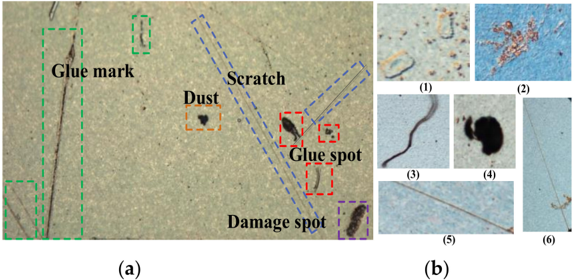
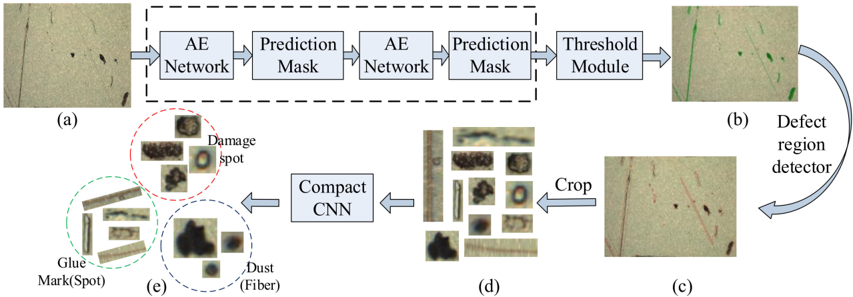
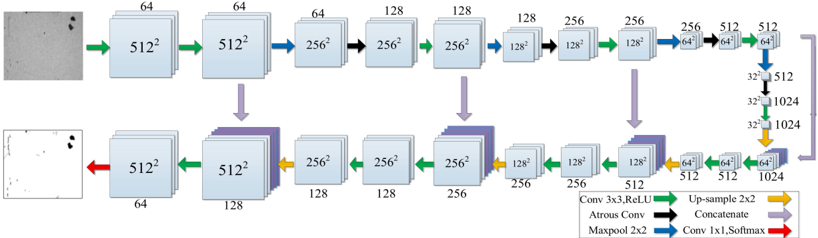
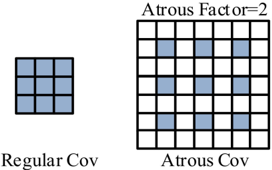

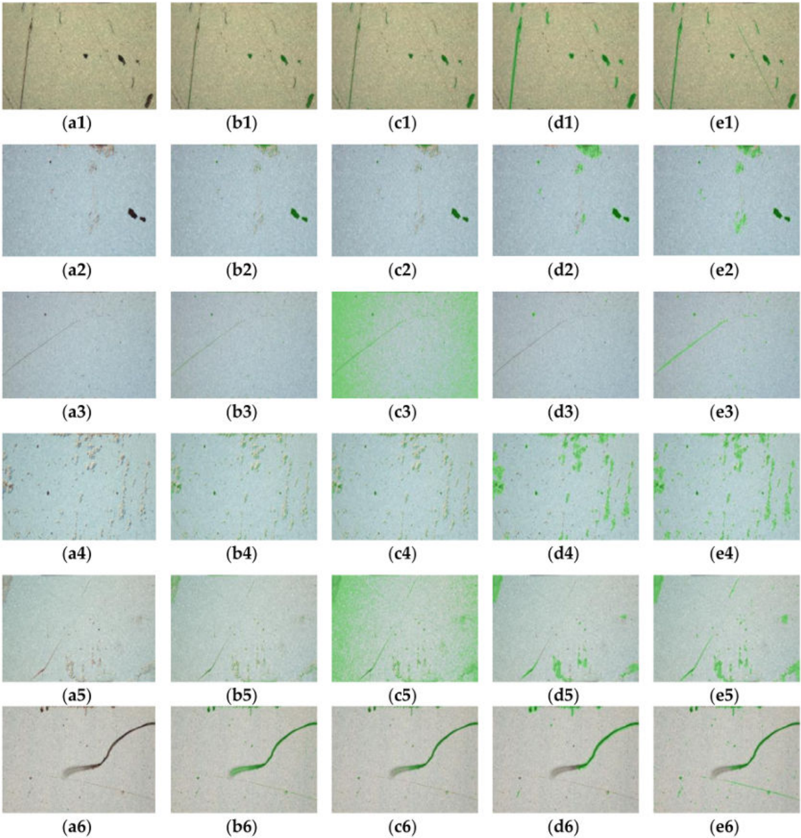
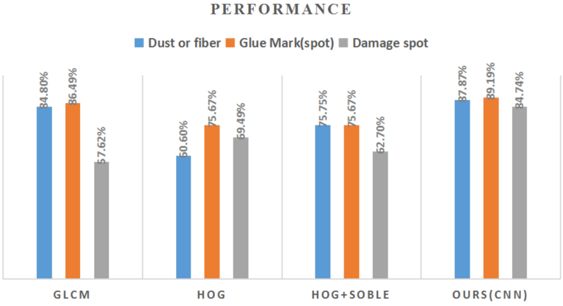
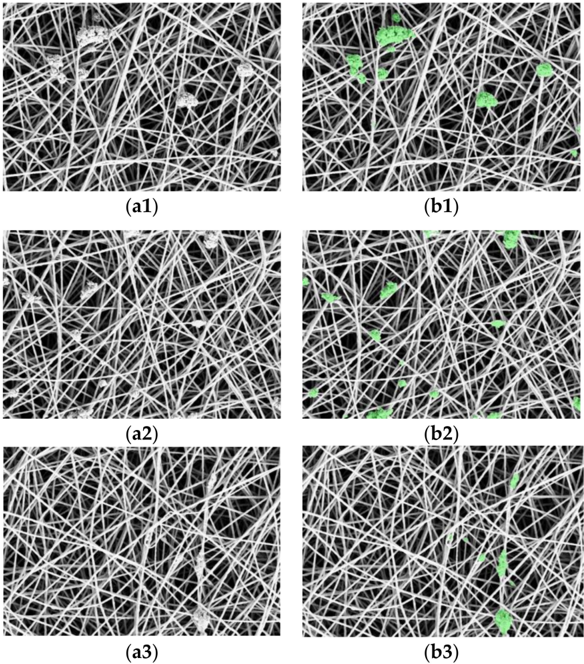
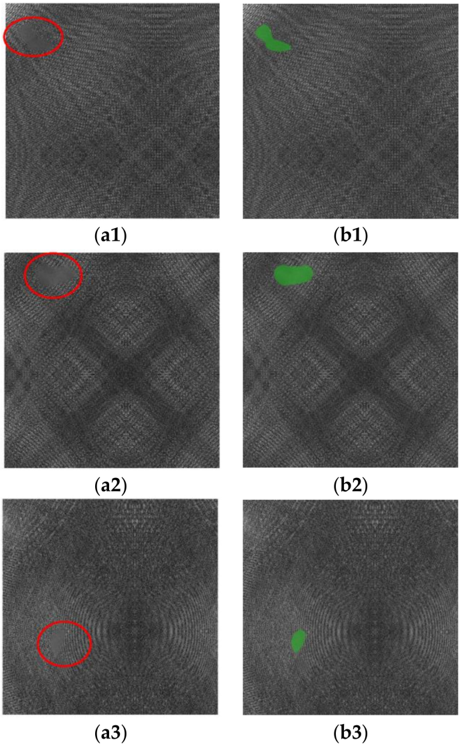
Verification
Claims the paper makes
The claims and statistics of this paper haven’t been checked yet.
Free: it reads the open-access text and checks the first 5 claims that cite a source we can check. Create a free account to check every claim.
Claims other papers make about this one
Each is checked against this paper’s own text: does it say what the citing paper says it does?
The check wasn’t confident either way, so it gives no verdict — never disputed.
In the citing paper
“Be of rotation and gray invariance, fast calculation speed.”
From Automated Visual Defect Classification for Flat Steel Surface: A Survey (2020) · cites this paper as [85]
Experimental — accuracy not yet measuredThe check wasn’t confident either way, so it gives no verdict — never disputed.
In the citing paper
“Sensitive to scale variation and noise interference.”
From Automated Visual Defect Classification for Flat Steel Surface: A Survey (2020) · cites this paper as [85]
Experimental — accuracy not yet measured
Self-check
Percentages, sums and reported differences re-computed from the paper’s own numbers.
The self-check needs the paper’s full text.
Citations
Cites
Deep Residual Learning for Image Recognition
He, K., Zhang, X., Ren, S., & Sun, J. (2016) · 2016 IEEE Conference on Computer Vision and Pattern Recognition (CVPR) · doi:10.1109/cvpr.2016.90 · Cited by 235,474 · cited 1×
“Our proposed CNN is a compact network that is smaller than the classic classification networks such as GoogleNet [41] and ResNet [42].”
MethodVery Deep Convolutional Networks for Large-Scale Image Recognition
Simonyan, K., & Zisserman, A. (2014) · arXiv · doi:10.48550/arxiv.1409.1556 · Cited by 114,148 · cited 1×
“We double the number of features after each max pooling layer in order to reduce the loss of semantic information [38,39].”
Going deeper with convolutions
Szegedy, C., Liu, W., Jia, Y., Sermanet, P., Reed, S., Anguelov, D., Erhan, D., Vanhoucke, V., & Rabinovich, A. (2015) · 2015 IEEE Conference on Computer Vision and Pattern Recognition (CVPR) · doi:10.1109/cvpr.2015.7298594 · Cited by 48,562
TensorFlow: A system for large-scale machine learning
Abadi, M., Barham, P., Chen, J., Chen, Z., Davis, A., Dean, J., Devin, M., Ghemawat, S., Irving, G., Isard, M., et al. (2016) · arXiv (Cornell University) · doi:10.48550/arxiv.1605.08695 · Cited by 11,822
Rethinking Atrous Convolution for Semantic Image Segmentation
Chen, L.-C., Papandreou, G., Schroff, F., & Adam, H. (2017) · arXiv · doi:10.48550/arxiv.1706.05587 · Cited by 7,517 · cited 1×
“In this paper, atrous convolution [40] is unitized to increase the receptive fields of the network for detecting large defects.”
MethodA survey of deep neural network architectures and their applications
Liu, W., Wang, Z., Liu, X., Zeng, N., Liu, Y., & Alsaadi, F. E. (2017) · Neurocomputing · doi:10.1016/j.neucom.2016.12.038 · Cited by 3,239 · cited 1×
“AE networks are widely used for information coding and reconstruction [37].”
BackgroundSelf-citationCha, Y., Choi, W., Suh, G., Mahmoudkhani, S., & Büyüköztürk, O. (2018) · Computer-Aided Civil and Infrastructure Engineering · doi:10.1111/mice.12334 · Cited by 1,558 · cited 1×
“[33] developed a structural damage detection method based on Faster R-CNN to detect five types of surface damages: concrete cracks, steel corrosion (medium and high levels), bolt corrosion, and steel delamination.”
MethodSong, K., & Yan, Y. (2013) · Applied Surface Science · doi:10.1016/j.apsusc.2013.09.002 · Cited by 1,026 · cited 2×
“These machine vision-based inspection systems occur in many industrial applications, such as steel strip inspection [2,3], liquid crystal display (LCD) inspection [4], fabric inspection [5,6], aluminum profiles [7], railway track inspection [8], food inspection [9], and optical components inspection [10].”
BackgroundImage deformation using moving least squares
Schaefer, S., McPhail, T., & Warren, J. (2006) · ACM Transactions on Graphics · doi:10.1145/1141911.1141920 · Cited by 674
Jia, F., Lei, Y., Lu, N., & Xing, S. (2018) · Mechanical Systems and Signal Processing · doi:10.1016/j.ymssp.2018.03.025 · Cited by 587
Research works printed but not linked: 2
- 13. Tastimur, C.; Yetis, H.; Karaköse, M.; Akin, E. Rail defect detection and classification with real time image processing technique. Int. J. Comput. Sci. Softw. Eng. 2016 , 5 , 283.
- 19. Kalaiselvi, T.; Nagaraja, P. A rapid automatic brain tumor detection method for MRI images using modified minimum error thresholding technique. Int. J. Imaging Syst. Technol. 2015 , 1 , 77-85.
Cited by
Items 401–487 of 487
Defect Detection and OCR on Steel
Grönlund, J., & Johansson, A. (2019) · KTH Publication Database DiVA (KTH Royal Institute of Technology)
NDTNet: Optical Nondestructive Evaluation with Compact Convolutional Neural Network
Borwankar, R. M., & Ludwig, R. (2020) · IEEE International Instrumentation and Measurement Technology Conference · doi:10.1109/i2mtc43012.2020.9128739
“A sliding window based CNN [6] for flaw inspection and localization, faster R-CNN based [7] multi-type defect classification, a very deep CNN [8] with two CNNs for localization and one CNN for classification and transfer learning based CNN [9] for anomaly detection.”
MethodEnergy analysis of image descriptors in texture classificationPreprint
kiani, F. (2021) · doi:10.14293/s2199-1006.1.sor-.ppklvda.v1
“As texture classification has a close relationship with the sciences such as machine learning, it functions in areas like face recognition [2], skin detection [3], gender classification [4], visual pattern recognition [5], object tracking [6], human identification [7], surface defect detection [8], image retrieval [9]…”
BackgroundSurface Defect Recognition Classification Based on Multi-Scale Convolutional Neural Network
Wang, Z., Xiao, Z., & He, Z. (2021) · Advances in intelligent systems and computing · doi:10.1007/978-981-16-1726-3_129
DEEP METALLIC SURFACE DEFECT DETECTION
Sunitha, K., & -, S. R. (2021) · INTERNATIONAL JOURNAL OF ELECTRICAL ENGINEERING & TECHNOLOGY · doi:10.34218/ijeet.12.5.2021.004
Workpiece Surface Defect Detection Based on Prototype Network With Blur Pooling
Tan, L., Guo, W., & Wang, J. (2021) · Chinese Control Conference (CCC) · doi:10.23919/ccc52363.2021.9549786
Zhang, J., Endo, Y., Yamamoto, Y., Ito, A., Oosawa, H., Fukushima, K., & Akashi, T. (2021) · International Conference on Intelligent Systems and Image Processing (ICISIP) · doi:10.12792/icisip2021.033
The anomaly segmentation via dynamic branch fusion
Liu, Z., Zhou, E., Yang, S., Zhuang, Z., & Ma, T. (2021) · IEEE International Conference on Big Data (BigData) · doi:10.1109/bigdata52589.2021.9671721
Metal Surface Defect Detection using Segmentation and Decision Networks
Dengale, P., Karkhanis, R., Phadke, B., & Gaidhane, V. K. (2022) · International Journal for Research in Applied Science and Engineering Technology · doi:10.22214/ijraset.2022.41978
Image Self-Generation Based Defect Detection Method for Train Brake Pad
Zhang, H., & Yuan, X. (2021) · China Automation Congress (CAC) · doi:10.1109/cac53003.2021.9728080
“Meanwhile, the relevant supervised learning methods [8]–[11] cannot be applied because it is difficult to obtain a large number of defective samples.”
BackgroundDetection System Based on Deep Learning Applied to the Synthesis of Plastic Texture Surface DefectsPreprint
Ho, C.-C., Chiao, Y.-C., Tai, L.-L., & Su, E. (2022) · SSRN Electronic Journal · doi:10.2139/ssrn.4132017
Surface finish quality prediction of welded joints using convolutional neural networks
Sakha, S., Rohit, S., & Selvan, S. P. (2022) · AIP conference proceedings · doi:10.1063/5.0096375
Kok, H. E., Lau, K.-T., & Rosli, N. H. (2021) · Journal of Mechanical Engineering · doi:10.24191/jmeche.v18i3.15418
Kiani, F. (2022) · Preprints.org · doi:10.20944/preprints202210.0467.v1
Faster RCNN based on Feature Fusion and its Application in Steel Surface Defect Detection
Xu, S., & Shao, Z. (2022) · Scientific Journal of Technology · doi:10.54691/sjt.v4i10.2400
“In the production process of the steel industry, the presence of defects such as patches, cracks and scratches on the steel surface can be caused by factors such as production machines and production processes[2].”
BackgroundDetect Anomalies on Metal Surface
Arnav, K., & Ravindran, H. (2023) · Advances in science and technology · doi:10.4028/p-ozpegj
Unsupervised Crack Detection with Convolutional Autoencoder by Using Feature MatchingPreprint
Kanani, A., Khaniki, M. A. L., & Shoorehdeli, M. A. (2023) · SSRN Electronic Journal · doi:10.2139/ssrn.4501300
Innovative Solutions and Applications of 5G Smart Factory for Chip Packaging
Li, C., Lu, N., Li, Y., Yao, W., & Jin, N. (2023) · International Wireless Communications and Mobile Computing Conference (IWCMC) · doi:10.1109/iwcmc58020.2023.10183123
“5G can be used in the 3C electronic manufacturing industry in a variety of scenarios such as wireless communication network in workshop and production line [4], Automated Guided Vehicle (AGV) [5], and intelligent data board.”
MethodSegmentation and Detection of Industrial Surface Defect Based on Deep Neural Network
Hou, Y. M., & Qian, S. (2023) · Lecture notes in electrical engineering · doi:10.1007/978-981-99-2730-2_59
Research on AINDANE-faster R-CNN-based metal plate defect detection method
Yang, X., Yan, P., & An, X. (2023) · International Conference on Digital Signal and Computer Communications (DSCC) · doi:10.1117/12.2685542
“But the metal surface is easy to reflect, while the image captured by the camera will appear out of the low light, uneven light, these circumstances increase the difficulty of metal detection[2].”
BackgroundM2AttR2U-net: Networks with Multiple Inputs and Multi-layer Supervision for the Bridge Cracks
Zhou, W., Zhu, X., Chen, D., & Zhou, L. (2023) · International Symposium on Computer Technology and Information Science (ISCTIS) · doi:10.1109/isctis58954.2023.10213199
“Meanwhile, Xian Tao [19] et al leveraged the performance of autoencoders in image reconstruction to develop a cascade autoencoder(CASAE) architecture for segmenting and localizing anomalies on metal surfaces, followed by subclassification of the segmented defect regions using CNNs, which…”
Yang, S., Zhou, L., Wang, C., Wang, S., Lv, J., & Wang, Q. (2023) · Research Square · doi:10.21203/rs.3.rs-3420533/v1
A Method for Extracting Planar Image Features based on Convolution Neural Network
Yang, S.-J., Wu, Z., Li, X., & Hong, Y. (2023) · Transactions on Computer Science and Intelligent Systems Research · doi:10.62051/s439k645
“In the literature [5], a new cascaded autoencoder (CASAE) structure is proposed, using the idea of semantic segmentation to solve the problem of defect location and segmentation.”
MethodWang, Z., He, Q., Liu, X., Ren, G., & Tan, C. (2023) · Research Square · doi:10.21203/rs.3.rs-3737839/v1
Self-citationLi, Z., Chen, J., Huang, H., & Dong, X. (2023) · International Conference on Systems and Informatics (ICSAI) · doi:10.1109/icsai61474.2023.10423311
“Currently, it is applied in tasks such as metal surface defect detection [1][2] and weld seam defect identification [3][4][5].”
MethodSurface Defect Detection Based on Label Reassembling
Liu, G. (2024) · IEEE International Conference on Power, Electronics and Computer Applications (ICPECA) · doi:10.1109/icpeca60615.2024.10471124
“Tao et al. [14] design a new cascaded auto-encoder structure for surface defect localization and segmentation.”
BackgroundBased on FPGA and CNN gas pedal for picodetopt defect detection algorithm research
Cai, Z. (2024) · IEEE International Conference on Power, Electronics and Computer Applications (ICPECA) · doi:10.1109/icpeca60615.2024.10470972
“Tao et al. [10] proposed an automatic metal surface defect detection method based on cascaded self-encoder (CASAE) and compact convolutional neural network (CNN), aiming at solving the problem of metal defect detection in complex industrial scenarios.”
MethodAn automatic inspection approach for remanufacturing components using object detection
Aravapalli, S. R. M. (2022) · doi:10.31274/td-20240329-53 · Cited by 3
“Tao et al. (2018) successfully segmented the metallic defects, but no information is provided about training and inference time.”
BackgroundA Novel Two-Stage Method for Texture Defect Detection
Liu, L., Jiang, M., & Xu, L. (2024) · International Conference on Consumer Electronics and Computer Engineering (ICCECE) · doi:10.1109/iccece61317.2024.10504178
“Tao et al.'s [7] proposed the Cascade Autoencoder (CASAE), was employed for segmenting and localizing defects on metal surfaces, transforming defect images into a per-pixel prediction task based on semantic segmentation, but this approach relies heavily on abundant semantic annotation data, leading…”
MethodEANet: Enhanced Attention-based Model for Surface Defect Detection
Liu, G. (2024) · IEEE Advanced Information Technology, Electronic and Automation Control Conference (IAEAC) · doi:10.1109/iaeac59436.2024.10503680
“Tao et al. [16] designed a cascaded autoencoder for defect segmentation and location, which converted the input defect image into a pixel-by-pixel predictive mask.”
MethodRecent Patents for Machine Vision Inspection in the Machine Tool Sector
Li, Z., & Zhao, K. (2024) · Recent Patents on Engineering · doi:10.2174/0118722121299730240424100312
Inspection of Automobile Components Using Mask R-CNN and Minimal Setup Vision
Ramachandran, S., Aishwarya, B. K., Pushpalatha, M. N., Poornima, S., & Venkatesh, K. (2024) · International Conference on Science Technology Engineering and Mathematics (ICONSTEM) · doi:10.1109/iconstem60960.2024.10568777
LASDNet: A Lightweight Adaptive Surface Defect Detection Network
Wei, Q., Yuan, Y., Liu, Y., Al-Hababi, M. A. M., Su, Q., & Yu, M. (2024) · IEEE International Conference on Acoustics, Speech, and Signal Processing Workshops (ICASSPW) · doi:10.1109/icasspw62465.2024.10626754
“Surface defect detection faces various challenges [1]: 1) Variations in the shapes of defects: Defects can have a wide variety of shapes, including those with extreme aspect ratios.”
BackgroundA multimodal deep learning method of weld defect detection based on 3D point cloudPreprint
Lin, K., Li, F., Huang, J., Shen, C., Zhang, Y., & Hua, X. (2024) · Research Square · doi:10.21203/rs.3.rs-4855666/v1
A Brief Survey on Fabric Defect Detection
Singh, R., & Pratap, V. (2024) · Lecture notes in electrical engineering · doi:10.1007/978-981-97-2508-3_6
Di, Y., Zhou, Q., Zhou, Z., Wei, T., Zhang, K., Wang, N., & Yu, L. (2024) · Surface Topography Metrology and Properties · doi:10.1088/2051-672x/ad7ee7
Aircraft skin defect detection algorithm based on improved YOLOv8
Dong-ping, Z., Zhutao, W., Yuejian, X., Yunchao, X., & Lili, L. (2024) · Scientific insights and discoveries review · doi:10.59782/sidr.v5i1.159
Sugisaka, J.-I., Hirayama, K., & Yasui, T. (2024) · Journal of the Optical Society of America A · doi:10.1364/josaa.541358
Architecture of automatic defectoscopy machines on highly reflective rotary surfaces, part I
Lemieszewski, Ł., & Ochin, E. F. (2024) · Procedia Computer Science · doi:10.1016/j.procs.2024.09.254
Steel surface defect detection algorithm based on improved YOLOv8
Guo, S., Chen, Y., Xu, Z., & Wang, Y. (2024) · International Conference on Artificial Intelligence, Robotics, and Communication (ICAIRC) · doi:10.1109/icairc64177.2024.10900085
“For example, document [1] designed a CASAE structure for defect segmentation and location.”
Manhattan Correlation Attention Network for Metal Part Anomaly Classification
Sun, Z., Li, Y., Luo, F. L., Zhang, Z., Huang, J., & Zhang, Q. (2025) · IEEE Access · doi:10.1109/access.2025.3562093
“In contrast, deep learning methods demonstrate superior performance in metal anomaly detection, primarily due to their powerful feature extraction capabilities [17].”
Cheng, C.-H., Lin, Y.-F., Lee, C.-M., Hsu, C., Shih, Y. C., & Chin, T. (2025) · IEEE International Conference on Consumer Technology (ICCT-Pacific) · doi:10.1109/icct-pacific63901.2025.11012829
“These methods suffer from low efficiency and are prone to human error, particularly when dealing with complex surface conditions [1], [2].”
Setyawan, B., Prahasto, T., & Santoso, R. (2025) · International Journal of Advances in Scientific Research and Engineering · doi:10.31695/ijasre.2025.5.2
Diffdefect: A Diffusion Model-Based Framework for Simulating Defects in Industrial Components
Ye, W., Li, B., Jiang, S., Wang, Y., Zhang, R., & Xu, W. (2025) · International Conference on Computer and Communication Systems (ICCCS) · doi:10.1109/icccs65393.2025.11069601
Dual-Resolution Segmentation Network Utilizing Multi-Scale Features for Metal Defect Detection
Wang, Q., Wei, X., Feng, W., Ding, H., & Jiang, X. (2025) · Lecture notes in computer science · doi:10.1007/978-981-95-0006-2_22
Gao, J., Qi, F., Liu, Z., Cheung, S. C. P., Li, B., & Li, D. (2025) · steel research international · doi:10.1002/srin.202500409
Maskininlärning inom kvalitetssäkring av produktionsdetaljer
Troncoso Velasquez, S., & Sturesson, M. (2024) · Diva portal (Dalarna University Library)
Mold defects detection in painting using artificial intelligence / Mohamad Hilman Nordin
Mohamad Hilman, N. (2023) · University of Malaya Students Repository
Využití metod strojového učení pro testování kvality průmyslových výrobků
Stefansky, J. (2021) · DSpace VŠB-TUO (VŠB-TUO)
Design of Automated Defectoscopy Systems
Lemieszewski, Ł., Szymczyk, J. A., & Ochin, E. F. (2025) · Acta Mechanica et Automatica · doi:10.2478/ama-2025-0069
“Probably, one of the first approaches to the construction of automata for detecting defects in the surface of bodies of revolution is the simulation of training and work of a human operator [6-8].”
WECI-YOLO: Multi-Module Enhanced Steel Surface Quality Defect Detection
Zhou, H., Wang, J., & Jiang, T. (2026) · IEEE Access · doi:10.1109/access.2025.3650430 · Cited by 2
“For the critical industrial inspection task of steel surface defect detection, we identify the core challenge as accurately capturing small and morphologically diverse defects [31], [32].”
Facial Expression Recognition Method Based on Convolutional Neural Network
Heidari, A. (2025) · Oriental Journal of Physical Sciences · doi:10.13005/ojps10.02.11
Bobyr, M. V., & Milostnaya, N. A. (2026) · Lecture notes in networks and systems · doi:10.1007/978-981-95-3671-9_10
Automatic Steel Surface Defects Classification using Lightweight MobileNetV2 and LGBM
Bhyrapuneni, S., Nagaraju, B., Subbareddy, P. V., Mounika, B. V. S., Chandra, K. V., & Kumar, M. R. (2025) · IEEE Silchar Subsection Conference (SILCON) · doi:10.1109/silcon67893.2025.11327378
YOLOv5: an improved algorithm for real-time detection of industrial defective pieces
Elbaghdadi, A., Yazid, Y., Oualkadi, A. E., González, A. G., & Mezroui, S. (2026) · IAES International Journal of Artificial Intelligence · doi:10.11591/ijai.v15.i1.pp744-755 · Cited by 1
“For instance, Tao et al. [18] proposed a novel cascaded auto-encoder architecture.”
Mohsin, M. R., Hashmi, M. S. A., & Ramzan, S. (2026) · Research Square · doi:10.21203/rs.3.rs-8854571/v1
Research on Vehicle Appearance Defect Detection Based on Machine Vision
Jiechu, H., Zhang, Y., Ma, J., Yiqi, S., & Guoan, Z. (2025) · International Symposium on AI-Driven Image Processing and Computer Vision Technology (AIPCVT) · doi:10.1109/aipcvt67868.2025.11405646
“For instance, Tao et al. successfully applied Convolutional Neural Networks (CNNs) to metallic defect detection, proving that learnable features far outperform manual descriptors in handling texture variations [2].”
Sun, Z., Zhan, H., & Yang, K. (2025) · International Symposium on Robotics & Intelligent Manufacturing Technology (ISRIMT) · doi:10.1109/isrimt67769.2025.11413172 · Cited by 1
“Steel manufacturing constitutes a cornerstone of modern industrial infrastructure, where surface quality directly impacts structural integrity, corrosion resistance, and aesthetic properties of final products [1].”
Dual-branch contrastive learning with domain-aware augmentation for industrial anomaly detection
Liu, Y., He, W., & Wang, H. (2026) · International Conference on Machine Learning and Artificial Intelligence Applications (MLAIA) · doi:10.1117/12.3110574
“It serves as a fundamental component of intelligent manufacturing, acting as a crucial safeguard to maintain product quality and reliability in industries such as electronics, 1,2 energy 3,4 and transportation.”
Xiao, W. (2026) · International Conference on Communication Networks and Machine Learning (CNML) · doi:10.1109/cnml68938.2026.11452423 · Cited by 1
“Consequently, automated surface inspection has become an indispensable component of modern steel production lines [2].”
Faula, Y. (2020) · theses.fr (ABES) · doi:10.70675/bffd488az2ca0z484ezb6cfz5c45dd3b9fb1 · Cited by 1
Semantic Analysis of the Driving Environment in Urban Scenarios
Lateef, F. (2021) · theses.fr (ABES) · doi:10.70675/114e131azb18az4b50zb9d8z55d904a50cbc
Lin, H.-D., Li, S.-Y., & Lin, C.-H. (2026) · Sensors · doi:10.3390/s26092608
“Benchmark studies confirm that multi-scale contextual fusion improves segmentation accuracy under challenging illumination conditions [13–15].”
A Benchmark Large-Size Cement Image Dataset for Dust Segmentation
Zhang, Y., Jin, S., Wang, R., Lv, F., Wu, Z., Karimi, M., & Gu, K. (2026) · Communications in computer and information science · doi:10.1007/978-981-95-9504-4_31
Chen, F., Wang, T. H., Chen, M., Jing, L., Liu, J., Qiu, H., & Lv, Z. (2026) · Proceedings of the Institution of Mechanical Engineers Part B Journal of Engineering Manufacture · doi:10.1177/09544054261451989
Тихонов, Д. В., & Аршинов, Н. П. (2026) · Vestnik of Russian New University Series «Complex systems models analysis management» · doi:10.18137/rnu.v9187.26.01.p.189
DEE-Net: A Multi-Scale Discriminative Edge Enhancement Network for Aircraft Surface Defect Detection
Wang, X., Lu, M., Liu, Y., & Qian, J. (2026) · Aerospace · doi:10.3390/aerospace13070568
Granados, U., Ricardo, F. A., Ugartemendía, A., & Sánchez, E. (2026) · Journal of Manufacturing Systems · doi:10.1016/j.jmsy.2026.06.012
Chmielowiec, A., Lichwiarz, K., & Mattera, G. (2026) · Technologia i Automatyzacja Montażu · doi:10.7862/tiam.2026.2.4
Zhang, Y., Hu, D., Pan, J., Mao, J., Wang, M., He, S., Liu, J., Li, S., & Wang, R. (2026) · Mechanisms and machine science · doi:10.1007/978-3-032-11169-2_71
Song, J., Cui, G., Yang, C., Wu, H., Teng, Q., Zhou, F., & Wang, Y. (2026) · IEEE Access · doi:10.1109/access.2026.3716250
“A cascaded autoencoder (CASAE) for defect segmentation and localization is introduced in [28], classification is performed via CNN. ResNet-101 for feature extraction with a multi-class SVM classifier is applied by Singh et al. [29] to accomplish cone roller defect classification.”
Computer Vision Based Automated Surface Defect Detection
Sondkar, S., Umate, A., Waghmode, A., Vaidya, Y., & Shelke, A. (2026) · IEEE International Conference on VLSI Systems, Architecture, Technology and Applications (VLSI SATA) · doi:10.1109/vlsisata69163.2026.11610521
“Similarly, Tao et al. suggested CNN-based defect recognition techniques to eliminate challenges of reflective metallic surfaces [7].”
karimi, S., Arun, J., Oathes, T. J., Mudiyanselage, R. S. D., & Vlassis, N. N. (2026) · Materials Characterization · doi:10.1016/j.matchar.2026.116797
Dev, P., Chowdhury, A., & Abir, M. A. A. (2026) · SciEn Conference Series Engineering · doi:10.38032/scse.2026.4.120
“Machine vision-based methods for finding surface defects have been more popular in recent years because they fix some of the problems with manual detection, such as low accuracy, poor real-time performance, subjectivity, and high labor intensity [2].”
Li, K., & Hu, Z. (2026) · IEEE International Conference on Electronics, Energy Systems and Power Engineering (EESPE) · doi:10.1109/eespe68405.2026.11649017
“Convolutional neural networks (CNNs) have demonstrated state-of-the-art performance in visual defect detection tasks, such as surface scratch detection, dimensional measurement, and assembly verification [8].”
Center-Aware Pairwise Learning for Deep Semi-Supervised Anomaly Detection
Zhang, H., & Liu, H. (2026) · IEEE Transactions on Network and Service Management · doi:10.1109/tnsm.2026.3727684
“AD techniques are categorized into supervised [4], [5], unsupervised [6], [7], [8] and semi-supervised approaches [9], [10].”
Saberironaghi, M. (2026) · e-scholar@UOIT (University of Ontario Institute of Technology)
Industrial Shaft Scratch Detection Algorithm Based on C3k2-EMA and Multi-Scale Feature Enhancement
Li, J., Liu, J., Sun, J., & Wang, T. (2026) · International Conference on Artificial Intelligence, Internet of Things and Cloud Computing Technology (AIoTC) · doi:10.1109/aiotc71250.2026.11689031
“…image processing algorithms exhibit insufficient robustness when confronted with illumination variations, metallic surface reflections, and complex textured backgrounds, rendering them incapable of meeting the high-precision and high-real-time detection demands of automated production lines [4].”
Enhancing image-based statistical process monitoring using Shearlet transforms and deep learning
Khanchehmehr, F., & Amiri, A. (2026) · Quality Technology & Quantitative Management · doi:10.1080/16843703.2026.2737079
Arumugam, S., N., S. M., Sindhu, A., Esakkiammal, A., & Kannan, S. (2026) · Engineering Technology & Applied Science Research · doi:10.48084/etasr.20386
“Unlike hand-crafted feature descriptors that fail to generalize well, Convolutional Neural Networks (CNNs) directly learn surface texture features from data and generalize much better to new situations [2].”
The use of image processing to determine cell defects in polycrystalline solar modules
Banda, P. (2019) · Nelson Mandela University Research Repository
Zhu, M., Tian, M., Zhang, Y., Liu, Y., & Bao, J. (2026) · Textile Research Journal · doi:10.1177/00405175261490431
Anbalagan, S., & PRABAKAR, T. N. (2026) · Array · doi:10.1016/j.array.2026.101342
CBAM-YOLOv5-Based Rail Surface Defect Detection for Railway Inspection Robots
Hou, Y., Sun, K., Li, J., Wen, S., Liu, X., & Liu, C. (2026) · WRC Symposium on Advanced Robotics and Automation (WRC SARA) · doi:10.1109/wrcsara71458.2026.11732540
Self-citationAltıparmak, S. C., Secchi, P., Balint, D. S., & Ugues, D. (2026) · Materials Today Communications · doi:10.1016/j.mtcomm.2026.116552
Metadata
- Authors
- Tao, X., Zhang, D., Ma, W., Liu, X., & Xu, D.
- Affiliations
- Chinese Academy of Sciences (CN)
- China University of Mining and Technology - Beijing (CN)
- Corresponding author
- Tao, Xian
- Venue
- Applied Sciences
- Publisher
- MDPI AG
- Published
- 2018-09-06
- Volume
- 8
- Issue
- 9
- Pages
- 1575
- ISSN
- 2076-3417 (ISSN-L)
- OpenAlex
- W2890747436
- Semantic Scholar
- 10447a2738ff7ac47f8d93c85222ee737412cf53
- Cited by
- 471
- References
- 43
- Citations by year
- 2026: 29 · 2025: 42 · 2024: 60 · 2023: 94 · 2022: 72 · 2021: 82 · 2020: 58 · 2019: 32 · 2018: 2
- FWCI
- 36.08
- Type
- journal article
- Language
- en
- Open access
- gold
- dx.doi.org
- Licence
- Locations
- Applied Sciences (publishedVersion, cc-by)
- ELARTU (Ternopil National Technical University) (submittedVersion)
- DOAJ (DOAJ: Directory of Open Access Journals) (submittedVersion, cc-by-sa)
- Funders
- National Natural Science Foundation of China (61703399, 61503376, 61673383)
- Topics
- Physical Sciences › Engineering › Industrial and Manufacturing Engineering › Industrial Vision Systems and Defect Detection
- Physical Sciences › Engineering › Mechanical Engineering › Non-Destructive Testing Techniques
- Physical Sciences › Engineering › Civil and Structural Engineering › Infrastructure Maintenance and Monitoring
- Keywords
- defect localization, defect classification, semantic segmentation, convolutional neural networks, manufacturing quality control, industrial inspection
About these checks
Registry, retraction, Cites and statistics results are computed, not judged, with one exception: a printed reference that no index lists is read once by a model before it counts as a citation error. Claims are extracted by a model and kept only when their quote appears verbatim in the text; each cited source is then checked, with a model’s help, for whether it says what the claim relies on. Those verdicts can be wrong — read the claim’s quote and the cited source before relying on one.
Statistics and arithmetic are recomputed, not judged.
Confidence bands are shown only for fields calibrated on our annotated test set. None is calibrated yet, so no band is shown.
What counts as a claim ›How we measure confidence ›How we check this ›
Are you an author, or do you see a problem with this page? Request a review
Data sources
Bibliographic data: Semantic Scholar, OpenAlex, Crossref.
Contains information from the Semantic Scholar Academic Graph Datasets, made available under the ODC Attribution License (ODC-BY 1.0).
Semantic Scholar’s data is described in: Kinney, R., et al. (2023). The Semantic Scholar Open Data Platform. arXiv:2301.10140.
