

Automatic Metallic Surface Defect Detection and Recognition with Convolutional Neural Networks
Open accessThe DOI matches its Crossref record; 43 of the 43 references it cites were found in a registry or an index.
Abstract
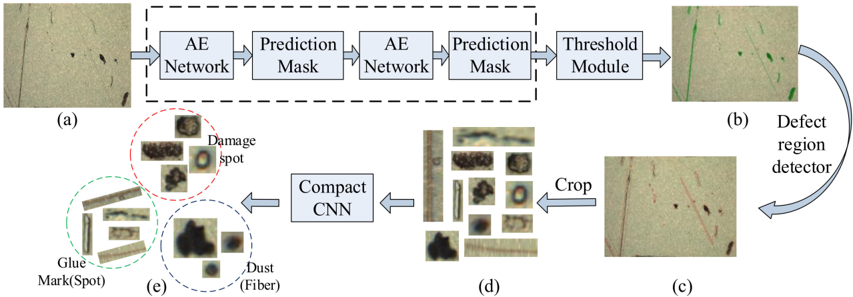
Automatic metallic surface defect inspection has received increased attention in relation to the quality control of industrial products. Metallic defect detection is usually performed against complex industrial scenarios, presenting an interesting but challenging problem. Traditional methods are based on image processing or shallow machine learning techniques, but these can only detect defects under specific detection conditions, such as obvious defect contours with strong contrast and low noise, at certain scales, or under specific illumination conditions. This paper discusses the automatic detection of metallic defects with a twofold procedure that accurately localizes and classifies defects appearing in input images captured from real industrial environments. A novel cascaded autoencoder (CASAE) architecture is designed for segmenting and localizing defects. The cascading network transforms the input defect image into a pixel-wise prediction mask based on semantic segmentation. The defect regions of segmented results are classified into their specific classes via a compact convolutional neural network (CNN). Metallic defects under various conditions can be successfully detected using an industrial dataset. The experimental results demonstrate that this method meets the robustness and accuracy requirements for metallic defect detection. Meanwhile, it can also be extended to other detection applications.
Overview
The claims and statistics of this paper haven’t been checked yet.
Free: it reads the open-access text and checks the first 5 claims that cite a source we can check. Create a free account to check every claim.
Integrity signals
Registry
Cites
Statistics
Figures

Verification
Claims the paper makes
The claims and statistics of this paper haven’t been checked yet.
Free: it reads the open-access text and checks the first 5 claims that cite a source we can check. Create a free account to check every claim.
Claims other papers make about this one
Each is checked against this paper’s own text: does it say what the citing paper says it does?
The check wasn’t confident either way, so it gives no verdict — never disputed.
In the citing paper
“Be of rotation and gray invariance, fast calculation speed.”
From Automated Visual Defect Classification for Flat Steel Surface: A Survey (2020) · cites this paper as [85]
Experimental — accuracy not yet measuredThe check wasn’t confident either way, so it gives no verdict — never disputed.
In the citing paper
“Sensitive to scale variation and noise interference.”
From Automated Visual Defect Classification for Flat Steel Surface: A Survey (2020) · cites this paper as [85]
Experimental — accuracy not yet measured
Self-check
Percentages, sums and reported differences re-computed from the paper’s own numbers.
The self-check needs the paper’s full text.
Citations
Cites
Deep Residual Learning for Image Recognition
He, K., Zhang, X., Ren, S., & Sun, J. (2016) · 2016 IEEE Conference on Computer Vision and Pattern Recognition (CVPR) · doi:10.1109/cvpr.2016.90 · Cited by 235,474 · cited 1×
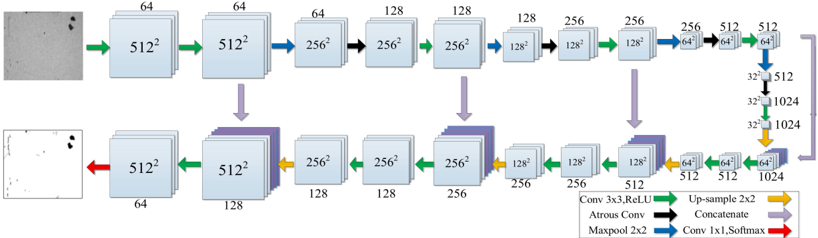
“Our proposed CNN is a compact network that is smaller than the classic classification networks such as GoogleNet [41] and ResNet [42].”
MethodVery Deep Convolutional Networks for Large-Scale Image Recognition
Simonyan, K., & Zisserman, A. (2014) · arXiv · doi:10.48550/arxiv.1409.1556 · Cited by 114,148 · cited 1×
“We double the number of features after each max pooling layer in order to reduce the loss of semantic information [38,39].”
Going deeper with convolutions
Szegedy, C., Liu, W., Jia, Y., Sermanet, P., Reed, S., Anguelov, D., Erhan, D., Vanhoucke, V., & Rabinovich, A. (2015) · 2015 IEEE Conference on Computer Vision and Pattern Recognition (CVPR) · doi:10.1109/cvpr.2015.7298594 · Cited by 48,562
TensorFlow: A system for large-scale machine learning
Abadi, M., Barham, P., Chen, J., Chen, Z., Davis, A., Dean, J., Devin, M., Ghemawat, S., Irving, G., Isard, M., et al. (2016) · arXiv (Cornell University) · doi:10.48550/arxiv.1605.08695 · Cited by 11,822
Rethinking Atrous Convolution for Semantic Image Segmentation
Chen, L.-C., Papandreou, G., Schroff, F., & Adam, H. (2017) · arXiv · doi:10.48550/arxiv.1706.05587 · Cited by 7,517 · cited 1×
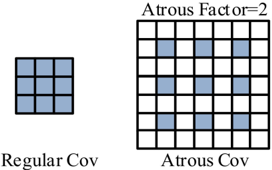
“In this paper, atrous convolution [40] is unitized to increase the receptive fields of the network for detecting large defects.”
MethodA survey of deep neural network architectures and their applications
Liu, W., Wang, Z., Liu, X., Zeng, N., Liu, Y., & Alsaadi, F. E. (2017) · Neurocomputing · doi:10.1016/j.neucom.2016.12.038 · Cited by 3,239 · cited 1×
“AE networks are widely used for information coding and reconstruction [37].”
BackgroundSelf-citationCha, Y., Choi, W., Suh, G., Mahmoudkhani, S., & Büyüköztürk, O. (2018) · Computer-Aided Civil and Infrastructure Engineering · doi:10.1111/mice.12334 · Cited by 1,558 · cited 1×
“[33] developed a structural damage detection method based on Faster R-CNN to detect five types of surface damages: concrete cracks, steel corrosion (medium and high levels), bolt corrosion, and steel delamination.”
MethodSong, K., & Yan, Y. (2013) · Applied Surface Science · doi:10.1016/j.apsusc.2013.09.002 · Cited by 1,026 · cited 2×
“These machine vision-based inspection systems occur in many industrial applications, such as steel strip inspection [2,3], liquid crystal display (LCD) inspection [4], fabric inspection [5,6], aluminum profiles [7], railway track inspection [8], food inspection [9], and optical components inspection [10].”
BackgroundImage deformation using moving least squares
Schaefer, S., McPhail, T., & Warren, J. (2006) · ACM Transactions on Graphics · doi:10.1145/1141911.1141920 · Cited by 674
Jia, F., Lei, Y., Lu, N., & Xing, S. (2018) · Mechanical Systems and Signal Processing · doi:10.1016/j.ymssp.2018.03.025 · Cited by 587
Research works printed but not linked: 2
- 13. Tastimur, C.; Yetis, H.; Karaköse, M.; Akin, E. Rail defect detection and classification with real time image processing technique. Int. J. Comput. Sci. Softw. Eng. 2016 , 5 , 283.
- 19. Kalaiselvi, T.; Nagaraja, P. A rapid automatic brain tumor detection method for MRI images using modified minimum error thresholding technique. Int. J. Imaging Syst. Technol. 2015 , 1 , 77-85.
Cited by
Items 101–200 of 487
SF-YOLO: An Evolutionary Deep Neural Network for Gear End Surface Defect Detection
Shuai, Y., Lin, Z., Wang, C., Wang, S., & Tang, Y. (2024) · IEEE Sensors Journal · doi:10.1109/jsen.2024.3403870 · Cited by 32
“Tao et al. [11] discovered that the traditional method required high-quality images, including the strength of light when taking pictures, the presence of shadows, and the degree of distinction between the background color and the surface of the object to be detected, all of which influenced…”
MethodDetection and Classification of Bearing Surface Defects Based on Machine Vision
Lu, M., & Chen, C. (2021) · Applied Sciences · doi:10.3390/app11041825 · Cited by 32
Review: Application of Convolutional Neural Network in Defect Detection of 3C Products
Ming, W., Cao, C., Zhang, G., Zhang, H., Zhang, F., Jiang, Z., & Yuan, J. (2021) · IEEE Access · doi:10.1109/access.2021.3116131 · Cited by 35
“However, it is not easy to obtain a large number of defective samples from an industrial production line [77].”
BackgroundZhu, Y., Yang, R., He, Y., Ma, J., Guo, H., Yang, Y., & Zhang, L. (2021) · IEEE Access · doi:10.1109/access.2021.3064180 · Cited by 31
“For example, in [23], X. Tao et al. designed a new auto-encoder structure to locate the pixel-level defect position and then identified them through a clas-sification network.”
BackgroundSilva, M. M., Filho, E. F. D. S., Farias, P. C. M. D. A., Albuquerque, M. C. S., da Silva, I. C., & Farias, C. T. T. (2021) · Measurement · doi:10.1016/j.measurement.2021.110069 · Cited by 30
Park, K.-B., & Lee, J. Y. (2022) · Journal of Computational Design and Engineering · doi:10.1093/jcde/qwac115 · Cited by 38
DLF-YOLOF: an improved YOLOF-based surface defect detection for steel plate
Liu, G., Chu, M., Gong, R., & Zheng, Z. (2023) · Journal of Iron and Steel Research International · doi:10.1007/s42243-023-01059-4 · Cited by 30
Mu, Z., Qin, Y., Yu, C., Wu, Y., Wang, Z., Yang, H., & Huang, Y. (2023) · Journal of Zhejiang University. Science A · doi:10.1631/jzus.a2200175 · Cited by 28
“Tao et al. (2018) designed a cascade autoencoder (CASAE) to locate the defect region by threshold segmentation based on the different responses of the encoder to the normal region and the defect region.”
BackgroundFabric defect detection based on anchor-free network
Wang, X., Fang, W., & Xiang, S. (2023) · Measurement Science and Technology · doi:10.1088/1361-6501/ace8af · Cited by 30
Bak, C., Roy, A. G., & Son, H. (2021) · CIRP journal of manufacturing science and technology · doi:10.1016/j.cirpj.2021.04.001 · Cited by 31
Weld defect detection with convolutional neural network: an application of deep learning
Madhav, M., Ambekar, S. S., & Hudnurkar, M. (2023) · Annals of Operations Research · doi:10.1007/s10479-023-05405-3 · Cited by 31
“Convolutionalneuralnetworks(CNN)(duJardin,2022;Taoetal.,2018) canbesettoevaluate2DimagesfromacamerasystemandclassifyOK(ok)andNOK (notOK)imagesbasedonasupervisorymethod(Lecunetal.,1998).”
Fabric Defect Detection Based on Lightweight Neural Network
Liu, Z., Cui, J., Li, C., Wei, M., & Yang, Y. (2019) · Lecture notes in computer science · doi:10.1007/978-3-030-31654-9_45 · Cited by 26
Hu, J., Yan, P., Su, Y., Wu, D., & Zhou, H. (2021) · IEEE Sensors Journal · doi:10.1109/jsen.2021.3066603 · Cited by 26
“For metal surface defects, Tao et al. [4] proposed a compact convolutional neural network to quickly obtain defect categories, which meets the requirements of complex industrial environments and industrial online inspection but requires large amounts of manually labeled data.”
BackgroundSynthetic Data and Computer-Vision-Based Automated Quality Inspection System for Reused Scaffolding
Kim, A., Lee, K., Lee, S., Song, J., Kwon, S., & Chung, S.-W. (2022) · Applied Sciences · doi:10.3390/app121910097 · Cited by 27
Surface defect detection of vehicle light guide plates based on an improved RetinaNet
Li, J., & Wang, H. (2021) · Measurement Science and Technology · doi:10.1088/1361-6501/ac4597 · Cited by 28
Adaptive-MAML: Few-shot metal surface defects diagnosis based on model-agnostic meta-learning
Pang, S., Zhang, L., Yuan, Y., Zhao, W., Wang, S., & Wang, S. (2023) · Measurement · doi:10.1016/j.measurement.2023.113612 · Cited by 26
SCL—Segmentation–Classification combined Loss for surface defect detection
Versini, E., Snidaro, L., & Liani, A. (2022) · Expert Systems with Applications · doi:10.1016/j.eswa.2022.116710 · Cited by 27
Wang, C., Zhou, Z., & Chen, Z. (2022) · IEEE Access · doi:10.1109/access.2022.3203198 · Cited by 28
Detection of visual faults in photovoltaic modules using a stacking ensemble approach
Sridharan, N. V., Sripada, D., Sugumaran, V., & Aghaei, M. (2024) · Heliyon · doi:10.1016/j.heliyon.2024.e27894 · Cited by 25
Voting based ensemble for detecting visual faults in photovoltaic modules using AlexNet features
Sridharan, N. V., Vaithiyanathan, S., & Aghaei, M. (2024) · Energy Reports · doi:10.1016/j.egyr.2024.03.044 · Cited by 25
Advancements and prospects of deep learning in biomaterials evolution
You, S., Fan, Y., Chen, Y., Jiang, X., Liu, W., Zhou, X.-Y., Zhang, J., Zheng, J., Yang, H., & Hou, X. (2024) · Cell Reports Physical Science · doi:10.1016/j.xcrp.2024.102116 · Cited by 33
Molitor, D. A., Kubik, C., Becker, M., Hetfleisch, R. H., Lyu, F., & Groche, P. (2021) · Journal of Materials Processing Technology · doi:10.1016/j.jmatprotec.2021.117484 · Cited by 25
Pu, R., Ren, G., Li, H., Jiang, W., Zhang, J., & Qin, H. (2022) · Buildings · doi:10.3390/buildings12112019 · Cited by 25
“Tao et al. (2018) introduced a dual procedure that could accurately classify and localize metallic defects in pictures captured from actual industrial environments [34].”
BackgroundRagab, K. (2023) · Sensors · doi:10.3390/s23010544 · Cited by 24
Defect Detection in Steel Using a Hybrid Attention Network
Zhou, M., Wentao, L., Xia, J., & Wang, Y. (2023) · Sensors · doi:10.3390/s23156982 · Cited by 26
Steel surface defect detection based on multi-layer fusion networks
Li, H., Liu, M., Yin, Y., & Sun, W. (2025) · Scientific Reports · doi:10.1038/s41598-024-74601-3 · Cited by 26
Deep Learning Based Automated Inspection of Weak Microscratches in Optical Fiber Connector End-Face
Mei, S., Cai, Q., Gao, Z., Hu, H., & Wen, G. (2021) · IEEE Transactions on Instrumentation and Measurement · doi:10.1109/tim.2021.3059105 · Cited by 24
“Traditional image processing algorithms are usually used in detection tasks with stable environments, and in particular, are very sensitive to lighting conditions and background colors [16].”
MethodLiu, T., Bao, J., Wang, J., & Wang, J. (2021) · International Journal of Computer Integrated Manufacturing · doi:10.1080/0951192x.2021.1901319 · Cited by 24
Classification of Imbalanced Data Using Deep Learning with Adding Noise
Fan, W.-W., & Lee, C. (2021) · Journal of Sensors · doi:10.1155/2021/1735386 · Cited by 27
“In industrial applications, the defect detection is very important since defects have an adverse effect on the quality and performance of products [1].”
BackgroundCSDD: A Benchmark Dataset for Casting Surface Defect Detection and Segmentation
Mao, K., Wei, P., Wang, Y., Liu, M., Wang, S., & Zheng, N. (2025) · IEEE/CAA Journal of Automatica Sinica · doi:10.1109/jas.2025.125228 · Cited by 24
Real-Time Plastic Surface Defect Detection Using Deep Learning
Roslan, M. I., Ibrahim, Z., & Aziz, Z. A. (2022) · IEEE Symposium on Computer Applications & Industrial Electronics (ISCAIE) · doi:10.1109/iscaie54458.2022.9794475 · Cited by 22
Heo, K.-J., Tarsoly, G., Lee, J., Choi, S. G., Koh, J., & Kim, S. (2022) · IEEE Journal of the Electron Devices Society · doi:10.1109/jeds.2022.3194921 · Cited by 22
Deep Residual Neural Network-Based Defect Detection on Complex Backgrounds
Ho, C.-C., Hernandez, M. A. B., Chen, Y., Lin, C., & Chen, C. (2022) · IEEE Transactions on Instrumentation and Measurement · doi:10.1109/tim.2022.3144224 · Cited by 23
Yu, X., Li, H., & Yang, H. (2023) · IEEE Transactions on Instrumentation and Measurement · doi:10.1109/tim.2023.3235461 · Cited by 29
“With the development of deep learning in recent years, relying on powerful feature extraction capabilities, algorithms based on data and network models have been developed rapidly in the field of defect detection [5], [6], [7], [8].”
MethodDetecting Machining Defects inside Engine Piston Chamber with Computer Vision and Machine Learning
Abagiu, M. M., Cojocaru, D., Manta, L. F., & Mariniuc, A. M. (2023) · Sensors · doi:10.3390/s23020785 · Cited by 22
Visual Inspection System for Anomaly Detection on KTL Coatings Using Variational Autoencoders
Kozamernik, N., & Bračun, D. (2020) · Procedia CIRP · doi:10.1016/j.procir.2020.04.114 · Cited by 21
Automatic Rail Component Detection Based on AttnConv-Net
Wang, T., Zhang, Z., Yang, F., & Tsui, K. (2021) · IEEE Sensors Journal · doi:10.1109/jsen.2021.3132460 · Cited by 23
Mansour, H., Abohashima, H., Elkhouly, H. I., & Harraz, N. A. (2025) · International Journal of Lean Six Sigma · doi:10.1108/ijlss-07-2024-0150 · Cited by 21
Online Detection of Fabric Defects Based on Improved CenterNet with Deformable Convolution
Xiang, J., Pan, R., & Gao, W. (2022) · Sensors · doi:10.3390/s22134718 · Cited by 21
Main-Secondary Network for Defect Segmentation of Textured Surface Images
Xie, Y., Zhu, F., & Fu, Y. (2020) · IEEE Winter Conference on Applications of Computer Vision · doi:10.1109/wacv45572.2020.9093578 · Cited by 20
“With the development of convolutional neural network (CNN) for image based tasks, several defect segmentation networks [34, 32, 27] have been designed to tackle the adaptability problem of hand-crafted features.”
BackgroundAutomatic Defect Detection System Based on Deep Convolutional Neural Networks
Chen, Y., Yang, F., Su, E., & Ho, C.-C. (2019) · International Conference on Engineering, Science, and Industrial Applications (ICESI) · doi:10.1109/icesi.2019.8863029 · Cited by 19
“The four detection applications [2-5] are based on the method of deep convolutional neural network, and the detection effect is indeed better than other methods.”
MethodAbinaya, S., & Devi, M. K. K. (2022) · Elsevier eBooks · doi:10.1016/b978-0-323-90550-3.00014-x · Cited by 19
Yang, H., Liu, Y., & Xia, T. (2022) · International Journal of Image and Graphics · doi:10.1142/s0219467824500116 · Cited by 19
An End-to-End Steel Surface Classification Approach Based on EDCGAN and MobileNet V2
Jin, G., Liu, Y., Qin, P., Hong, R., Xu, T., & Lu, G. (2023) · Sensors · doi:10.3390/s23041953 · Cited by 23
“propose a novel cascaded autoencoder (CASAE) architecture that successfully detects metal defects under various conditions [14].”
BackgroundExplainable efficient and optimized feature fusion network for surface defect detection
Sundarrajan, K., & Rajendran, B. K. (2023) · The International Journal of Advanced Manufacturing Technology · doi:10.1007/s00170-023-11789-0 · Cited by 19
Industrial Printing Image Defect Detection Using Multi‐Edge Feature Fusion Algorithm
Liu, B., Chen, Y., Xie, J., & Chen, B. (2021) · Complexity · doi:10.1155/2021/2036466 · Cited by 19
“In paper [27], a novel cascaded autoencoder (CASAE) architecture was designed for segmenting and localizing defects. defect regions of segmented results are classified into their specific classes via a compact convolutional neural network (CNN).”
BackgroundEastwood, J., Newton, L., Leach, R., & Piano, S. (2021) · Precision Engineering · doi:10.1016/j.precisioneng.2021.10.020 · Cited by 19
Incremental learning of concept drift in Multiple Instance Learning for industrial visual inspection
Mera, C., Orozco-Alzate, M., & Branch, J. (2019) · Computers in Industry · doi:10.1016/j.compind.2019.04.006 · Cited by 18
Bearing Defect Detection with Unsupervised Neural Networks
Xu, J., Zuo, Z., Danchao, W., Li, B., Li, X., & Kong, D. (2021) · Shock and Vibration · doi:10.1155/2021/9544809 · Cited by 20
Vasanth, J. J., Venkatesh, S. N., Sugumaran, V., & Mahamuni, V. S. (2023) · International Journal of Photoenergy · doi:10.1155/2023/8665729 · Cited by 18
“With the help of a label cascading autoencoder (CASAE) architecture, metallic surface fl aws were identi fi ed by the authors in [14].”
MethodA One-Stage Approach for Surface Anomaly Detection with Background Suppression Strategies
Liu, G., Yang, N., Guo, L., Guo, S., & Chen, Z. (2020) · Sensors · doi:10.3390/s20071829 · Cited by 20
“It is used throughout many different domains, such as metal [1–3], concrete [4], plastic [5], or fabric [6,7] surface anomaly detection.”
Conductive Particle Detection for Chip on Glass Using Convolutional Neural Network
Tao, X., Ma, W., Lu, Z., & Hou, Z. (2021) · IEEE Transactions on Instrumentation and Measurement · doi:10.1109/tim.2021.3086908 · Cited by 17
“Recently, algorithms based on deep convolutional neural networks (DCNNs) have been successfully applied to various industrial scenarios, such as surface defect detection [10], [11], scene text detection [12], object tracking [13], medical aided diagnosis [14], and so on.”
Self-citationPSIC-Net: Pixel-Wise Segmentation and Image-Wise Classification Network for Surface Defects
Lei, L., Sun, S., Zhang, Y., Liu, H., & Xu, W. (2021) · Machines · doi:10.3390/machines9100221 · Cited by 19
Ding, C., Tang, D., Zheng, X., Wang, Q., He, Y., & Zhang, L. (2023) · IEEE Instrumentation & Measurement Magazine · doi:10.1109/mim.2023.10083000 · Cited by 18
“Traditionally, surface defect inspection is performed manually, and this inspection suffers from low sampling rate, low inspection accuracy and efficiency, and high labor intensity [1].”
BackgroundSurface Defect Detection With Channel-Spatial Attention Modules and Bi-Directional Feature Pyramid
Hai-tao, X., & Kai, Z. (2023) · IEEE Access · doi:10.1109/access.2023.3303897 · Cited by 17
“[11] have developed an automated system for detecting metal defects in industrial environments.”
BackgroundWD Detector: deep learning-based hybrid sensor design for wood defect detection
KILIÇ, K., Kılıç, K., Doğru, İ. A., & Özcan, U. (2025) · European Journal of Wood and Wood Products · doi:10.1007/s00107-025-02211-5 · Cited by 16
“…et al. 2021), surface defect detection for electronic devices (Tsai and Huang 2019 ; Chen et al. 2023b ), defect detection on metal surfaces (Tao et al. 2018 ), crack detection in concrete (Lei et al. 2024), and mobile phone There are important studies on the detec - tion of surface defects…”
Ge, B., Hou, C., Liu, Y., Wang, Z., & Wu, R. (2021) · International Journal of Remote Sensing · doi:10.1080/01431161.2021.1934592 · Cited by 19
Surface defects inspection of cylindrical metal workpieces based on weakly supervised learning
Ye, M., Zhang, W., Cui, G., & Wang, X. (2021) · The International Journal of Advanced Manufacturing Technology · doi:10.1007/s00170-021-08399-z · Cited by 18
MSANet: efficient detection of tire defects in radiographic images
Zhao, M., Zheng, Z., Sun, Y., Chang, Y., Tian, C., & Zhang, Y. (2022) · Measurement Science and Technology · doi:10.1088/1361-6501/ac85d1 · Cited by 16
Automatic Visual Inspection for Industrial Application
Ribeiro, A. G., Vilaça, L., Costa, C. J. D. C., Costa, T., & Carvalho, P. (2025) · Journal of Imaging · doi:10.3390/jimaging11100350 · Cited by 17
“A novel CNN-based architecture was presented in [3], proposing a two-stage cascaded autoencoder architecture that combines detection and classification modules.”
A Defect Detection Method Based on YOLOv7 for Automated Remanufacturing
Satsangee, G. R., Al-Musaibeli, H., & Ahmad, R. (2024) · Applied Sciences · doi:10.3390/app14135503 · Cited by 18
Application of deep learning in defect Detection
Gong, X., Bai, Y., Liu, Y., & Mu, H. (2020) · Journal of Physics Conference Series · doi:10.1088/1742-6596/1684/1/012030 · Cited by 15
“Reference [16] USES convolutional neural network to detect metal surface defects, with a detection accuracy of 89.06%, and can be directly applied to defects of other types of materials.”
InfluentialDandage, H. K., Lin, K.-M., Lin, H.-H., Chen, Y., & Tseng, K.-S. (2021) · International Journal of Modern Physics B · doi:10.1142/s0217979221400117 · Cited by 15
Üzen, H., Türkoğlu, M., & Hanbay, D. (2022) · Neural Computing and Applications · doi:10.1007/s00521-022-07885-z · Cited by 17
“and patternless backgrounds because they use features obtained by manual methods which are requiring human intervention [1, 13].”
MethodRAG-PaDiM: Residual Attention Guided PaDiM for Defects Segmentation in Railway Tracks
Kim, I., Jeon, Y., Kang, J. W., & Gwak, J. (2022) · Journal of Electrical Engineering and Technology · doi:10.1007/s42835-022-01346-2 · Cited by 16
Adaptive convolutional neural network for aluminum surface defect detection
Wang, Y., Wei, Y.-S., Wu, Z., He, Z.-H., Wang, K., Ding, Z.-S., & Zou, L. (2023) · Computational Materials Science · doi:10.1016/j.commatsci.2023.112262 · Cited by 16
Muhammad, Z.-U.-D., Muhammad, U., Huang, Z., & Gu, N. (2023) · Displays · doi:10.1016/j.displa.2023.102600 · Cited by 16
Yedukondalu, J., Karaddi, S. H., Bindu, C. H., Sharma, D., Sarkar, A. K., & Sharma, L. D. (2024) · Arabian Journal for Science and Engineering · doi:10.1007/s13369-024-09230-z · Cited by 15
MoL-YOLOv7: Streamlining Industrial Defect Detection With an Optimized YOLOv7 Approach
Raj, G. D., & Prabadevi, B. (2024) · IEEE Access · doi:10.1109/access.2024.3447035 · Cited by 14
“Many models and techniques such as compact CNN (Convolutional Neural Networks) [2], DEN (Deep Encoder Network) [3], YOLO (You Only Look Once) [4], and Faster RCNN (Regional Convolutional Network) [5] and advanced computing equipment provides stable conditions for accurate industrial defect…”
BackgroundMethodSurface defect detection method of aluminium alloy castings based on data enhancement and CRT‐DETR
Li, L., Gao, M., Tian, X., Wang, C., & Yu, J. (2024) · IET Image Processing · doi:10.1049/ipr2.13250 · Cited by 14
Canned Food Surface Defect Classification Using YOLOv4
Asenci, A. G., Bulawan, J. E. D. C., & Padilla, D. A. (2022) · International Seminar on Research of Information Technology and Intelligent Systems (ISRITI) · doi:10.1109/isriti56927.2022.10052809 · Cited by 14
“The results showed an Intersection over Union (IoU) score of 89.60% using industrial datasets, indicating that the proposed system is sufficient in fulfilling the demands in complex industrial contexts[7].”
InfluentialAutomatic Classification of Multiple Objects in Automotive Assembly Line
Mazzetto, M., Southier, L. F. P., Teixeira, M., & Casanova, D. (2019) · IEEE International Conference on Emerging Technologies and Factory Automation (ETFA) · doi:10.1109/etfa.2019.8869063 · Cited by 15
“In production lines, applications include essentially quality tests on manufactured products [13]–[15].”
BackgroundHe, K., Liu, X., Liu, J., & Wu, P. (2021) · IEEE Transactions on Instrumentation and Measurement · doi:10.1109/tim.2021.3112784 · Cited by 16
Self-citationStoean, R., Stoean, C., Samide, A. P., & Joya, G. (2019) · Lecture notes in computer science · doi:10.1007/978-3-030-20521-8_71 · Cited by 13
High-Precision Detection Algorithm for Metal Workpiece Defects Based on Deep Learning
Xu, X., Zhang, G., Zheng, W., Zhao, A., Zhong, Y., & Wang, H. (2023) · Machines · doi:10.3390/machines11080834 · Cited by 14
Deng, Y., & Song, Y. (2023) · ISIJ International · doi:10.2355/isijinternational.isijint-2023-118 · Cited by 13
Yu, Z., Xu, Y., Wang, Y., Wang, Y., & Sheng, X. (2023) · Coloration Technology · doi:10.1111/cote.12744 · Cited by 13
He, Y., Wang, X., & Shi, T. (2024) · Communications in computer and information science · doi:10.1007/978-981-97-9003-6_3 · Cited by 33
Texture CNN for Thermoelectric Metal Pipe Image Classification
Vriesman, D., Britto, A. S., Zimmer, A., & Koerich, A. L. (2019) · IEEE International Conference on Tools with Artificial Intelligence (ICTAI) · doi:10.1109/ictai.2019.00085 · Cited by 13
Rapid detection of highly reflective surface defects based on digital micromirror device
Niu, B., Qu, X., Guan, X., & Zhang, F. (2021) · Optics Communications · doi:10.1016/j.optcom.2021.127385 · Cited by 13
A Survey of Surface Defect Detection Based on Deep Learning
Yang, W. (2022) · doi:10.2991/978-2-494069-51-0_51 · Cited by 15
AnomalySeg: Deep Learning-Based Fast Anomaly Segmentation Approach for Surface Defect Detection
Song, Y., Xia, W., Li, Y., Li, H., Yuan, M., & Zhang, Q. (2024) · Electronics · doi:10.3390/electronics13020284 · Cited by 17
“Tao et al. [38] devised a novel cascaded network with autoencoders to segment metal surface defects and a compact CNN for classifying their specific classes, which are experimentally demonstrated to have strong robustness and high accuracy in metallic defect detection.”
A Self-Supervised CNN for Particle Inspection on Optical Element
Hou, W. S., Tao, X., & Xu, D. (2021) · IEEE Transactions on Instrumentation and Measurement · doi:10.1109/tim.2021.3077994 · Cited by 13
“Tao et al. [9] established a cascaded autoencoder (CASAE) network for connecting the two subtasks of defect detection and classification in complex industrial environments.”
BackgroundSelf-citationParallel Dilated CNN for Detecting and Classifying Defects in Surface Steel Strips in Real-Time
Ragab, K. (2021) · Lecture notes in networks and systems · doi:10.1007/978-3-030-82193-7_11 · Cited by 13
Visual Defect Inspection for Deep-Aperture Components With Coarse-to-Fine Contour Extraction
Gong, X., Su, H., Xu, D., Zhang, J., Zhang, L., & Zhang, Z. (2020) · IEEE Transactions on Instrumentation and Measurement · doi:10.1109/tim.2019.2928347 · Cited by 14
“…inspection, in which the features are transferred from a pretrained deep learning network to overcome the limitation of highly data set-dependent for traditional CNNs. Ren et al. [40] and Tao et al. [41] divided the whole inspection process into different stages, leading to cascading architectures.”
BackgroundSelf-citationLee, H., & Ryu, K. (2020) · Applied Sciences · doi:10.3390/app10228171 · Cited by 12
“[25] proposed a cascaded autoencoder architecture based on a CNN for segmenting and localizing multiple defects from industrial product data.”
BackgroundZero-Defect Manufacturing using data-driven technologies to support the natural stone industry
Sousa, J., Nazarenko, A. A., Ferreira, J. C., Antunes, H., Jesus, E., & Sarraipa, J. (2021) · IEEE International Conference on Engineering, Technology and Innovation (ICE/ITMC) · doi:10.1109/ice/itmc52061.2021.9570260 · Cited by 12
Semantic Segmentation of Anaemic RBCs Using Multilevel Deep Convolutional Encoder-Decoder Network
Shahzad, M., Umar, A. I., Shirazi, S. H., & Shaikh, I. A. (2021) · IEEE Access · doi:10.1109/access.2021.3131768 · Cited by 12
“video object segmentation [15]–[17], pedestrian detection [18]–[20], [23], [24], defect detection[25], therapy planning [26], [27], medical image diagnosis [28]–[30], computeraided diagnosis [31], [32] and other computer vision fields [33]–[36].”
BackgroundAdaptive vision inspection for multi-type electronic products based on prior knowledge
Zhao, D., Xue, D., Wang, X., & Du, F. (2021) · Journal of Industrial Information Integration · doi:10.1016/j.jii.2021.100283 · Cited by 19
Printed Surface Defect Detection Model Based on Positive Samples
Xin, Z., Hongyuan, W., Pengyu, Q., Weidong, D., Zhang, J., & Fuhua, C. (2022) · Computers, materials & continua/Computers, materials & continua (Print) · doi:10.32604/cmc.2022.026943 · Cited by 12
Anomaly detection in formed sheet metals using convolutional autoencoders
Heger, J., Desai, G., & Abdine, M. Z. E. (2020) · Procedia CIRP · doi:10.1016/j.procir.2020.04.106 · Cited by 12
“Recent works [14, 15] have shown that the use of AEs for the feature extraction phase of CNNs can improve performance, which has been also successfully tested for certain real-world scenarios for metal surfaces [16, 17].”
He, J., Lurong, J., Zhang, S., Li, R., Xu, C., Xinxia, L., & Yongjian, S. (2023) · Signal Image and Video Processing · doi:10.1007/s11760-022-02472-0 · Cited by 11
Object and defect detection in additive manufacturing using deep learning algorithms
da Silva, L. M., Alcalá, S. G. S., Barbosa, T. M. G. D. A., & Araújo, R. A. M. (2024) · Production Engineering · doi:10.1007/s11740-024-01278-y · Cited by 13
“1 The additive manufacturing process the tasks of object detection and classifying objects as defective and non-defective [23].”
PreCM: The Padding-Based Rotation Equivariant Convolution Mode for Semantic Segmentation
Xu, X., Liu, H., Zhang, T., Xiong, H., & Yu, W. (2025) · IEEE Transactions on Image Processing · doi:10.1109/tip.2025.3558425 · Cited by 13
“Since it can provide category information at the pixel level, it has been widely used in various fields, such as autonomous vehicles [2], water detection [3], road segmentation [4], and defect detection [5].”
Shahin, M., Chen, F. F., Maghanaki, M., Mehrzadi, H., & Hosseinzadeh, A. (2025) · The International Journal of Advanced Manufacturing Technology · doi:10.1007/s00170-025-15834-y · Cited by 13
“The standard CNN model consists of convolutional layers for feature extraction, pooling layers for dimensionality reduction, and fully connected layers for classification [153].”
ACRM: Attention Cascade R-CNN with Mix-NMS for Metallic Surface Defect Detection
Fang, J., Tan, X., & Wang, Y. (2021) · Proceedings - International Conference on Pattern Recognition/Proceedings/International Conference on Pattern Recognition · doi:10.1109/icpr48806.2021.9412424 · Cited by 13
“It has been shown that architectures based on convolutional neural networks (CNNs) such as object detection or object segmentation can be used for defect detection [4] [5].”
BackgroundACA-Net: An Adaptive Convolution and Anchor Network for Metallic Surface Defect Detection
Chen, F., Deng, M., Gao, H., Yang, X., & Zhang, D. (2022) · Applied Sciences · doi:10.3390/app12168070 · Cited by 11
Self-citationQiao, J., Sun, C., Cheng, X., Yang, J., & Chen, N. (2023) · Measurement Science and Technology · doi:10.1088/1361-6501/ad1228 · Cited by 12
“These bounding boxes, however, do not represent the actual boundaries of the defects nor can they describe their shapes [34].”
Weiher, K., Rieck, S., Pankrath, H., Beuß, F., Geist, M., Sender, J., & Fluegge, W. (2023) · Procedia CIRP · doi:10.1016/j.procir.2023.09.088 · Cited by 12
Metadata
- Authors
- Tao, X., Zhang, D., Ma, W., Liu, X., & Xu, D.
- Affiliations
- Chinese Academy of Sciences (CN)
- China University of Mining and Technology - Beijing (CN)
- Corresponding author
- Tao, Xian
- Venue
- Applied Sciences
- Publisher
- MDPI AG
- Published
- 2018-09-06
- Volume
- 8
- Issue
- 9
- Pages
- 1575
- ISSN
- 2076-3417 (ISSN-L)
- OpenAlex
- W2890747436
- Semantic Scholar
- 10447a2738ff7ac47f8d93c85222ee737412cf53
- Cited by
- 471
- References
- 43
- Citations by year
- 2026: 29 · 2025: 42 · 2024: 60 · 2023: 94 · 2022: 72 · 2021: 82 · 2020: 58 · 2019: 32 · 2018: 2
- FWCI
- 36.08
- Type
- journal article
- Language
- en
- Open access
- gold
- dx.doi.org
- Licence
- Locations
- Applied Sciences (publishedVersion, cc-by)
- ELARTU (Ternopil National Technical University) (submittedVersion)
- DOAJ (DOAJ: Directory of Open Access Journals) (submittedVersion, cc-by-sa)
- Funders
- National Natural Science Foundation of China (61703399, 61503376, 61673383)
- Topics
- Physical Sciences › Engineering › Industrial and Manufacturing Engineering › Industrial Vision Systems and Defect Detection
- Physical Sciences › Engineering › Mechanical Engineering › Non-Destructive Testing Techniques
- Physical Sciences › Engineering › Civil and Structural Engineering › Infrastructure Maintenance and Monitoring
- Keywords
- defect localization, defect classification, semantic segmentation, convolutional neural networks, manufacturing quality control, industrial inspection
About these checks
Registry, retraction, Cites and statistics results are computed, not judged, with one exception: a printed reference that no index lists is read once by a model before it counts as a citation error. Claims are extracted by a model and kept only when their quote appears verbatim in the text; each cited source is then checked, with a model’s help, for whether it says what the claim relies on. Those verdicts can be wrong — read the claim’s quote and the cited source before relying on one.
Statistics and arithmetic are recomputed, not judged.
Confidence bands are shown only for fields calibrated on our annotated test set. None is calibrated yet, so no band is shown.
What counts as a claim ›How we measure confidence ›How we check this ›
Are you an author, or do you see a problem with this page? Request a review
Data sources
Bibliographic data: Semantic Scholar, OpenAlex, Crossref.
Contains information from the Semantic Scholar Academic Graph Datasets, made available under the ODC Attribution License (ODC-BY 1.0).
Semantic Scholar’s data is described in: Kinney, R., et al. (2023). The Semantic Scholar Open Data Platform. arXiv:2301.10140.
