Student or educator? Sign up with your school email and get 6 months of Pro free.
Cited by 49

The DOI matches its Crossref record; 32 of the 32 references it cites were found in a registry or an index.

Experience Design, Virtual Reality and Media Hybridization for the Digital Communication Inside Museums

Pietroni, Eva·2019·Applied System Innovation

Abstract

Experience design, both in real and in virtual museums, is very complex to be planned, even more when digital contents are juxtaposed to real collections. Researchers in this field, curators, creatives and software developers must work together in order to evolve towards a more efficient interconnection among visitors, collections and digital applications. This paper deals with such an interconnection, providing a theoretical background and practical guidelines, on the basis of museum studies and of the author’s research experience in this domain, supported by the results of surveys carried out on European museums visitors dealing with digital technologies. Media hybridization has a long and evolving tradition and it can contribute to transmit culture in engaging way to the public, respecting the scientific plausibility of contents. The choice of narrative structures and styles, as well as of interaction paradigms and technologies, is deeply conditioned by a series of factors that will be examined in detail. A general “direction” is needed to arouse in the visitor a feeling of confidence and trust, expectation and discovery that makes him/her feel at the center of an emotional and creative experience, of a progressive appropriation of meaning. Various typologies of experiences will be discussed and compared.

Overview

The claims and statistics of this paper haven’t been checked yet.

Run the check — free, no account needed. It reads the open-access text and checks the sources it cites.

A few free checks a day · papers already verified open instantly · results are public

Integrity signals

Registry

Crossref · 10.3390/asi2040035

Cites

32 of 32 references verified0 citation errors · 0 not checkable

Statistics

Figures

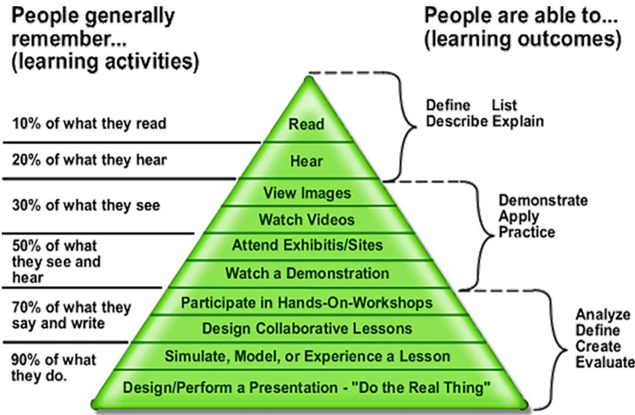
Figure 1 Edgar Dale's Cone of Experience shows that after two weeks we mainly remember information coming from what we have told or done (active participation), rather than those ones coming from what we have read, listened to or looked at. Audio-visual stimuli together, but with Figure 1. Edgar Dale's Cone of Experience shows that after two weeks we mainly remember information coming from what we have told or done (active participation), rather than those ones coming from what wehaveread, listened to or looked at. Audio-visual stimuli together, but with passive engagement, are in the middle of the cone. Image source: http: // www.edutechie.ws / 2007 / 10 / 09 / cone-of-experience-media / , Author Je rey Anderson.
Figure 1 Edgar Dale's Cone of Experience shows that after two weeks we mainly remember information coming from what we have told or done (active participation), rather than those ones coming from what we have read, listened to or looked at. Audio-visual stimuli together, but with Figure 1. Edgar Dale's Cone of Experience shows that after two weeks we mainly remember information coming from what we have told or done (active participation), rather than those ones coming from what wehaveread, listened to or looked at. Audio-visual stimuli together, but with passive engagement, are in the middle of the cone. Image source: http: // www.edutechie.ws / 2007 / 10 / 09 / cone-of-experience-media / , Author Je rey Anderson.CC-BY · From the PDF
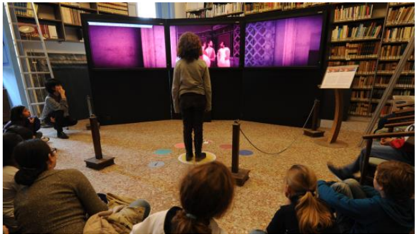
Figure 2 Virtual Museum of the Tiber Valley, VR with gesture-based interaction, here presented in Villa Celimontana in Rome in 2014. The permanent installation is at the National Etruscan Museum Figure 2. Virtual Museum of the Tiber Valley, VR with gesture-based interaction, here presented in Villa Celimontana in Rome in 2014. The permanent installation is at the National Etruscan Museum of Villa Giulia, Rome. Realized by CNR ITABC in 2014.
Figure 2 Virtual Museum of the Tiber Valley, VR with gesture-based interaction, here presented in Villa Celimontana in Rome in 2014. The permanent installation is at the National Etruscan Museum Figure 2. Virtual Museum of the Tiber Valley, VR with gesture-based interaction, here presented in Villa Celimontana in Rome in 2014. The permanent installation is at the National Etruscan Museum of Villa Giulia, Rome. Realized by CNR ITABC in 2014.CC-BY · From the PDF
Image 3
CC-BY · From the PDF
Figure 3 Big holographic showcase in Byzantine and Christian Museum of Athens. Realized by CNR Figure 3. Big holographic showcase in Byzantine and Christian Museum of Athens. Realized by CNR ITABC and E.V.O.CA. s.r.l. in 2018, within the EU CEMEC project framework.
Figure 3 Big holographic showcase in Byzantine and Christian Museum of Athens. Realized by CNR Figure 3. Big holographic showcase in Byzantine and Christian Museum of Athens. Realized by CNR ITABC and E.V.O.CA. s.r.l. in 2018, within the EU CEMEC project framework.CC-BY · From the PDF
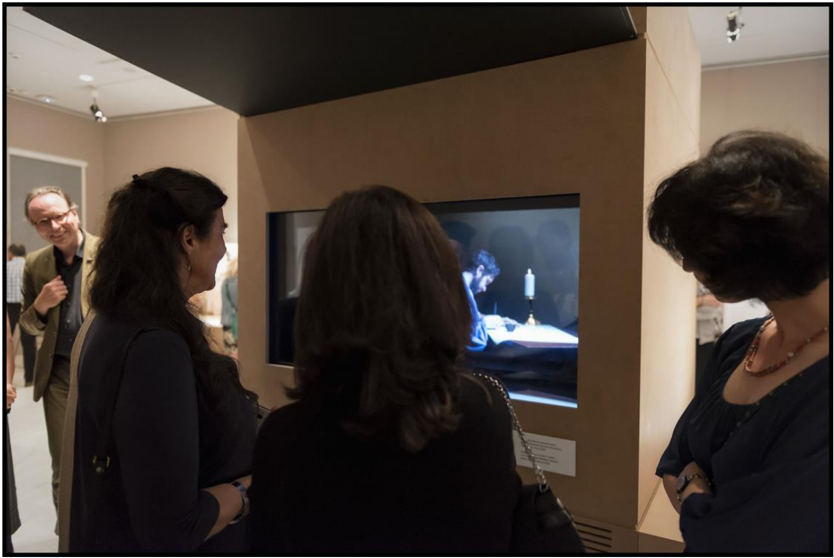
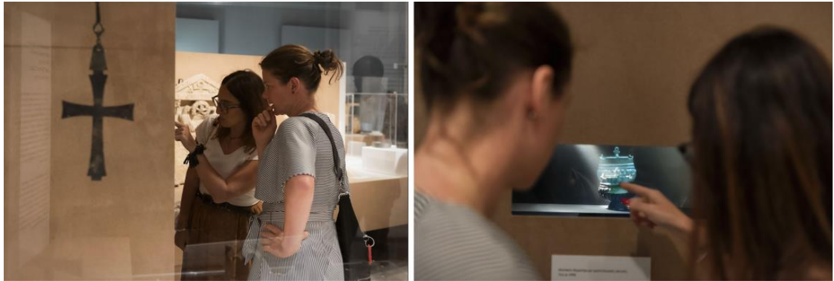
Figure 4 Small holographic showcase where the hologram interacts with the real object inside, Byzantine and Christian Museum in Athens, 2018. Realized by Moobels and APM within the EU CEMEC project framework.
Figure 4 Small holographic showcase where the hologram interacts with the real object inside, Byzantine and Christian Museum in Athens, 2018. Realized by Moobels and APM within the EU CEMEC project framework.CC-BY · From the PDF
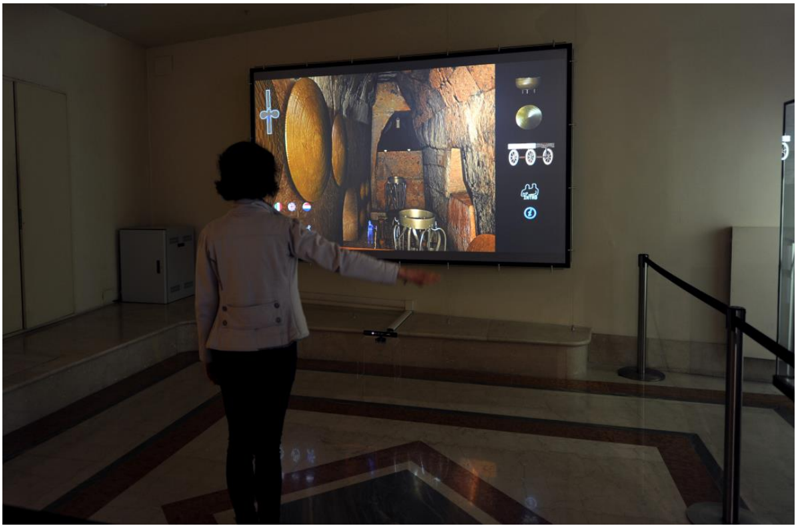
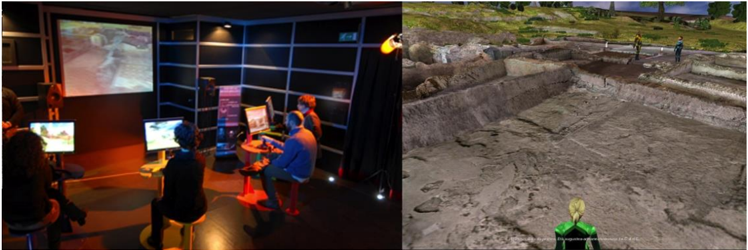
Figure 5 Room in the Vatican Museums dedicated to the virtual exploration of the Regolini Galassi Tomb. Permanent VR installation with gesture based interaction, realized in 2013 by CNR ITABC in collaboration with the Vatican Museums in the EU Etruscanning project framework. In this case the application can be explored after the visit of the room hosting the real objects of the funerary good. The visitor can recognize them in the virtual reconstruction, digitally restored. Figure 5. Room in the Vatican Museums dedicated to the virtual exploration of the Regolini Galassi Tomb. Permanent VR installation with gesture based interaction, realized in 2013 by CNR ITABC in collaboration with the Vatican Museums in the EU Etruscanning project framework. In this case the application can be explored after the visit of the room hosting the real objects of the funerary good. The visitor can recognize them in the virtual reconstruction, digitally restored.
Figure 5 Room in the Vatican Museums dedicated to the virtual exploration of the Regolini Galassi Tomb. Permanent VR installation with gesture based interaction, realized in 2013 by CNR ITABC in collaboration with the Vatican Museums in the EU Etruscanning project framework. In this case the application can be explored after the visit of the room hosting the real objects of the funerary good. The visitor can recognize them in the virtual reconstruction, digitally restored. Figure 5. Room in the Vatican Museums dedicated to the virtual exploration of the Regolini Galassi Tomb. Permanent VR installation with gesture based interaction, realized in 2013 by CNR ITABC in collaboration with the Vatican Museums in the EU Etruscanning project framework. In this case the application can be explored after the visit of the room hosting the real objects of the funerary good. The visitor can recognize them in the virtual reconstruction, digitally restored.CC-BY · From the PDF
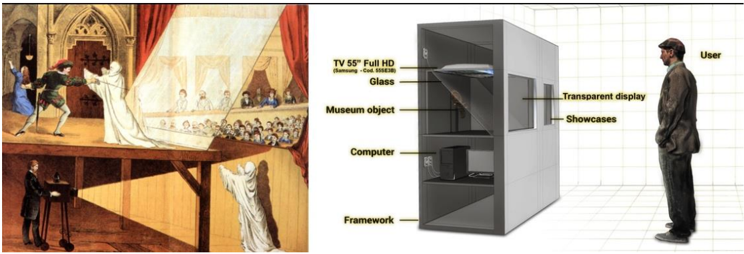
Figure 6 The Pepper's Ghost technique used in theaters in the nineteenth century (left), and scheme of the current set up using digital technologies (right). Figure 6. The Pepper's Ghost technique used in theaters in the nineteenth century (left), and scheme of the current set up using digital technologies (right).
Figure 6 The Pepper's Ghost technique used in theaters in the nineteenth century (left), and scheme of the current set up using digital technologies (right). Figure 6. The Pepper's Ghost technique used in theaters in the nineteenth century (left), and scheme of the current set up using digital technologies (right).CC-BY · From the PDF
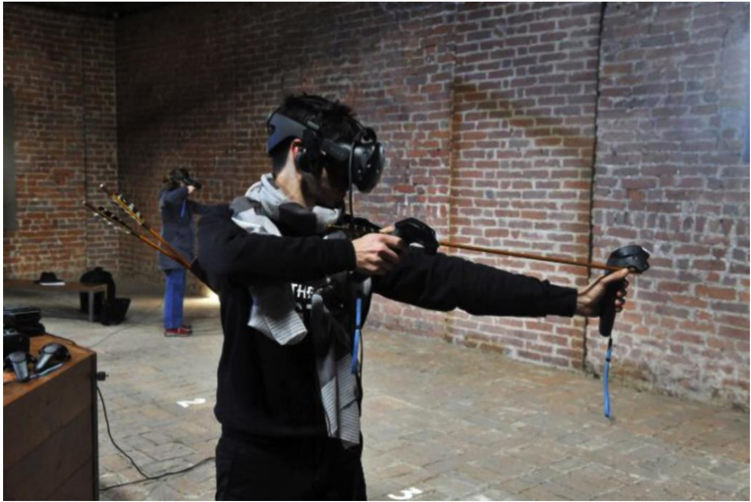
Figure 7 'Beyond The Castle' makes the user protagonist of a game through the battlements of Sforzesco Castle. A Head Mounted Display and interactive handpieces are used. Realized by Beyond the Gate, at the Castello Sforzesco in Milan, 2018. Figure 7. 'Beyond The Castle' makes the user protagonist of a game through the battlements of Sforzesco Castle. A Head Mounted Display and interactive handpieces are used. Realized by Beyond the Gate, at the Castello Sforzesco in Milan, 2018.
Figure 7 'Beyond The Castle' makes the user protagonist of a game through the battlements of Sforzesco Castle. A Head Mounted Display and interactive handpieces are used. Realized by Beyond the Gate, at the Castello Sforzesco in Milan, 2018. Figure 7. 'Beyond The Castle' makes the user protagonist of a game through the battlements of Sforzesco Castle. A Head Mounted Display and interactive handpieces are used. Realized by Beyond the Gate, at the Castello Sforzesco in Milan, 2018.CC-BY · From the PDF
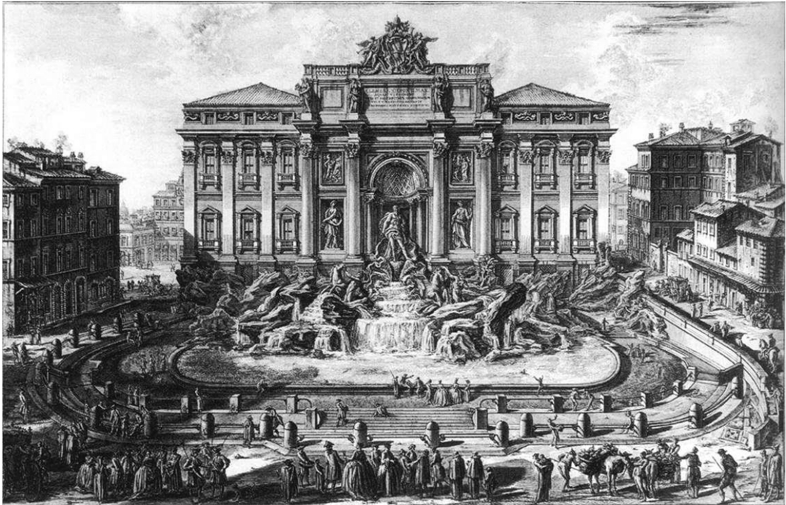
Figure 8 Giovan Battista Piranesi, The Trevi Fountain in Rome, copper engraving, 1773. Figure 8. Giovan Battista Piranesi, The Trevi Fountain in Rome, copper engraving, 1773.
Figure 8 Giovan Battista Piranesi, The Trevi Fountain in Rome, copper engraving, 1773. Figure 8. Giovan Battista Piranesi, The Trevi Fountain in Rome, copper engraving, 1773.CC-BY · From the PDF
Image 10
CC-BY · From the PDF
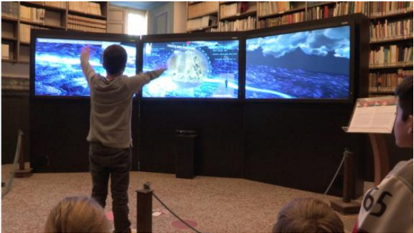
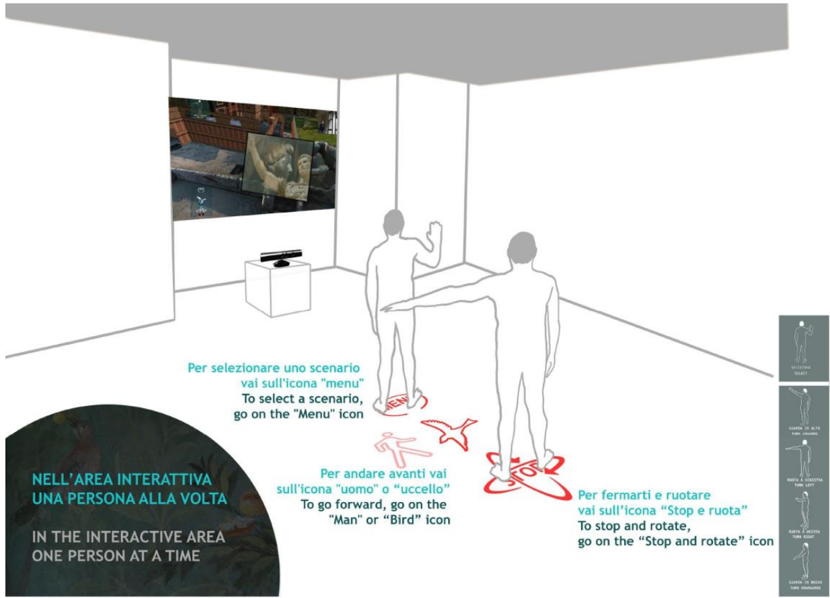
Figure 10 Gestures grammar lets the user interact with Livia's Villa Reloaded VR installation: flight over the archaeological site, walk through the reconstructed villa. Realized by CNR ITABC in collaboration with E.V.O.CA. in 2014, for the National Roman Museum, Diocletian's Baths. Figure 10. Gestures grammar lets the user interact with Livia's Villa Reloaded VR installation: flight over the archaeological site, walk through the reconstructed villa. Realized by CNR ITABC in collaboration with E.V.O.CA. in 2014, for the National Roman Museum, Diocletian's Baths.
Figure 10 Gestures grammar lets the user interact with Livia's Villa Reloaded VR installation: flight over the archaeological site, walk through the reconstructed villa. Realized by CNR ITABC in collaboration with E.V.O.CA. in 2014, for the National Roman Museum, Diocletian's Baths. Figure 10. Gestures grammar lets the user interact with Livia's Villa Reloaded VR installation: flight over the archaeological site, walk through the reconstructed villa. Realized by CNR ITABC in collaboration with E.V.O.CA. in 2014, for the National Roman Museum, Diocletian's Baths.CC-BY · From the PDF
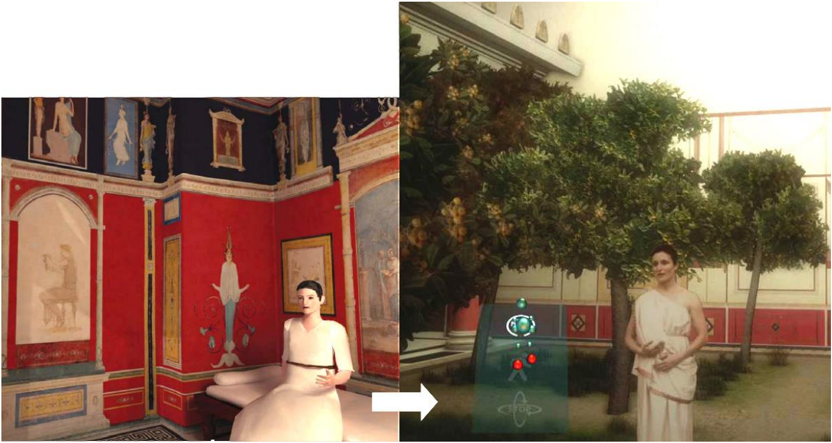
Figure 11 Livia's Villa VR. reconstructed villa with Empress Livia telling her private stories in the cubiculum and in the private garden. In the first version of 2008 characters were used, in the updated version of 2014 they were replaced by real actors. CNR ITABC, National Roman Museum of Diocletian's Baths, Rome. Figure 11. Livia's Villa VR. reconstructed villa with Empress Livia telling her private stories in the cubiculum and in the private garden. In the first version of 2008 characters were used, in the updated version of 2014 they were replaced by real actors. CNR ITABC, National Roman Museum of Diocletian's Baths, Rome.
Figure 11 Livia's Villa VR. reconstructed villa with Empress Livia telling her private stories in the cubiculum and in the private garden. In the first version of 2008 characters were used, in the updated version of 2014 they were replaced by real actors. CNR ITABC, National Roman Museum of Diocletian's Baths, Rome. Figure 11. Livia's Villa VR. reconstructed villa with Empress Livia telling her private stories in the cubiculum and in the private garden. In the first version of 2008 characters were used, in the updated version of 2014 they were replaced by real actors. CNR ITABC, National Roman Museum of Diocletian's Baths, Rome.CC-BY · From the PDF
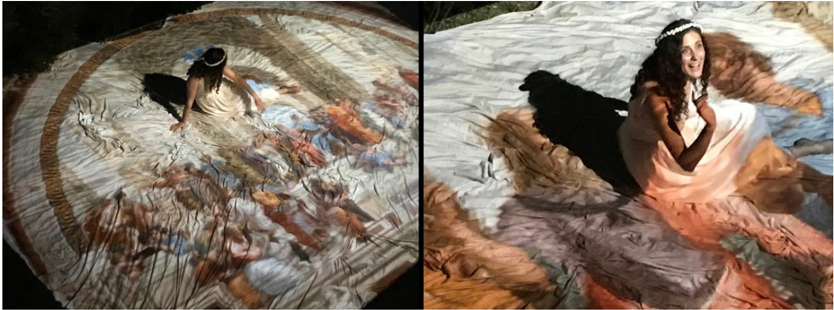
Figure 12 Site-specific installation dedicated to Raffaello Sanzio's School of Athens . Realized by Teatro Potlach with CNR ITABC and presented in Invisible Cities, Fara in Sabina, 2019. Figure 12. Site-specific installation dedicated to Ra aello Sanzio's School of Athens . Realized by Teatro Potlach with CNR ITABC and presented in Invisible Cities, Fara in Sabina, 2019.
Figure 12 Site-specific installation dedicated to Raffaello Sanzio's School of Athens . Realized by Teatro Potlach with CNR ITABC and presented in Invisible Cities, Fara in Sabina, 2019. Figure 12. Site-specific installation dedicated to Ra aello Sanzio's School of Athens . Realized by Teatro Potlach with CNR ITABC and presented in Invisible Cities, Fara in Sabina, 2019.CC-BY · From the PDF
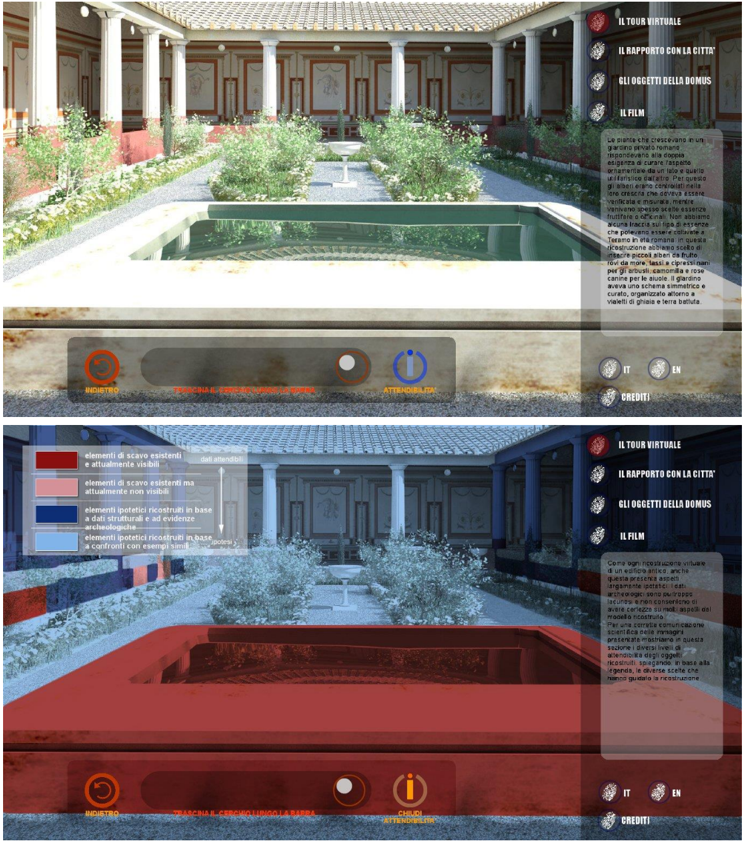
Figure 13 Virtual reconstruction of Domus S. Anna in Teramo. Above the 3D model of the reconstructed peristylium . Below the codification through colors of the different levels of reliability, on the basis of the available interpretative sources. Realized by CNR ITABC, 2011, Archaeological Figure 13. Virtual reconstruction of Domus S. Anna in Teramo. Above the 3D model of the reconstructed peristylium . Below the codification through colors of the di erent levels of reliability, on the basis of the available interpretative sources. Realized by CNR ITABC, 2011, Archaeological Museum in Teramo.
Figure 13 Virtual reconstruction of Domus S. Anna in Teramo. Above the 3D model of the reconstructed peristylium . Below the codification through colors of the different levels of reliability, on the basis of the available interpretative sources. Realized by CNR ITABC, 2011, Archaeological Figure 13. Virtual reconstruction of Domus S. Anna in Teramo. Above the 3D model of the reconstructed peristylium . Below the codification through colors of the di erent levels of reliability, on the basis of the available interpretative sources. Realized by CNR ITABC, 2011, Archaeological Museum in Teramo.CC-BY · From the PDF
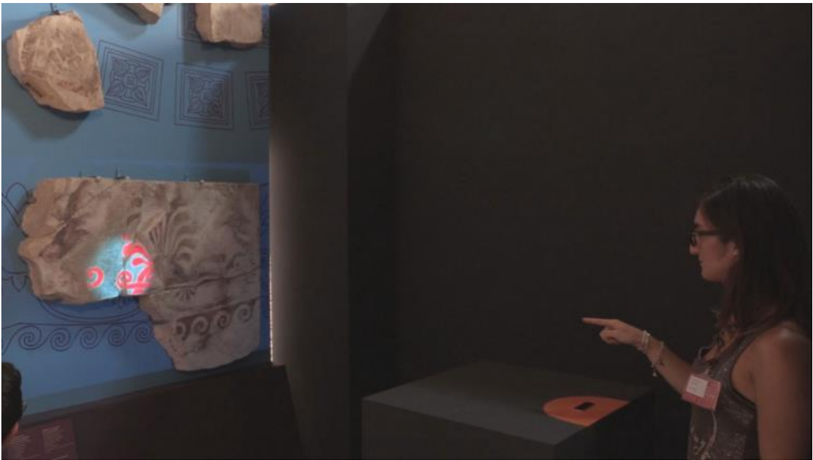
Figure 14 Revealing flashlight , Keys to Rome exhibition at Trajan Markets in 2015 (http://keys2rome.eu/). The color is directly projected on the original artifacts through a virtual flashlight controlled by the user's finger, thanks to the use of Leap Motion sensor. Figure 14. Revealing flashlight , Keys to Rome exhibition at Trajan Markets in 2015 (http: // keys2rome.eu / ). The color is directly projected on the original artifacts through a virtual flashlight controlled by the user's finger, thanks to the use of Leap Motion sensor.
Figure 14 Revealing flashlight , Keys to Rome exhibition at Trajan Markets in 2015 (http://keys2rome.eu/). The color is directly projected on the original artifacts through a virtual flashlight controlled by the user's finger, thanks to the use of Leap Motion sensor. Figure 14. Revealing flashlight , Keys to Rome exhibition at Trajan Markets in 2015 (http: // keys2rome.eu / ). The color is directly projected on the original artifacts through a virtual flashlight controlled by the user's finger, thanks to the use of Leap Motion sensor.CC-BY · From the PDF

Verification

Claims the paper makes

The claims and statistics of this paper haven’t been checked yet.

Run the check — free, no account needed. It reads the open-access text and checks the sources it cites.

A few free checks a day · papers already verified open instantly · results are public

Claims other papers make about this one

Each is checked against this paper’s own text: does it say what the citing paper says it does?

Self-check

Percentages, sums and reported differences re-computed from the paper’s own numbers.

The self-check needs the paper’s full text.

Citations

Cites

Show all 32 references

Research works printed but not linked: 10

  1. Goleman, D. (1996). Emotional Intelligence: Why It Can Matter More Than IQ, Bloomsbury.
  2. Veneziani, M. (2001, January 4–6). Experientia. Lessico Intellettuale Europeo. Proceedings of the X Colloquio Internazionale, Roma, Italy.
  3. Norman, D. (2013). The Design of Everyday Things, Basic Book. Revised & Expanded Edition.
  4. Vayanou, M., Karvounis, M., Kyriakidi, M., Katifori, A., Manola, N., Roussou, M., and Ioannidis, Y. (2012, January 31). Towards Personalized Storytelling for Museum Visits. Proceedings of the 6th International Workshop on Personalized Access, Profile Management, and Context Awareness in Databases (PersDB 2012), Istanbul, Turkey.
  5. Forte, M., Pietroni, E., and Rufa, C. (2002, January 25–27). Musealising the Virtual: The Virtual Reality Project of the Scrovegni Chapel of Padua. Proceedings of the Eighth International Conference on Virtual Systems and Multimedia (VSMM) “Creative and Digital Culture”, Gyeongjiu, Korea.
  6. Pietroni, 2013, Natural Interaction in VR environments for Cultural Heritage: The virtual reconstruction of the Regolini Galassi Tomb in Cerveteri, Archeologia e Calcolatori, 24, 231
  7. Campana, 2015, Lucus Feroniae and Tiber Valley Virtual Museum: From documentation and 3D reconstruction, up to a novel approach in storytelling, combining virtual reality, theatrical and cinematographic rules, gesture-based interaction and “augmented” perception of the archaeological context, Proceedings of the 43rd Conference CAA 2015 Siena, Keep the Revolution Going, Siena, Italy, 30 March–3 April 2015, Volume 1, 67
  8. Ryan, M.L. (2001). Narrative as Virtual Reality: Immersion and Interactivity, Johns Hopkins University Press. Literature and Electronic Media.
  9. Al-Qawasmi, J., Chiuni, M.A., and El-Hakim, S. (2008). Cultural mirrors: An epistemological approach to artificial life for cultural heritage communication. Digital Media and its Applications in Cultural Heritage, CSAAR Press.
  10. Cochetti, 2018, Caracalla IVD: Un tuffo nel passato—Come nasce un progetto di visita immersive, Archeomatica, 2, 10

Metadata

Authors
Pietroni, E.
Affiliations
CNR, Department of Human and Social Science and Cultural Heritage (DSU), Institute of Sciences for Cultural Heritage (CNR ISPC), 00015 Rome, Italy
Venue
Applied System Innovation
Publisher
MDPI AG
Published
2019-10-30
Volume
2
Issue
4
Pages
35
ISSN
2571-5577
Cited by
49
References
32
Language
en

About these checks

Registry, retraction, Cites and statistics results are computed, not judged, with one exception: a printed reference that no index lists is read once by a model before it counts as a citation error. Claims are extracted by a model and kept only when their quote appears verbatim in the text; each cited source is then checked, with a model’s help, for whether it says what the claim relies on. Those verdicts can be wrong — read the claim’s quote and the cited source before relying on one.

Statistics and arithmetic are recomputed, not judged.

Confidence bands are shown only for fields calibrated on our annotated test set. None is calibrated yet, so no band is shown.

What counts as a claim ›How we measure confidence ›How we check this ›

Are you an author, or do you see a problem with this page? Request a review

How to cite

Cite CoChat for the checks on this page, and the paper for its own findings.

This page
CoChat. (2026). Citation check: Experience Design, Virtual Reality and Media Hybridization for the Digital Communication Inside Museums. https://app.cochat.ai/papers/10.3390/asi2040035
The paper
Pietroni, E. (2019). Experience Design, Virtual Reality and Media Hybridization for the Digital Communication Inside Museums. Applied System Innovation. https://doi.org/10.3390/asi2040035

Data sources

Bibliographic data: Semantic Scholar, OpenAlex, Crossref.

Contains information from the Semantic Scholar Academic Graph Datasets, made available under the ODC Attribution License (ODC-BY 1.0).

Semantic Scholar’s data is described in: Kinney, R., et al. (2023). The Semantic Scholar Open Data Platform. arXiv:2301.10140.