

The DOI matches its Crossref record; 102 of the 103 references it cites were found in a registry or an index.
The Multifaceted Pyruvate Metabolism: Role of the Mitochondrial Pyruvate Carrier
Open accessAbstract
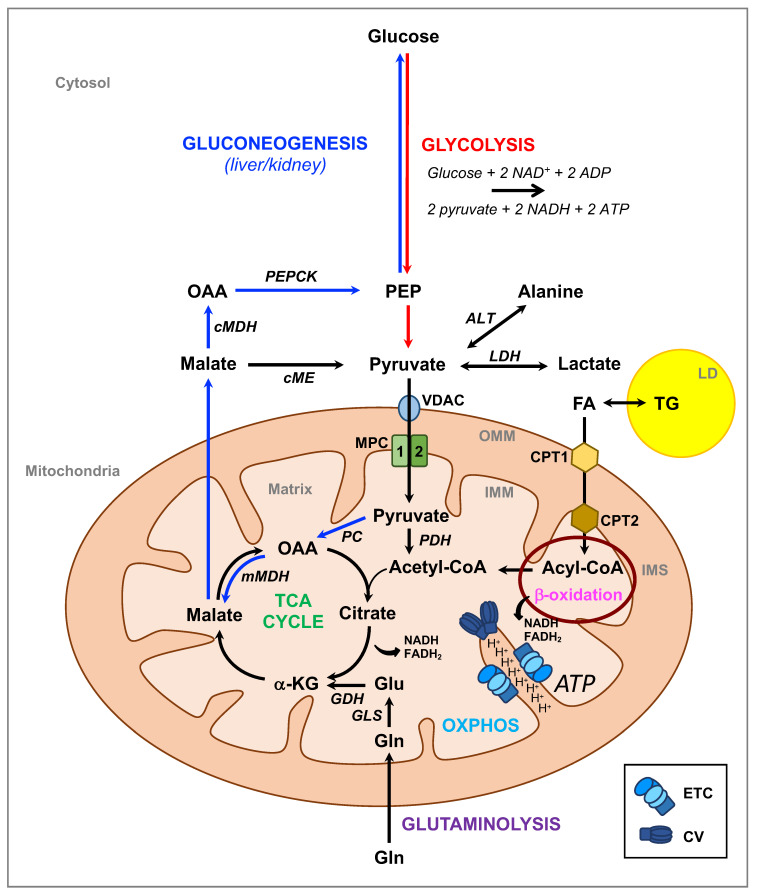
Pyruvate, the end product of glycolysis, plays a major role in cell metabolism. Produced in the cytosol, it is oxidized in the mitochondria where it fuels the citric acid cycle and boosts oxidative phosphorylation. Its sole entry point into mitochondria is through the recently identified mitochondrial pyruvate carrier (MPC). In this review, we report the latest findings on the physiology of the MPC and we discuss how a dysfunctional MPC can lead to diverse pathologies, including neurodegenerative diseases, metabolic disorders, and cancer.
Overview
The claims and statistics of this paper haven’t been checked yet.
Run the check — free, no account needed. It reads the open-access text and checks the sources it cites.
Integrity signals
Registry
Cites
Statistics
Figures
Verification
Claims the paper makes
The claims and statistics of this paper haven’t been checked yet.
Run the check — free, no account needed. It reads the open-access text and checks the sources it cites.
Claims other papers make about this one
Each is checked against this paper’s own text: does it say what the citing paper says it does?
The source backs part of the claim, not all of it — or backs it for a different population, condition or comparison.
In the citing paper
“Genetic or pharmacological inhibition of the MPC in the brain has been shown to affect diverse brain activities (Buchanan and Taylor, 2020; Zangari et al., 2020).”
From Inhibition of the mitochondrial pyruvate carrier in astrocytes reduces amyloid and tau accumulation in the 3xTgAD mouse model of Alzheimer's disease (2024) · cites this paper as Zangari et al., 2020
Experimental — accuracy not yet measured
Self-check
Percentages, sums and reported differences re-computed from the paper’s own numbers.
The self-check needs the paper’s full text.
Citations
Cites
Understanding the Warburg Effect: The Metabolic Requirements of Cell Proliferation
Vander Heiden, M. G., Cantley, L. C., & Thompson, C. B. (2009) · Science · doi:10.1126/science.1160809 · Cited by 16,197
On Respiratory Impairment in Cancer Cells
Warburg, O. H. (1956) · Science · doi:10.1126/science.124.3215.269 · Cited by 3,472
Brain energy metabolism: focus on Astrocyte-neuron metabolic cooperation
Bélanger, M., Allaman, I., & Magistretti, P. J. (2011) · Cell Metabolism · doi:10.1016/j.cmet.2011.08.016 · Cited by 2,313
Skeletal Muscle Insulin Resistance Is the Primary Defect in Type 2 Diabetes
DeFronzo, R. A., & Tripathy, D. (2009) · Diabetes Care · doi:10.2337/dc09-s302 · Cited by 2,102
Oxidative stress, dysfunctional glucose metabolism and Alzheimer disease
Butterfield, D. A., & Halliwell, B. (2019) · Nature Reviews Neuroscience · doi:10.1038/s41583-019-0132-6 · Cited by 1,954
Glucose feeds the TCA cycle via circulating lactate
Hui, S., Ghergurovich, J. M., Morscher, R. J., Jang, C., Teng, X., Lu, W., Esparza, L. A., Reya, T., Zhan, L., Yanxiang Guo, J., et al. (2017) · Nature · doi:10.1038/nature24057 · Cited by 1,721
Lactate Metabolism in Human Lung Tumors
Faubert, B., Li, K. Y., Cai, L., Hensley, C. T., Kim, J., Zacharias, L. G., Yang, C., Do, Q. N., Doucette, S., Burguete, D., et al. (2017) · Cell · doi:10.1016/j.cell.2017.09.019 · Cited by 1,343
Regulation of hepatic glucose metabolism in health and disease
Petersen, M. C., Vatner, D. F., & Shulman, G. I. (2017) · Nature Reviews Endocrinology · doi:10.1038/nrendo.2017.80 · Cited by 1,159
Tansey, M. G., & Goldberg, M. S. (2010) · Neurobiology of Disease · doi:10.1016/j.nbd.2009.11.004 · Cited by 1,045
Energy metabolism of cancer: Glycolysis versus oxidative phosphorylation (Review)
Zheng, J. (2012) · Oncology Letters · doi:10.3892/ol.2012.928 · Cited by 986
Lactate in the Regulation of Tumor Microenvironment and Therapeutic Approaches
de la Cruz-López, K. G., Castro-Muñoz, L. J., Reyes-Hernández, D. O., García-Carrancá, A., & Manzo-Merino, J. (2019) · Frontiers in Oncology · doi:10.3389/fonc.2019.01143 · Cited by 940
Athauda, D., Maclagan, K., Skene, S. S., Bajwa-Joseph, M., Letchford, D., Chowdhury, K., Hibbert, S., Budnik, N., Zampedri, L., Dickson, J., et al. (2017) · The Lancet · doi:10.1016/s0140-6736(17)31585-4 · Cited by 889
A Mitochondrial Pyruvate Carrier Required for Pyruvate Uptake in Yeast, Drosophila , and Humans
Bricker, D. K., Taylor, E. B., Schell, J. C., Orsak, T., Boutron, A., Chen, Y.-C., Cox, J. E., Cardon, C. M., Van Vranken, J. G., Dephoure, N., et al. (2012) · Science · doi:10.1126/science.1218099 · Cited by 843
Brain metabolism in health, aging, and neurodegeneration
Camandola, S., & Mattson, M. P. (2017) · The EMBO Journal · doi:10.15252/embj.201695810 · Cited by 752
Identification and Functional Expression of the Mitochondrial Pyruvate Carrier
Herzig, S., Raemy, E., Montessuit, S., Veuthey, J.-L., Zamboni, N., Westermann, B., Kunji, E. R. S., & Martinou, J.-C. (2012) · Science · doi:10.1126/science.1218530 · Cited by 747
Self-citationRegional aerobic glycolysis in the human brain
Vaishnavi, S. N., Vlassenko, A. G., Rundle, M. M., Snyder, A. Z., Mintun, M. A., & Raichle, M. E. (2010) · Proceedings of the National Academy of Sciences · doi:10.1073/pnas.1010459107 · Cited by 738
Yang, C., Ko, B., Hensley, C. T., Jiang, L., Wasti, A. T., Kim, J., Sudderth, J., Calvaruso, M. A., Lumata, L., Mitsche, M., et al. (2014) · Molecular Cell · doi:10.1016/j.molcel.2014.09.025 · Cited by 679
Lopaschuk, G. D., & Jaswal, J. S. (2010) · Journal of Cardiovascular Pharmacology · doi:10.1097/fjc.0b013e3181e74a14 · Cited by 636
Insulin regulation of gluconeogenesis
Hatting, M., Tavares, C. D. J., Sharabi, K., Rines, A. K., & Puigserver, P. (2017) · Annals of the New York Academy of Sciences · doi:10.1111/nyas.13435 · Cited by 625
The androgen receptor fuels prostate cancer by regulating central metabolism and biosynthesis
Massie, C. E., Lynch, A., Ramos‐Montoya, A., Boren, J., Stark, R., Fazli, L., Warren, A., Scott, H., Madhu, B., Sharma, N., et al. (2011) · The EMBO Journal · doi:10.1038/emboj.2011.158 · Cited by 624
A Mitochondrial Switch Promotes Tumor Metastasis
Porporato, P. E., Payen, V. L., Pérez‐Escuredo, J., Saedeleer, C. J. D., Danhier, P., Copetti, T., Dhup, S., Tardy, M., Vazeille, T., Bouzin, C., et al. (2014) · Cell Reports · doi:10.1016/j.celrep.2014.06.043 · Cited by 571
Metabolic Signaling in Fuel-Induced Insulin Secretion
Prentki, M., Matschinsky, F. M., & Madiraju, S. R. M. (2013) · Cell Metabolism · doi:10.1016/j.cmet.2013.05.018 · Cited by 548
Exenatide and the treatment of patients with Parkinson's disease
Aviles-Olmos, I., Dickson, J., Kefalopoulou, Z., Djamshidian, A., Ell, P., Soderlund, T., Whitton, P., Wyse, R., Isaacs, T., Lees, A., et al. (2013) · Journal of Clinical Investigation · doi:10.1172/jci68295 · Cited by 529
Schell, J. C., Olson, K. A., Jiang, L., Hawkins, A. J., Van Vranken, J. G., Xie, J., Egnatchik, R. A., Earl, E. G., DeBerardinis, R. J., & Rutter, J. (2014) · Molecular Cell · doi:10.1016/j.molcel.2014.09.026 · Cited by 363
Triggers, Facilitators, and Aggravators: Redefining Parkinson’s Disease Pathogenesis
Johnson, M., Stecher, B., Labrie, V., Brundin, L., & Brundin, P. (2018) · Trends in Neurosciences · doi:10.1016/j.tins.2018.09.007 · Cited by 320
Thiazolidinediones are acute, specific inhibitors of the mitochondrial pyruvate carrier
Divakaruni, A. S., Wiley, S. E., Rogers, G. W., Andreyev, A. Y., Petrosyan, S., Loviscach, M., Wall, E. A., Yadava, N., Heuck, A. P., Ferrick, D. A., et al. (2013) · Proceedings of the National Academy of Sciences · doi:10.1073/pnas.1303360110 · Cited by 308
Motor and Cognitive Advantages Persist 12 Months After Exenatide Exposure in Parkinson’s Disease
Avilés-Olmos, I., Dickson, J. C., Kefalopoulou, Z. M., Djamshidian, A., Kahan, J., Ell, P. J., Whitton, P. S., Wyse, R. K. H., Isaacs, T., Lees, A. J., et al. (2014) · Journal of Parkinson s Disease · doi:10.3233/jpd-140364 · Cited by 300
Regulation of Substrate Utilization by the Mitochondrial Pyruvate Carrier
Vacanti, N. M., Divakaruni, A. S., Green, C. R., Parker, S. J., Henry, R. R., Ciaraldi, T. P., Murphy, A. N., & Metallo, C. M. (2014) · Molecular Cell · doi:10.1016/j.molcel.2014.09.024 · Cited by 277
Metabolic cycling in control of glucose-stimulated insulin secretion
Jensen, M. V., Joseph, J. W., Ronnebaum, S. M., Burgess, S. C., Sherry, A. D., & Newgard, C. B. (2008) · American Journal of Physiology-Endocrinology and Metabolism · doi:10.1152/ajpendo.90604.2008 · Cited by 259
Cappel, D. A., Deja, S., Duarte, J. A. G., Kucejova, B., Iñigo, M., Fletcher, J. A., Fu, X., Berglund, E. D., Liu, T., Elmquist, J. K., et al. (2019) · Cell Metabolism · doi:10.1016/j.cmet.2019.03.014 · Cited by 242
Gray, L. R., Sultana, M. R., Rauckhorst, A. J., Oonthonpan, L., Tompkins, S. C., Sharma, A., Fu, X., Miao, R., Pewa, A. D., Brown, K., et al. (2015) · Cell Metabolism · doi:10.1016/j.cmet.2015.07.027 · Cited by 218
McCommis, K. S., Chen, Z., Fu, X., McDonald, W. G., Colca, J. R., Kletzien, R. F., Burgess, S. C., & Finck, B. N. (2015) · Cell Metabolism · doi:10.1016/j.cmet.2015.07.028 · Cited by 211
Harrison, S. A., Alkhouri, N., Davison, B. A., Sanyal, A., Edwards, C., Colca, J. R., Lee, B. H., Loomba, R., Cusi, K., Kolterman, O., et al. (2020) · Journal of Hepatology · doi:10.1016/j.jhep.2019.10.023 · Cited by 211
Kim, J., Yu, L., Chen, W., Xu, Y., Wu, M., Todorova, D., Tang, Q., Feng, B., Jiang, L., Chen, G., et al. (2019) · Cancer Cell · doi:10.1016/j.ccell.2018.12.012 · Cited by 205
Ahmed, S. S. S. J., Santosh, W., Kumar, S., & Christlet, H. T. T. (2009) · Journal of Biomedical Science · doi:10.1186/1423-0127-16-63 · Cited by 197
Ghosh, A., Tyson, T., George, S., Hildebrandt, E. N., Steiner, J. A., Madaj, Z., Schulz, E., Machiela, E., McDonald, W. G., Galvis, M. L. E., et al. (2016) · Science Translational Medicine · doi:10.1126/scitranslmed.aag2210 · Cited by 193
Jézégou, A., Llinares, E., Anne, C., Kieffer‐Jaquinod, S., O’Regan, S., Aupetit, J., Chabli, A., Sagné, C., Debacker, C., Chadefaux, B., et al. (2012) · Proceedings of the National Academy of Sciences · doi:10.1073/pnas.1211198109 · Cited by 192
Corbet, C., Bastien, E., Draoui, N., Doix, B., Mignion, L., Jordan, B. F., Marchand, A., Vanherck, J., Chaltin, P., Schakman, O., et al. (2018) · Nature Communications · doi:10.1038/s41467-018-03525-0 · Cited by 189
Yetkin-Arik, B., Vogels, I. M. C., Nowak-Sliwinska, P. M., Weiss, A., Houtkooper, R. H., Noorden, C. J. F. V., Klaassen, I., & Schlingemann, R. O. (2019) · Scientific Reports · doi:10.1038/s41598-019-48676-2 · Cited by 189
Structure and function of SemiSWEET and SWEET sugar transporters
Feng, L., & Frommer, W. B. (2015) · Trends in Biochemical Sciences · doi:10.1016/j.tibs.2015.05.005 · Cited by 173
Regulation of Tumor Initiation by the Mitochondrial Pyruvate Carrier
Bensard, C., Wisidagama, D. R., Olson, K. A., Berg, J. A., Krah, N. M., Schell, J. C., Nowinski, S. M., Fogarty, S., Bott, A. J., Wei, P., et al. (2019) · Cell Metabolism · doi:10.1016/j.cmet.2019.11.002 · Cited by 170
Inhibition of the mitochondrial pyruvate carrier protects from excitotoxic neuronal death
Divakaruni, A. S., Wallace, M., Buren, C., Martyniuk, K. M., Andreyev, A. Y., Li, E., Fields, J. A., Cordes, T., Reynolds, I. J., Bloodgood, B. L., et al. (2017) · The Journal of Cell Biology · doi:10.1083/jcb.201612067 · Cited by 169
Bader, D. A., Hartig, S. M., Putluri, V., Foley, C., Hamilton, M. P., Smith, E. A., Saha, P., Panigrahi, A., Walker, C. M., Zong, L., et al. (2018) · Nature Metabolism · doi:10.1038/s42255-018-0002-y · Cited by 168
The transport of pyruvate in rat liver mitochondria
Papa, S., Francavilla, A., Paradies, G., & Meduri, B. (1971) · FEBS Letters · doi:10.1016/0014-5793(71)80200-4 · Cited by 166
Glucose metabolism in nerve terminals
Ashrafi, G., & Ryan, T. A. (2017) · Current Opinion in Neurobiology · doi:10.1016/j.conb.2017.03.007 · Cited by 151
McCommis, K. S., Hodges, W. T., Brunt, E. M., Nalbantoglu, I., McDonald, W. G., Holley, C. L., Fujiwara, H., Schaffer, J. E., Colca, J. R., & Finck, B. N. (2016) · Hepatology · doi:10.1002/hep.29025 · Cited by 139
Regulation of mitochondrial pyruvate uptake by alternative pyruvate carrier complexes
Bender, T., Pena, G., & Martinou, J. (2015) · The EMBO Journal · doi:10.15252/embj.201490197 · Cited by 134
Self-citationBrauer, R., Bhaskaran, K., Chaturvedi, N., Dexter, D. T., Smeeth, L. L., & Douglas, I. (2015) · PLoS Medicine · doi:10.1371/journal.pmed.1001854 · Cited by 130
Rossi, A., Rigotto, G., Valente, G., Giorgio, V., Basso, E., Filadi, R., & Pizzo, P. (2020) · Cell Reports · doi:10.1016/j.celrep.2020.01.060 · Cited by 109
Glitazone use associated with reduced risk of Parkinson's disease
Brakedal, B., Flønes, I. H., Reiter, S. F., Torkildsen, Ø., Dölle, C., Aßmus, J., Haugarvoll, K., & Tzoulis, C. (2017) · Movement Disorders · doi:10.1002/mds.27128 · Cited by 108
Engrailed homeoprotein blocks degeneration in adult dopaminergic neurons through LINE‐1 repression
de Thé, F.-X. B., Rekaik, H., Pezé-Heidsieck, E., Massiani-Beaudoin, O., Joshi, R. L., Fuchs, J., & Prochiantz, A. (2018) · The EMBO Journal · doi:10.15252/embj.201797374 · Cited by 104
Vigueira, P. A., McCommis, K. S., Schweitzer, G. G., Remedi, M. S., Chambers, K. T., Fu, X., McDonald, W. G., Cole, S. L., Colca, J. R., Kletzien, R. F., et al. (2014) · Cell Reports · doi:10.1016/j.celrep.2014.05.017 · Cited by 103
Loss of MPC1 reprograms retinal metabolism to impair visual function
Grenell, A., Wang, Y., Yam, M., Swarup, A., Dilan, T. L., Hauer, A., Linton, J. D., Philp, N. J., Gregor, E., Zhu, S., et al. (2019) · Proceedings of the National Academy of Sciences · doi:10.1073/pnas.1812941116 · Cited by 101
Patterson, J. N., Cousteils, K., Lou, J. W., Manning Fox, J. E., MacDonald, P. E., & Joseph, J. W. (2014) · Journal of Biological Chemistry · doi:10.1074/jbc.m113.521666 · Cited by 98
Compan, V., Pierredon, S., Vanderperre, B., Krznar, P., Marchiq, I., Zamboni, N., Pouysségur, J., & Martinou, J. (2015) · Molecular Cell · doi:10.1016/j.molcel.2015.06.035 · Cited by 92
Self-citationImpaired mitochondrial pyruvate importation in a patient and a fetus at risk
Brivet, M. (2003) · Molecular Genetics and Metabolism · doi:10.1016/s1096-7192(03)00016-7 · Cited by 92
Zhong, Y., Li, X., Yu, D., Li, X., Li, Y., Long, Y., Yuan, Y., Ji, Z., Zhang, M., Wen, J., et al. (2015) · Oncotarget · doi:10.18632/oncotarget.5386 · Cited by 85
Tompkins, S. C., Sheldon, R. D., Rauckhorst, A. J., Noterman, M. F., Solst, S. R., Buchanan, J. L., Mapuskar, K. A., Pewa, A. D., Gray, L. R., Oonthonpan, L., et al. (2019) · Cell Reports · doi:10.1016/j.celrep.2019.07.098 · Cited by 79
What Effects Might Exenatide have on Non-Motor Symptoms in Parkinson’s Disease: A Post Hoc Analysis
Athauda, D. S., Maclagan, K., Budnik, N., Zampedri, L., Hibbert, S., Skene, S. S., Chowdhury, K., Avilés-Olmos, I., Limousin, P. D., & Foltynie, T. (2018) · Journal of Parkinson s Disease · doi:10.3233/jpd-181329 · Cited by 79
Li, X., Han, G., Li, X., Kan, Q., Fan, Z., Li, Y., Ji, Y., Zhao, J., Zhang, M., Grigalavicius, M., et al. (2017) · Oncotarget · doi:10.18632/oncotarget.18199 · Cited by 78
Li, D., Wang, C., Ma, P., Yu, Q., Gu, M., Dong, L., Jiang, W., Pan, S., Xie, C., Han, J., et al. (2018) · Cell Death and Disease · doi:10.1038/s41419-018-0494-0 · Cited by 77
Rauckhorst, A. J., Gray, L. R., Sheldon, R. D., Fu, X., Pewa, A. D., Feddersen, C. R., Dupuy, A. J., Gibson-Corley, K. N., Cox, J. E., Burgess, S. C., et al. (2017) · Molecular Metabolism · doi:10.1016/j.molmet.2017.09.002 · Cited by 74
The yeast mitochondrial pyruvate carrier is a hetero-dimer in its functional state
Tavoulari, S., Thangaratnarajah, C., Mavridou, V., Harbour, M. E., Martinou, J., & Kunji, E. R. (2019) · The EMBO Journal · doi:10.15252/embj.2018100785 · Cited by 73
Self-citationMitochondrial pyruvate and fatty acid flux modulate MICU1-dependent control of MCU activity
Nemani, N., Dong, Z., Daw, C. C., Madaris, T. R., Karthik, R., Enslow, B. T., Rubannelsonkumar, C. S., Shanmughapriya, S., Mallireddigari, V., Maity, S., et al. (2020) · Science Signaling · doi:10.1126/scisignal.aaz6206 · Cited by 71
Sharma, A., Oonthonpan, L., Sheldon, R. D., Rauckhorst, A. J., Zhu, Z., Tompkins, S. C., Cho, K., Grzesik, W. J., Gray, L. R., Scerbo, D. A., et al. (2019) · eLife · doi:10.7554/elife.45873 · Cited by 68
Bioenergetics failure in neurodegenerative diseases: back to the future
Saxena, U. (2012) · Expert Opinion on Therapeutic Targets · doi:10.1517/14728222.2012.664135 · Cited by 67
Vanderperre, B., Herzig, S., Krznar, P., Hörl, M., Ammar, Z., Montessuit, S., Pierredon, S., Zamboni, N., & Martinou, J. (2016) · PLoS Genetics · doi:10.1371/journal.pgen.1006056 · Cited by 67
Self-citationDecreased Mitochondrial Pyruvate Transport Activity in the Diabetic Heart
Vadvalkar, S. S., Matsuzaki, S., Eyster, C. A., Giorgione, J. R., Bockus, L. B., Kinter, C. S., Kinter, M. T., & Humphries, K. M. (2017) · Journal of Biological Chemistry · doi:10.1074/jbc.m116.753509 · Cited by 63
Sugden, M. C., & Holness, M. J. (2011) · Islets · doi:10.4161/isl.3.6.17806 · Cited by 60
Cao, T., Liccardo, D., LaCanna, R., Zhang, X., Lü, R., Finck, B. N., Leigh, T., Chen, X., Drosatos, K., & Tian, Y. (2019) · Frontiers in Cell and Developmental Biology · doi:10.3389/fcell.2019.00042 · Cited by 60
Shah, R. C., Matthews, D. C., Andrews, R. D., Capuano, A. W., Fleischman, D. A., VanderLugt, J. T., & Colca, J. R. (2014) · Current Alzheimer Research · doi:10.2174/1567205011666140616113406 · Cited by 58
MPC1, a key gene in cancer metabolism, is regulated by COUPTFII in human prostate cancer
Wang, L., Xu, M., Qin, J., Lin, S., Lee, H.-J., Tsai, S. Y., & Tsai, M. (2016) · Oncotarget · doi:10.18632/oncotarget.7405 · Cited by 58
Sirt3 binds to and deacetylates mitochondrial pyruvate carrier 1 to enhance its activity
Liang, L., Li, Q., Huang, L., Li, D., & Li, X. (2015) · Biochemical and Biophysical Research Communications · doi:10.1016/j.bbrc.2015.11.036 · Cited by 56
Cui, J., Quan, M., Xie, D., Gao, Y., Guha, S., Fallon, M. B., Chen, J., & Xie, K. (2020) · Oncogene · doi:10.1038/s41388-019-1051-8 · Cited by 55
Human mitochondrial pyruvate carrier 2 as an autonomous membrane transporter
Nagampalli, R. S. K., Quesñay, J. E. N., Adamóski, D., Islam, Z., Birch, J., Sebinelli, H. G., Girard, R. M. B. M., Ascenção, C. F. R., Fala, A. M., Pauletti, B. A., et al. (2018) · Scientific Reports · doi:10.1038/s41598-018-21740-z · Cited by 53
Bowman, C. E., Zhao, L., Härtung, T., & Wolfgang, M. J. (2016) · Molecular and Cellular Biology · doi:10.1128/mcb.00166-16 · Cited by 52
Vanderperre, B., Cermakova, K., Escoffier, J., Kaba, M., Bender, T., Nef, S., & Martinou, J. (2016) · Journal of Biological Chemistry · doi:10.1074/jbc.m116.733840 · Cited by 52
Self-citationTimón‐Gómez, A., Proft, M., & Pascual‐Ahuir, A. (2013) · PLoS ONE · doi:10.1371/journal.pone.0079405 · Cited by 51
Takaoka, Y., Konno, M., Koseki, J., Colvin, H. S., Asai, A., Tamari, K., Satoh, T., Mori, M., Doki, Y., Ogawa, K., et al. (2019) · Cancer Science · doi:10.1111/cas.13980 · Cited by 49
Park, S. H., Safi, R., Liu, X., Baldi, R. M., Liu, W., Liu, J., Locasale, J. W., Chang, C., & McDonnell, D. P. (2019) · Cell Reports · doi:10.1016/j.celrep.2019.05.066 · Cited by 48
MPC1 and MPC2 expressions are associated with favorable clinical outcomes in prostate cancer
Li, X., Ji, Y., Han, G., Li, X., Fan, Z., Li, Y., Zhong, Y., Cao, J., Zhao, J., Zhang, M., et al. (2016) · BMC Cancer · doi:10.1186/s12885-016-2941-6 · Cited by 47
An ancestral role for the mitochondrial pyruvate carrier in glucose-stimulated insulin secretion
McCommis, K. S., Hodges, W. T., Bricker, D. K., Wisidagama, D. R., Compan, V., Remedi, M. S., Thummel, C. S., & Finck, B. N. (2016) · Molecular Metabolism · doi:10.1016/j.molmet.2016.06.016 · Cited by 44
Gomkale, R., Cruz‐Zaragoza, L. D., Suppanz, I., Guiard, B., Montoya, J., Callegari, S., Pacheu‐Grau, D., Warscheid, B., & Rehling, P. (2020) · Current Biology · doi:10.1016/j.cub.2020.01.024 · Cited by 42
Li, Y., Li, X., Kan, Q., Zhang, M., Li, X., Xu, R., Wang, J., Yu, D., Goscinski, M. A., Wen, J., et al. (2016) · Oncotarget · doi:10.18632/oncotarget.13717 · Cited by 41
Thiazolidinediones and Parkinson Disease: A Cohort Study
Connolly, J. G., Bykov, K., & Gagne, J. J. (2015) · American Journal of Epidemiology · doi:10.1093/aje/kwv109 · Cited by 39
Treating Hepatic Steatosis and Fibrosis by Modulating Mitochondrial Pyruvate Metabolism
McCommis, K. S., & Finck, B. N. (2019) · Cellular and Molecular Gastroenterology and Hepatology · doi:10.1016/j.jcmgh.2018.09.017 · Cited by 39
Rampelt, H., Sučec, I., Bersch, B., Horten, P., Perschil, I., Martinou, J., van der Laan, M., Wiedemann, N., Schanda, P., & Pfanner, N. (2020) · BMC Biology · doi:10.1186/s12915-019-0733-6 · Cited by 37
Self-citationMPC1 is essential for PGC-1α-induced mitochondrial respiration and biogenesis
Koh, E., Kim, Y. K., Shin, D., & Kim, K. (2018) · Biochemical Journal · doi:10.1042/bcj20170967 · Cited by 36
Tang, X., Chen, Q., Li, Y., Wang, Y., Zou, H., Fu, W., Niu, Q., Pan, Q., Jiang, P., Xu, X., et al. (2018) · Laboratory Investigation · doi:10.1038/s41374-018-0138-0 · Cited by 36
MPC1 deletion is associated with poor prognosis and temozolomide resistance in glioblastoma
Chai, Y., Wang, C., Liu, W., Fan, Y., & Zhang, Y. (2019) · Journal of Neuro-Oncology · doi:10.1007/s11060-019-03226-8 · Cited by 35
MPC1 deficiency accelerates lung adenocarcinoma progression through the STAT3 pathway
Zou, H., Chen, Q., Zhang, A., Wang, S., Wu, H., Yuan, Y., Wang, S., Yu, J. H., Luo, M., Wen, X., et al. (2019) · Cell Death and Disease · doi:10.1038/s41419-019-1324-8 · Cited by 34
Oonthonpan, L., Rauckhorst, A. J., Gray, L. R., Boutron, A., & Taylor, E. B. (2019) · JCI Insight · doi:10.1172/jci.insight.126132 · Cited by 31
Han, P., Wang, Y., Zhan, H., Weng, W., Yu, X., Ge, N., Wang, W., Song, G., Yi, T., Li, S., et al. (2019) · Europe PMC (PubMed Central) · Cited by 29
Stark, H., Fichtner, M., König, R., Lorkowski, S., & Schuster, S. (2015) · Biochimie · doi:10.1016/j.biochi.2015.09.017 · Cited by 23
Li, X., Li, Y., Han, G., Li, X., Ji, Y., Fan, Z., Zhong, Y., Cao, J., Zhao, J., Goscinski, M. A., et al. (2016) · Oncotarget · doi:10.18632/oncotarget.13210 · Cited by 23
Tai, Y., Cao, F., Li, M., Li, P., Xu, T., Wang, X., Yu, Y., Gu, B., Yu, X., Cai, X., et al. (2018) · Redox Biology · doi:10.1016/j.redox.2018.10.024 · Cited by 23
Mitochondrial pyruvate carrier modulates the epithelial-mesenchymal transition in cholangiocarcinoma
Ohashi, T., Eguchi, H., Kawamoto, K., Konno, M., Asai, A., Colvin, H. S., Ueda, Y., Takaoka, H., Iwagami, Y., Yamada, D., et al. (2017) · Oncology Reports · doi:10.3892/or.2017.6172 · Cited by 18
Medrano-Soto, A., Ghazi, F., Hendargo, K. J., Moreno‐Hagelsieb, G., Myers, S., & Saier, M. H. (2020) · PLoS ONE · doi:10.1371/journal.pone.0231085 · Cited by 18
Lee, J., Jin, Z., Lee, D., Yun, J.-H., & Lee, W. (2020) · International Journal of Molecular Sciences · doi:10.3390/ijms21093403 · Cited by 18
MSDC-0160 and MSDC-0602 Binding with Human Mitochondrial Pyruvate Carrier (MPC) 1 and 2 Heterodimer
Phelix, C. F., Bourdon, A. K., Dugan, J. L., Villareal, G., & Perry, G. L. (2017) · International Journal of Knowledge Discovery in Bioinformatics · doi:10.4018/ijkdb.2017070103 · Cited by 8
Mitochondrial Pyruvate Carrier 1 and 2 Heterodimer, In Silico, Models of Plant and Human Complexes
Dugan, J. L., Bourdon, A. K., & Phelix, C. F. (2017) · International Journal of Knowledge Discovery in Bioinformatics · doi:10.4018/ijkdb.2017070102 · Cited by 7
Alzheimer's and Parkinson's Disease Novel Therapeutic Target
Bourdon, A. K., Villareal, G., Perry, G. L., & Phelix, C. F. (2017) · International Journal of Knowledge Discovery in Bioinformatics · doi:10.4018/ijkdb.2017070104 · Cited by 4
Cited by
Sorted by citations
Energy metabolism in health and diseases
Liu, H., Wang, S., Wang, J., Guo, X., Song, Y., Fu, K., Gao, Z., Liu, D., He, W., & Yang, L. (2025) · Signal Transduction and Targeted Therapy · doi:10.1038/s41392-025-02141-x · Cited by 484
Valdebenito, S., Malik, S., Luu, R. H., Loudig, O. D., Mitchell, M. I., Okafo, G. N., Bhat, K., Prideaux, B., & Eugenín, E. A. (2021) · Scientific Reports · doi:10.1038/s41598-021-93775-8 · Cited by 120
Mitochondrial pyruvate metabolism regulates the activation of quiescent adult neural stem cells
Petrelli, F., Scandella, V., Montessuit, S., Zamboni, N., Martinou, J., & Knobloch, M. (2023) · Science Advances · doi:10.1126/sciadv.add5220 · Cited by 89
Self-citationEffects of Metabolism on Macrophage Polarization Under Different Disease Backgrounds
Sun, J., Xu, X., & Jin, L. (2022) · Frontiers in Immunology · doi:10.3389/fimmu.2022.880286 · Cited by 81
Cancer cell metabolism: Rewiring the mitochondrial hub
Oliveira, G. L., Coelho, A. R., Marques, R., & Oliveira, P. J. (2020) · Biochimica et Biophysica Acta (BBA) - Molecular Basis of Disease · doi:10.1016/j.bbadis.2020.166016 · Cited by 65
Metadata
- Authors
- Zangari, J., Petrelli, F., Maillot, B., & Martinou, J.-C.
- Affiliations
- University of Geneva (CH)
- Corresponding author
- Martinou, Jean-Claude
- Venue
- Biomolecules
- Publisher
- MDPI AG
- Published
- 2020-07-17
- Volume
- 10
- Issue
- 7
- Pages
- 1068
- ISSN
- 2218-273X (ISSN-L)
- PMC
- PMC7407832
- OpenAlex
- W3042494222
- Cited by
- 172
- References
- 103
- Citations by year
- 2026: 33 · 2025: 47 · 2024: 33 · 2023: 30 · 2022: 16 · 2021: 11 · 2020: 2
- FWCI
- 1.44
- Type
- journal article
- Language
- en
- Open access
- gold
- doi.org
- Licence
- Locations
- Biomolecules (publishedVersion, cc-by)
- PubMed Central (publishedVersion, cc-by)
- PubMed (publishedVersion)
- DOAJ (DOAJ: Directory of Open Access Journals) (submittedVersion, cc-by-sa)
- Funders
- Oncosuisse (KFS-4434-02-2018)
- Swiss National Foundation (31003A_179421)
- Topics
- Life Sciences › Biochemistry, Genetics and Molecular Biology › Molecular Biology › Mitochondrial Function and Pathology
- Life Sciences › Biochemistry, Genetics and Molecular Biology › Molecular Biology › Metabolism, Diabetes, and Cancer
- Life Sciences › Biochemistry, Genetics and Molecular Biology › Biochemistry › Biochemical Acid Research Studies
- Keywords
- pyruvate metabolism, mitochondrial pyruvate carrier, glycolysis, TCA cycle, oxidative phosphorylation, mitochondrial dysfunction, neurodegenerative diseases, metabolic disorders, cancer
- MeSH terms
- Animals, Gene Expression Regulation, Humans, Metabolic Diseases, Mitochondria, Neoplasms, Pyruvic Acid, Neurodegenerative Diseases, Monocarboxylic Acid Transporters, Mitochondrial Membrane Transport Proteins
About these checks
Registry, retraction, Cites and statistics results are computed, not judged, with one exception: a printed reference that no index lists is read once by a model before it counts as a citation error. Claims are extracted by a model and kept only when their quote appears verbatim in the text; each cited source is then checked, with a model’s help, for whether it says what the claim relies on. Those verdicts can be wrong — read the claim’s quote and the cited source before relying on one.
Statistics and arithmetic are recomputed, not judged.
Confidence bands are shown only for fields calibrated on our annotated test set. None is calibrated yet, so no band is shown.
What counts as a claim ›How we measure confidence ›How we check this ›
Are you an author, or do you see a problem with this page? Request a review
