

Research Progress in Calcitonin Gene-Related Peptide and Bone Repair
Open accessThe DOI matches its Crossref record; 135 of the 135 references it cites were found in a registry or an index.
Abstract
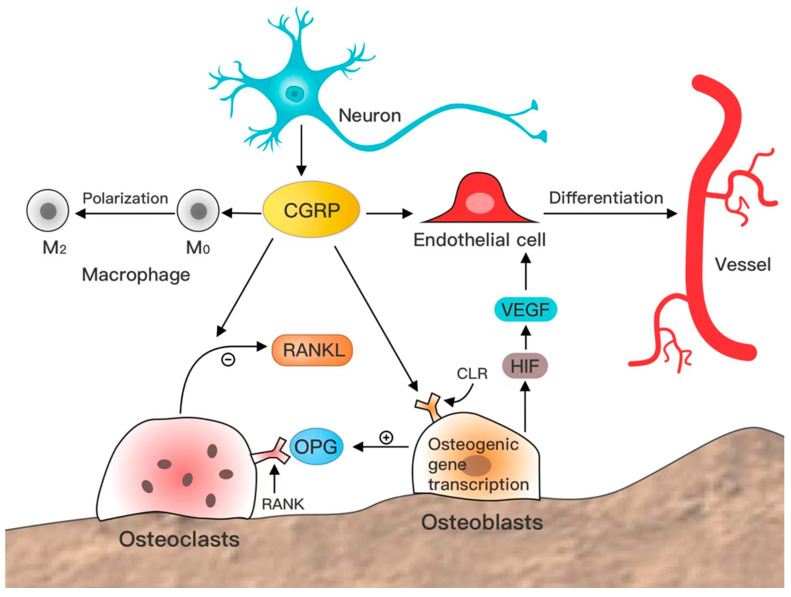
Calcitonin gene-related peptide (CGRP) has 37 amino acids. Initially, CGRP had vasodilatory and nociceptive effects. As research progressed, evidence revealed that the peripheral nervous system is closely associated with bone metabolism, osteogenesis, and bone remodeling. Thus, CGRP is the bridge between the nervous system and the skeletal muscle system. CGRP can promote osteogenesis, inhibit bone resorption, promote vascular growth, and regulate the immune microenvironment. The G protein-coupled pathway is vital for its effects, while MAPK, Hippo, NF-κB, and other pathways have signal crosstalk, affecting cell proliferation and differentiation. The current review provides a detailed description of the bone repair effects of CGRP, subjected to several therapeutic studies, such as drug injection, gene editing, and novel bone repair materials.
Overview
The claims and statistics of this paper haven’t been checked yet.
Free: it reads the open-access text and checks the first 5 claims that cite a source we can check. Create a free account to check every claim.
Integrity signals
Registry
Cites
Statistics
Figures
Verification
Claims the paper makes
The claims and statistics of this paper haven’t been checked yet.
Free: it reads the open-access text and checks the first 5 claims that cite a source we can check. Create a free account to check every claim.
Claims other papers make about this one
Each is checked against this paper’s own text: does it say what the citing paper says it does?
The source backs part of the claim, not all of it — or backs it for a different population, condition or comparison.
In the citing paper
“Sensory nerves (Aδ and C fibers) release neuropeptides like substance P (SP) and calcitonin gene-related peptide (CGRP), which shape bone remodeling, stimulate osteoblast differentiation, and are vital for fracture healing [32]”
From Interorgan Communications in Skeletal Pathophysiology: From Molecular Pathways to Multidisciplinary Therapies (2026) · cites this paper as [32]
Experimental — accuracy not yet measured
Self-check
Percentages, sums and reported differences re-computed from the paper’s own numbers.
The self-check needs the paper’s full text.
Citations
Cites
Peptide therapeutics: current status and future directions
Fosgerau, K., & Hoffmann, T. (2015) · Drug Discovery Today · doi:10.1016/j.drudis.2014.10.003 · Cited by 3,030 · cited 1×
“Overcoming the shortcomings of natural peptides through reasonable design is the future direction of peptide therapy [135].”
BackgroundRAMPs regulate the transport and ligand specificity of the calcitonin-receptor-like receptor
McLatchie, L. M., Fraser, N. J., Main, M. J., Wise, A., Brown, J., Thompson, N., Solari, R., Lee, M. G., & Foord, S. M. (1998) · Nature · doi:10.1038/30666 · Cited by 2,134 · cited 1×
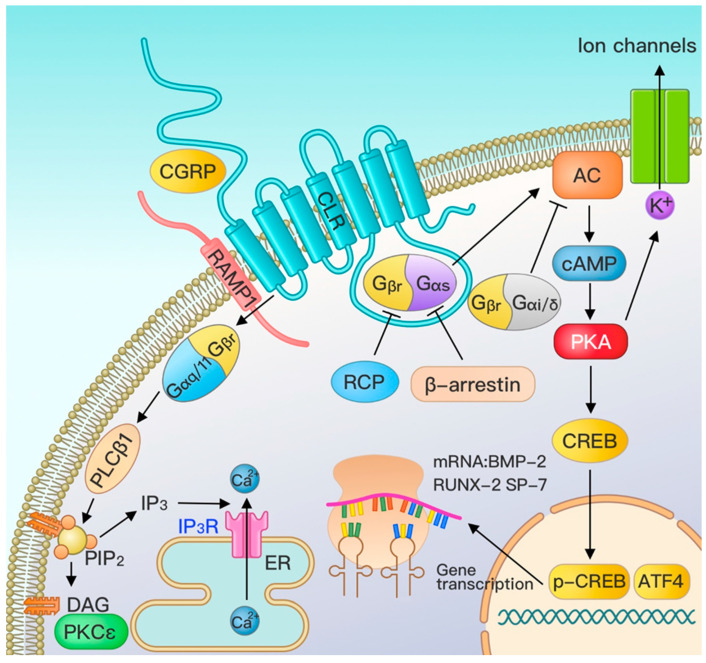
“This creates a CLR-RAMP1 dimer for CGRP to bind and function with CLR; thus, RAMP1 is essential for CLR function [9].”
Leptin regulation of bone resorption by the sympathetic nervous system and CART
Elefteriou, F., Ahn, J. D., Takeda, S., Starbuck, M., Yang, X., Liu, X., Kondo, H., Richards, W. G., Bannon, T. W., Noda, M., et al. (2005) · Nature · doi:10.1038/nature03398 · Cited by 1,311 · cited 1×
“ATF4 is an ATF/CREB family member, a cell-specific CREB-related transcriptional essential for osteoblast differentiation and function factor [65].”
BackgroundCalcitonin Gene-Related Peptide: Physiology and Pathophysiology
Russell, F. A., King, R., Smillie, S.-J., Kodji, X., & Brain, S. D. (2014) · Physiological Reviews · doi:10.1152/physrev.00034.2013 · Cited by 1,258 · cited 5×
“Calcitonin gene-related peptide (CGRP) is a polypeptide with 37 amino acids [1].”
BackgroundInfluentialZhang, Y., Xu, J., Ruan, Y. C., Yu, M. K., O'Laughlin, M., Wise, H., Chen, D., Tian, L., Shi, D., Wang, J., et al. (2016) · Nature Medicine · doi:10.1038/nm.4162 · Cited by 1,051 · cited 6×
“Thus, local bone defect repairing was induced by releasing CGRP from nerve endings within the periosteum [75].”
BackgroundInfluentialMesenchymal stem cell-macrophage crosstalk and bone healing
Pajarinen, J., Lin, T., Gibon, E., Kohno, Y., Maruyama, M., Nathan, K., Lu, L., Yao, Z., & Goodman, S. B. (2019) · Biomaterials · doi:10.1016/j.biomaterials.2017.12.025 · Cited by 999 · cited 2×
“In contrast, M2 macrophages later affect bone matrix mineralization [55], which aligns with the prevailing view of immune regulation of bone repair.”
BackgroundCGRP as the target of new migraine therapies — successful translation from bench to clinic
Edvinsson, L., Haanes, K. A., Warfvinge, K., & Krause, D. N. (2018) · Nature Reviews Neurology · doi:10.1038/s41582-018-0003-1 · Cited by 999 · cited 1×
“CGRP receptor antagonists and monoclonal antibodies effectively relieve migraine [33].”
BackgroundZhao, D., Witte, F., Lu, F., Wang, J., Li, J., & Qin, L. (2017) · Biomaterials · doi:10.1016/j.biomaterials.2016.10.017 · Cited by 945 · cited 1×
“Mg and its alloys have good biodegradability and biocompatibility and can become bone-replacement materials [129].”
BackgroundTsuji, K., Bandyopadhyay, A., Harfe, B. D., Cox, K., Kakar, S., Gerstenfeld, L., Einhorn, T., Tabin, C. J., & Rosen, V. (2006) · Nature Genetics · doi:10.1038/ng1916 · Cited by 822
Regulation of Langerhans cell function by nerves containing calcitonin gene-related peptide
Hosoi, J., Murphy, G. F., Egan, C. L., Lerner, E. A., Grabbe, S., Asahina, A., & Granstein, R. D. (1993) · Nature · doi:10.1038/363159a0 · Cited by 631
Cited by
Singh, J., Hashmi, A. W., Ahmad, S., & Tian, Y. (2024) · Inorganic Chemistry Communications · doi:10.1016/j.inoche.2024.113111 · Cited by 80
Entangled cellular and molecular relationships at the sensory neuron-cancer interface
Sur, D., Zeng, Y., Kobayashi, H. H., Zhi, X., Goetz, M. R., Müller, C., Zavitsanou, A., Picoli, C. C., Matos, A. A. M., Pareja, J. R., et al. (2025) · Neuron · doi:10.1016/j.neuron.2025.07.017 · Cited by 34
Jiang, Q., Zhou, L., Yang, Y., Long, H., Ge, L., Li, D., Mu, C., Lai, W., Xu, Z., & Wang, Y. (2024) · Chemical Engineering Journal · doi:10.1016/j.cej.2024.154627 · Cited by 30
Zhan, C., Dai, Q., Ren, J., Jin, L., Wang, W., Ye, Z., Tsoi, J. K. H., & Lin, Y. (2025) · Advanced Science · doi:10.1002/advs.202506438 · Cited by 34
Shu, Y., Tan, Z., Pan, Z., Chen, Y., Wang, J., He, J., Wang, J., & Wang, Y. (2024) · Cell Death and Differentiation · doi:10.1038/s41418-024-01368-5 · Cited by 29
“Blunt dissection was used to expose the femur from the intermuscular space fully.”
Onyeagba, C. R., & Tesfamichael, T. (2025) · Microstructures · doi:10.20517/microstructures.2024.89 · Cited by 23
Neuroregulation during Bone Formation and Regeneration: Mechanisms and Strategies
Zhao, X., Yao, M., Wang, Y., Feng, C., Yang, Y., Tian, L., Bao, C., Li, X., Zhu, X., & Zhang, X. (2025) · ACS Applied Materials & Interfaces · doi:10.1021/acsami.4c16786 · Cited by 23
Kong, Q., Gao, S., Li, P., Sun, H., Zhang, Z., Yu, X., Deng, F., & Wang, T. (2024) · International Immunopharmacology · doi:10.1016/j.intimp.2024.111766 · Cited by 22
Wang, Y., Pan, Z., Wang, Q., Shu, Y., Tan, Z., Chen, Y., He, J., Wang, J., Wang, J., & Wang, J. (2025) · Materials Today Bio · doi:10.1016/j.mtbio.2025.101750 · Cited by 19
“CGRP plays dual roles in regulating bone remodeling by promoting osteoblast proliferation and differentiation, while simultaneously inhibiting osteoclast formation and bone resorption [9].”
Self-citationDo Not Lose Your Nerve, Be Callus: Insights Into Neural Regulation of Fracture Healing
Nazzal, M. K., Morris, A. J., Parker, R. S., White, F. A., Natoli, R. M., Kacena, M. A., & Fehrenbacher, J. C. (2024) · Current Osteoporosis Reports · doi:10.1007/s11914-023-00850-2 · Cited by 16
“This results in increased osteogenic gene expression of factors such as osteoprotegrin (OPG) [38].”
BackgroundA bilayer hydrogel mimicking the periosteum-bone structure for innervated bone regeneration
Lyu, W., Zhang, Y., Ding, S., Li, X., Sun, T., Luo, J., Wang, J., Li, J., & Li, L. (2024) · Journal of Materials Chemistry B · doi:10.1039/d4tb01923g · Cited by 17
Cherief, M., Gomez-Salazar, M. A., Kang, M., Lee, S., Ramesh, S., Qin, Q., Xu, M., Kim, S., Archer, M., Zhu, M., et al. (2025) · Bone Research · doi:10.1038/s41413-025-00436-x · Cited by 11
Bone-nerve crosstalk: a new state for neuralizing bone tissue engineering—A mini review
Damiati, L. A., & Soury, M. E. (2024) · Frontiers in Medicine · doi:10.3389/fmed.2024.1386683 · Cited by 12
Zeng, X., He, S., Yang, C., Yang, Y., Zheng, G., Wang, H., Liang, L., Xu, C., Cao, P., Wu, X., et al. (2025) · Pharmacological Research · doi:10.1016/j.phrs.2025.107850 · Cited by 11
Qiao, F., Zou, Y., & Lv, Y. (2024) · Composites Part B Engineering · doi:10.1016/j.compositesb.2024.112019 · Cited by 11
Che, H., Du, Y., Jiang, Y., Zhu, Z., Bai, M., Zheng, J., Yang, M., Xiang, L., & Gong, P. (2025) · Journal of Neurochemistry · doi:10.1111/jnc.16281 · Cited by 10
“CGRP actively regulates bone metabolism (Wang et al., 2023), microcirculation (Sohn et al., 2020 ), pain transduction, and plays crucial roles in the reproductive and immune systems (Russo & Hay, 2023).”
Sun, L., Kuang, S., Wang, C., Li, Y., Wang, G., Sun, J., Zhou, F., & Zhang, C. (2026) · International Immunopharmacology · doi:10.1016/j.intimp.2026.116258 · Cited by 9
Chen, Z., Luo, Z., Greenblatt, M. B., Wu, Z., & Xu, R. (2026) · Bone Research · doi:10.1038/s41413-026-00534-4 · Cited by 12
“121 122 – 124 Exogenous CGRP rescues nerve ablation – induced bone loss.”
Dong, Y., Zhang, S., Xu, T., Sun, W., & Liu, X. (2026) · Journal of Orthopaedic Translation · doi:10.1016/j.jot.2026.101106 · Cited by 10
One-step ultra-rapid immunoassay of calcitonin gene-related peptide for migraine diagnosis
Sung, J. S., Jung, J., Kwon, S., Bae, H. E., Kang, M., Jose, J., Lee, M., Cho, S., Chu, M. K., & Pyun, J. (2024) · Biosensors and Bioelectronics · doi:10.1016/j.bios.2024.116980 · Cited by 6
Sun, L. M., Du, R., Liu, J., He, Z., & Pei, H. (2025) · Aging advances. · doi:10.4103/agingadv.agingadv-d-25-00001 · Cited by 6
Osteochondrosis in horses: An overview of genetic and other factors
Martínez-Sáez, L., Marín‐García, P. J., & Llobat, L. (2025) · Equine Veterinary Journal · doi:10.1111/evj.14518 · Cited by 6
“108 – 112 The gene encoding this peptide receptor, named calcitonin gene-related peptide receptor component protein 9 ( RCP9 ), also has an anabolic activity for chondrocytes, and it is part of a QTL related to the presence of plantar/palmar osseous fragments in fetlocks.”
Zhang, X., Huang, X., Zhang, Y., Xu, Z., Chen, Y., Sun, J. L., Chen, X., Zhang, Y., Wu, W., & Chen, Z. (2025) · Journal of Biological Chemistry · doi:10.1016/j.jbc.2025.110949 · Cited by 5
Hashmi, A. W., Tian, Y., Wang, C., Wang, D., Sağbaş, B., Puerta, A. P. V., & Sankar, M. R. (2025) · Journal of Alloys and Compounds · doi:10.1016/j.jallcom.2025.185179 · Cited by 5
Endocrine Regulation of Osteoporosis: Insights from the Brain-Bone Axis Theory
Chen, X., Wang, J., Deng, T., Ni, Q., & Liu, F. (2025) · Journal of Bone Metabolism · doi:10.11005/jbm.25.887 · Cited by 6
“[59 ] In treatment, chitosan-coated synthetic calcitonin nanoparticles not only enhance oral bioavailability but also penetrate the blood-brain barrier, simultaneously improving lumbar bone density and pain threshold.”
Wang, Z., Li, L., Fu, Y., Zhang, Z., Liu, J., Yang, X., Bao, L., Liu, S., & Wei, F. (2026) · Journal of Orthopaedic Translation · doi:10.1016/j.jot.2026.101046 · Cited by 5
“CGRP is the bridge factor between the nervous system and the skeletal system, which has been reported to contribute to promoting osteogenesis, inhibiting bone resorption, promoting vascular growth, and regulating the immune microenvironment [51].”
Self-citationBakir, M. A., Dabaliz, A., Raddaoui, M., Fatash, H., Elsaadany, N., Al-Kattan, W., & Mohammad, K. S. (2026) · Biology · doi:10.3390/biology15040364 · Cited by 6
“Tumor cells and stromal/immune cells in metastatic bone express NK1R and produce pro-inflammatory cytokines in response to SP; these cytokines are known RANKL inducers in bone [95].”
Liu, F., Su, F., Zhang, T., Liu, R., Liu, N., & Dong, T. (2023) · Medicine · doi:10.1097/md.0000000000034691 · Cited by 5
“[15] The sensory nerve fibers containing CGRP are distributed abundantly among bone, periosteum, epiphysis, bone marrow, and they make a strong effect on osteoblasts.[16] Because of the direct function on osteoblasts, we suspected that neuropeptides may make a certain contribution to osteophyte formation, and this is…”
BackgroundMultiplex imaging of murine bone marrow using Phenocycler 2.0™
Karnik, S. J., Gulbronson, C. J., Jordan, P. C., Kanumuri, R., Ramdas, B., Kumar, R., Hartman, M. L., Khurram, I., Brown, D. M., Pollok, K. E., et al. (2025) · Leukemia · doi:10.1038/s41375-025-02596-5 · Cited by 5
“This eliminates the possibility of experimental variation as the cause of the depletion.”
Huang, C., Liu, X., Lin, L., Zhang, S., Xu, N., Wang, X., & Lin, J. (2025) · Frontiers in Cell and Developmental Biology · doi:10.3389/fcell.2025.1669459 · Cited by 3
Binlateh, T., Leethanakul, C., & Thammanichanon, P. (2024) · Journal of Orthopaedic Surgery and Research · doi:10.1186/s13018-024-04805-w · Cited by 3
“CGRP, a member of the calcitonin protein family, is a 37-amino acid peptide that is released from sensory nerve ending [6].”
BackgroundShi, R., Yang, Z., & Zhuang, Z. (2026) · Science Progress · doi:10.1177/00368504261430042 · Cited by 2
“7 NPY was widely distributed throughout the central and peripheral nervous systems.”
Talin1 loss activates DRG neurons to accelerate bone remodeling and fracture healing in mice
Yan, Q., Gan, D., Xu, K., Chen, Z., Lin, S., Zhou, B., Xu, Z., Zhong, Q., Tao, C., Zhong, Y., et al. (2026) · Journal of Orthopaedic Translation · doi:10.1016/j.jot.2026.101113 · Cited by 2
“Several studies have reported the role of CGRP in promoting bone formation and fracture healing [15 – 17 , 50 ].”
Neuro-osteo crosstalk: The sympathetic nervous system as a key driver of SCI-induced osteoporosis
Bryan, J. A., Jackson, W., Lemmens, N., & Hook, M. A. (2026) · Experimental Neurology · doi:10.1016/j.expneurol.2026.115824 · Cited by 2
The neuro–skeletal crosstalk: Mechanisms, clinical implications, and smart material interventions
Liu, W., Shen, X., He, Y., Ding, Z., Zhou, J., Guo, J., Lin, X., Zhang, L., Yuan, P., Wu, Y., et al. (2026) · Journal of Orthopaedic Translation · doi:10.1016/j.jot.2026.101130 · Cited by 2
“However, recent studies have revealed that the skeleton is not only a metabolically active endocrine organ but also regulates neural activity in a feedback manner by secreting bone-– derived factors, such as osteocalcin and fibroblast growth factor 23 [1].”
Barchetta, I., Dule, S., Cimini, F. A., Sentinelli, F., Oldani, A., Passarella, G., Filardi, T., Venditti, V., Bleve, E., Romagnoli, E., et al. (2024) · Diabetes/Metabolism Research and Reviews · doi:10.1002/dmrr.70018 · Cited by 2
Calcitonin Gene–Related Peptide Antagonist Use and Atypical Femur Fractures: A Case Report
Choy, K. B., McDonald, J. J., Geiselmann, M. T., & Daubs, G. M. (2025) · JBJS Case Connector · doi:10.2106/jbjs.cc.25.00148 · Cited by 2
Gan, D., Qin, L., & Xiao, G. (2026) · Research · doi:10.34133/research.1319 · Cited by 1
“OP is characterized by increased bone marrow adiposity, accompanied by reduced sensory innervation and impaired osteoblast activity, highlighting a dysfunction in the adipo– neuro–bone axis [ 32 ].”
Hameed, H. M., & Kakel, S. J. (2025) · Al-mağallaẗ al-ʻirāqiyyaẗ li-l-ʻulūm al-bayṭariyyaẗ/Iraqi journal of veterinary sciences · doi:10.33899/ijvs.2024.153148.3861 · Cited by 1
Tang, Y., Lin, J., Zhao, T., Sun, L., & Liu, T. (2025) · Biomaterials Science · doi:10.1039/d4bm01635a · Cited by 1
Gkouzioti, V., Abdollahzadeh, A., van den Hil, F. E., Orlova, V. V., Giniatullin, R. A., van den Maagdenberg, A. M. J. M., & Frimat, J. (2025) · Cephalalgia · doi:10.1177/03331024251404478 · Cited by 1
“PLC activation, occurring alongside cAMP production, may cause delayed Ca 2 + responses due to additional steps (e.g. IP3 binding) (10,36,37).”
Wu, Y.-H., Liu, Y.-C., Jan, R.-L., Tsai, S., Huang, S.-E., Wu, B., Lo, S., Chen, I., Dai, Z., Wu, J.-R., et al. (2026) · Biochemical Pharmacology · doi:10.1016/j.bcp.2026.117840 · Cited by 1
TRPV1-linked neuropeptide axes in periodontitis and peri-implantitis
Lin, Y., He, Q., Ni, J., Ye, S., Chen, L., Wu, Y., & Zhang, C. (2026) · Frontiers in Endocrinology · doi:10.3389/fendo.2026.1825849 · Cited by 1
“Broader reviews have also highlighted that CGRP suppresses Th1-type cytokine production and excessive leukocyte proliferation, thereby facilitating in fl ammation resolution and tissue remodeling during the later phases of bone repair (16).”
Assas, M. B. (2026) · Frontiers in Immunology · doi:10.3389/fimmu.2026.1841366 · Cited by 1
“However, during the subacute and chronic phases of injury, CGRP signalling reliably facilitates a functional shift toward an alternatively activated, tissue-repairing M2 macrophage phenotype via the cAMP/PKA pathway, promoting the clearance of debris and the secretion of IL-10 (24, 45, 46).”
Neurogenic heterotopic ossification: from molecular mechanisms to clinical treatment
Yuan, Z., Xu, L., Li, J., & Fan, C. (2026) · Journal of Orthopaedic Translation · doi:10.1016/j.jot.2026.101176 · Cited by 1
“Beyond its vasodilatory and immunomodulatory functions in the context of nerve injury, CGRP significantly contributes to bone homeostasis and skeletal remodeling via neuro – bone interactions [117].”
Du, W., Yan, L., Liang, J.-W., Zhao, Y., Li, M. C., Pan, L., & Yun, X.-D. (2026) · Frontiers in Immunology · doi:10.3389/fimmu.2026.1862080 · Cited by 2
“…local delivery, spatial localization, and staged release; limitations include system complexity, incompletely understood regulatory mechanisms, high production consistency requirements, and potential dif fi culties in dose matching and safety assessment for multi-factor combined delivery (190, 191).”
Natural Products as Alternative Treatments for Bone Disorders
Nelli, G., & Salleh, N. (2023) · Advances in medical diagnosis, treatment, and care (AMDTC) book series · doi:10.4018/978-1-6684-6737-4.ch014
Calcitonin gene-related peptide (CGRP)
Ling, B., Aubdool, A. A., Kodji, X., Brain, S. D., Stanimirovic, D. B., Hamel, É., & Moreno, M. (2024) · Elsevier eBooks · doi:10.1016/b978-0-443-13825-6.00159-x
Basirat, E., Mahmoudi, F., & Khazali, H. (2024) · Sālnāmah va āmār. · doi:10.61186/jbums.31.3.205
Sensorineural regulation of skull healing implicates FGF1 signaling in non-healing bonePreprint
Horenberg, A. L., Villapudua, C. U., Xu, M., Zeng, E. Z., Dias, S., Sinha, T., Archer, M., Scheller, E. L., Pathak, A. P., James, A. W., et al. (2025) · bioRxiv (Cold Spring Harbor Laboratory) · doi:10.1101/2025.11.24.690319
Mardelle, U. (2024) · theses.fr (ABES) · doi:10.70675/1e786d9ez8d0ez41b3z8ac1z367faf59ae53
The Role of Traumatic Brain Injury on Fracture Healing in Polytrauma
Baldini, T. D., Rahmati, M., Shahlaie, K., Price, R., Schneider, P., Khan, S., Lee, M. A., & Saiz, A. M. (2026) · Journal of Neurotrauma · doi:10.1177/08977151261438945
Nirmal, H., Chandran, S., Pandyan, D. A., Narasimman, D., Premkumar, K. K., Balamurugan, R., & Stephenson, G. S. (2026) · 대한구강악안면외과학회지 · doi:10.5125/jkaoms.2026.52.2.73
“However, only a few animal studies 13,14 have been assessed on the alveolar bone healing using calcitonin spray.”
Chen, X., Kuang, S.-X., Feng-ge, Z., & ZHANG, C.-G. (2026) · World Journal of Orthopedics · doi:10.5312/wjo.120345
Мельникова, М. С., & Михайлович, А. К. (2026) · Manager Zdravookhranenia
The Role of Sensory and Sympathetic Nerves in the Development and Bone Metabolism of Mandible
ZHAO, Z., Fu, H., Tian, H., Chen, Q., Wang, P., Chen, P., Liao, C., Wu, Z., & Chen, X. Y. (2026) · Oral Diseases · doi:10.1111/odi.70406
Dorsal Root Ganglion-Targeted DNA Origami Delivery of IL1RN for Skeletal Growth and Repair
Jiang, Y., Gu, X., Yin, Z., Wang, S., Deng, J., Guo, S., & Yin, X. (2026) · Pharmaceutics · doi:10.3390/pharmaceutics18070898
“…CGRP facilitates angiogenesis at bone injury sites by upregulating vascular endothelial growth factor (VEGF) and hypoxia-inducible factor (HIF), while also modulating the immune microenvironment of bone repair through enhancing the polarization of macrophages from the M0 to M2 phenotype [13–15].”
Self-citationZhou, M., Liu, J., Zhang, B., Liu, Y., & Zhu, Z. (2026) · Materials & Design · doi:10.1016/j.matdes.2026.116763
Wang, Z., & Zhang, H. (2026) · Frontiers in Immunology · doi:10.3389/fimmu.2026.1911131
“In contrast, evidence for CGRP promoting Treg expansion or inducing speci fi c macrophage repair programs is drawn largely from general immunology and other tissue injury models, and its direct causal contribution in the context of traumatic fracture still requires further validation (75).”
Baral, S., Kulshrestha, S., Viswanathan, V. K., Jain, V. K., Iyengar, K. P., & Regmi, A. (2026) · Calcified Tissue International · doi:10.1007/s00223-026-01619-2
“…in intracellular cyclic adenosine monophosphate (cAMP) and activation of cAMP-dependent protein kinase (PKA), which in turn upregulate transcription factors such as activating transcription factor 4 (ATF4) and osterix (SP7), both of which are essential for osteoblast differentiation [ 17, 30 ].”
InfluentialLin, Q., Zhao, B., Liu, Z., Jin, X., Sun, W., Huang, H., Zhu, X., Zhang, H., Li, X., & Zhang, R. (2026) · Phytomedicine · doi:10.1016/j.phymed.2026.158833
Zhao, X., Chen, K., Wang, B., Ma, J., Wang, Z., Gao, C., Zhang, T., Zang, F., Hu, B., & Chen, H. (2026) · Frontiers in Bioengineering and Biotechnology · doi:10.3389/fbioe.2026.1964470
“To reduce invasiveness, minimally invasive magnetic VNS (mVNS) (Figure 5) (Wang et al., 2025b) and ES targeting the DRG are under development; the latter directly stimulates osteogenesis and improves bone microcirculation by promoting CGRP release (Wang et al., 2023).”
Wang, J., Zhu, M., Wang, W., Jiang, Y., Tan, S., Chen, Y., Jian, M., Lu, H., Cui, D., Ruan, H., et al. (2026) · Materials Today Bio · doi:10.1016/j.mtbio.2026.103810
Metadata
- Authors
- Wang, Q., Qin, H., Deng, J., Xu, H., Liu, S., Weng, J., & Zeng, H.
- Affiliations
- Shenzhen University (CN)
- Peking University Shenzhen Hospital (CN)
- Corresponding author
- Weng, Jian
- Zeng, Hui
- Venue
- Biomolecules
- Publisher
- MDPI AG
- Published
- 2023-05-15
- Volume
- 13
- Issue
- 5
- Pages
- 838
- ISSN
- 2218-273X (ISSN-L)
- PMC
- PMC10216440
- OpenAlex
- W4376614395
- Cited by
- 58
- References
- 135
- Citations by year
- 2026: 21 · 2025: 19 · 2024: 16 · 2023: 2
- FWCI
- 1.53
- Type
- journal article
- Language
- en
- Open access
- gold
- doi.org
- Licence
- Locations
- Biomolecules (publishedVersion, cc-by)
- PubMed Central (publishedVersion, cc-by)
- PubMed (publishedVersion)
- DOAJ (DOAJ: Directory of Open Access Journals) (submittedVersion, cc-by-sa)
- Funders
- National Natural Science Foundation of China (82172432, 82001319, 82102568, XMHT20190204007, ZDSYS20220606100602005, SZXK023, SZSM201612092, Z2021N054, JCYJ20210324110214040, JCYJ20190809152409606)
- National & Local Joint Engineering Research Center of Orthopaedic Biomaterials (82172432, 82001319, 82102568, XMHT20190204007, ZDSYS20220606100602005, SZXK023, SZSM201612092, Z2021N054, JCYJ20210324110214040, JCYJ20190809152409606)
- Shenzhen Key Laboratory of Orthopedic Diseases and Biomaterials Research (82172432, 82001319, 82102568, XMHT20190204007, ZDSYS20220606100602005, SZXK023, SZSM201612092, Z2021N054, JCYJ20210324110214040, JCYJ20190809152409606)
- Shenzhen Key Medical Discipline Construction Fund (82172432, 82001319, 82102568, XMHT20190204007, ZDSYS20220606100602005, SZXK023, SZSM201612092, Z2021N054, JCYJ20210324110214040, JCYJ20190809152409606)
- Shenzhen “San-Ming” Project of Medicine (82172432, 82001319, 82102568, XMHT20190204007, ZDSYS20220606100602005, SZXK023, SZSM201612092, Z2021N054, JCYJ20210324110214040, JCYJ20190809152409606)
- Research and Development Projects of Shenzhen (82172432, 82001319, 82102568, XMHT20190204007, ZDSYS20220606100602005, SZXK023, SZSM201612092, Z2021N054, JCYJ20210324110214040, JCYJ20190809152409606)
- Shenzhen Science and Technology Program (82172432, 82001319, 82102568, XMHT20190204007, ZDSYS20220606100602005, SZXK023, SZSM201612092, Z2021N054, JCYJ20210324110214040, JCYJ20190809152409606)
- Topics
- Life Sciences › Biochemistry, Genetics and Molecular Biology › Molecular Biology › Bone Metabolism and Diseases
- Life Sciences › Neuroscience › Cellular and Molecular Neuroscience › Neuropeptides and Animal Physiology
- Physical Sciences › Engineering › Biomedical Engineering › Bone Tissue Engineering Materials
- Keywords
- calcitonin gene-related peptide, bone regeneration, bone remodeling, bone formation, bone resorption, peripheral nervous system, G protein-coupled receptor signaling, MAPK signaling, Hippo signaling pathway, NF-κB signaling, signaling crosstalk, bone vascularization, immune microenvironment, genome editing, bone repair materials
- MeSH terms
- Bone Resorption, Humans, Osteogenesis, Calcitonin Gene-Related Peptide, NF-kappa B, Bone Remodeling
About these checks
Registry, retraction, Cites and statistics results are computed, not judged, with one exception: a printed reference that no index lists is read once by a model before it counts as a citation error. Claims are extracted by a model and kept only when their quote appears verbatim in the text; each cited source is then checked, with a model’s help, for whether it says what the claim relies on. Those verdicts can be wrong — read the claim’s quote and the cited source before relying on one.
Statistics and arithmetic are recomputed, not judged.
Confidence bands are shown only for fields calibrated on our annotated test set. None is calibrated yet, so no band is shown.
What counts as a claim ›How we measure confidence ›How we check this ›
Are you an author, or do you see a problem with this page? Request a review
Data sources
Bibliographic data: Semantic Scholar, OpenAlex, Crossref.
Contains information from the Semantic Scholar Academic Graph Datasets, made available under the ODC Attribution License (ODC-BY 1.0).
Semantic Scholar’s data is described in: Kinney, R., et al. (2023). The Semantic Scholar Open Data Platform. arXiv:2301.10140.
