

Research Progress in Calcitonin Gene-Related Peptide and Bone Repair
Open accessThe DOI matches its Crossref record; 135 of the 135 references it cites were found in a registry or an index.
Abstract
Calcitonin gene-related peptide (CGRP) has 37 amino acids. Initially, CGRP had vasodilatory and nociceptive effects. As research progressed, evidence revealed that the peripheral nervous system is closely associated with bone metabolism, osteogenesis, and bone remodeling. Thus, CGRP is the bridge between the nervous system and the skeletal muscle system. CGRP can promote osteogenesis, inhibit bone resorption, promote vascular growth, and regulate the immune microenvironment. The G protein-coupled pathway is vital for its effects, while MAPK, Hippo, NF-κB, and other pathways have signal crosstalk, affecting cell proliferation and differentiation. The current review provides a detailed description of the bone repair effects of CGRP, subjected to several therapeutic studies, such as drug injection, gene editing, and novel bone repair materials.
Overview
The claims and statistics of this paper haven’t been checked yet.
Free: it reads the open-access text and checks the first 5 claims that cite a source we can check. Create a free account to check every claim.
Integrity signals
Registry
Cites
Statistics
Figures
Verification
Claims the paper makes
The claims and statistics of this paper haven’t been checked yet.
Free: it reads the open-access text and checks the first 5 claims that cite a source we can check. Create a free account to check every claim.
Claims other papers make about this one
Each is checked against this paper’s own text: does it say what the citing paper says it does?
The source backs part of the claim, not all of it — or backs it for a different population, condition or comparison.
In the citing paper
“Sensory nerves (Aδ and C fibers) release neuropeptides like substance P (SP) and calcitonin gene-related peptide (CGRP), which shape bone remodeling, stimulate osteoblast differentiation, and are vital for fracture healing [32]”
From Interorgan Communications in Skeletal Pathophysiology: From Molecular Pathways to Multidisciplinary Therapies (2026) · cites this paper as [32]
Experimental — accuracy not yet measured
Self-check
Percentages, sums and reported differences re-computed from the paper’s own numbers.
The self-check needs the paper’s full text.
Citations
Cites
Peptide therapeutics: current status and future directions
Fosgerau, K., & Hoffmann, T. (2015) · Drug Discovery Today · doi:10.1016/j.drudis.2014.10.003 · Cited by 3,030 · cited 1×
“Overcoming the shortcomings of natural peptides through reasonable design is the future direction of peptide therapy [135].”
BackgroundRAMPs regulate the transport and ligand specificity of the calcitonin-receptor-like receptor
McLatchie, L. M., Fraser, N. J., Main, M. J., Wise, A., Brown, J., Thompson, N., Solari, R., Lee, M. G., & Foord, S. M. (1998) · Nature · doi:10.1038/30666 · Cited by 2,134 · cited 1×
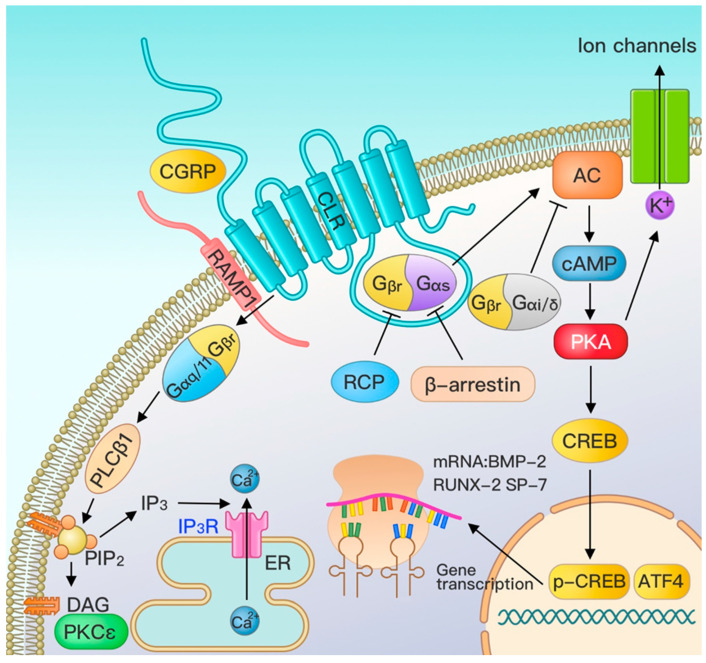
“This creates a CLR-RAMP1 dimer for CGRP to bind and function with CLR; thus, RAMP1 is essential for CLR function [9].”
Leptin regulation of bone resorption by the sympathetic nervous system and CART
Elefteriou, F., Ahn, J. D., Takeda, S., Starbuck, M., Yang, X., Liu, X., Kondo, H., Richards, W. G., Bannon, T. W., Noda, M., et al. (2005) · Nature · doi:10.1038/nature03398 · Cited by 1,311 · cited 1×
“ATF4 is an ATF/CREB family member, a cell-specific CREB-related transcriptional essential for osteoblast differentiation and function factor [65].”
BackgroundCalcitonin Gene-Related Peptide: Physiology and Pathophysiology
Russell, F. A., King, R., Smillie, S.-J., Kodji, X., & Brain, S. D. (2014) · Physiological Reviews · doi:10.1152/physrev.00034.2013 · Cited by 1,258 · cited 5×
“Calcitonin gene-related peptide (CGRP) is a polypeptide with 37 amino acids [1].”
BackgroundInfluentialZhang, Y., Xu, J., Ruan, Y. C., Yu, M. K., O'Laughlin, M., Wise, H., Chen, D., Tian, L., Shi, D., Wang, J., et al. (2016) · Nature Medicine · doi:10.1038/nm.4162 · Cited by 1,051 · cited 6×
“Thus, local bone defect repairing was induced by releasing CGRP from nerve endings within the periosteum [75].”
BackgroundInfluentialMesenchymal stem cell-macrophage crosstalk and bone healing
Pajarinen, J., Lin, T., Gibon, E., Kohno, Y., Maruyama, M., Nathan, K., Lu, L., Yao, Z., & Goodman, S. B. (2019) · Biomaterials · doi:10.1016/j.biomaterials.2017.12.025 · Cited by 999 · cited 2×
“In contrast, M2 macrophages later affect bone matrix mineralization [55], which aligns with the prevailing view of immune regulation of bone repair.”
BackgroundCGRP as the target of new migraine therapies — successful translation from bench to clinic
Edvinsson, L., Haanes, K. A., Warfvinge, K., & Krause, D. N. (2018) · Nature Reviews Neurology · doi:10.1038/s41582-018-0003-1 · Cited by 999 · cited 1×
“CGRP receptor antagonists and monoclonal antibodies effectively relieve migraine [33].”
BackgroundZhao, D., Witte, F., Lu, F., Wang, J., Li, J., & Qin, L. (2017) · Biomaterials · doi:10.1016/j.biomaterials.2016.10.017 · Cited by 945 · cited 1×
“Mg and its alloys have good biodegradability and biocompatibility and can become bone-replacement materials [129].”
BackgroundTsuji, K., Bandyopadhyay, A., Harfe, B. D., Cox, K., Kakar, S., Gerstenfeld, L., Einhorn, T., Tabin, C. J., & Rosen, V. (2006) · Nature Genetics · doi:10.1038/ng1916 · Cited by 822
Regulation of Langerhans cell function by nerves containing calcitonin gene-related peptide
Hosoi, J., Murphy, G. F., Egan, C. L., Lerner, E. A., Grabbe, S., Asahina, A., & Granstein, R. D. (1993) · Nature · doi:10.1038/363159a0 · Cited by 631
Modulation of the Inflammatory Response and Bone Healing
Maruyama, M., Rhee, C., Utsunomiya, T., Zhang, N., Ueno, M., Yao, Z., & Goodman, S. B. (2020) · Frontiers in Endocrinology · doi:10.3389/fendo.2020.00386 · Cited by 541 · cited 1×
“Thus, CGRP plays a vital role in regulating the immune microenvironment for bone repair [96,104].”
BackgroundChang, C.-P., Pearse, R. V., O'Connell, S., & Rosenfeld, M. G. (1993) · Neuron · doi:10.1016/0896-6273(93)90230-o · Cited by 537 · cited 1×
“CLR is a seven-transmembrane receptor protein responding to adrenocorticotropin-releasing factor (CRF) and frog skin peptide [6].”
BackgroundCalcitonin gene-related peptide: functional role in cerebrovascular regulation.
McCulloch, J., Uddman, R., Kingman, T. A., & Edvinsson, L. (1986) · Proceedings of the National Academy of Sciences · doi:10.1073/pnas.83.15.5731 · Cited by 514
CGRP and the Trigeminal System in Migraine
Iyengar, S., Johnson, K. W., Ossipov, M. H., & Aurora, S. K. (2019) · Headache: The Journal of Head and Face Pain · doi:10.1111/head.13529 · Cited by 486
Pharmacological profile of BIBN4096BS, the first selective small molecule CGRP antagonist
Doods, H., Hallermayer, G., Wu, D., Entzeroth, M., Rudolf, K., Engel, W., & Eberlein, W. (2000) · British Journal of Pharmacology · doi:10.1038/sj.bjp.0703110 · Cited by 466 · cited 1×
“CGRPR Olcegepant [35] Nonpeptide Phase II Clinical Trial CGRPR Telcegepant [36] Nonpeptide Phase III Clinical Trial CGRPR MK-3207 [37] Nonpeptide Phase II Clinical Trial CGRPR Zavegapant [38] Nonpeptide Phase II/III Clinical Trial CGRPR BI 44,370 [39] Nonpeptide Phase II Clinical Trial CGRPR Erenumab [40] Monoclonal a…”
BackgroundCalcitonin Gene-Related Peptide (CGRP): A New Target for Migraine
Russo, A. F. (2015) · Annual Review of Pharmacology and Toxicology · doi:10.1146/annurev-pharmtox-010814-124701 · Cited by 389
Substance P- and CGRP-immunoreactive nerves in bone
Bjurholm, A., Kreicbergs, A., Brodin, E., & Schultzberg, M. (1988) · Peptides · doi:10.1016/0196-9781(88)90023-x · Cited by 386 · cited 1×
“The proportion of CGRP-positive nerve fibers is dominant [49], and CGRP is a critical node that cannot be bypassed and is a bridge between nerve and bone repair.”
BackgroundCGRP physiology, pharmacology, and therapeutic targets: migraine and beyond
Russo, A. F., & Hay, D. L. (2023) · Physiological Reviews · doi:10.1152/physrev.00059.2021 · Cited by 382
Edvinsson, L., Fredholm, B. B., Hamel, E., Jansen, I., & Verrecchia, C. (1985) · Neuroscience Letters · doi:10.1016/0304-3940(85)90166-1 · Cited by 372 · cited 1×
“Similar phenomena were observed when CGRP acted on vascular endothelial cells and osteoblasts [107,115].”
BackgroundEvans, B. N., Rosenblatt, M. I., Mnayer, L. O., Oliver, K. R., & Dickerson, I. M. (2000) · Journal of Biological Chemistry · doi:10.1074/jbc.m005604200 · Cited by 337 · cited 5×
“Therefore, further experiments must explore the specific function of RCP [12].”
BackgroundInfluentialBMP2 signaling in bone development and repair
Rosen, V. (2009) · Cytokine & Growth Factor Reviews · doi:10.1016/j.cytogfr.2009.10.018 · Cited by 333
Mulderry, P. K., Ghatki, M. A., Spokks, R. A., Jonhs, P. M., Pierson, A. M., Hamid, Q. A., Kanse, S., Amara, S. G., Burrik, J. M., Legon, S., et al. (1988) · Neuroscience · doi:10.1016/0306-4522(88)90018-8 · Cited by 333 · cited 1×
“In contrast, βCGRP is primarily distributed in the gastrointestinal tract, possessing similar functions with slightly higher biological efficacy than αCGRP [3].”
BackgroundChoi, J. E., & Di Nardo, A. (2018) · Seminars in Immunopathology · doi:10.1007/s00281-018-0675-z · Cited by 331 · cited 1×
“CGRP is mainly synthesized in sensory nerve fibers [13], stored, and released as vesicles [14].”
BackgroundFunctions of Osteocalcin in Bone, Pancreas, Testis, and Muscle
Komori, T. (2020) · International Journal of Molecular Sciences · doi:10.3390/ijms21207513 · Cited by 329 · cited 1×
“ATF4 is identified as an osteoblast-specific transcription factor necessary for OCN transcription, an osteoblast-specific marker commonly used to indicate late osteoblast differentiation [66,67].”
BackgroundA cDNA Encoding the Calcitonin Gene-related Peptide Type 1 Receptor
Aiyar, N., Rand, K., Elshourbagy, N. A., Zeng, Z., Adamou, J. E., Bergsma, D. J., & Li, Y. (1996) · Journal of Biological Chemistry · doi:10.1074/jbc.271.19.11325 · Cited by 320 · cited 1×
“RAMP1 exists in mammalian cells, which, when co-expressed with CLR, CGRP can bind to CLR to exert biological effects [8].”
BackgroundExtracellular signaling molecules to promote fracture healing and bone regeneration
Hankenson, K. D., Gagne, K., & Shaughnessy, M. (2015) · Advanced Drug Delivery Reviews · doi:10.1016/j.addr.2015.09.008 · Cited by 316 · cited 1×
“The classical Wnt signaling pathway is an important regulator involved in bone metabolism [121].”
BackgroundPeptide-based drug discovery: Current status and recent advances
Sharma, K., Sharma, K. K., Sharma, A., & Jain, R. (2023) · Drug Discovery Today · doi:10.1016/j.drudis.2022.103464 · Cited by 313 · cited 1×
“However, many peptides have disadvantages such as poor oral bioavailability, strong hydrophobicity, and fast metabolism in vivo [134].”
BackgroundEngineering vascularized and innervated bone biomaterials for improved skeletal tissue regeneration
Marrella, A., Lee, T. Y., Lee, D. H., Karuthedom, S., Syla, D., Chawla, A., Khademhosseini, A., & Jang, H. L. (2018) · Materials Today · doi:10.1016/j.mattod.2017.10.005 · Cited by 311 · cited 1×
“Therefore, they are essential in bone growth, development, and fracture healing [56].”
BackgroundCalcitonin gene-related peptide stimulates proliferation of human endothelial cells.
Haegerstrand, A., Dalsgaard, C. J., Jonzon, B., Larsson, O., & Nilsson, J. (1990) · Proceedings of the National Academy of Sciences · doi:10.1073/pnas.87.9.3299 · Cited by 295 · cited 1×
“EPCs Haegerstrand [50] 1990 cAMP Enhance the proliferation ability”
BackgroundThe Trigeminovascular Pathway: Role of CGRP and CGRP Receptors in Migraine
Edvinsson, L. (2017) · Headache: The Journal of Head and Face Pain · doi:10.1111/head.13081 · Cited by 295 · cited 1×
“βCGRP is encoded by the CALCB gene with >90% structural similarity to αCGRP [2].”
BackgroundBrown, B. N., & Badylak, S. F. (2013) · Acta Biomaterialia · doi:10.1016/j.actbio.2012.10.025 · Cited by 263 · cited 1×
“Inflammation occurrence is essential for bone repair [95,96].”
BackgroundHewitt, D. J., Aurora, S. K., Dodick, D. W., Goadsby, P. J., Ge, Y. (., Bachman, R., Taraborelli, D., Fan, X., Assaid, C., Lines, C., et al. (2011) · Cephalalgia · doi:10.1177/0333102411398399 · Cited by 263 · cited 1×
“CGRPR Olcegepant [35] Nonpeptide Phase II Clinical Trial CGRPR Telcegepant [36] Nonpeptide Phase III Clinical Trial CGRPR MK-3207 [37] Nonpeptide Phase II Clinical Trial CGRPR Zavegapant [38] Nonpeptide Phase II/III Clinical Trial CGRPR BI 44,370 [39] Nonpeptide Phase II Clinical Trial CGRPR Erenumab [40] Monoclonal a…”
BackgroundCalcitonin gene-related peptide and pain: a systematic review
Schou, W. S., Ashina, S., Amin, F. M., Goadsby, P. J., & Ashina, M. (2017) · The Journal of Headache and Pain · doi:10.1186/s10194-017-0741-2 · Cited by 253
The effects of immunomodulation by macrophage subsets on osteogenesis in vitro
Loi, F., Córdova, L. A., Zhang, R., Pajarinen, J., Lin, T.-H., Goodman, S. B., & Yao, Z. (2016) · Stem Cell Research & Therapy · doi:10.1186/s13287-016-0276-5 · Cited by 252
Aging, inflammation, stem cells, and bone healing
Gibon, E., Lu, L., & Goodman, S. B. (2016) · Stem Cell Research & Therapy · doi:10.1186/s13287-016-0300-9 · Cited by 240
Diener, H.-C., Barbanti, P., Dahlöf, C., Reuter, U., Habeck, J., & Podhorna, J. (2011) · Cephalalgia · doi:10.1177/0333102410388435 · Cited by 214
Increased bone mass is an unexpected phenotype associated with deletion of the calcitonin gene
Hoff, A. O., Catala-Lehnen, P., Thomas, P. M., Priemel, M., Rueger, J. M., Nasonkin, I., Bradley, A., Hughes, M. R., Ordonez, N., Cote, G. J., et al. (2002) · Journal of Clinical Investigation · doi:10.1172/jci200214218 · Cited by 209 · cited 2×
“Hoff [122] 2002 Construction of CGRP knockout mouse model The bone mass of gene-knockout mice was maintained after ovariectomy, and that of gene-knockout wild-type mice decreased within two months.”
BackgroundNerves in Bone: Evolving Concepts in Pain and Anabolism
Brazill, J. M., Beeve, A. T., Craft, C. S., Ivanusic, J. J., & Scheller, E. L. (2019) · Journal of Bone and Mineral Research · doi:10.1002/jbmr.3822 · Cited by 205 · cited 1×
“Among the neuropeptides identified in bone tissue (CGRP, SP, NE, NPY), CGRP is most strongly associated with bone repair [57].”
BackgroundWang, L., Shi, X., Zhao, R., Halloran, B. P., Clark, D. J., Jacobs, C. R., & Kingery, W. S. (2010) · Bone · doi:10.1016/j.bone.2009.11.029 · Cited by 198 · cited 3×
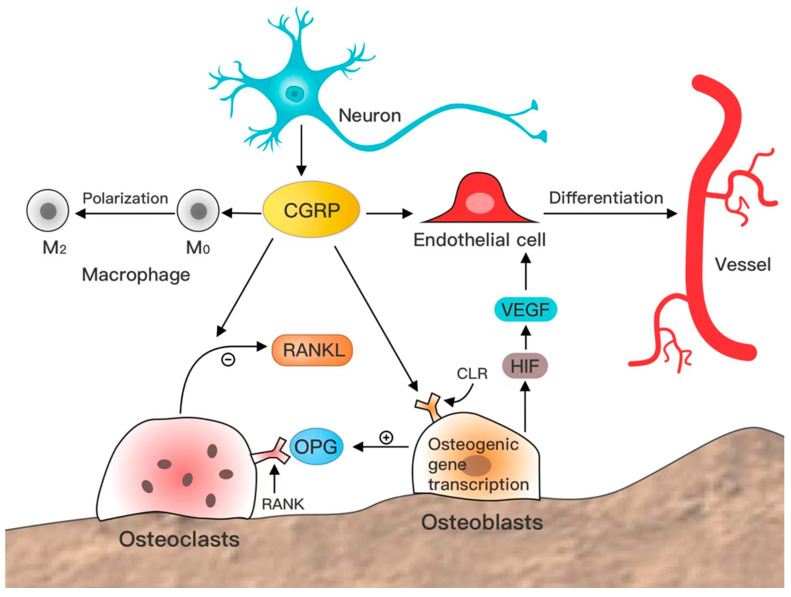
“CGRP inhibits osteogenesis by suppressing RANKL expression, inhibiting the NF-κB pathway, and downregulating the expression of osteoclast TRAP and histone K [72].”
BackgroundInfluentialThe role of peptides and receptors of the calcitonin family in the regulation of bone metabolism
Naot, D., & Cornish, J. (2008) · Bone · doi:10.1016/j.bone.2008.07.003 · Cited by 182
Petersen, K., Birk, S., Lassen, L., Kruuse, C., Jonassen, O., Lesko, L., & Olesen, J. (2005) · Cephalalgia · doi:10.1111/j.1468-2982.2004.00830.x · Cited by 181 · cited 1×
“However, CGRP does not regulate systemic blood pressure in normal individuals [23,24].”
BackgroundDecreased Bone Formation and Osteopenia in Mice Lacking α-Calcitonin Gene-Related Peptide
Schinke, T., Liese, S., Priemel, M., Haberland, M., Schilling, A. F., Catala-Lehnen, P., Blicharski, D., Rueger, J. M., Gagel, R. F., Emeson, R. B., et al. (2004) · Journal of Bone and Mineral Research · doi:10.1359/jbmr.040915 · Cited by 177 · cited 2×
“Schinke [59] 2004 Construction of CALCA and CGRP knockout mouse model CALCA knockout mice revealed a high bone mass, while CGRP knockout mice showed a low bone mass.”
BackgroundLi, Y., Xu, J., Mi, J., He, X., Pan, Q., Zheng, L., Zu, H., Chen, Z., Dai, B., Li, X., et al. (2021) · Biomaterials · doi:10.1016/j.biomaterials.2021.120984 · Cited by 162 · cited 6×
“Ye Li [94] 2021 FAK/VEGF Enhanced migration ability, promote FAK phosphorylation of and upregulate VEGF expression”
BackgroundInfluentialVariable sensitivity to noxious heat is mediated by differential expression of the CGRP gene
Mogil, J. S., Miermeister, F., Seifert, F., Strasburg, K., Zimmermann, K., Reinold, H., Austin, J.-S., Bernardini, N., Chesler, E. J., Hofmann, H. A., et al. (2005) · Proceedings of the National Academy of Sciences · doi:10.1073/pnas.0503264102 · Cited by 160 · cited 1×
“It is important to note that the efficacy of CGRP observed in different animal models can vary [29].”
BackgroundEdvinsson, L. I. (2019) · Handbook of experimental pharmacology · doi:10.1007/164_2018_201 · Cited by 150 · cited 1×
“With the deepening of research, the important role of CGRP in promoting bone repair has also been revealed [133].”
BackgroundPaone, D. V., Shaw, A. W., Nguyen, D. N., Burgey, C. S., Deng, J. Z., Kane, S. A., Koblan, K. S., Salvatore, C., Mosser, S. D., Johnston, V. K., et al. (2007) · Journal of Medicinal Chemistry · doi:10.1021/jm070668p · Cited by 149
Self-citationThe big CGRP flood - sources, sinks and signalling sites in the trigeminovascular system
Messlinger, K. (2018) · The Journal of Headache and Pain · doi:10.1186/s10194-018-0848-0 · Cited by 148 · cited 1×
“The trigeminal ganglion is also rich in CGRP; its CGRP-positive neurons account for half [16].”
BackgroundToda, M., Suzuki, T., Hosono, K., Hayashi, I., Hashiba, S., Onuma, Y., Amano, H., Kurihara, Y., Kurihara, H., Okamoto, H., et al. (2008) · Proceedings of the National Academy of Sciences · doi:10.1073/pnas.0800767105 · Cited by 140 · cited 1×
“CGRP promotes VEGF expression to enhance endothelial cell proliferation and migration [87,88], a mechanism validated in tumor-associated angiogenesis [89].”
BackgroundCalcitonin gene-related peptide (CGRP) and its role in hypertension
Smillie, S.-J., & Brain, S. D. (2011) · Neuropeptides · doi:10.1016/j.npep.2010.12.002 · Cited by 137 · cited 1×
“Abnormal CGRP secretion has been associated with an increased risk of neuralgia, ischemic heart disease, atherosclerosis, chronic joint inflammation, obesity, diabetes, and other diseases [1,22,47,48].”
BackgroundIrie, K., Hara‐Irie, F., Ozawa, H., & Yajima, T. (2002) · Microscopy Research and Technique · doi:10.1002/jemt.10122 · Cited by 135 · cited 2×
“CGRP-positive nerve fibers are widely distributed in the periosteum and bone marrow [126].”
BackgroundTargeted Expression of Calcitonin Gene-Related Peptide to Osteoblasts Increases Bone Density in Mice
Ballica, R., Valentijn, K., Khachatryan, A., Guerder, S., Kapadia, S., Gundberg, C., Gilligan, J., Flavell, R. A., & Vignery, A. (1999) · Journal of Bone and Mineral Research · doi:10.1359/jbmr.1999.14.7.1067 · Cited by 133 · cited 3×
“Gene editing Ballica [58] 1999 Construction of mouse model of CGRP overexpression Inhibit osteoclasts, stimulate insulin-like growth factor, and inhibit the tumor necrosis factor-α production”
BackgroundA Human Orphan Calcitonin Receptor-like Structure
Fluhmann, B., Muff, R., Hunziker, W., Fischer, J. A., & Born, W. (1995) · Biochemical and Biophysical Research Communications · doi:10.1006/bbrc.1995.1047 · Cited by 132
Roles of calcitonin gene-related peptide in facilitation of wound healing and angiogenesis
Toda, M., Suzuki, T., Hosono, K., Kurihara, Y., Kurihara, H., Hayashi, I., Kitasato, H., Hoka, S., & Majima, M. (2008) · Biomedicine & Pharmacotherapy · doi:10.1016/j.biopha.2008.02.003 · Cited by 130 · cited 2×
“CGRP is vital in blood vessel formation and growth [81] and can indirectly affect bone development and formation [82,83].”
BackgroundSmillie, S.-J., King, R., Kodji, X., Outzen, E. M., Pozsgai, G., Fernandes, E. S., Marshall, N. J., de Winter, P., Heads, R. J., Dessapt-Baradez, C., et al. (2014) · Hypertension · doi:10.1161/hypertensionaha.113.02517 · Cited by 123 · cited 1×
“However, CGRP does not regulate systemic blood pressure in normal individuals [23,24].”
BackgroundLuebke, A. E., Dahl, G. P., Roos, B. A., & Dickerson, I. M. (1996) · Proceedings of the National Academy of Sciences · doi:10.1073/pnas.93.8.3455 · Cited by 119 · cited 1×
“In addition, a new CGRP receptor-related protein, receptor component protein (RCP), enhances the CGRP effects [10].”
BackgroundCroop, R. S., Madonia, J., Stock, D. A., Thiry, A., Forshaw, M., Murphy, A., Coric, V., & Lipton, R. B. (2022) · Headache The Journal of Head and Face Pain · doi:10.1111/head.14389 · Cited by 118 · cited 1×
“CGRPR Olcegepant [35] Nonpeptide Phase II Clinical Trial CGRPR Telcegepant [36] Nonpeptide Phase III Clinical Trial CGRPR MK-3207 [37] Nonpeptide Phase II Clinical Trial CGRPR Zavegapant [38] Nonpeptide Phase II/III Clinical Trial CGRPR BI 44,370 [39] Nonpeptide Phase II Clinical Trial CGRPR Erenumab [40] Monoclonal a…”
BackgroundHE, H., CHAI, J., ZHANG, S., Ding, L., YAN, P., DU, W., & Yang, Z. (2016) · Molecular Medicine Reports · doi:10.3892/mmr.2016.5023 · Cited by 115 · cited 3×
“Haitao He [64] 2016 RANKL/NF-κB ATF4 and OC expression is upregulated, and the osteogenic differentiation ability is enhanced”
BackgroundInfluentialDing, Y., Yan, Q., Ruan, J.-W., Zhang, Y. Q., Li, W.-J., Zhang, Y.-J., Li, Y., Dong, H., & Zeng, Y. (2009) · BMC Neuroscience · doi:10.1186/1471-2202-10-35 · Cited by 113 · cited 1×
“Electrical stimulation promotes the long entry of CGRP-positive nerve fibers inside the damaged area [130].”
Mi, J., Xu, J., Yao, Z., Yao, H., Li, Y., He, X., Dai, B., Zou, L., Tong, W., Zhang, X., et al. (2022) · Advanced Science · doi:10.1002/advs.202103005 · Cited by 112 · cited 6×
“Although CGRP has been limited in drug development, local drug delivery systems and in vivo CGRP activation can still serve as the development direction of CGRP therapy, including stent-carrying CGRP, electrical stimulation of nerve cell secretion of CGRP, and magnesium ions promoting CGRP secretion and subsequently b…”
BackgroundInfluentialScott, L. J. (2020) · Drugs · doi:10.1007/s40265-020-01264-5 · Cited by 102
Vignery, A., & McCarthy, T. L. (1996) · Bone · doi:10.1016/8756-3282(96)00017-8 · Cited by 101 · cited 2×
“Vignery [62] 1996 cAMP Insulin-like growth factor expression is upregulated, and the osteogenic differentiation ability is elevated”
BackgroundHukkanen, M., Konttinen, Y. T., Rees, R. G., Gibson, S. J., Santavirta, S. S., & Polak, J. M. (1992) · PubMed · Cited by 101
Mrak, E., Guidobono, F., Moro, G., Fraschini, G., Rubinacci, A., & Villa, I. (2010) · Journal of Cellular Physiology · doi:10.1002/jcp.22266 · Cited by 97 · cited 2×
“CGRP can inhibit the apoptosis of osteoblasts by regulating the classical Wnt signaling pathway [109].”
BackgroundWeston, C., Winfield, I., Harris, M., Hodgson, R., Shah, A., Dowell, S. J., Mobarec, J. C., Woodlock, D. A., Reynolds, C. A., Poyner, D. R., et al. (2016) · Journal of Biological Chemistry · doi:10.1074/jbc.m116.751362 · Cited by 95 · cited 1×
“Therefore, CGRP may favor the Gαs-CLR/cAMP/PKA pathway with a downward signal for biological effects [120].”
BackgroundThe neuropeptide calcitonin gene-related peptide alpha is essential for bone healing
Appelt, J., Baranowsky, A., Jahn, D., Yorgan, T. A., Köhli, P., Otto, E., Farahani, S. K., Graef, F., Fuchs, M., Herrera, A., et al. (2020) · EBioMedicine · doi:10.1016/j.ebiom.2020.102970 · Cited by 95 · cited 3×
“Appelt [76] 2020 Construction of CGRP knockout mouse model The number of bone-forming osteoblasts in CGRP-deficient mice decreased significantly, and bone healing was poor.”
BackgroundMethodInfluentialNakamura-Craig, M., & Gill, B. K. (1991) · Neuroscience Letters · doi:10.1016/0304-3940(91)90819-f · Cited by 88
Seifert, H., Sawchenko, P. E., Chesnut, J., Rivier, J., Vale, W. W., & Pandol, S. J. (1985) · American Journal of Physiology-Gastrointestinal and Liver Physiology · doi:10.1152/ajpgi.1985.249.1.g147 · Cited by 86 · cited 1×
“When CGRP acts on pancreatic cells, the intracellular cAMP concentration increases persistently [114].”
BackgroundOwan, I., & Ibaraki, K. (1994) · Bone and Mineral · doi:10.1016/s0169-6009(08)80152-3 · Cited by 85 · cited 2×
“Macrophage Owan [110] 1994 cAMP Inhibit osteoclast formation”
BackgroundScott, L. J. (2020) · Drugs · doi:10.1007/s40265-020-01301-3 · Cited by 79
Michelangeli, V. P., Fletcher, A. E., Allan, E. H., Nicholson, G. C., & Martin, T. J. (1989) · Journal of Bone and Mineral Research · doi:10.1002/jbmr.5650040220 · Cited by 78 · cited 2×
“Similar phenomena were observed when CGRP acted on vascular endothelial cells and osteoblasts [107,115].”
BackgroundCalcitonin gene-related peptide promotes angiogenesis via AMP-activated protein kinase
Zheng, S., Li, W., Xu, M., Bai, X., Zhou, Z., Han, J., Shyy, J. Y.-J., & Wang, X. (2010) · American Journal of Physiology-Cell Physiology · doi:10.1152/ajpcell.00173.2010 · Cited by 78 · cited 2×
“Shuai Zheng [87] 2010 cAMP Activate AMPK-eNOS and enhance angiogenesis”
BackgroundErenumab: First Global Approval
Markham, A. (2018) · Drugs · doi:10.1007/s40265-018-0944-0 · Cited by 77 · cited 1×
“CGRPR Olcegepant [35] Nonpeptide Phase II Clinical Trial CGRPR Telcegepant [36] Nonpeptide Phase III Clinical Trial CGRPR MK-3207 [37] Nonpeptide Phase II Clinical Trial CGRPR Zavegapant [38] Nonpeptide Phase II/III Clinical Trial CGRPR BI 44,370 [39] Nonpeptide Phase II Clinical Trial CGRPR Erenumab [40] Monoclonal a…”
BackgroundTakahashi, N., Matsuda, Y., Sato, K., de Jong, P. R., Bertin, S., Tabeta, K., & Yamazaki, K. (2016) · Scientific Reports · doi:10.1038/srep29294 · Cited by 76 · cited 2×
“Takahashi [78] 2016 Construction of TRPV1 knockout mouse model TRPV1 affects osteoclast formation by CGRP regulation”
BackgroundLiu, W. C., Chen, S., Zheng, L., & Qin, L. (2017) · Advanced Healthcare Materials · doi:10.1002/adhm.201600434 · Cited by 76 · cited 1×
“CGRP is vital in blood vessel formation and growth [81] and can indirectly affect bone development and formation [82,83].”
BackgroundCircadian rhythm of calcitonin gene-related peptide in uncomplicated essential hypertension
Portaluppi, F., Trasforini, G., Margutti, A., Vergnani, L., Ambrosio, M. R., Rossi, R., Bagni, B., Pansini, R., & degli Uberti, E. C. (1992) · Journal of Hypertension · doi:10.1097/00004872-199210000-00017 · Cited by 74 · cited 1×
“Research has confirmed that the secretion of CGRP has a circadian rhythm in vivo, with a higher amount released into plasma at night [20].”
BackgroundCalcitonin Gene-Related Peptide Enhances Distraction Osteogenesis by Increasing Angiogenesis
Mi, J., Xu, J., Yao, H., Li, X., Tong, W., Li, Y., Dai, B., He, X. M., Chow, D. H. K., Li, G., et al. (2020) · Tissue Engineering Part A · doi:10.1089/ten.tea.2020.0009 · Cited by 71 · cited 3×
“CGRP promotes BMSC differentiation toward endothelial cells and promotes vascular ingrowth using the PI3K-AKT pathway [86].”
BackgroundInfluentialMapp, P. I., McWilliams, D. F., Turley, M. J., Hargin, E., & Walsh, D. A. (2012) · British Journal of Pharmacology · doi:10.1111/j.1476-5381.2012.01848.x · Cited by 70 · cited 2×
“Injection of drugs Mapp [88] 2012 Normal knee joint Promote angiogenesis”
BackgroundDhillon, S. (2020) · Drugs · doi:10.1007/s40265-020-01300-4 · Cited by 69 · cited 1×
“CGRPR Olcegepant [35] Nonpeptide Phase II Clinical Trial CGRPR Telcegepant [36] Nonpeptide Phase III Clinical Trial CGRPR MK-3207 [37] Nonpeptide Phase II Clinical Trial CGRPR Zavegapant [38] Nonpeptide Phase II/III Clinical Trial CGRPR BI 44,370 [39] Nonpeptide Phase II Clinical Trial CGRPR Erenumab [40] Monoclonal a…”
BackgroundAkopian, A., Demulder, A., Ouriaghli, F. E., Corazza, F., Fondu, P., & Bergmann, P. (2000) · Peptides · doi:10.1016/s0196-9781(00)00185-6 · Cited by 68 · cited 2×
“In contrast, CGRP reverses the isoproterenol (Isp)-mediated osteoclastic effect [79] and inhibits the proliferation of granulocyte-macrophage lineage progenitor cells (precursor osteoclast cells) [80].”
BackgroundSohn, I., Sheykhzade, M., Edvinsson, L. I., & Sams, A. G. (2020) · European Journal of Pharmacology · doi:10.1016/j.ejphar.2020.173205 · Cited by 67 · cited 2×
“Abnormal CGRP secretion has been associated with an increased risk of neuralgia, ischemic heart disease, atherosclerosis, chronic joint inflammation, obesity, diabetes, and other diseases [1,22,47,48].”
BackgroundEffects of calcitonin gene-related peptide and amylin on human osteoblast-like cells proliferation
Villa, I., Melzi, R., Pagani, F., Ravasi, F., Rubinacci, A., & GUIDOBONO, F. (2000) · European Journal of Pharmacology · doi:10.1016/s0014-2999(00)00872-4 · Cited by 65 · cited 2×
“Villa [108] 2000 cAMP Enhance the proliferation ability”
BackgroundInteraction of calcitonin-gene-related peptide with its receptors
Conner, A. C., Hay, D. L., Howitt, S. G., Kilk, K., Langel, Ü., Wheatley, M., Smith, D. M., & Poyner, D. R. (2002) · Biochemical Society Transactions · doi:10.1042/bst0300451 · Cited by 65
Feng, Y., Tang, Y., Guo, J., & Wang, X. (1997) · Life Sciences · doi:10.1016/s0024-3205(97)00866-7 · Cited by 64 · cited 2×
“Feng [98] 1997 cAMP Inhibit LPS-induced TNF-α upregulation”
BackgroundEgea, S. C., & Dickerson, I. M. (2012) · Endocrinology · doi:10.1210/en.2011-1459 · Cited by 62 · cited 1×
“RCP regulates CGRP/CLR-RAMP1 cell signaling [11], and immunoprecipitation indicates mutual binding sites between CLR and RCP.”
BackgroundDeeks, E. D. (2021) · Drugs · doi:10.1007/s40265-021-01644-5 · Cited by 62
Tian, G., Zhang, G., & Tan, Y.-H. (2013) · Acta Pharmacologica Sinica · doi:10.1038/aps.2013.41 · Cited by 61 · cited 4×
“In MG-63 cells, BMP2 can be involved in CGRP-induced osteogenic differentiation, and cAMP/p-CREB upregulation further promotes BMP2 expression [71].”
BackgroundInfluentialJiang, F., Qi, X., Wu, X., Lin, S., Shi, J., Zhang, W., & Jiang, X. (2022) · Bioactive Materials · doi:10.1016/j.bioactmat.2023.02.001 · Cited by 61
ZHOU, R., YUAN, Z., LIU, J., & LIU, J. (2016) · Molecular Medicine Reports · doi:10.3892/mmr.2016.5117 · Cited by 60 · cited 3×
“This process involves molecular crosstalk between Wnt/β-catenin and CGRP signaling [74] other than enhanced cAMP response element binding protein 1 in periosteal-derived stem cells (CREB1) and SP7 (osterix, OSX) expression in periosteal-derived stem cells.”
BackgroundStructure–activity relationships for α‐calcitonin gene‐related peptide
Watkins, H. A., Rathbone, D. L., Barwell, J., Hay, D. L., & Poyner, D. R. (2013) · British Journal of Pharmacology · doi:10.1111/bph.12072 · Cited by 59 · cited 1×
“This activates the receptor and transmits signals to the intracellular compartment [5].”
BackgroundZhu, W., Guo, J., Yang, W., Tao, Z.-Y., Lan, X., Wang, L., Xu, J., Qin, L., & Su, Y. (2022) · Journal of Orthopaedic Translation · doi:10.1016/j.jot.2022.03.004 · Cited by 59 · cited 2×
“Biodegradable biomagnesium implants can accelerate bone repair by upregulating CGRP and promoting angiogenesis [92].”
BackgroundIshizuka, K., Hirukawa, K., Nakamura, H., & Togari, A. (2005) · Neuroscience Letters · doi:10.1016/j.neulet.2004.12.046 · Cited by 57 · cited 2×
“In contrast, CGRP reverses the isoproterenol (Isp)-mediated osteoclastic effect [79] and inhibits the proliferation of granulocyte-macrophage lineage progenitor cells (precursor osteoclast cells) [80].”
BackgroundLiang, W., Zhuo, X., Tang, Z., Wei, X., & Li, B. (2015) · Molecular and Cellular Biochemistry · doi:10.1007/s11010-014-2318-6 · Cited by 56 · cited 3×
“Wei Liang [63] 2015 ALP, collagen I, BMP2, osteonectin, and RUNX2 are upregulated, leading to increased proliferation and osteogenic differentiation”
BackgroundEffects of Neuropeptides and Mechanical Loading on Bone Cell Resorption in Vitro
Yoo, Y., Kwag, J. H., Kim, K. H., & Kim, C. T. T. (2014) · International Journal of Molecular Sciences · doi:10.3390/ijms15045874 · Cited by 56 · cited 2×
“CGRP reduces RANKL, increases OPG levels, and inhibits bone resorption by inhibiting the NF-κB pathway [111].”
BackgroundRole of CGRP-Receptor Component Protein (RCP) in CLR/RAMP Function
Dickerson, I. M. (2013) · Current Protein and Peptide Science · doi:10.2174/13892037113149990057 · Cited by 56 · cited 1×
“Moreover, diacylglycerol promotes protein kinase C (PKC) activity [118,119] and downward activation of osteogenic protein expression.”
BackgroundGalcanezumab: First Global Approval
Lamb, Y. N. (2018) · Drugs · doi:10.1007/s40265-018-1002-7 · Cited by 55 · cited 1×
“CGRPR Olcegepant [35] Nonpeptide Phase II Clinical Trial CGRPR Telcegepant [36] Nonpeptide Phase III Clinical Trial CGRPR MK-3207 [37] Nonpeptide Phase II Clinical Trial CGRPR Zavegapant [38] Nonpeptide Phase II/III Clinical Trial CGRPR BI 44,370 [39] Nonpeptide Phase II Clinical Trial CGRPR Erenumab [40] Monoclonal a…”
BackgroundImpact of the Sensory and Sympathetic Nervous System on Fracture Healing in Ovariectomized Mice
Niedermair, T., Straub, R. H., Brochhausen, C., & Grässel, S. (2020) · International Journal of Molecular Sciences · doi:10.3390/ijms21020405 · Cited by 55 · cited 2×
“CGRP affects the polarization of M0-type to M2-type macrophages, affecting bone tissue remodeling in the later stages of fracture repair [100].”
BackgroundAoki, M., Tamai, K., & Saotome, K. (1994) · International Orthopaedics · doi:10.1007/bf00180235 · Cited by 53 · cited 2×
“CGRP is vital in blood vessel formation and growth [81] and can indirectly affect bone development and formation [82,83].”
BackgroundEffects of obesity on the healing of bone fracture in mice
Gao, F., Lv, T., Zhou, J., & Qin, X. (2018) · Journal of Orthopaedic Surgery and Research · doi:10.1186/s13018-018-0837-7 · Cited by 53 · cited 1×
“Feng Gao [127] 2018 Construction of obese mouse model In obese mice, CGRP, FGF, and TGF-β levels decreased, while TNF-α levels increased, and bone repair was delayed.”
BackgroundFremanezumab: First Global Approval
Hoy, S. M. (2018) · Drugs · doi:10.1007/s40265-018-1004-5 · Cited by 52 · cited 1×
“CGRPR Olcegepant [35] Nonpeptide Phase II Clinical Trial CGRPR Telcegepant [36] Nonpeptide Phase III Clinical Trial CGRPR MK-3207 [37] Nonpeptide Phase II Clinical Trial CGRPR Zavegapant [38] Nonpeptide Phase II/III Clinical Trial CGRPR BI 44,370 [39] Nonpeptide Phase II Clinical Trial CGRPR Erenumab [40] Monoclonal a…”
BackgroundMillet, I., & Vignery, A. (1997) · Cytokine · doi:10.1006/cyto.1997.0245 · Cited by 50 · cited 2×
“CGRP inhibits LPS-induced TNFα production by macrophages [98] and osteoblasts [99].”
BackgroundBucelli, R. C., Gonsiorek, E. A., Kim, W.-Y., Bruun, D. A., Rabin, R. A., Higgins, D. M., & Lein, P. J. (2007) · Journal of Pharmacology and Experimental Therapeutics · doi:10.1124/jpet.107.132795 · Cited by 50 · cited 1×
“BMPs may increase sensory neurogenic CGRP expression [131], and BMP2 is essential for bone formation.”
BackgroundJia, S., Zhang, S., Wang, X., Yang, Z., Sun, Y., Gupta, A., Hou, R., Lei, D., Hu, K., Ye, W., et al. (2019) · Experimental and Therapeutic Medicine · doi:10.3892/etm.2019.7659 · Cited by 47 · cited 3×
“Sen Jia [73] 2019 Construction of a rat model of distraction osteogenesis CGRP enhances new bone formation by elevating the migration and differentiation of bone marrow stromal cells.”
BackgroundMonoclonal Antibodies for Chronic Pain Treatment: Present and Future
Sánchez-Robles, E., Girón, R., Paniagua, N. A., Rodríguez‐Rivera, C., Pascual, D., & Goicoechea, C. (2021) · International Journal of Molecular Sciences · doi:10.3390/ijms221910325 · Cited by 47
Deficiency of Calcitonin Gene-Related Peptide Affects Macrophage Polarization in Osseointegration
Yuan, Y., Jiang, Y., Wang, B., Guo, Y., Gong, P., & Xiang, L. (2020) · Frontiers in Physiology · doi:10.3389/fphys.2020.00733 · Cited by 46 · cited 1×
“Thus, CGRP knockdown mice hinder osseointegration in bone grafts, and its overexpression improves osseointegration by regulating the macrophage phenotype [102].”
BackgroundSensory Nerve Maintains Intervertebral Disc Extracellular Matrix Homeostasis Via CGRP/CHSY1 Axis
Hu, B., Lv, X., Wei, L., Wang, Y., Zheng, G., Yang, C., Zang, F., Wang, J., Li, J., Wu, X., et al. (2022) · Advanced Science · doi:10.1002/advs.202202620 · Cited by 45 · cited 1×
“Sensory nerves maintain extracellular matrix (ECM) homeostasis through the CGRP/CHSY1 axis, and the knockdown of sensory nerve CGRP induces similar disturbances in ECM metabolism [61].”
BackgroundElevation of plasma CGRP and SP levels in orthopedic patients with fracture neck of femur
Onuoha, G. N., & Alpar, E. K. (2000) · Neuropeptides · doi:10.1054/npep.2000.0803 · Cited by 41 · cited 1×
“Similar upregulatory effects could be seen when serum CGRP expression was examined in femoral neck fracture patients [77].”
BackgroundEvidence for CGRP re‐uptake in rat dura mater encephali
Gupta, S., Amrutkar, D. V., Mataji, A., Salmasi, H., Hay‐Schmidt, A., Sheykhzade, M., Meßlinger, K., Olesen, J., & Jansen‐Olesen, I. (2010) · British Journal of Pharmacology · doi:10.1111/j.1476-5381.2010.01012.x · Cited by 40
Human pulp cells respond to calcitonin gene-related peptide in vitro
Calland, J. W., Harris, S. E., & Carnes, D. L. (1997) · Journal of Endodontics · doi:10.1016/s0099-2399(97)80306-8 · Cited by 40 · cited 1×
“DPSCs Calland [112] 1997 cAMP BMP2 expression is upregulated, and the osteogenic differentiation ability is elevated”
BackgroundCGRP Receptor Signalling Pathways
Cottrell, G. S. (2018) · Handbook of experimental pharmacology · doi:10.1007/164_2018_130 · Cited by 40 · cited 1×
“Moreover, diacylglycerol promotes protein kinase C (PKC) activity [118,119] and downward activation of osteogenic protein expression.”
BackgroundCrosstalk between neuropeptides SP and CGRP in regulation of BMP2-induced bone differentiation
Tuzmen, C., & Campbell, P. G. (2018) · Connective Tissue Research · doi:10.1080/03008207.2017.1408604 · Cited by 35 · cited 1×
“In contrast, the concomitant addition of CGRP reverses the osteoinductive effect, significantly inhibiting osteogenesis [132].”
BackgroundFang, Z., Yang, Q., Xiong, W., Li, G., Liao, H., Xiao, J., & Li, F. (2013) · PLoS ONE · doi:10.1371/journal.pone.0072738 · Cited by 34 · cited 5×
“Biomolecules 2023, 13, x FOR PEER REVIEW 8 of 18 MG63 Gang Tian [71] 2013 cAMP BMP2 expression is upregulated, and the osteogenic differentiation ability is enhanced ADSCs Zhong Fang [113] 2013 ALP expression in the overexpressed CGRP group is upregulated, and the cell proliferation and osteogenic differentiation abil…”
BackgroundInfluentialCGRP-modulated M2 macrophages regulate osteogenesis of MC3T3-E1 via Yap1
Zhang, Q., Wu, B., Yuan, Y., Zhang, X., Guo, Y., Gong, P., & Xiang, L. (2020) · Archives of Biochemistry and Biophysics · doi:10.1016/j.abb.2020.108697 · Cited by 31 · cited 3×
“CGRP also affects the Hippo/Yap pathway to control the osteogenic-inducing factor secretion by M2-type macrophages [103].”
BackgroundInfluentialEffect of calcitonin gene-related peptide on skeletal muscle via specific binding site and G protein
Takamori, M., & Yoshikawa, H. (1989) · Journal of the Neurological Sciences · doi:10.1016/0022-510x(89)90049-x · Cited by 30 · cited 1×
“Subsequent studies observed that Gs protein (Stimulatory G protein) has a high-affinity binding site to CGRP [108,110,116].”
BackgroundEndogenous CGRP protects against neointimal hyperplasia following wire-induced vascular injury
Yang, L., Sakurai, T., Kamiyoshi, A., Ichikawa‐Shindo, Y., Kawate, H., Yoshizawa, T., Koyama, T., Iesato, Y., Uetake, R., Yamauchi, A., et al. (2013) · Journal of Molecular and Cellular Cardiology · doi:10.1016/j.yjmcc.2013.02.002 · Cited by 29 · cited 2×
“Mice with CGRP knockdown exhibit a higher degree of oxidative stress accompanied by reduced nitric oxide synthase (NOS) expression, increased phosphorylated p47 expression, elevated 4 hydroxynonenal (4HNE) levels, and macrophage infiltration [97].”
BackgroundZhang, Q., Guo, Y., Yu, H., Tang, Y., Yuan, Y., Jiang, Y., Chen, H., Gong, P., & Xiang, L. (2019) · Journal of Cellular Physiology · doi:10.1002/jcp.28082 · Cited by 28 · cited 2×
“The osteogenic differentiation ability of BMSCs is modulated by affecting the Hippo/Yap pathway [106].”
BackgroundKauther, M. D., Neuerburg, C., Wefelnberg, F., Bachmann, H. S., Schlepper, R., Hilken, G., Broecker‐Preuss, M., Grabellus, F., Schilling, A. F., Jäger, M., et al. (2013) · Biomaterials · doi:10.1016/j.biomaterials.2013.01.034 · Cited by 27 · cited 2×
“Thus, CGRP downregulation in aged mice could enhance osteoprotective effects [123].”
BackgroundWu, J., Liu, S., Wang, Z., Ma, S., Meng, H., & Hu, J. (2018) · Proteome Science · doi:10.1186/s12953-018-0146-4 · Cited by 27 · cited 2×
“Jianqun Wu [90] 2018 MAPK Enhance the proliferation ability and inhibit apoptosis”
BackgroundSelf-citationThe CGRP receptor can couple via pertussis toxin sensitive and insensitive G proteins
Main, M. J., Brown, J., Brown, S., Fraser, N. J., & Foord, S. M. (1998) · FEBS Letters · doi:10.1016/s0014-5793(98)01507-5 · Cited by 26 · cited 1×
“pointed out that CLR is a G protein-coupled receptor that transmits biological signals downstream by increasing the intracellular cAMP concentration [117].”
BackgroundChrissobolis, S., Zhang, Z., Kinzenbaw, D. A., Lynch, C. M., Russo, A. F., & Faraci, F. M. (2010) · Stroke · doi:10.1161/strokeaha.110.589648 · Cited by 26
Wang, Y., Xia, C., Chen, Y., Jiang, T., Hu, Y., & Gao, Y. (2022) · Stem Cells International · doi:10.1155/2022/8124085 · Cited by 25 · cited 1×
“ATF4 is identified as an osteoblast-specific transcription factor necessary for OCN transcription, an osteoblast-specific marker commonly used to indicate late osteoblast differentiation [66,67].”
BackgroundIchikawa, H., Matsuo, S., Wakisaka, S., & Akai, M. (1990) · Archives of Oral Biology · doi:10.1016/0003-9969(90)90095-r · Cited by 24 · cited 1×
“CGRP mediates nociceptive transmission CGRP [25], as they act as afferent neurotransmitters after being released by sensory neurons to conduct nociception [26].”
BackgroundGuo, Y., Chen, H., Jiang, Y., Yuan, Y., Zhang, Q., Guo, Q., & Gong, P. (2020) · Bone · doi:10.1016/j.bone.2020.115464 · Cited by 24 · cited 3×
“Yanjun Guo [93] 2020 Enhanced expression of VEGF, ALP, and OPN and reduced production of reactive oxygen species (ROS) induced by high glucose”
BackgroundYang, Y., Zhang, B., Yang, Y., Peng, B., & Ye, R. (2022) · Oxidative Medicine and Cellular Longevity · doi:10.1155/2022/4815284 · Cited by 24 · cited 2×
“Researchers have extracted extracellular vesicles (EV) from adipose mesenchymal stem cells and carried CGRP-rich EV in polylactic acid-hydroxyacetic acid copolymer (PLGA) to enhance the growth of alveolar bone and improve bone repair [128].”
BackgroundUrsell, P. C., Ren, C. L., Albala, A., & Danilo, P. (1991) · Circulation Research · doi:10.1161/01.res.68.1.131 · Cited by 23
Yang, B., Li, Y., Zhang, G., Tao, L., & Yinghui, T. (2012) · Cell Biology International · doi:10.1042/cbi20110562 · Cited by 22 · cited 3×
“Yang Bo [91] 2013 Upregulate OC, ALP, and COL expression in vascular endothelial cells and osteoblast co-culture system”
BackgroundInfluentialLiang, W., Li, L., Cui, X., Tang, Z., Wei, X., Pan, H., & Li, B. (2016) · Journal of Applied Biomaterials & Functional Materials · doi:10.5301/jabfm.5000295 · Cited by 22 · cited 10×
“The osteogenic differentiation ability of BMSCs is modulated by affecting the Hippo/Yap pathway [106].”
BackgroundInfluentialMaeda, Y., Miwa, Y., & Sato, I. (2017) · European Journal of Histochemistry · doi:10.4081/ejh.2017.2750 · Cited by 22 · cited 2×
“Maeda [84] 2017 Normal fetal rat bone tissue CGRP is essential in osteogenesis and angiogenesis in bone development.”
BackgroundEffect and mechanism of the CACNA2D1-CGRP pathway in osteoarthritis-induced ongoing pain
Sun, L., Wang, G., He, M., Mei, Z., Zhang, F., & Liu, P. (2020) · Biomedicine & Pharmacotherapy · doi:10.1016/j.biopha.2020.110374 · Cited by 22
Calcitonin gene-related peptide (CGRP) in the developing mouse limb
Bidegain, M., Roos, B. A., Hill, E. L., Howard, G. A., & Balkan, W. (1995) · Endocrine Research · doi:10.1080/07435809509030488 · Cited by 21 · cited 1×
“CGRP-positive nerve fibers during early embryonic development are present in blood vessels, developing muscles, or developing cartilage bones [85].”
BackgroundWang, F., Deng, Y., Wang, J., Yu, L., Ding, F., Lian, W., Liu, Q., & Lin, X. (2021) · Drug Delivery · doi:10.1080/10717544.2021.1902021 · Cited by 20 · cited 1×
“This short half-life is due to the rapid metabolism and clearance of the peptide by various enzymes and organs in the body, such as the liver and kidneys [21].”
BackgroundYu, X., Liu, S., Chen, X., Du, Y., Yin, X., Du, Y., & Li, S. (2019) · PubMed · doi:10.14670/hh-18-102 · Cited by 14 · cited 2×
“Thus, BMSCs carried into collagen scaffolds were more capable of repairing cranial defects in rats [125].”
BackgroundSelf-citationArkless, K. L., Argunhan, F., & Brain, S. D. (2018) · Handbook of experimental pharmacology · doi:10.1007/164_2018_129 · Cited by 12 · cited 1×
“CGRP is mainly synthesized in sensory nerve fibers [13], stored, and released as vesicles [14].”
BackgroundChen, J., Ma, G., Liu, W., Liu, Y., & Ding, Y. (2016) · Journal of Bone and Mineral Metabolism · doi:10.1007/s00774-016-0780-9 · Cited by 11 · cited 2×
“Jie Chen [105] 2017 The proliferation and osteogenic differentiation abilities are enhanced, and the adipogenic differentiation is inhibited in a dose-dependent manner”
BackgroundCorrelation between CGRP Levels and the Neuropathic and Inflammatory Component of Postoperative Pain
Neychev, D. Z., Sbirkova, T., Ivanovska, M., Raycheva, R., Murdjeva, M., & Atanasov, D. (2020) · Folia Medica · doi:10.3897/folmed.62.e46533 · Cited by 10 · cited 1×
“CGRP mediates nociceptive transmission CGRP [25], as they act as afferent neurotransmitters after being released by sensory neurons to conduct nociception [26].”
BackgroundCorrigendum: CGRP Regulates the Age-Related Switch Between Osteoblast and Adipocyte Differentiation
Li, H., Qu, J., Zhu, H., Wang, J., He, H., Xie, X., Wu, R., & Lu, Q. (2021) · Frontiers in Cell and Developmental Biology · doi:10.3389/fcell.2021.715740 · Cited by 6 · cited 4×
“Sequencing results indicate that CGRP promotes extracellular matrix production, which may be an essential pathway for its bone repair effects [54].”
BackgroundInfluential
Cited by
Singh, J., Hashmi, A. W., Ahmad, S., & Tian, Y. (2024) · Inorganic Chemistry Communications · doi:10.1016/j.inoche.2024.113111 · Cited by 80
Entangled cellular and molecular relationships at the sensory neuron-cancer interface
Sur, D., Zeng, Y., Kobayashi, H. H., Zhi, X., Goetz, M. R., Müller, C., Zavitsanou, A., Picoli, C. C., Matos, A. A. M., Pareja, J. R., et al. (2025) · Neuron · doi:10.1016/j.neuron.2025.07.017 · Cited by 34
Jiang, Q., Zhou, L., Yang, Y., Long, H., Ge, L., Li, D., Mu, C., Lai, W., Xu, Z., & Wang, Y. (2024) · Chemical Engineering Journal · doi:10.1016/j.cej.2024.154627 · Cited by 30
Zhan, C., Dai, Q., Ren, J., Jin, L., Wang, W., Ye, Z., Tsoi, J. K. H., & Lin, Y. (2025) · Advanced Science · doi:10.1002/advs.202506438 · Cited by 34
Shu, Y., Tan, Z., Pan, Z., Chen, Y., Wang, J., He, J., Wang, J., & Wang, Y. (2024) · Cell Death and Differentiation · doi:10.1038/s41418-024-01368-5 · Cited by 29
“Blunt dissection was used to expose the femur from the intermuscular space fully.”
Metadata
- Authors
- Wang, Q., Qin, H., Deng, J., Xu, H., Liu, S., Weng, J., & Zeng, H.
- Affiliations
- Shenzhen University (CN)
- Peking University Shenzhen Hospital (CN)
- Corresponding author
- Weng, Jian
- Zeng, Hui
- Venue
- Biomolecules
- Publisher
- MDPI AG
- Published
- 2023-05-15
- Volume
- 13
- Issue
- 5
- Pages
- 838
- ISSN
- 2218-273X (ISSN-L)
- PMC
- PMC10216440
- OpenAlex
- W4376614395
- Cited by
- 58
- References
- 135
- Citations by year
- 2026: 21 · 2025: 19 · 2024: 16 · 2023: 2
- FWCI
- 1.53
- Type
- journal article
- Language
- en
- Open access
- gold
- doi.org
- Licence
- Locations
- Biomolecules (publishedVersion, cc-by)
- PubMed Central (publishedVersion, cc-by)
- PubMed (publishedVersion)
- DOAJ (DOAJ: Directory of Open Access Journals) (submittedVersion, cc-by-sa)
- Funders
- National Natural Science Foundation of China (82172432, 82001319, 82102568, XMHT20190204007, ZDSYS20220606100602005, SZXK023, SZSM201612092, Z2021N054, JCYJ20210324110214040, JCYJ20190809152409606)
- National & Local Joint Engineering Research Center of Orthopaedic Biomaterials (82172432, 82001319, 82102568, XMHT20190204007, ZDSYS20220606100602005, SZXK023, SZSM201612092, Z2021N054, JCYJ20210324110214040, JCYJ20190809152409606)
- Shenzhen Key Laboratory of Orthopedic Diseases and Biomaterials Research (82172432, 82001319, 82102568, XMHT20190204007, ZDSYS20220606100602005, SZXK023, SZSM201612092, Z2021N054, JCYJ20210324110214040, JCYJ20190809152409606)
- Shenzhen Key Medical Discipline Construction Fund (82172432, 82001319, 82102568, XMHT20190204007, ZDSYS20220606100602005, SZXK023, SZSM201612092, Z2021N054, JCYJ20210324110214040, JCYJ20190809152409606)
- Shenzhen “San-Ming” Project of Medicine (82172432, 82001319, 82102568, XMHT20190204007, ZDSYS20220606100602005, SZXK023, SZSM201612092, Z2021N054, JCYJ20210324110214040, JCYJ20190809152409606)
- Research and Development Projects of Shenzhen (82172432, 82001319, 82102568, XMHT20190204007, ZDSYS20220606100602005, SZXK023, SZSM201612092, Z2021N054, JCYJ20210324110214040, JCYJ20190809152409606)
- Shenzhen Science and Technology Program (82172432, 82001319, 82102568, XMHT20190204007, ZDSYS20220606100602005, SZXK023, SZSM201612092, Z2021N054, JCYJ20210324110214040, JCYJ20190809152409606)
- Topics
- Life Sciences › Biochemistry, Genetics and Molecular Biology › Molecular Biology › Bone Metabolism and Diseases
- Life Sciences › Neuroscience › Cellular and Molecular Neuroscience › Neuropeptides and Animal Physiology
- Physical Sciences › Engineering › Biomedical Engineering › Bone Tissue Engineering Materials
- Keywords
- calcitonin gene-related peptide, bone regeneration, bone remodeling, bone formation, bone resorption, peripheral nervous system, G protein-coupled receptor signaling, MAPK signaling, Hippo signaling pathway, NF-κB signaling, signaling crosstalk, bone vascularization, immune microenvironment, genome editing, bone repair materials
- MeSH terms
- Bone Resorption, Humans, Osteogenesis, Calcitonin Gene-Related Peptide, NF-kappa B, Bone Remodeling
About these checks
Registry, retraction, Cites and statistics results are computed, not judged, with one exception: a printed reference that no index lists is read once by a model before it counts as a citation error. Claims are extracted by a model and kept only when their quote appears verbatim in the text; each cited source is then checked, with a model’s help, for whether it says what the claim relies on. Those verdicts can be wrong — read the claim’s quote and the cited source before relying on one.
Statistics and arithmetic are recomputed, not judged.
Confidence bands are shown only for fields calibrated on our annotated test set. None is calibrated yet, so no band is shown.
What counts as a claim ›How we measure confidence ›How we check this ›
Are you an author, or do you see a problem with this page? Request a review
Data sources
Bibliographic data: Semantic Scholar, OpenAlex, Crossref.
Contains information from the Semantic Scholar Academic Graph Datasets, made available under the ODC Attribution License (ODC-BY 1.0).
Semantic Scholar’s data is described in: Kinney, R., et al. (2023). The Semantic Scholar Open Data Platform. arXiv:2301.10140.
