

Neurocellular Stress Response to Mojave Type A Rattlesnake Venom: Study of Molecular Mechanisms Using Human iPSC-Derived Neural Stem Cell Model
Open accessThe DOI matches its Crossref record; 67 of the 68 references it cites were found in a registry or an index.
Abstract
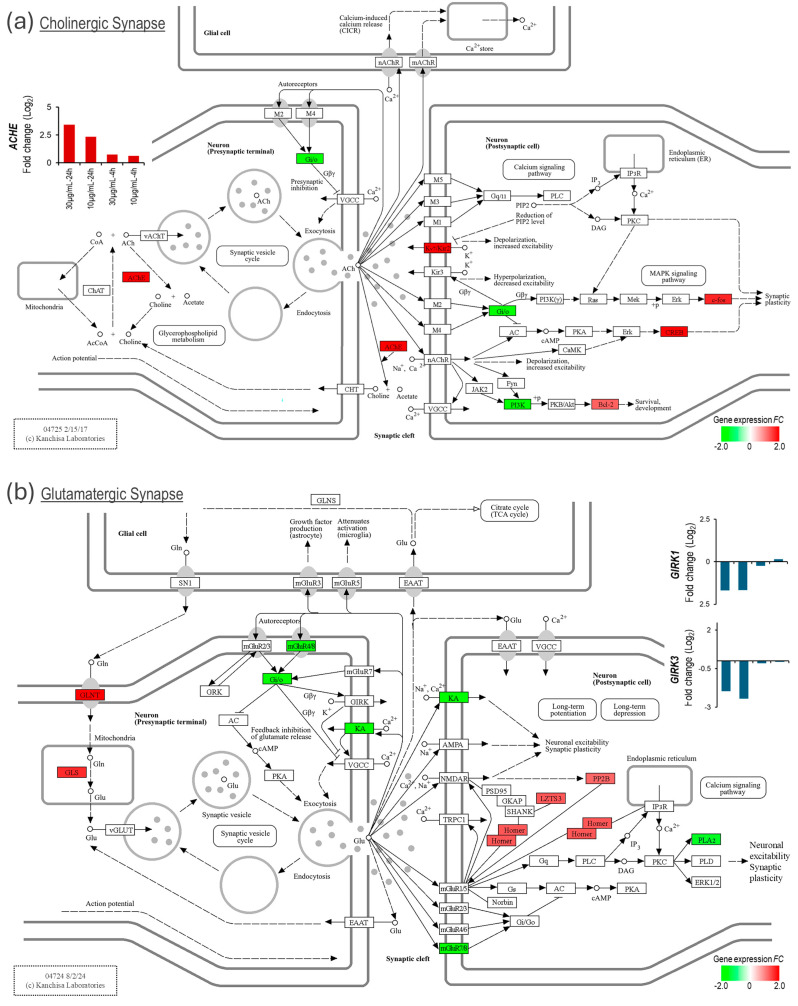
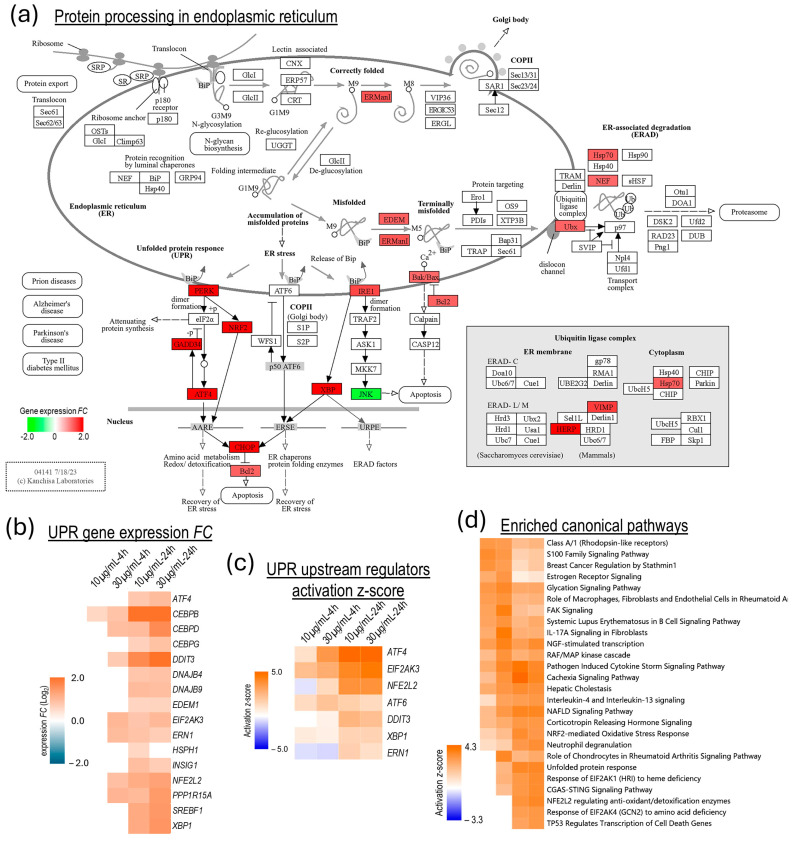
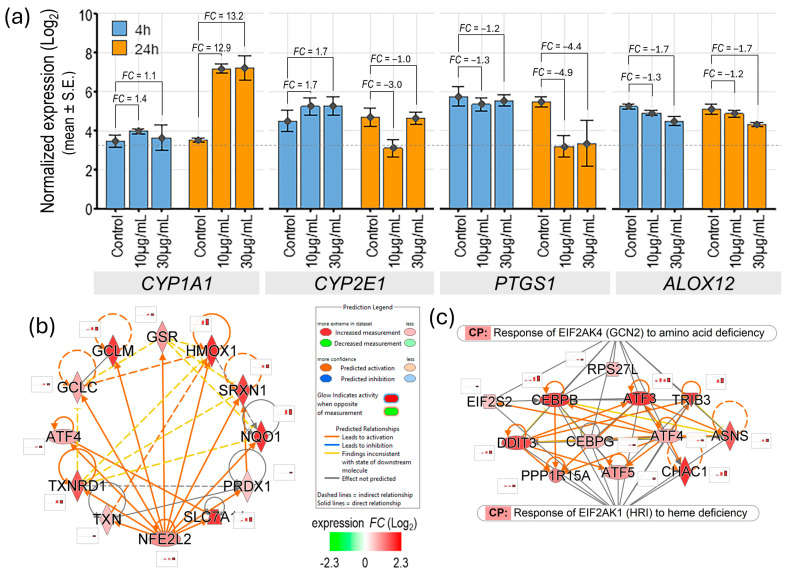
The Mojave rattlesnake venom shows significant geographical variability. The venom of Type A animals primarily contains β-neurotoxin referred to as Mojave Toxin (MTX), which makes bites from this snake particularly feared. We performed a genome-wide transcriptomic analysis of the neurocellular response to Mojave Type A rattlesnake venom using induced pluripotent stem cell-derived neural stem cells to unveil the molecular mechanisms underlying the damage caused by this snake’s envenomation. Our results suggest that snake venom metalloproteases, although having a limited repertoire in Type A venom, facilitate venom spread by digesting the tissue’s extracellular matrix. The MTX, which is composed of heterodimers of basic and acidic phospholipase-A2, co-opts the host arachidonic acid and Ca2+ second messenger mechanisms and triggers multiple signaling cascades, such as the activation of MAPKs and NF-κB-regulated proinflammatory genes; the neurotransmitter overload in excitatory synapses leading to a presynaptic blockade of nerve signals; and the upregulation of unfolded protein response (UPR) due to the depletion of Ca2+ from the endoplasmic reticulum. The upregulated UPR and the oxidative stress caused by reactive oxygen species generated in cytochromeP4501A1-mediated hydroxylation of arachidonic acid contribute to mitochondrial toxicity. The activation of UPR, mitochondrial toxicity, and oxidative stress synergistically contributed to apoptotic and ferroptotic cell death.
Overview
The claims and statistics of this paper haven’t been checked yet.
Free: it reads the open-access text and checks the first 5 claims that cite a source we can check. Create a free account to check every claim.
Integrity signals
Registry
Cites
Statistics
Figures
Verification
Claims the paper makes
The claims and statistics of this paper haven’t been checked yet.
Free: it reads the open-access text and checks the first 5 claims that cite a source we can check. Create a free account to check every claim.
Claims other papers make about this one
Each is checked against this paper’s own text: does it say what the citing paper says it does?
The source backs part of the claim, not all of it — or backs it for a different population, condition or comparison.
In the citing paper
“The genome-wide transcriptomic analysis of induced pluripotent stem cell (iPSC)-derived neural stem cells treated with Mojave A toxin showed that the venom can activate apoptotic pathways.”
From Role of Regulated Cell Death Pathways in Snakebite Envenomation: Mechanisms, Crosstalk, and Therapeutic Opportunities (2026) · cites this paper as [47]
Experimental — accuracy not yet measuredThe source backs part of the claim, not all of it — or backs it for a different population, condition or comparison.
In the citing paper
“The MTX PLA2 activity was shown to disrupt cell membrane integrity, leading to a rapid influx of intracellular calcium.”
From Role of Regulated Cell Death Pathways in Snakebite Envenomation: Mechanisms, Crosstalk, and Therapeutic Opportunities (2026) · cites this paper as [47]
Experimental — accuracy not yet measuredThe source backs part of the claim, not all of it — or backs it for a different population, condition or comparison.
In the citing paper
“Additionally, the study focused solely on transcriptional changes in venom-treated cells without experimental validation at the protein level or consideration of functional cellular consequences [47].”
From Role of Regulated Cell Death Pathways in Snakebite Envenomation: Mechanisms, Crosstalk, and Therapeutic Opportunities (2026) · cites this paper as [47]
Experimental — accuracy not yet measuredThe cited source says what the claim attributes to it.
In the citing paper
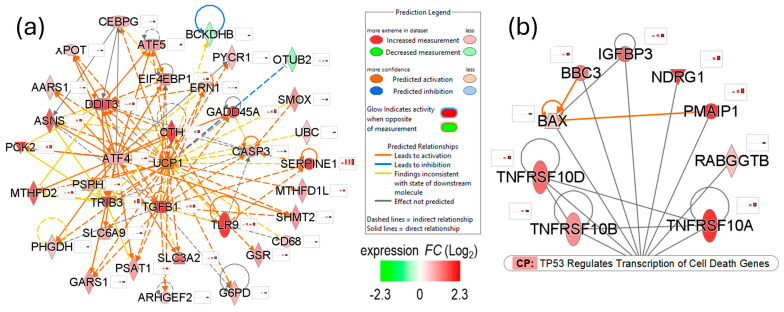
“This reduces overall protein synthesis but upregulates other stress response genes, such as ATF and DDIT3/CHOP, and apoptotic genes, such as BAX, PMAIP1, and BBC3, resulting in mitochondrial membrane permeabilization and cytochrome c release [47].”
From Role of Regulated Cell Death Pathways in Snakebite Envenomation: Mechanisms, Crosstalk, and Therapeutic Opportunities (2026) · cites this paper as [47]
The cited source says what the claim attributes to it.
In the citing paper
“However, there are several limitations in the study, which include correlative evidence that was not validated in a more complex biological system [47].”
From Role of Regulated Cell Death Pathways in Snakebite Envenomation: Mechanisms, Crosstalk, and Therapeutic Opportunities (2026) · cites this paper as [47]
4 more claims about this paper
Create a free account to see every claim other papers make about this one.
Self-check
Percentages, sums and reported differences re-computed from the paper’s own numbers.
The self-check needs the paper’s full text.
Citations
Cites
KEGG: Kyoto Encyclopedia of Genes and Genomes
Kanehisa, M. (2000) · Nucleic Acids Research · doi:10.1093/nar/28.1.27 · Cited by 37,077
Enrichr: interactive and collaborative HTML5 gene list enrichment analysis tool
Chen, E. Y., Tan, C. M., Kou, Y., Duan, Q., Wang, Z., Meirelles, G. V., Clark, N. R., & Ma’ayan, A. (2013) · BMC Bioinformatics · doi:10.1186/1471-2105-14-128 · Cited by 7,814 · cited 2×
“The ’Enrichr’ tool implements several enrichment scores as described by Chen et al. (2013) [21].”
Causal analysis approaches in Ingenuity Pathway Analysis
Krämer, A., Green, J., Pollard, J., & Tugendreich, S. (2014) · Bioinformatics · doi:10.1093/bioinformatics/btt703 · Cited by 5,724 · cited 1×
“In IPA, right-tailed Fisher’s exact test FDR-corrected p -values were used for enrichment significance, and the direction of functional change was assessed by the activation z -score detailed in Kramer et al. (2014) [23].”
Toward understanding the origin and evolution of cellular organisms
Kanehisa, M. (2019) · Protein Science · doi:10.1002/pro.3715 · Cited by 5,509 · cited 1×
“…for quality control and between vehicle-treated control and venom-challenged NSCs, were performed using the Kyoto Encyclopedia of Genes and Genomes (KEGG) database [18–20], Ingenuity Pathway Analysis (IPA) platform (QIAGEN Digital Insights, Redwood City, CA, USA), and ‘Enrichr’ and ‘ShinyGO v0.”
ShinyGO: a graphical gene-set enrichment tool for animals and plants
Ge, S. X., Jung, D., & Yao, R. (2020) · Bioinformatics · doi:10.1093/bioinformatics/btz931 · Cited by 5,270 · cited 1×
“81 ′ gene set enrichment analysis web tools [21,22] (accessed November– December 2024).”
Ferroptosis: molecular mechanisms and health implications
Tang, D., Chen, X., Kang, R., & Kroemer, G. (2021) · Cell Research · doi:10.1038/s41422-020-00441-1 · Cited by 4,256 · cited 2×
“The upregulated expression of genes associated with pro-ferroptosis processes, such as lipid peroxidation ( ACSL5 ), iron uptake ( TFRC ), iron metabolism ( HMOX1 ) , and iron storage ( FTH1, and FTL ), suggests the induction of ferroptotic cell death in venom-challenged NSCs [35,67].”
Regulated Translation Initiation Controls Stress-Induced Gene Expression in Mammalian Cells
Harding, H. P., Novoa, I., Zhang, Y., Zeng, H., Wek, R., Schapira, M., & Ron, D. (2000) · Molecular Cell · doi:10.1016/s1097-2765(00)00108-8 · Cited by 3,276 · cited 1×
“The activation of integrated stress response kinases (EIF2AK1, EIF2AK3, and EIF2AK4), phosphorylates EIF2S1 (eIF2 α ), and phosphorylated EIF2S1 sequesters overall protein synthesis but activates the translation of ATF4, PPP1R15A/GADD34, ATF5, and DDIT3/CHOP transcription factors [55–60].”
KEGG: biological systems database as a model of the real world
Kanehisa, M., Furumichi, M., Sato, Y., Matsuura, Y., & Ishiguro-Watanabe, M. (2025) · Nucleic Acids Research · doi:10.1093/nar/gkae909 · Cited by 2,543
Metabolism pathways of arachidonic acids: mechanisms and potential therapeutic targets
Wang, B., Wu, L., Chen, J., Dong, L., Chen, C., Wen, Z., Hu, J., Fleming, I., & Wang, D. W. (2021) · Signal Transduction and Targeted Therapy · doi:10.1038/s41392-020-00443-w · Cited by 1,414 · cited 2×
“systems, the cyclooxygenases (COXs, also referred to as PGG/H synthases), lipoxygenases (LOXs), and cytochrome P450 (CYP) enzymes ( ω -hydroxylases and epoxygenases), to generate a spectrum of biologically active fatty acid mediators, which act as local hormones and signaling molecules [30].”
Ferroptosis at the intersection of lipid metabolism and cellular signaling
Liang, D., Minikes, A. M., & Jiang, X. (2022) · Molecular Cell · doi:10.1016/j.molcel.2022.03.022 · Cited by 1,345 · cited 1×
“Ferroptosis, on the other hand, is driven by ROS production and redox imbalance and involves iron-dependent lipid peroxidation [64].”
Cited by
Wang, N., Dai, J., Li, R., Li, W., Liu, D. W., Liu, X., Zongqin, M. E. I., Han, L. U., Zuoshun, H. E., & Gu, S. (2025) · Ecotoxicology and Environmental Safety · doi:10.1016/j.ecoenv.2025.119228 · Cited by 8
Snake venom-induced tissue damage as a paradigm of redox imbalance, ferroptosis, and inflammaging
Dahiya, R., Singh, A. P., & Rawat, A. (2026) · Toxicology Letters · doi:10.1016/j.toxlet.2026.111894 · Cited by 3
Alangode, A., Rajasekhar, A., Sabu, J. J., Krishna, S., Anuja, D., Sreeja, A., Remesh, G., Kaladevi, A., & Nair, B. G. (2026) · International Journal of Molecular Sciences · doi:10.3390/ijms27156830
“This reduces overall protein synthesis but upregulates other stress response genes, such as ATF and DDIT3/CHOP, and apoptotic genes, such as BAX, PMAIP1, and BBC3, resulting in mitochondrial membrane permeabilization and cytochrome c release [47].”
InfluentialMookadam, M., Vukomanovic, D., Yazdchi, S., Unzek, S., & Mookadam, F. (2025) · Wilderness and Environmental Medicine · doi:10.1177/10806032251379389
Liu, L., Li, P., Lu, Z., Xu, S., Wang, J., Ma, K., Yu, H., Zhou, C., Chen, H., Liu, G., et al. (2026) · Advanced Science · doi:10.1002/advs.76642
“The SP/SxP motif corresponds to substrates of proline-directed kinases, including MAPKs and CDKs, suggesting activation of stress signaling, cell cycle perturbation, and apoptosis under calcium overload and oxidative stress [ 32, 33 ].”
Shirazi, F. “., Adhikari, S. R., Nielsen, V. G., & Smelski, G. T. (2026) · Toxins · doi:10.3390/toxins18090391
“…that MoTX interacts with several proinflammatory pathways (e.g., activation of mitogen-activated protein kinases, activation of nuclear factor kappa-light-chain-enhancer of activated B cells, upregulation of unfolded protein response) to cause apoptotic and ferroptotic cell injury and death [22].”
Metadata
- Authors
- Kumar, S., Aceves, M., Granados, J., Guerra, L., Juarez, F., Novilla, E., C. Leandro, A., Leandro, M., Peralta, J., Williams-Blangero, S., Sanchez, E. E., Galan, J. A., Blangero, J., & Curran, J. E.
- Affiliations
- The University of Texas Rio Grande Valley (US)
- Division of Human Genetics and South Texas Diabetes and Obesity Institute, University of Texas Rio Grande Valley School of Medicine, Brownsville, TX 78520, USA
- Division of Human Genetics and South Texas Diabetes and Obesity Institute, University of Texas Rio Grande Valley School of Medicine, McAllen, TX 78504, USA
- Texas A&M University – Kingsville (US)
- Corresponding author
- Kumar, Satish
- ORCID
- Venue
- Biomolecules
- Publisher
- MDPI AG
- Published
- 2025-03-06
- Volume
- 15
- Issue
- 3
- Pages
- 381
- ISSN
- 2218-273X (ISSN-L)
- PMC
- PMC11940042
- OpenAlex
- W4408197473
- Cited by
- 6
- References
- 68
- Citations by year
- 2026: 4 · 2025: 2
- FWCI
- 3.51
- Type
- journal article
- Language
- en
- Open access
- gold
- doi.org
- Licence
- Locations
- Biomolecules (publishedVersion, cc-by)
- PubMed Central (publishedVersion, cc-by)
- PubMed (publishedVersion)
- ScholarWorks @ UTRGV (The University of Texas Rio Grande Valley) (submittedVersion, cc-by)
- DOAJ (DOAJ: Directory of Open Access Journals) (submittedVersion, cc-by-sa)
- Funders
- National Institutes of Health (NIH) (P01 HL045522, RM1 GM149403, P40OD010960-21, C06 RR020547)
- NIH (P01 HL045522, RM1 GM149403, P40OD010960-21, C06 RR020547)
- NIH/ORIP (P01 HL045522, RM1 GM149403, P40OD010960-21, C06 RR020547)
- Topics
- Life Sciences › Pharmacology, Toxicology and Pharmaceutics › Toxicology › Venomous Animal Envenomation and Studies
- Health Sciences › Medicine › Pharmacology (medical) › Healthcare and Venom Research
- Life Sciences › Agricultural and Biological Sciences › Ecology, Evolution, Behavior and Systematics › Amphibian and Reptile Biology
- Keywords
- Mojave toxin, snakebite, extracellular matrix degradation, phospholipase A2, arachidonic acid signaling, calcium second messenger, MAPK signaling, unfolded protein response, endoplasmic reticulum calcium depletion, mitochondrial toxicity, oxidative stress, CYP1A1, ferroptosis, apoptosis, transcriptomic response
- MeSH terms
- Animals, Calcium, Crotalid Venoms, Humans, Apoptosis, Crotalus, Oxidative Stress, Unfolded Protein Response, Induced Pluripotent Stem Cells, Neural Stem Cells, Transcriptome
About these checks
Registry, retraction, Cites and statistics results are computed, not judged, with one exception: a printed reference that no index lists is read once by a model before it counts as a citation error. Claims are extracted by a model and kept only when their quote appears verbatim in the text; each cited source is then checked, with a model’s help, for whether it says what the claim relies on. Those verdicts can be wrong — read the claim’s quote and the cited source before relying on one.
Statistics and arithmetic are recomputed, not judged.
Confidence bands are shown only for fields calibrated on our annotated test set. None is calibrated yet, so no band is shown.
What counts as a claim ›How we measure confidence ›How we check this ›
Are you an author, or do you see a problem with this page? Request a review
Data sources
Bibliographic data: Semantic Scholar, OpenAlex, Crossref.
Contains information from the Semantic Scholar Academic Graph Datasets, made available under the ODC Attribution License (ODC-BY 1.0).
Semantic Scholar’s data is described in: Kinney, R., et al. (2023). The Semantic Scholar Open Data Platform. arXiv:2301.10140.
