

NF-κB: A Double-Edged Sword Controlling Inflammation
Open accessThe DOI matches its Crossref record; 114 of the 114 references it cites were found in a registry or an index.
Abstract
Inflammation, when properly mounted and precisely calibrated, is a beneficial process that enables the rapid removal of invading pathogens and/or cellular corpses and promotes tissue repair/regeneration to restore homeostasis after injury. Being a paradigm of a rapid response transcription factor, the nuclear factor-kappa B (NF-κB) transcription factor family plays a central role in amplifying inflammation by inducing the expression of inflammatory cytokines and chemokines. Additionally, NF-κB also induces the expression of pro-survival and -proliferative genes responsible for promoting tissue repair and regeneration. Paradoxically, recent studies have suggested that the NF-κB pathway can also exert inhibitory effects on pro-inflammatory cytokine production to temper inflammation. Here, we review our current understanding about the pro- and anti-inflammatory roles of NF-κB and discuss the implication of its dichotomous inflammation-modulating activity in the context of inflammasome activation and tumorigenesis.
Overview
The claims and statistics of this paper haven’t been checked yet.
Free: it reads the open-access text and checks the first 5 claims that cite a source we can check. Create a free account to check every claim.
Integrity signals
Registry
Cites
Statistics
Figures
Verification
Claims the paper makes
The claims and statistics of this paper haven’t been checked yet.
Free: it reads the open-access text and checks the first 5 claims that cite a source we can check. Create a free account to check every claim.
Claims other papers make about this one
Each is checked against this paper’s own text: does it say what the citing paper says it does?
The cited source says what the claim attributes to it.
In the citing paper
“NF-κB is a central pleiotropic mediator of inflammation and induces the expression of multiple cytokines and chemokines.”
From Chronic stress, neuroinflammation, and depression: an overview of pathophysiological mechanisms and emerging anti-inflammatories (2023) · cites this paper as [76]
Self-check
Percentages, sums and reported differences re-computed from the paper’s own numbers.
The self-check needs the paper’s full text.
Citations
Cites
Antiinflammatory Therapy with Canakinumab for Atherosclerotic Disease
Ridker, P. M., Everett, B. M., Thuren, T., MacFadyen, J. G., Chang, W. H., Ballantyne, C., Fonseca, F., Nicolau, J., Koenig, W., Anker, S. D., et al. (2017) · New England Journal of Medicine · doi:10.1056/nejmoa1707914 · Cited by 9,482
Cleavage of GSDMD by inflammatory caspases determines pyroptotic cell death
Shi, J., Zhao, Y., Wang, K., Shi, X., Wang, Y., Huang, H., Zhuang, Y., Cai, T., Wang, F., & Shao, F. (2015) · Nature · doi:10.1038/nature15514 · Cited by 6,659
Origin and physiological roles of inflammation
Medzhitov, R. (2008) · Nature · doi:10.1038/nature07201 · Cited by 6,618 · cited 5×
“Inflammatory responses are initiated upon host recognition of inflammatory cues in the form of either pathogen-derived molecules (PAMPs) or self-danger signals generated during tissue damage (DAMPs), by diverse pattern recognition receptors (PRR) [5,6].”
BackgroundInfluentialA role for mitochondria in nlrp3 inflammasome activation
Zhou, R., Yazdi, A. S., Menu, P., & Tschopp, J. (2011) · Nature · doi:10.1038/nature09663 · Cited by 5,602
Schroder, K., & Tschopp, J. (2010) · Cell · doi:10.1016/j.cell.2010.01.040 · Cited by 5,475
The NLRP3 inflammasome: molecular activation and regulation to therapeutics
Swanson, K. V., Deng, M., & Ting, J. P.-Y. (2019) · Nature Reviews Immunology · doi:10.1038/s41577-019-0165-0 · Cited by 4,884
The NLRP3 Inflammasome: an overview of mechanisms of activation and regulation
Kelley, N., Jeltema, D., Duan, Y., & He, Y. (2019) · International Journal of Molecular Sciences · doi:10.3390/ijms20133328 · Cited by 3,539
Inflammasomes: mechanism of action, role in disease, and therapeutics
Guo, H., Callaway, J. B., & Ting, J. P.-Y. (2015) · Nature Medicine · doi:10.1038/nm.3893 · Cited by 3,340
Chemotherapy drugs induce pyroptosis through caspase-3 cleavage of a gasdermin
Wang, Y., Gao, W., Shi, X., Ding, J., Liu, W., He, H., Wang, K., & Shao, F. (2017) · Nature · doi:10.1038/nature22393 · Cited by 3,199
Nakahira, K., Haspel, J. A., Rathinam, V. A. K., Lee, S.-J., Dolinay, T., Lam, H. C., Englert, J. A., Rabinovitch, M., Cernadas, M., Kim, H. P., et al. (2011) · Nature Immunology · doi:10.1038/ni.1980 · Cited by 3,049
Cited by
TGF-β signaling in health, disease and therapeutics
Deng, Z., Fan, T., Xiao, C., Tian, H., Zheng, Y., Li, C., & He, J. (2024) · Signal Transduction and Targeted Therapy · doi:10.1038/s41392-024-01764-w · Cited by 1,168
Hassamal, S. (2023) · Frontiers in Psychiatry · doi:10.3389/fpsyt.2023.1130989 · Cited by 578
“In clinical studies, post-endotoxin depressed mood is predicted by higher baseline activity of the NF-κB transcription factor in peripheral blood mononuclear cells (79).”
BackgroundInfluentialNrf2 Regulates Oxidative Stress and Its Role in Cerebral Ischemic Stroke
Wang, L., Zhang, X., Xiong, X., Zhu, H., Chen, R., Zhang, S., Chen, G., & Jian, Z. (2022) · Antioxidants · doi:10.3390/antiox11122377 · Cited by 354
El‐Saadony, M. T., Fang, G., Yan, S., Alkafaas, S. S., Nasharty, M. A. E., Khedr, S. A., Hussien, A. M., Ghosh, S. B., Dladla, M., Elkafas, S. S., et al. (2024) · International Journal of Nanomedicine · doi:10.2147/ijn.s487188 · Cited by 199
Fornari Laurindo, L., Aparecido Dias, J., Cressoni Araújo, A., Torres Pomini, K., Machado Galhardi, C., Rucco Penteado Detregiachi, C., Santos de Argollo Haber, L., Donizeti Roque, D., Dib Bechara, M., Vialogo Marques de Castro, M., et al. (2024) · Frontiers in Immunology · doi:10.3389/fimmu.2023.1305933 · Cited by 144
Kaszycki, J., & Kim, M. (2025) · Frontiers in Immunology · doi:10.3389/fimmu.2025.1529756 · Cited by 102
Silymarin and Inflammation: Food for Thoughts
Surai, P. F., Surai, A., & Earle-Payne, K. (2024) · Antioxidants · doi:10.3390/antiox13010098 · Cited by 87
Neuroinflammation Plays a Critical Role in Cerebral Cavernous Malformation Disease
Lai, C. C., Nelsen, B., Frías-Anaya, E., Gallego-Gutiérrez, H., Orecchioni, M., Herrera, V., Ortiz, E., Sun, H., Mesarwi, O. A., Ley, K. F., et al. (2022) · Circulation Research · doi:10.1161/circresaha.122.321129 · Cited by 66
Xue, J., Gao, J., Tang, A.-F., & Feng, C. (2024) · Heliyon · doi:10.1016/j.heliyon.2024.e37192 · Cited by 72
“This interplay serves to inhibit M1 polarization, possibly serving as a negative feedback mechanism conducive to inflammation resolution [192].”
BackgroundRen, J., Li, Z., Li, X., Yang, L., Bu, Z., Wu, Y., Li, Y., Zhang, S., & Meng, X. (2025) · Foods · doi:10.3390/foods14071095 · Cited by 78
“The activation of NF-κ B can lead to the transcription of proinflammatory cytokines, which may exacerbate tissue, liver, and kidney injury [53].”
HIF1, HSF1, and NRF2: Oxidant-Responsive Trio Raising Cellular Defenses and Engaging Immune System
Cyran, A. M., & Zhitkovich, A. (2022) · Chemical Research in Toxicology · doi:10.1021/acs.chemrestox.2c00131 · Cited by 59
FADD as a key molecular player in cancer progression
Liu, Y., Li, X., Zhou, X., Wang, J., & Ao, X. (2022) · Molecular Medicine · doi:10.1186/s10020-022-00560-y · Cited by 51
“The dysregulation of NF-κB is closely associated with a variety of human diseases, particularly cancer (Liu et al. 2022a).”
BackgroundMethodInfluentialCellular Dynamics of Fas-Associated Death Domain in the Regulation of Cancer and Inflammation
Ranjan, K., & Pathak, C. (2024) · International Journal of Molecular Sciences · doi:10.3390/ijms25063228 · Cited by 37
Ranbhise, J. S., Ju, S., Singh, M. K., Han, S., Akter, S., Ha, J., Choe, W., Kim, S. S., & Kang, I. (2025) · Dentistry Journal · doi:10.3390/dj13030100 · Cited by 54
“…by stimuli such as pro-inflammatory cytokines (e.g., TNF-α , IL-1 β ), bacterial lipopolysaccharides (LPS), oxidative stress, and advanced glycation end-products (AGEs) [112], NF-κ B translocate to the nucleus to promote the expression of genes involved in inflammation and pro-survival [128].”
Targeting persistently activated inflammatory microenvironment to promote chronic wound healing
Dai, Y., & Chen, Y. (2025) · Frontiers in Immunology · doi:10.3389/fimmu.2025.1708358 · Cited by 47
Ni, X., Wang, Q., Ning, Y., Liu, J., Su, Q., Lv, S., Feng, Y., Yang, S., Yuan, R., & Gao, H. (2025) · Phytomedicine · doi:10.1016/j.phymed.2025.156407 · Cited by 40
Role of HOXA9 in solid tumors: mechanistic insights and therapeutic potential
Tang, L. Y., Lin, P., Tan, C., Liu, H., Chen, P., & Wang, H. Z. (2022) · Cancer Cell International · doi:10.1186/s12935-022-02767-9 · Cited by 29
Deng, Y., Ding, C., Yang, H., Zhang, M., Xiao, Y., Wang, H., Li, J., Xiao, T., & Lv, Z. (2023) · International Journal of Biological Macromolecules · doi:10.1016/j.ijbiomac.2023.128192 · Cited by 27
Jayasuriya, R., Ganesan, K., & Ramkumar, K. M. (2024) · International Journal of Molecular Sciences · doi:10.3390/ijms252011197 · Cited by 29
The Role of IL-23 in the Development of Inflammatory Diseases
García‐Domínguez, M. (2025) · Biology · doi:10.3390/biology14040347 · Cited by 40
“One of the key pathways triggered by IL-23R is the NF-κ B signaling pathway, which is crucial for regulating the transcription of numerous pro-inflammatory cytokines and other immune effector molecules [44,45].”
Targeting inflammasomes as an immunotherapeutic strategy for cancer
Huang, L., Chen, X., Liu, R., Nan, D., Bao, W., Yang, L., Dai, X., Tang, J., Zhang, H., & Lu, Y. (2025) · Journal of Translational Medicine · doi:10.1186/s12967-025-06665-2 · Cited by 28
“The upstream regulators of NF-κB include Caspase-8, an apoptotic caspase, and Fas-associated protein with death domain, which in turn leads to the overexpression of NLRP3 and the production of pro-IL-1β [33, 34].”
Ali, B. M., Al‐Mokaddem, A. K., Selim, H. M. R. M., Alherz, F. A., Saleh, A., Hamdan, A. M., Ousman, M. S., & El‐Emam, S. Z. (2024) · Biomedicine & Pharmacotherapy · doi:10.1016/j.biopha.2024.116854 · Cited by 29
Johnson, R. P., Ratnacaram, C. K., Kumar, L., & Jose, J. (2022) · Drug Resistance Updates · doi:10.1016/j.drup.2022.100865 · Cited by 27
Wang, P., Liu, Z., Sweef, O., Saeed, A. F. U. H., Kluz, T. S., Costa, M., Shroyer, K. R., Kondo, K., Wang, Z., & Yang, C. (2024) · Cancer Letters · doi:10.1016/j.canlet.2024.216827 · Cited by 24
The Role of N6‐Methyladenosine in Inflammatory Diseases
Xu, H., Lin, C., Yang, J., Chen, X., Chen, Y., Chen, J., Guo, A., & Hu, C. (2022) · Oxidative Medicine and Cellular Longevity · doi:10.1155/2022/9744771 · Cited by 19
“In fl ammation is a double-edged sword that is common in various diseases [7, 8]; on the one hand, in fl ammation fi ghts infection or tissue damage [9, 10], and on the other hand, it could become excessive and cause autologous damage [11].”
Pistol, G. C., Perțea, A.-M., & Țăranu, I. (2023) · Veterinary Sciences · doi:10.3390/vetsci11010015 · Cited by 25
“Under physiological circumstances, NF-κ B is sequestered in the cytoplasm by the IKB/IKK enzymatic complex [183].”
BackgroundPotential effects of biomaterials on macrophage function and their signalling pathways
Zhu, F., Wang, S., Zhu, X., Pang, C., Cui, P., Yang, F., Li, R., Zhan, Q., & Xin, H. (2023) · Biomaterials Science · doi:10.1039/d3bm01213a · Cited by 17
Kulhari, U., Rajanan, A., Ambujakshan, A., Verma, S., Mugale, M. N., & Sahu, B. D. (2024) · Journal of Biochemical and Molecular Toxicology · doi:10.1002/jbt.23738 · Cited by 17
The NLRP3 inflammasome in ischemic stroke
Masenga, S. K., & Kirabo, A. (2024) · Frontiers in Stroke · doi:10.3389/fstro.2024.1382379 · Cited by 23
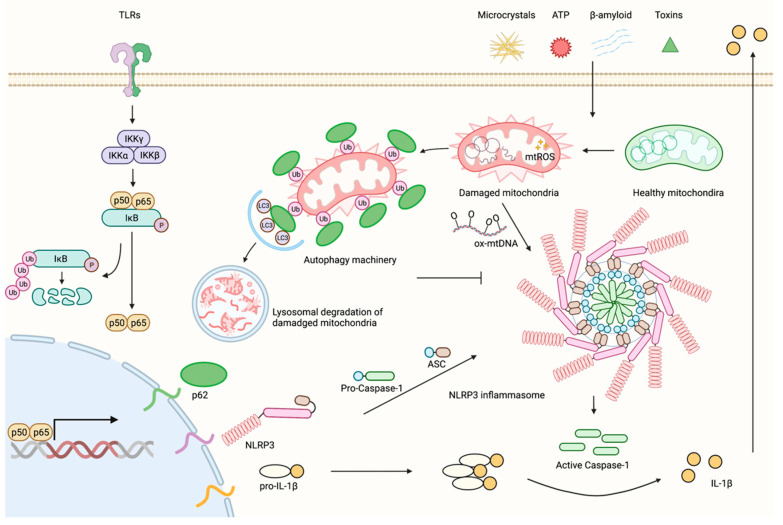
“…of I κ B by means of phosphorylation causing the release and migration of NF-κ B into the nucleus to elicit transcription and translation of pro-IL-1 β and NLRP3 expression in priming the NLRP3-inflammasome for activation (Boaru et al., 2015; Zhong et al., 2016; Liu et al., 2022) (Figure 2).”
Mohsin, M., Zaki, A., Tabassum, G., Khan, S., Ali, S., Ahmad, T., & Syed, M. A. (2025) · Mitochondrion · doi:10.1016/j.mito.2025.102047 · Cited by 18
COMMD proteins function and their regulating roles in tumors
You, G., Chen, Z., Wang, L., Liu, Z., He, F., Yao, X., & Zhang, X. (2023) · Frontiers in Oncology · doi:10.3389/fonc.2023.1067234 · Cited by 20
Abu‐Khudir, R., Badr, G. M., El‐Moaty, H. I. A., Hamad, R. S., Abdulsalam, N. K. A., Abdelrahem, A. S. A., Alqarni, S., Alkuwayti, M. A., Salam, S. A., & El-Kareem, H. F. A. (2023) · International Journal of Molecular Sciences · doi:10.3390/ijms242015478 · Cited by 17
Gagliardi, A., Chiarella, E., Voci, S., Ambrosio, N., Celano, M., Salvatici, M. C., & Cosco, D. (2024) · International Journal of Pharmaceutics · doi:10.1016/j.ijpharm.2024.124034 · Cited by 14
Zhang, X., Wang, G., Li, M., Li, Y., Luo, X., Liu, Y., Zhang, X., Hocher, J.-G., Krämer, B. K., Hocher, B., et al. (2024) · Nephrology Dialysis Transplantation · doi:10.1093/ndt/gfae090 · Cited by 13
Bartolomé, R. A., Martín‐Regalado, Á., Pintado‐Berninches, L., Robles, J., Ramírez-González, M. A., Boukich, I., Gómez, P. S., Balyasnikova, I. V., & Casal, J. I. (2023) · Cell Death and Disease · doi:10.1038/s41419-023-06255-4 · Cited by 13
VEXAS syndrome, a new kid on the block of auto-inflammatory diseases: A hematologist's point of view
Heiblig, M., Patel, B. A., & Jamilloux, Y. (2023) · Best Practice & Research Clinical Rheumatology · doi:10.1016/j.berh.2023.101861 · Cited by 12
Development of a 5-FU modified miR-129 mimic as a therapeutic for non-small cell lung cancer
Hwang, G., Yuen, J. G., Fesler, A. T., Farley, H., Haley, J. D., & Ju, J. (2023) · Molecular Therapy — Oncolytics · doi:10.1016/j.omto.2023.02.007 · Cited by 12
Repressive Control of Keratinocyte Cytoplasmic Inflammatory Signaling
Carman, L. E., Samulevich, M. L., & Aneskievich, B. J. (2023) · International Journal of Molecular Sciences · doi:10.3390/ijms241511943 · Cited by 10
History and Development of ABCA1
Wang, Y., Guo, M. Y., & Tang, C. (2023) · Current Problems in Cardiology · doi:10.1016/j.cpcardiol.2023.102036 · Cited by 11
Wang, X., Liu, M., Li, X., Zhang, M., Xu, F., Liu, H., & Wu, H. (2024) · Scientific Reports · doi:10.1038/s41598-024-51150-3 · Cited by 9
Mustafa, K., Han, Y., He, D., Wang, Y., Niu, N., José, P. A., Jiang, Y., Kopp, J. B., Lee, H., & Qu, P. (2024) · PLoS ONE · doi:10.1371/journal.pone.0295837 · Cited by 10
Tripathy, S., Burd, I. D., & Kelleher, M. A. (2024) · Biology of Reproduction · doi:10.1093/biolre/ioae027 · Cited by 8
Qi, C., Liu, J., Lu, D., Song, J., Yu, Q., Wen, J., & Zheng, B. (2025) · Ecotoxicology and Environmental Safety · doi:10.1016/j.ecoenv.2025.118297 · Cited by 8
Interdonato, L., Ferrario, G., Cordaro, M., D’Amico, R., Siracusa, R., Fusco, R., Impellizzeri, D., Cuzzocrea, S., Aldini, G., & Paola, R. D. (2023) · Molecules · doi:10.3390/molecules28145376 · Cited by 9
“Among them, IKKβ is the catalytic component that phosphorylates IκB for destruction via ubiquitination [49].”
BackgroundVlahopoulos, S. (2024) · International Journal of Molecular Sciences · doi:10.3390/ijms25168621 · Cited by 11
Stephens, V. R., Horner, K. B., Avila, W., Spicer, S. K., Chinni, R., Bernabe, E. B., Hinton, A. O., Jr., Damo, S. M., Eastman, A. J., McCallister, M., et al. (2024) · Frontiers in Immunology · doi:10.3389/fimmu.2024.1497405 · Cited by 10
Figueroa, M., Hall, S., Mattia, V., Mendoza, A., Brown, A., Xiong, Y., Mukherjee, R., Jones, J. A., Richardson, W. J., & Ruddy, J. M. (2023) · JVS Vascular Science · doi:10.1016/j.jvssci.2023.100124 · Cited by 10
“NF-kB and highlights the challenge of therapeutically targeting this transcription factor without 391 undesirable side effects.(44) With the concurrent evidence relating SGK-1 activity to VSMC 392 proliferation, migration, and calcification based on alternative extracellular stressors such as 393 glucose, adipokines,…”
BackgroundDeng, J., Deng, Y., Chen, Y., Bai, F., Zhang, B., Jiang, W., Wang, W., & Yu, H. (2025) · Medicinal Research Reviews · doi:10.1002/med.70024 · Cited by 10
Li, X., Lu, C., Du, W., Zou, Q., Wang, R., Hu, C., Li, Y., Zhang, Y., & Mao, Z. (2024) · RSC Medicinal Chemistry · doi:10.1039/d4md00301b · Cited by 7
Li, Z., Pu, Z., Gao, Y., Zhou, M., Zhang, Z., Xiao, P., Chen, J., & Zhou, C. (2024) · Food Bioscience · doi:10.1016/j.fbio.2024.104631 · Cited by 12
Xie, F., Zhu, C., Qin, M., Diao, Z., & Wang, Y. (2025) · Journal of Nanobiotechnology · doi:10.1186/s12951-025-03823-y · Cited by 8
“Among these, TRAF6 mediates RANKL-induced osteoclast formation through the canonical NF-κB signaling pathway, whereas TRAF3 inhibits RANKL-and TNF-induced osteoclast formation and antagonizes the inhibitory effects of TGF-β on osteo-blast formation [45, 47].”
Al‐Zghoul, M. B., Hundam, S., Mayyas, M., Gerrard, D. E., & Dalloul, R. A. (2025) · Animals · doi:10.3390/ani15121736 · Cited by 7
Sanjaya, S. S., Park, M. H., Ryu, H. W., Choi, Y. H., Lee, M., Kang, C., Jung, M.-J., Lee, K. T., & Kim, G. (2024) · Journal of Functional Foods · doi:10.1016/j.jff.2024.106228 · Cited by 6
Liu, L., Han, J., Tian, H., Liu, Z., Wang, X., Wang, P., Li, X., & Gao, W. (2025) · Food Chemistry · doi:10.1016/j.foodchem.2025.145708 · Cited by 5
Wang, J., Han, D., Han, L., Zhang, Q., Liu, S., Hu, J., & Shang, Y. (2025) · World Allergy Organization Journal · doi:10.1016/j.waojou.2025.101091 · Cited by 5
Wu, Q., Jia, K., Liu, Y. P., Zhang, Y., Jiang, N., Li, L., Liu, Y., & Li, L. E. (2026) · Biomaterials Science · doi:10.1039/d6bm00025h · Cited by 7
Oliva, S., Diomede, F., Rocca, Y. D., Mazzone, A., Marconi, G. D., Pizzicannella, J., Trubiani, O., & Murmura, G. (2023) · Frontiers in Bioengineering and Biotechnology · doi:10.3389/fbioe.2023.1266799 · Cited by 8
“The NLRP3 in fl ammasome is one of the best characterized in fl ammasomes leading to the production and maturation of IL-1 β (Liu et al., 2022).”
BackgroundThevissen, K., Ny, A., Copmans, D., Tits, J., Kamata, K., Gielis, E., Longin, K., Sourbron, J., Thergarajan, P., Tan, T., et al. (2025) · Epilepsia · doi:10.1111/epi.18536 · Cited by 5
Zou, L., Wang, X., & Han, X. (2023) · Experimental Cell Research · doi:10.1016/j.yexcr.2023.113650 · Cited by 8
Moore, L. L., Jaboin, J. J., Brown, M. L., & Houchen, C. W. (2025) · Cancers · doi:10.3390/cancers17122050 · Cited by 4
Nyáry, D., Fekete, M., Ceglédi, A., Fazekas‐Pongor, V., Lipécz, Á., Csípő, T., Major, D., Péterfi, A., Csík, B., Zábó, V., et al. (2026) · Nutrients · doi:10.3390/nu18121920 · Cited by 7
Nord, J. A., Makowski, S. J., Sidlowski, P. F. W., Bursch, K. L., Corbett, J. A., & Smith, B. C. (2025) · Journal of Biological Chemistry · doi:10.1016/j.jbc.2025.110358 · Cited by 6
Zhong, S., Xiao, Y., & Liu, J. (2026) · Frontiers in Cardiovascular Medicine · doi:10.3389/fcvm.2026.1673693 · Cited by 6
“…patterns, the NF-κ B pathway is activated and translocates into the nucleus, where it directly binds to the promoter regions of genes including NLRP3, pro-IL-1 β and TNF-α , promoting their transcription and expression, thus laying the material foundation for the assembly of the inflammasome (22).”
Inflammation and carcinogenesis: molecular targets and small-molecule intervention strategies
Lu, W., Ojha, R., Rana, M., Gautam, V., Li, J.-Y., & Wang, S.-A. (2026) · Journal of Enzyme Inhibition and Medicinal Chemistry · doi:10.1080/14756366.2026.2689287 · Cited by 4
Pharmacology of chlorphenamine and pseudoephedrine use in the common cold: a narrative review
Douhard, R., Humbert, P. N., Milon, J., & Pegahi, R. (2024) · Current Medical Research and Opinion · doi:10.1080/03007995.2024.2424422 · Cited by 7
“NF-j B amplifies inflammation by inducing the expression of inflammatory cytokines and chemokines 29 .”
Friedman, T. N., Lamothe, S. M., Maguire, A. D., Hammond, T., Tenorio, G., Hilton, B. J., Plemel, J. R., Kurata, H. T., & Kerr, B. J. (2024) · Journal of Neurochemistry · doi:10.1111/jnc.16292 · Cited by 6
Immunization induces inflammation in the mouse heart during spaceflight
Veliz, A. L., Hughes, L., Carrillo, D., Pecaut, M. J., & Kearns‐Jonker, M. (2025) · BMC Genomics · doi:10.1186/s12864-025-11426-y · Cited by 4
Bi, D., Huang, J., Zhu, N., Yao, L., Wu, Y. L., Peng, Y. L., Chen, G., Zhu, B., & Xu, X. (2025) · Journal of Agricultural and Food Chemistry · doi:10.1021/acs.jafc.5c03269 · Cited by 3
Manganese-Loaded Liposomes: An In Vitro Study for Possible Diagnostic Application
Sguizzato, M., Martini, P., Ferrara, F., Marvelli, L., Drechsler, M., Reale, G., Calderoni, F., Illuminati, F., Porto, F., Speltri, G., et al. (2024) · Molecules · doi:10.3390/molecules29143407 · Cited by 2
Zarina, K. Z., Pilmane, M., & Pētersons, A. (2025) · Children · doi:10.3390/children12020205 · Cited by 2
Heo, H.-S., Cho, M., Chung, K., Lee, C.-W., Yoon, Y., Lee, S., An, H., & Lee, K. (2025) · Journal of Ethnopharmacology · doi:10.1016/j.jep.2025.120321 · Cited by 3
Aboelenin, M. M., Hefnawy, M., Emran, T. B., Shafey, H. I., & Zoheir, K. M. A. (2025) · Inflammopharmacology · doi:10.1007/s10787-025-01941-5 · Cited by 2
“Therefore, activating the NF-κB signaling pathway is crucial for inducing the production of these genes in response to various immune system stimulants (Liu et al. 2022).”
Cammarota, A. L., Carrizzo, A., Marco, M. D., Bukvić, N., Romano, F. J., Rosati, A., & Chetta, M. (2025) · International Journal of Molecular Sciences · doi:10.3390/ijms26209933 · Cited by 2
“It is well established that NF-κ B1 (NFAC1) and other members of the NF-κ B family are activated in various malignancies, contributing to a persistent inflammatory environment and resistance to apoptosis [50].”
Sarman, E., Aşçı, H., Özcan, K. N., Kolay, Ö., & Nazıroglu, I. (2025) · Journal of Molecular Histology · doi:10.1007/s10735-025-10642-w · Cited by 2
“Once activated, NF-κB stimulates the expression of various pro-inflammatory genes, enhanc - ing the inflammatory response and contributing to tissue damage (Topsakal et al. 2025; Liu et al. 2022).”
Yi, Z., Zhou, F., & Zhao, X. (2025) · Open Medicine · doi:10.1515/med-2025-1304 · Cited by 3
Xu, S., Han, T., Jiang, Y., Liu, R., Sun, Z., Ge, W., Lu, Y., Wu, L., & Feng, C. (2025) · Physiological Research · doi:10.33549/physiolres.935676 · Cited by 2
“Nuclear transcription factor-κB (NF - κB) serves as a crucial regulator of inflammation-related genes [9,10].”
From mechanism to application: Harnessing oxidative stress signaling for innovative food design
Xu, C., Chen, X., & Yang, Q. (2025) · Food Research International · doi:10.1016/j.foodres.2025.118093 · Cited by 3
Decoding inflammatory regulation in ovarian cancer at single-cell resolution
Yu, J., Zhou, T., Chen, S., Zhu, J., Xu, L., He, Y., & Chen, W. (2026) · Frontiers in Immunology · doi:10.3389/fimmu.2025.1719669 · Cited by 3
Campuzano-Donoso, M., Reytor-González, C., Toral-Noristz, M., González, Y., & Simancas‐Racines, D. (2026) · International Journal of Molecular Sciences · doi:10.3390/ijms27031392 · Cited by 3
“Together, these pathways orchestrate a transcriptional program that continuously shifts the balance from functional contractile tissue toward fibrosis [113,119].”
Dey, D. K., Ganguly, K., Kujur, E., & Basak, S. (2026) · Cancer Letters · doi:10.1016/j.canlet.2026.218314 · Cited by 3
Cryptotanshinone: an Encouraging Natural Compound for Treating Metabolic Diseases
Muñoz-Ayala, A., Maldonado-Arvizu, J. E., Chimal‐Vega, B., Castaños-Martínez, M., Capiz, A. P., & García‐González, V. (2026) · Current Pharmacology Reports · doi:10.1007/s40495-026-00444-3 · Cited by 2
“Upon activation, NLRP3 self-oligomerizes and recruits apoptosis-associated speck-like (ASC), which acts as a platform for the autoactivation of caspase-1, which later cleaves pro-IL-1β and pro-IL-18 into their mature forms [60, 62, 63].”
Lekbach, Y., Prakash, S., Vahed, H., Quadiri, A., Rehman, A., Fatimi, E. H. E., Dorotta, J. C., Suoth, B. S., Maurya, C., Garcia, A., et al. (2026) · Pathogens and Immunity · doi:10.20411/pai.v11i1.879 · Cited by 2
Ng, S., Kao, S.-W., Chen, C. C., Lin, S.-Z., Hsieh, D. J., Kuo, C., Lin, K., Huang, C., & Kuo, W. (2026) · Journal of Translational Medicine · doi:10.1186/s12967-026-08445-y · Cited by 2
Ginger’s Antiapoptotic and Antioxidant Effects on Ovaries of Cyclophosphamide-therapied Rats
Shahidi, M., Abazari, O., Dayati, P., Haghiralsadat, F., Oroojalian, F., Reza, J. Z., & Naghib, S. M. (2023) · Current Pharmaceutical Design · doi:10.2174/0113816128263943230920093609 · Cited by 2
Sabry, D. T., & AL-Zobaidy, M. A.-H. J. (2024) · F1000Research · doi:10.12688/f1000research.156625.1 · Cited by 1
Urbaniak, M. M., Rudnicka, K., Płociński, P., & Chmiela, M. (2024) · International Journal of Molecular Sciences · doi:10.3390/ijms252413406 · Cited by 2
Mao, M., Li, H., Lin, X., Wu, J., Zhuang, Z., Wang, X., Huang, H., & Yan, Q. (2025) · Aquaculture Reports · doi:10.1016/j.aqrep.2025.102896 · Cited by 2
Barry, D. L., Enjeti, A. K., Lincz, L. F., & Skelding, K. A. (2025) · Biochimica et Biophysica Acta (BBA) - Reviews on Cancer · doi:10.1016/j.bbcan.2025.189377 · Cited by 3
Chang, S. J., Lee, E.-S., & Hong, G. (2025) · Asian Journal of Periodontics and Orthodontics · doi:10.51847/ravyvmxgor · Cited by 3
Epigenetic integration of signaling from the regenerative environment
Geara, P., & Dilworth, F. J. (2024) · Current topics in developmental biology/Current Topics in Developmental Biology · doi:10.1016/bs.ctdb.2024.02.003 · Cited by 2
Wu, Y., Qin, L., He, G., Luo, Z., & Luo, S. (2024) · Endocrine Metabolic & Immune Disorders - Drug Targets · doi:10.2174/0118715303308816240918062247 · Cited by 1
Chen, Z., Liu, Q., Zeng, C., You, H., Hu, B., Zhang, J., Shao, J., & Chen, X. (2025) · Aquaculture · doi:10.1016/j.aquaculture.2025.743151 · Cited by 1
Hanchapola, H. A. C. R., Liyanage, D. S., Omeka, W. K. M., Kodagoda, Y. K., Dilshan, M. A. H., Rodrigo, D. C. G., Ganepola, G. A. N. P., Jayamali, B. P. M. V., Kim, G., Kim, J., et al. (2025) · Fish & Shellfish Immunology · doi:10.1016/j.fsi.2025.110904 · Cited by 1
Cui, Z., Li, W., Su, Y., Liu, X., Li, L., Nie, Z., Guo, J., Luo, J., Liu, S., & Li, W. (2025) · The FASEB Journal · doi:10.1096/fsb2.71088 · Cited by 1
Core role of H19 LncRNA in gastric cancer: From tumor ecosystem reprogramming to precision therapy
Zeng, B., Zhu, J., Wang, Y., Gu, C., Zhu, W., Xu, Q., Wu, Y., Chen, J., Ai, Y., Zhou, T., et al. (2025) · Gene · doi:10.1016/j.gene.2025.149871 · Cited by 1
Flis, W., Wartęga, M., Sowińska, J., & Socha, M. W. (2025) · Cells · doi:10.3390/cells14241934 · Cited by 1
Rhubarb as a Potential Component of an Anti-Inflammatory Diet
Kołodziejczyk-Czepas, J., & Czepas, J. (2025) · Foods · doi:10.3390/foods14244219 · Cited by 3
“Activation of the NF-κ B is also a key mechanism of amplifying the inflammatory response and the inflammasome assembly [80,81].”
Rodrigue, A. F., Pereira, B. B., Freije, G., Sweet, A., Mahmoudian, L., Aly, M., Mahmoodianfard, S., Kishore, L., Audet, M., Minicucci, M. F., et al. (2026) · Nutrients · doi:10.3390/nu18030461 · Cited by 1
“This coincided with modestly elevated NF-κ B expression in HF + WK, which could be related to the slight but non-significant elevations in serum LBP and hippocampal TLR4 expression [152].”
Ironing out mechanisms of ferroptotic death to tailor new stroke therapies
Capps, G., Kalisvaart, A. C. J., & Ratan, R. R. (2026) · Journal of Cerebral Blood Flow & Metabolism · doi:10.1177/0271678x261421833 · Cited by 3
Yuan, L., Deng, B., Zhang, F., Wang, D., & Chen, H. (2026) · Frontiers in Pharmacology · doi:10.3389/fphar.2026.1758263 · Cited by 4
Metadata
- Authors
- Liu, D., Zhong, Z., & Karin, M.
- Affiliations
- The University of Texas Southwestern Medical Center (US)
- University of California San Diego (US)
- Corresponding author
- Zhong, Zhenyu
- Karin, Michael
- Venue
- Biomedicines
- Publisher
- MDPI AG
- Published
- 2022-05-27
- Volume
- 10
- Issue
- 6
- Pages
- 1250
- ISSN
- 2227-9059 (ISSN-L)
- PMC
- PMC9219609
- OpenAlex
- W4281657835
- Semantic Scholar
- f068337c989a1e5cbff33ead5a92331ad90a9bf7
- Cited by
- 157
- References
- 114
- Citations by year
- 2026: 57 · 2025: 44 · 2024: 29 · 2023: 19 · 2022: 7
- FWCI
- 2.99
- Type
- journal article
- Language
- en
- Open access
- gold
- doi.org
- Licence
- Locations
- Biomedicines (publishedVersion, cc-by)
- PubMed Central (publishedVersion, cc-by)
- PubMed (publishedVersion)
- DOAJ (DOAJ: Directory of Open Access Journals) (submittedVersion, cc-by-sa)
- Funders
- CPRIT New Investigator Recruitment Award (RR180014, R35GM142654, K22AI135074, R37AI043477, R01CA234128, U01AA027681)
- NIH (RR180014, R35GM142654, K22AI135074, R37AI043477, R01CA234128, U01AA027681)
- Topics
- Life Sciences › Biochemistry, Genetics and Molecular Biology › Cancer Research › NF-κB Signaling Pathways
- Life Sciences › Immunology and Microbiology › Immunology › Immune Response and Inflammation
- Life Sciences › Biochemistry, Genetics and Molecular Biology › Molecular Biology › Signaling Pathways in Disease
- Keywords
- NF-κB, inflammation, anti-inflammatory regulation, inflammatory cytokines, chemokines, tissue repair, tissue regeneration, inflammasome activation, carcinogenesis, homeostasis
About these checks
Registry, retraction, Cites and statistics results are computed, not judged, with one exception: a printed reference that no index lists is read once by a model before it counts as a citation error. Claims are extracted by a model and kept only when their quote appears verbatim in the text; each cited source is then checked, with a model’s help, for whether it says what the claim relies on. Those verdicts can be wrong — read the claim’s quote and the cited source before relying on one.
Statistics and arithmetic are recomputed, not judged.
Confidence bands are shown only for fields calibrated on our annotated test set. None is calibrated yet, so no band is shown.
What counts as a claim ›How we measure confidence ›How we check this ›
Are you an author, or do you see a problem with this page? Request a review
Data sources
Bibliographic data: Semantic Scholar, OpenAlex, Crossref.
Contains information from the Semantic Scholar Academic Graph Datasets, made available under the ODC Attribution License (ODC-BY 1.0).
Semantic Scholar’s data is described in: Kinney, R., et al. (2023). The Semantic Scholar Open Data Platform. arXiv:2301.10140.
