

NF-κB: A Double-Edged Sword Controlling Inflammation
Open accessThe DOI matches its Crossref record; 114 of the 114 references it cites were found in a registry or an index.
Abstract
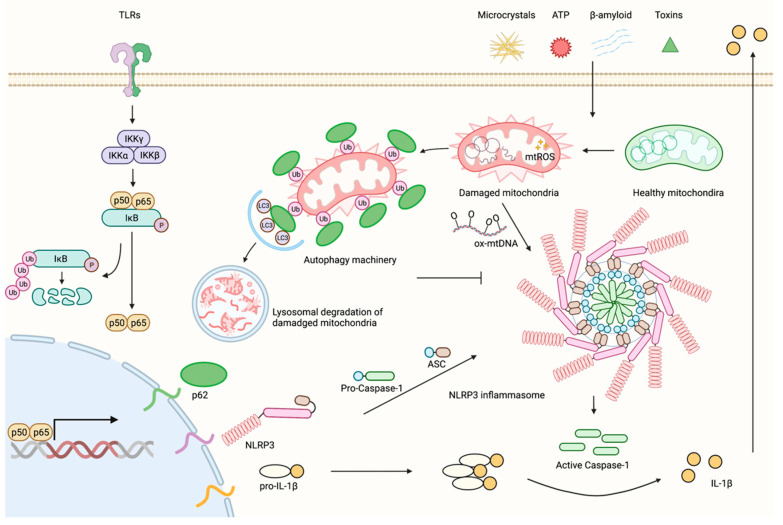
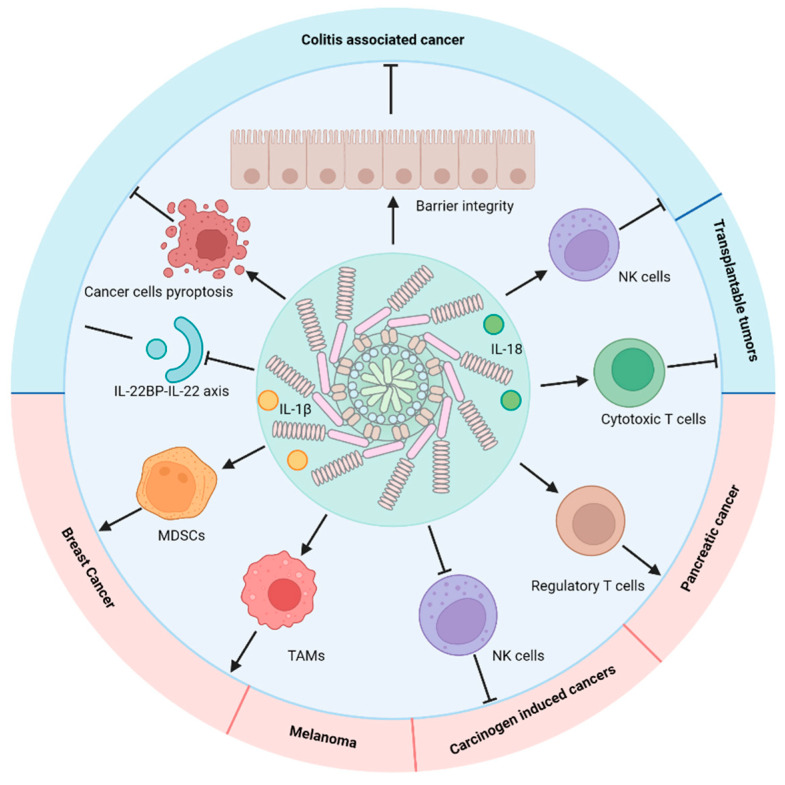
Inflammation, when properly mounted and precisely calibrated, is a beneficial process that enables the rapid removal of invading pathogens and/or cellular corpses and promotes tissue repair/regeneration to restore homeostasis after injury. Being a paradigm of a rapid response transcription factor, the nuclear factor-kappa B (NF-κB) transcription factor family plays a central role in amplifying inflammation by inducing the expression of inflammatory cytokines and chemokines. Additionally, NF-κB also induces the expression of pro-survival and -proliferative genes responsible for promoting tissue repair and regeneration. Paradoxically, recent studies have suggested that the NF-κB pathway can also exert inhibitory effects on pro-inflammatory cytokine production to temper inflammation. Here, we review our current understanding about the pro- and anti-inflammatory roles of NF-κB and discuss the implication of its dichotomous inflammation-modulating activity in the context of inflammasome activation and tumorigenesis.
Overview
The claims and statistics of this paper haven’t been checked yet.
Free: it reads the open-access text and checks the first 5 claims that cite a source we can check. Create a free account to check every claim.
Integrity signals
Registry
Cites
Statistics
Figures
Verification
Claims the paper makes
The claims and statistics of this paper haven’t been checked yet.
Free: it reads the open-access text and checks the first 5 claims that cite a source we can check. Create a free account to check every claim.
Claims other papers make about this one
Each is checked against this paper’s own text: does it say what the citing paper says it does?
The cited source says what the claim attributes to it.
In the citing paper
“NF-κB is a central pleiotropic mediator of inflammation and induces the expression of multiple cytokines and chemokines.”
From Chronic stress, neuroinflammation, and depression: an overview of pathophysiological mechanisms and emerging anti-inflammatories (2023) · cites this paper as [76]
Self-check
Percentages, sums and reported differences re-computed from the paper’s own numbers.
The self-check needs the paper’s full text.
Citations
Cites
Antiinflammatory Therapy with Canakinumab for Atherosclerotic Disease
Ridker, P. M., Everett, B. M., Thuren, T., MacFadyen, J. G., Chang, W. H., Ballantyne, C., Fonseca, F., Nicolau, J., Koenig, W., Anker, S. D., et al. (2017) · New England Journal of Medicine · doi:10.1056/nejmoa1707914 · Cited by 9,482
Cleavage of GSDMD by inflammatory caspases determines pyroptotic cell death
Shi, J., Zhao, Y., Wang, K., Shi, X., Wang, Y., Huang, H., Zhuang, Y., Cai, T., Wang, F., & Shao, F. (2015) · Nature · doi:10.1038/nature15514 · Cited by 6,659
Origin and physiological roles of inflammation
Medzhitov, R. (2008) · Nature · doi:10.1038/nature07201 · Cited by 6,618 · cited 5×
“Inflammatory responses are initiated upon host recognition of inflammatory cues in the form of either pathogen-derived molecules (PAMPs) or self-danger signals generated during tissue damage (DAMPs), by diverse pattern recognition receptors (PRR) [5,6].”
BackgroundInfluentialA role for mitochondria in nlrp3 inflammasome activation
Zhou, R., Yazdi, A. S., Menu, P., & Tschopp, J. (2011) · Nature · doi:10.1038/nature09663 · Cited by 5,602
Schroder, K., & Tschopp, J. (2010) · Cell · doi:10.1016/j.cell.2010.01.040 · Cited by 5,475
The NLRP3 inflammasome: molecular activation and regulation to therapeutics
Swanson, K. V., Deng, M., & Ting, J. P.-Y. (2019) · Nature Reviews Immunology · doi:10.1038/s41577-019-0165-0 · Cited by 4,884
The NLRP3 Inflammasome: an overview of mechanisms of activation and regulation
Kelley, N., Jeltema, D., Duan, Y., & He, Y. (2019) · International Journal of Molecular Sciences · doi:10.3390/ijms20133328 · Cited by 3,539
Inflammasomes: mechanism of action, role in disease, and therapeutics
Guo, H., Callaway, J. B., & Ting, J. P.-Y. (2015) · Nature Medicine · doi:10.1038/nm.3893 · Cited by 3,340
Chemotherapy drugs induce pyroptosis through caspase-3 cleavage of a gasdermin
Wang, Y., Gao, W., Shi, X., Ding, J., Liu, W., He, H., Wang, K., & Shao, F. (2017) · Nature · doi:10.1038/nature22393 · Cited by 3,199
Nakahira, K., Haspel, J. A., Rathinam, V. A. K., Lee, S.-J., Dolinay, T., Lam, H. C., Englert, J. A., Rabinovitch, M., Cernadas, M., Kim, H. P., et al. (2011) · Nature Immunology · doi:10.1038/ni.1980 · Cited by 3,049
Bauernfeind, F. G., Horvath, G., Stutz, A., Alnemri, E. S., MacDonald, K., Speert, D., Fernandes-Alnemri, T., Wu, J., Monks, B. G., Fitzgerald, K. A., et al. (2009) · The Journal of Immunology · doi:10.4049/jimmunol.0901363 · Cited by 2,959
Multiple nuclear factors interact with the immunoglobulin enhancer sequences
Sen, R., & Baltimore, D. (1986) · Cell · doi:10.1016/0092-8674(86)90346-6 · Cited by 2,752
NF-κB, inflammation, immunity and cancer: coming of age
Taniguchi, K., & Karin, M. (2018) · Nature Reviews Immunology · doi:10.1038/nri.2017.142 · Cited by 2,679
Self-citationThe Inflammasomes: Guardians of the Body
Martinon, F., Mayor, A., & Tschopp, J. (2009) · Annual Review of Immunology · doi:10.1146/annurev.immunol.021908.132715 · Cited by 2,436 · cited 6×
“Inflammatory responses are initiated upon host recognition of inflammatory cues in the form of either pathogen-derived molecules (PAMPs) or self-danger signals generated during tissue damage (DAMPs), by diverse pattern recognition receptors (PRR) [5,6].”
BackgroundInfluentialIKKβ Links Inflammation and Tumorigenesis in a Mouse Model of Colitis-Associated Cancer
Greten, F. R., Eckmann, L., Greten, T. F., Park, J. M., Li, Z.-W., Egan, L. J., Kagnoff, M. F., & Karin, M. (2004) · Cell · doi:10.1016/j.cell.2004.07.013 · Cited by 2,433
Self-citationOxidized mitochondrial DNA activates the NLRP3 inflammasome during apoptosis
Shimada, K., Crother, T. R., Karlin, J., Dagvadorj, J., Chiba, N., Chen, S., Ramanujan, V. K., Wolf, A. J., Vergnes, L., Ojcius, D. M., et al. (2012) · Immunity · doi:10.1016/j.immuni.2012.01.009 · Cited by 2,282
Inflammasomes in health and disease
Strowig, T., Henao-Mejia, J., Elinav, E., & Flavell, R. (2012) · Nature · doi:10.1038/nature10759 · Cited by 2,230
Targeting NF-κB pathway for the therapy of diseases: mechanism and clinical study
Yu, H., Lin, L., Zhang, Z., Zhang, H., & Hu, H. (2020) · Signal Transduction and Targeted Therapy · doi:10.1038/s41392-020-00312-6 · Cited by 2,135
Loss of the autophagy protein Atg16L1 enhances endotoxin-induced IL-1β production
Saitoh, T., Fujita, N., Jang, M. H., Uematsu, S., Yang, B.-G., Satoh, T., Omori, H., Noda, T., Yamamoto, N., Komatsu, M., et al. (2008) · Nature · doi:10.1038/nature07383 · Cited by 2,014
30 Years of NF-κB: A Blossoming of Relevance to Human Pathobiology
Zhang, Q., Lenardo, M. J., & Baltimore, D. (2017) · Cell · doi:10.1016/j.cell.2016.12.012 · Cited by 1,982
Ghiringhelli, F., Apetoh, L., Tesniere, A., Aymeric, L., Ma, Y., Ortiz, C., Vermaelen, K., Panaretakis, T., Mignot, G., Ullrich, E., et al. (2009) · Nature Medicine · doi:10.1038/nm.2028 · Cited by 1,898
The non-canonical NF-κB pathway in immunity and inflammation
Sun, S.-C. (2017) · Nature Reviews Immunology · doi:10.1038/nri.2017.52 · Cited by 1,891 · cited 1×
“TNF superfamily cytokines, including lymphotoxin (LT), receptor activator of NF-κB ligand (RANKL; also known as TNFSF11), CD40 ligand (CD40L), and B-cell activating factor of the TNF family (BAFF; also known as TNFSF13B), serve as the ligands for the alternative NF-κB pathway [23–25], which, through activating IKKα ho…”
BackgroundTargeting the NLRP3 inflammasome in inflammatory diseases
Mangan, M. S. J., Olhava, E. J., Roush, W. R., Seidel, H. M., Glick, G. D., & Latz, E. (2018) · Nature Reviews Drug Discovery · doi:10.1038/nrd.2018.97 · Cited by 1,885
Inflammation 2010: New Adventures of an Old Flame
Medzhitov, R. (2010) · Cell · doi:10.1016/j.cell.2010.03.006 · Cited by 1,834
Kaser, A., Zeissig, S., & Blumberg, R. S. (2010) · Annual Review of Immunology · doi:10.1146/annurev-immunol-030409-101225 · Cited by 1,806 · cited 4×
“[14,45,53] IBD: inflammatory bowel disease; TNBS: 2,4,6-trinitrobenzene sulfonic acid; RA: rheumatoid arthritis; LPS: lipopolysaccharide; IECs: intestinal epithelial cells; DSS: dextran sodium sulfate; NEMO: NF-κB essential modulator.”
BackgroundInfluentialLowes, M. A., Suárez-Fariñas, M., & Krueger, J. G. (2014) · Annual Review of Immunology · doi:10.1146/annurev-immunol-032713-120225 · Cited by 1,650
Inflammation meets cancer, with NF-κB as the matchmaker
Ben-Neriah, Y., & Karin, M. (2011) · Nature Immunology · doi:10.1038/ni.2060 · Cited by 1,373
Self-citationActivation by IKKα of a Second, Evolutionary Conserved, NF-κB Signaling Pathway
Senftleben, U., Cao, Y., Xiao, G., Greten, F. R., Krähn, G., Bonizzi, G., Chen, Y., Hu, Y., Fong, A., Sun, S.-C., et al. (2001) · Science · doi:10.1126/science.1062677 · Cited by 1,359
Self-citationRidker, P. M., MacFadyen, J. G., Thuren, T., Everett, B. M., Libby, P., Glynn, R. J., Ridker, P., Lorenzatti, A., Krum, H., Varigos, J., et al. (2017) · The Lancet · doi:10.1016/s0140-6736(17)32247-x · Cited by 1,344
NF-κB Restricts Inflammasome Activation via Elimination of Damaged Mitochondria
Zhong, Z., Umemura, A., Sanchez-Lopez, E., Liang, S., Shalapour, S., Wong, J., He, F., Boassa, D., Perkins, G., Ali, S. R., et al. (2016) · Cell · doi:10.1016/j.cell.2015.12.057 · Cited by 1,197
Self-citationEpithelial NEMO links innate immunity to chronic intestinal inflammation
Nenci, A., Becker, C., Wullaert, A., Gareus, R., van Loo, G., Danese, S., Huth, M., Nikolaev, A., Neufert, C., Madison, B., et al. (2007) · Nature · doi:10.1038/nature05698 · Cited by 1,077 · cited 2×
“, skin and intestine), where NF-κB-mediated pro-survival signaling ensures proper barrier function to prevent microbial translocation [29,43,44].”
BackgroundZaki, M. H., Boyd, K. L., Vogel, P., Kastan, M. B., Lamkanfi, M., & Kanneganti, T.-D. (2010) · Immunity · doi:10.1016/j.immuni.2010.03.003 · Cited by 989
The inflammasome recognizes cytosolic microbial and host DNA and triggers an innate immune response
Muruve, D. A., Pétrilli, V., Zaiss, A. K., White, L. R., Clark, S. A., Ross, P. J., Parks, R. J., & Tschopp, J. (2008) · Nature · doi:10.1038/nature06664 · Cited by 936
Duality of fibroblast-like synoviocytes in RA: passive responders and imprinted aggressors
Bottini, N., & Firestein, G. S. (2013) · Nature Reviews Rheumatology · doi:10.1038/nrrheum.2012.190 · Cited by 907 · cited 1×
“Moreover, overactivation of NF-κB signaling is evident in many chronic inflammatory disorders, such as inflammatory bowel disease (IBD) [28,29], rheumatoid arthritis (RA) [30], and psoriasis, among others [28,30–33] (Table 1).”
BackgroundMechanisms regulating skin immunity and inflammation
Pasparakis, M., Haase, I., & Nestle, F. O. (2014) · Nature Reviews Immunology · doi:10.1038/nri3646 · Cited by 886
The diverse and complex roles of NF-κB subunits in cancer
Perkins, N. D. (2012) · Nature Reviews Cancer · doi:10.1038/nrc3204 · Cited by 852
Neurath, M. F., Pettersson, S., Meyer Zum Büschenfelde, K.-H., & Strober, W. (1996) · Nature Medicine · doi:10.1038/nm0996-998 · Cited by 840
Allen, I. C., TeKippe, E. M., Woodford, R.-M. T., Uronis, J. M., Holl, E. K., Rogers, A. B., Herfarth, H. H., Jobin, C., & Ting, J. P.-Y. (2010) · Journal of Experimental Medicine · doi:10.1084/jem.20100050 · Cited by 826
Initiation and perpetuation of NLRP 3 inflammasome activation and assembly
Elliott, E. I., & Sutterwala, F. S. (2015) · Immunological Reviews · doi:10.1111/imr.12286 · Cited by 821
The inflammasome: an integrated view
Gross, O., Thomas, C. J., Guarda, G., & Tschopp, J. (2011) · Immunological Reviews · doi:10.1111/j.1600-065x.2011.01046.x · Cited by 778 · cited 1×
“NOD-like receptor family pyrin domain containing 3 (NLRP3) is a PRR that acts as a dominant innate immune sensor for tissue damage, and thus plays an indispensable role in igniting sterile inflammation [1,7].”
BackgroundNon-transcriptional Priming and Deubiquitination Regulate NLRP3 Inflammasome Activation
Juliana, C., Fernandes-Alnemri, T., Kang, S., Farias, A., Qin, F., & Alnemri, E. S. (2012) · Journal of Biological Chemistry · doi:10.1074/jbc.m112.407130 · Cited by 773
Limiting inflammation—the negative regulation of NF-κB and the NLRP3 inflammasome
Afonina, I. S., Zhong, Z., Karin, M., & Beyaert, R. (2017) · Nature Immunology · doi:10.1038/ni.3772 · Cited by 759 · cited 3×
“This unexpected anti-inflammatory property of NF-κB can be both indirect and direct [1,3,17].”
BackgroundSelf-citationIL-22BP is regulated by the inflammasome and modulates tumorigenesis in the intestine
Huber, S., Gagliani, N., Zenewicz, L. A., Huber, F. J., Bosurgi, L., Hu, B., Hedl, M., Zhang, W., O’Connor, W., Murphy, A. J., et al. (2012) · Nature · doi:10.1038/nature11535 · Cited by 719
Diverging inflammasome signals in tumorigenesis and potential targeting
Karki, R., & Kanneganti, T.-D. (2019) · Nature Reviews Cancer · doi:10.1038/s41568-019-0123-y · Cited by 641
Resolution of Inflammation: What Controls Its Onset?
Sugimoto, M. A., Sousa, L. P., Pinho, V., Perretti, M., & Teixeira, M. M. (2016) · Frontiers in Immunology · doi:10.3389/fimmu.2016.00160 · Cited by 638
Greten, F. R., Arkan, M. C., Bollrath, J., Hsu, L.-C., Goode, J., Miething, C., Göktuna, S. I., Neuenhahn, M., Fierer, J., Paxian, S., et al. (2007) · Cell · doi:10.1016/j.cell.2007.07.009 · Cited by 616 · cited 3×
“This was first demonstrated in our earlier study in which pharmacologic or genetic inhibition of NF-κB unexpectedly exacerbated IL-1β-dependent inflammation in vivo [18].”
Self-citationFranchi, L., Eigenbrod, T., & Núñez, G. (2009) · The Journal of Immunology · doi:10.4049/jimmunol.0900173 · Cited by 576
Autophagy, Inflammation, and Immunity: A Troika Governing Cancer and Its Treatment
Zhong, Z., Sanchez-Lopez, E., & Karin, M. (2016) · Cell · doi:10.1016/j.cell.2016.05.051 · Cited by 576 · cited 1×
“NLRP3 inflammasome activation is crucial for mounting protective immunity in response to injury by stimulating punchy damage clearance and tissue repair pathways [8].”
BackgroundSelf-citationRegulation of tissue homeostasis by NF-κB signalling: implications for inflammatory diseases
Pasparakis, M. (2009) · Nature Reviews Immunology · doi:10.1038/nri2655 · Cited by 523 · cited 7×
“, skin and intestine), where NF-κB-mediated pro-survival signaling ensures proper barrier function to prevent microbial translocation [29,43,44].”
BackgroundInfluentialDupaul-Chicoine, J., Yeretssian, G., Doiron, K., Bergstrom, K. S. B., McIntire, C. R., LeBlanc, P. M., Meunier, C., Turbide, C., Gros, P., Beauchemin, N., et al. (2010) · Immunity · doi:10.1016/j.immuni.2010.02.012 · Cited by 517
NLRP3 Phosphorylation Is an Essential Priming Event for Inflammasome Activation
Song, N., Liu, Z.-S., Xue, W., Bai, Z.-F., Wang, Q.-Y., Dai, J., Liu, X., Huang, Y.-J., Cai, H., Zhan, X.-Y., et al. (2017) · Molecular Cell · doi:10.1016/j.molcel.2017.08.017 · Cited by 487
Staudt, L. M. (2010) · Cold Spring Harbor Perspectives in Biology · doi:10.1101/cshperspect.a000109 · Cited by 485 · cited 1×
“, TNF and IL-1), or upon T- and B-cell receptor engagement [21].”
BackgroundUmemura, A., He, F., Taniguchi, K., Nakagawa, H., Yamachika, S., Font-Burgada, J., Zhong, Z., Subramaniam, S., Raghunandan, S., Duran, A., et al. (2016) · Cancer Cell · doi:10.1016/j.ccell.2016.04.006 · Cited by 463
Self-citationRole of NFkappaB in the mortality of sepsis.
Böhrer, H., Qiu, F., Zimmermann, T., Zhang, Y., Jllmer, T., Männel, D., Böttiger, B. W., Stern, D. M., Waldherr, R., Saeger, H. D., et al. (1997) · Journal of Clinical Investigation · doi:10.1172/jci119648 · Cited by 454 · cited 1×
“In acute inflammatory conditions such as sepsis, genetic polymorphisms potentiating NF-κB activation have been found to increase mortality because of excessive inflammation [41,42].”
BackgroundKaplanov, I., Carmi, Y., Kornetsky, R., Shemesh, A., Shurin, G. V., Shurin, M. R., Dinarello, C. A., Voronov, E., & Apte, R. N. (2019) · Proceedings of the National Academy of Sciences · doi:10.1073/pnas.1812266115 · Cited by 445
Salcedo, R., Worschech, A., Cardone, M., Jones, Y., Gyulai, Z., Dai, R.-M., Wang, E., Ma, W., Haines, D., O'hUigin, C., et al. (2010) · Journal of Experimental Medicine · doi:10.1084/jem.20100199 · Cited by 429
Zaki, M. H., Vogel, P., Body-Malapel, M., Lamkanfi, M., & Kanneganti, T.-D. (2010) · The Journal of Immunology · doi:10.4049/jimmunol.1002046 · Cited by 411
Dupaul-Chicoine, J., Arabzadeh, A., Dagenais, M., Douglas, T., Champagne, C., Morizot, A., Rodrigue-Gervais, I. G., Breton, V., Colpitts, S. L., Beauchemin, N., et al. (2015) · Immunity · doi:10.1016/j.immuni.2015.08.013 · Cited by 342
Wang, K., Kim, M. K., Di Caro, G., Wong, J., Shalapour, S., Wan, J., Zhang, W., Zhong, Z., Sanchez-Lopez, E., Wu, L.-W., et al. (2014) · Immunity · doi:10.1016/j.immuni.2014.11.009 · Cited by 341
Self-citationInhibitor of nuclear factor ?B kinase ? is a key regulator of synovial inflammation
Tak, P. P., Gerlag, D. M., Aupperle, K. R., Geest, D. A. V. D., Overbeek, M. J., Bennett, B. L., Boyle, D. L., Manning, A. M., & Firestein, G. S. (2001) · Arthritis & Rheumatism · doi:10.1002/1529-0131(200108)44:8<1897::aid-art328>3.0.co;2-4 · Cited by 330
Return to homeostasis: downregulation of NF-κB responses
Ruland, J. (2011) · Nature Immunology · doi:10.1038/ni.2055 · Cited by 322
Ershaid, N., Sharon, Y., Doron, H., Raz, Y., Shani, O., Cohen, N., Monteran, L., Leider-Trejo, L., Ben-Shmuel, A., Yassin, M., et al. (2019) · Nature Communications · doi:10.1038/s41467-019-12370-8 · Cited by 310
Targeting inflammasome/IL-1 pathways for cancer immunotherapy
Guo, B., Fu, S., Zhang, J., Liu, B., & Li, Z. (2016) · Scientific Reports · doi:10.1038/srep36107 · Cited by 302
Schwitalla, S., Ziegler, P. K., Horst, D., Becker, V., Kerle, I., Begus-Nahrmann, Y., Lechel, A., Rudolph, K. L., Langer, R., Slotta-Huspenina, J., et al. (2013) · Cancer Cell · doi:10.1016/j.ccr.2012.11.014 · Cited by 296
The Inflammasomes and Autoinflammatory Syndromes
Broderick, L., De Nardo, D., Franklin, B. S., Hoffman, H. M., & Latz, E. (2015) · Annual Review of Pathology: Mechanisms of Disease · doi:10.1146/annurev-pathol-012414-040431 · Cited by 295
Okamoto, M., Liu, W., Luo, Y., Tanaka, A., Cai, X., Norris, D. A., Dinarello, C. A., & Fujita, M. (2010) · Journal of Biological Chemistry · doi:10.1074/jbc.m109.064907 · Cited by 293
IRAK-1 bypasses priming and directly links TLRs to rapid NLRP3 inflammasome activation
Lin, K.-M., Hu, W., Troutman, T. D., Jennings, M., Brewer, T., Li, X., Nanda, S., Cohen, P., Thomas, J. A., & Pasare, C. (2014) · Proceedings of the National Academy of Sciences · doi:10.1073/pnas.1320294111 · Cited by 288
S1PR1 on tumor-associated macrophages promotes lymphangiogenesis and metastasis via NLRP3/IL-1β
Weichand, B., Popp, R., Dziumbla, S., Mora, J., Strack, E., Elwakeel, E., Frank, A.-C., Scholich, K., Pierre, S., Syed, S. N., et al. (2017) · Journal of Experimental Medicine · doi:10.1084/jem.20160392 · Cited by 267
NLRP3 signaling drives macrophage-induced adaptive immune suppression in pancreatic carcinoma
Daley, D., Mani, V. R., Mohan, N., Akkad, N., Pandian, G. S. D. B., Savadkar, S., Lee, K. B., Torres-Hernandez, A., Aykut, B., Diskin, B., et al. (2017) · Journal of Experimental Medicine · doi:10.1084/jem.20161707 · Cited by 244
Sen, R., & Baltimore, D. (2006) · PubMed · Cited by 239
Hierarchies of NF-κB target-gene regulation
Smale, S. T. (2011) · Nature Immunology · doi:10.1038/ni.2070 · Cited by 238
Cutting Edge: TLR Signaling Licenses IRAK1 for Rapid Activation of the NLRP3 Inflammasome
Fernandes-Alnemri, T., Kang, S., Anderson, C., Sagara, J., Fitzgerald, K. A., & Alnemri, E. S. (2013) · The Journal of Immunology · doi:10.4049/jimmunol.1301681 · Cited by 237
NLRP3 inflammasome priming: A riddle wrapped in a mystery inside an enigma
McKee, C. M., & Coll, R. C. (2020) · Journal of Leukocyte Biology · doi:10.1002/jlb.3mr0720-513r · Cited by 232
NLRP3 Inflammasome Activation in Cancer: A Double-Edged Sword
Hamarsheh, S., & Zeiser, R. (2020) · Frontiers in Immunology · doi:10.3389/fimmu.2020.01444 · Cited by 230
Divergence of IL-1, IL-18, and cell death in NLRP3 inflammasomopathies
Brydges, S. D., Broderick, L., McGeough, M. D., Pena, C. A., Mueller, J. L., & Hoffman, H. M. (2013) · Journal of Clinical Investigation · doi:10.1172/jci71543 · Cited by 229
A murine model of chronic inflammation-induced intestinal fibrosis down-regulated by antisense NF-κB
Lawrance, I. C., Wu, F., Leite, A. Z. A., Willis, J., West, G. A., Fiocchi, C., & Chakravarti, S. (2003) · Gastroenterology · doi:10.1053/j.gastro.2003.08.027 · Cited by 215
Lizzul, P. F., Aphale, A., Malaviya, R., Sun, Y., Masud, S., Dombrovskiy, V., & Gottlieb, A. B. (2005) · Journal of Investigative Dermatology · doi:10.1111/j.0022-202x.2005.23735.x · Cited by 212
Segain, J.-P., Raingeard de la Blétière, D., Sauzeau, V., Bourreille, A., Hilaret, G., Cario-Toumaniantz, C., Pacaud, P., Galmiche, J.-P., & Loirand, G. (2003) · Gastroenterology · doi:10.1016/s0016-5085(03)00283-x · Cited by 189
Autophagy, NLRP3 inflammasome and auto-inflammatory/immune diseases.
Zhong, Z., Sánchez‐López, E., & Karin, M. (2016) · PubMed · Cited by 187
Self-citationIκBβ acts to inhibit and activate gene expression during the inflammatory response
Rao, P., Hayden, M. S., Long, M., Scott, M. L., West, A. P., Zhang, D., Oeckinghaus, A., Lynch, C., Hoffmann, A., Baltimore, D., et al. (2010) · Nature · doi:10.1038/nature09283 · Cited by 186
NLRP3 Suppresses NK Cell–Mediated Responses to Carcinogen-Induced Tumors and Metastases
Chow, M. T., Sceneay, J., Paget, C., Wong, C. S. F., Duret, H., Tschopp, J., Möller, A., & Smyth, M. J. (2012) · Cancer Research · doi:10.1158/0008-5472.can-12-0509 · Cited by 182
Dimer‐specific regulatory mechanisms within the NF‐κB family of transcription factors
Smale, S. T. (2012) · Immunological Reviews · doi:10.1111/j.1600-065x.2011.01091.x · Cited by 182 · cited 1×
“The NF-κB family transcription factors consist of five different DNA binding proteins that share a Rel homology region (cRel, RelA, RelB, NF-κB1, and NF-κB2) and can form up to 15 homodimers and heterodimers [19,20].”
BackgroundSchroder, K., Sagulenko, V., Zamoshnikova, A., Richards, A. A., Cridland, J. A., Irvine, K. M., Stacey, K. J., & Sweet, M. J. (2012) · Immunobiology · doi:10.1016/j.imbio.2012.07.020 · Cited by 181
Baltimore, D. (2011) · Nature Immunology · doi:10.1038/ni.2072 · Cited by 175
The Therapeutic Potential of Modifying Inflammasomes and NOD-Like Receptors
Di Virgilio, F. (2013) · Pharmacological Reviews · doi:10.1124/pr.112.006171 · Cited by 161
Contrasting Action of IL-12 and IL-18 in the Development of Dextran Sodium Sulphate Colitis in Mice
H., T., T., K., A., O., Y., K., T., S., H., T., N., I., H., O., Y., I., K., H., et al. (2003) · Scandinavian Journal of Gastroenterology · doi:10.1080/00365520310004047 · Cited by 151
Single-Cell Imaging of Caspase-1 Dynamics Reveals an All-or-None Inflammasome Signaling Response
Liu, T., Yamaguchi, Y., Shirasaki, Y., Shikada, K., Yamagishi, M., Hoshino, K., Kaisho, T., Takemoto, K., Suzuki, T., Kuranaga, E., et al. (2014) · Cell Reports · doi:10.1016/j.celrep.2014.07.012 · Cited by 150
Oncogenic KrasG12D causes myeloproliferation via NLRP3 inflammasome activation
Hamarsheh, S., Osswald, L., Saller, B. S., Unger, S., De Feo, D., Vinnakota, J. M., Konantz, M., Uhl, F. M., Becker, H., Lübbert, M., et al. (2020) · Nature Communications · doi:10.1038/s41467-020-15497-1 · Cited by 142
Ungerbäck, J., Belenki, D., Jawad ul-Hassan, A., Fredrikson, M., Fransén, K., Elander, N., Verma, D., & Söderkvist, P. (2012) · Carcinogenesis · doi:10.1093/carcin/bgs256 · Cited by 140
Castaño‐Rodríguez, N., Kaakoush, N. O., Goh, K., Fock, K. M., & Mitchell, H. M. (2014) · PLoS ONE · doi:10.1371/journal.pone.0098899 · Cited by 133
Inflammasomes and Cancer: The Dynamic Role of the Inflammasome in Tumor Development
Kantono, M., & Guo, B. (2017) · Frontiers in Immunology · doi:10.3389/fimmu.2017.01132 · Cited by 133
Intestinal hypoxia and hypoxia-induced signalling as therapeutic targets for IBD
Welden, S. V., Selfridge, A. C., & Hindryckx, P. (2017) · Nature Reviews Gastroenterology & Hepatology · doi:10.1038/nrgastro.2017.101 · Cited by 132
Inflammasome polymorphisms confer susceptibility to sporadic malignant melanoma
Verma, D., Bivik, C. A., Farahani, E., Synnerstad, I., Fredrikson, M. G., Enerbäck, C., Rosdahl, I. K., & Söderkvist, P. (2012) · Pigment Cell & Melanoma Research · doi:10.1111/j.1755-148x.2012.01008.x · Cited by 131
The Pathways Underlying the Multiple Roles of p62 in Inflammation and Cancer
Hennig, P., Fenini, G., Filippo, M. D., Karakaya, T., & Beer, H. (2021) · Biomedicines · doi:10.3390/biomedicines9070707 · Cited by 129
Inflammasomes as molecular mediators of inflammation and cancer: Potential role in melanoma
Dunn, J. H., Ellis, L. Z., & Fujita, M. (2011) · Cancer Letters · doi:10.1016/j.canlet.2011.10.001 · Cited by 125
The Anti-Death Machinery in IKK/NF-κB Signaling
Luo, J., Kamata, H., & Karin, M. (2005) · Journal of Clinical Immunology · doi:10.1007/s10875-005-8217-6 · Cited by 120
Self-citationIL-1β-driven neutrophilia preserves antibacterial defense in the absence of the kinase IKKβ
Hsu, L.-C., Enzler, T., Seita, J., Timmer, A. M., Lee, C.-Y., Lai, T.-Y., Yu, G.-Y., Lai, L.-C., Temkin, V., Sinzig, U., et al. (2011) · Nature Immunology · doi:10.1038/ni.1976 · Cited by 120
Self-citationMyeloid PTEN promotes chemotherapy-induced NLRP3-inflammasome activation and antitumour immunity
Huang, Y., Wang, H., Hao, Y., Lin, H., Dong, M., Ye, J., Song, L., Wang, Y., Li, Q., Shan, B., et al. (2020) · Nature Cell Biology · doi:10.1038/s41556-020-0510-3 · Cited by 116
Nenci, A., Huth, M., Funteh, A., Schmidt-Supprian, M., Bloch, W., Metzger, D., Chambon, P., Rajewsky, K., Krieg, T., Haase, I., et al. (2006) · Human Molecular Genetics · doi:10.1093/hmg/ddi470 · Cited by 115
The Nlrp3 inflammasome as a “rising star” in studies of normal and malignant hematopoiesis
Ratajczak, M. Z., Bujko, K., Cymer, M., Thapa, A., Adamiak, M., Ratajczak, J., Abdel-Latif, A. K., & Kucia, M. (2020) · Leukemia · doi:10.1038/s41375-020-0827-8 · Cited by 102
Gene Silencing in Severe Systemic Inflammation
McCall, C. E., & Yoza, B. K. (2007) · American Journal of Respiratory and Critical Care Medicine · doi:10.1164/rccm.200610-1436cp · Cited by 89 · cited 1×
“In acute inflammatory conditions such as sepsis, genetic polymorphisms potentiating NF-κB activation have been found to increase mortality because of excessive inflammation [41,42].”
BackgroundSchopf, L. R., Savinainen, A., Anderson, K., Kujawa, J., DuPont, M. M., Silva, M. J., Siebert, E. P., Chandra, S., Morgan, J. G., Gangurde, P., et al. (2006) · Arthritis & Rheumatism · doi:10.1002/art.22081 · Cited by 87
Nuclear factor‐κB in rheumatoid arthritis
Li, J., Tang, R., Shi, Z., & Li, J. (2020) · International Journal of Rheumatic Diseases · doi:10.1111/1756-185x.13958 · Cited by 70
Bezbradica, J. S., Coll, R. C., & Schroder, K. (2017) · Cellular & Molecular Immunology · doi:10.1038/cmi.2016.11 · Cited by 66
MacMaster, J. F., Dambach, D. M., Qiu, Y., Zusi, F. C., Burke, J. R., Lee, D. B., & Berry, K. K. (2003) · Inflammation Research · doi:10.1007/s00011-003-1206-4 · Cited by 54
Miśkiewicz, A., Szparecki, G., Durlik, M., Rydzewska, G. M., Ziobrowski, I., & Górska, R. (2015) · Archivum Immunologiae et Therapiae Experimentalis · doi:10.1007/s00005-015-0355-9 · Cited by 46
Kowal‐Bielecka, O., Distler, O., Neidhart, M., K�nzler, P., Rethage, J., Nawrath, M., Carossino, A. M., Pap, T., M�ller-Ladner, U., Michel, B. A., et al. (2001) · Arthritis & Rheumatism · doi:10.1002/1529-0131(200108)44:8<1865::aid-art325>3.0.co;2-m · Cited by 44
Zhang, A., Yu, J., Yan, S., Zhao, X., Chen, C., Zhou, Y. Y., Zhao, X., Hua, M., Wang, R., Zhang, C., et al. (2017) · Human Immunology · doi:10.1016/j.humimm.2017.10.013 · Cited by 39
Wang, H., Hua, M., Wang, S., Yu, J., Chen, C., Zhao, X., Zhang, C., Zhong, C., Wang, R., He, N., et al. (2016) · Inflammation Research · doi:10.1007/s00011-016-1012-4 · Cited by 34
Gillooly, K. M., Pattoli, M. A., Taylor, T. L., Chen, L., Cheng, L., Gregor, K. R., Whitney, G. S., Susulic, V., Watterson, S. H., Kempson, J., et al. (2009) · Journal of Pharmacology and Experimental Therapeutics · doi:10.1124/jpet.109.156018 · Cited by 26
Salim, P. H., & Xavier, R. M. (2014) · Revista Brasileira de Reumatologia · doi:10.1016/j.rbr.2013.10.006 · Cited by 11
Papilloma-pseudovirus eradicates intestinal tumours and triples the lifespan of ApcMin/+ mice
Zhong, Z., Zhai, Y., Bu, P., Shah, S., & Qiao, L. (2017) · Nature Communications · doi:10.1038/ncomms15004 · Cited by 10
Self-citationCanestri, S., Totaro, M. C., Serone, E., Tolusso, B., Frezza, D., Gremese, E., & Ferraccioli, G. (2012) · Reumatismo · doi:10.4081/reumatismo.2012.368 · Cited by 6
Lepelley, A., & Ghosh, S. (2016) · Molecular Cell · doi:10.1016/j.molcel.2016.02.021 · Cited by 6
Cited by
TGF-β signaling in health, disease and therapeutics
Deng, Z., Fan, T., Xiao, C., Tian, H., Zheng, Y., Li, C., & He, J. (2024) · Signal Transduction and Targeted Therapy · doi:10.1038/s41392-024-01764-w · Cited by 1,168
Hassamal, S. (2023) · Frontiers in Psychiatry · doi:10.3389/fpsyt.2023.1130989 · Cited by 578
“In clinical studies, post-endotoxin depressed mood is predicted by higher baseline activity of the NF-κB transcription factor in peripheral blood mononuclear cells (79).”
BackgroundInfluentialNrf2 Regulates Oxidative Stress and Its Role in Cerebral Ischemic Stroke
Wang, L., Zhang, X., Xiong, X., Zhu, H., Chen, R., Zhang, S., Chen, G., & Jian, Z. (2022) · Antioxidants · doi:10.3390/antiox11122377 · Cited by 354
El‐Saadony, M. T., Fang, G., Yan, S., Alkafaas, S. S., Nasharty, M. A. E., Khedr, S. A., Hussien, A. M., Ghosh, S. B., Dladla, M., Elkafas, S. S., et al. (2024) · International Journal of Nanomedicine · doi:10.2147/ijn.s487188 · Cited by 199
Fornari Laurindo, L., Aparecido Dias, J., Cressoni Araújo, A., Torres Pomini, K., Machado Galhardi, C., Rucco Penteado Detregiachi, C., Santos de Argollo Haber, L., Donizeti Roque, D., Dib Bechara, M., Vialogo Marques de Castro, M., et al. (2024) · Frontiers in Immunology · doi:10.3389/fimmu.2023.1305933 · Cited by 144
Metadata
- Authors
- Liu, D., Zhong, Z., & Karin, M.
- Affiliations
- The University of Texas Southwestern Medical Center (US)
- University of California San Diego (US)
- Corresponding author
- Zhong, Zhenyu
- Karin, Michael
- Venue
- Biomedicines
- Publisher
- MDPI AG
- Published
- 2022-05-27
- Volume
- 10
- Issue
- 6
- Pages
- 1250
- ISSN
- 2227-9059 (ISSN-L)
- PMC
- PMC9219609
- OpenAlex
- W4281657835
- Semantic Scholar
- f068337c989a1e5cbff33ead5a92331ad90a9bf7
- Cited by
- 157
- References
- 114
- Citations by year
- 2026: 57 · 2025: 44 · 2024: 29 · 2023: 19 · 2022: 7
- FWCI
- 2.99
- Type
- journal article
- Language
- en
- Open access
- gold
- doi.org
- Licence
- Locations
- Biomedicines (publishedVersion, cc-by)
- PubMed Central (publishedVersion, cc-by)
- PubMed (publishedVersion)
- DOAJ (DOAJ: Directory of Open Access Journals) (submittedVersion, cc-by-sa)
- Funders
- CPRIT New Investigator Recruitment Award (RR180014, R35GM142654, K22AI135074, R37AI043477, R01CA234128, U01AA027681)
- NIH (RR180014, R35GM142654, K22AI135074, R37AI043477, R01CA234128, U01AA027681)
- Topics
- Life Sciences › Biochemistry, Genetics and Molecular Biology › Cancer Research › NF-κB Signaling Pathways
- Life Sciences › Immunology and Microbiology › Immunology › Immune Response and Inflammation
- Life Sciences › Biochemistry, Genetics and Molecular Biology › Molecular Biology › Signaling Pathways in Disease
- Keywords
- NF-κB, inflammation, anti-inflammatory regulation, inflammatory cytokines, chemokines, tissue repair, tissue regeneration, inflammasome activation, carcinogenesis, homeostasis
About these checks
Registry, retraction, Cites and statistics results are computed, not judged, with one exception: a printed reference that no index lists is read once by a model before it counts as a citation error. Claims are extracted by a model and kept only when their quote appears verbatim in the text; each cited source is then checked, with a model’s help, for whether it says what the claim relies on. Those verdicts can be wrong — read the claim’s quote and the cited source before relying on one.
Statistics and arithmetic are recomputed, not judged.
Confidence bands are shown only for fields calibrated on our annotated test set. None is calibrated yet, so no band is shown.
What counts as a claim ›How we measure confidence ›How we check this ›
Are you an author, or do you see a problem with this page? Request a review
Data sources
Bibliographic data: Semantic Scholar, OpenAlex, Crossref.
Contains information from the Semantic Scholar Academic Graph Datasets, made available under the ODC Attribution License (ODC-BY 1.0).
Semantic Scholar’s data is described in: Kinney, R., et al. (2023). The Semantic Scholar Open Data Platform. arXiv:2301.10140.
