

Comparative Analysis of Proximal Tubule Cell Sources for In Vitro Studies of Renal Proximal Tubule Toxicity
Open accessThe DOI matches its Crossref record; 74 of the 75 references it cites were found in a registry or an index.
Abstract
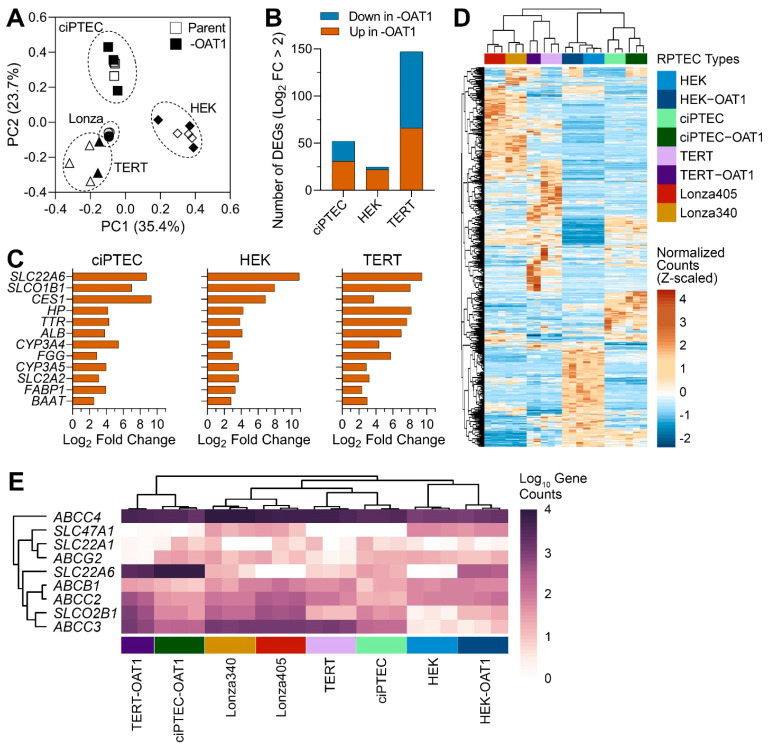
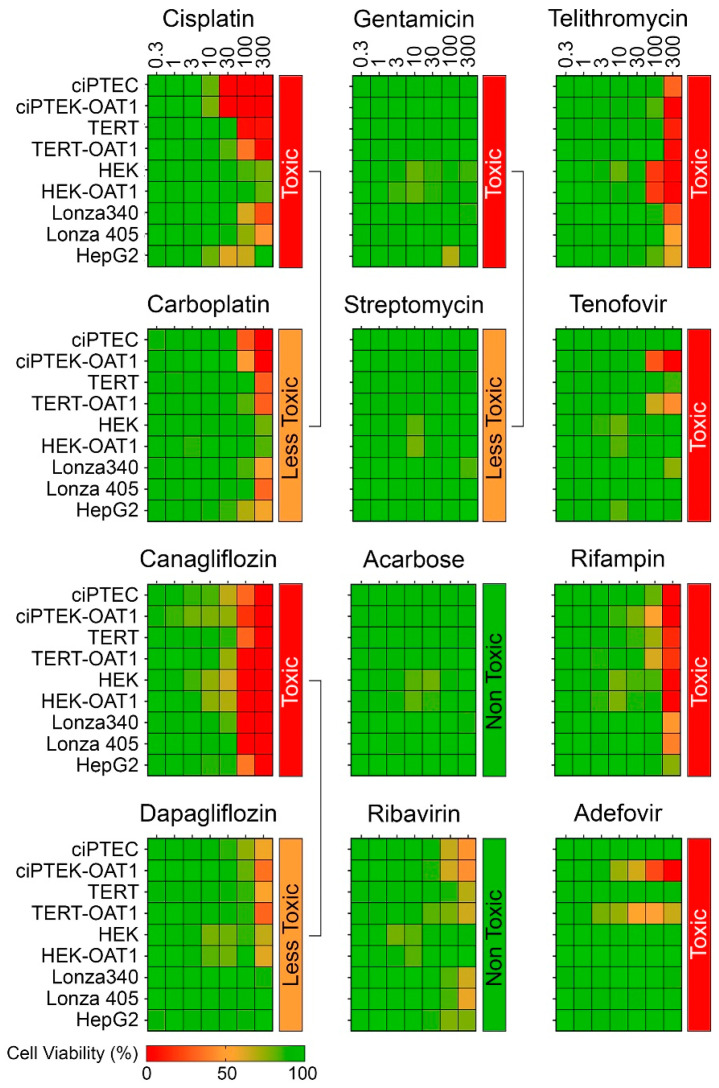
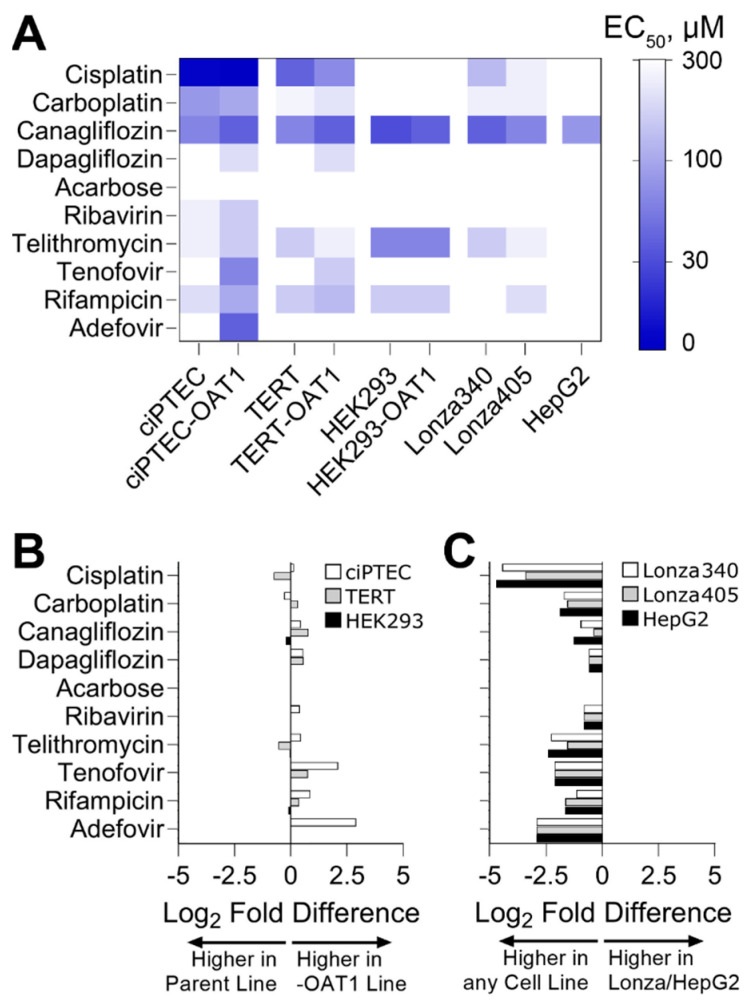
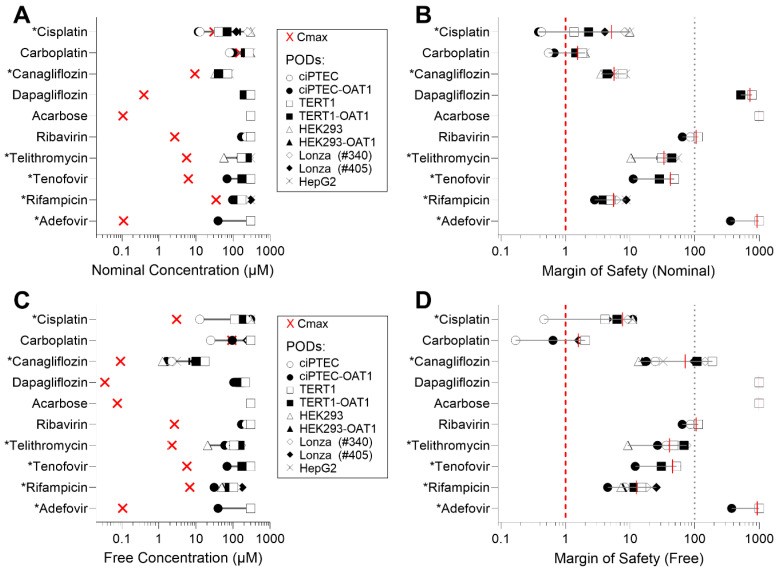
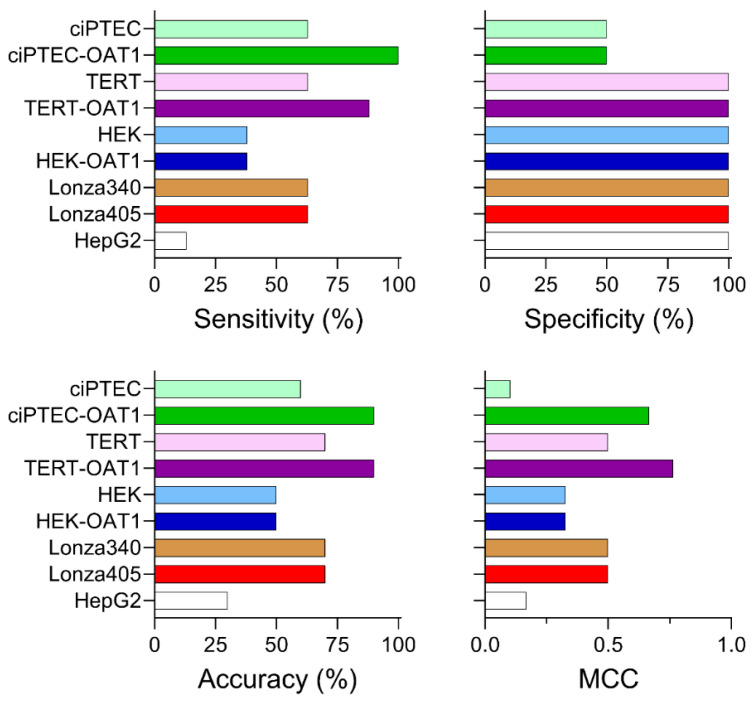
Background/Objectives: The kidneys are essential for eliminating drugs and chemicals from the human body and renal epithelial cells are particularly vulnerable to damage caused by xenobiotics and their metabolites. Drug-induced kidney toxicity is a major cause of drug attrition during preclinical and clinical development and the ability to predict renal toxicity remains a pressing challenge, necessitating more predictive in vitro models. However, the abundance of commercially available renal proximal tubule epithelial cell (RPTEC) sources complicates the selection of the most predictive cell types. Methods: This study compared a wide range of RPTEC sources, including primary cells (Lonza) and various RPTEC lines from different vendors, such as ciPTECs (Cell4Pharma), TERT1/RPTECs (ATCC), and HEK293 (GenoMembrane), including OAT1-overexpressing variants. HepG2 cells were included for a comparison of organ specificity. The different cells were cultured in 96- or 384-well plates and exposed to 12 drugs for 72 h at a concentration yielding a response (0.3–300 µM) to evaluate their ability to predict clinical outcomes. The CellTiterGlo® assay was used to measure cell viability, and transcriptome data from unexposed cells was analyzed using the TempO-seq® S1500+ platform. Results: Gene expression data showed that the primary kidney cells most closely matched the transcriptome of the human kidney medulla, followed by the TERT1 and ciPTEC lines, with the HEK lines showing the lowest similarity. The RPTEC sources showed clustering by cell type, with OAT1 overexpression driving changes in metabolic, detoxification, and immune pathways, especially in TERT1 cells. Cell viability data were used to determine points of departure (PODs) which were compared to human serum Cmax values to assess safety margins. The TERT1 and ciPTEC RPTEC lines demonstrated the highest predictive performance for nephrotoxicity, with OAT1 overexpression significantly enhancing sensitivity, accuracy, and overall predictive power (MCC scores: 0.764 and 0.667, respectively). In contrast, HepG2 cells showed the lowest performance across all metrics, highlighting the critical role of cell type and transporter expression in nephrotoxicity prediction. Conclusions: This study highlights important differences among RPTEC sources and their utility in drug safety studies of the renal proximal tubule. We show that while improved cell options for renal proximal tubule are needed, OAT1-overexpressing RPTECs are a superior model to the background cell type.
Overview
The claims and statistics of this paper haven’t been checked yet.
Free: it reads the open-access text and checks the first 5 claims that cite a source we can check. Create a free account to check every claim.
Integrity signals
Registry
Cites
Statistics
Figures
Verification
Claims the paper makes
The claims and statistics of this paper haven’t been checked yet.
Free: it reads the open-access text and checks the first 5 claims that cite a source we can check. Create a free account to check every claim.
Claims other papers make about this one
Each is checked against this paper’s own text: does it say what the citing paper says it does?
The source backs part of the claim, not all of it — or backs it for a different population, condition or comparison.
In the citing paper
“Sakolish et al. (2025) further confirmed that primary renal cells more accurately modeled druginduced renal injury than RPTEC/TERT or HEK293 lines.”
From Primary cell cultures versus immortalized cell lines: critical comparative insights into biological fidelity and translational applications (2026) · cites this paper as Sakolish et al. (2025)
Experimental — accuracy not yet measured
Self-check
Percentages, sums and reported differences re-computed from the paper’s own numbers.
The self-check needs the paper’s full text.
Citations
Cites
Moderated estimation of fold change and dispersion for RNA-seq data with DESeq2
Love, M. I., Huber, W., & Anders, S. (2014) · Genome Biology · doi:10.1186/s13059-014-0550-8 · Cited by 95,106
fastp: an ultra-fast all-in-one FASTQ preprocessor
Chen, S., Zhou, Y., Chen, Y., & Gu, J. (2018) · Bioinformatics · doi:10.1093/bioinformatics/bty560 · Cited by 29,721 · cited 1×
“Next, the Fastp (version 0.21.0) approach [39] was used to process the FASTQ files, trimming the sequencing reads to 50 base pairs with default parameters.”
InfluentialChicco, D., & Jurman, G. (2020) · BMC Genomics · doi:10.1186/s12864-019-6413-7 · Cited by 6,143 · cited 1×
“…accuracy, and Matthew’s correlation coefficient (MCC) were calculated through confusion matrixes using the following formulas as detailed in [45]: These four parameters were used as representative values to rank the overall predictive power of each cell line in accurately identifying…”
Characteristics of a human cell line transformed by DNA from human adenovirus type 5
Graham, F. L., Russell, W. C., Smiley, J., & Nairn, R. (1977) · Journal of General Virology · doi:10.1099/0022-1317-36-1-59 · Cited by 4,793 · cited 1×
“Several cell lines, such as HEK293 [21], RPTEC/TERT1 [22], and ciPTEC [23], have been particularly popular choices for studies of drug-associated renal toxicity because they were derived from normal human kidney tissues.”
Membrane transporters in drug development
The International Transporter Consortium, Giacomini, K. M., Huang, S.-M., Tweedie, D. J., Benet, L. Z., Brouwer, K. L. R., Chu, X., Dahlin, A., Evers, R., Fischer, V., et al. (2010) · Nature Reviews Drug Discovery · doi:10.1038/nrd3028 · Cited by 3,340 · cited 3×
“Because human OAT1 and OAT3 have substantial overlap in their substrate specificity [53], which has also been observed across most basolateral and apical transporters [35], OAT1-overexpressing RPTECs have been a common in vitro model for studies of drug transport and toxicity.”
Concordance of the toxicity of pharmaceuticals in humans and in animals
Olson, H., Betton, G., Robinson, D., Thomas, K., Monro, A., Kolaja, G., Lilly, P., Sanders, J., Sipes, G., Bracken, W., et al. (2000) · Regulatory Toxicology and Pharmacology · doi:10.1006/rtph.2000.1399 · Cited by 2,050
Lessons learned from the fate of AstraZeneca's drug pipeline: a five-dimensional framework
Cook, D., Brown, D., Alexander, R., March, R., Morgan, P., Satterthwaite, G., & Pangalos, M. N. (2014) · Nature Reviews Drug Discovery · doi:10.1038/nrd4309 · Cited by 1,344 · cited 1×
“Kidney toxicity contributes to approximately 9% of drug termination in the clinical phase [8] and is often identified late in drug development due to the inadequate sensitivity of preclinical models and the limitations of the human blood and urine biomarkers of nephrotoxicity [9–11].”
HEK293 cell line: A vehicle for the expression of recombinant proteins
Thomas, P., & Smart, T. G. (2005) · Journal of Pharmacological and Toxicological Methods · doi:10.1016/j.vascn.2004.08.014 · Cited by 771 · cited 1×
“Stably overexpressing variants of these cell types are available for several key transporter genes to improve the physiological and toxicological relevance of these human cell-based models [24–26].”
Meng, W., Ellsworth, B. A., Nirschl, A. A., McCann, P. J., Patel, M., Girotra, R. N., Wu, G., Sher, P. M., Morrison, E. P., Biller, S. A., et al. (2008) · Journal of Medicinal Chemistry · doi:10.1021/jm701272q · Cited by 634 · cited 1×
“While Tenofovir is an OAT1 substrate [62], OAT1 plays no role in Dapagliflozin pharmacokinetics [64] because it is a P-gp substrate [65] and an SGLT2 (SLC5A2) inhibitor [66]. ciPTEC-OAT1 cells were also able to correctly predict Adefovir as a toxic compound.”
The Organic Anion Transporter (OAT) Family: A Systems Biology Perspective
Nigam, S. K., Bush, K. T., Martovetsky, G., Ahn, S.-Y., Liu, H. C., Richard, E., Bhatnagar, V., & Wu, W. (2015) · Physiological Reviews · doi:10.1152/physrev.00025.2013 · Cited by 502 · cited 1×
“This may be the result of the phenomenon of the dynamic co-expression of functionally relevant metabolism genes in the kidney upon injury or drug treatment [60], or in this case due to supra-physiological levels of OAT1 expression.”
Cited by
Gillings, H. L., Rojas‐Canales, D. M., Wong, S. W., Bhuskute, K. R., Kaur, A., Delcheva, I., Gleadle, J., & MacGregor, M. (2026) · Cell Biology and Toxicology · doi:10.1007/s10565-025-10135-2 · Cited by 12
“A recent study comparing the gene expression profiles of renal proximal tubule epithelial cells found that HEK293 cells had the least similarity to the human kidney medulla and were among the lowest performing cell lines for nephrotoxicity predictability (Sakolish et al. 2025).”
Ma, C., Koh, D., Nishimura, T., Takata, Y., Kameda, Y., Negoro, R., Ishiguro, N., Shibuta, M., Namatame, I., Tetsuka, K., et al. (2026) · Advanced Drug Delivery Reviews · doi:10.1016/j.addr.2026.115887 · Cited by 3
Suali, L., Chia, Y., Rustin, C., Lem, F. F., Ching, X. J., Mansur, M. A. B., Henry, Z. A., Chan, M. K. S., Wong, M. B. F., & Pan, S. Y. (2026) · Biotechnic & Histochemistry · doi:10.1080/10520295.2026.2714776 · Cited by 2
“Sakolish et al. (2025) further confirmed that primary renal cells more accurately modeled drug-induced renal injury than RPTEC/TERT or HEK293 lines.”
New Frontiers of Drug Development Through the Use of New Approach Methodologies
Martínez, M. S. E., Mochel, J. P., Allenspach, K., Zdyrski, C., Krishna, S., & Rusyn, I. (2026) · The AAPS Journal · doi:10.1208/s12248-026-01263-6 · Cited by 2
Self-citationLeveraging multi-organ models for drug combination therapy safety
Mieville, V., Gubała, J., Han, S., Ota, M., Andreu‐Carbó, M., Molica, F., Benamran, D. A., Kwak, B. R., Valério, M., & Nowak-Sliwinska, P. M. (2025) · Biomedicine & Pharmacotherapy · doi:10.1016/j.biopha.2025.118847 · Cited by 3
Merrick, B. A., Brooks, A. M., Foley, J. F., Martin, N. P., Fannin, R. D., Gladwell, W., & Gerrish, K. (2025) · International Journal of Molecular Sciences · doi:10.3390/ijms26083607 · Cited by 1
“…have wide use in the study of the pharmaceutical effects of drug and ion transporter activities [17–19], in nephrotoxicity screening assays [20–23], and in describing physiological functions of proximal tubules, such as membrane voltage, oxygen tension, and 3D tubule formation with polarity…”
Karachrysafi, S., Karakousis, V. A., Liatsos, A. C., Kavvadas, D., Ioannou, D., Anastasiadou, P. A., Kofidou, E., Karampatakis, V. E., Sioga, A., Raikos, Ν., et al. (2025) · International Journal of Molecular Sciences · doi:10.3390/ijms262010129
van der Made, T. K., Cleijpool, P., Paul, P., Barnes, D. A., Oswald, S., Broeksma, B. C., Faucher, Q., Mihaila, S. M., & Masereeuw, R. (2026) · Cell and Tissue Research · doi:10.1007/s00441-026-04072-7
Evolving models of proximal tubule nephrotoxicity
Kshirsagar, A., & Vanslambrouck, J. M. (2026) · Current Opinion in Toxicology · doi:10.1016/j.cotox.2026.100603
Benschop, M. J. M., Minnema, J., Kasteel, E. E. J., Kienhuis, A. S., Oomen, A. G., Vriend, J., Westerink, R. H. S., Zwartsen, A., & Bokkers, B. G. H. (2026) · Current Research in Toxicology · doi:10.1016/j.crtox.2026.100318
“Studies that include multiple cell models of a tissue are also useful for future decision making when choosing a cell model (Sakolish et al., 2025; Lujan et al., 2019).”
El‐Sehrawy, A. A. M. A., Khaleel, Z. T., Refatovich, G. R., Koka, N. A., Baig, M. R., Srivastav, S. K., abdullah, S. S., Jabir, M. S., Bainsal, N., & Smerat, A. (2026) · Artificial Organs · doi:10.1111/aor.70242
Advancements in kidney-on-chip applications in (patho-)physiology, toxicology, and pharmacology
van Genderen, A. M., Masereeuw, R., & Mihaila, S. M. (2026) · Elsevier eBooks · doi:10.1016/b978-0-443-16110-0.00016-9
Metadata
- Authors
- Sakolish, C., Tsai, H.-H. D., Lin, H.-C., Bajaj, P., Villenave, R., Ferguson, S. S., Stanko, J. P., Becker, R. A., Hewitt, P., Chiu, W. A., & Rusyn, I.
- Affiliations
- Texas A&M University (US)
- Sanofi (United States) (US)
- Roche Pharma Research and Early Development, Roche Innovation Center Basel, F. Hoffmann-La Roche Ltd., 4070 Basel, Switzerland
- National Institutes of Health (US)
- American Chemistry Council (US)
- Merck Healthcare KGaA, Darmstadt (Germany) (DE)
- Corresponding author
- Rusyn, Ivan
- ORCID
- Venue
- Biomedicines
- Publisher
- MDPI AG
- Published
- 2025-02-24
- Volume
- 13
- Issue
- 3
- Pages
- 563
- ISSN
- 2227-9059 (ISSN-L)
- PMC
- PMC11940618
- OpenAlex
- W4407901921
- Semantic Scholar
- ea34a58dcebd4ae8a460764b9f3311cfed78b0fb
- Cited by
- 11
- References
- 75
- Citations by year
- 2026: 8 · 2025: 3
- FWCI
- 13.17
- Type
- journal article
- Language
- en
- Open access
- gold
- doi.org
- Licence
- Locations
- Biomedicines (publishedVersion, cc-by)
- PubMed Central (publishedVersion, cc-by)
- PubMed (publishedVersion)
- DOAJ (DOAJ: Directory of Open Access Journals) (submittedVersion)
- Funders
- National Institutes of Health (RD84003201)
- American Chemistry Council, Bristol-Myers Squibb, Merck KGaA, National Institute of Environmental Health Sciences, Sanofi, Unilever, Roche, and United States Environmental Protection Agency (RD84003201)
- Topics
- Health Sciences › Veterinary › Small Animals › Animal testing and alternatives
- Health Sciences › Medicine › Nephrology › Acute Kidney Injury Research
- Health Sciences › Medicine › Oncology › Drug Transport and Resistance Mechanisms
- Keywords
- proximal tubular epithelial cells, in vitro toxicity models, cell line comparison, transcriptome, point of departure, drug safety, HepG2 cells, drug-induced nephrotoxicity, TempO-Seq, cell viability
About these checks
Registry, retraction, Cites and statistics results are computed, not judged, with one exception: a printed reference that no index lists is read once by a model before it counts as a citation error. Claims are extracted by a model and kept only when their quote appears verbatim in the text; each cited source is then checked, with a model’s help, for whether it says what the claim relies on. Those verdicts can be wrong — read the claim’s quote and the cited source before relying on one.
Statistics and arithmetic are recomputed, not judged.
Confidence bands are shown only for fields calibrated on our annotated test set. None is calibrated yet, so no band is shown.
What counts as a claim ›How we measure confidence ›How we check this ›
Are you an author, or do you see a problem with this page? Request a review
Data sources
Bibliographic data: Semantic Scholar, OpenAlex, Crossref.
Contains information from the Semantic Scholar Academic Graph Datasets, made available under the ODC Attribution License (ODC-BY 1.0).
Semantic Scholar’s data is described in: Kinney, R., et al. (2023). The Semantic Scholar Open Data Platform. arXiv:2301.10140.
