

Binge-like Alcohol Exposure in Adolescence: Behavioural, Neuroendocrine and Molecular Evidence of Abnormal Neuroplasticity… and Return
Open accessThe DOI matches its Crossref record; 128 of the 128 references it cites were found in a registry or an index.
Abstract
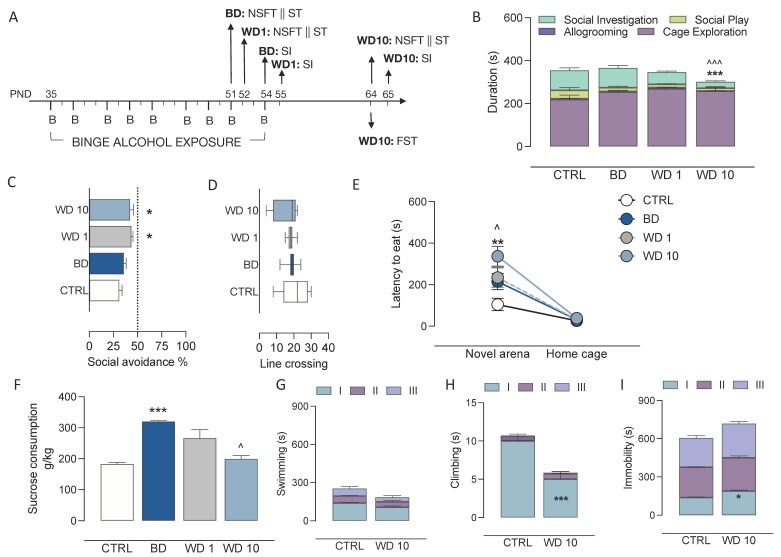
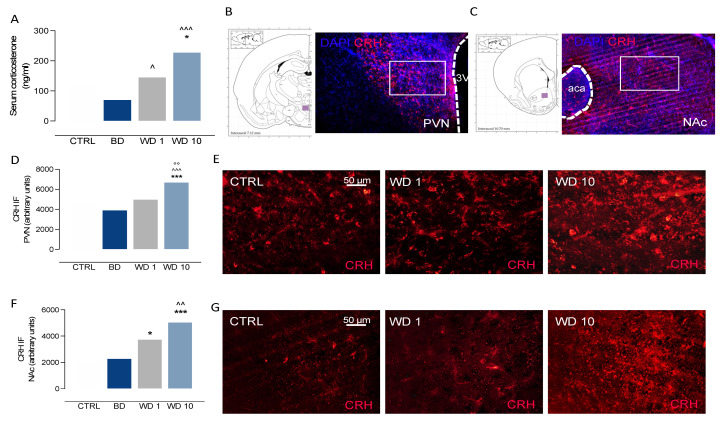
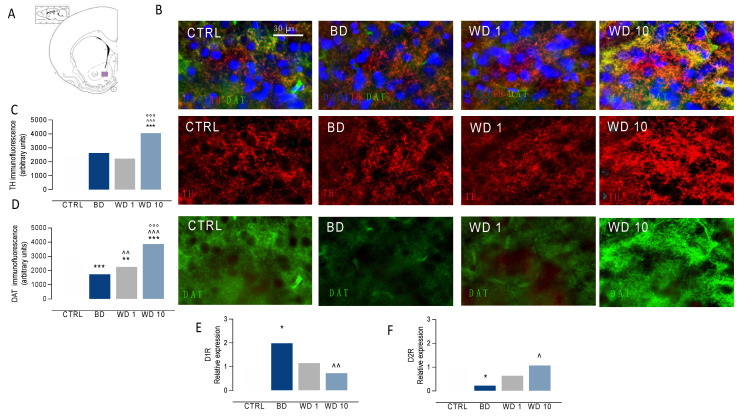
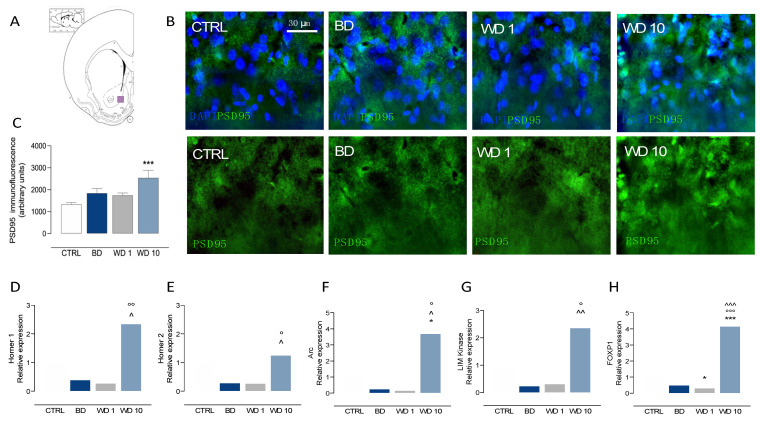
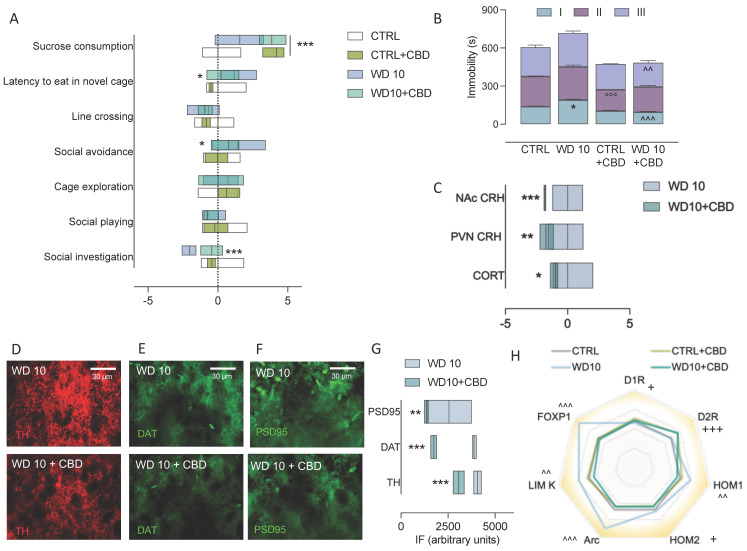
Binge alcohol consumption among adolescents affects the developing neural networks underpinning reward and stress processing in the nucleus accumbens (NAc). This study explores in rats the long-lasting effects of early intermittent exposure to intoxicating alcohol levels at adolescence, on: (1) the response to natural positive stimuli and inescapable stress; (2) stress-axis functionality; and (3) dopaminergic and glutamatergic neuroadaptation in the NAc. We also assess the potential effects of the non-intoxicating phytocannabinoid cannabidiol, to counteract (or reverse) the development of detrimental consequences of binge-like alcohol exposure. Our results show that adolescent binge-like alcohol exposure alters the sensitivity to positive stimuli, exerts social and novelty-triggered anxiety-like behaviour, and passive stress-coping during early and prolonged withdrawal. In addition, serum corticosterone and hypothalamic and NAc corticotropin-releasing hormone levels progressively increase during withdrawal. Besides, NAc tyrosine hydroxylase levels increase at late withdrawal, while the expression of dopamine transporter, D1 and D2 receptors is dynamically altered during binge and withdrawal. Furthermore, the expression of markers of excitatory postsynaptic signaling—PSD95; Homer-1 and -2 and the activity-regulated spine-morphing proteins Arc, LIM Kinase 1 and FOXP1—increase at late withdrawal. Notably, subchronic cannabidiol, during withdrawal, attenuates social- and novelty-induced aversion and passive stress-coping and rectifies the hyper-responsive stress axis and NAc dopamine and glutamate-related neuroplasticity. Overall, the exposure to binge-like alcohol levels in adolescent rats makes the NAc, during withdrawal, a locus minoris resistentiae as a result of perturbations in neuroplasticity and in stress-axis homeostasis. Cannabidiol holds a promising potential for increasing behavioural, neuroendocrine and molecular resilience against binge-like alcohol harmful effects.
Overview
The claims and statistics of this paper haven’t been checked yet.
Free: it reads the open-access text and checks the first 5 claims that cite a source we can check. Create a free account to check every claim.
Integrity signals
Registry
Cites
Statistics
Figures
Verification
Claims the paper makes
The claims and statistics of this paper haven’t been checked yet.
Free: it reads the open-access text and checks the first 5 claims that cite a source we can check. Create a free account to check every claim.
Claims other papers make about this one
Each is checked against this paper’s own text: does it say what the citing paper says it does?
The source backs part of the claim, not all of it — or backs it for a different population, condition or comparison.
In the citing paper
“Voluntary AAE in rats has been reported to increase dopamine (D)1 receptor expression while decreasing D2 receptor expression in the NAc and alter postsynaptic excitatory signaling following stressors [49].”
From Consequences of adolescent drug use (2023) · cites this paper as [49]
Experimental — accuracy not yet measuredThe source backs part of the claim, not all of it — or backs it for a different population, condition or comparison.
In the citing paper
“In addition to directly contributing to the development of anxiety- and depression-like behaviors, AAE can indirectly contribute to the development of anxiety- and depression-like behavior by altering the effect of stress on the brain, particularly in the nucleus accumbens (NAc).”
From Consequences of adolescent drug use (2023) · cites this paper as [49]
Experimental — accuracy not yet measured
Self-check
Percentages, sums and reported differences re-computed from the paper’s own numbers.
The self-check needs the paper’s full text.
Citations
Cites
The adolescent brain and age-related behavioral manifestations
Spear, L. P. (2000) · Neuroscience & Biobehavioral Reviews · doi:10.1016/s0149-7634(00)00014-2 · Cited by 5,433 · cited 3×
“In rodents, adolescence encompasses approximately PND 35 to 55, based on the appearance of growth spurts, the pruning of excitatory synapses and behavioural characteristics such as increased peer interaction, play, and exploratory behaviour in the wild (for review see [29]).”
BackgroundAChE-stained horizontal sections of the rat brain in stereotaxic coordinates
Paxinos, G., Watson, C. R. R., & Emson, P. C. (1980) · Journal of Neuroscience Methods · doi:10.1016/0165-0270(80)90021-7 · Cited by 4,497 · cited 2×
“9 mm from bregma [55]) were washed in PBS for 30 min and incubated in blocking solution (3% normal goat or donkey serum + 0.”
BackgroundMethodThe mysterious motivational functions of mesolimbic dopamine
Salamone, J. D., & Correa, M. (2012) · Neuron · doi:10.1016/j.neuron.2012.10.021 · Cited by 1,418 · cited 1×
“Indeed, several reports show that CRH affects mesolimbic DA-ergic neurones by producing an increase in their functional state, in terms of DA synthesis, firing, release and reuptake [84,85]; it follows, then, that NAc DA is involved in the shaping of stress reactivity and motivated behaviour [86,87].”
BackgroundSynaptic plasticity and addiction
Kauer, J. A., & Malenka, R. C. (2007) · Nature Reviews Neuroscience · doi:10.1038/nrn2234 · Cited by 1,397 · cited 1×
“Indeed, a subtle balance between DA levels and glutamate release critically regulates synaptic plasticity associated with alcohol abuse and withdrawal [18].”
BackgroundTurner, P. V., Brabb, T., Pekow, C. A., & Vasbinder, M. A. (2011) · PubMed Central · Cited by 1,360
Steward, O., Wallace, C. S., Lyford, G. L., & Worley, P. F. (1998) · Neuron · doi:10.1016/s0896-6273(00)80591-7 · Cited by 810 · cited 1×
“Seminal studies have revealed that NMDAR stimulation appears necessary for the synthesis and targeting of Arc mRNA to “on-line” synaptic regions, within dendrites, where stressful conditions can increase Arc expression and lead to the consolidation of neuroplasticity [103,104].”
BackgroundA review of 25 years of the social interaction test
File, S. E., & Seth, P. (2003) · European Journal of Pharmacology · doi:10.1016/s0014-2999(03)01273-1 · Cited by 742 · cited 2×
“The social interaction test provides a deep insight into emotional behaviour in laboratory rodents [37].”
BackgroundMethodThe neurobiology of social play behavior in rats
Vanderschuren, L. J. M. J., Niesink, R. J. M., & Van Pee, J. M. (1997) · Neuroscience & Biobehavioral Reviews · doi:10.1016/s0149-7634(96)00020-6 · Cited by 559 · cited 1×
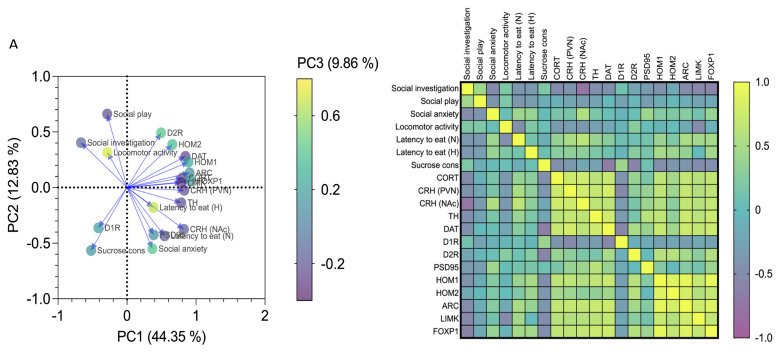
“The divergence of social investigation- and play-related vectors, with respect to sucrose consumption and D1R expression, suggests the involvement of distinct neural systems in the genesis of the two behavioural dimensions, which appear discretely affected by binge-like alcohol exposure during adolescence [33,39,111].”
BackgroundDopamine Signaling in reward-related behaviors
Baik, J.-H. (2013) · Frontiers in Neural Circuits · doi:10.3389/fncir.2013.00152 · Cited by 531
Ethanol increases the firing rate of dopamine neurons of the rat ventral tegmental area in vitro
Brodie, M. S., Shefner, S. A., & Dunwiddie, T. V. (1990) · Brain Research · doi:10.1016/0006-8993(90)91118-z · Cited by 488
Cited by
Consequences of adolescent drug use
Steinfeld, M. R., & Torregrossa, M. M. (2023) · Translational Psychiatry · doi:10.1038/s41398-023-02590-4 · Cited by 237
“Voluntary AAE in rats has been reported to increase dopamine (D)1 receptor expression while decreasing D2 receptor expression in the NAc and alter postsynaptic excitatory signaling following stressors [49].”
BackgroundJîtcă, G., Ősz, B. E., Vari, C.-E., Rusz, C.-M., Tero-Vescan, A., & Puşcaş, A. (2023) · Antioxidants · doi:10.3390/antiox12020485 · Cited by 65
Blum, K., McLaughlin, T., Bowirrat, A., Modestino, E. J., Baron, D., Gomez, L. L., Ceccanti, M., Braverman, E. R., Thanos, P. K., Cadet, J. L., et al. (2022) · Journal of Personalized Medicine · doi:10.3390/jpm12020321 · Cited by 46
Micale, V., Bartolomeo, M. D., Martino, S. D., Štark, T., Dell’Osso, B. M., Drago, F., & D’Addario, C. (2022) · Pharmacology & Therapeutics · doi:10.1016/j.pharmthera.2022.108279 · Cited by 41
Self-citationCastelli, V., Lavanco, G., Feo, S., D’Amico, C., Micale, V., Kuchař, M., Plescia, F., Brancato, A., & Cannizzaro, C. (2023) · Pharmaceutics · doi:10.3390/pharmaceutics15020692 · Cited by 36
Self-citation
Metadata
- Authors
- Brancato, A., Castelli, V., Lavanco, G., Tringali, G., Micale, V., Kuchar, M., D’Amico, C., Pizzolanti, G., Feo, S., & Cannizzaro, C.
- Affiliations
- University of Palermo (IT)
- Université de Bordeaux (FR)
- Università Cattolica del Sacro Cuore (IT)
- University of Catania (IT)
- Department of Chemistry of Natural Compounds, University of Chemistry and Technology, 166 28 Prague, Czech Republic
- Corresponding author
- Cannizzaro, Carla
- ORCID
- Venue
- Biomedicines
- Publisher
- MDPI AG
- Published
- 2021-09-04
- Volume
- 9
- Issue
- 9
- Pages
- 1161
- ISSN
- 2227-9059 (ISSN-L)
- PMC
- PMC8470908
- OpenAlex
- W3198732495
- Semantic Scholar
- 521666820508eb2f1a845177dd51a0c3660ee9bc
- Cited by
- 37
- References
- 126
- Citations by year
- 2026: 4 · 2025: 6 · 2024: 4 · 2023: 10 · 2022: 13
- FWCI
- 3.11
- Type
- journal article
- Language
- en
- Open access
- gold
- doi.org
- Licence
- Locations
- Biomedicines (publishedVersion, cc-by)
- Europe PMC (PubMed Central) (publishedVersion, other-oa)
- PubMed Central (publishedVersion, cc-by)
- PubMed (publishedVersion)
- Nova Science Publishers (Nova Science Publishers, Inc.) (submittedVersion, other-oa)
- HAL (submittedVersion, cc-by)
- DOAJ (DOAJ: Directory of Open Access Journals) (submittedVersion, cc-by-sa)
- Oskar-Bordeaux (Universite de Bordeaux) (submittedVersion, cc-by)
- PubliCatt (Università Cattolica del Sacro Cuore) (submittedVersion, other-oa)
- Funders
- ERAB: The European Foundation for Alcohol Research (EA 1642)
- Fondazione Zardi Gori (post doctoral fellowship)
- Università di Catania (Piano triennale per la Ricerca - Linea Intervento 2, Bando” CHANCE“- Linea Intervento 1 and Starting Grant 2020)
- Topics
- Life Sciences › Neuroscience › Cellular and Molecular Neuroscience › Neurotransmitter Receptor Influence on Behavior
- Health Sciences › Medicine › Epidemiology › Substance Abuse Treatment and Outcomes
- Life Sciences › Neuroscience › Behavioral Neuroscience › Stress Responses and Cortisol
- Keywords
- adolescent binge drinking, alcohol exposure, nucleus accumbens, neuroplasticity, alcohol withdrawal, stress axis, corticosterone, corticotropin-releasing factor, dopamine receptors, glutamate signaling, anxiety-like behavior, cannabidiol, phytocannabinoids, locus minoris resistentiae, PSD-95, Arc, LIM kinase 1, FOXP1, tyrosine hydroxylase
About these checks
Registry, retraction, Cites and statistics results are computed, not judged, with one exception: a printed reference that no index lists is read once by a model before it counts as a citation error. Claims are extracted by a model and kept only when their quote appears verbatim in the text; each cited source is then checked, with a model’s help, for whether it says what the claim relies on. Those verdicts can be wrong — read the claim’s quote and the cited source before relying on one.
Statistics and arithmetic are recomputed, not judged.
Confidence bands are shown only for fields calibrated on our annotated test set. None is calibrated yet, so no band is shown.
What counts as a claim ›How we measure confidence ›How we check this ›
Are you an author, or do you see a problem with this page? Request a review
Data sources
Bibliographic data: Semantic Scholar, OpenAlex, Crossref.
Contains information from the Semantic Scholar Academic Graph Datasets, made available under the ODC Attribution License (ODC-BY 1.0).
Semantic Scholar’s data is described in: Kinney, R., et al. (2023). The Semantic Scholar Open Data Platform. arXiv:2301.10140.
