

A Deep Siamese Convolution Neural Network for Multi-Class Classification of Alzheimer Disease
Open accessThe DOI matches its Crossref record; 56 of the 56 references it cites were found in a registry or an index.
Abstract
Alzheimer’s disease (AD) may cause damage to the memory cells permanently, which results in the form of dementia. The diagnosis of Alzheimer’s disease at an early stage is a problematic task for researchers. For this, machine learning and deep convolutional neural network (CNN) based approaches are readily available to solve various problems related to brain image data analysis. In clinical research, magnetic resonance imaging (MRI) is used to diagnose AD. For accurate classification of dementia stages, we need highly discriminative features obtained from MRI images. Recently advanced deep CNN-based models successfully proved their accuracy. However, due to a smaller number of image samples available in the datasets, there exist problems of over-fitting hindering the performance of deep learning approaches. In this research, we developed a Siamese convolutional neural network (SCNN) model inspired by VGG-16 (also called Oxford Net) to classify dementia stages. In our approach, we extend the insufficient and imbalanced data by using augmentation approaches. Experiments are performed on a publicly available dataset open access series of imaging studies (OASIS), by using the proposed approach, an excellent test accuracy of 99.05% is achieved for the classification of dementia stages. We compared our model with the state-of-the-art models and discovered that the proposed model outperformed the state-of-the-art models in terms of performance, efficiency, and accuracy.
Overview
The claims and statistics of this paper haven’t been checked yet.
Free: it reads the open-access text and checks the first 5 claims that cite a source we can check. Create a free account to check every claim.
Integrity signals
Registry
Cites
Statistics
Figures
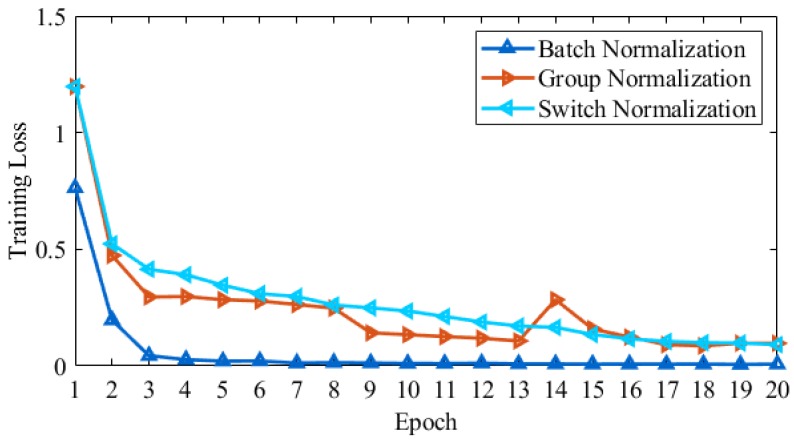
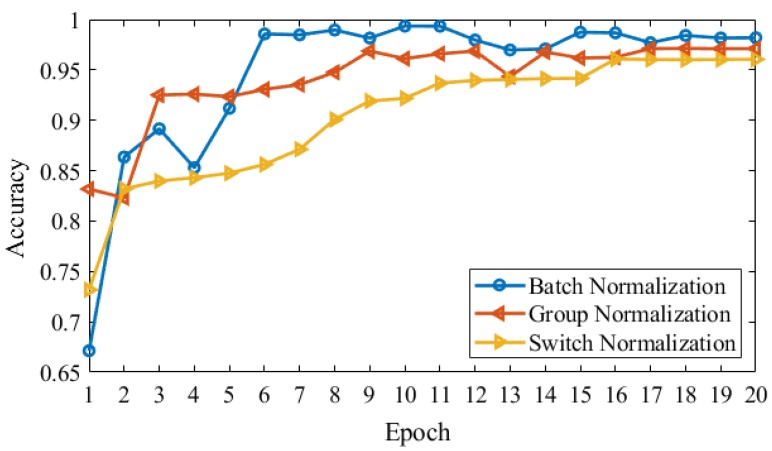
Verification
Claims the paper makes
The claims and statistics of this paper haven’t been checked yet.
Free: it reads the open-access text and checks the first 5 claims that cite a source we can check. Create a free account to check every claim.
Claims other papers make about this one
Each is checked against this paper’s own text: does it say what the citing paper says it does?
The cited source says what the claim attributes to it.
In the citing paper
“They achieved state-of-the-art results by obtaining an accuracy of 99.05%.”
From Review of deep learning: concepts, CNN architectures, challenges, applications, future directions (2021) · cites this paper as [240]
Experimental — accuracy not yet measuredThe cited source says what the claim attributes to it.
In the citing paper
“In 2020, Mehmood et al. [240] trained a developed CNN-based network called “SCNN” with MRI images for the tasks of classification of Alzheimer’s disease.”
From Review of deep learning: concepts, CNN architectures, challenges, applications, future directions (2021) · cites this paper as [240]
The cited source says what the claim attributes to it.
In the citing paper
“Diagnosing normal versus Alzheimer’s disease patients has been achieved by several CNN models [239, 240].”
From Review of deep learning: concepts, CNN architectures, challenges, applications, future directions (2021) · cites this paper as [240]
Self-check
Percentages, sums and reported differences re-computed from the paper’s own numbers.
The self-check needs the paper’s full text.
Citations
Cites
Deep learning in neural networks: an overview
Schmidhuber, J. (2015) · Neural Networks · doi:10.1016/j.neunet.2014.09.003 · Cited by 18,570
A survey on deep learning in medical image analysis
Litjens, G., Kooi, T., Bejnordi, B. E., Setio, A. A. A., Ciompi, F., Ghafoorian, M., van der Laak, J. A. W. M., van Ginneken, B., & Sánchez, C. I. (2017) · Medical Image Analysis · doi:10.1016/j.media.2017.07.005 · Cited by 15,332 · cited 1×
“Recently, the researchers are developing deep learning models / techniques to extract the features directly from medical images [12].”
BackgroundBatch Normalization: Accelerating Deep Network Training by Reducing Internal Covariate Shift
Ioffe, S. (2024) · arXiv (Cornell University) · doi:10.57702/o9raffed · Cited by 14,214
Artificial intelligence in radiology
Hosny, A., Parmar, C., Quackenbush, J., Schwartz, L. H., & Aerts, H. J. W. L. (2018) · Nature Reviews Cancer · doi:10.1038/s41568-018-0016-5 · Cited by 3,803 · cited 1×
“Deep learning models have achieved major conquest in medical images such as CT, MRI, X-ray, microscopy, and mammography [13].”
BackgroundForecasting the global burden of Alzheimer's disease
Brookmeyer, R., Johnson, E., Ziegler‐Graham, K., & Arrighi, H. M. (2007) · Alzheimer's & Dementia · doi:10.1016/j.jalz.2007.04.381 · Cited by 3,370
The Effectiveness of Data Augmentation in Image Classification using Deep Learning
Perez, L., & Wang, J. (2017) · arXiv · doi:10.48550/arxiv.1712.04621 · Cited by 2,499 · cited 1×
“In medical research, due to privacy concerns, the access to large data is a big problem [47], especially, the classification of cancer and AD are problematic due to lack of availability of data.”
Background2019 Alzheimer’s disease facts and figures.
Alzheimer's Association (2019) · Alzheimer's & Dementia · doi:10.1016/j.jalz.2019.01.010 · Cited by 2,461
Automatic classification of MR scans in Alzheimer’s disease.
Kloppel, S., Stonnington, C. M., Chu, C., Draganski, B., Scahill, R. I., Rohrer, J. D., Fox, N. C., Jack, C. R., Ashburner, J., & Frackowiak, R. S. J. (2008) · Brain · doi:10.1093/brain/awm319 · Cited by 1,170 · cited 1×
“[21] developed a dimensional reduction model to detect AD patients by using a linear support vector machine on T1-weighted MRI images.”
MethodVery deep convolutional neural network based image classification using small training sample size
Liu, S., & Deng, W. (2015) · 2015 3rd IAPR Asian Conference on Pattern Recognition (ACPR) · doi:10.1109/acpr.2015.7486599 · Cited by 1,056 · cited 1×
“We modified the VGG16 and inserted one extra Conv layer in the model which was effective to grasp maximum features on a small dataset [43].”
Method2011 Alzheimer's disease facts and figures
Alzheimer's Association (2011) · Alzheimer's & Dementia · doi:10.1016/j.jalz.2011.02.004 · Cited by 908
Research works printed but not linked: 2
- Bryant, 2015, Staging dementia using clinical dementia rating scale sum of boxes scores, Arch. Neurol., 65, 1091
- Bjerrum, E.J. (2015). SMILES enumeration as data augmentation for neural network modeling of molecules. arXiv.
Cited by
Review of deep learning: concepts, CNN architectures, challenges, applications, future directions
Alzubaidi, L., Zhang, J., Humaidi, A. J., Al-Dujaili, A., Duan, Y., Al-Shamma, O., Santamaría, J., Fadhel, M. A., Al-Amidie, M., & Farhan, L. (2021) · Journal of Big Data · doi:10.1186/s40537-021-00444-8 · Cited by 7,906
Irmak, E. (2021) · Iranian Journal of Science and Technology, Transactions of Electrical Engineering · doi:10.1007/s40998-021-00426-9 · Cited by 477
Khan, P., Kader, M. F., Islam, S. M. R., Rahman, A. B., Kamal, M. S., Toha, M. U., & Kwak, K.-S. (2021) · IEEE Access · doi:10.1109/access.2021.3062484 · Cited by 293
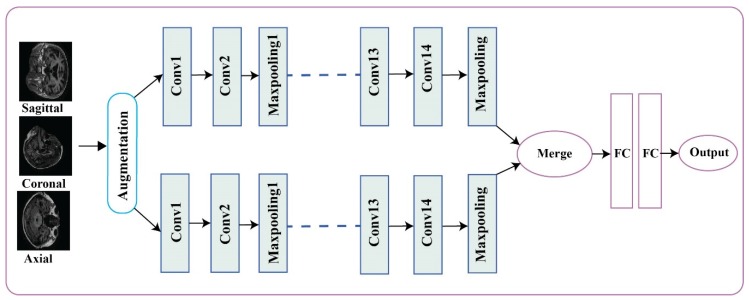
“Motivated by Oxford Net, the Siamese CNN model was studied in [104] for multi-class classification of AD.”
MethodA Transfer Learning Approach for Early Diagnosis of Alzheimer’s Disease on MRI Images
Mehmood, A., Yang, S., Feng, Z., Wang, M., Ahmad, A. S., Khan, R., Maqsood, M., & Yaqub, M. (2021) · Neuroscience · doi:10.1016/j.neuroscience.2021.01.002 · Cited by 292
Self-citationAn MRI-based deep learning approach for accurate detection of Alzheimer’s disease
EL-Geneedy, M., Moustafa, H. E.-D., Khalifa, F., Khater, H., & AbdElhalim, E. (2023) · Alexandria Engineering Journal · doi:10.1016/j.aej.2022.07.062 · Cited by 276
Metadata
- Authors
- Mehmood, A., Maqsood, M., Bashir, M., & Shuyuan, Y.
- Affiliations
- Xidian University (CN)
- COMSATS University Islamabad (PK)
- University of the Punjab (PK)
- Corresponding author
- Shuyuan, Yang
- Venue
- Brain Sciences
- Publisher
- MDPI AG
- Published
- 2020-02-05
- Volume
- 10
- Issue
- 2
- Pages
- 84
- ISSN
- 2076-3425 (ISSN-L)
- PMC
- PMC7071616
- OpenAlex
- W3005273529
- Cited by
- 264
- References
- 56
- Citations by year
- 2026: 11 · 2025: 43 · 2024: 60 · 2023: 65 · 2022: 45 · 2021: 31 · 2020: 9
- FWCI
- 27.36
- Type
- journal article
- Language
- en
- Open access
- gold
- dx.doi.org
- Licence
- Locations
- Brain Sciences (publishedVersion, cc-by)
- PubMed Central (publishedVersion, cc-by)
- PubMed (publishedVersion)
- DOAJ (DOAJ: Directory of Open Access Journals) (submittedVersion, cc-by-sa)
- Funders
- National Natural Science Foundation of China (*Nos.61771380, 61906145, U1730109, 91438103, 61771376, 61703328, 91438201, U1701267, 61703328),)
- The Science Basis Research Program in Shaanxi Province of China (Nos.16JK1823, 2017JM6086, 2019JQ-663)
- Topics
- Health Sciences › Medicine › Psychiatry and Mental health › Dementia and Cognitive Impairment Research
- Physical Sciences › Computer Science › Computer Vision and Pattern Recognition › Advanced Neural Network Applications
- Health Sciences › Medicine › Radiology, Nuclear Medicine and Imaging › Retinal Imaging and Analysis
- Keywords
- Alzheimer's disease, Siamese convolutional neural network, VGG16, magnetic resonance imaging, brain image analysis, data augmentation, class imbalance, overfitting, OASIS dataset, multi-class classification
About these checks
Registry, retraction, Cites and statistics results are computed, not judged, with one exception: a printed reference that no index lists is read once by a model before it counts as a citation error. Claims are extracted by a model and kept only when their quote appears verbatim in the text; each cited source is then checked, with a model’s help, for whether it says what the claim relies on. Those verdicts can be wrong — read the claim’s quote and the cited source before relying on one.
Statistics and arithmetic are recomputed, not judged.
Confidence bands are shown only for fields calibrated on our annotated test set. None is calibrated yet, so no band is shown.
What counts as a claim ›How we measure confidence ›How we check this ›
Are you an author, or do you see a problem with this page? Request a review
How to cite
Cite CoChat for the checks on this page, and the paper for its own findings.
- This page
- CoChat. (2026). Citation check: A Deep Siamese Convolution Neural Network for Multi-Class Classification of Alzheimer Disease. https://app.cochat.ai/papers/10.3390/brainsci10020084
- The paper
- Mehmood, A., Maqsood, M., Bashir, M., & Shuyuan, Y. (2020). A Deep Siamese Convolution Neural Network for Multi-Class Classification of Alzheimer Disease. Brain Sciences. https://doi.org/10.3390/brainsci10020084
Data sources
Bibliographic data: Semantic Scholar, OpenAlex, Crossref.
Contains information from the Semantic Scholar Academic Graph Datasets, made available under the ODC Attribution License (ODC-BY 1.0).
Semantic Scholar’s data is described in: Kinney, R., et al. (2023). The Semantic Scholar Open Data Platform. arXiv:2301.10140.
