

A Deep Siamese Convolution Neural Network for Multi-Class Classification of Alzheimer Disease
Open accessThe DOI matches its Crossref record; 56 of the 56 references it cites were found in a registry or an index.
Abstract
Alzheimer’s disease (AD) may cause damage to the memory cells permanently, which results in the form of dementia. The diagnosis of Alzheimer’s disease at an early stage is a problematic task for researchers. For this, machine learning and deep convolutional neural network (CNN) based approaches are readily available to solve various problems related to brain image data analysis. In clinical research, magnetic resonance imaging (MRI) is used to diagnose AD. For accurate classification of dementia stages, we need highly discriminative features obtained from MRI images. Recently advanced deep CNN-based models successfully proved their accuracy. However, due to a smaller number of image samples available in the datasets, there exist problems of over-fitting hindering the performance of deep learning approaches. In this research, we developed a Siamese convolutional neural network (SCNN) model inspired by VGG-16 (also called Oxford Net) to classify dementia stages. In our approach, we extend the insufficient and imbalanced data by using augmentation approaches. Experiments are performed on a publicly available dataset open access series of imaging studies (OASIS), by using the proposed approach, an excellent test accuracy of 99.05% is achieved for the classification of dementia stages. We compared our model with the state-of-the-art models and discovered that the proposed model outperformed the state-of-the-art models in terms of performance, efficiency, and accuracy.
Overview
The claims and statistics of this paper haven’t been checked yet.
Free: it reads the open-access text and checks the first 5 claims that cite a source we can check. Create a free account to check every claim.
Integrity signals
Registry
Cites
Statistics
Figures
Verification
Claims the paper makes
The claims and statistics of this paper haven’t been checked yet.
Free: it reads the open-access text and checks the first 5 claims that cite a source we can check. Create a free account to check every claim.
Claims other papers make about this one
Each is checked against this paper’s own text: does it say what the citing paper says it does?
The cited source says what the claim attributes to it.
In the citing paper
“They achieved state-of-the-art results by obtaining an accuracy of 99.05%.”
From Review of deep learning: concepts, CNN architectures, challenges, applications, future directions (2021) · cites this paper as [240]
Experimental — accuracy not yet measuredThe cited source says what the claim attributes to it.
In the citing paper
“In 2020, Mehmood et al. [240] trained a developed CNN-based network called “SCNN” with MRI images for the tasks of classification of Alzheimer’s disease.”
From Review of deep learning: concepts, CNN architectures, challenges, applications, future directions (2021) · cites this paper as [240]
The cited source says what the claim attributes to it.
In the citing paper
“Diagnosing normal versus Alzheimer’s disease patients has been achieved by several CNN models [239, 240].”
From Review of deep learning: concepts, CNN architectures, challenges, applications, future directions (2021) · cites this paper as [240]
Self-check
Percentages, sums and reported differences re-computed from the paper’s own numbers.
The self-check needs the paper’s full text.
Citations
Cites
Deep learning in neural networks: an overview
Schmidhuber, J. (2015) · Neural Networks · doi:10.1016/j.neunet.2014.09.003 · Cited by 18,570
A survey on deep learning in medical image analysis
Litjens, G., Kooi, T., Bejnordi, B. E., Setio, A. A. A., Ciompi, F., Ghafoorian, M., van der Laak, J. A. W. M., van Ginneken, B., & Sánchez, C. I. (2017) · Medical Image Analysis · doi:10.1016/j.media.2017.07.005 · Cited by 15,332 · cited 1×
“Recently, the researchers are developing deep learning models / techniques to extract the features directly from medical images [12].”
BackgroundBatch Normalization: Accelerating Deep Network Training by Reducing Internal Covariate Shift
Ioffe, S. (2024) · arXiv (Cornell University) · doi:10.57702/o9raffed · Cited by 14,214
Artificial intelligence in radiology
Hosny, A., Parmar, C., Quackenbush, J., Schwartz, L. H., & Aerts, H. J. W. L. (2018) · Nature Reviews Cancer · doi:10.1038/s41568-018-0016-5 · Cited by 3,803 · cited 1×
“Deep learning models have achieved major conquest in medical images such as CT, MRI, X-ray, microscopy, and mammography [13].”
BackgroundForecasting the global burden of Alzheimer's disease
Brookmeyer, R., Johnson, E., Ziegler‐Graham, K., & Arrighi, H. M. (2007) · Alzheimer's & Dementia · doi:10.1016/j.jalz.2007.04.381 · Cited by 3,370
The Effectiveness of Data Augmentation in Image Classification using Deep Learning
Perez, L., & Wang, J. (2017) · arXiv · doi:10.48550/arxiv.1712.04621 · Cited by 2,499 · cited 1×
“In medical research, due to privacy concerns, the access to large data is a big problem [47], especially, the classification of cancer and AD are problematic due to lack of availability of data.”
Background2019 Alzheimer’s disease facts and figures.
Alzheimer's Association (2019) · Alzheimer's & Dementia · doi:10.1016/j.jalz.2019.01.010 · Cited by 2,461
Automatic classification of MR scans in Alzheimer’s disease.
Kloppel, S., Stonnington, C. M., Chu, C., Draganski, B., Scahill, R. I., Rohrer, J. D., Fox, N. C., Jack, C. R., Ashburner, J., & Frackowiak, R. S. J. (2008) · Brain · doi:10.1093/brain/awm319 · Cited by 1,170 · cited 1×
“[21] developed a dimensional reduction model to detect AD patients by using a linear support vector machine on T1-weighted MRI images.”
MethodVery deep convolutional neural network based image classification using small training sample size
Liu, S., & Deng, W. (2015) · 2015 3rd IAPR Asian Conference on Pattern Recognition (ACPR) · doi:10.1109/acpr.2015.7486599 · Cited by 1,056 · cited 1×
“We modified the VGG16 and inserted one extra Conv layer in the model which was effective to grasp maximum features on a small dataset [43].”
Method2011 Alzheimer's disease facts and figures
Alzheimer's Association (2011) · Alzheimer's & Dementia · doi:10.1016/j.jalz.2011.02.004 · Cited by 908
Research works printed but not linked: 1
- Bjerrum E.J. SMILES enumeration as data augmentation for neural network modeling of molecules arXiv 2015 1703.07076
Cited by
Review of deep learning: concepts, CNN architectures, challenges, applications, future directions
Alzubaidi, L., Zhang, J., Humaidi, A. J., Al-Dujaili, A., Duan, Y., Al-Shamma, O., Santamaría, J., Fadhel, M. A., Al-Amidie, M., & Farhan, L. (2021) · Journal of Big Data · doi:10.1186/s40537-021-00444-8 · Cited by 7,906
Irmak, E. (2021) · Iranian Journal of Science and Technology, Transactions of Electrical Engineering · doi:10.1007/s40998-021-00426-9 · Cited by 477
Khan, P., Kader, M. F., Islam, S. M. R., Rahman, A. B., Kamal, M. S., Toha, M. U., & Kwak, K.-S. (2021) · IEEE Access · doi:10.1109/access.2021.3062484 · Cited by 293
“Motivated by Oxford Net, the Siamese CNN model was studied in [104] for multi-class classification of AD.”
MethodA Transfer Learning Approach for Early Diagnosis of Alzheimer’s Disease on MRI Images
Mehmood, A., Yang, S., Feng, Z., Wang, M., Ahmad, A. S., Khan, R., Maqsood, M., & Yaqub, M. (2021) · Neuroscience · doi:10.1016/j.neuroscience.2021.01.002 · Cited by 292
Self-citationAn MRI-based deep learning approach for accurate detection of Alzheimer’s disease
EL-Geneedy, M., Moustafa, H. E.-D., Khalifa, F., Khater, H., & AbdElhalim, E. (2023) · Alexandria Engineering Journal · doi:10.1016/j.aej.2022.07.062 · Cited by 276
State-of-the-Art CNN Optimizer for Brain Tumor Segmentation in Magnetic Resonance Images
Yaqub, M., Feng, J., Zia, M., Arshid, K., Jia, K., Rehman, Z., & Mehmood, A. (2020) · Brain Sciences · doi:10.3390/brainsci10070427 · Cited by 207
“Reference [20] proposed a deep siamese convolution neural network-based approach for classification of Alzheimer’s disease stages and produced promising results in term of classification on brain images, which is able to identify normal control and disease patients.”
BackgroundSelf-citationDeep learning for Alzheimer's disease diagnosis: A survey
Khojaste-Sarakhsi, M., Haghighi, S. S., Ghomi, S. M. T. F., & Marchiori, E. (2022) · Artificial Intelligence in Medicine · doi:10.1016/j.artmed.2022.102332 · Cited by 194
Loddo, A., Buttau, S., & Di Ruberto, C. (2022) · Computers in Biology and Medicine · doi:10.1016/j.compbiomed.2021.105032 · Cited by 163
“Regarding multiclass classification on OASIS, the best result was obtained by Mehmood et al. [69] (99.05%).”
InfluentialAlzheimer's Disease Detection Through Whole-Brain 3D-CNN MRI
Folego, G., Weiler, M., Casseb, R. F., Pires, R., & Rocha, A. D. R. (2020) · Frontiers in Bioengineering and Biotechnology · doi:10.3389/fbioe.2020.534592 · Cited by 181
Frizzell, T. O., Glashutter, M., Liu, C. C., Zeng, A., Pan, D., Hajra, S. G., D’Arcy, R. C. N., & Song, X. (2022) · Ageing Research Reviews · doi:10.1016/j.arr.2022.101614 · Cited by 139
Li, R., Wang, X., Lawler, K., Garg, S., Bai, Q., & Alty, J. (2022) · Journal of Biomedical Informatics · doi:10.1016/j.jbi.2022.104030 · Cited by 137
Deep Learning-Based Diagnosis of Alzheimer’s Disease
Saleem, T. J., Zahra, S. R., Wu, F., Alwakeel, A., Alwakeel, M., Jeribi, F., & Hijji, M. (2022) · Journal of Personalized Medicine · doi:10.3390/jpm12050815 · Cited by 135
Early prediction of Alzheimer's disease using convolutional neural network: a review
Patil, V., Madgi, M., & Kiran, A. (2022) · The Egyptian Journal of Neurology Psychiatry and Neurosurgery · doi:10.1186/s41983-022-00571-w · Cited by 154
“It also produces emotional and financial benefits for the patient family [5].”
BackgroundHajamohideen, F., Shaffi, N., Mahmud, M., Karthikeyan, S., Sariri, A. A., Viswan, V., Abdesselam, A., & Initiative, A. D. N. (2023) · Brain Informatics · doi:10.1186/s40708-023-00184-w · Cited by 142
“Many works have been reported that leverage the CNN architecture for AD classification purposes either by using pre-trained models [52, 56] or a mini-malist non-pretrained CNN model [55].”
BackgroundMethodAlzheimer's disease detection from structural MRI using conditional deep triplet network
Orouskhani, M., Zhu, C., Rostamian, S., Zadeh, F. S., Shafiei, M., & Orouskhani, Y. (2022) · Neuroscience Informatics · doi:10.1016/j.neuri.2022.100066 · Cited by 146
Elazab, A., Wang, C., Abdel-Aziz, M. H., Zhang, J., Gu, J. J., Górriz, J. M., Zhang, Y., & Chang, C. (2024) · Expert Systems with Applications · doi:10.1016/j.eswa.2024.124780 · Cited by 126
Application of machine learning approaches for osteoporosis risk prediction in postmenopausal women
Shim, J., Kim, D. W., Ryu, K., Cho, E.-A., Ahn, J. H., Kim, J.-I., & Lee, S. H. (2020) · Archives of Osteoporosis · doi:10.1007/s11657-020-00802-8 · Cited by 112
“The AUROC is known as a strong indicator of performance for classifiers in imbalanced datasets [36, 37].”
BackgroundAlzheimer Disease Classification through Transfer Learning Approach
Raza, N., Naseer, A., Tamoor, M., & Zafar, K. (2023) · Diagnostics · doi:10.3390/diagnostics13040801 · Cited by 124
“In another paper [33], a modified Siamese CNN model, inspired by Oxford Net (VGG16), was used for the classification of AD stages.”
MethodA Novel Approach Utilizing Machine Learning for the Early Diagnosis of Alzheimer's Disease
Uddin, K. M. M., Alam, M. J., Jannat-E-Anawar, Uddin, M. A., & Aryal, S. (2023) · Biomedical Materials & Devices · doi:10.1007/s44174-023-00078-9 · Cited by 120
“Mehmood et al. [24] presented an overview of recent studies on the categorization and Alzheimer's disease diagnosis.”
BackgroundHoang, G. M., Kim, U.-H., & Kim, J. G. (2023) · Frontiers in Aging Neuroscience · doi:10.3389/fnagi.2023.1102869 · Cited by 112
“In recent years, deep learning approaches and their variants have been increasingly applied to AD diagnosis (Islam and Zhang, 2017; Maqsood et al., 2019; Mehmood et al., 2020; Lim et al., 2022).”
BackgroundDeepa, N., & Chokkalingam, S. P. (2022) · Biomedical Signal Processing and Control · doi:10.1016/j.bspc.2021.103455 · Cited by 105
“The overall accuracy performance of the image processing is affected due to non-linear light intensity [15].”
BackgroundReview on Alzheimer Disease Detection Methods: Automatic Pipelines and Machine Learning Techniques
Shukla, A., Tiwari, R., & Tiwari, S. (2023) · Sci · doi:10.3390/sci5010013 · Cited by 106
“CN 30 [62] OASIS Data Set 2020 MRI √ X 97.”
Etminani, K., Soliman, A., Davidsson, A., Chang, J. R., Martínez‐Sanchis, B., Byttner, S., Camacho, V., Bauckneht, M., Stegeran, R., Ressner, M., et al. (2021) · European Journal of Nuclear Medicine and Molecular Imaging · doi:10.1007/s00259-021-05483-0 · Cited by 101
Arafa, D. A., Moustafa, H. E.-D., Eldin, A. A., & Ali, H. A. (2022) · Multimedia Tools and Applications · doi:10.1007/s11042-022-11925-0 · Cited by 104
“MRI images may have some information that is unnecessary for diagnosis of AD that increases the time of processing and training data, computational process, and cause less efficiency in the training of our classification model [90].”
MethodMultimodal Triplet Attention Network for Brain Disease Diagnosis
Zhu, Q., Wang, H., Xu, B., Zhang, Z., Shao, W., & Zhang, D. (2022) · IEEE Transactions on Medical Imaging · doi:10.1109/tmi.2022.3199032 · Cited by 80
“For example, [25] developed a VGG16 architecture based Siamese network for multi-class classifi-”
MethodAn Improved Deep Residual Network Prediction Model for the Early Diagnosis of Alzheimer’s Disease
Sun, H., Wang, A., Wang, W., & Liu, C. (2021) · Sensors · doi:10.3390/s21124182 · Cited by 90
“More and more studies have applied convolutional neural network (CNN) combined with MRI imaging for the early diagnosis of AD [26].”
BackgroundIllakiya, T., & Karthik, R. (2023) · Neuroinformatics · doi:10.1007/s12021-023-09625-7 · Cited by 85
“VGG16 model was modified by increasing the number of convolution layers that help in extracting maximum features in a small dataset (Mehmood et al., 2020).”
MethodDeep-Learning-Based Diagnosis and Prognosis of Alzheimer’s Disease: A Comprehensive Review
Sharma, R., Goel, T., Tanveer, M., Lin, C., & Murugan, R. (2023) · IEEE Transactions on Cognitive and Developmental Systems · doi:10.1109/tcds.2023.3254209 · Cited by 88
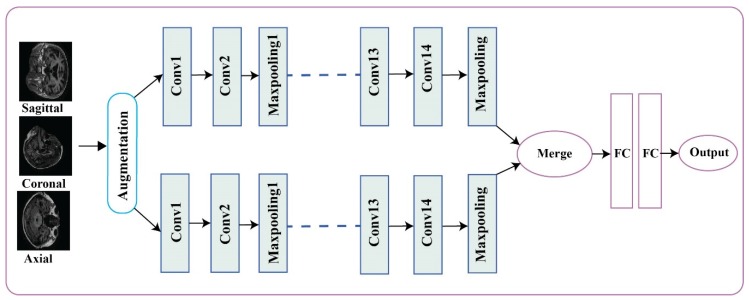
“[99] proposed a modified VGG-16 architecture known as Siamese CNN, designed by joining the two similar VGG-16 models in parallel.”
MethodSethi, M., Ahuja, S., Rani, S., Bawa, P., & Zaguia, A. (2021) · Computational and Mathematical Methods in Medicine · doi:10.1155/2021/4186666 · Cited by 74
“Another researcher group in [58] adopted Siamese CNN models inspired by the transfer of VGG-16 learning to classify di ff erent AD stages.”
MethodRetractedA transfer learning approach for multiclass classification of Alzheimer's disease using MRI images
Khan, R., Akbar, S., Mehmood, A., Shahid, F., Munir, K., Ilyas, N., Asif, M., & Zheng, Z. (2023) · Frontiers in Neuroscience · doi:10.3389/fnins.2022.1050777 · Cited by 89
Self-citationDeep Belief Networks (DBN) with IoT-Based Alzheimer’s Disease Detection and Classification
Alqahtani, N., Alam, S., Aqeel, I., Shuaib, M., Khormi, I. M., Bhatia, S., & Malibari, A. (2023) · Applied Sciences · doi:10.3390/app13137833 · Cited by 68
Multi-modality MRI for Alzheimer’s disease detection using deep learning
Houria, L., Belkhamsa, N., Cherfa, A. B., & Cherfa, Y. (2022) · Physical and Engineering Sciences in Medicine · doi:10.1007/s13246-022-01165-9 · Cited by 68
“Authors in [27] presented an approach for Alzheimer’s Disease multi-classification.”
Agarwal, D., Berbis, M. A., Luna, A., Lipari, V., Ballester, J. B., & Díez, I. D. L. T. (2023) · Journal of Medical Systems · doi:10.1007/s10916-023-01941-4 · Cited by 71
Deep Learning for Alzheimer’s Disease Prediction: A Comprehensive Review
Malik, I., Iqbal, A., Gu, Y. H., & Al–antari, M. A. (2024) · Diagnostics · doi:10.3390/diagnostics14121281 · Cited by 71
Lin, C., Wen, T.-C., & Setiawan, F. (2020) · Sensors · doi:10.3390/s20143857 · Cited by 52
Detection of Alzheimer's disease using deep learning models: A systematic literature review
Mohammed, E. M., Fakhrudeen, A. M., & Alani, O. (2024) · Informatics in Medicine Unlocked · doi:10.1016/j.imu.2024.101551 · Cited by 64
Kim, J., & Kang, Y. (2022) · ISPRS International Journal of Geo-Information · doi:10.3390/ijgi11040245 · Cited by 50
“Keywords: image feature vector; clustering; Siamese Network; automatic classification of tourist photos; deep learning model”
MethodInfluentialLiu, H., Vohra, N., Bailey, K. L., El-Shenawee, M. O., & Nelson, A. (2022) · Journal of Infrared Millimeter and Terahertz Waves · doi:10.1007/s10762-021-00839-x · Cited by 43
Analysis of MRI image data for Alzheimer disease detection using deep learning techniques
Pradhan, N., Sagar, S., & Singh, A. S. (2023) · Multimedia Tools and Applications · doi:10.1007/s11042-023-16256-2 · Cited by 46
“Mehmood et al. [21] stated that AD irreversibly affects memory cells, eventually leading to dementia.”
Bhandarkar, A., Naik, P., Vakkund, K., Junjappanavar, S., Bakare, S., & Pattar, S. (2024) · Artificial Intelligence Review · doi:10.1007/s10462-023-10644-8 · Cited by 57
Novel Deep-Learning Approach for Automatic Diagnosis of Alzheimer’s Disease from MRI
Altwijri, O., Alanazi, R., Aleid, A., Alhussaini, K., Aloqalaa, Z., Almijalli, M., & Saad, A. S. (2023) · Applied Sciences · doi:10.3390/app132413051 · Cited by 43
Ali, M. B., Gu, I. Y., Berger, M. S., Pallud, J., Southwell, D. G., Widhalm, G., Roux, A., Vecchio, T. G., & Jakola, A. S. (2020) · Brain Sciences · doi:10.3390/brainsci10070463 · Cited by 38
Machine Learning Approaches to Predict Chronic Lower Back Pain in People Aged over 50 Years
Shim, J., Ryu, K., Cho, E.-A., Ahn, J. H., Kim, H. K., Lee, Y.-J., & Lee, S. H. (2021) · Medicina · doi:10.3390/medicina57111230 · Cited by 43
“The AUROC from each machine learning model was plotted using the test dataset as a strong indicator of performance for classifiers in imbalanced datasets [21,22].”
MethodShaffi, N., Hajamohideen, F., Mahmud, M., Abdesselam, A., Karthikeyan, S., & Sariri, A. A. (2022) · Lecture notes in computer science · doi:10.1007/978-3-031-15037-1_23 · Cited by 34
Dalia, Y., Bharath, A., Mayya, V., & Kamath, S. S. (2021) · International Conference on Computer, Communication and Signal Processing (ICCCSP) · doi:10.1109/icccsp52374.2021.9465522 · Cited by 34
Almhdie-Imjabbar, A., Nguyen, K. L., Toumi, H., Jennane, R., & Lespessailles, É. (2022) · Arthritis Research & Therapy · doi:10.1186/s13075-022-02743-8 · Cited by 40
Few-Shot Learning for Fine-Grained Emotion Recognition Using Physiological Signals
Zhang, T., Ali, A. E., Hanjalić, A., & Cesar, P. S. (2022) · IEEE Transactions on Multimedia · doi:10.1109/tmm.2022.3165715 · Cited by 40
“[46] use the Deep Siamese Neural (DSN) network [47] to recognize 6 basic emotions by facial expressions.”
Utilizing social media and machine learning for personality and emotion recognition using PERS
Talaat, F. M., El-Gendy, E. M., Saafan, M. M., & Gamel, S. A. (2023) · Neural Computing and Applications · doi:10.1007/s00521-023-08962-7 · Cited by 45
“The personality recognition may not require all of the information contained in the collected data, which lengthens the processing and training of the data, the computational process, and reduces the effectiveness of our classi fi cation model's training [70].”
BackgroundAlshammari, M., & Mezher, M. A. (2021) · National Computing Colleges Conference (NCCC) · doi:10.1109/nccc49330.2021.9428810 · Cited by 36
“CNN based AD detection and classification has been widely experienced by the researcher as in [1, 3, 4, 6, 9, 21, 25, 26, 29, 30, 35, 41, 45-49].”
BackgroundMethodEarly Diagnosis of Alzheimer’s Disease Based on Convolutional Neural Networks
Mehmood, A., Abugabah, A., AlZubi, A. A., & Sanzogni, L. (2022) · Computer Systems Science and Engineering · doi:10.32604/csse.2022.018520 · Cited by 37
Self-citationComparable Study of Pre-trained Model on Alzheimer Disease Classification
Odusami, M., Maskeliūnas, R., Damaševičius, R., & Misra, S. (2021) · Lecture notes in computer science · doi:10.1007/978-3-030-86976-2_5 · Cited by 29
FSLM: An Intelligent Few-Shot Learning Model Based on Siamese Networks for IoT Technology
Yang, L., Li, Y., Wang, J., & Xiong, N. N. (2020) · IEEE Internet of Things Journal · doi:10.1109/jiot.2020.3022427 · Cited by 27
“In order to more accurately diagnose Alzheimer’s disease (AD) using MRI, Mehmood et al. [20] used a Siamese CNN (SCNN) model based on VGG16.”
MethodAnsingkar, N. P., Patil, R. B., & Deshmukh, P. D. (2022) · Multimedia Tools and Applications · doi:10.1007/s11042-021-11786-z · Cited by 27
“Atif Mehmood et al. [23] introduced a Siamese convolutional neural network (SCNN) stimulated with the VGG-16 framework to categorize the Alzheimer’s stages.”
MethodApplicable artificial intelligence for brain disease: A survey
Huang, C., Wang, J., Wang, S., & Zhang, Y. (2022) · Neurocomputing · doi:10.1016/j.neucom.2022.07.005 · Cited by 31
Kaushik, P., Kukreja, V., Jain, E., Ati, M., & Hariharan, S. (2025) · IEEE Access · doi:10.1109/access.2025.3630141 · Cited by 28
A Proposal of Quantum-Inspired Machine Learning for Medical Purposes: An Application Case
Pomarico, D., Fanizzi, A., Amoroso, N., Bellotti, R., Biafora, A., Bove, S., Didonna, V., Forgia, D. L., Pastena, M. I., Tamborra, P., et al. (2021) · Mathematics · doi:10.3390/math9040410 · Cited by 36
Deepa, V., Kumar, C. S., & Cherian, T. (2022) · Physical and Engineering Sciences in Medicine · doi:10.1007/s13246-022-01129-z · Cited by 27
“Mehmood et al. have developed a Siamese convolutional neural network (SCNN) to classify dementia stages in 2020 [20].”
BackgroundGasmi, K., Alyami, A., Hamid, O. H., Altaieb, M. O., Shahin, O. R., Ammar, L. B., Chouaib, H., & Shehab, A. (2024) · Diagnostics · doi:10.3390/diagnostics14242779 · Cited by 31
An Alzheimer’s disease category progression sub-grouping analysis using manifold learning on ADNI
van der Haar, D. T., Moustafa, A. A., Warren, S. L., Alashwal, H., & van Zyl, T. L. (2023) · Scientific Reports · doi:10.1038/s41598-023-37569-0 · Cited by 27
“This representation learning, coupled with pre-trained deep neural networks 33 has allowed these methods to surpass the performance of current approaches on MRI data 9,10,34,35 , and allowed it to cater to varying modalities 36 .”
MethodTummala, S. (2021) · IEEE International Conference for Convergence in Technology (I2CT) · doi:10.1109/i2ct51068.2021.9418143 · Cited by 22
“Deep learning has widely used in diagnosis and prognosis of several neurological conditions based on structural and/or functional MRI that include Alzheimer’s [6] , Parkinson’s disease [7], attention deficit hyper activity disorder [8], etc.”
BackgroundInfluentialAutomatic pavement texture recognition using lightweight few-shot learning
Pan, S., Yan, H. X., Liu, Z., Chen, N., Miao, Y., & Hou, Y. (2023) · Philosophical Transactions of the Royal Society A Mathematical Physical and Engineering Sciences · doi:10.1098/rsta.2022.0166 · Cited by 23
“For image classification, the Visual Geometry Group 16 (VGG16) was chosen as the sub-networks, which has been proven effective for extracting feature vectors in many studies based on Siamese networks [36–38].”
MethodUpadhyay, P., Tomar, P., & Yadav, S. P. (2024) · Computers & Electrical Engineering · doi:10.1016/j.compeleceng.2024.109796 · Cited by 24
Vanaja, T., Shanmugavadivel, K., Subramanian, M., & Kanimozhiselvi, C. S. (2025) · Neural Computing and Applications · doi:10.1007/s00521-025-10993-1 · Cited by 29
Ali, S. S. A., Memon, K., Yahya, N., & Khan, S. (2025) · Artificial Intelligence Review · doi:10.1007/s10462-025-11146-5 · Cited by 27
“Mehmod et al. (2020) developed a Siamese CNN model inspired by VGG-16 (also named OxfordNet) to classify dementia stages using augmentation to handle data imbal - ances.”
A comparative study of grape crop disease classification using various transfer learning techniques
Sood, S., & Singh, H. (2023) · Multimedia Tools and Applications · doi:10.1007/s11042-023-14808-0 · Cited by 25
“In [20], the authors employed the Gaussian noise to diagnose Alzheimer’s disease using a deep neural network and reported appreciable classification results.”
A Practical Multiclass Classification Network for the Diagnosis of Alzheimer’s Disease
Khan, R., Qaisar, Z. H., Mehmood, A., Ali, G., Alkhalifah, T., Alturise, F., & Wang, L. (2022) · Applied Sciences · doi:10.3390/app12136507 · Cited by 21
Self-citationAlzheimer’s Disease Detection Using Ensemble Learning and Artificial Neural Networks
Bandyopadhyay, A., Ghosh, S., Bose, M., Singh, A., Othmani, A., & Santosh, K. (2023) · Communications in computer and information science · doi:10.1007/978-3-031-23599-3_2 · Cited by 19
TriAD: A Deep Ensemble Network for Alzheimer Classification and Localization
Mercaldo, F., Giammarco, M. D., Ravelli, F., Martinelli, F., Santone, A., & Cesarelli, M. (2023) · IEEE Access · doi:10.1109/access.2023.3307702 · Cited by 19
“In the paper in [22], the authors developed a Siamese convolutional neural network (SCNN) model inspired by VGG-16 to classify dementia stages.”
An Early Detection and Classification of Alzheimer's Disease Framework Based on ResNet-50
Nithya, V. P., Mohanasundaram, N., & Santhosh, R. (2023) · Current Medical Imaging Formerly Current Medical Imaging Reviews · doi:10.2174/1573405620666230825113344 · Cited by 32
Lightweight neural network for Alzheimer's disease classification using multi-slice sMRI
Zhang, Q., Long, Y., Cai, H., & Chen, Y. (2024) · Magnetic Resonance Imaging · doi:10.1016/j.mri.2023.12.010 · Cited by 21
“Mehmood et al. [10] achieved an impressive accuracy of 99.05% in classifying the stage of dementia using a Siamese convolutional neural network based on 3D MRI images.”
InfluentialAbbas, Q., Hussain, A., & Baig, A. R. (2023) · Diagnostics · doi:10.3390/diagnostics13010167 · Cited by 18
“Current studies indicate positive indicators for early and accurate identification of ALZ disease [12–16].”
BackgroundMethodInfluentialRazzak, I., Naz, S., Alinejad‐Rokny, H., Nguyen, T. N., & Khalifa, F. (2022) · IEEE Transactions on Computational Biology and Bioinformatics · doi:10.1109/tcbb.2022.3219032 · Cited by 25
“Patients in the moderate cognitive stage act very aggressively, but patients in the late stage suffer from heart failure and death-causing respiratory system dysfunction [5], [6].”
BackgroundAn Improved Machine Learning Model for Diagnostic Cancer Recognition Using Artificial Intelligence
Arivazhagan, N., Venkatesh, J., Somasundaram, K., Vijayalakshmi, K. P., Priya, S. S., Thangakrishnan, M. S., Senthamilselvan, K., Dhevi, B. L., Babu, D. V., Chandragandhi, S., et al. (2022) · Evidence-based Complementary and Alternative Medicine · doi:10.1155/2022/1078056 · Cited by 16
“It then uses a mechanical learning algorithm to study the abnormal condition to predict the stage of the cancer [16]. device also guides specialists to find the right tissue for the biopsy. presence of cancer reduces the risk of misdiagnosis and ensures early detection.”
BackgroundMethodRetractedAgarwal, D., Berbis, M. A., Martín‐Noguerol, T., Luna, A., Garcia, S. C. P., & Díez, I. D. L. T. (2022) · Mathematics · doi:10.3390/math10152575 · Cited by 23
Pallawi, S., & Singh, D. K. (2023) · International Journal of Multimedia Information Retrieval · doi:10.1007/s13735-023-00271-y · Cited by 19
“Various studies have also used 3D CNN in their work to boost classification accuracy [62, 63, 65, 87, 88, 123] among which [30, 88] have used FCN (full convolutional network), paper [86] uses SCNN (Siamese CNN), paper [74] uses dual function CNN, paper [75] GCN (Graph convolutional network) and in paper [66] MSCNN (mu…”
MethodClassification of Alzheimer's disease from MRI Images using CNN based Pre-trained VGG-19 Model
Manimurugan, S. (2020) · Journal of Computational Science and Intelligent Technologies · doi:10.53409/mnaa.jcsit20201205 · Cited by 15
Explainable AI-based method for brain abnormality diagnostics using MRI
Hosny, M., Elshenhab, A. M., & Maged, A. (2024) · Biomedical Signal Processing and Control · doi:10.1016/j.bspc.2024.107184 · Cited by 18
ResD Hybrid Model Based on Resnet18 and Densenet121 for Early Alzheimer Disease Classification
Odusami, M., Maskeliūnas, R., Damaševičius, R., & Misra, S. (2022) · Lecture notes in networks and systems · doi:10.1007/978-3-030-96308-8_27 · Cited by 15
Maqsood, M., Ghazanfar, M. A., Mehmood, I., Hwang, E., & Rho, S. (2022) · Journal of Signal Processing Systems · doi:10.1007/s11265-022-01742-x · Cited by 14
“All these characteristics of CNNs illustrate their usefulness in several applications such as medical imaging [8–10], biometric systems [11], and natural language-based problems [12].”
BackgroundSelf-citationToofanee, M. S. A., Dowlut, S., Hamroun, M., Tamine, K., Duong, A. K., Petit, V., & Sauveron, D. (2023) · Applied Sciences · doi:10.3390/app131810310 · Cited by 19
Shahverdi, M. H., Sourani, Z., Sargolzaie, M., Mousavi, M. M., Moghadam, B. B., & Shirian, S. (2023) · The Neuroscience Journal of Shefaye Khatam · doi:10.61186/shefa.11.3.95 · Cited by 13
Nasra, P., & Gupta, S. (2025) · International Conference on Pervasive Computational Technologies (ICPCT) · doi:10.1109/icpct64145.2025.10940932 · Cited by 13
Smart COVID-3D-SCNN: A Novel Method to Classify X-ray Images of COVID-19
Abugabah, A., Mehmood, A., Zubi, A. A., & Sanzogni, L. (2021) · Computer Systems Science and Engineering · doi:10.32604/csse.2022.021438 · Cited by 13
“The main reason behind of proposed work that consecutive models which able to extract the more useful features together from input images [31].”
BackgroundSelf-citationAbugabah, A., Mehmood, A., Almotairi, S., & Smadi, A. A. (2022) · Expert Systems · doi:10.1111/exsy.13003 · Cited by 13
“Recently, deep learning replaces machine learning due to the medical sector's high prediction rate (Mehmood et al., 2020), (Munadhil et al., 2020).”
BackgroundSelf-citationGhadami, R., & Rahebi, J. (2025) · Diagnostics · doi:10.3390/diagnostics15030377 · Cited by 17
“In [40], a deep neural network incorporating several convolutional layers was conjectured for AD diagnosis via multi-class categorization.”
Classification of Alzheimer’s disease using Neuroimaging Data by Convolution Neural Network
Sethi, M., Ahuja, S., & Bawa, P. (2021) · International Conference on Signal Processing, Computing and Control (ISPCC) · doi:10.1109/ispcc53510.2021.9609431 · Cited by 17
Improved Classification Model using CNN for Detection of Alzheimer’s Disease
Davuluri, R., & Ragupathy, R. (2022) · Journal of Computer Science · doi:10.3844/jcssp.2022.415.425 · Cited by 12
“To resolve various kind of problems that is related to brain image data analysis can be done by using Machine Learning (ML) and deep CNN based approaches (Mehmood et al., 2020).”
MethodAudio features based ADS-CNN method for flight attitude recognition of quadrotor UAV
Jiao, Q., Wang, X., Wang, L., & Bai, H. (2023) · Applied Acoustics · doi:10.1016/j.apacoust.2023.109540 · Cited by 14
Patel, A. N., & Srinivasan, K. (2025) · Physica Medica · doi:10.1016/j.ejmp.2025.104914 · Cited by 21
Yang, J., Wang, S., & Wu, T. (2022) · Applied Intelligence · doi:10.1007/s10489-022-03528-x · Cited by 12
Pansharpening based on convolutional autoencoder and multi-scale guided filter
Smadi, A. A., Yang, S., Zhang, K., Mehmood, A., Wang, M., & Alsanabani, A. A. (2021) · EURASIP Journal on Image and Video Processing · doi:10.1186/s13640-021-00565-3 · Cited by 11
Self-citationTrustworthy pneumonia detection in chest X-ray imaging through attention-guided deep learning
Slimi, H., Balti, A., Abid, S., & Sayadi, M. (2025) · Scientific Reports · doi:10.1038/s41598-025-23664-x · Cited by 14
Image-Based Alzheimer's Disease Detection Using Pretrained Convolutional Neural Network Models
Alsadhan, N. A. (2023) · Journal of Computer Science · doi:10.3844/jcssp.2023.877.887 · Cited by 17
“Using Alzheimer's Disease Neuroimaging Initiative (ADNI) MRI and FGD-PETE data sets, the researchers (Mehmood et al ., 2020) presented a multimode cascaded convolutional neural network.”
MethodMenon, P. A., & Gunasundari, R. (2024) · Journal of Internet Services and Information Security · doi:10.58346/jisis.2024.i4.029 · Cited by 22
“The literature review makes it clear that the majority of investigations have focused on the issue of AD classification (Mehmood et 2024).”
Email Classification using LSTM: A Deep Learning Technique
Bhatti, P., Jalil, Z., & Majeed, A. (2021) · International Conference on Cyber Warfare and Security (ICCWS) · doi:10.1109/iccws53234.2021.9703084 · Cited by 10
Kaplan, E., Chan, W. Y., Altınsoy, H. B., Bayğın, M., Barua, P. D., Chakraborty, S., Doğan, Ş., Tuncer, T., & Acharya, U. R. (2023) · Journal of Imaging Informatics in Medicine · doi:10.1007/s10278-023-00889-8 · Cited by 12
Building Damage Assessment Using Feature Concatenated Siamese Neural Network
Ramadhan, M. M. L., Jati, G., & Jatmiko, W. (2024) · IEEE Access · doi:10.1109/access.2024.3361287 · Cited by 13
“For example, Mehmood et al. [24] used SNN to classify Alzheimer’s disease.”
MethodMahesh, R. N. U., & Nelleri, A. (2023) · Sensors · doi:10.3390/s23031095 · Cited by 9
Performance Enhancement of Alzheimer's Disease Diagnosis Using Generative Adversarial Network
Ching, W. P., Abdullah, S. S., Shapiai, M. I., & Islam, A. K. M. M. (2024) · Journal of Advanced Research in Applied Sciences and Engineering Technology · doi:10.37934/araset.45.2.191201 · Cited by 11
Malu, G., Uday, N., Sherly, E., Abraham, A., & Bodhey, N. K. (2024) · IEEE Access · doi:10.1109/access.2024.3408311 · Cited by 11
“Another MRI study that used a multimodal strategy with a Siamese CNN achieved a performance accuracy of 99.05% [15] in slice-wise datasets.”
Influential
Metadata
- Authors
- Mehmood, A., Maqsood, M., Bashir, M., & Shuyuan, Y.
- Affiliations
- Xidian University (CN)
- COMSATS University Islamabad (PK)
- University of the Punjab (PK)
- Corresponding author
- Shuyuan, Yang
- Venue
- Brain Sciences
- Publisher
- MDPI AG
- Published
- 2020-02-05
- Volume
- 10
- Issue
- 2
- Pages
- 84
- ISSN
- 2076-3425 (ISSN-L)
- PMC
- PMC7071616
- OpenAlex
- W3005273529
- Cited by
- 264
- References
- 56
- Citations by year
- 2026: 11 · 2025: 43 · 2024: 60 · 2023: 65 · 2022: 45 · 2021: 31 · 2020: 9
- FWCI
- 27.36
- Type
- journal article
- Language
- en
- Open access
- gold
- dx.doi.org
- Licence
- Locations
- Brain Sciences (publishedVersion, cc-by)
- PubMed Central (publishedVersion, cc-by)
- PubMed (publishedVersion)
- DOAJ (DOAJ: Directory of Open Access Journals) (submittedVersion, cc-by-sa)
- Funders
- National Natural Science Foundation of China (*Nos.61771380, 61906145, U1730109, 91438103, 61771376, 61703328, 91438201, U1701267, 61703328),)
- The Science Basis Research Program in Shaanxi Province of China (Nos.16JK1823, 2017JM6086, 2019JQ-663)
- Topics
- Health Sciences › Medicine › Psychiatry and Mental health › Dementia and Cognitive Impairment Research
- Physical Sciences › Computer Science › Computer Vision and Pattern Recognition › Advanced Neural Network Applications
- Health Sciences › Medicine › Radiology, Nuclear Medicine and Imaging › Retinal Imaging and Analysis
- Keywords
- Alzheimer's disease, Siamese convolutional neural network, VGG16, magnetic resonance imaging, brain image analysis, data augmentation, class imbalance, overfitting, OASIS dataset, multi-class classification
About these checks
Registry, retraction, Cites and statistics results are computed, not judged, with one exception: a printed reference that no index lists is read once by a model before it counts as a citation error. Claims are extracted by a model and kept only when their quote appears verbatim in the text; each cited source is then checked, with a model’s help, for whether it says what the claim relies on. Those verdicts can be wrong — read the claim’s quote and the cited source before relying on one.
Statistics and arithmetic are recomputed, not judged.
Confidence bands are shown only for fields calibrated on our annotated test set. None is calibrated yet, so no band is shown.
What counts as a claim ›How we measure confidence ›How we check this ›
Are you an author, or do you see a problem with this page? Request a review
Data sources
Bibliographic data: Semantic Scholar, OpenAlex, Crossref.
Contains information from the Semantic Scholar Academic Graph Datasets, made available under the ODC Attribution License (ODC-BY 1.0).
Semantic Scholar’s data is described in: Kinney, R., et al. (2023). The Semantic Scholar Open Data Platform. arXiv:2301.10140.
