

A Deep Siamese Convolution Neural Network for Multi-Class Classification of Alzheimer Disease
Open accessThe DOI matches its Crossref record; 56 of the 56 references it cites were found in a registry or an index.
Abstract
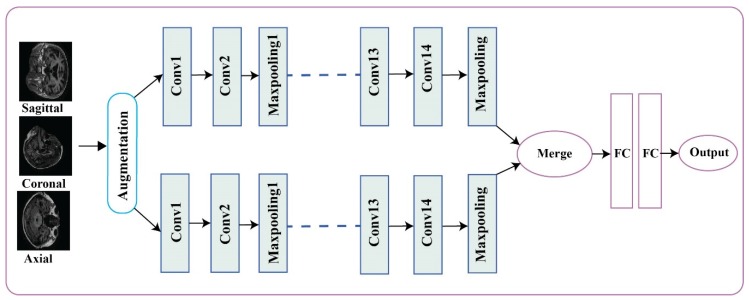
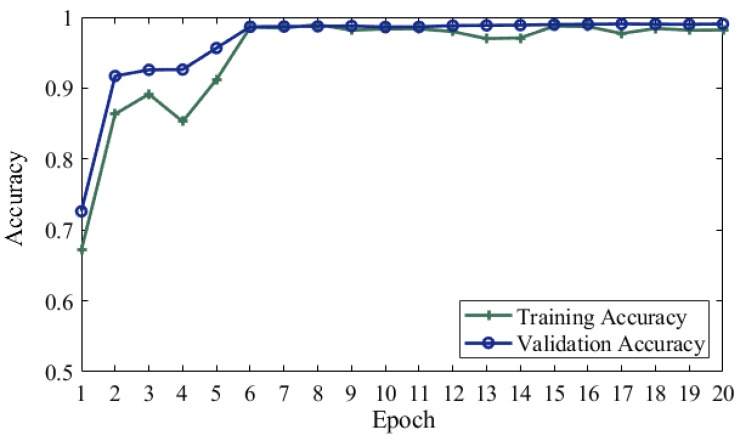
Alzheimer’s disease (AD) may cause damage to the memory cells permanently, which results in the form of dementia. The diagnosis of Alzheimer’s disease at an early stage is a problematic task for researchers. For this, machine learning and deep convolutional neural network (CNN) based approaches are readily available to solve various problems related to brain image data analysis. In clinical research, magnetic resonance imaging (MRI) is used to diagnose AD. For accurate classification of dementia stages, we need highly discriminative features obtained from MRI images. Recently advanced deep CNN-based models successfully proved their accuracy. However, due to a smaller number of image samples available in the datasets, there exist problems of over-fitting hindering the performance of deep learning approaches. In this research, we developed a Siamese convolutional neural network (SCNN) model inspired by VGG-16 (also called Oxford Net) to classify dementia stages. In our approach, we extend the insufficient and imbalanced data by using augmentation approaches. Experiments are performed on a publicly available dataset open access series of imaging studies (OASIS), by using the proposed approach, an excellent test accuracy of 99.05% is achieved for the classification of dementia stages. We compared our model with the state-of-the-art models and discovered that the proposed model outperformed the state-of-the-art models in terms of performance, efficiency, and accuracy.
Overview
The claims and statistics of this paper haven’t been checked yet.
Free: it reads the open-access text and checks the first 5 claims that cite a source we can check. Create a free account to check every claim.
Integrity signals
Registry
Cites
Statistics
Figures
Verification
Claims the paper makes
The claims and statistics of this paper haven’t been checked yet.
Free: it reads the open-access text and checks the first 5 claims that cite a source we can check. Create a free account to check every claim.
Claims other papers make about this one
Each is checked against this paper’s own text: does it say what the citing paper says it does?
The cited source says what the claim attributes to it.
In the citing paper
“They achieved state-of-the-art results by obtaining an accuracy of 99.05%.”
From Review of deep learning: concepts, CNN architectures, challenges, applications, future directions (2021) · cites this paper as [240]
Experimental — accuracy not yet measuredThe cited source says what the claim attributes to it.
In the citing paper
“In 2020, Mehmood et al. [240] trained a developed CNN-based network called “SCNN” with MRI images for the tasks of classification of Alzheimer’s disease.”
From Review of deep learning: concepts, CNN architectures, challenges, applications, future directions (2021) · cites this paper as [240]
The cited source says what the claim attributes to it.
In the citing paper
“Diagnosing normal versus Alzheimer’s disease patients has been achieved by several CNN models [239, 240].”
From Review of deep learning: concepts, CNN architectures, challenges, applications, future directions (2021) · cites this paper as [240]
Self-check
Percentages, sums and reported differences re-computed from the paper’s own numbers.
The self-check needs the paper’s full text.
Citations
Cites
Deep learning in neural networks: an overview
Schmidhuber, J. (2015) · Neural Networks · doi:10.1016/j.neunet.2014.09.003 · Cited by 18,570
A survey on deep learning in medical image analysis
Litjens, G., Kooi, T., Bejnordi, B. E., Setio, A. A. A., Ciompi, F., Ghafoorian, M., van der Laak, J. A. W. M., van Ginneken, B., & Sánchez, C. I. (2017) · Medical Image Analysis · doi:10.1016/j.media.2017.07.005 · Cited by 15,332 · cited 1×
“Recently, the researchers are developing deep learning models / techniques to extract the features directly from medical images [12].”
BackgroundBatch Normalization: Accelerating Deep Network Training by Reducing Internal Covariate Shift
Ioffe, S. (2024) · arXiv (Cornell University) · doi:10.57702/o9raffed · Cited by 14,214
Artificial intelligence in radiology
Hosny, A., Parmar, C., Quackenbush, J., Schwartz, L. H., & Aerts, H. J. W. L. (2018) · Nature Reviews Cancer · doi:10.1038/s41568-018-0016-5 · Cited by 3,803 · cited 1×
“Deep learning models have achieved major conquest in medical images such as CT, MRI, X-ray, microscopy, and mammography [13].”
BackgroundForecasting the global burden of Alzheimer's disease
Brookmeyer, R., Johnson, E., Ziegler‐Graham, K., & Arrighi, H. M. (2007) · Alzheimer's & Dementia · doi:10.1016/j.jalz.2007.04.381 · Cited by 3,370
The Effectiveness of Data Augmentation in Image Classification using Deep Learning
Perez, L., & Wang, J. (2017) · arXiv · doi:10.48550/arxiv.1712.04621 · Cited by 2,499 · cited 1×
“In medical research, due to privacy concerns, the access to large data is a big problem [47], especially, the classification of cancer and AD are problematic due to lack of availability of data.”
Background2019 Alzheimer’s disease facts and figures.
Alzheimer's Association (2019) · Alzheimer's & Dementia · doi:10.1016/j.jalz.2019.01.010 · Cited by 2,461
Automatic classification of MR scans in Alzheimer’s disease.
Kloppel, S., Stonnington, C. M., Chu, C., Draganski, B., Scahill, R. I., Rohrer, J. D., Fox, N. C., Jack, C. R., Ashburner, J., & Frackowiak, R. S. J. (2008) · Brain · doi:10.1093/brain/awm319 · Cited by 1,170 · cited 1×
“[21] developed a dimensional reduction model to detect AD patients by using a linear support vector machine on T1-weighted MRI images.”
MethodVery deep convolutional neural network based image classification using small training sample size
Liu, S., & Deng, W. (2015) · 2015 3rd IAPR Asian Conference on Pattern Recognition (ACPR) · doi:10.1109/acpr.2015.7486599 · Cited by 1,056 · cited 1×
“We modified the VGG16 and inserted one extra Conv layer in the model which was effective to grasp maximum features on a small dataset [43].”
Method2011 Alzheimer's disease facts and figures
Alzheimer's Association (2011) · Alzheimer's & Dementia · doi:10.1016/j.jalz.2011.02.004 · Cited by 908
Research works printed but not linked: 1
- Bjerrum E.J. SMILES enumeration as data augmentation for neural network modeling of molecules arXiv 2015 1703.07076
Cited by
Items 101–200 of 262
Zhang, Q., Long, Y., Cai, H., Yu, S., Shi, Y., & Tan, X. (2024) · BMC Medical Imaging · doi:10.1186/s12880-024-01429-8 · Cited by 9
“Drawing inspiration from VGG16, Mehmood et al. [24] developed a SCNN model for classifying dementia stages.”
MethodBansal, H. V., Gupta, P., & Juneja, V. (2025) · IEEE Access · doi:10.1109/access.2025.3621157 · Cited by 9
“Many of the unimodal approaches [16], [17], [18], [19], [20], [23], [29] used only either imaging or clinical data which have restricted capability to interpret the full spectrum of the disease.”
Topic Classification Using Regularized Variable-Size CNN and Dynamic BPSO in Online Social Network
Raul, S. K., Rout, R. R., & Somayajulu, D. V. L. N. (2023) · Arabian Journal for Science and Engineering · doi:10.1007/s13369-023-08021-2 · Cited by 9
Luna, A. D., & Marcia, R. F. (2021) · Annual International Conference of the IEEE Engineering in Medicine and Biology Society (EMBC) · doi:10.1109/embc46164.2021.9630598 · Cited by 12
“Furthermore, in [18], Mehmood et al. propose using a Siamese CNN for three-dimensional MRI multi-classification of Alzheimer’s disease.”
MethodPrediction of Alzheimer's Disease using Deep Learning Algorithms
Praveen, P., Srilatha, K., Sathvika, M., Nishitha, E., & Nikhil, M. (2023) · International Conference on Applied Artificial Intelligence and Computing (ICAAIC) · doi:10.1109/icaaic56838.2023.10140746 · Cited by 12
“Jyoti Islam et al. proposed a convolutional neural network that can identify Alzheimer's disease and categorize the present stage of the illness [13].”
BackgroundKamath, D., Fathima, M. F., P., M. K., & Kusuma, M. (2021) · International Journal of Artificial Intelligence · doi:10.36079/lamintang.ijai-0801.217 · Cited by 8
“[15] was data augmentation and preprocessing the second stage involved extraction of features from input images, and the third step was the division of dementia classes.”
Rajasekhar, B. (2023) · Wireless Personal Communications · doi:10.1007/s11277-023-10346-y · Cited by 8
“There are several models that make use of CNN for classification of AD scans [6].”
MethodShahraki, M. S., Sourani, Z., Behdarvand, F., Mousavi, M. M., & Shirian, S. (2022) · The Neuroscience Journal of Shefaye Khatam · doi:10.61186/shefa.10.2.91 · Cited by 8
Mine, P., Fernández-Quilez, Á., Aarsland, D., Ferreira, D., Westman, E., Lemstra, A. W., ten Kate, M., Padovani, A., Rektorova, I., Bonanni, L., et al. (2022) · SPIE Medical Imaging: Computer-Aided Diagnosis · doi:10.1117/12.2611339 · Cited by 8
Rider Cat Optimized Alzheimer’s Disease and MCI Prediction Using Deep Attention BiLSTM and CRDF
Nisha, A. V., Rajasekaran, M. P., Ramaraj, K., Vishnuvarthanan, G., Arunprasath, T., & Muneeswaran, V. (2025) · IETE Journal of Research · doi:10.1080/03772063.2025.2451721 · Cited by 8
“Clinical examinations and periodic medical reviews are the main processes involved in the diagnosis of AD [8].”
Sudheesh, K. V., Puttegowda, K., Naveenkumar, H. N., Chethan, K., & Mahadevaswamy (2025) · SN Computer Science · doi:10.1007/s42979-025-04128-5 · Cited by 10
“A Siamese CNN can also help to categorize the AD and studies reported 99.05% accuracy [17].”
InfluentialDetection of Alzheimer's Disease using Deep Learning: An Optimized Approach
Ahmed, G., Er, M. J., Zikria, S., & Fareed, M. S. (2023) · Annual Meeting of the IEEE Industry Applications Society · doi:10.1109/icoias61634.2023.00032 · Cited by 6
“It is estimated that providing permanent health care for dementia patients will cost close to $290 billion [7].”
BackgroundImbalanced EEG Analysis Using One-Shot Learning with Siamese Neural Network
Munia, M. S., Hosseini, S. M., Nourani, M., Harvey, J. H., & Dave, H. (2021) · IEEE International Conference on Healthcare Informatics (ICHI) · doi:10.1109/ichi52183.2021.00015 · Cited by 7
Precious, J. G., Kirubha, S. P. A., & Evangeline, I. K. (2022) · IETE Journal of Research · doi:10.1080/03772063.2022.2083027 · Cited by 9
“Convolution is a technique in which a small matrix of numbers – known as a kernel or filter – runs over the image [20–23].”
MethodComparative study of Deep Learning architectures for Early Alzheimer Detection
Haddada, K., Khedher, M. I., & Jemai, O. (2023) · International Conference on Cyberworlds (CW) · doi:10.1109/cw58918.2023.00035 · Cited by 7
“Regarding supervised models, one of the most popular models is the Convolutional Neural Network (CNN), which has been used for the diagnosis of AD from brain MRI images [7], [8], [9], [10], [11].”
MethodSurvey on DL - Driven Multi-Modal Data in Cardiovascular Disease Prediction
Gawande, N., Goyal, D., & Sankhla, K. (2025) · 2025 International Conference on Machine Learning and Autonomous Systems (ICMLAS) · doi:10.1109/icmlas64557.2025.10968461 · Cited by 6
“Finally, heart abnormality detection will be performed using the Proposed deep learning algorithm (Convolution Neural Network [16] with optimization method).”
Optimizing a 3D convolutional neural network to detect Alzheimer’s disease based on MRI
Alarjani, M., & Almuaibed, A. (2025) · PeerJ Computer Science · doi:10.7717/peerj-cs.3129 · Cited by 6
“Mehmood et al. (2020) developed a 2D Siamese convolutional neural network (CNN) based on the visual geometry group (VGG) structure.”
Wang, R., Gao, L., Zhang, X., & Han, J. (2023) · Heliyon · doi:10.1016/j.heliyon.2023.e23008 · Cited by 8
“Mehmood et al. [30] developed a deep siamese CNN for AD diagnosis.”
BackgroundMangold, K. E., Carter, R. E., Siontis, K. C., Noseworthy, P. A., López-Jiménez, F. A., Asirvatham, S. J., Friedman, P. A., & Attia, Z. I. (2024) · European Heart Journal - Digital Health · doi:10.1093/ehjdh/ztae024 · Cited by 7
“13,14 They also have been used in monitoring disease progression with various imaging modalities.”
MethodAlmatrafi, S., Abbas, Q., & Ibrahim, M. E. A. (2024) · Multimedia Tools and Applications · doi:10.1007/s11042-024-19104-z · Cited by 7
“While The authors of [72] introduced a Siamese convolutional neural network (SCNN) stimulate inspired by the VGG-16 model.”
Bazine, O., Rai, O., Aiadi, O., Hedjam, R., Khaldi, B., & Zhong, G. (2024) · Cognitive Computation · doi:10.1007/s12559-024-10390-1 · Cited by 8
Murugesan, G., Nagendran, P., & Natarajan, J. (2025) · Brain‐X · doi:10.1002/brx2.70028 · Cited by 8
Allada, A., Bhavani, R., Chaduvula, K., & Priya, R. (2023) · Concurrency and Computation Practice and Experience · doi:10.1002/cpe.7696 · Cited by 7
“34 The input and the weights are convolved to generate a feature map as cf = g(w ∗ S), (9)”
MethodAn ensemble of CNN architectures for early detection of alzheimer’s disease using brain MRI
Memon, Z., Turab, M., Narejo, S., & Korejo, M. T. (2023) · Mehran University Research Journal of Engineering and Technology · doi:10.22581/muet1982.2304.2767 · Cited by 6
Double-Enhanced Convolutional Neural Network for Multi-Stage Classification of Alzheimer’s Disease
Wong, P. C., Abdullah, S. S., & Shapiai, M. I. (2024) · Advances in Science Technology and Engineering Systems Journal · doi:10.25046/aj090202 · Cited by 8
Kim, D. Y., Kim, H. K., Lim, Y. J., & Sunwoo, M. H. (2024) · IEEE Access · doi:10.1109/access.2024.3396153 · Cited by 12
“Several studies have examined DL-based AD diagnosis using brain MR images [17], [18], [19], [20].”
BackgroundMethodInfluentialAtnafu, S. W., & Diciotti, S. (2023) · Green energy and technology · doi:10.1007/978-3-031-41173-1_2 · Cited by 6
Early detection of Multi-Class Alzheimer’s disease using Hybrid capsule auto encoder model
Narnaware, M. B., & Mulla, T. A. (2025) · Biomedical Signal Processing and Control · doi:10.1016/j.bspc.2025.108330 · Cited by 6
Arunnehru, J., Khan, S., Basha, H. A., Albarrak, A. M., & Ali, A. A. (2025) · Frontiers in Medicine · doi:10.3389/fmed.2025.1529761 · Cited by 6
“The realm of artificial intelligence (AI) research has been used frequently, especially the Machine learning (ML) and deep learning (DL) models because they are considered to be two of the essential components of AI (2–4).”
A Bio-Inspired-Based Salp Swarm Algorithm Enabled with Deep Learning for Alzheimer’s Classification
Awotunde, J. B., Ajagbe, S. A., & Flórez, H. (2023) · Communications in computer and information science · doi:10.1007/978-3-031-46813-1_11 · Cited by 5
A Study on Datasets, Risk Factors and Machine Learning Methods Associated with Alzheimer’s Disease
Gondalia, V., & Popat, K. A. (2024) · Communications in computer and information science · doi:10.1007/978-3-031-58604-0_31 · Cited by 5
Automatic Diagnosis of Parkinson’s Disease using Handwriting Patterns
Nagamani, T. (2024) · Journal of Electrical Systems · doi:10.52783/jes.3712 · Cited by 5
“The CNN architecture for the classification challenge was provided by Dr. Rachna Jain et al. [10].”
MethodSmart Health Care System for Early Detection of COVID-19 Using X-ray Scans
Mehmood, A., Abugabah, A., & Smadi, A. A. (2022) · International Conference on Electrical, Computer and Energy Technologies (ICECET) · doi:10.1109/icecet55527.2022.9872845 · Cited by 5
“When it comes to detecting diseases, pathogen testing in the lab is considered the most accurate method available [7].”
MethodSelf-citationRad, E. M., pazhoumand, H., & Bajestani, S. S. (2022) · The Neuroscience Journal of Shefaye Khatam · doi:10.52547/shefa.11.1.1 · Cited by 5
A Comparative Analysis of Algorithms for Effective Waste Classification
Kamboj, M. D., Singh, M., Usmani, M., Ahmad, S., & Gaur, M. A. (2023) · International Conference on Sustainable Communication Networks and Application (ICSCNA) · doi:10.1109/icscna58489.2023.10370654 · Cited by 5
Dementia diagnosis in young adults: a machine learning and optimization approach
Talaat, F. M., & Ibraheem, M. R. (2024) · Neural Computing and Applications · doi:10.1007/s00521-024-10317-9 · Cited by 5
“Diagnosing dementia might not necessitate utilizing every bit of data gathered, thus elongating data processing and training, computational procedures, and diminishing the efficacy of our classification model’s training [25].”
Özkan, D., KATAR, O., Ak, M., Al–antari, M. A., Ak, N. Y., Yıldırım, Ö., Mir, H., Tan, R., & Acharya, U. R. (2024) · IEEE Access · doi:10.1109/access.2024.3454709 · Cited by 9
mazrooei, E., Azarnoosh, M., Ghoshuni, M., & khalilzadeh, M. (2021) · The Neuroscience Journal of Shefaye Khatam · doi:10.52547/shefa.10.1.1 · Cited by 5
Abugabah, A., Mehmood, A., & Shahid, F. (2023) · International Symposium on Multidisciplinary Studies and Innovative Technologies (ISMSIT) · doi:10.1109/ismsit58785.2023.10304902 · Cited by 5
“This is because transfer learning enables us to express characteristics from a model that has already been learned [17].”
BackgroundSelf-citationAlzheimer's Disease Detection Using an Ensemble of Transfer Learning Models
Mahanty, C., Patro, S. G. K., & Dannana, P. (2024) · OITS International Conference on Information Technology (OCIT) · doi:10.1109/ocit65031.2024.00053 · Cited by 4
“Patients in the middle cognitive stage exhibit strong reactions, while those in the late stage experience heart failure and breakdown of the respiratory system [2].”
An Approach to Automatic Flight Deviation Detection
Pietracupa, M., Abdessalem, H. B., & Frasson, C. (2023) · Lecture notes in computer science · doi:10.1007/978-3-031-32883-1_47 · Cited by 4
A Deep Pair Siamese CNN for Multi-Class Classification of Alzheimer Disease.
Alaeddine, H., Blaiech, A. G., & Malek, J. (2023) · International Conference on Cyberworlds (CW) · doi:10.1109/cw58918.2023.00061 · Cited by 4
“In [36], researchers obtained an accuracy of 98.01% using the stochastic optimizers based on the Sobolev gradient in 3D-CNN. when we compare our proposed model to the models cited in the table, it can be noticed that our model obtains interesting peak results.”
MethodInfluentialSingh, R. K., & Choubey, D. K. (2024) · International Conference on Cloud Computing, Data Science & Engineering (Confluence) · doi:10.1109/confluence60223.2024.10463269 · Cited by 4
Use of Deep Learning Techniques in Alzheimer's Disease Diagnosis
Shuja, M., Sidiq, S., Dutt, K., Kaur, D., Kumar, M., & Bajaj, K. (2023) · International Conference on Artificial Intelligence for Innovations in Healthcare Industries (ICAIIHI) · doi:10.1109/icaiihi57871.2023.10489461 · Cited by 5
“The turn of events and the use of further developed neuroimaging strategies, like positron discharge tomography (PET) and attractive reverberation imaging (X-ray), have made it conceivable to find underlying and sub-atomic biomarkers associated with Alzheimer's disease [3].”
BackgroundViT-ALZ: Vision Transformer with Deep Neural Network for Alzheimer’s Disease Detection
Kumar, H., & Agarwal, R. (2024) · Lecture notes in networks and systems · doi:10.1007/978-981-97-2089-7_16 · Cited by 4
Saim, M., & Feroui, A. (2024) · Multimedia Tools and Applications · doi:10.1007/s11042-024-20140-y · Cited by 6
Acetylcholine and Depression: Scrutinizing Future Therapeutic Targets for Novel Drug Development
Pannu, A. S., & Goyal, R. K. (2024) · Current Clinical Pharmacology · doi:10.2174/0127724328311930240907133618 · Cited by 7
Shirian, S., Tahmasebian, N., Moghadam, B. B., Kiani, F. Z., & Amini, M. R. (2024) · The Neuroscience Journal of Shefaye Khatam · doi:10.61186/shefa.12.3.103 · Cited by 4
Optimized VGG features with SpikeGoogle-Deep CNN for Alzheimer’s disease detection
Abhaya, S. L., & Rajkumar, T. D. (2025) · The European Physical Journal Plus · doi:10.1140/epjp/s13360-025-06359-0 · Cited by 5
“[11] developed a SCNN approach enthused by VGG-16 (named Oxford Net) for classifying dementia phases.”
Spark-based Alzheimer’s disease classification using hybrid spike Google-deep CNN-SEViT model
Abhaya, S. L., & Rajkumar, T. D. (2025) · The European Physical Journal Plus · doi:10.1140/epjp/s13360-025-06673-7 · Cited by 4
BrainSort: a Machine Learning Toolkit for Brain Connectome Data Analysis and Visualization
Liu, M., Liu, T., Wang, Y., Feng, Y., Xie, Y., Yan, T., & Wu, J. (2020) · Journal of Signal Processing Systems · doi:10.1007/s11265-020-01583-6 · Cited by 5
“They have applications in image and video recognition, recommender systems and natural language processing [39, 40].”
BackgroundNovel semi-supervised learning approach for descriptor generation using artificial neural networks
Alwindawi, A. F., Osman Nuri, U. C. A. N., İbrahim, A. A., & Yusuf, A. (2022) · Soft Computing · doi:10.1007/s00500-022-06742-4 · Cited by 4
“Using the OASIS dataset and the structure of the neural network defined in Mehmood et al. (2020), the proposed method could further improve the performance of the neural network.”
MethodDetection of Early Stage Alzheimer's Disease in Gradient-Based MR Images Using Deep Learning Methods
Sertkaya, M. E., Durmuş, M., & Ergen, B. (2024) · Ömer Halisdemir Üniversitesi Mühendislik Bilimleri Dergisi · doi:10.28948/ngumuh.1390830 · Cited by 4
Alzheimer’s disease diagnosis method based on convolutional neural network using key slices voting
Hu, Z., Wu, Q., Chen, C., Xiao, L., & Jin, S. (2021) · International Conference on Information Science and Technology · doi:10.1109/icist52614.2021.9440595 · Cited by 5
Dementia Identification Using Machine Learning Algorithms: Comparative Analysis
Aggarwal, S., & Sharma, V. (2023) · International Conference on Intelligent Engineering and Management (ICIEM) · doi:10.1109/iciem59379.2023.10165739 · Cited by 4
“Without being specifically designed to do so, machines can learn and optimize their efficiency on specific tasks through the use of machine learning [6].”
BackgroundWITHDRAWN: Semi-Supervised Learning with Ensemble Deep Learning Networks for Descriptor Generation
Alwindawi, A. F., Uçan, O. N., İbrahim, A. A., & Abbas, S. A. A. (2022) · Optik · doi:10.1016/j.ijleo.2022.170450 · Cited by 4
RetractedAdvanced Implementation of Convolutional Neural Networks for Alzheimer's Diseases Diagnosis
Gondalia, V., & Popat, K. A. (2025) · SN Computer Science · doi:10.1007/s42979-025-03851-3 · Cited by 3
“One of these is the cost incurred in treating Alzheimer's, as it requires long-term care, drugs, and hospital stays, which places a significant financial burden on healthcare systems [6].”
A Study on Traditional and Deep Learning Approaches for Automatic Alzheimer's Disease Diagnosis
Jayakumari, D. S., Sulochana, C. H., & Valarmathi, I. R. (2025) · International Conference on Pervasive Computing and Social Networking (ICPCSN) · doi:10.1109/icpcsn65854.2025.11034833 · Cited by 3
Advancing Alzheimer's Disease Diagnosis Using VGG19 and XGBoost: A Neuroimaging-Based Method
Boudi, A., He, J., Kader, I. A. E., Liu, X., & Mouhafid, M. (2025) · Current Alzheimer Research · doi:10.2174/0115672050393604250904081342 · Cited by 3
Sharma, R., & Acharya, V. (2025) · Scientific Reports · doi:10.1038/s41598-025-28243-8 · Cited by 4
Enhancing Multi-Stage Classification of Alzheimer's Disease with Attention Mechanism
Ching, W. P., Abdullah, S. S., & Shapiai, M. I. (2023) · IEEE International Conference on Artificial Intelligence in Engineering and Technology (IICAIET) · doi:10.1109/iicaiet59451.2023.10291792 · Cited by 4
Transfer Learning for Plants’ Disease Classification with Siamese Networks in low data regime
Raouhi, E. M., Lachgar, M., Hrimech, H., & Kartit, A. (2021) · International Journal of Computer Engineering and Data Science · Cited by 8
Early Detection of Alzheimer’s Disease using Convolutional Neural Network Architecture
Kamath, D., Fathima, M. F., Kp, M., & Mohanchandra, K. (2021) · International Journal of Artificial Intelligence · doi:10.36079/lamintang.ijai-0802.232 · Cited by 3
“But it has been observed that they perform significantly well on sequential inputs as well [12] [13].”
BackgroundMarin, I., Marasović, T., & Gotovac, S. (2022) · International Conference on Software, Telecommunications and Computer Networks (SoftCOM) · doi:10.23919/softcom55329.2022.9911487 · Cited by 4
“Siamese network architecture’s with VGG-16 inspired back-bone was utilized in [19] to classify dementia stages on the OASIS dataset.”
MethodDeep Learning Enabled Classification of Cognitive Impairment Stages Using MRI Images
Jismi, K., Ananda Resmi, S., & Ramanujan, A. (2023) · International Conference on Computational Intelligence and Sustainable Engineering Solutions (CISES) · doi:10.1109/cises58720.2023.10183447 · Cited by 3
“The architecture in [10] [5] incorporates the lmageNet data set to train the first seven layers of ResNet ANN to extract features and the output gets concatenated with the patient's age and sex and then classified using an SVM classifier.”
BackgroundMethodSVM-Based Classifier For Early Detection Of Alzheimer's Disease
Kumar, P. N. (2024) · doi:10.53555/kuey.v30i5.3022 · Cited by 4
Wang, B., & Initiative, A. D. N. (2024) · Cerebral Cortex · doi:10.1093/cercor/bhae195 · Cited by 3
Felix.V, J., & Sharmila, K. K. (2025) · International Conference on Inventive Computation Technologies (ICICT) · doi:10.1109/icict64420.2025.11004890 · Cited by 4
“The domains have also helped in rendering efficient monitoring, recommended medical care estimates and calculated correlated genetic analysis inorder to ensure that the health gremlin is controlled with better accuracy over the time period from its initiation to progression [13].”
A Review On Alzheimer Disease Prediction Methodology
Soni, D., & Vahora, S. (2022) · International Conference on Artificial Intelligence and Smart Energy (ICAIS) · doi:10.1109/icais53314.2022.9743137 · Cited by 3
Alzheimer’s And Parkinson’s Disease Classification Using Deep Learning Based On MRI: A Review
Suganya, A., & Aarthy, S. L. (2023) · International Journal of Communication Networks and Information Security (IJCNIS) · doi:10.17762/ijcnis.v14i1s.5588 · Cited by 4
[Research on the application of convolution neural network in the diagnosis of Alzheimer's disease].
Xu, B., Ding, C., & Xu, G. (2021) · PubMed Central · doi:10.7507/1001-5515.202007019 · Cited by 7
Review on Automatic Detection of Alzheimer Disease
Sindhu, T. S., Kumaratharan, N., & Anandan, P. (2022) · International Conference on Computer Communication and Informatics (ICCCI) · doi:10.1109/iccci54379.2022.9741023 · Cited by 3
MRI Images Analysis Method for Early Stage Alzheimer's Disease DetectionPreprint
Miled, A. B., Yeferny, T., & Rabeh, A. B. (2020) · arXiv (Cornell University) · doi:10.48550/arxiv.2012.00830 · Cited by 5
“Jain et al, proposed a deep transfer learning method-based Alzheimer's disease diagnosis system [29].”
MethodA 3D decoupling Alzheimer’s disease prediction network based on structural MRI
Wei, S., Yang, W., Wang, E., Wang, S., & Li, Y. (2025) · Health Information Science and Systems · doi:10.1007/s13755-024-00333-3 · Cited by 4
“Several methods [17, 47, 48] were designed to process 2D image data, where feature information was extracted from various slices by the CNN, and achieved a classification accuracy exceeding 80%.”
Alzheimer’s Disease Diagnosis Using CNN Based Pre-trained Models
Davuluri, R., Mallapragada, V., Mamillapalli, U. M. R., Manikanta, M. S., & Peeka, S. (2023) · International Journal on Recent and Innovation Trends in Computing and Communication · doi:10.17762/ijritcc.v11i4.6456 · Cited by 3
Ganesh, A., & Vanamu, G. (2022) · Journal of Emerging Investigators · doi:10.59720/21-053 · Cited by 2
A Robust Deep Neural Network Framework for the Detection of Dementia
Sweety, K., & Nagalakshmi, M. S. M. (2023) · International Conference on Pervasive Computing and Social Networking (ICPCSN) · doi:10.1109/icpcsn58827.2023.00119 · Cited by 2
An Adaptive Feature Fusion Network for Alzheimer’s Disease Prediction
Wei, S., Li, Y., & Yang, W. (2023) · Lecture notes in computer science · doi:10.1007/978-981-99-7108-4_23 · Cited by 2
Zhang, X., Hu, Z., Xiao, L., & Huang, H. (2024) · Computers, materials & continua/Computers, materials & continua (Print) · doi:10.32604/cmc.2024.048725 · Cited by 3
Enhancing Mild Cognitive Impairment Detection through Efficient Magnetic Resonance Image Analysis
Mehmood, A., Zheng, Z., Khan, R., Smadi, A. A., Shahid, F., Iqbal, S., Alsmadi, M. K., Ghadi, Y. Y., Shah, S. A., & Ibrahim, M. M. (2024) · Computers, materials & continua/Computers, materials & continua (Print) · doi:10.32604/cmc.2024.046869 · Cited by 2
Self-citationTogo, M. V., Mastrolorito, F., Gambacorta, N., Trisciuzzi, D., Tondo, A. R., Cutropia, F., Belgiovine, V., Altomare, C., Amoroso, N., Nicolotti, O., et al. (2024) · Methods in molecular biology · doi:10.1007/978-1-0716-4003-6_18 · Cited by 2
Pandey, P. K., Pruthi, J., Bhatia, S., Alkhaldi, N. A., & Saraee, D. (2024) · Recent Patents on Engineering · doi:10.2174/0118722121312906240913012729 · Cited by 2
Historical Arabic Images Classification and Retrieval Using Siamese Deep Learning Model
Khayyat, M. M., Elrefaei, L. A., & Khayyat, M. M. (2022) · Computers, materials & continua/Computers, materials & continua (Print) · doi:10.32604/cmc.2022.024975 · Cited by 2
Pallikonda, A. K., Varma, P. S., & Vivekanandam, B. (2023) · International Journal of Image Graphics and Signal Processing · doi:10.5815/ijigsp.2023.06.05 · Cited by 1
Alzheimer disease (AD) medical image analysis with convolutional neural networks
Sohail, A., Fiaz, M., Nutini, A., & Iqbal, M. S. (2024) · Elsevier eBooks · doi:10.1016/b978-0-44-318468-0.00017-9 · Cited by 2
From Pixels to Progression-A Deep Dive into Alzheimer's Staging with MRI and CNN
Abhaya, S. L., & Sampradeepraj, T. (2024) · International Conference on Trends in Engineering Systems and Technologies (ICTEST) · doi:10.1109/ictest60614.2024.10576099 · Cited by 2
“The study utilizes the OASIS Alzheimer's Detection dataset from Kaggle, a crucial resource comprising 80,000 brain MRI images [14].”
MethodMultimodal diagnosis of Alzheimer’s disease based on volumetric and cognitive assessments
Kumari, R., Das, S., Nigam, A., & Singh, R. K. (2024) · Multimedia Tools and Applications · doi:10.1007/s11042-024-19794-5 · Cited by 1
Lang, W. (2024) · International Conference on Inventive Computing and Informatics (ICICI) · doi:10.1109/icici62254.2024.00108 · Cited by 1
“In traditional multi-class convolutional neural networks [20]-[21], Softmax activation function is often used to output class probability distributions, while the cross-entropy loss function is usually used to measure the difference between the actual output and the label.”
BackgroundCLASH: A Contrastive Learning Approach for Few-Shot Classification of Histopathological Images
Rather, I. H., & Kumar, S. (2024) · Lecture notes in networks and systems · doi:10.1007/978-981-97-6726-7_21 · Cited by 1
Silva, M. P., Silva, A. C., & de Paiva, A. C. (2025) · Lecture notes in computer science · doi:10.1007/978-3-031-79029-4_18 · Cited by 1
Zhang, Z., Wang, M., Lü, T., Shi, Y., Xie, C., Ren, Q., & Wang, Z. (2024) · Brain Communications · doi:10.1093/braincomms/fcaf033 · Cited by 1
Multi-filter stacking in inception V3 for enhanced Alzheimer’s severity classification
Iqbal, A., Iqbal, K., Shah, Y. A., Ullah, F., Khan, J., & Yaqoob, S. (2025) · Neuroscience · doi:10.1016/j.neuroscience.2025.08.049 · Cited by 2
Rao, D. M., Biswas, S. K., & Bordoloi, M. (2025) · Archives of Computational Methods in Engineering · doi:10.1007/s11831-025-10440-3 · Cited by 2
Bollikonda, V. B., & Kiran, K. V. D. (2026) · International Journal of Systems Assurance Engineering and Management · doi:10.1007/s13198-026-03158-3 · Cited by 1
“The merging of SCNN [21, 22] and SCResNeXt [23] creates the SCResnEXT.”
AD diagnosis model based on fusion of heterogeneous brain imaging and genomic data
Zhang, Z., Zhang, R. P., Yang, W., lv, K., Wu, M., & Xu, L. (2026) · Frontiers in Neuroscience · doi:10.3389/fnins.2026.1719390 · Cited by 1
“Typical CNN architectures such as LeNet (Sarraf and Tofighi, 2016), AlexNet (Lee et al., 2019; Kazemi and Houghten, 2018), GoogleNet (Ding et al., 2019), VGGNet (Mehmood et al., 2020), ResNet (Yee et al., 2019), and DenseNet (Wang et al., 2019) have been widely used in early AD diagnosis.”
Advances in AI-based diagnosis of Alzheimer’s disease using MRI: a comprehensive survey
Raheem, H. I., López-Guede, J. M., Dara, O. A., Ramos-Hernanz, J. A., Aramendía, Í., & Teso-Fz-Betoño, D. (2026) · Frontiers in Medicine · doi:10.3389/fmed.2026.1767090 · Cited by 3
“Based on the findings of their study, the proposed approach can accurately forecast the progression of AD in individuals (153) Using deep canonical neural networks to classify AD patients into multiple classes was the primary recommendation (154).”
Waqar, M., Khan, Z. A., Baig, M. H. A., Hsu, C.-C., Haq, I. U., Khan, S., Chang, C.-Y., Chaudhary, N. I., & Raja, M. A. Z. (2026) · PeerJ Computer Science · doi:10.7717/peerj-cs.3974 · Cited by 4
A Brief Survey on Brain Tumor Identification Models Using Deep Neural Networks
Revathi, V., & Muddana, A. L. (2021) · International Conference on Smart Electronics and Communication (ICOSEC) · doi:10.1109/icosec51865.2021.9591832 · Cited by 1
“In the field of medical image analysis, particularly with regard to disease diagnosis, artificial intelligence and deep learning-based new technologies have made a big impact [15].”
BackgroundRumao, P., & Padole, M. (2021) · International Conference on Data Science, Machine Learning and Artificial Intelligence (DSMLAI) · doi:10.1145/3484824.3484886 · Cited by 1
“05% of accuracy [34] that to categorize the AD, Siamese CNN could be helpful.”
Unsupervised Cyclic Siamese Networks Automating Cell Imagery Analysis
Stallmann, D., & Hammer, B. (2023) · Algorithms · doi:10.3390/a16040205 · Cited by 1
Metadata
- Authors
- Mehmood, A., Maqsood, M., Bashir, M., & Shuyuan, Y.
- Affiliations
- Xidian University (CN)
- COMSATS University Islamabad (PK)
- University of the Punjab (PK)
- Corresponding author
- Shuyuan, Yang
- Venue
- Brain Sciences
- Publisher
- MDPI AG
- Published
- 2020-02-05
- Volume
- 10
- Issue
- 2
- Pages
- 84
- ISSN
- 2076-3425 (ISSN-L)
- PMC
- PMC7071616
- OpenAlex
- W3005273529
- Cited by
- 264
- References
- 56
- Citations by year
- 2026: 11 · 2025: 43 · 2024: 60 · 2023: 65 · 2022: 45 · 2021: 31 · 2020: 9
- FWCI
- 27.36
- Type
- journal article
- Language
- en
- Open access
- gold
- dx.doi.org
- Licence
- Locations
- Brain Sciences (publishedVersion, cc-by)
- PubMed Central (publishedVersion, cc-by)
- PubMed (publishedVersion)
- DOAJ (DOAJ: Directory of Open Access Journals) (submittedVersion, cc-by-sa)
- Funders
- National Natural Science Foundation of China (*Nos.61771380, 61906145, U1730109, 91438103, 61771376, 61703328, 91438201, U1701267, 61703328),)
- The Science Basis Research Program in Shaanxi Province of China (Nos.16JK1823, 2017JM6086, 2019JQ-663)
- Topics
- Health Sciences › Medicine › Psychiatry and Mental health › Dementia and Cognitive Impairment Research
- Physical Sciences › Computer Science › Computer Vision and Pattern Recognition › Advanced Neural Network Applications
- Health Sciences › Medicine › Radiology, Nuclear Medicine and Imaging › Retinal Imaging and Analysis
- Keywords
- Alzheimer's disease, Siamese convolutional neural network, VGG16, magnetic resonance imaging, brain image analysis, data augmentation, class imbalance, overfitting, OASIS dataset, multi-class classification
About these checks
Registry, retraction, Cites and statistics results are computed, not judged, with one exception: a printed reference that no index lists is read once by a model before it counts as a citation error. Claims are extracted by a model and kept only when their quote appears verbatim in the text; each cited source is then checked, with a model’s help, for whether it says what the claim relies on. Those verdicts can be wrong — read the claim’s quote and the cited source before relying on one.
Statistics and arithmetic are recomputed, not judged.
Confidence bands are shown only for fields calibrated on our annotated test set. None is calibrated yet, so no band is shown.
What counts as a claim ›How we measure confidence ›How we check this ›
Are you an author, or do you see a problem with this page? Request a review
Data sources
Bibliographic data: Semantic Scholar, OpenAlex, Crossref.
Contains information from the Semantic Scholar Academic Graph Datasets, made available under the ODC Attribution License (ODC-BY 1.0).
Semantic Scholar’s data is described in: Kinney, R., et al. (2023). The Semantic Scholar Open Data Platform. arXiv:2301.10140.
