

Probiotics Alleviate the Progressive Deterioration of Motor Functions in a Mouse Model of Parkinson’s Disease
Open accessThe DOI matches its Crossref record; 73 of the 73 references it cites were found in a registry or an index.
Abstract
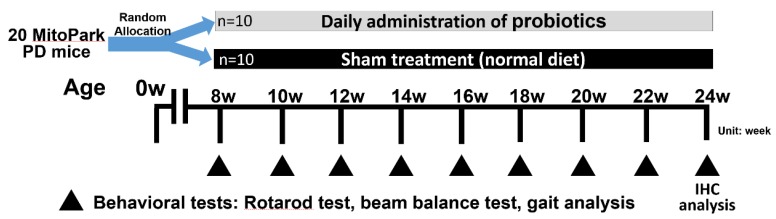
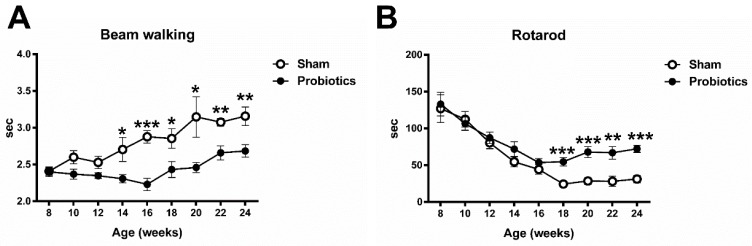
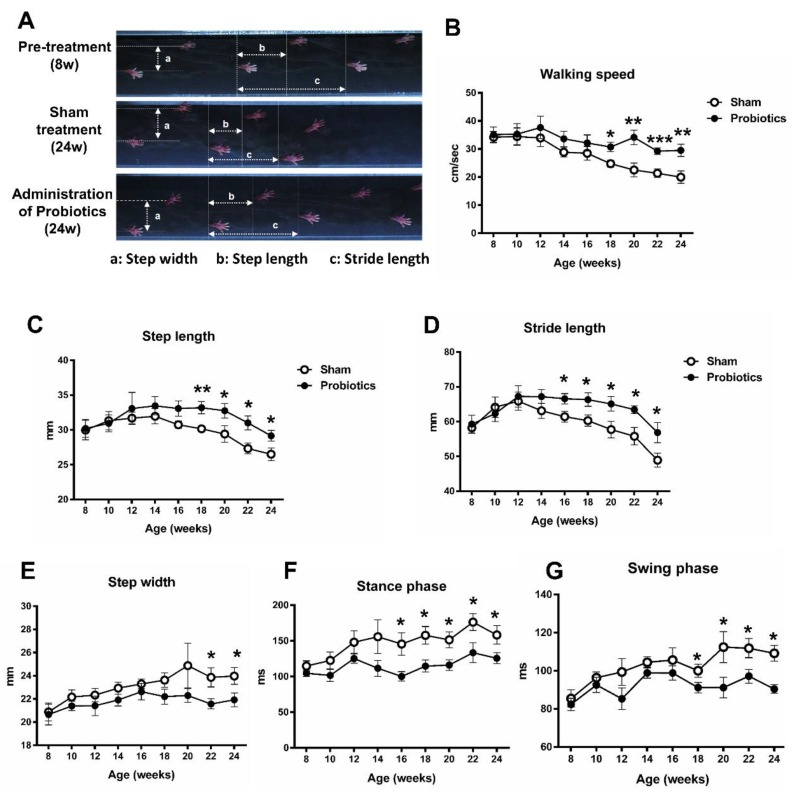
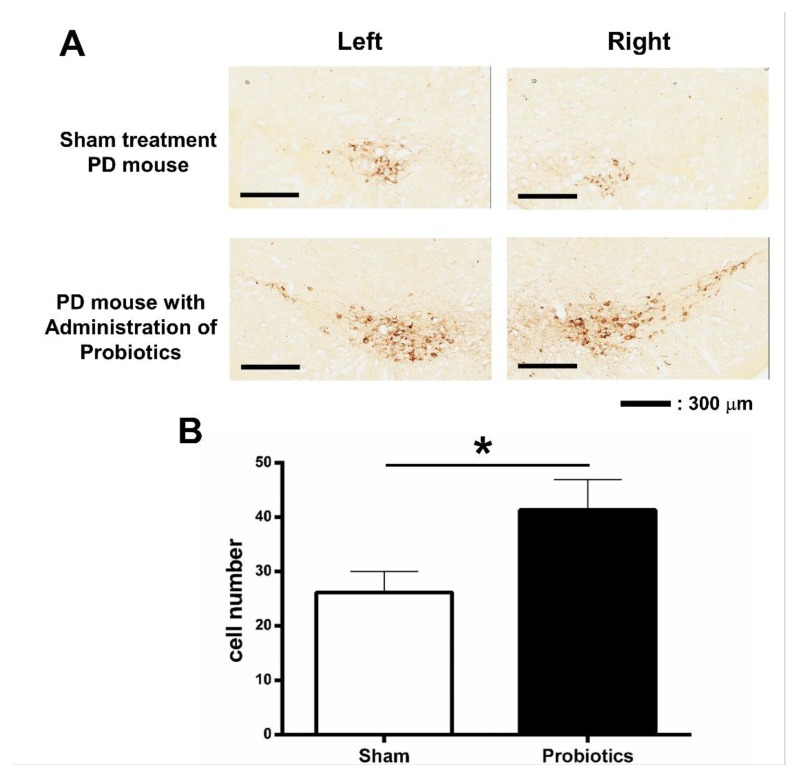
Parkinson's disease (PD) is one of the common long-term degenerative disorders that primarily affect motor systems. Gastrointestinal (GI) symptoms are common in individuals with PD and often present before motor symptoms. It has been found that gut dysbiosis to PD pathology is related to the severity of motor and non-motor symptoms in PD. Probiotics have been reported to have the ability to improve the symptoms related to constipation in PD patients. However, the evidence from preclinical or clinical research to verify the beneficial effects of probiotics for the motor functions in PD is still limited. An experimental PD animal model could be helpful in exploring the potential therapeutic strategy using probiotics. In the current study, we examined whether daily and long-term administration of probiotics has neuroprotective effects on nigrostriatal dopamine neurons and whether it can further alleviate the motor dysfunctions in PD mice. Transgenic MitoPark PD mice were chosen for this study and the effects of daily probiotic treatment on gait, beam balance, motor coordination, and the degeneration levels of dopaminergic neurons were identified. From the results, compared with the sham treatment group, we found that the daily administration of probiotics significantly reduced the motor impairments in gait pattern, balance function, and motor coordination. Immunohistochemically, a tyrosine hydroxylase (TH)-positive cell in the substantia nigra was significantly preserved in the probiotic-treated PD mice. These results showed that long-term administration of probiotics has neuroprotective effects on dopamine neurons and further attenuates the deterioration of motor dysfunctions in MitoPark PD mice. Our data further highlighted the promising possibility of the potential use of probiotics, which could be the relevant approach for further application on human PD subjects.
Overview
The claims and statistics of this paper haven’t been checked yet.
Free: it reads the open-access text and checks the first 5 claims that cite a source we can check. Create a free account to check every claim.
Integrity signals
Registry
Cites
Statistics
Figures
Verification
Claims the paper makes
The claims and statistics of this paper haven’t been checked yet.
Free: it reads the open-access text and checks the first 5 claims that cite a source we can check. Create a free account to check every claim.
Claims other papers make about this one
Each is checked against this paper’s own text: does it say what the citing paper says it does?
In the citing paper
“Similarly, positive effects of probiotic strains in in vitro and in vivo models of Parkinson's disease were reported by Castelli et al. [441] and Hsieh et al. [442].”
From The Role of Microbiota-Gut-Brain Axis in Neuropsychiatric and Neurological Disorders (2021) · cites this paper as [442]
Self-check
Percentages, sums and reported differences re-computed from the paper’s own numbers.
The self-check needs the paper’s full text.
Citations
Cites
2 retracted
Tamtaji, O. R., Taghizadeh, M., Daneshvar Kakhaki, R., Kouchaki, E., Bahmani, F., Borzabadi, S., Oryan, S., Mafi, A., & Asemi, Z. (2019) · Clinical Nutrition · doi:10.1016/j.clnu.2018.05.018 · Cited by 398 · cited 3×
“Probiotics have been demonstrated as having potential for PD, including the improvement of stool consistency and bowel habits and the reduction of scores from the Movement Disorders Society-Unified Parkinson’s Disease Rating Scale (MDS-UPDRS) [28,29].”
MethodResultRetractedGastrointestinal dysfunction in idiopathic Parkinsonism: A narrative review
Salari, M., Fayyazi, E., & Mirmosayyeb, O. (2016) · Journal of Research in Medical Sciences · doi:10.4103/1735-1995.196608 · Cited by 4
RetractedRole of the microbiota in immunity and inflammation.
Belkaid, Y., & Hand, T. W. (2014) · Cell · doi:10.1016/j.cell.2014.03.011 · Cited by 5,385 · cited 1×
“In addition to the use of peptides for the improvement of gastrointestinal or digestive dysfunctions [13,20–22], and in order to improve GI function and the balance of microbiota, probiotics could be one of the powerful tools to be used for altering the PD-associated microbiota composition and mitigating the related i…”
BackgroundGut microbiota are related to Parkinson's disease and clinical phenotype
Scheperjans, F., Aho, V., Pereira, P. A. B., Koskinen, K., Paulin, L., Pekkonen, E., Haapaniemi, E., Kaakkola, S., Eerola‐Rautio, J., Pohja, M., et al. (2015) · Movement Disorders · doi:10.1002/mds.26069 · Cited by 1,968 · cited 1×
“The lower levels of Lachnospiraceae and higher levels of Enterobacteriaceae families have been correlated with the severity of the disease, postural instability, gait difficulty, and motor impairment (assessed by MDS-UPDRS III and Hoehn and Yahr stage) [51,53].”
MethodNeurotransmitter modulation by the gut microbiota
Strandwitz, P. (2018) · Brain Research · doi:10.1016/j.brainres.2018.03.015 · Cited by 1,527 · cited 1×
“Animal studies show that microbiota-based interventions can influence host physiology by modulating the function of mammalian neurotransmitters, such as dopamine, norepinephrine, and serotonin [60].”
BackgroundMicrobiota and neurodevelopmental windows: implications for brain disorders
Borre, Y. E., O’Keeffe, G. W., Clarke, G., Stanton, C., Dinan, T. G., & Cryan, J. F. (2014) · Trends in Molecular Medicine · doi:10.1016/j.molmed.2014.05.002 · Cited by 1,089
Forsyth, C. B., Shannon, K. M., Kordower, J. H., Voigt, R. M., Shaikh, M., Jaglin, J. A., Estes, J. D., Dodiya, H. B., & Keshavarzian, A. (2011) · PLoS ONE · doi:10.1371/journal.pone.0028032 · Cited by 974
Hill‐Burns, E. M., Debelius, J. W., Morton, J. T., Wissemann, W. T., Lewis, M. R., Wallen, Z. D., Peddada, S. D., Factor, S. A., Molho, E., Zabetian, C. P., et al. (2017) · Movement Disorders · doi:10.1002/mds.26942 · Cited by 874
Sun, M.-F., Zhu, Y.-L., Zhou, Z.-L., Jia, X.-B., Xu, Y.-D., Yang, Q., Cui, C., & Shen, Y.-Q. (2018) · Brain, Behavior, and Immunity · doi:10.1016/j.bbi.2018.02.005 · Cited by 736 · cited 3×
“Earlier studies have reported that the administration of probiotics increased the levels of BDNF and GDNF, which are required for the survival of dopaminergic neurons in vivo [67,69].”
BackgroundTime-course gait analysis of hemiparkinsonian rats following 6-hydroxydopamine lesion
Hsieh, T.-H., Chen, J.-J. J., Chen, L.-H., Chiang, P.-T., & Lee, H.-Y. (2011) · Behavioural Brain Research · doi:10.1016/j.bbr.2011.03.031 · Cited by 684
Cited by
Items 101–174 of 174
Impact of Nutrition on the Gut Microbiota: Implications for Parkinson’s Disease
Sobral, J., Empadinhas, N., Esteves, A. R., & Cardoso, S. M. (2025) · Nutrition Reviews · doi:10.1093/nutrit/nuae208 · Cited by 13
Nohesara, S., Abdolmaleky, H. M., Thiagalingam, S., & Zhou, J. (2023) · Epigenomics · doi:10.2217/epi-2023-0342 · Cited by 22
Prebiotics and probiotics and Parkinson's disease
Amani, R., & Mehrabani, S. (2023) · Elsevier eBooks · doi:10.1016/b978-0-323-90052-2.00034-2 · Cited by 9
Advice to People with Parkinson’s in My Clinic: Probiotics and Prebiotics
Hor, J. W., Toh, T. S., Lim, S., & Tan, A. H. (2024) · Journal of Parkinson s Disease · doi:10.3233/jpd-240172 · Cited by 10
Tiwari, S., & Paramanik, V. (2025) · Molecular Neurobiology · doi:10.1007/s12035-025-04738-3 · Cited by 13
“Embodiment has been extremely relevant for comprehending cognitive and emotional processes in MDD [66, 68–70].”
Bhadoriya, P., Jatley, A., Singh, A., Mehrotra, R., Jain, M., Mohammed, A., Hamzah, Z., & Bukke, S. P. N. (2025) · Discover Immunity. · doi:10.1007/s44368-025-00010-x · Cited by 11
Yadav, A., Tadas, M., Kale, M. B., Wankhede, N. L., Umekar, M. J., Kotagale, N. R., & Taksande, B. G. (2025) · Physiology & Behavior · doi:10.1016/j.physbeh.2025.114989 · Cited by 13
Disease mechanisms as subtypes: Microbiome
Bonvegna, S., & Cilia, R. (2023) · Handbook of clinical neurology · doi:10.1016/b978-0-323-85555-6.00006-0 · Cited by 8
Oh my gut! Is the microbial origin of neurodegenerative diseases real?
Walker, A. C., & Czyż, D. M. (2023) · Infection and Immunity · doi:10.1128/iai.00437-22 · Cited by 12
“Other beneficial bacteria come from the Lactobacillus genus and are associated with positive outcomes in a PD mouse model (78), AD fly models (166, 167), and an AD rat model (79).”
Research progress of cell treatment strategy in Parkinson's disease
Peng, Y., Chen, J., Hu, H., Liu, W., Liang, W., & Wang, J. (2024) · Neuroscience Applied · doi:10.1016/j.nsa.2024.104061 · Cited by 12
“Hsieh et al. shown that probiotics provide protection to dopaminergic neurons and enhance motor performance in mice with Parkinson ’ s disease (Hsieh et al., 2020).”
Gao, W., Wu, X., Wang, Y., Lu, F., & Liu, F. (2024) · ACS Chemical Neuroscience · doi:10.1021/acschemneuro.4c00679 · Cited by 10
Zeng, T., Lin, C., Deng, Y., & Zhu, W. (2024) · Frontiers in Neurology · doi:10.3389/fneur.2024.1371791 · Cited by 10
“Transplantation of feces from patients with PD into PD mice model aggravates motor deficits (3), and supplementation with mixed probiotics (4) slightly improves the movement dysfunction of PD mice model.”
BackgroundTian, C., Yang, M., Chen, K., Luo, D., Yue, N.-N., Zhao, H., Zhang, Y., Lu, J., Liang, Y.-J., Song, Y., et al. (2025) · Journal of Inflammation Research · doi:10.2147/jir.s514838 · Cited by 9
Probiotic and Dietary Supplements Intervention in Age-Related Neurodegenerative Disorders
Salles, C. B. D. D., Prajapati, S. K., Yadav, D., Rennar, J., Marcano-Rodriguez, A., Yadav, H., & Jain, S. (2026) · Microorganisms · doi:10.3390/microorganisms14020290 · Cited by 9
“Moreover, Hsieh et al. showed that long-term administration of probiotics protects dopamine neurons and mitigates the deterioration of motor dysfunctions in MitoPark PD mice [86].”
Zhang, W., Jiao, Y., Wen, H., Bin, X., Xuefei, W., Lan, J., & Liuyin, Z. (2024) · Frontiers in Neurology · doi:10.3389/fneur.2024.1407241 · Cited by 6
Gut Microbiota and Probiotics in Perioperative Management: A Narrative Review
Kurdi, M. S., Bajwa, S. S., Sharma, R. B., & Choudhary, R. (2024) · Cureus · doi:10.7759/cureus.68404 · Cited by 12
“…of brain signals [3]; e.g. dopamine produced by Bacillus and E. coli acts on the midbrain cortex pathway to participate in cognitive-related neuronal signal transduction through dopamine receptors [4]; 5-HT produced by E. coli and enterochromaffin cells (ECCs) can regulate pain and cognition [5].”
BackgroundDisease modifying therapies for Parkinson's disease: Novel targets
Vijiaratnam, N., & Foltynie, T. (2021) · Neuropharmacology · doi:10.1016/j.neuropharm.2021.108839 · Cited by 7
Gut microbiota: a new player in the pathogenesis of perioperative neurocognitive disorder?
Dong, L., Li, J., Zhang, C., & Liu, D. (2021) · Ibrain · doi:10.1002/j.2769-2795.2021.tb00063.x · Cited by 8
Kaur, A., Kaur, I. P., Chopra, K., & Rishi, P. (2022) · Gut Pathogens · doi:10.1186/s13099-022-00484-2 · Cited by 6
“Administration of cocktail of probiotics or probiotic strain coupled with a prebiotic have been demonstrated to prevent neurodegeneration while simultaneously increasing the cortical levels of dopamine, as well as preventing degeneration of dopaminergic neurons in the substantia nigra pars compacta [31].”
BackgroundProbiotic Influences on Motor Skills: A Review
Lalonde, R., & Strazielle, C. (2023) · Current Neuropharmacology · doi:10.2174/1570159x21666230807150523 · Cited by 6
“…bifidum + B. longum reduced latencies before traversing the stationary beam and increased latencies before falling from the rotorod as well as improving gait patterns in MitoPark PD mice, characterized by inactivation of the Tfam (transcription factor A) mitochondrial gene in dopamine neurons [43].”
BackgroundLactobacillaceae and Parkinson's disease: An apparent paradox
van der Maden, M. M., Verbeek, M. M., & Beckers, M. (2025) · Journal of Parkinson s Disease · doi:10.1177/1877718x241312401 · Cited by 9
Zhang, N., & Dong, X. (2025) · Journal of Affective Disorders · doi:10.1016/j.jad.2025.02.091 · Cited by 4
Encapsulated Probiotic Microorganisms in Functional Food Products
Starovoitova, S. O., Kishko, K. M., Demchenko, O. M., & Bila, V. V. (2023) · Mikrobiolohichnyi Zhurnal · doi:10.15407/microbiolj85.06.077 · Cited by 8
Gut Microbes in Parkinson's Disease
Markidi, A., Elford, J. D., Berkers, C. R., Kraneveld, A. D., & Perez‐Pardo, P. (2024) · Elsevier eBooks · doi:10.1016/b978-0-323-99971-7.00002-3 · Cited by 4
El‐Mansoury, B., Smimih, K., Khiat, A. E., Fatimi, H. E., Aimrane, A., Baz, S. E., Elmourid, A., Saad, F. E.-Z., Ghachi, H. E., Khanouchi, M., et al. (2023) · Advances in medical diagnosis, treatment, and care (AMDTC) book series · doi:10.4018/978-1-6684-5156-4.ch017 · Cited by 4
İpek, E. D., & Başaloğlu, H. (2026) · Folia Morphologica · doi:10.5603/fm.104808 · Cited by 4
Parra, I., Carrasco‐Carballo, A., Palafox-Sánchez, V., Martínez-García, I., Aguilera, J., Góngora-Alfaro, J. L., Aranda-González, I. I., Tizabi, Y., & Mendieta, L. (2025) · International Journal of Molecular Sciences · doi:10.3390/ijms26104507 · Cited by 3
Therapeutic role of probiotics in motor and non-motor symptoms of Parkinson’s disease
Páez‐García, S., Hernández-Triana, D., Salazar, F. E., Barreto, G. E., Rodríguez-Oroz, M. C., & Borda, M. G. (2025) · Exploration of Neuroprotective Therapy · doi:10.37349/ent.2025.1004129 · Cited by 3
Mo, C., Qian, Y., Zhang, Y., He, X., Lai, Y., Xu, S., Ai, P., Yang, X., & Xiao, Q. (2026) · Brain Behavior and Immunity · doi:10.1016/j.bbi.2026.106257 · Cited by 4
Chi, F., Chen, K., Yin, Y., Hakovirta, J. R., & Saris, P. E. J. (2026) · Sustainable Microbiology · doi:10.1093/sumbio/qvag002 · Cited by 7
“Moreover, tyrosine hydroxylase (TH)-positive dopaminergic neurons in the substantia nigra were significantly preserved in probiotic-treated mice (Hsieh 2020 ).”
Mendonça, I. P., da Silva, R. S., de Paiva, I. H. R., Costa, B. L. D. S. A., Teixeira, K. P. D. S. B., de Souza, J. R. B., & Peixoto, C. A. (2026) · Inflammopharmacology · doi:10.1007/s10787-026-02152-2 · Cited by 6
“Probiotics are strains whose function includes the fermentation of prebiotic fibers as an energy source, and some studies have shown that probiotics can attenuate or even prevent the motor symptoms of PD (Hsieh et al. 2020; Sun et al. 2021 ; Sancandi et al. 2023; Parra et al. 2023).”
Gomes, J., Rodrigues, E. S., Carvalhinho-Lopes, P. S., Comis-Neto, A. A., Arena, R. V. P., Birmann, P. T., Fidélis, E. M., Meus, S. S., Rodrigues, B. G., Jesus, G. F. A., et al. (2026) · Neuropharmacology · doi:10.1016/j.neuropharm.2026.111011 · Cited by 4
Gong, X., Chen, Y., Chen, Y., Chen, C., & Zhang, X. (2025) · Food Bioscience · doi:10.1016/j.fbio.2025.107147 · Cited by 2
Iyengar, A. S., Dunkley, P. R., & Dickson, P. W. (2025) · Journal of Neuroimmunology · doi:10.1016/j.jneuroim.2025.578755 · Cited by 2
Chambilo, B., Dhiver, T., Sahu, K., & Parashar, R. (2025) · Neurological Sciences and Neurophysiology · doi:10.4103/nsn.nsn_39_25 · Cited by 2
Cabanillas-Lazo, M., Pascual-Guevara, M., Chavez‐Ecos, F. A., Alva-Diaz, C., Velásquez‐Rimachi, V., Mori, N., & Micheli, F. E. (2026) · Gerontology · doi:10.1159/000547665 · Cited by 6
“This could be explained by the administration of probiotics that have shown to decrease motor damage in animals specifically in substantia nigra cells, and it may have long-term neuroprotective effects [47, 49].”
The Gut-Brain Axis: A Critical Link between Type 2 Diabetes and Parkinson’s disease
Almohmadi, N. H., Al‐kuraishy, H. M., Hussein, K. S., Turkistani, A., Yousef, F. M., Al-Gareeb, A. I., Abdelaziz, A. M., Elewa, Y. H. A., & Batiha, G. E. (2026) · Probiotics and Antimicrobial Proteins · doi:10.1007/s12602-026-11014-w · Cited by 5
“Moreover, increasing of the beneficial GM by probi - otics improves the activity of dopaminergic neurons in the SN with subsequent alleviation of motor symptoms in PD in both animals and humans [77, 78].”
Adhikary, K., Ganguly, K., Ansari, M. Y., Chowdhury, S. R., Choudhury, S., Sadhu, D., De, S., Roy, N., Banerjee, P., Mahanti, B., et al. (2026) · Molecular Nutrition & Food Research · doi:10.1002/mnfr.70528 · Cited by 3
Probiotic Supplementation in Parkinson’s Disease
Nisa, A. I., Amalisa, R. N., Kristantya, I., Haryono, Y., & Nugraha, P. (2024) · Surabaya Medical Journal · doi:10.59747/smjidisurabaya.v2i1.55 · Cited by 2
Ullah, H., Daglia, M., & Khan, H. Z. (2022) · Wiley eBooks · doi:10.1002/9781119746843.ch5 · Cited by 3
Ojukwu, E. A., Ojukwu, V. E., & Davis, J.-M. (2025) · JUNIOR RESEARCHERS · doi:10.52340/jr.2025.03.02.06 · Cited by 1
Zhu, Y., Wang, S., Zhao, S., Zeng, Y., Li, J., Wang, P., Dou, Z., & Wang, T. (2026) · NeuroToxicology · doi:10.1016/j.neuro.2026.103401 · Cited by 1
Dutta, S., Dutta, T. K., Nanda, P. K., Dhar, P., Das, A. K., & Bhunia, A. K. (2026) · Probiotics and Antimicrobial Proteins · doi:10.1007/s12602-026-11136-1 · Cited by 3
Schaly, S., & Prakash, S. (2023) · Healthy ageing and longevity · doi:10.1007/978-3-031-14023-5_10 · Cited by 1
Cionci, N. B., Reggio, M., Baffoni, L., & Gioia, D. D. (2023) · Advances in predictive, preventive and personalised medicine · doi:10.1007/978-3-031-19564-8_8 · Cited by 2
New insights in non-motor symptoms in Parkinson’s disease
Falup‐Pecurariu, C., Fanciulli, A., Borgohain, R., Chaudhuri, К. R., & Metta, V. (2024) · Frontiers research topics · doi:10.3389/978-2-8325-4722-9 · Cited by 1
Probiotics protect against progressive deterioration of motor functions and Parkinson's disease
Kumari, R., Makwana, M., & Hati, S. (2024) · Elsevier eBooks · doi:10.1016/b978-0-323-95735-9.00047-4 · Cited by 1
A review of gut microbiota as a therapeutic approach for Parkinson’s disease
Ghosh, D., Ghosh, S., Sharma, M., & Datta, S. (2024) · MGM Journal of Medical Sciences · doi:10.4103/mgmj.mgmj_296_24 · Cited by 2
Sharma, S., Jain, S., Chittora, R., Chaudhry, R., Nag, T. C., Elavarasi, A., Radhakrishnan, D. M., Pandey, S., Das, S., Bamola, V. D., et al. (2025) · Annals of Neurosciences · doi:10.1177/09727531251335746 · Cited by 4
“This modulation of motor behaviour could potentially be attributed to the neuroprotective impact of probiotics on dopaminergic neurons and the expression of tyrosine hydroxylase in the substantia nigra, 56 as well as in the striatum.”
Schubert, S. (2021) · UEF eRepo (University of Eastern Finland) · Cited by 3
Liu, W., Lim, K., & Tan, E. (2022) · Research Square · doi:10.21203/rs.3.rs-1706792/v1 · Cited by 1
Shah, Z., & Ng, C. (2022) · Neural Regeneration Research · doi:10.4103/1673-5374.335150 · Cited by 1
“This prolonged probiotic therapy s l owe d P D p ro g re s s i o n a n d s h owe d neuroprotective effects (Hsieh et al., 2020).”
BackgroundMethodTHE POTENTIAL USE OF PROBIOTICS TO CURE NEURODEGENERATIVE DISORDER – PARKINSON DISEASE; A REVIEW
(2023) · International Research Journal of Modernization in Engineering Technology and Science · doi:10.56726/irjmets40616
Mishra, M., Subhan, A., Mishra, R., Mazumder, A., Kumar, B., & Joshi, K. (2023) · Trends in Immunotherapy · doi:10.24294/ti.v7.i2.2280
“…fiber damage in the paw, and modulating serum pro-inflammatory cytokine concentrations [181] In addition to the results mentioned above, Xie et al. [187] demonstrated that a probiotic mixture shielded dopamine neurons and further slowed the progression of motor dysfunctions in mice with…”
BackgroundNutraceuticals and gutbiota-brain axis
Jarouliya, U., & Jain, M. (2024) · Elsevier eBooks · doi:10.1016/b978-0-443-18951-7.00022-0
Role of probiotics in brain health
Thakur, A. K., Shekhar, N., Tyagi, S., & Rani, S. (2024) · Elsevier eBooks · doi:10.1016/b978-0-443-18951-7.00009-8
The Scenario of Emerging Gut Microbiome Cross Talks in Brain Aging
Panneerselvam, S., Jayaraman, S., & Rajagopal, P. (2024) · Springer eBooks · doi:10.1007/978-981-99-8803-7_2
Role of microbiota gut–brain axis in Parkinson's disease
Mansuri, R., Dhanawat, M., Patel, S., Garima, G., & Diwan, A. (2025) · Elsevier eBooks · doi:10.1016/b978-0-443-21680-0.00003-1
Choi, Y.-C., Choi, J. G., Huh, E., Eo, H., Shin, Y. J., Park, M. G., Kim, D., & Oh, M. S. (2025) · Beneficial Microbes · doi:10.1163/18762891-bja00066 · Cited by 2
Nápoles-Medina, A. Y., Aguilar-Uscanga, B. R., Nápoles-Medina, B. G., Brand-Rubalcava, P. A., Tejeda-Martínez, A. R., & Flores-Soto, M. E. (2025) · Neurology Perspectives · doi:10.1016/j.neurop.2025.100206 · Cited by 1
The application of fecal microbiota transplantation in Parkinson’s disease
Wang, B., Ma, D., Li, N., & Luo, T. (2025) · Frontiers in Aging Neuroscience · doi:10.3389/fnagi.2025.1713899 · Cited by 1
“According to the MGBA theory, alterations in gut microbiota may capture early pathological signals during initial brain lesions, suggesting microbiota-targeted interventions could effectively prevent PD progression.”
InfluentialLiu, W., Lim, K., & Tan, E.-K. (2022) · Figshare · doi:10.6084/m9.figshare.21351343
Liu, W., Lim, K., & Tan, E.-K. (2022) · Figshare · doi:10.6084/m9.figshare.21351334
Liu, W., Lim, K., & Tan, E.-K. (2022) · Figshare · doi:10.6084/m9.figshare.21351331
Nano Probiotics in Gut Health: Link with Neuroprotection
Sriwastawa, K. K., & Kumar, A. (2026) · Springer eBooks · doi:10.1007/978-981-95-5088-3_7
Kim, Y.-C., Won, S., & Jeong, B.-H. (2026) · Veterinary Research · doi:10.1186/s13567-025-01699-2
Baig, A. A., Htun, A. T., Htoo, P. M., Shwe, W. H., Win, K. Z., Chopra, S., & Chopra, H. (2025) · Scripta Medica · doi:10.5937/scriptamed56-62322
The Gut-Brain Axis in Parkinson’s Disease: Probiotic Interventions and Mechanistic Insights
Hasnain, M. A., Bashir, H. H., & Moon, G. (2025) · Current Topic in Lactic Acid Bacteria and Probiotics · doi:10.35732/ctlabp.2025.11.2.41
Joshi, H., Jyoti, Jain, V., Ajmera, T., Acharya, M., & Singh, N. A. (2025) · De Gruyter eBooks · doi:10.1515/9783112205150-003
Mohammadi, F., Mahmoodi, M., Taghipour, Z., Bashiri, H., Ahmadi, J., Azari, P. P., Kavyani, B., Jomehzadeh, A., & Nosratabadi, R. (2026) · Inflammopharmacology · doi:10.1007/s10787-026-02288-1
“Similarly, treatment with mixed probiotic strains, including Bifido - bacterium longum , B. bifidum , L. rhamnosus , L. planta-rum LP28, and L. rhamnosus GG improved motor deficits, balance, and coordination in PD mouse models (Hsieh et al. 2020 ).”
Kafshdooz, L., & Safaralizadeh, R. (2026) · Artificial Cells Nanomedicine and Biotechnology · doi:10.1080/21691401.2026.2694921
Noor, U., Khan, I., Zheng, W.-F., Khan, I., & Li, S. (2026) · Ageing and Neurodegenerative Diseases · doi:10.20517/and.2026.06
The Role of Probiotics in Parkinson’s Disease – Current Evidence and Future Perspectives
Yıldırım, E. D., & Yıldırım, İ. G. (2026) · Journal of Dietary Supplements · doi:10.1080/19390211.2026.2729425
Braun, N. J., & Mor, D. E. (2026) · Brain Sciences · doi:10.3390/brainsci16111141
Metadata
- Authors
- Hsieh, T.-H., Kuo, C.-W., Hsieh, K.-H., Shieh, M.-J., Peng, C.-W., Chen, Y.-C., Chang, Y.-L., Huang, Y.-Z., Chen, C.-C., Chang, P.-K., Chen, K.-Y., & Chen, H.-Y.
- Affiliations
- Chang Gung University (TW)
- National Taiwan University (TW)
- Tajen University (TW)
- Taipei Medical University (TW)
- Taichung Veterans General Hospital (TW)
- Corresponding author
- Chen, Hsin-Yung
- ORCID
- Venue
- Brain Sciences
- Publisher
- MDPI AG
- Published
- 2020-04-01
- Volume
- 10
- Issue
- 4
- Pages
- 206
- ISSN
- 2076-3425 (ISSN-L)
- PMC
- PMC7226147
- OpenAlex
- W3014346200
- Cited by
- 174
- References
- 73
- Citations by year
- 2026: 17 · 2025: 27 · 2024: 29 · 2023: 35 · 2022: 33 · 2021: 22 · 2020: 9
- FWCI
- 10.72
- Type
- journal article
- Language
- en
- Open access
- gold
- dx.doi.org
- Licence
- Locations
- Brain Sciences (publishedVersion, cc-by)
- PubMed Central (publishedVersion, cc-by)
- PubMed (publishedVersion)
- DOAJ (DOAJ: Directory of Open Access Journals) (submittedVersion, cc-by-sa)
- Funders
- Ministry of Science and Technology, Taiwan (106-2410-H-182-008-MY2, 108-2314-B-182-011)
- Chang Gung Memorial Hospital (CMRPD1H0461, CMRPD1H0462, CMRPD1F0501, CMRPD3H0021)
- Topics
- Health Sciences › Medicine › Clinical Neurology › Parkinson's Disease Mechanisms and Treatments
- Life Sciences › Agricultural and Biological Sciences › Food Science › Probiotics and Fermented Foods
- Health Sciences › Medicine › Clinical Neurology › Deep Brain Stimulation and Movement Disorders
- Keywords
- probiotics, Parkinson's disease, motor impairment, neuroprotection, dopaminergic neurons, substantia nigra, gut dysbiosis, tyrosine hydroxylase, gait, balance, motor coordination
About these checks
Registry, retraction, Cites and statistics results are computed, not judged, with one exception: a printed reference that no index lists is read once by a model before it counts as a citation error. Claims are extracted by a model and kept only when their quote appears verbatim in the text; each cited source is then checked, with a model’s help, for whether it says what the claim relies on. Those verdicts can be wrong — read the claim’s quote and the cited source before relying on one.
Statistics and arithmetic are recomputed, not judged.
Confidence bands are shown only for fields calibrated on our annotated test set. None is calibrated yet, so no band is shown.
What counts as a claim ›How we measure confidence ›How we check this ›
Are you an author, or do you see a problem with this page? Request a review
Data sources
Bibliographic data: Semantic Scholar, OpenAlex, Crossref.
Contains information from the Semantic Scholar Academic Graph Datasets, made available under the ODC Attribution License (ODC-BY 1.0).
Semantic Scholar’s data is described in: Kinney, R., et al. (2023). The Semantic Scholar Open Data Platform. arXiv:2301.10140.
