

Sleep and PTSD in the Military Forces: A Reciprocal Relationship and a Psychiatric Approach
Open accessThe DOI matches its Crossref record; 120 of the 125 references it cites were found in a registry or an index.
Abstract
Sleep disturbances are well-recognised symptoms of Post-Traumatic Stress Disorder (PTSD). This review updates knowledge regarding the relationship between sleep during deployment, combat-related trauma, and PTSD in military personnel, from which the importance of restorative sleep results. The description of the characteristics of sleep in military forces with the considerable roles of the operational and training contexts highlights the important consequences of degraded sleep. Indeed, a lot of data suggest a dynamic link between sleep and the onset and chronicity of PTSD. We propose a reciprocal relationship model with strategies strongly recommended or already adopted by the military to promote restorative sleep before and after combat exposure. Among the alterations in a variety of sleep architecture and sleep patterns described in PTSD, the physiological hypothesis of REM sleep fragmentation in the development of PTSD symptoms may be important because REM sleep is generally associated with emotional memory. Finally, we address clinical and research perspectives that could be used to detect or restore sleep continuity before and during military deployment to possibly alleviate nightmares and insomnia related to combat exposure and PTSD occurrence and improve our understanding of sleep in PTSD.
Overview
The claims and statistics of this paper haven’t been checked yet.
Free: it reads the open-access text and checks the first 5 claims that cite a source we can check. Create a free account to check every claim.
Integrity signals
Registry
Cites
Statistics
Figures
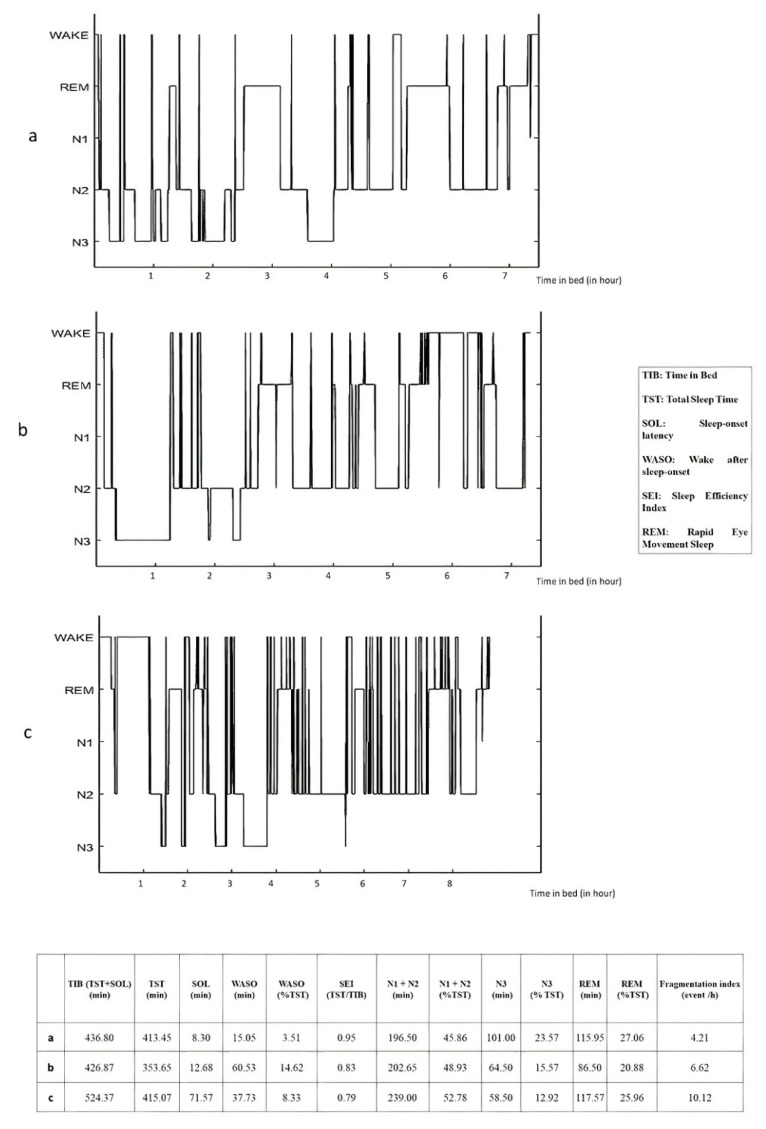
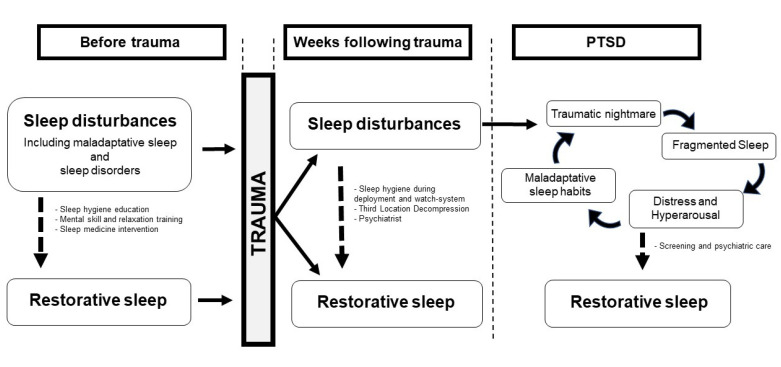
Verification
Claims the paper makes
The claims and statistics of this paper haven’t been checked yet.
Free: it reads the open-access text and checks the first 5 claims that cite a source we can check. Create a free account to check every claim.
Self-check
Percentages, sums and reported differences re-computed from the paper’s own numbers.
The self-check needs the paper’s full text.
Citations
Cites
Diagnostic and Statistical Manual of Mental Disorders
American Psychiatric Association (2013) · doi:10.1176/appi.books.9780890425596 · Cited by 116,369
Combat Duty in Iraq and Afghanistan, Mental Health Problems, and Barriers to Care
Hoge, C. W., Castro, C. A., Messer, S. C., McGurk, D., Cotting, D. I., & Koffman, R. L. (2004) · New England Journal of Medicine · doi:10.1056/nejmoa040603 · Cited by 4,778 · cited 1×
“Combat-related trauma, in particular, has been linked to significant increases in heavy alcohol use post-deployment, when compared to alcohol use pre-deployment [97].”
BackgroundThe ESEMeD/MHEDEA 2000 Investigators, Alonso, J., Angermeyer, M. C., Bernert, S., Bruffaerts, R., Brugha, T. S., Bryson, H., de Girolamo, G., de Graaf, R., Demyttenaere, K., et al. (2004) · Acta Psychiatrica Scandinavica · doi:10.1111/j.1600-0047.2004.00327.x · Cited by 1,819
Short- and long-term health consequences of sleep disruption
Medic, G., Wille, M., & Hemels, M. (2017) · Nature and Science of Sleep · doi:10.2147/nss.s134864 · Cited by 1,776
Watson, N. F., Badr, M. S., Belenky, G., Bliwise, D. L., Buxton, O. M., Buysse, D., Dinges, D. F., Gangwisch, J., Grandner, M. A., Kushida, C., et al. (2015) · SLEEP · doi:10.5665/sleep.4716 · Cited by 1,453
Panel, C. C., Watson, N. F., Badr, M. S., Belenky, G., Bliwise, D. L., Buxton, O. M., Buysse, D., Dinges, D. F., Gangwisch, J., Grandner, M. A., et al. (2015) · Sleep · doi:10.5665/sleep.4886 · Cited by 906 · cited 1×
“These operational conditions often make it impossible to achieve the 7–8 h of continuous nighttime sleep duration recommended by the Sleep Research Society and the American Academy of Sleep Medicine [10].”
BackgroundThe Epidemiology of Trauma, PTSD, and Other Posttrauma Disorders
Breslau, N. (2009) · Trauma, Violence, & Abuse · doi:10.1177/1524838009334448 · Cited by 810 · cited 3×
“There may be a specificity in the study of PTSD in veterans because studies conducted in the civilian population find a majority of PTSD in female victims of sexual assault, whereas in the military, PTSD more often begins after a direct encounter with death [2].”
BackgroundSleep disturbances as the hallmark of PTSD: where are we now?
Germain, A. (2013) · American Journal of Psychiatry · doi:10.1176/appi.ajp.2012.12040432 · Cited by 634 · cited 5×
“, they occur early in the sleep period and are accompanied by anxiety and large body movements) [3,61,62].”
BackgroundResultInfluentialLevin, R., & Nielsen, T. A. (2007) · Psychological Bulletin · doi:10.1037/0033-2909.133.3.482 · Cited by 554 · cited 1×
“Indeed, TRNs are independently associated with daytime distress and dysfunction [76].”
BackgroundClinical effects of sleep fragmentation versus sleep deprivation
Bonnet, M. H., & Arand, D. L. (2003) · Sleep Medicine Reviews · doi:10.1053/smrv.2001.0245 · Cited by 439 · cited 2×
“Sleep fragmentation may lead to common symptoms including increased objective sleepiness, fatigue, and decreased psychomotor performance on a number of tasks, including tasks involving short term memory, reaction time, vigilance, and degraded mood [102].”
Background
Research works printed but not linked: 5
- Wardat I. Troubles psychiques en relation avec un événement traumatisant dans les armées: Facteurs associés aux conduites addictives et à la prise en charge psychiatrique avant la déclaration Bull. Épidémiol. Armées 2014 4 2 7
- Berry X. Marimoutou C. Pommier de Santi V. Rabatel E. Deparis X. Paul F. Etats de stress post-traumatique au retour d’Afghanistan Stress Trauma 2011 11 75 84
- Colas M.-D. Lahutte B. Le stress au sein de la population militaire: Du stress opérationnel à l’état de stress post-traumatique Méd. Armées 2009 37 399 410
- Vautier V. Le SAS de décompression à Chypre. Description, critiques et perspectives Méd. Armées 2012 40 315 319
- Cohen Maril M. How a Vibrating Smartwatch Could be Used to Stop Nightmares. 1 December 2020 Available online: https://www.ncbi.nlm.nih.gov/search/research-news/12106/ (accessed on 10 June 2021)
Cited by
The influence of sleep on fear extinction in trauma-related disorders
Pace-Schott, E. F., Seo, J., & Bottary, R. M. (2022) · Neurobiology of Stress · doi:10.1016/j.ynstr.2022.100500 · Cited by 55
Sleep and mental health in recruit paramedics: a 6-month longitudinal study
Nguyen, E., Meadley, B., Harris, R., Rajaratnam, S. M. W., Williams, B., Smith, K., Bowles, K.-A., Dobbie, M. L., Drummond, S. P. A., & Wolkow, A. P. (2023) · SLEEP · doi:10.1093/sleep/zsad050 · Cited by 27
Sleep and psychiatric disorders: Bidirectional interactions and shared neurobiological mechanisms
Hyndych, A., Koval, K., Dzeruzhynska, N., & Mader, E. C. (2025) · PLOS mental health. · doi:10.1371/journal.pmen.0000531 · Cited by 40
“…in which pre-deployment insomnia and nightmares predict post-deployment PTSD and PTSD predicts later onset of insomnia and obstructive sleep apnea [212,213], provide the most robust temporal evidence because they use repeated measures and adjust for baseline symptoms and deployment exposures.”
An ecological approach to clinically assess nightmares in military service members with severe PTSD
Saguin, E., Feingold, D., Roseau, J.-B., Quiquempoix, M., Boussaud, M., Izabelle, C., Metlaine, A., Guillard, M., Beers, P. V., Gheorghiev, C., et al. (2023) · Sleep Medicine · doi:10.1016/j.sleep.2023.01.024 · Cited by 24
Self-citationSimon, L., Levi, S., Shapira, S., & Admon, R. (2024) · SLEEP · doi:10.1093/sleep/zsae183 · Cited by 20
Saguin, E., Feingold, D., Sipahimalani, G., Quiquempoix, M., Roseau, J.-B., Remadi, M., Annette, S., Guillard, M., Beers, P. V., Lahutte, B., et al. (2025) · Depression and Anxiety · doi:10.1155/da/8011375 · Cited by 14
“Over-adjustment is a concern [42], as the most severe cases of PTSD — often characterized by greater sleep fragmentation and de fi cits in fear extinction [2, 9] — are also more likely to receive psychotropic treatments.”
InfluentialSelf-citationREM disruption and REM vagal activity predict extinction recall in trauma-exposed individuals
Yüksel, Ç., Watford, L., Muranaka, M., Daffre, C., McCoy, E., Lax, H., Mendelsohn, A. K., Oliver, K. I., Acosta, A., Vidrin, A., et al. (2024) · Psychological Medicine · doi:10.1017/s0033291724002757 · Cited by 22
Hulot, J., Roseau, J.-B., Gomez-Merino, D., Chennaoui, M., & Saguin, E. (2024) · L'Encéphale · doi:10.1016/j.encep.2022.10.002 · Cited by 12
Self-citationSaguin, E., Hulot, L. J., Roseau, J.-B., Metlaine, A., Paul, F., Nicolas, F., Sipahimalani, G., Léger, D., Gomez-Mérino, D., & Chennaoui, M. (2022) · Military Medicine · doi:10.1093/milmed/usac107 · Cited by 14
“Compared to the English version of the TRNS, we also propose the removal of the Likert scale question “In general, my nightmares are related to themes of: (1) Powerlessness (2) Trust (3) Intimacy (4) Safety (5) Esteem.””
Self-citationJacques, C., Quiquempoix, M., Sauvet, F., Quyen, M. L. V., Gomez-Mérino, D., & Chennaoui, M. (2024) · Frontiers in Psychology · doi:10.3389/fpsyg.2024.1412289 · Cited by 12
Self-citationEvaluation of sleep and therapeutic education needs of military with PTSD
Remadi, M., Dinis, S., Bernard, L., Defontaine, D., Boussaud, M., Chennaoui, M., & Saguin, E. (2023) · L Encéphale · doi:10.1016/j.encep.2023.01.004 · Cited by 8
Self-citationSchenker, M. T., Cherian, D., Felmingham, K. L., & Jordan, A. S. (2024) · European Journal of Psychotraumatology · doi:10.1080/20008066.2024.2434314 · Cited by 9
Harrison, E. M., Chung, S. Y., Englert, R. M., & Belding, J. N. (2023) · Military Medicine · doi:10.1093/milmed/usad197 · Cited by 7
Zak, U., Choshen‐Hillel, S., Hochner, H., & Gileles‐Hillel, A. (2025) · International Journal of Clinical and Health Psychology · doi:10.1016/j.ijchp.2025.100596 · Cited by 6
“The studies focused on combat-related factors and individual characteristics predisposing soldiers to the development of post-traumatic stress disorder (PTSD) and the associated sleep disturbances (Dow et al., 1996; Saguin et al., 2021).”
Hunt, C., Stout, D. M., Tie, Z., Acheson, D. T., Colvonen, P. J., Nievergelt, C. M., Yurgil, K. A., Baker, D. G., & Risbrough, V. B. (2022) · Behaviour Research and Therapy · doi:10.1016/j.brat.2022.104223 · Cited by 6
Israel−Palestine Conflict: Risk of Sleep Disorders and Post-Traumatic Stress Disorders
Pandi-Perumal, S. R., Gulia, K. K., Mallick, H. N., Shrivastava, D., Mahalaksmi, A. M., Chidambaram, S. B., Kumar, R. R., Saravanan, K. M., Ramasubramanian, C., Sivasubramaniam, S., et al. (2023) · Sleep and Vigilance · doi:10.1007/s41782-023-00252-5 · Cited by 4
“Given that rapid eye movement (REM) sleep is often linked to emotional memory, it Extended author information available on the last page of the article has been hypothesized that REM sleep fragmentation is a likely contributor to the emergence of PTSD symptoms [6].”
Sleep disturbances in posttraumatic stress disorder: Current knowledge and clinical management
Saguin, E., & Rolling, J. (2026) · L Encéphale · doi:10.1016/j.encep.2026.02.004 · Cited by 5
Self-citationBoiko, D. I., Shkodina, A. D., Uddin, M. E., Rahman, M. H., & Kader, M. A. (2025) · Sleep Medicine · doi:10.1016/j.sleep.2025.106803 · Cited by 7
Carbone, E. A., Menculini, G., de Filippis, R., D’Angelo, M., Zebi, L., & Steardo, L. (2023) · Life · doi:10.3390/life13081636 · Cited by 3
Balch, J., Raider, R., Reed, C., & McNamara, P. (2024) · Journal of Sleep Research · doi:10.1111/jsr.14417 · Cited by 3
“…2024), Parkinson's disease (Anjum et al., 2024; González et al., 2024), Alzheimer's disease (Muurling et al., 2021), post-traumatic stress disorder (Saguin et al., 2021; Youngren, 2022), NMs (Schwartz et al., 2022), chronic pain (Zambelli et al., 2022), sleep apnea (Waeber et al., 2020, 2021),…”
Shamim-Uzzaman, Q. A., Zeidler, M. R., Boudreau, E. A., Chowdhuri, S., Donovan, L. M., El-Solh, A., Freire, A. X., Gottlieb, D. J., Jindal, R. D., Hesselbacher, S. E., et al. (2025) · Journal of Clinical Sleep Medicine · doi:10.5664/jcsm.11734 · Cited by 3
“7,8 Furthermore, disordered sleep has been associated with a higher risk of suicide in the military and veteran populations 9 ; more recently, it has been recognized that poor sleep quality is a significant contributor to neurodegenerative pathology such as Alzheimer ’ s and Parkinson ’ s diseases.”
Mallett, R., Jameson, J., Paller, K. A., Markwald, R. R., & Russell, D. W. (2023) · SLEEP · doi:10.1093/sleep/zsad214 · Cited by 3
“While the current study did not implement a sleep health program, recent work suggests that an additional value of PSMs in military contexts could be their use in such programs that target both the maintenance and restoration of healthy sleep in military populations [16].”
Chronic insomnia: are patients also suffering from PTSD symptoms?
Lardant, E., Vialatte, F., Ramdani, C., Chauveau, F., Gauriau, C., Storms, L., Trousselard, M., & Léger, D. (2023) · Frontiers in Sleep · doi:10.3389/frsle.2023.1207232 · Cited by 4
Motoziuk, L., Чорна, Н., Lukashuk, M., Vlasov, V., & Sobkova, S. (2024) · International Journal of Statistics in Medical Research · doi:10.6000/1929-6029.2024.13.23 · Cited by 2
“A person suffers from PTSD symptoms not only during the day, but also at night, as insomnia, frequent awakenings, nightmares, or very vivid dreams that resemble traumatic events may occur [10].”
Sommeil et état de stress post -traumatique : intrications cliniques et perspectives thérapeutiques
Saguin, E. (2022) · Revue Défense Nationale · doi:10.3917/rdna.hs07.0043 · Cited by 2
Self-citationCombating Post-Traumatic Stress Disorder in Nurses by Improving Sleep
Gold, J. (2023) · Nursing and Health Care · doi:10.30654/mjnh.100017 · Cited by 1
“Altered sleep quality both before and after experiencing trauma has been found to be a mediating factor in the development of PTSD [12].”
BackgroundOssadchaya, E., Tatayeva, R. K., Sembayeva, Z., Nursafina, A. Z., Zhakenova, M., & Slamkhanova, G. (2025) · Psychiatry International · doi:10.3390/psychiatryint6040141 · Cited by 2
“These results align with prior scientific research, which has established the impact of PTSD on psychological health, sleep quality, and social adaptation [54,55].”
Viselli, L., Salfi, F., Naccarato, F., Arnone, B., Corigliano, D., Amicucci, G., Festucci, F., Colombo, C., Cellini, N., Tempesta, D., et al. (2025) · SLEEP · doi:10.1093/sleep/zsaf409 · Cited by 2
“Thus, our findings underscore the importance of consolidated REM sleep for proper emotional processing, as recently highlighted in animals [27] and clinical populations [22–26].”
Sharma, A., Feng, L., Muresanu, D. F., Tian, Z. R., Lafuente, J. V., Buzoianu, A. D., Nozari, A., Bryukhovetskiy, I., Manzhulo, I., Wiklund, L., et al. (2023) · Advances in neurobiology · doi:10.1007/978-3-031-32997-5_1 · Cited by 1
SLEEP QUALITY AND AVOIDANCE BEHAVIOR IN COMBATANTS WITH POST-TRAUMATIC STRESS DISORDER
Boiko, D. I., Mats, O. V., & Shkidchenko, O. I. (2024) · Актуальні проблеми сучасної медицини Вісник Української медичної стоматологічної академії · doi:10.31718/2077-1096.24.2.4 · Cited by 2
Rolling, J., Monnier, L., Zanfonato, T., Kilic-Huck, U., Ruppert, E., Comtet, H., Mengin, A., Fernandez, A., Kerbage, H., Bourgin, P., et al. (2026) · Journal of Clinical Sleep Medicine · doi:10.1007/s44470-026-00098-4
“Beyond being distressing, they reinforce trauma-related memory networks, maintaining the vividness and emotional charge of the memory [20–22].”
Boiko, D. I., Zhyvotovska, L. V., & Chopra, H. (2024) · The Medical and Ecological Problems · doi:10.31718/mep.2024.28.1.02 · Cited by 1
“At the same time, sleep disturbances can act as predictors of PTSD, such as nightmares and sleep fragmentation, or remain in the form of residual insomnia, which disrupts the processes of consolidating emotional memory [16].”
BackgroundSLEEP PROBLEMS IN COMBATANTS WITH POSTTRAUMATIC STRESS DISORDER AND ITS ACCEPTANCE
Boiko, D. I. (2024) · Bulletin of Problems Biology and Medicine · doi:10.29254/2077-4214-2024-2-173-165-174 · Cited by 1
“All this creates conditions for the de - velopment of PTSD and comorbid sleep disorders [17].”
Dream content influences daily spirituality
Balch, J., Hodulik, G., Raider, R., David, A., Reed, C., Wildman, W. J., Rohr, D., & McNamara, P. (2025) · Frontiers in Psychology · doi:10.3389/fpsyg.2025.1575174 · Cited by 3
Artificial Intelligence in Human-Centric Sleep Monitoring
Berciu, A.-G., Micu, D. D., & Dulf, E. H. (2025) · Lecture notes in networks and systems · doi:10.1007/978-3-031-98565-2_79
Impact of Mild Traumatic Brain Injury on Sleep Patterns in Younger Individuals: A Systematic Review
Subramanian, S., & Carroll, C. M. (2025) · Neurotrauma Reports · doi:10.1177/2689288x251377029 · Cited by 1
“69 A summary of relevant criteria is provided below for clari fi cation.”
Andrade, P., Correia, A., Pereira, A., & Carvalho, L. (2025) · Lecture notes in bioengineering · doi:10.1007/978-3-031-77282-5_20
Feingold, D., Quiquempoix, M., Remadi, M., Sipahimalani, G., Lahutte, B., Léger, D., Gomez-Mérino, D., Chennaoui, M., & Saguin, E. (2026) · Psychiatry and Clinical Neurosciences · doi:10.1111/pcn.70038
“6,11 Their presence worsens daytime PTSD symptoms, elevates the risk of depression and suicidality, and reinforces a vicious cycle of psychological and physiological dysregulation.”
Self-citationTrauma-related nightmares: A Comprehensive and Integrative review
Feingold, D., Roseau, J.-B., Verdonk, C., Richards, A. L., Chennaoui, M., Saguin, E., & Léger, D. (2026) · Sleep Medicine Reviews · doi:10.1016/j.smrv.2026.102259 · Cited by 1
Self-citationSipahimalani, G., Roseau, J.-B., Feingold, D., Remadi, M., Lhermitte, C., Houssany-Pissot, S., Defontaine, D., Gignoux-Froment, F., Annette, S., & Saguin, E. (2026) · L Encéphale · doi:10.1016/j.encep.2026.01.004
Self-citationThe impact of a combatant's social and employment status on combat stress experiences
Hryn, K. V. (2025) · Ukrainian Journal of Occupational Health · doi:10.33573/ujoh2025.04.309
Saguin, E. (2023) · theses.fr (ABES) · doi:10.70675/820b81b5zdd45z43a6zb36az8344c91402bd · Cited by 1
Self-citationExecutive dysfunction in military PTSD with ecological sleep assessment: A cross-sectional study
Sipahimalani, G., Sauvet, F., Quiquempoix, M., Feingold, D., Jacques, C., Guillard, M., Lahutte, B., Chennaoui, M., & Saguin, E. (2026) · Psychiatry Research · doi:10.1016/j.psychres.2026.117211
Self-citationJannace, K. C., Nordstrom, M. J., Fichter, S., Cooper, D. B., Schulz, R. N., Ryff, D. R., Riggleman, T., Carlisle, D., & Pasquina, P. F. (2026) · Archives of Rehabilitation Research and Clinical Translation · doi:10.1016/j.arrct.2026.100641 · Cited by 1
Spangler, P. T., West, J. C., Dempsey, C. L., Phares, A. M., Criss, R., Winslow, B. D., & Zhang, L. (2026) · Acta Psychologica · doi:10.1016/j.actpsy.2026.107116
Bottari, S. A., Kaiser, A. P., Lee, L. O., Aslan, M., & Vasterling, J. J. (2026) · Journal of Anxiety Disorders · doi:10.1016/j.janxdis.2026.103198
Behavioral Sleep Interventions & Posttraumatic Stress Disorder in Adults
Cusack, D., Mahler, C., Muñoz, I. D. C., Martin, J. L., & Kelly, M. R. (2026) · Current Sleep Medicine Reports · doi:10.1007/s40675-026-00382-y
“Additionally, sleep disturbances exacerbate daytime PTSD symptoms, symptoms of depression, and suicidality [25, 26], possibly due to sleep deprivation impairing the selection and implementation of healthier emotion regulation strategies [27] as well as impulse control and decision-making abilities…”
Saguin, E., & Rolling, J. (2025) · Elsevier eBooks · doi:10.1016/b978-2-294-78711-9.00025-6
Self-citationReconsidering the Directionality Between OSA and Posttraumatic Stress Disorder
Saguin, E., Feingold, D., Sipahimalani, G., & Sauvet, F. (2026) · CHEST Journal · doi:10.1016/j.chest.2025.12.065
Self-citationNyamathi, A., Rasouli, M., Jeong, C.-P., Brunswicker, S., Agapie, E., Ludlow, J., Jawad, R., Khay, C., Lu, A. Z., Liao, J. D., et al. (2026) · Journal of Medical Internet Research · doi:10.2196/85651
Metadata
- Authors
- Saguin, E., Gomez-Merino, D., Sauvet, F., Leger, D., & Chennaoui, M.
- Affiliations
- Université Paris Cité (FR)
- VIFASOM (Vigilance Fatigue Sommeil et Santé Publique) EA 7330, Université de Paris, 75005 Paris, France
- Corresponding author
- Saguin, Emeric
- Venue
- Brain Sciences
- Publisher
- MDPI AG
- Published
- 2021-10-01
- Volume
- 11
- Issue
- 10
- Pages
- 1310
- ISSN
- 2076-3425 (ISSN-L)
- PMC
- PMC8533994
- OpenAlex
- W3202889536
- Cited by
- 50
- References
- 125
- Citations by year
- 2026: 12 · 2025: 13 · 2024: 9 · 2023: 11 · 2022: 5
- FWCI
- 1.02
- Type
- journal article
- Language
- en
- Open access
- gold
- doi.org
- Licence
- Locations
- Brain Sciences (publishedVersion, cc-by)
- PubMed Central (publishedVersion, cc-by)
- PubMed (publishedVersion)
- DOAJ (DOAJ: Directory of Open Access Journals) (submittedVersion, cc-by-sa)
- Topics
- Social Sciences › Psychology › Experimental and Cognitive Psychology › Sleep and related disorders
- Social Sciences › Psychology › Clinical Psychology › Posttraumatic Stress Disorder Research
- Life Sciences › Neuroscience › Cognitive Neuroscience › Sleep and Wakefulness Research
- Keywords
- post-traumatic stress disorder, sleep disorders, military personnel, combat exposure, restorative sleep, REM sleep fragmentation, sleep architecture, nightmares, insomnia, sleep continuity, military deployment
About these checks
Registry, retraction, Cites and statistics results are computed, not judged, with one exception: a printed reference that no index lists is read once by a model before it counts as a citation error. Claims are extracted by a model and kept only when their quote appears verbatim in the text; each cited source is then checked, with a model’s help, for whether it says what the claim relies on. Those verdicts can be wrong — read the claim’s quote and the cited source before relying on one.
Statistics and arithmetic are recomputed, not judged.
Confidence bands are shown only for fields calibrated on our annotated test set. None is calibrated yet, so no band is shown.
What counts as a claim ›How we measure confidence ›How we check this ›
Are you an author, or do you see a problem with this page? Request a review
Data sources
Bibliographic data: Semantic Scholar, OpenAlex, Crossref.
Contains information from the Semantic Scholar Academic Graph Datasets, made available under the ODC Attribution License (ODC-BY 1.0).
Semantic Scholar’s data is described in: Kinney, R., et al. (2023). The Semantic Scholar Open Data Platform. arXiv:2301.10140.
