

Sleep and PTSD in the Military Forces: A Reciprocal Relationship and a Psychiatric Approach
Open accessThe DOI matches its Crossref record; 120 of the 125 references it cites were found in a registry or an index.
Abstract
Sleep disturbances are well-recognised symptoms of Post-Traumatic Stress Disorder (PTSD). This review updates knowledge regarding the relationship between sleep during deployment, combat-related trauma, and PTSD in military personnel, from which the importance of restorative sleep results. The description of the characteristics of sleep in military forces with the considerable roles of the operational and training contexts highlights the important consequences of degraded sleep. Indeed, a lot of data suggest a dynamic link between sleep and the onset and chronicity of PTSD. We propose a reciprocal relationship model with strategies strongly recommended or already adopted by the military to promote restorative sleep before and after combat exposure. Among the alterations in a variety of sleep architecture and sleep patterns described in PTSD, the physiological hypothesis of REM sleep fragmentation in the development of PTSD symptoms may be important because REM sleep is generally associated with emotional memory. Finally, we address clinical and research perspectives that could be used to detect or restore sleep continuity before and during military deployment to possibly alleviate nightmares and insomnia related to combat exposure and PTSD occurrence and improve our understanding of sleep in PTSD.
Overview
The claims and statistics of this paper haven’t been checked yet.
Free: it reads the open-access text and checks the first 5 claims that cite a source we can check. Create a free account to check every claim.
Integrity signals
Registry
Cites
Statistics
Figures
Verification
Claims the paper makes
The claims and statistics of this paper haven’t been checked yet.
Free: it reads the open-access text and checks the first 5 claims that cite a source we can check. Create a free account to check every claim.
Self-check
Percentages, sums and reported differences re-computed from the paper’s own numbers.
The self-check needs the paper’s full text.
Citations
Cites
Diagnostic and Statistical Manual of Mental Disorders
American Psychiatric Association (2013) · doi:10.1176/appi.books.9780890425596 · Cited by 116,369
Combat Duty in Iraq and Afghanistan, Mental Health Problems, and Barriers to Care
Hoge, C. W., Castro, C. A., Messer, S. C., McGurk, D., Cotting, D. I., & Koffman, R. L. (2004) · New England Journal of Medicine · doi:10.1056/nejmoa040603 · Cited by 4,778 · cited 1×
“Combat-related trauma, in particular, has been linked to significant increases in heavy alcohol use post-deployment, when compared to alcohol use pre-deployment [97].”
BackgroundThe ESEMeD/MHEDEA 2000 Investigators, Alonso, J., Angermeyer, M. C., Bernert, S., Bruffaerts, R., Brugha, T. S., Bryson, H., de Girolamo, G., de Graaf, R., Demyttenaere, K., et al. (2004) · Acta Psychiatrica Scandinavica · doi:10.1111/j.1600-0047.2004.00327.x · Cited by 1,819
Short- and long-term health consequences of sleep disruption
Medic, G., Wille, M., & Hemels, M. (2017) · Nature and Science of Sleep · doi:10.2147/nss.s134864 · Cited by 1,776
Watson, N. F., Badr, M. S., Belenky, G., Bliwise, D. L., Buxton, O. M., Buysse, D., Dinges, D. F., Gangwisch, J., Grandner, M. A., Kushida, C., et al. (2015) · SLEEP · doi:10.5665/sleep.4716 · Cited by 1,453
Panel, C. C., Watson, N. F., Badr, M. S., Belenky, G., Bliwise, D. L., Buxton, O. M., Buysse, D., Dinges, D. F., Gangwisch, J., Grandner, M. A., et al. (2015) · Sleep · doi:10.5665/sleep.4886 · Cited by 906 · cited 1×
“These operational conditions often make it impossible to achieve the 7–8 h of continuous nighttime sleep duration recommended by the Sleep Research Society and the American Academy of Sleep Medicine [10].”
BackgroundThe Epidemiology of Trauma, PTSD, and Other Posttrauma Disorders
Breslau, N. (2009) · Trauma, Violence, & Abuse · doi:10.1177/1524838009334448 · Cited by 810 · cited 3×
“There may be a specificity in the study of PTSD in veterans because studies conducted in the civilian population find a majority of PTSD in female victims of sexual assault, whereas in the military, PTSD more often begins after a direct encounter with death [2].”
BackgroundSleep disturbances as the hallmark of PTSD: where are we now?
Germain, A. (2013) · American Journal of Psychiatry · doi:10.1176/appi.ajp.2012.12040432 · Cited by 634 · cited 5×
“, they occur early in the sleep period and are accompanied by anxiety and large body movements) [3,61,62].”
BackgroundResultInfluentialLevin, R., & Nielsen, T. A. (2007) · Psychological Bulletin · doi:10.1037/0033-2909.133.3.482 · Cited by 554 · cited 1×
“Indeed, TRNs are independently associated with daytime distress and dysfunction [76].”
BackgroundClinical effects of sleep fragmentation versus sleep deprivation
Bonnet, M. H., & Arand, D. L. (2003) · Sleep Medicine Reviews · doi:10.1053/smrv.2001.0245 · Cited by 439 · cited 2×
“Sleep fragmentation may lead to common symptoms including increased objective sleepiness, fatigue, and decreased psychomotor performance on a number of tasks, including tasks involving short term memory, reaction time, vigilance, and degraded mood [102].”
BackgroundPolysomnographically measured sleep abnormalities in PTSD: A meta‐analytic review
Kobayashi, I., Boarts, J. M., & Delahanty, D. L. (2007) · Psychophysiology · doi:10.1111/j.1469-8986.2007.537.x · Cited by 435 · cited 1×
“reported that PTSD was associated with a reduction in PSG sleep continuity as compared with controls [108].”
ResultREM sleep and the early development of posttraumatic stress disorder
Mellman, T. A., Bustamante, V., Fins, A. I., Pigeon, W. R., & Nolan, B. (2002) · American Journal of Psychiatry · doi:10.1176/appi.ajp.159.10.1696 · Cited by 414 · cited 4×
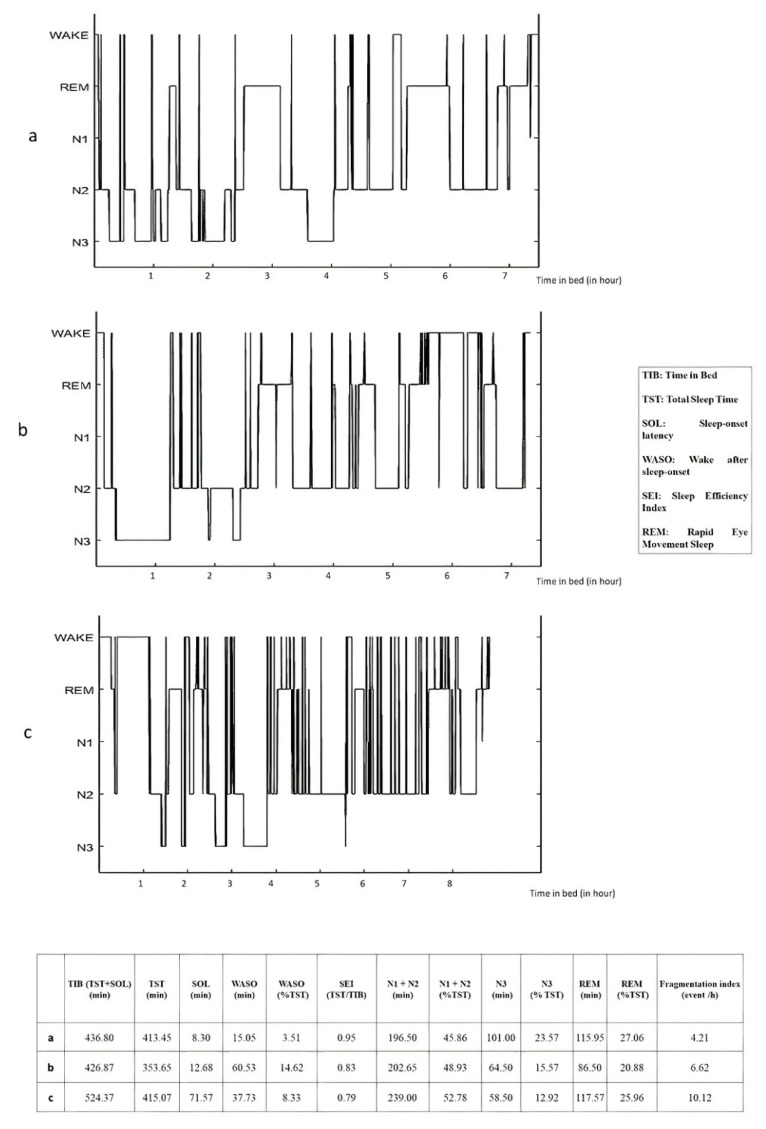
“Sleep fragmentation is generally estimated with the sleep fragmentation index (SFI), which is the total number of awakenings/shifts to Stage 1 (from deeper non-rapid eye movement [NREM] or REM sleep) divided by the total sleep time in hours [100].”
BackgroundInfluentialArnal, P. J., Thorey, V., Debellemaniere, E., Ballard, M. E., Bou Hernandez, A., Guillot, A., Jourde, H., Harris, M., Guillard, M., Van Beers, P., et al. (2020) · SLEEP · doi:10.1093/sleep/zsaa097 · Cited by 394 · cited 1×
“For this, many studies concern the development of connected devices that would measure sleep at home [121,122].”
BackgroundSelf-citationCoventry, P. A., Meader, N., Melton, H., Temple, M., Dale, H., Wright, K., Cloitre, M., Karatzias, T., Bisson, J., Roberts, N. P., et al. (2020) · PLoS Medicine · doi:10.1371/journal.pmed.1003262 · Cited by 358 · cited 1×
“Pharmacological interventions are less effective than psychological interventions for treating PTSD symptoms and improving sleep, with a high risk of side effects [73].”
BackgroundSaving PTSD from itself in DSM-V
Spitzer, R. L., First, M. B., & Wakefield, J. C. (2007) · Journal of Anxiety Disorders · doi:10.1016/j.janxdis.2006.09.006 · Cited by 353 · cited 1×
“According to the DSM IV, the criteria for PTSD include many common and specific symptoms of psychiatric disorders and the definition of traumatic experience, which is only related to a stressor, remains unclear [43].”
Stein, M. B., Kline, N. A., & Matloff, J. L. (2002) · American Journal of Psychiatry · doi:10.1176/appi.ajp.159.10.1777 · Cited by 347
Trial of prazosin for post-traumatic stress disorder in military veterans
Raskind, M. A., Peskind, E. R., Chow, B., Harris, C., Davis-Karim, A., Holmes, H. A., Hart, K. L., McFall, M., Mellman, T. A., Reist, C., et al. (2018) · New England Journal of Medicine · doi:10.1056/nejmoa1507598 · Cited by 342
Gehrman, P., Seelig, A. D., Jacobson, I. G., Boyko, E. J., Hooper, T. I., Gackstetter, G. D., Ulmer, C. S., Smith, T. C., & Millennium Cohort Study Team (2013) · Sleep · doi:10.5665/sleep.2798 · Cited by 339 · cited 1×
“In the US Millennium Cohort Study survey, the pre-deployment insomnia diagnosis has been found to be associated with a significant increased risk for new-onset post-traumatic stress disorder (PTSD), depression, and anxiety positive screens following deployment, independently of other potential risk factors [34].”
BackgroundTucker, P., Zaninelli, R., Yehuda, R., Ruggiero, L., Dillingham, K., & Pitts, C. D. (2001) · The Journal of Clinical Psychiatry · doi:10.4088/jcp.v62n1105 · Cited by 324 · cited 1×
“Despite this moderate expectation, the efficacy of selective serotonin reuptake inhibitors (SSRIs) (recommended pharmacotherapy in PTSD) is estimated to be zero [47] or better than placebo in only 20% of cases [48].”
BackgroundNightmares and trauma: a comparison of nightmares after combat with lifelong nightmares in veterans
(1984) · American Journal of Psychiatry · doi:10.1176/ajp.141.2.187 · Cited by 305
The Effect of Sleep Fragmentation on Daytime Function
Stepanski, E. J. (2002) · Sleep · doi:10.1093/sleep/25.3.268 · Cited by 265 · cited 1×
“The arousals produce fragmented rather than shortened sleep, and the fragmented sleep is associated with impairment of daytime function [101].”
BackgroundInsomnia as predictor versus outcome of PTSD and depression among Iraq combat veterans
Wright, K. M., Britt, T. W., Bliese, P. D., Adler, A. B., Picchioni, D., & Moore, D. (2011) · Journal of Clinical Psychology · doi:10.1002/jclp.20845 · Cited by 264 · cited 1×
“Recent findings show insomnia as an independent risk factor for the worsening of PTSD [86,88].”
BackgroundSleep Patterns Before, During, and After Deployment to Iraq and Afghanistan
Seelig, A. D., Jacobson, I. G., Smith, B., Hooper, T. I., Boyko, E. J., Gackstetter, G. D., Gehrman, P., Macera, C. A., Smith, T. C., & Millennium Cohort Study Team (2010) · Sleep · doi:10.1093/sleep/33.12.1615 · Cited by 264
Sleep and REM sleep disturbance in the pathophysiology of PTSD: the role of extinction memory
Pace-Schott, E. F., Germain, A., & Milad, M. R. (2015) · Biology of Mood & Anxiety Disorders · doi:10.1186/s13587-015-0018-9 · Cited by 255 · cited 2×
“There may be a positive feedback link between central stress systems, sleep and REM sleep disruption, and altered extinction memory as a possible pathway to worsening post-traumatic psychopathology [82].”
BackgroundSleep Disturbance Immediately Prior to Trauma Predicts Subsequent Psychiatric Disorder
Bryant, R. A., Creamer, M., O'Donnell, M., Silove, D., & McFarlane, A. C. (2010) · Sleep · doi:10.1093/sleep/33.1.69 · Cited by 243 · cited 2×
“Indeed, the presence of nightmares or sleep disturbances before the deployment is associated with an increased risk of post-deployment PTSD [36,80,81].”
BackgroundFriedman, M. J., Marmar, C. R., Baker, D. G., Sikes, C. R., & Farfel, G. M. (2007) · The Journal of Clinical Psychiatry · doi:10.4088/jcp.v68n0508 · Cited by 242 · cited 1×
“expectation, the efficacy of selective serotonin reuptake inhibitors (SSRIs) (recommended pharmacotherapy in PTSD) is estimated to be zero [47] or better than placebo in only 20%”
BackgroundThe Neuroprotective Aspects of Sleep.
Eugene, A. R., & Masiak, J. (2015) · PubMed · Cited by 234
McLay, R. N., Klam, W. P., & Volkert, S. L. (2010) · Military Medicine · doi:10.7205/milmed-d-10-00193 · Cited by 226 · cited 1×
“In a study, insomnia was the most commonly reported symptom of PTSD and predicted the other symptom clusters of PTSD in a group of war veterans [77].”
BackgroundPrevalence and impact of short sleep duration in redeployed OIF soldiers
Luxton, D. D., Greenburg, D., Ryan, J., Niven, A., Wheeler, G., & Mysliwiec, V. (2011) · Sleep · doi:10.5665/sleep.1236 · Cited by 226 · cited 1×
“5 h per night, regardless of deployment status, fatigue, depression, posttraumatic stress disorder, or pain syndromes [12].”
BackgroundRapid eye movement sleep disturbance in posttraumatic stress disorder
Ross, R. J., Ball, W. A., Dinges, D. F., Kribbs, N. B., Morrison, A. R., Silver, S. M., & Mulvaney, F. D. (1994) · Biological Psychiatry · doi:10.1016/0006-3223(94)91152-5 · Cited by 221 · cited 1×
“REM sleep disturbances were observed in PTSD combat-exposed military veterans (aged between 37 and 49 years) compared to an age-appropriated normal control group: the REM sleep percentage, average REM activity and average REM period duration were significantly higher [112,113].”
MethodRelationships between REM sleep findings and PTSD symptoms during the early aftermath of trauma
Mellman, T. A., Pigeon, W. R., Nowell, P. D., & Nolan, B. (2007) · Journal of Traumatic Stress · doi:10.1002/jts.20246 · Cited by 221 · cited 1×
“The REM segment duration during the early aftermath of trauma is also correlated negatively with initial PTSD and insomnia severity [84].”
BackgroundSleep in Lifetime Posttraumatic Stress Disorder: A Community-Based Polysomnographic Study
Breslau, N., Roth, T., Burduvali, E., Kapke, A., Schultz, L., & Roehrs, T. (2004) · Archives of General Psychiatry · doi:10.1001/archpsyc.61.5.508 · Cited by 215
Sleep in the Military: Promoting Healthy Sleep Among U.S. Servicemembers
Troxel, W., Shih, R. A., Pedersen, E. R., Geyer, L., Fisher, M., Griffin, B. A., Haas, A. C., Kurz, J., & Steinberg, P. S. (2015) · Rand health quarterly · doi:10.7249/rhq-05-02-19 · Cited by 195
Post-traumatic stress disorder and sleep—what a nightmare!
Pillar, G., Malhotra, A., & Lavie, P. (2000) · Sleep Medicine Reviews · doi:10.1053/smrv.1999.0095 · Cited by 187 · cited 3×
“Sleep disturbances (including trouble falling asleep, waking up repeatedly, trouble staying asleep, non-restorative sleep) occur for 74% of veterans with PTSD, which make it the primary medical complaint for this population [4,5].”
BackgroundResultSleep in the United States Military
Good, C. H., Brager, A. J., Capaldi, V. F., & Mysliwiec, V. (2020) · Neuropsychopharmacology · doi:10.1038/s41386-019-0431-7 · Cited by 180 · cited 3×
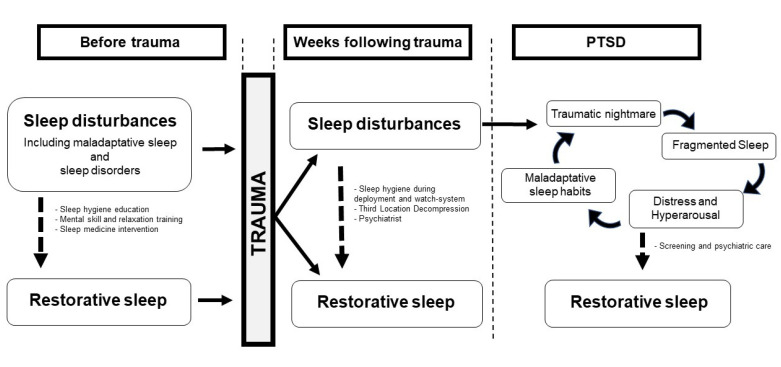
“Before and during military deployment, many factors can increase sleep fragmentation and thus contribute to a lack of restorative sleep [11].”
BackgroundResidual sleep disturbances following PTSD treatment in active duty military personnel.
Pruiksma, K. E., Taylor, D. J., Wachen, J. S., Mintz, J., Young-McCaughan, S., Peterson, A. L., Yarvis, J. S., Borah, E. V., Dondanville, K. A., Litz, B. T., et al. (2016) · Psychological Trauma: Theory, Research, Practice, and Policy · doi:10.1037/tra0000150 · Cited by 164 · cited 1×
“That’s why sleep disturbances remain a frequent residual complaint after successful treatment of PTSD [60,75].”
Backgroundvan Liempt, S., van Zuiden, M., Westenberg, H., Super, A., & Vermetten, E. (2013) · Depression and Anxiety · doi:10.1002/da.22054 · Cited by 163
Woodward, S. H., Arsenault, N. J., Murray, C. F., & Bliwise, D. L. (2000) · Biological Psychiatry · doi:10.1016/s0006-3223(00)00917-3 · Cited by 163
Sleep Disturbance during Military Deployment
Peterson, A. L., Goodie, J. L., Satterfield, W. A., & Brim, W. L. (2008) · Military Medicine · doi:10.7205/milmed.173.3.230 · Cited by 155
Zhang, Y., Ren, R., Sanford, L. D., Yang, L., Zhou, J., Zhang, J., Wing, Y. K., Shi, J., Lü, L., & Tang, X. (2019) · Sleep Medicine Reviews · doi:10.1016/j.smrv.2019.08.004 · Cited by 154 · cited 8×
“Based on characteristics of electroencephalography (EEG) and electromyography (EMG) signals, sleep wake states can be classified as waking, rapid eye movement (REM), and non-rapid eye movement (NREM) sleep, also known as slow-wave sleep (SWS).”
BackgroundResultInfluentialTrauma associated sleep disorder: a parasomnia induced by trauma
Mysliwiec, V., Brock, M. S., Creamer, J. L., O'Reilly, B. M., Germain, A., & Roth, B. J. (2018) · Sleep Medicine Reviews · doi:10.1016/j.smrv.2017.01.004 · Cited by 150 · cited 6×
“TSD appears to be more prevalent in cases of combat-related PTSD, especially because sleep deprivation and/or disruption during deployment may be a precipitating factor [62].”
BackgroundInfluentialDeployment-Related Insomnia in Military Personnel and Veterans
Bramoweth, A. D., & Germain, A. (2013) · Current Psychiatry Reports · doi:10.1007/s11920-013-0401-4 · Cited by 143 · cited 3×
“Consequently, in the manner of a vicious circle, insomnia can exacerbate the deployment experience and is a risk factor for traumatic stress reactions such as PTSD [30].”
BackgroundTreating nightmares and insomnia in posttraumatic stress disorder: A review of current evidence
Nappi, C. M., Drummond, S. P. A., & Hall, J. M. H. (2012) · Neuropharmacology · doi:10.1016/j.neuropharm.2011.02.029 · Cited by 138 · cited 1×
“Trauma-related nightmares (TRN) are the most common symptom of PTSD, highly de-stressing and associated with severity, treatment resistance and chronicity [53].”
BackgroundExperimental Sleep Fragmentation
Roehrs, T., Merlotti, L., Petrucelli, N., Stepanski, E., & Roth, T. (1994) · Sleep · doi:10.1093/sleep/17.5.438 · Cited by 136 · cited 1×
“Sleep fragmentation has been defined as an interruption (disruption) of the normal continuity of sleep with frequent (as often as l per minute) and transient (3–10 s) electroencephalogram (EEG) arousals [99].”
BackgroundUnderstanding posttraumatic nightmares: An empirical and conceptual review
Phelps, A. J., Forbes, D., & Creamer, M. C. (2007) · Clinical Psychology Review · doi:10.1016/j.cpr.2007.06.001 · Cited by 136 · cited 1×
“Furthermore, it would be very interesting to differentiate TRN from classic nightmares because they are a typical sign of the disorder and probably of its evolution [62,63].”
BackgroundCaffeine or melatonin effects on sleep and sleepiness after rapid eastward transmeridian travel
Beaumont, M., Batéjat, D., Piérard, C., Van Beers, P., Denis, J. B., Coste, O., Doireau, P., Chauffard, F., French, J., & Lagarde, D. (2004) · Journal of Applied Physiology · doi:10.1152/japplphysiol.00940.2002 · Cited by 135 · cited 1×
“However, data on a large, real world French-American study conducted in the 2000s (known as “Operation Pegasus”) on twenty-seven healthy volunteers from a US Air Force Reserve Unit after an eastbound flight across seven time zones, showed that SWS and REM sleep debt increased during the flight and on the first day of…”
BackgroundPosttraumatic stress disorder and sleep-disordered breathing: a review of comorbidity research
Krakow, B. J., Ulibarri, V. A., Moore, B. A., & McIver, N. D. (2014) · Sleep Medicine Reviews · doi:10.1016/j.smrv.2014.11.001 · Cited by 132 · cited 3×
“airway pressure therapy, seems to decrease insomnia, nightmares and post-traumatic stress symptoms in patients with PTSD [86].”
BackgroundSleep Disturbance in Substance Use Disorders
Roehrs, T. A., & Roth, T. (2015) · Psychiatric Clinics of North America · doi:10.1016/j.psc.2015.07.008 · Cited by 130 · cited 1×
“Sleep fragmentation also exerts an adverse effect on pain sensitivity in young healthy adults [103] and is bi-directionally linked with alcohol misuse [104].”
BackgroundNocturnal re‐experiencing more than forty years after war trauma
Schreuder, B. J. N., Kleijn, W. C., & Rooijmans, H. G. M. (2000) · Journal of Traumatic Stress · doi:10.1023/a:1007733324351 · Cited by 128 · cited 1×
“, replicative posttraumatic nightmares) are proportionately more prevalent in the veteran population (65%) than in the civilian trauma survivor population (20–30%) [39,40].”
BackgroundSleep and Health Resilience Metrics in a Large Military Cohort
Seelig, A. D., Jacobson, I. G., Donoho, C. J., Trone, D. W., Crum-Cianflone, N. F., & Balkin, T. J. (2016) · Sleep · doi:10.5665/sleep.5766 · Cited by 124 · cited 1×
“In this cohort, the presence of insomnia symptoms was also significantly associated with lower self-rated health, more lost work days, lower odds of deployment, higher odds of early discharge from military service, and more health care utilization [35].”
BackgroundSleep and the GH/IGF-1 axis: Consequences and countermeasures of sleep loss/disorders
Chennaoui, M., Léger, D., & Gomez-Mérino, D. (2019) · Sleep Medicine Reviews · doi:10.1016/j.smrv.2019.101223 · Cited by 117 · cited 2×
“In military personnel diagnosed with insomnia or comorbid insomnia with OSA receiving four to eight biweekly sessions of cognitive behavioral therapy for insomnia (CBT) and CPAP for their OSA, improvements in sleep quality were associated with significant declines in depression and posttraumatic arousal symptoms, and…”
BackgroundSelf-citationRecent Advancements in Treating Sleep Disorders in Co-Occurring PTSD
Colvonen, P. J., Straus, L. D., Stepnowsky, C., McCarthy, M. J., Goldstein, L. A., & Norman, S. B. (2018) · Current Psychiatry Reports · doi:10.1007/s11920-018-0916-9 · Cited by 113 · cited 1×
“At present, even if the improvement in sleep is correlated with the overall improvement in PTSD, few pharmacological or psychotherapeutic treatments showed a significant effect on sleep, probably because there are currently no clinical guidelines for screening sleep disorders in PTSD [74].”
BackgroundRevisiting the value of polysomnographic data in insomnia: more than meets the eye
Andrillon, T., Solelhac, G., Bouchequet, P., Romano, F., Brun, M.-P. L., Brigham, M., Chennaoui, M., & Léger, D. (2019) · Sleep Medicine · doi:10.1016/j.sleep.2019.12.002 · Cited by 109 · cited 1×
“) that are potentially invisible to the human eye and independent of the steps described conventionally [124].”
BackgroundSelf-citationDavis, J. L., Rhudy, J. L., Pruiksma, K. E., Byrd, P. M., Williams, A. E., McCabe, K. M., & Bartley, E. J. (2011) · Journal of Clinical Sleep Medicine · doi:10.5664/jcsm.1466 · Cited by 90 · cited 1×
“, replicative posttraumatic nightmares) are proportionately more prevalent in the veteran population (65%) than in the civilian trauma survivor population (20–30%) [39,40].”
BackgroundAlexander, W. (2012) · PubMed · Cited by 89
Sleep in PTSD: Treatment approaches and outcomes
Miller, K. E., Brownlow, J. A., & Gehrman, P. R. (2020) · Current Opinion in Psychology · doi:10.1016/j.copsyc.2019.08.017 · Cited by 87 · cited 1×
“With respect to sleep interventions, attention has turned to the role of multidisciplinary and integrative approaches as comprehensive treatment for sleep disturbances in PTSD [98].”
BackgroundMellman, T. A., Kobayashi, I., Lavela, J., Wilson, B., & Brown, T. S. H. (2014) · SLEEP · doi:10.5665/sleep.3922 · Cited by 84 · cited 1×
“These differences of REM sleep percentages in PTSD may reflect an adaptive process in chronic patients, as suggested by Mellman [114].”
ResultGrier, T., Dinkeloo, E., Reynolds, M., & Jones, B. H. (2020) · Sleep Health · doi:10.1016/j.sleh.2020.01.004 · Cited by 81 · cited 1×
“35 times more likely to have a musculoskeletal injury than those who slept for more than eight hours, after adjusting for other covariates [26].”
BackgroundElevated awakening thresholds in sleep stage 3–4 in war-related post-traumatic stress disorder
Dagan, Y., Lavie, P., & Bleich, A. (1991) · Biological Psychiatry · doi:10.1016/0006-3223(91)90031-g · Cited by 79
Rusch, H. L., Guardado, P., Baxter, T., Mysliwiec, V., & Gill, J. (2015) · Journal of Clinical Sleep Medicine · doi:10.5664/jcsm.4770 · Cited by 79
Randomized Controlled Trial of Imagery Rehearsal for Posttraumatic Nightmares in Combat Veterans
Harb, G. C., Cook, J. M., Phelps, A. J., Gehrman, P. R., Forbes, D., Localio, R., Harpaz-Rotem, I., Gur, R. C., & Ross, R. J. (2019) · Journal of Clinical Sleep Medicine · doi:10.5664/jcsm.7770 · Cited by 77 · cited 1×
“Additionally, some research suggests that specific psychotherapies targeting sleep could be efficient in veterans, reducing nightmare frequency and nightmare distress, and improved sleep quality [79].”
BackgroundWang, H. E., Campbell-Sills, L., Kessler, R. C., Sun, X., Heeringa, S. G., Nock, M. K., Ursano, R. J., Jain, S., & Stein, M. B. (2019) · Sleep · doi:10.1093/sleep/zsy229 · Cited by 74 · cited 2×
“A recent study also demonstrated that pre-deployment insomnia is associated with post-deployment PTSD and suicidal ideation in US Army soldiers [36].”
BackgroundDworkin, E. R., Bergman, H. E., Walton, T., Walker, D. D., & Kaysen, D. L. (2018) · Alcohol research · doi:10.35946/arcr.v39.2.06 · Cited by 73 · cited 1×
“There is a very strong comorbidity between alcohol use disorders and PTSD [96].”
BackgroundSleep disturbances in veterans with chronic war-induced PTSD
(2016) · Journal of Injury and Violence Research · doi:10.5249/jivr.v8i2.808 · Cited by 66
Defining response and nonresponse to posttraumatic stress disorder treatments: A systematic review.
Varker, T., Kartal, D., Watson, L., Freijah, I., O'Donnell, M. L., Forbes, D., Phelps, A. J., Hopwood, M., McFARLANE, A. C., Cooper, J. A., et al. (2020) · Clinical Psychology Science and Practice · doi:10.1037/h0101781 · Cited by 65 · cited 1×
“In general, the definition of treatment response for PTSD is a 30% or greater decrease on the Clinician-Administered PTSD scale (CAPS) [46].”
MethodSleep in PTSD: Conceptual model and novel directions in brain-based research and interventions
Germain, A., McKeon, A. B., & Campbell, R. L. (2016) · Current Opinion in Psychology · doi:10.1016/j.copsyc.2016.12.004 · Cited by 64 · cited 1×
“A majority of patients with chronic PTSD and nightmares do not receive optimal treatment targeting nocturnal symptoms [72].”
BackgroundKanady, J. C., Talbot, L. S., Maguen, S., Straus, L. D., Richards, A., Ruoff, L., Metzler, T. J., & Neylan, T. C. (2018) · Journal of Clinical Sleep Medicine · doi:10.5664/jcsm.7224 · Cited by 64 · cited 1×
“Interestingly, a recent study in adults with PTSD and insomnia (aged a mean of 37 years) demonstrated that eight weeks of cognitive behavioral therapy for insomnia (CBT-I) not only improves insomnia symptoms but also may improve PTSD symptoms, including fear of sleep [119].”
BackgroundNightmares in United States military personnel with sleep disturbances
Creamer, J. L., Brock, M. S., Matsangas, P., Motamedi, V., & Mysliwiec, V. (2018) · Journal of Clinical Sleep Medicine · doi:10.5664/jcsm.6990 · Cited by 63 · cited 1×
“TRN are highly associated with deployments and combat-related events [54].”
Backgroundvan Liempt, S., Vermetten, E. H. G. J. M., Lentjes, E. G. W. M., Arends, J. B. A. M., & Westenberg, H. G. M. (2011) · Psychoneuroendocrinology · doi:10.1016/j.psyneuen.2011.03.009 · Cited by 60
Huang, Z.-D., Zhao, Y.-F., Li, S., Gu, H.-Y., Lin, L., Yang, Z.-Y., Niu, Y., Zhang, C., & Luo, J. (2020) · Frontiers in Pharmacology · doi:10.3389/fphar.2020.00559 · Cited by 60 · cited 1×
“A recent meta-analysis showed, for all the pharmacotherapies used in PTSD, an effectiveness with an effect size that remains very moderate [49].”
MethodLongitudinal Study of Sleep Patterns of United States Military Academy Cadets
Miller, N. L., Shattuck, L. G., & Mateangas, P. (2010) · Sleep · doi:10.1093/sleep/33.12.1623 · Cited by 56 · cited 1×
“In US military cadets followed for sleep/wake patterns during four years using wrist activity monitors, significant and chronic sleep deprivation was found to average over 3 h per day for each day [15].”
MethodThe Impact of Insufficient Sleep on Combat Mission Performance
LoPresti, M. L., Anderson, J. A., Saboe, K. N., McGurk, D. L., Balkin, T. J., & Sipos, M. L. (2016) · Military Behavioral Health · doi:10.1080/21635781.2016.1181585 · Cited by 55 · cited 1×
“There is now a consensus on the consequences of repeated sleep debt in soldiers: the ability to recover from the mentally and physically demanding tasks inherent in military operations decreases, and military performance may be degraded, compromising personal safety and resources ([23], reviewed in [8]).”
BackgroundSleep-Disordered Breathing in Patients with Post-traumatic Stress Disorder
Jaoude, P., Vermont, L. N., Porhomayon, J., & El-Solh, A. A. (2015) · Annals of the American Thoracic Society · doi:10.1513/annalsats.201407-299fr · Cited by 54 · cited 3×
“Moreover, sleep fragmentation represents the common thread in the relationship between PTSD and sleep-disordered breathing [105].”
BackgroundInfluentialTreatment of Post-Traumatic Stress Disorder Nightmares at a Veterans Affairs Medical Center
Detweiler, M., Pagadala, B., Candelario, J., Boyle, J., Detweiler, J., & Lutgens, B. (2016) · Journal of Clinical Medicine · doi:10.3390/jcm5120117 · Cited by 54 · cited 1×
“In most cases, TRN are replicative (an exact replication of the traumatic event) and associated with a sudden awakening, tachycardia, diaphoresis and intense anxiety [55].”
BackgroundAn attempt to identify reproducible high-density EEG markers of PTSD during sleep
Wang, C., Ramakrishnan, S., Laxminarayan, S., Dovzhenok, A. A., Cashmere, J. D., Germain, A., & Reifman, J. (2019) · SLEEP · doi:10.1093/sleep/zsz207 · Cited by 53 · cited 1×
“In particular, spectral power analysis could be a promising biomarker in this disorder [69], but spindle oscillatory frequencies and phase synchronies in specific bands show promise as well [69,70].”
BackgroundThe Use of Psychological Decompression in Military Operational Environments
Hughes, J. G. H. H., Earnshaw, N. M., Greenberg, N. L., Eldridge, R., Fear, N. T., French, C., Deahl, M., & Wessely, S. C. (2008) · Military Medicine · doi:10.7205/milmed.173.6.534 · Cited by 52 · cited 1×
“Many other countries, including Canada, the Netherlands, Australia, and the UK, have established TLD programs for their service members [93,94].”
BackgroundA Review of Environmental Barriers to Obtaining Adequate Sleep in the Military Operational Context
Mantua, J., Bessey, A. F., Sowden, W. J., Chabuz, R., Brager, A. J., Capaldi, V. F., & Simonelli, G. (2019) · Military Medicine · doi:10.1093/milmed/usz029 · Cited by 48 · cited 2×
“Furthermore, even when service members do have opportunities for sleep, several additional environmental disruptors in the military operational context make it difficult to obtain restorative sleep, examples of these being light, noise, temperature, and air pollution [9].”
BackgroundSleep and intrusive memories immediately after a traumatic event in emergency department patients
Porcheret, K., Iyadurai, L., Bonsall, M. B., Goodwin, G. M., Beer, S. A., Darwent, M., & Holmes, E. A. (2020) · Sleep · doi:10.1093/sleep/zsaa033 · Cited by 46 · cited 1×
“The presence of nightmares and sleep disturbances after a traumatic event has been shown to be predictive of the onset of PTSD [80,81,83], and sleep fragmentation predicts TSD [60].”
BackgroundHabukawa, M., Uchimura, N., Maeda, M., Ogi, K., Hiejima, H., & Kakuma, T. (2017) · Sleep Medicine · doi:10.1016/j.sleep.2017.10.012 · Cited by 44 · cited 2×
“REM sleep disturbances were observed in PTSD combat-exposed military veterans (aged between 37 and 49 years) compared to an age-appropriated normal control group: the REM sleep percentage, average REM activity and average REM period duration were significantly higher [112,113].”
BackgroundMethodOnton, J. A., Kang, D. Y., & Coleman, T. P. (2016) · Frontiers in Human Neuroscience · doi:10.3389/fnhum.2016.00605 · Cited by 43 · cited 2×
“Conventional drug treatment of PTSD has opposite effects on sleep fragmentation: SSRIs are associated with greater sleep fragmentation and antipsychotics are known to moderately improve sleep continuity [64].”
BackgroundRosen, R. C., Cikesh, B. L., Fang, S. C., Trachtenberg, F. L., Seal, K. H., Magnavita, A. M., Bovin, M. J., Green, J. D., Bliwise, D. L., Marx, B. P., et al. (2019) · Journal of Traumatic Stress · doi:10.1002/jts.22462 · Cited by 43 · cited 2×
“Sleep disturbances (including trouble falling asleep, waking up repeatedly, trouble staying asleep, non-restorative sleep) occur for 74% of veterans with PTSD, which make it the primary medical complaint for this population [4,5].”
BackgroundThe spectral fingerprint of sleep problems in post-traumatic stress disorder
de Boer, M., Nijdam, M. J., Jongedijk, R. A., Bangel, K. A., Olff, M., Hofman, W. F., & Talamini, L. M. (2020) · Sleep · doi:10.1093/sleep/zsz269 · Cited by 42
Trousselard, M., Léger, D., Beers, P. V., Coste, O., Vicard, A., Pontis, J., Crosnier, S.-N., & Chennaoui, M. (2015) · PLoS ONE · doi:10.1371/journal.pone.0126721 · Cited by 37 · cited 1×
“confusion, likely because of the protective influence of the organised regular shifts [19].”
BackgroundSelf-citationRosseland, R., Pallesen, S., Nordhus, I. H., Matre, D., & Blågestad, T. (2018) · Frontiers in Psychology · doi:10.3389/fpsyg.2018.02089 · Cited by 37 · cited 1×
“Sleep fragmentation also exerts an adverse effect on pain sensitivity in young healthy adults [103] and is bi-directionally linked with alcohol misuse [104].”
BackgroundTrauma Associated Sleep Disorder: Clinical Developments 5 Years After Discovery
Brock, M. S., Powell, T. A., Creamer, J. L., Moore, B. A., & Mysliwiec, V. (2019) · Current Psychiatry Reports · doi:10.1007/s11920-019-1066-4 · Cited by 36
Kobayashi, I., Lavela, J., Bell, K., & Mellman, T. A. (2016) · Physiology & Behavior · doi:10.1016/j.physbeh.2016.05.005 · Cited by 34 · cited 1×
“TSD is described, after combat or other extreme traumatic experience, by (1) altered dream mentation; (2) disruptive nocturnal behaviors (screaming or motor behaviors); (3) autonomic hyperarousal during sleep; and (4) REM sleep without atonia or dream enactment behavior during REM sleep as seen on PSG recordings [62,7…”
BackgroundSelf-Reported Sleep During U.S. Navy Operations and the Impact of Deployment-Related Factors
Harrison, E. M., Glickman, G. L., Beckerley, S. E., & Taylor, M. K. (2017) · Military Medicine · doi:10.7205/milmed-d-16-00078 · Cited by 34 · cited 1×
“8 h to feel well rested, and fifty-seven percent reported insufficient sleep interacting with mission type [14].”
BackgroundSleep and Combat-Related Post Traumatic Stress Disorder
(2017) · Springer eBooks · doi:10.1007/978-1-4939-7148-0 · Cited by 33
Colvonen, P. J., Ellison, J., Haller, M., & Norman, S. B. (2019) · Behavioral Sleep Medicine · doi:10.1080/15402002.2018.1425869 · Cited by 33 · cited 1×
“The major problem with CPAP treatment is compliance due to mask discomfort, claustrophobia and air hunger [118].”
BackgroundMantua, J., Bessey, A. F., Mickelson, C. A., Choynowski, J. J., Noble, J. J., Burke, T. M., McKeon, A. B., & Sowden, W. J. (2021) · SLEEP · doi:10.1093/sleep/zsaa221 · Cited by 33
Neuropsychiatric Outcomes After Mefloquine Exposure Among U.S. Military Service Members
Eick-Cost, A. A., Hu, Z., Rohrbeck, P., & Clark, L. L. (2016) · American Journal of Tropical Medicine and Hygiene · doi:10.4269/ajtmh.16-0390 · Cited by 31
Garber, B. G., & Zamorski, M. A. (2012) · Military Medicine · doi:10.7205/milmed-d-11-00302 · Cited by 31 · cited 1×
“Many other countries, including Canada, the Netherlands, Australia, and the UK, have established TLD programs for their service members [93,94].”
BackgroundMysliwiec, V., Matsangas, P., Baxter, T., McGraw, L., Bothwell, N. E., & Roth, B. J. (2014) · Military Medicine · doi:10.7205/milmed-d-13-00396 · Cited by 30
Trauma-related dreams of Australian veterans with PTSD: content, affect and phenomenology
Phelps, A. J., Forbes, D., Hopwood, M., & Creamer, M. (2011) · Australian & New Zealand Journal of Psychiatry · doi:10.3109/00048674.2011.599314 · Cited by 29 · cited 1×
“, they occur early in the sleep period and are accompanied by anxiety and large body movements) [3,61,62].”
BackgroundWang, C., Laxminarayan, S., Ramakrishnan, S., Dovzhenok, A. A., Cashmere, J. D., Germain, A., & Jaques Reifman, A. (2020) · SLEEP · doi:10.1093/sleep/zsaa064 · Cited by 26 · cited 1×
“With regard to the sleep architecture in PTSD, the results are not consistent, with some studies finding an increase in the proportion of REM sleep and others finding a decrease [3,4,67].”
ResultAn Initial Report of Sleep Disorders in Women in the U.S. Military
Capener, D. C., Brock, M. S., Hansen, S. L., Matsangas, P., & Mysliwiec, V. (2018) · Military Medicine · doi:10.1093/milmed/usx116 · Cited by 25 · cited 1×
“Sleep disorders have been particularly evidenced in active duty service members and military Veterans pre- and post-deployment and across sexes [32,33], using self-reported data and polysomnography.”
BackgroundUsing relaxation techniques to improve sleep during naps
Debellemanière, E., Gomez-Mérino, D., Erblang, M., Dorey, R., Genot, M., Perreaut-Pierre, É., PISANI, A., Rocco, L., Sauvet, F., Léger, D., et al. (2018) · Industrial Health · doi:10.2486/indhealth.2017-0092 · Cited by 25 · cited 1×
“The RTs program has been shown to be effective in promoting sleep in the workplace [91].”
BackgroundSelf-citationThe Changing REM Sleep Signature of Posttraumatic Stress Disorder
Ross, R. J. M. (2014) · SLEEP · doi:10.5665/sleep.3912 · Cited by 24 · cited 1×
“A significant amount of current research is devoted to identifying biomarkers of PTSD, including sleep and REM sleep disruption, ideally through an ecological home survey [120].”
BackgroundProlonged Neuropsychiatric Symptoms in a Military Service Member Exposed to Mefloquine
Livezey, J., Oliver, T., & Cantilena, L. R. (2016) · Drug Safety - Case Reports · doi:10.1007/s40800-016-0030-z · Cited by 24
Investigating the effect of a nap following experimental trauma on analogue PTSD symptoms
Wilhelm, I., Azza, Y., Brennwald, K., Ehrt‐Schäfer, Y., Seifritz, E., & Kleim, B. (2021) · Scientific Reports · doi:10.1038/s41598-021-83838-1 · Cited by 23
Onton, J., Matthews, S. C., Kang, D. Y., & Coleman, T. P. (2018) · Frontiers in Human Neuroscience · doi:10.3389/fnhum.2018.00196 · Cited by 21
Sleep parameters improvement in PTSD soldiers after symptoms remission
Rousseau, P., Vallat, R., Coste, O., Cadis, H., Nicolas, F., Trousselard, M., Ruby, P. M., & Khalfa, S. (2021) · Scientific Reports · doi:10.1038/s41598-021-88337-x · Cited by 19 · cited 3×
“This hypothesis is supported by a recent study that suggests that increased REM sleep density should be a possible marker of treatment success [68].”
BackgroundInfluentialDefining response and nonresponse to posttraumatic stress disorder treatments: A systematic review.
Varker, T., Kartal, D., Watson, L., Freijah, I., O'Donnell, M. L., Forbes, D., Phelps, A. J., Hopwood, M., McFARLANE, A. C., Cooper, J., et al. (2020) · Clinical Psychology Science and Practice · doi:10.1111/cpsp.12355 · Cited by 18
Danker‐Hopfe, H., Sauter, C., Kowalski, J. T., Kropp, S., Ströhle, A., Wesemann, U., & Zimmermann, P. L. (2017) · Journal of Sleep Research · doi:10.1111/jsr.12522 · Cited by 18 · cited 1×
“However, it was shown using sleep questionnaires on German soldiers deployed in Afghanistan that sleep quality and daytime sleepiness were already impaired during the predeployment training phase and remained at this level during the deployment phase [16].”
BackgroundPoor sleep after military deployment: associations with mental health difficulties
Hunt, E. J. F., Greenberg, N. L., & Jones, N. (2016) · Occupational Medicine · doi:10.1093/occmed/kqw116 · Cited by 17
Lipinska, G., & Thomas, K. G. F. (2019) · Journal of Sleep Research · doi:10.1111/jsr.12846 · Cited by 15 · cited 2×
“Sleep fragmentation is generally estimated with the sleep fragmentation index (SFI), which is the total number of awakenings/shifts to Stage 1 (from deeper non-rapid eye movement [NREM] or REM sleep) divided by the total sleep time in hours [100].”
BackgroundMethodRogers, A. E., Stahlman, S. L., Hunt, D. J., Oh, G., & Clark, L. L. (2016) · PubMed · Cited by 12
Erickson, E. A., Stahlman, S. L., & McNellis, M. G. (2017) · PubMed · Cited by 12
The relationship between military occupation and diagnosed insomnia following combat deployment
MacGregor, A. J., Markwald, R. R., Dougherty, A. L., & Seda, G. (2020) · Journal of Clinical Sleep Medicine · doi:10.5664/jcsm.8444 · Cited by 12 · cited 1×
“The insomnia diagnosis in US Navy and Marine Corps personnel deployed to combat zones has been recently found to be associated with military occupation, with the highest rates among health care, law enforcement, and motor transport personnel [37].”
BackgroundPsychotherapy Interventions for Comorbid Sleep Disorders and Posttraumatic Stress Disorder
Pruiksma, K. E., Wachen, J. S., Wardle‐Pinkston, S., & Resick, P. A. (2018) · Springer eBooks · doi:10.1007/978-1-4939-7148-0_24 · Cited by 7
Relationships Between Sleepiness, Mood, and Neurocognitive Performance in Military Personnel
Haran, F. J., Schumacher, P., Markwald, R. R., Handy, J. D., & Tsao, J. W. (2019) · Frontiers in Neurology · doi:10.3389/fneur.2019.00674 · Cited by 7 · cited 1×
“The impact of deployment on neurocognitive functioning, sleepiness, and mood in healthy, non-concussed US service members of Marine Corps units has been recently investigated [24].”
BackgroundScreening for Symptomatic Mefloquine Exposure Among Veterans With Chronic Psychiatric Symptoms.
Nevin, R. L. (2017) · PubMed · Cited by 6
Editorial: What's old is new again: syphilis in the U.S. Army.
Garges, E. C. (2016) · PubMed · Cited by 4
Étude de la prévalence des troubles du sommeil chez les militaires de la place de Paris
Maiguy, A., Verret, C., Sauvet, F., Léger, D., Baert, P., Minaberry, S., Champier, G., Guidicci, J.-B., Perret, M.-R., & Chennaoui, M. (2014) · Médecine du Sommeil · doi:10.1016/j.msom.2014.01.056 · Cited by 3
Self-citationPierres, V., Lefloch, H., Sauvet, F., & Chennaoui, M. (2016) · Médecine du Sommeil · doi:10.1016/j.msom.2016.01.057 · Cited by 3
Self-citationVanderperre, G., Nguyen-Huy-Thui, G., Marsan, P., Desjeux, G., & Marcaillou, M. (2018) · Revue d Épidémiologie et de Santé Publique · doi:10.1016/j.respe.2018.05.562 · Cited by 2
Vallet, D., & Arvers, P. (2006) · Defense Technical Information Center (DTIC) · Cited by 1
Soyere, G., Sauvet, F., Traccard, C., Beers, P. V., Fusaı̈, T., Bonin, O., Boissy, J. M., Lamotte, F., & Chennaoui, M. (2018) · Médecine du Sommeil · doi:10.1016/j.msom.2018.01.121 · Cited by 1
Self-citationInduced Hypoglossal Dysfunction as a Cause of Obstructive Sleep Apnea in Mefloquine‐Exposed Veterans
Nevin, R. L. (2020) · The Laryngoscope · doi:10.1002/lary.28856 · Cited by 1
(2008) · PubMed
Research works printed but not linked: 5
- Wardat I. Troubles psychiques en relation avec un événement traumatisant dans les armées: Facteurs associés aux conduites addictives et à la prise en charge psychiatrique avant la déclaration Bull. Épidémiol. Armées 2014 4 2 7
- Berry X. Marimoutou C. Pommier de Santi V. Rabatel E. Deparis X. Paul F. Etats de stress post-traumatique au retour d’Afghanistan Stress Trauma 2011 11 75 84
- Colas M.-D. Lahutte B. Le stress au sein de la population militaire: Du stress opérationnel à l’état de stress post-traumatique Méd. Armées 2009 37 399 410
- Vautier V. Le SAS de décompression à Chypre. Description, critiques et perspectives Méd. Armées 2012 40 315 319
- Cohen Maril M. How a Vibrating Smartwatch Could be Used to Stop Nightmares. 1 December 2020 Available online: https://www.ncbi.nlm.nih.gov/search/research-news/12106/ (accessed on 10 June 2021)
Cited by
The influence of sleep on fear extinction in trauma-related disorders
Pace-Schott, E. F., Seo, J., & Bottary, R. M. (2022) · Neurobiology of Stress · doi:10.1016/j.ynstr.2022.100500 · Cited by 55
Sleep and mental health in recruit paramedics: a 6-month longitudinal study
Nguyen, E., Meadley, B., Harris, R., Rajaratnam, S. M. W., Williams, B., Smith, K., Bowles, K.-A., Dobbie, M. L., Drummond, S. P. A., & Wolkow, A. P. (2023) · SLEEP · doi:10.1093/sleep/zsad050 · Cited by 27
Sleep and psychiatric disorders: Bidirectional interactions and shared neurobiological mechanisms
Hyndych, A., Koval, K., Dzeruzhynska, N., & Mader, E. C. (2025) · PLOS mental health. · doi:10.1371/journal.pmen.0000531 · Cited by 40
“…in which pre-deployment insomnia and nightmares predict post-deployment PTSD and PTSD predicts later onset of insomnia and obstructive sleep apnea [212,213], provide the most robust temporal evidence because they use repeated measures and adjust for baseline symptoms and deployment exposures.”
An ecological approach to clinically assess nightmares in military service members with severe PTSD
Saguin, E., Feingold, D., Roseau, J.-B., Quiquempoix, M., Boussaud, M., Izabelle, C., Metlaine, A., Guillard, M., Beers, P. V., Gheorghiev, C., et al. (2023) · Sleep Medicine · doi:10.1016/j.sleep.2023.01.024 · Cited by 24
Self-citationSimon, L., Levi, S., Shapira, S., & Admon, R. (2024) · SLEEP · doi:10.1093/sleep/zsae183 · Cited by 20
Metadata
- Authors
- Saguin, E., Gomez-Merino, D., Sauvet, F., Leger, D., & Chennaoui, M.
- Affiliations
- Université Paris Cité (FR)
- VIFASOM (Vigilance Fatigue Sommeil et Santé Publique) EA 7330, Université de Paris, 75005 Paris, France
- Corresponding author
- Saguin, Emeric
- Venue
- Brain Sciences
- Publisher
- MDPI AG
- Published
- 2021-10-01
- Volume
- 11
- Issue
- 10
- Pages
- 1310
- ISSN
- 2076-3425 (ISSN-L)
- PMC
- PMC8533994
- OpenAlex
- W3202889536
- Cited by
- 50
- References
- 125
- Citations by year
- 2026: 12 · 2025: 13 · 2024: 9 · 2023: 11 · 2022: 5
- FWCI
- 1.02
- Type
- journal article
- Language
- en
- Open access
- gold
- doi.org
- Licence
- Locations
- Brain Sciences (publishedVersion, cc-by)
- PubMed Central (publishedVersion, cc-by)
- PubMed (publishedVersion)
- DOAJ (DOAJ: Directory of Open Access Journals) (submittedVersion, cc-by-sa)
- Topics
- Social Sciences › Psychology › Experimental and Cognitive Psychology › Sleep and related disorders
- Social Sciences › Psychology › Clinical Psychology › Posttraumatic Stress Disorder Research
- Life Sciences › Neuroscience › Cognitive Neuroscience › Sleep and Wakefulness Research
- Keywords
- post-traumatic stress disorder, sleep disorders, military personnel, combat exposure, restorative sleep, REM sleep fragmentation, sleep architecture, nightmares, insomnia, sleep continuity, military deployment
About these checks
Registry, retraction, Cites and statistics results are computed, not judged, with one exception: a printed reference that no index lists is read once by a model before it counts as a citation error. Claims are extracted by a model and kept only when their quote appears verbatim in the text; each cited source is then checked, with a model’s help, for whether it says what the claim relies on. Those verdicts can be wrong — read the claim’s quote and the cited source before relying on one.
Statistics and arithmetic are recomputed, not judged.
Confidence bands are shown only for fields calibrated on our annotated test set. None is calibrated yet, so no band is shown.
What counts as a claim ›How we measure confidence ›How we check this ›
Are you an author, or do you see a problem with this page? Request a review
Data sources
Bibliographic data: Semantic Scholar, OpenAlex, Crossref.
Contains information from the Semantic Scholar Academic Graph Datasets, made available under the ODC Attribution License (ODC-BY 1.0).
Semantic Scholar’s data is described in: Kinney, R., et al. (2023). The Semantic Scholar Open Data Platform. arXiv:2301.10140.
