

The Applicability of Acceptance and Commitment Therapy for Obsessive-Compulsive Disorder: A Systematic Review and Meta-Analysis
Open accessThe DOI matches its Crossref record; 59 of the 59 references it cites were found in a registry or an index.
Abstract
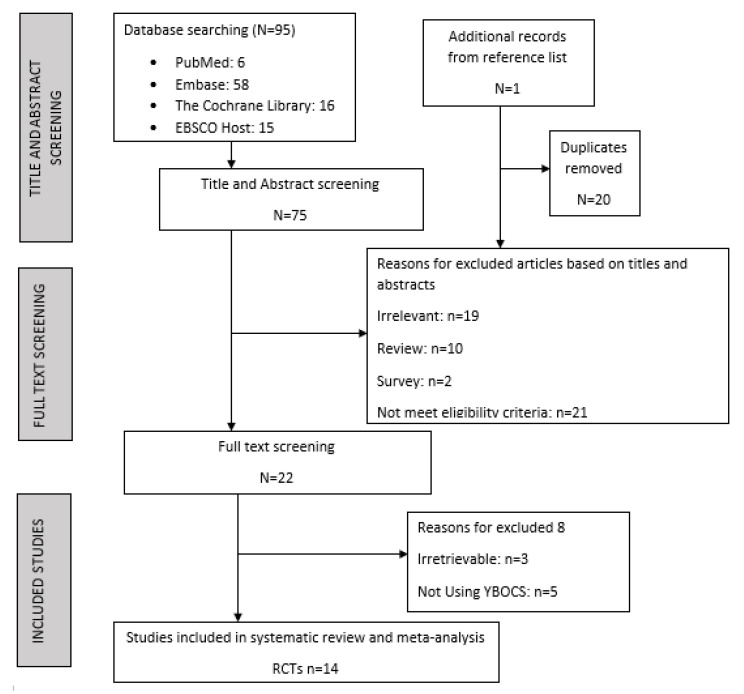
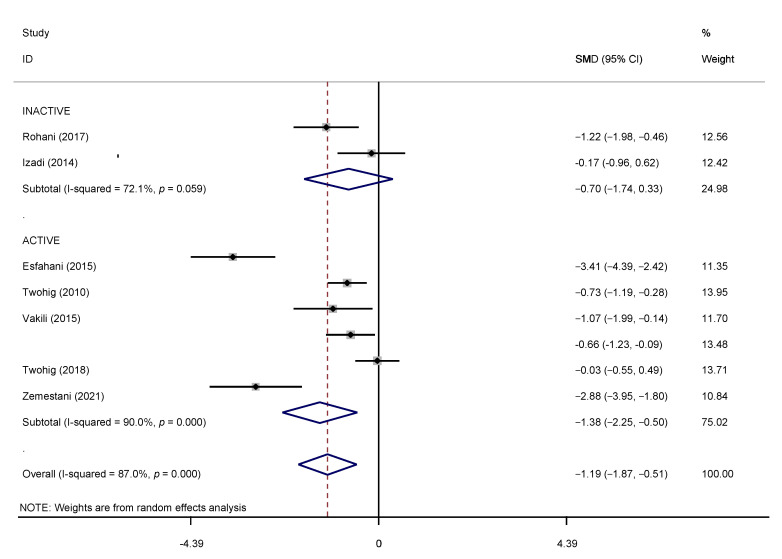
Background: Acceptance and commitment therapy (ACT), a third-generation cognitive behavioral therapy (CBT), has proved its efficacy amidst various mental disorders. A growing body of studies has shown that ACT can improve obsessive-compulsive disorder (OCD) severity in recent years. To assess the effect of ACT on OCD, we carried out a systematic review and meta-analysis to provide a basis for therapists to use different psychological dimensions of ACT for OCD. Methods: PubMed, the Cochrane Library, EMBASE, EBSCO Host, and literature references were searched until May 2021. Randomized controlled trials (RCTs) and other study designs assessing the effect of ACT among adults suffering from OCD were examined. Results: Fourteen studies, including 413 participants, published between 2010 and 2021 were identified. ACT made statistically significant progress in the Yale–Brown Obsessive–Compulsive Scale (YBOCS) compared with control conditions. Conclusion: After reviewing all the ACT studies, we acknowledge the plausibility of ACT in treating OCD and improving its symptoms for the clinical population. ACT can also be an adjunct therapy for other well-established treatments. It also favors targeting psychological inflexibility. Further well-controlled and high-quality RCTs are required for a better conclusion in further studies.
Overview
The claims and statistics of this paper haven’t been checked yet.
Free: it reads the open-access text and checks the first 5 claims that cite a source we can check. Create a free account to check every claim.
Integrity signals
Registry
Cites
Statistics
Figures
Verification
Claims the paper makes
The claims and statistics of this paper haven’t been checked yet.
Free: it reads the open-access text and checks the first 5 claims that cite a source we can check. Create a free account to check every claim.
Claims other papers make about this one
Each is checked against this paper’s own text: does it say what the citing paper says it does?
The source backs part of the claim, not all of it — or backs it for a different population, condition or comparison.
In the citing paper
“In a recent systematic evaluation and meta-analysis study, it was reported that patients diagnosed with OCD, in particular, learned to change their rapport with these symptoms instead of wrestling with intrusive obsessions and compulsions after ACT intervention, and thus recovery was associated with this mediator (Soondrum et al., 2022).”
From Reducing Test Anxiety During the COVID-19 Pandemic: A Comparison of the Effectiveness of Cognitive Behavioral Therapy and Acceptance and Commitment Therapy (2024) · cites this paper as Soondrum et al., 2022
Experimental — accuracy not yet measuredThe cited source says what the claim attributes to it.
In the citing paper
“Although a recent meta-analysis, including a small number of studies, reports the applicability of ACT for OCD [47], it needs to be tested with more extensive RCTs in larger samples.”
From Clinical Advances in Treatment Strategies for Obsessive-compulsive Disorder in Adults (2023) · cites this paper as [47]
Self-check
Percentages, sums and reported differences re-computed from the paper’s own numbers.
The self-check needs the paper’s full text.
Citations
Cites
The Cochrane Collaboration's tool for assessing risk of bias in randomised trials
Higgins, J. P. T., Altman, D. G., Gotzsche, P. C., Juni, P., Moher, D., Oxman, A. D., Savovic, J., Schulz, K. F., Weeks, L., Sterne, J. A. C., et al. (2011) · BMJ · doi:10.1136/bmj.d5928 · Cited by 33,817
Dermyshi, E., Wang, Y., Yan, C., Hong, W., Qiu, G., Gong, X., & Zhang, T. (2017) · Neonatology · doi:10.1159/000454668 · Cited by 24,451
Liberati, A., Altman, D. G., Tetzlaff, J., Mulrow, C., Gotzsche, P. C., Ioannidis, J. P. A., Clarke, M., Devereaux, P. J., Kleijnen, J., & Moher, D. (2009) · BMJ · doi:10.1136/bmj.b2700 · Cited by 17,648
The Yale-Brown Obsessive Compulsive Scale: I. Development, Use, and Reliability
Goodman, W. K. (1989) · Archives of General Psychiatry · doi:10.1001/archpsyc.1989.01810110048007 · Cited by 7,712
Hayes, S. C., Wilson, K. G., Gifford, E. V., Follette, V. M., & Strosahl, K. (1996) · Journal of Consulting and Clinical Psychology · doi:10.1037//0022-006x.64.6.1152 · Cited by 3,595
The epidemiology of obsessive-compulsive disorder in the National Comorbidity Survey Replication
Ruscio, A. M., Stein, D. J., Chiu, W. T., & Kessler, R. C. (2010) · Molecular Psychiatry · doi:10.1038/mp.2008.94 · Cited by 2,771 · cited 1×
“, 2015) [4], which emphasizes the need to develop and promulgate effective treatments [5].”
BackgroundThe global burden of mental disorders: An update from the WHO World Mental Health (WMH) surveys
Kessler, R. C., Aguilar-Gaxiola, S., Alonso, J., Chatterji, S., Lee, S., Ormel, J., Üstün, T. B., & Wang, P. S. (2009) · Epidemiologia e Psichiatria Sociale · doi:10.1017/s1121189x00001421 · Cited by 1,895 · cited 1×
“OCD has an estimated prevalence of approximately 2%, and according to the World Health Organization (WHO), it has been positioned among the 10 most incapacitating illnesses [2].”
BackgroundAbramowitz, J. S., Deacon, B. J., Olatunji, B. O., Wheaton, M. G., Berman, N. C., Losardo, D., Timpano, K. R., McGrath, P. B., Riemann, B. C., Adams, T., et al. (2010) · Psychological Assessment · doi:10.1037/a0018260 · Cited by 848 · cited 1×
“Psychological treatments that use exposure are currently considered the most effective form of treatment for OCD and are associated with a 60–85% reduction in symptoms [8].”
BackgroundEfficacy of the third wave of behavioral therapies: A systematic review and meta- analysis
Öst, L.-G. (2008) · Behaviour Research and Therapy · doi:10.1016/j.brat.2007.12.005 · Cited by 727 · cited 1×
“Third-wave behavioral therapies, such as acceptance and commitment therapy (ACT), have become more popular over the past years [10].”
BackgroundContextual and temporal modulation of extinction: behavioral and biological mechanisms
Bouton, M. E., Westbrook, R. F., Corcoran, K. A., & Maren, S. (2006) · Biological Psychiatry · doi:10.1016/j.biopsych.2005.12.015 · Cited by 671 · cited 1×
“As such, a suppressed response will resurface in the appropriate emotional and environmental context [14,15].”
BackgroundAcceptance and mindfulness-based therapy: New wave or old hat?
Hofmann, S. G., & Asmundson, G. J. G. (2008) · Clinical Psychology Review · doi:10.1016/j.cpr.2007.09.003 · Cited by 665 · cited 1×
“ACT works by developing psychological flexibility and accepting intrapersonal conflicts, and more importantly, ACT focuses on mindfulness and maneuvering around unpleasant thoughts [18].”
BackgroundMotor Inhibition and Cognitive Flexibility in Obsessive-Compulsive Disorder and Trichotillomania
Chamberlain, S. R., Fineberg, N. A., Blackwell, A. D., Robbins, T. W., & Sahakian, B. J. (2006) · American Journal of Psychiatry · doi:10.1176/ajp.2006.163.7.1282 · Cited by 627 · cited 1×
“It has also been observed that OCD patients show more cognitive inflexibility than healthy controls [61,62].”
BackgroundObsessive-Compulsive Disorder: Advances in Diagnosis and Treatment
Hirschtritt, M. E., Bloch, M. H., & Mathews, C. A. (2017) · JAMA · doi:10.1001/jama.2017.2200 · Cited by 493 · cited 1×
“Substantially, CBT comprising exposure maneuvers is yet the first-line psychotherapy for OCD [54].”
BackgroundThe Yale-Brown obsessive compulsive scale: Interview versus self-report
Steketee, G., Frost, R., & Bogart, K. (1996) · Behaviour Research and Therapy · doi:10.1016/0005-7967(96)00036-8 · Cited by 477 · cited 1×
“It should be noted that the YBOCS-SR produces similar scores to the clinician-administered version of the YBOCS and reveals good internal consistency [25,26].”
MethodThe efficacy of Acceptance and Commitment Therapy: An updated systematic review and meta-analysis
Öst, L.-G. (2014) · Behaviour Research and Therapy · doi:10.1016/j.brat.2014.07.018 · Cited by 476 · cited 1×
“In their metaanalysis and systematic review, [44] found that ACT is “possibly efficacious” in treating OCD.”
BackgroundLevin, M. E., Hildebrandt, M. J., Lillis, J., & Hayes, S. C. (2012) · Behavior Therapy · doi:10.1016/j.beth.2012.05.003 · Cited by 471 · cited 1×
“Therefore, the main goal of ACT is not to resist or reduce the number of obsessions and compulsions but rather to teach patients to alter their rapport with obsessive thinking so that they do not wrestle against these occurrences [19].”
BackgroundChamberlain, S. R., Fineberg, N. A., Menzies, L. A., Blackwell, A. D., Bullmore, E. T., Robbins, T. W., & Sahakian, B. J. (2007) · American Journal of Psychiatry · doi:10.1176/ajp.2007.164.2.335 · Cited by 438 · cited 1×
“It has also been observed that OCD patients show more cognitive inflexibility than healthy controls [61,62].”
BackgroundTwohig, M. P., Hayes, S. C., Plumb, J. C., Pruitt, L. D., Collins, A. B., Hazlett-Stevens, H., & Woidneck, M. R. (2010) · Journal of Consulting and Clinical Psychology · doi:10.1037/a0020508 · Cited by 434 · cited 9×
“Twohig 2010 [30] RCT ACT—36 OCD patients PRT—33 8 sessions weekly ACT or PRT—1 h YBOCS ACT posttreatment = 46–56%, PRT posttreatment = 13–18% 10%”
BackgroundResultInfluentialHayes, S. C., Barnes-Holmes, D., & Wilson, K. G. (2012) · Journal of Contextual Behavioral Science · doi:10.1016/j.jcbs.2012.09.004 · Cited by 409
Skapinakis, P., Caldwell, D. M., Hollingworth, W., Bryden, P., Fineberg, N. A., Salkovskis, P., Welton, N. J., Baxter, H., Kessler, D., Churchill, R., et al. (2016) · The Lancet Psychiatry · doi:10.1016/s2215-0366(16)30069-4 · Cited by 407
Dindo, L., Van Liew, J. R., & Arch, J. J. (2017) · Neurotherapeutics · doi:10.1007/s13311-017-0521-3 · Cited by 371 · cited 1×
“Given the theoretical evidence, the utmost issue remains in recognizing the ideal situation in which ACT can be applied in a beneficial and ethical approach [53].”
BackgroundSoomro, G. M., Altman, D. G., Rajagopal, S., & Oakley Browne, M. (2008) · Cochrane Database of Systematic Reviews · doi:10.1002/14651858.cd001765.pub3 · Cited by 342 · cited 7×
“, (2013) [32], Vakili and Gharraee (2014) [33], Baghooli (2014) [34], Izadi (2014) [35], Esfahani (2015) [36], Vakili Figure 2.”
BackgroundMethodResultInfluentialAcceptance and commitment therapy for anxiety and OCD spectrum disorders: An empirical review
Bluett, E. J., Homan, K. J., Morrison, K. L., Levin, M. E., & Twohig, M. P. (2014) · Journal of Anxiety Disorders · doi:10.1016/j.janxdis.2014.06.008 · Cited by 306 · cited 1×
“It was concluded that ACT was “possibly efficacious” in treating OCD [21].”
BackgroundEvidence-Based Practice and Policy: Choices Ahead
Gambrill, E. (2006) · Research on Social Work Practice · doi:10.1177/1049731505284205 · Cited by 303 · cited 1×
“With regard to the evidence-based behavioral practice (EBPP), it is recommended to formulate treatment choices based on the available evidence, the therapist’s expertise, and the characteristics of the clients [55].”
BackgroundNeural correlates of cognitive inflexibility during task-switching in obsessive-compulsive disorder
Gu, B.-M., Park, J.-Y., Kang, D.-H., Lee, S. J., Yoo, S. Y., Jo, H. J., Choi, C.-H., Lee, J.-M., & Kwon, J. S. (2007) · Brain · doi:10.1093/brain/awm277 · Cited by 284
Cognitive inflexibility in Obsessive-Compulsive Disorder
Gruner, P., & Pittenger, C. (2017) · Neuroscience · doi:10.1016/j.neuroscience.2016.07.030 · Cited by 261
Biglan, A., & Hayes, S. C. (1996) · Applied and Preventive Psychology · doi:10.1016/s0962-1849(96)80026-6 · Cited by 234 · cited 1×
“As such, if OCD patients do not seek treatment, they tend to experience functional impairment and reduced quality of life [3].”
Background(1993) · American Journal of Psychiatry · doi:10.1176/ajp.150.11.1737 · Cited by 233 · cited 1×
“It should be noted that the YBOCS-SR produces similar scores to the clinician-administered version of the YBOCS and reveals good internal consistency [25,26].”
MethodExposure and response prevention for obsessive-compulsive disorder: A review and new directions
Simpson, H., & Hezel, D. (2019) · Indian Journal of Psychiatry · doi:10.4103/psychiatry.indianjpsychiatry_516_18 · Cited by 161 · cited 1×
“A recent review supported that half of the patients following intense ERP treatment, either as monotherapy or in combination with other forms of pharmacotherapy, have milder symptoms [48].”
BackgroundTwohig, M. P., Abramowitz, J. S., Smith, B. M., Fabricant, L. E., Jacoby, R. J., Morrison, K. L., Bluett, E. J., Reuman, L., Blakey, S. M., & Ledermann, T. (2018) · Behaviour Research and Therapy · doi:10.1016/j.brat.2018.06.005 · Cited by 156 · cited 8×
“Other researchers used ACT plus ERP as central interventions and ERP as a control condition [39].”
BackgroundMethodResultInfluentialFineberg, N. A., Reghunandanan, S., Simpson, H. B., Phillips, K. A., Richter, M. A., Matthews, K., Stein, D. J., Sareen, J., Brown, A., & Sookman, D. (2015) · Psychiatry Research · doi:10.1016/j.psychres.2014.12.003 · Cited by 150 · cited 3×
“Considerable improvement can be attained in many patients, but for about 50%, the treatment response is incomplete (Fineberg et al., 2015) [4], which emphasizes the need to develop and promulgate effective treatments [5].”
BackgroundMarcks, B. A., & Woods, D. W. (2007) · Behaviour Research and Therapy · doi:10.1016/j.brat.2007.06.012 · Cited by 100 · cited 2×
“ACT also aspires to overcome the weaknesses of ERP; if the patient is resistant to complex exposure maneuvers, the combination of ACT procedures may help in promoting treatment participation [20].”
BackgroundThe Effect of Mind-Body Therapies on Insomnia: A Systematic Review and Meta-Analysis
Wang, X., Li, P., Pan, C., Dai, L., Wu, Y., & Deng, Y. (2019) · Evidence-Based Complementary and Alternative Medicine · doi:10.1155/2019/9359807 · Cited by 91
Self-citationThe Application of Acceptance and Commitment Therapy to Obsessive-Compulsive Disorder
Twohig, M. P. (2009) · Cognitive and Behavioral Practice · doi:10.1016/j.cbpra.2008.02.008 · Cited by 89 · cited 1×
“Researchers have come up with six areas of focus in ACT [16,17] that englobe different types of psychological processes, namely acceptance, defusion, the self as context, contact with the present moment, values, and committed action, all of which support behavioral flexibility.”
BackgroundPinto, A., Liebowitz, M. R., Foa, E. B., & Simpson, H. B. (2011) · Behaviour Research and Therapy · doi:10.1016/j.brat.2011.04.004 · Cited by 87
Law, C., & Boisseau, C. L. (2019) · Psychology Research and Behavior Management · doi:10.2147/prbm.s211117 · Cited by 81 · cited 1×
“Presently, ERP is considered the gold standard psychotherapy for OCD [9]; however, it bears some limitations.”
BackgroundTwohig, M. P., Vilardaga, J. C. P., Levin, M. E., & Hayes, S. C. (2015) · Journal of Contextual Behavioral Science · doi:10.1016/j.jcbs.2015.07.001 · Cited by 72 · cited 5×
“[30,39,51], it was shown that ACT affected aimed outcomes and change processes.”
BackgroundResultInfluentialLa thérapie d’acceptation et d’engagement
Ducasse, D., & Fond, G. (2015) · L Encéphale · doi:10.1016/j.encep.2013.04.017 · Cited by 71
Van Ameringen, M., Simpson, W., Patterson, B., Dell’Osso, B., Fineberg, N., Hollander, E., Hranov, L., Hranov, G., Lochner, C., Karamustafalioglu, O., et al. (2014) · Journal of Psychopharmacology · doi:10.1177/0269881113517955 · Cited by 65 · cited 1×
“Nonetheless, 40 to 60% of patients maintain residual or damaging symptoms, with unfavorable side effects of SSRIs [45].”
BackgroundRESURGENCE OF RESPONSE SEQUENCES DURING EXTINCTION IN RATS SHOWS A PRIMACY EFFECT
Reed, P., & Morgan, T. A. (2006) · Journal of the Experimental Analysis of Behavior · doi:10.1901/jeab.2006.20-05 · Cited by 65 · cited 1×
“As such, a suppressed response will resurface in the appropriate emotional and environmental context [14,15].”
BackgroundModarresi, A., Chaibakhsh, S., Koulaeinejad, N., & Koupaei, S. R. (2019) · Psychiatry Research · doi:10.1016/j.psychres.2019.112602 · Cited by 61 · cited 1×
“Recent studies have thoroughly assessed the effectiveness of pharmacotherapy for OCD and validated the use of selective serotonin reuptake inhibitors (SSRIs) and clomipramine (tricyclic antidepressant [4,6,7].”
BackgroundA randomized controlled trial of acceptance and commitment therapy for clinical perfectionism
Ong, C. W., Lee, E. B., Krafft, J., Terry, C. L., Barrett, T. S., Levin, M. E., & Twohig, M. P. (2019) · Journal of Obsessive-Compulsive and Related Disorders · doi:10.1016/j.jocrd.2019.100444 · Cited by 60 · cited 3×
“, (2013) [32], Vakili and Gharraee (2014) [33], Baghooli (2014) [34], Izadi (2014) [35], Esfahani (2015) [36], Vakili (2015) [37], Rohani (2017) [38], Twohig (2018) [39], Ong (2019) [40], Thompson (2020) [41], Davazdahemanni (2020) [42], Zemestani (2021) [43].”
BackgroundMethodAcceptance and Commitment Therapy as a Treatment for Scrupulosity in Obsessive Compulsive Disorder
Dehlin, J. P., Morrison, K. L., & Twohig, M. P. (2013) · Behavior Modification · doi:10.1177/0145445512475134 · Cited by 56 · cited 5×
“, (2013) [32], Vakili and Gharraee (2014) [33], Baghooli (2014) [34], Izadi (2014) [35], Esfahani (2015) [36], Vakili Figure 2.”
BackgroundInfluentialmarkummitchell/engauge-digitizer: Nonrelease
Mitchell, M., Muftakhidinov, B., Winchen, T., et al. (2020) · Zenodo (CERN European Organization for Nuclear Research) · doi:10.5281/zenodo.3941227 · Cited by 56
Codd, R. T., Twohig, M. P., Crosby, J. M., & Enno, A. (2011) · Journal of Cognitive Psychotherapy · doi:10.1891/0889-8391.25.3.203 · Cited by 44 · cited 2×
“Researchers have come up with six areas of focus in ACT [16,17] that englobe different types of psychological processes, namely acceptance, defusion, the self as context, contact with the present moment, values, and committed action, all of which support behavioral flexibility.”
BackgroundRohani, F., Rasouli‐Azad, M., Twohig, M. P., Ghoreishi, F. S., Lee, E. B., & Akbari, H. (2017) · Journal of Obsessive-Compulsive and Related Disorders · doi:10.1016/j.jocrd.2017.10.002 · Cited by 44 · cited 5×
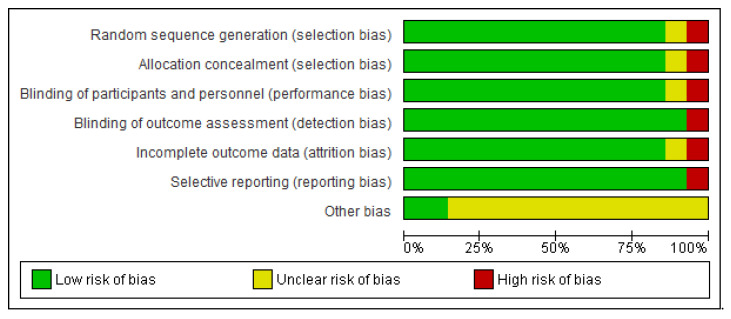
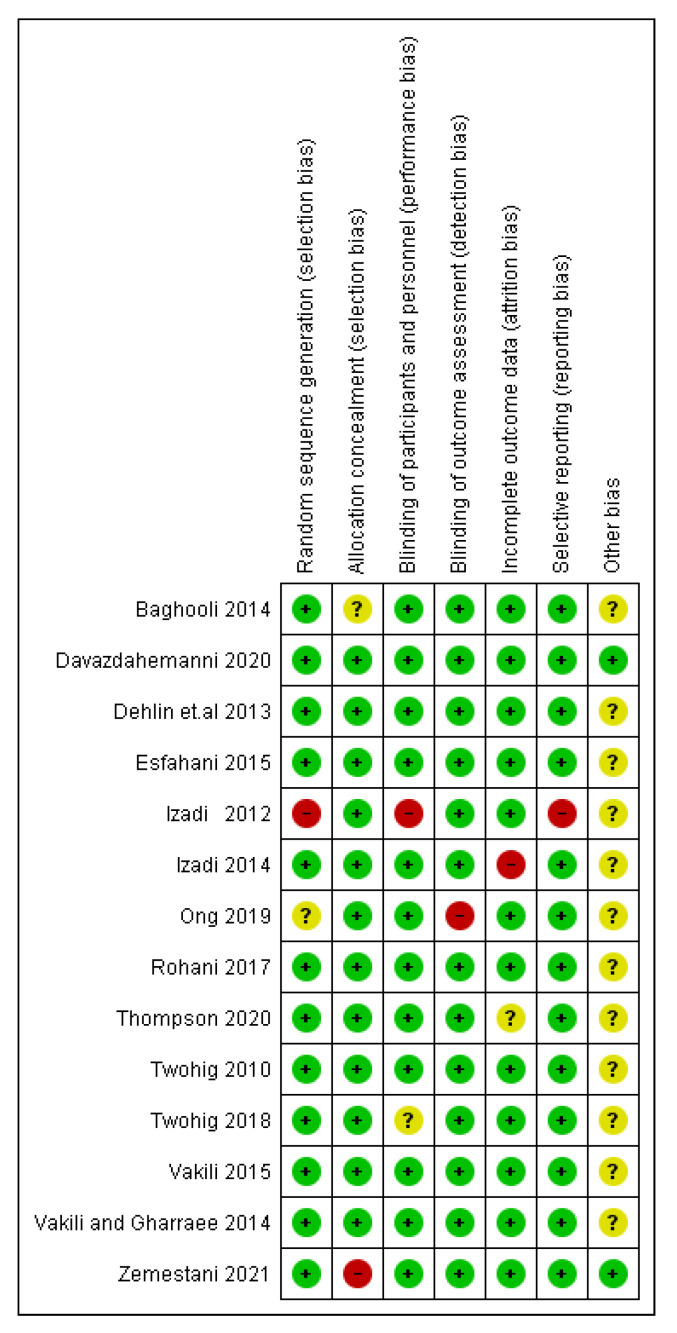
“Note: The above studies are included in the reference sections; Twohig (2010) [30], Baghooli (2014) [34], Izadi (2014) [35], Esfahani (2015) [36], akili (2015) [37], Rohani (2017) [38], Twohig (2018) [39], Zemestani (2021) [43].”
BackgroundMethodInfluentialAlbertella, L., Le Pelley, M. E., Chamberlain, S. R., Westbrook, F., Lee, R. S. C., Fontenelle, L. F., Grant, J. E., Segrave, R. A., McTavish, E., & Yücel, M. (2020) · Journal of Behavior Therapy and Experimental Psychiatry · doi:10.1016/j.jbtep.2020.101580 · Cited by 44
Philip, J., & Cherian, V. (2020) · Journal of Obsessive-Compulsive and Related Disorders · doi:10.1016/j.jocrd.2020.100603 · Cited by 43 · cited 1×
“The most recent review on ACT for OCD found enough evidence to encourage the use of ACT when combined with pharmacotherapy [22].”
BackgroundAlphabet Soup: ERP, CT, and ACT for OCD
Tolin, D. F. (2008) · Cognitive and Behavioral Practice · doi:10.1016/j.cbpra.2008.07.001 · Cited by 42 · cited 2×
“It also has some limitations, such as high dropout rates, the requirement of highly trained therapists, and the reluctance of some patients to adopt ERP [49].”
BackgroundResultVakili, Y., Gharaee, B., & Habibi, M. (2015) · Iranian Journal of Psychiatry and Behavioral Sciences · doi:10.17795/ijpbs845 · Cited by 37
Thompson, B. L., Twohig, M. P., & Luoma, J. B. (2021) · Behavior Therapy · doi:10.1016/j.beth.2020.04.011 · Cited by 36 · cited 3×
“, (2013) [32], Vakili and Gharraee (2014) [33], Baghooli (2014) [34], Izadi (2014) [35], Esfahani (2015) [36], Vakili (2015) [37], Rohani (2017) [38], Twohig (2018) [39], Ong (2019) [40], Thompson (2020) [41], Davazdahemanni (2020) [42], Zemestani (2021) [43].”
BackgroundCouto, J. P., & Moreira, R. (2018) · Progress in Neuro-Psychopharmacology and Biological Psychiatry · doi:10.1016/j.pnpbp.2018.06.005 · Cited by 34 · cited 1×
“Recent studies have thoroughly assessed the effectiveness of pharmacotherapy for OCD and validated the use of selective serotonin reuptake inhibitors (SSRIs) and clomipramine (tricyclic antidepressant [4,6,7].”
BackgroundZemestani, M., Ommati, P., Rezaei, F., & Gallagher, M. W. (2022) · Personality Disorders: Theory, Research, and Treatment · doi:10.1037/per0000482 · Cited by 26 · cited 5×
“Note: The above studies are included in the reference sections; Twohig (2010) [30], Baghooli (2014) [34], Izadi (2014) [35], Esfahani (2015) [36], akili (2015) [37], Rohani (2017) [38], Twohig (2018) [39], Zemestani (2021) [43].”
BackgroundInfluentialZemestani, M., Salavati, M., Seyedolshohadayi, A., Petersen, J. M., Ong, C. W., Twohig, M. P., & Ghaderi, E. (2022) · Behavior Modification · doi:10.1177/0145445520982977 · Cited by 26 · cited 1×
“Another study by [47], observed a significant decline in OCD symptom severity in ERP + SSRI and ACT + SSRI conditions posttreatment when matched with SSRI-only during follow-up.”
ResultVakili, Y., & Gharraee, B. (2014) · PubMed Central · Cited by 21
Izadi, R., Asgari, K., Neshat-Dust, H.-T., & Abedi, M. R. (2012) · Zahedan Journal of Research in Medical Sciences · Cited by 21
(2015) · Journal of the Indian Academy of Applied Psychology · Cited by 20
Place de l’inhibition dans le trouble obsessionnel-compulsif
Dupuy, M., Rouillon, F., & Bungener, C. (2012) · L Encéphale · doi:10.1016/j.encep.2012.06.016 · Cited by 16 · cited 1×
“Moreover, it has been found that changes in cognitive flexibility could justify repetitive thoughts and actions typical of OCD [60].”
BackgroundDavazdahemami, M. H., Bayrami, A., Petersen, J. M., Twohig, M. P., Bakhtiyari, M., Noori, M., & Kheradmand, A. (2020) · Bulletin of the Menninger Clinic · doi:10.1521/bumc.2020.84.suppa.1 · Cited by 12 · cited 3×
“, (2013) [32], Vakili and Gharraee (2014) [33], Baghooli (2014) [34], Izadi (2014) [35], Esfahani (2015) [36], Vakili (2015) [37], Rohani (2017) [38], Twohig (2018) [39], Ong (2019) [40], Thompson (2020) [41], Davazdahemanni (2020) [42], Zemestani (2021) [43].”
Background
Research works printed but not linked: 3
- Edition F. Diagnostic and Statistical Manual of Mental Disorders American Psychiatric Association Washington, DC, USA 2013 Volume 21
- Harris R. The House of ACT: Functional Contextualism, ABA and RFT. Book Chapter ACT Made Simple New Harbinger Publications Oakland, CA, USA 2009 1 23 Available online: https://www.pensierocritico.eu/files/ACT_Made_Simple_Dr._Russ_Harris_preface.pdf (accessed on 10 May 2022)
- Baghooli H. Dolatshahi B. Mohammadkhani P. Moshtagh N. Naziri G. Effectiveness of acceptance and commitment therapy in reduction of severity symptoms of patients with obsessive-compulsive disorder Adv. Environ. Biol. 2014 8 2519 2524
Cited by
An Overview of Research on Acceptance and Commitment Therapy
Levin, M. E., Krafft, J., & Twohig, M. P. (2024) · Psychiatric Clinics of North America · doi:10.1016/j.psc.2024.02.007 · Cited by 49
Clinical Advances in Treatment Strategies for Obsessive-compulsive Disorder in Adults
Roh, D., Jang, K. W., & Kim, C.-H. (2023) · Clinical Psychopharmacology and Neuroscience · doi:10.9758/cpn.23.1075 · Cited by 20
“Although a recent meta-analysis, including a small number of studies, reports the applicability of ACT for OCD [47], it needs to be tested with more extensive RCTs in larger samples.”
MethodPeterson, A. L., Moore, B. A., Evans, W. R., Young-McCaughan, S., Blankenship, A. E., Straud, C. L., McLean, C. S., Miller, T. L., Meyer, E. C., & for the STRONG STAR Consortium (2024) · Frontiers in Psychiatry · doi:10.3389/fpsyt.2023.1299532 · Cited by 19
Spencer, S. D., Stiede, J. T., Wiese, A. D., Guzick, A. G., Cervin, M., McKay, D., & Storch, E. A. (2023) · Journal of Obsessive-Compulsive and Related Disorders · doi:10.1016/j.jocrd.2023.100805 · Cited by 18
Wang, D., Lin, B., Xiong, F., Deng, Y., & Zhang, L. (2023) · Journal of Affective Disorders · doi:10.1016/j.jad.2023.08.125 · Cited by 17
Metadata
- Authors
- Soondrum, T., Wang, X., Gao, F., Liu, Q., Fan, J., & Zhu, X.
- Affiliations
- Central South University (CN)
- Corresponding author
- Zhu, Xiongzhao
- Venue
- Brain Sciences
- Publisher
- MDPI AG
- Published
- 2022-05-17
- Volume
- 12
- Issue
- 5
- Pages
- 656
- ISSN
- 2076-3425 (ISSN-L)
- PMC
- PMC9139700
- OpenAlex
- W4280582343
- Cited by
- 36
- References
- 58
- Citations by year
- 2026: 9 · 2025: 10 · 2024: 10 · 2023: 7
- FWCI
- 1.13
- Type
- journal article
- Language
- en
- Open access
- gold
- doi.org
- Licence
- Locations
- Brain Sciences (publishedVersion, cc-by)
- PubMed Central (publishedVersion, cc-by)
- PubMed (publishedVersion)
- DOAJ (DOAJ: Directory of Open Access Journals) (submittedVersion, cc-by-sa)
- Topics
- Social Sciences › Psychology › Clinical Psychology › Obsessive-Compulsive Spectrum Disorders
- Social Sciences › Psychology › Clinical Psychology › Mindfulness and Compassion Interventions
- Social Sciences › Psychology › Experimental and Cognitive Psychology › Anxiety, Depression, Psychometrics, Treatment, Cognitive Processes
- Keywords
- acceptance and commitment therapy, obsessive-compulsive disorder, psychological inflexibility, third-generation cognitive behavioral therapy, adjunctive therapy, Yale-Brown Obsessive Compulsive Scale, treatment efficacy
About these checks
Registry, retraction, Cites and statistics results are computed, not judged, with one exception: a printed reference that no index lists is read once by a model before it counts as a citation error. Claims are extracted by a model and kept only when their quote appears verbatim in the text; each cited source is then checked, with a model’s help, for whether it says what the claim relies on. Those verdicts can be wrong — read the claim’s quote and the cited source before relying on one.
Statistics and arithmetic are recomputed, not judged.
Confidence bands are shown only for fields calibrated on our annotated test set. None is calibrated yet, so no band is shown.
What counts as a claim ›How we measure confidence ›How we check this ›
Are you an author, or do you see a problem with this page? Request a review
Data sources
Bibliographic data: Semantic Scholar, OpenAlex, Crossref.
Contains information from the Semantic Scholar Academic Graph Datasets, made available under the ODC Attribution License (ODC-BY 1.0).
Semantic Scholar’s data is described in: Kinney, R., et al. (2023). The Semantic Scholar Open Data Platform. arXiv:2301.10140.
